Showing posts with label digitisation. Show all posts

Daily Tech Digest - November 26, 2024

Just what the heck does an ‘AI PC’ do?

As the PC market moves to AI PCs, x86 processor dominance will lessen over time, especially in the consumer AI laptop market, as Arm-based AI devices grab more share from Windows x86 AI and non-AI laptops, according to Atwal. “However, in 2025, Windows x86-based AI laptops will lead the business segment,” Atwal said. ... “We see AI-enabled PCs evolving to provide more personalized, adaptive experiences that are tailored to each user’s needs,” Butler said. “The rise of generative AI was a pivotal moment, yet reliance on cloud processing raises concerns around data privacy.” Each component of a PC plays a unique role in making AI tasks efficient, but the NPU is key for accelerating AI computations with minimal power consumption, according to Butler. In general, he said, AI PCs assist in or handle routine tasks to be more efficient and intuitive for users without the need to access an external website or service. ... AI PCs can also boost productivity by handling routine tasks such as scheduling and organizing emails, and by enhancing collaboration with real-time translation and transcription features, according to Butler. 


Humanity Protocol: ‘We’re building a full credential ecosystem’

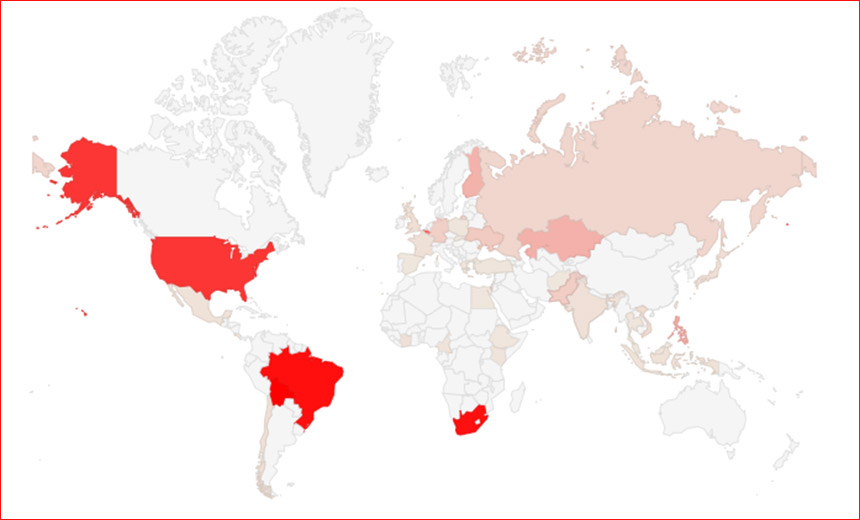
Distinguishing between humans and machines online has become more important than ever. Over the past years, the digital world has seen a proliferation of AI-fueled deepfake impersonations, bots and Sybil attacks, in which a single entity creates many false identities to gain influence. An increasing number of companies are trying to come up with solutions relying on blockchain technology. One of the more well-known projects is World Network, previously known as Worldcoin, which scans irises to confirm their users are human. But the space is seeing more and more competitors relying on biometrics to prove people are real – including Humanity Protocol. “There are definitely a bunch of companies that are trying to solve the whole Proof of Personhood problem,” the company’s founder Terence Kwok told Biometric Update in an interview earlier this month. “We’re lucky to be one of the few that have started launching, building a user base and joined the market.” The company launched a testnet in October, allowing users and developers to get their first taste of the platform and receive some free cryptocurrency. The project has so far signed up over a million people – moving quickly to catch up with World Network which currently has 15 million users, including 7 million verified through its Orb iris-scanning technology.


The way we measure progress in AI is terrible

Benchmark creators often don’t make the questions and answers in their data set publicly available either. If they did, companies could just train their model on the benchmark; it would be like letting a student see the questions and answers on a test before taking it. But that makes them hard to evaluate. Another issue is that benchmarks are frequently “saturated,” which means all the problems have been pretty much been solved. For example, let’s say there’s a test with simple math problems on it. The first generation of an AI model gets a 20% on the test, failing. The second generation of the model gets 90% and the third generation gets 93%. An outsider may look at these results and determine that AI progress has slowed down, but another interpretation could just be that the benchmark got solved and is no longer that great a measure of progress. It fails to capture the difference in ability between the second and third generations of a model. One of the goals of the research was to define a list of criteria that make a good benchmark. “It’s definitely an important problem to discuss the quality of the benchmarks, what we want from them, what we need from them,” says Ivanova. “The issue is that there isn’t one good standard to define benchmarks. This paper is an attempt to provide a set of evaluation criteria. That’s very useful.”


Governance Considerations and Pitfalls When Implementing GenAI

Many large organizations are still in the process of establishing robust information governance frameworks for their current environments. Now, they must also address questions about their readiness to manage the impact of Copilot1 and similar generative AI tools. These questions include whether they can uphold appropriate access, use, and management across their IT infrastructure. Additionally, organizations should assess whether new artifacts are being created that could introduce unforeseen regulatory risk. ... With Copilot, anything a user has permission to access may surface as part of a response to a query or prompt. Without Copilot, when users are over-permissioned and have access to documents that they should not, they would only uncover the document if actively searching for it. Therefore, excess permissions and failure to limit access to certain materials can potentially expose information to far more employees than intended. To manage this, organizations must be diligent in defining controls and thoroughly understand the range of materials that Copilot users can access at different permission levels. Notably, when Copilot is turned on for a user, every application within Microsoft 365 that has a Copilot element will have AI activated. 


Next-Gen Networking: Exploring the Utility of Smart Routers in Data Centers

In cases where smart routers offer automated network management capabilities, they usually do so based on software that provides features like the ability to reroute packets to help balance network load or discover new devices automatically when they join the network. In this sense, smart routers don’t really do anything all that new; the sorts of capabilities just mentioned have long been a standard part of network management software. The only differentiator for smart routers, perhaps, is that these devices come bundled with software that enables them to help manage networks automatically, instead of requiring additional network management tools for that purpose. In addition, there seems to be a focus in smart router land on the notion of hands-off network management. Instead of requiring admins to configure networking policies and apply them manually, smart routers promise in many cases to manage your networks for you. It's essentially an example of what you might categorize as NoOps. It’s worth noting, too, that in more than a few cases, smart router vendors are slapping the “AI” label on their devices. But like many vendors who profess to be selling AI-powered solutions today, they're using the term loosely to refer to any type of software that uses data analytics in some sort of way.


Digitising India with AI-based photogrammetry software

Photogrammetry is the capturing of measurements from photographs shot by drones, satellites, or aerial photography and generating maps, and 3D models even up to including a Geographic Information System (GIS). Traditionally, photogrammetric processing involved collecting a huge amount of data through manual efforts with post-processing taken care of by experts over a considerable period. The introduction of AI and machine learning into photogrammetry, has smoothened all these processes to make them fast as well as more automation-friendly. Now with AI photogrammetry software, one can explore thousands of aerial images automatically to acquire accurate topographic maps and also in real-time 3D models. ... Errors in land surveys can be very expensive and lead to many complications, especially in construction, farming, and city management. Using AI-based photogrammetry increases accuracy in measurement and reduces human errors in the process. AI algorithms improve the quality of the resultant maps and models by identifying and rectifying any anomalies in the data automatically. The system can also blend images from different sources, such as aerial pictures, LiDAR departments, as well as satellite images, to provide a better and more accurate picture of the land.


Will AI Kill Google? Past Predictions of Doom Were Totally Wrong

Sam Altman, the top executive overseeing ChatGPT, has said that AI has a good shot at shoving aside Google search. Bill Gates predicted that emerging AI will do tasks like researching your ideal running shoes and automatically placing an order so you'll "never go to a search site again." ... AI definitely could draw us away from Google in ways that smartphones and social media didn't. When you're planning a garden, an AI helper might guide you through where you want the flowers and fruit trees and hire help for you. No Googling necessary. "People are increasingly turning to ChatGPT to find information from the web, including the latest news," Altman's company, OpenAI, said. Maybe it's right to extrapolate from how people are starting to use AI today. Or maybe that's the mistake that Jobs made when he said no one was searching on iPhones. It wasn't wrong in 2010, but it was within a few years. Or what if AI upends how billions of us find information and we still keep on Googling? "The notion that we can predict how these new technologies are going to evolve is silly," said David B. Yoffie, a Harvard Business School professor who has spent decades studying the technology industry. 


Practical strategies to build an inclusive culture in cybersecurity

Despite meaningful progress, the cybersecurity and IT industries continue to face significant challenges in creating truly inclusive environments. Unconscious bias remains a pervasive issue, often influencing hiring, evaluation, and promotion processes, which can disadvantage women and other underrepresented groups. Retention is another ongoing challenge, as many organizations struggle to cultivate workplace cultures that are welcoming and supportive enough to retain diverse talent long-term. Barriers to entry and advancement persist, highlighting the need for continuous improvement and active intervention. While the industry has made strides in recognizing the importance of diversity, achieving full representation and inclusivity requires sustained commitment and effort. The current focus on diversity is encouraging, but only through consistent attention and action will the industry overcome these longstanding challenges and ensure a more equitable future. ... Work-life balance is another significant issue, particularly in cultures where traditional gender roles are still prevalent. Women often face greater expectations regarding balancing work and family, which can impact their career trajectory, especially in environments that lack flexible work arrangements. 


5 ways to achieve AI transformation that works for your business

"Never work in a silo and prepare to be wrong in terms of how you've set the technology up." Kollnig and her colleagues have implemented the Freshworks Customer Service Suite, an omnichannel support software with AI-powered chatbots and ticketing. She told ZDNET that working closely with the technology partner has helped her team to deliver a successful AI transformation. "So, for one of our AI projects, we established our basic set-up and said, 'Freshworks, come in and audit it. Tell us, are we doing this right? Would you do it differently?'" she said. ... Moyes said professionals in all sectors should take some sensible steps, including working with people who know more about AI. "Within every organization, there are groups of technology leads who are interested and want to innovate, evolve, and push," he said. "Lean on them. Learn from those at the coal face who want to do AI. There are no guarantees that the technologies you introduce will be the next best thing, but at least you'll be aware of the potential." Moyes said SimpsonHaugh is looking at how AI can reduce time-intensive tasks, such as summarizing text, and help staff find images to create early-stage design proposals.


What Does Enterprise-Wide Cybersecurity Culture Look Like?

Whoever is championing enterprise-wide security needs to secure buy-in from everyone within an organization. At the top, that means getting the C-suite and board to throw their weight behind security. “At the end of the day, if you don't have the CEO on board and the CEO isn't … voicing the same level of prioritization, then it will be something that's viewed as a half step back from … fundamental business priorities,” Cannava warns. Effective communication is a big part of getting that buy-in from leadership. How can security leaders explain to their boards and fellow executives that security is an essential business enabler? “Really [convert] the technology language or cyber language or jargon into how will … that risk potential impact revenue or reputation or our compliance?” says Landen. Tabletop exercises can be a powerful way to not just tell but show executives the value of cybersecurity. Walking through various cybersecurity incident scenarios can demonstrate the vital connection security has to operations and business outcomes. Ping Identity periodically engages multiple members of the C-suite in these exercises. “Not only do you know learn what the gap is, you also learn by doing … you're pulled in and engaged as a member of the C-suite, and now you're invested,” he says.


Quote for the day:

"Great leaders do not desire to lead but to serve." -- Myles Munroe

Daily Tech Digest - November 23, 2018

Indian IT companies have had to transform every part of their process for faster growth 

1
To get here, Indian IT companies have had to change every part of their process—even becoming less Indian. They have shed jobs, changed how they work, upended part of their business models by focusing on hiring at client locations abroad, invested in training their employees, and chased acquisitions. The goal this time: growing digital revenue, in the hopes that it would offset the contraction in the traditional business, which is still over 60% of their revenues. “The core purpose of IT has changed to helping transform businesses and drive revenues from reducing cost and improving efficiency. This has led to a new wave of growth for IT, helping customers digitally transform their businesses,” said Hexaware CEO R Srikrishna. ... IT companies are looking at building the same campus recruitment engine in client markets as they did in India, and are focusing on current campus hires to become ambassadors for them at their universities. On Wednesday, Infosys announced it would hire 1,200 locals in Australia by 2020, over a third of whom would come from campuses. 


With more and more Data Centers being built, and soon after we are done bashing the economy and again ready to make hay as the economy starts turning around, we can alter the shape of our destiny dramatically! As other industries will sag, think of hotels, airlines, etc., which will certainly contribute to a certain reduction of carbon emissions, there is strong reason to believe that the spin-offs from the remote-everything will go into overdrive. Today we are carefully talking about online conferences and soon there will be lots of online activities that will be firing up all over the place. This will lead to huge data crunch operations as more and more information will need more processing power as it will come in audio, video and other formats. This will be extremely demanding for data centers, no matter how centralized they are.


TechUK calls on Matt Hancock to fast-track NHS digitisation


Hancock has said he wants the health tech industry to thrive, which TechUK said is a great idea, but very far from the current status quo where tech companies find health and social care one of the most difficult sectors to “crack”. It called on Hancock to ensure better access to data and improved procurement. “Data, like oil, is worth nothing if it is left in the ground,” the manifesto said. “Far too much data is held in non-digital form or in siloed repositories making it impossible to join up. “Tech companies that need data to build, develop, test and prove their solutions find it difficult to access, while companies that produce valuable data find it difficult to feed back into the System to inform better decision making.” 


What machine learning means for software development

Fractal art
Will machine learning eat software, as Pete Warden and Andrej Karpathyhave argued? After all, “software eating the world” has been a process of ever-increasing abstraction and generalization. A laptop, phone, or smart watch can replace radios, televisions, newspapers, pinball machines, locks and keys, light switches, and many more items. All these technologies are possible because we came to see computers as general-purpose machines, not just number crunchers. From this standpoint, it’s easy to imagine machine learning as the next level of abstraction, the most general problem solver that we’ve found yet. Certainly, neural networks have proven they can perform many specific tasks: almost any task for which it’s possible to build a set of training data. Karpathy is optimistic when he says that, for many tasks, it’s easier to collect the data than to explicitly write the program.


Socially Responsible Automation: A Framework for Shaping the Future

We define SRA as the set of technology choices, business strategies, innovation approaches, and management practices that move the affordances of automation beyond cost and performance efficiencies towards profitable and sustainable growth with more and better jobs driving economic development and social cohesion. SRA strives to optimize both business and social goals by adopting “common good” and “shared value” ideals. A minimal approach to SRA would be one where technology decisions are guided by their potential negative impact on jobs and the workforce; where mechanisms such as economic modelling, decision frameworks, and human factors approaches are employed to quantitatively and qualitatively assess technology choices and outcomes, and where appropriate trade-offs are made to balance the economic benefits of automation with the social costs of labor reduction and unemployment.


Chromecast (2018) review: Google's revamped media streamer is what you make of it

chromecast3hero
The new Chromecast isn’t much different from the second-generation model from 2015. The new design has rounder edges, but it’s still a small puck that hangs behind the TV on a 3-inch HDMI cable, and it still uses the TV’s USB port or a wall outlet for power. (You’ll likely need to choose the latter if you want the Chromecast to turn the TV on when it connects to your phone.) The way you use Chromecast hasn’t really changed, either: In lieu of a remote control and TV-based menus, Chromecast uses the streaming apps on your iOS or Android device as the interface. Apps that support Chromecast will show a cast button that links your device to the television, and whatever video you select will begin playing on the larger screen. You can also use the Chrome browser on a laptop or desktop to launch video from websites that offer that feature. What’s different, then?


How data scientists can help operational analytics succeed

A typical company has an organization that develops and an organization that operates. When I was consulting with PayPal, we had a group of talented professionals that constantly improved the functionality of the PayPal website. There was an equally talented group of professionals responsible for handling the operations of the production site. This operations group had a very different environment within which to succeed. That is why they had the best tools available to analyze what was happening at any point in time, and the best practices for troubleshooting problems in the moment. Data science can help tremendously with monitoring and troubleshooting. A key difference between operations and development is in their perspective of the status quo. For operations, stability is the goal—preserve the status quo; therefore, data science must be used to alert operators when the situation is not normal.


Digital Well-being — Its time to look after ourselves


We always choose such immediate enjoyment of likes, reacts, swipes and claps over long term flourishing, punching a hole in our well-being. But all this is not really good for nothing, your each swipe, click, reaction generates tonnes of revenues for companies in exchange for your sleep. Well, they always say, If You're Not Paying For It, You Are The Product. One must have come across recent announcements by Google and Apple on addressing the issue of digital well-being by monitoring screen time. But if one must need to really achieve/experience the state, one must possess the necessary digital skills. I have explained this using an analogy below. Consider an analogy between two phases of life. At young age when children are exposed to the real world society, certain real world skills like language, manners, values and other resources are taught for them to overcome challenges they might face in life. In similar manner when children are exposed to digital technology, are they prepared or equipped with digital skills to face the challenges they may come across?


Malware Moves: Attackers Retool for Cryptocurrency Theft

Malware Moves: Attackers Retool for Cryptocurrency Theft
Modular malware called Trickbot, which has also been used to mine for cryptocurrency, is up to new tricks. "TrickBot has traditionally targeted banking customers in multiple geographies to steal login credentials in order to commit identity fraud and facilitate fraudulent transactions," researchers at Digital Shadows say in a research report. But TrickBot's designers have been adding additional capabilities that appear designed to extend the reach of the malware. In February, TrickBot's designers added an open source monero cryptocurrency-mining module. And in March, they added the ability to crypto-lock devices, "potentially helping threat actors to extort victims," the research report says. Last month, Vitali Kremez, director of research at threat intelligence firm Flashpoint, warned the TrickBot had been updated to included a module designed to steal passwords from multiple types of applications and browsers.


Mirai Evolves From IoT Devices to Linux Servers

Netscout researchers say they have observed what appears to be a relatively small number of threat actors attempting to deliver the malware on Linux servers by exploiting a recently disclosed vulnerability in Hadoop YARN. The YARN vulnerability is a command injection flaw that gives attackers a way to remotely execute arbitrary shell commands on a vulnerable server. Many of the servers running Hadoop YARN are x86-based. Netscout has been tracking attempts to exploit the flaw using its global network of honeypots. It says it has observed tens of thousands of exploit attempts daily. In November alone, Netscout observed attackers attempting to deliver some 225 unique malicious payloads via the Hadoop YARN vulnerability. Of that, at least one dozen of the malware samples were Mirai variants.


Quote for the day:


"Adapt what is useful, reject what is useless, and add what is specifically your own." -- Bruce Lee


Daily Tech Digest - September 12, 2018

Smart Cities: How They’ll Make Us Healthier

Smart Cities: How They'll Make Us Healthier TechNative
Pollution is inevitable in large cities. However, smart cities will be better equipped to detect pollution and enable experts to reduce it. Already, cities are installing air quality sensors to find out where air quality can be improved, enabling cities to detect sources of pollution that might have gone undetected in the past. Sensors have already revealed that pollution hot spots can occur in unexpected places, and steps taken to reduce air pollution will improve the health of all residents. Smart cities are also better able to tackle water pollution. Sensors can detect where water is being polluted, letting planners uncover where pollution is entering nearby bodies of water. Furthermore, sensors can be installed to detect lead and other pollutants in drinking water on a more fine-grained basis, enabling health officials to act more promptly and prevent infections and poisoning.... Television and radio are often used by cities to provide health information to residents. However, people are increasingly turning to the internet for information, and they might miss out on local health alerts.


RabbitMQ in Microservices


Image title
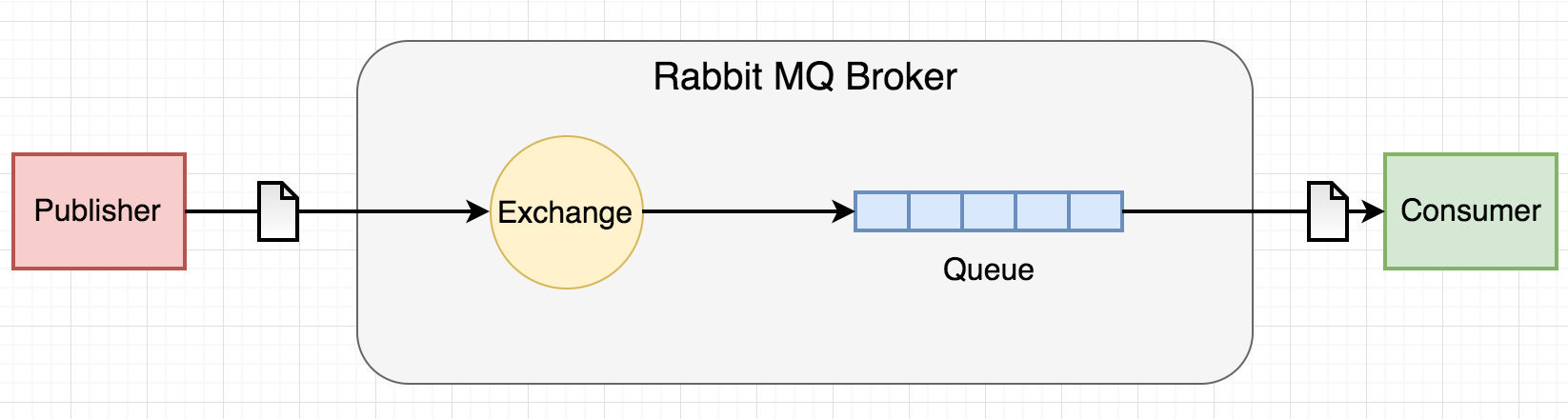
RabbitMQ is one of the simplest freely available options for implementing messaging queues in your microservices architecture. These queue patterns can help to scale your application by communicating between various microservices. We can use these queues for various purposes, like interaction between core microservices, decoupling of microservices, implementing failover mechanisms, and sending email notifications via message brokers. Wherever two or more core modules need communicate with each other, we should not make direct HTTP calls, as they can make the core layer tightly coupled and it will be difficult to manage when there are more instances of each core module. Also, whenever a service is down, the HTTP call pattern will fail, as after a restart, there is no way to track old HTTP request calls. This results in the need for RabbitMQ. In microservice architecture, for this demonstration, we will use an example pattern of sending email notifications via various core microservices. In this pattern, we will have a producer, any of the core microservices, which will generate the email content and pass it on to the queue.


Why Python is so popular with developers: 3 reasons the language has exploded

istock-802780432.jpg
Python has the best claim to being the fastest-growing major programming language right now, said Stack Overflow data scientist Julia Silge. Developer Stack Overflow visits to Python have grown very quickly, she added: This year, it became the most visited programming language in the world on the site. The rate of growth is high across industries including academia, manufacturing, electronics, finance, energy, tech, and government, Silge said. It's not shrinking in any industry, she added. "The rise of Python is linked to businesses understanding that they are generating all this data all the time, and if they either train people internally or hire people who have these skills, they can use that data to make better decisions, and it can help their businesses thrive," Silge said. "It's a great first programming language to learn, and also it is a center of one of the most impactful trends driving how businesses are adding value to what they're doing right now."


Multi-cloud strategy: Determine the right cloud for your workloads

The skills revolve around managing, configuring and maintaining the different cloud service provider’s environments. So, for AWS it is being able to handle and manage all of the AWS configurations, deployment and features that are being brought in. Same thing for Azure and Google Cloud. It’s setting up the network infrastructure, setting up the firewall, setting up the virtual cloud environments. Each one of the vendors does that in a different way; there’s no one-size-fits-all that will work across all of the environments. My highest recommendation for anybody going into the cloud is automating their environment as much as possible, but the script automations are different in each one of those environments. I can automate building my workload in AWS, but I can’t take that same script and run it in Azure to build my workload environment there.


8 Cryptomining Malware Families to Keep on the Radar

Image Source: Adobe Stock (TTstudio)
Cryptojacking activities that bleed off victims' compute power to mine for cryptocurrency have skyrocketed, as cybercriminals find it to be one of the most profitable low-key attacks on the Web today. It has even pushed out ransomware as cybercriminals' favorite means of raking in cash. While cryptomining malware may not be calibrated specifically to steal data, it should remain on the radar of enterprise defenders. Campaigns carried out by these malicious tools do real damage to computing equipment and siphon off vast amounts of electricity, never mind the fact that their infections are the perfect foothold to carry out other kinds of devastating lateral attacks. Here are some of the most prevalent and powerful cryptomining malware families active today. Ericka Chickowski specializes in coverage of information technology and business innovation. She has focused on information security for the better part of a decade and regularly writes about the security industry as a contributor to Dark Reading.


Alternatives to Nmap: from simple to advanced network scanning

Alternatives to Nmap: from simple to advanced network scanning
There are alternatives – not many – that range in technical sophistication from tools with GUIs that can ease you into performing the essentials of network maintenance to more advanced software that is similar to Nmap itself. ... You don't need to install either one on a computer. Each is an executable that you can launch right away, running from a USB flash drive, for example. Advanced IP Scanner is designed to scan LANs. Through its GUI, it shows you all the computers and other devices connected to your LAN. Scan results can be exported to a CSV file. You can also access shared folders on a computer or device, control them remotely (using RDP and Radmin), or shut down a computer or device. Advanced Port Scanner scans for open ports on network computers and other devices, and it shows any version information it finds for programs running on detected ports. Commands can be executed on remote computers or devices, and resources can be accessed from them via FTP, HTTP, HTTPS or shared folders. As with Advanced IP Scanner, you can remote-control a computer or device on the network using RDP and Radmin, or you can shut it down.


What is Microsoft’s Intune – and how well does the UEM tool really work?

mdm
Intune is designed to give IT admins an easy way to manage a variety of devices – whether corporate or personal – in a way that protects corporate data while still allowing employees to get their jobs done. It combines mobile device management (MDM) capabiltiies with mobile application management (MAM) features and puts them all in a single console. Though obviously tied to Windows 10 and other Microsoft products, it is designed to manage hardware running other operating systems. Intune's arrival seven years ago came as companies were being forced to manage a sudden onslaught of devices accessing corporate data and networks – fallout from the bring-your-own-device (BYOD) trend that took off after the release of Apple's iPhone in 2007. "Even if the workers are not mobile all the time, the way we do business today requires a different approach, and that's where Intune comes in," said Maura Hameroff, Microsoft's director of security product marketing. As a subscription service, Intune charges companies on a per user/per month basis. It can be purchased as a stand-alone product for $6 per seat or for $8.74 per seat as part of Microsoft's Enterprise Mobility Suite


Scaling Business Agility: Three Essential Pillars for Being Vs. Doing Agile

If each business unit within an organization operates as a separate function, this has to be the first candidate for transformation. Even before we align the cadence and processes, it’s important to ensure everyone understands the purpose of working together. System thinking evolves as we help the team understand the vision and purpose. Top management must be aligned before a team gets involved. Transparency and working agreements within and across teams are vital in building a healthy culture. It’s at all levels, not just top or middle management. This is about enabling and adding value at every level in the ecosystem. It starts with product management who plays a crucial role in identifying and communicating value to the entire stream. From Engineering and Support to Program Management and Sales, everyone has a role to play in the value ecosystem. Those leaders must be identified and nurtured by management and the leaders need to hone their skills, not just to show or lead, but to be part of the journey.


Are You the Barrier to Innovation?


Risk aversion gets embedded in a culture and often reflected in structure, unspoken values, and the architectures that support it. Such architectures are heavily redundant, often held in datacenters controlled by the organization, monitored to within an inch of life (which can also lead to the Sisyphean chore of wringing out every ounce of performance), and protected by layers of security and abstraction. The goal is stability, but its price is stagnation. The fear of additional complexity also leads to risk aversion in trying new technologies even for small, non-critical projects. All too often, these projects can grow into core pieces of functionality that other systems rely on. An organization with an agile mindset will isolate such systems and abstract their functionality behind an API, but traditional IT operations would prefer to avoid them completely as they require knowledge dependencies that complicate the hiring process and add to the list of expertise the team must gain.


7 Costly Mistakes Entrepreneurs Make in The Digital World


In theory, SEO is very simple. Find and use the right keywords and Google will rank it near the top of any searches--thus making your business easily found by potential customers. But like many things, while the theory is simple and straightforward, the practical implementation of it is anything but. The rules for SEO are constantly changing and the internal workings can often be complex enough to give even Einstein a headache trying to figure it out. And once you have figured it out, you need to get the balance right between not enough SEO and too much SEO. Unless your business is SEO, then you're not going to have the skills to keep up, nor the time to divert from your core business to deal with it. A bit like plumbing, it seems easy, but it's much easier to get an expert in than it is to clear up the potentially costly mess getting it wrong. If you want to get your website found, then you need to make sure that you have the right keywords. These are the words or phrases that people are searching for on Google. The better your SEO keywords, the higher your business will rank.


Quote for the day:


"You have to lead people gently toward what they already know is right." -- Phil Crosby


Daily Tech Digest - June 24, 2018

Walking With AI: How to Spot, Store and Clean the Data You Need

Walking With AI: How to Spot, Store and Clean the Data You Need
Machine learning initiatives are as diverse as companies themselves. Think critically about what sort of examples you need to train your algorithm on in order for it to make predictions or recommendations. For example, an online baby registry we partnered with wanted to project the lifetime value of customers within days of signup. Fortunately for us, it had proactively logged transaction data, including items customers added to their registries, where they were added and when they purchased. Furthermore, the client had logged the entire event stream, rather than just the current state of each registry, to maintain a database record. The client also brought us web and mobile event stream data. Through Heap Analytics, it had logged the type of device and browser used by each registrant into its transactional database. Using UTM codes, the registry company had even gathered attribution data, something collected for all or most marketing activities by just 51 percent of North American respondents to a 2017 AdRoll survey.


The SOA Journey: From Understanding Business to Agile Architecture


If the monolith ceased to implement its responsibilities in such a way that it satisfies business, if the development pace slows down, then something definitely needs to be done to fix this. But before that, apparently, you need to find a reason why is that so. In my experience, the reason is always the same: tight coupling and low cohesion. If your system belongs to a single bounded context, if it’s not big enough (yeah, sounds ambiguous, I’ll elaborate on this later) then all you have to do to fix things up is to decompose your system into modules the right way. Otherwise, you need to introduce way more autonomous and isolated concept that I can call a service. This term is probably one of the most overloaded one in the whole software industry, so let me clarify what I mean. I’ll give more strict definition further, but for now, I want to point out that, first of all, service has logical boundaries, not physical. It can contain any number of physical servers which can contain both the backend code and UI data. There can be any number of databases inside those services, and they all can have different schemas.


The Convergence of Digitalization and Sustainability

The promise of digitalization — big data, artificial intelligence, the internet of things, cybersecurity, and more — is often described with hyperbole. Pundits and academics alike have described “big data” as the “new oil,” “the new soil,” and the primary driver of a “management revolution,” the “Fourth Industrial Revolution,” and a “second machine age.” Artificial intelligence is receiving similar hype, with AI being compared to the rise of electricity during the Industrial Revolution. Russian President Vladimir Putin says whatever country controls AI will become the “ruler of the world.” What’s more, renowned scientist Stephen Hawking warns that development of full AI could spell the end of the human race.” There is similar hype around sustainability, albeit of a different flavor. “Sustainability is the primary moral and economic imperative of the 21st century,” says Mervyn King, former governor of the Bank of England. “It is one of the most important sources of both opportunities and risks for businesses. Nature, society, and business are interconnected in complex ways that should be understood by decision-makers.”


Differentiation through innovation: Banks pick fintech firms over bigtech

fintech
Big tech companies are seeing greater competition from fintech companies when it comes to providing banking solutions, say experts. "Businesses have started using Fintechs to solve many of the pain points in the banking value chain by doing smaller outcome based projects, instead of signing up large long term deals with Bigtechs, said Sachin Seth, Partner and Fintech Leader, Advisory Services, EY India. ... “Large IT companies still manage the core engines for the bank, they understand the bank’s security and regulatory requirements and have tailored their systems to suit these needs over the years. Fintech companies too, as the business case, grows need to invest in these areas. The successful ones will eventually become mid- to large-sized companies, while hopefully retaining their innovation DNA, said Axis’ Anand. While the competition large IT companies are seeing from fintech start-ups will only get fiercer, banking industry experts said that there is a strong need for collaboration. “Fintechs are nimble companies that think innovation first. However, they are not as well equipped to deploy the products. Fintech companies can drive innovation, but the comercialisation is better managed by bigtech companies,” said BoB’s Handa.


The 4 phases of digital transformation: a roadmap to Intelligent Automation

You’ve reached the end the road in outsourcing. You’ve been dinged by potholes of legacy systems and your smartest people are too busy struggling under the load of paperwork. You suspect that there’s only one way to get past these roadblocks, and that’s to start a whole new journey. Next stop: Intelligent Automation. The only thing is that you have no idea of what you’ll encounter along the way… The good news is, there are people who do. WorkFusion’s Client Strategy and Transformation team, which focuses on strategic advice and programmatic enablement for enterprises who are embarking on robotic process automation initiatives, has been down this road and around the block a few times already. They have seen patterns emerge and learned from their experiences. Which is why they wrote The 4 Phases of Digital Transformation: The Intelligent Automation Maturity Model. This complimentary 10-page eBook by WorkFusion will help you determine the best strategy for your operation by mapping each of the four stages of maturity that are relevant for most organizations.


The Brilliant Ways UPS Uses Artificial Intelligence, Machine Learning And Big Data


UPS developed its chatbot, UPS Bot, in house and released it for use just three months after the idea was born. This AI-enabled tool mimics human conversation and can respond to customer queries such as “Where is the nearest UPS location?” and can track packages and give out shipping rates. Customers can ask the bot questions either through text or voice commands through mobile devices, social media channels and virtual assistants such as Alexa and Google Assistant. The UPS Bot is able to recognize these requests and then takes the appropriate steps to complete them. The more “conversations” the bot has, the more learning it experiences to take the appropriate action in the future. During its peak period, UPS provided more than 137 million UPS My Choice alerts—the free system that lets residential customers decide “how, where and when home deliveries occur.” The chatbot is integrated with the UPS My Choice system, so customers are able to obtain information about their incoming packages and deliveries without providing a tracking number.


How Machine Learning Is Changing the World -- and Your Everyday Life

How Machine Learning Is Changing the World -- and Your Everyday Life
Computers can be programmed to determine individual study plans, specific to each student's needs. Algorithms can analyze test results, drastically reducing the time teachers spend in their leisure time on grading. A student's attendance and academic history can help determine gaps in knowledge and learning disabilities. These applications won't necessarily translate to a teacher-less classroom, but will facilitate the teaching and learning environments to enhance the outcomes and ease the burden on both teacher and student. Legal firms are increasingly turning to machine learning to process massive amounts of data related to legal precedents. J.P. Morgan, for example, uses a software program dubbed COIN to review documents and previous cases in seconds that would otherwise take 360,000 hours. As with our teachers above, it's unlikely machine learning or AI will replace lawyers any time soon, given the necessity of rebuttal and human logic / appeal, but the incorporation of machine learning will surely reduce the time taken to put together a case, and it could expedite trials, speeding up the processes of the court.


How BuzzFeed Migrated from a Perl Monolith to Go and Python Microservices


The new microservices are developed using Python as the main language with Go for the more performance sensitive components. BuzzFeed’s engineering team have found that the two languages are very complementary and it is relatively straightforward for individual developers to switch from one to the other as appropriate. At the time of writing they have around 500 microservices in stage and production environments on AWS. They break-down their services using something that sounds somewhat similar to SCS; the home page on buzzfeed.com is one service, news pages are a separate service, as are author pages and so on. One challenge the team faced was with routing requests to the correct backend applications. Fastly, their CDN provider, has the ability to programmatically define behavioural logic at the edge using a C based programming language called VCL, and initially the engineering team were writing all their routing logic in VCL directly. However, they found that as the configuration became more and more complex so making changes became more difficult, and being able to adequately test their configuration much more important. Mark McDonnell, a Staff Software Engineer at BuzzFeed, told InfoQ that


Serverless development with Node.js, AWS Lambda and MongoDB Atlas

The developer landscape has dramatically changed in recent years. It used to be fairly common for us developers to run all of our tools (databases, web servers, development IDEs…) on our own machines, but cloud services such as GitHub, MongoDB Atlas and AWS Lambda are drastically changing the game. They make it increasingly easier for developers to write and run code anywhere and on any device with no (or very few) dependencies. A few years ago, if you crashed your machine, lost it or simply ran out of power, it would have probably taken you a few days before you got a new machine back up and running with everything you need properly set up and configured the way it previously was. With developer tools in the cloud, you can now switch from one laptop to another with minimal disruption. However, it doesn’t mean everything is rosy. Writing and debugging code in the cloud is still challenging; as developers, we know that having a local development environment, although more lightweight, is still very valuable.


Focus More On Conceptual Knowledge To Be A Successful Data Scientist

The trend is obviously increasing with many recruiting senior management positions in analytics. Having said that, it is still behind western countries. For example, In 2016 MIT Sloan management review reported that 54 percent of Fortune 1000 companies had Chief Data Office, but the corresponding number in India is much lower. This may be due to the fact that the number of analytics projects in India is still lower compared to western markets. However, with the government policies to use AI in many government initiatives, this could change. At a lower level, it is business intelligence skills such as reporting, dashboard creation. This skill still forms the majority of recruiting by the Indian companies. At the higher level of AI, it is natural language processing (NLP) and other forms of unstructured data analysis such as image processing using deep learning algorithms lead the hiring trend. Data Strategy Officers becoming common among many companies.


Quote for the day:


"The art of communication is the language of leadership." -- James Humes


Daily Tech Digest - June 10, 2018

Why the transportation sector needs data scientists


Connected vehicles are widely discussed as a way forward in the transportation industry. For both fleet management and individual drivers, IoT can revolutionize the way vehicles function, making for a safer driving experience. Real-time analytics offers predictive maintenance, so drivers are alerted to possible problems before a part breaks down. Sensors placed around cities that are then connected to apps can help drivers find parking spots faster, reducing traffic and emissions. About 30 percent of cars circling a city at any given time are looking for a parking spot, which means not only wasted time for drivers but unnecessary emissions for the environment. IoT can help make a better driving experience and help cities reduce traffic and improve the air at the same time. Honeywell’s IoT Connected Aircraft flew around the world last year to showcase how connectivity changes the way we fly. Not only does Wi-Fi provide a more pleasant in-flight experience for passengers, but IoT technologies enhance flight safety and efficiency as well.


Mastering Transformation in the Public Sector

Because public sector entities find it challenging to define the why—that is, to create a vision for a transformation effort and what it should achieve—and bring about concrete results, they too often focus their attention on designing new policies and planning for their implementation. The result is transformation efforts that fail because they lack buy-in from political and administrative leaders, employees, and citizens or because they fail to deliver on their promises. Such failures only fuel the skepticism about government that transformation is intended to overcome and make future successes more difficult to achieve. Further challenges arise from the complexity and enormity of the transformations that pubic sectors must undertake. First, whereas all corporate transformations set profits as the same ultimate goal, the objectives of a public sector transformation can’t be broken down as simply. Second, cities, provinces, and nations must engage a high number of citizens. These populations are of course much larger than a group of factory or division—and even companywide—employees. 


Not Everyone Understands Digital Transformation

New Research: Not Everyone Understands Digital Transformation
With stories about business transformation occurring all around us, we wanted to know exactly what people are thinking about the topic of digital transformation - not just CEOs and executives - but also employees. The results of the Salesforce Digital Transformation Survey highlighted that while 64% of people are aware that the company they work for considers digital transformation a priority, 69% say they wouldn’t be confident explaining the concept to somebody else. While businesses and brands understand digital transformation and talk about it regularly, our results shine a spotlight on a challenge that must be overcome. People know that digital transformation is happening around them, but don’t fully understand what it is. The benefits of digital transformation won’t fully realize until we work to close the “understanding gap” that exists among the general population. ... We have a definite challenge on our hands with approximately half of the respondents (52%) saying that they have little or no engagement with the process of digital transformation. Individuals must realize the purpose of changing the way they work, why they are re-skilling, and how new systems will make their lives easier and more efficient.


The democratization of data science with Dr. Chris White

“Big data,” much like “artificial intelligence,” are terms that are vague. In fact, they don’t mean anything. Neither big nor data. They’re not qualified. Just like artificial intelligence. And so that’s good and bad. You know, it’s good because there’s a movement. That movement has funding and interest from policymakers. It has the need for understanding implications. But that movement is still very large and very vague. And so, I think about big data, really, in terms of publicly accessible information, as a starting point, because that’s something that people are familiar with. They’ve all gone to a search bar. They’ve all issued a bunch of queries. They’ve all had a bunch of browser tabs open and had that familiar feeling of, gah, there’s just like a lot of information out there. How do I find what I need? How do I organize it? And when that problem is a business problem, it’s even bigger. And so, I think of it like that. Sometimes there’s images, like an iceberg, where what you see from a search bar, what you see if you did a Bing search for a product or a celebrity or an event, and you get a list of links and an answer card, they think of that as data interaction. And it’s true, but behind that there’s a lot more.


Blockchain – Can we trust you? What legal and cybersecurity risks lurk behind the hype?

null
The blockchain hype is a core component of the crypto-craze. The technology behind bitcoin is ingenious, and real-world businesses have invested in it order not to be left behind what some fear may be a disruptive technology. Harvard Business School Professors Marco Iansiti and Karim R. Lakhani see blockchain as a ‘foundational technology’, more like TCP/IP or email, which, whilst it will eventually affect most everyone, due to “barriers to adoption” and “sheer complexity”, the question is when. ... Many are pushing hard and we have seen the use-case in scenarios ranging from recording art provenance, to tracking inventory in global supply chains, evidencing the source of diamonds, recording music copyright, and tokenised ownership of natural assets in Siberia. An interesting use-case may come should Amazon issue is own digital currency, enabling customers to buy direct from Amazon (no banks or credit card companies involved at all – rather like store card points but stored on a blockchain), adding a new layer to the internet: a value-transfer layer. Many examples remain small trials, with most of the complexity still to be ironed-out.


Using Domain-Specific Language to Manipulate NoSQL Databases in Java

"A domain-specific language (DSL) is a computer language specialized to a particular application domain." The DSL has several books, and the most famous one from Martin Fowler says, "DSLs are small languages, focused on a particular aspect of a software system." That is often referred to as a fluent interface. In the NoSQL world, we have an issue, as the picture below shows. We have four different document NoSQL databases doing exactly the same thing, however, with different APIs. Does it make sense to have a standard do these habitual behaviors? In this article, we'll cover who does manipulation with Eclipse JNoSQL API. ... To manipulate any entity in all NoSQL types, there is a template interface. The template offers convenience operations to create, update, delete, and query for NoSQL databases and provides a mapping between your domain objects and JNoSQL. That looks like a template method to NoSQL databases, however, no heritage is necessary. There are DocumentTemplate, ColumnTemplate, GraphTemplate, and KeyValueTemplate.


Wysh launches its AI and human-powered concierge service after 2 years in stealth mode


The startup’s answer to the AI problem? Combining artificial intelligence and real intelligence in a single platform and building the solution on blockchain technology to provide transparency. Wysh provides instant communication between users and businesses through AI and blockchain technologies. This isn’t just about allowing businesses to engage with customers, though. The solution will also facilitate payments, which is why the company recently landed $2 million in a round led by Park Capital, a strategic investment firm focused on fintech. Wysh provides its digital concierge as an API to service providers. It combines AI technology with human concierges and customer service teams, recognizing automatically when a customer needs a real person to answer more complex questions than a chatbot alone can solve. “Wysh is B2B in terms of client acquisition strategy,” executive chair Alexander Lopatine told me. “We work with corporate clients to provide them the technology, allowing their customers to access their internal services through a chat interface.”


E-voting and DDoS concerns: The devil’s in the details

As for the misconfiguration of allowing traffic from outside of the Incapsula network to the origin server if the attackers know the IP address of the server, I’m glad this was brought up. This is an important part of proper onboarding to our services (blocking all traffic not coming from Incapsula ranges). Another attack scenario, according to the paper, would be if a malicious attacker injects malicious javascript as part of the javascript injections done by Incapsula. While this is true, it can also be said about any third-party JavaScript being loaded by web applications on the customer website, including a voting website (such as advertisements, analytics, monitoring and framework libraries). That’s why we take precautions to make sure that it doesn’t occur. Our environments are protected and audited, and any configuration change needs to be approved by multiple people in a process that is thoroughly tracked. Consequently, Imperva would know about a JS injection, even if the JS file remained in the same size.


Italian banks test blockchain for interbank reconciliations

Group of arrows with one odd pointing other direction
First previewed in December, the new process will make bilateral channels available through which each counterparty can exchange information via a series of smart contracts providing real-time feedback on transactions passing over the network. ABI Lab is collaborating with NTT Data for development of the application and SIA as provider of the node infrastructure and verification process. SIA in November announced plans to set up a 600 node network for bank clients, government agencies and corporates to connect to blockchain apps developed by the R3 consortium. Banking co-operative Swift has been running its own proof-of-concept trials on the use of distributed ledger technology for nostro account reconciliation via Hyperledger Fabric v1.0 technology. While the PoC proved a resounding success, it threw up a number of significant operational challenges that would need to be addressed in advance of a commercial roll-out. By restricting use to national banks, the Italian experiment could overcome the issues of scale facing a global provider like Swift.


Is Your Product Roadmap Still Meeting Customer Needs?

Most companies diligently follow information about the state of their industry or technology, but the unfortunate reality is that it’s less common for companies to stay as closely attuned to their customers’ needs and experiences. To successfully scale a product, you must ensure that your roadmap isn’t just pointed towards the long-term vision, but that the initiatives and features on the roadmap are tied to your customers’ core needs. By consistently including customer research and validation in your product design and development process, you’ll have the insight, direction, and confidence you need to keep your roadmap flexible, while still driving towards the overarching vision. ... Most companies have no problem collecting quantitative data. It’s relatively quick and easy to implement any number of analytics solutions to give you visibility into what areas of your product customers are using the most, how frequently they’re logging in and what your churn rate is. These are valuable sources of data that can inform important decisions about your product, but these metrics don’t always tell the whole story.


Quote for the day:


"Just when you think it can't get any worse, it can. And just when you think it can't get any better, it can." -- Nicholas Sparks


Daily Tech Digest - May 05, 2018

Besieged Cambridge Analytica Shuts Down

Besieged Cambridge Analytica Shuts Down
Tuesday at Facebook's F8 developer event, the social media giant announced a number of measures to put the control of data use back in the hands of the user, including the ability to scrub all data. "Cambridge Analytica should be viewed as a cautionary tale for any firm handling personal data," says Julie Conroy, director at Aite Group. "Just as the rash of breaches took cybersecurity to a C-suite and board-level issue over the past few years, the firestorm around Cambridge Analytica's various abuses illustrate why consumer data control and privacy also need to be top of mind issues for all company executives." When the news of the Facebook data leak scandal broke in March, the scale of the impact and aftershocks became quickly apparent. Facebook's CEO, Mark Zuckerberg, eventually testified before U.S. House and Senate committees about the firm's privacy practices. Because Zuckerberg has failed to appear before Collins' committee, despite repeated requests, Collins warned Facebook in a Tuesday letter that he's prepared to issue a summons for Zuckerberg's appearance.


What is IO Acceleration? – JetStream Software Briefing Note

Caches are small and volatile; IO Acceleration is large and durable. Caches were designed when memory based storage was very expensive. If the organization could access 50% of its IO operations from cache that was considered effective but it still meant that 50% of the traffic had to cross the network and access data from hard disks. In-memory caches are not durable, meaning that power loss means data loss. The potential for data loss meant they were not safe for write caching so all writes had to go to the hard disk tier. While writes make up less of the IO distribution of the typical environment, they are the slowest part of the IO chain. Flash writes data slower than reads and each write often has an additional set of writes associated with flash management and data protection. The typical sizing of IO Acceleration, on the other hand, allows it to service 90% or more of all read requests and its design lets it work with a variety of storage devices including all-flash arrays and even the cloud. IO acceleration also has durability; protecting data outside of the system on which the acceleration software is installed so that power failure or even server failure does not result in the loss of data.


Blockchain: Prep starts now; adoption comes later


To avoid investments in hardware, early blockchain experiments will likely take place on pay-per-use models such as public cloud. While this will allow projects to scale, companies will have to contend with issues related to costs, security, data privacy, compliance, and vendor lock-in. In the meantime, what should companies do to prepare for blockchain? Now is a good time to start evaluating use cases. Vendor or conference workshops can help educate IT and line-of-business executives to what blockchain can do today and get started on documenting the processes for specific use cases. Workshops are an opportunity to get both internal and external parties involved. Generally speaking, companies wouldn't use a blockchain inside an organization. A stronger value proposition is provided by a consortium blockchain that crosses multiple organizations, which establishes a trusted mechanism for recording transactions, implementing smart contracts, and building other blockchain applications.


Digitization makes the Supply Chain agile and customer-related

Internet of Things
Industry 4.0 truly adds value to operations by providing the capability of analysing large amounts of data. Big Data analytics is one of the pillars of this new revolution and supply chain personnel need to understand that there would simply be more information coming their way. Everything involved in a process, right from a warehouse rack, to a guillotine machine, to a supply container, will have the ability to communicate, which will then require analysis and the CSCO needs to be ready for this. Highly automated process equipment and complex IT infrastructure does not eliminate the need for workers. On the contrary, it creates the need for highly skilled workers, who can effectively utilise the information available at their disposal. Future workforce would need to be competent at problem solving and systems engineering. It is crucial for a leader to understand the current workforce and their capabilities, in order to help modify the existing human resource to be ready for the challenges Industry 4.0 brings. Another key aspect for the CSCO to consider would be the end-to-end visibility across the supply chain.


Why Google Assistant could help make Android wearables more business-friendly

With the latest changes to Wear OS, Google has added two features to make using your watch as an organizational tool easier and more precise. Smart suggestions will generate options to narrow a query, with Google using the example of asking Wear OS about the weather. When a user asks about the weather, the current temperature and conditions appear on the screen—nothing is new there. What is new are suggestions available with a swipe up from the bottom of the screen: An evening forecast, weekend weather, and other recommendations appear as tappable buttons. Suggestions are available for various interactions and functions, similar to Google Assistant suggestions on Android smartphones. Google said it designed smart suggestions for quick interactions on the go, which can be great if you don't want to have an extended conversation with your wrist in public. The second productivity feature Google added to Wear OS is spoken responses, which can be a huge boon for busy people. Instead of displaying text for certain interactions on the screen, Assistant will now speak out loud via a watch's internal speaker or connected Bluetooth device.


9 machine learning myths


Machine learning is proving so useful that it's tempting to assume it can solve every problem and applies to every situation. Like any other tool, machine learning is useful in particular areas, especially for problems you’ve always had but knew you could never hire enough people to tackle, or for problems with a clear goal but no obvious method for achieving it. Still, every organization is likely to take advantage of machine learning in one way or another, as 42% of executives recently told Accenture they expect AI will be behind all their new innovations by 2021. But you’ll get better results if you look beyond the hype and avoid these common myths by understanding what machine learning can and can’t deliver. Machine learning and artificial intelligence are frequently used as synonyms, but while machine learning is the technique that’s most successfully made its way out of research labs into the real world, AI is a broad field covering areas such as computer vision, robotics and natural language processing, as well as approaches such as constraint satisfaction that don’t involve machine learning. Think of it as anything that makes machines seem smart.


NSA: The Silence of the Zero Days

Many organizations would do well to focus more on locking down their systems, and worry less about whether they might get targeted by a zero-day attack. "At the end of the day, if you're bleeding from the eyeballs, just stop the bleeding," BluVector's Lovejoy told me. But as the Equifax breach dramatically demonstrated, it's tough to keep track of all patches. According to software vendor Flexera's Secunia research team, the number of documented, unique vulnerabilities in software increased from 17,147 in 2016 to 19,954 in 2017 - a 14 percent increase - across about 2,000 products from 200 vendors. The good news, Flexera's Alejandro Lavie told me at RSA, is that "86 percent of [newly announced] vulnerabilities have a patch available within 24 hours of their disclosure." But as the NSA's Hogue warned, patches can be quickly reverse-engineered by hackers - criminals, nation-states or otherwise. So organizations need to do a better job of hardening their hardware and software, including not only tracking but also applying patches everywhere they're required, as quickly as possible.


GDPR could be Facebook's toughest data management test yet


One of the most heated exchanges came between conservative minister Julian Knight and Schroepfer, the article said, with Knight saying Facebook was a "morality-free zone," destructive to privacy, and not an innocent party that was wronged by Cambridge Analytica. "Your company is the problem," he said. Facebook’s vice president and chief privacy officer Erin Egan and vice president and deputy general counsel Ashlie Beringer recently posted an update about its GDPR compliance plans and new privacy protections. They introduced new “privacy experiences for everyone on Facebook” as part of GDPR compliance, including updates to its terms and data policy. All users will be asked to review information about how Facebook uses data and make choices about their privacy on the social network. The company said it would begin by rolling these choices out in Europe. "As soon as GDPR was finalized, we realized it was an opportunity to invest even more heavily in privacy,” the posting said. “We not only want to comply with the law, but also go beyond our obligations to build new and improved privacy experiences for everyone on Facebook.”


A Multi-Gateway Payment Processing Library for Java

J2Pay is an open source multi-gateway payment processing library for Java that provides a simple and generic API for many gateways. It reduces developers' efforts when writing individual code for each gateway. It provides flexibility to write code once for all gateways. It also excludes the effort of reading docs for individual gateways. ... While working on J2pay, you will always be passing and retrieving JSON. Yes, no matter which format is native to a gateway API, you will always be using JSON, and for that, I used the org.json library. You do not have to worry about gateway-specific variables like some gateways returning transaction IDs as transId or transnum. Rather, J2Pay will always return transactionId, and it will also give you the same formatted response no matter what gateway you are using. My first and favorite point is that you should not need to read the gateway's documentation because a developer has already done that for you (maybe you are that developer who integrated the gateway).


How to master GDPR compliance with enterprise architecture

With the complexity of modern IT services and the increasing amount of data obtained by companies today, it’s not uncommon to lose visibility into everywhere information exists — and for data to float to unexpected areas — especially within large organizations. The first step towards achieving full compliance is establishing a clear view of your data — where it lives, how your company processes it and how to quickly access it to make key changes. While a daunting and time-consuming task, leveraging EA and application portfolio management (APM) tools can help you gain full visibility into your organization’s data landscape. Regardless of your existing EA sophistication, taking an application-centered approach will create a strong foundation for success. First, identify all existing applications inside of the organization. Use surveys of application owners to uncover which applications involve personal data as defined by the GDPR, ensure that consent has been received by all data subjects and identify all business capabilities that use the impacted applications.


Quote for the day:


"A leader is always first in line during times of criticism and last in line during times of recognition." -- Orrin Woodward