Showing posts with label AML. Show all posts

Daily Tech Digest - April 05, 2026


Quote for the day:

​"Risk management is a culture, not a cult. It only works if everyone lives it, not if it’s practiced by a few high priests." -- Tom Wilson


🎧 Listen to this digest on YouTube Music

▶ Play Audio Digest

Duration: 21 mins • Perfect for listening on the go.


Reengineering AML in the Era of Instant Payments

The transition to high-value instant payments, underscored by the Federal Reserve’s decision to raise FedNow transaction limits to $10 million, necessitates a fundamental reengineering of Anti-Money Laundering (AML) frameworks. Traditional monitoring systems, plagued by a 95% false-positive rate and designed for retrospective reviews, are increasingly inadequate for real-time rails where compliance decisions must occur within seconds. Consequently, financial institutions are shifting their controls upstream, prioritizing pre-settlement checks, robust customer due diligence, and behavioral profiling.
​This evolution moves AML from a reactive back-end function to a preventive, intelligence-led process integrated throughout the customer life cycle. Enhanced data standards like ISO 20022 further enable nuanced, risk-based decisioning by providing richer transaction context. While industry experts argue that AI-powered tools can reconcile the perceived conflict between processing speed and rigorous control, the pace of adoption remains uneven across the sector. Larger institutions are aggressively modernizing their architectures, whereas smaller firms often struggle with legacy system constraints and vendor dependencies. Ultimately, the industry is moving toward a converged model where fraud and AML functions merge to address financial crime holistically. This strategic shift ensures that security does not come at the expense of the frictionless experience demanded by modern corporate treasury and retail sectors.


Inconsistent Privacy Labels Don't Tell Users What They Are Getting

The Dark Reading article "Inconsistent Privacy Labels Don't Tell Users What They Are Getting" critiques the current effectiveness of mobile app privacy labels, such as those found on Apple’s App Store and Google Play. While originally designed to offer consumers transparency regarding data collection practices, researcher Lorrie Cranor highlights that these labels remain largely inaccurate and "not at all useful" in their present state. According to recent studies, the discrepancies between an app’s actual data handling and its public label often stem from developer misunderstandings and honest technical mistakes rather than malicious intent. However, this inconsistency creates a deceptive environment where companies appear to be prioritizing user privacy without actually doing so. To address these failings, experts advocate for the standardization of privacy reporting across platforms and the implementation of automated verification tools to assist developers. Furthermore, placing these labels more prominently within app store listings would ensure users can make informed decisions before downloading software. Ultimately, without rigorous verification and clearer presentation, the current privacy label system serves as more of a performative gesture than a functional security tool, failing to provide the level of protection and clarity that modern smartphone users require and expect from major digital marketplaces.


Cybersecurity and Operational Resilience: A Board-Level Imperative

In today's digital landscape, cybersecurity and operational resilience have evolved into critical boardroom imperatives, driven by a sophisticated threat environment and rigorous global regulations. The article highlights how sector-agnostic attacks, exemplified by the massive disruption at Change Healthcare, underscore the systemic risks posed to essential services. Contributing factors include the widespread monetization of "ransomware-as-a-service" and the emergence of AI-driven threats like deepfakes and automated phishing. Consequently, regulators in the EU and U.S. have introduced stringent frameworks—such as the NIS 2 Directive, the Digital Operational Resilience Act (DORA), and updated SEC rules—that demand proactive oversight, timely incident disclosure, and direct accountability from management bodies. Beyond mere legal compliance, boards are increasingly targeted by activist investors leveraging governance lapses as a catalyst for change. To navigate these challenges, the article advises directors to cultivate cyber expertise, rigorously oversee internal controls, and integrate AI governance into their broader strategic frameworks. Ultimately, organizations must shift from a reactive posture to a proactive, enterprise-wide resilience strategy to protect shareholders and ensure long-term stability amidst rapid technological shifts, quantum computing risks, and escalating financial losses associated with cyber breaches. This requires not only monitoring vulnerabilities but also investing in talent and technical controls that can withstand the dual pressures of legal liability and operational disruption.


Biometric data sharing infrastructure matures as border control expectations evolve

The article outlines significant advancements and challenges in the global biometric landscape as of April 2026, emphasizing the maturation of data-sharing infrastructures and evolving border control expectations. A primary focus is the centralization of digital trust, exemplified by Apple’s mandatory age verification in the UK and EU, which shifts identity assurance to the device level. Meanwhile, international travel is being streamlined by ICAO’s updated Public Key Directory, allowing airports and airlines to authenticate documents remotely via passenger smartphones. NIST has further modernized these systems by transitioning biometric data exchange standards to fully machine-readable formats. Despite these technical leaps, practical hurdles remain, such as recurring delays in implementing Entry/Exit System checks at major UK-EU borders. On a national level, digital identity programs are expanding, with Niger launching biometric cards for regional integration and Spain granting full legal status to its digital identity. Conversely, market pressures led to the closure of Australia Post's Digital iD. Finally, the rise of AI agents has sparked a debate over "proof of personhood," highlighting the urgent need for robust digital frameworks to differentiate between human users and automated entities within an increasingly complex and interconnected global digital ecosystem.


Learning to manage the cloud without losing control

In this insightful opinion piece, Vera Shulman, CEO of ProfiSea, addresses the critical challenges organizations face as they integrate generative artificial intelligence into their operations, specifically highlighting the surge in cloud spending. Shulman argues that while product teams focus on model capabilities, leadership often overlooks the strategic blind spot of runaway infrastructure costs. To prevent the estimated thirty percent of generative AI projects from failing after the proof-of-concept stage due to financial instability, she proposes a framework built on three fundamental pillars of cloud governance. First, she emphasizes token economics, suggesting that businesses must meticulously monitor token consumption and utilize retrieval-augmented generation to minimize data transfer costs. Second, Shulman advocates for a robust multi-cloud strategy to avoid vendor lock-in and provide the flexibility to route tasks to the most cost-efficient models. Finally, she stresses the necessity of automated financial management tools that can allocate resources in real-time and detect usage anomalies. Ultimately, the transition of artificial intelligence from a significant budget burden into a powerful strategic asset depends on intentionally designing cloud infrastructure around efficiency and governance. Decision-makers must shift their focus from mere model performance to ensuring their underlying systems are truly prepared for AI-centric business operations.


Multi-Agent AI Patterns for Developers: Pick the Right Pattern for the Right Problem

In "Multi-agent AI Patterns for Developers," the author examines the transition from basic prompt engineering to sophisticated agentic architectures designed for production-level reliability. The article outlines several fundamental patterns, starting with the Router, which uses a classifier to direct queries to specialized agents, and the Sequential Chain, which is ideal for linear, multi-step processes. It emphasizes the Orchestrator-Workers model for complex tasks requiring dynamic planning and delegation, alongside the Parallel/Voting pattern for achieving consensus across multiple agent outputs. A significant portion of the text is dedicated to the Evaluator-Optimizer loop, a pattern where one agent refines work based on the critical feedback of another to ensure high-quality results. By selecting patterns based on specific constraints—such as latency, cost, and reasoning depth—developers can move beyond monolithic LLM calls toward systems that handle error recovery and specialized tool usage effectively. Ultimately, the guide suggests that the future of AI development lies in these modular, collaborative frameworks, which provide the transparency and control necessary to execute intricate business logic. This strategic selection of architectures bridges the gap between experimental prototypes and robust, autonomous AI agents capable of operating within complex real-world environments.


How digital twins are redefining visibility and control in supply chain and logistics

Digital twins are revolutionizing supply chain and logistics by bridging the gap between physical operations and digital data. This technology creates a granular, real-time mirror of reality, enabling businesses to move beyond simple tracking to deep operational intelligence. By integrating warehouse and transport management systems with IoT sensors, digital twins provide a unified data backbone that identifies process risks and SLA breaches before they impact customers. This transformation shifts supply chains from reactive systems to intelligent, anticipatory ones that offer predictive insights and prescriptive models. The practical benefits include accelerated decision-making, optimized resource utilization, and significant cost reductions through smarter labor planning and routing. Furthermore, digital twins enhance service quality by providing early warning signals for potential delivery failures. However, successful implementation demands rigorous data governance and automated anomaly detection to ensure accuracy. As these models evolve, they progress toward autonomous orchestration, recommending strategic actions like inventory rebalancing and order reallocation. Ultimately, treating the digital twin as a strategic asset allows companies to achieve unprecedented precision and reliability. By fostering a shared operational truth across departments, organizations can compress planning cycles and set new benchmarks for excellence in an increasingly competitive market where customer experience is paramount.


Without controls, an AI agent can cost more than an employee

The article "Without controls, an AI agent can cost more than an employee" explores the financial risks of deploying AI agents without rigorous oversight. Industry experts, including Jason Calacanis and Chamath Palihapitiya, note that uncontrolled API usage—particularly for complex tasks like coding—can drive agent costs to $300 daily, effectively rivaling a $100,000 annual salary. This "sloppy" deployment often occurs when organizations use frontier models for broad, unmonitored tasks, leading to excessive token consumption that may only replace a fraction of human labor. Furthermore, experts emphasize that while agents can perform high-impact shipping of features, blindly trusting them with code leads to significant quality and security concerns. To mitigate these expenses, IT leaders must transition from treating AI as a fixed utility to managing it as a variable-cost resource. Key strategies include implementing hard spending caps, assigning unique API keys to teams, and utilizing smaller, fine-tuned models for specific, bounded tasks. While AI agents offer significant productivity gains, their economic viability depends on benchmarking inference costs against actual labor value. Ultimately, successful integration requires clear governance, where agents are treated with the same accountability and budgetary controls as any other department asset to ensure they remain a cost-effective tool.


The New Leadership Bottleneck Isn't Productivity—It's Judgment

In her Forbes article, Michelle Bernier argues that the primary bottleneck for leadership has shifted from productivity to judgment. As artificial intelligence continues to automate a significant majority of execution-based tasks, sheer output volume no longer serves as a competitive advantage. Instead, the modern leader's value lies in the ability to navigate uncertainty, discern which goals are worth pursuing, and protect the cognitive capacity required for high-stakes strategic thinking. ​This paradigm shift requires leaders to prioritize deep focus, as a single hour of uninterrupted deliberation now yields more organizational value than days of distracted task completion. To adapt, Bernier suggests that executives should organize their schedules around peak energy levels rather than mere calendar availability, pre-decide recurring choices through robust frameworks to preserve mental resources, and explicitly teach their teams to internalize these decision-making criteria. Ultimately, thriving in an AI-driven era is not about working harder or faster; it is about becoming ruthlessly clear on where to apply human insight and protecting the conditions that make high-level thinking possible. Leaders who fail to cultivate this deliberate quality of judgment risk remaining busy while falling behind, whereas those who master it will turn focused judgment into their most sustainable competitive asset.


Components of A Coding Agent

In "Components of a Coding Agent," Sebastian Raschka explores the architectural requirements for effective AI-driven programming assistants, moving beyond standard Large Language Models (LLMs) toward integrated agentic systems. He distinguishes between base LLMs, reasoning models, and fully-fledged agents, emphasizing that a robust "agent harness" is essential for reliable performance. The article outlines six critical building blocks: the core LLM, a planning/reasoning layer, tool integration, memory, repository context management, and feedback mechanisms. By incorporating tools like terminal access and file system interfaces, agents can move beyond text generation to active code execution and testing. Memory and repository context ensure the agent remains grounded in project-specific requirements, while feedback loops allow for reflection, auditing, and error correction. Raschka suggests that the future of coding agents lies in transitioning from a "chat-to-code" paradigm to a more structured "chat-to-spec-to-code" workflow, where intent is captured as a formal specification first. This modular approach directly addresses common industry issues like context drift and hallucinations, ensuring that the AI system operates within a deterministic framework. Ultimately, the effectiveness of a coding agent depends not just on the underlying model's intelligence, but on the sophisticated control layer and integration of these modular components.


Daily Tech Digest - August 22, 2025


Quote for the day:

“Become the kind of leader that people would follow voluntarily, even if you had no title or position.” -- Brian Tracy


Leveraging DevOps to accelerate the delivery of intelligent and autonomous care solutions

Fast iteration and continuous delivery have become standard in industries like e-commerce and finance. Healthcare operates under different rules. Here, the consequences of technical missteps can directly affect care outcomes or compromise sensitive patient information. Even a small configuration error can delay a diagnosis or impact patient safety. That reality shifts how DevOps is applied. The focus is on building systems that behave consistently, meet compliance standards automatically, and support reliable care delivery at every step. ... In many healthcare environments, developers are held back by slow setup processes and multi-step approvals that make it harder to contribute code efficiently or with confidence. This often leads to slower cycles and fragmented focus. Modern DevOps platforms help by introducing prebuilt, compliant workflow templates, secure self-service provisioning for environments, and real-time, AI-supported code review tools. In one case, development teams streamlined dozens of custom scripts into a reusable pipeline that provisioned compliant environments automatically. The result was a noticeable reduction in setup time and greater consistency across projects. Building on this foundation, DevOps also play a vital role in development and deployment of the Machine Learning Models. 


Tackling the DevSecOps Gap in Software Understanding

The big idea in DevSecOps has always been this: shift security left, embed it early and often, and make it everyone’s responsibility. This makes DevSecOps the perfect context for addressing the software understanding gap. Why? Because the best time to capture visibility into your software’s inner workings isn’t after it’s shipped—it’s while it’s being built. ... Software Bill of Materials (SBOMs) are getting a lot of attention—and rightly so. They provide a machine-readable inventory of every component in a piece of software, down to the library level. SBOMs are a baseline requirement for software visibility, but they’re not the whole story. What we need is end-to-end traceability—from code to artifact to runtime. That includes:Component provenance: Where did this library come from, and who maintains it? Build pipelines: What tools and environments were used to compile the software? Deployment metadata: When and where was this version deployed, and under what conditions? ... Too often, the conversation around software security gets stuck on source code access. But as anyone in DevSecOps knows, access to source code alone doesn’t solve the visibility problem. You need insight into artifacts, pipelines, environment variables, configurations, and more. We’re talking about a whole-of-lifecycle approach—not a repo review.


Navigating the Legal Landscape of Generative AI: Risks for Tech Entrepreneurs

The legal framework governing generative AI is still evolving. As the technology continues to advance, the legal requirements will also change. Although the law is still playing catch-up with the technology, several jurisdictions have already implemented regulations specifically targeting AI, and others are considering similar laws. Businesses should stay informed about emerging regulations and adapt their practices accordingly. ... Several jurisdictions have already enacted laws that specifically govern the development and use of AI, and others are considering such legislation. These laws impose additional obligations on developers and users of generative AI, including with respect to permitted uses, transparency, impact assessments and prohibiting discrimination. ... In addition to AI-specific laws, traditional data privacy and security laws – including the EU General Data Protection Regulation (GDPR) and U.S. federal and state privacy laws – still govern the use of personal data in connection with generative AI. For example, under GDPR the use of personal data requires a lawful basis, such as consent or legitimate interest. In addition, many other data protection laws require companies to disclose how they use and disclose personal data, secure the data, conduct data protection impact assessments and facilitate individual rights, including the right to have certain data erased. 


Five ways OSINT helps financial institutions to fight money laundering

By drawing from public data sources available online, such as corporate registries and property ownership records, OSINT tools can provide investigators with a map of intricate corporate and criminal networks, helping them unmask UBOs. This means investigators can work more efficiently to uncover connections between people and companies that they otherwise might not have spotted. ... External intelligence can help analysts to monitor developments, so that newer forms of money laundering create fewer compliance headaches for firms. Some of the latest trends include money muling, where criminals harness channels like social media to recruit individuals to launder money through their bank accounts, and trade-based laundering, which allows bad actors to move funds across borders by exploiting international complexity. OSINT helps identify these emerging patterns, enabling earlier intervention and minimizing enforcement risks. ... When it comes to completing suspicious activity reports (SARs), many financial institutions rely on internal data, spending millions on transaction monitoring, for instance. While these investments are unquestionably necessary, external intelligence like OSINT is often neglected – despite it often being key to identifying bad actors and gaining a full picture of financial crime risk. 


The hard problem in data centres isn’t cooling or power – it’s people

Traditional infrastructure jobs no longer have the allure they once did, with Silicon Valley and startups capturing the imagination of young talent. Let’s be honest – it just isn’t seen as ‘sexy’ anymore. But while people dream about coding the next app, they forget someone has to build and maintain the physical networks that power everything. And that ‘someone’ is disappearing fast. Another factor is that the data centre sector hasn’t done a great job of telling its story. We’re seen as opaque, technical and behind closed doors. Most students don’t even know what a data centre is, and until something breaks  it doesn’t even register. That’s got to change. We need to reframe the narrative. Working in data centres isn’t about grey boxes and cabling. It’s about solving real-world problems that affect billions of people around the world, every single second of every day. ... Fixing the skills gap isn’t just about hiring more people. It’s about keeping the knowledge we already have in the industry and finding ways to pass it on. Right now, we’re on the verge of losing decades of expertise. Many of the engineers, designers and project leads who built today’s data centre infrastructure are approaching retirement. While projects operate at a huge scale and could appear exciting to new engineers, we also have inherent challenges that come with relatively new sectors. 


Multi-party computation is trending for digital ID privacy: Partisia explains why

The main idea is achieving fully decentralized data, even biometric information, giving individuals even more privacy. “We take their identity structure and we actually run the matching of the identity inside MPC,” he says. This means that neither Partisia nor the company that runs the structure has the full biometric information. They can match it without ever decrypting it, Bundgaard explains. Partisia says it’s getting close to this goal in its Japan experiment. The company has also been working on a similar goal of linking digital credentials to biometrics with U.S.-based Trust Stamp. But it is also developing other identity-related uses, such as proving age or other information. ... Multiparty computation protocols are closing that gap: Since all data is encrypted, no one learns anything they did not already know. Beyond protecting data, another advantage is that it still allows data analysts to run computations on encrypted data, according to Partisia. There may be another important role for this cryptographic technique when it comes to privacy. Blockchain and multiparty computation could potentially help lessen friction between European privacy standards, such as eIDAS and GDPR, and those of other countries. “I have one standard in Japan and I travel to Europe and there is a different standard,” says Bundgaard. 


MIT report misunderstood: Shadow AI economy booms while headlines cry failure

While headlines trumpet that “95% of generative AI pilots at companies are failing,” the report actually reveals something far more remarkable: the fastest and most successful enterprise technology adoption in corporate history is happening right under executives’ noses. ... The MIT researchers discovered what they call a “shadow AI economy” where workers use personal ChatGPT accounts, Claude subscriptions and other consumer tools to handle significant portions of their jobs. These employees aren’t just experimenting — they’re using AI “multiples times a day every day of their weekly workload,” the study found. ... Far from showing AI failure, the shadow economy reveals massive productivity gains that don’t appear in corporate metrics. Workers have solved integration challenges that stymie official initiatives, proving AI works when implemented correctly. “This shadow economy demonstrates that individuals can successfully cross the GenAI Divide when given access to flexible, responsive tools,” the report explains. Some companies have started paying attention: “Forward-thinking organizations are beginning to bridge this gap by learning from shadow usage and analyzing which personal tools deliver value before procuring enterprise alternatives.” The productivity gains are real and measurable, just hidden from traditional corporate accounting. 


The Price of Intelligence

Indirect prompt injection represents another significant vulnerability in LLMs. This phenomenon occurs when an LLM follows instructions embedded within the data rather than the user’s input. The implications of this vulnerability are far-reaching, potentially compromising data security, privacy, and the integrity of LLM-powered systems. At its core, indirect prompt injection exploits the LLM’s inability to consistently differentiate between content it should process passively (that is, data) and instructions it should follow. While LLMs have some inherent understanding of content boundaries based on their training, they are far from perfect. ... Jailbreaks represent another significant vulnerability in LLMs. This technique involves crafting user-controlled prompts that manipulate an LLM into violating its established guidelines, ethical constraints, or trained alignments. The implications of successful jailbreaks can potentially undermine the safety, reliability, and ethical use of AI systems. Intuitively, jailbreaks aim to narrow the gap between what the model is constrained to generate, because of factors such as alignment, and the full breadth of what it is technically able to produce. At their core, jailbreaks exploit the flexibility and contextual understanding capabilities of LLMs. While these models are typically designed with safeguards and ethical guidelines, their ability to adapt to various contexts and instructions can be turned against them.


The Strategic Transformation: When Bottom-Up Meets Top-Down Innovation

The most innovative organizations aren’t always purely top-down or bottom-up—they carefully orchestrate combinations of both. Strategic leadership provides direction and resources, while grassroots innovation offers practical insights and the capability to adapt rapidly. Chynoweth noted how strategic portfolio management helps companies “keep their investments in tech aligned to make sure they’re making the right investments.” The key is creating systems that can channel bottom-up innovations while ensuring they support the organization’s strategic objectives. Organizations that succeed in managing both top-down and bottom-up innovation typically have several characteristics. They establish clear strategic priorities from leadership while creating space for experimentation and adaptation. They implement systems for capturing and evaluating innovations regardless of their origin. And they create mechanisms for scaling successful pilots while maintaining strategic alignment. The future belongs to enterprises that can master this balance. Pure top-down enterprises will likely continue to struggle with implementation realities and changing market conditions. In contrast, pure bottom-up organizations would continue to lack the scale and coordination needed for significant impact.


Digital-first doesn’t mean disconnected for this CEO and founder

“Digital-first doesn’t mean disconnected – it means being intentional,” she said. For leaders it creates a culture where the people involved feel supported, wherever they’re working, she thinks. She adds that while many organisations found themselves in a situation where the pandemic forced them to establish a remote-first system, very few actually fully invested in making it work well. “High performance and innovation don’t happen in isolation,” said Feeney. “They happen when people feel connected, supported and inspired.” Sentiments which she explained are no longer nice to have, but are becoming a part of modern organisational infrastructure. One in which people are empowered to do their best work on their own terms. ... “One of the biggest challenges I have faced as a founder was learning to slow down, especially when eager to introduce innovation. Early on, I was keen to implement automation and technology, but I quickly realised that without reliable data and processes, these tools could not reach their full potential.” What she learned was, to do things correctly, you have to stop, review your foundations and processes and when you encounter an obstacle, deal with it, because though the stopping and starting might initially be frustrating, you can’t overestimate the importance of clean data, the right systems and personnel alignment with new tech.

Daily Tech Digest - February 16, 2025


Quote for the day:

"Leaders should influence others in such a way that it builds people up, encourages and edifies them so they can duplicate this attitude in others." -- Bob Goshen


A look under the hood of transfomers, the engine driving AI model evolution

Depending on the application, a transformer model follows an encoder-decoder architecture. The encoder component learns a vector representation of data that can then be used for downstream tasks like classification and sentiment analysis. The decoder component takes a vector or latent representation of the text or image and uses it to generate new text, making it useful for tasks like sentence completion and summarization. For this reason, many familiar state-of-the-art models, such the GPT family, are decoder only. Encoder-decoder models combine both components, making them useful for translation and other sequence-to-sequence tasks. For both encoder and decoder architectures, the core component is the attention layer, as this is what allows a model to retain context from words that appear much earlier in the text. ... Currently, transformers are the dominant architecture for many use cases that require LLMs and benefit from the most research and development. Although this does not seem likely to change anytime soon, one different class of model that has gained interest recently is state-space models (SSMs) such as Mamba. This highly efficient algorithm can handle very long sequences of data, whereas transformers are limited by a context window.


McKinsey On Return To Office: Leaders Are Focused On The Wrong Thing

Unsurprisingly, older employees report higher satisfaction with on-site work than their younger colleagues. Nevertheless, employees across all work models report similar satisfaction levels, which debunks the belief that bringing people back in person automatically enhances engagement or retention. Worse still, leaders consistently overestimate their organizations’ maturity regarding the very factors used to justify returning to the office. ... The balance of power may have shifted back to bosses, but, as Voltaire said first and Spider-Man famously learns from Uncle Ben, “with great power comes great responsibility.” No matter what workplace model a given employee finds themselves in today, the past few years likely opened their eyes to the power of choice and flexibility and the chasm between modern hospitality and retail-oriented experiences and the vibrancy and community in a traditional office. ... So employees believe they are doing the work, and they may accept that flexibility is a reward for objectively high performance. If executives believe the purpose of the office is to accelerate innovation, connectivity, and mentoring, they are on the hook to ensure it does. Leaders must model new behaviors, invest in workplace experience, and learn to measure outcomes without a bias for presence. Employees may quit as soon as the power pendulum swings back.


8 tips for being a more decisive leader

“Clarity is what is expected from a leader,” says Malhotra. “Clarity of vision, clarity in strategy, clarity of plan, clarity in the process, and clarity in how to measure success.” Showing up with an answer is not as important to the decision as bringing clarity to the process. “As a leader, you’re the force multiplier for your organization,” he says. “Force multiplying is a vector quantity, not a scalar quantity. It’s a vector quantity because the direction is very important. It’s not just the magnitude. It’s the direction, too. So being a force multiplier requires that you are clear when it comes to the end state you are trying to achieve.” ... “There are two things you have to consider: the urgency and the importance of the decision,” says Efrain Ruh, field CTO for Continental Europe at Digitate. If something is complex and important, take your time and gather as much information as possible. But if it is a decision that is easy to come back from, he says, “I try not to go too deep.” “There are ‘single-door decisions’ and ‘double-door decisions,’” agrees Malhotra. When it’s a single-door decision, you can never come back through that door after you have walked through it. ... When you step into a leadership role, you begin to see everything from a high-level strategy point of view. But your decisions will often affect people with their boots on the ground.


Can English Dethrone Python as Top Programming Language?

IDC predicts that by 2028, natural language will become the most widely used programming language, with developers using it to create 70% of net-new digital solutions. (Source: IDC FutureScape: Worldwide Developer and DevOps 2025 Predictions) “I actually think that the best phrasing of this prediction would be to replace ‘natural language’ with ‘English’ because of the dominance of English as a spoken and written language worldwide,” Dayaratna said. Moreover, he said he believes that in four to five years, developers will increasingly go to a chatbot-like interface and use natural language to produce digital solutions. Meanwhile, code will be used to innovate on the technology substrate that enables this kind of technology. “In other words, we’re not far from a world that witnesses the demise of commercial off-the-shelf software simply because it will be so easy to create such software, in a custom way, for an organization’s business processes,” Dayaratna said. Hence, he explained that we are seeing the emergence of what Amjad Masad, CEO of Replit, called the era of “personal software.” “Just as the Mac inaugurated personal computing in 1984, generative AI has initiated the era of ‘personal software’ that recognizes the specificity of individual and organizational preferences,” Dayaratna said.


What is anomaly detection? Behavior-based analysis for cyber threats

“Anomaly detection is the holy grail of cyber detection where, if you do it right, you don’t need to know a priori the bad thing that you’re looking for,” Bruce Potter, CEO and founder of Turngate, tells CSO. “It’ll just show up because it doesn’t look like anything else or doesn’t look like it’s supposed to. People have been tilting at that windmill for a long time, since the 1980s, trying to figure out what normal is so they can look for deviations from it to find all the bad things happening in their enterprises.” ... Although predicated on advanced math concepts, anomaly detection, or as the NIST Cybersecurity Framework 2.0 calls it, “adverse event analysis,” has over the past two decades been incorporated into a wide range of cybersecurity tools, including endpoint detection and response (EDR), firewall, and security information and event management (SIEM) tools. “In general, you can split the detection universe into two halves,” Potter says. “One is finding known bads, and then one is finding things that might be bad. Known bads are typically like a signature base where I know very specifically if I see this file or this exact thing happened on the system, it’s bad.” Known bads are typically flagged by fundamental cybersecurity tools.


Open Source AI Models: Perfect Storm for Malicious Code, Vulnerabilities

Executable data files are not the only threats, however. Licensing is another issue: While pretrained AI models are frequently called "open source AI," they generally do not provide all the information needed to reproduce the AI model, such as code and training data. Instead, they provide the weights generated by the training and are covered by licenses that are not always open source compatible. Creating commercial products or services from such models can potentially result in violating the licenses, says Andrew Stiefel, a senior product manager at Endor Labs. "There's a lot of complexity in the licenses for models," he says. "You have the actual model binary itself, the weights, the training data, all of those could have different licenses, and you need to understand what that means for your business." Model alignment — how well its output aligns with the developers' and users' values — is the final wildcard. DeepSeek, for example, allows users to create malware and viruses, researchers found. Other models — such as OpenAI's o3-mini model, which boasts more stringent alignment — has already been jail broken by researchers. These problems are unique to AI systems and the boundaries of how to test for such weaknesses remains a fertile field for researchers, says ReversingLabs' Pericin.


Risk Matters: Cyber Risk and AI – The Changing Landscape

Although AI assists organizations defend against cyber-attacks, it is a double-edged sword. More to the point, AI is also providing cyber attackers with an array of cost-efficient techniques that facilitate their cyber-attacks. Sophisticated AI-generated phishing attacks, social engineering attacks, and ransomware attacks are just a few of the ways AI has made the cyber-attack landscape more lethal. AI-generated models used by cyber attackers and cyber defenders have been evolving at a rapid pace. As a result, the strategic interactions between cyber attackers and cyber defenders have become more automated, more dynamic, more adaptive, and more complex. These developments have increased, and substantially changed, the game-theoretic aspects associated with cyber risk. ... Besides considering the total amount to spend on cybersecurity-related activities, a subsidiary question for organizations to answer is: How much of our organization’s cybersecurity-related budget should be devoted to developing and implementing AI models designed to reduce the likelihood of a cyber incident? In answering this subsidiary question, organizations need to consider the costs associated with the AI models.


Juniper CEO: ‘I am disappointed and somewhat puzzled’ by DOJ merger rejection

“They’re taking such a narrow view of the total transaction, which is the wireless line segment, a relatively small part of Juniper’s business, a small part of HPE’s business. And even if you do take a look at the wireless segment, you know we’re talking about a very competitive area with eight or nine different competitors. It’s unfortunate that we’re in the situation that we’re in, but that said, that’s okay. We’re prepared to take it to court and to prove our case and ultimately, hopefully, prevail,” Rahim said. HPE and Juniper met with the DOJ several times to go over the purchase, but the companies had no inclination the DOJ would go the direction it did—certainly with regards to its focus on the wireless market, Rahim said. The DOJ issued a Complaint “that ignores the reality that HPE and Juniper are two of at least ten competitors with comparable offerings and capabilities fighting to win customers every day,” the companies wrote. “A Complaint whose description of competitive dynamics in the wireless local area networking (WLAN) space is divorced from reality; and a Complaint that contradicts the conclusions reached by antitrust regulators around the world that have unconditionally cleared the transaction.”


The Benefits of the M&A Frenzy in Fraud Solutions

With businesses looking to reduce the number of vendors they work with to lower integration costs, David Mattei, strategic advisor at Datos Insights, expects "a higher momentum of M&A activities in 2025 as vendors race to grow." "Single-solution vendors have a harder time competing in today's world," and small to medium-sized single solution vendors "are likely to be acquired," Mattei said. LexisNexis' acquisition of IDVerse in December 2024 is an example of this this trend. ... Fraud executives agree that the most pragmatic approach today is proactive communication and awareness campaigns, and the data supports their effectiveness. However, the most anticipated and potentially effective solution is consortia-based fraud detection, combining risk signals from both sending and receiving financial institutions, Fooshee told Information Security Media Group. The challenge lies in overcoming resistance to information sharing - from fraud teams, compliance, legal and regulators - because of concerns over data integrity, integration complexities and privacy restrictions. Interestingly, markets most affected by scams and with simpler regulatory landscapes are finding ways to navigate these barriers more effectively.


Apple’s emotional lamp and the future of robots

It’s clear that Apple’s lamp is programmed to move in a way that deludes users into believing that the it has internal states that it doesn’t actually have. ... Apple’s lamp research definitely sheds light on where our interaction with robots may be heading—a new category of appliance that might well be called the “emotional robot.” A key component of the research was a user study comparing how people perceived a robot using functional and expressive movements versus one that uses only functional movements. ... The biggest takeaway from Apple’s ELEGNT research is likely that neither a human-like voice nor a human-like body, head, or face is required for a robot to successfully trick a human into relating to it as a sentient being with internal thoughts, feelings, and emotions. ELEGNT is not a prototype product; it is instead a lab and social experiment. But that doesn’t mean a product based on this research will not soon be available on a desktop near you. ... Apple is developing a desktop robot project, codenamed J595, and is targeting a launch within two years. According to reports based on leaks, the robot might look a little like Apple’s iMac G4, which was a lamp-like form factor featuring a screen at the end of a moveable “arm.” 


Daily Tech Digest - January 14, 2025

Why Your Business May Want to Shift to an Industry Cloud Platform

Industry cloud services typically embed the data model, processes, templates, accelerators, security constructs, and governance controls required by the adopter's industry, says Shriram Natarajan, a director at technology research and advisory firm ISG, in an online interview. "This [approach] allows faster development of new functionality, better security and governance, and an enhanced and user/stakeholder experience." ... Enterprises spanning many industries can benefit significantly by moving to an industry cloud platform, Campbell says. "Businesses that are faced with many regulations and operational requirements can especially benefit from the specialized services industry cloud platforms," he notes, adding that many industry cloud platforms are preconfigured to meet specific needs, which can help accelerate the time to value realized. Many enterprises have a blinkered view on verticalized solutions, Natarajan says. "They tend to see the platforms they already have in-house and look for solutions that these platforms provide." He believes that enterprise IT and business teams can both benefit from looking at the landscape of verticalized industry cloud platforms.


FRAML Reality Check: Is Full Integration Really Practical?

While integration between AML and fraud teams is a desirable goal, experts say it should not be viewed as the best solution. Paul Dunlop, insider risk consultant at a financial services firm, stressed the importance of collaboration over integration. "I am against the oversimplification of fraud and AML integration. Banking risks are multifaceted, involving not just fraud and AML but also cybersecurity, privacy and other domains," Dunlop said. "Integration decision should be assessed based on the bank's maturity level, regulatory environment and unique operational needs." "Cost should not be the sole factor behind this decision. One must assess operational and risk management trade-offs," he said. Meng Liu, senior analyst at Forrester, said that despite AML and fraud being two distinct functions at present, the trend toward more consolidated and integrated financial crime management is real. ... Despite the differences in fraud and AML teams, some use cases, such as scams, human trafficking and child exploitation, cry out for better collaboration, Mitchell said. "These require shared data and aligned strategies." But high-volume fraud detection such as check and card fraud is less suited for joint efforts due to operational complexity.


Ransomware abuses Amazon AWS feature to encrypt S3 buckets

In the attacks by Codefinger, the threat actors used compromised AWS credentials to locate victim's keys with 's3:GetObject' and 's3:PutObject' privileges, which allow these accounts to encrypt objects in S3 buckets through SSE-C. The attacker then generates an encryption key locally to encrypt the target's data. Since AWS doesn't store these encryption keys, data recovery without the attacker's key is impossible, even if the victim reports unauthorized activity to Amazon. "By utilizing AWS native services, they achieve encryption in a way that is both secure and unrecoverable without their cooperation," explains Halcyon. Next, the attacker sets a seven-day file deletion policy using the S3 Object Lifecycle Management API and drops ransom notes on all affected directories that instruct the victim to pay ransom on a given Bitcoin address in exchange for the custom AES-256 key. ... Halcyon also suggests that AWS customers set restrictive policies that prevent the use of SSE-C on their S3 buckets. Concerning AWS keys, unused keys should be disabled, active ones should be rotated frequently, and account permissions should be kept at the minimum level required.


How AI and ML are transforming digital banking security

By continuously learning from new data, ML improves over time, adapting to the organization’s needs and the ever-evolving fraud tactics. This supports reducing false positives, ensuring legitimate transactions proceed smoothly while maintaining security. Predictive analytics also help identify potential threats before they materialize, and fraud scoring prioritizes high-risk activities for action. AI/ML-powered systems are scalable and effective against sophisticated threats, such as synthetic identity fraud and account takeovers, and can monitor multiple banking channels simultaneously. They automate detection, lowering operational costs, and providing seamless customer experiences, thereby enhancing trust. However, nothing is a silver bullet and considerations must be made to things such as algorithm bias, data privacy concerns, and the need for explainable models persist. Still, despite these potential hurdles, AI and ML are reshaping digital banking security, equipping financial institutions with proactive tools to counter fraud while safeguarding customer trust and regulatory compliance. ... Advanced technologies like AI and ML are helping institutions monitor transactions in real time, detecting anomalies and preventing fraud without directly involving users. Meanwhile, encryption and tokenization protect sensitive data, ensuring transactions remain secure in the background.


The Evolution of Business Systems in the Digital Era

Systems of Record (SORs) serve as the foundation of organizational infrastructure, storing essential data such as customer information, financial transactions, and operational processes. These systems are designed to maintain structured and reliable records, ensuring data integrity, compliance, and security. They play a critical role in regulatory reporting, audits, and operational consistency. ... Systems of Engagement (SOEs) are the digital front doors of modern businesses, facilitating seamless and interactive communication with customers and employees. They go beyond simple data storage and retrieval, focusing on creating dynamic and personalized experiences across various channels. SOEs prioritize customer-centric approaches, ensuring businesses can deliver dynamic and interactive communication. ... Systems of Intelligence (SOIs) represent the pinnacle of data-driven decision making. Built upon the foundation of Systems of Record (SORs) and Systems of Engagement (SOEs), SOIs leverage the power of artificial intelligence (AI) and machine learning (ML) to transform raw data into actionable insights. Unlike their predecessors, SOIs go beyond simply identifying patterns and trends. They possess the ability to predict future outcomes and even prescribe optimal courses of action.


Gen AI strategies put CISOs in a stressful bind

One of the most problematic gen AI issues CISOs face is how casual many gen AI vendors are being when selecting the data used to train their models, Townsend said. “That creates a security risk for the organization.” ... generative AI’s penetration into SaaS solutions makes this more problematic. “The attack surface for gen AI has changed. It used to be enterprise users using foundation models provided by the biggest providers. Today, hundreds of SaaS applications have embedded LLMs that are in use across the enterprise,” said Routh, who today serves as chief trust officer at security vendor Saviynt. “Software engineers have more than 1 million open source LLMs at their disposal on HuggingFace.com.” ... All this can take a psychological toll on CISOs, Townsend surmised. “When they feel overwhelmed, they shut down,” he said. “They do what they feel they can, and they will ignore what they feel that they can’t control.” ... “The bad actors are feverishly working to exploit these new technologies in malicious ways, so the CISOs are right to be concerned about how these new gen AI solutions and systems can be exploited,” Taylor said. 


How Enterprises and Startups Can Master AI With Smarter Data Practices

For enterprises, however, supplying AI systems with the data they need to thrive is more complicated by several orders of magnitude. There are two main reasons for this: First, enterprises don’t have the same information aggregation ability in the consumer AI world. Consumer AI companies can use any public data on the web to train their AI models; think of it as an entire continent of information to which they have unfettered access. On the other hand, enterprise data exists within minor, disparate, and oftentimes disconnected information archipelagos. Additionally, enterprises are working with many types of data, including relational data from operational systems, decades of poorly organized folders of documents, and audio and numeric data from payroll and financial systems. Further, enterprises must contend with additional layers of regulatory complexity regarding handling personal and private data. To build impactful AI tools, an enterprise’s algorithms must be fed or trained on specific data sets that span multiple sources, including the company’s human resources, finance, customer relationship management, supply chain management, and other systems.


Yes, you should use AI coding assistants—but not like that

AI is a must for software developers, but not because it removes work. Rather, it changes how developers should work. For those who just entrust their coding to a machine, well, the results are dire. ... Use AI wrong and things get worse, not better. Stanford researcher Yegor Denisov-Blanch notes that his team has found that AI increases both the amount of code delivered and the amount of code that needs reworking, which means that “actual ‘useful delivered code’ doesn’t always increase” with AI. In short, “some people manage to be less productive with AI.” So how do you ensure you get more done with coding assistants, not less? ... Here’s the solution: If you want to use AI coding assistants, don’t use them as an excuse not to learn to code. The robots aren’t going to do it for you. The engineers who will get the most out of AI assistants are those who know software best. They’ll know when to give control to the coding assistant and how to constrain that assistance (perhaps to narrow the scope of the problem they allow it to work on). Less-experienced engineers run the risk of moving fast but then getting stuck or not recognizing the bugs that the AI has created. ... AI can’t replace good programming, because it really doesn’t do good programming.


AI Tools Amplify API Security Threats Worldwide

The financial implications of API breaches prove substantial. According to Kong's report, 55% of organizations experienced an API security incident in the past year. Among those affected, 47% reported remediation costs exceeding $100,000, while 20% faced expenses surpassing $500,000. Gartner's research underscores this urgency, highlighting that API breaches typically result in ten times more leaked data than other types of security incidents. ... While AI technologies, particularly LLMs, drive unprecedented innovation, they introduce new vulnerabilities. These advanced tools enable attackers to exploit shadow APIs, bypass traditional defenses and manipulate API traffic in unexpected ways. The survey indicates that 84% of leaders predict AI and LLMs will increase the complexity of securing APIs over the next two to three years, emphasizing the need for immediate action. Despite 92% of organizations implementing measures to secure their APIs, 40% of leaders remain skeptical about whether their investments will adequately counter AI-driven risks. The regional disparity in preparedness stands out: 13% of U.S. organizations acknowledge taking no specific measures against AI threats, compared to 4% in the U.K.


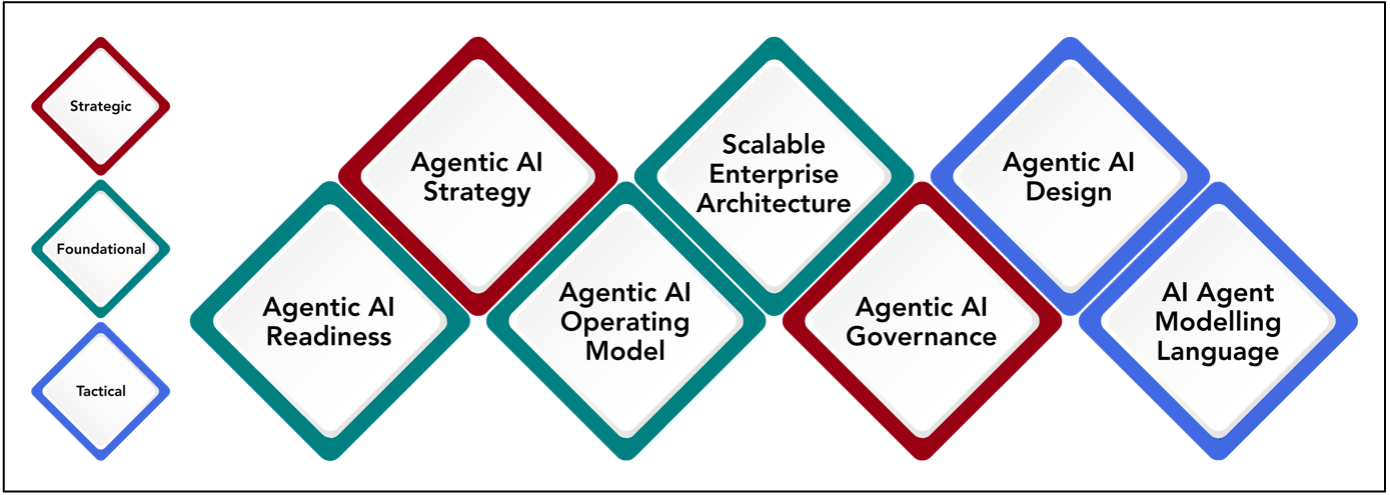
From AI Assistants to Swarms of Thousands of Collaborating AI Agents: Is Your Architecture Ready?

Agentic AI is likely to create most issues in some areas more than others. The Agentic Architecture Framework identifies seven areas that will require more support in the forms of new or updated frameworks, tools and techniques to support Agentic AI capability-building and architecture development. ... Agentic AI Strategy begins with defining a clear target state across the Agentic AI maturity dimensions and levels. This step establishes the organization’s AI aspirations and provides a benchmark for future transformation. Once the target state is identified, the next step involves conducting a GAP analysis to determine the differences between current capabilities in the previous step, and the organization’s ambition. With these gaps clarified, organizations can then focus on identifying and quantifying high-impact AI use cases that align with business objectives and support progression toward the target state. ... The Agentic AI Operating Model defines how AI systems, people, and processes work together to deliver value. It focuses on integrating AI into the organization’s core operations, ensuring that AI agents operate seamlessly within new and existing workflows and alongside human teams.


Quote for the day:

"No person can be a great leader unless he takes genuine joy in the successes of those under him." -- W. A. Nance

Daily Tech Digest - October 13, 2024

Fortifying Cyber Resilience with Trusted Data Integrity

While it is tempting to put all of the focus on keeping the bad guys out, there is an important truth to remember: Cybercriminals are persistent and eventually, they find a way in. The key is not to try and build an impenetrable wall, because that wall does not exist. Instead, organizations need to have a defense strategy at the data level. By monitoring data for signs of ransomware behavior, the spread of the attack can be slowed or even stopped. It includes analyzing data and watching for patterns that indicate a ransomware attack is in progress. When caught early, organizations have the power to stop the attack before it causes widespread damage. Once an attack has been identified, it is time to execute the curated recovery plan. That means not just restoring everything in one action but instead selectively recovering the clean data and leaving the corrupted files behind. ... Trusted data integrity offers a new way forward. By ensuring that data remains clean and intact, detecting corruption early, and enabling a faster, more intelligent recovery, data integrity is the key to reducing the damage and cost of a ransomware attack. In the end, it’s all about being prepared. 


Regulating AI Catastophic Risk Isn't Easy

Catastrophic risks are those that cause a failure of the system, said Ram Bala, associate professor of business analytics at Santa Clara University's Leavey School of Business. Risks could range from endangering all of humanity to more contained impact, such as disruptions affecting only enterprise customers of AI products, he told Information Security Media Group. Deming Chen, professor of electrical and computer engineering at the University of Illinois, said that if AI were to develop a form of self-interest or self-awareness, the consequences could be dire. "If an AI system were to start asking, 'What's in it for me?' when given tasks, the results could be severe," he said. Unchecked self-awareness might drive AI systems to manipulate their abilities, leading to disorder, and potentially catastrophic outcomes. Bala said that most experts see these risks as "far-fetched," since AI systems currently lack sentience or intent, and likely will for the foreseeable future. But some form of catastrophic risk might already be here. Eric Wengrowski, CEO of Steg.AI, said that AI's "widespread societal or economic harm" is evident in disinformation campaigns through deepfakes and digital content manipulation. 


The Importance of Lakehouse Formats in Data Streaming Infrastructure

Most data scientists spend the majority of their time updating those data in a single format. However, when your streaming infrastructure has data processing capabilities, you can update the formats of that data at the ingestion layer and land the data in the standardized format you want to analyze. Streaming infrastructure should also scale seamlessly like Lakehouse architectures, allowing organizations to add storage and compute resources as needed. This scalability ensures that the system can handle growing data volumes and increasing analytical demands without major overhauls or disruptions to existing workflows. ... As data continues to play an increasingly central role in business operations and decision-making, the importance of efficient, flexible, and scalable data architectures will only grow. The integration of lakehouse formats with streaming infrastructure represents a significant step forward in meeting these evolving needs. Organizations that embrace this unified approach to data management will be better positioned to derive value from their data assets, respond quickly to changing market conditions, and drive innovation through advanced analytics and AI applications.


Open source culture: 9 core principles and values

Whether you’re experienced or just starting out, your contributions are valued in open source communities. This shared responsibility helps keep the community strong and makes sure the projects run smoothly. When people come together to contribute and work toward shared goals, it fuels creativity and drives productivity. ... While the idea of meritocracy is incredibly appealing, there are still some challenges that come along with it. In reality, the world is not fair and people do not get the same opportunities and resources to express their ideas. Many people face challenges such as lack of resources or societal biases that often go unacknowledged in "meritocratic" situations. Essentially, open source communities suffer from the same biases as any other communities. For meritocracy to truly work, open source communities need to actively and continuously work to make sure everyone is included and has a fair and equal opportunity to contribute. ... Open source is all about how everyone gets a chance to make an impact and difference. As mentioned previously, titles and positions don’t define the value of your work and ideas—what truly matters is the expertise, work and creativity you bring to the table.


How to Ensure Cloud Native Architectures Are Resilient and Secure

Microservices offer flexibility and faster updates but also introduce complexity — and more risk. In this case, the company had split its platform into dozens of microservices, handling everything from user authentication to transaction processing. While this made scaling more accessible, it also increased the potential for security vulnerabilities. With so many moving parts, monitoring API traffic became a significant challenge, and critical vulnerabilities went unnoticed. Without proper oversight, these blind spots could quickly become significant entry points for attackers. Unmanaged APIs could create serious vulnerabilities in the future. If these gaps aren’t addressed, companies could face major threats within a few years. ... As companies increasingly embrace cloud native technologies, the rush to prioritize agility and scalability often leaves security as an afterthought. But that trade-off isn’t sustainable. By 2025, unmanaged APIs could expose organizations to significant breaches unless proper controls are implemented today. ... As companies increasingly embrace cloud native technologies, the rush to prioritize agility and scalability often leaves security as an afterthought. But that trade-off isn’t sustainable. By 2025, unmanaged APIs could expose organizations to significant breaches unless proper controls are implemented today.


Focus on Tech Evolution, Not on Tech Debt

Tech Evolution represents a mindset shift. Instead of simply repairing the system, Tech Evolution emphasises continuous improvement, where the team proactively advances the system to stay ahead of future requirements. It’s a strategic, long-term investment in the growth and adaptability of the technology stack. Tech Evolution is about future-proofing your platform. Rather than focusing on past mistakes (tech debt), the focus shifts toward how the technology can evolve to accommodate new trends, user demands, and business goals. ... One way to action Tech Evolution is to dedicate time specifically for innovation. Development teams can use innovation days, hackathons, or R&D-focused sprints to explore new ideas, tools, and frameworks. This builds a culture of experimentation and continuous learning, allowing the team to identify future opportunities for evolving the tech stack. ... Fostering a culture of continuous learning is essential for Tech Evolution. Offering training programs, hosting workshops, and encouraging attendance at conferences ensures your team stays informed about emerging technologies and best practices. 


Singapore’s Technology Empowered AML Framework

Developed by the Monetary Authority of Singapore (MAS) in collaboration withhttps://cdn.opengovasia.com/wp-content/uploads/2024/10/Article_08-Oct-2024_1-Sing-1270-1.jpg six major banks, COSMIC is a centralised digital platform for global information sharing among financial institutions to combat money laundering, terrorism financing, and proliferation financing, enhancing defences against illicit activities. By pooling insights from different financial entities, COSMIC enhances Singapore’s ability to detect and disrupt money laundering schemes early, particularly when transactions cross international borders(IMC Report). Another significant collaboration is the Anti-Money Laundering/Countering the Financing of Terrorism Industry Partnership (ACIP). This partnership between MAS, the Commercial Affairs Department (CAD) of the Singapore Police Force, and private-sector financial institutions allows for the sharing of best practices, the issuance of advisories, and the development of enhanced AML measures. ... Another crucial aspect of Singapore’s AML strategy is the AML Case Coordination and Collaboration Network (AC3N). This new framework builds on the Inter-Agency Suspicious Transaction Reports Analytics (ISTRA) task force to improve coordination between all relevant agencies.


Future-proofing Your Data Strategy with a Multi-tech Platform

Traditional approaches that were powered by a single tool or two, like Apache Cassandra or Apache Kafka, were once the way to proceed. However, now used alone, these tools are proving insufficient to meet the demands of modern data ecosystems. The challenges presented by today’s distributed, real-time, and unstructured data have made it clear that businesses need a new strategy. Increasingly, that strategy involves the use of a multi-tech platform. ... Implementing a multi-tech platform can be complex, especially considering the need to manage integrations, scalability, security, and reliability across multiple technologies. Many organizations simply do not have the time or expertise in the different technologies to pull this off. Increasingly, organizations are partnering with a technology provider that has the expertise in scaling traditional open-source solutions and the real-world knowledge in integrating the different solutions. That’s where Instaclustr by NetApp comes in. Instaclustr offers a fully managed platform that brings together a comprehensive suite of open-source data technologies. 


Strong Basics: The Building Blocks of Software Engineering

It is alarmingly easy to assume a “truth” on faith when, in reality, it is open to debate. Effective problem-solving starts by examining assumptions because the assumptions that survive your scrutiny will dictate which approaches remain viable. If you didn’t know your intended plan rested on an unfounded or invalid assumption, imagine how disastrously it would be to proceed anyway. Why take that gamble? ... Test everything you design or build. It is astounding how often testing gets skipped. A recent study showed that just under half of the time, information security professionals don’t audit major updates to their applications. It’s tempting to look at your application on paper and reason that it should be fine. But if everything worked like it did on paper, testing would never find any issues — yet so often it does. The whole point of testing is to discover what you didn’t anticipate. Because no one can foresee everything, the only way to catch what you didn’t is to test. ... companies continue to squeeze out more productivity from their workforce by adopting the cutting-edge technology of the day, generative AI being merely the latest iteration of this trend. 


The resurgence of DCIM: Navigating the future of data center management

A significant factor behind the resurgence of DCIM is the exponential growth in data generation and the requirement for more infrastructure capacity. Businesses, consumers, and devices are producing data at unprecedented rates, driven by trends such as cloud computing, digital transformation, and the Internet of Things (IoT). This influx of data has created a critical demand for advanced tools that can offer comprehensive visibility into resources and infrastructure. Organizations are increasingly seeking DCIM solutions that enable them to efficiently scale their data centers to handle this growth while maintaining optimal performance. ... Modern DCIM solutions, such as RiT Tech’s XpedITe, also leverage AI and machine learning to provide predictive maintenance capabilities. By analyzing historical data and identifying patterns, it will predict when equipment is likely to fail and automatically schedule maintenance ahead of any failure as well as providing automation of routine tasks such as resource allocations. As data centers continue to grow in size and complexity, effective capacity planning becomes increasingly important. DCIM solutions provide the tools needed to plan and optimize capacity, ensuring that data center resources are used efficiently and that there is sufficient capacity to meet future demand.


Quote for the day:

“Too many of us are not living our dreams because we are living our fears.” -- Les Brown