Daily Tech Digest - June 14, 2018

Containerized Apps: An 8-Point Security Checklist

Image Source: Sheila Fitzgerald via Shutterstock
Containers allow applications to be abstracted from the underlying infrastructure on which they run. They give developers a way to package applications into smaller chunks that can run on different servers, thereby making them easier to deploy, maintain, and update. But securing containerized applications requires a somewhat different approach compared with securing traditional application environments. That's because they are a bit harder to scan for security vulnerabilities, the images on which they are built are often unverified, and standardization in the space is still evolving. Importantly, containers also can be spun up and down quickly, making them somewhat ephemeral in nature from a security standpoint. "Even though container technology may be a new concept to companies deploying them, the idea behind them should be familiar," says Kirsten Newcomer, senior principal product manager, security at Red Hat. Organizations need to think about security through the application stack both before deploying a container and throughout its life cycle.


Cisco opens DNA Center network control and management software

Analysts said opening DNA Center to the world is potentially a good move and could help customers more easily build strategic applications, but it will take a big effort make it a successful venture. “DNA Center is Cisco's strategic management platform going forward, and we believe it will consume functionality that is currently distributed across several products. This should help as Cisco customers have cited multiple management tools as an ongoing challenge,” said Andrew Lerner, research vice president with Gartner.  “So, this is a move in the right direction, but much work remains. For example, much of the data-center-networking portfolio including ACI and Nexus 9000 switches are not well integrated into DNA Center at this point,” Lerner said. “This announcement is about opening up DNA Center’s capabilities via API to do things such as orchestrating with other vendors and platforms – like Infoblox or ServiceNow. This can add to the value of the DNA Center, platform if third parties and customers use the APIs and/or SDK to develop integrations. However, that potential is largely aspirational at this point, as the depth and breadth of integrations that will be created are undetermined,” Lerner said.


Encryption is under attack, says Venafi CEO Jeff Hudson

Unfortunately, encryption is currently under attack from not one, but two sources – governments seeking backdoor access to encryption algorithms, and criminals wanting to breach encryption to gain access to sensitive data. Although she later backed down, former UK home secretary Amber Rudd demanded last year that technology companies create backdoors in messaging apps to give the security services access to encrypted communications.  More recently, FBI director Christopher Wray renewed his call for backdoors in encryption, exclusively for the use of law enforcement agencies, and US senator Dianne Feinstein is spearheading a campaign for law enforcement to have access to any information sent or stored electronically.  “I think there is a naivety about the cyber world and how to secure it,” said Hudson. “People tend to run off and make proclamations, like installing a backdoor is a really good idea.” Governments want encryption to work, but they also want to be able to access encrypted information in order to pursue criminals. However, installing a backdoor in an encryption system would create a fundamental vulnerability in the protection that would inevitably be exploited.


Optimizing an artificial intelligence architecture: The race is on


Many GPU-based solutions are based on direct-attached storage (DAS) deployment models, which makes AI's distributed training and inferencing very difficult to do. As a result, staging and management of these deep learning data pipelines can become complex, time-consuming tasks. This bottleneck is being addressed with non-volatile memory express, or NVMe, which was originally designed to provide better connectivity between solid-state drives (SSDs) and traditional enterprise servers. Now, it is being baked into new I/O fabrics to improve AI workloads. The thinking is that NVMe over Fabrics (NVMeF), as these interfaces are called, will help reduce the overhead in converting between network protocols and in managing the idiosyncrasies of each type of SSD. This could allow CIOs to justify the cost of AI apps that use larger data sets. There are risks with NVMeF, starting with the high cost of investing in the bleeding edge. Plus, the industry has not settled on a vendor-neutral approach to NVMeF yet, which means CIOs also need to be wary of vendor lock-in as they choose a product.


What is a CASB? What you need to know before you buy

cloud security
Gartner predicts that by 2020, more enterprises will use CASBs than not, which represents a big jump from the 10 percent that used them at the end of 2017. Several years ago, many enterprises purchased CASBs to stem the tide of what was then called shadow IT and is now considering standard operating procedure in many businesses. IT managers would get a call from their commercial Dropbox sales rep and be told that hundreds of their users were using personal Dropbox accounts, which was often news that they didn’t want to hear. That was the initial sales pitch by the CASB vendors: we can discover where all your cloud data lies and help to protect it. Traditional security tools didn’t provide this visibility, especially when the network traffic never was seen by the corporate data center. “I want to have control over my data, even when it isn’t residing in my own machines,” said Steve Riley of Gartner. The first attempts at using CASBs were eye-opening for many corporate IT managers. When they were first deployed, IT would find ten times the number of cloud services in use than they thought they had estimated, according to Riley. That turned into a big selling point.


How do you retain your data scientists?

The single largest effect we observed involved office politics, which can be a serious problem for data scientists because many feel poorly equipped to handle it. And companies that are building data science teams may struggle to provide the support and direction they need—especially if they’re new to the game. Data scientists in a strife-ridden work environment—compared with one free of infighting, and with all other factors being equal—had job satisfaction that was 1.3 points lower, making it the biggest move we saw in the entire data set. But it would be a mistake to think that allowing them to work remotely would be an effective bandage for a difficult office environment. We discovered that the more people work off-site, the more affected they are by political issues: Remote workers in politicized work environments experienced a job satisfaction decline of 1.5 points, compared with a decline of 1.2 points for employees always in the office. Clearly, a strong corporate culture gives you the flexibility to allow more remote work.


predictive analytics for emails
Predictive analytics has been used in a variety of fields to minimize waste, increase effective utilization of resources and help all stakeholders find better parity with organizational goals. It hasn’t been put to the test in the field of innovation to the same extent as fields of finance, public polling, law enforcement and a number of other fields. However, that is primarily because it takes time to develop predictive analytics models and the forecasts are often made years into the future. ... Demographics are major predictors of demand for various products and services. One of the main reasons that companies have difficulty introducing successful products to the market is that they have a hard time forecasting changes in demographics. They often assume that the composition of income, ethnicities, gender, and other factors among the general population will remain static. They are often blindsided when the representation of some groups grows faster than expected, which changes the level of demand for their product. ... Studying other products can be a great way to determine the likelihood of success for a similar one. If a product developed around a particular market failed in the past, there is a good chance that it will fail again, unless there has been a major shift in the market.


Is your company part of the GDPR 'mobile loophole'?

Mobile tech, and especially mobile brought into companies through BYOD, has unique challenges for companies that need to comply with General Data Protection Regulations (GDPR) — and that’s virtually all companies, not just the ones in Europe. The regulations compel companies to manage personal data and protect privacy, and they provide individuals to have a say in what and how data about them is used. GDPR has several disclosure and control requirements, such as providing notice of any personally identifiable data collection, notifying of any data breaches, obtaining consent of any person for whom data is being collected, recording what and how data is being used, and providing a right for people whose data is being collected to see, modify, and/or delete any information about them from corporate systems. The problem is many corporate systems now extend into mobile branches that include smartphones and, in some cases, tablets. Analysts at J.Gold Associates, LLC. estimate that in about 35 to 50 percent of cases, these devices are not actually corporate devices, but personal devices being used by employees of the company in their daily work.


How Technology Is Impacting the Future of Work Through Fragmentation


What technology has done is break up this glue between value chains as it has made transaction costs low by lowering the cost of communication and information exchange. As the cost of exchanging information goes down, at some time the balance between bottom-up information flow and top-down decision-making goes out of kilter. There is too much information to process for the top to make efficient decisions. To use a system’s term, the throughput of information renders centralized decision-making an inefficient value chain mechanism. The system - in this case a company or an organization - therefore adapts by fragmenting its structure and changing the balance between responsibility and accountability of its agents. A new structure begins to emerge with new job titles, new leadership positions, new jobs, new requirements, and even has cultural impacts. Capitalism after all is as much a cultural artefact as it is an economic one.  It is this adaptive phenomenon that I call the Theory of Fragmentation, this continuous breaking of existing rigid structures to create a flatter, more spread out structure that stems from the combinatorial evolution of technology


What is cloud-native? The modern way to develop software

What is cloud-native? The modern way to develop software
“A cloud native app is architected specifically to run in the elastic and distributed nature required by modern cloud computing platforms,” says Mike Kavis, a managing director with consulting firm Deloitte. “These apps are loosely coupled, meaning the code is not hard-wired to any of the infrastructure components, so that the app can scale up and down on demand and embrace the concepts of immutable infrastructure. Typically, these architectures are built using microservices, but that is not a mandatory requirement.” For cloud-native applications, the big difference then is really how the application is built, delivered, and operated, says Andi Mann, chief technology advocate at Splunk, a cloud services provider. “Taking advantage of cloud services means using agile and scalable components like containers to deliver discrete and reusable features that integrate in well-described ways, even across technology boundaries like multicloud, which allows delivery teams to rapidly iterate using repeatable automation and orchestration.” Cloud-native app development typically includes devops, agile methodology, microservices, cloud platforms, containers like Kubernetes and Docker, and continuous delivery—in short, every new and modern method of application deployment.


Quote for the day:


"If no good can come from a decision, then no decision should be made." -- Simon Sinek


Daily Tech Digest - June 13, 2018

5 Free Online Machine Learning Courses

(Image: NicoElNino/iStockphoto)
"Data scientist roles have grown over 650 percent since 2012, but currently 35,000 people in the US have data science skills, while hundreds of companies are hiring for those roles - even those you may not expect in sectors like retail and finance - supply of candidates for these roles cannot keep up with demand," the report said. What's more, the report cites the growth rate for machine learning engineer jobs to be higher than that of any other job over the last 5 years. Just what is a machine learning engineer, and how can you get the skills needed to perform this job? The LinkedIn report also looked at the career paths of professionals who are currently employed as machine learning engineers. The top jobs leading to that the machine learning title are software engineer, research assistant, teaching assistant, data scientist, and system engineer. The top skills for that job title are machine learning, research, algorithms, software, and deep learning. Experts at the recent AI Summit at Interop ITX 2018 said that to keep up with their own skill sets they attend conferences, read academic papers, participate in professional communities. Cloudera Fast Forward Labs Data Scientist Friederike Schuur said that there is so much material online that people can use to improve their skills.


Regulatory Compliance as a Strategic Weapon – conclusion

Offensive and defensive data strategies have different objectives. The objective of a defensive data strategy is to keep data secure and private, while also maintaining proper governance and regulatory compliance. This requires understanding all requirements and effectively implementing the right processes to meet them. In the end, you create an SVOT data set to share with regulators. With an offensive data strategy, the goal is to improve the firm’s competitive position, enter new markets, or grow the business. In these cases, you may want to manipulate data in a different way, or at least look at it through a different lens. An institution doesn’t necessarily have to comply with a “single version of the truth” when taking on these initiatives. Therefore, a firm could end up with multiple versions of truth. The defensive data strategy is usually the responsibility of the data engineers and Chief Data Officer. The offensive strategy, however, is best in the hands business analysts. Analysts need the freedom to create new “versions of a truth” that help them develop new business initiatives.


See How This Hospital Uses Artificial Intelligence To Find Kidney Disease


"We now have exponential increases in digital healthcare data due to the internet, electronic health records, personal health records, cellphones, wearable devices, digital medical devices, sensors and many other factors," said Drew Gantt. partner and co-chair, Healthcare, Venable LLP. "This data will fuel algorithmic solutions, clinical decision support tools, and visual tools in the near term." Gantt says that healthcare businesses should focus on using AI technology to solve problems, uncover value, promote their mission and create competitive advantage rather than merely using it for technology's sake or to have the latest thing. Mount Sinai Hospital in New York announced a partnership on June 1, 2018, with the AI healthcare startup, RenalytixAI, to create an AI tool that identifies patients at the hospital who are at risk for advanced kidney disease.  In 2017, the Global Kidney Health Atlas reported that 1 in 1o people worldwide has chronic kidney disease. And, a patient with kidney disease traditionally won't begin treatment until dialysis is needed.


What’s the Difference Between Data Integration and Data Engineering?

Data Engineering develops, constructs and maintains large-scale data processing systems that collects data from variety of structured and unstructured data sources, stores data in a scale-out data lake and prepares the data using ELT (Extract, Load, Transform) techniques in preparation for the data science data exploration and analytic modeling: Collects the data from a variety of traditional and non-traditional sources, stores it in a data repository, cleanses and integrates the data (data prep) for analysis; Designers, builders and managers of the information and big data infrastructure. They co-develop the architecture that helps analyze and process data that the organization required and further optimize those systems to perform smoothly; Evaluates, compares and improves the different approaches including design patterns innovation, data lifecycle design, data ontology alignment, annotated datasets, and elastic search approaches; Prepares the data for the data scientist exploration and discovery process. For example, we have data containing 30 attributes where two attributes are used to compute another attribute (for example, an index), and that computed feature is used for further analysis.


Guiding Brands Through Digital Transformation

Guiding Brands Through Digital Transformation
Digital transformation has allowed some brands to move from a “me too” position to one of leadership where they serve as trailblazers who build loyalty and turn consumers into brand ambassadors. It can allow brands to pivot into new markets, or provide new offerings that leverage and enhance their current market position, propelling them to the front of the pack. For some brands this digital transformation might be their first foray into utilizing technology, for others it could be a change or improvement to an existing technology that leverages a digital ecosystem in a way previously not considered. For everyone, it is an essential journey. This digital journey is one of the most critical investments that a brand will undertake in the coming years. It has the potential to fundamentally change a brand’s relationship with its customers, as well as to drive entirely new business models. This journey becomes much easier when undertaken with partners who bring cross-functional skills to the table. At Radius Innovation & Development, we help companies find their way through the strategy of ideation and digital transformation.


Why Connected Cars Need a New Approach for Security


At the least dangerous end of the scale the risks include hackers using ransomware to take control of infotainment systems and demand payment in exchange for users regaining control of their devices. But as more parts of the car become connected, the dangers grow. Smart locks are fast becoming a feature of many cars, allowing drivers the added convenience of keeping their keys in their pocket when they open up and start the car, and driving the growth of the P2P car sharing economy by giving approved individuals access to a lender’s car without having to meet face to face. However, without the proper protections, drivers could soon discover that hackers are able to cheat the system and steal their vehicles. The dangers don’t stop at theft. White hat hackers have already demonstrated how they can access a car’s CAN protocol to shut down a vehicle’s security mechanisms, including the airbags and brakes. It makes cyber attacks a potentially lethal weapon and gives manufacturers a powerful incentive to tighten their security measures.


The Next Frontier Of Artificial Intelligence: Building Machines That Read Your Emotions


Emotional intelligence is what allows us to take the feelings and considerations of other people into account in the solutions we make. And so far, progress here has been limited. Alexa, helpful as she may be in some circumstances, will not consider your feelings, or those of others affected by her actions, as she keeps your smart home running smoothly. But all that could be about to change – in fact, has to change, if AI is to reach its potential as a tool for assisting in our business and day-to-day lives. Recently, emotion-focused AI developer Affectiva became one of the few small businesses to be asked to join the Partnership on AI to Benefit People and Society. The interest of the “grand masters” of AI which make up the partnership – Google, Microsoft, Facebook, etc – in Affectiva’s growing business is a sure sign that this overlooked aspect of AI is starting to get the attention it deserves. Affectiva co-founder and CEO Rana el Kaliouby talked to me about her company’s work to develop what she calls “multi-modal emotion AI”. There may already be a growing understanding of how sentiment analysis can help machines understand how humans are feeling, and adapt their behavior accordingly.


How change data capture technology drives modern data architectures


The methods and terminology for data transfer tend to vary by target. While the transfer of data and metadata into a database involves simple replication, a more complicated extract, transform and load (ETL) process is required for data warehouse targets. Data lakes, meanwhile, typically can ingest data in its native format. Finally, streaming targets require source data to be published and consumed in a series of messages. Any of these four target types can reside on-premises, in the cloud, or in a hybrid combination of the two. In practice, most enterprises have a patchwork of the architectures described here, as they apply different engines to different workloads. A trial-and-error learning process, changing business requirements, and the rise of new platforms all mean that data managers will need to keep copying data from one place to another. Data mobility will be critical to the success of modern enterprise IT departments for the foreseeable future. ... By moving and processing incremental data and metadata updates in real time, these organizations have reduced or eliminated the need for resource-draining and disruptive batch (a.k.a. full) loads.


The future of work requires a new C-suite

Foutty referred to the C-suite's traditional structure as being all about command and control, with clear direction and dictation from the CEO. A leader's geographic location was often paramount for his involvement in C-suite 1.0: The closer to the CEO, the better. C-suite 2.0, where most C-suites are today, focuses on functional expertise and depth of knowledge. Those hired into leadership roles of CIO, CFO, CMO and so on were seen as "the best and brightest in their domain," Foutty said. It is this unforgiving focus on expertise that triggered the still ongoing proliferation of C-suite titles,according to Foutty. Take the chief digital officer (CDO) as an example. As companies start to develop a digital business strategy, they are sometimes prone to establish a CDO role to lead the charge. But the role of the CDO is a Band-Aid for a bigger trend that will affect the future of work, in Deloitte's view. Technology -- be it digital, AI or robotics -- is no longer a back-office modernization or an upgrade. It's changing how companies compete for customers and for employees.


Automation critical to scalable network security

Automation critical to scalable network security
Changing firewall rules can be a long and painful process, and removing rules can be even more painful, which is why firewall rules wind up being unmanageable in a fairly short period of time. With Tufin's product, though, customers can make changes and propagate them across all the firewalls in a matter of minutes instead of having to touch each box one at a time. Another new feature of Orchestration Suite R18-1 is the ability to migrate the configuration from Cisco’s Adaptive Security Appliance (ASA) to Firepower. Without an automated tool, migrating from one product to the other can take a significant amount of time and be filled with errors, as rules have to be manually ported from one system to the other. Any mistake is then carried over. The complexity of this process often holds companies back from upgrading or switching platforms. Tufin’s products make moving from ASA to Firepower error-free, reducing the risk of switching while validating the rules to ensure no broken or expired rules are migrated. The enhanced support in TOS 18-1 will allow security professionals to ensure they meet compliance mandates with an auditable, documented process for Firepower policy changes.


Quote for the day:


"Positive and powerful things happen when you distance yourself from negativity." -- Steve Gutzler


Daily Tech Digest - June 12, 2018

Apple Watch, IoT, Internet of Things
The more common, and much harder to deal with problem, is IoT devices located in places that can’t easily be reached. Last fall, for example, I wrote about the (voluntary) recall of almost half a million St. Jude Medical IoT devicesdue to a risk of hacking. No big deal, right? Devices get recalled for security fixes all the time. Unfortunately, in this case, the devices involved were pacemakers installed not in some easy-access equipment rack, but in patients’ chests. Swapping them out would be a verybig deal (fortunately, as of publication of the post, none of the pacemakers had actually been compromised). The issue goes much further than watches and pacemakers. Smart cars have IoT systems that will become obsolete long before the vehicles in which they’re installed reach the end of their useful lives (sort of like aging 8-track players still riding around in the dashboards of cars from the 1980s). And it gets worse. For example, many industrial sensors essential to delivering the benefits of IoT are located in hard-to-reach spots where replacement or upgrades would be difficult, expensive, or hazardous.


Industry must do more to open up cyber security profession


“It is scary that for many young people, without the right words at the right moment. It is all too easy to end up going down the wrong path, not because they are bad people, but just because they are looking for opportunities to apply the skills they have. I had no interest in stealing credit cards, but I did want to hack stuff,” Lyne added. According to Lyne, there are two important issues that industry in general, and the cyber security industry in particular, needs to focus on. ...  “I have spoken to many amazingly talented people coming out of competitions aimed at finding cyber security talent who are shocked that their skills can actually be used as a career. ... “Second, we need to ensure that employers are not overlooking talented people by having unrealistic recruitment criteria. We are seeing people who have proven that they have the right skills, and they struggling to find a job because employers are insisting on things like five years’ experience or formal certifications. As a result, they are struggling to get into the industry to prove their worth to get on to the career ladder,” said Lyne.


Digital disruption: How to create a culture of innovation in your organisation

"Innovation should become a day-to-day element of who you are," he says. "Once you get into a can-do mind set, and innovation starts to feel good, you start to develop confidence. You then realise it's OK to try things and make mistakes, and the business starts to create a culture of innovation." O'Connor says the firm has acquired many pioneering startups, where the entrepreneurs remain part of the wider company. That retained knowledge meant that when he had an idea, O'Connor could seek out mentors who had been on a similar journey beforehand. This supporting organisational culture provided guidance, structure and control through an informal mentoring network. O'Connor says that "mini Silicon Valley effect", where you have a critical mass of people who care and collaborate, is when you start making stuff happen. "An idea in isolation is a seed in concrete -- it can't take root. Idea generation is just part of the problem. You need the framework and culture to prove that thinking creatively can produce great results," he says.


People Are Changing the Way They Use Social Media

People walk past a Facebook logo on a shop window
What Facebook is not about is data misuse. That, along with spam, fake news, and clickbait, are things that happen on Facebook, as a recent apology ad from the company put it, but they’re not what Facebook is about. What does Facebook do? It connects. What is Facebook? A community. What is Facebook for? It’s for friends. Research shows that people become closer to each other through intimate self-disclosure. But there’s only so much connecting social-media platforms can do if people are too concerned about privacy to use them for the full breadth and depth of human communication. Paradoxically, these tools that were built to bolster relationships may, by their very nature, be keeping people at a distance from each other. I recently conducted a survey, trying to determine how much people censor themselves on social media and whether the Cambridge Analytica scandal has changed their behavior on Facebook and other platforms. I also shared my survey results with Sauvik Das, an assistant professor of interactive computing at the Georgia Institute of Technology, and Sarita Schoenebeck, the director of the Living Online Lab at the University of Michigan.


Business tech after GDPR: Here's what comes next

For those companies that have done absolutely nothing, I think they're probably in a worse position, if not a really bad position to be quite honest, because you never really know when a regulator might start knocking on the door. But if you've got a partial program in place, you can show an effective program or an effective project plan for putting that program in place, I think most regulators would understand that this is an evolving thing for most organizations and as long as you're in business, you're going to have data, you're going to have to come up against new challenges with the data, as your business moves and changes and modifies, you're going to have to change your data protection profile. So it's going to be an evolution. To me, I think, the date last Friday was really the beginning of the end. Or the end of the beginning, sorry. In regards to putting an effective program in place for data management and data protection.


4 tips for retaining key software and IT talent


A core component of retaining your employees, regardless of their position, is learning what matters most to them. When it comes to tech professionals, remote work options and autonomy are the most in-demand perks. First, prioritize remote work options. If entirely remote positions don’t mesh well with your collaborative company culture, consider allowing tech-focused employees to work remote for three to four days per week. With the emergence of group chat apps like Slack, having employees work remotely doesn't have to mean decreased communication or collaboration. In fact, it might actually lead to increased collaboration, productivity and innovation. Second, give your employees the autonomy they need to get the job done. The reason that many tech professionals are paid so well is because they have niche skills that most other people don't. Trust them and the knowledge they have to get the job done well. There's rarely, if ever, a need to micromanage high-end software development talent. If developers or software engineers feel like they are constantly asked to do things a certain way that doesn't make sense to them, they won't stick around long enough for you to solve the management problem.


Email-based cyber attacks gathering momentum


Email is the number one threat vector, according to Barracuda researchers, precisely because it allows malicious third parties to directly target employees within an organisation, underlining the importance of user education around email-related cyber threats. Despite the availability of tools and technologies such as email encryption, data loss prevention, social engineering detection, phishing simulation and artificial intelligence that can help mitigate these threats, the survey revealed that the vast majority of respondents believed user training and awareness programmes were a vital pre-requisite to improving email security. Survey respondents recognised the insider threat, claiming that poor employee behaviour (79%) was a greater email security concern than inadequate tools (21%). There was most concern over individual staff members falling victim (47%), although executives (37%) were also viewed as a potentially dangerous weak link in the security chain. Finance (26%) and sales (18%) departments were viewed with most caution. Topping concerns for respondents were the fact that these roles and departments have access to sensitive information and systems and were most likely to be targeted.


Google adds single-tenant VMs for compliance, license cares

Google still lags behind AWS and Microsoft Azure in public cloud capabilities, but it has added services and support in recent months to shake its image as a cloud valued solely for its engineering. Google must expand its enterprise customer base, especially with large organizations in which multiple stakeholders sign off on use of a particular cloud, said Fernando Montenegro, a 451 Research analyst. Not all companies will pay the premium for this functionality, but it could be critical to those with compliance concerns, including those that must prove they're on dedicated hardware in a specific location. For example, a DevOps team may want to build a CI/CD pipeline that releases into production, but a risk-averse security team might have some trepidations. With sole tenancy, that DevOps team has flexibility to spin up and down, while the security team can sign off on it because it meets some internal or external requirement. "I can see security people being happy that, we can meet our DevOps team halfway, so they can have their DevOps cake and we can have our security compliance cake, too," Montenegro said.


Active-Active Geo Distribution Strategy: Comparing Merge Replication and CRDT


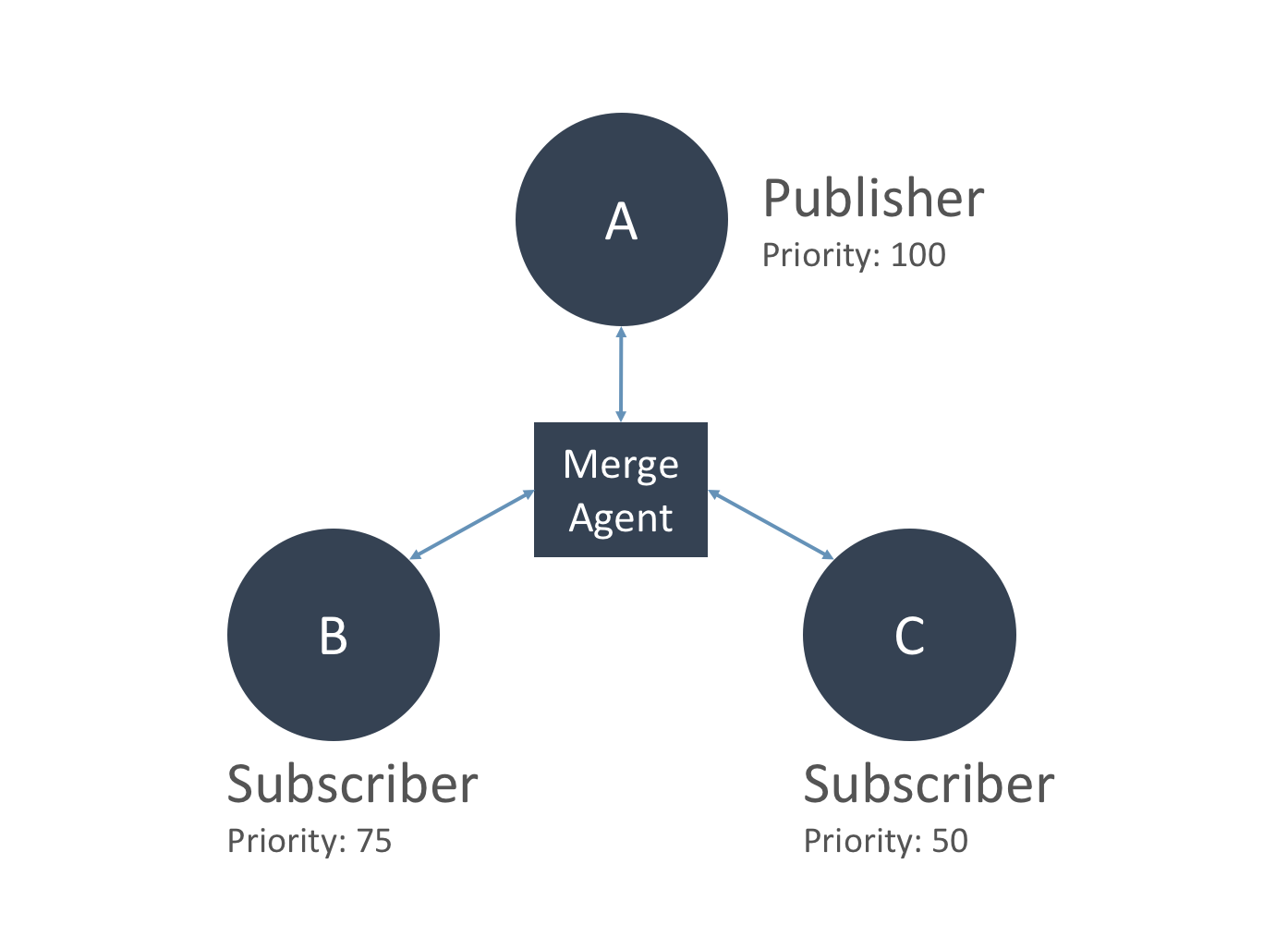
Merge replication is a common technique employed by relational databases. This technique allows you to deploy a distributed database solution in which each database server has its own copy of data. An external agent then collects changes to the local copies and merges them in an effort to force all of the database servers to contain the same copy of data. The topology of typical merge replication has database servers in multiple regions and follows the publisher/subscriber model. One of the servers is identified as a primary server or a publisher, while the rest of the servers are subscribers. In a normal flow, all changes to the publisher trickle down to the subscribers. However, in merge replication, subscribers can make database changes too, and merge all their local changes with the publisher. These changes will eventually go to all subscriber servers. Assuming no conflict occurs during the merge, all changes made to either the publisher or the subscribers will eventually converge as the same copy. The “Merge Agent” is an external service responsible for gathering all the changes to the local database servers and merging them into a single data set. When a conflict occurs, the merge agent follows a predefined set of rules to resolve the conflict.


There’s still a lot of life left in tape backup

This industry likes to abandon technologies as soon as it adopts them, but a few find a way to hang around. I recently purchased a car, and in the finance office was a dot matrix printer, chugging away at the same multipage forms I saw used more than 25 years ago. Tape backup is also hanging in there. With data being produced in ever-increasing numbers, it has to be stored somewhere, and hard drives aren’t enough. For true mass backup, enterprises are still turning to tape backup, and the LTO Program Technology Provider Companies (TPCs) say 2017 shipments grew 12.9 percent over 2016 to 108,457 petabytes (PB) of tape capacity. LTO TPCs is a group consisting of three tape backup providers: HPE, IBM, and Quantum. There are other tape backup providers, such as Oracle, which inherited the StorageTek business from Sun Microsystems and still sells them, but it was not included in the count. Actual unit shipments dropped slightly in 2017, which the organization attributes to customers waiting for new LTO-8-based units to ship. LTO-8 technology offers a compressed transfer rate of 750MB/sec., an improvement over LTO-7’s 400MB/sec. And capacity is increasing to 30TB compressed per cartridge, which is up from 22TB compressed in LTO-7.


Quote for the day:


"You can't lead anyone else further than you have gone yourself." -- Gene Mauch


Daily Tech Digest - June 11, 2018

digital twins woman in profile ai mirror duplicate duo pair
The basic definition of a digital twin: it’s a digital representation of a physical object or system. The technology behind digital twins has expanded to include larger items such as buildings, factories and even cities, and some have said people and processes can have digital twins, expanding the concept even further. Digital twins could be used in manufacturing, energy, transportation and construction. Large, complex items such as aircraft engines, trains, offshore platforms and turbines could be designed and tested digitally before being physically produced. These digital twins could also be used to help with maintenance operations. For example, technicians could use a digital twin to test that a proposed fix for a piece of equipment works before applying the fix the physical twin. With the explosion of IoT sensors, digital-twin scenarios can include smaller and less complex objects, giving additional benefits to companies. ... This is similar to the “run the simulation” scenario often seen in science-fiction films, where a possible scenario is proven within the digital environment. With additional software and data analytics, digital twins can often optimize an IoT deployment for maximum efficiency, as well as help designers figure out where things should go or how they operate before they are physically deployed.


Cloud security: The reason hackers have it so easy will infuriate you

Cloud managers are playing catchup to close the door on the critical data left out in the open. Sophisticated new cybersecurity tools designed to securely store these kinds of credentials in a way that legitimate, automated processes can access, and intruders can’t—and to scan files uploaded to cloud storage to make sure passwords and keys aren’t exposed—are turning the tide, experts say. “Everyone knew this was a bad thing to do,” says Armon Dadgar, founder and co-CTO of San Francisco-based software company HashiCorp. “It wasn’t like anyone had an illusion that keeping these credentials in plain text was smart or sane, but no one had a better answer.” HashiCorp offers an open-source tool called Vault that stores sensitive credentials, encrypted themselves, and strictly limits what people, servers and programs can access them. Vault keeps logs of who accesses the secrets when. In some cases, it can also generate temporary credentials that give people permissions to use cloud resources for a limited time. Last month, cloud industry leader Amazon launched AWS Secrets Manager, its own credential management tool.


5 reasons why edge services are critical to your resiliency strategy

number 5 on fire top five five tips
Edge services have become critical to helping organizations provide performance and security features to internal-facing apps like CRM and ERP systems, as well as customer-facing apps. Companies must direct users to the appropriate networks and infrastructure so they can connect to the proper services. Using edge services to move the point of control closer to the user enhances security and helps ensure compliance with regulatory and privacy specifications, where required. In addition, computing at the edge requires less latency and, with IoT devices, does not require constant connectivity, which would not hamper resiliency. More applications today rely on multi-cloud architectures for flexibility, resilience and improved performance at the edge. The analyst study cited business intelligence and reporting applications, IoT apps and marketing automation apps as among those most likely to use multi-cloud architectures. Moreover, multi-cloud in conjunction with edge services such as managed domain name system (DNS) solutions can improve resilience. DNS not only helps with application performance and network resiliency, but also optimizes web app performance and managing traffic across multi- cloud environments.


London's tech startups are booming, but their biggest challenge is just around the corner


UK companies could also find it harder both to attract the talent they need and actually get them into the country, depending on the harshness of the post-Brexit immigration policy. If the UK becomes less welcoming to foreign workers, companies will struggle to find the staff they need to be competitive, which could make them consider relocating. Longer term, the effect of the UK's exit from the European Digital Single market remains to be seen. This aims to remove barriers to consumers and businesses using and selling digital services across Europe, thereby growing the digital economy across the trading bloc. Another Brexit-related worry is the prospect of European cities such as Frankfurt mounting a challenge London as a financial centre, which may weaken its fin-tech status. A recent report from the Institute for Public Policy Research think-tank said that startups had three concerns about Brexit: "first, the uncertainty it has generated around the retention and recruitment of people; second, the possibility of regulatory divergence; and third, future access to finance."


Coinrail cyber heist highlights need for exchange security


The Coinrail heist has further raised concerns about the lack of regulation in the industry and is the latest in a series of heists at cryptocurrency exchanges, which cyber security analysts say is a logical target for cyber criminals whose primary aim is to amass wealth in the easiest ways possible. The Coinrail attack comes just months after Japan’s Coincheck cryptocurrency exchange lost $400m worth of digital currency and South Korea’s Youbit exchange was forced to file for bankruptcy and close after two cyber attacks, while in 2014 MTGox filed for bankruptcy after losing bitcoins worth around $500m. The Bank of England and global policy-makers are calling for greater regulation of cryptocurrencies to protect the financial system and reduce illicit activities. In March 2018, Bank of England governor Mark Carney said the time had come for regulation to hold the crypto-asset ecosystem to the same standards as the rest of the financial system. “A better path would be to regulate elements of the crypto-asset ecosystem to combat illicit activities, promote market integrity, and protect the safety and soundness of the financial system,” he said.


GDPR: UK Privacy Regulator Open to Self-Certification

Organizations in Europe may eventually be able to self-certify that they are compliant with the EU's General Data Protection Regulation, an official at the U.K.'s independent privacy watchdog said. But for now, "if anyone tries to tell you they're GDPR-certified - they're lying," Nigel Houlden, head of technology policy for the U.K. Information Commissioner's Office, said on Wednesday at the Infosecurity Europe conference in London during a panel discussion on GDPR. "There is no such thing as GDPR certification; there is only compliance that you can work toward," Houlden said. But he noted that the ICO is exploring how organizations might eventually be able to self-certify compliance with a list of GDPR requirements to help prove that they have been trying to comply with GDPR, especially if they should later suffer a breach or be reported to the ICO for some reason. The panel discussion, moderated by Brian Honan, head of Dublin-based BH Consulting, focused on how organizations can maintain compliance with GDPR, which became EU law in 2016. But many organizations appear to have been left scrambling to attempt to do something about GDPR since May 25, which is when each EU member state's privacy watchdog began enforcing GDPR compliance


Strong VPN Review: A Good VPN Service For Rookies

strongvpnlogo
First and foremost, StrongVPN was able to access U.S. Netflix in my tests. The company doesn’t advertise the ability to get around Netflix’s regional restrictions, but at the time of this writing StrongVPN obliged. That could change, however, at any time. There is not a lot to StrongVPN in terms of extras, making this a solid choice for beginners or users looking for simplicity. Click the settings cog in the upper right-hand corner of the app, and the options screen opens. Under the Options tab there are some generic options such as “Start when Windows starts,” “Auto reconnect,” and “Connect on launch.” There’s also a kill switch option that kills all internet activity if the VPN connection drops, but at this writing the feature was not active. The only other place in the app to do any tweaking is under the Protocoltab. StrongVPN defaults to the IKEv2 protocol on Windows, but there are also options for OpenVPN, SSTP, and L2TP. The other tabs are just for looking at your account, diagnostics, and app updates.


How to get developer relations right for your company

devrel.jpg
The first order of business is to determine who your developer community includes. According to SlashData estimates, there are roughly 13 million developers, but that doesn't mean there are 13 million developers interested in your company/product. While some companies absolutely need random developers sitting in their garages to write applications to run on their platforms, that likely doesn't describe your need. In my case, our primary developer audience is employed by system integrators or other software vendors. They don't need campfires. They need APIs, documentation, use cases, and sample code to give them a running start on delivering on customer needs. You only learn this, however, if you listen to them. For example, when I took on my role running our developer ecosystem, I assumed what was needed was more developer assets. This was a gap, but the first-order priority was actually fixing the provisioning and authentication process such that a third-party developer could more seamlessly start working with the APIs we provide. As for internal needs, it was nice that I could tell the product teams to put all their documentation in a central repository, but it was better to learn that the reason they weren't doing so was that the system we had in place was too cumbersome.


The Cost of Fear in Organisational Change

Organisations today aim to adapt to a more collaborative, customer-centric, flexible format. Leaders have a genuine intention of creating an Agile organisation where people thrive and are allowed to make mistakes, as long as they learn from their errors. Experimentation will be the new approach. This is the dream, the quest, the purpose. And we have the “status-quo” of hierarchical organisations, annual targets and budgeting. We have all sorts of planning activities. This is our “status-quo”. The art of storytelling, calls the contradiction between the purpose and the status-quo, “creative tension”. As in all of humanity’s history, this “tension longing for change”,, operates also in the business environment. How can we truly step out of the status-quo and create a new (hi)story for the future of the business place? Without trying to answer this completely, let’s take a first step: let’s start by looking at the status quo’s impact on the aspiration to change. Peter Senge says that true tension is born when the theory exposed (what I aspire to) is different from the theory in action (what I actually do). If the tension is acknowledged, learning can occur. Effective alignment between the exposed theory and the theory in action can be achieved.


Why AI is So Brilliant and So Stupid

Image: Shutterstock
"It's all in the data, that's the number one thing to understand, and the feedback loops on truth," said Warren. "You need to know in a real way what's working and not working to do this well." Daniel Morris, director of product management at real estate company Keller Williams agrees. He and his team have created Kelle, a virtual assistant designed for Keller Williams' real estate agents that's available as iPhone and Android apps. Like Alexa, Kelle has been built as a platform so skills can be added to it. For example, Kelle can check calendars and help facilitate referrals between agents. "We're using technology embedded in the devices, but we have to do modifications and manipulations to get things right," said Morris. "Context and meaning are super important." One challenge Morris and his team run into as they add new skills and capabilities is handling longtail queries, such as for lead management, lead nurturing, real estate listings, and Keller Williams' training events. Agents can also ask Kelle for the definitions of terms that are used in the real estate industry or terms that have specific meaning at Keller Williams.


Quote for the day:


"Great listeners don't just hear what was said, they hear what was meant." -- @LeadToday


Daily Tech Digest - June 10, 2018

Why the transportation sector needs data scientists


Connected vehicles are widely discussed as a way forward in the transportation industry. For both fleet management and individual drivers, IoT can revolutionize the way vehicles function, making for a safer driving experience. Real-time analytics offers predictive maintenance, so drivers are alerted to possible problems before a part breaks down. Sensors placed around cities that are then connected to apps can help drivers find parking spots faster, reducing traffic and emissions. About 30 percent of cars circling a city at any given time are looking for a parking spot, which means not only wasted time for drivers but unnecessary emissions for the environment. IoT can help make a better driving experience and help cities reduce traffic and improve the air at the same time. Honeywell’s IoT Connected Aircraft flew around the world last year to showcase how connectivity changes the way we fly. Not only does Wi-Fi provide a more pleasant in-flight experience for passengers, but IoT technologies enhance flight safety and efficiency as well.


Mastering Transformation in the Public Sector

Because public sector entities find it challenging to define the why—that is, to create a vision for a transformation effort and what it should achieve—and bring about concrete results, they too often focus their attention on designing new policies and planning for their implementation. The result is transformation efforts that fail because they lack buy-in from political and administrative leaders, employees, and citizens or because they fail to deliver on their promises. Such failures only fuel the skepticism about government that transformation is intended to overcome and make future successes more difficult to achieve. Further challenges arise from the complexity and enormity of the transformations that pubic sectors must undertake. First, whereas all corporate transformations set profits as the same ultimate goal, the objectives of a public sector transformation can’t be broken down as simply. Second, cities, provinces, and nations must engage a high number of citizens. These populations are of course much larger than a group of factory or division—and even companywide—employees. 


Not Everyone Understands Digital Transformation

New Research: Not Everyone Understands Digital Transformation
With stories about business transformation occurring all around us, we wanted to know exactly what people are thinking about the topic of digital transformation - not just CEOs and executives - but also employees. The results of the Salesforce Digital Transformation Survey highlighted that while 64% of people are aware that the company they work for considers digital transformation a priority, 69% say they wouldn’t be confident explaining the concept to somebody else. While businesses and brands understand digital transformation and talk about it regularly, our results shine a spotlight on a challenge that must be overcome. People know that digital transformation is happening around them, but don’t fully understand what it is. The benefits of digital transformation won’t fully realize until we work to close the “understanding gap” that exists among the general population. ... We have a definite challenge on our hands with approximately half of the respondents (52%) saying that they have little or no engagement with the process of digital transformation. Individuals must realize the purpose of changing the way they work, why they are re-skilling, and how new systems will make their lives easier and more efficient.


The democratization of data science with Dr. Chris White

“Big data,” much like “artificial intelligence,” are terms that are vague. In fact, they don’t mean anything. Neither big nor data. They’re not qualified. Just like artificial intelligence. And so that’s good and bad. You know, it’s good because there’s a movement. That movement has funding and interest from policymakers. It has the need for understanding implications. But that movement is still very large and very vague. And so, I think about big data, really, in terms of publicly accessible information, as a starting point, because that’s something that people are familiar with. They’ve all gone to a search bar. They’ve all issued a bunch of queries. They’ve all had a bunch of browser tabs open and had that familiar feeling of, gah, there’s just like a lot of information out there. How do I find what I need? How do I organize it? And when that problem is a business problem, it’s even bigger. And so, I think of it like that. Sometimes there’s images, like an iceberg, where what you see from a search bar, what you see if you did a Bing search for a product or a celebrity or an event, and you get a list of links and an answer card, they think of that as data interaction. And it’s true, but behind that there’s a lot more.


Blockchain – Can we trust you? What legal and cybersecurity risks lurk behind the hype?

null
The blockchain hype is a core component of the crypto-craze. The technology behind bitcoin is ingenious, and real-world businesses have invested in it order not to be left behind what some fear may be a disruptive technology. Harvard Business School Professors Marco Iansiti and Karim R. Lakhani see blockchain as a ‘foundational technology’, more like TCP/IP or email, which, whilst it will eventually affect most everyone, due to “barriers to adoption” and “sheer complexity”, the question is when. ... Many are pushing hard and we have seen the use-case in scenarios ranging from recording art provenance, to tracking inventory in global supply chains, evidencing the source of diamonds, recording music copyright, and tokenised ownership of natural assets in Siberia. An interesting use-case may come should Amazon issue is own digital currency, enabling customers to buy direct from Amazon (no banks or credit card companies involved at all – rather like store card points but stored on a blockchain), adding a new layer to the internet: a value-transfer layer. Many examples remain small trials, with most of the complexity still to be ironed-out.


Using Domain-Specific Language to Manipulate NoSQL Databases in Java

"A domain-specific language (DSL) is a computer language specialized to a particular application domain." The DSL has several books, and the most famous one from Martin Fowler says, "DSLs are small languages, focused on a particular aspect of a software system." That is often referred to as a fluent interface. In the NoSQL world, we have an issue, as the picture below shows. We have four different document NoSQL databases doing exactly the same thing, however, with different APIs. Does it make sense to have a standard do these habitual behaviors? In this article, we'll cover who does manipulation with Eclipse JNoSQL API. ... To manipulate any entity in all NoSQL types, there is a template interface. The template offers convenience operations to create, update, delete, and query for NoSQL databases and provides a mapping between your domain objects and JNoSQL. That looks like a template method to NoSQL databases, however, no heritage is necessary. There are DocumentTemplate, ColumnTemplate, GraphTemplate, and KeyValueTemplate.


Wysh launches its AI and human-powered concierge service after 2 years in stealth mode


The startup’s answer to the AI problem? Combining artificial intelligence and real intelligence in a single platform and building the solution on blockchain technology to provide transparency. Wysh provides instant communication between users and businesses through AI and blockchain technologies. This isn’t just about allowing businesses to engage with customers, though. The solution will also facilitate payments, which is why the company recently landed $2 million in a round led by Park Capital, a strategic investment firm focused on fintech. Wysh provides its digital concierge as an API to service providers. It combines AI technology with human concierges and customer service teams, recognizing automatically when a customer needs a real person to answer more complex questions than a chatbot alone can solve. “Wysh is B2B in terms of client acquisition strategy,” executive chair Alexander Lopatine told me. “We work with corporate clients to provide them the technology, allowing their customers to access their internal services through a chat interface.”


E-voting and DDoS concerns: The devil’s in the details

As for the misconfiguration of allowing traffic from outside of the Incapsula network to the origin server if the attackers know the IP address of the server, I’m glad this was brought up. This is an important part of proper onboarding to our services (blocking all traffic not coming from Incapsula ranges). Another attack scenario, according to the paper, would be if a malicious attacker injects malicious javascript as part of the javascript injections done by Incapsula. While this is true, it can also be said about any third-party JavaScript being loaded by web applications on the customer website, including a voting website (such as advertisements, analytics, monitoring and framework libraries). That’s why we take precautions to make sure that it doesn’t occur. Our environments are protected and audited, and any configuration change needs to be approved by multiple people in a process that is thoroughly tracked. Consequently, Imperva would know about a JS injection, even if the JS file remained in the same size.


Italian banks test blockchain for interbank reconciliations

Group of arrows with one odd pointing other direction
First previewed in December, the new process will make bilateral channels available through which each counterparty can exchange information via a series of smart contracts providing real-time feedback on transactions passing over the network. ABI Lab is collaborating with NTT Data for development of the application and SIA as provider of the node infrastructure and verification process. SIA in November announced plans to set up a 600 node network for bank clients, government agencies and corporates to connect to blockchain apps developed by the R3 consortium. Banking co-operative Swift has been running its own proof-of-concept trials on the use of distributed ledger technology for nostro account reconciliation via Hyperledger Fabric v1.0 technology. While the PoC proved a resounding success, it threw up a number of significant operational challenges that would need to be addressed in advance of a commercial roll-out. By restricting use to national banks, the Italian experiment could overcome the issues of scale facing a global provider like Swift.


Is Your Product Roadmap Still Meeting Customer Needs?

Most companies diligently follow information about the state of their industry or technology, but the unfortunate reality is that it’s less common for companies to stay as closely attuned to their customers’ needs and experiences. To successfully scale a product, you must ensure that your roadmap isn’t just pointed towards the long-term vision, but that the initiatives and features on the roadmap are tied to your customers’ core needs. By consistently including customer research and validation in your product design and development process, you’ll have the insight, direction, and confidence you need to keep your roadmap flexible, while still driving towards the overarching vision. ... Most companies have no problem collecting quantitative data. It’s relatively quick and easy to implement any number of analytics solutions to give you visibility into what areas of your product customers are using the most, how frequently they’re logging in and what your churn rate is. These are valuable sources of data that can inform important decisions about your product, but these metrics don’t always tell the whole story.


Quote for the day:


"Just when you think it can't get any worse, it can. And just when you think it can't get any better, it can." -- Nicholas Sparks


Daily Tech Digest - June 09, 2018


The old school adopters who firmly believed that all tokens and offerings should be based on a “game-changing” software-based utopian utility platform creating borderless financial technologies and instruments are now bearing witness to more than 50% of those projects being in ruins or reported on as blatant money grabs. Its only funny money, right? Until you lose it. Slick websites, vaporware prototypes and teams that either have no proven track record or were often fake, promising great returns, but without an understandable or executable plan to monetization. Internet Deja Vu all over again, a la 2000 anyone? And just like in 2000, the industry is beginning to shift to real business, with real business plans, with real proven profitable business models backed by verifiable hard assets and being offered as Security Token Offerings (STO).  For the market to continue to mature into an alternative digital economic model for the future, this old school way of thinking “utility only” will need to evolve to be more accepting of asset-backed tokens and offerings. With regulations on the rise and token sales from 2017 literally in shambles, both existing and new investors entering the crypto space are becoming more risk averse


The State of Enterprise Mobility in 2018: Five Key Trends


Samsung recently commissioned Oxford Economics to conduct an in-depth study into the state of enterprise mobility in 2018, focusing in particular on the differences between organizations who have adopted Bring Your Own Device (BYOD) policies and those who have chosen to provide mobile devices to their workforce. The research, based on survey of 500 senior IT and business leaders and in-depth interviews, also quantifies the total investment in mobile-enablement for the enterprise, highlighting areas for cost-efficiency and the strategies that deliver the greatest return on investment. The study turned up some thought-provoking findings and I’d encourage business leaders involved in setting mobile policies to download the full report or register for the webinar with Oxford Economics to learn more. ... Unsurprisingly, most companies that have opted for a BYOD approach have done so because of the perceived cost savings. These savings can be significant when employees pay for their own mobile service plans, but the survey revealed that increasingly enterprises are providing employees a hefty stipend to compensate for personal mobile usage. In many cases, this stipend wipes out the savings achieved.


The Advent of a New Synergy: the Blockchain & Cloud

A Blockchain based Distributed Cloud will guarantee trust, security and transparency, speed up processes, and keep accurate records that can be accessed by the relevant stakeholders via cloud. This will promote the demand for cloud based services in industries such as real estate, healthcare, banking among others. Blockchain based cloud can help real estate agents and homeowners store property information in a central place, so that anyone with interest in buying and selling property can easily access it. This will cut hours of phone calls, paper pushing, prevent fraud and eliminate middlemen. It can also help address medical data integrity and security in terms of patient information, reduction of errors and fraud and promote transparency. It can have significant impact in tracking and protecting personal healthcare information. It can also address the privacy issue of medical billing logs from a financial angle. Thus, it will not only protect clinical data, but also tell transactions costs, making it harder for healthcare institutions and insurance companies to commit fraud or make errors.


Understanding the Varieties of .NET


.NET Standard 2.0, the latest version, has a very broad API coverage, but numerous missing APIs still exist. It pretty much covers .NET Core, but leaves out a fair amount of .NET Framework. Of course, there’s nothing keeping you from targeting those missing APIs, but then you’re targeting .NET Framework, not .NET Standard, and you’re locked into it until you get rid of those API calls. If you’re writing a new set of libraries, I would recommend trying to target .NET Standard. If you do, your libraries will run on .NET Framework, .NET Core, or Xamarin, with no additional effort. You will of course have to create apps targeted for the specific .NET variants, but if you make the apps small enough, including the GUI-based classes that aren’t supported in .NET Standard, and put most of the functionality in the shared libraries, then you should be able to get the benefits of cross-platform support for as much of your code as possible. Migrating existing .NET Framework code again may be more involved due to the lack of certain APIs, but even there you may be able to migrate as much code as possible to .NET Standard libraries and keep the platform-specific code isolated. 


Why Does Artificial Intelligence Scare Us So Much?

Negative feelings about AI can generally be divided into two categories: the idea that AI will become conscious and seek to destroy us, and the notion that immoral people will use AI for evil purposes, Kilian Weinberger, an associate professor in the Department of Computer Science at Cornell University, told Live Science. "One thing that people are afraid of, is that if super-intelligent AI — more intelligent than us — becomes conscious, it could treat us like lower beings, like we treat monkeys," he said. "That would certainly be undesirable." However, fears that AI will develop awareness and overthrow humanity are grounded in misconceptions of what AI is, Weinberger noted. AI operates under very specific limitations defined by the algorithms that dictate its behavior. Some types of problems map well to AI's skill sets, making certain tasks relatively easy for AI to complete. "But most things do not map to that, and they're not applicable," he said. This means that, while AI might be capable of impressive feats within carefully delineated boundaries — playing a master-level chess game or rapidly identifying objects in images, for example — that's where its abilities end. 


Traditional ERP Falls into the Arms of Cloud

(Image: 4x-image/iStockphoto)
"Enterprises have been embarking on a journey of digital transformation for many years," Microsoft Vice President for Azure Girish Bablani wrote in a blog post listing the benefit of SAP's offerings on Microsoft's cloud platform Azure. "For many enterprises, this journey cannot start or gain momentum until core SAP Enterprise Resource Planning landscapes are transformed." Microsoft wants to be the cloud choice of those SAP customers. Bablani noted that SAP customers including Penti, Malaysia Airlines, Guyana Goldfields, Rio Tino, Co-op, and Coats have all migrated to the cloud on Azure. For its part, Microsoft right now looks like the success story of an early technology company that has made the transition to the cloud and the new digital economy. Under a new cloud-minded CEO (who is not a company founder) Microsoft has made some progressive acquisitions including the R company Revolution Analytics, careers social network LinkedIn, and now GitHub. It also operates a successful public cloud and has transitioned its popular Office software into a cloud service as Office 365. 


Could blockchain have solved the mystery of the romaine lettuce E. coli outbreak?

Not long ago, Yiannas, who guards the integrity of food in Walmart’s $280-billion grocery empire, would have brushed off the notion of an instantly “knowable” and verifiable food chain as fantasy. He heard about it two years ago, when Walmart was about to open a food safety institute in China, where 10 years ago a baby formula adulteration scandal sickened 54,000 babies. “Up until that point I only knew that it was the technology behind bitcoin,” Yiannas said. “I will tell you I was a bit of a skeptic, just like many people are about the technology.” Blockchain, for all its cloak-and-dagger associations, is basically a democratized accounting system made possible by advances in data encryption. Rather than storing proprietary data behind traditional security walls, companies contribute encrypted blocks of data to a “distributed” ledger that can be monitored and verified by each farmer, packer, shipper, distributor, wholesaler and retailer of produce. No one can make a change without everyone knowing, and agreeing to it.


The Future Computed: Artificial Intelligence and its role in society

Photo of a stack of books entitled "The Future Computed"
Beyond our personal lives, AI will enable breakthrough advances in areas like healthcare, agriculture, education and transportation. It’s already happening in impressive ways. But as we’ve witnessed over the past 20 years, new technology also inevitably raises complex questions and broad societal concerns. As we look to a future powered by a partnership between computers and humans, it’s important that we address these challenges head on. How do we ensure that AI is designed and used responsibly? How do we establish ethical principles to protect people? How should we govern its use? And how will AI impact employment and jobs? To answer these tough questions, technologists will need to work closely with government, academia, business, civil society and other stakeholders. At Microsoft, we’ve identified six ethical principles – fairness, reliability and safety, privacy and security, inclusivity, transparency, and accountability – to guide the cross-disciplinary development and use of artificial intelligence. The better we understand these or similar issues — and the more technology developers and users can share best practices to address them — the better served the world will be as we contemplate societal rules to govern AI.


Forward Secrecy Configuration
Forward Secrecy’s day has come – for most. The cryptographic technique (sometimes called Perfect Forward Secrecy or PFS), adds an additional layer of confidentiality to an encrypted session, ensuring that only the two endpoints can decrypt the traffic. With forward secrecy, even if a third party were to record an encrypted session, and later gain access to the server private key, they could not use that key to decrypt a session protected by forward secrecy. Neat, huh? Forward secrecy thwarts large-scale passive surveillance (such as might be conducted by a snooping nation state or other well-resourced threat actor) so it is seen a tool that helps preserve freedom of speech, privacy, and other rights-of-the-citizenry. It is supported and preferred by every major browser, most mobile browsers and applications, and nearly 90% of TLS hosts on the Internet, according to a recent TLS Telemetry report (PDF). The crypto community applauds forward secrecy’s broad acceptance today. While forward secrecy foils passive surveillance, it also complicates inspection for nearly every SSL security device currently in existence. 


picture.jpg
Like any digital transformation technology, the biggest driver will come from the need to remain secucompetitive. Blockchain is not only about security, it's also about transparency and eliminating mediators, which translates to cost effectiveness and higher return on investment for both vendors and end users. Those service providers that ignore the technology — and overlook fortifying, enhancing, and accelerating their services with it — will be left behind. ... Tech giants such as SAP and IBM are testing the water, especially the latter with public- and finance-sectorpilot projects. However, blockchain brings a huge opportunity to startups in the CEE region, where government support and advanced skills can offer a fertile ground for things to really happen. DX is about fast progress and agility — the tech giants’ size and legacy is not an advantage here!  ... Blockchain is often confused with the volatility and craziness of cryptocurrency, even among technology professionals and enthusiasts. This is related to the nature of trading and mining those currencies as a product, and not to blockchain as technology. Development and adoption levels for blockchain vary across the CEE region, from initiatives and discussion 


Quote for the day:


"If you don't demonstrate leadership character, your skills and your results will be discounted, if not dismissed." -- Mark Miller