Daily Tech Digest - May 28, 2020


Analysis by researchers at cybersecurity company Tessian reveals that 52 percent of employees believe they can get away with riskier behaviour when working from home, such as sharing confidential files via email instead of more trusted mechanisms. ... In some cases, employees aren't purposefully ignoring security practices, but distractions while working from home such as childcare, room-mates and not having a desk set-up like they would at the office are having an impact on how people operate. Meanwhile, some employees say they're being forced to cut security corners because they're under pressure to get work done quickly. Half of those surveyed said they've had to find workarounds for security policies in order to efficiently do the work they're required to do – suggesting that in some cases, security policies are too much of a barrier for employees working from home to adapt to. However, by adopting workarounds employees could be putting their organisation at risk from cyber attacks, especially as hackers increasingly turn their attention to remote workers. "But, all it takes is one misdirected email, incorrectly stored data file, or weak password, before a business faces a severe data breach that results in the wrath of regulations and financial turmoil".


Google, Microsoft most spoofed brands in latest phishing attacks


In form-based phishing attacks, scammers leverage sites such as Google Docs and Microsoft Sway to trap victims into revealing their login credentials. The initial phishing email typically contains a link to one of these legitimate sites, which is why these attacks can be difficult to detect and prevent. Among the nearly 100,000 form-based attacks that Barracuda detected over the first four months of 2020, Google file sharing and storage sites were used in 65% of them. These attacks included such sites as storage.googleapis.com, docs.google.com, storage.cloud.google.com, and drive.google.com. Microsoft brands were spoofed in 13% of the attacks, exploiting such sites as onedrive.live.com, sway.office.com, and forms.office.com. Beyond Google and Microsoft, other sites spoofed in these attacks were sendgrid.net, mailchimp.com, and formcrafts.com. ... criminals try to spoof emails that seem to have been creating automatically through file sharing sites such as Microsoft OneDrive. The emails contain links that take users to a legitimate site such as sway.office.com. But that site then leads the victim to a phishing page prompting for login credentials.


Four ways to reflect that help boost performance


On top of a mountain, a leader retreats to ask him or herself a set of questions about life, stress, and sacrifice, capturing the answers in a beautifully bound notebook. The questions don’t vary much. Where are you going? How are you living your values? What gives you meaning, purpose, or fulfillment? Are all the components of your life managed as you need them to be managed: career, family, friends, finances, health, and spiritual growth? The power of this reflection comes from digging deep and being in touch with your core. It is very much an affair of the heart. With the insights from this exercise, you come back to your role renewed, focused on what matters to you and clearer about how you will lead this year. Although this kind of deep reflection is a useful process, it may not be enough to tackle the range of problems a business encounters in the course of a year because it focuses solely on the leader. In our experience working together and independently coaching leaders, we find that they and their teams benefit from four ways of more targeted reflection that help refocus and reframe challenges


IT Staffing Guide

After taking the time to write out your job description and put it out there on as many job boards as possible, you can only hope and pray that the right candidate finds you. Meanwhile, your organization loses time and money while operating with less than full staff and taking time away from work to conduct interviews that may or may not lead to a successful hire. In the best-case scenario, you find someone great, and you are just out the original time and money. In the worst-case scenario, time drags on, and no one who is right for the position ever applies, or you hire someone, and it doesn’t work out, hopefully only once. A thriving, growing company just does not have time for this every time they need to add to the team. In short, IT staffing agencies will save your company both time and money. IT staffing agencies take the time to get to know the needs of both the company and the potential employees and takes the time to match the two in both technical and cultural aspects.


Flutter: Reusable Widgets


Most of the time, we are duplicating so many widgets just for a little change. What could be the best possible way to get rid of these things? It’s creating Reusable Widgets. It’s always good practice to use Reusable Widgets to maintain consistency throughout the app. When we are dealing with multiple projects, we don’t like to write to each code multiple times. It will create duplication and in the end, if any issue comes we end up with a mess. So, the best way is to create a base widget and use it everywhere. You can modify it based on your requirement and another advantage is if any change comes then you need to do it in one place and it’ll be reflected everywhere. ... Try to code less business logic inside a UI widget. All the communication between the user and UI should be done via events. So, if there is a need to use the same widget in another project, you can do it quickly. ... Access data via callbacks is the best possible way to separate your View part from business logic(Just like View and ViewModel).


The mobile testing gotchas you need to know about

The mobile testing gotchas you need to know about
If you’re dealing with a native mobile application, you can find yourself in the wild west. It’s not so bad on iOS, where current OS support is available for devices several years old, but in the Android world, the majority of currently active devices are running versions four or five years old. This presents a huge challenge for testing. In my group, we’re lucky enough to only deliver on iPads, and we set a policy of only supporting the currently shipping version of iOS and one major release back. But if you are trying to be more inclusive or are stuck supporting the much more heterogeneous Android ecology, you have to do a lot of testing across multiple devices and OS versions. You can’t even get away with testing on a lowest common denominator release. Your dev team is probably conditionally taking advantage of new OS features, such as detecting which OS version the device is running and using more modern features when available. As a result, you have to test against pretty much every version of the OS you need to support.


Fujitsu delivers exascale supercomputer that you can soon buy

supercomputer / servers / data center / network
Fujitsu announced last November a partnership with Cray, an HPE company, to sell Cray-branded supercomputers with the custom processor used in Fugaku. Cray already has deployed four systems for early evaluation located at Stony Brook University, Oak Ridge National Laboratory, Los Alamos National Laboratory, and the University of Bristol in Britain. According to Cray, systems have been shipped to customers interested in early evaluation, and it is planning to officially launch the A64fx system featuring the Cray Programming Environment later this summer. Fugaku is remarkable in that it contains no GPUs but instead uses a custom-built Arm processor designed entirely for high-performance computing. The motherboard has no memory slots; the memory is on the CPU die. If you look at the Top500 list now and proposed exaFLOP computers planned by the Department of Energy, they all use power-hungry GPUs. As a result, Fugaku prototype topped the Green500 ranking last fall as the most energy efficient supercomputer in the world. Nvidia’s new Ampere A100 GPU may best the A64fx in performance but with its 400-watt power draw it will use a lot more power.


Use of cloud collaboration tools surges and so do attacks

Cloud security threats  >  Lightning strikes a digital landscape via binary clouds.
The use rate of certain collaboration and videoconferencing tools has been particularly high. Cisco Webex usage has increased by 600%, Zoom by 350%, Microsoft Teams by 300% and Slack by 200%. Again, manufacturing and education ranked at the top. While this rise in the adoption of cloud services is understandable and, some would argue, a good thing for productivity in light of the forced work-from-home situation, it has also introduced security risks. McAfee's data shows that traffic from unmanaged devices to enterprise cloud accounts doubled. "There's no way to recover sensitive data from an unmanaged device, so this increased access could result in data loss events if security teams aren't controlling cloud access by device type." Attackers have taken notice of this rapid adoption of cloud services and are trying to exploit the situation. According to McAfee, the number of external threats targeting cloud services increased by 630% over the same period, with the greatest concentration on collaboration platforms.


Analytics critical to decisions about how to return to work

As offices begin to reopenamid the COVID-19 crisis, decisions will have to be made in order to limit the potential spread of the virus.
"There's a couple of things, and one is understanding your performance," Menninger said. "That's a key aspect of analytics -- understanding your current performance, extrapolating from that performance, planning and looking forward with that information -- and finding some patterns in the past that perhaps might be useful." Doing an internal analysis can also help an organization find ways to cut costs it may not have taken advantage of in the past. Trimming costs, meanwhile, is something many enterprises don't do when the economy is more stable and their profits more predictable, but economic uncertainty forces organizations to more closely examine their spending, said Mike Palmer, CEO of analytics startup Sigma Computing. "One thing to look at is how to optimize the business -- where do I have efficiencies that I can gain, how many do I have?" Palmer said. "There are so many questions that the average company doesn't effectively answer in good times because they don't focus on optimization."


Machine Learning in Java With Amazon Deep Java Library

Machine Learning in Java With Amazon Deep Java Library
Interest in machine learning has grown steadily over recent years. Specifically, enterprises now use machine learning for image recognition in a wide variety of use cases. There are applications in the automotive industry, healthcare, security, retail, automated product tracking in warehouses, farming and agriculture, food recognition and even real-time translation by pointing your phone’s camera. Thanks to machine learning and visual recognition, machines can detect cancer and COVID-19 in MRIs and CT scans. Today, many of these solutions are primarily developed in Python using open source and proprietary ML toolkits, each with their own APIs. Despite Java's popularity in enterprises, there aren’t any standards to develop machine learning applications in Java. ... One of these implementations is based on Deep Java Library (DJL), an open source library developed by Amazon to build machine learning in Java. DJL offers hooks to popular machine learning frameworks such as TensorFlow, MXNet, and PyTorch by bundling requisite image processing routines, making it a flexible and simple choice for JSR-381 users.


Quote for the day:


"It is one thing to rouse the passion of a people, and quite another to lead them." -- Ron Suskind



Daily Tech Digest - May 27, 2020

Enterprises look to SASE to bolster security for remote workers

access control / authentication / privileges / security / key"Companies that were on the fence about whether to upgrade to SASE, they're falling over to the 'adopt now' side," says Zeus Kerravala, founder and principal analyst at ZK Research. "If I'm trying to move to a modernized application infrastructure, why am I still using a network architecture designed for client-server from 30 years ago? A lot of my apps are now in the cloud, I've got people working from everywhere. This transition would have happened with or without the pandemic, but the pandemic has accelerated it." While it's too early to tell if adoption spikes will continue after the pandemic abates, individual SASE vendors are reporting dramatic changes so far. Versa Networks, for example, saw remote user traffic increase by 800% to 900% since the pandemic hit. "Around March 22 is when we began to see these stats appear at this level," says Mike Wood, Versa Networks' CMO. Sanjay Uppal, senior vice president and general manager of the VeloCloud business unit at VMware, says that use of the company's SASE network has gone up five-fold since the pandemic hit.


In the communication space, UCaaS is probably the best-known term in cloud communications. When the as-a-service offering arrived, providing access to flexible communications in the cloud, UCaaS was one of the first ways that businesses saw the benefits of this new scalability. In the UCaaS Magic Quadrant, Gartner devices UCaaS as something that can combine the critical factors for communication into a single space. Unlike UC that concentrates heavily on on-premise hardware, UCaaS is more focused on cloud-based services delivered over the internet. ... CPaaS, on the other hand, is very similar to UCaaS, but it delivers a different kind of experience. Just like UCaaS, your technology is delivered over the cloud, and often on a pay-monthly subscription service. However, while UCaaS delivers the entire communication platform to your team in one go, CPaaS allows business owners to develop the solution that suits them. For instance, you might add video collaboration, instant messaging, and voice calls to the technologies that you already use in your landscape. This is possible through the use of sample codes, Rest APIs, developer forums and in-depth documentation. Some companies even offer their own software development kits that are specifically for CPaaS use

 “The move to widespread remote working has required many industries to adopt new cloud services in order to maintain staff communication and collaboration during such a challenging time,” said Nigel Hawthorn, data privacy expert for cloud security at McAfee. “However, it is important to recognise the increased threat from cyber criminals who see opportunity in cloud services that are not managed securely. “Cloud and data security should be absolutely front and centre in informing any enterprise’s cyber security approach – even more so when they are increasingly reliant on the cloud. Without ascertaining where sensitive data resides or how it is used and shared, it is simply impossible for organisations to have an accurate picture of their security posture and where any vulnerabilities may be.” Hawthorn said it was crucial for organisations to recognise their role within the shared responsibility model, making everyone accountable for cyber security, from enterprise IT teams, to managed service providers accessing their networks, down to individual employees.


Rebuilding our broken economies starts with market-level collaboration image
Over the course of its history, the IT industry has pursued a relentless march to optimise the affairs of individual firms, often creating massive inefficiencies and standing in the way of progress for industries as a whole. But in their defence, software vendors have only responded to how firms within markets operate, providing solutions that fit their customers’ fear of sharing valuable data. There is an unspoken invisible line at the boundary of the firm and the market in which it operates that, until now, enterprise software has rarely been able to cross. Gaining market-level optimisation has been unthinkable without also ceding unpalatable levels of control and power to a vendor. So, even when an opportunity to pursue amazing new efficiencies through pooling the operations of an entire market into a centralised shared service arises, it’s extremely hard to justify taking the plunge.


Life in lockdown: Chiara Zuddas, 31, works on her laptop at home in San Fiorano, one of the original 'red zone' towns in northern Italy that have been on lockdown since February, in this picture taken by her husband, schoolteacher Marzio Toniolo, March 27, 2020. Toniolo has been documenting what life has been like for his family since quarantine began for them weeks before the rest of the country. Picture taken March 27, 2020. Marzio Toniolo/via REUTERS THIS IMAGE HAS BEEN SUPPLIED BY A THIRD PARTY. MANDATORY CREDIT - RC2EUF900M5P
Firstly, be aware that working from home represents much more than a change of location. It involves a profound shift in mindset and behaviour. With teams dispersed, we can no longer just turn to the side to check our thinking with a colleague. Instead, we make more decisions in isolation, and this can make us more vulnerable. We are also becoming more used to interacting with certain contacts only via email, which may raise the risk of impersonation and identity theft. In addition, the crisis itself is affecting the way we think. During times of stress and upheaval, humans tend to respond more instinctively and less rationally. Over the past few weeks, many of us have been forced to make instant decisions amid constant change. Such fast thinking has its place, but it can stop us from considering certain situations carefully and rationally and choosing the best way ahead. Finally, the threat of potential hackers is adding yet another source of stress.


"Microsoft was founded on the principle that software was intellectual property," Sinofsky says, making distinctions between the various approaches to software and hardware adopted by Microsoft, IBM, Google, and Apple. He points to the the Altair BASIC interpreter, the first product from Bill Gates and fellow Microsoft co-founder Paul Allen, which they created in the 1970s for hobbyists to program in BASIC on bare metal. Incidentally, Microsoft open-sourced the 1983 GW-BASIC interpreter last week as a historical software artifact. "Times were different when Microsoft started," Sinofsky writes. "There was no network distribution. In fact it cost money (COGS) to distribute software," he said, referring to the additional cost of distributing software compared with the way Google distributes its ad-backed software in the cloud, how Apple ties its software to hardware, and how IBM coupled its software with consultancy fees.


F-Secure’s research teams examined multiple devices, including, but not limited to, the Huawei Mate 9 Pro, the Samsung Galaxy S9 and the Xiaomi Mi 9. They found that the exploitation processes for Android vulnerabilities and configuration varied from device to device, which is important because it implies that devices sold globally offer different levels of security to users located in different countries. More concerningly, the level of security a user receives ultimately depends on the way the supplier configures the device – so two people in different countries can buy the same basic device, but one will be substantially more insecure than the other. “Devices that share the same brand are assumed to run the same, irrespective of where you are in the world,” said James Loureiro, UK research director at F-Secure Consulting. “However, the customisation done by third-party vendors such as Samsung, Huawei and Xiaomi can leave these devices with significantly poor security, dependent on what region a device is set up in or the SIM card inside of it.


Technically applying security with Spring Security in Spring applications is simple. You already implement Spring applications so you know that the framework's philosophy starts with the management of the Spring context. You define beans in the Spring context to allow the framework to manage them based on configurations you specify. And let me refer only to using annotations to make these configurations and leave behind the old-fashioned XML configuration style! You can use annotations to instruct Spring what to do: expose endpoints, wrap methods in transactions, intercept methods in aspects, and so on. Also, you'd like to apply security configurations. This is where Spring Security comes into action. What you want is to use annotations, beans, and in general Spring-fashioned configuration style to define your application-level security. If you think of a Spring application, the behavior that you need to protect is defined by methods.


While smart cities can offer unprecedented levels of convenience to improve our everyday lives they also rely on vast networks of data, including personal customer information to predict our preferences. This has led to concerns around the high levels of data used and stored by smart systems, and the security provided to our digital identity. We know that existing personal and unique identifiers, such as passwords and PINs are no longer secure enough to protect our systems, and this is even more important in hyper-connected cities as, once a city becomes ‘smart’ the inter-connected networks widen, and the potential for cyberattacks or data breaches grows. So as this trend continues, how can we develop smart cities that are both convenient and secure? To resolve this, providers of smart city networks need to establish a chain of trust in their technology. This is a process common in cybersecurity, where each component in a network is validated by a secure root. In wide connected networks, this is vital to protect sensitive personal or business data and ensure consumer trust in the whole system. Therefore, a biometric digital identity should sit at the root of that chain of trust in smart city networks.


There is nothing wrong with monolithic apps in general if the different business functions they support are closely related to each other and they all need to be called in the same transactional context. These different functions also should have the same lifecycle in terms of enhancements and production deployments. But if an application or system needs to support business functions that are not closely related to each other, have different lifecycles of changes, or have different performance and scalability needs, then monolithic applications become a challenge. Application development and support start becoming overhead and a burden when the business needs change at different paces or in different parts of the system. Having a single app responsible for multiple business functions means that anytime we need to deploy enhancements or a new version of a specific function, we must shut down the whole application, apply the new feature, and restart the application.


Quote for the day:

"Each day you are leading by example. Whether you realize it or not or whether it's positive or negative, you are influencing those around you." -- Rob Liano

Daily Tech Digest - May 26, 2020

Real Time Matters in Endpoint Protection

istock 1048305600
And the problem is pervasive. According to a report from IDC, 70% of all successful network breaches start on endpoint devices. The astonishing number of exploitable operating system and application vulnerabilities makes endpoints an irresistible target for cybercriminals. They are not just desirable because of the resources residing on those devices, but also because they are an effective entryway for taking down an entire network. While most CISOs agree that prevention is important, they also understand that 100% effectiveness over time is simply not realistic. In even the most conscientious security hygiene practice, patching occurs in batches rather than as soon as a new patch is released. Security updates often trail behind threat outbreaks, especially those from malware campaigns as opposed to variants of existing threats. And there will always be that one person who can’t resist clicking on a malicious email attachment. Rather than consigning themselves to defeat, however, security teams need to adjust their security paradigm. When an organization begins to operate under the assumption that every endpoint device may already be compromised, defense strategies become clearer, and things like zero trust network access and real time detection and defusing of suspicious processes become table stakes.


The Problem with Artificial Intelligence in Security

There is a lot of promise for machine learning to augment tasks that security teams must undertake — as long as the need for both data and subject matter experts are acknowledged. Rather than talking about "AI solving a skill shortage," we should be thinking of AI as enhancing or assisting with the activities that people are already performing. So, how can CISOs best take advantage of the latest advances in machine learning, as its usage in security tooling increases, without being taken in by the hype? The key is to come with a very critical eye. Consider in detail what type of impact you want to have by employing ML and where in your overall security process you want this to be. Do you want to find "more bad" or do you want to help prevent user error or one of the other many possible applications? This choice will point you toward different solutions. You should ensure that the trade-offs of any ML algorithm employed in these solutions are abundantly clear to you, which is possible without needing to understand the finer points of the math under the hood.


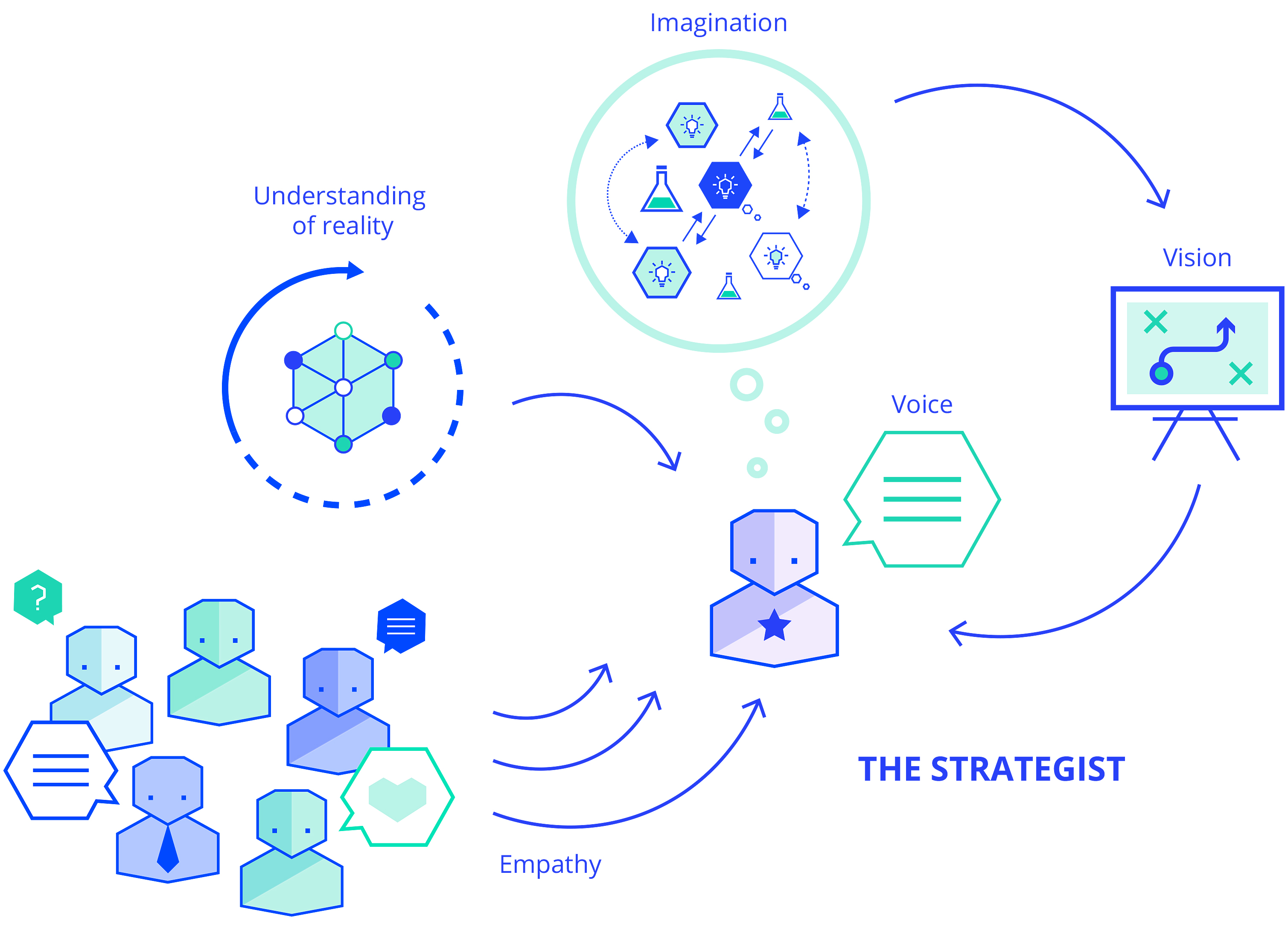
Strategy never comes into existence fully formed. Today, for example, we know that part of Ikea’s strategy is to produce low-cost furniture for growing families. We also know that, behind the scenes, Ikea innovates with its products and supply chain. Once upon a time, the founder of Ikea did not sit at his kitchen table to create this strategy. And he absolutely did not use a Five Forces template or a business-model canvas. What happened was that, once the business had started and as time passed, events shaped Ikea and, of course, Ikea shaped events. ... Strategy patterns form a bridge between expert strategists, those who have walked the walk, and those who are less experienced. They accelerate the production of new strategies, reduce the number of arguments that arise from uncertainty, and help groups to align on their next actions. By using patterns, those less experienced can benefit from knowledge they haven't had time to build on their own. At the same time, patterns give experienced strategists a rubric that lets them teach strategy.


Blazor Finally Complete as WebAssembly Joins Server-Side Component


Blazor, part of the ASP.NET development platform for web apps, is an open source and cross-platform web UI framework for building single-page apps using .NET and C# instead of JavaScript, the traditional nearly ubiquitous go-to programming language for the web. As Daniel Roth, principal program manager, ASP.NET, said in an announcement post today, Blazor components can be hosted in different ways, server-side with Blazor Server and now client-side with Blazor WebAssembly. "In a Blazor Server app, the components run on the server using .NET Core. All UI interactions and updates are handled using a real-time WebSocket connection with the browser. Blazor Server apps are fast to load and simple to implement," he explained. "Blazor WebAssembly is now the second supported way to host your Blazor components: client-side in the browser using a WebAssembly-based .NET runtime. Blazor WebAssembly includes a proper .NET runtime implemented in WebAssembly, a standardized bytecode for the web. This .NET runtime is downloaded with your Blazor WebAssembly app and enables running normal .NET code directly in the browser."


How event-driven architecture benefits mobile UX


At its most basic, the EDA consists of three types of components: event producers, event channels and event consumers. They may be referred to by other names, but most EDA systems follow the same basic outline. The producers and consumers operate without knowledge of or dependencies on each other, making it possible to develop, deploy, scale and update the components independently. The events themselves tie the decoupled pieces together. A producer can be any application, service or device that generates events for publishing to the event channel. Producers can be mobile applications, IoT devices, server services or any other systems capable of generating events. The producer is indifferent to the services and systems that consume the event and is concerned only with passing on formatted events to the event channel. The event channel provides a communication hub for transferring events from the producers to the consumers.


Microsoft Teams Rooms: Switch to OAuth 2.0 by Oct 13 or your meetings won't work


While it is simple to set up, it exposes credentials to attackers capturing them on the network and using them on other devices. Basic Authentication is also an obstacle to adopting multi-factor authentication in Exchange Online, said Microsoft.  Microsoft intends to turn off Basic Authentication in Exchange Online for Exchange ActiveSync (EAS), POP, IMAP and Remote PowerShell on October 13, 2020. It's encouraging customers to use the OAuth 2.0 token-based 'Modern Authentication'.  After installing the Teams Room update, admins will be able to configure the product to use Modern Authentication to connect to Exchange, Teams, and Skype for Business services. This move reduces the need to send actual passwords over the network by using OAuth 2.0 tokens provided b Azure Active directory. While the change is optional until October 13, Microsoft suggests login problems could arise after the cut-off date for Microsoft Teams Rooms configured with basic authentication. "Modern authentication support for Microsoft Teams Rooms will help ensure business continuity for your devices connecting to Exchange Online," it said. But it will let customers choose when to switch to modern authentication until October 13. 


Digital Transformation without the Judgement


CEOs have to focus ruthlessly on a small number of priorities. One customer in the rail industry went for approval of an SAP S/4HANA project, and the CFO saw the 8-figure budget and asked the CIO: would you like me to approve this project, or buy one more locomotive this year? You might be thinking “buy the train,” but it’s not that simple. What if this IT project improved rail network throughput by 2%, or decreased the chances of a derailment by 10%? What if it provided efficiencies in cargo prioritisation that meant two fewer locomotives needed to be in service? What are your priorities? How might they be achieved by IT investments? Today’s new hires are the Instagram generation. They primarily share images on Social Media, not diatribes about their personal life. Tomorrow’s new hires will be the Snapchat and TikTok generation, and before we know it, there will be a generation of employees who have never used a laptop. That might be an exaggeration, but the new generation of workers expect to have an excellent user experience for the tools they use in the workplace. If you want to hire the best talent, you are going to need to think about their needs.


Introducing Project Tye

Project Tye is an experimental developer tool that makes developing, testing, and deploying microservices and distributed applications easier. When building an app made up of multiple projects, you often want to run more than one at a time, such as a website that communicates with a backend API or several services all communicating with each other. Today, this can be difficult to setup and not as smooth as it could be, and it’s only the very first step in trying to get started with something like building out a distributed application. Once you have an inner-loop experience there is then a, sometimes steep, learning curve to get your distributed app onto a platform such as Kubernetes. ... If you have an app that talks to a database, or an app that is made up of a couple of different processes that communicate with each other, then we think Tye will help ease some of the common pain points you’ve experienced.


Containers as an enabler of AI

Containers as an enabler of AI header
The use of containers can greatly accelerate the development of machine learning models. Containerized development environments can be provisioned in minutes, while traditional VM or bare-metal environments can take weeks or months. Data processing and feature extraction are a key part of the ML lifecycle. The use of containerized development environments makes it easy to spin up clusters when needed and spin them back down when done. During the training phase, containers provide the flexibility to create distributed training environments across multiple host servers, allowing for better utilization of infrastructure resources. And once they're trained, models can be hosted as container endpoints and deployed either on premises, in the public cloud, or at the edge of the network. These endpoints can be scaled up or down to meet demand, thus providing the reliability and performance required for these deployments. For example, if you're serving a retail website with a recommendation engine, you can add more containers to spin up additional instances of the model as more users start accessing the website.


Google Open-Sources AI for Using Tabular Data to Answer Natural Language Questions

Co-creator Thomas Müller gave an overview of the work in a recent blog post. Given a table of numeric data, such as sports results or financial statistics, TAPAS is designed to answer natural-language questions about facts that can be inferred from the table; for example, given a list of sports championships, TAPAS might be able to answer "which team has won the most championships?" In contrast to previous solutions to this problem, which convert natural-language queries into software query languages such as SQL, which then run on the data table, TAPAS learns to operate directly on the data and outperforms the previous models on common question-answering benchmarks: by more than 12 points on Microsoft's Sequential Question Answering (SQA) and more than 4 points on Stanford's WikiTableQuestions (WTQ). Many previous AI systems solve the problem of answering questions from tabular data with an approach called semantic parsing, which converts the natural-language question into a "logical form"---essentially translating human language into programming language statements.


Quote for the day:


"Leadership is not a solo sport; if you lead alone, you are not leading." -- D.A. Blankinship


Daily Tech Digest - May 25, 2020

The Best Approach to Help Developers Build Security into the Pipeline

security
DevOps culture and the drive to work faster and more efficiently affects everyone in the organization. When it comes to creating software and applications, though, the responsibility for cranking out code and producing quality code falls on developers. The pace of DevOps culture doesn’t allow for anything to be an afterthought. It’s important for developers to support security directly as a function of application development in the first place, and to operationalize security within the continuous integration/continuous deployment (CI/CD) pipeline. Unfortunately, traditional education does little to prepare them. It’s possible to get a PhD in computer science and never learn the things you need to know to develop secure code. As organizations embrace DevSecOps and integrate security in the development pipeline, it’s important to ensure developers have the skills necessary. You also need to focus on both the “why” and the “how” in order to build a successful DevSecOps training program. Not all training is created equal.


Adversarial AI: Blocking the hidden backdoor in neural networks

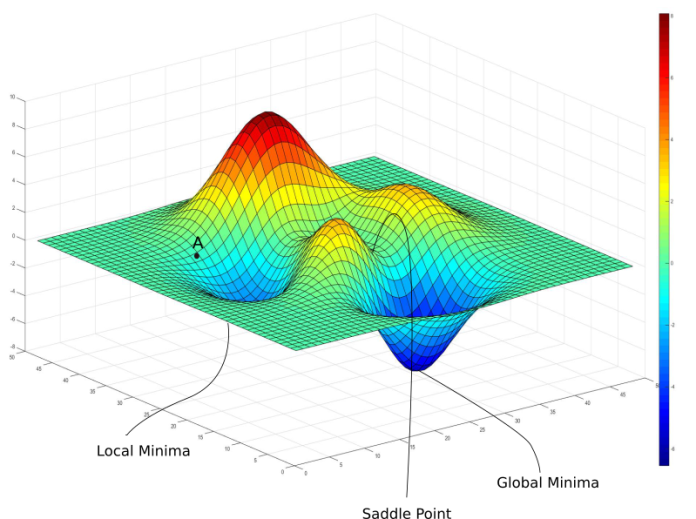
gradient descent local minima
Adversarial attacks come in different flavors. In the backdoor attack scenario, the attacker must be able to poison the deep learning model during the training phase, before it is deployed on the target system. While this might sound unlikely, it is in fact totally feasible. But before we get to that, a short explanation on how deep learning is often done in practice. One of the problems with deep learning systems is that they require vast amounts of data and compute resources. In many cases, the people who want to use these systems don’t have access to expensive racks of GPUs or cloud servers. And in some domains, there isn’t enough data to train a deep learning system from scratch with decent accuracy. This is why many developers use pre-trained models to create new deep learning algorithms. Tech companies such as Google and Microsoft, which have vast resources, have released many deep learning models that have already been trained on millions of examples. A developer who wants to create a new application only needs to download one of these models and retrain it on a small dataset of new examples to finetune it for a new task. The practice has become widely popular among deep learning experts. It’s better to build-up on something that has been tried and tested than to reinvent the wheel from scratch.


Two years on: Has GDPR been taken seriously enough by companies?

Two years on: Has GDPR been taken seriously enough by companies? image
Currently, not all organisations have a robust data governance, data privacy or data management strategy in place. Many see implementing extra technology as a cost, but the technology deployed for GDPR compliance can also help to implement a robust data management strategy, as well as with achieving compliance. Thinking about these technologies as a balancing act between increasing risk and cost, and more exposure for new opportunities to a business, has led many to differentiate and innovate at a slower pace, taking more time than they need to undergo digital transformation and implement a robust data strategy that accelerates value creation. It has never been easier to utilise technology to support organisations in automating a good data management strategy. Five years ago, if you wanted to carry out a data audit of your sensitive information, it was often a manual, laborious and time-consuming process.


A Primer on Data Drift

Monitoring model performance drift is a crucial step in production ML; however, in practice, it proves challenging for many reasons, one of which is the delay in retrieving the labels of new data. Without ground truth labels, drift detection techniques based on the model’s accuracy are off the table. ... If we have the ground truth labels of the new data, one straightforward approach is to score the new dataset and then compare the performance metrics between the original training set and the new dataset. However, in real life, acquiring ground truth labels for new datasets is usually delayed. In our case, we would have to buy and drink all the bottles available, which is a tempting choice… but probably not a wise one. Therefore, in order to be able to react in a timely manner, we will need to base performance solely on the features of the incoming data. The logic is that if the data distribution diverges between the training phase and testing phase, it is a strong signal that the model’s performance won’t be the same.


Why Data Science Isn't Primarily For Daya Scientists Anymore


Jonny Brooks-Bartlett, data scientist at Deliveroo, puts his finger on the crux of the problem. “Now if a data scientist spends their time only learning how to write and execute machine learning algorithms, then they can only be a small (albeit necessary) part of a team that leads to the success of a project that produces a valuable product,” he says. “This means that data science teams that work in isolation will struggle to provide value! Despite this, many companies still have data science teams that come up with their own projects and write code to try and solve a problem.” Without the engineers, analysts, and other team members that you need to complete your projects, you give your data scientists work that they are overqualified for and don’t enjoy. It’s not surprising that they then deliver poor results. Unfortunately, they also get in the way of the work that needs to be done by engineers or developers. Iskander, principal data scientist at DataPastry, puts it succinctly. “I have a confession to make. I hardly ever do data science,” he admits That’s because he’s repeatedly asked to fill roles that don’t require his specialized skills.


Unleashing the power of AI with optimized architectures for H20.ai

h20 ai image jpg
H2O.ai is the creator of H20, a leading machine learning and artificial intelligence platform trusted by hundreds of thousands of data scientists and more than 18,000 enterprises around the world. H20 is a fully open‑source distributed in‑memory AI and machine learning software platform with linear scalability. It supports some of the most widely used statistical and ML algorithms — including gradient boosted machines, generalized linear models, deep learning and more. H2O is also incredibly flexible. It works on bare metal, with existing Apache Hadoop or Apache Spark clusters. It can ingest data directly from HDFS, Spark, S3, Microsoft Azure Data Lake and other data sources into its in‑memory distributed key value store. To further simply AI, H2O has leading-edge AutoML functionality that automatically runs through algorithms and their hyperparameters to produce a leaderboard of the best performing models. And under the hood, H2O takes advantage of the computing power of distributed systems and in‑memory computing to accelerate ML using industry parallelized algorithms, which take advantage of fine‑grained in‑memory MapReduce.


The missing link in your SOC: Secure the mainframe

Simply hiring the right person may seem obvious but hiring talent with either mainframe or cybersecurity skills is getting harder as job openings far outpace the number of knowledgeable and available people. And even if your company is able to compete with top dollar salaries, finding the unique individual with both of these skills may still prove to be infeasible. This is where successful organizations are investing in their current resources to defend their critical systems. This often takes the form of on-the-job training through in-house education from senior technicians or technical courses from industry experts. A good example of this is taking a security analyst with a strong foundation in cybersecurity and teaching the fundamentals of the mainframe. The same security principles will apply, and a talented analyst will quickly be able to understand the nuances of the new operating system which in turn will provide your SOC with the necessary skills to defend the entire enterprise, not just the Windows and Linux systems that are most prevalent.


3 Ways Every Company Should Prepare For The Internet Of Things

3 Ways Every Company Should Prepare For The Internet Of Things
The IoT refers to the ever-growing network of smart, connected devices, objects, and appliances that surround us every day. These devices are constantly gathering and transmitting data via the internet – think of how a fitness tracker can sync with an app on your phone – and many are capable of carrying out tasks autonomously. A smart thermostat that intelligently regulates the temperature of your home is a common example of the IoT in action. Other examples include Amazon Echo and similar smart speakers, smart lightbulbs, smart home security systems; you name it. These days, pretty much anything for the home can be made "smart," including smart toasters, smart hairbrushes and, wait for it, smart toilets. ... Wearable technology, such as fitness trackers or smart running socks (yes, these are a thing too), also fall under the umbrella of the IoT. Even cars can be connected to the internet, making them part of the IoT. Market forecasts from Business Insider Intelligence predict that there will be more than 64 billion of these connected devices globally by 2026 – a huge increase on the approximately 10 billion IoT devices that were around in 2018.


Why the UK leads the global digital banking industry

London financial district
The UK remains a front runner for its supportive regulatory approach to innovation in financial services. In 2015, the UK was the first nation to put into operation its own regulatory fintech sandbox to enable innovation in products and services. In fact, the success of the UK’s fintech investment led to a whole host of nations including Singapore and Australia announcing their plans for fintech sandboxes at the end of 2016, according to the Financial Conduct Authority. Government policy makers and regulatory bodies in the UK have created a progressive, open-minded and internationally focused regulatory scheme. The launch of Payment Services Directive (PSD2) inspired the creation of Open Banking and a new wave of innovation. A report by EY revealed that 94% of fintechs are considering open banking to enhance current services and 81% are using it to enable new services. The use of open APIs enable third parties access to data traditionally held by incumbent banks, meaning that fintechs can use these insights to produce new products and services.


Facial Recognition
The legal conversation around facial recognition is a hot topic around the world. In the US, for example, the government dropped the compulsory use of facial recognition of citizens in airports at US borders at the end of 2019. Also, last year, New York legislators updated local privacy laws to prohibit “use of a digital replica to create sexually explicit material in an expressive audiovisual work” (otherwise known as DeepFake tech) to counter this increasing threat. These decisions show that despite its many benefits, facial recognition could also have negative impacts on personal privacy and liberty. Consider the use of facial recognition by law enforcement, where in certain situations public spaces are monitored without the public’s knowledge via CCTV and bodyworn cameras. My take on this is that the only faces stored on the databases at the back-end of this technology should be those of convicted criminals, not everyday people. The data should never be used to ‘mine’ faces – a term which refers to the gathering and storage of information about peoples faces – as this isn’t ethical.


Quote for the day:

"Leadership is familiar, but not well understood." -- Gerald Weinberg

Daily Tech Digest - May 24, 2020

Capital One data breach latest example of constant cyber security threats

Experts: Capital One data breach latest example of constant cyber security threats
The list of corporate victims includes Yahoo, Marriott, Equifax, eBay, Target and Facebook. Even the U.S. Postal Service and the IRS have experienced major data breaches. Five years ago, hackers accessed sensitive data of more than 60,000 UPMC workers. The increase in security breaches is an indicator of how far technology and security companies have to go, said Bryan Parno, a Carnegie Mellon University computer science and engineering professor and member of the school’s Security and Privacy Institute, or CyLab. He attributed the increased number of breaches to information becoming digitized and a more sophisticated criminal economy. To help fight against breaches, places like CyLab are exploring ways to build more secure software and networks that can detect when somebody infiltrates a network. But limited laws surrounding data breaches can also impact how well companies protect against threats, Parno said. In Pennsylvania, companies that store or manage computerized data, including personal information, are required to give a public notice in event of a breach in the security system.


Why Cyberthreats Tied to COVID-19 Could Hit Diverse Targets

Besides hospitals and academic institutions, dozens of nonprofits, including so-called "nongovernmental organizations" - or NGOs - around the world must protect their COVID-19 research and related activities from those seeking to steal data or disrupt their operations, says cyber risk management expert Stanley Mierzwa of Kean University.A wide variety of these nonprofit organizations are potential targets for cyberattacks during the COVID-19 pandemic. These include those that exist to "advance science around the world with research and serving to advance particular missions," he says in an interview with Information Security Media Group. Other nonprofits work on policy issues or public health concerns, he notes. "They often research and recommend strategies to governments in countries and can be involved with implementing programs," he says. "Any of these could be targeted for cyberattacks if they are involved in pursuing COVID-19 research activities ... including the response to COVID-19."


In an typical application development project, we have quality assurance (QA) and testing processes, tools, and technologies that can quickly spot any bugs or deviations from established programming norms. We can run our applications through regression tests to make sure that new patches and fixes don’t cause more problems and we have ways to continuously test our capabilities as we continuously integrate them with increasingly more complex combinations of systems and application functionality. But here is where we run into some difficulties with machine learning models. They’re not code per se in that we can’t just examine them to see where the bugs are. If we knew how the learning was supposed to work in the first place, well, then we wouldn’t need to train them with data would we? We’d just code the model from scratch and be done with it. But that’s not how machine learning models work. We derive the functionality of the model from the data and through use of algorithms that attempt to build the most accurate model we can from the data we have to generalize to data that the system has never seen before. We are approximating, and when we approximate we can never be exact. So, we can’t just bug fix our way to the right model.


Data for good: building a culture of data analytics

Leaders need to cultivate a culture of data science and analytics from the top down. Data literacy should be viewed as a crucial skill and you need to empower workers at all levels of your organisation to work with data. In order to avoid a digital divide, data must be easily accessible. By democratising data, you enable ordinary people — not just trained statisticians — to solve complex data science challenges. Once you combine democratised data with human creativity, you can solve almost any problem. We managed to get to the moon using a slide rule back in the ’60s. This perfectly illustrates what the power of a little bit compute plus liberated thinking can deliver. Combining data with human thinking could help us to solve all sort of societal and technological challenges, covering everything from healthcare to climate change and space travel, and the future of autonomous vehicles. We help some of the biggest businesses in the world to revolutionise their business through data science and analytics. 


Mercedes software leaks via Git and Google dork


In this GitLab instance, bad actors could register an account on Daimler’s code-hosting portal and download over 580 Git repositories containing the Mercedes source code and sell that information to the company’s competitors. … Additionally, hackers could leverage the exposed passwords and API tokens of Daimler’s systems to access and steal even more of the company’s sensitive information. ...  Without a proactive approach to security, companies open themselves up to undue risk. Most organisations rely on detecting risks and misconfigurations in the cloud at runtime … instead of preventing them during the build process, which increases security and compliance risks significantly. It also interferes with productivity, as developers have to spend their time addressing the issues. … Organizations should ‘shift left’ by taking preventative measures early on in their … CI/CD pipelines. … Such a proactive approach will allow organizations to prevent security issues from occurring and will enable security teams to catch misconfigurations before leaks occur.


Fintech Regulations in the United States Compared to Regulations in Europe and Asia

AML regulations in Europe are under a complete Anti-Money Laundering Directive. Although the article “Regulation of FinTech Must Strike a Better Balance between Market Stimulation and the Security and Stability of the Financial and Economic System” has a lengthy title, it perfectly describes the article’s content (“MIL-OSI Europe”, 2018). The article outlines the European Economic and Social Committee’s criticism and beliefs regarding the European Commission’s Action Plan for regulating fintech. Identifying the risk of certain fintechs and later deciding regulations does not indicate that the EESC believes that deregulation is the key. Instead, the EESC notes that deregulation actually causes higher risk to using those fintechs, and that it is unfair for traditional banking services if fintechs lack regulations or are completely deregulated. The EU has enacted the Anti-Money Laundering Directive for member countries to implement.


Mainstream enterprises increasingly behave like software vendors

Ultimately, reusable sets of API calls and data abstractions that scale workflow across multiple enterprise applications are required to build an open platform architecture, according to Richard Pulliam, principal at 2Disrupt and a contributor to the Cloud Elements report. "The ERP used to be the mission-critical system taking data from all points of the business to help it run more efficiently. This is why ERPs are inclusive of larger suites of software like CRM, marketing automation, customer support, and more. But as the volume of data grows and customers desire to use best-of-breed cloud applications to solve specific functions, the ERP no longer holds all the mission-critical data." On average, both enterprise and software vendor respondents selling digital platforms want to add dozens of new integrations in the year ahead -- 34 on average. Most enterprise respondents listed authentication, custom objects, and workflows as the most challenging aspects of API integration.


8 states targeted in CARES Act scams from cybercrime group

Due to the economic crisis caused by the coronavirus pandemic, states have been overburdened trying to get money to the more than 34 million Americans who are now unemployed. Most states have received an extraordinary amount of applications for funding, making it nearly impossible for their short-staffed agencies to thoroughly vet each request. More than $48 billion in unemployment insurance payments was sent out by states through the month of April. Cybercriminals with Scattered Canary have taken advantage of the situation according to Peterson, who wrote that the group filed more than 80 fraudulent claims for CARES Act Economic Impact Payments and even more claims for unemployment insurance in Florida, Massachusetts, North Carolina, Oklahoma, Rhode Island, Washington, Wyoming and most recently Hawaii. Unfortunately, the IRS and some states have already sent the money out before being notified that the applications came from people who had their personal information stolen or misused by hackers within Scattered Canary.


Machine Learning: What Is It Really Good For?

AI artificial intelligence concept Central Computer Processors CPU concept
In other words, for many organizations, the best option with machine learning may be to buy an off-the-shelf solution. The good news is that there are many on the market—and they are generally affordable. But regardless of what path you take, there needs to be a clear-cut business case for machine learning. It should not be used just because it is trendy. There also needs to be sufficient change management within the organization. “One of the greatest challenges in implementing machine learning and other data science initiatives is navigating institutional change—getting a buy-in, dealing with new processes, the changing job duties, and more,” said Ingo Mierswa, who is the founder and president of RapidMiner. Then what are the use cases for machine learning? According to Alyssa Simpson Rochwerger, who is the VP of AI and the Data Evangelist at Appen: “Machine learning can solve lots of different types of problems. But it's particularly well suited to decisions that require very simple and repetitive tasks at large scale.


Jepsen Disputes MongoDB’s Data Consistency Claims

MongoDB’s default level of read concern allows aborted reads: readers can observe state that is not fully committed, and could be discarded in the future. As the read isolation consistency docs note, “Read uncommitted is the default isolation level”. We found that due to these weak defaults, MongoDB’s causal sessions did not preserve causal consistency by default: users needed to specify both write and read concern majority (or higher) to actually get causal consistency. MongoDB closed the issue, saying it was working as designed, and updated their isolation documentation to note that even though MongoDB offers “causal consistency in client sessions”, that guarantee does not hold unless users take care to use both read and write concern majority. A detailed table now shows the properties offered by weaker read and write concerns. ... Clients observed a monotonically growing list of elements until [1 2 3 4 5 6 7], at which point the list reset to [], and started afresh with [8]. This could be an example of MongoDB rollbacks, which is a fancy way of saying “data loss”.


Quote for the day:


"If you want someone to develop a specific trait, treat them as though they already had it." -- Goethe