Daily Tech Digest - January 04, 2018

Nissan's plan for safer autonomous driving? Connect the car to a human brain

14nissan.jpg
Instead of removing the human element completely, the driver's brain activity is measured and sent to the car using a headband, the announcement said. The car can then predict human actions such as braking or accelerating and begin the action more quickly, potentially leading to safer, less stressful driving. The Brain-to-Vehicle (B2V) technology shows a different approach to autonomous driving by allowing the human to maintain some control. By staying physically in the driver's seat, some consumers may feel more comfortable with it compared to self-driving vehicle technology. "When most people think about autonomous driving, they have a very impersonal vision of the future, where humans relinquish control to the machines," Nissan executive vice president Daniele Schillaci said in the announcement. "Yet B2V technology does the opposite, by using signals from their own brain to make the drive even more exciting and enjoyable."


Connected Humans, Connected Things: AI and Human Intelligence in 2018


“What is real is the value of data,” Fitze said, “and that data is poised to explode in 2018 with billions of new endpoints lighting up, driven largely by the Internet of Things. Machine learning, deep learning, intelligence is richer when we have more data to derive patterns. Making life simpler and better through data makes sense, with smarter products – and that is the underlying value of layering in AI in IoT applications.” The trend towards automation and data collection and analysis is where Fitze sees “many, many use cases coming up. Where IoT gets even more interesting is when we finally reach the pivotal moment of IPV6, enabling over 600 billion IP addresses by each square millimeter around the world, as well as the speed of the manifestation of 5G/LTE networks which support voice recognition and more. When billions of people can use their voice to command billions of things, we’ll find ourselves in an entirely new world experience.”


Major Linux redesign in the works to deal with Intel security flaw

Intel's blunder was to allow user programs to be able to gather hints about how the kernel address space is laid out. As discovered by Austria's university researchers this summer, "Modern operating system kernels employ address space layout randomization (ASLR) to prevent control-flow hijacking attacks and code-injection attacks. While kernel security relies fundamentally on preventing access to address information, recent attacks have shown that the hardware directly leaks this information." ASLR is vital to today's operating systems' defense against malware. The Intel vulnerability isn't so much a new hole as it is a way of making all those many existing attack methods against ASLR-defended operating systems much stronger. The researchers' solution was KAISER, a system for Linux kernel address isolation. In November, these patches were proposed for the Linux kernel. Realizing just how dangerous these attacks could be, the Linux kernel developers quickly started revising these patches.


8 Biggest Tech Trends to Watch at CES 2018


At CES 2018, you'll see the Vobot Halo, a stylish smart light clock with Alexa, as well as the Blink Video Doorbell, a $99 device that's coming next year. In fact, Amazon has agreed to acquire Blink to accelerate its smart home domination. Security will be a huge theme at CES that extends to all-in-one security systems that hope to build on the success of products like SimpliSafe. The upcoming Angee has a 360-degree camera, voice recognition and motion sensors, and we'll see a separate home security gateway that supports HomeKit, Alexa and Google Assistant. ... So what makes micro LEDs so special? They have LEDs smaller than 100 micrometers — slimmer than the width of a human hair. According to Patently Apple, each of the red, green and blue subpixels in micro LEDs produces its own light, offering high contrast ratios and deep blacks. In addition, ZDNet says the displays will consume less power and won't suffer from burn-in as OLED panels do. In other words, Samsung could give OLED TVs a serious run for their money.


Competition Bureau weighs in on fintech: urgent action required

The Canadian Competition Bureau has released its final market study report into technology-led innovation in Canada's financial-services sector. The study is a valuable addition to a growing body of analysis and evidence that we need to do more to ensure that Canada is not left behind, as fintech has the potential to make an increasingly important impact on the availability and delivery of financial services to Canadians. In its study, the Bureau notes that since the 2007-08 global financial crisis, a new wave of financial-services firms has emerged, leveraging the latest technologies. In a number of jurisdictions, these firms are helping to reshape their domestic financial-services sectors and, in some cases, the leading firms are becoming national champions with global reach. The bureau notes that Canada lags behind its peers in fintech adoption; a number of reasons for slow adoption are suggested, including regulatory and non-regulatory barriers.


Implementing DevOps: Mind the Details

Image: Shutterstock
Many successful organizations roll out DevOps gradually to let different stakeholders see and appreciate the practice's value. This, in the long run, "accelerates the adoption of DevOps practices within the organization," Thethi explained. Looking for a quick start, many enterprises opt to create a DevOps team by simply rebranding their existing ops staff. "Don’t do that, as it keeps the silos running," warned James Wickett, an author of DevOps courses on Lynda.comand head of research at Signal Sciences, a cloud security platform provider. "Instead, rally the team around the aspirational goals of DevOps to deliver software faster through continuous delivery, automation and instrumentation," he suggested. ... "Since DevOps is mostly about processes and a way of working and collaborating, one of the major blockers can be from team members who do not understand or refuse to work with this new methodology," cautioned Sylvain Kalache


What’s now and next in analytics, AI, and automation

The world is more connected than ever, but the nature of its connections has changed in a fundamental way. The amount of cross-border data flows has grown 45 times larger since just 2005. It is projected to increase by an additional nine times over the next five years as flows of information, searches, communication, video, transactions, and intracompany traffic continue to surge. In addition to transmitting valuable streams of information and ideas in their own right, data flows enable the movement of goods, services, finance, and people. Virtually every type of cross-border transaction now has a digital component. Approximately 12% of the global goods trade is conducted via international e-commerce, with much of it driven by platforms such as Alibaba, Amazon, eBay, Flipkart, and Rakuten. Beyond e-commerce, digital platforms for both traditional employment and freelance assignments are beginning to create a more global labor market.


Bad AI Comes From Bad Data


Data completeness is the degree to which we have a total picture of donors, volunteers, activists, and other key constituent groups. This is a combination of self-reported information in addition to appended demographic data. Over time, the goal is to have a broader understanding of constituents interests, engagements, and preferences. Together, data quality and completeness are about 90% of the data health challenge. And yet, many of the claims of data struggle are design related. The plethora of custom fields in a system that can’t be normalized or made meaningful. The skeletons in the data closet from decisions made in the past about how data collection and management have been handled poorly. Fixing data design issues will take more time and toil, but addressing data quality and completeness can be started without delay. The sooner that data health is prioritized, valued, and championed then the greater chances for benefits to the organization.


Bringing AI into the enterprise

Sometimes, you see a decision being made and, from an organizational point of view, everyone agrees that this decision is really strongly data driven. But it's not strongly data driven. It's data driven based upon the historical information that two or three people are using. It looks like they're looking at data and then making a decision, but, in fact, what they're doing is, they're looking at data and they're remembering one of 2,000 past examples in their heads and coming out with a decision. ... There are sets of tasks in almost any organization that nobody likes to have anything to do with. In the legal profession, there are tasks around things like discovery where you actually need to be able to look through a corpus of documents, but you need to have also some idea of the semantic relationships between words. This is totally learnable using existing technologies.


Technology in 2018 will reach new heights

Technology Heights 2018
The financial industry has embraced chatbots in a big way. Capital One, MasterCard, Royal Bank of Scotland and Santander are just a handful of institutions using them, so too has the legal sector. Clerksroom is using Billy Bot, a junior robot clerk, to automate many of its administrative processes. As a result, it has saved its clerks around 200 hours per month and been able to focus on higher value activities for enabling growth. What’s clear is that organisations are quickly seeing the value in AI, and we will see investment rocket in 2018 and beyond. .... When Chancellor Philip Hammond delivered his annual Autumn budget in November last year, he said: “A new tech business is funded every hour and I want that to be every half hour. So, today we invest over £500 million in a range of initiatives from artificial intelligence to 5G and full-fibre broadband.”


Quote for the day:


"At the heart of great leadership is a curious mind, heart, and spirit." -- Chip Conley


Daily Tech Digest - January 03, 2018

Don't believe the hype: There are no good uses for blockchain


“Smart” contracts are contracts written as software, rather than written as legal text. Because you can encode them directly on the blockchain, they can involve the transfer of value based directly on the cryptographic consent of the parties involved — in other words, they are “self-executing.” In theory, contracts written in software are cheaper to interpret. Because their operation is literally mathematical and automatic, there are no two ways to interpret them, which means there’s no need for expensive legal battles. Yet real-world examples show the ways this is problematic. The most prominent and largest smart contract to date, an investment vehicle called the Distributed Autonomous Organization (DAO), enabled its members to invest directly using their private cryptographic keys to vote on what to invest in. No lawyers, no management fees, no opaque boardrooms, the DAO “removes the ability of directors and fund managers to misdirect and waste investor funds.”


IoT botnet DDoS attacks predicted after exploit code published


“With the advent of botnet-based DDoS attack services that will be effective against most companies, anyone can target an organisation for just a few bitcoins,” Harshil Parikh, director of security at software-as-a-service platform firm Medallia, told the Isaca CSX Europe 2017 conference in London in November 2017. The exploit code for Huawei vulnerability CVE-2017–17215, which is now available free of charge on text storage site Pastebin, has already been used in the Satori and Brickerbot IoT botnets. These botnets have been described as next-gen Mirai botnets, and in December 2017, the Satori botnet in particular caught researchers’ attention because of its worm-like ability to propagate quickly. According to security researchers at Qihoo 360 Netlab, the Satori botnet propagates by using two exploits to connect with devices on ports 37215 and 52869.


Forever 21 Found Malware and Encryption Disabled on its PoS Devices

Following an investigation with payment technology and security firms, Forever 21 said in an update posted late last week that encryption technology on some point-of-sale (PoS) devices was not always on, and that it had found signs of unauthorized network access and malware installed on PoS devices to search for payment card data. The malware searched for track data from payment cards as they were processed through the PoS system. In most cases this data was limited to card number, expiration date, and internal verification code. Occasionally, the cardholder name was also found. Encryption had been disabled and malware installed on some devices at varying times in US stores from April 3, 2017 through November 18, 2017. Some locations only experienced a breach for a few days or weeks; others were hit for most or all of the timeframe. In most cases, only one or a few of PoS devices were affected at each outlet.


Generative AI: The new power tool for creative pros

Generative AI: The new power tools for creative pros
AI can abstract visual patterns from artwork and then apply those patterns in the fanciful rerendering of photographic images with the hallmark features of that artwork. These algorithms can also transform any rough doodle into an impressive drawing that seems to have been created by expert human artists depicting real-world models. They can take hand-drawn sketches of human facesand algorithmically transform them into photorealistic images. They can instruct a computer to render any image so it appears as if it were composed by a specific human artist in a specific style. ... AI can autocorrect photos by generating and superimposing onto the original any visual elements that were missing, obscure, or misleading. It can also transform any low-resolution original image into a natural-looking high-resolution version. It can generate natural-looking but synthetic human faces by blending existing portraits or abstracting features from any specific portrait.


Is Your Test Automation Team a Team of Superheroes?

The Test Automation Environment Expert has to be familiar with all concerns regarding test programs such as test data management, problem reporting and resolution, test development and design and should have technical skills which include knowledge of programming languages, database technologies, and operating systems. Also known as the test lead, the Test Automation Environment Expert verifies requirement quality, test design, test script and test data development, test environment configuration, test script configuration management and test execution. The test lead has to stay on top of all current developments in the testing industry, the latest testing tools, and test approaches and ensure proper knowledge transfer of the same. He/she is also responsible for conducting test design and test procedure walkthroughs and inspections, implementing test process improvements, test the traceability matrix


GPS tracking vulnerabilities leave millions of products at risk

Malware virus
According to the research, the vulnerable services were exposing location information, device model and type information, IMEI numbers, phone numbers (where such information is used for the device in question), custom assigned names, audio recordings, and images. For example: In addition to the verified data exposures, on gps958.com it is possible to access location history, send commands to the device (the same commands that would be sent via SMS), and activate or deactivate geo fencing alarms. No authentication needed. When it comes to images and audio recordings, the exposures happened via open directories on the affected service's website. Stykas and Gruhn first discovered a debugging interface, which allowed them to enter API queries in a web-form (similar to what Temple did in 2015). Once they knew what the API expected, they could query the API even on websites that did not expose the API in a publicly view able directory.


Banking Disruption by PSD2 Takes User Experience Design to the Forefront

Financial UI UX design by UXDA
Open Banking will cause the rapid growth of financial services, taking the user experience to the next level. Many procedures will become simple and automated. With access to the banking APIs, FinTechs can provide users with opportunities to improve their financial lives. For banks and FinTech companies, this means only one thing. It is necessary to revise the existing user flow and redesign the actual service to eliminate friction, making it valuable for customers. Currently, banks have an infrastructure and a customer base, but they are burdened by a product-centered thinking legacy. Most banking solutions are outdated, and interfaces are not intuitive. Unlike the banks, FinTech companies create modern, client-centered solutions, but they do not have enough resources to bring them to market and acquire customers.


The Three Big Trends in 2018 That Will Matter When Doing Business in Europe

Major European data privacy, security and sovereignty regulations will be enacted in 2018 that will affect every company doing business there and beyond. The EU's new General Data Protection Regulation (GDPR) rules, which go into effect in May of 2018, make up-front corporate investment for compliance unavoidable. GDPR's goal is to strengthen and unify data protection for all individuals in the EU while also addressing the export of personal data outside the region, with huge fines imposed for companies that breach its provisions. While any company handling consumer data will be impacted, the effect on some industries will be particularly acute, such as medtech and biotech. For example, gathering patient information in one country and storing it in another will require new oversight, with possible implications for any firm performing clinical trials in Europe.


The Cybersecurity 'Upside Down'

Understanding and establishing true visibility for code and application security is a must for today's enterprises. Most companies are developing technology and using many different infrastructure providers and third-party components, and they're accelerating development practices due to competition and new methodologies such as DevOps. If organizations are not integrating security into the entire development lifecycle, they are exposed. Practices of manual pen testing twice per year, and/or siloed testing within development provide no visibility and painful remediation in an Upside Down event.  Make sure to ask questions. Knowing how organizations in your supply chain are developing and protecting your products gives you a line of sight into issues and areas of potential risk.


No, The Death Of Net Neutrality Will Not Be Subtle

Of course most of the folks that really understand net neutrality have acknowledged that the harms initially may be muted. ISPs will initially want to be on their best behavior in the new year as they wait for the inevitable lawsuits against the FCC (for ignoring the public and ignoring rampant comment fraud) to shake out, wary of providing the ongoing proceedings with any ammunition. And, as we've noted, ISPs are well aware that even then the rules could simply be recrafted at a later date, which is why they're pushing for a fake net neutrality law that makes federal apathy on the subject the law of the land. But should ISPs win in the courts or on the Hill, the end result of what they're trying to accomplish will be anything but subtle. Anybody believing otherwise doesn't understand the full scope of what ISPs lobbyists are (so far successfully) up to here.


Quote for the day:


"You don't lead by pointing and telling people some place to go. You lead by going to that place and making a case." -- Ken Kesey


Daily Tech Digest - January 02, 2018

How Companies Can Respond to Consumers’ Demands for Better Data Protection

Board participation elevates cyber risk beyond the day-to-day concerns of the IT function to become a part of the company’s overall strategic planning. It’s a level of importance commensurate with the level of risk associated with a major breach. Companies can further prioritize cybersecurity by making sure the C-suite is involved in a review of the company’s information security strategy and budget. This includes gaining a clear understanding of what’s at stake in the event that certain systems or data are compromised — and ensuring plans are in place to mitigate the most pressing risks. The good news is the GSISS found companies are starting to elevate the role of chief information security officer (CISO) beyond IT: Respondents report it is more common for a company’s CISO to report directly to the CEO (40 percent) or the board of directors (27 percent) than to the CIO.


MIT predicts that more cyber attacks targeting electrical grids, transportation systems and other types of national critical infrastructure are likely in 2018. Cyber-physical attacks are expected to be designed to either cause immediate disruption or to threaten to shut down vital systems to extort money from operators. MIT also predicts that 2018 will see researchers and attackers uncovering cyber vulnerabilities in older planes, trains, ships and other modes of transport. Another trend expected to continue and expand in 2018 is the hijacking of computing power to mine cryptocurrencies by solving complex mathematical problems. According to security firm Malwarebytes, it blocked 11 million connections to cryptocurrency mining sites in a single day in 2017. MIT warns that cyber attackers hijacking computers for cryptocurrency mining could have a devastating effect if they target computing resources at hospitals, airports and other similar locations.


Topping Your Wish List for 2018: A Simpler Way to Manage Hybrid IT

A multi-cloud management solution lets IT dramatically simplify operations through visibility and automation. The SaaS-based tool gives IT managers an aggregate view of their entire hybrid IT environment — from a variety of public clouds to traditional on premises IT and from containers to VMs. Shadow IT activities that were previously unaccounted for are now easily and quickly tracked, letting IT better understand and meet the needs of their developers. Automation and proactive management deliver a low-ops lifecycle management experience, giving IT more time to pursue new, innovative tasks that can help grow the business. In its new command and control role, IT is no longer reacting to constant needs. Instead, IT can build quota-based project workspaces for individuals or groups; IT can also streamline DevOps requests and the approval process.


Six Cyber Threats to Really Worry About in 2018


This year will see the emergence of an AI-driven arms race. Security firms and researchers have been using machine-learning models, neural networks, and other AI technologies for a while to better anticipate attacks, and to spot ones already under way. It’s highly likely that hackers are adopting the same technology to strike back. “AI unfortunately gives attackers the tools to get a much greater return on their investment,” explains Steve Grobman, chief technology officer at McAfee. An example is spear phishing, which uses carefully targeted digital messages to trick people into installing malware or sharing sensitive data. Machine-learning models can now match humans at the art of crafting convincing fake messages, and they can churn out far more of them without tiring. Hackers will take advantage of this to drive more phishing attacks. They’re also likely to use AI to help design malware that’s even better at fooling “sandboxes,” or security programs that try to spot rogue code before it is deployed in companies' systems.


Why data science is a secret weapon for tech consultants

bigdataistock-841848100chombosan.jpg
It's better for experts to partner with data scientists who already know what they're doing. The collective goal of this partnership is to curate the company's data into information, knowledge, and wisdom that expands and supports the experts' base of knowledge. For instance, hypotheses can be tested and vetted using the company's operational data and then developed into an expert system. This becomes a private repository of information that can only be accessed by the experts. ...  The first pitfall is a very important one: Don't practice data science without the help of data scientists. The time spent struggling with the nuances of the database or the analytic engine is not time well spent. It's easy to spend days or weeks troubleshooting an inefficient query or a complicated database join when that work is better suited for the data professionals. Also, you must ensure your information doesn't lose its power by making it so obscure that nobody outside the expert group understands what it means.


Reducing the environmental impact of global IoT


As we enter the next phase of IoT evolution, businesses are now able to utilise the entire spectrum to improve the efficiency of their data processing and reduce the need for high-power resources. The emergence of fog computing is enabling companies to extend cloud computing to the edge of a network, to store data without relying on cloud-based centres and facilitate communication outside of the internet’s infrastructure. By sitting closely to the edge, which today in many cases would be a physical object such as a sensor, owners are able to gather more selective yet valuable data nearer to its source, reducing the data capacity needed for information to travel before it is processed. This improved decision-making can now be widely leveraged to ensure the most relevant intelligence is communicated to data centres, resulting in less unnecessary, energy-consuming data and more available resources for big data IoT.


What Do We Do With All This Money?

burn, money
With $4 billion in capital raised in ICOs, and very little utility value to show for it, it's tempting to call token offerings a bubble. However, the more likely truth is that the same forces that gave rise to today's paradigm-shifting technologies (see: Carlota Perez's definitive book) are at play in the world of crypto. And that while we may be entering bubble territory, the key difference between tulips and crypto is how speculative capital was deployed – the former into manufacturing an asset and the latter into technology development. Still, money is no guarantee of success, which is why I've been spending a lot of time thinking about capital deployment into crypto, a topic deserving of more attention because it will be a major proof point for the ecosystem's long-term trajectory. It is also an area of competitive advantage for crypto projects in the next five years.


Authentication vs identification: Understanding the technology behind face ID

Technology Face ID
Most current facial recognition options are incapable of determining if the subject of the verification is actually there in person, leaving them susceptible to spoofing by a photo, video, mask or an inanimate representation like a 3D fake head. Why? They lack the ability to detect a critical aspect of true authentication during login: liveness, or the detection of unique human traits that can include movements, skin texture and eye reflections. For context, Apple’s Face ID matches images and can determine three-dimensionality (depth analysis), but it lacks robust liveness detection that can determine whether or not the correct user is actually present in the flesh at the time of login. The multitude of spoof videos already on YouTube clearly show its current limits. Apple’s proprietary technology will undoubtedly improve over time. However, the speed at which it develops will be impeded by their decision to use a specialised – and costly – hardware-based approach.


Cloud culture calls for flexible networks


The reasons behind the need for next-generation networks are manifold. Businesses are looking to cut their IT spend and improve operating costs while delivering services more quickly and maintaining superior-quality services. In an attempt to do that, enterprises are looking for systems that are agile and easy to deploy. Cloud-based applications and infrastructure platforms are the right match to meet high-level business objectives. Enterprises are adopting software-as-a-service (SaaS) such as Microsoft Office 365 and Salesforce and that has made the internet an essential component of the enterprise backbone. Archana Kesavan, senior product marketing manager at ThousandEyes, says that when the internet becomes the backbone of enterprise communication, organisations need to think proactively about their next-generation WAN having network monitoring tightly integrated within it.


Can IoT help make the enterprise more secure?

Can IoT help make the enterprise more secure?
Here’s how EIoT works: By adding sensors and connectivity to refrigeration units, automobiles, or assembly lines, vendors create “digital twins” — virtual representations of a physical object complete with key attributes and metrics. MicroStrategy applies this concept to people, creating a “digital badge” called Usher to enable the digital “twinning” of employees, partners and customers. “The device projects the badge holder’s identity to the system,” Lang says, and “can stream data about the person’s context and actions in real time” to power security and other analyses. Lang says MicroStrategy already uses Usher internally, and it is testing it with customers around the world. The concept makes sense, but I have to admit I find it a little bit creepy. Even in a workplace environment, I’m not sure I like the idea of a digital mini-me being tracked by my employer.


Quote for the day:


"Being challenged in life is inevitable, being defeated is optional." -- Roger Crawford


Daily Tech Digest - January 01, 2018

Data-driven policing strategies bring new look to public safety

First, there's the enhanced decision-making that can happen when you have more information coming in from multiple sources from Next Gen 911 enabling new data sources -- for example, a crash notification from a vehicle. Today, you get a phone call 15 minutes after an accident happens. With telematics integration, you get a notification from the vehicle that says not only has there been an accident, but what is the location, did the vehicle roll over, how many people are in the vehicle. It's just a tremendous amount of information available to the call-taker and first responder that can result in lives saved. Also, there is the ability for analytics to power new insights and improvements in how they handle responses. There's the ability to gain insights from the incident and how it was handled; being able to reconstruct and analyze and identify opportunities for improvement is going to be enhanced when you have this growth in information coming into the center.


Putting artificial intelligence (AI) to work

While everything has the potential to be improved by AI, two notable areas are marketing, which for a long time has been the leading adopter of AI techniques, and the automotive industry, where there is a realization that self-driving vehicles are coming and will change the industry. Other industries are earlier in their AI journeys but are already seeing an impact. For example, EY has helped develop a chatbot for a national blood bank, helping to reach younger donors through a user experience combining AI technologies, social media and human curation. EY has also assisted a global bank to use Natural Language Processing technology to automate voice and text analytics for its complaints and compliance processes. ... The biggest risk is non-adoption. Every challenge in the world, and in business in particular, is an opportunity for AI. Adopting AI will require patience and a willingness to learn, and will be complex and lengthy, so firms need to start now. Many early projects will have a low return on investment (ROI) and a limited impact


What is agile methodology? Modern software development explained

What is agile methodology? Modern software development explained
Because software was developed based on the technical architecture, lower level artifacts were developed first and dependent artifacts afterward. Tasks was assigned by skill, and it was common for database engineers to construct the tables and other database artifacts first, followed by the application developers coding the functionality and business logic, and then finally the user interface was overlaid. It took months before anyone saw the application working and by then, the stakeholders were getting antsy and often smarter about what they really wanted. No wonder changes were so expensive! Not everything that you put in front of users worked as expected. Sometimes, users wouldn’t use a feature at all, so that feature was a wasted investment. Other times, a capability was widely successful but required reengineering to support the scalability and performance required. In the waterfall world, you only learned these things after the software was deployed, after all that effort and expense.


We Need Computers with Empathy

Using computer vision, speech analysis, and deep learning, we classify facial and vocal expressions of emotion. Quite a few open challenges remain—how do you train such multi-modal systems? And how do you collect data for less frequent emotions, like pride or inspiration? Nonetheless, the field is progressing so fast that I expect the technologies that surround us to become emotion-aware in the next five years. They will read and respond to human cognitive and emotional states, just the way humans do. Emotion AI will be ingrained in the technologies we use every day, running in the background, making our tech interactions more personalized, relevant, authentic, and interactive. It’s hard to remember now what it was like before we had touch interfaces and speech recognition. Eventually we’ll feel the same way about our emotion-aware devices.


Blockchain-Based CVs Could Change Employment Forever


APPII’s platform allows candidates to create Intelligent Profiles – recording details of professional achievement or educational certification on the distributed ledger, where it can be verified and then permanently recorded. It then allows organizations such as businesses or educational institutions to verify the “assertions” that candidates make during applications. By recording on a candidate’s profile that an assertion has been verified, there is no need for it to be checked again in the future. It also uses facial recognition technology to verify the identity of candidates, by asking them to take a picture using the mobile app and comparing it to a photograph on official identification documents such as passports. McKay says “In high-risk industries, it’s imperative for employers to undertake due diligence – in financial services if you’re providing your money to someone to invest, you don’t want that person to have got their job by falsifying their CV. It’s the same if you go to see a doctor or nurse.”


Here are strategies to achieve 6 common business resolutions for 2018

It's no secret that the tech world can be a high-pressure, stressful place especially if you're the one in charge. According to Business Insider, well-known tech leaders all have their ways of dealing with stress. Bill Gates and Warren Buffett advise reserving time for hobbies and taking that time, no matter what. Apple's CEO Tim Cook encourages leaders to maintain a focus on positive thinking, no matter how many cynics and negative thinkers surround them, and Facebook COO Sheryl Sandberg turns the phone off at night.  ... Career-ending events like 2017's Equifax security breach, and the shortage of cybersecurity experts in the job market might be keeping you up at night. Communicate your concerns to upper management and the board if you feel you have security exposures and you lack the skills or resources to address them. This is the time to ask for extra budget money if you have to bring in security experts or consultants to fill skills gaps, or to purchase security software or monitoring solutions.


Will Google kill Chrome OS and Android in 2018?

android figurine
According to this set of predictions, Fuchsia will replace Android Wear, Android and Chrome OS, but run existing apps designed for those platforms. In other words, future Android phones would ship with Fuchsia instead of Android, and Chromebooks would ship with Fuchsia instead of Chrome OS. That would spell the end of Chrome OS and Android as we know them and usher in a single-platform utopia for apps that run across all devices. The fabulous-Fuchsia faction assumes the new OS will solve whatever problems they’re currently having with either Chrome OS or Android. Fuchsia is expected to end Android fragmentation, solve the problem of slow and uneven Android updates, enable developers to build single apps that run natively on both iOS and Android and boost the performance of Chromebooks.


Entering the Next Era of Human Machine Partnerships

Over the next few years, AI will change the way we spend our time acting on data, not just curating it. Businesses will harness AI to do data-driven “thinking tasks” for them, significantly reducing the time they spend scoping, debating, scenario planning and testing every new innovation. It will mercifully release bottlenecks and liberate people to make more decisions and move faster, in the knowledge that great new ideas won’t get stuck in the mire. Some theorists claim AI will replace jobs, but these new technologies may also create new ones, unleashing new opportunities for humans. For example, we’ll see a new type of IT professional focused on AI training and fine-tuning. These practitioners will be responsible for setting the parameters for what should and shouldn’t be classified good business outcomes, determining the rules for engagement, framing what constitutes ‘reward’ and so on.


AI Will Soon Be So Good At Hacking, We’ll Only Be Able To Stop Them With Other AI


We may soon see machine learning algorithms repurposed towards hiding a piece of malware on a network, using its pattern analysis to ensure that the malicious code’s actions blend in with the daily traffic. Say a company manages to get a bit of spyware into a major rival’s network. It can then stay dormant, while the AI analyses data over time to learn crucial details – how does the firewall work, what time of the day are cyber security teams active, etc. The AI can then use this data to find a weak point in the security system, and even create cover for the spyware to siphon and transfer out data on new technology being researched, or major projects being negotiated, or even which employees are unhappy and looking to quit. And that’s just in corporate espionage. There’s no telling how much havoc an AI-powered malware can wreak on regular consumer systems across the Web.


Entity Services is an Antipattern

Entity services application
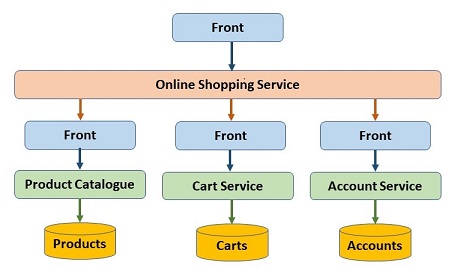
In a microservice based architecture, it is important to keep the different services separated. Entity services is a common pattern now applied to microservices, but entity services is an anti-patternthat works against separation, Michael Nygard claims in one of a short series of blog posts on how to work with microservices. Nygard, among other things author of Release It!, notes that entity services is a solution to a problem that is commonly rediscovered, and refers both to a microservices architecture e-book from Microsoft and a tutorial from Spring for two of many new examples of usage of this pattern. For Nygard, an antipattern is a pattern that makes things worse. In arguing that entity services really is an anti-pattern, he uses a large legacy monolithic application as an example. In this application there are multiple instances of the process with all features local and in-process


Quote for the day:


"Success doesn’t come to you just by wanting it—it comes to you by getting in agreement with what It takes to ACHIEVE it." -- @MattManero


Daily Tech Digest - December 30, 2017

The strict regulatory fashion of the finance industry makes it an ideal sector to invest in AI, because the technology can automate tasks that are based on specific systems, set rules and procedures. We are likely to see an increasing presence of artificial intelligence in the financial services sector in the next few years. Tasks such as providing soliciting or financial advice could easily be provided through a bot interface, using existing artificial intelligence and automation technologies. Some companies are already using more advanced AI applications, such as IBM’s Watson. However, most of these companies are using this technology in an experimental fashion, as opposed to completely overhauling their existing procedures in favour of artificial intelligence. Despite its potential, artificial intelligence is still in its infancy. Until it is fully developed, there will still be arguments about the accuracy and ability of AI over a well-trained human representative.


An AI system might be just as good at translating the document, but a human can probably also perform related tasks such as understanding Chinese speech, answering questions about Chinese culture and recommending a good Chinese restaurant. “Very different AI systems would be needed for each of these tasks,” the report said. “Machine performance may degrade dramatically if the original task is modified even slightly.” Alan Mackworth, a professor at the University of British Columbia who holds the Canada research chair in artificial intelligence, said he thinks it will be at least a decade or two before researchers make any real progress in artificial general intelligence. Some experts don’t think general AI is possible at all, but Mackworth cautioned against dismissing anything as impossible with a long enough time horizon. “It’s very risky to say AI won’t be able to do this, that and the other thing,” he said. “Almost every time that prediction has been made, it’s eventually been proven false.”


RegTech Companies in the US Driving Down Compliance Costs to Enable Innovation

Regulatory and compliance issues are some of the most important, complex and resource-consuming problems to solve for any organization, especially for startups with limited resources. Over decades of development, regulatory requirements and documentation have grown into a matter of special expertise and skills to decode. Globally, ~$80 billion is spent on governance, risk and compliance, and the market is only expected to grow, reaching $120 billion in the next five years. The costly and complex procedures imposed on every financial institution around the world resulted in the growth and development of solutions addressing the issue. RegTech companies nowadays are offering advanced, AI-powered solutions and various hubs are represented by a set of own market leaders. Further, we will review some of the RegTech solutions providers unleashing innovative capacity for financial institutions in the United States.


3 Levers to boosting productivity of the next-gen data scientist
This is probably the most non-value-add activity a Data Scientists, and something they are not trained in the first place. The foundation of clean connected data is critical for a successful outcome. Data cleansing, connecting keys across data sources, and managing the data set is a significant amount of work that requires special skills. For example, In the customer analytics world the ability to draw signals from customer data from one channel and predict their behavior in another channel is the holy grail. People want to know what is the value of a positive review on their brand page. If the social marketer could quantify that a customer who leaves a positive review is twice as likely to become a high value customer, he will be able to justify the value of social marketing. The data scientist can do this, but they need a single-view-of-the-customer to start their work. Today the data scientist is spending 70 to 80% of their efforts getting the data and not doing their real job. 


The Difference Between Clarity and Focus, and Why You Need Both

Focus is knowing which actions to take every single day to get there. When you get into your car, you have a starting place and a destination. The map or GPS gets you from where you are to where you want to be. Clarity is where you want to be. Focus is doing what you need to do to get the car to its destination. Every choice you make behind the wheel will either get you closer to your destination, or further away. To further the analogy, the GPS or map is your mentor or guide who will shorten the learning curve, so you're not driving around in circles. And the fuel is your why. Your why is the energy behind every action you take. My why was to get my mother out of debt. It's what kept me motivated every day I was trying to grow my business, and championed me through the inevitable setbacks.


What Is The Hidden RoI Of Mentoring? What You Need To Know


The limits you place upon yourself are far greater than the limits that others could ever place on you. A mentor can help you remove the limits you place upon yourself, and help you use more of the potential that is within you. This ROI seems hidden, because it is not within what you do or even what you think; but is often within your subconscious beliefs… the part of you that is framing the opportunities you will be able to see or not see. The benefits of seeing more opportunities and taking action on them can be limitless. ... You can only achieve to the level of the potential you see within you. So, when a mentor helps you see more of your potential, it is a way of opening a door for you to see more ways of you using that potential too. A mentor often helps you see more of what you already know and do, and helps you see that not using the potential inside you is also limiting you from using the potential that is within your team.


Nissan Canada Finance Issues Data Breach Alert

Nissan Canada Finance, which provides financing for vehicle buyers and leasers, is warning 1.13 million current and former customers that their personal information may have been stolen. NCF, headquartered in Ontario, says in a security alert that it is "a victim of a data breach that may have involved unauthorized person(s) gaining access to the personal information of some customers that have financed their vehicles through Nissan Canada Finance and Infiniti Financial Services Canada." NCF is a subsidiary of carmaker Nissan Canada, which builds 60 models of vehcicles under the Nissan, Infiniti and Datsun brand names. "At this time, we have no indication that Nissan or Infiniti customers in Canada who did not obtain financing through NCF are affected," it says in the notification, issued Dec. 21. The company says it is informing customers by letter and where possible also email.


Business Process Mining Promises Big Data Payoff


“Honestly, what we’re doing is removing the need to pay a Deloitte or McKinsey to come in and do all this discovery and find the issue,” says Celonis Chief Marketing Officer Sam Werner. “We can replace the expensive consultants that get paid today to go do this work, which by the way can be very disruptive for your organization.” Process mining starts with data discovery. Its product, called Proactive Insights (or PI), Celonis scans mainstream ERP systems from the likes of SAP, Oracle, and Microsoft, identifies the business processes, and then constructs a visual representation of how the process works. This gives architects a low-level view of how many different places each individual purchase order waits for approval, for example. If you’ve ever seen a BPM tool, you know that visualizations of business processes can get quite messy. The so-called “process spaghetti” demonstrates that, while there typically is a standard way to do things, that variations inevitably creep into the process.


IoT is an invitation to ransomware

With IoT ransomware, the attacker’s goal is to prevent the victim from controlling a device and the function it provides. Imagine that it’s winter and you’re locked out of your home thermostat when it’s 10 degrees Fahrenheit outside. The homeowners’ instinct will be to figure out how to pay the ransomware and get back control before they freeze. Now imagine that this same scenario plays out on a larger scale, like with the HVAC system of a corporate data center. What damage could an air conditioning shutdown do to the data center’s servers? Similarly, widespread lockouts of IoT-based medical devices, such as pacemakers or drug infusion pumps, could have dire consequences. All of these IoT devices have an embedded data gathering application, which communicates with other cloud-based applications and storage facilities. A cybercriminal can corrupt or encrypt data being sent to the cloud application in the same way that a computer system can be subverted to lock the device.


The countdown begins: Top fintech trends that India can expect in 2018

It has cemented the significance of the fintech sector in India. From increased momentum behind digital payments to product innovation in digital loan disbursement platforms, the entire sector is leaving no stone unturned to ensure that the nation functions the way it does and achieves the two-digit growth rate that it has persistently been longing for. 2018 promises to be a great year for FinTech industry with increasing digitization and data availability. Here's what else we can expect from the fintech sector in the year to come and the top trends that will dominate this rapidly evolving space The fast-paced digitization has unlocked fresher avenues for fintech players, especially the ones associated with SME-based lending. With the increased digital adoption by business owing to demonetization and the rollout of GST, both of which have exponentially increased the business-centric data, 2018 will be the year of action for SME lending-based fintech players. 


Quote for the day:


"Formal education will make you a living. Self education will make you a fortune." -- Jim Rohn