Daily Tech Digest - June 18, 2020

Return to the office: This company is giving workers beeping wristbands to keep them socially distancing

Getting back into the swing of things will be by no means be easy. With remote workers having been confined to their homes for so long, sharing a workspace with others will require employees to be mindful of their surroundings, not to mention to curb their desire to reform old office huddles. "As the trial began, it became clear that many people were undercutting the correct physical distance," Renner admits. "But, as they got used to wearing the sensors, the trial participants got a better feel for the distance they needed to keep – and the number of beeps heard around the office quickly fell." Renner makes a point that some of the challenges of re-entering office life are things that businesses could very easily overlook. "It may seem straightforward, but one of our challenges has been to work out how people can safely bring in, prepare and eat their own lunch in the office," he says. "Initially, employees were asked not to use the microwaves as a lot of people touch these appliances. But quite a few people wanted to bring in their own food. So, we changed the rules and allowed people to use the kitchen again and, to make things safer, we moved cutlery and plates outside of drawers, so people don't have to touch so many handles and surfaces."


R&D in the Banking Sector: Making the case for Innovation Data Labs

As the BFSI industry turns its attention to Fintechs to meet their digitization challenges; the eventual target areas for their R&D efforts   does not waver: Develop and Deploy new technologies to better serve B2B banking customers, Increase profits, improve compliance and security preparedness and reduce infrastructure costs. If the end-goals are similar, then where does the Banking R&D differentiation come from? In one word: Reliability. To infuse reliability as a core rubric in its R&D paradigm means Banks have to check a number of boxes. Firstly, Banks and Technology teams need to bedrock ‘reliability-as-a- yardstick’ in their partnerships; across vendors, across geographies, across platforms. Secondly, Reliability is built over time by adopting a divergent approach. The ‘traditional-hire-and-instruct-engineers-on-a-project-mode’, does not produce optimum test results because to harness advanced technologies necessitates an experimental mindset as opposed to the erstwhile engineering approach. Finally, reliability comes at a cost. To experiment with production in real time comes with a sizable expense – One, the cost of errors can be high, and Two, the multifarious skill base


We are at a critical point for mental health in the tech sector

We are now entering a new phase, with lockdown easing and more aspects of life beginning to move towards something more like normality. But while instinctively one might expect this to reduce the mental strain on people, for a significant proportion this easing is in fact ushering in a whole new phase of worry, concerned about catching the virus or passing it on to members of their household. This just underlines the fact that the Covid-19 crisis and its effects are not a one-off shock – but a long-term shift into a new normal. It becomes essential for tech businesses to ensure they are responsive to this and provide their staff with the support they need, for example by creating online resources, supporting the creation of mental health networks and discussion forums and, potentially, offering staff access to counselling services too. Encouragingly, we found that 56% of companies have increased the level of personal and emotional support to staff since the crisis began. However, half of businesses still don’t offer any formal support for mental health issues. The difference this makes is visible: three quarters of those working for unsupportive companies are either concerned about their mental health now or in the past.


Ethics in AI – Responsibilities a business has to the consumer

The software may be fool proof, but the same cannot be said about the data. Biases in the initial data the program is learning from will quickly spread to its outputs. Amazon had to scrap its recruitment AI tool because it started penalising CVs for containing the word “women’s”. In the male-dominated IT industry, men had been recruited at a higher rate than women. Words unique to women’s CVs appeared much less in successful hires compared to general words like “leadership”. The AI concluded that these words must be of low value and started penalising them. The lesson to be learned from this example is to identify gaps in the data and apply weightings so that demographics are equally represented. The fidelity with which an AI can classify massive amounts of data can even discourage looking for errors. Who’s going to argue with a program that can classify thousands of people’s faces with 98% accuracy via impenetrable mathematics? This is compounded by the so-called Black Box AIs that never show their workings. Typically, it involves the software projecting the data across high-dimensional mathematical spaces to extract unique features, but it is very abstract. Resist the temptation to outsource your thinking to the program or assume it knows what it’s doing.


How UK arts CIOs are keeping the show going on during the pandemic

“Any kind of technology is a tool that theatre can use, both creatively and to make itself visible. Just as limelight, gas lighting or the Victorian illusion of Pepper’s ghost were once new technologies, digital is another technology that can benefit theatre,” says theatre critic Lyn Gardner. How can the arts survive an uncertain future? Returning to the old ways of visiting museums or mingling in crowds at shows hardly seems viable, now that social distancing seems to be on the table at least in the medium term. Although there might be a day when we're able to enjoy again the unique experiences only the live arts can offer, in the meantime, CIOs and CTOs have an essential role to play in supporting the existing alternatives, and imagining new ones. Augmented reality, mixed reality or virtual reality could be one way forward for this sector, so urgently in need of sustainable recovery. Solomon Rogers, founder and CEO of immersive content studio REWIND and chairman of both the BAFTA Immersive Entertainment Advisory Group and Immerse UK, is of the opinion that these technologies present the arts with limitless opportunities.


For digital transformation success, get serious about open source

Software is powering almost every business and they want to use that as a competitive advantage…. [Companies] need [the] ability to move quickly and they need to be able to change directions quickly to respond to new threats or seize new opportunities." Similar sentiments were expressed on the earnings calls of Fastly, Elastic, and Twilio, and no doubt will continue to be highlighted by others. However, you can't really talk about the importance of software without calling out just how central open source is to the software that every organization on earth builds and uses. While you can absolutely pay others to support open source for you, the companies that want to have the most control over their digital futures will be those that also contribute strategically to open source projects. ... The first is simply to provide funding to a particular project, either to help defray development costs or something else like stage an (almost certainly online) event. The second is to commit your own developers to the project. This can be the most effective way because the more code they contribute, the more influence you can earn over the direction of the project. 


Accurate data in, better insights out

“Ensure data is checked for quality as close to the source as possible,” he says. “The more accurate it is upstream, the less correction will be needed at the time of analysis – at which point the corrections are time-consuming and fragile. You should ensure data quality is consistent all the way through to consumption.” This means carrying out ongoing reviews of existing upstream data quality checks. “By establishing a process to report data quality issues to the IT team or data steward, the data quality will become an integral part of building trust and confidence in the data. Ensure users are the ones who advise on data quality,” says Cotgreave. “When you clean data, you often have to find inaccurate data values that represent real-world entities like country or airport names. This can be a tedious and error-prone process as you validate data values manually or bring in expected values from other data sources,” he adds. “There are now tools that validate the data values and automatically identify invalid values for you to clean your data.” 


Machine learning in Palo Alto firewalls adds new protection for IoT, containers

“It is very important for us to apply ML when you start collecting huge amounts of data about your network,” said Sreeni Kancharla, vice president and CISO of Cadence Design Systems, an electronic design-automation software and engineering-services company speaking at the Palo Alto PAN 10 introduction. It’s important to get a faster response time to threats without making the security environment more complex, Kancharla said. On the IoT front PAN 10.0 supports a subscription service that targets IoT systems. “IoT devices present unique challenges for security teams. They are connected to an enterprise’s central network, yet they are generally unmanaged,” Oswal said. “For the most part, they are also unregulated, shipped with unknown or unpatched vulnerabilities, and often their useful life exceeds their supported life.” Oswal noted that a recent Palo Alto Unit 42 IoT threat report that said 57% of IoT devices are vulnerable to medium- or high-severity attacks, and 98% of all IoT-device traffic is unencrypted. Unit 42 is the vendor’s threat-research arm.


.NET Core: Interaction of Microservices via Web API

Almost everyone who has worked with microservices in the .NET Core probably knows the book of Christian Horsdal, “Microservices in .NET Core: with examples in Nancy” The ways of building an application based on microservices are well described here, monitoring, logging, and access control are discussed in detail. The only thing that is missing is a tool for automating the interaction between microservices. In the usual approach, when developing a microservice, a web client for it is being developed in parallel. And every time the web interface of the microservice changes, additional efforts have to be expended for the corresponding changes in the web client. The idea of ​​generating a pair of web-api / web-client using OpenNET is also quite laborious, I would like something more transparent for the developer. So, with an alternative approach to the development of our application, I would like: The microservice structure is described by the .NET interface using attributes that describe the type of method, route and way of passing parameters, as is done in MVC; Microservice functionality is developed exclusively in the .NET class, implementing this interface...


AI: A Remedy for Human Error

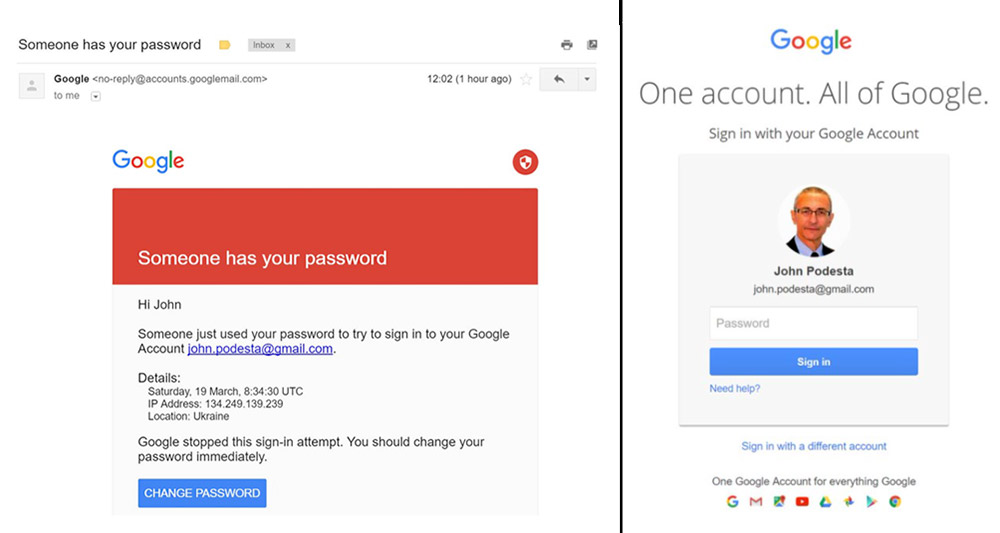
An employee might follow instructions in a phishing email not only because it looks authentic, but that it conveys some urgency (usually from a manager or someone else of importance). Employee training can help reduce the likelihood of error, but solving the technological shortcoming is more effective: if a phishing email is blocked from delivery in the first place, we can help mitigate the human error factor. This is where artificial intelligence can be a game-changer. We already use AI to simplify our home lives, using it to perform a variety of tasks, from turning on lights, to playing our favourite music. But if AI solutions are deployed in the workplace, we can help address the biggest elephant in the IT room: data security. Data security is a major area of concern, and it’s likely the leading cause for lost hours – and lost sleep – for security and IT professionals. According to a recent survey of over 500 IT professionals in the financial services industry, a whopping 94% said that they lack confidence in the ability of employees, consultants, and partners to safeguard customer data. And because cybersecurity is a complex domain – with many unknowns and moving parts – the rigid, conventional solutions can’t be effective. However, AI solutions can learn, adapt, and dynamically react to an organisation’s cybersecurity needs.


Quote for the day:

"A leader is judged not by the length of his reign but by the decisions he makes." -- Klingon Proverb

Daily Tech Digest - June 17, 2020

We Need the Security Benefits of AI and Machine Learning Now More Than Ever

“AI and machine learning tools can absolutely help people do their jobs more effectively now more than ever,” said Lonas. “Security professionals are always in short supply, and now possibly unavailable or distracted with other pressing concerns. Businesses are facing unprecedented demands on their networks and people, so any automation is welcome and beneficial.” In machine learning, a subset of AI, algorithms self-learn and improve their findings and results without being explicitly programmed to do so. This means a business deploying AI/ML is improving its threat-fighting capabilities without allocating additional resources to the task– something that should excite cash-strapped businesses navigating tough economic realities. Our AI/ML report backs up Lonas’s assertion that these technologies make a welcome addition to most business security stacks. In fact, 94 percent of respondents in our survey reported believing that AI/ML tools make them feel more comfortable in their role. “People who use good AI/ML tools should feel more comfortable in their role and job,” he asserts. “Automation takes care of the easy problems, giving them time to think strategically and look out for problems that only humans can solve.


Licensing and roadmap update for Power BI Report Server

Since Power BI Report Server launched in June 2017, it’s been adopted by thousands of customers in a variety of industries, giving them a way to use and share Power BI reports on-premises. As the BI industry has evolved over the last three years, we continue to see more and more customers choosing to make the switch to the cloud. The availability of paginated reports in the Power BI service enables organizations to centralize and manage their BI workloads in one single global location – Power BI. This is why we’ve always positioned Power BI Report Server as an on-premises solution for reporting today, with the flexibility to move to the cloud tomorrow. As more customers than ever take that next step in their cloud journey, we’re taking steps to help these customers make the transition successfully.  We’ve recently updated our licensing terms to allow SQL Server Enterprise customers with software assurance to deploy Power BI Report Server on Azure VM’s for production use by leveraging their Azure Hybrid Benefit. For many customers, moving their internal servers to Infrastructure as a Service (IaaS) offerings in the cloud represent the first step in their digital transformation.


Shadow IT: Why It’s Still a Major Risk in Today’s Environments

Many organizations weren’t expecting the transition to remote work and have found themselves needing to improvise. As a result, numerous employees are working from home on devices that had never left the corporate environment before this time—even laptops that were always stored in the office when they weren’t in use. Others are being challenged to adapt their personal devices for professional purposes for which they were never configured or intended. For security teams seeking visibility into cloud applications across employee-owned devices (BYOD), a full Cloud Access Security Broker (CASB) solution is needed. This allows for real-time auditing and control of your cloud app usage on both managed and unmanaged devices. A CASB solution will also enable you to monitor for and restrict usage of non-corporate instances of cloud applications, as well as to apply individual security policies on a per-device basis. Just like water flows downhill, employees tend to gravitate toward technologies that allow them to work in the most frictionless ways. If there’s widespread interest in using a particular tool, it may make the most sense to sanction—and then monitor—its usage.


Hosting Provider Hit With Largest-Ever DDoS Attack

The sheer variety of data types used in the attack, along with signs of significant coordination, suggests a knowledgeable attacker, he says. "What was really different is that the absolute kitchen sink was thrown in for this attack," Barranco says. More than nine different types of traffic were used in the attack - far more than the two or three types used in a typical attack - and the traffic surge lasted about an hour. Most attacks are measured in minutes, so this was notable. "It's has been a long time that we've seen the duration that long and an attack of that size." A typical year of denial-of-service attacks includes a massive number of smaller attacks targeting gaming sites, often to give one player an edge over the competition, and a few massive bandwidth attacks. Over the past 24 months, the median denial-of-service attack has peaked at less than 250,000 packets-per-second, according to Akamai's State of the Internet (SOTI) report. Very few attacks have surged far beyond that average. Security firm Imperva recorded a 500 million packet-per-second attack in early 2019, for example. The attack weathered by Akamai and its customer came close to that packet rate, but surpassed the bandwith of that previous attack because the average packet seen by Akamai consisted of more data.


To lead in a changed world, make yourself essential

As a leader, your new — and perhaps only — mission is to change your company with the times. It’s clear that businesses that are essential to people’s lives will recover faster, and those that are perceived as extraneous will have a short runway to adapt to the new normal. But this is a moment for leaders of all businesses to grapple with what is essential about their own operations, processes, and products or services. Everything you do now will be scrutinized: Is it essential or not? Companies holding out for a post–COVID-19 bounce back to things as they were will be sorely disappointed. Instead, consider this just the beginning of shifting behavior from consumers. That reality calls for a new kind of thinking and action from companies: Double down on digital transformation, know what to hold, manage in shorter increments, and plan for operational resilience. The time to stop dabbling in digital transformation was pre–COVID-19. The difficulties of ramping up online stores and systems for suddenly remote employees — including implementing virtual digital tools for collaboration and product management in scattered living rooms and on dining tables — are evident.


After Guilty Plea, DDoS Attacker Gets 5-Year Prison Term

A federal judge has sentenced an Iranian-born, U.S. naturalized citizen to five years in prison for one in a series of distributed denial-of-service attacks over the course of at least five years, according to the Department of Justice. Andrew Rakhshan, 40, formerly known as Kamyar Jahanrakhshan, pleaded guilty to one count of conspiracy to commit computer fraud in February. In addition to the jail sentence, he was fined $520,000. Starting in 2015, Rakhshan conducted a series of DDoS attacks against websites that had posted legal information about his prior conviction for fraud in Canada, according to the Justice Department. One of the sites that Rakhshan targeted with a DDoS attack, called Leagle.com, is based in Canada but it's servers are housed in Texas. Rahshan's guilty plea in February was in connection with the attack on this website, prosecutors say. Rakhshan was originally arrested near Seattle in July 2017, and the case was transferred the U.S. Attorney's Office for the Northern District of Texas. Since his arrest, Rakhshan has remained in federal custody, according to the Justice Department.


Robots will take 50 million jobs in the next decade.

Equally, some new opportunities might emerge to enable a smoother transition for workers. Robotics company Universal Robots, for example, is already deploying "cobots" (or collaborative robots) to businesses, which are designed to simplify the use of automation for human employees. The company has developed online courses, which it claims enable workers with no engineering background to program a "cobot" in only 87 minutes. The method, according to Universal Robots, reverses the idea that automation is taking jobs away from humans, and instead gives tools to employees to better control their day-to-day activities. Lund, for her part, is confident that the workforce will easily acquire the new skills that it will need – in part, because it already has. "Work skills have been evolving over the past years for many professions," she says. "With the advent of digital technologies, this has accelerated." "In Europe, subway train drivers have switched to becoming route optimizers, as trains have become automated," she continued. To succeed alongside robots in new types of work, employees will need skills that they don't currently have. The concept of "lifelong learning" will gather pace, therefore, as workers acquire new knowledge throughout their careers.


Cisco Brings SecureX into Full Security Lineup to Cut Complexity

The platform debuted alongside Cisco's "2020 CISO Benchmark Report," which found many security leaders struggle with alert fatigue and other challenges when managing a multivendor environment. Eighty-six percent use up to 20 vendors. Of those who report alert fatigue, 93% receive at least 5,000 alerts per day and 17% report 100,000 or more alerts. Businesses with more vendors report longer downtime, higher costs, and more breached records after a cyberattack. It's not only security leaders who are feeling the effects. Cisco's recently released "CIO Perspectives 2020" study found security and complexity are the top two challenges CIOs face. More than two-thirds surveyed feel they are being stretched too thin, Cisco researchers found. "The challenge in the security industry is [that] we're not necessarily always helping," says Bret Hartman, CTO of Cisco's Security Business Group. Vendors are always creating new tools to buy and assemble, he adds, complicating the jobs of people who manage and protect them all. SecureX, which will be included in all Cisco Security products on June 30, is meant to simplify IT management and reduce the complexity that CIOs and CISOs often struggle to handle.


6 new rules of engagement for CIOs in 2020

Under these new circumstances, CIOs must be working to deliver value to customers as fast as possible, both internally and externally. Platform companies are always reviewing customer utilization of their products and enhancing the experience, adding enhancements by chipping away at a backlog of features. In this day and age, CIOs must be adopting that same mindset for their customers. We must be reviewing and utilizing data to determine how we can drive more change that leads to better outcomes for our customers faster. .... The rules around work are being rewritten. As CIOs, we have the opportunity to encourage behavior change that will ultimately help our teams stay engaged. It can be as small as loosening up your own wardrobe choices to signify to your teams that getting work done is more important than donning a collared shirt, or as big as encouraging your teams to end work early on a Friday to enjoy some recharge time. As different parts of the country and world re-open, remember that it doesn’t necessarily mean your colleagues are sending their children back to school or summer camp.


5 Major Software Architecture Patterns

The microkernel architecture pattern is a natural pattern for implementing product-based applications. And a product-based application is one that is packaged and made available for download in versions as a typical third-party product. However, many companies also develop and release their internal business applications like software products, complete with versions, release notes, and pluggable features. The microkernel architecture pattern allows you to add additional application features as plug-ins to the core application, providing extensibility as well as feature separation and isolation. The microkernel architecture pattern consists of two types of architecture components: a core system and plug-in modules. Application logic is divided between independent plug-in modules and the basic core system, providing extensibility, flexibility, and isolation of application features and custom processing logic. And the core system of the microkernel architecture pattern traditionally contains only the minimal functionality required to make the system operational.


Quote for the day:

"Leaders are the ones who keep faith with the past, keep step with the present, and keep the promise to posterity." -- Harold J. Seymour

Daily Tech Digest - June 16, 2020

Gamaredon Group Using Fresh Tools to Target Outlook

In the analysis of the new tools that Gamaredon is now deploying, ESET researchers found that the hacking group is able to now compromise Outlook using a custom Visual Basic for Applications - VBA - project file that contains malicious macros. While using malicious macros to compromise Outlook is not unusual, Gamaeredon's use of VBA is different, says Jean-Ian Boutin, head of threat research at ESET. "What stands out in this one is the fact that they used some novel tools," Boutin tells Information Security Media Group. "The Outlook VBA project used to send emails from the compromised inbox to contacts in the address book is something we've never seen before. The macro injection module is quite interesting too. All in all, they've shown a creativity we've not seen from them in the past." The attack starts when a targeted device is first compromised with a phishing email that contains a malicious Word or Excel attachment. It's these attachments that contain a Virtual Basic script that will stop the Outlook process and disable security tools, including those designed to protect the VBA project function, according to the report.


How voice tech could shape the post-pandemic workplace

Though voice-based digital assistants such as Amazon Alexa or Google Home have often been seen as home-based, Amazon has been pushing Alexa into the corporate world with Alexa for Business in the U.S., offering integrations that use voice commands for tasks such as managing meetings, controlling conference room devices and even setting the room temperature. Pre-pandemic, many businesses may have seen those capabilities as “nice to have” features, according to the 451 Research report. But if social distancing measures remain in place long-term, these integrations could become critical for any company wanting to bring employees back into a physical office space. “Beyond the idea that [a company could] bring in a third of the workforce for month one, and then bring in another batch of the workforce, or rotate the workforce, I don't think people have started to look at the different contact points of, say, the furniture or how employees will be engaging with the built environment,” Mullen said, adding that it’s likely the business handshake is now a thing of the past.


DevSecOps vs. Agile Development: Putting Security at the Heart of Program Development

The difference between DevSecOps and agile development methodologies can be understood in reference to one aspect of software development: security. When, where and who implements security in software development varies between the two approaches. Agile development methodologies focus on iterative development cycles, in which feedback is continuously reintegrated into ongoing software development. However, even in mature agile development processes, security is still often added to software as an afterthought. This should not be read as blaming software developers for often underestimating the potential harm from malware or overlooking the importance of cybersecurity.  Rather, in many firms, it is simply not the responsibility of developers to think about the security implications of their code, because software will be passed to the security team before release. DevSecOps takes security and puts it on the same level as continuous integration and delivery.


Six Former eBay Employees Charged with Aggressive Cyberstalking Campaign

According to the charging documents, the victims of the cyberstalking campaign were a Natick couple who are the editor and publisher of an online newsletter that covers ecommerce companies, including eBay, a multinational ecommerce business that offers platforms for consumer-to-consumer and business-to-consumer transactions. Members of the executive leadership team at eBay followed the newsletter’s posts, often taking issue with its content and the anonymous comments underneath the editor’s stories. It is alleged that in August 2019, after the newsletter published an article about litigation involving eBay, two members of eBay’s executive leadership team sent or forwarded text messages suggesting that it was time to “take down” the newsletter’s editor. In response, Baugh, Harville, Popp, Gilbert, Zea, Stockwell, and others allegedly executed a three-part harassment campaign. Among other things, several of the defendants ordered anonymous and disturbing deliveries to the victims’ home, including a preserved fetal pig, a bloody pig Halloween mask, a funeral wreath...


Ripple20 vulnerabilities will haunt the IoT landscape for years to come

These vulnerabilities -- collectively referred to as Ripple20 -- impact a small library developed by Cincinnati-based software company Treck. The library, believed to have been first released in 1997, implements a lightweight TCP/IP stack. Companies have been using this library for decades to allow their devices or software to connect to the internet via TCP/IP connections. Since September 2019, researchers from JSOF, a small boutique cyber consultancy firm located in Jerusalem, Israel, have been looking at Treck's TCP/IP stack, due to its broad footprint across the industrial, healthcare, and smart device market. Their work unearthed serious vulnerabilities, and the JSOF team has been working with CERT (computer emergency response teams) in different countries to coordinate the vulnerability disclosure and patching process. In an interview with ZDNet last week, JSOF said this operation involved a lot of work and different steps, such as getting Treck on board, making sure Treck has patches on time, and then finding all the vulnerable equipment and reaching out to each of the impacted vendors.


First Four Finnish GDPR Fines Set A New Tone For Data Protection Supervision

Controllers have been relying on a certain legal certainty and status quo expectations in their data processing practices, as well as in their attempts in fending off unexpected supervision measures after the enactment of the GDPR. In general, businesses have been surprised by the lack of active guidance from the data protection authorities. In the Transparency Case, the controller had referred to demonstrated compliance under previous Finnish data protection legislation. The company also contended that since the Ombudsman had looked into the company's processing activities in 2017 without any further action until 2020, the company should have been able to trust the lawfulness of its conduct. However, these arguments were not accepted by the Collegial Body and the decision stressed that it was for the controller to monitor and assess compliance with new requirements pursuant to the GDPR. 


This project is using fitness trackers and AI to monitor workers' lockdown stress

The pilot scheme at PwC came about following discussions between Cameron and associates at IHP Analytics, a boutique analytics firm that specializes in human performance in elite sports. The firm, which has worked alongside professionals in Formula 1 racing and Olympic cycling, is aiding the development of the underlying platform, which it eventually hopes to offer to external clients. "One of the areas, even before COVID, that we knew was developing fast was a deeper understanding of human performance and human wellness," Cameron says. "We want to marry these two together to do something positive for our people." Vicki Broadhurst, a senior manager at PwC, volunteered for the trial in order to help her understand how her physical activity linked to her cognitive performance and how she felt. She tells TechRepublic that her participation in the trial stemmed from her own interest in the role of artificial intelligence in psychometric testing, as well as wanting to remain active during lockdown. "I wanted to take part in something that would challenge me to be more active whilst I was at home all the time, as well as give me targets to work towards," she says.


Q&A on the Book Leveraging Digital Transformation

Now, the digital age has evolved to the 2nd machine age. The machine becomes more powerful with the evolution of computers that see outstanding and evergrowing storage and processing capacity, as well as networking evolution, beyond other aspects. Thanks to the fast increasing power of the computer, a very important domain in computing that was hibernating due to computer limitations back then, suddenly wakes up and thrives on the machine’s newfound power. I am talking about artificial intelligence. Now, not only are computers more powerful, but they can be given a brain with artificial intelligence, therefore becoming smart. As a result, the intelligent computer can take over many of the jobs that humans used to do. This is the 2nd machine age, the age when the machine becomes smarter and smarter. The possibilities the 2nd machine age offers are countless because it allows the transforming of every sector, every business, everything, and even us humans. There is no limit because anyone and everyone can innovate and further build on previous innovations. 


Assembling A Top-Notch AI Team

If anything, the roles of the data scientist or the ML engineer are perhaps the first to focus on. They will be essential for the ultimate success of an AI model. “If you are building a team from scratch, pay top dollar to hire a senior ML engineer as an anchor and leader, then surround them with your best internally applicable talent,” said Jocelyn Goldfein, who is a managing director at Zetta Ventures Partners. In terms of recruiting the technical talent, you need to be expansive. Look to your own network, say with LinkedIn. Get to know new graduates who have advance degrees, even those that are not just for computer science. “Traditional data scientist backgrounds–statistics, math, computer science–are more commonly being augmented with engineers, physicists, economists, psychologists, and so on,” said Justin Silver, who is a data scientist manager and AI strategist at PROS. “Recruiting from a pool of candidates with varying technical backgrounds can yield an AI team comprised of a wide, rich set of perspectives for solving problems. This technical diversity also makes collaboration more interesting and fun and encourages team members to effectively communicate their ideas


How will technology change investment landscape going forward?

Large banks understand what’s coming, but it’s difficult to act. “So somebody makes a presentation to the bank board saying, ‘Hey, we should do this.’ And the board members say, ‘Well, you’re saying we should spend all this money to basically cannibalize our business and make a lot less money?’ That’s a really tough sell.” There will also be a shakeout in asset management, Harvey says, where having access to better data and the ability to interpret that data will be a key competitive edge. Pension funds that use external managers should be asking questions about how many full-time equivalents those managers have on machine-learning teams. “And that answer better be more than one,” he says. “And if it’s zero, that’s potentially enough to walk away.” But while fintech will be disruptive, it will also have very positive outcomes like reducing costs, which is the easiest way to create alpha, Harvey says. Indeed, the reduction of costs generates positive alpha. “It’s often the case [that] you work really hard, you’ve got some forecasts, you’re able to do better than your benchmark, but that is just eaten up with cost. So it looks like you just meet the benchmark or maybe even underperform.”


Quote for the day:

''A good plan executed today is better than a perfect plan executed tomorrow.'' -- General George Patton

Daily Tech Digest - June 15, 2020

Can I read your mind? How close are we to mind-reading technologies?

Technology nowadays is already heavily progressing in artificial intelligence, so it doesn’t seem too farfetched. Humans have already developed brain-computer interface (BCI) technologies that can safely be used on humans. ... How would the government play a role in these mind-reading technologies? How would it effect the eligibility of use of the technology? Don’t you think some unethical play would be prevalent, because I sure do. I’m not very ethically inclined to believe these companies aren’t sending our data to other companies without our consent. I found this term “Neurorights” in a Vox article, “Brain-reading tech is coming. The law is not ready to protect us” written by Sigal Samuel. It’s a good read, and I think she demonstrates well into the depth of how this would impact society from a privacy concern standpoint. She discusses having 4 core new rights protected within the law: The right to your cognitive library, mental privacy, mental integrity, and psychological continuity. She mentions, “brain data is the ultimate refuge of privacy”. Once it’s collected, I believe you can’t get it back. There needs to be strict laws enforced if this were to become a ubiquitous technology.


It's The End Of Infrastructure-As-A-Service As We Know It: Here's What's Next

Containers are the next step in the abstraction trend. Multiple containers can run on a single OS kernel, which means they use resources more efficiently than VMs. In fact, on the infrastructure required for one VM, you could run a dozen containers. However, containers do have their downsides. While they're more space efficient than VMs, they still take up infrastructure capacity when idle, running up unnecessary costs. To reduce these costs to the absolute minimum, companies have another choice: Go serverless. The serverless model works best with event-driven applications — applications where a finite event, like a user accessing a web app, triggers the need for compute. With serverless, the company never has to pay for idle time, only for the milliseconds of compute time used in processing a request. This makes serverless very inexpensive when a company is getting started at a small volume while also reducing operational overhead as applications grow in scale. Transitioning to containerization or a serverless model requires major changes to your IT teams' processes and structure and thoughtful choices about how to carry out the transition itself.


9 Future of Work Trends Post-COVID-19

Before COVID-19, critical roles were viewed as roles with critical skills, or the capabilities an organization needed to meet its strategic goals. Now, employers are realizing that there is another category of critical roles — roles that are critical to the success of essential workflows. To build the workforce you’ll need post-pandemic, focus less on roles — which group unrelated skills — than on the skills needed to drive the organization’s competitive advantage and the workflows that fuel that advantage. Encourage employees to develop critical skills that potentially open up multiple opportunities for their career development, rather than preparing for a specific next role. Offer greater career development support to employees in critical roles who lack critical skills. ... After the global financial crisis, global M&A activity accelerated, and many companies were nationalized to avoid failure. As the pandemic subsides, there will be a similar acceleration of M&A and nationalization of companies. Companies will focus on expanding their geographic diversification and investment in secondary markets to mitigate and manage risk in times of disruption. This rise in complexity of size and organizational management will create challenges for leaders as operating models evolve.


South African bank to replace 12m cards after employees stole master key

"According to the report, it seems that corrupt employees have had access to the Host Master Key (HMK) or lower level keys," the security researcher behind Bank Security, a Twitter account dedicated to banking fraud, told ZDNet today in an interview. "The HMK is the key that protects all the keys, which, in a mainframe architecture, could access the ATM pins, home banking access codes, customer data, credit cards, etc.," the researcher told ZDNet. "Access to this type of data depends on the architecture, servers and database configurations. This key is then used by mainframes or servers that have access to the different internal applications and databases with stored customer data, as mentioned above. "The way in which this key and all the others lower-level keys are exchanged with third party systems has different implementations that vary from bank to bank," the researcher said. The Postbank incident is one of a kind as bank master keys are a bank's most sensitive secret and guarded accordingly, and are very rarely compromised, let alone outright stolen.


What matters most in an Agile organizational structure

An Agile organizational strategy that works for one organization won't necessarily work for another. The chapter excerpt includes a Spotify org chart, which the authors describe as, "Probably the most frequently emulated agile organizational model of all." But an Agile model that serves as a standard of success won't necessarily replicate to another organization well. Agile software developers aim to better meet customer needs. To do so, they need to prioritize, release and adapt software products more easily. Unlike the Spotify-inspired tribe structure, Agile teams should remain located closely to the operations teams that will ultimately support and scale their work, according to the authors. This model, they argue in Doing Agile Right, promotes accountability for change, and willingness to innovate on the business side. Any Agile initiative should follow the sequence of "test, learn, and scale." People at the top levels must accept new ideas, which will drive others to accept them as well. Then, innovation comes from the opposite direction. "Agile works best when decisions are pushed down the organization as far as possible, so long as people have appropriate guidelines and expectations about when to escalate a decision to a higher level."


What is process mining? Refining business processes with data analytics

Process mining is a methodology by which organizations collect data from existing systems to objectively visualize how business processes operate and how they can be improved. Analytical insights derived from process mining can help optimize digital transformation initiatives across the organization. In the past, process mining was most widely used in manufacturing to reduce errors and physical labor. Today, as companies increasingly adopt emerging automation and AI technologies, process mining has become a priority for organizations across every industry. Process mining is an important tool for organizations that are committed to continuously improving IT and business processes. Process mining begins by evaluating established IT or business processes to find repetitive tasks that can by automated using technologies such as robotic process automation (RPA), artificial intelligence and machine learning. By automating repetitive or mundane tasks, organizations can increase efficiency and productivity — and free up workers to spend more time on creative or complex projects. Automation also helps reduce inconsistencies and errors in process outcomes by minimizing variances. Once an IT or business process is developed, it’s important to consistently check back to ensure the process is delivering appropriate outcomes — and that’s where process mining comes in.


How to improve cybersecurity for artificial intelligence

One of the major security risks to AI systems is the potential for adversaries to compromise the integrity of their decision-making processes so that they do not make choices in the manner that their designers would expect or desire. One way to achieve this would be for adversaries to directly take control of an AI system so that they can decide what outputs the system generates and what decisions it makes. Alternatively, an attacker might try to influence those decisions more subtly and indirectly by delivering malicious inputs or training data to an AI model. For instance, an adversary who wants to compromise an autonomous vehicle so that it will be more likely to get into an accident might exploit vulnerabilities in the car’s software to make driving decisions themselves. However, remotely accessing and exploiting the software operating a vehicle could prove difficult, so instead an adversary might try to make the car ignore stop signs by defacing them in the area with graffiti. Therefore, the computer vision algorithm would not be able to recognize them as stop signs. This process by which adversaries can cause AI systems to make mistakes by manipulating inputs is called adversarial machine learning.


Using a DDD Approach for Validating Business Rules

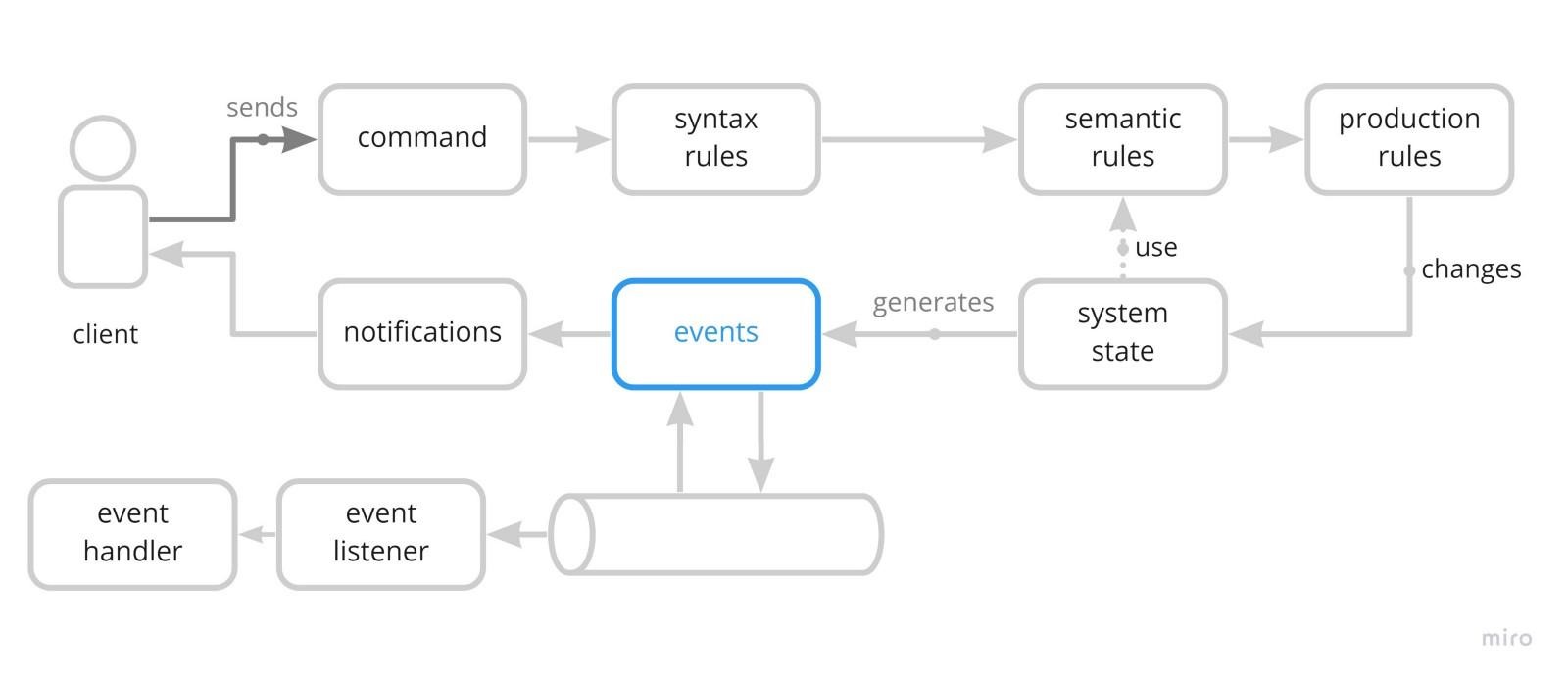
For modeling commands that can be executed by clients, we need to identify them by assigning them names. For example, it can be something like MakeReservation. Notice that we are moving these design definitions towards a middle point between software design and business design. It may sound trivial, but when it’s specified, it helps us to understand a system design more efficiently. The idea connects with the HCI (human-computer interaction) concept of designing systems with a task in mind; the command helps designers to think about the specific task that the system needs to support. The command may have additional parameters, such as date, resource name, and description of the usage. ... Production rules are the heart of the system. So far, the command has traveled through different stages which should ensure that the provided request can be processed. Production rules specified the actions the system must perform to achieve the desired state. They deal with the task a client is trying to accomplish. Using the MakeReservation command as a reference, they make the necessary changes to register the requested resource as reserved.


7 Ways to Reduce Cloud Data Costs While Continuing to Innovate

This is a difficult time for enterprises, which need to tightly control costs amid the threat of a recession while still investing sufficiently in technology to remain competitive. ... This is especially true of analytics and machine learning projects. Data lakes, ideally suited for machine learning and streaming analytics, are a powerful way for businesses to develop new products and better serve their customers. But with data teams able to spin up new projects in the cloud easily, infrastructure must be managed closely to ensure every resource is optimized for cost and every dollar spent is justified. In the current economic climate, no business can tolerate waste. But enterprises aren’t powerless. Strong financial governance practices allow data teams to control and even reduce their cloud costs while still allowing innovation to happen. Creating appropriate guardrails that prevent teams from using more resources than they need and ensuring workloads are matched with the correct instance types to optimize savings will go a long way to reducing waste while ensuring that critical SLAs are met.


Who Should Lead AI Development: Data Scientists or Domain Experts?

To lead these efforts ethically and effectively, Chraibi suggested data scientists such as himself should be the driving force. “The data scientists will be able to give you an insight into how bad it will be using a machine-learning model” if ethical considerations are not taken into account, he said. But Paul Moxon, senior vice president for data architecture at Denodo Technologies, said his experience working with AI development in the financial sector has given him a different perspective. “The people who raised the ethics issues with banks—the original ones—were the legal and compliance team, not the technologists,” he said. “The technologists want to push the boundaries; they want to do what they’re really, really good at. But they don’t always think of the inadvertent consequences of what they’re doing.” In Moxon’s opinion, data scientists and other technology-focused roles should stay focused on the technology, while risk-centric roles like lawyers and compliance officers are better suited to considering broader, unintended effects. “Sometimes the data scientists don’t always have the vision into how something could be abused. Not how it should be used but how it could be abused,” he said.


Quote for the day:

"Only the disciplined ones in life are free. If you are undisciplined, you are a slave to your moods and your passions." -- Eliud Kipchoge

Daily Tech Digest - June 14, 2020

When ‘quick wins’ in data science add up to a long fail

The nature of the quick win is that it does not require any significant overhaul of business processes. That’s what makes it quick. But a consequence of this is that the quick win will not result in a different way of doing business. People will be doing the same things they’ve always done, but perhaps a little better. For example, suppose Bob has been operating a successful chain of lemonade stands. Bob opens a stand, sells some lemonade, and eventually picks the next location to open. Now suppose that Bob hires a data scientist named Alice. For their quick win project, Alice decides to use data science models to identify the best locations for opening lemonade stands. Alice does a great job, Bob uses her results to choose new locations, and the business sees a healthy boost in profit. What could possibly be the problem? Notice that nothing in the day-to-day operations of the lemonade stands has changed as a result of Alice’s work. Although she’s demonstrated some of the value of data science, an employee of the lemonade stand business wouldn’t necessarily notice any changes. It’s not as if she’s optimized their supply chain, or modified how they interact with customers, or customized the lemonade recipe for specific neighborhoods.


Reshaping retail banking for the next normal

Given the analytical nature of digital marketing, required skill sets differ vastly from “old-fashioned” marketing. Its teams more closely resemble Math Men than Mad Men. Banks’ required growth levers include digital traffic generation, existing customer engagement, and conversion. Leading digital banks leverage multiple marketing channels and customize strategies to customer segments, in combination with a sharp focus on developing truly exceptional customer journeys. Adopt more tailored customer conversations, leveraging advanced analytics and a multichannel approach. McKinsey research confirms that customers who receive personalized bank offers across multiple channels are more than three times as likely to accept, compared to those receiving offers via a single channel. Successful banks typically apply advanced analytics to identify niches of prudent growth, accurately predicting the best loan offer recipients, whose credit lines to increase, and who needs asset allocation assistance, thereby building stronger relationships while simultaneously helping customers optimize their finances.


Advancing Your Cybersecurity Program Past the Crisis

Fortunately, there is a security model that offers guidance for addressing such risks. It is called Zero Trust. John Kindervag, who coined this term back in 2010, explains that this paradigm “examines information about the device, its current state, and who is using it” when making security decisions. As described in the recent Zero Trust Architecture document by NIST, the idea is to narrow the sphere of trust from large networks protected by a perimeter to components, such as endpoints and users. Zero Trust, as NIST puts it, “is a response to enterprise trends that include remote users and cloud-based assets.” This is the very configuration you are supporting due to the pandemic, so even if you weren’t sure how to begin your journey toward Zero Trust, COVID-19 forced you to advance down this path even. When you get a chance to shift focus from tactical to the strategic planning of your security program, look at Zero Trust guidelines from the sources and people you trust. ... The business requirements of your organization today–remote workforce, distributed endpoints, heavy reliance on SaaS and cloud services–likely represent the ongoing needs of the enterprise.


Lamphone attack lets threat actors recover conversations from your light bulb

Having the ability to eavesdrop on corner offices from tens of meters away with nothing but a telescope and a video recorder is a huge feat, and a dangerous scenario for many companies. But Lamphone is not the first attack of its kind. Other techniques have been explored in the past, such as Gyrophone (using mobile device sensors to recover speech from gyroscope signals) and Visual Microphone (using video recordings to recover passive sound). Nonetheless, the research team says Lamphone has an advantage over these attacks because it's passive and doesn't require infecting a victim's device with malware (unlike Gyrophone) and works in real-time and doesn't need access to vasts computational resources to process its recorded data (unlike Visual Microphone). The research team says that all an attacker needs to process Lamphone data is something as simple as a laptop, which, in turn, allows threat actors to use Lamphone to follow conversations in real-time. A disadvantage is that the attack doesn't work against all types of light bulbs and that results may vary, depending on the light bulb's make, model, and technical characteristics, such as its outer glass thickness or light emission capability.


Artificial Intelligence Decodes Speech from Brain Activity: Study

The readout of brain activity and audio of the spoken sentences were input to an algorithm, which learned to recognize how the parts of speech were formed. The initial results were highly inaccurate, for instance, interpreting brain activity from hearing the sentence “she wore warm fleecy woolen overalls” as “the oasis was a mirage.” As the program learned over time, it was able to make translations with limited errors, such as interpreting brain activity in response to hearing “the ladder was used to rescue the cat and the man” as “which ladder will be used to rescue the cat and the man.” “If you try to go outside the [50 sentences used] the decoding gets much worse,” Makin explains to The Guardian.  The BBC describes the program as learning how to decode individual words, not just the full sentences, which makes it more likely to accurately decode speech in novel phrases going forward. The program also increased its accuracy when going from one participant to the next, demonstrating plasticity in learning from multiple people. While being able to interpret limited sentences is a step forward, it is still a far cry from mastering English as a whole, the authors admit. “Although we should like the decoder to learn and exploit the regularities of the language,” the researchers write in their paper, “it remains to show how many data would be required to expand from our tiny languages to a more general form of English.”


Facial Recognition Bans: What Do They Mean For AI (Artificial Intelligence)?

Facial recognition has also been shown to be less effective when analyzing videos and images of minorities. “As for the issues with this technology, a study out of MIT last year found that all of the facial recognition tools had major issues when identifying people of color,” said Michal Strahilevitz, who is a professor of marketing at St. Mary's College of California. “Another study out of the US National Institute of Standards and Technology suggested facial recognition software had far more errors in attempting to recognize black and Asian faces than it had in recognizing Caucasian ones. This means that black and brown people are more likely to be inaccurately identified, and thus unfairly targeted. This may not be intentional, but it ends up having a racial bias that is dangerous and unethical.” Yet the debate over facial recognition can certainly get complicated and may even lead to unintended consequences.  “The moves reflect a lack of popular understanding of the technology–the public is conflating facial recognition with body recognition and tracking, facial analysis, facial detection, gender/age/ethnicity recognition, biometric validation, etc. as well as misunderstanding the difference between the use case and the technology,” said Kjell Carlsson, who is an analyst at Forrester.


Cybersecurity As A Career Option: Here's What You Should Know

There are many cybersecurity career tracks, including GRC, Auditors, incident responders, SOC analysts, IoT security professionals, security software developers, cloud security experts, cyber forensic experts and cybersecurity trainers. For example, to become an auditor or a Governance, Risk management, and Compliance (GRC) manager, you have to make sure you know each and every component of the security infrastructure. “GRC is like an orchestra conductor. He or she should have an understanding of all the security components, unlike someone who is a cloud security expert or database security manager. Because all the security components talk to each other. So, there should be a sharing of security intelligence and incidence reports. An auditor or GRC compliance manager should have competence and skills, cutting across all the domains. So, it’s very challenging because you have to learn the technology as well as the compliance process but coming up as a lucrative career,” according to Tathagata Datta. The majority of the investment in terms of resourcing, planning and training happens to prevent the attack.


Emerging Virtual Realities In Industry, Government And Academia

Virtual government is both growing and evolving in terms of providing citizens services with accessibility to .gov websites and data sources. Much of the communications relating to health or social security benefits are now being automated by federal agencies. Many of the best practices are being adapted from the private sector where technologies have already been proven for communications, and data analytics. The way government does business can change via virtual government. Virtual procurements can offer equal access and accessibility for vendors. The virtual government procurement landscape could also be more transparent and lessen protest on contracts and guard against cronyism or potential conflicts of interest. There are a multitude of benefits for virtual connectivity and interaction in academia. Covid19 forced an emergency response for most academic institutions to change from physical classes to digital classes in a short period of time. Many institutions of higher learning were already offering students and alumni the opportunity to learn online in subjects ranging from business, history, physics, to psychology.


M1, Airbus to pilot 5G for unmanned flights

The two partners will collaborate alongside Infocomm Media Development Authority (IMDA) and Maritime and Port Authority of Singapore (MPA) to conduct the coastal trials, and will be run on M1's 5G standalone network at the Singapore Maritime Drone Estate. The necessary permits and approvals first would be acquired from the relevant agencies before any flight trials were conducted, they said. Apart from providing the 4G and 5G network support, M1 would also collect data to assess the performance and coverage of mobile network in the operating areas, as well as carry out network parameter optimisation and the implementation of interference minimisation methods. The telco also would evaluate the use of 4G and 5G technologies to facilitate enhanced geo-location positioning for all phases of unmanned aircraft systems flight using network-based data, which it said was more precise than current Global Navigation Satellite Systems technologies. The telco would also assess network performance enhancements in connection stability, uptime, and data throughput when aggregating between 4G and 5G networks.


The Defense Department's Journey with DevSecOps

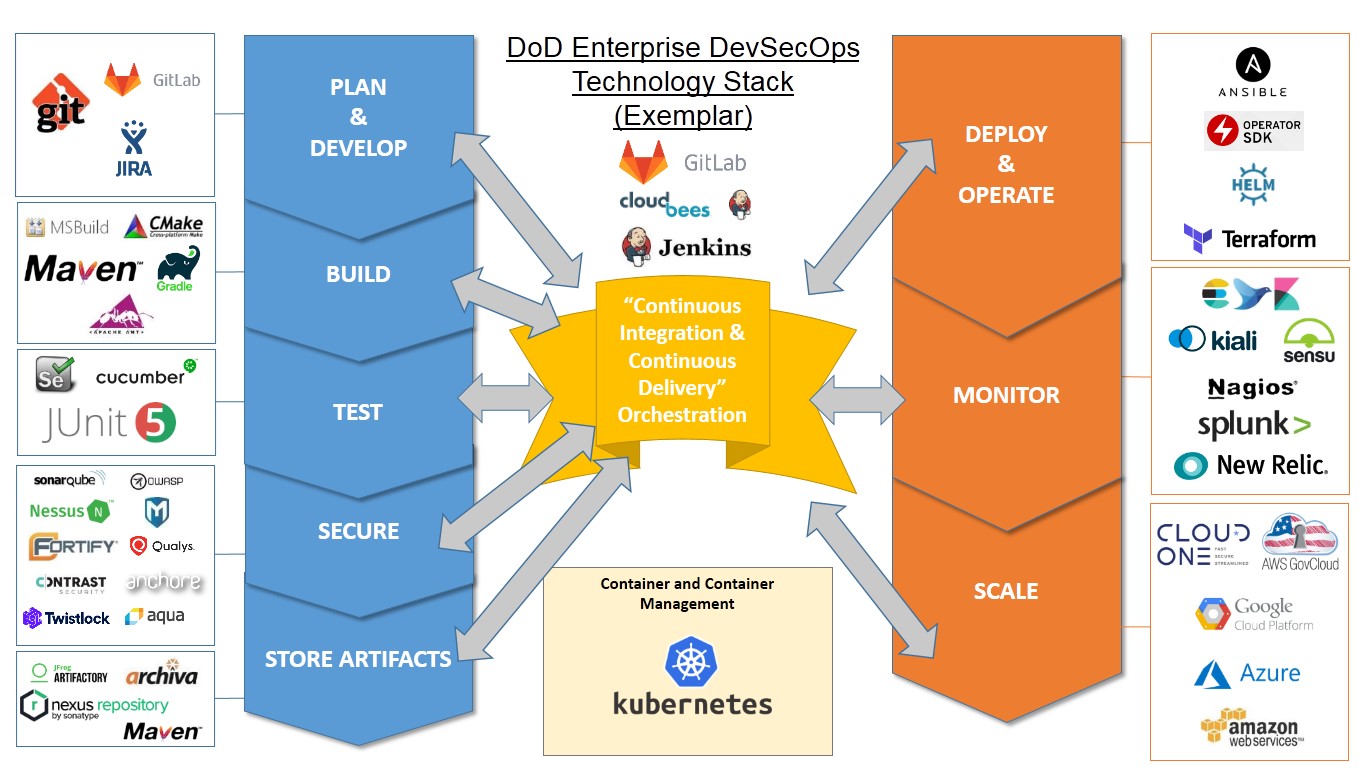
Cloud Native Computing Foundation has released a new case study of the DoD's approach to DevSecOps that looks at how they used Kubernetes clusters and other open-source technologies to speed up the releases. While most of the information was already available from the DoD and in their presentations, the CNCF has summarized the venture in one place. The Department of Defense has created their Enterprise DevSecOps reference design which defines the gates on the DevSecOps pipeline so that warfighters can create, deploy and operate software applications in a secure, flexible and interoperable manner. Releases, which once took as long as three to eight months, now can be achieved in one week. DevSecOps is a set of automated tools, services and standards that enable programs to develop, secure, deploy and operate applications in a secure, flexible and interoperable fashion. The DoD effort was spearheaded by Nicolas M. Chaillan, chief software officer of the U.S. Air Force and Peter Ranks, deputy chief information Officer for Information Enterprise, DoD CIO.


Quote for the day:

"How seldom we weigh our neighbors in the same balance as ourselves." -- Thomas Kempis

Daily Tech Digest - June 13, 2020

Blockchain expert discusses a world without usernames and passwords

The core principles of blockchain, he explained, can be applied to anything and can be useful for a variety of things, including authentication. "Right now, we have this problem with authentication. If you go to a bar and ask for a beer, you give them your license to prove age. But the issue is that they don't just get proof that you're 21, they get your name, actual age, address, organ donor and more," he said. "We have these imprecise identity and authentication systems where to establish a fact, whether it be age or paying taxes, you have to collect a lot more information than you need just because of the medium of how it's done. So many companies become data warehouses as a consequence of that mandate and they end up storing huge amounts of information about people. If they get hacked, that information gets leaked." Blockchain proponents have spent years figuring out a unified place to store credentials while also finding ways to prove facts about people by only revealing the minimum amount of information necessary.  "We can use zero knowledge cryptography and these things to say: 'Hey, you're over the age of 21. I won't know how old you are but I can get proof you're over 21. I can know you live in New York but not get your address," he added.


Building Security into Software

When a new technology wave sweeps over the security discipline - such as mobile code security, IoT security, or ML security - one important exercise is to think about how the seven touchpoints can be applied in order to make security progress. When it comes to many technologies, source-code analysis is the easiest security touchpoint to apply first. Why that is the case should be obvious: Regardless of the process you may have used to come up with your code, your code can be subjected to static analysis. That is, just about every software project has code. Well, to a point: Static analysis of a dynamic node.js assembly may not be possible depending on when, where, and how the assembly is put together. In fact, the move to dynamic languages is having a deep impact on the base effectiveness of code review using a static analysis tool.  Likewise, a DevOps approach elevates the importance of security operations (touchpoint 7), which is now defined in code itself. Containers are code, and container configuration is code. Container orchestration is code, too! So securing a system by design obviously must include operational aspects that may have been left to the IT guys in the past.


Phishing Attacks Traced to Indian Commercial Espionage Firm

Multiple details appear to reinforce that Dark Basin's operators were Indian and working in India, including the repeat use of custom-built link-shortening services named Holi, Rongali and Pochanchi, of which the first two are names of Hindu festivals, while the latter appears to be "a transliteration of the Bengali word for '55,'" according to Citizen Lab. Researchers said they found online a copy of BellTroX's phishing kit source code, as well as log files detailing testing activity, which uses the same time zone as India. Citizen Lab says employees also boasted online about conducting some attacks that traced back to link-shortening services seen in multiple BellTroX hack attacks. "We were able to identify several BellTroX employees whose activities overlapped with Dark Basin because they used personal documents, including a CV, as bait content when testing their URL shorteners," Citizen Lab says. "They also made social media posts describing and taking credit for attack techniques containing screenshots of links to Dark Basin infrastructure. BellTroX and its employees appear to use euphemisms for promoting their services online, including 'Ethical Hacking' and 'Certified Ethical Hacker.'"


A new digital ecosystem to transform the lives of Nigerians across the globe

“Sparkle will be transformational for Nigerians across the globe and I am hugely excited to be launching it today. Sparkle is redefining Nigerian commerce by merging financial services with a seamless lifestyle solution. We are removing barriers using technology and data, driving inclusion at scale. In doing so, we are empowering Nigerians to fulfil their potential, democratizing access to valuable solutions for both business and personal needs.” Sparkle is partnering with VISA, Microsoft and PwC Nigeria to achieve its vision of redefining Nigerian commerce. The partnerships will provide industry leading expertise in APIs, cloud computing, data science, machine learning, tax and financial advisory services for the benefit of Sparkle’s customers. The services offered by Sparkle are all licensed by the CBN. The launch of Sparkle comes at a time when most of Nigeria’s population (79%) have mobile connectivity, with 39% having access to mobile broadband connections1. This young and growing population – currently over 195 million people2 – are also digital natives, with social networks forming part of everyday life. 


Android 11's most important additions

The Android 11 Beta is significant for a couple of reasons. First, even though Android 11 itself has been in a public developer preview since February, this is the first time it's being made easily accessible to average users — and the first time it's anywhere near stable enough to be advisable for regular phone-totin' folk to use. (That being said, it still isn't something a typical phone-owner should install, especially on a primary phone you rely on for work.) But beyond that, this week's release gives us our first real look at what's likely the complete picture — or something very close to it — of what Android 11 represents. The early developer previews were kind of like rough skeletons, in a sense, and this beta release adds in the meat around those bones. That means some of the flashiest, most high-profile features of the software are now in front of us, and while there aren't any huge surprises, there's certainly some noteworthy stuff — including a newly refined notification panel that separates out conversation-centric alerts and places them in their own dedicated section, the long-awaited debut of Android's Bubbles multitasking system, a fancy new control panel for connected devices, and a new universal media player with better tools for controlling audio across multiple devices.


Artificial intelligence gathers pace in Latin America

Latin firms are using AI to tackle critical regional issues, including food security, smart cities, natural resources, and unemployment, according to the study, with the level of sophistication of AI projects at almost the same level as other regions. About 80% of large businesses in the region reported having projects underway, with early benefits including increased operational efficiency and management decision-making. This compares with 87% in North America and 95% in Asia-Pacific. The researchers predict that by 2022, AI projects are expected to accelerate, with almost two-thirds of respondents in Latin countries saying they expect 21%-40% of their processes to use AI three years from now, with the areas of fastest growth being logistics and supply chain management, as well as sales and marketing. The report noted that all industry sectors in Latin America have been ramping up adoption of AI, mostly for customer service, cited by 55% of respondents. Banks and airlines in the region have been at the forefront, taking advantage of chatbots and virtual assistants to improve response times and lighten administrative loads. The report also noted the emergence of a number of AI customer service-focused startups in the region.


Survey on Agile Hints at Further Acceleration Under COVID-19

How the success of Agile projects is measured is changing, according to the survey results. Burndown charts and the number of deliveries per day or hour, O’Rourke says, were the prevalent metrics. This has given way to business-related metrics taking the top spots. Customer/user satisfaction, business value, speed of delivery, customer retention, and increased revenue are now prime ways to gauge the success of agile projects, he says. More companies are committing to value streams in Agile, O’Rourke says, that tie business and IT organizations together. “Their expectation is those IT organizations are becoming much more of a strategic piece of their capabilities as opposed to just a cost center,” he says. Scaling of Agile is becoming more pronounced in the era of COVID-19, O’Rourke says. The methodology is applied increasingly across entire organizations from teams to directors, he says. There have also been changes in how Agile is applied with external resources, O’Rourke says. “This year, 40% of the people are using Agile capabilities in their outsourced projects, but five years ago that was 78%.”


DevOps for beginners: Where to start learning and focusing

First, we need to identify all the gaps and bottlenecks in your organization. A great practice to start is to map out value streams. What are all the steps taken between a customer triggering a request for a product or service and the associated value being delivered to them? How long does each step take? Where is there waste and unnecessary wait times? What about getting new releases of your software? How long does it take to get a new idea from a customer (internal or external) implemented and usable? A pair of practices to help with all of these questions are Value Stream Mapping and Metrics Based Process Mapping: These exercises can help you think about the gaps and delays that exist between end users and business lines, between business lines and software development teams, and between software development teams and application operations teams. Plugging these gaps and shortening these delays is what DevOps helps improve. Next, it’s hugely valuable to take some time to ensure you and your teams understand what DevOps is and, more importantly, what DevOps isn’t. 


Remote working: How the biggest change to office life will happen in our homes

"Whenever I would work from home before COVID," Hashmi tells ZDNet, "I would start my day as if I was going to work, and then instead of getting onto the tube, I'd go down to the co-working space with my laptop and my coffee, and work there until lunchtime." When his stomach would start rumbling, he would take the lift back up to his studio, make some food, and do some more work there. "But I'd go back down if I wasn't working productively enough in my own flat," adds Hashmi. "To have this workspace was really beneficial, because otherwise you're always working in your bedroom-kitchen area." ... "This is mostly just because the ergonomics of working in my studio aren't very good," he adds. "Whereas all the times I've worked in the co-working space, I've never felt physically discomforted. There's a variety in how you can sit, or change spaces." ... now it has become widely accepted that remote working is here to stay, even in a post-coronavirus world. And as employees start spending a few more days at home every week, it is not only office layouts that are going to change – but also the way we organize our homes.


Manifesto for Sustainable Agile

Technology has helped us prove that remote work at such a massive scale is possible. Studies have long proven collocated teams are better at delivery outcomes and gain alignment quickly. The effect of current situation will fundamentally shift how office spaces & collocation is perceived by individuals and leaders. In post COVID-19 era and beyond, remote working may take a front seat giving people commute-free lifestyle combined with technology innovations. We are all learning and experience through a global movement that it is more important to have the power of minds, ideas and thoughts together and collocated through digital mediums and conferencing innovations etc. Physical collocation may prove not be an essential aspect for new normal where everyone will master the art of remote working. ... The urge to measure individual productivity has always been of keen interest for people who are more focused on ROI over Impact. It has been a topic of debate over years in agile community that rather than measuring outputs or utilisation, one should measure outcomes. In my experience, outputs/utilisation measured in absolute number of hours or any time unit may have a NO direct relation to intellectual outcomes. 


Quote for the day:

"In simplest terms, a leader is one who knows where he wants to go, and gets up, and goes." -- John Erksine