Daily Tech Digest - March 13, 2018

Understanding The Strengths And Weaknesses Of Biometrics

Of all biometric methods, facial recognition is the latest to enter the market. While original iterations could be defeated using photos of the appropriate person, modern implementations map the structure and movement of the face to reduce the success of this kind of forgery. While the technology is new, if proven effective it could be a reasonable alternative to some of the other methods mentioned. However, with current attacks and false positives demonstrated against the Apple FaceID system, there is likely to be more advancement required in face recognition. It’s clear to see that there have been some significant advances made in biometric security. In terms of the level of security it provides, there is still some way to go before most methods are likely to receive widespread adoption. Another barrier to adoption is the level of public discomfort with keeping physical details on record as, thanks to fingerprints, biometrics are commonly associated with identifying criminals.


Businesses need to take cryptojacking seriously


Although some recently-discovered cryptojacking campaigns have compromised websites to hijack the computing resources of visitors to those sites temporarily through their browsers, corporate servers offer more computing power and are a much more attractive target. Although businesses need to be aware of both types of cryptojacking attack because website compromises could lead to brand damage and affect web-based services, cryptojacking attacks that target corporate servers arguably represent the greater risk. The main aim of cryptojacking is to hijack computing power to carry out the calculations required to generate cryptocurrencies, but that does not mean there is not a significant impact on the business. The most obvious effect is that businesses may experience a slowdown in responses from their servers and there may be some availability issues because of illicit cryptocurrency mining activity, causing costly downtime, especially to online businesses.


Cisco’s intent-based networks now available for the WAN

Cisco SD-WAN vAnalytics is built on technology the company got in the Viptela acquistion and is designed to provide visibility into WAN performance and capacity planning. Like its IBN solution for the data center and campus, SD-WAN vAnalytics allows network professionals to perform “what if” scenarios to try things and see what happens before the changes are committed. This is much more effective than the traditional model of hope things work and then reboot the router if things go awry. If the system notices a problem, it provides corrective actions and the steps taken to implement them. Over time, these actions will be executed automatically, but we’re still in the crawl phase of IBN and it’s unrealistic to expect customers to fully automate things.  The term vAnalytics is actually a bit of a misnomer, as it’s a suite that includes vAnalytics that does the baselining, trending, datamining, comparisons, and cause and effect and combines it with vManage that provides the real-time and historical visibility, troubleshooting tools, capacity planning, and utilization.


5 biggest healthcare security threats for 2018

Healthcare professional and security
Healthcare organizations tend to have a few attributes that make them attractive targets for attackers. A key reason is the number of different systems that are not patched regularly. “Some of them are embedded systems that, due to the way the manufacturer has created them, can’t be easily patched. If the healthcare IT department were to do so, it would cause significant problems with the way the vendor can support them,” says Perry Carpenter, chief evangelist and strategy officer at KnowBe4. The critical nature of what healthcare organizations do puts them on the radar of attackers. Health data is a valuable commodity in the cybercriminal world, and that makes it a target for theft. Because of what’s at stake—the well-being of patients—healthcare organizations are more likely to pay ransomware demands ... There is no reason to believe that ransomware attacks will tail off this year. “Until we harden our people and our systems sufficiently, [ransomware] will continue to prove successful and gain more momentum.


Malware 'Cocktails' Raise Attack Risk

The "old favorites" piece is important. According to SonicWall CEO Bill Conner, "New malware is down, but the number of variants is up." And the number of variants appears to be growing. "Last year we were seeing about 500 a day new variants. In February, they had gone to 700 day," he says. It's not like the variant writers were creative, though - many of the iterations are mash-ups of existing malware. "The variants have gone down in terms of exploit kits, but new malware cocktails are going up," says Conner. The growth of "malware cocktails" in part is due to the rise in ransomware-as-a-service operations around the world. That's bad news because ransomware-as-a-service allows less programming-skilled actors into the malware game, and some targets are twice-victimized. "About half of the [ransomware victims] did pay, but even among those who paid many weren't able to get their data back because the variants didn't contain all the keys," Conner says.


How Blockchain Is Helping Democratize Access to Credit


Enter blockchain, the technology Rodrigues believes can make this vision a reality. “Blockchain is changing both the technology and the power structure behind the credit industry,” Rodrigues said. “It’s shaking power structures that previously had to rely on banks, credit bureaus, and nation-states as middlemen.” Blockchain is increasingly being tested as a way to track that which was previously difficult to pin down, from securing virtual assets to giving refugees an immutable financial identity. Put simply, blockchain is a database of encrypted transactions stored across a network of computers. That network actively participates in the validation, upkeep, and accuracy of the database, and is paid for doing so in cryptocurrencies. Swapy Network will run on the Ethereum blockchain and issue its own cryptographic tokens, called Swapy Tokens, to be used to buy and sell various services across the company’s three products.


Severe flaws could turn your smart camera into someone else's surveillance tool

security threats and vulnerabilities
The camera, which has night vision and a motion sensor, can capture video, supports two-way communication, and has a built-in speaker. It works with a cloud-based service and can be controlled via smartphones, tablets, or computers. Kaspersky Lab identified multiple vulnerabilities in the affected camera’s firmware and cloud implementation. In fact, the architecture of the cloud service was even vulnerable. Regarding the dangerous vulnerability in the cloud service architecture, Kaspersky Lab’s researchers noted, “An intruder could gain access via the cloud to all cameras and control them. One of the main problems associated with the cloud architecture is that it is based on the XMPP protocol. Essentially, the entire Hanwha smart camera cloud is a Jabber server. It has so-called rooms, with cameras of one type in each room. An attacker could register an arbitrary account on the Jabber server and gain access to all rooms on that server.”


Microsoft Teams will integrate with Cortana, add transcription and translation features

According to Microsoft, Cortana voice integrations for Teams-enabled devices will launch later this year, allowing users to easily make a call, join a meeting or add people to meetings using natural, spoken language. What’s more, these voice capabilities will extend to IP phones and conference room devices, as well. This feature alone could be a big selling point for Microsoft Teams, but it’s one of several the company announced are in the works. Also coming in 2018 is cloud recording — another that takes advantages of advances in voice technology in recent years. Microsoft Teams will be able to record meetings with a click, then create an automatic transcription of what was said. Meeting attendees can choose to play back the meeting in full, or just a key part, using the transcription as reference. This feature will also be advanced in the future to include facial recognition, so meeting remarks can be properly attributed.


5 principles of monitoring microservices

microservices
As the building blocks of microservices, containers are black boxes that span the developer laptop to the cloud. But without real visibility into containers, it’s hard to perform basic functions like monitoring or troubleshooting a service. You need to know what’s running in the container, how the application and code are performing, and if they’re generating important custom metrics. And as your organization scales up, possibly running thousands of hosts with tens of thousands of containers, deployments can get expensive and become an orchestration nightmare. To get container monitoring right, you have a few choices: Ask developers to instrument their code directly, run sidecar containers, or leverage universal kernel-level instrumentation to see all application and container activity. Each approach has advantages and drawbacks, so you will need to review which one fulfills your most important objectives.


The future of storage: Pure Storage CEO Charlie Giancarlo shares his predictions

There are a bunch of things going on in data centers today that weren’t a factor even a couple of years ago. This includes artificial intelligence, machine learning, video processing and analytics. These only perform as well as the performance of the lowest-common-denominator in the underlying infrastructure. With advanced Intel CPU and Nvidia GPU-based applications, the goal should be to keep the massively parallel CPU busy so there are no idle cycles. Being able to keep the parallel processors fed means having an active data store that allows multiple groups to access the data at the same time. Magnetic disks aren’t fast enough to keep up, but flash is. Furthermore, legacy storage solutions that were designed for magnetic disk cannot deliver the speed that flash can provide without degrading flash performance.


Quote for the day:


"Being responsible sometimes means pissing people off." -- Colin Powell


Daily Tech Digest - March 12, 2018

Monetizing Services in Digital Time with AI and Machine Learning

Machine learning can help determine the right level of personalization for offers and deliver them at the perfect digital moment, increasing take-up rates for services. AI can identify problems faster with automated root cause analysis and anomaly detection, then trigger corrective actions to ensure retention and protect revenues. According to eMarketer, in 2018, around 1.87 billion individuals worldwide will use a mobile phone to watch digital video, an 11.9 percent increase compared to 2017. With real-time offerings like this on the line, every second counts when solving problems. Machine learning even brings opportunities to monetize operator data towards third parties, with offerings for verticals like retail and transportation. Combined with demographics and social media, operators can sell reports to show anonymized movements of crowds for tracking store performance against competitors, choosing the next location for a shop, seeing what are the most traveled routes for urban planning, and deciding how to lay out the next metro line.


Ransomware for robots is the next big security nightmare

robot-ransomware.jpg
Taking what was learned in previous studies into the security vulnerabilities of robots, researchers were able to inject and run code in Pepper and NAO robots and take complete control of the systems, giving them the option to shut the robot down or modify its actions. The researchers said it was possible for an attacker with access to the Wi-Fi network the robot is running on to inject malicious code into the machine. "The attack can come from a computer or other device that is connected to internet, so a computer gets hacked, and from there, the robot can be hacked since it's in the same network as the hacked computer," said Cerrudo. Unlike computers, robots don't yet store vast amounts of valuable information that the user might be willing to pay a ransom to retrieve. But, as companies often don't have backups to restore systems from, if a robot becomes infected with ransomware, it's almost impossible for the user to restore it to normal by themselves.


How Postgresql Just Might Replace Your Oracle Database

PostgreSQL replacing Oracle database? Salesforce might make it happen
If, in fact, Salesforce is developing a homegrown replacement for Oracle’s database, it might well be building it on PostgreSQL, the database Salesforce has actively flirted with since 2012. In 2013, Salesforce hired Tom Lane, a prominent PostgreSQL developer. In that same year, it hired several more, and even today PostgreSQL experience is called out for in dozens of jobs advertised on the company’s career page. Just as Facebook, Google, and other web giants have shaped MySQL to meet their aggressive demands for scale, so too might Salesforce be able to mold PostgreSQL to wean it from its dependence on Oracle. ... Oracle would claim that it isn’t worried, but the DB-Engines database popularity ranking, which measures database popularity across a range of factors, should give it pause. For years, PostgreSQL has been on the rise, even as Oracle and MySQL  have faded. PostgreSQL is now a strong fourth place, with MongoDB right behind it.


The 10 most common cybersecurity scams uncovered

In the beginning there was the internet, and shortly after that came the internet scammers. Online scams include everything from the now-legendary Nigerian prince meme to the less-well-known but infinitely more devious fake shopping websites. If you were curious about the origins of these deceitful hoaxes, we’ve got you covered. On the other hand, should you be worried about the repercussions of falling victim to one of these fraudulent schemes, we’ll also touch on that.  Online scams are typically malware disguised as rewards or charitable gestures. After all, what is the Nigerian prince scam other than an attempt to get you to care about getting someone else out of a rut, and providing you with a huge payout for doing so? All the examples below are designed to prick our consciences, or play on our greed or vanity in one way or another. Some of these cyber-scams are actually pretty ingenious, but ultimately malicious – others are just plain malicious.


Could Singapore hold the secret to preparing workers for an uncertain future?


Singapore offers a simple yet elegant solution: “second-skilling.” Tay realized that in today’s economy, second-skilling — developing your skills in a sector other than the one you work in — is necessary for career resiliency; it gives you options and flexibility. That second skill can either complement the skills you’re already using in your current job, or offer a completely alternative path. But who pays for second-skill training? The answer in Singapore is surprising. Thanks in part to Tay’s lobbying, every Singaporean 25 and older gets S$500 (about US$350) for skills training of their choice from the government through the SkillsFuture program. The money’s in a virtual credit account, and the government plans to provide periodic top-ups. It can pay for training in anything a person might want to learn, not just what their company needs them to know. “Many programs are already funded 80 to 90 percent,” says Tays. “So the five hundred dollars can be used to pay for the unfunded portions, which, previously, we had to fork out from our own pockets.”


5 emerging tech trends at SXSW that will shape 2018

Sadly, generalized intelligence (think Hal 9000) is still a dream in engineer’s mind. However, that doesn’t mean that AI isn’t still a hot topic for 2018. With computers getting faster and GPU’s being re-purposed, we’re seeing an explosion of innovation, from machine-learning models to validate brand creative to those that create unique art and music. Companies like IBM and Getty Images are asking how they can apply large scale AI to the creative process, and what that means for their business. Meanwhile, L’Oréal is applying machine-learning to improve product recommendations through its smart hairbrush. Despite all that, some of the more compelling topics this year are around the ethics and morality of AI. As AI is used in more serious applications (like self-driving cars and medicine), we rely on machines to make life-or-death decisions. Who is responsible for these decisions, and what rules do they follow? Still a Wild West to be figured out.


Third-party security vetting: Do it before you sign a contract

partnership collaboration puzzle pieces unity
Archer contends relationships are key. “Security has to be able to say, ‘We're not going to do business with that vendor,’” he says. To enforce a policy like that, the c-suite must take security seriously. If there’s not a CSO to represent you, talk to the CEO yourself. “If you can't get through the front door, maybe you get through the back door,” he recommends. Either way, he adds, “Establish those relationships.” Then grow relationships with the actual prospective vendors. At Fannie Mae, this starts with a security best practices questionnaire included in all RFIs. Archer’s team divided vendors into two groups — critical and regular — by the type of data they’ll access. For prospective critical vendors, there are around 250 questions. Regular vendors get shorter, industry-specific versions of the questionnaire. Most questions for both groups are primarily yes or no: “Are you SOC 1 and SOC 2 compliant?”, for example. The RFI is also an opportunity for prospective vendors to get to know you. In addition to adding questions, Fannie Mae outlines security expectations.


How Retail Shifted from Business Intelligence to Data Science

data science business intelligence retail
Being competitive in retail often means raising or lowering prices depending on what rival companies are also offering. Walmart is one retailer that spends tons of money on monitoring not just its own transactions, but also the price changes of its competitors while taking into consideration its own stock levels. With the aid of data science, Walmart is able to implement real-time changes to its pricing and never lose its edge over other retailers. In the past, to price products this fiercely took a lot more time and couldn’t be monitored so conveniently or, most importantly, predicted. This also has a second advantage, which is the possibility of moving away from the traditional end of sales technique of significantly lowering prices once demand has almost vanished at the end of a season, to instead drop prices more gradually, which has been shown to be more effective. Business intelligence is still an incredibly useful thing to have, with 62% of retailers reporting that using data is creating a competitive advantage, according to IBM.


Aryaka adds new security layers to global private network


Each security layer, which ranges from distributed denial-of-service protection to network edge and cloud security options, offers specific features, according to Gary Sevounts, chief marketing officer at Aryaka, based in San Mateo, Calif. Additional layers include a virtual firewall for Amazon Web Services and Microsoft Azure instances and built-in compartmentalization and contained environment controls. Finally, an early warning portal identifies behavior anomalies and potential risks. By offering multiple security layers from different security vendors, Sevounts said Aryaka's customers can receive extra protection in case there is a problem with one of the layers. "If you have all your layers from a single provider and something happens to the core technology, then all the layers are ineffective, and the company is susceptible to attacks," he said.


A new mindset drives a new way forward

collaboration brainstorming mobile [RawPixel.com - CC0 via Unsplash]
Why should IT have to struggle deploying cobbled-together kits, and trying to overcome difficult lighting or acoustic challenges? And why should participants have to spend 10 minutes trying to launch a meeting? Or suffer through inaudible sound, shouting into phones, camera angles that are too tight or too wide for the room, etc.? So yes, more scenarios are being supported, but the result is greater complexity to achieve a mediocre (or worse) experience — and this frustrates people, hampers productivity, and slows adoption. To make matters worse, those solutions can come at an unnecessarily high cost to buy and manage. In order to make real strides in collaboration today and into the future, you have to simultaneously address all three competing pressures. Solutions have to be able to support more scenarios — including scenarios we haven’t yet imagined — in simpler ways, while delivering a better experience.


Quote for the day:


"The past has no power over the present moment." -- Eckhart Tolle


Daily Tech Digest - March 11, 2018

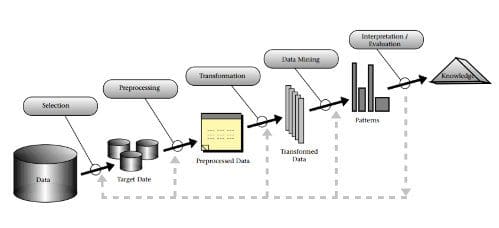
KDD Process
For our purposes, however, we will separate the data preparation from the modeling as its own regimen. As Python is the ecosystem, much of what we will cover will be Pandas related. For the uninitiated, Pandas is a data manipulation and analysis library, is one of the cornerstones of the Python scientific programming stack, and is a great fit for many of the tasks associated with data preparation. Data preparation can be seen in the CRISP-DM model shown above (though it can be reasonably argued that "data understanding" falls within our definition as well). We can also equate our data preparation with the framework of the KDD Process -- specifically the first 3 major steps -- which are selection, preprocessing, and transformation. We can break these down into finer granularity, but at a macro level, these steps of the KDD Process encompass what data wrangling is.


The Difference Between Entrepreneur and Executive

Entrepreneurs must understand that their business(es) should run without them. Systems and structure must be executed by management and each member of an enterprise should know his/her role. When venture capitalists and bankers invest in a new start-up, it is the first thing they look for – business structure. The passionate nature of the founder may get them to the table, but it is true day-to-day business management they look for. Look at Ray Kroc, founder of McDonalds. ... Executives, on the other hand, should take a page from the entrepreneur by looking beyond the numbers and going with their gut. When Mazda introduced the Miata, all the marketing data out there said nothing about a little convertible sports car. It was the last thing on the American consumers’ mind. But Mazda did the unthinkable – they put passion back into driving with a fun and affordable roadster that brought back the days of British MG Midgets and weekends in the country.


Great Data Scientists Don’t Just Think Outside the Box, They Redefine the Box


The data scientists didn’t wait until someone developed a better Machine Learning algorithm. Instead, they looked at the wide variety of Machine Learning and Deep Learning tools and algorithms available to them, and applied them to a different, but related use case. If we can predict the health of a device and the potential problems that could occur with that device, then we can also help customers prevent those problems, significantly enhancing their support experience and positively impacting their environment. ... One of a data scientist’s most important characteristics is that they refuse to take “it can’t be done” as an answer. They are willing to try different variables and metrics, and different type of advanced analytic algorithms, to see if there is another way to predict performance. This graphic measures the activity between different IT systems. Just like with data science, this image shows there’s no lack of variables to consider when building your Machine Learning and Deep Learning models!


This NYC Startup Supercharges Advisors With AI and NLP

By focusing on data that is often overlooked or misclassified such as tickers, instrument names, strategies, investment goals and many other financial entity types, we’re able to provide “4K NLP for financial data” as an input into our engine. Its robust platform includes three new configurable APIs; the first, Personalized Insights, curates personalized stories of “what to say”, the second – Client Prioritization API helps answer the question of “who to talk to” by providing a prioritized list of clients to call, with the reasons for out reach. The company’s third API, Expert Conversation, is a natural language interface with data aggregation, curation and linking capabilities. It is focused on question answering for market, ETF, mutual fund and equities research. It’s a smarter, faster way to get answers to questions that are buried in research reports or sits behind many screens.


Hackers create 'ghost' traffic jam to confound smart traffic systems

Image by Christian Mueller http://www.shutterstock.com/gallery-679411p1.html
The attack manipulates the mechanism I-SIG uses to manage queues, by spoofing the attack vehicle's predicted arrival time and the requested phase of the traffic lights (I-SIG lets vehicles request a green light for their arrival, and decides whether or not to grant it based on the queue it's created of all the incoming requests). “The attacker can change the speed and location in its BSM [Basic Safety Message – El Reg] message to set the arrival time and the requested phase of her choice and thus increase the corresponding arrival table element by one”, the paper said. The attack, they claimed, has a 94 per cent success rate, and on average, would increase delays by 38.2 per cent. The best defence against these and other attacks, the researchers say, is a combination of more robust algorithms, better performance in the roadside units that give the system its realtime feedback, and better validation of vehicle-originated messages.


This crazy invention by an Indian Banker will leave you speechless

The most Interesting Fact about “Bankerpedia” is, The Portal was coded in 6 days on Mobile during the daily commute from Elgin Mills Civil Lines Kanpur to Ghatampur (because he lived in Kanpur and was posted in Ghatampur approx 100 Km of daily travel to & fro). At the time of coding, he didn’t know that one day it’s going to be used by thousands of Learners. His imagination of finding a way to ease the efforts of collecting Notes & sorting out what to study & what to leave and how to share all these notes to the Colleagues who are going to appear in the same exam turned out to be a great Idea. ... he crowd-sourced it with several bankers & to update study material & maintain them, he created Artificial Intelligence Bots to take care of all these things. Apart from this, he has kept Security of Users and user’s data at top priority by using SSL. The usage of SSL technology ensures that all data transmitted between the web server and browser remains encrypted.


How to replace and upgrade a MacBook Pro hard disk


Upon receiving the SSD, I moved the screws from the side of the old disk to the same locations on the new drive, and then installed the drive in the MacBook Pro. I also reconnected the battery to the motherboard and replaced the hard drive retention piece, as well as the bottom cover and all screws. I connected the thumb drive to the MacBook Pro, booted up the laptop while pressing the Option key, and then chose to boot from the thumb drive that read Install OS X El Capitan. I selected the SDD as the disk to which I wanted to install the operating system, and then I marveled at how easy the process was. Next, the installation process failed. I was greeted with a nonsensical error that read "This copy of the Install OS X El Capitan application can't be verified. It may have been corrupted or tampered with during downloading." The file was fine; it wasn't corrupt, nor had it been tampered with.


A multi-sided approach to financing the smart city

Building successful Smart City initiatives requires collaboration between engaged individuals, city governments and a growing range of private commercial organisations. Yet there is a practical difficulty in all of this – finding a way to pay for Smart Cities - not an easy subject at a time when there is enormous pressure on public finances in countries all over the world. Most city and national governments are unable fund new initiatives of this kind from taxpayer income alone, and that leads them to seek partnerships and alliances with commercial bodies and technology specialists to design and deliver new services and new options. This is where problems start to arise. Technology companies are interested in partnering with city governments for their own reasons. They want to test their ideas, gain proofs of concept, access useful development data and other research requirements for building their own businesses.


How to build a data-first culture for a digital transformation

There’s not just one metric you need to pay attention to, but it’s not hundreds either. Organizations can get overly excited about data, then all of a sudden, you’re overwhelmed. So we decided to focus on data that helped us understand customer behavior and eliminate the unknowns. Look-alikes (an algorithmically assembled group of people who resemble, in some way, an existing group) based on existing segments of customers were most valuable, and over time we layered additional elements, such as demographics, behavior, age, current carrier, and location. We then overlay those insights with data from digital properties: website, mobile app, stores, and call centers. And we started to understand better our customers’ journeys across the web, as they called us, tweeted about us, etc. We’re now starting to teach our “bots” to learn more about contextually relevant interactions with the customer. For example, if a customer visits one of our stores, then comes online and looks at various sets of pages or has a pending order, the bot learns how to respond to that specific customer profile. 


What Is The Difference Between Artificial Intelligence (AI) And Machine Learning?

As it turned out, one of the absolute best application zones for machine learning for a long time was PC vision, however despite everything it required a lot of hand-coding to take care of business. Individuals would go in and compose hand-coded classifiers like edge identification channels so the program could distinguish where a protest began and halted; shape recognition to decide whether it had eight sides; a classifier to perceive the letters "S-T-O-P." From every one of those hand-coded classifiers they would create calculations to comprehend the picture and "learn" to decide if it was a stop sign. ... Back in that late spring of '56 meeting the fantasy of those AI pioneers was to build complex machines — empowered by rising PCs — that had similar attributes of human intelligence. This is the idea we consider as "General AI" — astounding machines that have every one of our faculties (possibly more), all our reason, and figure simply as we do. You've seen these machines perpetually in motion pictures as companion — C-3PO — and enemy — The Eliminator. 


Quote for the day:


"Be determined to handle any challenge in a way that will make you grow." -- Les Brown


Daily Tech Digest - March 10, 2018

Why You Should View Linux as a Core IT Skill

Linux as a Core IT Skill
Twenty-five years ago, some fellow students and I were sitting in a computer lab at the University of Waterloo trying to compile a new open-source UNIX operating system called Linux on a PC. Back then, installing a Linux system was about as difficult as nailing Jell-O to a tree, but we managed to get a system installed after only four days of work. Linux has come a long way since then. Today, Linux is the most diverse and aggressively developed operating system in the world, primarily due to its open-source nature. And if you work in an IT field, you’ve probably been exposed to more Linux in the last few years than before. In fact, the Gartner research company identified Linux as the fastest-growing operating system segment in the computing industry in 2017. So, what does this mean for you as an IT professional? It means that you’ll likely be working with far more Linux systems and technologies in coming years, regardless of whether you currently work with them or not.


Cisco attacks SD-WAN with software from Viptela, Meraki acquisitions

Cisco attacks SD-WAN with software from Viptela, Meraki acquisitions
The SD-WAN is typically made of diverse networks and technologies that many times are outside the control of IT. Add to that the increased use of multi-cloud services and other advances, and the traditional complexity of the WAN has been increased, Cisco stated. Cisco cited a recent IDC study that found almost three out of 10 organizations considered network outages to be a top WAN concern, with the same number stating they need better visibility and analytics to manage application and WAN performance. IDC also estimates that worldwide SD-WAN infrastructure and services revenues will hit $8.05 billion by 2021. In order to address some of these challenges, Cisco rolled out SD-WAN vAnalytics, a cloud-based SaaS application that will collect data from the SD-WAN and let customers spot and fix communications problems quicker, gauge application performance, oversee bandwidth planning, and predict how policy changes might impact the network. 


Big data analytics: The cloud-fueled shift now under way

Big data analytics: The cloud-fueled shift now under way
Cloud-based big-data silo convergence is speeding enterprise time-to-value. Users are beginning to step up the pace of consolidation of their siloed big data assets into public clouds. The growing dominance of public cloud providers is collapsing the cross-business silos that have heretofore afflicted enterprises’ private big data architectures. Just as important, big data solutions, both cloud-based and on-premises, are converging into integrated offerings designed to reduce complexity and accelerate time to value. More solution providers are providing standardized APIs for simplifying access, accelerating development, and enabling more comprehensive administration throughout their big data solution stacks. Innovative big data startups are bringing increasingly sophisticated AI-infused applications to market. Innovative application providers are starting to disrupt the big data competitive landscape with AI-based solutions.


Why Startup CEOs Still Have to Make Sales Calls

For all the obvious reasons. (1) People don't really care how much you know until they know how much you care. Showing up shows them that you actually do care. (2) Startups are notoriously scattered and in a hurry. Focus and attention to detail are scarce commodities and the customers want to know that you personally are connected, paying attention, and directly engaged with their business, their concerns and their problems. And finally, (3) they want to hear it from the horse's mouth. Not second hand. They want commitments and assurances from you (since they know that the sales guys will tell them anything and promise them the world) that you will stand up for and stand behind your product or service and make good on whatever they've been promised. The buck always stops with you. None of this is very tough. You just have to say what you're going to do and do what you said you would and everything will be hunky-dory.


What is a virtual CISO? When and how to hire one

multiple-exposure image showing virtual connections and software inside and outside a human profile
Why would you need a vCISO when you could simply hire a real one on a permanent contract? The answer is varied and not necessarily the same for everyone. For starters, well-rated, full-time CISOs can be hard to come by, often stay in their job for two years or less, and critically, especially for smaller businesses, can command six-figure salaries. In contrast, vCISOs are estimated to cost between 30 percent and 40 percent of a full-time CISO and are available on-demand. The benefits go well beyond cost. Virtual CISOs usually require no training, can hit the ground running, and don’t feel obliged to play nice with office politics. In this model, it’s purely about results, and vCISOs worth their salt will provide reasonable KPIs and reporting. While different vCISOs offer different skillsets, many should be able to cover myriad tasks, from the tactical to strategic. They could help pull together security policies, guidelines and standards. That could entail anything from coming to grips with HIPAA or PCI compliance, to staying on top of vendor risk assessment. 


Josh Bersin on the Importance of Talent Management in the Modern Workplace

Bersin reminds us that, even though the top, hot job of the moment may be technical, there are are plenty of non-technical jobs that are growing in demand, too. “Soft skills are just as in demand as hard skills. There will be an increased need for social, integrative, and hybrid skills. Empathy, communication, speaking, judgement… these renaissance skills are the jobs of the future,” said Josh. “Even the job of data scientist now requires persuasion, interpretation, not just looking at data.” Although many worry that technology will render some workers obsolete, this appears to be far from the case. Many of these workers can easily transition into new roles that leverage their skills, and these new roles are good for the workers, too. In fact, 96% of all transitions have “good-fit” options and 65% of transitions will increase wages.


Machine learning: What developers and business analysts need to know

Machine learning: What developers and business analysts need to know
In the case of supervised learning, you train a model to make predictions by passing it examples with known inputs and outputs. Once the model has seen enough examples, it can predict a probable output from similar inputs. ... The results of the prediction can’t be better than the quality of the data used for training. A data scientist will often withhold some of the data from the training and use it to test the accuracy of the predictions. With unsupervised learning, you want an algorithm to find patterns in the data and you don’t have examples to give it. In the case of clustering, the algorithm would categorize the data into groups. For example, if you are running a marketing campaign, a clustering algorithm could find groups of customers that need different marketing messages and discover specialized groups you may not have known about. In the case of association, you want the algorithm to find rules that describe the data.


Software leaders pick these three technologies as top investments

Companies that have been slower to invest in technology solutions have either prioritized changing their business model or have felt the negative, if not fatal, repercussions of not doing so. Regardless of industry, staying ahead of the technological curve in today’s software-centric world is a must for business success. However, it can be difficult for even the most experienced IT leaders to wade through the long list of technology buzzwords and solutions that promise to be the “next best things.” So how can businesses cut through the noise to determine what will actually bring business value? They can start by determining the technologies the experts are actually pursuing. To find out what these tech trends are, O’Reilly analyzed search data from more than two million users on its online learning platform, most of which are trained software and technology leaders. By taking into consideration what these professionals are focusing on, other professionals can begin to determine what their companies should be investing time and money in.


RoboTiCan is building low-cost industrial robots for the masses

​RoboTiCan products, with CEO Halgai Balshai
Balshai said, "We have moving, navigation, a manipulation of an arm, computer vision. Everything combined in one platform. Basically to be able to master all this knowledge and be able to find the algorithm for making it work is really complex. With ROS, it gives us a lot of opportunity to combine algorithms from one point to another. For example, if something was developed in a Carnegie Mellon University in the United States and we want to use this particular system, image work, or cognition of an object that was developed in Carnegie Mellon, we can extract this information and extract these ideas and implement it in our robot real easily. "By that, we don't need to have a really huge company to be able to do a lot of different tasks with one robot. This is basically the idea and the advantage of using ROS and open source architects for how we use robotics. By doing something that is generic for everybody, you can use it all over the globe. Of course, there is stuff that we extract to others. ..."


Data Mining What Why

Data mining sits at the intersection of statistics (analysis of numerical data) and artificial intelligence / machine learning (Software and systems that perceive and learn like humans based on algorithms) and databases. Translating these into technical skills leads to requiring competency in Python, R, and SQL among others. In my opinion, a successful data miner should also have a business context/knowledge and other so called soft skills (team, business acumen, communication etc.) in addition to the above mentioned technical skills. Why? Remember that data mining is a tool with the sole purpose of achieving a business objective (increase revenues / reduce costs) by accelerating the predictive capabilities. A pure technical skill will not accomplish that objective without some business context. The following article from KDNuggets proves my point that data mining job advertisements mentioned the following terms very frequently: team skills, business acumen, analytics among others.


Quote for the day:


"Vulnerability is the birthplace of innovation, creativity and change." -- Brené Brown


Daily Tech Digest - March 09, 2018

Autonomous Cars: The Road to 2030


Although many elements of self-driving cars seem beneficial for the environment, there are likely downsides as well. When given the option, people generally prefer taxis to buses, but taxis release far more carbon monoxide. If taxis are less expensive since there’s no driver to pay, more people are likely to hail them instead of waiting for a bus or train. Similarly, commuters often prefer to live near their places of work to avoid lengthy commute times. If drivers can work, watch video, or even sleep while en route, the lower cost of more distant suburbs may increase average commute times and lead to wasted energy. When going on a long trip, drivers might choose to take their vehicle instead of more efficient mass transportation options. Self-driving cars will open up a range of conveniences, but there’s no guarantee they’ll ultimately be better for the environment unless we can find an economical solution. Even if cars in 2030 are more efficient, increased use might offset these advantages.


Machine Learning Is Our Best Weapon Against Spiraling Cyberthreats

A young professional viewing graphs and analytical data on multiple computer screens.
As promising as machine learning is when it comes to addressing our security needs, we should assume that attackers have access to the same technology. That’s where collaboration can be our secret weapon. Organizations have historically been reluctant to share details about vulnerabilities, intrusions and responses, but the magnitude of today’s threats require us to put aside competitive concerns for the greater good. Fortunately, numerous collaborative efforts are under way. One success story is the sector-based Information Sharing and Analysis Centers (ISACs), of which there are currently 24 representing major vertical industries. The Institute of Electrical and Electronics Engineers (IEEE)’s Industry Connection Security Group (ICSG) addresses issues that are common to all industries, such as malware and encrypted traffic inspection. There are also regional groups, like the Columbus Collaboratory, which is one of about 30 Information Sharing and Analysis Organizations established with the support of the U.S. Department of Homeland Security (DHS).


How banks can make sense of digital disruption


Amid the financial technology (fintech) gold rush, Narayanaswamy observed that some fintech startups do not fully grasp the seriousness of the banking business. “We can bring down economies and start wars, but unfortunately the people I meet daily don’t seem to understand what banking is,” he said. “When I ask them what happens when something goes wrong, they say they will just release the next patch, but by then millions of dollars would have been transferred,” he added. With more software-driven innovation, Narayanaswamy also believes the software industry will be regulated in time to come. “If you say everything is software, how can it not be regulated? There’s always a downside to everything, and when the downside happens at scale, regulators will step in,” he said. To stay ahead, Narayanaswamy called for banks to go back to basics and make sense of what they are doing – which often includes a hodgepodge of initiatives and technologies recommended by consultants and analysts.


Why Digital is the Key Driver of Disruptive Restaurant Services?

With loads of information being uploaded on the digital portals on a daily basis, online is the new screen from where awareness is generated and delivered to the masses on a daily basis. Talking about the food world, in particular, issues like organic farming, food wastage problem and global warming have gained limelight of most amongst the online community. But it’s not the problem tellers but the problem solvers who will lead ahead in the ever competitive scenes. Considering the present scenes, food companies addressing these problems with innovative solutions might just have the advantage of gaining growth by tapping on the ethical points in the society, but in future situations ignoring these issues wouldn’t be easy as they will soon convert into mainstream demands of the industry. The much enhanced and innovative mobile phone technologies like that of iBeacons have added a new dimension to the overall dining experience.


Stop Blaming AI: Humans Don't Need Robots To Destroy Themselves


The robot obviously won’t be able to erase these security rules. We can then argue that the robot can still ignore these rules and act as it sees fit. If this happens, let us then also predict in this non-erasable memory, a rule that would say: « If the robot does not follow the non-aggression rules, then let’s return these non-aggression rules to the robot indefinitely! ». And then this will have the effect of paralyzing and blocking the action of our little too crafty robot-machine, just by a simple « Overfow » loop! So, finally, we can imagine that our smart robot, having understood this, simply decides to get rid of the chip containing the rules that annoys him. For example by disassembling itself the chip or by turning it off. To avoid this, we can also imagine that this chip, attacked by the robot, triggers an internal mini-bomb that will neutralize this AI from the inside (and obviously, if our friendly robot decides to turn off this bomb, so, of course, our future Terminator implodes too!


Ruby Finally Gains In Popularity

Ruby gains in Tiobe language popularity index
Ruby historically benefitted from its ties to the Ruby on Rails framework, which made it easy to build webpages, software quality services vendor Tiobe said. But “hipsters” later began moving to other languages after Ruby peaked in 2008. Its gradual resurgence in popularity is a good sign, the company said. But the publisher of the index, Tiobe Managing Director Paul Jansen, sees Ruby simply getting mature as opposed to making a comeback. This maturity makes it a stable Top 10 language. Also in this month’s index, Kotlin and Julia both entered the top 40. Kotlin, which has benefitted from Google’s endorsement of it for Android mobile application development, came in 38th place with a rating of 0.278 percent. Julia, in 37th place, rated at 0.301 percent, is used in scientific computing and burgeoning field of machine learning. Rust and Groovy, meanwhile, fell out of the index’s Top 50 spots.


Gamification, Encouragement Vital To Boosting Worker Engagement

It's important that employees not feel demoralized when it comes to their security posture and preparedness, Street said. "You're dealing with people, not servers," Street said. "Servers don't get their feelings hurt when they're compromised." One simple thing Street recommended is having the IT department go through the offices and look under the keyboards of every employee. The security team is likely to find that a number of workers have left a sheet of paper in that location with all of their passwords written down, which Street said presents a good, real-world opportunity for user education. Solution providers also need to make the security training engaging for customers, Street said. A multiple-choice online quiz that's administered yearly isn't going to capture employees' attention or truly make them security-conscious, according to Street.  "Make it something interesting for them, which will then make it interesting for you," Street said. "That's how you battle the battle fatigue."


How admins can manage mobile devices with G Suite

Photo of Android device with "An account was deleted" alert displayed in front of G Suite admin screen showing "Wipe account" device management (with a red arrow from "Wipe account" to phone alert)
Advanced mobile management options remain available. These give a G Suite administrator more control of specific mobile security settings. For example, advanced mobile management allows a G Suite admin to remotely wipe an entire device (everything, not just the organization's data), manage app installs, and set a specific lock screen, password, or pin policies. (See Google's chart that compares basic and advanced mobile management features) But for more control, a G Suite admin needs to do more work. They'll need to install the Google Device Policy app on each device and configure a connection between G Suite and Apple's Device management services. And they'll need to review and configure several screens full of advanced mobile management security settings for Android and iOS. Organizations that provide company-owned phones to employees will likely prefer advanced mobile management. Organizations that require rigorous security may also prefer the additional controls, too.


Passwords Are Scarily Insecure. Here Are a Few Safer Alternatives.

Passwords Are Scarily Insecure. Here Are a Few Safer Alternatives.
The main problem with passwords is twofold: For starters, passwords just aren’t that secure. Every company in the world uses them to authenticate users to confirm they are who they say they are, but a recent Verizon study showed that a majority of hacks leverage weak or guessable passwords. Additionally, passwords are susceptible to being stolen or extracted by hackers using various methods, like impersonating someone you know or trust to gain login information or personal details. Careless practices such as exposing hard or digital copies of passwords are also a major contributor to their becoming compromised. Think about that the next time you write down your work account password on a piece of paper and stick it in a desk drawer at the office.  There are numerous examples that demonstrate the vulnerabilities of passwords to theft. In 2017, online image sharing community Imgur made headlines when it had troves of user passwords stolen from the company database because of weak security protocols.


Data Privacy: What Your Employees Don't Know But Should

Data privacy and security: What your employees don̢۪t know but should
What do employees in your organization understand about security, data privacy, and compliance? According to a recent report from Bothell, Wash.-based MediaPro, perhaps not as much as they should. With data privacy fast becoming a hot-button issue, and the European Union's General Data Protection Regulation (GDPR) right around the corner, what your employees don’t know about handling data at your company could burn you. The news isn’t all bad. In general, U.S.-based employees are proficient at identifying sensitive and private documents, and understand whether such data should be destroyed or securely stored. But they struggle with privacy regulations (particularly the GDPR and the EU-U.S. Privacy Shield), as well as handling sensitive data in their personal and professional lives. In October of last year, MediaPro, a specialist in security awareness, privacy awareness and compliance training, surveyed 1,007 U.S. residents about data privacy best practices and regulations.


Quote for the day:


"There is nothing more dangerous than the moment you become a hostage to yesterday's comfort zone." -- Rob Thompson


Daily Tech Digest - March 08, 2018

How to avoid the organizational flu

Unfortunately, as long as humans operate in close proximity we’re going to infect one another. That’s where the term “communicable disease” comes from, and communicability can be as dangerous to an organization as it is to an organism.One way to understand health is as an incessant war against things that are trying to kill us. Our bodies come into contact with a wide variety of germs every day which proliferate and attack until stopped. When a vigorous immune system successfully defends the body from marauding invaders, the resulting stasis is defined as health. But it’s a never-ending battle. My firm’s research discovered four common “germs” that continually lurk within organizations -- destructive internal dynamics that can easily cause a business to be bedridden. They are management misalignment, loss of focus, lack of nerve and strategic inconsistency. As with real germs, they’re ever-present at some level, even within thriving companies. The primary task is to keep them contained. 


Microsoft fights massive cryptocoin miner malware outbreak

Microsoft said that the Dofoil trojan performs a fancy trick called 'process hollowing' on the legitimate explorer.exe binary. The technique creates a new instance of the legitimate binary but swaps out its code with malware. "The hollowed explorer.exe process then spins up a second malicious instance, which drops and runs a coin-mining malware masquerading as a legitimate Windows binary, wuauclt.exe," said Mark Simos, a cybersecurity architect at Microsoft. Kaspersky researchers observed sophisticated attackers using the process-hollowing technique to deliver miners that earned them millions of dollars in the second half of 2017. Process hollowing is useful because antivirus often mistakes it for harmless software. Kaspersky said victims are typically infected after downloading legit-looking software. To maintain a position on an infected PC, Dofoil tweaks the Windows registry after process-hollowing explorer.exe.


Here are the 10 most in-demand AI skills and how to develop them

38ai.jpg
It's no secret that artificial intelligence (AI) is an emerging technological trend, with talent in the field in high demand as companies look for a competitive edge. AI is expected to create 2.3 million jobs by 2020, replacing the 1.8 millions it will eliminate, according to a Gartner report. That job growth has already hit the field itself: Employer demand for AI positions and skills has more than doubled over the past three years, according to job search site Indeed. Titles like machine learning engineer, computer vision engineer, and data scientist are among the most in-demand AI jobs, as companies search for candidates to help bring AI to their workplace or external efforts. Knowing which skills are most sought after can help tech professionals pinpoint what they need to work on to break into the field. Indeed looked at job postings from 2017 for AI-related job titles to determine the most common skills hiring managers are requesting from candidates.


The role of container management software in IT ops

Ultimately, having a consistent management experience across all the potential container deployment platforms will be essential for management, said Edwin Yuen, an analyst at Enterprise Strategy Group. "Businesses should consider how other additional features and services integrate with their management tools, including the emerging areas of container-specific security and backup/recovery solutions," Yuen said. "The ecosystem for container management is building, and how those tools work together will be key to determining how easy or difficult management will be as containers continue to become more mainstream." But perhaps it is even simpler. "In the end, the two biggest things to consider are price and support," said Mike LaFleur, global head of solution architecture at Provenir, a software vendor in risk management. "In terms of price, an organization has to measure the return on investment that the container management system will provide, meaning how big must the efficiency and scalability gains be in order to cost-justify the expense," LaFleur said.


70% of Leaders are Scared to Talk With Their Employees.


It's one thing to feel uncomfortable giving bad news or constructive feedback, but this survey indicates a general unease among managers when it comes to communicating with the people on their team. That not only makes feedback difficult, but all conversations become less productive. So, how does love solve this? Because to love someone, you have to know them. And if you know them -- really know them -- then it becomes easier to have conversations, even conversations that are difficult. Now, I don't expect you to love your employees in the same way that I love my wife. After all, she's my wife! But there's no reason you can't get to know your employees in much the same way as you get to know the people you love in your personal life. In fact, there's every reason that you should. But here's the ironic twist: To make hard conversations easier and less uncomfortable, you have to do some hard work that will make you uncomfortable. The results, however, are worth it.


UK Government sets cyber security guidelines for millions of IoT devices

IoT Devices Cyber Security
“Today’s call by the government is welcomed, but they must set the standards for developing security practices for IoT devices,” explained David Emm, principal security researcher at Kaspersky Lab. We’ve all come to expect that everyday objects – from children’s toys to furniture – come with certification marks indicating that they are physically safe, but developers of smart devices do little to secure them, rarely release firmware updates, and don’t explain to users that they should change their passwords. Software should be updated automatically with clear guidance for customers.” Moving forward ,Julian David, CEO of TechUK said that this project represents the start of a security revolution when it comes to IoT devices. “Industry has been keen to engage in the review and demonstrate what is best practice. It is important that companies throughout the supply chain now adopt and build on this Code of Practice to build the trust required to drive widespread take-up of the IoT.”


Connected Cars Pose New Security Challenges

It's too early to tell how vehicle connectivity may impact an enterprise and it may seem absurd to think about a car as an enterprise network endpoint, but some luxury vehicle brands already have office productivity tools in-dash. Using the car as a workstation will only increase in popularity as autonomous driving replaces manual driving. In addition to the in-dash email, cars are also providing Wi-Fi hotspots and interfaces like Apple iOS CarPlay and Google Android Auto, which make our cars look and act more like our phones, raising the same kinds of concerns that are present with mobile devices in personal life and for the enterprise. Autonomous driving isn't limited to making knowledge workers' windshield time more productive. Logistics companies, for example, will benefit tremendously from autonomous vehicles, but imagine an attacker compromising and shutting down those vehicles: the results would be disastrous not only to the logistics company but to all of the businesses that rely on them as a vendor.


AI is Changing the Way We Use VR in the Workplace

In what may be the oddest example of VR, The New York Times recently created a VR newspaper. That’s right, you can use buttons to flip the pages of a virtual newspaper using VR, rather than buying a physical newspaper and flipping those pages with your fingers. Whether this is to reduce paper waste or just get the newspaper to more people, they did it, and one may wonder how the digital world will ultimately affect paper media in the future. It may be hard to imagine other magazines and newspapers moving to this format, but one never knows. With the conjunctions of AI and VR we’ve seen thus far however, imagine if machine learning could start to predict design trends in something like a VR newspaper? Or a magazine? It seems completely possible that machine learning could predict market trends in print design through these VR publications, especially once their algorithms start to keep track of sales in addition to commonly used visual trends over time. This will take a while to see however.


4 Priceless Tactics to Create Top-Tier Homegrown Talent


We’re at a fascinating time in history. Since the turn of the millennium, there have been countless technological breakthroughs that have changed the business world as we know it. Even more, the generation raised over this time (trying not to use the “M” word) is beginning to form the majority of the workforce. One of the major consequences of these changes is that the value of company culture is at an all-time high. As the cost of employee turnover certainly isn’t getting any less, business owners need to take the oft-neglected practice of developing in-house talent VERY seriously. While this process can definitely be cumbersome, it must be viewed as a long term investment in the most crucial resource for any organization: people. For business owners, the workplace isn’t just an entity that benefits the bottom line. If you want people to stick around for the long haul, there needs to be a focus on making your company a breeding group for exceptional talent.


Cybersecurity and Brexit: What does it mean for the fight against hackers?

"International operations are pretty much standard now for dealing with especially high level and more dangerous types of cybercrime," Edmunds said. That international perspective isn't limited to the borders of the European Union - Europol will regularly work with the FBI and other law enforcement bodies around the globe in order to fight a worldwide threat. "Irrespective of what happens during Brexit, the international nature of the attacks and where the attackers come from is going to be really prominent going forward," said Edmunds. But there's one area where some are already worried that Brexit will have a negative impact -- hiring new tech professionals, which is especially worrying for cyber security as many organisations already find it difficult to fill information security roles. Some have concerns that a Brexit deal which heavily restricts freedom of movement could have repercussions for UK firms when it comes to hiring talent.


Quote for the day:


"You are cruising along, and then technology changes. You have to adapt." -- Marc Andreessen