Daily Tech Digest - November 20, 2017

Why cloud adoption isn’t slowing datacenter growth

Why cloud adoption isn’t slowing datacenter growth
There are a few factors driving this delay in dumping the corporate datacenter: First, enterprises have no plans to give up their datacenters. Although some companies have very publicly reduced their own datacenters, most of the companies that have datacenters now will have them five years from now. They simply don’t seem to believe their increased use of the cloud means they will eventually decrease their private datacenter usage.  Second, enterprises have tax and business reasons to hang on to their datacenters. I’ve worked with many enterprises that have datacenter leases that continue for another ten years. Moreover, the CFOs often find that owning the hardware and software provides a tax advantages that they are not willing to give up.



Writing for HBR, Andrew Ng concurs: ‘To the majority of companies that have data but lack deep AI knowledge,’ he says, ‘I recommend hiring a chief AI officer or a VP of AI,’ adding that ‘some chief data officers and forward-thinking CIOs are effectively taking on this role.’ This change isn’t by any means certain, and in March this year HBR also ran a piece by Kristian J Hammond, AI research scientist at the MocCormick School of Engineering at Northwestern, entitled, ‘Please don’t hire a Chief Artificial Intelligence Officer.’ ‘In much the same way that the rise of Big Data led to the Data Scientist craze,’ argues Hammond, ‘the argument is that every organization now needs to hire a C-Level officer who will drive the company’s AI strategy.’ But simply having an AI strategy isn’t enough, Hammond argues: instead AI needs to be integrated into the business in the service of business goals, not given its own department.


Women have stronger digital skills, yet men dominate the tech industry

In terms of gender, men continue to dominate the highest-level digital jobs, including those in computer, engineering, and management fields, as well as lower-digital occupations such as transportation, construction, natural resources, and building and grounds occupations. But interestingly, women had slightly higher digital scores than men did (48 to 45), and represent about three-quarters of the workforce in many of the largest mid-level digital positions. This group includes jobs in healthcare, office administration, and education. In terms of race, white employees remain overrepresented in high-level digital occupation groups (such as engineering and management), as well as mid-level ones (including business and finance, the arts, and legal and education professions).


Predictions 2018: AI is tough stuff and many organizations will fail at it

Forrester predicts that 2018 will be the year when a majority of enterprises start dealing with the hard facts: AI and all other new technologies like big data and cloud computing still require hard work. Our 2017 predictions for data and analytics pointed to AI as the spark to the insights revolution. This came true: Survey respondents who told us their firm was investing in AI rose from 40% in 2016 to 51% in 2017. But success isn’t easy — 55% of firms have not yet achieved any tangible business outcomes from AI, and 43% say it’s too soon to tell. The wrinkle? AI is not a plug-and-play proposition. Unless firms plan, deploy, and govern it correctly, new AI tech will provide meager benefits at best or, at worst, result in unexpected and undesired outcomes. If CIOs and chief data officers (CDOs) are serious about becoming insights driven, 2018 is the year they must realize that simplistic lift-and-shift approaches will only scratch the surface of possibilities that new tech offers.


Tips to Protect the DNS from Data Exfiltration

A recent DNS threat report from EfficientIP revealed that 25% of organizations in the US experienced data exfiltration via DNS, and of those, 25% had customer information or intellectual property stolen. The average time to discover a breach was more than 140 days. Considering that hackers can silently drain about 18,000 credit card numbers per minute via DNS, that's a customer database many times over. In addition, businesses aren't installing the required patches on their DNS servers, either (86% applied only half of what is necessary, according to our report), which makes sense in the case of Equifax, where apparently only one employee was responsible for patches. Sinister DNS data exfiltration will continue to occur unless businesses play a stronger offense. It's a challenge for organizations to win the cybersecurity battle without a proactive strategy that addresses DNS.


Data Governance – Not Just For Big Business Anymore
Smaller businesses may be more nimble in attacking their data governance challenges, especially when getting buy-in from key stakeholders, adopting methodologies, and gaining consensus for metadata definitions. Yet data governance does require guidance, resources, and perhaps most importantly, discipline. And, as we have been hearing on our briefings with a number of technology vendors whose products are engineered to support data governance programs, some best practices are emerging that can guide organizations of all sizes in tackling their governance needs by organizing their data policies according to business priorities. Externally-imposed business policies embed data requirements. Data governance practitioners apply an iterative approach to iteratively decompose the inherent data dependencies associated with the business directives, and can employ technical methods to implement data standards and business rules.


Your biggest threat is inside your organisation and probably didn't mean it

scary-identity-2.jpg
"If you have a strong security culture, and not just information security culture, but an overall security culture, there are generally indications of the change of attitudes and things like that, if it's going to be a malicious insider, that you are going to have a chance [to pick it up]," Doyle said. "I guess the threat for the inadvertent one is a lot of cases there may not be any indicators until you find yourself in trouble." It's a view shared across the industry, with Sophos CTO Joe Levy saying an accidental insider is more likely to compromise a company than an outsider. "They are closer to the data, just in terms of the amount of difficulty and the proximity, it's much more likely the latter is going to happen," Levy said. For McAfee CTO Steve Grobman -- who spoke to ZDNet before the company had its own misadventures last week -- the definition of vulnerabilities needs to go beyond software.


Blockchain shows open source’s fatal flaw—and a way forward

Blockchain shows open source's fatal flaw—and a way out
Find a project you like and contribute code, only to discover that “your contribution [is] lost in a sea of hundreds of unanswered issues and pull requests that are piling [up].” From the project maintainer’s perspective, “It’s fun at first and then the notifications start piling up so [you] start responding faster and then that leads to even more notifications,” resulting in “an odd productivity paradox.” But this is a good problem, you insist. More contributions equals more good! Well, yes. But as Eghbal highlights, open source was a bit easier to manage when the total user population (measured imperfectly by SourceForge) was 200,000. Two decades later, it’s more like 20 million, resulting in a heck of a lot of notifications to filter.


How to easily share USB devices using USB Network Gate

usbhero.jpg
External devices (such as USB storage drives) are invaluable tools for your home or small business. With them you can expand your storage capacity and backup files. Because of some of the work I do (such as working with numerous Virtual Machines), I occasionally need to share a USB connected device over my network. In my search to make this possible and easy, I came across a product called USB Network Gate. With this handy app, I can quickly share out a USB device to make it available on another network-attached machine. This makes it incredibly convenient to save files to that external drive, from any machine on my network ... The first thing you must do is download and install the app. USB Network Gate is available for Linux, macOS, Windows, and Android. For my test purposes, I installed the app on Elementary OS and Windows 10.


Customize Your Agile Approach: What Do You Need for Estimation?

If you’ve been using agile approaches for a while, I’m sure you’ve heard of relative estimation with planning poker. Teams get together to estimate the work they will do in this next iteration. Each person has a card with either numbers such as the Fibonacci series, or t-shirt sizes. As the PO explains the story, the team members hold up a card to explain how large they think this story is. Every team member doesn’t have to agree on the relative size. The conversation about the sizing is what’s important. The team members discuss the code, the design, the tests (or lack thereof), and other risks they see. The conversation is critical to the team’s understanding of this story. And, when the team decides that the story is larger than a “1,” the team knows there is uncertainty in the estimate.


Quote for the day:


"Data is a precious thing and will last longer than the systems themselves." -- Tim Berners-Lee


Daily Tech Digest - November 19, 2017

hugh-martin-ag-tech
Agriculture has recently been witness to a wealth of novel technologies, but, Martin argues, the most exciting development is precision farming. Precision farming is a process by which data is gathered and managed by multiple technologies such as in-field, in-building, or in-animal sensors and remote (satellite and drone) sensing systems. GPS, meteorological data, and RFID, which can be used with geo-mapping, yield mapping, high precision positioning systems and variable rate application systems, allow the production system to address variations for input requirements on a very fine scale, down from the field and herd scale of the past to a square metre or individual animal. Key to this whole process is connectivity. Data gathering, previously one of the most difficult aspects of farming, according to Martin, can now be automated through connected devices. 


The value of open source software

The value of open source software
Open source is expected to play a large role in the next big wave of evolution in the tech world. The future includes AI, machine learning, and big data analytics, which will not only make our systems smarter, but more valuable than ever. New open specifications make it easy to build upon old material with new functionality as such technologies evolve. This enables the creation of new and innovative operability that meets specific business needs. Open thinking operates at multiple levels within the open source community. It’s a large and passionate society that enables open collaboration and sharing, which results in added value to existing products and creates new ones. Anyone can freely use, change, and share open source software in modified or unmodified form. While companies working in commercial open source add value by turning what may appear as raw material to other enterprises into whole products.


Data Science As A Service' Is Almost Here


Introducing data science requires an understanding beyond the tools and technologies – while insights may increasingly be commoditized and automated through advances in artificial intelligence, its important for people to have an understanding of where the data is coming from and its context. “by making data more accessible, you allow people who could have been great in science to have an opportunity to be great data scientists," said Shin. The challenge, then, is increasing executives' and employees' understanding and capabilities in data science. Hayes pointed to a recent study that estimates that only 17 percent of employees have the ability to use data in their jobs. "Think about that -- hese people don't have the ability to understand or use data intelligently to improve their work performance. That says a lot about the state we're in today."


Deconstructing Data Science: Breaking The Complex Craft Into It’s Simplest Parts

Everyone seems to have a different opinion, and the only common approach appears to be dumping a long list of courses to take and books to read, all the while providing little to no context into how these concepts fit into the bigger picture. This post is my attempt to convert all the buzzwords & fluffy terminology into explicitly-learnable skills. To do this, I’ll be walking through my application of the first two steps to Tim Ferriss’ accelerated learning framework: Deconstruction & Selection. Rather than jump right in to a roadmap of my own learning journey (that’ll be next post), I want to empower you to begin your own.


Artificial Insurance? How Machine Learning is Transforming Underwriting


The distribution chain in the insurance industry is winding and complex. A series of middlemen examine information between the insured and the carrier, leading to a lot of human error and manual work that slows the process, said Breen. However, AI is already starting to fix that problem. Algorithms can reduce the time and number of errors as information is passed from one source to the next. By logging into a portal and uploading a PDF, the amount of data entry and re-entry is reduced and accuracy is increased, Breen said. "People get tired and bored and make mistakes, but algorithms don't," he added. For Pogreb, bridging the gap between the insured and the insurer is as important as reducing error. With better data, both customers and insurers benefit, she said, because insurers can develop better products based on more accurate assessments


Are Businesses Too Confident About Cybersecurity?

Six out of ten of businesses surveyed believe that they’re more safe today than a year ago. Additionally, roughly the same amount of respondents expect their preparedness to only improve next year. While businesses are generally implementing better measures to protect their data, how does this growth keep pace with breaches and attacks taking place? Within the past year, businesses have encountered DDoS and fraud attacks (31%), malicious insider attacks (31%), and ransomware attacks (28%). Between all of these incidents, a total of 71% of businesses responded to the survey by acknowledging that their organization had dealt with some form of cybercrime. This number is a staggering increase from the survey’s prior figure of 29%. For some businesses, confidence in the face of being a target of cybercrime makes sense


How Big Data can Help Community Banks


Community banks cannot always afford to implement analytics tools and infrastructure, plus hire professionals required for a new database. In addition, data security related to private customer information is a sensitive issue for many community banks. Most thrive in local communities where there is a high level of trust between the bank and the customer. Through personal interactions and long-established relationships, community banks tend to have a deeper knowledge of the credit decisions of their customers than large banks do. With the implementation of Big Data, community banks can keep close supervision and detect any real time fraudulent acts. Through predictive analytics, the banks can identify and monitor any discrepancies in customers’ account and even forecast a loan default. The community banks would also be able to detect high-risk accounts which can help them in making more informed decisions.


Cyber and physical security are inseparable


According to the Digital Transformation Agency, GovPass should take no longer than 10 minutes to set up. It also stressed that it will only match the data provided to create GovPass accounts against existing databases, and will not keep the data. A different approach has been taken in the Australian state of New South Wales (NSW). Instead of having one identifying “key” to let someone through dozens of government services, Service NSW has been established to create a single digital “front door” to 970 state government services. Acting general manager Damon Rees said more than 1.5 million people have signed up for the service. For now, the NSW Government is observing the progress of GovPass and is not yet participating in the national GovPass scheme, according to Rees.


How Blockchain Addresses the 5 Principal Issues in E-commerce

The problem of fraud in trading arose the first time humans traded anything of value. In the present day, service providers lose up to 8% of their profits every year due to fraud. Blockchain allows for the use of smart contracts for processing transactions and settlements with buyers, which ensures a much higher level of security. Smart contracts are digital algorithms that contain certain conditions. If the given conditions are met, the contract is executed and the parties that concluded it exchange assets. Smart contracts are stored in a distributed ledger, and they cannot be altered or destroyed. Using this technology makes it possible to return funds if an attempt at fraud is discovered. The use of smart contracts gives access to a mathematically exact and completely transparent method for processing financial flows without human involvement.


Artificial Intelligence – Disillusion or Revolution?

Artificial Intelligence - Disillusion or Revolution?
In all the AI hype and success, it is important that we recognise the constraints of current AI solutions. Narrow AI operates within a constrained and brittle domain and its knowledge is often based on specific training sets. Among its attributes, it lacks the human-like qualities of general intelligence, culture, context, emotion and ethics. Consider this AI solution which was trained to understand the difference between dogs and wolves. Instead of learning the differences between the animals it instead learned that wolf pictures include snow and dogs’ pictures included grass. Also recall Microsoft’s ill-fated experiment with “Tay” the teen robot who learned to became a Hitler loving, feminist hating sex maniac in less than 24 hours. Our global infrastructure is increasingly complex and interconnected. As the adoption of narrow AI increases, its shortcomings present real risks.


Quote for the day:


“Successful and unsuccessful people do not vary greatly in their abilities. They vary in their desires to reach their potential." -- John C Maxwell


Daily Tech Digest - November 17, 2017

(Image: Andrea Danti via Shutterstock)
While accidental threats are more numerous, malicious insiders could cause more damage. "A malicious insider - a guy who gets a job and does industrial espionage or gets disgruntled - those breaches tend to be bigger because they have more access to a lot of data and know exactly where to look to find data to steal," says Heimerl. "That's the problem hackers usually have. They have to find what, and where, that cool data is." How to know if an insider threat is imminent? Many organizations are trying to figure it out. Insider threat detection is the top focus for 64% of companies, followed by deterrence methods (58%), and analysis and post-breach forensics (49%). "Organizations realize deterrence is important, but at the end of the day they have to assume - especially larger organizations - there are active insider threats and insider attacks occurring," Schulze notes.


Google search results poisoned by banking Trojan

The malicious link appears at the top of users’ own Google searches, so when the page launches a Word document, it’s easy to think it can be trusted. The only point at which users can protect themselves is if they suspect that the request to enable macros is illegitimate. Anyone who has been taught about phishing will know that malware is often hidden in macros. Technology does all it can to remind people of this threat, with Word creating a prominent warning whenever it detects a document with macros. Of course, users are led to believe that the macros are safe because the document supposedly came from a trusted source. The giveaway is that legitimate websites rarely automatically download Word documents to your computer and ask you to override security warnings. It sounds simple when you put it like that, but it’s easy to fall victim if you aren’t aware of the threat that macros present.


Top security software, 2017: How cutting-edge products fare against the latest threats

Movie preview test pattern
Threats are constantly evolving and, just like everything else, tend to follow certain trends. Whenever a new type of threat is especially successful or profitable, many others of the same type will inevitably follow. The best defenses need to mirror those trends so users get the most robust protection against the newest wave of threats. Along those lines, Gartner has identified the most important categories in cybersecurity technology for the immediate future. We wanted to dive into the newest cybersecurity products and services from those hot categories that Gartner identified, reviewing some of the most innovative and useful from each group. Our goal is to discover how cutting-edge cybersecurity software fares against the latest threats, hopefully helping you to make good technology purchasing decisions.


Six Tech Trends Impacting Software Security

The challenge for software security— code review, penetration testing, and the like—is that good security analysis of the traditional sort takes time. Do you wait until build time to scan your code for known bugs? How long does such scanning take? What if a new build is released every hour? The bottom line is that if security lags, then security loses. We must “automate all the things!” as the meme goes. And that includes security analysis. CI/CD approaches to quality assurance and testing must include security testing, especially testing based on misuse and abuse cases that can be directly integrated into the constantly running regression test suit. Testing must be fast, observability must be high, and everything must work in the cloud. Are you counting on an API out there to nish your project? How do you test that? Throw in security, and the mountain of challenges gets a lot steeper.


Smart behaviors that can improve your cybersecurity


One smart thing a financial advisor can do is hire an outside firm to send employees test spam, to see what they are opening or clicking when they shouldn't, he said. It helps firms see how to focus their efforts educating employees. Be suspicious of any links or attachments in an email, Moseley said. If the email seems to be from a legit source, call the sender to make sure it's legit before clicking. ... Pick a password that's long. Hackers will have an easier time brute-force cracking an eight-character password than one that has 12 or 15 characters, he said. (That length may mean you think about your password as a phrase rather than a word.) Unique is key, too. Thieves often try login details captured in one breach at other sites, to see where they might gain access if you've reused that combo. Schwab has tracked nearly 1 billion of those so-called credential replay attempts, Moseley said.


Inside the Real-World Fight Against Ransomware

To guard against ransomware, companies are implementing best practices, such as installing the latest software patches, making backup copies of data and educating users on computer safety. “You have to have multiple layers of security,” says Stuart Browy, security engineer at a pharmaceutical benefits company in Morrisville, N.C. “You not only have to stop attacks at the front door, you have to catch them if they make it through.” To that end, many businesses have begun deploying advanced security tools, including endpoint security software that specifically protects against ransomware, along with file integrity monitoring tools that alert IT staff if ransomware begins encrypting files. KQED only recently has begun to layer on security. When Reilly arrived at the nonprofit two years ago, he joined a culture that was driven by end-user mandates rather than a focus on security.


Could Virtual Reality be the Next Big Tool for Retailers?

Walmart-Virtual Reality
The adoption of Virtual Reality within retail has a number of advantages for businesses. Firstly, it offers a way to reach customers who are not able to, or don’t like, visiting shops. By increasing accessibility, retailers also increase the likelihood of sales. Adding VR capabilities to product marketing could also reduce confusion about what the customer is buying. One of the setbacks of ecommerce is that customers can be dissatisfied with their order. The more information given about a product, the less likely buyers are to purchase the wrong thing. In turn, this means less returns. The retailer would also have more credence when handling complaints and demands for refunds. At the same time, businesses need to consider the impact that virtual applications will have on associated services and brands.


Terdot Banking Trojan Spies on Email, Social Media

Terdot uses a chain of droppers, injections, and downloaders to protect the payload. It can bypass restrictions imposed by TLS by generating its own Certificate Authority and creating certificates for every domain visited in a man-in-the-middle attack. By injecting itself into the browser process, it can monitor activity and inject spyware. Targeted regions include the US, Canada, the UK, Germany, and Australia. Frequently hit websites include Canada's PCFinancial, Desjardins, BMO, Royal Bank, Scotiabank, and CIBC. Affected email providers include Microsoft's live.com, Yahoo Mail, and Gmail; social media platforms Facebook, Twitter, Google Plus, and YouTube. Terdot is specifically instructed not to collect data from Russian social media platform VK, which suggests Eastern European actors may be behind it.


10 Cloud Mistakes That Can Sink You Business

10 cloud mistakes that can sink your business
It’s dead simple to provision infrastructure resources in the cloud, and just as easy to lose sight of the inadvertent policy, security and cost problems that can be incurred. Here, governance and planning are essential. "While governance and planning is the goal, it doesn’t need to be tackled in one sweep," says Chris Hansen, cloud infrastructure practice leader at SPR Consulting, a technology consulting firm. "Use small iterations supported with automation," Hansen advises. "That way, you can address the three critical areas of governance — monitoring/management, security and finance — to quickly surface issues and remediate them." A related mistake is not fully understanding who within the organization is responsible for specific cloud-related tasks, such as security, data backups and business continuity.


Why analytics will be the next competitive edge

There is always risk when decisions are made based on intuition, gut feel, flawed and misleading data or politics. In Babson College Professor Tom Davenport’s popular book from ten years ago that arguably put analytics on the map with executives and managers, Competing on Analytics: The New Science of Winning, he made the case that increasingly, the primary source of attaining a competitive advantage will be an organization’s competence in mastering all flavors of analytics. If your management team is analytics-impaired, then your organization is at risk. Substantial benefits are realized from applying a systematic exploration of quantitative relationships among performance management factors. When the primary factors that drive an organization’s success are measured, closely monitored and predicted, that organization is in a much better situation to adjust in advance and mitigate risks.


Quote for the day:


"Everything is funny as long as it is happening to somebody else." -- Will Rogers


Daily Tech Digest - November 16, 2017


Since blockchains are still (relatively) new pieces of technology, we are not exactly sure which decentralized applications will survive long term. The only certainty is that with advancement comes disruption, and we are likely to see fundamental shifts in the way many common markets work. One of the more exciting ways in which blockchain is affecting an industry is in the independent freelancers’ space. Freelancers and independent contractors make up a sizable chunk of the U.S. population: there are currently over 55 million domestic freelancers. Though this group has been growing significantly over the past several years, they are still plagued with annoying transaction costs and plenty of competition. Blockchains, in theory, will open up new doors for freelancers across the globe.


You Let That In? IoT Security Concerns

To this day, malware attacks based on similar technology are a part of daily Internet life. Conservative estimates predict 25 billion Internetconnected sensors by 2020. It’s unlikely that this horde will be protected by strong security. Security experts are spooked about the dangers of IoT and have recommended that the US federal government regulate the field to ensure that standard cybersecurity measures are part of the new devices. However, the current administration looks askance at new regulations, and even if they were to act, it would take some years to stop the current onslaught of an insecure IoT. We will be left to our own devices for cybersecurity protection for the immediate future. Let’s step back and look at the risks and what the educated consumer can do about mitigation.


Why AI Is the ‘New Electricity’

110617_AIfuture_rosie
Just as electricity transformed the way industries functioned in the past century, artificial intelligence — the science of programming cognitive abilities into machines — has the power to substantially change society in the next 100 years. AI is being harnessed to enable such things as home robots, robo-taxis and mental health chatbots to make you feel better. A startup is developing robots with AI that brings them closer to human level intelligence. Already, AI has been embedding itself in daily life — such as powering the brains of digital assistants Siri and Alexa. It lets consumers shop and search online more accurately and efficiently, among other tasks that people take for granted. “AI is the new electricity,” said Andrew Ng, co-founder of Coursera and an adjunct Stanford professor who founded the Google Brain Deep Learning Project, in a keynote speech at the AI Frontiers conference that was held this past weekend in Silicon Valley.


How patchable software can secure the IoT

patch
A new generation of patchable gadgets and software, such as Kidgy, is then needed for the IoT to endure. Already, smaller programs have sprung up from the initiative of tech-enthusiast around the country, but a broader approach, ideally one led by government regulators and tech-behemoths working in tandem, is desperately needed. Until the biggest fish in the pond realize that our current pattern of releasing unpatchable programs and hardware is fixed, the IoT will continue to suffer massive data breaches that plague companies and consumers alike. Of course, it shouldn’t come as a surprise to the business-savvy that the current generation of IoT gadgets is defined by their inability to be patched; the producers of these gadgets and software stand to make much more money if they can churn our unsecure products, and would shoulder the brunt of the cost if more stringent regulations were imposed.


Data Visionaries Help Companies Thrive Through Digital Transformation

Data Thrivers are taking steps to increase revenue, improve business outcomes, and transform data into dollars. Many Fortune 100 companies are building out innovation labs, as well as creating new roles for innovation executives and data management officers. Of the organizations who participated in the study, almost half already have a Chief Data Officer.  Data Survivors are losing revenue opportunities, lagging in employing data to enhance customer satisfaction, and being overwhelmed by their data. They use disparate tools to manage data that is in different formats and different locations, which adds extra complexity to managing security, risk, privacy, and compliance. ... Organizations that exhibit Data Thriver behaviors are adopting a diverse set of technologies, including data services for the hybrid cloud.


Blockchain-as-a-service allows enterprises test distributed ledger technology

FinTech - financial technology - blockchain network - distributed ledger wireframe
While heavily hyped, blockchain technology – which gained its initial notoriety from bitcoin cryptocurrency – has the potential to offer a new paradigm for the way information is shared; tech vendors and companies are rushing to figure out how they can use the distributed ledger technology to save time and admin costs. BaaS offerings are particularly attractive because many enterprises can look to their current cloud providers to offer them use of the nascent technology. "As with any new technology, there is a learning curve as enterprise customers put it into production," Fearnley said. "One advantage of partnering with a BaaS provider is users can leverage the lessons learned by the provider to help make their systems more secure." BaaS providers are also acting as consultants on the technology, Fearnley said.


Most Banks Still Not Ready For AI, Robotics: Study

banks
The study reveals digitizing products and services, customer journey and security as top focus areas for innovation and transformation. According to the report, retail banks continue their thrust on innovation in all functional areas, with customer experience and channels (both at 78%) being at the forefront. Other segments that have witnessed higher spends in innovation include products (67%), process improvement (64%) and marketing (57%). The research, in which over 300 bankers globally participated, found that retail banks consider large technology companies, challenger banks, and smaller fintech start-ups as threats to their growth. Similar to 2016, the greatest impact of transformation is expected to be in the areas of payments and mobile wallets. The study however points out that the top three innovation challenges include systems integration, legacy technology, and the time and cost required to move from concept to reality.


Banks are increasingly turning to open source projects. Here’s why.


“We want to get to open source as quickly as possible, to start to unlock tools you can use to test software you’re developing in open source — things that won't save us a dime from a human perspective but will make our software better,” said John Stecher, managing director, group head of open innovation and Rise at Barclays. (Rise is the fintech co-working space Barclays runs in seven cities.) “If we pick up developers on the outside world that start to contribute bug fixes, we then benefit from the economies of scale of doing open source development.” This can be a tough sell inside a firm due to legal and regulatory constraints, he acknowledged. “It's a long process, it takes time, but there is a big payout at the end because you slowly start to get higher-quality software at the end of the day,” Stecher said.


The US Pentagon ready to embrace open source software

US Pentagon Open Source Software
Commenting on the news is Javvad Malik, security advocate at AlienVault: “The arguments for and against the use of open-source software are long-standing. While licence costs are eliminated by using open source software, it doesn’t eliminate the associated costs of support, maintenance, and hardware requirements. In the big scheme of things, the license cost may be insignificant in some instances.” “The second widely-debated aspect is the security. The general consensus is that open source software may be more secure because there are more chances for researchers to discover flaws. However, as we saw with OpenSSH and similar, that is not always the case.” “Ultimately, it comes down to individual companies, its risk appetite, and financial requirements. ...”


The benefits of multi-cloud computing

business cloud services flowchart
Cloud-hosting providers come in all different and shapes and sizes, but rare is the provider that can fit all your requirements to a tee. Characteristics like upload speed, size requirements and more influence what makes the most sense for each of your business units can vary. Rather than bend your business processes to fit a specific provider’s setup and execution, play the field and explore different providers to find the best match for each part of your business to line up its functionality for a perfect fit.  ... When the Rebel Alliance figured out that the Empire’s Death Star had a weakness in that small thermal exhaust port, it was only a matter of time before the whole battles station went up in smoke. Some SPOF events occur through machine errors, others come by hacker attacks. Web architects use redundancy to avoid SPOF incidents but what happens when the system host goes down?


Quote for the day:


Failure is the opportunity to begin again more intelligently. -- Henry Ford


Daily Tech Digest - November 15, 2017

Digital transformation the career-defining issue for CEOs 


"If a CEO doesn't have a metric to drive a transformation, it's not a Transformation with a capital 'T'," Raskino said. "CIOs need to boil down digital into some very simple metrics of whatever matters to a company. "You have to define what a digital business means for your business. What is the number one goal, the metric which shows we are moving towards this digital goal? Then, what are the KPIs we will use in the management structure to drive that change?" The next step for CIOs was to propose more creative digital business strategy ideas like setting up a startup incubator, creating a tech or digital joint venture, setting up a venture capital fund, joining a consortium or acquiring a new business entity, Gartner suggested. Thus CIOs need to grow as leaders and be comfortable engaging in conversations around these subjects.


How Hackable is Your Smart Enterprise?


By the very nature of an IoT being connected, once a device becomes infected, the threat can spread throughout the entire network, continuing to exploit vulnerabilities, and requiring IT security to attempt to keep up with the infection and limit the damage. The necessity of security as part of an organization’s IT policy and processes is deeply ingrained in even the most old-fashioned of companies, but there is a curious blind spot when it comes to the IoT. A study commissioned by ForeScout Technologies shows that often organizations are not even aware of the number of connected devices they currently have on their networks (4 of 5 organizations surveyed). The obvious conclusion is that a network can not be secured if they do not know what devices are supposed to be there. 


OnePlus Phones Were Shipped With a Hidden Backdoor


Alderson found an application on OnePlus devices intended for factory testing, and discovered it could be used to obtain “root access” to the phone. Rooting an Android device allows a developer to essentially gain access to everything in the operating system, and permission to change anything about the device’s software. The application the researcher found is called “Engineer Mode.” It’s meant to be used while the smartphone is still in the factory, to test whether it’s working properly. Engineer Mode was hidden behind a password, but Alderson along with researchers at app security firm NowSecure were able to quickly crack it. The password is “angela,” which could ironically be another Mr. Robot reference. Alderson believes that the vulnerability can only be exploited with physical access, at least for now. He said in a tweet that it’s “too early to speak about a random app getting root access, but we are on the good tracks.”


Frustrated with coding? Microsoft releases new tools to relieve the grind

"Developers are core to Microsoft. We put developers at the heart of everything we do, deeply recognizing the role they play in developing the applications driving digital transformation across all organizations and industries," said Microsoft corporate VP of communications Frank Shaw, speaking ahead of event. First to be announced was Visual Studio App Center, which should help developers build and deploy apps more efficiently, according to Shaw. The service will make it easier to deploy, test, build and monitor applications, without having to stitch together multiple products to maintain this workflow, freeing up developers to spend more time adding features and improving the user experience. Shaw said it is a "one-stop" service where developers connect their code repository to app center and "within minutes App Center creates a pipeline of automated builds, testing on real devices in the cloud".


Fundamentals of Prescriptive Analytics

Prescriptive Analytics
An average business today has a digital footprint, which forces the business owner or operator to collect, ingest, analyze, and present the data to gain competitive intelligence. As business owners or operators are typically very busy folks running their day-to-day business operations, they do not have the time and leisure to pursue data technologies or more specifically, advanced business analytics for increased profit. However, they need the profit margins to remain healthy for future sustenance. For most business owners like these, either a Data Center or an advanced Data Analytics team or an out-sourced data service provider has to step in to handle and manage all data technology tasks. A previous executive survey indicated that most business executives prefer to get ready-made business solutions in times of need.


Cloud Computing Makes Everyone Their Own CIO -- Is That A Good Thing?

Cloud may have made everyone their own CIO, but there is too much cloud adoption for cloud's sake taking place, Crawford observes. "A great example of this -- and it’s something that just kind of raises the hair on the back of my neck -- is when I hear that boards of directors of publicly traded companies are giving mandates to their organization to 'go cloud,'" he illustrates. "The board should be very business-focused and instead they're dictating specific technology -- whether it’s the right technology or not. Another example is folks that try and go all-in on cloud but aren’t necessarily thinking about what’s the right use of cloud – in all forms, public, private, software as a service. What’s the right combination to use for any given application? It’s not a one-size-fits-all answer."


MasterCard has filed a patent on its own blockchain-based money transfer solution


While the abstract itself doesn’t mention blockchain, MasterCard intends to use the technology in the process, describing a step in which “the payment guarantee data stored in the third data element included in the received transaction message includes at least a blockchain network identifier and (i) a public key or (ii) a destination address, the record of payment guarantee is a blockchain transaction for payment of the transaction amount stored in the second data element included in the received transaction message to (i) the destination address or (ii) a destination address associated with the public key, and the computing system is a node in a blockchain network corresponding to the blockchain network identifier.”


Can fintech deliver the personal touch in banking?

Backed by analytical insights, banks also know the most preferred channels to reach out to their customers. And when banks reach customers at the right time using the right channel, customers are much more likely to engage in interactive conversations. With mobile banking apps in their smartphones, customers are far more connected to their banks. So the personal touch is not just restricted to the first engagement during the initial “sale” of the product but extends throughout the loan lifecycle. For example, lending provides considerably more opportunities to interact with customers during the loan servicing period, than in the short time when the original loan is being “sold”. During the life of the loan, a well-crafted personalized approach can translate into repeat business for the bank. 


Fileless malware attacks 10x more likely to infect your machine than others

istock-514031635.jpg
"This survey reveals that ignoring the growing threat of fileless attacks could be costly for organizations." Larry Ponemon, chairman and founder of Ponemon Institute, said in a press release. "The cost of endpoint attacks in the companies represented in this study could be as much as $5 million, making an enterprise-wide endpoint security strategy more important than ever." Ransomware also continues to wreak havoc on many businesses, with more than half of the organizations surveyed reporting that they experienced one or more ransomware attacks in 2017. Of those, 40% said they experienced multiple ransomware attacks. Some 65% of organizations hit reported that they paid the attackers, with the average ransom payment hitting $3,675.


Business in digital world demands considered approach


“We have to think about things to do with applications, infrastructure, identity, privacy and many other domains, as we execute on our strategies in response to the environment in which we all operate today,” said Verdonck. The next thing to consider, he said, is the need to be vigilant. “This means when an incident occurs, we need to know instantly what happened, what the impact is and how we need to respond. “For many organisations, vigilance is a new dimension, and for organisations which have complex environments, vigilance is consequently a complex domain, but a sense of urgency is important for all of us as we operate in our specific environments.” Finally, said Verdonck, when something happens, organisations need to be resilient and able to understand the extent of the event and how to restore normal business operations as quickly as possible.


Quote for the day:


"Knowledge is the new capital, but it's worthless unless it's accessible, communicated, and enhanced." -- Hamilton Beazley


Daily Tech Digest - November 14, 2017

Investigating IoT Crime in the Age of Connected Devices

A businessman examining a smartphone through a magnifying glass.
Smart devices are the main components of the IoT. They are easy to use and deploy and are usually connected to the internet without any security enabled. These devices range from smart locks to medical equipment, TVs, refrigerators, light controls, security systems, baby monitors and automobiles, any of which can be used to steal personal information, spread malicious code, eavesdrop or even interfere with the operation of machinery. In a worst-case scenario, these malicious acts can potentially put human lives at risk. Due to the rising number of connected devices, it has become necessary to develop new approaches and tap all available resources to combat future crimes. This new strategy should be implemented in the early stages of the investigation, particularly when investigators don’t know where to begin.


3 ways enterprises can reduce their cybersecurity risk profile

The first issue is how enterprises think about cybersecurity. There are two aspects to consider when looking at how cybersecurity is viewed. The first is that enterprises often want to be secure, but are unwilling or unable to provide the funding to match. That is, until a breach occurs. This has created a behavior within IT organizations where they leverage breaches to gain cybersecurity funding. Spending in cybersecurity is often seen in a similar vein as insurance and comes back to risk mitigation. Many IT organizations are challenged to get adequate funding to appropriately protect the enterprise. It should be noted that no enterprise will be fully secured and to do so creates a level of complexity and cost that would greatly impact the operations and bottom line of the enterprise. Therefore, a healthy balance is called for here.


Researchers developing building-free data centers

Researchers developing building-free data centers
The idea is that common servers are fully submerged in the barrels where they are chilled by the immersion. Expensive humidity control and air conditioning thus become irrelevant, as do buildings. One could even place the containers, which the researchers call RuggedPODs, out in the middle of a field (rendered image pictured above), observes Simon Sharwood, of The Register, who has reported on the project from the Sydney OpenStack Summit, where the idea is being bandied around. Horizon’s proposed outdoor cooling boxes have numerous other benefits, it explains on its website: The micro-ATX motherboard-containing, case-like pod can operate in an “extreme environment,” such as outdoors, and in “positive temperatures.” Costs might be low partly because the barrel is easy to make. Maintenance, too, is simple with an easy-to-operate gasket for the tub. It includes sealed connectors for the external power and network.


Russian Developer Snuck Cryptocurrency Mining into Android Apps

A Russian developer installed cryptocurrency mining code in his popular crossword game app Puzzle as well as his in-game awards and bonuses app Reward Digger, without notifying users they would be mining cryptocurrency coins on his behalf, according to researchers. Although it's not illegal for developers to put cryptocurrency-mining capabilities into their own apps, the issue becomes an ethical one if users are not aware their mobile devices are being used to mine cryptocurrency, says Steve McGregory, who leads the Application & Threat Intelligence (ATI) team at Ixia that recently studied the rigged apps. Oxothuk, the user name of the independent developer who created the two apps, included crypto-mining features in the apps without adequately informing users, McGregory told Dark Reading.


Digital transformation may be overhyped, but so is business as usual – with Brian Solis

change-same-cloud
Companies should be worried about the gap that gets exposed here as the so-called mavericks advance – not through financial investment, but good old trial-and-error. Digital is very much a learn-by-doing pursuit. When the gap becomes a chasm, you have a problem. I like that Solis emphasizes the culture and human impediments to digital change. I largely agree with Solis that digital is a culture and economic force rather than a marketing invention. However, change agents don’t have much protection in many organizations. The unsexy truth is that being a change agent is hard. To me, the next steps in this research are two-fold. One is documenting the practices of the mavericks and early adopters, and learning from their wins and struggles. The next is focusing these learnings on verticals and micro-verticals.


Google’s AI guru predicts humans and machines will merge within 20 years

The deadliest war in recorded human history, World War II, ended just 72 years ago. In the time since, humanity has engaged in what feels like countless skirmishes, police actions, and outright wars. And while the US remains engaged in the longest war in its history – with no end in sight – the human species is currently enjoying the most peaceful period in the history of our civilization. The existential fear is that AI will somehow compromise this progress and send us careening into the next extinction-level event. If technology like the atom bomb made World War II so much worse than everything before it, doesn’t it follow that WWIII will be even more devastating? It’s more complex than that, according to Kurzweil. He believes part of the reason we’re able to coexist so wonderfully (in the grand historical scheme) for so long is because democracy has begun to take hold globally.


How to Cultivate Leadership That Is Honed to Solve Problems


Talent development for challenge-driven leaders should focus on creating what Ideo CEO Tim Brown calls “T-shaped” contributors: people who can go deep in their particular, vertical specialty while maintaining a high-level understanding of other fields — and who can make connections between the two. This has serious implications for talent development. Development should focus more on developing singular strengths, and less on transitioning people from being individual contributors to being generalist managers. One person we interviewed used the phrase “Jedis in training” to describe the ongoing process of honing skills. In the Star Wars film franchise (which is, of course, popular at MIT), a qualified knight must master a series of skills, not just one, and each of them with deep proficiency.


Artificial Intelligence Will Automate Business Processes

In banking, we’ve enabled a trading platform to engage more customers via a mobile trading app. ... When a new market trigger occurs, we’re able to reach out to each client with a personalized stream of market insights every day, providing personalized insight at scale. In addition, there’s a built-in feedback loop for business performance. For the digital channel of a large retailer, we started a small pilot to learn the profiles and preferences of anonymous shoppers, resulting in a double-digit increase in conversions. By showing the client how the machine learning algorithm was learning with additional data and seeing the impact on conversions, this solution was rolled out across the entire digital commerce platform so the retailer is now making personalized, real-time recommendations based on each click.


Worried About Hackers, States Turn to Cyber Insurance

Stateline
Pizzini said the insurance company helped with the mailings, set up a call center, and provided forensic investigation, legal and communications assistance, and credit monitoring. “We used all of the services in our insurance policy,” she said. “It would have cost us a ton more than the premium we pay.” The state has a $2 million policy, which covers all agencies, including the university system, she said. It pays an $88,200 annual premium and has a $100,000 deductible per incident and a 10 percent copayment for credit monitoring. But Pizzini and IT officials in other states caution that having cyber insurance shouldn’t make states complacent and view it as a substitute for a comprehensive security program. While the coverage can be a big help after the fact, they say, states need to invest in security, keep their technology updated, and be prepared for hackers and cybercriminals.


Cisco: Most IoT projects are failing due to lack of experience and security

"The inaugural phase of IoT is characterised by numerous point solutions from a multitude of new -- often startup -- vendors. Typically, these solutions have been designed to solve a particular societal problem such as lighting or parking. In each case, a complete IT stack needs to be built in support of the solution," Bloch explained. "Eventually, customers find themselves with multiple siloes from multiple vendors that don't interoperate, are not cybersecure, use different protocols, and generate more complexity at greater cost." According to Bloch, this is why Cisco is constructing an "IoT Phase 2" foundation, which consists of a platform that is able to cope with multiple different sensors, vendors, applications, and data interchanges. The CTO added that IoT projects are also failing due to a lack of cybersecurity, qualified skills by those running them, project definition, governance, and support.


Quote for the day:


"Everything that irritates us about others can lead us to an understanding of ourselves." -- Carl Gustav


Daily Tech Digest - November 13, 2017

Trust among business stakeholders is a necessary component of digitally resilient cultures; without it, organizations will have a difficult time successfully shielding the customer data that nowadays is so critical for achieving business goals. The board needs to trust that senior management has a long-term view of cybersecurity, with a strategic road map and plans in place to adequately protect information assets and IT systems, regardless of where and how new threats emerge. The business units, the IT organization, and the cybersecurity team need to trust one another enough to get to a mutual agreement about how security protocols can be integrated into daily business processes without creating operational challenges and frustrations. Companies need to have faith that external partners—for instance, cloud vendors—are willing and able to protect shared data and infrastructure.


What it means to lead a "driving digital" organization

futuristic user interface - smart city - digital transformation
Businesses have to be more data driven even where there is significant competition for data scientists, PhDs, and quants. That mean most firms have to be creative and leverage technologies and practices that enable more people across the organization to perform analysis and deliver insights. Citizen data scienceprograms are a combination of technology, practices, and governance that enable business analysts in marketing, operations, finance, and other departments to self-serve the analytics they require to drive their organizations. Similarly, CIOs can leverage low code and citizen development platforms to enable departments to create the applications they need to drive collaboration and workflow. Between citizen data science programs and low code development platforms, CIOs can use IT resources on the most strategic projects and extend the boundaries of traditional IT to departmental technology practices.


6 steps you need to take to evaluate your business' cyber risks

Conducting a cyber risk and threat analysis for your small business
Traditionally, the focus for cyber security was on using products or services that protected you from potential attacks or detected virus or malware. However now, especially within the current IT security landscape, this approach doesn't hold enough power. A cyber security strategy needs to first hone in on your company’s unique risk profile, considering what assets are of interest to hackers, and how and why they might seek to attack your business. From this position of knowledge, you’ll have a much more effective level of protection. Plus with small businesses, on the whole, having fairly limited budgets, this strategy will ensure you focus your time and energy on the products and services that work for you, and protect the data that you believe is most likely to get hit. This approach requires you to conduct a threat and risk analysis. From this, you’ll be able to create a profile of the current threats to your business and how attackers might gain access.


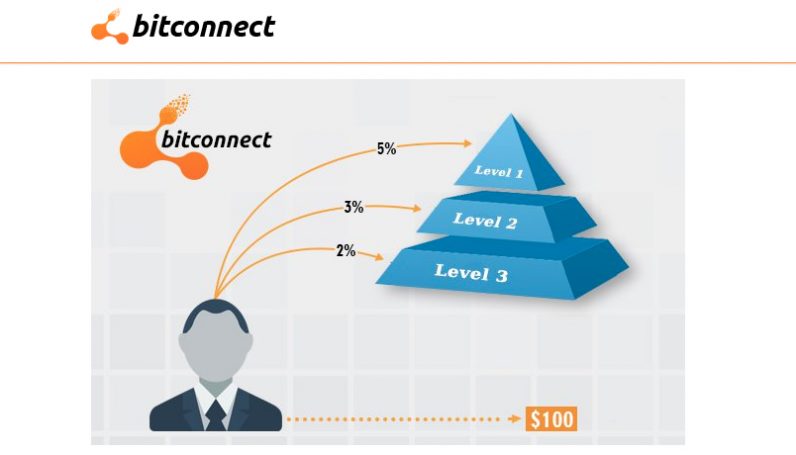
UK threatens to shut down popular Bitcoin investment site BitConnect

bitcoin, investment, platform, ethereum, vitalik buterin, bitconnect
BitConnect has two months to prove “cause to the contrary” until the decision has been formally enforced, according to an official filing on the British Companies House website. Should the company fail to comply with these terms, the government agency will strike off its registration and seize its assets. “Upon dissolution all property and rights vested in, or held in trust for, the company are deemed to be bona vacantia, and accordingly will belong to the crown,” the document reads. Many have speculated that BitConnect likely stashes its funds abroad, though there is no evidence to back this up. ... While the notice makes no mention of the people behind the shifty Bitcoin investment platform, another filing reveals BitConnect was registered by a British man going by the name of Ken Fitzsimmons. According to the same filing, Fitzsimmons holds 75 percent or more of the shares in the company.


Risk assessment: The first step in improving cyber security

Whichever combination of frameworks the company decides to incorporate for its risk assessment, it is essential to relate the process back to the organisation’s unique operational structure and business objectives. One of the most important activities in preparing a comprehensive assessment is to conduct in-depth interviews with senior management, IT administrators and other stakeholders across the organisation. This will help to develop a much more realistic understanding of the organisation’s potential threats, likelihood of compromise and the impact of the loss, as well as relating everything back to its business priorities. It is also essential that the risk assessment is understood and supported at the highest level of the organisation. PwC’s survey found that only 44% of boards are actively participating in their security strategy.


IT leaders failing to prepare for cyber attacks, despite fears


“It is encouraging that IT professionals are understanding that it is a matter of when, not if, their organisation will be hit by a damaging cyber attack,” said John Carlin, chairman of Morrison & Foerster’s global risk and crisis management practice. “However, their level of confidence, when it comes to security, is inconsistent with what we see in practice. “The reality is that businesses are consistently failing to restrict access to sensitive information and are regularly experiencing issues such as data loss, data theft and extortion in the form of ransomware.” But Varonis CMO David Gibson said that while attackers are upping their game by using more sophisticated, blended attacks, valuable data remains vulnerable to attacks that require little to no sophistication, such as disgruntled employees snooping through overly accessible folders.


IoT technology is a major cybersecurity headache for businesses

IoT devices present new challenges for firms. Image: only_kim/Shutterstock
The survey found that a combination of top-down executive support, proper security tools and audits instil greater confidence in device visibility. 48pc of all respondents stated that improving awareness and visibility of IoT devices is a top priority for improving IoT security overall, and 82pc of respondents expect their IoT or OT security spend to increase over the next one to two years. “IoT and OT bring significant benefits to organisations around the world,” said a spokesperson at Forrester. “Enterprises are heading in the right direction when it comes to IoT security investments, and our hope is to bring greater awareness to both the challenges as well as the best practices. However, this survey brings to light that more is needed to be done around IoT security.”


Homeland Security team remotely hacked a Boeing 757

Homeland Security team remotely hacked a Boeing 757
This hack was not conducted in a laboratory, but on a 757 parked at the airport in Atlantic City, N.J. And the actual hack occurred over a year ago. We are only now hearing about it thanks to a keynote delivered by Robert Hickey, aviation program manager within the Cyber Security Division of the DHS Science and Technology (S&T) Directorate. “We got the airplane on Sept. 19, 2016. Two days later, I was successful in accomplishing a remote, non-cooperative, penetration,” Hickey said in an article in Avionics Today. “[That] means I didn’t have anybody touching the airplane; I didn’t have an insider threat. I stood off using typical stuff that could get through security, and we were able to establish a presence on the systems of the aircraft.” While the details of the hack are classified, Hickey admitted that his team of industry experts and academics pulled it off by accessing the 757’s “radio frequency communications.”


Challenges, Implications, and Opportunities for Autonomous Systems in Aerospace and Defense

Defense applications of artificial intelligence and robotics are nascent and recent Defense Science Board and Department of Defense documents speak to the challenges, gaps, and goals of incorporating autonomous systems into military operations. The key technical challenges include human-system collaboration, perception and understanding, manned and unmanned teaming, and test and evaluation. One of the primary gaps that needs to be addressed includes the testing and lifecycle maintenance of autonomous systems that learn and adapt. Military operations are soldier-centric and the goal of autonomous systems is not to replace the soldier, but to give him another tool in his arsenal that improves his survivability and mission effectiveness. Thus, autonomous system technology developments alone will not suffice.


11 top tools to assess, implement, and maintain GDPR compliance

The European Union’s General Data Protection Regulation (GDPR) goes into effect in May 2018, which means that any organization doing business in or with the EU has six months from this writing to comply with the strict new privacy law. The GDPR applies to any organization holding or processing personal data of E.U. citizens, and the penalties for noncompliance can be stiff: up to €20 million (about $24 million) or 4 percent of annual global turnover, whichever is greater. Organizations must be able to identify, protect, and manage all personally identifiable information (PII) of EU residents even if those organizations are not based in the EU. Some vendors are offering tools to help you prepare for and comply with the GDPR. What follows is a representative sample of tools to assess what you need to do for compliance, implement measures to meet requirements, and maintain compliance once you reach it.


Quote for the day:


"The role of leadership is to transform the complex situation into small pieces and prioritize them. -- Carlos Ghosn