Quote for the day:
"We are moving from a world where we have to understand computers to a world where they will understand us." -- Jensen Huang
🎧 Listen to this digest on YouTube Music
▶ Play Audio DigestDuration: 16 mins • Perfect for listening on the go.
When clean UI becomes cold UI
 The article "When Clean UI Becomes Cold UI" explores the pitfalls of
over-minimalism in modern digital interface design, arguing that a "clean"
aesthetic can easily shift from elegant to emotionally distant. This "cold UI"
occurs when essential guidance—such as text labels, instructions, and
reassuring feedback—is stripped away in favor of a sleek, portfolio-worthy
appearance. While such designs may impress other designers, they often fail
real-world users by forcing them to rely on assumptions, which increases
cognitive friction and erodes the human connection. The central premise is
that designers must shift their focus from "clean" design to "clear" design.
Every element removed for the sake of aesthetics involves a trade-off that
often sacrifices functional clarity for visual simplicity. To avoid creating a
"ghost town" interface, the author encourages prioritizing meaning over
layout, ensuring icons are paired with labels and that the design supports
users during moments of uncertainty. Ultimately, a truly successful interface
is not one that is simply empty, but one that knows when to provide direction
and when to step back, balancing aesthetic minimalism with the transparency
required for a user to feel genuinely supported and understood.
The article "When Clean UI Becomes Cold UI" explores the pitfalls of
over-minimalism in modern digital interface design, arguing that a "clean"
aesthetic can easily shift from elegant to emotionally distant. This "cold UI"
occurs when essential guidance—such as text labels, instructions, and
reassuring feedback—is stripped away in favor of a sleek, portfolio-worthy
appearance. While such designs may impress other designers, they often fail
real-world users by forcing them to rely on assumptions, which increases
cognitive friction and erodes the human connection. The central premise is
that designers must shift their focus from "clean" design to "clear" design.
Every element removed for the sake of aesthetics involves a trade-off that
often sacrifices functional clarity for visual simplicity. To avoid creating a
"ghost town" interface, the author encourages prioritizing meaning over
layout, ensuring icons are paired with labels and that the design supports
users during moments of uncertainty. Ultimately, a truly successful interface
is not one that is simply empty, but one that knows when to provide direction
and when to step back, balancing aesthetic minimalism with the transparency
required for a user to feel genuinely supported and understood.5 Practical Techniques to Detect and Mitigate LLM Hallucinations Beyond Prompt Engineering
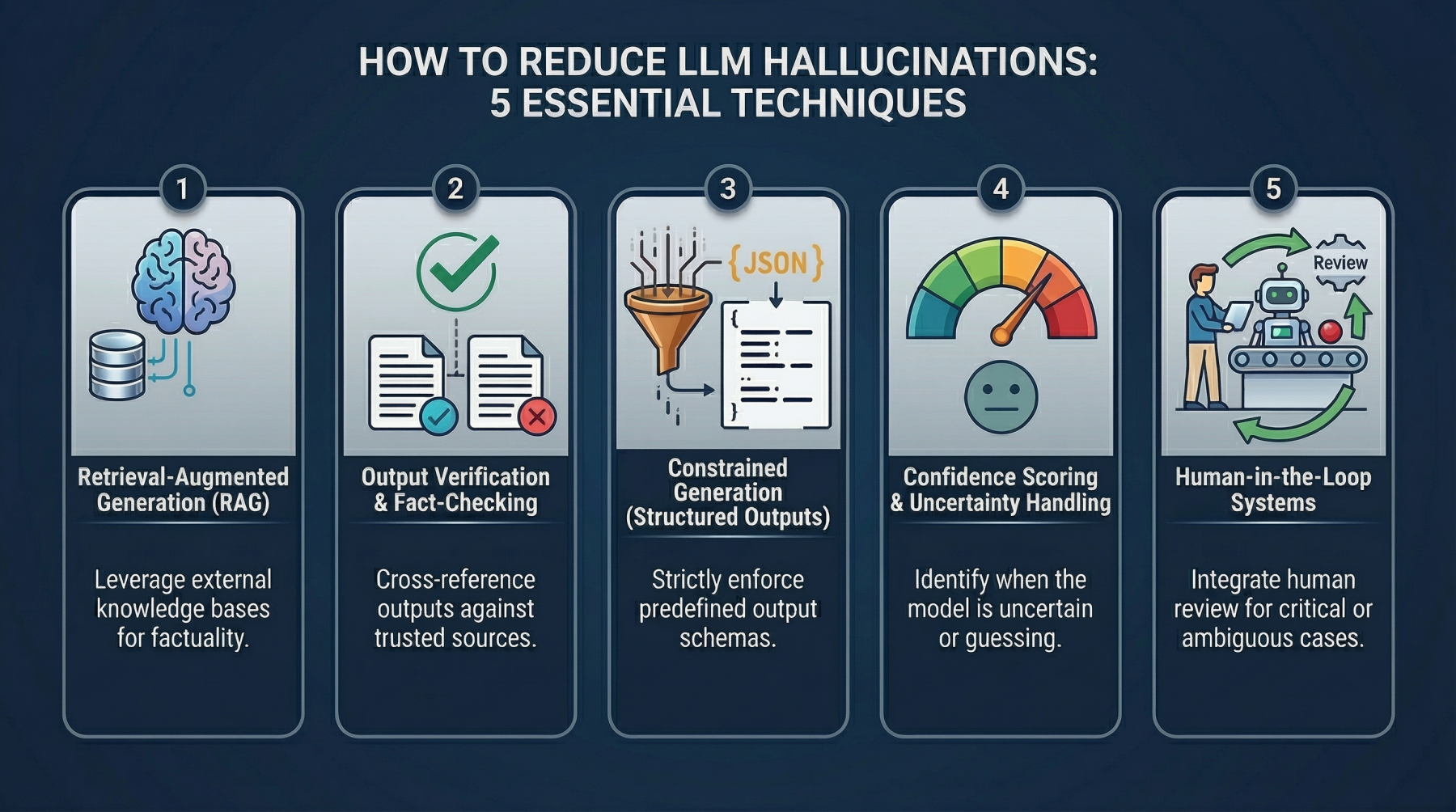 The article "5 Practical Techniques to Detect and Mitigate LLM Hallucinations
Beyond Prompt Engineering" from Machine Learning Mastery explores advanced
system-level strategies to ensure AI reliability. While basic prompting can
improve performance, it often fails in production settings where strict
accuracy is critical. The first technique, Retrieval-Augmented Generation
(RAG), anchors model responses in real-time, external verified data, moving
away from reliance on static, often outdated training memory. Second, the
article advocates for Output Verification Layers, where a secondary model or
automated cross-referencing system validates initial drafts before they reach
the user. Third, Constrained Generation utilizes structured formats like JSON
or XML to limit speculative or tangential output, ensuring machine-readable
consistency. Fourth, Confidence Scoring and Uncertainty Handling encourage
models to quantify their own reliability or admit ignorance through "I don’t
know" responses rather than guessing. Finally, Human-in-the-Loop Systems
integrate human oversight to refine results, provide feedback, and build
essential user trust. Collectively, these methods transition LLM applications
from experimental prototypes to robust, factual tools. By implementing these
architectural patterns, developers can move beyond trial-and-error prompting
to create production-ready systems capable of handling high-stakes tasks where
the cost of a hallucination is significantly high.
The article "5 Practical Techniques to Detect and Mitigate LLM Hallucinations
Beyond Prompt Engineering" from Machine Learning Mastery explores advanced
system-level strategies to ensure AI reliability. While basic prompting can
improve performance, it often fails in production settings where strict
accuracy is critical. The first technique, Retrieval-Augmented Generation
(RAG), anchors model responses in real-time, external verified data, moving
away from reliance on static, often outdated training memory. Second, the
article advocates for Output Verification Layers, where a secondary model or
automated cross-referencing system validates initial drafts before they reach
the user. Third, Constrained Generation utilizes structured formats like JSON
or XML to limit speculative or tangential output, ensuring machine-readable
consistency. Fourth, Confidence Scoring and Uncertainty Handling encourage
models to quantify their own reliability or admit ignorance through "I don’t
know" responses rather than guessing. Finally, Human-in-the-Loop Systems
integrate human oversight to refine results, provide feedback, and build
essential user trust. Collectively, these methods transition LLM applications
from experimental prototypes to robust, factual tools. By implementing these
architectural patterns, developers can move beyond trial-and-error prompting
to create production-ready systems capable of handling high-stakes tasks where
the cost of a hallucination is significantly high.Agentic GRC: Teams Get the Tech. The Mindset Shift Is What's Missing
 In "Agentic GRC: Teams Get the Tech, the Mindset Shift Is What's Missing,"
Yair Kuznitsov explores the transformative impact of AI agents on Governance,
Risk, and Compliance. Traditionally, GRC professionals derived value from
operational competence, specifically manual evidence collection and audit
management. However, agentic AI now automates these workflows, creating an
identity crisis for those whose roles were defined by execution. The author
argues that while technology is ready, many teams remain reluctant because
they struggle to redefine their professional purpose beyond operational tasks.
Crucially, GRC was intended as a strategic risk management function, but it
became consumed by scaling inefficiencies. Agentic GRC offers a return to
these roots, transitioning practitioners toward "GRC Engineering" where
controls are managed as code via Git and CI/CD pipelines. This essential shift
requires moving from a "checkbox" mentality to strategic risk leadership.
Humans must provide critical judgment, define risk appetite, and translate
business context into compliance logic—capabilities AI cannot replicate.
Ultimately, successful organizations will empower their GRC teams to stop
merely managing operational machines and start leading proactive, risk-based
initiatives. This evolution represents an opportunity for professionals to
finally perform the high-level work they were originally trained to do.
In "Agentic GRC: Teams Get the Tech, the Mindset Shift Is What's Missing,"
Yair Kuznitsov explores the transformative impact of AI agents on Governance,
Risk, and Compliance. Traditionally, GRC professionals derived value from
operational competence, specifically manual evidence collection and audit
management. However, agentic AI now automates these workflows, creating an
identity crisis for those whose roles were defined by execution. The author
argues that while technology is ready, many teams remain reluctant because
they struggle to redefine their professional purpose beyond operational tasks.
Crucially, GRC was intended as a strategic risk management function, but it
became consumed by scaling inefficiencies. Agentic GRC offers a return to
these roots, transitioning practitioners toward "GRC Engineering" where
controls are managed as code via Git and CI/CD pipelines. This essential shift
requires moving from a "checkbox" mentality to strategic risk leadership.
Humans must provide critical judgment, define risk appetite, and translate
business context into compliance logic—capabilities AI cannot replicate.
Ultimately, successful organizations will empower their GRC teams to stop
merely managing operational machines and start leading proactive, risk-based
initiatives. This evolution represents an opportunity for professionals to
finally perform the high-level work they were originally trained to do.The Missing Layer in Agentic AI
The article "The Missing Layer in Agentic AI" argues that while current AI
development focuses heavily on large language models and reasoning
capabilities, a critical "middleware" layer is currently absent. This missing
component, referred to as an agentic orchestration layer, is essential for
transforming static models into truly autonomous systems capable of executing
complex, multi-step tasks in dynamic environments. The author explains that
for AI agents to be effective, they require more than just raw intelligence;
they need robust frameworks for memory management, tool integration, and state
persistence. This layer acts as the glue that connects high-level planning
with low-level execution, ensuring that agents can maintain context and
recover from errors during long-running processes. Furthermore, the piece
highlights that without this specialized infrastructure, developers are forced
to build bespoke, brittle solutions that do not scale. By establishing a
standardized orchestration layer, the industry can move toward more reliable,
observable, and interoperable agentic workflows. Ultimately, the article
suggests that the next frontier of AI progress lies not just in better models,
but in the sophisticated software engineering required to manage how those
models interact with the world and each other.
Edge clouds and local data centers reshape IT
 For over a decade, enterprise cloud strategy prioritized centralization on
hyperscale platforms to achieve economies of scale and reduce infrastructure
sprawl. However, the rise of edge clouds and local data centers is
fundamentally reshaping this paradigm toward a selectively distributed
architecture. Modern digital systems increasingly require real-time
responsiveness, adherence to regional data sovereignty regulations, and
efficient handling of massive data volumes from sensors and video feeds. To
meet these demands, enterprises are adopting a dual architecture that combines
the strengths of centralized cloud platforms—well-suited for model training
and storage—with localized infrastructure positioned closer to the source of
interaction. This shift is visible in sectors like retail and manufacturing,
where proximity reduces latency and operational costs. Despite its benefits,
the transition to edge computing introduces significant complexities,
including fragmented life-cycle management, security hardening, and the need
for robust observability across hundreds of distributed sites. Rather than
replacing the cloud, the edge serves as a coordinated layer within an
integrated hybrid model. By placing workloads where they are most
operationally and economically effective, organizations can navigate bandwidth
limitations and physical-world complexities, ensuring their digital
infrastructure remains agile and resilient in a changing technological
landscape.
For over a decade, enterprise cloud strategy prioritized centralization on
hyperscale platforms to achieve economies of scale and reduce infrastructure
sprawl. However, the rise of edge clouds and local data centers is
fundamentally reshaping this paradigm toward a selectively distributed
architecture. Modern digital systems increasingly require real-time
responsiveness, adherence to regional data sovereignty regulations, and
efficient handling of massive data volumes from sensors and video feeds. To
meet these demands, enterprises are adopting a dual architecture that combines
the strengths of centralized cloud platforms—well-suited for model training
and storage—with localized infrastructure positioned closer to the source of
interaction. This shift is visible in sectors like retail and manufacturing,
where proximity reduces latency and operational costs. Despite its benefits,
the transition to edge computing introduces significant complexities,
including fragmented life-cycle management, security hardening, and the need
for robust observability across hundreds of distributed sites. Rather than
replacing the cloud, the edge serves as a coordinated layer within an
integrated hybrid model. By placing workloads where they are most
operationally and economically effective, organizations can navigate bandwidth
limitations and physical-world complexities, ensuring their digital
infrastructure remains agile and resilient in a changing technological
landscape.AI frenzy feeds credential chaos, secrets leak through code, tools, and infrastructure
 GitGuardian’s State of Secrets Sprawl 2026 report highlights an alarming surge
in cybersecurity risks, revealing that 28.65 million new hardcoded secrets
were detected in public GitHub commits during 2025. This multi-year upward
trend demonstrates that credentials, including access keys, tokens, and
passwords, are increasingly leaking through code, development tools, and
infrastructure. Beyond public repositories, the report underscores a
significant shift toward internal environments, which often carry a higher
density of sensitive production credentials. The explosion of AI development
has exacerbated the problem; AI-assisted coding and the proliferation of new
model providers and agent frameworks have introduced vast numbers of fresh
credentials that are frequently mismanaged. Furthermore, collaboration
platforms like Slack and Jira, along with self-hosted Docker registries, serve
as additional points of exposure. A particularly concerning finding is the
longevity of these leaks, as many credentials remain active and usable for
years due to the operational complexities of remediation across fragmented
systems. Ultimately, the report illustrates a widening gap between the rapid
pace of software innovation and the governance required to secure the
expanding surface area of modern, interconnected development workflows,
leaving critical infrastructure vulnerable to exploitation.
GitGuardian’s State of Secrets Sprawl 2026 report highlights an alarming surge
in cybersecurity risks, revealing that 28.65 million new hardcoded secrets
were detected in public GitHub commits during 2025. This multi-year upward
trend demonstrates that credentials, including access keys, tokens, and
passwords, are increasingly leaking through code, development tools, and
infrastructure. Beyond public repositories, the report underscores a
significant shift toward internal environments, which often carry a higher
density of sensitive production credentials. The explosion of AI development
has exacerbated the problem; AI-assisted coding and the proliferation of new
model providers and agent frameworks have introduced vast numbers of fresh
credentials that are frequently mismanaged. Furthermore, collaboration
platforms like Slack and Jira, along with self-hosted Docker registries, serve
as additional points of exposure. A particularly concerning finding is the
longevity of these leaks, as many credentials remain active and usable for
years due to the operational complexities of remediation across fragmented
systems. Ultimately, the report illustrates a widening gap between the rapid
pace of software innovation and the governance required to secure the
expanding surface area of modern, interconnected development workflows,
leaving critical infrastructure vulnerable to exploitation.
/articles/architecting-autonomy-scale/en/smallimage/architecting-autonomy-scale-thumbnail-1774360140662.jpg) In “Architecting Autonomy at Scale,” Shweta Aggarwal and Ron Klein argue that
traditional, centralized architectural governance becomes a significant
bottleneck as organizations grow, necessitating a fundamental shift toward
decentralized decision-making. Utilizing a “parental metaphor,” the article
describes the evolution of architecture from “infancy,” where strong central
guidance is required to prevent chaos, to “adulthood,” where teams operate
autonomously within established systems. The authors propose a structured
framework built on clear decision boundaries, shared principles, and robust
guardrails rather than restrictive approval gates. Key technical practices
include documenting decisions via Architecture Decision Records (ADRs) to
preserve context, utilizing “fitness functions” for automated governance
within CI/CD pipelines, and leveraging AI for detecting architectural drift.
By aligning architectural authority with the C4 model levels, organizations
can clarify ownership and reduce delivery friction. Ultimately, the role of
the architect evolves from a top-down gatekeeper to a coach and platform
enabler, focusing on creating “paved roads” that allow teams to experiment
safely. This transition is framed as a socio-technical transformation that
requires cultural shifts, leadership support, and a trust-based governance
model to successfully balance local agility with enterprise-wide coherence and
long-term technical sustainability.
In “Architecting Autonomy at Scale,” Shweta Aggarwal and Ron Klein argue that
traditional, centralized architectural governance becomes a significant
bottleneck as organizations grow, necessitating a fundamental shift toward
decentralized decision-making. Utilizing a “parental metaphor,” the article
describes the evolution of architecture from “infancy,” where strong central
guidance is required to prevent chaos, to “adulthood,” where teams operate
autonomously within established systems. The authors propose a structured
framework built on clear decision boundaries, shared principles, and robust
guardrails rather than restrictive approval gates. Key technical practices
include documenting decisions via Architecture Decision Records (ADRs) to
preserve context, utilizing “fitness functions” for automated governance
within CI/CD pipelines, and leveraging AI for detecting architectural drift.
By aligning architectural authority with the C4 model levels, organizations
can clarify ownership and reduce delivery friction. Ultimately, the role of
the architect evolves from a top-down gatekeeper to a coach and platform
enabler, focusing on creating “paved roads” that allow teams to experiment
safely. This transition is framed as a socio-technical transformation that
requires cultural shifts, leadership support, and a trust-based governance
model to successfully balance local agility with enterprise-wide coherence and
long-term technical sustainability.
 The European Commission is intensifying its enforcement of the Digital
Services Act (DSA) by moving away from "self-declaration" as a valid method
for online age assurance. Following a series of investigations, regulators
have determined that simple "click-to-confirm" mechanisms on major adult
content platforms, including Pornhub, Stripchat, XNXX, and XVideos, are
insufficient to protect minors from harmful material. These platforms are now
being urged to implement more robust, privacy-preserving age verification
measures to ensure compliance with EU standards. Simultaneously, the
Commission has opened a formal investigation into Snapchat over concerns that
its reliance on self-declaration fails to prevent underage children from
accessing the app or to provide age-appropriate experiences for teenagers.
Beyond the European Commission's actions, the UK Information Commissioner's
Office (ICO) is also pressuring social media giants to strengthen their
age-gate systems. Potential solutions being discussed include the use of the
European Digital Identity (EUDI) Wallet, facial age estimation technology, and
identity document scans. This coordinated regulatory crackdown signals a major
shift in the digital landscape, where platforms must now prioritize societal
risks to minors over business-centric concerns. Failure to adopt these more
stringent verification methods could lead to significant financial penalties
across the European Union.
The European Commission is intensifying its enforcement of the Digital
Services Act (DSA) by moving away from "self-declaration" as a valid method
for online age assurance. Following a series of investigations, regulators
have determined that simple "click-to-confirm" mechanisms on major adult
content platforms, including Pornhub, Stripchat, XNXX, and XVideos, are
insufficient to protect minors from harmful material. These platforms are now
being urged to implement more robust, privacy-preserving age verification
measures to ensure compliance with EU standards. Simultaneously, the
Commission has opened a formal investigation into Snapchat over concerns that
its reliance on self-declaration fails to prevent underage children from
accessing the app or to provide age-appropriate experiences for teenagers.
Beyond the European Commission's actions, the UK Information Commissioner's
Office (ICO) is also pressuring social media giants to strengthen their
age-gate systems. Potential solutions being discussed include the use of the
European Digital Identity (EUDI) Wallet, facial age estimation technology, and
identity document scans. This coordinated regulatory crackdown signals a major
shift in the digital landscape, where platforms must now prioritize societal
risks to minors over business-centric concerns. Failure to adopt these more
stringent verification methods could lead to significant financial penalties
across the European Union.5 reasons why the tech industry is failing women
 The CIO.com article, “Women in Tech Statistics: The Hard Truths of an Uphill
Battle,” highlights the persistent gender gap and systemic challenges women
face in the technology sector. Despite representing 42% of the global
workforce, women hold only 26-28% of tech roles and just 12% of C-suite
positions. A significant “leaky pipeline” begins in academia, where women earn
only 21% of computer science degrees, and continues into the workplace.
Troublingly, 50% of women leave the industry by age 35—a rate 45% higher than
men—driven by toxic cultures, microaggressions, and a lack of flexible
work-life balance. Economic instability further compounds these issues, with
women being 1.6 times more likely to face layoffs; during 2022’s mass tech
layoffs, they accounted for 69% of job losses. Financial disparities remain
stark, as women earn approximately $15,000 less annually than their male
counterparts. Furthermore, the rise of artificial intelligence presents new
risks, with women’s roles 34% more likely to be disrupted by automation
compared to 25% for men. Collectively, these statistics underscore that
achieving gender parity requires more than corporate pledges; it necessitates
fundamental shifts in recruitment, retention, and structural support
systems.
The CIO.com article, “Women in Tech Statistics: The Hard Truths of an Uphill
Battle,” highlights the persistent gender gap and systemic challenges women
face in the technology sector. Despite representing 42% of the global
workforce, women hold only 26-28% of tech roles and just 12% of C-suite
positions. A significant “leaky pipeline” begins in academia, where women earn
only 21% of computer science degrees, and continues into the workplace.
Troublingly, 50% of women leave the industry by age 35—a rate 45% higher than
men—driven by toxic cultures, microaggressions, and a lack of flexible
work-life balance. Economic instability further compounds these issues, with
women being 1.6 times more likely to face layoffs; during 2022’s mass tech
layoffs, they accounted for 69% of job losses. Financial disparities remain
stark, as women earn approximately $15,000 less annually than their male
counterparts. Furthermore, the rise of artificial intelligence presents new
risks, with women’s roles 34% more likely to be disrupted by automation
compared to 25% for men. Collectively, these statistics underscore that
achieving gender parity requires more than corporate pledges; it necessitates
fundamental shifts in recruitment, retention, and structural support
systems.15+ Global Banks Exploring Quantum Technologies
The article titled "15+ global banks probing the wonderful world of quantum
technologies," published by The Quantum Insider on March 27, 2026, highlights
the accelerating integration of quantum computing within the global financial
sector. Central to this movement is the "Quantum Innovation Index," a
benchmarking tool developed in collaboration with HorizonX Consulting, which
identifies top performers like JPMorgan Chase, HSBC, and Goldman Sachs. These
institutions are leading a group of over fifteen major banks that have
transitioned from theoretical research to practical experimentation. The
report details how these banks are leveraging quantum advantages for
high-dimensional computational tasks, including portfolio optimization,
complex risk modeling through Monte Carlo simulations, and real-time fraud
detection. Furthermore, the article emphasizes a proactive shift toward
"quantum readiness" to combat cryptographic threats, with banks like HSBC
trialing quantum-secure trading for digital assets. With nearly 80% of the
world’s fifty largest banks now exploring these frontier technologies, the
narrative has shifted from whether quantum will disrupt finance to when its
full-scale implementation will occur. This trend is bolstered by significant
investments, such as JPMorgan’s backing of Quantinuum, underscoring a
strategic imperative to maintain competitiveness and ensure systemic stability
in a post-quantum world.


No comments:
Post a Comment