Daily Tech Digest - May 23, 2020

A new artificial eye mimics and may outperform human eyes

artificial eyeball illustration
This device, which mimics the human eye’s structure, is about as sensitive to light and has a faster reaction time than a real eyeball. It may not come with the telescopic or night vision capabilities that Steve Austin had in The Six Million Dollar Man television show, but this electronic eyepiece does have the potential for sharper vision than human eyes, researchers report in the May 21 Nature. “In the future, we can use this for better vision prostheses and humanoid robotics,” says engineer and materials scientist Zhiyong Fan of the Hong Kong University of Science and Technology. The human eye owes its wide field of view and high-resolution eyesight to the dome-shaped retina — an area at the back of the eyeball covered in light-detecting cells. Fan and colleagues used a curved aluminum oxide membrane, studded with nanosize sensors made of a light-sensitive material called a perovskite (SN: 7/26/17), to mimic that architecture in their synthetic eyeball. Wires attached to the artificial retina send readouts from those sensors to external circuitry for processing, just as nerve fibers relay signals from a real eyeball to the brain.



Two businessmen with protective face masks are working in the office
Given the clear finding that people with covid-19 can be highly contagious even if they display few or no symptoms, a growing number of companies and health experts argue that reopening plans must also include wide-scale and continual testing of workers. “It’s less a question of if testing becomes a part of workplace strategies, than when and what will prompt that,” says Rajaie Batniji, chief health officer at Collective Health. Measures like temperature checks may even do more harm than good by giving workers and employers a false sense of confidence, he says. The San Francisco company, which manages health benefits for businesses, has developed a product called Collective Go that, among other things, includes detailed health protocols for companies looking to reopen. Developed in partnership with researchers at Johns Hopkins, the University of California, San Francisco, and elsewhere, the guidelines include when and how often workers in various job types and locations should be tested.


How effective security training goes deeper than ‘awareness’


While the approach may be up for debate, its effectiveness is not. Almost 90% of organisations report an improvement in employee awareness following the implementation of a consequence model. The model itself is secondary here. The key takeaway is that time and effort matter. The more hands-on training workers receive, the better they are at spotting phishing attempts. Organisations must strive to develop training programmes that leave employees equipped with the skills to spot and defend against attacks – before anyone is left to face the consequences. The goal of any security training programme is to eradicate behaviours that put your organisation at risk. The best way to achieve this is through a mix of the broad and the granular. Start by cultivating a security-first culture. This means a continuous, company-wide training programme that acknowledges everyone’s role in keeping your organisation safe.


Gaming: A gold mine for datasets


While working on a project, I came across a problem where the object detector that I was using did not recognize all the objects in the image frame. I was trying to index all the objects present in the images frame, which later would make searching of images easier. But all the images are labeled human, not being able to detect the other objects in the image frames, the search was not working as I wanted. The ideal solution for this problem would be to gather data for those objects and re-train the object detector to also identify the new objects. This would not only be boring but time-consuming. I could use GANs, a type of machine learning algorithm famous for its use of creating artificial and similar examples to its inputs, to create more samples after organizing a few samples manually, but this is also boring and will require resources to train the GANs to generate more data. Now the only thing I could do was using internet services, like ScaleAI and Google Cloud Platform, to create a dataset.


Identity Silos: shining a light on the problem of shadow identities


It’s important to stress that identity silos – sometimes referred to as ‘shadow identities’ because, similar to shadow IT, they are created without central organisational approval – come about during routine business expansion. If a business unit wishes to roll out a new digital service, in the absence of an existing centralised identity management function that can do the job, they often end up either buying an off-the-shelf identity and access management (IAM) system or create their own. When a business merges or acquires a new organisation, the new unit often keeps its own IAM infrastructure. In both cases, the result is the same: hundreds of invisible silos of duplicated user identities. The chances are you’ve experienced the problems caused by identity silos. If you use the same broadband, mobile, and television provider, you’ve probably had to update the same information multiple times for each account, rather than just once. Or if you’ve been subjected to marketing calls (even though you’re already a customer!) that try to sell you products you already have. This is all because your customer data is siloed in each department throughout the company, thereby ruling out cohesive customer experiences.


How to overcome AI and machine learning adoption barriers

Many industries have effectively reached a sticking point in their adoption of AI and ML technologies. Typically, this has been driven by unproven start-up companies delivering some type of open source technology and placing a flashy exterior around it, and then relying on a customer to act as a development partner for it. However, this is the primary problem – customers are not looking for prototype and unproven software to run their industrial operations. Instead of offering a revolutionary digital experience, many companies are continuing to fuel their initial scepticism of AI and ML by providing poorly planned pilot projects that often land the company in a stalled position of pilot purgatory, continuous feature creep and a regular rollout of new beta versions of software. This practice of the never ending pilot project is driving a reluctance for customers to then engage further with innovative companies who are truly driving digital transformation in their sector with proven AI and ML technology.


Coronavirus to Accelerate ASEAN Banks’ Digital Transformation


The shift towards a digital-channel strategy is likely to be significantly amplified now that customer preferences are abruptly adjusted. DBS Bank Ltd. (AA-/Rating Watch Negative) has in the past reported that the cost-to-income ratio of its digital customers is roughly 20pp lower than its non-digital banking clients, implying considerable potential productivity to be gained in the longer term should the trend persists. That said, actual investments in IT are likely to be tempered in the near term as banks look to cut overall costs in the face of significant business uncertainty. We believe that the significantly higher adoption rate of digital banking is likely to help more of the well-established, digitally advanced banks to widen their competitive advantage further against the less agile players as well as the incoming digital-only banks in the medium term. Regulators around the region have already extended the deadline for awarding virtual bank licences as a result of the pandemic, which we expect to also weed out weaker, aspiring online banks from competing for the licences.


7 ways to catch a Data Scientist’s lies and deception


In Machine Learning, there is often a trade-off between how well a model performs and how easily its performance, especially poor performance, can be explained. Generally, for complex data, more sophisticated and complicated models tend to do better. However, because these models are more complicated, it becomes difficult to explain the effect of input data on the output result. For example, let us imagine that you are using a very complex Machine Learning model to predict the sales of a product. The inputs to this model are the amounts of money spent on advertising on TV, newspaper and radio. The complicated model may give you very accurate sales predictions but may not be able to tell you which of the 3 advertisement outlets, TV, radio or newspaper, impacts the sales more and is more worth the money. A simpler model, on the other hand, might have given a less accurate result, but would have been able to explain which outlet is more worth the money. You need to be aware of this trade-off between model performance and interpretability. This is crucial because where the balance should lie on the scale of explainability vs performance, should depend on the objective and hence, should be your decision to make.


Supercomputer Intrusions Trace to Cryptocurrency Miners


Attacks against high-performance computing labs, which first came to light last week, appear to have targeted victims in Canada, China, the United States and parts of Europe, including the U.K., Germany and Spain. Security experts say all of the incidents appear to have involved attackers using SSH credentials stolen from legitimate users, which can include researchers at universities and consortiums. SSH - aka Secure Shell or Secure Socket Shell - is a cryptographic network protocol for providing secure remote login, even over unsecured networks. Supercomputer and high-performance clusters offer massive computational power to researchers. But any attackers able to sneak cryptomining malware into such environments could use them to mine for cryptocurrency, referring to solving computationally intensive equations in exchange for potentially getting digital currency as a reward. On May 11, the bwHPC consortium, comprising researchers and 10 universities in the German state of Baden-Württemberg, reported that it had suffered a "security incident" and as a result took offline multiple supercomputers and clusters.


Apache Arrow and Java: Lightning Speed Big Data Transfer

Apache Arrow and Java: Lightning Speed Big Data Transfer
Apache Arrow puts forward a cross-language, cross-platform, columnar in-memory data format for data. It eliminates the need for serialization as data is represented by the same bytes on each platform and programming language. This common format enables zero-copy data transfer in big data systems, to minimize the performance hit of transferring data. ... Conceptually, Apache Arrow is designed as a backbone for Big Data systems, for example, Ballista or Dremio, or for Big Data system integrations. If your use cases are not in the area of Big Data systems, then probably the overhead of Apache Arrow is not worth your troubles. You’re likely better off with a serialization framework that has broad industry adoption, such as ProtoBuf, FlatBuffers, Thrift, MessagePack, or others. Coding with Apache Arrow is very different from coding with plain old Java objects, in the sense that there are no Java objects. Code operates on buffers all the way down. Existing utility libraries, e.g., Apache Commons, Guava, etc., are no longer usable. You might have to re-implement some algorithms to work with byte buffers. And last but not least, you always have to think in terms of columns instead of objects.


Quote for the day:


"If you don't write your own story, you'll be nothing but a footnote in someone else's." -- Peter Shankman



Daily Tech Digest - May 22, 2020

Assessing the Value of Corporate Data

istock 877278574
“Value can be determined in a qualitative way,” says Grasso. This can be done via “a deep analysis of what are the key data the enterprise should harness in order to get a profitable return, [and that depends] on the business model of each organization.” That’s not to say there aren’t incentives, and means, to quantify the value of digital data. “I use a structured approach [by] aggregating a few components of our data’s’ value – intrinsic, derivative, and algorithmic,” says Lassalle at JLS Technology USA. “I use this approach to assess the true value, placing a real dollar amount on what data is worth to help organizations manage the risk around data as their most important asset.” Qualitative or quantitative, the value of data isn’t static. As data ages, for example, its value can wane. Conversely, real-time data is often extremely valuable, as is data supplemented with complementary data from other sources. Most people tend to focus on, and put value on, the data that emerges from their own operations or other familiar sources, notes Mark Thiele 


Deep Learning Architectures for Action Recognition


We have learned that deep learning has revolutionized the way we process videos for action recognition. Deep learning literature has come a long way from using improved Dense Trajectories. Many learnings from the sister problem of image classification has been used in advancing deep networks for action recognition. Specifically, the usage of convolution layers, pooling layers, batch normalization, and residual connections have been borrowed from the 2D space and applied in 3D with substantial success. Many models that use a spatial stream are pretrained on extensive image datasets. Optical flow has also had an important role in representing temporal features in early deep video architectures like the two stream networks and fusion networks. Optical flow is our mathematical definition of how we believe movement in subsequent frames can be described as densely calculated flow vectors for all pixels. Originally, networks bolstered performance by using optical flow. However, this made networks unable to be end-to-end trained and limited real-time capabilities. In modern deep learning, we have moved beyond optical flow, and we instead architect networks that are able to natively learn temporal embeddings and are end-to-end trainable.


The Road to Wi-Fi 6


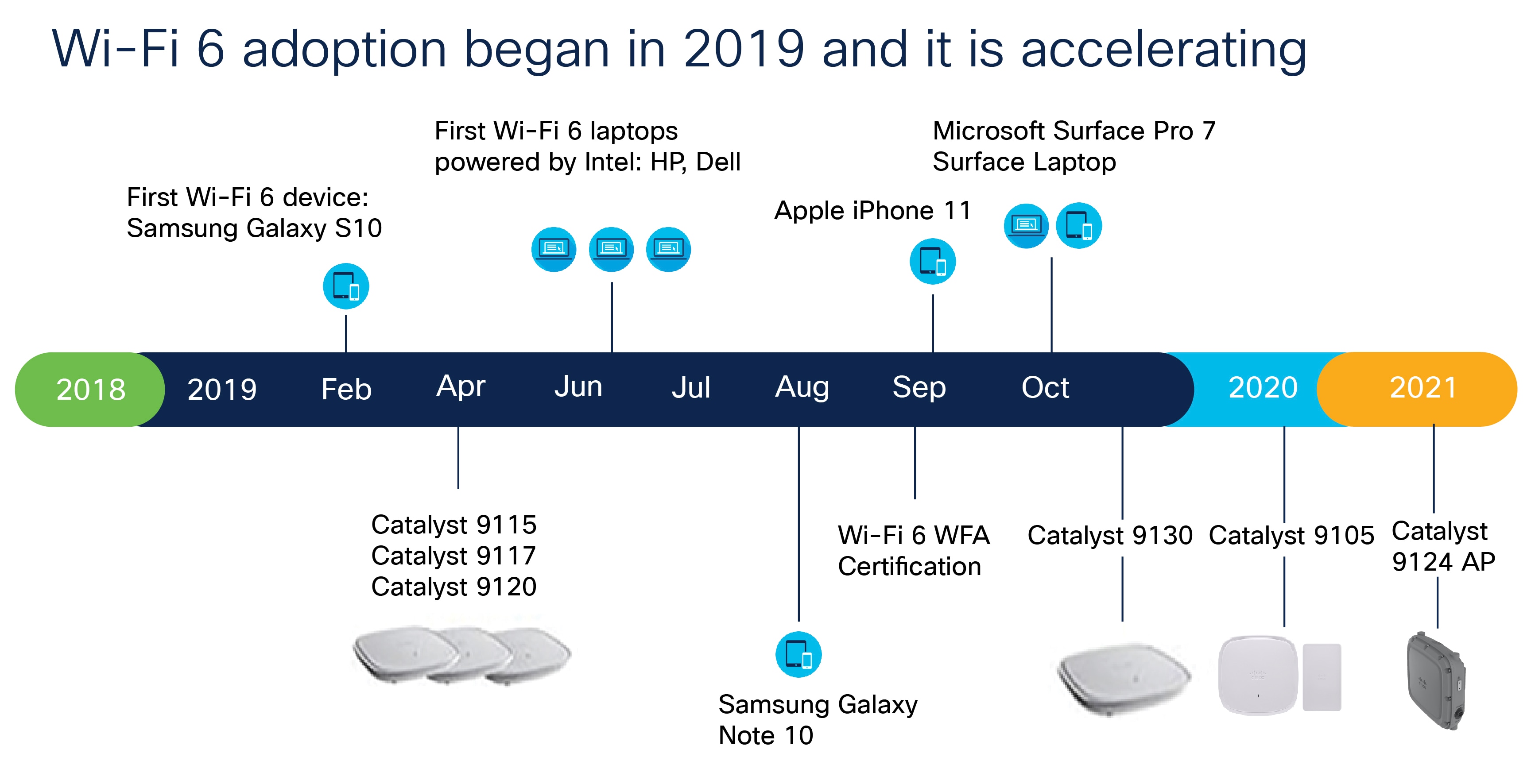
we are more dependent on the network than ever before and Wi-Fi 6 gives you more of what you need. It is a more consistent and dependable network connection that will deliver speeds up to four times faster than 802.11ac Wave 2 with four times the capacity. This standard provides a seamless experience for clients and enables next-generation applications such as 4K/8K streaming HD, augmented reality (AR) and virtual reality (VR) video, and more device and IoT capacity for high-density environments such as university lecture halls, malls, stadiums, and manufacturing facilities. Wi-Fi 6 also promises reduced latency, greater reliability, and improved power efficiency. With higher performance for mobile devices and the ability to support the Internet of Things (IoT) on a massive scale (IoT use has been trending upwards lately and is now also called “the new mobile”), Wi-Fi 6 will improve experiences across the entire wireless landscape. Wi-Fi 6 also offers improved security, with WPA3 and improved interference mitigation with better QoE.


Increasing Software Velocity While Maintaining Quality and Efficiency

Software velocity, continuous improvement
Throughout the software lifecycle there are many opportunities for automation — from software design, to development, to build, test, deploy and, ultimately, the production state. The more of these steps that can be automated, the faster developers can work. Perhaps the biggest area for potential time savings is testing, because of all the phases of the software lifecycle, testing assumes the most manual labor. The Vanson Bourne survey found test automation to be the single most important factor in accelerating innovation, according to 90% of IT leaders. ... Integration helps software development technologies interoperate with each other. An integrated pipeline leverages existing investments and enables developers to build, test and deploy faster while providing the additional benefit of reducing errors resulting from human intervention (furthering quality). Integration also decreases the manual labor needed to execute and manage workflow within software delivery processes.


Every Data Scientist needs some SparkMagic


Spark is the data industries gold standard for working with data in distributed data lakes. But to work with Spark clusters cost-efficiently, and even allow multi-tenancy, it is difficult to accommodate individual requirements and dependencies. The industry trend for distributed data infrastructure is towards ephemeral clusters which makes it even harder for data scientists to deploy and manage their Jupyter notebook environments. It’s no surprise that many data scientists work locally on high-spec laptops where they can install and persist their Jupyter notebook environments more easily. So far so understandable. How do many data scientists then connect their local development environment with the data in the production data lake? They materialise csv files with Spark and download them from the cloud storage console. Manually downloading csv files from cloud storage consoles is neither productive nor is it particularly robust. Wouldn’t it be so much better to seamlessly connect a local Jupyter Notebook with a remote cluster in an end-user friendly and transparent way? Meet SparkMagic! Sparkmagic is a project to interactively work with remote Spark clusters in Jupyter notebooks through the Livy REST API. It provides a set of Jupyter Notebook cell magics and kernels to turn Jupyter into an integrated Spark environment for remote clusters.


ML.NET Model Builder is now a part of Visual Studio

ML.NET is a cross-platform, machine learning framework for .NET developers. Model Builder is the UI tooling in Visual Studio that uses Automated Machine Learning (AutoML) to train and consume custom ML.NET models in your .NET apps. You can use ML.NET and Model Builder to create custom machine learning models without having prior machine learning experience and without leaving the .NET ecosystem. ... Model Builder’s Scenario screen got an update with a new, modern design and with updated scenario names to make it even easier to map your own business problems to the machine learning scenarios offered. Additionally, anomaly detection, clustering, forecasting, and object detection have been added as example scenarios. These example scenarios are not yet supported by AutoML but are supported by ML.NET, so we’ve provided links to tutorials and sample code via the UI to help get you started.


He's about to steal some code and write a game changing application.
Speaking of which, libraries and external dependencies are an efficient way to reuse functionality without reusing code. It’s almost like copying code, except that you aren’t responsible for the maintenance of it. Heck, most of the web today operates on a variety of frameworks and plugin libraries that simplify development. Reusing code in the form of libraries is incredibly efficient and allows each focused library to be very good at what it does and only that. And unlike in academia, many libraries don’t even require anything to indicate you’re building with or on top of someone else’s code.  The JavaScript package manager npm takes this to the extreme. You can install tiny, single function libraries—some as small as a single line of code—into your project via the command line. You can grab any of over one million open source packages and start building their functionality into your app. Of course, as with every approach to work, there’s downside to this method. By installing a package, you give up some control over the code. Some malicious coders have created legitimately useful packages, waited until they had a decent adoption rate, then updated the code to steal bitcoin wallets.


Security & Trust Ratings Proliferate: Is That a Good Thing?

The information security world is rapidly gaining its own sets of scoring systems. Last week, NortonLifeLock announced a research project that will score whether Twitter accounts are likely to belong to a human or a bot. Security awareness companies such as KnowBe4 and Infosec assign workers grades for how well they perform on phishing simulations and the risk that they may pose to their employer. And companies such as BitSight and SecurityScorecard rate companies using external indicators of security and potential breaches. Businesses will increasingly look to scores to evaluate the risk of partnering with another firm or even employing a worker. A business's cyber-insurance security score could determine its cyber-insurance premium or whether a larger client will work with the firm, says Stephen Boyer, CEO at BitSight, a security ratings firm. "A lot of our customers will not engage with a vendor below a certain threshold because they have a certain risk tolerance," he says. "Business decisions are absolutely being made on this."


Microsoft launches Project Bonsai, an AI development platform for industrial systems

Microsoft Project Bonsai
Project Bonsai is a “machine teaching” service that combines machine learning, calibration, and optimization to bring autonomy to the control systems at the heart of robotic arms, bulldozer blades, forklifts, underground drills, rescue vehicles, wind and solar farms, and more. Control systems form a core component of machinery across sectors like manufacturing, chemical processing, construction, energy, and mining, helping manage everything from electrical substations and HVAC installations to fleets of factory floor robots. But developing AI and machine learning algorithms atop them — algorithms that could tackle processes previously too challenging to automate — requires expertise. ... Project Bonsai is an outgrowth of Microsoft’s 2018 acquisition of Berkeley, California-based Bonsai, which previously received funding from the company’s venture capital arm M12. Bonsai is the brainchild of former Microsoft engineers Keen Browne and Mark Hammond, who’s now the general manager of business AI at Microsoft.


Hacked Law Firm May Have Had Unpatched Pulse Secure VPN

Mursch says that while his firm can scan open internet ports for vulnerable Pulse Secure VPN servers, he doesn't have insight into the law firm's internal network and can't say for sure whether the REvil operators used it to plant ransomware and encrypt files. Some security experts, including Kevin Beaumont, who is now with Microsoft, have previously warned that the REvil ransomware gang is known to target unpatched Pulse Secure VPN servers. When the gang attacked the London-based foreign currency exchange firm Travelex on New Year's Day, it was reported that the company used a Pulse Secure VPN server that was patched. Brett Callow, a threat analyst with security firm Emsisoft, also notes that REvil is known to use vulnerable Pulse Secure VPN servers to gain a foothold in a network and wait for some time before starting a ransomware attack against a target. "In other incidents, it's been established that groups have had access for months prior to finally deploying the ransomware," Callow tells ISMG.


Quote for the day:


"Becoming a leader is synonymous with becoming yourself. It is precisely that simple, and it is also that difficult." -- Warren G. Bennis


Daily Tech Digest - May 21, 2020

Unlocking Enterprise Blockchain Potential with Low-Code Capabilities


Low-code development platforms allow enterprises to reap the benefits of complex code, without the need to dedicate valuable time and resources toward development from the ground-up. “Plug and play” customization allows them to address specific needs within their organization, and prioritize implementation on a smaller scale without the stress of diving head-first into an infrastructural overhaul. Especially during our ongoing COVID-19 crisis, low-code eliminates the need for large dev teams to develop new software applications, allowing for a streamlined, timely transition as organizations dedicate their valuable resources elsewhere to help minimize the negative impact of COVID-19 on their workforce and their surrounding communities. Beyond this epidemic, these benefits provide risk-averse C-level decision makers with an easy and confident investment opportunity, as well as disruptive tools that deliver on the growing need for constant innovation — in an era where agility and digital transformation are now a necessity.


Phishing Attack Bypassed Office 365 Multifactor Protections

Phishing Attack Bypassed Office 365 Multifactor Protections
The phishing attack started with an email that contains a malicious link that's designed to look like a SharePoint file, according to the report. The message in the email noted that the file relates to bonuses for the quarter - an effective lure to get a victim to click. If a targeted victim clicked the link, they were taken to the legitimate Microsoft Office 365 login page. But the URL had been subtly changed by the attackers to manipulate the authentication process. To log in to Office 365, a user typically needs permission from the Microsoft Graph authentication process and a security token from the Microsoft Identity Platform. This is where the OAuth 2.0 framework, which grants a user limited access to their resources from one site to another, and the OpenID Connect protocol, which helps devices verify a user, came into play in the scam. These are designed to allow a user to log in without exposing credentials, according to the report. The altered URL contained parameters that captured the security tokens and other authentication data and then sent that information back to the attackers. In one example, Cofense found a "redirect" parameter in the URL that sent authentication data to a domain hosted in Bulgaria.


Ionic vs. Xamarin


In the ordinary world of web development, applying custom styling is relatively easy. Just port your existing components over to your new project, or apply the specific CSS edits that you need to make your app look and feel the way you want it to. But in the mobile world, this becomes a lot harder. For example, Xamarin Native uses only the native components available on iOS and Android. You won’t be able to just copy over your existing component library, and the styling and theming options are extremely limited. This is where Ionic’s approach is most valuable. Ionic UI components are just Web Components. By default, they are designed to look and feel native to iOS and Android; but under the hood, they’re just Web Components. If you already have a React or Web Component library, you can easily port those over to your mobile project. Or, you can edit any aspects of the UI using CSS, just as you would for any web project. This level of design customizability is unparalleled in the world of mobile app development.


How Agile Can Work Together with Deadlines

When attempting to soften arbitrary deadlines, your stakeholder relationships are key. Often, the drivers behind a fixed deadline are a lack of detail, context, and trust. For stakeholders to trust that they are going to get something delivered, and more than that something that is valuable delivered, you have to look to build up that understanding and that trust. Once you have built that up, you are also more likely to gain flexibility in your delivery timelines. At Loyalty, we made sure that we had regular open dialogues with a wide stakeholder group via weekly demos. We talked through the challenges, showed off what had been worked on that week, and acted as a source of truth on our progress. This avoided rumours or corridor chat that can undermine delivery if stakeholders are getting a mixed message. The demos not only built trust, but also removed any rumours; we were regularly available for questions and to have an open dialogue. The other key factor that I have already alluded to is frank conversations.


Why the economic recovery post COVID-19 is not doom and gloom for tech talent

The economic recovery post COVID-19 is not doom and gloom for tech talent image
There is no doubt that the recovery will be a long road ahead, but as we look to the future there are some promising signs about the market for STEM talent. Our data suggests that the demand for contract placements has remained intact. Even in markets such as the US and UK, while there has been some drop-off in the volume of candidates placed, demand for contract placements has continued to remain consistent throughout March and April - because employers still need the right talent, but now more than ever they also need a flexible hiring approach that enables them to fill talent gaps on an ‘as-needed’ basis. Employers are also telling us that they will have significant talent gaps to fill upon an eventual recovery the economy. This demand for quick access to talent could in turn be turbocharged by tech - employers will be much more open to shifting to remote working if it means widening their talent pools to meet urgent business demand. The days of candidates needing to be localised to their employer may be gone for good in several sectors - many are now saying that they see the shift to remote, flexible working becoming entrenched within their industry as a lasting change.


The Need for Compliance in a Post-COVID-19 World

US and UK cybersecurity officials warn that state-backed hackers and online criminals are taking advantage of people's anxiety over COVID-19 to lure them into clicking on links and downloading attachments in phishing emails that contain malware or ransomware. Corporate networks could also be vulnerable to attacks if companies do not invest in providing their employees secure company laptops and set up virtual private networks (VPNs) or zero-trust access solutions. With all of this upheaval, business leaders need to keep their guard up. It's easy to lose focus and push off implementing security measures, managing risk, and keeping up with compliance requirements. But this would be a big mistake. Regulatory requirements are designed to ensure that organizations establish a solid cybersecurity program — and then monitor and update it on an ongoing basis. It's critical that organizations continue to stay compliant with applicable security standards and guidelines, especially those concerning policies and procedures, business continuity planning, and remote workers.


On Being (and Becoming) a Data Scientist


The discipline of data science includes a set of technical skills with broad applications that have grown in demand with the advent of “Big Data”. Data science now has too many use cases to count: epidemiology, pharmaceuticals, finance and banking, media and advertising. Even ‘Money Ball’. We are needed most everywhere. The number of applications is both a blessing and a curse, however. As data scientists, we may understand the challenges at work in technical terms but lack an understanding of the broader context important to comprehending and solving problems in a meaningful, practical way. In establishing and building a career as a data scientist, domain matters. Unless you’re an industry expert who becomes a data scientist along the way, it takes time to be of use. We learn as we go, off and on, and not just when it comes to the stack, finding our way around the data. At some point, you’ll have to figure out whether the industry you’re in is something of interest to you beyond data science (unless, that is, it picks you). That’s the big, fundamental question.


There is a common misconception that remote workers won’t build strong relationships and company productivity will suffer as a result. The good news is this doesn’t appear to be true. In a remote world, bonding may take longer, but it does happen and can even “reach levels present in face-to-face communication,” according to a 2013 study published in Cyberpsychology. In fact, remote communication could actually be better for business, because it can bring a team closer together. “For strangers meeting for the first time, digital communication has been shown to enhance the intimacy and frequency of self-disclosure,” according to the researchers. They noted that “strangers meeting in text-based environments show higher affinity for one another than strangers meeting one another face to face.” Perhaps more importantly, study participants reported the same level of bonding after video chats as they did after in-person interactions. The level of bonding did decrease, however, with audio and instant message communication.


Using the 'Zero Trust' Model for Remote Workforce Security


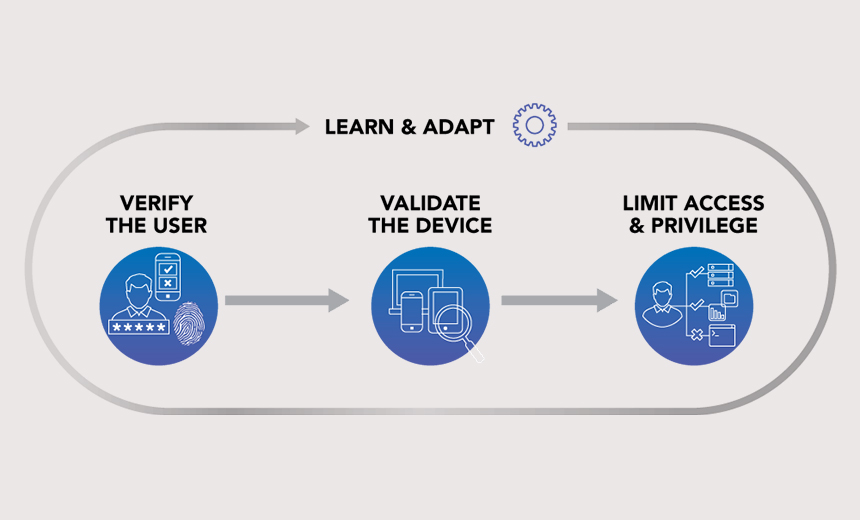
An essential component of the zero trust model is verifying devices from where data is getting accessed using technologies such as CASB and Web DLP. "If an employee is accessing my database through a personal device, the zero trust approach helps me check the device security posture," Khanna says. "Only after these verifications is the device allowed to access the database." Gary Hayslip, director of information security at SoftBank Investment Advisers in California, says the zero trust approach fits his company's 100% cloud approach. "For us it was all about having a proper control over access. We wanted to have a control and know about who is accessing what kind of data," Hayslip says. "Now, whether workers are travelling or at home, we know the device, we know the user, we know the geo location and we know what data the user accessed." When building a zero trust framework, Panchal says, it's critical to "capture every physical and digital footprint of the users' access to the enterprise applications and services using AI on top of every log to understand the user behavior in the system and grant access accordingly.


Microsoft supercomputer looks to create AI models in Azure

While launching into the supercomputer market could give Microsoft's overall AI initiative a boost, one consultant said Microsoft still trails a few competitors, such as Google, in terms of general AI innovation. The best way for Microsoft to catch up is with a series of acquisitions of smaller AI companies. "Microsoft has made some acquisitions in this [AI] space, but they are still playing catch-up," said Frank Dzubeck, president of Communications Network Architects in Washington, D.C. "They are still focusing on application-specific algorithms for certain industries. They have made some headway but aren't there yet where the Googles of the world are." There will be a "changing of guard" in the AI market, Dzubeck said, led by a raft of both known and unknown fledgling AI companies, similar to what happened in the world of social networking 10 and 15 years ago. It is from among these companies that Microsoft, through acquisitions, will grow its fortunes in the AI market, he predicted.


Quote for the day:


"To get a feel for the true essence of leadership, assume everyone who works for you is a volunteer." -- Kouzes and Posner


Daily Tech Digest - May 20, 2020

How IT and Security Leaders Are Addressing the Current Social & Economic Landscape


Despite the security and overall organizational preparedness concerns, IT and security leaders share some notes of encouragement. The majority (68%) of IT leaders agree that their technology infrastructure was prepared to adequately address employees working from home. On an even brighter note, 81% of security leaders believe that their existing security infrastructure can adequately address the current working from home demands, and 67% feel that their security infrastructure is fully prepared to handle the range of risks associated. As more and more individuals are getting their jobs done from home, 71% of IT leaders say that the current situation has created a more positive view of remote workplace policies and will likely impact how they plan for office space, tech staffing and overall staffing in the future. In order to address the new work environment due to COVID-19, 44% of IT leaders will need to acquire new technology solutions and services.


Hackers Hit Food Supply Company

DarkOwl said its analysis shows the attackers have managed to steal some 2,600 files from Sherwood. The stolen data includes cash-flow analysis, distributor data, business insurance content, and vendor information. Included in the dataset are scanned images of driver's licenses of people in Sherwood's distribution network. The threat actors posted screen shots of a chat they had with Coveware, a ransomware mitigation firm that Sherwood had hired to help deal with the crisis. The conversation shows that Sherwood has been dealing with the attack since at least May 3rd , according to DarkOwl's research. The screenshots also suggest that Sherwood at one point was willing to pay $4.25 million and later $7.5 million to get its data back. In an emailed statement, a Sherwood spokeswoman said the company does not comment on active criminal investigations. ... According to DarkOwl, on Monday the attackers updated Happy Blog with news of their plan to next auction off personal data belonging to Madonna.


5 Ways to Detect Application Security Vulnerabilities Sooner to Reduce Costs and Risk

appsec
Human error is always a security concern, especially when it comes to credentials. Just consider how many times you’ve heard of developers committing code only to later realize they’d accidentally included a password. These errors can lead to high-cost consequences for organizations. There are many tools that scan for secrets and credentials that can be accidentally committed to a source code repository. One example is Microsoft Credential Scanner (CredScan). Perform this scan in the PR/CI build to identify the issue as soon as it happens so they can be changed before this becomes a problem. Once an application is deployed, you can continue to scan for vulnerabilities through the following automated continuous delivery pipeline capabilities. Unlike SAST, which looks for potential security vulnerabilities by examining an application from the inside—at the source code—Dynamic Application Security Testing (DAST) looks at the application while it is running to identify any potential vulnerabilities that a hacker could exploit.


MySQL DB
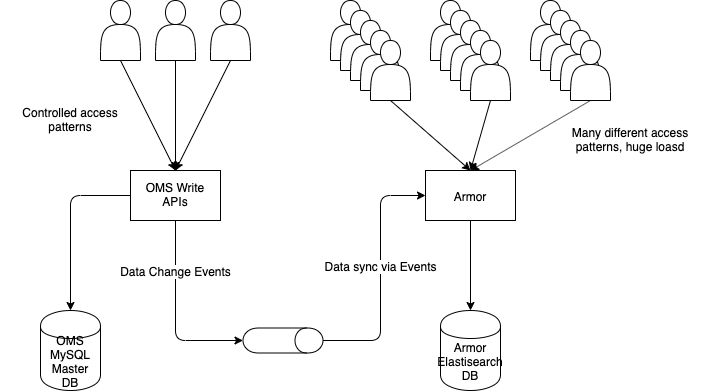
For me, it is that asynchronous programming is such a paradigm shift in a system architecture that it should be analyzed very differently from a “synchronous” system. We analyzed response times but never thought how many concurrent requests there would be at any point because, in a synchronous system, the calling system is itself limited in how many concurrent calls it can generate, because of threads getting blocked for every request. This is not true for asynchronous systems, and hence a different mental model is required to understand causes and outcomes. Any large software system (especially in the current environment of dependent microservices) is essentially a data flow pipeline and any attempt to scale which does not expand the most bottlenecked part of the pipeline is useless in increasing data flow. We thought of pushing a huge amount of data through our pipeline by making Armor alone asynchronous and failed to distinguish between a matter of Speed (doing this faster) from a matter of Volume (doing a lot of it at the same time).


The downside of resilient leadership


Where does resilience come from? It’s a muscle that can be developed early on through a strong family life or a mentor relationship, or from positive experiences that help ready children and young adults for life’s tests in later years. But resilience is often also forged at young ages through adverse experiences that force children to rely on what psychologists call an “internal locus of control,” a concept developed in the 1950s by American psychologist Julian Rotter. When challenged, these young people decide that they are going to be in charge of their own fate and not let their circumstances define them. ... One of the messages these future leaders told themselves, or that was hammered into them by a parent, was “don’t be a victim.” Nobody would wish tough circumstances on another person, and yet it was in the moments of being tested that they discovered what they were made of. Adversity built a quiet confidence in them, because they went through tough times and knew they could do it again.


Why the cloud journey is hard

Cloud-journey
Cloud journey- Conway’s Law states: “The structure of any system designed by an organisation is isomorphic to the structure of the organisation,” which means software or automated systems end up shaped like the organisational structure they’re designed in or designed for, according to Wikipedia. This could be why some organisations find it difficult to fully embrace cloud adoption as certain legacy organisational structures just don’t fit into a more demanding agile oriented cloud environment. Nico Coetzee, Enterprise Architect for Cloud Adoption and Modern IT Architecture at Ovations, elaborates: “Every company that embarks on its cloud journey can count on some deliverables not going as planned. There are many reasons for the failure of certain modernisation projects and cloud journeys, but it might come as a surprise to hear that the most common reason could be as simple as traditional structures.” If we go back to Melvin E Conway’s research on ‘How do committees invent?’ from 1967, there are some key insights.


Executive AI Fluency – Ending the Cycle of Failed AI Proof-of-Concept Projects

Executive AI Fluency
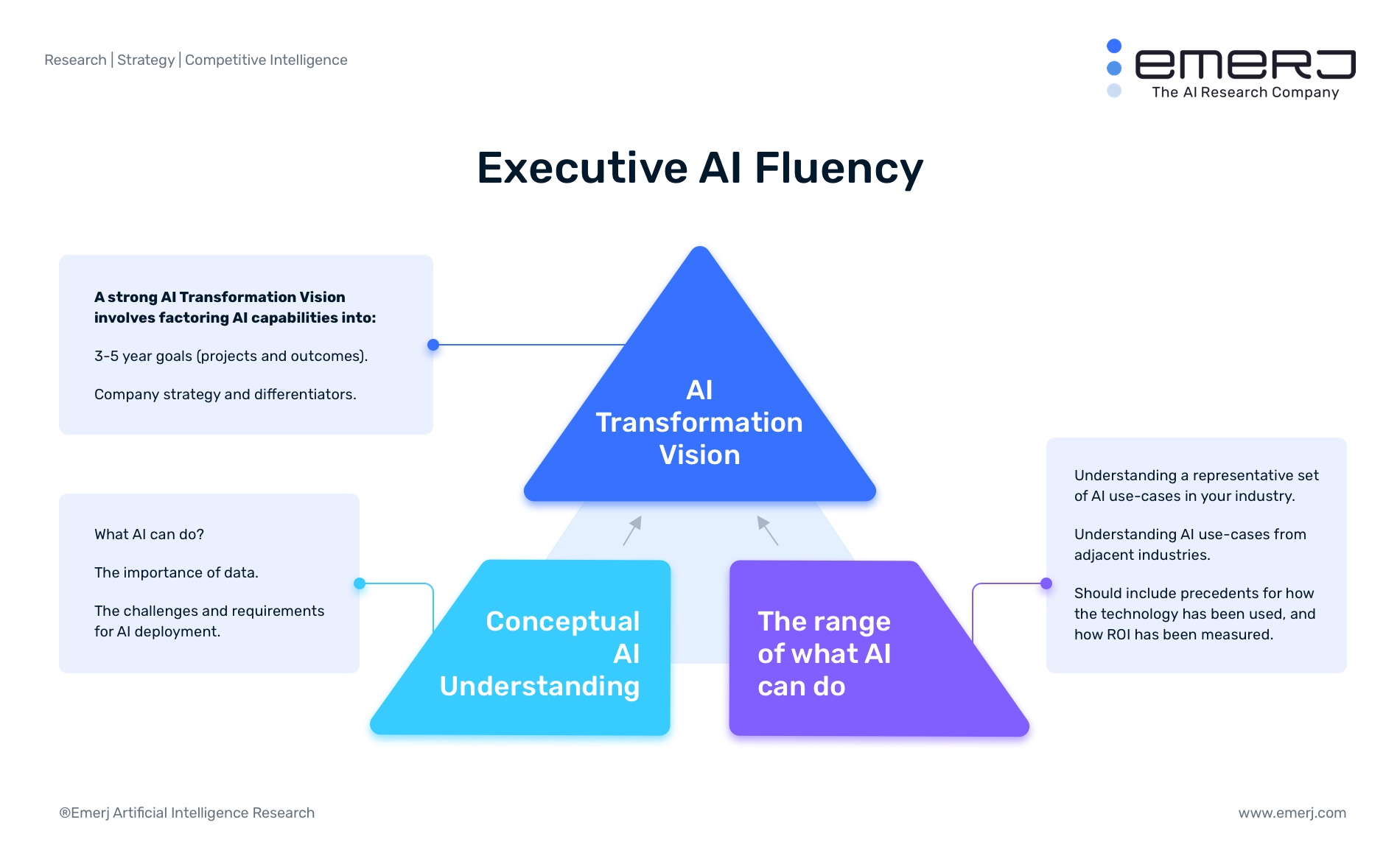
Executives cannot understand AI in a purely conceptual fashion. They need practical use-cases for the types of AI projects they are brainstorming – and it is even better (at least initially) to have examples within their industry or related industries. One example of a strong AI use-case in banking is fraud detection. Some banks and AI vendors report to have lowered their rate of false-positive results for financial fraud using predictive analytics solutions. A wide range of use cases allows leadership to better detect where AI opportunities might lie within the company and decide which projects deserve the most attention of the many that could be applied. Banking leaders should be able to expect a chatbot solution to provide their customers basic answers to common and simple questions. Bank leadership should not expect their chatbot to be able to handle complex conversations, or draw upon rich context from previous email or phone conversations with the client. The technology is simply not at that level today. In this way working with AI is more strategic than the “plug and play” nature of IT solutions.


US Treasury Warning: Beware of COVID-19 Financial Fraud

US Treasury Warning: Beware of COVID-19 Financial Fraud
FinCEN notes that medical-related fraud scams, including fake cures, tests, vaccines and services, may require customers to pay via a pre-paid card instead of a credit card; require the use of a money services business or convertible virtual currency; or require that the buyer send funds via an electronic funds transfer to a high-risk jurisdiction. The agency notes that scams involving nondelivery of medical-related goods often occur through websites, robocalls or on the darknet. Scams involving price gouging include cases where individuals have been selling surplus items or newly acquired bulk shipments of goods - such as masks, disposable gloves, isopropyl alcohol, disinfectants, hand sanitizers, toilet paper and other paper products - at inflated prices, FinCEN explains. "Payment methods vary by scheme and can include the use of pre-paid cards, money services businesses, credit card transactions, wire transactions, or electronic fund transfers," it notes. ... "FinCEN is correct in its assertion that there will be a huge increase in all types of cybercrimes, especially related to medical scams and related cyberattacks, says former FBI agent Jason G. Weiss


How the UK pensions industry is paving the way for open data sharing ecosystems

The UK pensions industry and the rise of open data sharing ecosystems image
While some questions remain over how the regulatory standards from the pensions dashboard and Open Banking (a separate regulation focused on building transparency and open sharing into the banking industry) can be applied to a wider Open Finance initiative, the pension dashboard’s architecture — federated digital identity, UMA, and interoperability through secure Open APIs — provides a viable model for Open Finance. Crucially, these technologies conform to open standards, meaning the architecture that underpins them can be updated and synced with any new technology, preventing the formation of any legacy systems and allowing for consistent innovation. When adopted across the financial services ecosystem, they would create a variety of secure, trustworthy, and user-friendly tools that would empower users to engage more meaningfully with their finances. Picture it: financial advisors and brokers could deliver important financial advice more completely, immediately, and visibly through the kind of seamless user experiences that are currently the preserve of digital native sectors.


NCSC discloses multiple vulnerabilities in contact-tracing app

The encryption vulnerability in the beta app has arisen because the app does not encrypt proximity contact event data, and the data is not independently encrypted before it is sent to the central servers. This, said Levy, means that when data is transferred to the back-end, it is only protected by the transport layer security (TLS) protocol, so that if Cloudflare was compromised in some way, cyber criminals could access that data. He pointed out that this was something else that was sacrificed at first because of the need for speed. Finally, Levy noted some ambiguities and errors in statements made about the beta app. Among these was a statement that “the infrastructure provider and the healthcare service can be assumed to be the same entity”. This suggests that the NCSC trusts the network bridging the gap between user devices and the central NHS servers in the same way as it trusts the whole of the NHS, which is clearly not the case.


Quote for the day:


"You must learn to rule. It's something none of your ancestors learned." -- Frank Herbert


Daily Tech Digest - May 19, 2020

CEOs, CISOs fear becoming the next big breach target


The global survey of 200 CEO and CISO respondents was conducted in industries including healthcare, finance, and retail, and uncovered prominent cybersecurity stressors and areas of disconnect for business and security leaders, Forcepoint said. They include a lack of an ongoing cybersecurity strategy for less than half of all CEO respondents. The research also identified disparities between geographic regions on data protection as well as a digital transformation dichotomy battle between increased risk and increased technology capability. The disparity is compounded by a belief that senior leadership is cyber-aware and data-literate (89%) and focused on cybersecurity as a top organizational priority (93%), according to the report. Meanwhile, cybersecurity strategies are seen by 85% of executives as a major driver for digital transformation, yet 66% recognize the increased organizational exposure to cyber threats because of digitization, the Forcepoint report said. Only 46% of leaders regularly review their cybersecurity strategies, according to the report.


Interview With Node.js Technical Steering Committee Chair

The major challenge was that Node.js already had a well established module system and that ESM was different in many important ways. Things like asynchronous loading versus synchronous loading leads to the potential for a lot of subtle interoperability problems. Unfortunately when the ESM spec was being put together the Node.js project was not very active in that process (or other standards either!). The result was some areas of conflict between the existing module system and long standing community expectations/usage and the spec as a reflection of what was a good fit for browsers. The modules team has done a good job of working through a large number of edge cases and finding approaches (and getting agreement for them which can be hard) that allow for reasonable interoperability while working to maintain compatibility with the spec. ... In terms of larger features, the Node.js project does not have a formal roadmap so “What’s” next is often “What’s ready” when the next release is being cut. We do however, have longer term plans and initiatives.


IT Spending Forecast: Unfortunately, It's Going to Hurt

Image: Maridav - stock.adobe.com
Businesses' response to the pandemic will continue to spur spending in technology areas that support working from home, such as public cloud services, now expected to grow by 19% in 2020. Cloud-based telephony and messaging and cloud-based conferencing is expected to grow by 8.9% and 24.3%, respectively. But longer-term transformational projects are likely to be put on hold as CEOs look to preserve cash, John-David Lovelock, Gartner chief forecaster and distinguished research VP told InformationWeek. If a project costs a lot to finish and won't return cash quickly without a fast time to value, it will probably be put on hold or cancelled. The Gartner forecast shows many segments experiencing a decline in 2020, with devices and data center systems hit hardest, down 9.7% and 15.5%, respectively. Enterprise software will decline by 6.9% and IT services will fall by 7.7%. That's pretty bleak. But the current economic situation is not like typical recessions where things slowed down and everyone felt those effects slowly until there was a recession.


Microsoft and Sony to create smart camera solutions for AI-enabled image sensor


Sony and Microsoft have joined together to create artificial intelligence-powered (AI) smart camera solutions to make it easier for enterprise customers to perform video analytics, the companies announced. The companies will embed Microsoft Azure AI capabilities onto Sony's AI-enabled image sensor IMX500. Announced last week, the IMX500 is the world's first image sensor to contain a pixel chip and logic chip. The logic chip, called Sony's digital signal processor, is dedicated to AI signal processing, along with memory for the AI model. "Video analytics and smart cameras can drive better business insights and outcomes across a wide range of scenarios for businesses," said Takeshi Numoto, corporate vice president and commercial chief marketing officer at Microsoft.  "Through this partnership, we're combining Microsoft's expertise in providing trusted, enterprise-grade AI and analytics solutions with Sony's established leadership in the imaging sensors market to help uncover new opportunities for our mutual customers and partners." According to Sony, the app will allow independent software vendors (ISVs) and smart camera original equipment manufacturers (OEMs) to develop AI models, thereby enabling them to create their own customer and industry-specific video analytics and computer vision solutions that use the IMX500 image sensor.


Verizon DBIR: Breaches doubled, but plenty of silver linings


Despite some alarming figures, the 2019 Verizon DBIR offered some good news as well. For example, detection time saw improvements over last year, as well as malware blocking. "Trojans have dropped in our data. In 2015 it was a top action, and now it's gone all the way to the bottom largely because the tools that are blocking it from getting into organizations have been successful," Widup said. Perhaps most importantly, 81% of breaches were "discovered in days or less," according to the report, compared to 2018 where 56% of breaches took months or longer to discover. "You see all these people who are saying 'prevention, prevention, prevention,' but if you can't detect it, it's really hard to prevent," Widup said. "We do see some improvements but it's not happening as fast as we'd like it to as researchers. It's also challenging because the threat is shifting, so being able to detect it is also always shifting and it makes it hard for people who make these tools to make it automated and reliable."


Wearable sensor integrates machine learning innovation

In collaboration with researchers at the University of Calgary Human Performance Lab (UCHPL), Protxx recently demonstrated the ability to integrate both diagnostic and therapeutic functions into Protxx wearable devices in order to enhance the management of neurodegenerative medical conditions. The newly announced collaborations and investments will drive product prototyping of the integrated device with Triple Ring Technologies (TRT), Newark CA, and pilot testing at UCHPL. TRT’s Venture Studio and Edmonton-based Brass Dome Ventures are both supporting the collaboration as new Protxx investors. Investment terms were not disclosed. In addition to the new investments, Protxx and the UCHPL-based Integrative Sensorimotor Neuroscience Laboratory directed by Dr. Ryan Peters have been awarded a Mitacs Accelerate grant to support graduate student researchers participating in the project in 2020-2021. 


From thinking about the next normal to making it work: What to stop, start, and accelerate

From thinking about the next normal to making it work: What to stop, start, and accelerate
Office life is well defined. The conference room is in use, or it isn’t. The boss sits here; the tech people have a burrow down the hall. And there are also useful informal actions. Networks can form spontaneously (albeit these can also comprise closed circuits, keeping people out), and there is on-the-spot accountability when supervisors can keep an eye from across the room. It’s worth trying to build similar informal interactions. TED Conferences, the conference organizer and webcaster, has established virtual spaces so that while people are separate, they aren’t alone. A software company, Zapier, sets up random video pairings so that people who can’t bump into each other in the hallway might nonetheless get to know each other. There is some evidence that data-based, at-a-distance personnel assessments bear a closer relation to employees’ contributions than do traditional ones, which tend to favor visibility. Transitioning toward such systems could contribute to building a more diverse, more capable, and happier workforce. Remote working, for example, means no commuting, which can make work more accessible for people with disabilities; the flexibility associated with the practice can be particularly helpful for single parents and caregivers.


Digital transformation: Why this is a smart time to speed up


Every organizational strategy must be re-thought in the current environment. Consider how an accelerated timetable will enable a strategy that must be extremely flexible and adaptive to an unclear future. Strategies must build on an infinitely adaptable platform: Think playdough, not concrete. Meetings become much more efficient when their time is cut in half. The same applies to plans. You likely have a transformation path already mapped out to introduce much-needed change. What happens if you shorten the timeline by half and push to achieve the same goals? Force yourself to eliminate the “nice-to-haves” to get it done. Sure, there are risks in moving faster. Make those apparent to stakeholders so they can be active risk mitigators. You might be surprised at what risks they will accept. ... Make it clear that deployments never assume perfection. Do your best to reduce risk, then set up a clear path to report issues rapidly – with your team ready to respond quickly. Agile balances the need for speed with the expectation of adjustment. Every organization grows stronger by learning from both hits and misses.


Smartphones, laptops, IoT devices vulnerable to new BIAS Bluetooth attack


"At the time of writing, we were able to test [Bluetooth] chips from Cypress, Qualcomm, Apple, Intel, Samsung and CSR. All devices that we tested were vulnerable to the BIAS attack," researchers said. "Because this attack affects basically all devices that 'speak Bluetooth,' we performed a responsible disclosure with the Bluetooth Special Interest Group (Bluetooth SIG) - the standards organisation that oversees the development of Bluetooth standards - in December 2019 to ensure that workarounds could be put in place," the team added. In a press release published today, the Bluetooth SIG said they have updated the Bluetooth Core Specification to prevent BIAS attackers from downgrading the Bluetooth Classic protocol from a "secure" authentication method to a "legacy" authentication mode, where the BIAS attack is successful. Vendors of Bluetooth devices are expected to roll out firmware updates in the coming months to fix the issue. The status and availability of these updates is currently unclear, even for the research team. The academic team behind the BIAS attack includes Daniele Antonioli from the Swiss Federal Institute of Technology in Lausanne (EPFL), Kasper Rasmussen from the CISPA Helmholtz Center for Information Security in Germany, and Nils Ole Tippenhauer from the University of Oxford, thh UK.


Fabulous Enables Building Declarative Cross-Platforms UIs

Fabulous makes a new approach to app programming possible by adopting a React-like MVU architecture, says Syme. This approach aims to simplify code and make it more testable and less repetitive. Fabulous adopts the Model-View-Update (MVU) paradigm to replace the ubiquitous Model-View-ViewModel (MVVM) and provides a functional way to describe UIs and the interaction between their components. Fabulous is not the first framework to adopt MVU, which was made popular by React and Redux, Flutter, Elm, and other projects. The basic idea behind MVU is managing a core, immutable model which represents the UI status. Each time a UI event takes place, a new model is calculated from the current one and then used to create the view anew. In Syme's view, the main tenets of MVU are it supports functional programming and the creation of dynamic UIs through simple declarative models which are expressed in the same high-level language as the rest of your application.


Quote for the day:


"Every great leader can take you back to a defining moment when they decided to lead" -- John Paul Warren