Daily Tech Digest - March 21, 2019

Industry 4.0 shifting from buzzword to reality, says Hampleton Partners' M&A report

Industry 4.0 shifting from buzzword to reality image
Hampleton’s Industry 4.0 M&A Market Report records more than 600 deals in 2018, up from 513 in 2017. The analysis reveals that the highest level of interest lies in AI technologies with context information, digital threads and digital twin solutions. Dr.-Ing. Peter Baumgartner, sector principal at Hampleton Partners, said: “A mere buzzword a few years ago, Industry 4.0 has become today’s reality and is one of the hottest M&A sectors in the DACH region. Liquidity is at a high level, meaning that buyers have the funds to support start-ups or established Industry 4.0 players, and the cutting-edge technology coming out of the region has generated many M&A deals.” Industry 4.0 has become integral to the region’s technology giants such as Bosch Rexroth, Festo and Siemens, whilst a recent strategic partnership between Rockwell Automation and PTC, accompanied by a $1 billion equity investment from the former, further demonstrates the importance of integrating innovations such as IoT and augmented reality with more traditional industrial automation.


CISOs, Know Your Enemy: An Industry-Wise Look At Major Bot Threats

According to a study by the Ponemon Institute in December 2018, bots comprised over 52% of all Internet traffic. While ‘good’ bots discreetly index websites, fetch information and content, and perform useful tasks for consumers and businesses, ‘bad’ bots have become a primary and growing concern to CISOs, webmasters, and security professionals today. They carry out a range of malicious activities, such as account takeover, content scraping, carding, form spam, and much more. The negative impacts resulting from these activities include loss of revenue and harm to brand reputation, theft of content and personal information, lowered search engine rankings, and distorted web analytics, to mention a few. For these reasons, researchers at Forrester recommend that, “The first step in protecting your company from bad bots is to understand what kinds of bots are attacking your firm.” So let us briefly look at the main bad bot threats CISOs have to face, and then delve into their industry-wise prevalence.


A Comparison Between Flutter And React Native
Image 1 for A Comparison Between Flutter And React Native
As the need for mobile apps increase, developers are looking at ways to build better apps in a faster way. New frameworks are emerging to make work easier for app developers. Developers can create the most attractive native-like apps with Cross-platform app development. These apps provide a better user experience while making the developing process easy and fast. As more and more frameworks emerge, there is a compulsion to compare these and find out which is more suitable. Flutter is a reasonably new framework while React Native has been here for quite some time now. Both these are cross-platform frameworks helping to develop native apps easily. A comparison of these frameworks will help many app developers to decide which will be better for their apps. While Flutter is a product from Google, Facebook had launched React Native. Cross-platform frameworks are a great help for developers because it avoids the need for maintaining two teams for the two mobile platforms.


Resumable Online Index Create and Rebuild Operations

When you cancel an index rebuild or a create index operation in SQL Server prior to SQL Server 2017, the database engine must roll back all the work it had done on the index. Because of this, when you restart the index rebuild or create index process, SQL Server has to start all over again at rebuilding or creating the index. This causes lots of processing and requires resources just to redo what was done prior to cancelling the indexing rebuild or create index process. But if you migrate your older versions of your databases to SQL Server 2017, you can restart your online index rebuild operations. Plus, with the rollout of the previews of Azure SQL Database or SQL Server 2019, you can pause and restart both your online rebuilds and creation processes. Being able to pause these online index operations allows SQL Server to pick up the rebuild or create index operations where they left off.


A typical cell phone has nearly 14 sensors, including an accelerometer, GPS, and even a radiation detector. Industrial Things such as wind turbines, gene sequencers, and high-speed inserters can easily have 100 sensors. People enter data at a snail’s pace when compared with the barrage of data coming from the IoT. A utility grid power sensor, for instance, can send data 60 times per second, a construction forklift once per minute, and a high-speed inserter once every two seconds. Technologists and businesspeople both need to learn how to collect and put all of the data coming from the industrial IoT to use and manage every connected Thing. They will have to learn how to build enterprise software for Things versus people. The industrial IoT is all about value creation: increased profitability, revenue, efficiency, and reliability. It starts with the target of safe, stable operations and meeting environmental regulations, translating to greater financial results and profitability.


jOOPL: Object-Oriented Programming for JavaScript

Web development has increased its complexity during the last decade. Think about how the Web was and in what it turned into now: the Web of applications. Also known as Web 2.0 and the coming 3.0. JavaScript has been the language that accompanied the Web since its early stages. Someday was the way to add some fancy effects to our pages, but as the language has evolved into an actual application programming language, the need to reuse and scale have become an important point in Web development. Definitively, object-oriented approach on graphical user interface, domain and others, has demonstrated that is a good way of creating well-structured, reusable and maintainable software. The worst part is JavaScript is not an object-oriented programming language: it is prototype-oriented, which is a weak approach to leverage few features of a full-fledged object-oriented platform. That is why jOOPL exists. "jOOPL" stands for "JavaScript Object-Oriented Programming Library".


Cash review suggests fintech “is not a panacea” yet


“Fintech is fantastic as it is, but it is not a panacea,” said banking specialist Mark Aldred by email, of ATM software firm, Auriga, the banking and cash management firm. Access to Cash, an independent body established to gauge the effects of going cashless, reported in its final review in early March that 2.2m people rely solely on cash while 8m would struggle in a completely cash-free society. “There are technological developments which could address many of the needs of those who depend on cash,” reads the executive summary, citing the UK’s reputation as a source of financial technology innovation. The word ‘fintech’ appears 19 times, each time exploring how the fledgling sector could better serve the 2.2m. However, the report also acknowledges that fintechs tend to target early adopting consumers as opposed to the majority of late adopters who populate the 8m underserved. “Fintech is seeking to move from its digitally-savvy demographic,” said Aldred. “Key to mainstream adoption of app-only banks and other fintech options will be how trust is developed in availability of these services.


Cyberattacks: Europe gets ready to face crippling online assaults


The agency said to be certain that it was a criminal attack, the electronic evidence that could be found within the IT systems affected by the attack must be preserved, as this is essential for any criminal investigation. "It is of critical importance that we increase cyber preparedness in order to protect the EU and its citizens from large scale cyberattacks," said Wil van Gemert, deputy executive director of operations at Europol.  While European governments and businesses face a range of threats, it is notable the announcement comes ahead of European elections in May and a number of other votes across Europe this year. As well as large-scale ransomware attacks, Europe is keen to stop any repeat of the election meddling that affected the US Presidential election in 2016. In February, Microsoft warned that it had seen recent hacker activity targeting democratic institutions in Europe, including attacks on election campaigns, but also think tanks and non-profit organizations working on topics related to democracy, electoral integrity, and public policy and that are often in contact with government officials, and said that Russian intelligence was behind the attacks.


Cyber security skills shortage driving outsourcing — NETSCOUT research

Cyber security skills shortages driving outsourcing image
Operational challenges are further compounded by difficulty in hiring and retaining skilled personnel, which, together with lack of headcount or resources, were cited as the top challenges faced by security leaders. The findings show that this is driving an increased reliance on outsourced services, with approximately a third of enterprises outsourcing at least a part of their security operation, up 12% from 2017. This trend looks set to continue for the foreseeable future, with 39% of respondents stating they expect to increase their investment in outsourced services in the next 12 months. “In leaning on outsourced security professionals, businesses are identifying the short-falls of their internal processes and capabilities and are moving to address risk in the only way they can,” added Anstee. “There is nothing wrong with this strategy, as long as businesses are clear that they still own the underlying risk.” Adding to the challenge facing organisations is an evolution in DDoS attack size, with 91% of companies experiencing an attack indicating that their internet connectivity was saturated on at least one occasion.


The Dawn Of The Deep Tech Ecosystem

Deep tech startups rarely follow the established funding progression of other types of young tech enterprises—seeking money from friends and family, then angel or seed investors, then successive rounds of venture capital investment at increasing valuations (which validate the decisions of previous investors), leading ultimately to a trade sale or an IPO. In deep tech, public funding plays an important role in the early phase, and friends-and-family money is rarely significant relative to the substantial capital requirements of early R&D. Private-public financing schemes are becoming increasingly important to financing deep tech ventures along their entire life cycle, and corporate venture capital (CVC) funds, incubators, and accelerators also have become prevalent partners since they provide not only funding but other critical forms of support. ... The growing deep tech ecosystem facilitates research into almost any kind of technology, from things we can’t see to concepts that relatively few can explain. This ecosystem is rooted in a handful of trends.


Quote for the day:


"Inspired leaders move a business beyond problems into opportunities." -- Dr. Abraham Zaleznik


Daily Tech Digest - March 20, 2019

Things happen in the real world that don’t happen in your test environment. Yet what does that mean from a QA perspective? We did everything we were supposed to do in the training phase and our AI model passed meeting expectations, but it’s not passing in the “inference” phase when the AI model is operationalized. This means we need to have a QA approach to deal with AI models in production. Problems that arise with AI models in the inference phase are almost always issues of data. We know the algorithm works. We know that our training model data and hyperparameters were configured to the best of our ability. That means that when AI models are failing we have data problems. Is the input data bad? If the problem is bad data – fix it. Is the AI model not generalizing well? Is there some nuance of the data that needs to be added to the training model? If the answer is the latter, that means we need to go through a whole new cycle of developing an AI model with new training data and hyperparameter configurations to deal with the right level of fitting to that data.


TLS 1.3: A Good News/Bad News Scenario

While TLS 1.3 enables much better end-to-end privacy, it can break existing security controls in enterprise networks that rely on the ability to decrypt traffic in order to perform deep-packet inspection to look for malware and evidence of malicious activity. Well-known examples of those security controls include next-generation firewalls, intrusion prevention systems, sandboxes, network forensics, and network-based security analytics products. These security controls rely on access to a static, private key in order to decrypt traffic for inspection. The use of such keys is replaced in TLS 1.3 by the requirement to use the Diffie-Hellman Ephemeral perfect forward secrecy key exchange. That exchange occurs for each session or conversation that is established between endpoints and servers. In addition, the certificate itself is encrypted, which denies those tools access to valuable metadata for additional analysis. The ephemeral key exchange is not new to TLS. TLS 1.2 also included it as an option.


Who's Responsible When IT Goes Awry?

Image: Tashatuvango - stock.adobe.com
"IT professionals tend to be pleasers. They say 'yes’ to a lot of things when they should say 'no," said Dave Gartenberg, chief HR officer at professional services firm Avanade. "Sometimes they'll agree to do something with less budget or less line leader involvement in order to be helpful. You'll see a lot of projects moving forward with the best of intentions when in fact anyone on the outside looking in can see it would never stand a chance. I hold the IT leaders accountable for making sure from the start the conditions for success were contracted internally." Peter Kraatz, portfolio manager of Cloud and Data Center Transformation Consulting at IT solutions services provider Insight Enterprises said the lack of governance also contributes to IT issues. “IT has to own the mechanical bits of governance: Who's got what role, who's going to pull what triggers and when. Why we’re doing them is something that's owned by the business," said Kraatz. "The business has to tell us when we’re running out of budget on Amazon or we’ve got the wrong workloads. I think we’re allergic to talking to one another.”


Raspberry Pi-style Jetson Nano is a powerful low-cost AI computer from Nvidia

nvidiaboard.png
Nvidia released a series of benchmarks showing the Jetson Nano outperforming competitors when running various computer vision models. The results show the Jetson Nano beating the $35 Raspberry Pi 3 (no mention of the model), the Pi 3 with a $90 Intel Neural Compute Stick 2, and the newly released Google Coral board that uses the Edge TPU (Tensor Processing Unit). These tests involved running a range of computer vision models carrying out object detection, classification, pose estimation segmentation and image processing. Specifically, the Jetson showed superior performance when running inference on trained ResNet-18, ResNet-50, Inception V4, Tiny YOLO V3, OpenPose, VGG-19, Super Resolution, and Unet models. The Jetson Nano was the only board to be able to run many of the machine-learning models and where the other boards could run the models, the Jetson Nano generally offered many times the performance of its rivals. Nvidia's senior manager of product for autonomous machines Jesse Clayton told TechRepublic's sister site ZDNet that Jetson Nano's GPU could run a broader range of machine-learning models than the specialist silicon found in Google's Edge TPU.


Terrified Of The Internet, Putin Signs Laws Making It Illegal To Criticize 

Russia's efforts to clamp down on anything resembling free speech on the internet continues unabated. Putin's government has spent the last few years effectively making VPNs and private messenger apps illegal. While the government publicly insists the moves are necessary to protect national security, the actual motivators are the same old boring ones we've seen here in the States and elsewhere around the world for decades: fear and control. Russia doesn't want people privately organizing, discussing, or challenging the government's increasingly-authoritarian global impulses. After taking aim at VPNs, Putin signed two new bills this week that dramatically hamper speech, especially online. One law specifically takes aim at the nebulous concept of "fake news," specifically punishing any online material that "exhibits blatant disrespect for the society, government, official government symbols, constitution or governmental bodies of Russia." In other words, Russia wants to ban criticism of Putin and his corrupt government


Stanford Aims to Make Artificial Intelligence More Human


First, ensuring as best we can that the advancement of artificial intelligence ends up serving the interests of human beings, and not displacing or undermining human interests. The essential thing is to ensure that as machines become more and more intelligent and are capable of carrying out more and more complicated tasks that otherwise would have to be done by human beings, that the role we give to machine intelligence supports the goals of human beings and the values we have in the communities we live in, rather than step-by-step displacing what humans do. Second, the bet that the institute is making here at Stanford is that the advancement of artificial intelligence will happen in a better way if, instead of just putting technologists and AI scientists in the lab and having them work really hard, we do it in partnership with humanists and social scientists. So the familiar role of the social scientist or philosopher is that the technologists do their thing and then we study it out in the wild; the economist measures the effects of technology and the disruption it has, or the philosopher tries to worry about the values that are disrupted in some way by technology.


How AI Can Transform Customer Experience By Listening Better to the Voice of Customers

While financial dealings, business transactions, and operational updates can be quantified and computed upon, the same cannot be said of human interactions. With natural language being the free-flowing mode of communication amongst people, the spoken and written words contain a treasure trove of information. And today, this remains largely under-leveraged. Whether it is periodic customer surveys, chatter on social media, feedback on review websites, interactions through contact centers, or ongoing communications with customer service professionals, all these touch-points are peppered with vital clues that can help answer the million-dollar question, “What do customers really want?” However, many enterprises use archaic approaches to customer survey and digital listening programs. Textual feedback from these programs is often subjected to superficial text analytics that don’t go beyond simple text summaries, frequency counts of words, or naive sentiment analysis. These squander valuable customer signals, falling short on intelligence and actionability.


The Future of A.I. Isn’t Quite Human


At first glance, an A.I. brought to life on the red carpet may feel jarring. But A.I. is already operating in many aspects of our lives: It controls your Facebook news feed, it helps make your salad, and it opposes you in video games. And while a fleet of Protoss carriers gliding across a choke point in Starcraft II may appear less “real” than Shudu in her gown on a real red carpet — or the virtual avatars created by Facebook and spotlighted in a Wired feature last week — cutting-edge work happening behind the scenes in these virtual worlds may actually say quite a bit more about an emerging universe of the almost-human, where the line between person and machine blurs. After all, Google wouldn’t spend upwards of $500 million on nothing. The company’s DeepMind property uses advanced algorithmic learning to mimic and surpass human play style in games, but that’s nothing compared to what’s coming. “This is not going away,” Morgan Young, the CEO and co-founder of Quantum Capture who worked on Shudu’s BAFTAs project, tells OneZero. “This is just the beginning of how powerful characters can be when they’re combined with A.I.”


Cyber Crime Competes Against the Good Guys for Talent

One factor that has benefited cyber crime is the professionalization of the threat space. Previously more disparate, the underground functions very much like legitimate businesses operating under a “supply and demand” philosophy. Product/service competition and as-a-service offerings fuels the growth of the maturing marketplace. This forces developers and sellers to provide quality merchandise at competitive prices. An aggressive marketing strategy helps gain market share with favorable reviews from customers and forum administrators providing corroboration of production utility and the bona fides of sellers. It is common for sellers to offer 24×7 help support, as well as customizable features to prospective customers. Moreover, the goods and services provided in the underground are not exclusively tailored for experienced cyber crime actors. Some products target inexperienced customers thereby lowering the bar to gain entry into cyber criminal operations. This allows anyone that can pay the price point to engage in hostile activities, either on their own via user-friendly graphic user interfaces, or just paying for the service, hiring “professionals” to do the job.


Mirai Botnet Code Gets Exploit Refresh

Mirai Botnet Code Gets Exploit Refresh
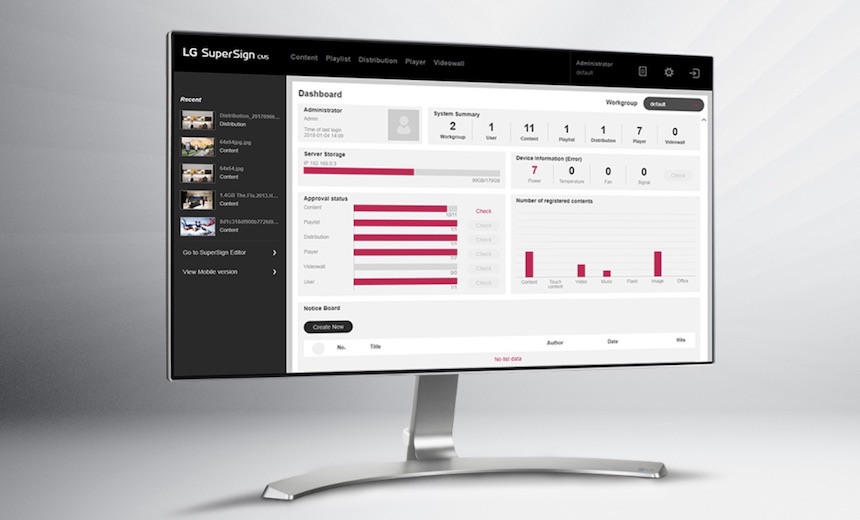
In the latest version of Mirai, meanwhile, Palo Alto's Nigam says researchers found two unexpected exploits: one for the WePresent WiPG-1000 Wireless Presentation system and another for a content management system developed by LG to manage screen-based signage. Neither of the exploits had been seen in the wild before. Both types of software are most likely to be used by businesses. "In particular, targeting enterprise links also grants it access to larger bandwidth, ultimately resulting in greater firepower for the botnet for DDoS attacks," Nigam writes. The exploit for LG targets a vulnerability (CVE-2018-17173) in its LG SuperSign EZ CMS 2.5, which ships as part of LG's WebOS operating system in smart TVs. The vulnerability was disclosed in September 2018. The exploit in WePresent attacks a command injection vulnerability. The vulnerability was contained within several versions of software in WePresent WiPG-1000 devices, which are wireless routers designed for screen sharing. Barco, the device's developer, has patched the vulnerability.


Organizations need to make mobile security a priority in 2019


The challenge is, WiFi relies on mostly insecure protocols and standards, making them easy to impersonate or intercept, mislead and redirect traffic. This can be done independently on how new or updated your device is; it’s only related to how the underlying WiFi infrastructure works. There are times when you don’t even need to perform any action to have an attack on you perpetrated. Do you remember that WiFi network you connected to while having lunch the other day? In order to make your life easier, your device will connect to it automatically if it recognizes the network. Even when it’s not the same network, it just has to claim to be it. From over in the corner, the hacker effortlessly hijacks your session, captures your credentials, delivers a targeted exploit, and assumes full control of every function on your smartphone - including those that login to your company’s Wi-Fi and send emails in your name. This year, Zimperium attended Mobile World Conference (MWC) in Barcelona and RSA in San Francisco - - the attendance for the two shows combined was more than 150,000 executives, salespeople, media, etc.


Quote for the day:


The essential question is not, "How busy are you?" but "What are you busy at?" -- Oprah Winfrey


Daily Tech Digest - March 19, 2019

Time-series monitoring helps ops teams predict long-term trends based on patterns found in historical data. This type of monitoring digs into past metrics to forecast what's likely to occur next in a system. Organizations can use time-series monitoring to predict trends around autoscaling, required capacity and more. The time-series method can also support more accurate troubleshooting due to the expansive range of data collected over time. ... APM tools track the performance of enterprise software. They monitor an application over time, offering data around memory demands, code execution, network bandwidth and disk read/write speeds. Admins can use this data to evaluate how an app's dependencies might affect its performance and to pinpoint the cause of any performance issues ... This category of monitoring measures IT performance, based specifically on the perspective of end users. It might track, for example, the response time of a virtual desktop or other user-facing applications. 


How a small company can make use of data image
Clearly, the effective use of AI and data science can be game-changing, but it is not only small businesses that are struggling to deploy data science. The same report reveals that 51% of UK leaders admit their organisation does not currently have an AI strategy in place. Incorporating data science into an operating model is as big a challenge as it is an opportunity, but what are the issues specific to smaller businesses and are they so very different to larger companies? Data can be tricky to make sense of and, though start-ups or small organisations may not be sitting on the same volume of data as their larger counterparts, the variety and velocity will often be comparable. Precisely because small companies are often competing with larger, better-resourced competitors, it’s often absolutely critical that they can quickly make use of their data. The good news is that smaller organisations are in some ways better able to do this than larger, better-established ones. 


With Pulumi, you can create, deploy, and manage any cloud resource using your favorite language. This includes application- and infrastructure- related resources, often in the same program. One area this gets really fun is serverless. Because we're using general purpose languages, we can create resources, and then wire up event handlers, just like normal event-driven programming. This is the way serverless should be! In this article, we'll see how. There's a broad range of options depending on what you want to do, and how your team likes to operate. We'll be using AWS and TypeScript, but other clouds and languages are available. ... Serverless app models today make you think of the event sources -- the S3 buckets -- and event handlers -- the Lambdas and associated code -- as very different things -- "infrastructure" versus "app code" -- managed with distinct tools and workflows. Pulumi, in contrast, gives you a single CLI, pulumi, to manage everything consistently.


Autism, Cybercrime, and Security's Skill Struggle

Rebecca Ledingham, vice president of cybersecurity at Mastercard, spotted the trend earlier in her career as a cyber agent for the UK's National Crime Agency. "They weren't the kinds of offenders I was used to dealing with in drugs and sex crimes," she said in an interview with Dark Reading. Their social behavior, she said, was different from what she'd seen in other areas of crime. Often, she continued, cybercriminals are first diagnosed as being on the autism spectrum during the criminal justice process. Later in her career, as a cyber agent for INTERPOL's Global Complex for Innovation (IGCI), she realized the issue was broader. Ledingham's work with global agencies revealed outside of cybercrime, no other offense came with a foundational condition. "There's no other organic set of offenders that may be predisposed to cybercrime due to the nuances of their disorder," she said. Autism presents itself at the age of two or three, and more than 17 million people worldwide are diagnosed, said Ledingham in an RSA Conference talk. 


Middle East tech: Nine things the region must do to safeguard its financial future


The outlook for growth in the Middle East, North Africa region is expected to improve slightly in 2019 and 2020, the World Bank reported last June, noting a range of factors including "a favorable global environment, post-conflict reconstruction efforts, and from oil importers' reforms to boost domestic demand and increase foreign investment". Although welcome, these conclusions do not mask the longer-term economic realities that the region needs to address. The fourth industrial revolution driven primarily by AI and automation is going to radically change how we work, rest and play, bringing about major shifts to societies and economies. States such as Saudi Arabia, Qatar, UAE, and Oman have acknowledged this upheaval, with bold policy documents identifying a new vision for their counties. But the transition to these new digital realities will inevitably be haphazard and uncertain.


EU law enforcement agencies prepare for major cyber attacks


The newly adopted EU Law Enforcement Emergency Response Protocol determines the procedures, roles and responsibilities of key players both within the EU and beyond, including secure communication channels and contact points for the exchange of critical information as well as a coordination and de-confliction mechanism. The protocol is designed to complement the existing EU crisis management mechanisms, said Europol, by streamlining transnational activities and facilitating collaboration with the relevant EU and international players, making full use of Europol’s resources. It further facilitates the collaboration with the network and information security community and relevant private sector partners. Only cyber security events of a malicious and suspected criminal nature fall within the scope of this protocol. It will not cover incidents or crises caused by a natural disaster, man-made error or system failure.


3 ways AI is already changing medicine


Take ophthalmology. The top cause of loss of vision in adults worldwide is diabetic retinopathy, a condition that affects about a third of people with diabetes in the US. Patients should be screened for the condition, but that doesn’t always happen, which can delay sometimes diagnosis and treatment — and lead to more vision loss. Researchers at Google developed a deep learning algorithm that can automatically detect the condition with a great deal of accuracy, Topol found. According to one paper, the software had a sensitivity score of 87 to 90 percent and 98 percent specificity for detecting diabetic retinopathy, which they defined as “moderate or worse diabetic retinopathy or referable macular edema by the majority decision of a panel of at least seven US board-certified ophthalmologists.” Doctors at Moorfields Eye Hospital in London took that work a step further. They trained an algorithm that could recommend the correct treatment approach for more than 50 eye diseases with 94 percent accuracy.


Is it time we raised expectations of politicians on cyber security? image
Fortunately, not all MPs today are as dismissive of the cyber security threat as they may have been in the past. Sir David Amess provided an example from his constituency in Southend West, where he described “cybercrime having a devastating impact on individuals and businesses.” Amess spoke of a not-for-profit organisation being bankrupted as the result of a data breach – an all-too-familiar occurrence in recent years. MPs themselves are not immune to suffering data breaches. Onwurah explained how her office was a victim of a cyber-attack, but fortunate that it did no real damage. “As an MP’s office we had a big department supporting us and there was no compromise of constituents’ data,” Onwurah remarked. “If we had been a small business, we wouldn’t have had access to that kind of support, and it could have put us out of action for a lot longer.” This is undeniably true, as data breaches have become extinction events for many businesses.


password spray IMAP attack
Legacy protocols (such as POP and IMAP) make it more difficult for service administrators to implement authentication protections like multi-factor authentication, according to Proofpoint. In turn, the lack of multi-factor authentication means that threat actors launching attacks through IMAP can avoid account lock-out and compromise accounts unnoticed. “Attacks against Office 365 and G Suite cloud accounts using IMAP are difficult to protect against with multi-factor authentication, where service accounts and shared mailboxes are notably vulnerable,” researchers said. IMAP-based password-spraying campaigns appeared in high volumes between September 2018 and February 2019, according to the report, especially those targeting high-value users such as executives and their administrative assistants. “Targeted, intelligent brute-force attacks brought a new approach to traditional password-spraying, employing common variations of the usernames and passwords exposed in large credential dumps to compromise accounts,” researchers said in a posting.


Cybersecurity: Why bosses are confident, and tech workers are scared


At the top of business, there seems to be a lot of self-congratulatory box ticking, while elsewhere in the organisation there is a nagging sense that something very bad is about to happen. Two recent pieces of research reflect the ongoing disconnect. The UK government's annual survey of cyber security at big businesses shows that awareness of cyber risk is growing at the top of business. Nearly three quarters of firms said their board sees the risk of cyber threats to be high or very high, in comparison to all risks that they face. And nearly all FTSE 350 companies now have a cybersecurity strategy, even if only half of them will actually back up those fine words with cold, hard cash. Similarly, nearly all have a cybersecurity incident-response plan, even if only 57 percent actually test them on a regular basis. And yet, a separate survey by security company LogRhythm of 1,500 IT professionals in big businesses, shows that while the board may feel it is in control, the tech workers themselves are deeply worried.


Quote for the day:


"If you're not failing once in a while, it probably means you're not stretching yourself." -- Lewis Pugh


Daily Tech Digest - March 17, 2019

Data Science Is Now Bigger Than 'Big Data'

The most obvious is that search interest in cloud computing at its peak surpassed all of the other terms over the past decade and a half. The second is that search interest in the phrase “artificial intelligence” plunged from the data’s start in January 2004 through mid-2008 and began climbing again in 2014 as the current AI renaissance began. Searches for AI begin to really accelerate in 2017 just as searches for “deep learning” level off. This is worrisome in that it suggests that to the general public these neural advances are increasingly pulling away from their mathematical underpinnings of “deep learning” and back towards the science fiction catch-all of AI. As this transition strengthens it raises concerns that the public sees these creations as more than mere statistical equations codified in software and once again as silicon incarnations of a new form of artificial life. This raises the danger of another AI winter as the public’s soaring imagination begins to collide with the primitive reality of current advances.


How To Survive The Future of Banking

To be prepared for the future of banking requires an ability to embrace the change that is upon us, a willingness to take intelligent risks and the internal commitment to disrupt yourself. The marketplace is no longer moving in incremental steps, but this means that opportunities for growth are everywhere. Unfortunately, since most bankers have a bias against risk, we overestimate the threats related to change and underestimate the rewards that change can bring — we talk ourselves out of moving forward. Most people would look at ‘the next step’ as being permanent, irreversible and not a ‘perfect’ fit. The reality is that uncertainty does not always equate to being risky. Especially if you have made a plan and done the learning process in a manner that minimizes negative consequences. In the end, you will never have complete certainty about the next great opportunity. But that is part of the fun … really. You have an amazing opportunity to invest the time and effort to be prepared for the future … and disrupt yourself.


Four Strategic Frameworks for Digital Transformation

An Adaptable Framework for Digital Transformation by Dion Hinchcliffe
We almost universally know now we must adapt to the digital future, to change and grow. But how best to do it remains the top question. We’ve also learned along the way there are numerous submerged obstacles to digital transformation that won’t be denied and must be overcome before we can really even get started. Sometimes, as they say, we must first go slow to go fast later. Stubborn and long-standing issues related to technology like technical debt or poor master data posture, to name just two, threaten to derail efforts before they even start. Issues related to the nature of people take up the rest, and can sometimes seem intractable. ... Consequently, in my work advising and/or leading digital transformation efforts, I’ve developed and refined four key frameworks built out of years of repeated use and validation in organizations around the world. These reflect many of the central issues that I believe we’ve learned that we must address and then codified them into a plan that most organizations can execute against.


FinTech: Making Genuine Change in Finance

Legacy technology is one of the major setbacks for big financial institutions. In April 2018, TSB found out just how damaging outdated infrastructures can be when they tried to migrate to a new system. The reported cost to the bank was £105.4m and 80,000 customers. However, for Panzarino, legacy technology is only part of the issue. “People talk a lot about legacy tech, but we are still dealing with legacy culture. I worked for a time in the world’s third largest bank, so it was very much steeped in legacy culture. Things moved quite slowly, it was very political, people had their own agendas… It was very difficult to navigate.” An upshot of the legacy mentality is that banks often struggle to forge meaningful partnerships with startups. “There is an opportunity for banks to learn from genuine early stage startups, and for startups to be able to run a pilot or similar, but very rarely does anything come to market. They just don’t have the financial or human resources, and the growth experience to be able to sustain themselves through the process,” says Panzarino.


AI in cybersecurity: a new tool for hackers?

Face of Pepper the AI robot
Before the advent of AI in cyberattacks, the security landscape was already challenging. But the use of AI in targeted criminal attacks has made cybersecurity more treacherous. Not only are attacks more likely to be successful and personalised, but detecting the malicious piece of intelligent code and getting it out of your network is likely to be much more difficult, even with AI security in your corner. Adoption of AI by cybercriminals has led to a new era of threats that IT leaders must consider, such as hackers using AI to learn and adapt to cyberdefence tools, and the development of ways to bypass security algorithms. It won’t be long before a continuous stream of AI-powered malware is in the wild. In the short term, cybercriminals are likely to harness AI to avoid detection and maximise their success rates,” says Fraser Kyne, Europe, Middle East and Africa (EMEA) chief technology officer at Bromium. “For example, hackers are using AI to speed up polymorphic malware, causing it to constantly change its code so it can’t be identified.


21st-century CIO job description puts CIOs in vortex of emerging tech

The shift to a strategic rather than supporting role for IT isn't a new notion. Indeed, it has been a well-recognized trend for years and has been happening ever since the technology team's main job moved beyond keeping the mainframe and computers up and running. What's new is the pace at which this evolution is now happening and the criticality of being able to adapt the IT department and technology leadership to a higher level of strategic involvement. "You have to lead more with the technology than ever before," Le Clair said. Forrester outlined this vision in its recent report, "The Future of IT," stating: "A company's fate and fortune will be determined by its ability to exploit technology to its highest potential." Other research has reached similar conclusions. For example, in its 2018 report "Using Strategic IT for Competitive Advantage," CompTIA said: "The critical difference between today's IT and the IT of 10 or 20 years ago is the degree to which technology is being used to drive the strategic goals of a business."


Blockchain solutions – are they for you?

blockchain-solutions-do-you-need-one
Building a blockchain solution is about finding the most efficient way to solve a real-world problem, while also building a profitable and legal business. Who cares what Satoshi Nakamoto would think? For most enterprise solutions, private permissioned blockchains are the way to go. They are faster, cheaper and allow for a certain degree of centralized control. Because public blockchains are slow, it only makes sense if transparency and anonymity are at the core of the solution. It’s all about the use-case. Financial service firms, for example, rarely ever work with public blockchains, as they don’t want to share any financial data on a public blockchain. That’s why Ripple is a private network. Another consideration is the consensus mechanism. Proof-of-Work and Proof-of-Stake are the most common, but there are a lot more. Each solution comes with its benefits and disadvantages; thus, choosing the right mechanism will be paramount on the way to success.


Why are fintechs getting a regulatory pass?

While this new and budding industry presents opportunities and innovations, ill-supervised and underregulated industries can present sizable risks for consumers and the financial marketplace as a whole. As new players begin offering alternative banking models, they may prioritize disruption over proper risk management protocols and regulatory know-how, as several high ranking officials at the Federal Reserve have warned. Even St. Louis Fed President James Bullard noted his concern that fintech will be the “source of the next crisis.” Today, some digital financial services serve around 80 million members, while consumer data aggregators can serve more than 21 million customers, according to a report from the Treasury Department. That is a significant number of consumers served and a hefty amount of financial and personal information at risk. These services, in many cases, have proven beneficial, but Washington policymakers must act to protect consumers from devious marketplace actors by ensuring fintechs are subject to the same data security standards


The Evolving Role of the Public Sector CIO Creates New Opportunity


One of the first actions toward evolving as a public sector CIO is stepping back and taking a critical, objective look at the current technology infrastructure and software underlying core business processes. More often than not, this means accepting that certain systems and processes that have served well for years — even decades — may yet run for decades more, just at a higher or lower volume of transactions. Most public sector CIOs don’t have the luxury of scrapping everything and starting fresh in the cloud. However there is likely significant and increasing cost and risk of maintenance on these legacy platforms. It doesn’t necessarily imply a total rip and replace of all operations, but this fresh look is likely to reveal several pieces and processes within the department that could be shored up and made more efficient for the long haul. Fortunately, if the CIO can get past their comfort zone in these systems and processes, as well as the overwhelming pressure to maintain the status quo, there is opportunity. The most immediate savings that are under the control of the public sector CIO can often be found within the existing mainframe environment.


Banking + Fintech Collaboration: More Important Than Ever

The success of Bank+Fintech collaboration rests with those organizations who can understand each other’s strength and weaknesses to improve the customer experience while also reducing operational costs. Potentially more important will be whether these collaborations can deliver the level of personalization, speed, contextuality, and seamless delivery to defend positions against the threat of the more pronounced competition that could come from the likes of Google, Amazon, Facebook and Apple (GAFA) or challenges from Alibaba and Tencent. The good news is that infrastructure-based technology, enabled through the potential of open Application Programming Interfaces (APIs), is transforming the financial services industry. Combined with the ability to process and analyze increasing amounts of consumer data with machine learning, and the automation benefits of robotic process automation (RPA), chatbots, and Distributed Ledger Technology (DLT), there is greater potential for agility, efficiency, and accuracy.


Quote for the day:


"Every great leader can take you back to a defining moment when they decided to lead" - John Paul Warren


Daily Tech Digest - March 16, 2019


Even if blockchains provide data immutability, the amount of transaction throughput that blockchains can support compared to those of transaction platforms currently in production is tiny. The best blockchain deployments that are known today maybe can handle 10,000 transactions per second, according to Parizo. “That is controversial because so few people understand the details and those systems are not truly blockchain,” he added. “You have to dissemble blockchain until it is no longer blockchain to get it to scale.” However, blockchain deployments do not need to compete with such implementations. The technology’s sweet spot is in environments where there are low volumes of highly valuable discrete transactions, according to Peter Lindstrom, vice president of securities strategies at IDC and who moderated the panel. Blockchain’s greatest weakness may be its reliance on public key encryption, which can be a single point of failure. “If the key is lost, so is the data and, potentially, the transaction,” said Parizo. “If the key is compromised, someone else can access the data or the related asset.”


“Software will account for 90 percent of future innovations in the car,” Herbert Diess told VW’s annual press conference. Volkswagen is retooling its strategy in the wake of the so-called dieselgate scandal, which has cost it more than 28 billion euros ($32 billion) in fines and penalties after the uncovering in 2015 of VW’s use of engine management software to mask excess pollution levels. Demand for software functions has risen exponentially as customers increasingly expect advanced driver assistance systems, smartphone connectivity and self-driving functions. “Today our 20,000 developers are 90 percent hardware-oriented. That will change radically by 2030. Software will account for half of our development costs,” Diess said. Compared to a smartphone, a car has ten times as many lines of software code, and a self-driving car will have a thousand times that amount, Diess explained.


“The stakes suddenly just got higher, which is why governments are really worrying about it, but on the positive side, what they really want to build in trust and security early.” To address this, Hannigan said there are three key things to do. First, understand the risks better such as the complex and deep interdependencies in modern supply chains. “Many companies do not really understand the vulnerabilities in their supply chains and the risks they are exposed to as a result.” Second, he said, security needs to be retro-fitted to infrastructure that was not designed with security in mind. “An obvious example is the trusted platform module, where industry worked together to show that it can be done. “And the third thing we need to do is to ensure that everything we build is secure by design and by default, and every government is worrying about this,” said Hannigan. “Building in security and trust when you design something is absolutely critical, and every government is looking at regulation on this.”


After the Cambridge Analytica scandal which found Facebook complicit in allowing the firm to harvest millions of user profiles for political purposes without their consent, politicians around the world are demanding Facebook be regulated. Consumer trust in Facebook was shattered following the scandal. A Ponemon Institute survey found a 66% decline in consumer trust in advance of Zuckerberg’s Senate testimony where it was clear that most senators did not understand what Facebook does. So, following a significant data breach, a titanic loss of consumer trust, calls by numerous politicians for regulation, and a massive service outage, Facebook wants to become a bank issuing its own cryptocurrency. A year is a long time in social media. Banking and financial services are built on consumer trust and Facebook is overdrawn in the trust account. Bankers’, politicians’, policy makers’, and regulators’ spider senses are tingling. Whilst the last decade has been a decennium horribilis for the banking sector, from the Lehman Brothers sub-prime mortgage driven bankruptcy to the Wells Fargo account fraud scandal, consumer trust and confidence in banks has also been eroded.


Tech-proofing the millennial workplace of the future

null
As worker expectations evolve, so must the abilities of employers, who need to recognise the impact that these demands will have on their workplace. Employers should prepare themselves to meet the needs of tech-savvy workers of the future, who will make up the workforce of tomorrow. Millennials are already dominating the workplace – 160 million currently make up the European workforce – and this figure is only set to increase, with millennials due to account for 75 per cent of the global workforce by 2025. The future generation of workers possess the digital skills that organisations need in order to achieve long-term success. They bring new perspectives and habits to the workplace, and their tech-savvy knowhow is invaluable. Consequently, companies must tailor their office set-ups to their needs and expectations, as the numbers of this age continue to swell the working ranks. Research has shown that 25-to-34-year-olds are the most enthusiastic age segment about tech-enabled working conditions. So, when it comes to recruitment, a tooled-up office could help with hiring these younger workers.


TEMPO And The Art Of Disruption

Boyd’s analysis revealed that the ace pilots had faster OODA loops: they were able to observe, orient, decide, and act more quickly than their peers. By continually shortening their OODA loops, and thus increasing the tempo of the battle, they consistently caught their opponents off-guard. According to Boyd, when the loop is so fast and tight that a competitor’s response rate drops to zero, the opponent with the faster tempo has disrupted the competitor—and the end result is victory. The same concept applies to today’s uncertain business environment. Disruptors—the most agile, responsive, and aggressive companies—put the squeeze on competitors with a similar dynamic loop. But since a solo pilot’s reaction time is unique to the circumstances and is far faster than an organi­zation’s, we have adjusted the loop to better reflect that business reality. Our business version consists of four repeating aspects: scan, orient, decide, and act (SODA). Disruptors continually scan the landscape, orient themselves to new circumstances, decide how to respond, and act quickly.


At these factories, robots are making jobs better for workers


“In one case, the company found that people are actually better than any robot when it comes to installing the interior and engine of the car,” explains Adrian. But BMW also found that some of that work requires more strength than the typical worker might possess. So it devised a “co-roboting” system, where a worker’s ability is augmented by a machine. “The operator on the left side of the car guides the installation,” Adrian explains, “while also controlling a robot positioned on the right side, which can apply tremendous torque to complete the fit wherever needed. So strength is no longer a barrier to entry for this role,” Adrian explains. “It’s open to anyone with the right skills.” Diego Hernandez-Diaz, who’s also an engagement manager, visited five factories through the project. “I was really impressed by the lengths to which one electronics manufacturer went to help its people learn new skills,” he says. “It built out a fully-spec’d, virtual version of its factory.


10 Deadly Mistakes to Avoid When Learning Java

To code or not to code? It seems that you’ve made your choice in favor of the first option. Programming is a great field for professional growth. It gives you an opportunity to take part in interesting projects and work wherever you want. The only obstacle that restrains many beginners from starting a new career is the lack of understanding of how exactly they should learn to code. What’s more important is that even the best universities can’t fully provide a complete programming education that will guarantee a stark career as a software developer. This is because programming is too dynamic and flexible: once you start learning, you better do it for the rest of your life. Some programmers say that they had to try learning how to code a few times before finally reaching their goal. Yes, we all learn by mistakes, but you’ll be surprised how many common lapses there are in mastering this skill.


How digital payment solutions will shape the future of banking


While technological advancements have been revolutionising the banking space in terms of biometric security through unique identifiers like fingerprints, facial recognition, and voice recognition, the advent of ‘big data’ is one of the most crucial interventions for the banking industry. Through effective storage, analysis, and interpretation of vast and complex sets of data, previously untapped patterns and trends can be uncovered for new client insights. This may result in significant commercial benefits while assuring privacy. Further, data management has the potential to make payments, finance, assurance, engagement, and banking more effective and tailor-made for each client, helping industry partners to optimise their internal processes and add value through a data-based business understanding. By extending these augmented data management competencies directly to clients, banks can make use of insights such as consumer-spending habits as a means of promoting cost saving by identifying frauds or errors, proving to be a source of competitive advantage.


Shadow IT a Risk to Operational Resilience of Financial Institutions

While providing enormous business flexibility, Shadow IT applications can pose a significant operational, regulatory or reputational risk to the business. For example, an uncontrolled spreadsheet might provide calculations that feed into multiple models. ... Worse, there would likely be no visibility of this change, so identifying and remediating it would take time, extending the scale of business and market impact that the Operational Resilience initiative is designed to address. While as yet, the UK regulators haven’t defined or scheduled any regulation relating to Operational Resilience, there’s no doubt that it’s on the horizon. Informal discussions with the regulators allude to this. Financial institutions need to build a framework for Shadow IT risk management. This will enable them to understand their Shadow IT landscape and the critical business services and processes these applications support, define the risk they pose to the institution’s operations, determine the potential financial, operational, regulatory and reputational impact of errors and establish governance processes for change.


Quote for the day:


"Leadership Principle: As hunger increases, excuses decrease." - Orrin Woodward