Daily Tech Digest - September 27, 2018

4 factors to rethink when leading innovation

You may have been quite good at planning. Perhaps it helped you achieve your current leadership role. However, the age of planning is over, Whitehurst says. Processes such as performance management need to be dramatically shortened and focus more on experimentation. Innovation, he says “requires greater comfort with ambiguity all the way through your organization.” A prerequisite for that comfort is an understanding of corporate strategy. “Most leaders are saying, ‘My people really need to know the details of their job function. They don’t necessarily need to know the strategy of the whole company,’” Whitehurst says. “But to be more innovative, you have to flip that around. Everybody needs to know the strategy of the company and how they fit into it.” ... And you frankly want to be kind of ambiguous down to what the organization and the individual needs to do – because that’s where you’re giving people latitude to try.


The way companies look to fend off cyberattacks needs a rethink

When it comes to password protection, the only game-changer from the hacker’s perspective is in its length and uniqueness. Passwords with more than 25 characters that are unique rarely get reused and they also demand that users be innovative when creating them. When they are encrypted inside the solution, software or service, they will be the last ones to be cracked.  Password manager applications are a good solution too. But if you are concerned about their level of security, given that nearly all of them have been hacked, a poem or a shopping list would serve well as a password. It would do a better job in minimising the chances of being hacked than the typically-advised uppercase and special character tweaks. We have discovered from our research that more than 4.3 billion passwords to different online accounts worldwide have been breached over the past three years. That is one in every three accounts. So it is increasingly likely that your organisation’s information is also vulnerable.


Data center admins gain the benefits of microservices
Microservices adoption
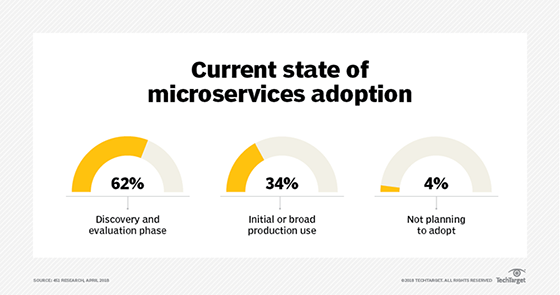
Microservices are applications coupled into a collection of services that implement business functionalities. To maintain certain software functions on a more regular basis, developers can break out software components -- or services -- to form a distributed system. This makes the technology a good fit for cloud-based or on-premises data center deployments because it is an architectural pattern that can be tailored to developers' needs. Docker and automation software, which many data center admins are already familiar with, are key enablers of microservices. "Microservices do not require gold-plated, expensive, dedicated hardware," said Ian McCarty, president and CEO of PhoenixNAP Global IT Solutions. "They can run on shared clusters on top of commodity [data center] hardware, which is easier to scale and replace." To get a microservices application up and running, admins must use an infrastructure with a low-latency connection. Admins can turn to automation software to ease deployment, because they must deploy each application component separately -- often within containers.


An interview with Robert Fink, Architect of Foundry, Palantir’s open data platform

The notions of open platforms and open architectures originate in hardware design and describe systems in which different components can be added, replaced, or upgraded independently. Buyers like this idea, because it reduces vendor lock-in and increases flexibility and negotiating power. This translates more or less directly to software platforms: they are considered open if their inter-component APIs follow open standards, are well documented, and can be accessed by any party through readily available tools and libraries. This is in contrast to closed APIs whose internals are undocumented and often intentionally cryptic. Moreover, use of closed APIs is typically governed by license agreements that prohibit third-party tools, or even outright ban any external use of its data. At Palantir, we lean on open standards like JSON and HTTP for APIs, and open-source technologies for data storage and transformations. In the early days of computing, the majority of commercial platforms were closed (because, hey, who doesn’t like a good monopoly?) and this led to the siloed compute and data infrastructures that most IT organizations on this planet are still trying to unwind today.


What the device-as-a-service (DaaS) trend is all about

neon sign change management agent career promotion shift start begin by ross findon via unsplash
Initially, major OEMs (original equipment manufacturers), like Dell, Hewlett-Packard and Lenovo. That made sense, since a big part of PCaaS was the faster hardware replacement cycle inherent to subscriptions; computer makers were the most motivated to pitch such plans, especially when shipments stalled, then sank, in large part because consumers abandoned PCs. Although vendors like those named above remain major players, others are eager to get in on the action. Microsoft, for one. Its "Microsoft Managed Desktop," or MMD, will include the usual bits and pieces - although restricted to Microsoft's own hardware for now - but because Microsoft makes the operating system, it has some unique strengths: It runs Windows 10's update/upgrade servicing and it pulls a wealth of data from devices running the OS through its mandatory telemetry. Microsoft has the edge over computer makers in the device management parts of PCaaS. Telemetry is key, Gartner analyst Stephen Kleynhans agreed in an interview last week.


Manage Insider Threat Risk and Prevent ‘Big Brother’ Perception


Introducing the idea of insider threat risk management to your workforce and enterprise risk planning agenda can be challenging. Your insider risk management plan may be met with a lack of workforce understanding of proposed policy changes, concern that it is going to set up ‘security speed bumps’ that impede workflows, or fear that it will invade their privacy. This means that the onus is on you to determine how to get your organization’s risk management naysayers onboard your well-intentioned security vessel. How can your organization introduce the idea of insider risk management to the workforce with as much transparency and inclusivity as possible? I learned the importance of bringing the workforce onboard through years of counterintelligence and insider threat mitigation in government and industry. ... Remind them that the impacts of an insider incident transcend stock price and shareholder value and could put the physical safety of staff and personnel at risk.


Grasp container basics to plan enterprise adoption


Before container basics comes container history. Physical hardware systems have an inherent risk of inefficient use and the inherent benefit of application isolation. To address inefficiency, the IT industry adopted multitasking systems, which run several applications at once, but that simple form of resource sharing doesn't separate the applications enough. One app can contaminate the performance of other apps if it behaves badly, and attackers may even be able to breach security from one app to another. This tradeoff between isolation and efficiency is inherent in virtualization because of shared resources. Perfect security and performance management requires physical isolation in bare metal. Highest efficiency calls for multitasking OSes. Virtualization options fall between these extremes. Virtual machines (VMs) replicate the server, with a full OS and middleware. Hypervisor software manages and runs these VMs on physical resources.


A cybercrime epidemic drives business–and funding–to cybersecurity

The artificial intelligence company’s growth highlights the demand for sophisticated defenses against hackers as well as Europe’s increasing capacity to spin up top-tier tech companies. “What drives the valuation is our response to the things covered in the media,” said Darktrace CEO Poppy Gustafsson in an interview. The five-year-old tech company was created by University of Cambridge mathematicians, and its software is designed to monitor everything from cloud networks and internet-of-things devices to industrial control systems. Cyber security is in demand for good reasons. As more data is kept online, the potential for breaches is increasing. At the same time, more of our devices are connected to the internet, giving hackers new ways to snoop on corporate board meetings, spy on political activists, or even damage important utilities. Data theft costs companies an average of $3.9 million, while “mega breaches” of more than 1 million compromised records can cost businesses as much as $350 million, according to a study sponsored by IBM Security and conducted by the Ponemon Institute.


Scrum The Toyota Way


We have learned that agility is hard, really hard. There is also no such thing as an agile transformation. You fundamentally have to change your operating model, and undertake an organizational transformation to achieve the agility you desire. Scrum is but one item in the toolbox to help you do this. You also need a sense of urgency. If the C Suite don’t see a compelling reason to change, chances are you’ll actually make things worse by messing with the current condition, and the resistance to change will be overwhelming, with no mandate to actually achieve that change. I’ve also realized that not everyone needs to be agile! If you’re shipping concrete slabs you probably don’t need to do that in two-week sprints, as the need to change rapidly is not there. Sure, Scrum will give you a planning cadence, but Scrum was intended to work in complex domains and with complex systems. These are areas where a linear approach and fixed thinking are not effective.


5 Competencies You Need to Succeed in DevOps and Beyond

Culture is a set of shared organizational assumptions that are learned by teams as they resolve problems. Integrated into day-to-day norms, culture is considered the correct way to perceive, think, and feel in relation to problems. Within DevOps, culture evolves to include implementation of continuous improvement, the building of collective intelligence, and continuously react to feedback—all based on trust. Transformational change requires strong leaders at all levels with core competencies in visioning, strategic management, flexibility, and the ability to inspire others to innovate and perform. Learning a set of skills does not make you a leader; instead leadership embodies an innate passion, integrity, authenticity, and courage. DevOps, like any other environment, requires leaders who are champions – individuals with advanced communications skills, the knowledge of diverse cultures, and people who behave collaboratively when working in teams. DevOps leadership is not something you learn and just do.


Quote for the day:


"Create A Fun And Happy Environment And Success Will Soon Be A Guest." -- Gordon TredGold


Daily Tech Digest - September 26, 2018


The old ways of operating the network are rapidly becoming obsolete. The CLI is excellent for troubleshooting or small changes, but in increasingly complex infrastructure it is not feasible to only use the CLI. Today, the network is programmable. Key functions are automated. Network engineers are network programmers and need new tools and most importantly…APIs. That is where I make the comparison between networking engineers and Frodo Baggins – i.e. wishing that this change had not been thrust upon them “in their time.” I have talked to many engineers and hear their frustration and fears of being left out in that change or that their CCIE is not as valuable as before. However, although the change might be scary, there are a lot of reasons for not worrying too much. The first is that knowledge of key concepts is still immensely valuable and probably even more so than before. When your infrastructure is more complicated, taking the proper approach to designing a change – a network refresh, or defining how you are going to operate it – is more complicated.


Augmented intelligence: The clearest path to focused AI?

The Eye demonstrated great accuracy when detecting objects on the road, but the AI's primary task is to build behavior patterns. Of course, there are several parameters involved, such as where an event happens, under what conditions and whether there are pedestrians on the road. The system checks what's normal under these circumstances to what is currently happening, and if it is beyond a certain threshold, it will send an alert to all cars within that proximity. While access to information about every car on the road sounds like a privacy nightmare, Discoperi has already taken steps to ensure privacy as well as give users full control over their data by storing the data on a blockchain. Privacy might seem more like a problem for augmented intelligence because it involves human input, while artificial intelligence is theoretically fully autonomous. But due to the real shortcomings in AI, many companies have already used humans behind the scenes to complete AI's job where it failed, raising privacy concerns in AI.


Microsoft Adds Features to Teams, Beefs Up Security

Collaboration
Microsoft sees Teams as a critical interface to the entire line of Office 365 and Microsoft 365 services. Added to Office 365 commercial licenses 18 months ago, Teams has become the most rapidly adopted business application in Microsoft’s history, company officials revealed at Ignite, where the company said that 329,000 organizations now use Teams. It was at last year’s Ignite conference when Microsoft revealed its plans to integrate the Skype for Business Online voice, video, chat and screen-sharing capabilities into Teams. It was a surprising move since Microsoft had just rolled out Teams six months earlier. The entire set of communications capabilities in Skype for Business Online became available in Teams last month. Over time, Microsoft intends to depreciate Skype for Business; it hasn’t said when, but has signaled organizations to plan migration for existing customers with a call to action for partners to facilitate that planning. New Office 365 subscriptions now only include the Teams client – not Skype for Business – said Ron Markezich


Serverless Platforms Compared for Performance

Serverless providers charge for not just CPU, memory and number of requests, but also for network and storage. Providers differ in how they adjust memory for specific CPU requirements. AWS, for example, gives more CPU cycles (PDF) to instances with higher memory. Google follows a similar strategy, whereas Azure varies in how CPU is allocated with "4-vCPU VMs tending to gain higher CPU shares". Concurrent requests change the average response time of a function. For non-concurrent requests, the resource allocation remains almost same for all providers except for Google, where it varies around 30%. The compute time in AWS increased by 46% for concurrent requests when the same call was invoked 50 times at once. For Google and Azure it was 7% and 3% respectively, whereas it increased by 154% in IBM. Other tests reveal AWS to have the best performance in terms of concurrent execution.


What is XaaS? A way to inject agility into your digital business

What is XaaS? A way to inject agility into your digital business
XaaS evolved from the cloud services model, Loucks says. Seeking cheaper, more efficient ways to run IT, CIOs began adopting cloud for anything from email to CRM, to ITSM and business intelligence visualization, to compute, storage and even networking, via software-defined networks, says Loucks. XaaS describes on-demand services that achieve scale horizontally across the business. Seventy-one percent of 1,170 IT and line-of-business professionals Deloitte surveyed from large U.S. companies said that XaaS makes up more than half of their enterprise IT. Learning from their vendor partners along the way, savvy CIOs began co-opting XaaS best practices as their own blueprint for building and delivering new IT services to their business peers. "Rather than simply using flexible consumption models to cut costs and increase workforce efficiency, many organizations are adopting XaaS to transform digitally and become more agile," Loucks says in a new Deloitte report, "Accelerating agility with XaaS."


A look at the new Google cloud security tools and features

The first new Google cloud security feature introduced by GCP is known as shielded VMs. This feature allows customers to enable a virtual Trusted Platform Module -- or vTPM, as Google calls it -- that supports integrity validation for boot processes and the kernel of the VM, as well as logging all the integrity checks with the Google Stackdriver logging and monitoring service. There is no additional charge to use shielded VMs, which makes this a great opportunity to improve the resiliency and security of compute workloads in the Google cloud environment. GCP also has a number of powerful new features for container deployments. Containers require access to repositories to install and configure software packages. However, there are many known concerns and issues with trust validation and security for repositories and software distribution, particularly in open source environments. To aid in securing code registries and repositories, GCP now offers the Container Registry, a private registry in which approved Docker images can be stored. 


Edge computing is the place to address a host of IoT security concerns

Edge computing is the place to address a host of IoT security concerns
Placing a gateway between the industrial endpoints and the rest of a company’s computing resources lets businesses implement current security and visibility technology without ripping and replacing expensive and IIoT machinery. The edge model also helps IIoT implementations in an operational sense, by providing a lower-latency management option than would otherwise be possible if those IIoT endpoints were calling back to a cloud or a data center for instructions and to process data. Most of the technical tools used to secure an IoT network in an edge configuration are similar to those in use on IT networks – encryption, network segmentation, and the like. Edge networking creates a space to locate security technologies that limited-capacity endpoints can’t handle on their own. Mike Mackey is CTO and vice president of engineering at Atonomi, makers of a blockchain-based identity and reputation-tracking framework for IIoT security. He said edge computing adds an important layer of trust between a company’s backend and its potentially vulnerable IIoT devices.


First known malicious cryptomining campaign targeting Kodi discovered

Researchers discover malicious cryptomining campaign targeting Kodi
As it turns out, some cyber thugs actually decided Kodi would be a good malware distribution platform. Researchers at ESET detected the first publicly known cryptomining campaign launched via the Kodi platform. If you use add-ons to enhance your movie or TV viewing pleasure, then it is possible your Windows- or Linux-based Kodi has been secretly mining Monero for months and months. In fact, it may continue to do so unless you take action. After the XBMC repository for add-ons was shut down, ESET discovered the repository had been part of a cryptomining campaign that went back to December 2017. That repository was added to the Bubbles and Gaia add-on repositories in December 2017 and January 2018. ESET warned, “From these two sources, and through update routines of unsuspecting owners of other third-party add-on repositories and ready-made Kodi builds, the malware spread further across the Kodi ecosystem.”


Businesses that take humans with them on robotics journeys gain the most


While investing in automation and AI technologies can cut costs and increase productivity dramatically, there is more to be gained if organisations focus on up-skilling staff that are freed from the tasks being automated. The research looked at the differences in performance between organisations that exclusively focus productivity gains from technology and those that focus on the technology and the human workforce. It found that a hyper-productive environment can be achieved if organisations enable humans and robots work together. Chris Brauer, director of innovation in the Institute of Management Studies at Goldsmiths University, lead the research. “In the public discussion, there has been an assumption that [humanity and automation] are in conflict in that in pursuing higher levels of performance and productivity in an organisation through technology you would have to sacrifice humanity,” he said. “But this does not follow from anything we have learned.”


How a new generation of security firms is learning to protect blockchain code

Some unsafe code can be detected with automated analysis tools without much human intervention: If a contract allows any user to extract its funds, it’s probably a mistake, says Petar Tsankov, cofounder and chief scientist of ChainSecurity, a Swiss startup spun out from the prestigious technical university ETH Zurich. ChainSecurity has developed a tool called Securify, which can quickly spot and flag potential issues in Solidify code. But other bugs are only visible as flaws within the context of what a contract is actually supposed to do, meaning the first phase of a security audit often involves sitting down with developers to understand exactly what their contracts are hoping to accomplish. “Typically, there’s very informal documentation on what the contract is supposed to do,” says Tsankov. Then typically comes a mix of human analysis and automated tests to determine if it’s possible to get the contract to violate its specifications. Trail of Bits has developed a tool called Echidna that can quickly execute smart contracts with a variety of inputs, looking for ways to get the code to misbehave.


Quote for the day:


"Believe in yourself and all that you are. Know that there is something inside you that is greater than any obstacle." -- Christian D. Larson


Daily Tech Digest - September 25, 2018

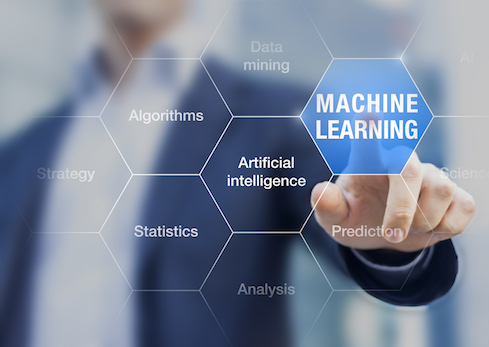
Machine Learning in Robotics - 5 Modern Applications
Imitation learning is closely related to observational learning, a behavior exhibited by infants and toddlers. Imitation learning is also an umbrella category for reinforcement learning, or the challenge of getting an agent to act in the world so as to maximize its rewards. Bayesian or probabilistic models are a common feature of this machine learning approach. The question of whether imitation learning could be used for humanoid-like robots was postulated as far back as 1999. Imitation learning has become an integral part of field robotics, in which characteristics of mobility outside a factory setting in domains like domains like construction, agriculture, search and rescue, military, and others, make it challenging to manually program robotic solutions. Examples include inverse optimal control methods, or “programming by demonstration,”which has been applied by CMU and other organizations in the areas of humanoid robotics, legged locomotion, and off-road rough-terrain mobile navigators.


WannaCry and NotPetya inspiring new attacks


Cyber crime is a business, and market forces, such as the rise in cryptocurrency values, will continue to shape where adversaries focus their efforts,” said Raj Samani, McAfee fellow and chief scientists. “Cryptomining malware is simpler, more straightforward, and less risky than traditional cyber crime activities – causing these schemes to skyrocket in popularity over the last few months. In fact, cryptomining malware has quickly emerged as a major player on the threat landscape. “Organisations need to remain vigilant to these threats – particularly in today’s cloud-first landscape, when many companies are seeing a rapid increase in cloud applications and environments to secure,” he said. To keep crypto-criminals at bay, Samani said businesses must find the right combination of people, process and technology to protect their assets, detect cryptomining threats and, when targeted, rapidly correct systems in the cloud and on-premise.


How Enterprises Can Scale their Machine Learning

Image: NicoElNino/iStockphoto
"To support the explosion of enterprise use cases, teams need to get bigger and, simultaneously, predictive analytics and machine learning tools need to support these teams as well as the larger community of business people, data engineers, software developers, and AI engineers." Forrester predicts that "massive machine learning automation is the future of data science because it will make data science teams exponentially more productive." The report says that the CRISP-DM process is too sequential and too manually iterative to perform the job. Tools to realize this future productivity will incorporate a few other elements as well. They need to integrate with software development and continuous integration tools. That's important for the AppDev teams to be able to use this work in their design, development and application deployment efforts. And second, these tools must keep up with open source innovations, such as deep learning, Forrester said.


How Java EE development has kept up with microservices


In 20 years, Java EE development has gone through several iterations and added many new features. For instance, open source projects, like Hibernate and Spring, were designed to sit on top of Java EE and address initial shortcomings with specifications, particularly in the area of persistence. "Java EE grew to include functionality from these projects to maintain its appeal to developers," said Simon Ritter, deputy CTO of Azul Systems, a Sunnyvale, Calif.-based company that develops runtime platforms for executing Java-based applications. "Likewise, when web services became a popular technology, Java EE was expanded to include this." Enterprise application development teams are still in the early stages of microservices architecture adoption. However, the Java EE specifications did not provide support in time, Ritter said. As a result, the Eclipse Foundation developed the MicroProfile specification outside the Java Community Process.


A CTO guide: Cyber security best practice tips

A CTO guide: Cyber security best practice tips image
“You need to make sure you’re on the latest technology and keep systems patched and up-to-date. The WannaCry was a good example of that. With many of the systems that got breached, the threat vector was a vulnerability that should have been patched.” “Organisations that keep their technology on the latest version and on the latest patch go a long way to keeping their systems protected. So, before I even start talking about advanced threat protection and some of the more clever sophisticated stuff, doing the basics right, getting that hygiene right is vitally important.” ... “The second aspect is that most breaches come via credential compromise of some form. It doesn’t come from a zero-day vulnerability on the backend, hacking a server. It comes from credential theft or some other form of brute force password guessing.” “There’s a variety of phishing attacks, and a breach often comes from compromise in the user credentials. Once the user credentials are compromised, then the attacker can traverse internally, laterally across the network and get access to more stuff.”


10 Ethical Issues Of Artificial Intelligence And Robotics

Existing laws have not been developed with AI in mind, however, that does not mean that AI-based product and services are unregulated. As suggested by Brad Smith, Chief Legal Officer at Microsoft, "Governments must balance support for innovation with the need to ensure consumer safety by holding the makers of AI systems responsible for harm caused by unreasonable practices". Policymakers, researchers and professionals should work together to make sure that AI and robotics provide a benefit to humanity. ... Should robots have rights? If we think of a robot as an advanced washing machine, then no. However, if robots were able to have emotions or feelings, then the answer is not that clear. One of the pioneers of AI, Marvin Minsky, believed that there is no fundamental difference between humans and machines, and that artificial general intelligence is not possible without robots having self-concious emotions.


Cities Paying Ransom: What Does It Mean for Taxpayers?


On September 1, Ontario’s Municipal Offices experienced a cyberattack that left their computers inoperable when Malware entered its systems and rendered its servers useless. The municipality was faced with paying a ransom to the attackers or face the consequences of being locked out of its systems. Per the advice of a consultant, the city paid an undisclosed amount of ransom to its attackers. ... Only a couple months earlier, the Town of Wasaga Beach in Ontario, faced the same issue and paid one bitcoin per server. It spent 11 Bitcoins, valued at the time at $144,000, to regain control of 11 servers. The town negotiated with the attackers to reduce the price to $35,000. After paying the ransom, Wasaga Beach assessed the damages to its city at $250,000 for loss of productivity and reputation. This scenario has become commonplace today. Cities, municipalities, and government agencies have all experienced ransom attacks. But ultimately taxpayers are the ones that pay the bill for these cyberattacks.


6 Ways To Set Expectations For Artificial Intelligence For Everyone In The Business

Artificial intelligence, in many ways, is a different animal from technology waves that have crashed through enterprises over the years. that have gone before. For starters, while some nontrivial investments need to be made to put AI in place -- including talent -- hard business results may not be so immediately apparent. Still, anyone who has spent time selling technology to the C-suite or board will recognize some of the challenges seen with AI, and apply some of that learning. With this in mind, Whit Andrews of Gartner has assembled a set of recommendations for selling AI to the business at large, along with an explanation of what's different this time around, and what's not. The challenge, he explains, is many AI approaches may take time to deliver to their full potential. This typically isn't how business units set their budget priorities. The challenge is to teach and encourage business leaders and end-users need to think big, and to think long-term when it comes to AI.


A new ARM-based server processor challenges for the data center

Ampere Computing, processor, data center, server
Ampere isn’t exactly starting from scratch. It acquired the X Gene Arm server processor business from MACOM, which in turn acquired that business from Applied Micro, which started out with its ARM server business back in 2011. The initial releases, the X-Gene 1 and X-Gene 2, weren’t terribly impressive; only eight cores running at 2.4 GHz. Work had begun on the X-Gene 3 chip, codename “Skylark,” but was not completed when the company got passed around. Once Ampere picked up the pieces, it ran with what it had. Ampere has given the X-Gene 3 chip, now known as eMAG, quite a boost. It has 32 cores running at 3.3GHz with L2 and L3 cache hierarchy, integrated SATA I/O ports and 42 lanes of PCI-Express 3.0 peripheral bandwidth across eight controllers. The chip also includes twice as many memory channels, eight per socket, which doubled the memory capacity up to 1TB per socket and doubled the bandwidth. Ampere also has a 16-core chip in the works.


Why Was Equifax So Stupid About Passwords?

In this day and age, there is no excuse for developers to be using live data in testing environments. Substituting fake but lookalike data isn't a new concept. Arguably, it dates from the heady "greeking" days of the 1500s, when printers and typesetters began using "lorem ipsum" - nonsensical Latin - as placeholder text. Enter the digital age: Developers need to ensure that when users enter a value into a 16-digit credit card field, for example, their application handles it correctly. But playing with live data in production environments increases the risk that insiders or outsiders who shouldn't be seeing the data might have access to it. That's why numerous development tools offer the ability to obfuscate and mask live data, as well as to generate "good enough" test data that developers can use instead. European IT market researcher Bloor Research notes that such tools are available from a variety of vendors, including CA, Compuware, Dataprof, Dataguise, Delphix, HPE, IBM, Imperva Camouflage, IMS Privacy Analytics, Informatica, Mentis, Net 2000, Protegrity and Solix.


Quote for the day:


"To work effectively as an agent of change in a pluralistic society, it is necessary to be able to connect with people different from oneself." -- Beverly Daniel Tatum


Daily Tech Digest - September 24, 2018

10 signs you aren't cut out to be a cybersecurity specialist

ankarbistock-877825762.jpg
Closely related to a cybersecurity world in a constant state of change is the need to continuously learn and implement new and better protection strategies. The balance between the attackers and the cybersecurity specialist is in a constant state of flux, with battles going to the side with the better technical know-how. Is this environment, a cybersecurity specialist must be willing and able to learn and adapt to new ways of approaching security. If you have ever uttered the words, "But that is the way we have always done it," with any measurable sincerity, you may not be cut out for cybersecurity. ... Building on the pressures of chaotic change and continuous learning is the relentless pressure to keep an enterprise safe from intrusion. Cybercriminals and their orchestrated attacks on enterprise information technology infrastructure never rest, never take a day off. There is no respite from the stress of knowing your systems. The systems you are responsible for protecting are under constant attack.


For telecom, media, and entertainment companies, the key may be understanding how such a versatile technology can be applied directly to their businesses. There are now clear paths to implementation—and clear reasons to commit funding. To do so effectively can require an understanding of what blockchain really is and where it can add value. Is blockchain really necessary? After all, plenty of already-existing solutions aim to help telecom and M&E companies mitigate losses, streamline intercompany transactions, and open new strategic revenue opportunities. The answer likely lies with the technology’s strength in several areas: Blockchain is cryptographically secure, it automatically records events and transactions into an immutable and shared ledger, it can be built to execute rules, and it is a decentralized and distributed network of peers that all vote to majority validation of any changes. For the telecom industry, blockchain can manage and limit fraud, secure user identities, support next-generation network services, and help deploy IoT connectivity solutions.


Blockchain-Powered Ads To Disrupt Digital Marketing


The first thing that makes blockchain possible is the absence of any kind of central authority governing the policy. If there is no single source dictation value, then this value is consensual. With no authority capable of diminishing the value of a digital asset, its value is as high as we agree it to be. As of now, we are used to perceiving these scarce digital assets as money because it makes the most sense when we speak of a finite valuable entity. However, this concept reaches far beyond money. We are fine with replicated digital media and tend to tolerate even our own digital identities being duplicated across various platforms. Now imagine every single thing you produce or every datum shared being delivered in a manner where ownership is mathematically verified. This reshapes the concepts of ownership and property as we knew it. ... Ads have to guarantee customer satisfaction. They have only one shot on goal with no right to miss. If the ads do hit the spot, everything else about the product marketing has to be on point in order for the product to be effective.


3 Drivers Behind the Increasing Frequency of DDoS Attacks

In an increasingly politically and economically volatile landscape, DDoS attacks have become the new geopolitical tool for nation-states and political activists. Attacks on political websites and critical national infrastructure services are becoming more frequent, largely because of the desire and capabilities of attackers to affect real-world events, such as election processes, while staying undiscovered. ... DDoS attacks carried out by criminal organizations for financial gain also demonstrate cyber reflection, particularly for global financial institutions and other supra-national entities whose power makes them prime targets, whether for state actors, disaffected activists, or cybercriminals. While extortion on the threat of DDoS continues to be a major threat to enterprises across all vertical sectors, cybercriminals also use DDoS as a smokescreen to draw attention away from other nefarious acts, such as data exfiltration and illegal transfers of money.


Is predictive maintenance the 'gateway drug' to the Industrial IoT?

Is predictive maintenance the 'gateway drug' to the Industrial IoT?
According to Nelson, the drivers of IIoT growth vary by markets: “Oil companies and mining companies are looking at ways to reduce their costs and insulate themselves from commodity price fluctuations, utilities want to incorporate renewables, pharma and food manufacturers are building smarter supply chains and reduce the risk of recalls.” As that growth continues, the IIoT market is entering a new stage, Nelson said. ... While it’s easy to get distracted by shiny new IoT devices, enterprises know that infrastructure is often more important — and that’s even more true in the IIoT. Nelson explained it this way: “A smart thermostat might cut your power by 2 percent, or $150 a year. In comparison, a paper manufacturer that cuts energy by 1 percent could save $15 million. Likewise, increasing production by 1 percent can mean $1 million at a mine or metal processing facility.” Given the potential of the IIoT, I asked Nelson why the rise of IIoT remains overshadowed by consumer IoT? One reason, Nelson said, is the phenomenal success of consumer plays like Uber, Facebook, and the iPhone.


5 key lessons for organizations still struggling with GDPR

The new legislation enhances an individual’s right with regards to their persona data. One of these rights is the right of erasure (right to be forgotten) – i.e. to request that a company erases the data it holds on them. And, since this needs to happen within a reasonably short timeframe, on receipt of a request, it is important that you know where data is stored in your processes, and you have a procedure in place to delete that data so that you can respond quickly and efficiently. A lot of commonly used business software does not support the selective deletion of data, so this will be a good time to have a discussion with your IT people to see if, and how the right of erasure can be supported. To avoid potential fines and reputational damage for non-compliance, you may also need to introduce automated workflows for triggering and confirming the erasure of data from multiple internal and external systems. There are several good products on the market that will support workflow management, and some will even create a webpage for your clients to exercise their rights.


What is a data lake? Flexible big data management explained

What is a data lake? Flexible data management explained
A data lake holds a vast amount of raw, unstructured data in its native format, whereas the data warehouse is much more structured into folders, rows, and columns. As a result, a data lake is much more flexible about its data than a data warehouse is. That’s important because of the 80 percent rule: Back in 1998, Merrill Lynch estimated that 80 percent of corporate data is unstructured, and that has remained essentially true. That in turn means data warehouses are severely limited in their potential data analysis scope. Hiskey argues that data lakes are more useful than data warehouses because you can gather and store data now, even if you are not using elements of that data, but can go back weeks, months, or years later and perform analysis on the old data that might have been otherwise discarded. A flexibility-related difference between the data lake and the data warehouse is schema-on-read vs. schema-on-write. A schema is a logical description of the entire database, with the name and description of records of all record types.


For Hackers, Anonymity Was Once Critical. That’s Changing.

A number of Defcon attendees, citing various concerns about privacy, still protect their identities. Many conceal their real names, instead using only pseudonyms or hacker aliases. Some wear fake beards, masks or other colorful disguises. But new pressures, especially for those who attend Defcon, seem to be reshaping the community’s attitudes toward privacy and anonymity. Many longtime hackers, like Ms. Sell and Mr. Wyler, have been drawn into the open by corporate demands, or have traded their anonymity for public roles as high-level cybersecurity experts. Others alluded to the ways in which a widespread professionalization and gamification of the hacking world — as evidenced by so-called bug bounty programs offered by companies like Facebook and Google, which pay for hackers to hunt for and disclose cybersecurity gaps on their many platforms — have legitimized certain elements of the culture.


Better security needed to harness the positive potential of AI

security positive potential ai
“Enterprises must make the needed investments in well-trained staffs capable of putting AI safeguards in place,” said Rob Clyde, ISACA Board Chair. “As AI evolves—consider the likely proliferation of self-driving vehicles, or AI systems designed to reduce urban traffic—it will become imperative that enterprises can provide assurance that the AI will not take action that puts people in harm’s way.” In addition to today’s common uses for AI, such as virtual personal assistants and fraud detection, there are high hopes that AI and machine learning have the potential to cause major breakthroughs across various industries, including helping to accelerate medical research, improving crop yields and assisting law enforcement with cases. These advancements, though, are unfolding so quickly that it often is challenging for organizations to develop the expertise needed to put safeguards in place to account for security vulnerabilities and ethical implications.


Freelance workers targeted in new malware campaign

Freelancers, casual workers, and international contractors often rely on emails and communication over the Internet not only to retain relationships with employers but also to find and secure new opportunities. As a result, emailed communication and document attachments are commonplace. Unfortunately, it is this standard practice that cybercriminals are now targeting. MalwareHunter Team's campaign email examples do not appear suspicious. They ask the intended victim to check an attached document and then get back to the attacker with a "cost and time frame." However, a keen job hunter in one case on Fiverr opened the document and discovered that the file was malicious. In another example on Freelancer, the cybercriminal sent over "My details.doc," which also contained malware. In the latter example, the intended victim had an antivirus solution installed and so the infection was detected. The security researcher says "dozens of people" have been contacted this way on the platforms.


Quote for the day:


"You cannot always control what goes on outside. But you can always control what goes on inside." -- Wayne Dyer


Daily Tech Digest - September 23, 2018

IKEA designs future autonomous cars that work as hotels, stores, and meeting rooms


Once cars can finally drive themselves, we’ll have more time to enjoy the journey and do other, much more interesting stuff instead. At least that’s the concept behind some of the designs below, developed by retail giant IKEA’s “future living lab,” SPACE10, based in Copenhagen. The design studio/research lab came up with designs for autonomous vehicles that would be extensions of our homes, offices, and local institutions. Some of its seven ideas, shown below, are almost practical. Who can’t imagine autonomously driven cafés or pop-up stores? In fact, they already exist in California—in the form of self-driving cars that have groceries stocked in their back seats. Other concepts might need a bit more thought, particularly the ones that SPACE10 envisions delivering resources to underserved communities. It may be difficult, for example, for a self-driving health clinic to bring medical care to truly remote areas.


New Enterprise Decision Making - Dealing with Uncertainty


Decision making is heavily hampered by internal politics, since failure may lead to a loss in the strength of individuals and departments. You need to be aware of these limitations and be prepared to act on them. If the domain that the decision is going to affect is under scrutiny due to recent and relevant failures, then certainty needs are likely to be higher than if the domain had recently risen to resolving a particularly important challenge. On the other hand, if the department has a new leader, it may be more open to experiments and be willing to try out new things. Most of the companies that are shareholder-centric are risk averse and require special attention when dealing with uncertainty. Typically higher in older companies, company Inertia has a lot to do with the type of organization and the type of industry in which the company operates. Traditional industries have typically more inertia, while a startup has low inertia. Inertia is also affected by legislation and regulation.


Atlassian shops size up OpsGenie buy, Jira for incident management


With Jira Ops, the company will integrate OpsGenie and other IT alert management tools, which include PagerDuty and xMatters, with Slack for incident visibility and collaboration, as well as Atlassian Statuspage to issue customer updates directly from Jira tickets. Jira Ops will create incident timelines and automatically spin up separate Slack channels for frontline IT pros and for business stakeholders as companies respond to critical incidents. Competitor VictorOps also claims to do incident response timelines, and savvy customers can create similar connections between incident management tools with scripts. Zipcar has already integrated OpsGenie with Jira's ticketing system via scripting tools. But the company's engineers said they will watch how the product develops over the next year before they invest further. "It will take time before Jira Ops will be better than what people already have," said Andy Rosequist, director of IT operations at the Boston-based car-sharing service


These Robots Run, Dance and Flip. But Are They a Business?


As the rest of the tech industry has focused on robotic cars and other contraptions that can navigate roads and warehouse floors, Boston Dynamics, which is owned by the Japanese conglomerate SoftBank, has plugged away at machines that can walk through the woods, into a rock quarry, across your home. “These robots can climb stairs,” said Sangbae Kim, a professor of mechanical engineering at the Massachusetts Institute of Technology who is working on similar machines. “They can jump on a table.” But if driverless cars are still years away from everyday use, walking robots are even further. Though these machines are shockingly lifelike, they have limits. They can handle some tasks on their own, like spotting a curb and climbing over it. But when moving across unfamiliar spaces, like the parking lot outside the Boston Dynamics lab, they still need a human guide. In person, they stumble and fall more often than they do on YouTube. Walking through the Boston Dynamics lab, Mr. Raibert, 68, wore bluejeans and a Hawaiian shirt, as he does nearly every day. He wants to build robots that can do what humans and animals can do.


Small, flexible plaster uses ultrasound waves to monitor blood pressure inside your body

screen-shot-2018-09-21-at-10-48-10.png
The patch is made from a thin sheet of silicone elastomer. A small lattice of electronic "islands" connect to each other, each of which contains electrodes and tiny devices called piezoelectric transducers which produce ultrasound waves as electricity passes through them. These electronics are connected through a web of copper wires which are able to bend and stretch in order to conform to the texture and curves of human skin. The ultrasound waves are able to penetrate the body and record blood pressure readings as deeply as four centimeters below the outer layer of the skin. As blood vessels pulse, the movement of blood is recorded and converted into waveforms. "Each peak, valley, and notch in the waveform, as well as the overall shape of the waveform, represents a specific activity or event in the heart," the academics say. "These signals provide a lot of detailed information to doctors assessing a patient's cardiovascular health."


How Blockchain is Making It Easier for Fintech Companies to Scale Up


The most important foundation of any business is trust. Cryptography-based Blockchain eliminates third-party intermediaries as the trusted keeper. It will decrease the cost of overheads when parties interact with one another online without the requirement of middleman or central authority. Blockchain improves the processing speed of the transactions because it reduces the decision-making time across the board in financial companies with minimal human intervention. It reduces duplication that arises while keeping records, errors, and reconciliations and frauds, leading to quick settlement and payment. In case of an event such as earthquake, flood, or war at a location, the remaining Blockchain participants can accept a transaction. Blockchain helps financial institutions handle the issue of identity theft as users have full control over the transactions. It safeguards the merchant from risks involved in frauds as once performed the transactions cannot be changed and do not contain any important personal detail.


Data Protection Officer: GDPR Updates Profession

Data Protection Officer: GDPR Updates Profession
First of all, it is necessary to understand that the DPO must have legal knowledge. This conclusion follows directly from Article 39 of the European Regulations, which lists the tasks and missions of the DPOs. To a greater extent, they are, of course, lawyers. In addition, they should be lawyers who have strong management skills and due to technical expertise, that is, managers. Less often, the DPOs are IT experts who have only basic ideas about the law. However, this situation is typical of Western countries. The IT specialists dominate the personal data protection market, not the lawyers. Either way, large corporations, of course, prefer to hire some specialists to provide IT security and others for personal data protection. Small and medium businesses are trying to make a choice in favor of just one employee competent in both areas. Why does it happen? The answer lies on the surface: the GDPR places a wide variety of responsibilities on companies.


Digital agility for insurers: the key to future readiness


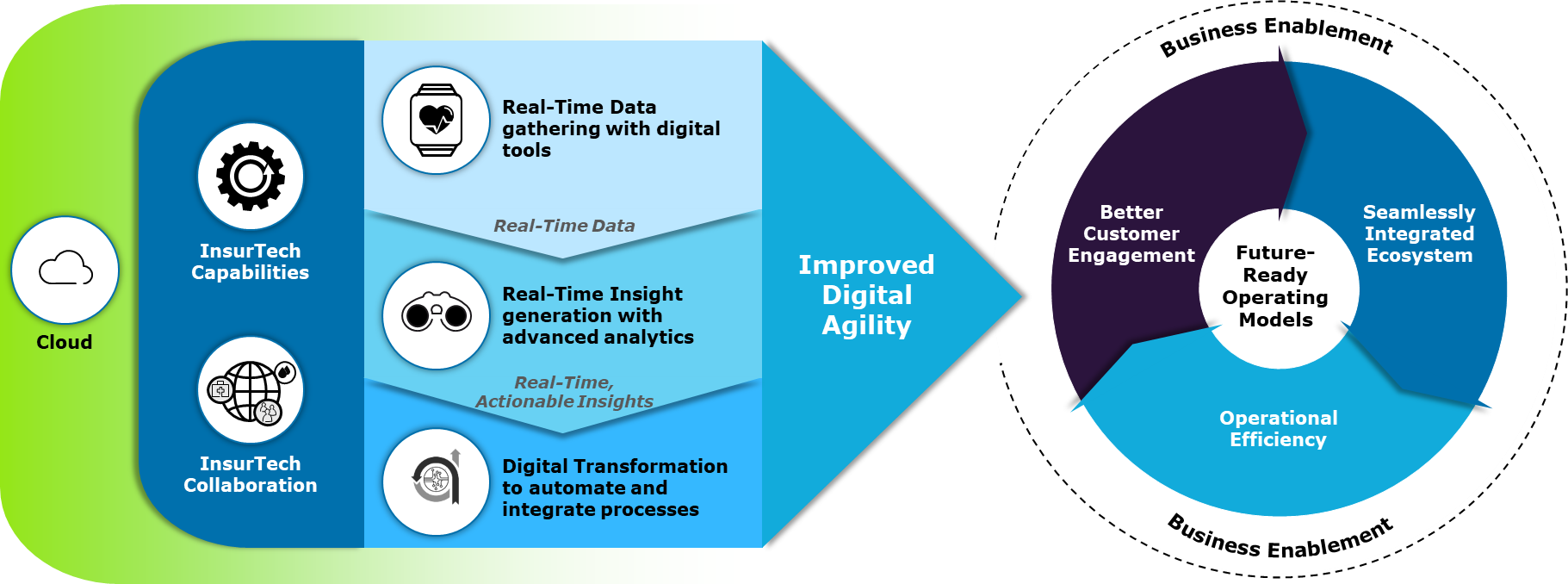
Digital agility includes practical development of digital capabilities for use within a nimble digital infrastructure that allows speedy insights and action. ... Insurers must develop InsurTech capabilities at all operational layers – real-time data capture at the customer interface supported by advanced analytics tools – to enable real-time insights and digital execution to allow streamlined operations. Real-time data capture can help insurers build a rich database of customer information and deep insights critical to the development of innovative, timely, and personalized offerings. However, for real-time data to be beneficial, it must be supported at the data layer with advanced analytics tools that can process it and extract actionable insights. Finally, digital execution and automation ensure that the real-time insights are acted upon promptly, as even small delays can have substantial consequences in today’s dynamic and competitive marketplace.


Why AI should assist humans, not replace them


When a customer is interacting with a brand to achieve a positive goal, such as shopping for a picnic or planning an event, it can be more appropriate to use AI such as chatbots for assistance, as the customers are more patient, have more time and may be more open to ideas that are generated as a result of their customer data. Millard said customers do sometimes require a human to be “ in the loop” to help them make a decision and ensure they aren’t overwhelmed by choice. Similarly, with customers in a neutral state, where their goal is often to perform a task they are obligated to do, Millard said, “This is where quick and easy solution comes in”, and some forms of AI may be helpful in speeding up this process. “The problem is when customers hit a problem or a state of anger and frustration,” she added. “Customers in a crisis are hard to automate.”


Ethics, a Psychological Perspective


With emerging technologies like machine learning, developers can now achieve much more than ever before. But this new power has a down side. Only recently, Facebook’s Chief Executive apologised in front of the European Parliament for not taking enough responsibility for fake news, foreign interference in elections and developers misusing people’s information. Google then announced its Pentagon AI project, triggering a dozen resignations from its development teams. When writing code, where does your responsibility start? And where does it end? Are your only options to stay and get on with it or quit? When we talk about ethics - the principles that govern a person's behaviour - it is impossible to not talk about psychology. One major field has contributed the most when it comes to researching this subject: Social Psychology, or the study of human behaviour in social situations. It aims to explain why we behave in a certain way in certain circumstances.


Quote for the day:


“When we are no longer able to change a situation, we are challenged to change ourselves.” -- Viktor E. Frankl