Daily Tech Digest - August 15, 2022

How critical infrastructure operators can secure OT data

OT data is foundational to critical areas of operations – a breach to OT systems can risk core business process operations and expose critical data. There is still some maturity required among organisations in prioritising backup and data protection as part of their organisation’s security posture and planned response to a cyber attack. Based on research we did in April 2022 across the UK, US and Australia of over 2,000 IT decision-makers and SecOps professionals, only 54% of IT decision-makers said backup and data protection was a top priority and a crucial capability, while only 38% of SecOps respondents said the same. Many organisations focus on “protect controls” to reduce the likelihood of a breach, but they also need to look at security controls that limit the impact of a breach. This means ensuring your recovery capabilities can meet aggressive recovery time and point objectives, so that you can resume business operations while minimising the impact of a ransomware attack.


Uber Open-Sourced Its Highly Scalable and Reliable Shuffle as a Service for Apache Spark

Spark is shuffling data on local machines by default. It causes challenges while the scale is getting very large (about 10,000 nodes on Uber Scale). At this scale of operation, major reliability and scalability problems happen. One main challenging area in using Spark at Uber scale is system reliability. Machines are generating terabytes of data to shuffle every day. This causes disk SSDs to wear out faster while they are not designed and optimized for high IO workloads. SSDs are designed to work generally for 3 years but in heavy Spark shuffling operations, they are working for about 6 months. Also, lots of failures happen for shuffling operations which decreases system reliability. The other challenge in this area is scalability. Applications could produce lots of data that could not be fitted on a single machine. It causes a full disk exception problem. ... To resolve the mentioned issues, engineers at Uber architected and designed Remote Shuffle Service (RSS) as shown in the following diagrams. It solves the mentioned reliability and scalability problems in the common Spark shuffling operation.


SMS-Based Multi-Factor Authentication: What Could Go Wrong? Plenty

“We call it smishmash because it’s a mashup of techniques,” explains Olofsson. “SMS for two-factor authentication [2FA] is broken. This is not news; it’s been broken since the inception. It was never intended for this use. We’ve been spoofing text messages since as long as we’ve been hacking. It’s just that now we’re seeing weaponization.” Text messages have a higher implicit trust than email scams, and hence a higher success rate, he notes. Olofsson reviewed several newsworthy breaches involving smishing and 2FA, including a major theft of NFTs from OpenSea. “We see a huge increase in the number of smishing attacks,” he says. “How many of you have got an unsolicited text in the last week? Your phone numbers are increasingly being leaked.” "What we have done [is combine] a search of the clear-net and darknet to create a huge database," says Byström. "Doing this research, we got so much spam,” adds Olofsson. "Even ‘do you want to buy the Black Hat attendee list?’ We got the price down below $100."


Sloppy Use of Machine Learning Is Causing a ‘Reproducibility Crisis’ in Science

Kapoor and Narayanan warn that AI’s impact on scientific research has been less than stellar in many instances. When the pair surveyed areas of science where machine learning was applied, they found that other researchers had identified errors in 329 studies that relied on machine learning, across a range of fields. Kapoor says that many researchers are rushing to use machine learning without a comprehensive understanding of its techniques and their limitations. Dabbling with the technology has become much easier, in part because the tech industry has rushed to offer AI tools and tutorials designed to lure newcomers, often with the goal of promoting cloud platforms and services. “The idea that you can take a four-hour online course and then use machine learning in your scientific research has become so overblown,” Kapoor says. “People have not stopped to think about where things can potentially go wrong.” Excitement around AI’s potential has prompted some scientists to bet heavily on its use in research. Tonio Buonassisi, a professor at MIT who researches novel solar cells, uses AI extensively to explore novel materials. 


Why edge is eating the world

The edge is a distributed system. And when dealing with data in a distributed system, the laws of the CAP theorem apply. The idea is that you will need to make tradeoffs if you want your data to be strongly consistent. In other words, when new data is written, you never want to see older data anymore. Such a strong consistency in a global setup is only possible if the different parts of the distributed system are joined in consensus on what just happened, at least once. That means that if you have a globally distributed database, it will still need at least one message sent to all other data centers around the world, which introduces inevitable latency. Even FaunaDB, a brilliant new SQL database, can’t get around this fact. Honestly, there’s no such thing as a free lunch: if you want strong consistency, you’ll need to accept that it includes a certain latency overhead. Now you might ask, “But do we always need strong consistency?” The answer is: it depends. There are many applications for which strong consistency is not necessary to function. One of them is, for example, this petite online shop you might have heard of: Amazon.


How To Protect Yourself With A More Secure Kind Of Multi-Factor Authentication

According to the Cybersecurity and Infrastructure Security Agency, “Multi-factor authentication is a layered approach to securing data and applications where a system requires a user to present a combination of two or more credentials to verify a user’s identity for login.” When we log into an online account, we’re often aiming to thwart an attacker or hacker using extra layers of verification — or locks. ... First, let’s talk about the marketing of MFA. If your MFA provider touts itself as unhackable or 99% unhackable, they are spouting multi-factor B.S. and you should find another provider. All MFA is hackable. The goal is to have a less hackable, more phishing resistant, more resilient MFA. Registering a phone number leaves the MFA vulnerable to SIM-swapping. If your MFA does not have a good backup mechanism, then that MFA option is vulnerable to loss. ... Multi-factor authentication is more securely accomplished with an authenticator app, smart card or hardware key, like a Yubikey. So if you have an app-based or hardware MFA, you’re good, right? Well, no. 


Met Police ramps up facial recognition despite ongoing concerns

Russell acknowledges that there are exceptional circumstances in which LFR could be reasonably deployed – for instance, under the threat of an imminent terrorist attack – but says the technology is ripe for abuse, especially in the context of poor governance combining with concerns over the MPS’s internal culture raised by the policing inspectorate, which made the “unprecedented” decision to place the force on “special measures” in June 2022 over a litany of systemic failings. “While there are many police officers who have public service rippled through them, we have also seen over these last months and years of revelations about what’s been going on in the Met, that there are officers who are racist, who have been behaving in ways that are completely inappropriate, with images [and] WhatsApp messages being shared that are racist, misogynist, sexist and homophobic,” she said, adding that the prevalence of such officers continuing to operate unidentified adds to the risks of the technology being abused when it is deployed.


Many ZTNA, MFA Tools Offer Little Protection Against Cookie Session Hijacking Attacks

The researchers recently examined technologies from Okta, Slack, Monday, GitHub, and dozens of other companies to see what protection they offered against attackers using stolen session cookies to take over accounts, impersonate legitimate users, and move laterally in compromised environments. ... Okta described such attacks as an issue for which it was not directly responsible. "As a web application, Okta relies on the security of the browser and operating system environment to protect against endpoint attacks such as malicious browser plugins or cookie stealing," Mesh quoted Okta as saying. Most of the other vendors that Mesh contacted about the issue similarly distanced themselves from any responsibility for cookie theft, reuse, and session-hijacking attacks, says Netanel Azoulay, co-founder and CEO of Mesh Security. "We believe that this issue is the complete responsibility of the vendors on our list — including IdP and ZTNA solutions," Azoulay insists. 


Edge computing: 4 pillars for CIOs and IT leaders

By definition, edge computing sort of takes the notion of a centralized IT network environment and shatters it into hundreds or even thousands (or more) of smaller environments. Picture the classic image of a room full of servers, but now every server on every rack sits in its own room – or in many cases no room at all, but on an oil rig or manufacturing floor or cell tower. Almost regardless of your edge use cases, it’s going to entail moving lots of the stuff that has long been the domain of IT – infrastructure/compute, devices, applications, data – away from your IT environment, however that’s currently defined. Properly managing all of that stuff requires some forethought. “You’re probably going to have a lot of devices out on the edge and there probably isn’t much in the way of local IT staff there,” says Gordon Haff, technology evangelist, Red Hat. “So automation and management are essential for tasks like mass configuration, taking actions in response to events, and centralized application updates.”


CIOs Turn to the Cloud as Tech Budgets Come Under Scrutiny

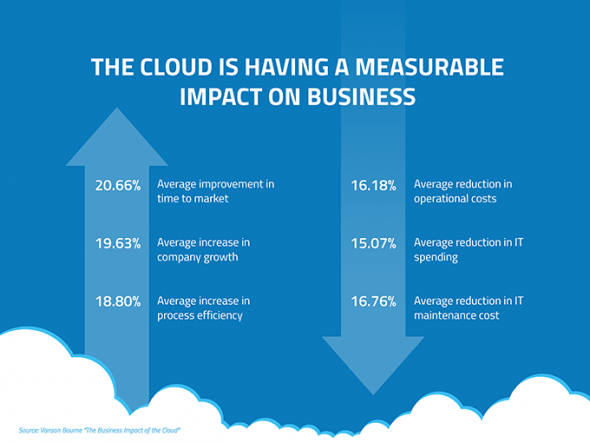
Although investment in cloud tech is booming, CIOs should also be keeping a critical eye on managing cloud costs, which can quickly spiral out of control. To ensure that cloud costs are properly controlled, it is important for CIOs to have tools that enable them to tightly monitor and act on unused resources -- there are no cost benefits if these idle resources remain on the cloud balance sheet. JupiterOne CISO Sounil Yu says the engineering team should shut down these resources soon after they become idle and rebuild the resources through automation when they are needed again. “CIOs should enforce this routine because in addition to reducing costs, it improves the overall resiliency of the organization to unexpected failures since it forces engineers to practice rebuilding regularly,” he says. Dennis Monner, chief commercial officer at Aryaka, agrees cloud investment is going up, and points out there are two parts of this. “First, CIOs need to understand their true cloud costs versus bringing it back in-house, which also introduces risk and expenses,” he said. “This needs to be a true apples-to-apples comparison.”


Quote for the day:

"Leadership is a matter of having people look at you and gain confidence, seeing how you react. If you're in control, they're in control." -- Tom Landry

Daily Tech Digest - August 14, 2022

Identity crisis: Artificial intelligence and the flawed logic of ‘mind uploading’

We can think of the copy as a digital clone or twin, but it would not be you. It would be a mental copy of you, including all of your memories up to the moment your brain was scanned. But from that time on, the copy would generate its own memories inside whatever simulated world it was installed in. It might interact with other simulated people, learning new things and having new experiences. Or maybe it would interact with the physical world through robotic interfaces. At the same time, the biological you would be generating new memories and skills and knowledge. In other words, your biological mind and your digital copy would immediately begin to diverge. They would be identical for one instant and then grow apart. Your skills and abilities would diverge. Your knowledge and understanding would diverge. Your personality and objectives would diverge. After a few years, there would be significant differences. And yet, both versions would “feel like the real you.” This is a critical point – the copy would have the same feelings of individuality that you have. 


It’s Time to Normalize Cyberattack Data

The hope is that as an open standard, it will be adopted and used with existing security standards and processes. Then, as developers and users incorporate OCSF into their products and processes, security data normalization will become simpler and less burdensome. This, in turn, will enable security teams to do better at analyzing attack data, identifying threats, and defending their organizations from cyberattacks. Ultimately, John Graham-Cumming, Cloudflare’s CTO, said in a statement, “Every business deserves a simple, straightforward way to analyze and understand the security landscape — and that starts with their data. By participating in the OCSF, we hope to help the entire security industry focus on doing the work that matters instead of wasting countless hours and resources on formatting data.” I hope this is true. I hate wasting time. And time is one thing we never have enough of when we’re dealing with a security problem. If OSCF can succeed in its aims, it will be a major step forward in dealing with large-scale security problems.


3 Expert-Backed Strategies for Boosting Your Entrepreneurial Energy

Entrepreneurs are a special breed of overthinkers. We're constantly making decisions, so we have to think fast on our feet. But we also must take the time to weigh our options out properly. And so we think up all possible scenarios: the good, the bad and the ugly. This used to be one of my biggest hurdles when starting. What if this client falls through? What if users aren't satisfied with our product? What if we can't attract enough attention and be sustainable? What will I do? My mind was my biggest enemy. Consequently, after a long night of tossing and turning, I'd wake up unmotivated to start the day. Here's the thing I've learned since: energy thrives on confidence. And confidence only comes when you believe in your abilities. As co-authors Linda Bloom, L.C.S.W., and Charlie Bloom, M.S.W.. write in Psychology Today, "Self-trust is not trusting yourself to know all the answers, nor is it believing that you will always do the right things," they explain. "It's having the conviction that you will be kind and respectful to yourself regardless of the outcome of your efforts."


4 Flaws, Other Weaknesses Undermine Cisco ASA Firewalls

"If you have access to the virtual machine, you have full access inside the network, but more importantly, you can sniff all the traffic going through, including decrypted VPN traffic," Baines says. "So, it is a really great place for an attacker to chill out and pivot, but probably just sniff for credentials or monitor the traffic flowing into the network." Baines discovered the issue when he was investigating the Cisco ASDM to get "a level set on how the GUI (graphical user interface) works" and pull apart the protocol, he says. A component installed on administrators' systems, known as the ASDM launcher, could be used by attackers to deliver malicious code in Java class files or through the ASDM Web portal. As a result, attackers could create a malicious ASDM package to compromise the administrator's system through installers, malicious Web pages, and malicious Java components. The ASDM vulnerabilities discovered by Rapid7 include a known vulnerability (CVE-2021-1585) that allows an unauthenticated remote code execution (RCE) attack, which Cisco claimed was patched in a recent update, but Baines discovered it remained.


A Shift in Computer Vision Is Coming

Is computer vision about to reinvent itself, again? Ryad Benosman, professor of ophthalmology at the University of Pittsburgh and an adjunct professor at the CMU Robotics Institute, believes that it is. As one of the founding fathers of event-based vision technologies, Benosman expects that neuromorphic vision — computer vision based on event-based cameras — will be the next direction computer vision will take. “Computer vision has been reinvented many, many times,” Benosman said. “I’ve seen it reinvented twice at least, from scratch, from zero.” Benosman cited the shift in the 1990s from image processing with a bit of photogrammetry to a geometry-based approach and then to today’s rapid advance toward machine learning. Despite those changes, modern computer-vision technologies are still predominantly based on image sensors — cameras that produce an image similar to what the human eye sees. According to Benosman, until the image-sensing paradigm is no longer useful, it holds back innovation in alternative technologies. The development of high-performance processors, such as GPUs, delay the need to look for alternative solutions and thus have prolonged this effect.


What’s the Go programming language really good for?

Go has been compared to scripting languages like Python in its ability to satisfy many common programming needs. Some of this functionality is built into the language itself, such as “goroutines” for concurrency and threadlike behavior, while additional capabilities are available in Go standard library packages, like Go’s http package. Like Python, Go provides automatic memory management capabilities including garbage collection. Unlike scripting languages such as Python, Go code compiles to a fast-running native binary. And unlike C or C++, Go compiles extremely fast—fast enough to make working with Go feel more like working with a scripting language than a compiled language. Further, the Go build system is less complex than those of other compiled languages. It takes few steps and little bookkeeping to build and run a Go project. ... Go binaries run more slowly than their C counterparts, but the difference in speed is negligible for most applications. Go performance is as good as C for the vast majority of work, and generally much faster than other languages known for speed of development.


Ex-CIA security boss predicts coming crackdown on spyware

Protecting individuals' privacy is something all of us — including elected officials — should be very concerned about, Mestrovich said. "I would expect, going forward, there will be either executive orders or legislation passed to ensure that the civil liberties and the rights that we all expect to data privacy and privacy of our own activities are kept sacrosanct," he added. As a CISO himself, ransomware is top of mind. "Ransomware is a huge threat to just our economic viability," Mestrovich told us, citing a Cybersecurity Ventures forecast that global cybercrime costs to grow by 15 percent per year over the next five years, reaching $10.5 trillion annually by 2025. "Clearly, the cyber criminals have monetized the theft of data or depriving an organization use of its data," Mestrovich said. "Until we can do something to prevent the economic gain that they have from the theft of data or the denial of an organization's access to his data. This is only going to increase"


Urgent security warning issued as hackers shift ransomware attacks to small businesses

The Director of the NCSC Richard Browne said that in the past these groups typically focussed on larger organisations. However they have now shifted focus to smaller entities. “We have been dealing with the threat of ransomware for some time; however, we have seen a noticeable change in the tactics of criminal ransomware groups, whereby rather than largely focussing on Governments, critical infrastructure and big business, they are increasingly targeting smaller businesses. “This is a trend that has been observed globally, and Ireland is no exception with several businesses becoming victims of these groups in the past number of weeks,” he said. Richard Browne said the letter sent to IBEC by the NCSC and GNCCB has outlined guidance for small companies and how they can deal with the attack. “Whilst we appreciate that many business owners are understandably nervous of the threat ransomware poses, there are some straightforward security measures that can be put in place to ensure that an organisations data and systems remain secure,” he added.


Computer Vision and Deep Learning for Agriculture

AI applications can analyze weather and soil conditions, water usage, and risk of diseases to help farmers reduce the risk of crop failures by providing valuable insights like the right time to sow seeds, right crop/seed choices. Detecting plant diseases, weeds, and pests beforehand can reduce the use of chemicals like herbicides and pesticides and bring cost savings. Many companies have started using robots that can eliminate 80% of the volume of the substances generally sprayed on the crops and bring down the expenditure on herbicides by 90% Further, the use of AI in harvesting, picking, and vacuum apparatus can quickly identify the location of the harvestable produce and help determine the proper fruits. The Strawberry Harvest is a classic example. ... With satellite imagery and weather data, AI applications can analyze the market trends, like which crops are in demand and which are more profitable. This helps the farmers to increase their revenue by guiding them about future price patterns, demand level, type of crop to sow for maximum benefit, pesticide usage, etc.


Rethinking Web Application Firewalls

The vulnerabilities are so numerous now and cloud native applications have larger attack surfaces with no way to mitigate vulnerabilities using traditional means, Tiperneni explained. “It’s no longer sufficient to throw out a report that tells you about all the vulnerabilities in your system,” Tiperneni said. “Because that report is not actionable. People operating the services are discovering that the amount of time and effort it takes to remediate all these vulnerabilities is incredible, right? So they’re looking for some level of prioritization in terms of where to start.” And the onus is on the user to mitigate the problem, Tiperneni said. Those customers have to think about the blast radius of the vulnerability and its context in the system. The second part: How to manage the attack surface. In this world of cloud native applications, customers are discovering very quickly, that trying to protect every single thing, when everything has access to everything else, is an almost impossible task, Tiperneni said.


Quote for the day:

"The Leadership Seduction of storytelling invites self-pity, exaggerates one's importance, and encourages inaction." -- Catherine Robinson-Walker

Daily Tech Digest - August 13, 2022

CEOs need to start caring about the cybersecurity talent gap crisis, new report shows

The focus on cybersecurity needs to start in the boardroom, Morgan argues. CEOs at every Fortune 500 company and midsize to large organization should advocate to have those with cybersecurity experience on their board, he says. “That could be the [chief information security officer (CISO)] or an outside executive with real-world cybersecurity experience,” he says. “Do it now to protect your organization, not after a breach or hack to protect your reputation.” By 2025, 35% of Fortune 500 companies will have board members with cybersecurity experience, according to the Cybersecurity Ventures report, and by 2031 that will climb to more than 50%. By comparison, last year just 17% of Fortune 500 companies had board members with this type of background. The thought is that if cybersecurity is a regular boardroom discussion, then the importance of it will trickle down to the rest of the organization, Morgan says, becoming a part of the company’s DNA. He encourages executives to take cybersecurity as seriously as profit and loss discussions.


5 elements of a successful digital platform

“Data is everything for us,” Rotenberg said. Making sure you have high quality data and that you can constantly iterate on it and improve it should be a priority when building a platform. “That’s something that we spend a lot of time on because it’s such an important foundation,” she said. One way the company uses it is to personalize the experience for clients. For example, this might mean using digital credentials. It may sound simple, but having the right mobile phone number means that Fidelity can interact with clients in the way they want. “Sometimes it’s the most basic things that actually make the biggest difference,” she said. ... There are a lot of different ways that fintechs and Fidelity could work with or against each other. “A fintech could be our competitor, our vendor, [or] we could be a client as well, and vice versa,” she said. Successful fintechs, in particular, usually have gotten something right in understanding a “customer friction” that other firms haven’t figured out. “They go deep in understanding the friction, they create success, and then they scale outward,” Rotenberg said. 


Top cybersecurity products unveiled at Black Hat 2022

Software composition analysis (SCA), static application security testing (SAST), and container scanning are the latest capabilities in the new update to the Cycode supply chain security management platform. All new components will add to Cycode’s knowledge graph, which structures and correlates data from the tools and phases of the software development life cycle to allow programmers and security professionals to understand risks and coordinate responses to threats. A key function of the knowledge graph includes the ability to coordinate security tools on the platform to do tasks such as identifying when leaked code contains secrets like API keys or passwords, in order to reduce risk. Support for vulnerability detection and protection across runtime environments including Java Virtual Machine (JVM), Node.js, and .NET CLR, has been added to the Application Security Module in the Dynatrace software and infrastructure monitoring platform. Additionally, Dynatrace has extended its support to applications running in Go, a fast-growing, open-source programming language developed at Google.


Google Cloud and Apollo24|7: Building Clinical Decision Support System (CDSS) together

For any health organization that wants to build a CDSS system, one key block is to locate and extract the medical entities that are present in the clinical notes, medical journals, discharge summaries, etc. Along with entity extraction, the other key components of the CDSS system are capturing the temporal relationships, subjects, and certainty assessments. ... The advantage of AutoML Entity Extraction is that it gives the option to train on a new dataset. However, one of the prerequisites to keep in mind is that it needs a little pre-processing to capture the input data in the required JSONL format. Since this is an AutoML model just for Entity Extraction, it does not extract relationships, certainty assessments, etc. ... The major advantage of these BERT-based models is that they can be finetuned on any Entity Recognition task with minimal efforts. However, since this is a custom approach, it requires some technical expertise. Additionally, it does not extract relationships, certainty assessments, etc. This is one of the main limitations of using BERT-based models.


In a hybrid workforce world, what happens to all that office space?

Amy Loomis, a research director for IDC's worldwide Future of Work market research service, said her research isn't showing an overall reduction in square footage, but said more companies my be subleasing unused space or reconfiguring it to better suit hybrid work. The key phrase is "space optimization," which is being done to attract new employees and for environmental sustainability. In North America, 34% of companies surveyed by IDC said that was a key driver in real estate investments. “What we’re seeing is repurposing of office space,” Loomis said. “Organizations are investing in office spaces and making them as dynamic, reconfigurable, and sustainable as possible. "So, yes they left that building during the pandemic and predominantly went remote and hybrid, but as people are going forward into the new office space, it’s more likely to be multi-purpose, multifunction, multi-tenant,” Loomis added. Many real estate developers now see the value in repurposing spaces to include not only room for commercial use, but also space for retail and even residential housing.


6 Myths About the Cloud That You Should Stop Believing

Cloud migration is an enticing prospect, but you’ve probably heard what happens when you have too much of a good thing. Going the cloud route and cloud data integration doesn’t have to mean dumping your entire business at once. Despite the recognized short and long-term benefits, the expense alone would be too daunting a concept for many. Cloud migration can take many forms. Implementing a hybrid approach to cloud technology is considerably more common, with many people starting with a particular area or application (such as email) and working their way up. ... True, virtualization is a vital technology for cloud computing, but virtualization doesn’t equally cloud computing. While virtualization is mainly concerned with workload and server consolidation to reduce infrastructure costs, Hadoop in cloud computing encompasses much more. Consider that, according to an IOUG (Independent Oracle User Group) study of its members, cloud clients are embracing Platform as a Service faster than Infrastructure as a Service.


Department of Health investigates bias in medical devices and algorithms

As part of an independent review on equity in medical devices, led by Margaret Whitehead, WH Duncan chair of public health in the Department of Public Health and Policy, the government is seeking to tackle disparities in healthcare by gathering evidence on how medical devices and technologies may be biased against patients of different ethnicities, genders and other socio-demographic groups. For instance, some devices employing infrared light or imaging may not perform as well on patients with darker skin pigmentation, which has not been accounted for in the development and testing of the devices. Experts are being asked to provide as much information as possible about biases in medical devices. Along with information about the device type, name, brand or manufacturer, the independent review is also looking to gather as much detail as possible about the intended use of medical devices that may be discriminatory, the patient population on which they are used, and how and why these devices may not be equally effective or safe for all the intended patient groups.


Event-Driven Architectures & the Security Implications

It’s never easy to crush a rock, but it is far from impossible. Taking an existing application from traditional architecture to EDA requires extensive resources and development time. Also, while building something new can be exciting, reworking the old may be unstimulating, especially when it still seems functional. This can sometimes result in postponing such a drastic transition. However, this transformation can be quite enlightening—both from a technical and an operational viewpoint. Developers perceive EDA to be inherently complex, especially for businesses with intricate processes. There is the concern that EDA does not effectively capture critical aspects of a company and that monitoring and debugging the system is more challenging because of the lack of a centralized structure. However, this complexity does not simply disappear by opting for a different architecture. Monitoring and debugging are easier with suitable tracing tools that are tailor-made for distributed systems, proper encapsulation of individual services, and an in-depth understanding of the functions of individual services and the events that should trigger them. 


Composing the future of banks

The biggest challenge for any bank is how do they reach such a vision of composable banking when over decades of investment in technology automation they have hundreds or thousands of systems, with some sharing data through extraction, some integrated through technical bridges and maybe a few more modern solutions through APIs? Integration is one of the biggest headaches a bank has, so the idea of composable banking would be simpler if every system had APIs, but that just isn’t the real world. In addition to this, not every process is based around system-to-system interaction. There are processes that require human intervention, often managed by business process automation software. Sometimes these processes are necessary because systems integration may not be possible without them: the swivel chair problem of keying data from one system into another. In the last few years, artificial intelligence (AI) has been added to the mix to make the routing of flows smarter. As always, technologists are great at solving individual processes, but business tends to be more complex, and it is only much later we start to see a bigger picture.


How to Hire the Best AI & Machine Learning Consultants

AI and machine learning consultants consist of qualified and experienced AI designers, developers, and other experts that help design, implement, and integrate AI solutions into the company’s business environment. They can provide, develop, and advise on a wide range of AI capabilities like predictive analytics, data science, natural language processing (NLP), computer vision, process automation, voice-enabled technology, and much more. These consultants can evaluate the potential of data, software infrastructure, and technology to effectively deploy AI systems and workflows. When bringing on the best AI and machine learning consultants, you should look for specialists that go beyond just data science. Most AI and machine learning projects involve far more than data science. For example, they involve engineering and aggregating data and formatting it to teach an AI system. These types of projects also often involve hardware, wireless, and networking, meaning the consultant should be an expert in the cloud and the Internet of Things (IoT).


Quote for the day:

"The great leaders are like best conductors. They reach beyond the notes to reach the magic in the players." -- Blaine Lee

Daily Tech Digest - August 12, 2022

7 best reasons to be a CISO

As they become key players in wider business matters, modern CISOs can develop their credentials and knowledge beyond hands-on security skills and abilities. “Our role is continuously expanding,” Smart says. “Today, I am also responsible for governance, risk and compliance, which opens up more avenues into setting a cohesive plan and strategy for security and risk management that impacts the whole business,” she adds. “The modern CISO can make use of a wide range of skills, beyond technical cybersecurity, and explore more areas of interest within the business,” Stapleton agrees. “As the cybersecurity landscape is constantly changing, there are always new and fascinating topics to dive into, so a CISO is never bored.” “The Disabled CISO,” the Twitter handle of an anonymous CISO of a global company, tells CSO that security now touches every part of the business, driving CISOs to positively engage with and learn from all corners of a company. “I love getting out and joining colleagues at the coalface. To protect the business, I need to understand how we operate and the challenges that presents to colleagues ..."


Should We Build Quantum Computers at All?

Using quantum computers, physicists want to simulate and unearth unusual states of matter; pharmaceutical companies want to discover new types of drugs; auto companies want to paint cars faster. While no one has conclusively demonstrated the utility of quantum computers, their potential seems endless. Emma McKay offers a provocative counterpoint. In the face of climate change, societal inequality, and other global problems, McKay, a PhD student in education at McGill University, thinks that perhaps we don’t need to develop quantum computing at all. “I haven’t seen any reasons compelling enough to me,” McKay, who uses they/them pronouns, told APS News. ... Maybe quantum annealers [a type of quantum computer] will be able to help us manage resources more efficiently. But it appears that people are most interested in using these types of technology to optimize things that suck, like optimizing traffic for single-person vehicles when widely available public transit, via buses and cycling infrastructure, is possible and the best way to reduce congestion and pollution from private vehicles in a city.


Are Application-Specific Chains the Future of Blockchain?

As decentralized application (dApps) developers gain more experience working with blockchains, some are running into limitations created by the parameters of blockchain architecture. Ethereum, for instance, allows for applications to be created via smart contracts, but does not allow for automatic execution of code. It also maintains fairly strict control over the way consensus and networking functions are exposed to those applications. To overcome these limitations, some developers are turning to application-specific blockchains — purpose-built and tuned for their specific application needs, and colloquially called “appchains.” One of the more popular options for building appchains is the Cosmos SDK, due to built-in composability, interconnected blockchains, and the ability for developers to maintain sovereignty over their blockchain. We’ve covered Cosmos in the past, including a developer academy for learning to build in the Cosmos Network and the addition of Interchain Security, which allows multiple Cosmos blockchains to align around common security protocols while maintaining sovereignty.


A Long-Awaited IoT Reverse Engineering Tool Is Finally Here

The tool was specifically designed to elucidate internet-of-things (IoT) device firmware and the compiled “binaries” running on anything from a home printer to an industrial door controller. Dubbed FRAK, the Firmware Reverse Analysis Console aimed to reduce overhead so security researchers could make progress assessing the vast and ever-growing population of buggy and vulnerable embedded devices rather than getting bogged down in tedious reverse engineering prep work. Cui promised that the tool would soon be open source and available for anyone to use. “This is really useful if you want to understand how a mysterious embedded device works, whether there are vulnerabilities inside, and how you can protect these embedded devices against exploitation,” Cui explained in 2012. “FRAK will be open source very soon, so we’re working hard to get that out there. I want to do one more pass, internal code review before you guys see my dirty laundry.” He was nothing if not thorough. A decade later, Cui and his company, Red Balloon Security, are launching Ofrak, or OpenFRAK, at DefCon in Las Vegas this week.


Is cloud computing immune from economic downturns?

First, and most important, many businesses now consider IT spending to be directly reflected in the value built within the enterprise. IT systems are no longer just for tactical uses such as processing transactions. Instead, cloud systems are becoming the business itself. The businesses disrupting their markets are doing so with their own unique innovations. They can only create these innovations by developing core IT systems using digital transformation processes and cloud computing. IT is no longer a cost center but an investment that needs to be nurtured. This new outlook is seen in manufacturing companies invested in supply chain automation using cloud-based artificial intelligence capabilities and cloud-based blockchain to lower costs and increase productivity. It’s seen in businesses that are entirely based on technology offerings, such as ride-sharing or residence-sharing applications. Many investors and company executives now believe software will define the future of business. IT is the engine that can build and use these systems; thus it’s a budgetary line item that boards and executives are reluctant to touch.


Cybersecurity and Technology Industry Leaders Launch Open-Source Project to Help Organizations Detect and Stop Cyberattacks Faster and More Effectively

"Every business deserves a simple, straightforward way to analyze and understand the security landscape – and that starts with their data," said John Graham-Cumming, CTO at Cloudflare. "By participating in the OCSF, we hope to help the entire security industry focus on doing the work that matters instead of wasting countless hours and resources on formatting data." "At CrowdStrike, our mission is to stop breaches and power productivity for organizations," said Michael Sentonas, Chief Technology Officer, CrowdStrike. "We believe strongly in the concept of a shared data schema, which enables organizations to understand and digest all data, streamline their security operations and lower risk. As a member of the OCSF, CrowdStrike is committed to doing the hard work to deliver solutions that organizations need to stay ahead of adversaries." "Modern cybersecurity operations is a team sport, and products must integrate with each other to provide value beyond what a single product can. Sure, it's possible to make that happen with open APIs and mapping data structures, but development and processing resources are not infinite," said Mohan Koo, Co-founder and CTO with DTEX Systems.


What Are Your Decision-Making Strengths and Blind Spots?

What do you do when you face an important but complicated decision? Do you turn to experts? Dig for data? Ask trusted friends and colleagues? Go with your gut? The truth is many of us approach decision making from the same perspective over and over. We use the same tools and habits every time, even if the decisions are vastly different. But following the same strategy for every problem limits your abilities. To make better decisions, you need to break out of these patterns and see things differently, even if it is uncomfortable. First, you need to understand your own decision-making strengths and your blind spots: What is the psychology of your decision making? What is your typical approach? What mental mistakes or cognitive biases tend to get in your way? Looking inward to what you value can illuminate why you make decisions the way you do — and how you might be shortchanging yourself with your approach. From there, you can disrupt your traditional processes.


The Rise of the ‘Fractional’ CMO and the Role CIOs Play

Relay Network 's CMO Tal Klein points out the CIO/CDO has a vested interest in the interplay of technology and business. “Depending on what marketing pillar the fractional CMO is being brought onboard to address, the CIO may care a lot if the fractional CMO is being brought in to address operational issues like lead generation or lead-to-opportunity conversion velocity,” he says. That's because that kind of work relies heavily on technology and may impact changes to the company's CRM, website, or even communication infrastructure. “Whereas if the fractional CMO is being brought it to address messaging or market positioning, the CIO may have less of a vested stake in the recruitment efforts,” Klein says. Klein adds other than the obvious infrastructure work associated with supporting marketing operations, the CIO or CDO may own a lot of the outputs from marketing engagements like the compliance issues. These could arise from capturing customer information, security ramifications associated with new tools or processes, and ensuring whatever prospect or customer data marketing needs in order to run effective campaigns is available to them.


Hybrid work: What's changed – and what hasn't

With an overwhelming number of employees saying they want hybrid work to become the new normal, flexible work arrangements are becoming integral to an organization’s hiring and retention strategies. Pre-pandemic, industries that offered work flexibility were often considered somewhat progressive and it was more the exception than the norm. Today, hybrid work is standard in a growing number of fields. Still, there are challenges. ... With employees potentially using personal devices and home wi-fi connections, IT security teams must constantly consider new vulnerabilities and strategies to remain safe. Clear policies and practices, along with training programs that reflect these new procedures are essential for any successful hybrid work model. On the positive side, hybrid work reduces the impact on our environment. Working remotely means less paper consumption and energy used to maintain office buildings and less waste from consumable products in the workplace. It also provides team members an opportunity to practice sustainability when working at home.


Why SAP systems need to be brought into the cybersecurity fold

The problem is exacerbated by the variety of attack vectors that cybercriminals are leveraging to target mission critical SAP systems, with applications often remaining vulnerable for extended periods due to security patches not being applied in a timely manner. In February we saw the Cybersecurity and Infrastructure Security Agency (CISA) urge admins to patch SAP NetWeaver against a critical vulnerability that could facilitate a range of attacks and even lead to operational shutdown. In the very same month, of the 22 security notes or updates issued by SAP, eight were deemed “Hot News”. Four were updates but of the remainder, three had a maximum CVSS score of 10 and the fourth 9.1. SAP is prolific in its patching. However, patches cannot be applied directly to productive systems, requiring downtime which is often not an option for mission-critical systems. Even when a business upgrades to SAP S/4HANA, the pressure to go-live can see security side-lined. ... Indeed, the earlier mentioned report reveals that exploits are attempted within 72 hours of SAP publicly announcing patches, while new SAP environments are being identified and attacked online within as little as three hours.


Quote for the day:

"I have a different vision of leadership. A leadership is someone who brings people together." -- George W. Bush

Daily Tech Digest - August 10, 2022

Digital transformation: Top 5 skills you need to succeed

First and foremost, workers need to possess a basic level of digital fluency in order to successfully implement digital transformation. Depending on the industry, digital fluency can range from a basic knowledge of Microsoft Suite to an understanding of cloud computing. This necessity of this skill is company-wide; Harvard Business School Professor Tsedel Neeley points out that digital fluency adheres to a basic tenet of linguistics. "I often reference the 30% rule; borrowed from the study of languages, when applied to digital fluency, it dictates that the entire company needs to be, at least, at a 30% fluency baseline in order to move in a new digital direction effectively." ... An oft-neglected component of digital transformation is cybersecurity. According to research and marketing firm ThoughtLab, the average number of cyberattacks rose by 15.1% in 2021, as compared to 2022. The implications are sobering: Blockchain analysis firm Chainalysis reports that victims of ransomware spent almost $700 million paying off their attackers in 2020. As the digital transformation process accelerates, companies should cover potential risk areas by hiring those with cybersecurity skills.


You Are Blind to the Risks in Your Cloud — Why Companies Need Cloud Security Monitoring

The first is because they are ephemeral in nature and always growing. The second is that they rely on outdated, and ineffective tooling and processes. What once worked in the data center does not work for the cloud. This leads to blind spots and greater difficulty protecting data. In one study, 87% of respondents say they fear that a lack of cloud visibility is obscuring security threats to their company. And 95% blame visibility problems for application and network performance issues. Cloud security monitoring provides deep visibility across multiple environments for real-time threat discovery and remediation. ... Oftentimes, they discover cloud security gaps long before companies do. When this happens, bad actors can enter without detection. In most cases, the affected organization is completely unaware of the breach and vulnerability or misconfiguration that enabled it. ... With a robust cloud security monitoring solution in place, companies can discover and remediate misconfigurations like publicly exposed data stores, over-privileged Identities, lack of encryption, lack of auditing, or vulnerabilities in a workload in near real-time — before these issues can be exploited.


IT career roadmap: Cloud architect

Merritt has found a niche working with clients that might be startups or smaller or medium-size companies that are growing quickly. He notes that he can relate to their entrepreneurial values from having worked at a number of these kinds of companies himself. “I can switch roles according to what they need in the moment,” he says. “One week I'm coding, the next I'm doing high-level design, and the next may be a go-to-market plan. I thrive on this kind of change, and clients appreciate that I can switch roles as they require.” “I try to do work on hard problems that require heavy left-brain thinking, like coding or debugging, in the morning,” Merritt says. “Then get out for some physical exercise to clear my head. I try to push meetings, writing, and admin to the afternoon or evening.” For his current client, Merritt is doing a lot of architectural design work for security, infrastructure, and technology operations, including writing code, testing, and planning. “For some clients, I'm collaborating a lot all day,” he says. For others, “I just show results when I'm done,” he says. “I post milestones regularly, so clients can follow where I'm at with their project.


Identity is the killer context: 4 ways to stay in control

A good IDaaS solution should be able to apply identity-based, context-aware rules across an organization’s ecosystem to spot unauthorized behavior before it leads to a breach. It should be capable of operating autonomously to authenticate the right users based on contextual data – and block access based on suspicious activity. As organizations build larger and more complex cloud-based data landscapes, they should create a zero-trust environment which protects against threats on the inside as well as external risks. Through intelligent, autonomous defense technology, businesses can also implement systems that analyze far more than just a password or one-time code when determining whether a user is granted access to a system or data. IP addresses, past behavior, endpoint ID, geolocation and the time of day are just some of the data points that should be gathered and analyzed by an intelligent IDaaS platform to decide whether an access request should be granted. A modern approach to identity within the network can help to mitigate the risk of insider attacks.


Validate Your Cybersecurity Skills On The Range

The phrase “practice makes perfect” is misleading. There is no perfect. However, good practice makes you better and allows you to both hone and verify your skills—and one of the best ways to practice is on a range. If you want to get better at golf, you go to a driving range. If you want to improve your marksmanship, you go to a shooting range. You might not think of cybersecurity in the same way, but the same principle applies. Organizations today must defend a complex and expanding attack surface, against sophisticated adversaries and a daunting threat landscape. You certainly don't want to wait until you’re in the middle of an active cyberattack to learn the hard way that you’re not as prepared as you need to be. ... Likewise, a cyber range should also emulate a real-world IT environment as much as possible. It should deliver realistic network traffic and accurately emulate network, user, and threat actor behavior. Ideally, it should be an expandable, high-fidelity, open platform that provides flexibility to train in a variety of scenarios. A cyber range is multifaceted and enables a variety of training or validation scenarios. 


Traffic Light Protocol for cybersecurity responders gets a revamp

Interestingly, not everyone subscribes to the idea that the dissemination of cybersecurity information should ever be restricted, even voluntarily. Enthusiasts of so-called full disclosure insist that publishing as much information as possible, as widely as possible, as quickly as possible, is actually the best way to deal with vulnerabilities, exploits, cyberattacks, and the like. Full-disclosure advocates will freely admit that this sometimes plays into the hands of cybercriminals, by clearly identifying the information they need (and giving away knowledge they might not previously have had) to initiate attacks right away, before anyone is ready. Full disclosure can also disrupt cyberdefences by forcing sysadmins everywhere to stop whatever they are doing and divert their attention immediately to something that could otherwise safely have been scheduled for attention a bit later on, if only it hadn’t been shouted from the rooftops. Nevertheless, supporters of full disclosure will tell you that nothing could be simpler, easier or fairer than just telling everybody at the same time.


7 skills CIOs say are core to their jobs

Today’s technology leaders are a critical part of running any business and have been awarded a seat at the table to partner and drive progress. This requires that IT leaders not only understand the technology and the industry as they have in the past but also the value of building strong relationships and trust in the organization. To build these relationships and trust, I have significantly focused on listening and understanding different points of view. With business partners, this allows you to truly understand the business problems being brought to the team to solve and dig below the surface to ensure you provide robust solutions for the customer. This instills trust and confidence in the group. Equally important is listening to your team members, truly understanding the work they are engaged in and why it matters. When the team understands the end goal, it drives empowerment that leads to innovation and efficiency. It allows the team to contribute to the company’s success by being a part of the solution, not just executing against a predefined plan.


Cyberattack on NHS Vendor Already Offering Critical Lessons

The NHS situation is already offering several important lessons to other healthcare entities and their vendors, some experts say. "It is critical that an organization ensure that vendors that have network access or connectivity ensure that they have proper cyber hygiene protections in place," says retired supervisory FBI agent Jason G. Weiss, an attorney at law firm Faegre Drinker Biddle & Reath LLP. It is also critical to audit and ensure that the protections a vendor claims to have in place are verifiable and subject to testing to ensure the controls work appropriately, he adds. "One option is to require IT vendors to have established and proven cybersecurity frameworks in place such as ISO 27001, zero trust architecture or the National Institute of Standards and Technology's Cybersecurity Framework, just to name a few options," he says. In the meantime, threats, such as ransomware as a service, that are available to cyberthreat actors have greatly expanded the scope of potential threats that healthcare sector entities and their vendors face, he says.


Establishing a strong DevOps pipeline

“DevOps, and more recently DataOps, has pushed software development to the front of most corporate IT roadmaps. The rise of DevOps has been well explained as a new approach to make monolithic applications more agile and responsive to market and workforce changes,” says Ramachandran. “There are so many different patterns in data integration – from batch, to streaming and beyond – that a patchwork landscape of technologies has led to huge fragmentation. Data engineers without the right tools end up stressing about constantly pivoting to keep things in sight and steady, which is a drag on resources,” Ramachandran adds. “Therefore, DevOps is only useful if businesses can interpret and take action on the data. Organisations must have a strong pipeline in place to manage the incoming data and this is where application integration comes in. Having a powerful integration platform can automatically manage the DevOps data pipeline to provide better visibility and insights, real-time engagement with customers, and frictionless partner and supplier transactions.”


Rules of Thumb & Traps When Approaching Tech Stack Decisions

It happens in unhealthy organizational environments where developers build silos of knowledge. I have talked to a tech giant where a single engineer wrote essential services. He held the organization hostage to receive a better salary, did not get what he wanted, and left the company in the end. They had to rewrite it as nobody was able to support it. Silos, however, can occur naturally due to high pressure from management for fast delivery. In high-pressure environments, developers have to specialize in certain areas to be more efficient. So the de-silofication should be considered a complementary task while dealing with technical debt. Regardless of why such silos occurred, we should know how many of them are critical. I have witnessed huge companies that should not allow five specific engineers to travel on the same tram, as the risk of survival of the company if something happens with the tram is simply too high. If this is the case in your company, then it is time for you to think about doing things differently. Spread the knowledge, and implement a proxy strategy where other engineers will start taking tasks intended for the “tram-people.” 


Quote for the day:

"What great leaders have in common is that each truly knows his or her strengths - and can call on the right strength at the right time." -- Tom Rath

Daily Tech Digest - August 09, 2022

Deepfakes Grow in Sophistication, Cyberattacks Rise Following Ukraine War

The use of deepfakes to evade security controls and compromise organizations is on the rise among cybercriminals, with researchers seeing a 13% increase in the use of deepfakes compared with last year. That's according to VMware's eighth annual "Global Incident Response Threat Report," which says that email is usually the top delivery method. The study, which surveyed 125 cybersecurity and incident response (IR) professionals from around the world, also reveals an uptick in overall cybersecurity attacks since Russia's invasion of Ukraine; extortionary ransomware attacks including double extortion techniques, data auctions, and blackmail; and attacks on APIs. "Attackers view IT as the golden ticket into an organization's network, but unfortunately, it is just the start of their campaign," explains Rick McElroy, principal cybersecurity strategist at VMware. "The SolarWinds attack gave threat actors looking to target vendors a step-by-step manual of how to successfully pull off an attack." He says that keeping this in mind, IT and security teams need to work hand in hand to ensure all access points are secure to prevent an attack like that from harming their own organization.


How CFOs and CISOs Can Build Strong Partnerships

“There is no substitute for regular communication,” he said. “In addition to the formal, structured channels, I have found it most helpful to just talk to Lena and her team about key initiatives, any issues concerning them, and overall trends in security and the business more broadly.” If possible, conversations between the CISO and chief financial officer should also include the chief privacy officer, said Raj Patel, partner and cybersecurity practice leader at consulting firm Plante Moran. “Each has a role in protecting data and assets,” he said. “The conversation can start simply by scheduling a meeting around it.” These talks should take place at least quarterly, according to Patel, and should not be focused solely on the budget. “We don’t fight a war on budgets but do what we need to defend ourselves,” he said. “When our organizations get attacked every day, we are in a war. Many finance executives focus on a budget and at times compare it to prior budgets. When it comes to cybersecurity, the focus needs to be on risk, and allocating financial resources should be based on risk.”


The cloud ate my database

The first version of PostgreSQL was released in 1986, and MySQL followed less than a decade later in 1995. Neither displaced the incumbents—at least, not for traditional workloads. MySQL arguably took the smarter path early on, powering a host of new applications and becoming the “M” in the famous LAMP stack (Linux, Apache, MySQL, PhP/Perl/Python) that developers used to build the first wave of websites. Oracle, SQL Server, and DB2, meanwhile, kept to their course of running the “serious” workloads powering the enterprise. Developers loved these open source databases because they offered freedom to build without much friction from traditional gatekeepers like legal and purchasing. Along the way, open source made inroads with IT buyers, as Gartner showcases. Then the cloud happened and pushed database evolution into overdrive. Unlike open source, which came from smaller communities and companies, the cloud came with multibillion-dollar engineering budgets, as I wrote in 2016. Rather than reinvent the open source database wheel, the cloud giants embraced databases such as MySQL and turned them into cloud services like Amazon RDS.


Everything CISOs Need to Know About NIST

When it comes to protecting your data, NIST is the gold standard. That said, the government does not mandate it for every industry. CISOs should comply with NIST standards, but business leaders can handle risk management with whichever approach and standards they believe will best suit their business model. However, federal agencies must use these standards. As the U.S. government endorses NIST, it came as little surprise when Washington declared these standards the official security control guidelines for information systems at federal agencies in 2017. Similarly, if CISOs work with the federal government as contractors or subcontractors, they must follow NIST security standards. With that in mind, any contractor who has a history of NIST noncompliance may be excluded from future government contracts. The Cybersecurity Framework is one of the most widely adopted standards from NIST. While optional, this framework is a trusted resource that many companies adhere to when attempting to reduce risk and improve their cybersecurity systems and management. 


What Does The Future Hold For Serverless?

In production-level serverless applications, monitoring your application is paramount to your success. You need to know if you’ve dropped any events, where the bottlenecks are, and if items are piling up in dead letter queues. Not to mention you need the ability to trace a transaction end to end. This is an area that is finally beginning to take off. As more and more serverless production workloads are coming online, it is becoming increasingly obvious there’s a gap in this space. Vendors like DataDog, Lumigo, and Thundra all attempt to solve this problem - with pretty good success. But it needs to be better. In the future we need tools like what the vendors listed above offer, but with optimization and insights built-in like AWS Trusted Advisor. We need app monitoring to evolve. When we hear application monitoring, we need to assume more than service graphs and queue counts. Application monitoring will become more than fancy dashboards and slack messages. It will eventually tell us we provisioned the wrong infrastructure from the workload it sees.


Cybersecurity on the board: How the CISO role is evolving for a new era

More and more businesses agree. Gartner's survey of board directors found that 88% view cybersecurity as not only a technical problem for IT departments to solve, but a fundamental risk to how their businesses operate. That’s hardly surprising, given the recent history of hacks against private businesses. ... Ensuring the CISO has a seat on the board is one way of ensuring a company has a firm handle on how to handle these risks to the business. Even so, says Andrew Rose, resident CISO at security company Proofpoint, they should be careful in how they communicate their concerns. “The 'sky is falling' narrative can be used once or twice, but after that, the board will become a bit numb to it all,” Rose explains. Forcing boards to prioritise cybersecurity should instead be done through positive affirmation, argues Carson - and, ideally, be framed in how shoring up the company’s defences will help it perform better in the long term. “You need to show them how this is going to help the business be successful, how it will help employees to do their jobs better, provide value to the shareholders, [and] return an investment,” he says.


Neuro-symbolic AI brings us closer to machines with common sense

Artificial intelligence research has made great achievements in solving specific applications, but we’re still far from the kind of general-purpose AI systems that scientists have been dreaming of for decades. Among the solutions being explored to overcome the barriers of AI is the idea of neuro-symbolic systems that bring together the best of different branches of computer science. In a talk at the IBM Neuro-Symbolic AI Workshop, Joshua Tenenbaum, professor of computational cognitive science at the Massachusetts Institute of Technology, explained how neuro-symbolic systems can help to address some of the key problems of current AI systems. Among the many gaps in AI, Tenenbaum is focused on one in particular: “How do we go beyond the idea of intelligence as recognizing patterns in data and approximating functions and more toward the idea of all the things the human mind does when you’re modeling the world, explaining and understanding the things you’re seeing, imagining things that you can’t see but could happen, and making them into goals that you can achieve by planning actions and solving problems?”


IT Security Decision-Makers Struggle to Implement Strategies

While businesses still have many privileged identities left unprotected, such as application and machine identities, attackers will continue to exploit and impact business operations in return for a ransom payment, Carson said. "The good news is that organizations realize the high priority of protecting privileged identities," he added. "The sad news is that many privileged identities are still exposed as it is not enough just to secure human privileged identities." ... The security gap is not only increasing between the business and attackers, but also between the IT leaders and the business executives, according to Carson. "While in some industries this is improving, the issue still exists," he said. "Until we solve the challenge on how to communicate the importance of cybersecurity to the executive board and business, IT security decision-makers will continue to struggle to get the needed resources and budget to close the security gap." From Carson's perspective, that means there needs to be a change in the attuite at the C-suite level.


GraphQL is a big deal: Why isn’t it the industry standard for database querying?

What if you could leverage the expressive attributes of SQL and the flexibility of GraphQL at the same time? There are technologies available that claim to do that, but they are unlikely to become popular because they end up being awkward and complex. The awkwardness arises from attempting to force SQL constructs into GraphQL. But they are different query languages with different purposes. If developers have to learn how to do SQL constructs in GraphQL, they might as well use SQL and connect to the database directly. However, all is not lost. We believe GraphQL will become more expressive over time. There are proposals to make GraphQL more expressive. These may eventually become standards. But fundamentally, SQL and GraphQL have different world views, respectively: uniform backends vs. diverse backends, tables vs. hierarchical data, and universal querying vs. limited querying. Consequently, they serve different purposes. 


ESG: Building On Commitments On The E To Boost The S & The G

The first milestone could very well apply to enhancing data on anti-corruption. Challenges, of course, exist—corruption tends to be more political within organisations, and there can be hesitation to report on incidences of it. Measuring progress on reducing corruption is challenging, and indicators have to be carefully considered. For example, if the number of reported cases of crime increases in a given period, it could mean different things: anti-corruption mechanisms are working better and are well enough designed to identify corruption; people trust in the whistleblowing system and feel confident to report; or, indeed, corruption levels are going up. Nevertheless, academic scholarship and investment in anti-corruption are resulting in new indicators being developed (for example, the recently updated Index of Public Integrity [IPI] and the Transparency Index [T-Index] developed by Professor Alina Mungiu-Pippidi of the Hertie School). Collaboration with researchers and anti-corruption specialists could help design better data-collection methods.


Quote for the day:

"Leadership is a potent combination of strategy and character. But if you must be without one, be without the strategy." -- Norman Schwarzkopf