Daily Tech Digest - December 11, 2017

With smartphones like these, why do we need laptops?

sek smartphone expansion keyboard
In a nutshell, it’s a laptop powered by a smartphone processor running a desktop operating system. Specifically, the new Windows 10 laptops that will be built initially by HP, Lenovo and Asus are powered by the Qualcomm Snapdragon 835 processor. This is the same chip that powers high-end smartphones such as the Galaxy S8 and Note8. Microsoft has tweaked Windows 10 to run natively on ARM chipsets. Initially these devices will ship with Windows 10 S, Microsoft’s simplified and locked-down version of Windows. But customers will be able to upgrade free to Windows 10 Pro. While these laptops aren’t as powerful as other Windows laptops available, the smartphone processor inside them enables faster “always-on” LTE connectivity and “all-day” battery life. Microsoft calls the new category Always Connected PCs. This new kind of laptop will eventually prove valuable for certain types of enterprise users.


A layered approach to modern identity

With this shift towards mobile access at work, home and everywhere in between, comes a shift in both user expectations and behaviors. Instant access to information – anytime, anywhere – is the norm, which means our tolerance for friction has greatly diminished. This new attitude allows employees to be more productive and responsive, and even make more informed decisions. However, this digital era consumers have grown accustomed to is built on a house of cards from a security perspective. The apps consumers access at the touch of an icon or the imprint of a finger are all protected with passwords – and with more and more work and personal data moving online, hackers are having a heyday circumventing passwords to get at this information. Implementing more rigorous security seems like an easy next step, but many organizations are slow to adopt new security approaches due to the presumed negative impact on user experience.


An expert's guide to navigating the world of bitcoin


Cryptocurrencies are decentralized projects, so no one is really in charge. There’s no resolution process for disagreements. In August, a group of disgruntled users cloned the bitcoin blockchain and created a new coin called Bitcoin Cash, also known as Bcash. A few months later, people created another clone called Bitcoin Gold. This can be really confusing for new users, because if they download the wrong wallet or buy the wrong coin, they can lose their money. This is also a good thing, that no one is in charge, so people don’t worry about seeking permission before building new features. We’re seeing new developments in digital currencies that protect user privacy, and projects to bring Bitcoin to people without internet access. ... Bitcoin uses public key cryptography, where each bitcoin account has a public key and a private key. The public key is the bitcoin address and the private key is used to authorize transactions.


The Value of Logging within Cloud Native Applications


Software nowadays is no longer a single body of code you can build and test in isolation. Cloud, containers and all this tech obviously provides a lot of advantages, but at the cost of “understandability” (which is maybe the best way to view the term “observability”). The system components are increasingly scattered and remote, and less likely to be under your direct control. This evolution goes hand in hand with devops movement which has changed the way people think about software. There are a lot of teams now who now have “a system they care about”, as opposed to just building a piece of software and “throwing it over the wall to ops”. So “understanding” the behaviour of your software system is now largely only possible in the wild. Most software systems are a composition of other systems that out of your control. Think of your software system as an autonomous car: it has to be put on the road to be tested and improved, but in many ways we’re still building software as if we could test it in the lab.


Blockchain At Heart of Personal Data Monetization Service


“We’re allowing users to own their data by creating a personal secure vault where individuals can store their data, and if they choose to share it, they get compensated with tokens to view ads,” Silver says. “So instead of advertising on Facebook to target specific types of users, advertisers can target those users precisely the same way, if not better, by offering them compensation directly.” It’s a new business model for Algebraix, which spent several years developing something that it calls “the algebra of data.” This technology, which was spearheaded by Indiana math professor Gary Sherman, was originally created to speed up big data processing on cloud platforms or parallel clusters running Hadoop and Spark. Now Silver and company are looking to apply their mathematical techniques to workloads running on the Blockchain, the peer-to-peer transactional ledger that provides the technological foundation for cryptocurrencies.


Top 3 Reasons Why Companies Struggle With Agile & Scrum

why companies struggle with agile
Organizations need to understand that the methods that comprise “Agile” will not solve any pertinent issue in their culture or “the behavior of their employees.” Problems of distrust, lack accountability, respect, or fear of failure are all readily exposed by Scrum( Framework of agile). For instance, the goal of scrum is to produce a potentially releasable product increment in every sprint that often exposes the business to the “technical debt” due to past product development efforts that has not been paid off and lack of quality practices within software engineering. Most of the organizations are not able to deal with these surfacing issues. As they don’t have a neutral party to facilitate their exploration and resolution, most organizations tend to ignore them or consider Agile/Scrum liable to create them. ... In case that mirror reflects back, an organization does not like and blames the “mirror” rather than looking at the objectively provided feedback and evaluating to address it.


How can banks fight cybercrime?

Banks Cybercrime
Earlier this year, Nick Cook, the FCA’s head of data and information operations, said that the regulator was “still learning” how to support the adoption of automated, digitised compliance. The FCA reports that the number of successful cyber attacks has risen from 5 to 49 annually between 2014 and 2017. Bain believes that placing confidence into newer forms of security will benefit banks greatly: “Machine learning uses a compound set of algorithms to detect patterns and predict outcomes from a large amount of data online. As such, the self-learning capabilities and ability to recognise patterns and anomalies within them, makes AI and machine learning a great tool to detect cyber security threats.” Bains’ words ring true with Rob Grupperra, the FCA’s head of financial crime, who said that firms are trying to replace humans with AI to detect money laundering, as stated on the FCA’s website. Grupperra mentioned the positive effect such advanced technology would have on firms if they were to replace human monitoring with AI.


The Neuroscience Of Social Learning
The Neuroscience Of Social Learning
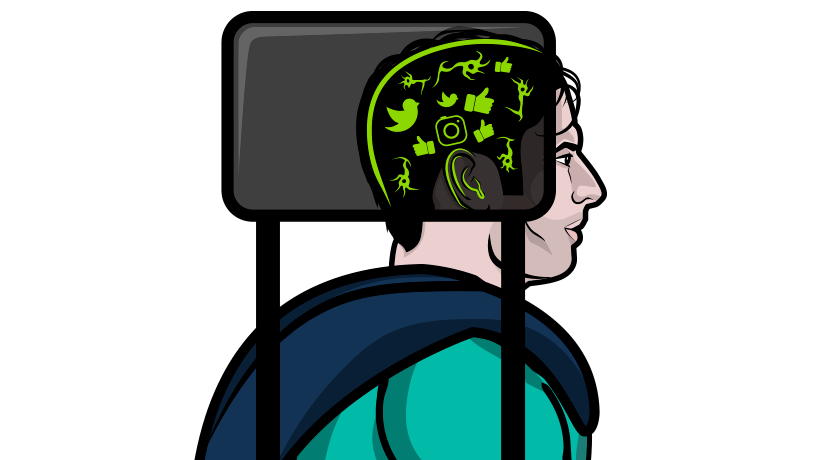
A growing body of research is showing that our need to connect socially with other people is as basic as any other survival need. In fact, UCLA professor Matthew Lieberman has challenged Abraham Maslow and his famous hierarchy of needs, placing social needs at the bottom of the pyramid. This makes them more essential than food and water! He explains how our brains have been evolving for millions of years to turn us into the social creatures we are today. That’s why creating social connections in learning can have such an impact. To our brains, it simply feels more natural than learning on our own. There is also a clear link between emotions and learning. Emotions are handled by the brain’s prefrontal cortex, and the same area is used for our memories. In fact, our working memory has been shown to be impaired by negative emotions, such as fear and anxiety. Psychologist Daniel Goleman says that by building social and emotional learning programs, we can pave the way for more effective learning.


One year later, enterprises still wrestle with Windows 7's cumulative updates

Windows logo with padlocks
Under the earlier patch scheme, users were able to set questionable updates aside - perhaps for further testing, maybe to give Microsoft more time to quash a just-found bug - even as they deployed all other updates. That isn't't possible under the all-or-nothing cumulative regime. Nearly 14 months later, enterprises labor to adapt. "It's elongated the patch cycle," said Chris Goettl, a product manager with client security and management vendor Ivanti, in an interview. He explained that many businesses were forced to postpone all patches, at least on some systems, because a code change included in the cumulative Windows 7 update had broken a critical application. "We're seeing a lot of customers who have not been able to roll out any updates until a problem was resolved, either by Microsoft or a third-party vendor," Goettl said.


Data Science is Plutonium Powerful: Dangerous and Handle With Care

Data Science is Plutonium Powerful: Dangerous and Handle With Care
It may seem that business intelligence (BI) is similar to data science (DS). Data science encompasses predictive analytics, machine learning, data mining, and even parts of what is considered to be artificial intelligence. It is routinely touted as improving revenue, profit, and ROI. It is often presented as automated and able to discover knowledge. These huge impacts and the automated nature of many of its applications make DS particularly dangerous. Business intelligence (BI), on the other hand, is used for processing and organizing business data so that it can be adeptly navigated by a competent human data analyst. It supports decision makers in making better and faster decisions. It is not typically relied upon for making decisions directly. Under the hood both BI and DS are about processing data to find patterns that can aid in making business decisions.


Quote for the day:

"Life is too short to waste time waiting for other people's approval on how you live it." -- Steve Maraboli

Daily Tech Digest - December 10, 2017

No CEO needed: These blockchain platforms will let ‘the crowd’ run startups


In the late ’90s, the Internet changed business. We also saw a new set of businesses emerge at that time that were only possible because of the arrival of that new technology. With the benefit of hindsight, it is clear that there was a difference between Barnes & Noble putting up a website and Amazon being a “digital native” organization, even if it was not obvious at the time. With DAOs, we are witnessing the birth of entirely new way of coordinating, aligning, and rewarding work. The blockchain-native entities built on platforms like Aragon, Colony, District0x, DAOStack, and the competitors that are bound to follow are going to pose a threat to incumbents who cannot react as quickly. More importantly, they will enable entirely new types of organizations that will change the world just as Facebook, Amazon, and Google did the last time around.


How tomorrow’s technologies can help the finance function of today

CFOs must reach across the enterprise to act as a catalyst for innovation, but many are hampered by fragmented, decentralized systems. Forty-eight percent of CFOs surveyed for PwC’s 2017 Global Digital IQ Survey cited outdated technology as an emerging barrier to successful digital initiatives, while 40 percent said data and technology integration would be the biggest challenge they would need to overcome. This IT fragmentation is in addition to the typical organizational and process issues most enterprise executives face. When finance professionals spend more time gathering data than analyzing it, or adjusting and reconciling entries manually rather than predicting future outcomes, they’re experiencing the effects of fragmentation. Intelligent automation helps alleviate the symptoms of IT fragmentation in three ways:


Alibaba’s Cainiao Tests Delivery Robots on ZJU Campus

Hangzhou ZJU Alibaba Logistics Robot Autonomous Delivery Vehicle Campus News AI Front View Storage Room
The idea behind that is to let the vehicle learn where the students commonly are at what time of the day to improve the efficiency of the solution. For example, it could move to a dorm area in the morning and remain stationary for students to take out their parcels as they pass by the vehicle in the morning on their way to the lecture, and drive to the cafeteria around lunchtime. It is planned that the students will also have the ability to communicate with the delivery vehicle via a smartphone app or a similar kind of web platform. The ZJU is the only university with such a test run right now and it’s in an early stage, but it could already be seen around the time of the Singles’ Day. The vehicle itself has been provided by Cainiao, a logistics subsidiary of Alibaba. Taking into account that both the university and Alibaba are located in the Chinese city of Hangzhou, it makes sense to deploy experimental vehicles in a ring-fenced environment.


Big Data and marketing – heady cocktails and crushing hangovers

Big Data Marketing
In most real worlds, they don’t acknowledge each other, perch on different stools, chug different drinks, and go their separate ways. The more data explodes, the more decision making practices remain the same. I was recently talking to a COO who described his role as the ability to take the most impactful decisions with the thinnest possible information. It is the nature of data – Big or Otherwise. We keep talking of social feeds and Facebook posts and mobile phone penetration. All of these make for great story telling. But unless the information extracted from these sources is explicitly useful taking a marketing decision – in talking to a customer, creating a campaign, or driving a cross-sell, it is of limited value. It is this absence of a meaningful connect between data sciences and marketing that we need to bridge.


Robots Will Transform Fast Food


Business owners insist that robots will take over work that is dirty, dangerous, or just dull, enabling humans to focus on other tasks. The international chain CaliBurger, for example, will soon install Flippy, a robot that can flip 150 burgers an hour. John Miller, the CEO of Cali Group, which owns the chain, says employees don’t like manning the hot, greasy grill. Once the robots are sweating in the kitchen, human employees will be free to interact with customers in more-targeted ways, bringing them extra napkins and asking them how they’re enjoying their burgers. Blaine Hurst, the CEO and president of Panera, told me that his no-longer-needed cashiers have been tasked with keeping tabs on the customer experience. Panera customers typically retrieve their food from the counter themselves. But at restaurants where they place their orders at kiosks, employees now bring food from the kitchen to their tables.

The Rise of the ICO

ico
Cryptocurrency has revolutionized currency transactions, and now people are finding even more uses for the digital currency technology. When startups need to raise money to get their businesses off the ground many are turning to ICOs, or Initial Coin Offerings, to fund their projects in an unregulated way. This method is similar to IPOs and even crowdfunding in that investors own something related to the company when they make an investment. Just like IPOs and Crowdfunding there is no guarantee you will ever get your money back. The risk in investing in ICOs comes from the fact that there is a small percentage of people taking advantage of the fact there are no regulations by scamming unsuspecting investors. Jordan Belfort, better known as the Wolf of Wall Street, has warned against ICOs, calling them the biggest scam going as well as way worse than anything he ever did.


The Surgeon Who Wants to Connect You to the Internet with a Brain Implant


“A true fluid neural integration is going to happen,” Leuthardt says. “It’s just a matter of when. If it’s 10 or 100 years in the grand scheme of things, it’s a material development in the course of human history.” Leuthardt is by no means the only one with exotic ambitions for what are known as brain-computer interfaces. Last March Elon Musk, a founder of Tesla and SpaceX, launched Neuralink, a venture aiming to create devices that facilitate mind-machine melds. Facebook’s Mark Zuckerberg has expressed similar dreams, and last spring his company revealed that it has 60 engineers working on building interfaces that would let you type using just your mind. Bryan Johnson, the founder of the online payment system Braintree, is using his fortune to fund Kernel, a company that aims to develop neuroprosthetics he hopes will eventually boost intelligence, memory, and more.


3 advanced prevention technologies expected to grow in 2018

3 advanced prevention technologies expected to grow in 2018
Despite years of innovation and VC investment, vulnerability management remains one of the biggest operational challenges for most organizations. Why? It’s a numbers game — large enterprises have thousands of systems with different software revisions and configurations deployed across global networks. How do you prioritize patching activities when CVE scores and vulnerability scanning tools report thousands of high-priority incidents requiring immediate remediation?  In the past, we used analogue tuning to define which systems were considered mission-critical, but this didn’t provide a level of useful granularity. Fast forward to 2018, and risk-based intelligent vulnerability management tools can consume terabytes of configuration data, asset data, vulnerability data, and threat intelligence to create a fine-grained analysis of which systems really need immediate patching.


The Holy Grail Of Innovation In Today’s Digital Era


In the digital economy, where the only certainty is change, the only sources of lasting competitive advantage are knowledge and skills. While companies are looking to keep pace with their competition, 64% of respondents to a recent IDT survey said they do not have the resources with the skills necessary for digital transformation. Skills and lifelong learning are the key enablers for innovation adoption and form the foundation for effectively executing digital strategies. By 2020, one in five core skills in the workplace will be different than they were in 2015, and complex problem-solving, critical thinking, and creativity are viewed among the top five most-needed skills, according to the World Economic Forum. This is an important change in the nature of work and needs to be taken seriously by individuals and organizations alike.


The “Learning from Unintended Failures” Pattern


It is a frustrating truth that software systems sometimes fail. These failures impact the system's users, therefore a primary goal of the system's developers is to minimise the failures and their impact. Fortunately, every failure provides learning opportunities to improve the resilience of the system. The “Learning from Unintended Failures” pattern is a four-step approach where unintended system failures are identified, resolved as quickly as possible to limit impact and then analysed to establish root cause. Improvement ideas are generated based on the analysis and then delivered. This pattern appears very well-known—even obvious—to many at first glance. The real benefits from this approach are only gained, however, if the analysis is effective and thorough and the ideas are actually implemented. This pattern describes an effective method for gaining real system improvements following system failures.


Quote for the day:


"Be a Strong Leader, Even If You Follow a Weak Leader." -- Miles Anthony Smith


Daily Tech Digest - December 08, 2017

How Innovation Works And How To Lead It

How innovation works and how to lead it - IT Next
As a leader, one should always look for the opportunities to develop the team and self to strengthen the delivery and keep the team spirit up. There is always a scope for the leader to improve; it is just a matter to understand why there is an opportunity and what needs to be changed. Once the leader knows why, the next thing is to delimit “HOW”, once the problems are known and the opportunities are identified, then leaders must outline how to tie the loose ends and handle the situation. Some companies and people know HOW they do what they do. Whether you call them a ‘’differentiating value proposition’’ or ‘’unique selling proposition,’’ HOWs are often given to explain how something is different or better. Not as obvious as WHATs , and many think these are the differentiating or motivating factors in a decision. It would be false to assume that’s all that is required.


Why Enterprise Security Is A Matter Of Policy


As the most common trigger for policy changes are changes to an application, it’s critical that teams understand exactly what devices and connectivity each application needs in order to function correctly and deliver its benefits, while remaining secure. Therefore, the automation solution should be able to automatically discover and map the connectivity flows for all of the enterprise’s business applications, to show IT and security staff exactly how data flows across the network. ... The automation solution should also enable IT teams to perform proactive risk analysis on planned application connectivity or security policy changes before they are made, to ensure that they don’t introduce security gaps or compliance violations. Then, if no exceptions or issues are identified, the approved changes can be rolled out to the relevant security devices with zero touch – thereby saving significant time, effort, and most importantly helping to prevent misconfigurations which cause outages and security holes.


Why Third-Party Security is your Security

This third-party standard establishes the baseline that third parties must meet, so communicate it to them before you have to rely on them. The standard also serves as the benchmark that your organization will use to measure the third-party security. According to the survey, 57% of respondents suggest establishing a process for evaluating the security protection capability of third parties before engaging in business activities, while 52% recommend establishing a vetting process to ensure all third parties are evaluated and screened against objective security requirements. With a policy and standard in place, now you can set up on-going processes to do that measuring and feedback. Survey results show that 54% of respondents monitor third parties to ensure continued compliance with contractually required security requirements while 44% say they periodically review third parties to objective security requirements.


3 common cybersecurity maturity failings

Businessman shooting arrows at a target and failing
There’s a common misunderstanding about what constitutes “good security.” Many organizations have reduced this concept to a pure checkbox exercise, without understanding why the boxes must be checked. Good cyber security is not determined by an organization itself, or by comparison with other enterprises. Good cyber security is measured by the success or failure of our adversaries. It is the attackers who determine most of the rules of engagement. IT security’s job is to prevent them from gaining access to the infrastructure, data and whatever else they consider valuable assets. Anything short of that, and the organization is in a security “bad” place. Security maturity helps prevent adversaries from completing the full cyber kill chain. Yet there are many “failings” when it comes to understanding what maturity represents. Let’s consider the top three.


Google ups Chrome security for business users with new features and policies

chromebrowser.jpg
Chrome admins will now be able to whitelist and blacklist specific extensions in a more scalable way as well. With an updated extensions policy (available now), IT admins can create a policy that will restrict extension access based on permissions, the post said. One example provided would be admins blocking all extensions that need to use a device's camera or microphone. The newest Chrome version also supports the latest version of Transport Layer Security (TLS)—version 1.3—in Gmail, which could improve security and speed. According to the post, Google will be bringing support for TLS 1.3 to the broader web sometime in 2018. Chrome users won't immediately notice any difference with the support of TLS 1.3. However, Google urged admins to make note of any incompatible systems in the Chrome admin forum. In its post, Google also outlined some of the security features that will be coming in 2018.


Shadow IT: How Today's CIOs Graple With Unsanctioned Tech

Shadow IT: How today’s CIOs grapple with unsanctioned tech
Shadow IT is a serious affair at SAIC, a $5 billion provider of IT services to government agencies. Because SAIC employs 10,000 people building IT solutions, CIO Bob Fecteau sees shadow IT as essentially DevOps. That is, some groups are building, testing and running their own IT capabilities. “The business says they won’t give me IT support, so we’re going to create operational development capability called DevOps," Fecteau says. "IT occurs in those spaces." While he accepts that IT work is happening outside his purview, he says he is still responsible for knowing how much of the corporate budget is going to IT — whether he sanctions it or not. "What’s relevant is: Can I account for it? Do I understand how much it costs? And do I understand how much it impacts the business," Fecteau says. "If I can answer yes to most of those questions then I’m probably doing my job."


How do you turn these islands into a living IoT lab?

balearic.jpg
For Villoslada, this IoT infrastructure is in line with the Spanish archipelago's 'sun and data' model and can help turn it into a "lab for IoT technologies and products of the fourth industrial revolution". "IoT will have a profound impact in our digital world. We have the elements to offer citizens a range of services that can be useful," he says. For the moment, a pilot is being carried in the parking lot of the Balearic Technology Innovation Park, or ParcBit, where the technology monitors the occupancy and availability of 1,200 parking spaces. Google has also bought into the idea. It's already offered the Balearic government its own IoT platform and a partner in the form of Spanish consultancy Beeva to conduct another pilot project to optimize the use of moorings in Pollença harbor. According to Villoslada, the Balearic Islands are the first autonomous community in Spain to support this kind of deployment.


Deduplicating Massive Datasets With Locality Sensitive Hashing


Many online platforms that deal with natural language documents face a big problem: thousands of duplicate documents. Duplicates are easily produced in news media when a content producer like Reuters or the Associated Press distributes an article to a number publishers. Each publisher will typically add a paragraph or a footer making each copy slightly different from the others. A web crawler that monitors the sites of the individual publishers will see many almost identical articles as each copy was essentially written by Reuters and only slightly modified by the other publishers. Quora also recently released the Quora Question Pairs dataset. The dataset contains pairs of user generated questions, some of which are semantically the same Here the aim is specifically to find questions that are semantically the same, often those questions are just slighty paraphrased ones.


Why this venture capitalist says blockchain technology and “cryptoassets” are the future of fintech

blockchain
“We’ve been living in the internet application world, and we’re starting to see peer-to-peer networks forming, but blockchain is really going to be the enabling technology moving forward,” Deaker told the conference. ... The opportunity for blockchain as a massive disruptor lies in the vast amount of “unbanked opportunities” around the world that blockchain technology can solve, said Deaker. She also believes the want from consumers for ease, flexibility, openness, and personalisation (coupled with a prevalence of mobile technology) will drive use cases for blockchain tech. And while the discussion around blockchain usually focuses firmly on the underlying technology, eschewing the tradeable asset parts commonly associated with projects, Deaker said the future of fintech sits in “a bucket broadly defined as cryptoassets”.


Human Resource (HR) staff to be replaced by robots (AI) within 10 years


As McKinsey shows, certain types of tasks are more likely to be automated than others. Technical activities, such as data collection and data processing, are very likely to be automated. (Your company may have already begun automating some of these functions.) Other types of work, such as managing people, planning, or creative work are much less likely to be automated somewhat probably impossible in task. This explains why HR administrative jobs have a 90% chance of being automated by 2035, according to a study from Oxford University, but HR managers, directors and officers are much less likely to be replaced by robots. A robot can spit out data, but it can’t create a strategic plan or mediate a conflict between two employees. In short, robots are likely to take over mundane HR tasks, while the HR tasks that require creativity, problem-solving, decision-making, or people skills will remain the domain of humans.


Quote for the day:


"People tend to make rules for others and exceptions for themselves." -- Anonymous


Daily Tech Digest - December 07, 2017

How blockchain will underpin the new trust economy

FinTech - financial technology - blockchain network - distributed ledger wireframe
As a peer-to-peer network, combined with a distributed time-stamping servers, blockchain databases can be managed autonomously to exchange information between disparate parties. There's no need for an administrator. In effect, the blockchain users are the administrator. In the trust economy, an individual's or entity's "identity" confirms membership in a nation or community; ownership of assets; entitlement to benefits or services; and, more fundamentally, as evidence that the person or entity exists, according to Deloitte. Blockchain doesn't simply solve data access or sharing issues; it also solves a confidence problem. In the peer-to-peer trust economy, an individual user – not a third party – will determine what digital information is recorded in a blockchain and how that information will be used.


Cybersecurity concerns may stop consumers from purchasing a connected car

cybersecurity concerns purchasing connected car
The desire to consider cybersecurity when purchasing a car was most prevalent with younger generations aged 25-34, with 62% stating they would conduct this research. On the opposite end of the spectrum, only 43% of consumers 55+ would look into the car’s cybersecurity protection. “It’s clear that cybersecurity will be a key factor for many consumers when they are purchasing their next vehicle,” said Daniel Thunberg, Global Head, Connected Transport, Irdeto. “It is important for automakers to make security a priority by implementing a multi-layered, defense in-depth strategy so their brand is not perceived by consumers as one that does not take security seriously. By implementing security at the beginning of the manufacturing process, OEMs and Tier 1 suppliers will not only stay one step ahead of hackers, but will show consumers that they are committed to their safety by implementing a proper security approach.”


What to expect with pervasive encryption on IBM mainframes


Data set encryption requires extended format files and encompasses most basic sequential files and all forms of Virtual Storage Access Method (VSAM) data sets. It does leave a couple curious holes by excluding partitioned data sets and tapes. Information Management System v14 allows data set encryption for a subset of data sets, while IMS v15 will have full support. Users can encrypt the Coupling Facility cache and list structures as well through CF Resource Manager policy. IBM's z/OS encrypts the data for protection both in flight and at rest in the CF. The z/OS's System Authorization Facility controls access to encryption keys and functions to very granular levels. This could lead to situations where someone may be authorized to read a data set but unable to decrypt it. This is the perfect setup for storage and database administrators.


Which of Your Employees Are Most Likely to Expose Your Company to a Cyberattack?

dec17-05-740519491-Harry-Haysom
Basic human behavior is very hard to reprogram. Therefore, training should be augmented by constantly updating technology, which has now evolved to detect errant behavior. The advancement of technology has only just begun to solve what seemed to be intractable issues in security and governance, and these new capabilities such as predictive analytics and artificial intelligence are expected to better monitor and influence human behavior. By employing a modern breed of analytics that enables organizations to analyze documents for sensitive content, review user actions, and track the flow of data across the enterprise, cybersecurity stakeholders can now identify many common indicators of negligent or malicious activity


Top 10 Technology Trends Impacting Infrastructure & Operations for 2018

In 2018, IT will be increasingly tasked with supporting complex, distributed applications using new technologies that are spread across systems in multiple locations, including on-premises data centers, the public cloud and hosting providers. During the Gartner IT Infrastructure, Operations Management and Data Center Conference in Las Vegas, David Cappuccio, vice president and distinguished analyst at Gartner, said I&O leaders should focus on 10 key technologies and trends to support digital transformation. “These are not necessarily the top 10 technologies, or the hottest trends in IT, but rather the 10 trends we feel will have an impact on I&O teams over the next few years,” says Cappuccio. “Some are happening already, some are just beginning, but each will have an impact on how IT operates, plans, enhances internal skill sets, and supports the business.”


The OSI model explained: How to understand (and remember) the 7 layer network model

OSI model
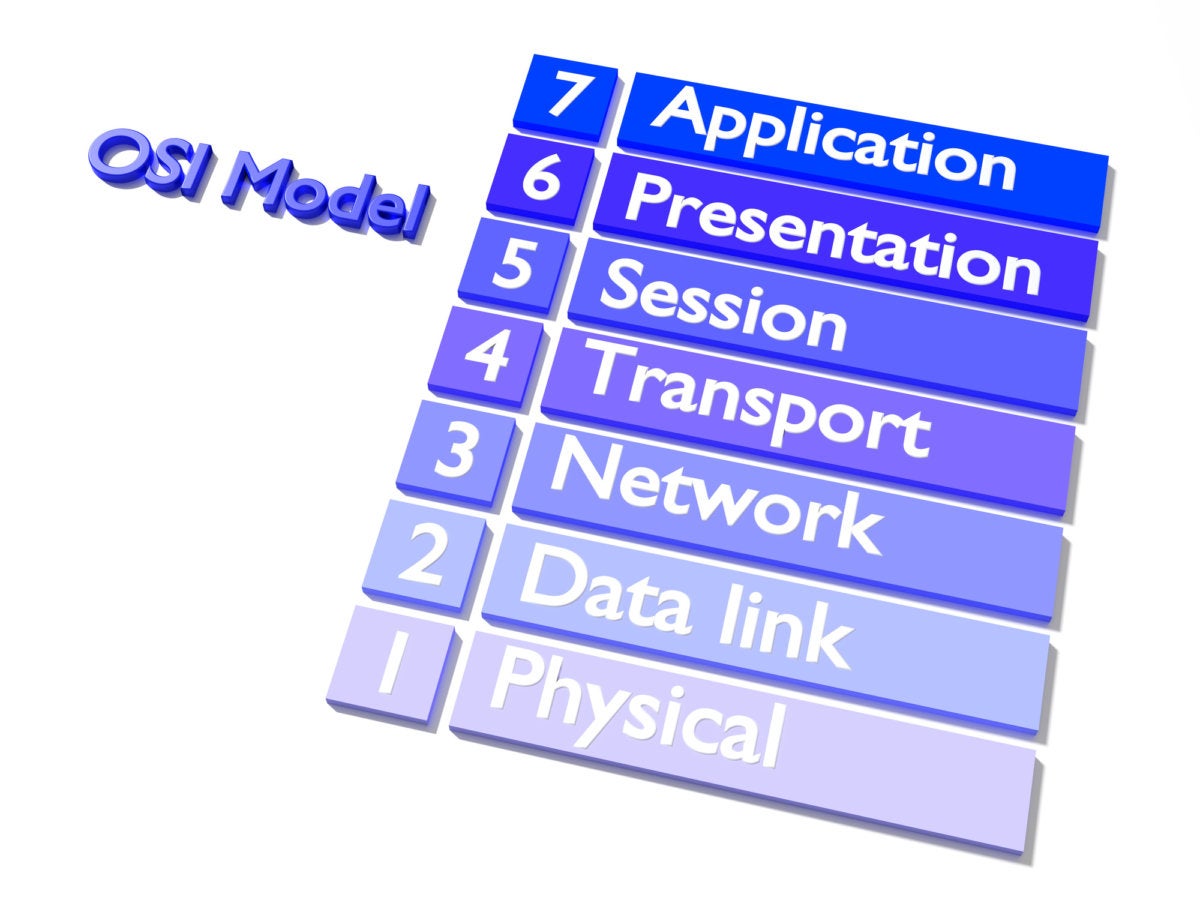
When most non-technical people hear the term “seven layers”, they either think of the popular Super Bowl bean dip or they mistakenly think about the seven layers of Hell, courtesy of Dante’s Inferno (there are nine). For IT professionals, the seven layers refer to the Open Systems Interconnection (OSI) model, a conceptual framework that describes the functions of a networking or telecommunication system. ... This can help network managers narrow down problems (Is it a physical issue or something with the application?), as well as computer programmers (when developing an application, which other layers does it need to work with?). Tech vendors selling new products will often refer to the OSI model to help customers understand which layer their products work with or whether it works “across the stack”.


What’s on the horizon for security and risk management leaders?

risk management leaders
Security and risk management leaders are beginning to give more weight to the risks associated with the complex ecosystems that are an integral part of digital businesses: digital supply chain risk, third-party (and fourth- and fifth-party) risk, and so on. “Historically, it has been fairly straightforward to assess the financial risk of business relationships by leveraging business and credit rating services such as Standard and Poor’s, Dun and Bradstreet, and Moody’s. With regard to technical and cyber risk, there has been no standard framework or approach — or rather, there have been too many, with a minimal level of commonality or consistency,” the analysts pointed out. The demand is obviously there, but fulfilling it such a way that customers can be confident in the ratings is difficult. For one, the information based on which the ratings are calculated can’t be just from public sources.


Why Cybersecurity Must Be an International Effort

As countries strengthen their cyber capabilities, Painter explained, they need a stable environment so the beneficial parts of cyber aren't undermined by weak security. He said it's time for nations to discuss cyber policies through the United Nations and multi-government organizations instead of going solo. International law applies in cyberspace, he said; it isn't a "lawless space" where "anything goes." It sounds simple on the surface but is complex in practice. According to Painter, international agreements must focus on how to prevent cyberattacks that don't necessarily qualify as cyber warfare; right now, policies don't address these types of threats. States shouldn't attack the critical infrastructure of other states, for example. They shouldn't attack one another's computer emergency response teams (CERTs), something Painter likened to "going after ambulances on the battlefield."


Microsoft launches low-code platform to speed enterprise IoT development

iotmachine.jpg
Microsoft IoT Central is now in public preview, bringing IoT skills to more frontline workers with the help of low-code development, according to a Microsoft blog post. The scalable SaaS solution is built on Microsoft Azure and supports enterprise security, IoT best practices, and more. With the new solution, Microsoft handles the infrastructure, allowing end users to focus on creating IoT solutions that can value to their organization. According to the post, "Microsoft IoT Central makes it so that everyone can benefit from IoT." Microsoft's Azure IoT Hub will act as the cloud gateway for Microsoft IoT Central, the post said. This allows users to securely connect, provision, and update devices, as well as send them commands. It can support millions of connected devices, the release said.


Support for CDOs growing among businesses

This comes across in a new survey of 287 CDOs, chief analytics officers and other high-level data and analytics leaders from around the world. The 2017 study, conducted by technology researcher Gartner, revealed growing use of the Chief Data Officer title and an increase in the number of organizations that have instituted an Office of the CDO. Moreover, for the first time, more than half of CDOs now report directly to a member of the C-suite, another board member or the business owner. "The steady maturation of the office of the CDO underlines the acceptance and broader understanding of the role and recognizes the impact and value CDOs worldwide are providing," notes Michael Moran, a research director at Gartner. Budgets are also on the rise. Survey respondents report an average CDO office budget of $8 million—up 23 percent from the $6.5 million average reported in 2016.


Quote for the day:


"I not only use all the brains I have, but all I can borrow." -- Woodrow Wilson


Daily Tech Digest - December 06, 2017

What is a botnet? And why they aren't going away anytime soon

botnet bots
According to an Akamai internet security report released this week, botnets are not only still alive and well, but getting more clever and more difficult to combat. For example, attackers are now using Fast Flux DNS, changing DNS information so rapidly that defenders have a hard time tracking and disrupting them. While Akamai was part of the battle to control last year's Mirai attacks, Mirai itself is still around, with two DDoS attacks exceeding 100 Gbps this past quarter, Akamai reported. Plus, new botnets are popping up. This fall, Check Point researchers say they discovered a new botnet, variously known as "IoTroop" and "Reaper," that's compromising IoT devices at an even faster pace than Mirai did. It has the potential to take down the entire internet once the owners put it to work. Mirai infected vulnerable devices that used default user names and passwords.


When the threats get weird, the security solutions get weirder

20160225 stock mwc ericsson booth security locks
Many of our assumptions around security are being challenged by new facts. Take two-factor authentication, for example. A report last month by Javelin Strategy & Research claimed that current applications of multi-factor authentication are “being undermined.” Two- or multi-factor authentication is also underutilized by enterprises, with just over one-third using “two or more factors to secure access to their data and systems.” So we can’t trust two-factor authentication like we used to, and even if we could it’s wildly underutilized. But surely we can trust Apple devices, right? Apple has a sterling reputation for strong security. Or, I should say, “had” such a reputation. Apple apologized and issued a patch this week for a major security flawthat enabled anyone with physical access to an Apple computer running macOS High Sierra to gain full access without even using a password


Security, vendor choices affect server purchases for IT buyers


An increasing number of systems can detect unauthorized or unexpected changes in system firmware images and firmware configurations, enforcing a system lockdown to prevent such changes and alerting administrators when change attempts occur at the firmware level. Servers frequently include persistent event logging, which includes an indelible record of all activity. And servers benefit from various recovery capabilities. For example, automatic BIOS/firmware recovery can restore firmware to a known goodstate after the system detects any flaw or compromise in the firmware code base. Some systems can apply similar restoration to the OS by detecting possible malicious activity and restoring the OS to a known good state as well.


SMBs have big plans for 2018--but too many ignore the threat of a data breach

sarawootchistock-532728101.jpg
The results from the Microsoft survey show that SMBs are looking forward to 2018 with an optimistic attitude regarding the growth of their businesses. This is great news for Microsoft and other information technology companies, as SMB growth translates into more demand for their products. The next year seems primed for opportunities to provide more cloud services and productivity software—good news for Microsoft. But there is obviously still a need to educate SMB owners about the perils of cyber threats. Every business, regardless of size, must operate as if there will be a data breach at any moment—because that is the current reality. No business, no matter how small and seemingly insignificant, is immune from a cyberattack. All businesses must be prepared with a comprehensive plan for when, NOT IF, a data breach occurs.


How to achieve and maintain PCI DSS compliance

Conduct a PCI DSS gap analysis or pre-audit assessment to determine your organisation’s current level of compliance. ... A gap analysis is often proposed before a formal assessment by a QSA for an Attestation of Compliance (AoC), and can help organisations establish whether they are ready for a formal Report on Compliance (RoC) audit. After the consultant performs the gap analysis, they will send your organisation an assessment report and a roadmap of the steps you need to take to achieve accredited certification to the Standard. A PCI DSS gap analysis is similar to an actual RoC assessment, and includes a detailed review of the organisation’s compliance activities, such as on-site interviews with staff, an assessment of the in-scope system components and configurations, an examination of out-of-scope components and a physical and logical data flow analysis.


3 Areas The IoT Will Impact You Without Your Even Knowing


Connected devices in our homes have traditionally been about making life easier—and maybe even a little more fun. It’s cool to check in on our kids from our connected video cameras; it’s nice to click a button on our phone and watch our favorite movie or TV show. But going forward, these technologies will be about even bigger things: saving energy, time, and money. Your smart home apps will automatically manage your energy usage based on smart sensors and data collected over time. Predictive maintenance sensors will alert you—and even arrange for help—when your appliance is in need of adjustment to maintain optimal efficiency. ... On the business side, savings will be just as huge. The U.S. Department of Energy estimates buildings account for more than 40 percent of electricity use in our country. There’s no telling how much private and public bodies will be able to save in money—and natural resources—by utilizing the IoT.


Connected cars: What happens to your data after you leave your rental car behind?

istock-806930400.jpg
A new report suggests it is not clear who is responsible for protecting the data that can be uploaded from smartphones when they connect to in-car systems. This data can include the location and contents of the smartphone as well as the user's home address, and it is often stored in the connected infotainment system and is not deleted. Privacy International rented a series of internet-connected cars from vehicle hire and car sharing firms and found that not only was information about previous drivers collected and retained in the infotainment system, the system also contained past locations the vehicle had travelled to and could identify previously connected smartphones. "In most of them there were between five and ten different phone identifiers. When you connect to the Bluetooth, it will store your identifier," Millie Graham Wood, solicitor and legal officer at Privacy International, told ZDNet.


Redefining perimeter network security: The future is a hybrid

firewall
“[The perimeter] is a very limited mindset which breaks down in a wifi and cloud world,” Keith Casey says. In addition to serving as adviser to multiple startups, Casey is an API problem solver at Okta, a San Francisco-based identity cloud provider. “Because we can’t count on the borders that we’ve always counted on, things are different,” he explains. “Previously, [IT] could say if you’re on our network — on our physical, hard-wired network — here are the security protocols. If you have physical access to our network, we can trust you.” Pre-cloud, this perimeter was always reinforced by internal defenses such as antivirus scanning or endpoint protection tools. Both then and now, Casey says, “Perimeter by itself isn’t enough. If I get inside, I can run wild. It’s like not using a safe because you keep your front door locked.” In that way, best practices haven’t changed: It’s always a good idea to have a rear guard.


Why Big Data and Data Scientists Are Overrated


The fact is, data scientists spend about three-quarters of their time doing data janitorial work – collecting, transforming, and cleaning data – rather than building the complex predictive models that they were actually hired for. That equals frustration for data scientists who had high hopes of making an impact, and sour grapes for the people who hired them. Organizations should start with the basics, and work up from there. Instead of being lured by the “shiny object” syndrome and thinking you need a big Hadoop data lake or neural networks to solve a problem, seek the simplest answer. “People make a mistake if they jump right to the most sophisticated tool, because they’re wasting a lot of time,” Mintz says. “The reality is a lot of problems are quite tractable with a simple regression. And some problems don’t even need that. You can just look at the data and see what’s happening.”


Can Open Banking fulfil expectations?

Interest Rates Rise For The First Time In Ten Years
The new rules are designed to give banking customers – which include businesses – more control of their financial data, allowing them to share it with organisations other than their banks, therefore opening up opportunity for fintech firms. But the Bank of England governor Mark Carney has suggested lenders aren’t taking the threat of fintech seriously enough, which means they could see the rug pulled out from under them as smaller “underdog” firms start taking more market share. However, research from Accenture in October found that 69 per cent of British consumers wouldn’t want to share their bank account information with third-party providers. In fact, more than half said they will never change their existing banking habits and adopt Open Banking. It is clear that companies are facing an uphill battle, both in terms of implementing the new rules, and building customers’ trust.


Quote for the day:


"It's time to take the innovation out of IT and give it back to the business, with the support of IT." -- Stuart Birrell


Daily Tech Digest - December 05, 2017

Google Has Released an AI Tool That Makes Sense of Your Genome


DeepVariant was developed by researchers from the Google Brain team, a group that focuses on developing and applying AI techniques, and Verily, another Alphabet subsidiary that is focused on the life sciences. The team collected millions of high-throughput reads and fully sequenced genomes from the Genome in a Bottle (GIAB) project, a public-private effort to promote genomic sequencing tools and techniques. They fed the data to a deep-learning system and painstakingly tweaked the parameters of the model until it learned to interpret sequenced data with a high level of accuracy. Last year, DeepVariant won first place in the PrecisionFDA Truth Challenge, a contest run by the FDA to promote more accurate genetic sequencing. “The success of DeepVariant is important because it demonstrates that in genomics, deep learning can be used to automatically train systems that perform better than complicated hand-engineered systems,” says Brendan Frey, CEO of Deep Genomics.


Using AI for Real Intelligence


AI is clearly moving from the scientific and theoretical to the practical. "One interesting stat shows 75 percent of companies looking to implement AI or machine learning (ML)," said Stubbs. ... Microsoft is working on an AI platform that consists of services like Microsoft Cognitive Services, Bot Framework, Azure Machine Learning, and the Cognitive Toolkit. The company has more than 7,000 engineers working on this, and all product groups have been encouraged to incorporate AI capabilities. "We have previously talked about a mobile-first and cloud-first model, but that's really more about mobility of the experience than the device," Stubbs said. "With agents and bots and AR and VR, we are expanding the definition of how we think of this. It leads us to the intelligent cloud and intelligent edge models -- the idea that devices at the edge powered by the cloud are able to expand that experience. AI happens in a bunch of places; it doesn't just happen in the cloud."


2018 Goal: Re-position Cybersecurity As An Enabler

As long as cybersecurity is viewed as a pain, it’ll never be integrated into the fabric of an organization. Fortunately, there have been significant advances in cloud-based security services that enable new ways to embed cybersecurity into enterprise services people want. Ever wonder why dentists re-positioned themselves as teeth whitening experts? Answer: no one likes cavities and, by association, the people who fix them. Similarly, as long as cybersecurity is viewed as a pain, it will never gain widespread organizational support. Fortunately, there have been significant advances in cloud-based data encryption, endpoint trust analysis and access control that enable security controls to be integrated into the application workflow. Here are a few enterprise service ideas that will make you a hero in 2018


New Security Architecture Practitioner's Initiative


The Security Architecture Practitioner’s Initiative is a joint effort of The Open Group Security Forum and The SABSA Institute to articulate in a clear, approachable way the characteristics of a highly-qualified Security Architect. The focus of this initiative is on the practitioner, the person who fills the role of the Security Architect, and on the skills and experience that make them great. This project is not about security architecture as a discipline, nor about a methodology for security architecture but rather about people and what makes them great Security Architects. The project team consists of pioneering Security Architects drawn from both The Open Group Security Forum and The SABSA Institute who have between them many decades of security architecture experience at organizations such as Boeing, IBM, HP, and NASA. Operating under the auspices of The Open Group and in collaboration with The SABSA Institute, they will provide two core deliverables


5 Key Data Predictions For 2018

As data becomes self-aware and even more diverse than it is today, the metadata will make it possible for the data to proactively transport, categorize, analyze and protect itself. The flow between data, applications and storage elements will be mapped in real time as the data delivers the exact information a user needs at the exact time they need it. This also introduces the ability for data to self-govern. The data itself will determine who has the right to access, share and use it, which could have wider implications for external data protection, privacy, governance and sovereignty. ... A judge or insurance company may need it to determine liability, while an auto manufacturer may want it to optimize the performance of the brakes or other mechanical systems. When data is self-aware, it can be tagged so it controls who sees what parts of it and when, without additional time consuming and potentially error prone human intervention to subdivide, approve and disseminate the valuable data.


Businesses need to balance user experience, privacy and security


“Consent is a key aspect of the GDPR, and organisations need to ensure that consent is freely given, specific, informed and unambiguous,” he said. “They need to be clear about what they are collecting, what purpose they are collecting the data, and they must provide processes for consumers to withdraw consent if they wish.” However, done correctly, collecting and managing consumer information can improve the customer experience, said John Tolbert, lead analyst at KuppingerCole. “Consumer identity management can also enable new business models, such as freemium models where basic services are provided free with the option of upgrading to paid services or shared revenue models,” he said. Tolbert also emphasised the importance of making it clear to consumers what they will get in exchange for agreeing to allow businesses to collect and user their data.


Uwe Friedrichsen on Functional Service Design and Observability


Developers should familiarise themselves with fault tolerant design patterns, such as circuit breakers, bulkheads, timeouts and retries, which has been popularised by Michael Nygard’s “Release It!” book. Caching, although useful, should be deployed with care, and not used simply to overcome bad system design, such as a long activation path involving many dependent services. Friedrichsen presented a series of ‘foundations of design’ for microservices (pictured below), which included a series of design principles focusing on high cohesion, low coupling, and separation of concerns. This principles are especially crucial across system boundaries, and even though the theory has been well documented in the 70s by David Parnas (PDF link), it is still often misunderstood.


8 digital transformation resolutions for CIOs in 2018

CIOs can help by taking the lead in creating a company-wide digital transformation plan that goes beyond digitizing documents and looks at ways operations can be digitized and automated for faster, leaner performance. The plan should include which digital technologies you plan to implement, dates for implementation, specific levels of investment, and business values they'll deliver. The plan should be spread over a period of three to five years, and should be reviewed and revised with input from C-level executives, key business influencers and senior IT staff at least annually. Project priorities should be defined and agreed upon so that everyone understands which project gets worked on first. Too many projects going at once start to interfere with each other. They contend for resources and ultimately fail. The CIO can play a major role to prevent this disorganization from happening.


Big banks hope early bet on Alexa will pay off

Amazon Echo Spot devices sit on display during the company's product reveal launch event in downtown Seattle in September.
Whether Alexa banking becomes a staple still remains to be seen, but banks with skills are keen to follow and find out, and regardless, it exposes them to the bigger picture of connected devices. Since September, U.S. Bank has let customers check their balances and make payments to U.S. Bank credit cards, among other things, speaking to Alexa. So far, the bank has deemed the launch as successful. “Customers who are using it seem to really like it,” said Gareth Gaston, head of omnichannel banking at U.S. Bank. While the bank isn’t disclosing usage numbers, he said people who ask Alexa a question tend to ask a follow-up question. Already, Gaston said, U.S. Bank plans to launch on Siri and Google Home and he can see a day where the lines will blur between talking to Alexa or a call center — especially when voice-based authentication on the devices exist. “I think this is the very, very tip of the iceberg that we are seeing,” he said.


Security: Making yourself a hard target for hackers is easier than you think

Strong passwords, two factor authentication, antivirus, and backups are just some of the simple things users can employ to protect themselves from cyberattacks -- yet breaches and malware infections show that some of the most basic advice is often not followed. "We pretend this is the most complicated thing in the world, and yet strong passwords, backing up your data, updating your security software -- security isn't that difficult," said Raj Samani, chief scientist at McAfee. The UK's National Health Service was one of the most high-profile victims of May's global WannaCry ransomware virus outbreak, with a proportion of hospitals taken offline -- some of which didn't have systems restored for weeks. An investigation following the incident found that NHS trusts had been warned to apply critical patches to prevent systems being exposed to the EternalBlue Windows vulnerability which WannaCry used, but that many failed to do so. 


Quote for the day:


"Great achievers are driven, not so much by the pursuit of success, but by the fear of failure." -- Larry Ellison