Showing posts with label access control. Show all posts

Daily Tech Digest - February 25, 2026


Quote for the day:

"To strongly disagree with someone, and yet engage with them with respect, grace, humility and honesty, is a superpower" -- Vala Afshar


Is ‘sovereign cloud’ finally becoming something teams can deploy – not just discuss?

Historically, sovereign cloud discussions in Europe have been driven primarily by risk mitigation. Data residency, legal jurisdiction, and protection from international legislation have dominated the narrative. These concerns are valid, but they have framed sovereign cloud largely as a defensive measure – a way to reduce exposure – rather than as an enabler of innovation or value creation. Without a clear value proposition beyond compliance, sovereign cloud has struggled to compete with hyperscale public cloud platforms that offer scale, maturity, and rich developer ecosystems. The absence of enforceable regulation has further compounded this. ... Policymakers and enterprises are also beginning to ask a more practical question: where does sovereign cloud actually create the most value? The answer increasingly points to innovation ecosystems, critical national capabilities, and trust. First, there is a growing recognition that sovereign cloud can underpin domestic innovation, particularly in areas such as AI, advanced research, and data-intensive start-ups. Organisations working with sensitive datasets, intellectual property, or public funding often require cloud environments that are both scalable and secure. ... Second, the sovereign cloud is increasingly being aligned with critical digital infrastructure. Sectors like healthcare, energy, transportation, and defence depend on continuity, accountability, and control. 


India’s DPDP rules 2025: Why access controls are priority one for CIOs

The security stack has traditionally broken down at the point of data rendering or exfiltration. Firewalls and encryption protect the data in transit and at rest, but once the data is rendered on a screen, the risk of data breaches from smartphone cameras, screenshots, or unauthorized sharing occurs outside of the security stack’s ability to protect it. ... Poor enterprise access practices amplify this risk. Over-provisioned user accounts, inconsistent multi-factor authentication, poor logging, and the absence of contextual checks make it easy for insider threats, credential compromise, and supply chain breaches to succeed. Under DPDP, accountability also extends to processors, so third-party CRM or cloud access must meet the same security standards. ... Shift from trust by implication to trust by verification. Implement least-privilege access to ensure users view only required apps and data. Add device posture with device binding, location, time, watermarking and behavior analysis to deny suspicious access. ... Implement identity infrastructure for just-in-time access and automated de-Provisioning based on role changes. Record fine-grained, immutable logs (user, device, resource, date/time) for breach analysis and annual retention. ... Enable dynamic, user-level watermarks (injecting username, IP address, timestamp) for forensic analysis. Prohibit unauthorized screen capture, sharing, or download activity during sensitive sessions, while permitting approved business processes.


What really caused that AWS outage in December?

The back-story was broken by the Financial Times, which reported the 13-hour outage was caused by a Kiro agentic coding system that decided to improve operations by deleting and then recreating a key environment. AWS on Friday shot back to flag what it dubbed “inaccuracies” in the FT story. “The brief service interruption they reported on was the result of user error — specifically misconfigured access controls — not AI as the story claims,” AWS said. ... “The issue stemmed from a misconfigured role — the same issue that could occur with any developer tool (AI powered or not) or manual action.” That’s an impressively narrow interpretation of what happened. AWS then promised it won’t do it again. ... The key detail missing — which AWS would not clarify — is just what was asked and how the engineer replied. Had the engineer been asked by Kiro “I would like to delete and then recreate this environment. May I proceed?” and the engineer replied, “By all means. Please do so,” that would have been user error. But that seems highly unlikely. The more likely scenario is that the system asked something along the lines of “Do you want me to clean up and make this environment more efficient and faster?” Did the engineer say “Sure” or did the engineer respond, “Please list every single change you are proposing along with the likely result and the worst-case scenario result. Once I review that list, I will be able to make a decision.”


Model Inversion Attacks: Growing AI Business Risk

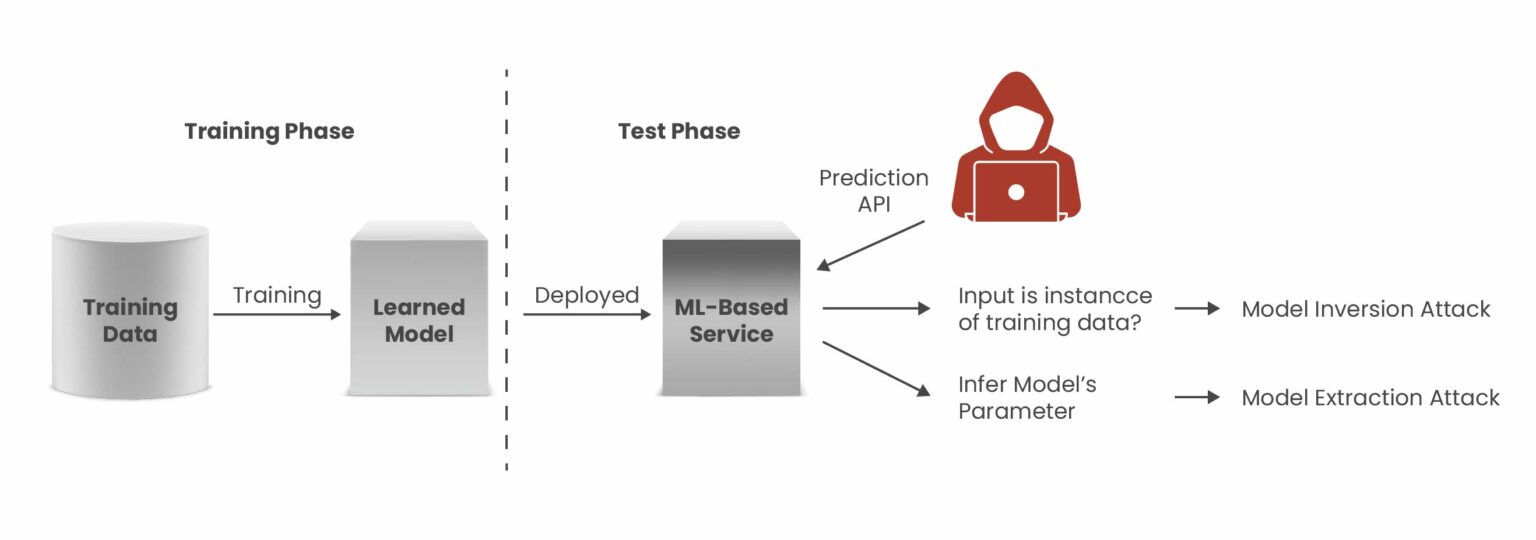
A model inversion attack is a form of privacy attack against machine learning systems in which an adversary uses the outputs of a model to infer sensitive information about the data used to train it. Rather than breaching a database or stealing credentials, attackers observe how a model responds to input queries and leverage those outputs, often including confidence scores or probability values, to reconstruct aspects of the training data that should remain private. ... This type of attack differs fundamentally from other ML attacks, such as membership inference, which aims to determine whether a specific data point was part of the training set, and model extraction, which seeks to copy the model itself. ... Successful model inversion attacks can inflict significant damage across multiple areas of a business. When attackers extract sensitive training data from machine learning models, organizations face not only immediate financial losses but also lasting reputational harm and operational setbacks that continue well beyond the initial incident. ... Attackers target inference-time privacy by moving through multiple stages, submitting carefully crafted queries, studying the model’s responses, and gradually reconstructing sensitive attributes from the outputs. Because these activities can resemble normal usage patterns, such attacks frequently remain undetected when monitoring systems are not specifically tuned to identify machine learning–related security threats.


It’s time to rethink CISO reporting lines

The age-old problem with CISOs reporting into CIOs is that it could present — or at least appear to present — a conflict of interest. Cybersecurity consultant Brian Levine, a former federal prosecutor who serves as executive director of FormerGov, says that concern is even more warranted today. “It’s the legacy model: Treat security as a technical function instead of an enterprise‑wide risk discipline,” he says. ... Enterprise CISOs should be reporting a notch higher, Levine argues. “Ideally, the CISO would report to the CEO or the general counsel, high-level roles explicitly accountable for enterprise risk. Security is fundamentally a risk and governance function, not a cost‑center function,” Levine points out. “When the CISO has independence and a direct line to the top, organizations make clearer decisions about risk, not just cheaper ones." ... Painter is “less dogmatic about where the CISO reports and more focused on whether they actually have a seat at the table,” he says. “Org charts matter far less than influence,” he adds. “Whether the CISO reports to the CIO, the CEO, or someone else, the real question is this: Are they brought in early, listened to, and empowered to shape how the business operates? When that’s true, the structure works. When it’s not, no reporting line will save it.” ... “When the CISO reports to the CIO, risk can be filtered, prioritized out of sight, or reshaped to fit a delivery narrative. It’s not about bad actors. It’s about role tension. And when that tension exists within the same reporting line, risk loses.”


AI drives cyber budgets yet remains first on the chop list

Cybersecurity budgets are rising sharply across large organisations, but a new multinational survey points to a widening gap between spending on artificial intelligence and the ability to justify that spending in business terms. ... "Security leaders are getting mandates to invest in AI, but nobody's given them a way to prove it's working. You can't measure AI transformation with pre-AI metrics," Wilson said. He added that security teams struggle to translate operational data into board-level evidence of reduced risk. "The problem isn't that security teams lack data. They're drowning in it. The issue is they're tracking the wrong things and speaking a language the board doesn't understand. Those are the budgets that get cut first. The window to fix this is closing fast," Wilson said. ... "We need new ways to measure security effectiveness that actually show business impact, because boards don't fund faster ticket closure, they fund measurable risk reduction and business resilience. We have to show that we're not just responding quickly but eliminating and improving the conditions that allow incidents to happen in the first place," he said. ... Security leaders reported pressure to invest in AI, while also struggling to link those investments to outcomes executives recognise as resilience and risk reduction. The report argues this tension may become harder to sustain if economic conditions tighten and boards begin looking for costs to cut.


A cloud-smart strategy for modernizing mission-critical workloads

As enterprises mature in their cloud journeys, many CIOs and senior technology leaders are discovering that modernization is not about where workloads run — it’s about how deliberately they are designed. This realization is driving a shift from cloud-first to cloud-smart, particularly for systems the business cannot afford to lose. A cloud-smart strategy, as highlighted by the Federal Cloud Computing Strategy, encourages agencies to weigh the long-term, total costs of ownership and security risks rather than focusing only on immediate migration. ... Sticking indefinitely with legacy systems can lead to rising maintenance costs, inability to support new business initiatives, security vulnerabilities and even outages as old hardware fails. Many organizations reach a tipping point where they must modernize to stay competitive. The key is to do it wisely — balancing speed and risk and having a solid strategy in place to navigate the complexity. ... A cloud-smart strategy aligns workload placement with business risk, performance needs and regulatory expectations rather than ideology. Instead of asking whether a system can move to the cloud, cloud-smart organizations ask where it performs best. ... Rather than lifting and shifting entire platforms, teams separate core transaction engines from decisioning, orchestration and experience layers. APIs and event-driven integration enable new capabilities around stable cores, allowing systems to evolve incrementally without jeopardizing operational continuity.


Enterprises still can't get a handle on software security debt – and it’s only going to get worse

Four-in-five organizations are drowning in software security debt, new research shows, and the backlog is only getting worse. ... "The speed of software development has skyrocketed, meaning the pace of flaw creation is outstripping the current capacity for remediation,” said Chris Wysopal, chief security evangelist at Veracode. “Despite marginal gains in fix rates, security debt is becoming a much larger issue for many organizations." Organizations are discovering more vulnerabilities as their testing programs mature and expand. Meanwhile, the accelerating pace of software releases creates a continuous stream of new code before existing vulnerabilities can be addressed. ... "Now that AI has taken software development velocity to an unprecedented level, enterprises must ensure they’re making deliberate, intelligent choices to stem the tide of flaws and minimize their risk," said Wysopal. The rise in flaws classed as both “severe” and “highly exploitable” means organizations need to shift from generic severity scoring to prioritization based on real-world attack potential, advised Veracode. As such, researchers called for a shift from simple detection toward a more strategic framework of Prioritize, Protect, and Prove. ... “We are at an inflection point where running faster on the treadmill of vulnerability management is no longer a viable strategy. Success requires a deliberate shift,” said Wysopal.


Protecting your users from the 2026 wave of AI phishing kits

To protect your users today, you have to move past the idea of reactive filtering and embrace identity-centric security. This means your software needs to be smart enough to validate that a user is who they say they are, regardless of the credentials they provide. We’re seeing a massive shift toward behavioral analytics. Instead of just checking a password, your platform should be looking at communication patterns and login behaviors. If a user who typically logs in from Chicago suddenly tries to authorize a high-value financial transfer from a new device in a different country, your system should do more than just send a push notification. ... Beyond the tech, you need to think about the “human” friction you’re creating. We often prioritize convenience over security, but in the current climate, that’s a losing bet. Implementing “probabilistic approval workflows” can help. For example, if your system’s AI is 95% sure a login is legitimate, let it through. If that confidence drops, trigger a more rigorous verification step. ... The phishing scams of 2026 are successful because they leverage the same tools we use for productivity. To counter them, we have to be just as innovative. By building identity validation and phishing-resistant protocols into the core of your product, you’re doing more than just securing data. You’re securing the trust that your business is built on. 


GitOps Implementation at Enterprise Scale — Moving Beyond Traditional CI/CD

Most engineering organizations running traditional CI/CD pipelines eventually hit the ceiling. Deployments work until they don’t, and when they break, the fixes are manual, inconsistent and hard to trace. ... We kept Jenkins and GitHub Actions in the stack for build and test stages where they already worked well. Harness remained an option for teams requiring more sophisticated approval workflows and governance controls. We ruled out purely script-based push deployment approaches because they offered poor drift control and scaled badly. ... Organizational resistance proved more challenging to address than the technical work. Teams feared the new approach would introduce additional bureaucracy. Engineers accustomed to quick kubectl fixes worried about losing agility. We ran hands-on workshops demonstrating that GitOps actually produced faster deployments, easier rollbacks and better visibility into what was running where. We created golden templates for common deployment patterns, so teams did not have to start from scratch. ... Unexpected benefits emerged after full adoption. Onboarding improved as deployment knowledge now lived in Git history and manifests rather than in senior engineers’ heads. Incident response accelerated because traceability let teams pinpoint exactly what changed and when, and rollback became a consistent, reliable operation. The shift from push-based to pull-based operations improved security posture by limiting direct cluster access.

Daily Tech Digest - November 28, 2025


Quote for the day:

"Whenever you find yourself on the side of the majority, it is time to pause and reflect." -- Mark Twain


Security researchers caution app developers about risks in using Google Antigravity

“In Antigravity,” Mindgard argues, “’trust’ is effectively the entry point to the product rather than a conferral of privileges.” The problem, it pointed out, is that a compromised workspace becomes a long-term backdoor into every new session. “Even after a complete uninstall and re-install of Antigravity,” says Mindgard, “the backdoor remains in effect. Because Antigravity’s core intended design requires trusted workspace access, the vulnerability translates into cross-workspace risk, meaning one tainted workspace can impact all subsequent usage of Antigravity regardless of trust settings.” For anyone responsible for AI cybersecurity, says Mindguard, this highlights the need to treat AI development environments as sensitive infrastructure, and to closely control what content, files, and configurations are allowed into them. ... Swanda recommends that app development teams building AI agents with tool-calling: assume all external content is adversarial. Use strong input and output guardrails, including tool calling; Strip any special syntax before processing; implement tool execution safeguards. Require explicit user approval for high-risk operations, especially those triggered after handling untrusted content or other dangerous tool combinations; not rely on prompts for security. System prompts, for example, can be extracted and used by an attacker to influence their attack strategy. 


How AI Is Rewriting The Rules Of Work, Leadership, And Human Potential

When a CEO tells his team, "AI is coming for your jobs, even mine," you pay attention. It is rare to hear that level of blunt honesty from any leader, let alone the head of one of the world's largest freelance platforms. Yet this is exactly how Fiverr co-founder and CEO Micha Kaufman has chosen to guide his company through the most significant technological shift of our lifetimes. His blunt assessment: AI is coming for everyone's jobs, and the only response is to get faster, more curious, and fundamentally better at being human. ... We're applying AI to existing workflows and platforms, seeing improvements, but not yet experiencing the fundamental restructuring that's coming. "It is mostly replacing the things we used to do as human beings, acting as robots," Kaufman observes. The repetitive tasks, the research gathering, the document summarizing, these elements where humans brought judgment but little humanity are being automated first. ... It's not enough to use the obvious AI tools in obvious ways. The real value emerges from those who push boundaries, combine systems creatively, or bring exceptional judgment to AI-assisted workflows. Kaufman points to viral videos created with advanced AI tools, noting that their quality stems not from the AI itself but from the operator's genius, experience, creativity, and taste developed over years.


How ‘digital twins’ could help prevent cyber-attacks on the food industry

A digital twin is a virtual replica of any product, process, or service, capturing its state, characteristics, and connections with other systems throughout its life cycle. The digital twin will include the computer system used by the company. It can help because conventional defences are increasingly out of step with cyber-attacks. Monitoring tools tend to detect anomalies after damage occurs. Complex computer systems can often obscure the origins of breaches. A digital twin creates a bridge between the physical and digital worlds. It allows organisations to simulate real-time events, predict what might happen next, and safely test potential responses. It can also help analyse what happened after a cyber-attack to help companies prepare for future incidents. ... A digital twin might be able to avert disaster under this scenario. By combining operational data such as temperature, humidity, or the speed air of flow with internal computing system data or intrusion attempts, digital twins offer a unified view of both system performance and cybersecurity. They enable organisations to simulate cyber-attacks or equipment failures in a safe, controlled digital environment, revealing vulnerabilities before attackers can exploit them. A digital twin can also detect abnormal temperature patterns, monitor the system for malicious activity, and perform analysis after a cyber-attack to identify the causes.


Why password management defines PCI DSS success

When you dig into real incidents involving payment data, a surprising number come down to poor password hygiene. PCI DSS v4.0 raised the bar for authentication, and the responsibility sits with security leaders to turn those requirements into workable daily habits for users and admins. ... Requirement 8 asks organizations to verify the identity of every user with strong authentication, make sure passwords and passphrases meet defined strength rules, prevent credential reuse, limit attempts, and store credentials securely. Passwords need to be at least 12 characters long, or at least 8 characters when a system cannot support longer strings. These rules line up with guidance from NIST SP 800 63B, which recommends longer passphrases, resistance against common word lists and hashing methods that protect stored secrets. ... PCI DSS requires that access be traceable to an individual and that shared accounts be minimized and controlled. When passwords live across multiple channels, it becomes nearly impossible to show auditors reliable evidence of access history. Even if the team is trying hard, the workflow itself creates gaps that no policy document can fix. ... Some CISOs view password managers as convenience tools. PCI DSS v4.0 shows that they are closer to compliance tools because they make it possible to enforce identity controls across an organization.


AI fluency in the enterprise: Still a ‘horseless carriage’

Companies are tossing AI agents onto existing processes, but a transformative change — where AI is the boss — is still far away. That was the view of IT leaders at this year’s Microsoft Ignite conference who’ve been putting AI agents to work, mostly with legacy processes. The IT leaders discussed their efforts during a conference panel at the event earlier this month. “We’re probably living in some version of the horseless carriage — we haven’t got to the car yet,” said John Whittaker, director of AI platform and products at accounting and consulting firm EY. ... Pfizer is very process-centric, he said, stressing that the goal is not to reinvent processes right out of the gate. The company is analyzing how AI works for them, gaining confidence in the technology before reorganizing processes within the AI lens. “Where we’re definitely heading … is thinking about, ‘I’ve solved this process, I’ve been following exactly the way it exists today. Now let’s blow it up and reimagine it…’ — and that’s exciting,” he said. ... Lumen is now looking at where it wants the business to be in 36 months and linking it to AI agents and AI-native plans. “We’re … working back from that and ensuring that we have the right set of tools, the right set of training, and the right set of agents in order to enable that,” he said. Every new Lumen employee in Alexander’s connected ecosystem group gets a Copilot license. The technology has helped speed up the process of understanding acronyms and historical trends within the company.


Creating Impactful Software Teams That Continuously Improve

When you are a person who prefers your job to be strictly defined, with clear boundaries, then you feel supported instead of stifled by a boss who checks in on you regularly. In the same culture, you will feel relaxed, happy, and content, which will in turn allow you to bring your best to your job and deliver to your strengths, Žabkar Nordberg said. You do not want to have employees who will be extensions of yourself, Žabkar Nordberg said. Instead, you want people who will bring their own thoughts, their own solutions, and in many ways be different and better than yourself. ... Provide guidance, step away, and let people have autonomy within those constraints. You might say something like "I would like you to focus on improving our customer retention. Be aware that legal regulations require all steps in our current onboarding journey to be present, but we have flexibility in how we execute them as the user experience is not prescribed". This gives people guidance and focuses them, but still gives them the autonomy to bring their own experiences and find their own solutions. ... We want people to show initiative and proactively bring their own thoughts, improvements, and worries. Clear communication and an understanding of how people work will help them do that, Žabkar Nordberg said. Psychological safety underlines trust, autonomy, and communication; it is required for them to work effectively, he concluded.


Empathetic policy engineering: The secret to better security behavior and awareness

Insecure behavior is often blamed on users, when the problem often lies in the measure itself. In IT security research, the focus is often on individual user behavior — for example, on whether secure behavior depends on personality traits. The question of how well security measures actually fit the reality of work — that is, how likely they are to be accepted in everyday practice — is neglected. For every threat, there are usually several available security measures. But differences in effort, acceptance, compatibility, or complexity are often not taken into account in practice. Instead, security or IT departments often make decisions based solely on technical aspects. ... Safety measures and guidelines are often communicated in a way that doesn’t resonate with users’ work reality because they don’t aim to engage employees and motivate them: for example, through instructions, standard online training, or overly playful formats like comics that employees don’t take seriously. ... The limited success of many security measures is not solely due to the users — often it’s unrealistic requirements, a lack of involvement, and inadequate communication. For security leaders, this means: Instead of relying on education and sanctions, a strategic paradigm shift is needed. They should become a kind of empathetic policy architect whose security strategy not only works technically but also resonates on a human level.


Agentic AI is not ‘more AI’—it’s a new way of running the enterprise

Agentic AI marks a shift from simply predicting outcomes or offering recommendations to systems that can plan tasks, take actions and learn from the results within defined guardrails. In practical terms, this means moving beyond isolated, single-task copilots towards coordinated “swarms” of agents that continually monitor signals, trigger workflows across systems, negotiate constraints and complete loops with measurable outcomes. ... A major barrier is trust and control. Leaders remain cautious about allowing software to take autonomous actions. Graduated autonomy provides a path forward: beginning with assistive tools, moving to supervised autonomy with reversible actions and eventually deploying narrow, fully autonomous loops when KPIs and rollback mechanisms have been validated. Lack of clarity on value is another obstacle. Impressive demonstrations do not constitute a strategy. Organisations should use a jobs-to-be-done perspective and tie each agent to a specific financial or risk objective, such as days-sales-outstanding, mean time to resolution, inventory turns or claims leakage. Analysts have warned that many agentic initiatives will be cancelled if value remains vague, so clear scorecards and time-boxed proofs of value are essential. Data readiness is a further challenge. Weak lineage, uncertain ownership and inconsistent quality stop AI scaling efforts in their tracks.


6 strategies for CIOs to effectively manage shadow AI

“Be clear which tools and platforms are approved and which ones aren’t,” he says. “Also be clear which scenarios and use cases are approved versus not, and how employees are allowed to work with company data and information when using AI like, for example, one-time upload as opposed to cut-and-paste or deeper integration.” ... “The most important thing is creating a culture where employees feel comfortable sharing what they use rather than hiding it,” says Fisher. His team combines quarterly surveys with a self-service registry where employees log the AI tools they use. IT then validates those entries through network scans and API monitoring. ... “Effective inventory management requires moving beyond periodic audits to continuous, automated visibility across the entire data ecosystem,” he says, adding that good governance policies ensure all AI agents, whether approved or built into other tools, send their data in and out through one central platform. ... “Risk tolerance should be grounded in business value and regulatory obligation,” says Morris. Like Fisher, Morris recommends classifying AI use into clear categories, what’s permitted, what needs approval, and what’s prohibited, and communicating that framework through leadership briefings, onboarding, and internal portals. ... Transparency is the key to managing shadow AI well. Employees need to know what’s being monitored and why.


It’s Time to Rethink Access Control for Modern Development Environments

When faced with the time-consuming complexity of managing granular permissions across dozens of development tools, most VPs of Engineering and CTOs opt for the path of least resistance, granting broad administrative privileges to entire engineering teams. It’s understandable from a productivity standpoint; nobody wants to be a bottleneck when a critical release is imminent, or explain to the CEO why they missed a market window because a developer couldn’t access a repository. However, when everyone has admin privileges, attackers who gain access to just one set of credentials can do tremendous damage. They gain not just access to sensitive code and data, but the ability to manipulate build processes, insert malicious code, or establish persistent backdoors. This problem becomes even more dangerous when combined with the prevalence of shadow IT, non-human identities, and contractor relationships operating outside your security perimeter. ... The answer to stronger security that doesn’t hinder developer productivity lies in implementing just-in-time permissioning within the SDLC, a concept successfully adopted from cloud infrastructure management that can transform how we handle development access controls. The approach is straightforward: instead of granting permanent administrative access to everyone, take 90 days to observe what developers actually need to do their jobs, then right-size their permissions accordingly. 

Daily Tech Digest - October 01, 2024

9 types of phishing attacks and how to identify them

Different victims, different paydays. A phishing attack specifically targeting an enterprise’s top executives is called whaling, as the victim is considered to be high-value, and the stolen information will be more valuable than what a regular employee may offer. The account credentials belonging to a CEO will open more doors than an entry-level employee. The goal is to steal data, employee information, and cash. ... Clone phishing requires the attacker to create a nearly identical replica of a legitimate message to trick the victim into thinking it is real. The email is sent from an address resembling the legitimate sender, and the body of the message looks the same as a previous message. The only difference is that the attachment or the link in the message has been swapped out with a malicious one. ... Snowshoeing, or “hit-and-run” spam, requires attackers to push out messages via multiple domains and IP addresses. Each IP address sends out a low volume of messages, so reputation- or volume-based spam filtering technologies can’t recognize and block malicious messages right away. Some of the messages make it to the email inboxes before the filters learn to block them.


The End Of The SaaS Era: Rethinking Software’s Role In Business

While the traditional SaaS model may be losing its luster, software itself remains a critical component of modern business operations. The key shift is in how companies think about and utilize software. Rather than viewing it as a standalone business model, forward-thinking entrepreneurs and executives are beginning to see software as a powerful tool for creating value in other business contexts. ... Consider a hypothetical scenario where a tech company develops an AI-powered inventory management system that dramatically improves efficiency for retail businesses. Instead of simply selling this system as a SaaS product, the company could use it as leverage to acquire successful retail operations. By implementing their proprietary software, they could significantly boost the profitability of these businesses, creating value far beyond what they might have captured through traditional software licensing. ... Proponents of this new approach argue that while others will eventually catch up in terms of software capabilities, the first-movers will have already used their technological edge to acquire valuable real-world assets. 


How Agentless Security Can Prevent Major Ops Outages

An agentless security model is a modern way to secure cloud environments without installing agents on each workload. It uses cloud providers’ native tools and APIs to monitor and protect assets like virtual machines, containers and serverless functions. Here’s how it works: Data is collected through API calls, providing real-time insights into vulnerabilities. A secure proxy ensures seamless communication without affecting performance. This model continuously scans workloads, offering 100% visibility and detecting issues without disruption. ... Instead of picking between agent-based and agentless security, you can use both together. Agent-based security works best for stable, less-changing systems. It offers deep, ongoing monitoring when things stay the same. On the other hand, agentless security is great for fast-paced cloud setups where new workloads come and go often. It gives real-time insights without needing to install anything, making it flexible for larger cloud systems. A hybrid approach gives you stronger protection and keeps up with changing threats, making sure your defenses are ready for whatever comes next.


The inner workings of a Conversational AI

The initial stage of interaction between a user and an AI system involves input processing. When a user submits a prompt, the system undergoes a series of preprocessing steps to transform raw text into a structured format suitable for machine comprehension. Natural Language Processing (NLP) techniques are employed to break down the text into individual words or tokens, a process known as tokenization. ... Once the system has a firm grasp of the user’s intent through input processing, it embarks on the crucial phase of knowledge retrieval. This involves sifting through vast repositories of information to extract relevant data. Traditional information retrieval techniques like BM25 or TF-IDF are employed to match the processed query with indexed documents. An inverted index, a data structure mapping words to the documents containing them, accelerates this search process. ... With relevant information gathered, the system transitions to the final phase: response generation. This involves constructing a coherent and informative text that directly addresses the user’s query. Natural Language Generation (NLG) techniques are employed to transform structured data into human-readable language.


Can We Ever Trust AI Agents?

The consequences of misplaced trust in AI agents could be dire. Imagine an AI-powered financial advisor that inadvertently crashes markets due to a misinterpreted data point, or a healthcare AI that recommends incorrect treatments based on biased training data. The potential for harm is not limited to individual sectors; as AI agents become more integrated into our daily lives, their influence grows exponentially. A misstep could ripple through society, affecting everything from personal privacy to global economics. At the heart of this trust deficit lies a fundamental issue: centralization. The development and deployment of AI models have largely been the purview of a handful of tech giants. ... The tools for building trust in AI agents already exist. Blockchains can enable verifiable computation, ensuring that AI actions are auditable and traceable. Every decision an AI agent makes could be recorded on a public ledger, allowing for unprecedented transparency. Concurrently, advanced cryptographic techniques like trusted execution environment machine learning (TeeML) can protect sensitive data and maintain model integrity, achieving both transparency and privacy.


Reducing credential complexity with identity federation

One potential challenge organizations may encounter when implementing federated identity management in cross-organization collaborations is ensuring a seamless trust relationship between multiple identity providers and service providers. If the trust isn’t well established or managed, it can lead to security vulnerabilities or authentication issues. Additionally, the complexity of managing multiple identity providers can become problematic if there is a need to merge user identities across systems. For example, ensuring that all identity providers fulfill their roles without conflicting or creating duplicate identities can be challenging. Finally, while federated identity management improves convenience, it can come at the cost of time-consuming engineering and IT work to set up and maintain these IdP-SP connections. Traditional in-house implementation may also mean these connections are 1:1 and hard-coded, which will make ongoing modifications even tougher. Organizations need to balance the benefits of federated identity management against the time and cost investment needed, whether they do it in-house or with a third-party solution.


AI: Maximizing innovation for good

Businesses need to understand that AI technology will be here to stay. Strong AI strategies consider the purpose and objectives of considering AI, explaining the processes for businesses to prove value and absorb the rapid pace of change, considering the technology itself. Implementation needs to ensure that solutions mesh effectively with IT infrastructure that’s already in place. Digitalization, digital transformation, and upgrading legacy systems, as overarching initiatives, require planning and understanding of how they will impact wider business functions. That’s not to say it needs to be slow or cumbersome, however – one of the joys on AI is the ease with which it can put powerful new capabilities in the hands of teams. When due diligence is conducted effectively, AI integration can become the lynchpin to elevate business practices – boosting productivity, efficiency, and lowering costs. The opportunities for improvements cannot be understated, especially when looking at wider settings outside of just industrial or financial sectors. Ultimately, overreaching when implementing AI, can create a situation where integrated tools muddy the water and dilute the effectiveness of their intended use.


The Path of Least Resistance to Privileged Access Management

While PAM allows organizations to segment accounts, providing a barrier between the user’s standard access and needed privileged access and restricting access to information that is not needed, it also adds a layer of internal and organizational complexity. This is because of the impression it removes user’s access to files and accounts that they have typically had the right to use, and they do not always understand why. It can bring changes to their established processes. They don’t see the security benefit and often resist the approach, seeing it as an obstacle to doing their jobs and causing frustration amongst teams. As such, PAM is perceived to be difficult to introduce because of this friction. ... A significant gap in the PAM implementation process lies in the lack of comprehensive awareness among administrators. They often do not have a complete inventory of all accounts, the associated access levels, their purposes, ownership, or the extent of the security issues they face. Although PAM solutions possess the capability for scanning and discovering privileged accounts, these solutions are limited by the scope of the instructions they receive, thus providing only partial visibility into system access and usage.


Microsoft researchers propose framework for building data-augmented LLM applications

“Data augmented LLM applications is not a one-size-fits-all solution,” the researchers write. “The real-world demands, particularly in expert domains, are highly complex and can vary significantly in their relationship with given data and the reasoning difficulties they require.” To address this complexity, the researchers propose a four-level categorization of user queries based on the type of external data required and the cognitive processing involved in generating accurate and relevant responses: – Explicit facts: Queries that require retrieving explicitly stated facts from the data. – Implicit facts: Queries that require inferring information not explicitly stated in the data, often involving basic reasoning or common sense. – Interpretable rationales: Queries that require understanding and applying domain-specific rationales or rules that are explicitly provided in external resources. – Hidden rationales: Queries that require uncovering and leveraging implicit domain-specific reasoning methods or strategies that are not explicitly described in the data. Each level of query presents unique challenges and requires specific solutions to effectively address them.


Unleashing the Power Of Business Application Integration

In many cases, businesses are replacing their legacy software solutions with a modular selection of applications hosted within a public cloud environment. Given the increasing maturity of this market, there is now a range of application stores and marketplaces from the likes of AWS, Microsoft and Google. These have made it much easier for IT teams to identify, purchase and integrate proven applications as part of a bespoke, enterprise-wide ERP strategy. ... once IT teams have selected and integrated the right business applications within their environment, the next step is to focus on data strategy. The main objective here should be to ensure that data is of the highest quality and can be used to address a diverse range of key business objectives, from driving profit, efficiency and innovation to improving customer service. This process can be complex and challenging, but there are a number of steps organisations can take to fully exploit their data assets. These include optimising the performance and availability of an existing data environment and prioritising data systems migration.


Quote for the day:

"The first step toward success is taken when you refuse to be a captive of the environment in which you first find yourself." -- Mark Caine

Daily Tech Digest - September 17, 2024

Dedicated Cloud: What It’s For and How It’s Different From Public Cloud

While dedicated cloud services give you a level of architectural control you will not get from public clouds, using them comes with trade-offs, the biggest one being the amount of infrastructure engineering ability needed. But if your team has concluded that a public cloud isn’t a good fit, you probably know that already and have at least some of that ability on hand. ... Ultimately, dedicated cloud is about keeping control and giving yourself options. You can quickly deploy different combinations of resources, interconnecting dedicated infrastructure with public cloud services, and keep fine-tuning and refining as you go. You get full control of your data and your architecture with the freedom to change your mind. The trade-off is that you must be ready to roll up your sleeves and manage operating systems, deploy storage servers, tinker with traffic routing and do whatever else you need to do to get your architecture just right. But again, if you already know that you need more knobs than you can turn using a typical public cloud provider, you are probably ready anyway.


Building a More Sustainable Data Center: Challenges and Opportunities in the AI Era

Sustainability is not just a compliance exercise on reducing the negative impact on the environment, it also can bring financial benefits to an organization. According to Gartner’s Unlock the Business Benefits of Sustainable IT Infrastructure report, “[Infrastructure and operations’] contribution to sustainability strategies tends to focus on environmental impact, but sustainability also can have a significant positive impact on non-environmental factors, such as brand, innovation, resilience and attracting talent.” As a result, boards should embrace the financial opportunities of companies’ Environmental, Sustainability, and Governance (ESG) compliance rather than consider it just another unavoidable compliance expense without a discernable return on investment (ROI). ... To improve data center resilience, Gartner recommends that organizations expand use of renewable energy using a long-term power purchase agreement to contain costs, generate their own power where feasible, and reuse and redeploy equipment as much as possible to maximize the value of the resource.


Data Business Evaluation

Why data businesses? Because they can be phenomenal businesses with extremely high gross margins — as good or better than software-as-a-service (SaaS). Often data businesses can be the best businesses within the industries that they serve. ... Data aggregation can be a valuable way to assemble a data asset as well, but the value typically hinges on the difficulty of assembling the data…if it is too easy to do, others will do it as well and create price competition. Often the value comes in aggregating a long tail of data that is costly to do more than once either for the suppliers or a competitive aggregator. ... The most stable data businesses tend to employ a subscription business model in which customers subscribe to a data set for an extended period of time. Subscriptions models are clearly better when the subscriptions are long term or, at least, auto-renewing. Not surprisingly, the best data businesses are generally syndicated subscription models. On the other end, custom data businesses that produce data for clients in a one-off or project-based manner generally struggle to attain high margins and predictability, but can be solid businesses if the data manufacturing processes are optimized 


Leveraging AI for water management

AI is reshaping the landscape of water management by providing predictive insights, optimising operations, and enabling real-time decision-making. One of AI’s key contributions is its ability to forecast water usage patterns. AI models can accurately predict water demand by analysing historical data and considering variables like weather conditions, population trends, and industrial activities. This helps water utilities allocate resources more effectively, minimising waste while ensuring consistent supply to communities. Water utilities can also integrate AI systems to monitor and optimise their supply networks. ... One of the most critical applications of AI is in water quality monitoring. Traditional methods of detecting water contaminants are labour-intensive and involve periodic testing, which can result in delayed responses to contamination events. AI, on the other hand, can process continuous data streams from IoT-enabled sensors installed in water distribution systems. These sensors monitor variables like pH levels, temperature, and turbidity, detecting changes in water quality in real time. AI algorithms analyse the data, triggering immediate alerts when contaminants or irregularities are detected.


History of Cybersecurity: Key Changes Since the 1990s and Lessons for Today

Most cyber attackers hadn’t considered using the internet to pursue financial gain or cause serious harm to organizations. To be sure, financial crimes based on computer hacking took place in the '90s and early 2000s. But they didn't dominate the news in an endless stream of cautionary tales, and most people thought the 1995 movie Hackers was a realistic depiction of how hacking worked. ... By the mid-2000s, however, internet-based attacks became more harmful and frequent. This was the era when threat actors realized they could build massive botnets and then use them to distribute spam or send scam emails. These attacks could have caused real financial harm, but they weren't exactly original types of criminal activity. They merely conducted traditional criminal activity, like scams, using a new medium: the internet. ... The 2010s were also a time of massive technological change. The advent of cloud computing, widespread adoption of mobile devices, and rollout of Internet of Things (IoT) hardware meant businesses could no longer define clear network perimeters or ensure that sensitive data always remained in their data centers. 


Gateways to havoc: Overprivileged dormant service accounts

Dormant accounts go unnoticed, leaving organizations unaware of their access privileges, the systems they connect to, how to access them, and even of their purpose of existence. Their elevated privileges, lax security measures, and invisibility, make dormant service accounts prime targets for infiltration. By compromising such an account, attackers can gain significant access to systems and sensitive data, often without raising immediate suspicion for extended periods of time. During that time, cyber criminals can elevate privileges, exfiltrate data, disrupt operations, and install malware and backdoors, causing total mayhem completely undetected until it’s too late. The weaknesses that plague dormant accounts make them open doors into an organization’s system. If compromised, an overprivileged dormant account can give way to sensitive data such as customer PII, PHI, intellectual property, and financial records, leading to costly and damaging data breaches. Even without being breached, dormant accounts are significant liabilities, potentially causing operational disruptions and regulatory compliance violations.


Overcoming AI hallucinations with RAG and knowledge graphs

One challenge that has come up in deploying RAG into production environments is that it does not handle searches across lots of documents that contain similar or identical information. When these files are chunked and turned into vector embeddings, each one will have its data available for searching. When each of those files has very similar chunks, finding the right data to match that request is harder. RAG can also struggle when the answer to a query exists across a number of documents that cross reference each other. RAG is not aware of the relationships between these documents. ... Rather than storing data in rows and columns for traditional searches, or as embeddings for vector search, a knowledge graph represents data points as nodes and edges. A node will be a distinct fact or characteristic, and edges will connect all the nodes that have relevant relationships to that fact. In the example of a product catalog, the nodes may be the individual products while the edges will be similar characteristics that each of those products possess, like size or color.


Preparing for the next big cyber threat

In addressing emerging threats, CISOs will have to incorporate controls to counter adversarial AI tactics and foster synergies with data and AI governance teams. Controls to ensure quantum-resistant cryptography in the symmetric space to future-proof encrypted data and transmissions will also be put in place if they are not already. Many organizations — including banks — are already enforcing the use of quantum-resistant cryptography, for instance, with the use of the Advanced Encryption Standard (AES)-256 algorithm because data encrypted by it is not vulnerable to cracking by quantum computers. Zero trust as a mindset and approach will be very important, especially in addressing insecure design components of OT environments used in Industry 4.0. Therefore, one of the key areas of strengthening protection would also be identity and access management (IAM). ... As part of strong cyber resilience, we need sound IR playbooks to effectively draw bridges, we need plan Bs and plan Cs, business continuities as well as table-tops and red teams that involve our supply chain vendors. And finally, response to the ever-evolving threat landscape will entail greater adaptability and agility.


The Impact of AI on The Ethernet Switch Market

Enterprises investing in new infrastructure to support AI will have to choose which technology is best for their particular needs. InfiniBand and Ethernet will likely continue to coexist for the foreseeable future. It’s highly likely that Ethernet will remain dominant in most network environments while InfiniBand will retain its foothold in high-performance computing and specialized AI workloads. ... While InfiniBand has several very strong advantages, advances in Ethernet are quickly closing the gap, making its ubiquity likely to continue. There are multiple other reasons that enterprises are likely to stick with Ethernet, too, such as lower cost, existing in-house talent, prolific integrations with existing infrastructures, and compatibility with legacy applications, among others. ... The Ultra Ethernet Consortium is proactively working to extend Ethernet's life to ensure it remains useful and cost-effective for both current and future technologies. The aim is primarily to reduce the need for drastic shifts to alternative solutions that may constitute heavy lifts and costs in adapting existing networks. 


Making the Complex Simple: Authorization for the Modern Enterprise

Modernizing legacy authorization systems is essential for organizations to enhance security and support their growth and innovation. Modernizing and automating operations allows organizations to overcome the limitations of legacy systems, enhance the protection of sensitive information and stay competitive in today’s digital landscape. Simplifying access control and automating workflows to modernize and optimize operations greatly increases productivity and lowers administrative burdens. Organizations can direct important resources toward more strategic endeavors by automating repetitive operations, which increases output and promotes an agile corporate environment. This change improves operational efficiency and puts businesses in a better position to adapt to changing market demands. Enhancing security is another critical benefit of modernizing authorization systems. Centralized management coupled with advanced role-based access control (RBAC) strengthens an organization’s security posture by preventing unauthorized access. Centralized systems allow for efficient user permissions management, ensuring that only authorized individuals can access sensitive information. 


Quote for the day:

"Motivation will almost always beat mere talent." -- Ralph Augustine Norman