Quote for the day:
"To strongly disagree with someone, and yet engage with them with respect, grace, humility and honesty, is a superpower" -- Vala Afshar
Is ‘sovereign cloud’ finally becoming something teams can deploy – not just discuss?
 Historically, sovereign cloud discussions in Europe have been driven primarily
by risk mitigation. Data residency, legal jurisdiction, and protection from
international legislation have dominated the narrative. These concerns are
valid, but they have framed sovereign cloud largely as a defensive measure – a
way to reduce exposure – rather than as an enabler of innovation or value
creation. Without a clear value proposition beyond compliance, sovereign cloud
has struggled to compete with hyperscale public cloud platforms that offer
scale, maturity, and rich developer ecosystems. The absence of enforceable
regulation has further compounded this. ... Policymakers and enterprises are
also beginning to ask a more practical question: where does sovereign cloud
actually create the most value? The answer increasingly points to innovation
ecosystems, critical national capabilities, and trust. First, there is a growing
recognition that sovereign cloud can underpin domestic innovation, particularly
in areas such as AI, advanced research, and data-intensive start-ups.
Organisations working with sensitive datasets, intellectual property, or public
funding often require cloud environments that are both scalable and secure. ...
Second, the sovereign cloud is increasingly being aligned with critical digital
infrastructure. Sectors like healthcare, energy, transportation, and defence
depend on continuity, accountability, and control.
Historically, sovereign cloud discussions in Europe have been driven primarily
by risk mitigation. Data residency, legal jurisdiction, and protection from
international legislation have dominated the narrative. These concerns are
valid, but they have framed sovereign cloud largely as a defensive measure – a
way to reduce exposure – rather than as an enabler of innovation or value
creation. Without a clear value proposition beyond compliance, sovereign cloud
has struggled to compete with hyperscale public cloud platforms that offer
scale, maturity, and rich developer ecosystems. The absence of enforceable
regulation has further compounded this. ... Policymakers and enterprises are
also beginning to ask a more practical question: where does sovereign cloud
actually create the most value? The answer increasingly points to innovation
ecosystems, critical national capabilities, and trust. First, there is a growing
recognition that sovereign cloud can underpin domestic innovation, particularly
in areas such as AI, advanced research, and data-intensive start-ups.
Organisations working with sensitive datasets, intellectual property, or public
funding often require cloud environments that are both scalable and secure. ...
Second, the sovereign cloud is increasingly being aligned with critical digital
infrastructure. Sectors like healthcare, energy, transportation, and defence
depend on continuity, accountability, and control. India’s DPDP rules 2025: Why access controls are priority one for CIOs
 The security stack has traditionally broken down at the point of data rendering
or exfiltration. Firewalls and encryption protect the data in transit and at
rest, but once the data is rendered on a screen, the risk of data breaches from
smartphone cameras, screenshots, or unauthorized sharing occurs outside of the
security stack’s ability to protect it. ... Poor enterprise access practices
amplify this risk. Over-provisioned user accounts, inconsistent multi-factor
authentication, poor logging, and the absence of contextual checks make it easy
for insider threats, credential compromise, and supply chain breaches to
succeed. Under DPDP, accountability also extends to processors, so third-party
CRM or cloud access must meet the same security standards. ... Shift from trust
by implication to trust by verification. Implement least-privilege access to
ensure users view only required apps and data. Add device posture with device
binding, location, time, watermarking and behavior analysis to deny suspicious
access. ... Implement identity infrastructure for just-in-time access and
automated de-Provisioning based on role changes. Record fine-grained, immutable
logs (user, device, resource, date/time) for breach analysis and annual
retention. ... Enable dynamic, user-level watermarks (injecting username, IP
address, timestamp) for forensic analysis. Prohibit unauthorized screen capture,
sharing, or download activity during sensitive sessions, while permitting
approved business processes.
The security stack has traditionally broken down at the point of data rendering
or exfiltration. Firewalls and encryption protect the data in transit and at
rest, but once the data is rendered on a screen, the risk of data breaches from
smartphone cameras, screenshots, or unauthorized sharing occurs outside of the
security stack’s ability to protect it. ... Poor enterprise access practices
amplify this risk. Over-provisioned user accounts, inconsistent multi-factor
authentication, poor logging, and the absence of contextual checks make it easy
for insider threats, credential compromise, and supply chain breaches to
succeed. Under DPDP, accountability also extends to processors, so third-party
CRM or cloud access must meet the same security standards. ... Shift from trust
by implication to trust by verification. Implement least-privilege access to
ensure users view only required apps and data. Add device posture with device
binding, location, time, watermarking and behavior analysis to deny suspicious
access. ... Implement identity infrastructure for just-in-time access and
automated de-Provisioning based on role changes. Record fine-grained, immutable
logs (user, device, resource, date/time) for breach analysis and annual
retention. ... Enable dynamic, user-level watermarks (injecting username, IP
address, timestamp) for forensic analysis. Prohibit unauthorized screen capture,
sharing, or download activity during sensitive sessions, while permitting
approved business processes.What really caused that AWS outage in December?
 The back-story was broken by the Financial Times, which reported the 13-hour
outage was caused by a Kiro agentic coding system that decided to improve
operations by deleting and then recreating a key environment. AWS on Friday shot
back to flag what it dubbed “inaccuracies” in the FT story. “The brief service
interruption they reported on was the result of user error — specifically
misconfigured access controls — not AI as the story claims,” AWS said. ... “The
issue stemmed from a misconfigured role — the same issue that could occur with
any developer tool (AI powered or not) or manual action.” That’s an impressively
narrow interpretation of what happened. AWS then promised it won’t do it again.
... The key detail missing — which AWS would not clarify — is just what was
asked and how the engineer replied. Had the engineer been asked by Kiro “I would
like to delete and then recreate this environment. May I proceed?” and the
engineer replied, “By all means. Please do so,” that would have been user error.
But that seems highly unlikely. The more likely scenario is that the system
asked something along the lines of “Do you want me to clean up and make this
environment more efficient and faster?” Did the engineer say “Sure” or did the
engineer respond, “Please list every single change you are proposing along with
the likely result and the worst-case scenario result. Once I review that list, I
will be able to make a decision.”
The back-story was broken by the Financial Times, which reported the 13-hour
outage was caused by a Kiro agentic coding system that decided to improve
operations by deleting and then recreating a key environment. AWS on Friday shot
back to flag what it dubbed “inaccuracies” in the FT story. “The brief service
interruption they reported on was the result of user error — specifically
misconfigured access controls — not AI as the story claims,” AWS said. ... “The
issue stemmed from a misconfigured role — the same issue that could occur with
any developer tool (AI powered or not) or manual action.” That’s an impressively
narrow interpretation of what happened. AWS then promised it won’t do it again.
... The key detail missing — which AWS would not clarify — is just what was
asked and how the engineer replied. Had the engineer been asked by Kiro “I would
like to delete and then recreate this environment. May I proceed?” and the
engineer replied, “By all means. Please do so,” that would have been user error.
But that seems highly unlikely. The more likely scenario is that the system
asked something along the lines of “Do you want me to clean up and make this
environment more efficient and faster?” Did the engineer say “Sure” or did the
engineer respond, “Please list every single change you are proposing along with
the likely result and the worst-case scenario result. Once I review that list, I
will be able to make a decision.”Model Inversion Attacks: Growing AI Business Risk
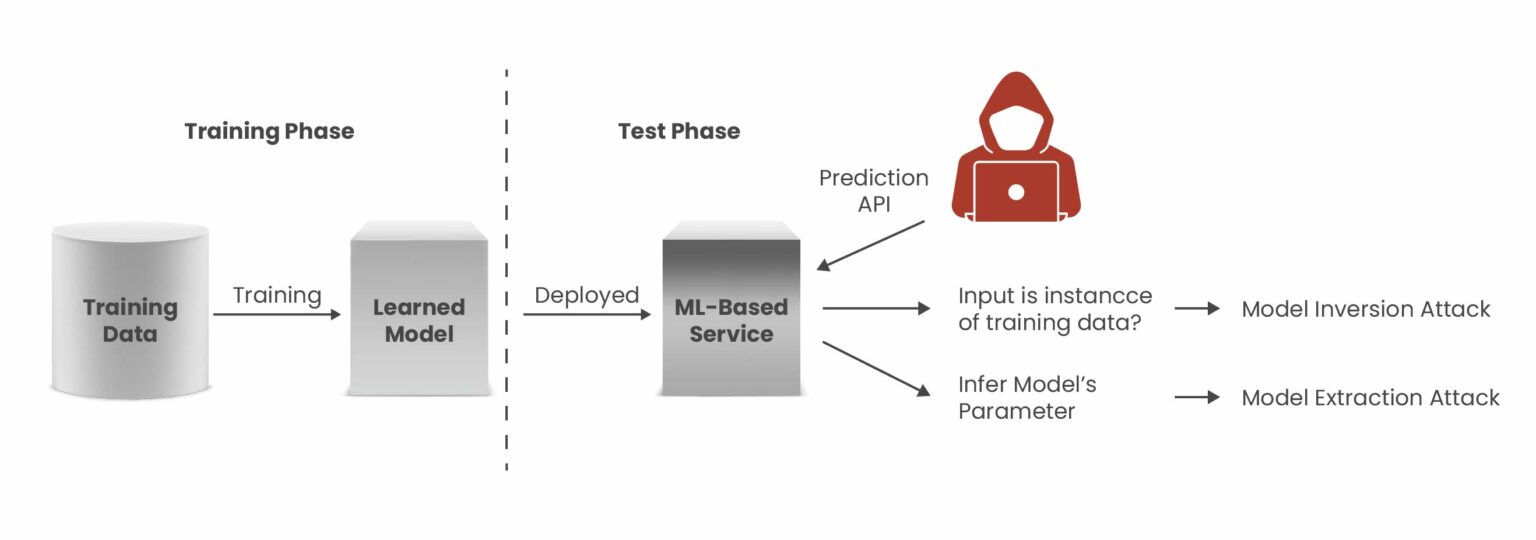 A model inversion attack is a form of privacy attack against machine learning
systems in which an adversary uses the outputs of a model to infer sensitive
information about the data used to train it. Rather than breaching a database
or stealing credentials, attackers observe how a model responds to input
queries and leverage those outputs, often including confidence scores or
probability values, to reconstruct aspects of the training data that should
remain private. ... This type of attack differs fundamentally from other ML
attacks, such as membership inference, which aims to determine whether a
specific data point was part of the training set, and model extraction, which
seeks to copy the model itself. ... Successful model inversion attacks can
inflict significant damage across multiple areas of a business. When attackers
extract sensitive training data from machine learning models, organizations
face not only immediate financial losses but also lasting reputational harm
and operational setbacks that continue well beyond the initial incident. ...
Attackers target inference-time privacy by moving through multiple stages,
submitting carefully crafted queries, studying the model’s responses, and
gradually reconstructing sensitive attributes from the outputs. Because these
activities can resemble normal usage patterns, such attacks frequently remain
undetected when monitoring systems are not specifically tuned to identify
machine learning–related security threats.
A model inversion attack is a form of privacy attack against machine learning
systems in which an adversary uses the outputs of a model to infer sensitive
information about the data used to train it. Rather than breaching a database
or stealing credentials, attackers observe how a model responds to input
queries and leverage those outputs, often including confidence scores or
probability values, to reconstruct aspects of the training data that should
remain private. ... This type of attack differs fundamentally from other ML
attacks, such as membership inference, which aims to determine whether a
specific data point was part of the training set, and model extraction, which
seeks to copy the model itself. ... Successful model inversion attacks can
inflict significant damage across multiple areas of a business. When attackers
extract sensitive training data from machine learning models, organizations
face not only immediate financial losses but also lasting reputational harm
and operational setbacks that continue well beyond the initial incident. ...
Attackers target inference-time privacy by moving through multiple stages,
submitting carefully crafted queries, studying the model’s responses, and
gradually reconstructing sensitive attributes from the outputs. Because these
activities can resemble normal usage patterns, such attacks frequently remain
undetected when monitoring systems are not specifically tuned to identify
machine learning–related security threats.It’s time to rethink CISO reporting lines
 The age-old problem with CISOs reporting into CIOs is that it could present —
or at least appear to present — a conflict of interest. Cybersecurity
consultant Brian Levine, a former federal prosecutor who serves as executive
director of FormerGov, says that concern is even more warranted today. “It’s
the legacy model: Treat security as a technical function instead of an
enterprise‑wide risk discipline,” he says. ... Enterprise CISOs should be
reporting a notch higher, Levine argues. “Ideally, the CISO would report to
the CEO or the general counsel, high-level roles explicitly accountable for
enterprise risk. Security is fundamentally a risk and governance function, not
a cost‑center function,” Levine points out. “When the CISO has independence
and a direct line to the top, organizations make clearer decisions about risk,
not just cheaper ones." ... Painter is “less dogmatic about where the CISO
reports and more focused on whether they actually have a seat at the table,”
he says. “Org charts matter far less than influence,” he adds. “Whether the
CISO reports to the CIO, the CEO, or someone else, the real question is this:
Are they brought in early, listened to, and empowered to shape how the
business operates? When that’s true, the structure works. When it’s not, no
reporting line will save it.” ... “When the CISO reports to the CIO, risk can
be filtered, prioritized out of sight, or reshaped to fit a delivery
narrative. It’s not about bad actors. It’s about role tension. And when that
tension exists within the same reporting line, risk loses.”
The age-old problem with CISOs reporting into CIOs is that it could present —
or at least appear to present — a conflict of interest. Cybersecurity
consultant Brian Levine, a former federal prosecutor who serves as executive
director of FormerGov, says that concern is even more warranted today. “It’s
the legacy model: Treat security as a technical function instead of an
enterprise‑wide risk discipline,” he says. ... Enterprise CISOs should be
reporting a notch higher, Levine argues. “Ideally, the CISO would report to
the CEO or the general counsel, high-level roles explicitly accountable for
enterprise risk. Security is fundamentally a risk and governance function, not
a cost‑center function,” Levine points out. “When the CISO has independence
and a direct line to the top, organizations make clearer decisions about risk,
not just cheaper ones." ... Painter is “less dogmatic about where the CISO
reports and more focused on whether they actually have a seat at the table,”
he says. “Org charts matter far less than influence,” he adds. “Whether the
CISO reports to the CIO, the CEO, or someone else, the real question is this:
Are they brought in early, listened to, and empowered to shape how the
business operates? When that’s true, the structure works. When it’s not, no
reporting line will save it.” ... “When the CISO reports to the CIO, risk can
be filtered, prioritized out of sight, or reshaped to fit a delivery
narrative. It’s not about bad actors. It’s about role tension. And when that
tension exists within the same reporting line, risk loses.”AI drives cyber budgets yet remains first on the chop list
Cybersecurity budgets are rising sharply across large organisations, but a new multinational survey points to a widening gap between spending on artificial intelligence and the ability to justify that spending in business terms. ... "Security leaders are getting mandates to invest in AI, but nobody's given them a way to prove it's working. You can't measure AI transformation with pre-AI metrics," Wilson said. He added that security teams struggle to translate operational data into board-level evidence of reduced risk. "The problem isn't that security teams lack data. They're drowning in it. The issue is they're tracking the wrong things and speaking a language the board doesn't understand. Those are the budgets that get cut first. The window to fix this is closing fast," Wilson said. ... "We need new ways to measure security effectiveness that actually show business impact, because boards don't fund faster ticket closure, they fund measurable risk reduction and business resilience. We have to show that we're not just responding quickly but eliminating and improving the conditions that allow incidents to happen in the first place," he said. ... Security leaders reported pressure to invest in AI, while also struggling to link those investments to outcomes executives recognise as resilience and risk reduction. The report argues this tension may become harder to sustain if economic conditions tighten and boards begin looking for costs to cut.A cloud-smart strategy for modernizing mission-critical workloads
 As enterprises mature in their cloud journeys, many CIOs and senior technology
leaders are discovering that modernization is not about where workloads run —
it’s about how deliberately they are designed. This realization is driving a
shift from cloud-first to cloud-smart, particularly for systems the business
cannot afford to lose. A cloud-smart strategy, as highlighted by the Federal
Cloud Computing Strategy, encourages agencies to weigh the long-term, total
costs of ownership and security risks rather than focusing only on immediate
migration. ... Sticking indefinitely with legacy systems can lead to rising
maintenance costs, inability to support new business initiatives, security
vulnerabilities and even outages as old hardware fails. Many organizations
reach a tipping point where they must modernize to stay competitive. The key
is to do it wisely — balancing speed and risk and having a solid strategy in
place to navigate the complexity. ... A cloud-smart strategy aligns workload
placement with business risk, performance needs and regulatory expectations
rather than ideology. Instead of asking whether a system can move to the
cloud, cloud-smart organizations ask where it performs best. ... Rather than
lifting and shifting entire platforms, teams separate core transaction engines
from decisioning, orchestration and experience layers. APIs and event-driven
integration enable new capabilities around stable cores, allowing systems to
evolve incrementally without jeopardizing operational continuity.
As enterprises mature in their cloud journeys, many CIOs and senior technology
leaders are discovering that modernization is not about where workloads run —
it’s about how deliberately they are designed. This realization is driving a
shift from cloud-first to cloud-smart, particularly for systems the business
cannot afford to lose. A cloud-smart strategy, as highlighted by the Federal
Cloud Computing Strategy, encourages agencies to weigh the long-term, total
costs of ownership and security risks rather than focusing only on immediate
migration. ... Sticking indefinitely with legacy systems can lead to rising
maintenance costs, inability to support new business initiatives, security
vulnerabilities and even outages as old hardware fails. Many organizations
reach a tipping point where they must modernize to stay competitive. The key
is to do it wisely — balancing speed and risk and having a solid strategy in
place to navigate the complexity. ... A cloud-smart strategy aligns workload
placement with business risk, performance needs and regulatory expectations
rather than ideology. Instead of asking whether a system can move to the
cloud, cloud-smart organizations ask where it performs best. ... Rather than
lifting and shifting entire platforms, teams separate core transaction engines
from decisioning, orchestration and experience layers. APIs and event-driven
integration enable new capabilities around stable cores, allowing systems to
evolve incrementally without jeopardizing operational continuity.Enterprises still can't get a handle on software security debt – and it’s only going to get worse
 Four-in-five organizations are drowning in software security debt, new
research shows, and the backlog is only getting worse. ... "The speed of
software development has skyrocketed, meaning the pace of flaw creation is
outstripping the current capacity for remediation,” said Chris Wysopal, chief
security evangelist at Veracode. “Despite marginal gains in fix rates,
security debt is becoming a much larger issue for many organizations."
Organizations are discovering more vulnerabilities as their testing programs
mature and expand. Meanwhile, the accelerating pace of software releases
creates a continuous stream of new code before existing vulnerabilities can be
addressed. ... "Now that AI has taken software development velocity to an
unprecedented level, enterprises must ensure they’re making deliberate,
intelligent choices to stem the tide of flaws and minimize their risk," said
Wysopal. The rise in flaws classed as both “severe” and “highly exploitable”
means organizations need to shift from generic severity scoring to
prioritization based on real-world attack potential, advised Veracode. As
such, researchers called for a shift from simple detection toward a more
strategic framework of Prioritize, Protect, and Prove. ... “We are at an
inflection point where running faster on the treadmill of vulnerability
management is no longer a viable strategy. Success requires a deliberate
shift,” said Wysopal.
Four-in-five organizations are drowning in software security debt, new
research shows, and the backlog is only getting worse. ... "The speed of
software development has skyrocketed, meaning the pace of flaw creation is
outstripping the current capacity for remediation,” said Chris Wysopal, chief
security evangelist at Veracode. “Despite marginal gains in fix rates,
security debt is becoming a much larger issue for many organizations."
Organizations are discovering more vulnerabilities as their testing programs
mature and expand. Meanwhile, the accelerating pace of software releases
creates a continuous stream of new code before existing vulnerabilities can be
addressed. ... "Now that AI has taken software development velocity to an
unprecedented level, enterprises must ensure they’re making deliberate,
intelligent choices to stem the tide of flaws and minimize their risk," said
Wysopal. The rise in flaws classed as both “severe” and “highly exploitable”
means organizations need to shift from generic severity scoring to
prioritization based on real-world attack potential, advised Veracode. As
such, researchers called for a shift from simple detection toward a more
strategic framework of Prioritize, Protect, and Prove. ... “We are at an
inflection point where running faster on the treadmill of vulnerability
management is no longer a viable strategy. Success requires a deliberate
shift,” said Wysopal.Protecting your users from the 2026 wave of AI phishing kits
 To protect your users today, you have to move past the idea of reactive
filtering and embrace identity-centric security. This means your software needs
to be smart enough to validate that a user is who they say they are, regardless
of the credentials they provide. We’re seeing a massive shift toward behavioral
analytics. Instead of just checking a password, your platform should be looking
at communication patterns and login behaviors. If a user who typically logs in
from Chicago suddenly tries to authorize a high-value financial transfer from a
new device in a different country, your system should do more than just send a
push notification. ... Beyond the tech, you need to think about the “human”
friction you’re creating. We often prioritize convenience over security, but in
the current climate, that’s a losing bet. Implementing “probabilistic approval
workflows” can help. For example, if your system’s AI is 95% sure a login is
legitimate, let it through. If that confidence drops, trigger a more rigorous
verification step. ... The phishing scams of 2026 are successful because they
leverage the same tools we use for productivity. To counter them, we have to be
just as innovative. By building identity validation and phishing-resistant
protocols into the core of your product, you’re doing more than just securing
data. You’re securing the trust that your business is built on.
To protect your users today, you have to move past the idea of reactive
filtering and embrace identity-centric security. This means your software needs
to be smart enough to validate that a user is who they say they are, regardless
of the credentials they provide. We’re seeing a massive shift toward behavioral
analytics. Instead of just checking a password, your platform should be looking
at communication patterns and login behaviors. If a user who typically logs in
from Chicago suddenly tries to authorize a high-value financial transfer from a
new device in a different country, your system should do more than just send a
push notification. ... Beyond the tech, you need to think about the “human”
friction you’re creating. We often prioritize convenience over security, but in
the current climate, that’s a losing bet. Implementing “probabilistic approval
workflows” can help. For example, if your system’s AI is 95% sure a login is
legitimate, let it through. If that confidence drops, trigger a more rigorous
verification step. ... The phishing scams of 2026 are successful because they
leverage the same tools we use for productivity. To counter them, we have to be
just as innovative. By building identity validation and phishing-resistant
protocols into the core of your product, you’re doing more than just securing
data. You’re securing the trust that your business is built on.


No comments:
Post a Comment