Daily Tech Digest - April 09, 2018

Architecturally Aligned Testing
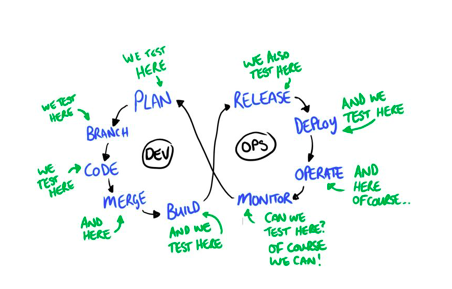

A loosely coupled system follows a service autonomy principle as its architecture is based on the decomposition in autonomous parts. Microservices are increasingly being adopted by organizations to improve the autonomy of their teams and increase the speed of change. Microservice applications are composed of those small, independently versioned, and scalable customer-focused services that communicate with each other over standard protocols with well-defined interfaces. ... Microservices are often accompanied by DevOps: In agile and DevOps, there is no separate design phase with an architect responsible to define the architecture prior to the development phase. Instead, the architecture is defined more federated, addressed across the project, and owned by the whole team. And how is the test approach changing for those systems? Also testing is typically not done anymore in a separate test phase by an independent test team. Instead, everybody is responsible for the quality.


Proxeus And Partners IBM, Canton Zug, Legally Register Business Using Blockchain
The event took place as part of the digitalswitzerland challenge, a joint initiative from several of Switzerland’s leading businesses aimed at driving digitalization efforts across the country. The group said the idea emerged from the realization that an alternative to the current cumbersome, time-consuming and paper-intensive process of business registration needed to be introduced in Switzerland. By shifting the entire process encompassing the entrepreneur, lawyer, bank, notary and commercial register to a digital workflow and Hyperledger blockchain and by utilizing smart contracts, the key steps can be processed instantly, drastically reducing the amount of time spent toward verification. “The bank will state that the capital money has indeed been paid; the notary will confirm that the necessary documents have been provided, read over, and approved; and the commercial register does the final check that everything is lawful. If all of the conditions are met, then the filing, which up until that point will have been provisional, will be officially registered with the Commercial Register and Official Gazette of Commerce,” the group explained.


Microsoft's New Cortana Chief Plans To Put Her Smarts In More Places

microsoft cortana on the lock screen
If Soltero’s words are any indication, Cortana’s future will have her ranging far and wide beyond Windows. “The guiding light for us is the assistant concept, and the idea that you want to help people get more out of their time, and whether actively or proactively make the things that you do every day easier or better or more effective,” Soltero said. Cortana continues to be her most helpful when she can keep an eye on you and find ways to help. “Part of that means looking at a person throughout their day,” Soltero explained, “looking at opportunities and the different kinds of places where...an assistant technology or product experience or whatever you want to call it can provide.” That means Cortana will continue to pipe up when she senses a need. “What we’ve noticed, I guess, and what the world has shown us is that you can start by being convenient,” Soltero added. “There is actually a path towards earning the right to be an assistant.” This is how Microsoft sees Cortana’s next steps: less flash, more utility. But Soltero also said that doesn’t always play well with a user base that looks for the next big thing.


The future of enterprise IoT

The future of enterprise IoT
As enterprise IoT grows, I was interested in what use cases would take hold first. Karen Panetta, an IEEE Fellow and dean of Graduate Engineering Education at Tufts University, looked to consumer applications like “deep learning on household security monitoring and energy consumption information.” Already, she said, “consumers can set their thermostats and virtually ‘answer their doorbell’ from anywhere. Next will come understanding exactly where that energy is being used within the household, such as how much energy goes into lighting, heating, doing laundry, TV, and computers.” At the same time, of course, that will give companies a much deeper understanding of how customers spend their time. On a more explicitly enterprise level, “IoT technologies that have a rapid return on investment (ROI) are the most likely to take off first, and that means “reducing costs through automation,” said Kayne McGladrey, an IEEE member and director of Integral Partners, an identity and access management (IAM) consultant firm.


Social Engineering: It's time to patch the human

marionette social engineering
In short, if we don't patch the human – no matter how good the tech is – we're still going to have problems. "Everybody wants to build a Blinky Box, and build technology that intercepts and protects the human, instead of getting humans to be developed and educated enough to protect the technology. They're not a liability, they're an asset. [Humans] are the biggest intrusion detection system that you're going to get." There's an assumption within some circles that continuous awareness training is a too difficult of a battle to fight within a given organization. Depending on scope, it can be a resource drain on time and money. Yet, equally as difficult is the recovery from socially-based attacks when they could've been prevented. The harsh truth though, is that information security really isn't part of the average worker's job, and even if there are some security elements, they're an afterthought, not the core. "We're not making information security part of the user's job, and if it's not part of their job, then it's not their concern and they don't care about it," Street said.


New Microsoft Teams features on deck, but more work needed

Over the past six months, Microsoft has moved many Skype for Business features into Teams. The vendor announced in September 2017 that cloud-based Skype for Business in Office 365 would transition to Teams. Despite its progress, however, Microsoft still has work to do, especially for full enterprise voice features. Many key Microsoft Teams features -- particularly for meetings and calling -- are expected to launch by the end of the second quarter this year. Other calling capabilities -- such as call park, group call pickup, location-based routing and shared line experience -- are expected by the end of this year.  The migration roadmap for Skype for Business to Microsoft Teams includes 70 enterprise voice features, according to Lori Wright, general manager of Microsoft Teams and Skype. Microsoft delivered half of those features by January 2018, Wright said. The vast majority of overall voice features should be completed by June 2018, she added.


How blockchain could solve the internet privacy problem

bitcoins and dollar bills
There are many blockchain specifications, and many of them are based on open-source software. The Sovrin Network is based on the Linux Foundation's Hyperledger Indy specification, which was built from the ground up for verifying a user's identity. Blockchain networks, or distributed electronic ledgers, can protect the identity of users behind a randomly generated hash table, a type of cryptographically signed credential, to prove the digital identity information in the identity owner's possession. Once a business or organization has verified information about a person, a simple icon can be used approve a transaction. Besides being used for bitcoin and other cryptocurrency transactions, blockchain has most recently been adopted for business transactions, such as automating supply-chain management and cross-border money exchanges. In short, many businesses and governments believe blockchain could underpin a new trust economy, one constructed of person-to-person (P2P) transactions and not dependent on more traditional methods such as credit ratings or guaranteed cashier's checks.


Data scientists that produce data-driven products rule the market

In a data-driven product organization, the data science team will also work closely with the product manager, head of product or chief product officer, as invariably the data scientists will likely be the biggest contributors to the organization's product designs and ultimate success. What is a data-driven product? In straightforward terms, a data-driven product is a software, service or platform that is able to solve deeply complex problems by utilizing a number of different machine learning algorithms. These algorithms will vary from the straightforward all the way to much more complex programs that utilize deep learning and artificial intelligence. There isn't an industry where data-driven products aren't becoming mainstream. Demand for this role: In these data-driven project firms, the product is defined by the quality of data that goes into it and the ability of the said product to create actionable insight through machine learning. Due to this, the data science team is absolutely indispensable.


What Hackers Do: Their Motivations & Their Malware

security vulnerabilities such as hackers and cyberattacks
The malware writer or distributor may also be paid to infect people’s devices with completely different types of malware. It’s a renter’s market out there, and if the malware controller can make more money renting the compromised devices than they can make alone, they will do it. Plus, it’s much less risk for the controller in the end. Many hackers (and hacking groups) use malware to gain access across a company or much broader array of target victims, and then individually select some of the already compromised targets to spend more effort on. Other times, like with most ransomware, the malware program is the whole ball of wax, able to compromise and extort money without any interaction from its malicious leader. Once released, all the hacker has to do is collect the ill-gotten gains. Malware is often created and then sold or rented to the people who distribute and use them. ... Today, most hackers belong to professional groups, which are motivated by taking something of value, and often causing significant harm. The malware they use is designed to be covert as possible and to take as much of something of value as is possible before discovery.


Google's Fuchsia could replace Android and unite all devices


There is a lot of uncertainty around Fuchsia, but we know a few things about it. It’s rumoured there could be a launch in 2019 at the very earliest. Its user interface comes in two animal-named versions; Capybara for the desktop, and Armadillo for mobile, the OS is built using a brand new kernel called ‘Zircon’, instead of using Linux like Android does, and it’s all designed to be continuously upgraded. At the moment, Android has a fragmentation problem where most users run older versions. It also contains a feature called ‘Ledger’ which will synchronise all your devices together, letting you start writing something on one machine and finish it on another. Apps for Fuchsia can be made using Flutter, a Google-made software development kit that is already in use for its existing operating systems. Developers and intrepid users have been able to look at a basic preview of Fuchsia by downloading the files to Google’s Pixelbook, the only device currently supported.


Quote for the day:


"The successful man doesn't use others. Other people use the successful man. For above all the success is of service" -- Mark Kainee


Daily Tech Digest - April 08, 2018

France pledges to use force only in legitimate self-defense, that is, in response to a cyber attack that would cross the UN Charter’s Article 51 threshold. This rules out the possibility of a “preventive cyber attack” against a hostile third party. By contrast, strictly preemptive action could in certain circumstances be legal under international law, depending on the scale and effects of the attack. The decision to abide by international law in times of conflict constrains the range of possible responses to cyber attacks with more ambiguous consequences. For example, although the document claims democratic life is an asset of vital importance just like a power grid, even a large hack aimed at disrupting an election would be less likely to trigger a conventional military response than an attack against a key power grid would be. If the threshold for offensive action is not met, France claims it would act under the UN Charter’s Chapter VI, taking economic or political reprisal measures, a stance consistent with America’s response to Russia’s electoral interference in 2016.


Building single source of truth using Serverless and NoSQL

When it comes to large scale data ingestion in Azure, Event Hubs provide a data streaming platform, capable of receiving and capturing millions of events per second. However the customer had enterprise high-value messaging requirements such as transactions, ordering and dead-lettering. Luckily we have such a service at our disposal in Azure Service Bus. We could have easily skipped Service Bus and directly persisted data to the storage, however the queue-based load leveling pattern allows us to decouple ingestion from storage, adds resilience in the form of retries, as well as enables asynchronous processing of ingested data. Instead of directly exposing Service Bus to the source systems, we wanted a REST API with friendly URL. Azure Functions allows us to develop event-driven Serverless applications by providing a multitude of triggers and bindings. All functions have exactly one trigger which defines how the function is invoked. In just few lines below, we were able to create an HTTP trigger function which inserts JSON-serialized product entity to the Service Bus Queue called productsQueue.


Is Your Blockchain Business Doomed?


It’s possible that even an individual’s public Bitcoin address—a string of letters and numbers used to send and receive the digital currency—could be considered personal information. “Encrypted data will often qualify as personal data and not as anonymous data,” the law firm Hogan Lovells said in a recent note. “This means that in most instances the privacy rules will be applicable to at least some of the data involved in blockchain systems.” Some companies may have to redesign their software and buy costly traditional databases to move any personally identifiable information they possess off a blockchain. That would help with compliance, but it could remove some of a blockchain’s benefits. It will be harder to ensure that documents stored outside a blockchain haven’t been tampered with, for example. And moving off a blockchain could be expensive, especially for startups. Maintaining their own databases costs more, and such companies might need to raise funds to build IT infrastructure.


Pain in the bot? Artificial intelligence in banking

bots.png
This focus is already heating up the development landscape as chatbot technology advances at a rapid clip. Google and Microsoft already offer digital assistants on smartphones, called Google Now and Cortana, respectively, which gain increasingly deep knowledge of their users’ habits and schedules. Amazon sells a stand-alone device called Echo that features Alexa, who can, among other things, play music, read books aloud and help buy items through Amazon. And Siri of course reigns over the Apple universe. According to Gartner, about 38% of American consumers have used virtual-assistant services on their smartphones recently; by the end of 2016 an estimated two-thirds of consumers in developed markets will use them daily. So, all signs point toward an AI-induced change in the way we interact with... well, probably everything. ,,, Although some interesting examples emerged from a recent Mondo hackathon, and some non-bank fintech startups are starting to introduce clever apps


Exploring the Future of Banking

Lately, banks and fintech firms find that they have complementary assets that could result in mutually beneficial relationships. Banks have the market’s trust and a large customer base that fintech firms have had a hard time to replicate. Fintech firms have innovative solutions that banks haven’t been able to develop. Partnerships would be ideal in such a situation. Unfortunately, due to regulatory concerns, most FIs see fintech firms as either vendors, acquisition targets, or investments. True partnerships are few in the industry. That said there are various opportunities. For example, the robo-advisor space in wealth management is ripe for strong collaborations. Traditionally, investing has been kept to the mass affluent market and above. Fintech firms like Betterment, Wealthfront, Robinhood, and Acorns continue to show that the mass market is ready to take advice through automated solutions and PFM assistants powered by AI and algorithms. To be honest, banks aren’t worried by these players. Correctly, many bankers point to the fact that these lenders haven’t gone through a downturn in the economy.


How to use data science to understand customer emotions and decisions

Emotions
To be clear, computers don't understand emotions, but they can be shown examples around an arbitrary concept and be taught to recognise the weak signals and indicators that identify them. The aim is to give automated systems the ability to listen to and understand the emotional subtext in a dialogue and do so at a level of sophistication and scale that humans can't replicate. If you like, we're attempting to give computers some EQ to go with their IQ. Of course, the natural follow-on to this is that the organisation also must be good at acting on the insights - listening is only half the equation. I like to think about it as putting the 'relationship' back into customer relationship management and we all know that the best relationships are far more than meeting each other's rational needs. ... This data fuels the analyses. Next is the ability to extract emotional meaning from narratives using advanced natural languages tools, ones that don't just categorise conversations or answer questions - this is predominantly the world of AI and Machine Learning.


What you need to know about cryptocurrencies in UAE


On one hand, the Central Bank of the UAE's Regulatory Framework for Stored Values and Electronic Payment Systems indicates very clearly that "all virtual currencies [and any transactions thereof] are prohibited". On the other hand, the UAE and Saudi Arabia have recently made public their plans to implement their own cryptocurrency to be used and regulated in the region. In September 2017, the Dubai Financial Services Authority has issued in a statement addressed to the Dubai International Financial Centre's investors that it did not "regulate these types of product offerings [cryptocurrencies]" whilst declaring them to be "high-risk investments". Today in the UAE, there is no clear vision on this phenomenon. And it is a mere question of definition. UAE central bank governor Mubarak Rashid Khamis Al Mansouri indicated that "these regulations do not cover 'virtual currency', which is defined as any type of digital unit used as a medium of exchange, a unit of account, or a form of stored value. In this context, these regulations do not apply to bitcoin or other cryptocurrencies, currency exchanges, or underlying technology such as blockchain".


Blockchain use cases where IoT and distributed ledger technology meet

In an age where consumers want their goods faster than ever and the pressure for digital supply chains to be more interconnected and efficient is high. With interconnected we don’t mean supply chains as such but the data flows, processes, control mechanisms, myriad stakeholders, processes, actions and interactions (as mentioned in a blockchain smart port case there are over 30 different parties with on average 200 interactions between them just to get a container from one point or the other in shipping). No wonder that global logistics and transportation are among the fastest movers in testing and adopting blockchain technology. It is no different in the intersections of IoT and distributed ledgers from the ecosystem perspective as the Kaleido Insights report depicts it: supply chain is one of five blockchain IoT use case or rather industries/activities where blockchain is seen as the foundation for autonomous products and ecosystem services.


Patterns for Microservice Developer Workflows and Deployment


To improve feature velocity in an organization, you can organize your people as independent, self-sufficient feature teams that own an entire feature from beginning to end. This will improve feature velocity in two ways. First, since the different functions (product, development, QA, and operations) are scoped to a single feature, you can customize the process to that feature area — e.g., your process doesn't need to prioritize stability for a new feature that nobody is using. Second, since all the components needed for that feature are owned by the same team, the communication and coordination necessary to get a feature out the door can happen much more quickly and effectively. When you do this, you end up breaking up that monolithic process that was the gating factor for feature velocity, and you create many smaller processes owned by your independent feature teams. The side effect of this is that these independent teams deliver their features as microservices. The fact that this is a side effect is really important to understand.


Laying a Framework for IoT with Enterprise Architecture


IoT transformation projects are complex and require careful planning and tracking against progress. Having an IoT roadmap will keep you from adding valueless technology to your landscape. Enterprise architects should be in the driver’s seat, and lead when identifying conflicts in requirements between different projects regarding the same applications. Planning and tracking the transformation process can cut down the time of the entire process of successfully deploying the IoT-supported system. Here, enterprise architects can easily track the phase-ins of new applications and retirements of legacy applications, and plan for scenarios of the application landscape to future-proof the organizations’ system. ... With data breaches occurring almost weekly, security is a crucial issue and proves to be a significant challenge for IoT. One of the biggest and most impactful costs of integrating an EA system that supports IoT is the potential security risks to the organization if left exposed.


Quote for the day:


"Tomorrow's leaders will not lead dictating from the front, nor pushing from the back. They will lead from the centre - from the heart" -- Rasheed Ogunlaru


Daily Tech Digest - April 07, 2018

Disrupting And Elevating The Relationship Between Brand And Consumer


In the industry of digital brand building, our success as an agency can be measured by the longevity of a business -- and user experience strategies have proven to be the key element in ensuring this relevancy. All of our clients experience their own evolution based on their specific customer needs and patterns, but in our experience, brands who continually refine their approach to meet and exceed user expectations are those that have the best chance at long-term growth and a considerable tip of the scales in their favor for market share. There’s little argument that e-commerce is a thriving market. The benefits are far-reaching -- value, speed and availability, to name just a few. Consider this: Nearly 49% of consumers shop online for consumer packaged goods, and it's estimated that in five to seven years, 70% of consumers in the U.S. will do so regularly. When you take into consideration the traditional pattern of in-store grocery shopping, it's mind-boggling that a relatively recent innovation has changed the face of the way we accomplish this daily task.


Sree Sreenivasan’s Social Media Status Report

“Every publisher I talk to has to be talked down off the ledge because what they are looking at is the numbers. I believe there is positive news in this,” says Sreenivasan. “The glimmer of hope that I see in this is that yes, they are deemphasizing brands, and emphasizing people, and therefore your traffic will drop. But in the emphasizing of people, your path to salvation lies there. Because if your content is readable, shareable, embeddable, joyful, or useful, people will share it. And if they want to share it, they will. That’s where we have to think about our content: How do we make it so good that people want to share it?” Beyond Facebook of course are other influential platforms, including one that Sreenivasan has a particular eye on. “One platform that is vastly underused is LinkedIn,” he says. “LinkedIn has so many opportunities because it is aimed at people at work and I’ve now made it a resolution that I am going to do more on LinkedIn because I see the pick-up it gets when you post an article. And so what is your LinkedIn strategy?”


Decoding the evolution of Blockchain 3.0

According to Crunchbase data, $1.2 billion was invested by venture capitalists in blockchain-based firms in 2017. Photo: iStock
The blockchain technology that powered bitcoin is a relatively bare-bones system that requires layers of protocols to be built on top of it to make it a usable platform for utilities like smart contracts. Ethereum, on the other hand, was launched with its own scripting language baked in, making it possible to build complex smart contracts, decentralized autonomous organizations, DApps and even other cryptocurrencies with relative ease. Bitcoin’s rise to popularity resulted in its supporting blockchain technology, being categorized as Blockchain 1.0. Ethereum’s broad adoption as a decentralized platform for applications to run exactly as programmed enabled it to be categorized as Blockchain 2.0. Currently, we are witnessing a new set of blockchain platforms and networks based on DAG technology. There exist a number of DAG-based blockchains such as Hashgraph, IOTA, Stellar, NEO, RaiBlocks, etc., which have been developed for specific real-world problems. These platforms belong to the third generation, or what we call Blockchain 3.0 group, and are developed to overcome the key issues of the original blockchain (Blockchain 1.0) and Ethereum (Blockchain 2.0), and are designed on the FFM concept.


How babies learn – and why robots can’t compete


If all of us are to achieve our potential as learners, the question we have to answer is how we ought to shape this environment. Human brains have specially adapted to learn. Our long period of immaturity is a risky evolutionary strategy, making us vulnerable early on to predators or sickness, and delaying for many years our capacity to reproduce, but the payoff is immense. We can actively incorporate enormous amounts of the latest information from our environment and social group into our cognitive development. Scientists have long recognised the nature-v-nurture debate as fallacy. A huge amount of our brain development takes place in the first three years. In those years, the brain grows in relation to the environment, forming itself in interaction with sensory experience. As Hart and Risley showed in their study of the word gap, that experience can have a huge effect on who that person becomes. We have evolved to be a species of teachers and learners. Our ability to understand other people arrives around the ninth month, at a moment in their development at which babies begin to check the attention of others by holding or pointing at objects.


Turning the tables: Is Big Tech under threat from traditional banks? 

Fintech
According to White, the real battleground between Big Tech and banking sits in I2O, which is about how people interact with their money and how these are translated into opportunities.  "Big Tech has, on a minimum, 2000 interactions per customer per year," states White. "Banking, on the other hand, has 200 interactions. That is, Big Tech creates high frequency of interactions, with a high volume of data sets, but with low value; as opposed to banks' model which is low frequency, low volume and high value," he adds. In other words, that is 10:1 on volume of interactions, but does that translate into an equivalent 10:1 of value? White challenges that. "Despite more interactions, customers liking a social media post on Facebook or searching for a product on Google adds relatively low value data since it cannot be monetized much," he argues. "On the other hand, even if banking gets fewer interactions, all these are high value ones from a monetary point of view. According to him, the real questions are not the volume of interactions or its frequency. "The question of the future in this battleground between big tech and banking is how smart these interactions are."


Citizen AI: A business guide to raising artificial intelligence in a digital economy

How do you improve the way people work and live? Accenture's Technology Vision 2018 report tackles this question by highlighting trends and rapid advancements in technologies that are improving the way people work and live. The report highlights a need for a fundamental shift in leadership that is required to cultivate partnerships with customers and business partners, and to further accelerate the adoption of artificial intelligence as the fuel for enterprises to grow and deliver social impact. Accenture's 2018 report, called Intelligent Enterprise Unleashed: Redefine Your Company Based on the Company You Keep, highlights how rapid advancements in technologies -- including artificial intelligence (AI), advanced analytics and the cloud -- are enabling companies to not just create innovative products and services, but change the way people work and live. This, in turn, is changing companies' relationships with their customers and business partners.


'Killer Robot' Lab Faces Boycott from Artificial Intelligence Experts


Nearly 60 AI and robotics experts from almost 30 countries have signed an open letter calling for a boycott against KAIST, a public university in Daejeon, South Korea, that has been reported to be "develop[ing] artificial intelligence technologies to be applied to military weapons, joining the global competition to develop autonomous arms," the open letter said. In other words, KAIST might be researching how to make military-grade AI weapons. According to the open letter, AI experts the world over became concerned when they learned that KAIST — in collaboration with Hanwha Systems, South Korea's leading arms company — opened a new facility on Feb. 20 called the Research Center for the Convergence of National Defense and Artificial Intelligence. Given that the United Nations (U.N.) is already discussing how to safeguard the international community against killer AI robots, "it is regrettable that a prestigious institution like KAIST looks to accelerate the arms race to develop such weapons," the researchers wrote in the letter.


Why we need to separate blockchain technology from cryptocurrencies

null
One of the main misconceptions that fuels the misbelief that blockchain is synonymous with cryptocurrencies is that a blockchain is 100 per cent decentralised, autonomous and open to all. In turn, this stokes the belief that it is not possible for a blockchain to be secure, reliable nor responsible – fundamental principles required for using a technology in business. However, the reality is that blockchain is not dictated by the restrictions of the existing and most well-known Bitcoin or Ethereum networks. While these networks are fully pseudonymous, public and decentralised, the blockchain technology can be fully customised to create a blockchain with bespoke features and rules tailored to a variety of services and requirements. The charge that blockchain is not secure is based on historical public breaches of some types of blockchain. In 2016, a ‘recursive call’ bug in a blockchain was exploited, allowing the hacker to drain the Decentralised Autonomous Organisation (DAO) of $3.6 million in Ether, approximately equivalent to $45 million at the time, collected from the sale of its tokens.


SWIFT Blockchain PoC Final Verdict

SWIFT finally released the results of the PoC this month and have confirmed that there is a lot more work needed within Banks’ back office technology and operational processes for DLT to be relevant. The PoC was aimed at international payments and how intraday/real time liquidity management could be performed using DLT. Correspondent banks provide services on behalf of another overseas financial institution through a correspondent account. However, about 34% of the cost of an international payment is related to Nostro trapped liquidity. This is due to the lack of real-time data to optimize intraday liquidity management. Managing Nostro accounts and ensuring there is no over funding or overusage of credit lines depend on availability of real time data. A real-time feed of transaction data would allow banks to release payments to customers quicker, whilst reducing liquidity risks. With that as the driver behind the initiative, a consortium of 34 banks worked on this use case with SWIFT. In Q1 2017 SWIFT had launched their Global Payments Initiative (GPI) with these banks and it went live without DLT.


A Brain-Boosting Prosthesis Moves From Rats To Humans


The results have impressed other researchers, as well. "The loss of one’s memories and the ability to encode new memories is devastating—we are who we are because of the memories we have formed throughout our lifetimes," Rob Malenka, a psychiatrist and neurologist at Stanford University who was unaffiliated with the study, said via email. In that light, he says, "this very exciting neural prosthetic approach, which borders on science fiction, has great potential value. (Malenka has expressed cautious optimism about neuroprosthetic research in the past, noting as recently as 2015 that the translation of the technology from animal to human subjects would constitute "a huge leap.") However, he says, it's important to be remain clear-headed. "This kind of approach is certainly worth pursuing with vigor but I think it will still be decades before this kind of approach will ever be used routinely in large numbers of patient populations."


Quote for the day:


"The manager has a short-range view; the leader has a long-range perspective." -- Warren G. Bennis


Daily Tech Digest - April 06, 2018

If you develop software with Microsoft, you now own the rights

If you develop software with Microsoft, you now own the rights
There has been confusion over who owns newly created intellectual property and concern that without an approach that ensures customers own key patents to their solutions, technology companies like Microsoft will enter those customers’ markets and compete against them with the very techhnology they  codeveloped. Microsoft’s initiative puts the company ahead of the curve on this issue, said Patrick Moorhead, president of the analyst firm Moor Insights & Strategy. “The reality is, most major companies will become [intellectual property] creators in the future, but they don’t know it yet,” said Moorhead. “What Microsoft announced helps those companies protect their [intellectual property] and Microsoft’s in a very open and consistent way. This will likely reduce buyer’s remorse and lawsuits.”  Analyst Stephen O’Grady of RedMonk concurred. “As more enterprises have begun to embrace software as a core to their business rather than simply a cost of doing business, the likelihood that they create potentially valuable [intellectual property] as part of their efforts increases.”


Mirai Variant Botnet Takes Aim at Financials

According to the researchers, the botnet involved in the first company attack was 80% compromised MikroTik routers and 20% various IoT devices. Those devices range from Apache and IIS web servers to webcams, DVRs, TVs, and routers. Manufacturers of the recruited devices include companies from the very small up to Cisco and Linksys. Irfan Saif is cyber risk services principal for Deloitte Risk and Financial Advisory. In an interview with Dark Reading he points out that the IoT devices brought into the botnets have processing, communication, and networking capabilities, so it's not surprising that they're being recruited for nefarious purposes. "It will be a continuing problem and the intricacies and complexities will continue to evolve," he says. "There's an ever-increasing set [of IoT applications] in industries and for facilities management that will broaden the set of devices that can be taken," Saif says, adding, "The complexity of devices that can be taken will continue to increase."


Open Source Isn't The Community You Think It Is

Open source isn’t the community you think it is
The interesting thing is just how strongly the central “rules” of open source engagement have persisted, even as open source has become standard operating procedure for a huge swath of software development, whether done by vendors or enterprises building software to suit their internal needs. While it may seem that such an open source contribution model that depends on just a few core contributors for so much of the code wouldn’t be sustainable, the opposite is true. Each vendor can take particular interest in just a few projects, committing code to those, while “free riding” on other projects for which it derives less strategic value. In this way, open source persists, even if it’s not nearly as “open” as proponents sometimes suggest. Is open source then any different from a proprietary product? After all, both can be categorized by contributions by very few, or even just one, vendor. Yes, open source is different. Indeed, the difference is profound. In a proprietary product, all the engagement is dictated by one vendor. 


Google employees demand end to company's AI work with Defense Department

drone.jpg
Both Google and the Pentagon have stressed that the technology is not ready to be used in combat situations, with Marine Corps Col. Drew Cukor telling the audience at the 2017 Defense One Tech Summit audience that "AI will not be selecting a target [in combat] ... any time soon. What AI will do is [complement] the human operator." But Col. Cukor also said that he believes the Defense Department is "in an AI arms race," and acknowledged that "the big five Internet companies are pursuing this heavily." Cukor later added: "Key elements have to be put together...and the only way to do that is with commercial partners alongside us." According to the Wall Street Journal, the Defense Department spent $7.4 billion on technology involving AI last year, and Google, Microsoft, and Amazon are openly battling for a variety of defense contracts involving cloud computing and other software. But the employee letter argues that Google is damaging its brand by working on Project Maven and contributing to "growing fears of biased and weaponized AI."


GDPR will give Dutch privacy watchdog its teeth


Recent research showed that many small companies in the Netherlands are not ready for the GDPR. Another important link between the privacy watchdog and the business world are data protection officers (DPOs), who must be appointed by government institutions and companies working with “special personal data”, such as people’s social security numbers or medical data. “We rely heavily on DPOs to update us on how companies handle data protection,” says Wolfsen. The presence of a DPO in organisations is one of the first things the AP will check when the GDPR comes into effect, he says. “From day one, it’s going to be simple – we will check whether companies have a DPO if they are required to. If they don’t, we’re going to take action.” Wolfsen declines to say what kind of action that might be. Fines are a possibility, but the AP is known to show leniency in such matters, warning a company rather than fining immediately. This has led to some criticism from both opponents and privacy groups.


MPLS explained

MPLS explained
ATM and frame relay are distant memories, but MPLS lives on in carrier backbones and in enterprise networks. The most common use cases are branch offices, campus networks, metro Ethernet services and enterprises that need quality of service (QoS) for real-time applications. There’s been a lot of confusion about whether MPLS is a Layer 2 or Layer 3 service. But MPLS doesn’t fit neatly into the OSI seven-layer hierarchy. In fact, one of the key benefits of MPLS is that it separates forwarding mechanisms from the underlying data-link service. In other words, MPLS can be used to create forwarding tables for any underlying protocol. Specifically, MPLS routers establish a label-switched path (LSP), a pre-determined path to route traffic in an MPLS network, based on the criteria in the FEC. It is only after an LSP has been established that MPLS forwarding can occur. LSPs are unidirectional which means that return traffic is sent over a different LSP. When an end user sends traffic into the MPLS network, an MPLS label is added by an ingress MPLS router that sits on the network edge.


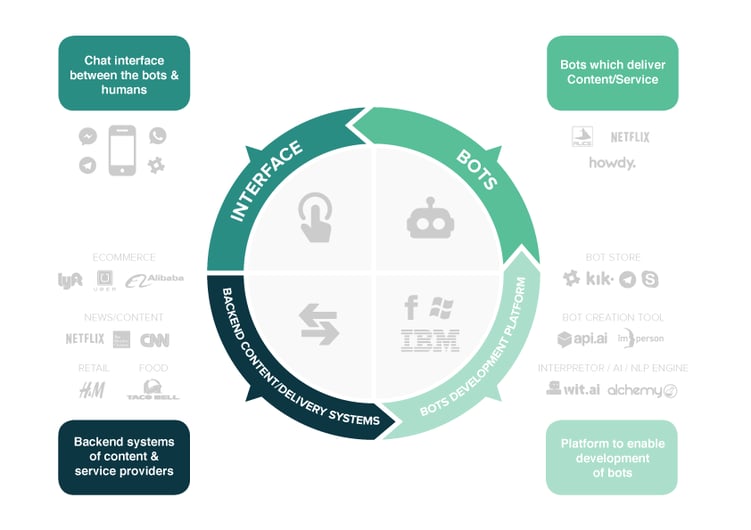
Microsoft’s AI lets bots predict pauses and interrupt conversations


The new way to talk debuts with Microsoft’s Xiaoice in China and Rinna in Japan. Xiaoice can chat through Xiaomi’s Yeelight, a smart speaker that looks identical to Amazon’s Echo Dot released two months ago. Microsoft plans to extend the conversational feature to additional devices within the next six months, Zo AI director Ying Wang told VentureBeat in an email. In the U.S., Microsoft’s Zo will receive the new feature for Skype soon, and it will also be expanded to Ruuh in India and Rinna bot in Indonesia. No specific date or time period was provided for when the capabilities would be made available to additional bots.  The more natural way of speaking is called “full duplex voice sense” by Microsoft and gives bots that communicate via voice the ability to carry on a continuous conversation with just a single use of a wake word like “Hey, Cortana.” This enables people to speak with machines in a way that feels more like a phone call or conversation.


Unpatched Vulnerabilities the Source of Most Data Breaches

Patching software security flaws by now should seem like a no-brainer for organizations, yet most organizations still struggle to keep up with and manage the process of applying software updates. "Detecting and prioritizing and getting vulnerabilities solved seems to be the most significant thing an organization can do [to prevent] getting breached," says Piero DePaoli, senior director of marketing at ServiceNow, of the report. "Once a vuln and patch are announced, the race is on," he says. "How fast can a hacker weaponize it and take advantage of it" before organizations can get their patches applied, he says. Most of the time, when a vuln gets disclosed, there's a patch for that. Some 86% of vuln reports came with patches last year, according to new data from Flexera, which also tallied a 14% increase in flaws compared with 2016. The dreaded zero-day flaw that gets exploited prior to an available patch remains less of an issue, according to Flexera. Only 14 of the nearly 20,000 known software flaws last year were zero-days, and that's a decrease of 40% from 2016.


NGINX Debuts App Server For Microservices

Nginx debuts app server for microservices
Nginx, makers of the popular Nginx open source web server, will begin shipping on April 12 a multilingual application server called Nginx Unit. It has also upgraded its Nginx Plus application server and announced a new control plane. Configured via a dynamic API, Nginx Unit 1.0 is an open source application server. Unlike the Nginx web server, which is designed for serving web pages and websites, the Nginx Unit application server is a web server that also can run code such as what might be found in a microservices environment. Application-level logic is supported. Supported languages in the initial release include Go, Perl, PHP, Python, and Ruby. Support for Java and JavaScript is due soon. Microservices are simplified via Nginx Unit because a single instance can simultaneously serve multiple application types, the company said. Nginx Unit also has networking capabilities such as reverse-proxying.


Patterns for Microservice Developer Workflows and Deployment


In the prototyping phase, there is a lot of emphasis on putting features in front of users quickly, and because there are no existing users, there is relatively little need for stability. In the production stage, you are generally trying to balance stability and velocity. You want to add enough features to grow your user base, but you also need things to be stable enough to keep your existing users happy. In the mission-critical phase, stability is your primary objective. If the people in your organization are divided along these lines (product, development, QA, and operations), it becomes very difficult to adjust how many resources you apply to each activity for a single feature. This can show up as new features moving really slowing because they follow the same process as mission-critical features or it can show up as mission-critical features breaking too frequently in order to accommodate the faster release of new features. By organizing your people into independent feature teams, you can enable each team to find the ideal stability versus velocity tradeoff to achieve its objective, without forcing a single global tradeoff for your whole organization.


Quote for the day:


"A person must have the courage to act like everybody else, in order not to be like anybody." -- Jean-Paul Sartre


Daily Tech Digest - April 05, 2018

How to protect your PC from the Meltdown and Spectre CPU flaws

thinkstockphotos 499123970 laptop security
A pair of nasty CPU exploits have serious ramifications for home computer users. Meltdown and Spectre let attackers access protected information in your PC’s kernel memory, potentially revealing sensitive details like passwords, cryptographic keys, personal photos and email, or anything else you’ve used on your computer. These are serious flaws. Fortunately, CPU and operating system vendors pushed out patches fast, and you can protect your PC from Meltdown and Spectre to some degree. It’s not a quick one-and-done deal, though. They’re two very different CPU flaws that touch every part of your operating system, from hardware to software to the operating system itself. Check out PCWorld’s Meltdown and Spectre FAQ for everything you need to know about the vulnerabilities themselves. We’ve cut through the technical jargon to explain what you need to know in clear, easy-to-read language. We’ve also created an overview of how the Spectre CPU bug affects phones and tablets.


“While it is perhaps no surprise to learn that use of Facebook both inside and outside the workplace would be affected, this story certainly appears to have had a broader impact,” wrote Chris Ross, international senior vice-president at Barracuda, in blog post. Almost two-thirds of respondents (62%) said that as a result of the revelations about Facebook, they had reviewed their corporate policy for allowing user access to non-business-related sites and apps, either in terms of providing new guidance or restricting access. Only 20% planned to maintain a policy to allow free access to non-business sites and apps. “While restricting access to non-business apps from the workplace can improve productivity, it may not impact Facebook’s ability to collect and share the personal information of users,” said Ross. “However, these privacy concerns have raised some strong feelings in the business community around Facebook’s viability as a business tool. Our recommendation is that organisations that continue to leverage Facebook as a business platform should review some basic controls.”


What should define an enterprise encryption strategy?

This year’s statistics are encouraging, but the report does show areas of challenge. Data discovery rates as the top data encryption planning/execution challenge by 67% of respondents, a number that is 8% higher than 2017. Respondents from the UK, Germany, the US and France have the most challenges, which likely points to activities associated with preparation and compliance of data privacy regulations such as GDPR which comes into effect in May this year. When considering the majority of organisations polled are using more than one public cloud provider, the report also raises questions about how organisations are enforcing consistent encryption and key management policies across multiple cloud vendors. Securing data in a multi-cloud environment can be especially problematic for organisations seeking compliance, particularly if they are attempting to instantiate a single organisational policy using different native tools from multiple cloud providers.


How Will Artificial Intelligence Define the Future of Network Security
To spot a potential threat, a cybersecurity team must have a deep, nuanced understanding of its organization’s standard IT protocols, including the behavior of privileged users, accounts, and access points and the normal flow of authentication attempts. Simply put, a threat only appears as a threat if it deviates from standard practices. An AI cybersecurity platform could do a great deal to minimize the number of false positives and enable IT teams to focus their energies on combating real threats. When an AI algorithm is given access to an organization’s internal log and monitoring systems, it can evaluate the usage patterns of each individual employee, create a series of baseline activity profiles, and keep an eye on all network activity 24 hours a day. AI is tremendously useful as this type of catch-all mechanism, but it becomes truly invaluable once it starts to recognize threats in micro-deviations that are all but invisible to the human eye. As an AI tool is fed more and more data over time, it becomes capable of maintaining a constantly moving standard by which to judge potential threats.


Generation Z Is Already Bored by the Internet


To a parent or the casual observer, a phone-bored teen may appear engaged. After all, they’re on their phone, which many people consider an inherently engaging activity. In reality, they’re bored out of their mind. “I can be in my bed for hours on my phone, and that’s me being bored,” said Maxine Marcus, a 17-year-old and founder of The Ambassadors Company, a teen consulting business. “You think that we’re so entertained because we’re on our phones all the time, but just because we’re on it, doesn’t mean we’re engaged or excited. I get bored on my phone all the time. “When you’re bored on your phone, you’re just sitting with your own thoughts. You’re on it, but it’s just an action so your brain still goes wherever it wants to go. You get bored and you start thinking and daydreaming,” she added. It’s important to note that the majority of time users spend on their phones, they spend engaged. Tech companies go to exorbitant lengths to keep users active and attentive.


How artificial intelligence and machine learning can revolutionize ecommerce

To start with, it is a high-technical debt undertaking and requires high quality data, timely decisioning at scale, and a hypothesis-based approach to marketing. Before any machine learning can be successfully applied, it needs data. And not just any type of data. Firstly, the data must be useful, in a way that reflects first-party behavior on digital channels, such as web pages and single-page applications. Secondly, the data must be processed quickly. Thanks to the latest cloud technology, data can be processed in an almost real-time fashion, with latency of a couple of minutes, rather than hours. Finally, and by definition, personalization is personal, that means that it’s unlikely that a specific set of machine learning approaches for one brand will translate to another. In order to achieve success with this, marketing teams need to employ a hypothesis-based approach to marketing, where they use the inferred signals from machine learning in conjunction with creative brand experiences.


Malicious IoT hackers have a new enemy

honeybot
IoT security is about the farthest thing from a laughing matter in the world of technology today, threatening global trade, privacy and the basic infrastructure of modern society. So you could be forgiven for being taken aback that the newest defender of vulnerable systems against bad actors looks a little like Johnny 5 from the movie Short Circuit. Researchers at Georgia Tech’s School of Electrical and Computer Engineering rolled out the HoneyBot robot late last week. In essence, it’s a canary in the digital coal mine, offering an early warning that someone is trying to compromise an organization’s systems. HoneyBot is designed to look like a perfectly ordinary remote-controlled robot to anyone attempting to access it remotely, providing sensor data and movement information to that remote user. Where it differs, however, is if a user tries to get it to do something the owner doesn’t want it to do – HoneyBot can provide simulated responses to those commands without enacting them in the real world.


So What's Microsoft SQL Operations Studio?


From the information provided so far in a PASS keynote and accompanying blog post, it appears to be a blending of those two tools, with some container and DevOps functionality thrown in along with some Visual Studio Code goodness -- and apparently built on Electron. In the blog post, Microsoft SQL Operations Studio (MSOS from here on, for brevity) was described as a cross-platform, lightweight tool for modern database development and operations. Along with SQL Server, it will be used to work with other Microsoft data offerings like Azure SQL Database and Azure SQL Data Warehouse. Like VS Code and other editors, MSOS will provide easy access to code snippets (in the T-SQL language, in this case) and dashboards to monitor performance in the cloud or on the Azure cloud. As for more of that VS Code goodness, Microsoft said "You'll be able to leverage your favorite command line tools like Bash, PowerShell, sqlcmd, bcp and ssh in the Integrated Terminal window. Users can contribute directly to SQL Operations Studio via pull requests from the GitHub repository."


The dream job that's all the rage across America

Freelancer
There are several factors fueling the growth of these fully virtual companies, experts say. The most obvious is technology. Tools such as Slack, Zoom, Dropbox and Quip, a document-sharing and editing platform, make it easier than ever to communicate with far-flung employees and track their performance and workflow more accurately, said Trina Hoefling, author of Working Virtually: Transforming the Mobile Workplace. "Technology is the enabler," she added, "so people starting businesses are realizing that they can launch a company without a physical location quite easily." But perhaps the bigger driver in this new way of working is the demand from employees for a better quality of life. According to Gallup's "State of the American Workplace" survey, more than one-third of the respondents said they would change jobs in order to be able to work remotely some of the time. Younger employees — so-called millennials — especially start their careers fully expecting to find a position that offers more flexibility in how and where they work.


Google killing Chrome extensions for mining cryptocurrency

Up until now, Google has allowed Chrome extensions that mine cryptocurrency as long as the user is informed and the extension's only purpose is to mine cryptocurrency. That only accounts for 10% of Chrome extensions that mine cryptocurrency, however. The other 90% are doing it behind the scenes, not informing users, or both. Google said it has rejected many of the 90% of guilty extensions, and beginning now it is no longer accepting new Chrome extensions that mine cryptocurrency. The 10% of legitimate extensions aren't long for the world either: They'll be delisted from the Chrome web store starting in late June. In short, if mining cryptocurrency is any part of a Chrome extension you use or develop it's game over. Chrome extensions that use blockchain technology for other purposes, like cryptocurrency wallets, are unaffected. Just because an extension is removed from the official Chrome Web Store doesn't mean you can't install and use it—you just have to perform a few steps to load Chrome extensions manually.


Quote for the day:


"Always bear in mind that your own resolution to succeed is more important than any one thing." -- Abraham Lincoln


Daily Tech Digest - April 04, 2018

mobile apps crowdsourcing via social media network [CW cover - October 2015]
Most users of Office 365 or SalesForce or Slack, or any other SaaS app, engage via the software to get their work done. But they also generally have control – and lot of control in some cases ­– over settings. Something that would have been previously handled by an IT Admin. They also might have influenced, or have even made, the decision to sign up for an app in the first place. In other words, in addition to using SaaS apps, end users have also assumed roles in assessing and administering them. This shows how the “democratization of IT” has not only put technology into more hands, but it has also expanded responsibilities. In many ways, we all need to be virtual CIOs now, if not virtual CISOs. In the remainder of this article, I will raise some basic questions about the security of SaaS apps. In particular, authentication, encryption and administration. In a follow-up article, I will discuss the security profile of SaaS companies and more about their own infrastructure. The SaaS security topic closest to end users is passwords and authentication, but the challenges are numerous. Users not only continue to be careless; they have reason to be confused. 


Stateful stream processing with Apache Flink
Virtually all business-relevant data is produced as a stream of events. Sensor measurements, website clicks, interactions with mobile applications, database modifications, application and machine logs, stock trades and financial transactions… all of these operations are characterized by continuously generated data. In fact, there are very few bounded data sets that are produced all at once instead of being recorded from a stream of data. If we look at how data is accessed and processed, we can identify two classes of problems: 1) use cases in which the data changes faster than the processing logic and 2) use cases in which the code or query changes faster than the data. While in the first scenario we are dealing with a stream processing problem, the latter case indicates a data exploration problem. Examples for data exploration use cases include offline data analysis, data mining, and data science tasks. The clear separation of data streaming and data exploration problems leads to the insight that the majority of all production applications address stream processing problems.


Now That You Are A Soldier In The Cyber War You Must Know Your Cognitive Biases

Even before the cyber war we were being overwhelmed with data. The average citizen is surrounded with information from TV, radio, entertainment, the Internet, social media, co-workers, neighbors, family, schools, the government as well as old sources like books, magazines, newsletters and newspaper. This overwhelming deluge of information is a mix of reporting that includes both valid insights and specious reporting meant to appear to be valid. Yes, some of what we are being subjected to is total baloney! But now on top of that we are being actively attacked by both cyber attacks and deceptive propoganda from hostile foreign powers. So, like it or not you are a soldier in this fight. In fact, you are the first line of defense. Your weapon in this war, your brain, is our greatest sense of hope. Your brain is what can keep you from getting deceived and what can help you configure your systems at home and work to thwart cyber attacks. It is also the only real way to make sense in this world of information overload and hostile foreign power deceptive operations.


Thanks to Facebook, expect GDPR to spread beyond the EU


While Facebook is not technically required to comply with the GDPR for data on Americans residing in the US, several of its current policies fall significantly short of the upcoming GDPR protections. Consumers have the right to be forgotten. This means that if asked, companies must erase all personal data, in their own databases and in the databases of any third parties to which information has passed. Not only does Facebook acknowledge the difficulty of deleting data once it leaves their platform, but it also places the onus on consumers to ensure erasure. In the case of third-party apps accessed by a Facebook login (the cause of the current Facebook nightmare), consumers are given a user number and instructed to contact the app developer directly to delete any personal information collected from the Facebook platform. Under GDPR, Facebook would be directly responsible for the deletion of information from all databases, internal or external. The inability to accomplish this would be a clear violation.


The Cloud Is Rising To The Cybersecurity Challenge


Preventing malicious insiders and skilled attackers that manage to get in through the front door from walking back out the door with a company’s crown jewels has gained renewed emphasis, with Google’s DLP API removing many of the barriers to companies being able to implement enterprise-grade filtering, from OCR’ing of image content to contextual detection. One-click statistical outlier detection makes it easier for companies to identify inadvertent holes in their anonymization workflows. Third party partnerships offer countless additional services, while improved auditing allows total visibility into all access of a company’s data. Amazon and Microsoft have similarly invested heavily in helping their customers build security-conscious applications and infrastructures that are designed for today’s world, rather than the quaint naïve blind trust of yesteryear’s web. Moreover, the major cloud vendors’ global footprints mean companies can mitigate their physical risk as well by distributing their applications geographically, allowing for seamless continuity of operations even in the face of natural or human disasters.


From pranks to nuclear sabotage, this is the history of malware

Malware creation then went through one of its periodic developmental droughts. But that all changed in 1982, when Elk Cloner made its appearance, and a new wave of viruses began to rise. “With the invention of the PC, people started writing boot sector viruses that were spread on floppies,” Zone Alarm’s Skyler King told Digital Trends. “People who were pirating games or sharing them on floppies [were being infected].” Elk Cloner was the first to use that attack vector, though it was completely benign, and not thought to have spread far. Its mantle was picked up four years later by the Brain virus. That piece of software was technically an anti-piracy measure created by two Pakistani brothers, though it had the effect of making some infected disks unusable due to timeout errors. “Those were kind of the first viruses as we would consider them,” King said. “And they were propagating so that if you put in a floppy, they could copy to it, and spread that way.” The change in attack vector was noteworthy, because targeting a system from a different angle would become the hallmark of new malware in the years that followed.


Top 6 Features in Windows Server 2019

windows server 2019
With the release of Windows Server 2019, Microsoft rolls up three years of updates for its HCI platform. That’s because the gradual upgrade schedule Microsoft now uses includes what it calls Semi-Annual Channel releases – incremental upgrades as they become available. Then every couple of years it creates a major release called the Long-Term Servicing Channel (LTSC) version that includes the upgrades from the preceding Semi-Annual Channel releases. The LTSC Windows Server 2019 is due out this fall, and is now available to members of Microsoft’s Insider program. While the fundamental components of HCI (compute, storage and networking) have been improved with the Semi-Annual Channel releases, for organizations building datacenters and high-scale software defined platforms, Windows Server 2019 is a significant release for the software-defined datacenter. With the latest release, HCI is provided on top of a set of components that are bundled in with the server license. This means a backbone of servers running HyperV to enable dynamic increase or decrease of capacity for workloads without downtime.


3 Steps To Beef Up Your SD WAN Security


Software-defined wide access networks (SD WANs) are becoming widespread, and for good reason. SD WAN products are cheaper than standard network equipment, as are the operational costs associated with adding new sites to the network. In addition, the benefits of intelligently managed traffic also increase both business operational efficiency and user experience. However, as onsite IT infrastructure becomes a thing of the past, business owners and CTOs still need to stay on top of their game when it comes to security issues. Although SD-WANs use 256-bit encryption as a standard (i.e. protecting data with a key that would be too long for hackers to crack, even with the most powerful computer), they are not immune to being breached by sophisticated cyberattacks. If you haven’t already, you should speak to your SD WAN provider to find out what specific security is in place on your network. Keep in mind, different vendors will provide slightly different security technologies.


How to detect and prevent crypto mining malware

digital money - binary code
Enterprises are very much on the lookout for any signs of critical data being stolen or encrypted in a ransomware attack. Cryptojacking is stealthier, and it can be hard for companies to detect. The damage it causes is real but isn't always obvious. The damage can have an immediate financial impact if the crypto mining software infects cloud infrastructure or drives up the electric bill. It can also hurt productivity and performance by slowing down machines. "With CPUs that are not specifically made for crypto mining, it could be detrimental to your hardware," says Carles Lopez-Penalver, intelligence analyst at Flashpoint. "They can burn out or run more slowly." Cryptojacking is in the early stages, he added. If a company spots one type of attack, there are four or five others that will get by. "If there's something that could potentially stop crypto miners, it would be something like a well-trained neural network," Lopez-Penalver says. That's just what some security vendors are doing — using machine learning and other artificial intelligence (AI) technologies to spot the behaviors that indicate crypto mining, even if that particular attack has never been seen before.


Take Responsibility for Your Security

Though suppliers are building secure systems, that’s just one step along the way, Snitkin noted. “That’s where these small companies in particular are hurting,” he added. “There’s no way those small companies can get the expertise to maintain these things.” To be as secure as big companies, the small guys need to accept a different strategy in which they rely more heavily on outside services, he argued. “Vulnerability could be completely outside the scope of what these companies are doing,” Nassar added. “Small companies don’t have a chance at all to get the internal competence to a level they need,” Bosch said, adding that the same is true to some extent for larger organizations. Part of the effort to improve security comes through collaboration—among vendors, customers and more. It requires an ecosystem rather than one vendor solution, commented Sami Nassar, vice president of cybersecurity at NXP Semiconductors.


Quote for the day:


"Leadership is the art of giving people a platform for spreading ideas that work," -- Seth Godin