Daily Tech Digest - December 14, 2017

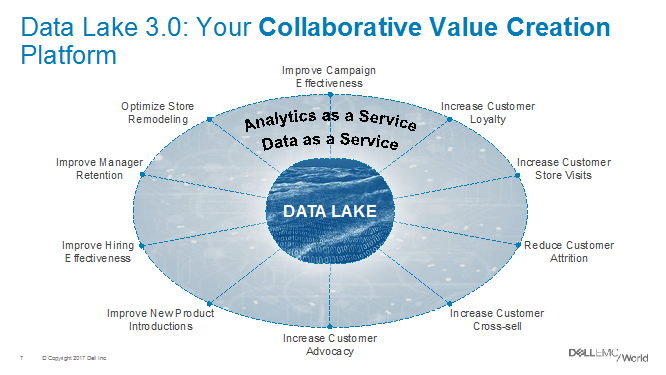
The role of Chief Data Officer (CDO) would seem to be a godsend to answer the data monetization challenge. They should be the catalyst in helping organizations to become more effective at leveraging data and analytics to power the digital transformation. However, all is not well in the world of the CDO. Many organizations appoint a CDO with an Information Technology (IT) background – the same background and experience as the Chief Information Officer (CIO). The organization then ends up splitting the existing CIO role between the current CIO and the CDO; giving the CDO the tasks associated with data collection, governance, protection and access. Splitting the existing CIO role isn’t sufficient. Instead, the CDO needs a totally different charter than the CIO, and a key aspect of that charter must be around data monetization.


Microservices Solution Patterns


Microservices Architecture (MSA) is reshaping the enterprise IT ecosystem. It started as a mechanism to break the large monolithic applications into a set of independent, functionality focused applications which can be designed, developed, tested and deployed independently. The early adopters of MSA have used this pattern to implement their back-end systems or the business logic. Once they have implemented these so-called back-end systems, then came the idea of implementing the same pattern across the board. The idea of this article is to discuss the possible solution patterns which can be used in an MSA driven enterprise. ... On top of the back-end systems, there is the integration layer which interconnects heterogeneous back-end systems. Once these services are integrated, they need to be exposed as APIs to internal and external users as managed APIs through API management layer. Security and analytics will be used across all those 3 layers.


Outlook 2018 – Key Trends In The Indian Information Management Domain

Outlook 2018 – Key trends in the Indian Information Management domain
Paperwork is an integral part of doing business, but physical paper is not. In fact, reliance on paper documents results in costs, which could be eliminated or at least radically reduced by going paperless. As physical paperwork piles up, so do issues such as: a) Slower time to complete routine tasks that rely on paper as an input b) Increased risk of a security breach through lost or stolen documents c) Potential for data entry errors from manually keying information into systems d) Costs for office or offsite space to store paper documents.  ... Flexibility has become a business imperative with the upsurge of new technologies, BYOD and more employees working remotely. Keeping this in mind, CIOs will focus on compatibility - the ability to scale and transcend devices and platforms (i.e. the open network) for enhanced collaboration. Integration capabilities will be a basic requirement for any technological implementation.


Has Deep Learning Made Traditional Machine Learning Irrelevant?


It is true that many of the competitions you see on Kaggle these days contain unstructured data that lends itself to Deep Learning algorithms like CNNs and RNNs. Anthony Goldbloom, the founder and CEO of Kaggle observed that winning techniques have been divided by whether the data was structured or unstructured.  Regarding structured data competitions, Anthony says “It used to be random forest that was the big winner, but over the last six months a new algorithm called XGboost has cropped up, and it’s winning practically every competition in the structured data category.” More recently however, Anthony says the structured category has come to be dominated by what he describes as ‘hand crafted’ solutions heavy on domain knowledge and stochastic hypothesis testing. When the data is unstructured, it’s definitely CNNs and RNNs that are carrying the day.


Will 2018 be the big year for machine learning?

"We have reached the tipping point where adoption of machine learning in the enterprise is poised to accelerate, and will drive improved business operations, better decision making and provide enhanced or entirely new products and services," said Paul Sallomi, vice chairman of Deloitte. ML, a core element of artificial intelligence, will progress "at a phenomenal pace," according to the study. "As impressive as it is today, in 50 years' time the ML abilities of 2018 will be considered baby steps in the history of this technology," the report said. The report highlights areas that Deloitte thinks will unlock more intensive use of ML in the enterprise by making it easier, cheaper and faster. The most important key area is the growth in new semiconductor chips that will increase the use of ML, enabling applications to use less power, and at the same time become more responsive, flexible and capable.


Understanding the role of Information Rights Management


Naturally, the bigger the scale of the enterprise, the harder it’s going to be to keep IRM consistent. Many software packages and internal procedures are easy to maintain when you only have a few dozen people to worry about. The more people you add to a system, the more points of vulnerability you’ll contend with, and the less secure and less consistent your practices will become. If you want your company’s information to be safe, you need to take IRM more seriously. You should consider establishing a partnership with an IRM organization, or relying on products that give you more control over your own internal IRM. Your documents, messages, and files are the lifeblood of your organization, and all it takes is one breach to compromise your work. Don’t let it happen on your watch; invest in the right infrastructure for IRM, and don’t let it become a secondary priority.


10 data scientist interview questions job seekers can expect

istock-501221160.jpg
"To assess if a candidate can be successful as a data scientist, I'm looking for a few things: baseline knowledge of the fundamentals, a capacity to think creatively and scientifically about real-world problems, exceptional communication about highly technical topics, and constant curiosity," said Kevin Safford, senior director of engineering at Umbel. Demonstrating that you have a strong understanding of the business at hand and how data can be used to reach business goals will also set you apart. "In addition to many technical questions—knowing your algorithms, knowing your math—a great data scientist must know the business and be able to bring strong ideas to the table," said Rick Saporta, head of data science at Vydia. "When hiring, I would rather have one creative data scientist who has a strong understanding of our business, than a whole team of machine learning experts who will be in a constant 'R&D' mode."


An Introduction to Anti-Patterns - Preventing Software Design Anomalies


The common symptoms of islands of implementation are an incorrect use of technology standards, usability and interoperability issues, excessive cost and time escalations due to changing business needs. The root cause for this is typically around not having enterprise level standards, organizational structures leading to poor communications, inappropriate trained resources deployed in projects. But these can also occur during corporate mergers, acquisitions or due to vendor-lock ins. ... The root causes can be due to lack of architectural vision, technological disruptions, tight coupling, insufficient use of metadata, lack of abstraction layer etc. Use of component architectures that provides flexible substitutions of software modules due to fast-changing business/technology landscapes can solve this issue.


Is a Good Offense the Best Defense Against Hackers?

First there’s the issue of "attribution." How do you correctly identify your attacker? It’s not as easy as it sounds. What if an attack comes from a botnet? Not one computer, but thousands or millions spread over the globe. Owners of botnet computers may not know they’re contributing to an attack. If your attacker is somewhere in the cloud, good luck finding her. Are you going to strike back against your cloud provider? They’re potentially innocent middlemen. Second, ACDC wouldn’t allow striking back against distributed denial-of-service (DDoS) attacks, for example, a common attack. DDoS attacks don’t involve unauthorized access. And who are you going to blame? Typical DDoS attacks come from devices that are part of the Internet of Things (IoT). Say Grandma’s digital picture frame routed requests in a DDoS attack. Are you going to hack back against Grandma?


What Should Software Engineers Know about GDPR?


GDPR is only interested in personally identifiable information (PII). GDPR does not apply to data that is not attached to a person, such as product or accounting information. You might still classify it as sensitive and might still want to protect it, but GDPR considers it non-PII data and ignores those situations. GDPR identifies two classes of PII data. There is data that can be used to uniquely identify a person like social-security number, e-mail address, or anything directly connected to these identifiers such as purchase history. Then there is extra-sensitive data such as medical/health information, religion, sexual orientation, or any information on/collected from a minor. Do note that according to GDPR, combinations of information that may not be unique in isolation can potentially identify an Individual. So PII also includes identities that may be deduced from values like postcode, travel, or multiple locations such as places of purchase.


Quote for the day:


"Learn from the mistakes of others. You can never live long enough to make them all yourself." ― Groucho Marx



Daily Tech Digest - December 13, 2017

Cyber security skills shortage can be addressed, says (ISC)2


McCumber, who has been working in information security in military, national security and civilian roles for the past 30 years, argues that in the light of the fact that there are jobs for people coming out of trade schools, there is no reason that aspects of cyber security cannot be turned into trades. “By treating cyber security as a trade, it will enable school leavers to get some basic skills without having to do a four-year course and to provide valuable services in well-paid jobs in the cyber security field,” he said. “There are a lot of productive jobs in the cyber security field that do not need a four-year degree.” ... “We work with industry to ensure we are training people to meet industry’s needs, and government that wants to drive down unemployment rates, and provide transportable certifications that are recognised by government, industry and academia,” he said.


HP Spectre 13 review: This stylish ultrabook conceals real power

HP Spectre Laptop 13 af0xx
Whether open or closed, the Spectre 13’s elegance shines through. It’s a beautifully architected notebook PC, with metallic accents that complement the understated white of the chassis. (Normally, the Spectre 13 ships in black; the Ceramic White option our test machine included is an extra $10—and worth it.) Would I have chosen a series of circular holes to replace the hexagonal slits of the fan grille? Maybe. A narrow power button to one side also feels a bit out of place. But these are just nitpicks. ... At 2.4 pounds, the Spectre 13 is light, yet solidly constructed. Many aspects reminded me, though of a tablet: its weight; the power-efficient, 1080p display; and the pair of silver hinges that conceal the I/O and electric connections, slightly lifting the display above the keyboard. HP also includes a pleather laptop sleeve to protect the Spectre Laptop from nicks and scratches while in your bag.


Programmers and developers more important to companies than IT managers

istock-670517478.jpg
"IT is really going to have to shift to more of a partner to the business, and making sure they are in lockstep with what the business goals are," Hayman said. ... Decentralization makes it challenging for IT and the business to align, Hayman said. For successful digital transformation projects, both parties need to be at the table for important conversations about how technology can help realize goals, rather than IT waiting for direction from the business. "Digital transformation is going to give organizations this unique opportunity to use technology as that strategic asset for the whole enterprise," Hayman said. "Those capable IT teams that can support it are really going to help separate and differentiate organizations from the rest of their competition. That's going to mean identifying areas to increase efficiency, and add greater value to the technology."


Cyber attack surface facts, figures and statistics for 2017 to 2022

Cyber attack surface grows immensely, raises security concerns
The far corners of the Deep Web — known as the Dark Web — is intentionally hidden and used to conceal and promote heinous criminal activities. Some estimates put the size of the Deep Web (which is not indexed or accessible by search engines) at as much as 5,000 times larger than the surface web and growing at a rate that defies quantification, according to one report. ABI has forecasted that more than 20 million connected cars will ship with built-in software-based security technology by 2020 — and Spanish telecom provider Telefonica states by 2020, 90 percent of cars will be online, compared with just 2 percent in 2012. Hundreds of thousands — and possibly millions — of people can be haced now via their wirelessly connected and digitally monitored implantable medical devices (IMDs) — which include cardioverter defibrillators (ICD), pacemakers, deep brain neurostimulators, insulin pumps, ear tubes and more. Check out over 300+ Cybersecurity statistics & Trends here.


GDPR and the human element of personal data protection

Finding the precise location of data defined as ‘personal’ under GDPR from among the thousands of tables and columns (or fields) in complex and customized packaged systems, represents a significant challenge. Traditional tools and methods, such as searching for documentation, using templates and reference models or employing external consultants, do not address the challenge in an effective and timely fashion. Safyr offers an interesting approach - it interfaces with all the most popular ERP and CRM solutions in order to speed up that discovery process. Speed and accuracy here are vital for several reasons - obviously ‘bad’ data discovery initially means that risk assessments will be skewed, and even worse it may cause a loss of focus, so that less critical issues are fixed first, rather than the real high risk issues. These issues are the major benefit of using a discovery tool, rather than attempting hand cranked scripted procedures.


A robotic path lined with cybersecurity bumps

robot
The robot controller is a complex device composed of multiple interconnected subsystems and computer systems. A controller can work in automatic mode – typically for regular operation of the robot; and in manual mode, in which the robot performs movements according to specific inputs fed by the operator.  Under this attack, the cybercriminal changes the setting of the control system so the robot moves unexpectedly or inaccurately. This type of attack could lead to production of defective or modified products, subsequently resulting in massive recalls. The first time a robot is connected to a controller, the sensing equipment must be calibrated. The controller uses the calibration data to compensate for known measurement errors. Manipulation on the calibration parameters can cause the servo motor to move erratically or unexpectedly. If an attack is launched when a robot is moving, the controller can detect it and engage stopping procedures.


A Pragmatic Assessment Of Disruptive Potential In Financial Services

Fintechs have seized the initiative – defining the direction, shape and pace of innovation across almost every subsector of financial services – and have succeeded as both stand‐alone businesses and crucial parts of financial value chains Fintechs have reshaped customer expectations, setting new and higher bars for user experience. Through innovations like rapid loan adjudication fintechs have shown that the customer experience bar set by large technology firms, such as Apple and Google, can be met in financial services Customer willingness to switch away from incumbents has been overestimated. Customer switching costs are high, and new innovations are often not sufficiently material to warrant the shift to a new provider, especially as incumbents adapt* Fintechs have struggled to create new infrastructure and establish new financial services ecosystems, such as alternative payment rails or alternative capital markets.


AIG launches new cyber threat analysis to gauge companies' risks

AIG.N
AIG’s underwriters have been using the computerized analysis since November, which combines information from a new insurance application designed for the process and data about current cyber threats to generate scores on various related factors, said Tracie Grella, AIG’s global head of Cyber Risk Insurance, in an interview. The analysis scores companies on the degree to which a cyber attack may affect their businesses and the potential costs of various cyber incidents, among other issues, according to a sample report seen by Reuters. Cyber coverage is a mounting concern worldwide as hackers increasingly target companies’ technology systems. Insurers are also struggling to estimate their potential exposure as cyber risks and interest in coverage increase.


Cloud-to-cloud backup: What it is and why you need it


In small-scale scenarios, users can copy files from, for example, Office 365 and G Suite to a local volume, or if security rules permit, an external drive. But this is a manual process that might not be reliable, and will struggle to scale. For larger files and larger applications, this is rarely practical. Enterprises using infrastructure-as-a-service (IaaS) or SaaS applications can use application programming interfaces (APIs) or third-party software to back up to local servers, network-attached storage (NAS) equipment or their own datacentre. But backing up cloud services to local storage is a step backwards. Instead of taking advantage of the cloud, it forces companies to retain on-site infrastructure, increases costs and limits flexibility. Enterprises that back up software-as-a-service applications will have the reassurance that they have copies of their data, but they will not be able to replicate or run the SaaS environment in-house.


Top 5 open source tools for MySQL administrators

Top 5 open source tools for MySQL administrators
For database administrators (DBAs), keeping databases running at peak performance can be a little like spinning plates: It takes agility, concentration, quick reactions, a cool head, and an occasional call out from a helpful onlooker. Databases are central to the successful operation of almost every application. As DBAs are responsible for an organization’s data, finding dependable tools that help them to streamline the database management process and ease day-to-day maintenance tasks is essential. DBAs need good tools to keep their systems spinning smoothly. So what are the tried and trusted tools for MySQL administrators? Here I share my top five open source tools for MySQL administrators and discuss their value in the support of day-to-day MySQL administration tasks. For each of them, I’ve provided a link to the GitHub repository and listed the number of GitHub stars at the time of writing.


Quote for the day:


"Failure defeats losers, failure inspires winners.” -- Robert T. Kiyosaki


Daily Tech Digest - December 12, 2017

Microsoft's Edge browser is in serious trouble

microsoft edge browser resized
Edge wasn't the only browser that came out looking worse than presumed prior. Microsoft's legacy browser, Internet Explorer (IE) also was revealed as a Potemkin village. Under the old data regime, which included bots, IE's user share was overblown, at times more than double the no-bots reality. Take May 2016 as an example. With bots, Net Applications pegged IE at 33.7%; without bots, IE's user share dwindled to just 14.9%. Together, IE and Edge - in other words, Microsoft's browsers - accounted for only 16.3% of the global user share last month using Net Applications' new calculations. Back in January, however, IE+Edge had a user share of 24.1% with bots, just 14.9% without the shady tools. Put plainly, Microsoft's place in the browser race, while definitely dismal when calculated previously, became ghastly when the bot traffic was subtracted. Other data sources also called IE's and Edge's position weak, and long before Net Applications scoured its data.


Using Big Data to transform business processes


Too often, businesses build data centers that are fragmented into unusable silos, which bar them from gaining the actionable insights they seek. One of the most overlooked of these silos is the call centre audio data, which is tremendously valuable since it holds the very voice of the customer in a specific moment in time," he says. "This is where the expertise and technology available with established analytics programs make the difference. Figuring out how to pull Big Data into one usable trove of information is a large part of the task, ultimately breaking open the floodgates for gaining valuable insights that allow businesses to operationalise on their findings." ... "A treasure trove of Big Data doesn't provide answers. A carefully managed analytics program designed around business goals and desired outcomes, alongside constant review of where the program is successful or needs improvement, is how organisations ultimately rise into the sweet spot of fast and efficient decision making and operationalisation of insights," he adds.


5 Reasons the Cybersecurity Labor Shortfall Won't End Soon

In late 2013, Cisco projected there were 1 million job openings globally. For several years after that, cybersecurity labor figures were only minimally updated. Various surveys (as opposed to research) have drastically underestimated the problem because they relied on polls that didn't sample enough companies, or they focused on information/IT security and failed to take the broader cybersecurity market into consideration. This leaves out heaps of workers involved with Internet of Things security, ICS (industrial control systems) security, automotive security, embedded security, and numerous other large categories. Some surveys, ..., portray a workforce with the number of unfilled cybersecurity jobs not even doubling in nearly a decade, from 2013 to 2022. This is a stark departure from my own research, which shows the number of unfilled positions actually is expected to grow 3.5 times during an even shorter timeframe, from 1 million in 2013 to 3.5 million in 2021.


5 top machine learning use cases for security

artificial intelligence / machine learning / network
In principle, machine learning can help businesses better analyze threats and respond to attacks and security incidents. It could also help to automate more menial tasks previously carried out by stretched and sometimes under-skilled security teams. Subsequently, machine learning in security is a fast-growing trend. Analysts at ABI Research estimate that machine learning in cyber security will boost spending in big data, artificial intelligence (AI) and analytics to $96 billion by 2021, while some of the world’s technology giants are already taking a stand to better protect their own customers. Google is using machine learning to analyze threats against mobile endpoints running on Android -- as well as identifying and removing malware from infected handsets, while cloud infrastructure giant Amazon has acquired start-up harvest.AI and launched Macie, a service that uses machine learning to uncover, sort and classify data stored on the S3 cloud storage service.


Android vulnerability allows attackers to modify apps without affecting their signatures

android modify apps without affecting signatures
“Although Android applications are self-signed, signature verification is important when updating Android applications. When the user downloads an update of an application, the Android runtime compares its signature with the signature of the original version. If the signatures match, the Android runtime proceeds to install the update,” Guard Square researchers explained. “The updated application inherits the permissions of the original application. Attackers can, therefore, use the Janus vulnerability to mislead the update process and get unverified code with powerful permissions installed on the devices of unsuspecting users.” The vulnerability (CVE-2017-13156) can be exploited to replace any kind of app, even a system app, without the user noticing anything or Android preventing the installation.


AI is a Business Imperative and Boardroom Agenda

In the age of the connected customer, the most effective method of closing the customer experience gap is for companies to invest in advanced predictive analytics and artificial intelligence (AI) powered customer relationship management (CRM) platforms. According the research, forward-looking companies have invested in new technologies capable of consolidating and analyzing key customer data and have reorganized to be able to act on that customer insight in a more nimble way. The biggest and most significant shift will be the use of advanced predictive analytics to drive data-driven customer experience decisions. The competitive battleground is now squarely based on superior customer experience, and only companies that invest in AI technologies can meet the ever-growing expectations of the hyper connected, and knowledge-sharing stakeholder - employees, partners and customers.


Application-Defined Networking Basics

A core concept of the OSI model is that each layer is largely isolated from the details of any other layer. While that has led to great independence—as, for example, an application developer doesn’t have to worry about whether or not there is copper or fiber optic cable being run at the Physical Layer—it has led to siloed workers that don’t necessarily appreciate the details of the work that goes into the other layers. Traditionally, an application developer working at the top of the OSI model only cares about an IP address and a port number provided by the Network Layer, since that provides a specific place on the network where a client-server connection can be maintained. But a whole lot of design, art and maintenance goes into setting up a set of routers and switches to make sure traffic doesn’t bottleneck between any two IP addresses. This means there’s a network engineer who spends a lot of time managing tickets that represent requests for changes to an existing network design.


Faster Java Releases: A Challenge for the Spring Framework Project


"A new JDK generation every half year means a new bytecode level, which means tooling needs to be ready to handle a new JDK version," he said, "a new bytecode level, every half year. This can be quite a challenge, and quite disruptive to the Java ecosystem. Many tools are based on bytecode generation, possessing libraries such as ASM, CGLib, ByteBuddy. They historically have not needed to evolve to leniently embrace new JDK generations. They have evolved to be designed for a particular set of JDK versions only, and they had to be updated every single time." "So we'll have to change our minds a little," he added. "We'll have to design our infrastructure, our bytecode processing, in such a way that a new JDK generation is a totally normal thing." Hoeller underscored the fact that Oracle will provide a feature release every six months, update releases every quarter, and a long-term support release every three years.


Gartner analyst predicts doom for on-premises data centers

Gartner analyst predicts doom for on-premises data centers
Although he didn’t mention it by name, you have to think Microsoft is in that category because it is already cloud-first with its enterprise apps. Office 365 already outsells the packaged Office 2016, so I can see a major de-emphasis of the client product in the coming years. However, this move will be more of a win for the SaaS providers than customers. SaaS prices have risen about 8 percent in the last three years, Govekar said, who also warned that SaaS vendors such as Salesforce, Oracle and SAP are engaging in a “lock-in strategy” not unlike what enterprise software vendors used to do, integrating their products so deeply that moving or switching is prohibitively difficult. And when you are dependent on software you don’t own but rent as a service, it becomes a little like the cable monopoly where there is little anyone can do to prevent them from raising prices on a regular basis.


HP patches hundreds of laptops to remove hidden keylogger

hp spectre keyboard
If you bought an HP laptop anytime in the last five years, it could be tracking your every keystroke. Over the weekend HP revealed that nearly 500 of its notebooks dating as far back as 2012 shipped with a secret keylogger installed. Alongside the announcement, HP released driver updates to eradicate the software on affected laptops. Security researcher Michael Myng discovered the keylogger when probing the Synaptics touchpad software on an HP laptop. HP’s security bulletin says the “potential security vulnerability” affects all laptops with “certain versions of Synaptics touchpad drivers”—not necessarily just HP models. The keylogger is disabled by default, however. “A party would need administrative privileges in order to take advantage of the vulnerability,” the bulletin states. “Neither Synaptics nor HP has access to customer data as a result of this issue.” HP told Myng that the keylogger was a debugging tool.


Quote for the day:


"Problems are not stop signs, they are guidelines." -- Robert Schuller


Daily Tech Digest - December 11, 2017

With smartphones like these, why do we need laptops?

sek smartphone expansion keyboard
In a nutshell, it’s a laptop powered by a smartphone processor running a desktop operating system. Specifically, the new Windows 10 laptops that will be built initially by HP, Lenovo and Asus are powered by the Qualcomm Snapdragon 835 processor. This is the same chip that powers high-end smartphones such as the Galaxy S8 and Note8. Microsoft has tweaked Windows 10 to run natively on ARM chipsets. Initially these devices will ship with Windows 10 S, Microsoft’s simplified and locked-down version of Windows. But customers will be able to upgrade free to Windows 10 Pro. While these laptops aren’t as powerful as other Windows laptops available, the smartphone processor inside them enables faster “always-on” LTE connectivity and “all-day” battery life. Microsoft calls the new category Always Connected PCs. This new kind of laptop will eventually prove valuable for certain types of enterprise users.


A layered approach to modern identity

With this shift towards mobile access at work, home and everywhere in between, comes a shift in both user expectations and behaviors. Instant access to information – anytime, anywhere – is the norm, which means our tolerance for friction has greatly diminished. This new attitude allows employees to be more productive and responsive, and even make more informed decisions. However, this digital era consumers have grown accustomed to is built on a house of cards from a security perspective. The apps consumers access at the touch of an icon or the imprint of a finger are all protected with passwords – and with more and more work and personal data moving online, hackers are having a heyday circumventing passwords to get at this information. Implementing more rigorous security seems like an easy next step, but many organizations are slow to adopt new security approaches due to the presumed negative impact on user experience.


An expert's guide to navigating the world of bitcoin


Cryptocurrencies are decentralized projects, so no one is really in charge. There’s no resolution process for disagreements. In August, a group of disgruntled users cloned the bitcoin blockchain and created a new coin called Bitcoin Cash, also known as Bcash. A few months later, people created another clone called Bitcoin Gold. This can be really confusing for new users, because if they download the wrong wallet or buy the wrong coin, they can lose their money. This is also a good thing, that no one is in charge, so people don’t worry about seeking permission before building new features. We’re seeing new developments in digital currencies that protect user privacy, and projects to bring Bitcoin to people without internet access. ... Bitcoin uses public key cryptography, where each bitcoin account has a public key and a private key. The public key is the bitcoin address and the private key is used to authorize transactions.


The Value of Logging within Cloud Native Applications


Software nowadays is no longer a single body of code you can build and test in isolation. Cloud, containers and all this tech obviously provides a lot of advantages, but at the cost of “understandability” (which is maybe the best way to view the term “observability”). The system components are increasingly scattered and remote, and less likely to be under your direct control. This evolution goes hand in hand with devops movement which has changed the way people think about software. There are a lot of teams now who now have “a system they care about”, as opposed to just building a piece of software and “throwing it over the wall to ops”. So “understanding” the behaviour of your software system is now largely only possible in the wild. Most software systems are a composition of other systems that out of your control. Think of your software system as an autonomous car: it has to be put on the road to be tested and improved, but in many ways we’re still building software as if we could test it in the lab.


Blockchain At Heart of Personal Data Monetization Service


“We’re allowing users to own their data by creating a personal secure vault where individuals can store their data, and if they choose to share it, they get compensated with tokens to view ads,” Silver says. “So instead of advertising on Facebook to target specific types of users, advertisers can target those users precisely the same way, if not better, by offering them compensation directly.” It’s a new business model for Algebraix, which spent several years developing something that it calls “the algebra of data.” This technology, which was spearheaded by Indiana math professor Gary Sherman, was originally created to speed up big data processing on cloud platforms or parallel clusters running Hadoop and Spark. Now Silver and company are looking to apply their mathematical techniques to workloads running on the Blockchain, the peer-to-peer transactional ledger that provides the technological foundation for cryptocurrencies.


Top 3 Reasons Why Companies Struggle With Agile & Scrum

why companies struggle with agile
Organizations need to understand that the methods that comprise “Agile” will not solve any pertinent issue in their culture or “the behavior of their employees.” Problems of distrust, lack accountability, respect, or fear of failure are all readily exposed by Scrum( Framework of agile). For instance, the goal of scrum is to produce a potentially releasable product increment in every sprint that often exposes the business to the “technical debt” due to past product development efforts that has not been paid off and lack of quality practices within software engineering. Most of the organizations are not able to deal with these surfacing issues. As they don’t have a neutral party to facilitate their exploration and resolution, most organizations tend to ignore them or consider Agile/Scrum liable to create them. ... In case that mirror reflects back, an organization does not like and blames the “mirror” rather than looking at the objectively provided feedback and evaluating to address it.


How can banks fight cybercrime?

Banks Cybercrime
Earlier this year, Nick Cook, the FCA’s head of data and information operations, said that the regulator was “still learning” how to support the adoption of automated, digitised compliance. The FCA reports that the number of successful cyber attacks has risen from 5 to 49 annually between 2014 and 2017. Bain believes that placing confidence into newer forms of security will benefit banks greatly: “Machine learning uses a compound set of algorithms to detect patterns and predict outcomes from a large amount of data online. As such, the self-learning capabilities and ability to recognise patterns and anomalies within them, makes AI and machine learning a great tool to detect cyber security threats.” Bains’ words ring true with Rob Grupperra, the FCA’s head of financial crime, who said that firms are trying to replace humans with AI to detect money laundering, as stated on the FCA’s website. Grupperra mentioned the positive effect such advanced technology would have on firms if they were to replace human monitoring with AI.


The Neuroscience Of Social Learning

The Neuroscience Of Social Learning
A growing body of research is showing that our need to connect socially with other people is as basic as any other survival need. In fact, UCLA professor Matthew Lieberman has challenged Abraham Maslow and his famous hierarchy of needs, placing social needs at the bottom of the pyramid. This makes them more essential than food and water! He explains how our brains have been evolving for millions of years to turn us into the social creatures we are today. That’s why creating social connections in learning can have such an impact. To our brains, it simply feels more natural than learning on our own. There is also a clear link between emotions and learning. Emotions are handled by the brain’s prefrontal cortex, and the same area is used for our memories. In fact, our working memory has been shown to be impaired by negative emotions, such as fear and anxiety. Psychologist Daniel Goleman says that by building social and emotional learning programs, we can pave the way for more effective learning.


One year later, enterprises still wrestle with Windows 7's cumulative updates

Windows logo with padlocks
Under the earlier patch scheme, users were able to set questionable updates aside - perhaps for further testing, maybe to give Microsoft more time to quash a just-found bug - even as they deployed all other updates. That isn't't possible under the all-or-nothing cumulative regime. Nearly 14 months later, enterprises labor to adapt. "It's elongated the patch cycle," said Chris Goettl, a product manager with client security and management vendor Ivanti, in an interview. He explained that many businesses were forced to postpone all patches, at least on some systems, because a code change included in the cumulative Windows 7 update had broken a critical application. "We're seeing a lot of customers who have not been able to roll out any updates until a problem was resolved, either by Microsoft or a third-party vendor," Goettl said.


Data Science is Plutonium Powerful: Dangerous and Handle With Care

Data Science is Plutonium Powerful: Dangerous and Handle With Care
It may seem that business intelligence (BI) is similar to data science (DS). Data science encompasses predictive analytics, machine learning, data mining, and even parts of what is considered to be artificial intelligence. It is routinely touted as improving revenue, profit, and ROI. It is often presented as automated and able to discover knowledge. These huge impacts and the automated nature of many of its applications make DS particularly dangerous. Business intelligence (BI), on the other hand, is used for processing and organizing business data so that it can be adeptly navigated by a competent human data analyst. It supports decision makers in making better and faster decisions. It is not typically relied upon for making decisions directly. Under the hood both BI and DS are about processing data to find patterns that can aid in making business decisions.


Quote for the day:

"Life is too short to waste time waiting for other people's approval on how you live it." -- Steve Maraboli

Daily Tech Digest - December 10, 2017

No CEO needed: These blockchain platforms will let ‘the crowd’ run startups


In the late ’90s, the Internet changed business. We also saw a new set of businesses emerge at that time that were only possible because of the arrival of that new technology. With the benefit of hindsight, it is clear that there was a difference between Barnes & Noble putting up a website and Amazon being a “digital native” organization, even if it was not obvious at the time. With DAOs, we are witnessing the birth of entirely new way of coordinating, aligning, and rewarding work. The blockchain-native entities built on platforms like Aragon, Colony, District0x, DAOStack, and the competitors that are bound to follow are going to pose a threat to incumbents who cannot react as quickly. More importantly, they will enable entirely new types of organizations that will change the world just as Facebook, Amazon, and Google did the last time around.


How tomorrow’s technologies can help the finance function of today

CFOs must reach across the enterprise to act as a catalyst for innovation, but many are hampered by fragmented, decentralized systems. Forty-eight percent of CFOs surveyed for PwC’s 2017 Global Digital IQ Survey cited outdated technology as an emerging barrier to successful digital initiatives, while 40 percent said data and technology integration would be the biggest challenge they would need to overcome. This IT fragmentation is in addition to the typical organizational and process issues most enterprise executives face. When finance professionals spend more time gathering data than analyzing it, or adjusting and reconciling entries manually rather than predicting future outcomes, they’re experiencing the effects of fragmentation. Intelligent automation helps alleviate the symptoms of IT fragmentation in three ways:


Alibaba’s Cainiao Tests Delivery Robots on ZJU Campus

Hangzhou ZJU Alibaba Logistics Robot Autonomous Delivery Vehicle Campus News AI Front View Storage Room
The idea behind that is to let the vehicle learn where the students commonly are at what time of the day to improve the efficiency of the solution. For example, it could move to a dorm area in the morning and remain stationary for students to take out their parcels as they pass by the vehicle in the morning on their way to the lecture, and drive to the cafeteria around lunchtime. It is planned that the students will also have the ability to communicate with the delivery vehicle via a smartphone app or a similar kind of web platform. The ZJU is the only university with such a test run right now and it’s in an early stage, but it could already be seen around the time of the Singles’ Day. The vehicle itself has been provided by Cainiao, a logistics subsidiary of Alibaba. Taking into account that both the university and Alibaba are located in the Chinese city of Hangzhou, it makes sense to deploy experimental vehicles in a ring-fenced environment.


Big Data and marketing – heady cocktails and crushing hangovers

Big Data Marketing
In most real worlds, they don’t acknowledge each other, perch on different stools, chug different drinks, and go their separate ways. The more data explodes, the more decision making practices remain the same. I was recently talking to a COO who described his role as the ability to take the most impactful decisions with the thinnest possible information. It is the nature of data – Big or Otherwise. We keep talking of social feeds and Facebook posts and mobile phone penetration. All of these make for great story telling. But unless the information extracted from these sources is explicitly useful taking a marketing decision – in talking to a customer, creating a campaign, or driving a cross-sell, it is of limited value. It is this absence of a meaningful connect between data sciences and marketing that we need to bridge.


Robots Will Transform Fast Food


Business owners insist that robots will take over work that is dirty, dangerous, or just dull, enabling humans to focus on other tasks. The international chain CaliBurger, for example, will soon install Flippy, a robot that can flip 150 burgers an hour. John Miller, the CEO of Cali Group, which owns the chain, says employees don’t like manning the hot, greasy grill. Once the robots are sweating in the kitchen, human employees will be free to interact with customers in more-targeted ways, bringing them extra napkins and asking them how they’re enjoying their burgers. Blaine Hurst, the CEO and president of Panera, told me that his no-longer-needed cashiers have been tasked with keeping tabs on the customer experience. Panera customers typically retrieve their food from the counter themselves. But at restaurants where they place their orders at kiosks, employees now bring food from the kitchen to their tables.


The Rise of the ICO

ico
Cryptocurrency has revolutionized currency transactions, and now people are finding even more uses for the digital currency technology. When startups need to raise money to get their businesses off the ground many are turning to ICOs, or Initial Coin Offerings, to fund their projects in an unregulated way. This method is similar to IPOs and even crowdfunding in that investors own something related to the company when they make an investment. Just like IPOs and Crowdfunding there is no guarantee you will ever get your money back. The risk in investing in ICOs comes from the fact that there is a small percentage of people taking advantage of the fact there are no regulations by scamming unsuspecting investors. Jordan Belfort, better known as the Wolf of Wall Street, has warned against ICOs, calling them the biggest scam going as well as way worse than anything he ever did.


The Surgeon Who Wants to Connect You to the Internet with a Brain Implant


“A true fluid neural integration is going to happen,” Leuthardt says. “It’s just a matter of when. If it’s 10 or 100 years in the grand scheme of things, it’s a material development in the course of human history.” Leuthardt is by no means the only one with exotic ambitions for what are known as brain-computer interfaces. Last March Elon Musk, a founder of Tesla and SpaceX, launched Neuralink, a venture aiming to create devices that facilitate mind-machine melds. Facebook’s Mark Zuckerberg has expressed similar dreams, and last spring his company revealed that it has 60 engineers working on building interfaces that would let you type using just your mind. Bryan Johnson, the founder of the online payment system Braintree, is using his fortune to fund Kernel, a company that aims to develop neuroprosthetics he hopes will eventually boost intelligence, memory, and more.


3 advanced prevention technologies expected to grow in 2018

3 advanced prevention technologies expected to grow in 2018
Despite years of innovation and VC investment, vulnerability management remains one of the biggest operational challenges for most organizations. Why? It’s a numbers game — large enterprises have thousands of systems with different software revisions and configurations deployed across global networks. How do you prioritize patching activities when CVE scores and vulnerability scanning tools report thousands of high-priority incidents requiring immediate remediation?  In the past, we used analogue tuning to define which systems were considered mission-critical, but this didn’t provide a level of useful granularity. Fast forward to 2018, and risk-based intelligent vulnerability management tools can consume terabytes of configuration data, asset data, vulnerability data, and threat intelligence to create a fine-grained analysis of which systems really need immediate patching.


The Holy Grail Of Innovation In Today’s Digital Era


In the digital economy, where the only certainty is change, the only sources of lasting competitive advantage are knowledge and skills. While companies are looking to keep pace with their competition, 64% of respondents to a recent IDT survey said they do not have the resources with the skills necessary for digital transformation. Skills and lifelong learning are the key enablers for innovation adoption and form the foundation for effectively executing digital strategies. By 2020, one in five core skills in the workplace will be different than they were in 2015, and complex problem-solving, critical thinking, and creativity are viewed among the top five most-needed skills, according to the World Economic Forum. This is an important change in the nature of work and needs to be taken seriously by individuals and organizations alike.


The “Learning from Unintended Failures” Pattern


It is a frustrating truth that software systems sometimes fail. These failures impact the system's users, therefore a primary goal of the system's developers is to minimise the failures and their impact. Fortunately, every failure provides learning opportunities to improve the resilience of the system. The “Learning from Unintended Failures” pattern is a four-step approach where unintended system failures are identified, resolved as quickly as possible to limit impact and then analysed to establish root cause. Improvement ideas are generated based on the analysis and then delivered. This pattern appears very well-known—even obvious—to many at first glance. The real benefits from this approach are only gained, however, if the analysis is effective and thorough and the ideas are actually implemented. This pattern describes an effective method for gaining real system improvements following system failures.


Quote for the day:


"Be a Strong Leader, Even If You Follow a Weak Leader." -- Miles Anthony Smith


Daily Tech Digest - December 08, 2017

How Innovation Works And How To Lead It

How innovation works and how to lead it - IT Next
As a leader, one should always look for the opportunities to develop the team and self to strengthen the delivery and keep the team spirit up. There is always a scope for the leader to improve; it is just a matter to understand why there is an opportunity and what needs to be changed. Once the leader knows why, the next thing is to delimit “HOW”, once the problems are known and the opportunities are identified, then leaders must outline how to tie the loose ends and handle the situation. Some companies and people know HOW they do what they do. Whether you call them a ‘’differentiating value proposition’’ or ‘’unique selling proposition,’’ HOWs are often given to explain how something is different or better. Not as obvious as WHATs , and many think these are the differentiating or motivating factors in a decision. It would be false to assume that’s all that is required.


Why Enterprise Security Is A Matter Of Policy


As the most common trigger for policy changes are changes to an application, it’s critical that teams understand exactly what devices and connectivity each application needs in order to function correctly and deliver its benefits, while remaining secure. Therefore, the automation solution should be able to automatically discover and map the connectivity flows for all of the enterprise’s business applications, to show IT and security staff exactly how data flows across the network. ... The automation solution should also enable IT teams to perform proactive risk analysis on planned application connectivity or security policy changes before they are made, to ensure that they don’t introduce security gaps or compliance violations. Then, if no exceptions or issues are identified, the approved changes can be rolled out to the relevant security devices with zero touch – thereby saving significant time, effort, and most importantly helping to prevent misconfigurations which cause outages and security holes.


Why Third-Party Security is your Security

This third-party standard establishes the baseline that third parties must meet, so communicate it to them before you have to rely on them. The standard also serves as the benchmark that your organization will use to measure the third-party security. According to the survey, 57% of respondents suggest establishing a process for evaluating the security protection capability of third parties before engaging in business activities, while 52% recommend establishing a vetting process to ensure all third parties are evaluated and screened against objective security requirements. With a policy and standard in place, now you can set up on-going processes to do that measuring and feedback. Survey results show that 54% of respondents monitor third parties to ensure continued compliance with contractually required security requirements while 44% say they periodically review third parties to objective security requirements.


3 common cybersecurity maturity failings

Businessman shooting arrows at a target and failing
There’s a common misunderstanding about what constitutes “good security.” Many organizations have reduced this concept to a pure checkbox exercise, without understanding why the boxes must be checked. Good cyber security is not determined by an organization itself, or by comparison with other enterprises. Good cyber security is measured by the success or failure of our adversaries. It is the attackers who determine most of the rules of engagement. IT security’s job is to prevent them from gaining access to the infrastructure, data and whatever else they consider valuable assets. Anything short of that, and the organization is in a security “bad” place. Security maturity helps prevent adversaries from completing the full cyber kill chain. Yet there are many “failings” when it comes to understanding what maturity represents. Let’s consider the top three.


Google ups Chrome security for business users with new features and policies

chromebrowser.jpg
Chrome admins will now be able to whitelist and blacklist specific extensions in a more scalable way as well. With an updated extensions policy (available now), IT admins can create a policy that will restrict extension access based on permissions, the post said. One example provided would be admins blocking all extensions that need to use a device's camera or microphone. The newest Chrome version also supports the latest version of Transport Layer Security (TLS)—version 1.3—in Gmail, which could improve security and speed. According to the post, Google will be bringing support for TLS 1.3 to the broader web sometime in 2018. Chrome users won't immediately notice any difference with the support of TLS 1.3. However, Google urged admins to make note of any incompatible systems in the Chrome admin forum. In its post, Google also outlined some of the security features that will be coming in 2018.


Shadow IT: How Today's CIOs Graple With Unsanctioned Tech

Shadow IT: How today’s CIOs grapple with unsanctioned tech
Shadow IT is a serious affair at SAIC, a $5 billion provider of IT services to government agencies. Because SAIC employs 10,000 people building IT solutions, CIO Bob Fecteau sees shadow IT as essentially DevOps. That is, some groups are building, testing and running their own IT capabilities. “The business says they won’t give me IT support, so we’re going to create operational development capability called DevOps," Fecteau says. "IT occurs in those spaces." While he accepts that IT work is happening outside his purview, he says he is still responsible for knowing how much of the corporate budget is going to IT — whether he sanctions it or not. "What’s relevant is: Can I account for it? Do I understand how much it costs? And do I understand how much it impacts the business," Fecteau says. "If I can answer yes to most of those questions then I’m probably doing my job."


How do you turn these islands into a living IoT lab?

balearic.jpg
For Villoslada, this IoT infrastructure is in line with the Spanish archipelago's 'sun and data' model and can help turn it into a "lab for IoT technologies and products of the fourth industrial revolution". "IoT will have a profound impact in our digital world. We have the elements to offer citizens a range of services that can be useful," he says. For the moment, a pilot is being carried in the parking lot of the Balearic Technology Innovation Park, or ParcBit, where the technology monitors the occupancy and availability of 1,200 parking spaces. Google has also bought into the idea. It's already offered the Balearic government its own IoT platform and a partner in the form of Spanish consultancy Beeva to conduct another pilot project to optimize the use of moorings in Pollença harbor. According to Villoslada, the Balearic Islands are the first autonomous community in Spain to support this kind of deployment.


Deduplicating Massive Datasets With Locality Sensitive Hashing


Many online platforms that deal with natural language documents face a big problem: thousands of duplicate documents. Duplicates are easily produced in news media when a content producer like Reuters or the Associated Press distributes an article to a number publishers. Each publisher will typically add a paragraph or a footer making each copy slightly different from the others. A web crawler that monitors the sites of the individual publishers will see many almost identical articles as each copy was essentially written by Reuters and only slightly modified by the other publishers. Quora also recently released the Quora Question Pairs dataset. The dataset contains pairs of user generated questions, some of which are semantically the same Here the aim is specifically to find questions that are semantically the same, often those questions are just slighty paraphrased ones.


Why this venture capitalist says blockchain technology and “cryptoassets” are the future of fintech

blockchain
“We’ve been living in the internet application world, and we’re starting to see peer-to-peer networks forming, but blockchain is really going to be the enabling technology moving forward,” Deaker told the conference. ... The opportunity for blockchain as a massive disruptor lies in the vast amount of “unbanked opportunities” around the world that blockchain technology can solve, said Deaker. She also believes the want from consumers for ease, flexibility, openness, and personalisation (coupled with a prevalence of mobile technology) will drive use cases for blockchain tech. And while the discussion around blockchain usually focuses firmly on the underlying technology, eschewing the tradeable asset parts commonly associated with projects, Deaker said the future of fintech sits in “a bucket broadly defined as cryptoassets”.


Human Resource (HR) staff to be replaced by robots (AI) within 10 years


As McKinsey shows, certain types of tasks are more likely to be automated than others. Technical activities, such as data collection and data processing, are very likely to be automated. (Your company may have already begun automating some of these functions.) Other types of work, such as managing people, planning, or creative work are much less likely to be automated somewhat probably impossible in task. This explains why HR administrative jobs have a 90% chance of being automated by 2035, according to a study from Oxford University, but HR managers, directors and officers are much less likely to be replaced by robots. A robot can spit out data, but it can’t create a strategic plan or mediate a conflict between two employees. In short, robots are likely to take over mundane HR tasks, while the HR tasks that require creativity, problem-solving, decision-making, or people skills will remain the domain of humans.


Quote for the day:


"People tend to make rules for others and exceptions for themselves." -- Anonymous