Daily Tech Digest - July 08, 2019

An eco-friendly internet of disposable things is coming
An eco-friendly internet of disposable things is coming
The “internet of disposable things is a new paradigm for the rapid evolution of wireless sensor networks,” says Seokheun Choi, an associate professor at Binghamton University, in an article on the school’s website. “Current IoDTs are mostly powered by expensive and environmentally hazardous batteries,” he says. Those costs can be significant in any kind of large-scale deployment, he says. And furthermore, with exponential growth, the environmental concerns would escalate rapidly. The miniaturized battery that Choi’s team has come up with is uniquely charged through power created by bacteria. It doesn’t have metals and acids in it. And it’s designed specifically to provide energy to sensors and radios in single-use IoT devices. Those could be the kinds of sensors ideal for supply-chain logistics where the container is ultimately going to end up in a landfill, creating a hazard. Another use case is real-time analysis of packaged food, with sensors monitoring temperature and location, preventing spoilage and providing safer food handling.


How to Get Hands-On with Machine Learning
Image: Peshkova - stock.adobe.com
If you really want to understand the capabilities and limitations of machine learning, you have to get hands-on. Here's a short list of options for beginners. Everyone should have a conceptual understanding of machine learning, so they can communicate more effectively with practitioners. To really understand what machine learning can and can't do, you have to get hands-on with it, which is what the curious, the career builders, and the DIY problem-solvers are doing. The starting point differs for individuals based on their education and experience. However, the titles of resources may not necessarily reflect that fact. Following is a short list of resources with a bit of insight into their requirements and value. Deep learning, a subcategory of machine learning, has been omitted intentionally to keep the focus of this article on machine learning in general. Competitions provide an opportunity for anyone to get hands-on with machine learning. Don't let the word "competition" scare you, because you'll find a lot of helpful resources at these sites available free to anyone. Later, if you decide to compete, and if you achieve a prominent position on the leader board, you'll have something more to add to your resume.


What is data science? A method for turning data into value
The business value of data science depends on organizational needs. Data science could help an organization build tools to predict hardware failures, allowing the organization to perform maintenance and prevent unplanned downtime. It could help predict what to put on supermarket shelves, or how popular a product will be based on its attributes. "The biggest value a data science team can have is when they are embedded with business teams. Almost by definition, a novelty-seeking person, someone who really innovates, is going to find value or leakage of value that is not what people otherwise expected," says Ted Dunning, chief application architect at MapR Technologies. "Often they'll surprise the people in the business. The value wasn't where people thought it was at first." ... Data science is generally a team discipline. Data scientists are the forward-looking core of most data science teams, but moving from data to analysis, and then transforming that analysis into production value requires a range of skills and roles. For example, data analysts should be on board to investigate the data before presenting it to the team and to maintain data models.


Network Security and Performance Monitoring: The Basics

Network Security and Performance Monitoring: The Basics
A security attack might be design to either strain or eliminate a network’s resources. Once malware enters the network, it may continuously send requests for data to deliberately use up your available bandwidth. The severity of an attack like this could range from slowing the network down to a full-scale denial-of-service (DoS) attack. Whatever the intent, excessive or harmful data usage will put a huge strain on your network’s performance. Without the right security resources in place, your network will have to work hard to keep up. Another way security threats can overload your network is by installing resource-draining applications and leaving them to use up bandwidth. A network performance monitoring (NPM) solution can sweep for any unwanted software and alert your team to it so you can take steps to remove it from your infrastructure. Security threats can target any hardware on your network’s infrastructure. Malware might try to bring down either devices connected to the network or the network nodes that you have installed.


What is a botnet? When armies of infected IoT devices attack


A botnet is a collection of internet-connected devices that an attacker has compromised. Botnets act as a force multiplier for individual attackers, cyber-criminal groups and nation-states looking to disrupt or break into their targets’ systems. Commonly used in distributed denial of service (DDoS) attacks, botnets can also take advantage of their collective computing power to send large volumes of spam, steal credentials at scale, or spy on people and organizations. Malicious actors build botnets by infecting connected devices with malware and then managing them using a command and control server. Once an attacker has compromised a device on a specific network, all the vulnerable devices on that network are at risk of being infected. A botnet attack can be devastating. In 2016, the Mirai botnet shut down a large portion of the internet, including Twitter, Netflix, CNN and other major sites, as well as major Russian banks and the entire country of Liberia.


Blockchain and the sharing economy


Whether blockchain will ever play a meaningful role in the sharing economy is up for debate. Some skeptics say it's all hype and blockchain's role could be minimal at best. But proponents say there is a natural fit between blockchain and the sharing economy services. The Blockchain Council, a group of blockchain experts and enthusiasts who support research and development of the technology, has noted that businesses such as Uber and Airbnb depend on their users to bring value to their networks. "The problem with this model is that the revenue generated is not fairly shared with all of the members that help generate content," the council said. Blockchains, because of their decentralized nature, allow for smart contracts that can deploy software in a secure and decentralized manner, it said. "Therefore, with Blockchain implemented software, we do not need to rely on massive data centers to run the enormous profit-making platforms," the council said.


Meeting the Challenge of Artificial Intelligence

Meeting the Challenge of Artificial Intelligence
While AI is still an evolving technology, many applications have recently made impressive leaps. For example, computers can defeat chess champions, help drive cars, instruct drones to return automatically, provide medical diagnoses, perform as virtual assistants, and navigate vacuum cleaners through a furnished house. The AIapplications for business involve training computers to do tasks employees can perform, learning from experiences and adjusting to new data, if needed. Currently, CPA firms can use intelligent robots to count inventories, inspect fixed assets, handle bank audit confirmations, and read contracts or other documents to generate meaningful insights. Some CPAs may assume that, like big data or blockchain, AI is a relatively recent development. To the contrary, AI research started even before the creation of the Accounting Principles Board, FASB’s predecessor, in 1959. Subsequently, several subfields of AI have emerged, including robotics, perception (vision and speech), machine learning (ML), and expert systems (ES).


Wipe Away the Threat of Wiper Attacks

Wipe Away the Threat of Wiper Attacks
As with ransomware, resisting wiper malware requires putting defenses in place before attackers come calling. "It is time for strong authentication, least privilege access control - or at least 'read-only' or 'execute-only' - and end-to-end application layer encryption," Murray says. But that's just the start. "You can add privileged access management - PAM - and safe backup with fast recovery to those three measures," Murray tells me. Don't stop there. "We need greatly improved proactive threat detection," Murray says. "We need out-of-band confirmations and alerts for all transactions, many data changes, and some users. We need document management systems for intellectual property." "In addition to implementing multi-factor authentication, make sure that legacy protocols that don't support MFA are either disabled or tightly restricted," Lee Neely, a veteran security professional at Lawrence Livermore National Laboratory, says in a recent SANS Newsletter. "Additionally awareness reminders, including spam/phishing reporting processes, would be timely." Unfortunately, many organizations don't have many of these essential defenses in place.


The role of blockchain in information governance


Today, businesses are finding success with a federated content approach using content services. They are building applications that call content services without consumers' knowledge of which underlying system the content resides. Within an organization, it is possible to access the content across different content services platforms (CSPs) using a single set of content services. However, content exists outside the control of a business. For instance, government embassies, immigration agencies and law enforcement organizations act upon visa applications at different stages of a visa process. Each organization has its own system for tracking visa applications, and each needs access to the latest information at all times. Similar multi-organization interactions occur in healthcare as patients move between different providers. Each provider adds content to the patient's record creating a complete medical history. The need for instant access to the latest content can have a life-or-death impact.


Agile Planning: Always Plan for a Product, Not a Project!

Planning checklist
Agile estimation is done by evaluating the amount, complexity, risk, duration, and business value. There are many agile estimation techniques that are in practice, which include T-shirt sizing, Planning Poker, The Bucket System, Fist to Five, Dot voting, Affinity mapping, etc. Velocity is the amount of work done by the team in a given time, and in Agile we sum up the story points that were completed in that sprint to determine the velocity. This is a kind of measure of the productivity of the team; it depends on various factors, but it best works with stable and experienced teams. So, while working with new teams, the product owners and scrum masters should be liberal and let the team stabilize. Relative Estimation is a kind of estimation not by units of time but how items are like each other in terms of complexity. Instead of estimating each user story separately, we estimate by comparing or grouping items of similar difficulty. For example, feature B might be "twice as complex" as feature A, which you have already completed. So, if feature A took two weeks, we can guess that feature B would take four weeks to complete.


Quote for the day:


"A true leader always keeps an element of surprise up his sleeve which others cannot grasp but which keeps his public excited and breathless." -- Charles de Gaulle


Daily Tech Digest - July 07, 2019

Anti-fraud analytics must be about prevention, not detection

The real challenge for businesses, he said, is not just building the biggest analytics platform possible – but embedding those analytics into operational processes, helping prevent fraud and cybercrime rather than detecting it after the fact. It’s a big difference that can make all the difference for financial-services institutions that have been pummelled by data breaches and struggled to maintain consumer confidence in their fraud and data-privacy protections. A recent Unisys survey found that Australians are by far the least trusting of their banks’ data protections – a perception that is hardly helped by incidents such as the recent exploitation of the Westpac PayID payment service. Indeed, true to expectations, the increasing pace of financial-services transactions – for example, through Australia’s New Payments Platform (NPP), on which PayID was built – had had a flow-on effect in terms of the fraud it facilitates. This trend towards real-time transactions, Henderson said, has ratcheted up the urgency for every company to understand the vulnerabilities in their payments processes and intelligently apply targeted machine learning-driven analytics to prevent fraud – not just detect it after the fact.


New Wearable Voice Recognition Sensor Cuts out Ambient Noise Interference

Shure SM58 Microphone Stage Close-Up Voice Recognition Wearable Sensors Cancel Noise Science Audio Research Sound Engineering
A pair of researchers from Pohang University of Science & Technology came up with a technology that’s superior to current voice recognition options, and it could lead to more accuracy even when people use voice recognition in potentially noisy areas, like train stations or shopping malls. If a person puts their hand against their throat while speaking, it’s easy to feel the vibrations associated with the voice. The researchers took that into account while developing their voice recognition sensor. It’s a wearable device that recognizes a person’s voice according to how their neck skin vibrates. That approach means things like ambient noise or the volume of a person’s speech do not risk making it harder to decipher. The scientists determined sound pressure is proportional to the acceleration of the neck skin’s vibration at certain sound levels, and that they could use that knowledge to create a sensor that qualitatively measured the voice. They made a device comprised of a slim polymer film, plus a diaphragm featuring tiny holes.


It was a really bad month for the internet

internet heartbeat
On June 24, Cloudflare dropped 15% of its global traffic during an hours-long outage because of a network route leak. The networking giant quickly blamed Verizon (TechCrunch’s parent company) for the fustercluck. Because of inherent flaws in the border gateway protocol — which manages how internet traffic is routed on the internet — Verizon effectively routed an “entire freeway down a neighborhood street,” said Cloudflare in its post-mortem blog post. “This should never have happened because Verizon should never have forwarded those routes to the rest of the Internet.” Amazon, Linode and other major companies reliant on Cloudflare’s infrastructure also ground to a halt. A week later, on July 2, Cloudflare was hit by a second outage — this time caused by an internal code push that went badly. In a blog post, Cloudflare’s chief technology officer John Graham-Cumming blamed the half-hour outage on a rogue bit of “regex” code in its web firewall, designed to prevent its customer sites from getting hit by JavaScript-based attacks.


How Is AI Driving Software Testing?

AI is also capable of test optimisation itself. This can help find which tests are most efficient and accurate, and reduces the production of redundant test cases. Software testing can be an expensive process, so ensuring the right tests are carried out is a key element, which can be speeded up with the help of artificial intelligence. Tests for the impact of changes on business via customers is also a key way that AI is being utilised. This will help identify any issues caused to the customer by updates and new releases, and allow quick changes before customers are driven away from the software or awaiting customer feedback. It can even be predicted ahead of a release as to whether customer satisfaction will go up or down with a new release of the software. This gives you the opportunity to fine tune software ahead of a new release, to ensure customers are retained. This may be how AI is shaping software testing right now, but there is plenty more to come. More complex methodology which tests interconnected tech, like the Internet of Things devices, will be transformed by AI, that will also factor in whether the end user believes that the result is correct.


Encryption laws are creating an exodus of data from Australia: Vault


"As multinational companies move physical, operational, and legal jurisdiction offshore, they easily side step the AA Act -- in effect thwarting the AA Act," Vault said. "Current legislation does not prevent these companies continuing to provide services to Australia citizens, companies or government. In effect, these companies are eluding the law and attaining revenue while every day Australian citizens are suffering the consequences." A submission by the Australian Civil Society Coalition -- consisting of Digital Rights Watch, Blueprint for Free Speech, Human Rights Law Centre, NSW Council for Civil Liberties, Queensland Council for Civil Liberties, Liberty Victoria, Access Now, Electronic Frontiers Australia, and Future Wise -- reiterated prior calls for the laws to be entirely repealed. The coalition called for an "enforceable federal human rights framework" to prevent Australia being the weakest link in the Five Eyes network, as well as for protection for whistleblowers in relation to the encryption laws, and the use of warrants and judicial content for notices issued.


Size Does Matter: Tackling SMB Cybersecurity Concerns


One of the main issues is businesses’ perception of cybersecurity. Many view the whole premise as a business drain: a tick-box exercise or time and money spent on something that’s difficult to show ROI. Cybersecurity was cited as just one consideration as businesses become more established and grow. SMB leaders say that their biggest priorities are attracting new customers (36%) and increasing business growth and profitability (29%). In fact, only 35% perceive cybersecurity as a significant threat. However, these cyber0threats prove to take up a significant amount of SMBs’ time: where leaders admit they spend almost a day per week (or 18% of their time) on cybersecurity-related tasks. Ultimately, customer relationships and contracts are on the line, but few businesses focus on effective cybersecurity education for employees. Rather than detracting from growth, cybersecurity investment can be viewed as a facilitator and differentiator for SMBs over the long term.


New digital banks challenge HSBC’s Hong Kong dominance


“We’re not ignoring the fact that we’ve got eight new competitors,” said Mr Martin, who noted the high calibre of the investors in the new virtual banks. “But our reaction is, we know what we need to do and we’re doing it already.” Some of HSBC’s established rivals have decided to launch their own digital lenders: StanChart has teamed up with Hong Kong Telecom and online travel agent Ctrip; Bank of China is working with the Jardine conglomerate and an offshoot of China’s JD.com ecommerce group. StanChart also generates a significant chunk of its profits from Hong Kong retail banking — making $740m of pre-tax profit in the business last year, or 30 per cent of the total for the bank. However, its customer base is dominated by older wealthy customers, meaning the virtual bank could pick up new customers without cannibalising too much of its existing business. Samir Subberwal, head of retail banking in China and Asia for StanChart, pointed out that its partners Ctrip and Hong Kong Telecom have about 5m customers to whom it can market the new venture.


Threat vs. Challenge

Think about it: threats are inherently a bad thing. They cause harm, provide little room for growth or learning, and rarely provide any opportunity or feedback beyond surviving through the ordeal. None of that helps you feel confident about preparing or allows you to look forward to the event. Instead, it fills you with a sense of dread, apprehension, and anxiety - none of which are facilitative emotions. So, what do we do about it and how can we get back to maximizing our impact? It comes down to the Performance Mindset skills of reframing and perspective. When you start to dive deeper, you realize the problem isn't the importance of the event; the problem is how you view the event. By reframing the way you view your upcoming event, you can start to see it as a challenge instead of a threat. What’s the difference between a threat and a challenge? Everything. Where a threat is inherently bad, challenges are usually viewed as good or fun. Where threats provide little room for growth or learning, challenges, by nature, drive growth.


The Important Difference Between Virtual Reality And Mixed Reality

The Important Difference Between Virtual Reality And Mixed Reality
Mixed reality is the latest immersive technology and as a result, there aren’t as many publicised use cases of it compared to virtual reality. However, in its latest iteration, HoloLens 2 is an untethered device that Microsoft hopes will have many business applications to help people across an organisation communicate, collaborate and learn together. Ford is using mixed reality technology for business purposes. Is uses the HoloLens to prototype vehicles in a virtual environment to skip over making prototypes in a physical environment which is the conventional production method.   Mixed reality takes a lot more processing power than either virtual or augmented reality and it relies on an MR headset that offers either a holographic experience through translucent glasses or an immersive experience. While less immersive than a virtual reality experience, mixed reality pulls from virtual and augmented realities to join virtual and real worlds to create an extremely believable and effective interaction. Users can interact with the objects thanks to either gesture/gaze/voice recognition technology through a headset or with a pair of motion controllers.


The Biggest Cybersecurity Crises Of  2019 So Far

One of the most concerning corporate data breaches so far this year is that of the American Medical Collection Agency, a massive healthcare-related debt collector. The company discovered that it had been breached in March, and filings with the US Securities and Exchange Commission indicate that the intrusion on AMCA's systems lasted from August 2018 through March 2019. The incident was first publicly reported at the beginning of June after the medical testing firm LabCorp said that 7.7 million of its customers had data exposed because of AMCA, and Quest Diagnostics said it had had records from 12 million patients exposed. AMCA said that the compromised information included first and last names, dates of birth, phone numbers, addresses, dates of medical services, healthcare providers, and data on balances due. The stolen information did not include insurance ID numbers or Social Security numbers. Because AMCA contracted with so many companies, it's possible that additional organizations—and therefore other patients—were affected as well.


Quote for the day:


"It is one thing to rouse the passion of a people, and quite another to lead them." -- Ron Suskind


Daily Tech Digest - July 06, 2019


There is still a long way to go before PR achieves artificial intelligence nirvana, Graham explains. Talking about the Alexa/ Google home devices and autonomous cars, she continues: “These are employing machine learning to improve performance by analyzing and incorporating the data that they receive, but they aren’t exactly flawless and they employ many thousands of data scientists (along with millions of every day users) to inform and refine the technology.” In today’s competitive market, communicators must continue investing in AI. However, Rausch advises organizations to stay safe by remaining operational without depending on artificial intelligence promises and by taking advantage of how technology has proven itself to empower the PR process. Computers can act very decisively within seconds when they find evidence that something is happening. This shouldn’t mean that we can fully trust automated insights. “Hesitation is a very human thing to do. Computers don’t hesitate…they are absolutely literal,” explains Rausch.


Beyond Limits: Rethinking the next generation of AI

A human profile containing digital wireframe of technology connections.
Beyond Limits evolved out of work with NASA's Jet Propulsion Laboratory (JPL) for remote rovers used to explore places like the moon and Mars. Due to the communications lag in space, real-time control is virtually impossible. Any AI solution must be not only fully autonomous, it must be able to train and, ideally, correct itself. When there is a problem it can’t correct, the bandwidth limitations for communication make full reprograming problematic…but point patches are certainly possible. This resulted in an AI platform uniquely able to be updated, modified and, to a certain and initially limited extent, able to both teach itself and make corrections while disconnected. This unusual requirement likely has made the resulting AI nearly ideal for areas where the AI must often act independent of oversight – and/or in areas where problems can escalate very rapidly – and the AI must be able to both deal with a diversity of known and unknown issues.


Transforming Organisations, Changing The Nature Of Work

Transforming organisation
In the Fourth Industrial Revolution the biggest challenge for every business will be ‘speed to capability’ In other words, how quickly can a company retool itself, both in terms of technology and skills, in order to perceive, analyse, understand, and respond to continuously changing customer behaviour and expectations? Cloud technologies can provide retooling agility, but that is not enough. Companies will need to reorganise work in order to obtain human agility as well. They need to be able to access and deploy a wide range of skills quickly and on demand. This means that we must forget the concept of a ‘job’. This concept is a relic of the First Industrial Revolution where stability was critical for business success, and people were deployed in stable organisational units. ... Human workers will be defined by their skills and not by job titles. In such a world, leadership needs to radically change too. Instead of a supervisory role that ensures processes are dutifully followed by all, the new leaders should be more like orchestra conductors: bringing together diverse talent and technology into a coherent whole that can deliver an excellent performance whatever score you put in front of them.


Experts Discuss Data Science and Machine Learning Best Practices

Surviving and thriving with data science and machine learning means not only having the right platforms, tools and skills, but identifying use cases and implementing processes that can deliver repeatable, scalable business value. The challenges are numerous, from selecting data sets and data platforms, to architecting and optimizing data pipelines, and model training and deployment. In response, new solutions have emerged to deliver key capabilities in areas including visualization, self-service and real-time analytics. Along with the rise of DataOps, greater collaboration and automation have been identified as key success factors. DBTA recently held a webinar with Bethann Noble, director of product marketing, machine learning, Cloudera; Gaurav Deshpande, VP of marketing, TigerGraph; and Will Davis, senior director of product marketing, Trifacta, who discussed new technologies and strategies for expanding data science and machine learning capabilities.


Visa says payment industry can move away from using passwords


For security-minded individuals, mobile device manufacturers have addressed concerns about stolen biometric information by storing and encrypting biometric templates — algorithmic representations instead of actual biometric attributes — locally on consumer-owned devices instead of the cloud. This ensures an individual is always in possession of their personal biometric data with the option to delete the data at any time. In addition, authentication accuracy is bolstered by liveness detection used by biometric scanners and software that can identify if a fingerprint is copied or a facial scan is of a mask. It’s been roughly six years since fingerprint sensors were integrated into consumer smartphones and in this short amount of time, consumers have grown increasingly comfortable with the approach. The need for quick and easy authentication will only increase with the growth of digital products and services, and remembering unique passwords for every internet-connected device or app is untenable.


How to Effectively Lead Remote IT teams

The best measure of team collaboration is how many times team members interact. If you are not at the same office, make sure you design special meetings for interactions. Encourage people to do it even online. For example, tell George to call Stefan, because he has something interesting to share! Or ask your remote team to go together for lunch and give them a topic to talk about. It is very inspiring if the topic is not about work, rather than something of a higher value, such as how can we stop poverty or why did we end up with the situation in Syria. The last one goes to live interaction and having shared fun experiences. If you doubt the investment of getting people at the same place, I am personally investing in inviting our partners in joining us during our team building events. Each year we celebrate our company anniversary at the seaside – this year it will be our 13 th and we will celebrate at one of the best Black Sea resorts – if you are one of our partners just reach Burgas on 13 July – the rest is on us!


Five Things to Understand About Digital Transformation

Five Things to Understand About Digital Transformation
Today, leaders are talking about 3D printing, Internet of Things (IoT), Robotics and similar advancements in digital technology, which can drastically impact organizations and industries. Many leaders, however, are missing a few key points, resulting in a failure to leverage the power of digital in their business, and becoming irrelevant instead: Digitalization is not just a technology trend. It is an overarching business transformation driven by a shift in the organizational mindset;  Digitalization is not characterized by creating mobile apps and having a social media presence. It is an entirely new approach to business. Digitalization is not the same as digitization” - Digitization - the process of converting the physical and analogue into something that’s virtual and digital - Digitalization - leveraging technology to create an exceptional customer experience, become agile and unlock new value. We are in the Era of the Digital BLUR. Organizations leveraging the power of digital are playing by very different rules and are attacking the incumbents from practically every industry. How?


Scrum Team: What Is Your Inner Compass?

Where's your team's compass?
If you can create a vision for your Scrum team, and you find them all aligned in the right direction, your work has a reasonably good chance at success. Have you ever been part of a Scrum team that struggled hard making any progress? Team members had plenty of talent, required resources, and opportunities, but they just couldn't progress enough and create impact.  If the above plot sounds familiar to you, there's a strong possibility that you might find reading this article valuable. Great vision precedes success, and a compelling vision provides the right direction to the team. If you are unaware of the team's vision, you can't act with conviction. If you haven't inspected the vision in light of your purpose, you can't even be sure that the team you are on is the appropriate one for you. If the team members have an agenda of working against each other, the team's spirit and drive gets lost. Conversely, a team that embraces a vision is more focused, energized, and committed. It knows the reason for its existence. So, how do you inspect a team vision? How do you know whether it is worthy and compelling enough to drive people?


Automated Peril: Researchers Hack 'Smart Home' Hubs

Automated Peril: Researchers Hack 'Smart Home' Hubs
They managed to retrieve a hardcoded SSH private key (CVE-2019-9560) in the controllers. By removing and then imaging an SD card from the controller, they were able to extract the private key, which was needed for root access. The private key was stored in a password-protected folder called /etc/dropbear and named dropbear_rsa_host_key. But they were still able to extract it despite it being password-protected. That SSH key isn't unique, either, so it could be reused across other controllers. In a short video, they show how it is possible to use the vulnerabilities to unlock a Yale lock linked to the controller. The researchers also discovered a local API authentication problem. They found a SHA1 password hash, and because the controller uses the pass-the-hash method rather than requiring the credentials to be input, they were able to construct a working authentication request. After that, they say it would be possible to send an authenticated request to unlock a lock.


What CIOs and CTOs Can Learn From Smart Cities

Image: Sergey Nivens - stock.adobe.com
"One of the hard things is determining the problems you may not know about. One of those things is one-way streets," said Sherwood. "We've been working with NTT to count the number of drivers, and based on historic data and analytics we can start predicting when we might have a wrong way driver. We're able to count the number of vehicles to determine whether we need to invest more in signage. change the road layout, [or otherwise] solve the problem." Las Vegas is also using video analytics to improve traffic flow through dynamic signal timing. It's also counting pedestrian traffic and monitoring environmental factors, all for the purpose of better decision-making. ... "We have a variety of projects we're working on that focus on six key areas: public safety, education for workforce development and to help our population prepare for the future, economic development, health and wellness, social aspirations to try to close the digital divide, and mobility which focuses on how we move people around the city more efficiently."


Quote for the day:


"Leaders are people who believe so passionately that they can seduce other people into sharing their dream." -- Warren G. Bennis


Daily Tech Digest - July 05, 2019

Are Programming Languages Key to the Evolution of Machine Learning?

Person coding on a computer.png
We are at the stage where the data, compute and deep learning algorithms that are absolutely necessary to make AI a reality have all become abundant,” Tutuk said. “But just like the early days of computer technology, the use of state-of-the-art AI is locked out of the reach of millions of developers. At present, even the most popular deep learning frameworks all require a great level of expertise.” There was a similar trend in the early days of developing computer software, she said, and programming languages like Fortran, C, and C++ were easier to use than assembly languages but were still largely inaccessible to most. It was the development of high-level programming languages like Java, Python, and PHP that made computer programming much more widely accessible, around the world. “Without these high-level abstractions, the digital world as we know it today will not exist,” Tutuk said.


These are the top skill sets for a successful blockchain team

certification education knowledge learning silhouette with graduation cap with abstract technology
Those entering the blockchain development/engineering field should have the mentality of a hacker - or the ability to problem solve collaboratively in a workshop setting when a client presents a business problem. They need to be able to think through the business objectives, implications and value "for each of the participants and then [define] the architecture and overall solution flow," KPMG said. "It is this collaborative approach that leads to a successful application of blockchain." Given the lack of coursework around blockchain and its relatively new existence in the enterprise, a team must be open to exploring and experimenting by "hacking the problem" from a business and IT perspective, according to KPMG. "I'd say at KPMG we've been very successful at taking [employee] skills in-house and upscaling them to deliver blockchain skills," Keele said. "Until universities start printing blockchain degrees, that will be the pattern that will continue."


Security and privacy key to smart buildings and cities


One of the biggest challenges is the huge number and variety of stakeholders who all have a role to play and need to work in collaboration. These include building owners, property developers, landlords, building occupants, architects, technology suppliers, building services engineers, town planners, chief security officers, chief information security officers, data protection officers and more. At the core of the security problem is the fact that many of the systems that smart building and cities will need to rely on will be linked to a wide variety of internet of things-connected (IoT) devices and sensors that are potentially vulnerable to cyber attacks. The whitepaper underlines the importance of considering and evaluating cyber security throughout the whole supply chain to protect data, maintain privacy and keep risk associated with cyber threats to a minimum. According to the whitepaper, this process should always start by looking at device security and the supplier’s cyber maturity.


How Developers Can Learn the Language of Business Stakeholders

Business stakeholders are not your enemies; once they have enough sound information on where we are and what we expect to happen shortly, they are willing to accept reasonable requests or decisions - even additional learning time which team members may require.  What you can do is approach the opportunities for learning using the learning curve effect. Although this is something we should not avoid, I often see this element being skipped over when planning a project or forecasting work. We tend to translate the metrics and statistics from the stable state to the initial phases, when the team is still formulating. Similarly, this applies to the new person in a role, who needs to learn not only her place in the project, but very often new responsibilities. Let’s keep this in mind when planning work or identifying impediments. You can read more on the learning curve effect in a separate article I wrote on the topic, Never stop learning – why is learning curve effect so powerful?


Enterprise architect role is more about business than ever


"In the past that's been somewhat separated," Nelson said. "There might have been dedicated business architects running around that live on the business side that may or may not interact with EA." He said that in a similar vein, CIOs are now frequently called to the overall business strategy table, and that trend is dragging all of IT -- particularly enterprise architects -- in the same direction. But these organizations need more than just a general IT liaison. Now that businesses put so much value on their digital strategy, they need constant input from architects that possess an intimate understanding of their software capabilities and can shape development practices to meet specific business needs. Aslinn Merriman, emerging technology architect at Sargento, Inc., a large food production company based in Plymouth, Wisconsin, agreed that the architect's purpose is to help set a strategy and facilitate development goals that align with other business units and the overall organization.


US Cyber Command Warns of Outlook Vulnerability Exploits

While the warning from Cyber Command did not offer many details, some security researchers, including analysts with Chronicle - the cybersecurity arm of Alphabet - suspect that this latest attack is related to the activity of an advanced persistent threat group known as APT33, which also goes by the name Shamoon. In research that FireEye published in 2017, analysts found that APT33 has possible ties to Iranian intelligence and has previously targeted aerospace and energy firms in the Middle East. Over the last two weeks, the U.S. Department of Homeland Security's Cybersecurity and Infrastructure Agency has warned about an increase in Iranian espionage and cyber activity, including increasing use of so-called "wiper" attacks that render computers unusable. One the largest wiper attacks ever recorded targeted the oil giant Saudi Aramco in 2012. In that case, the attackers used malware also called Shamoon, which has appeared in other attacks over the course of the last several years


Facebook open-sources DLRM, a deep learning recommendation model  

A Facebook like button is pictured at the Facebook's France headquarters in Paris, France, November 27, 2017.
Facebook AI Research (FAIR) open-sources a lot of its work, but its parent company is making DLRM available for free to help the wider AI community address challenges presented by recommendation engines, like a need for neural networks to associate categorical data with certain higher-level attributes. “Although recommendation and personalization systems still drive much practical success of deep learning within industry today, these networks continue to receive little attention in the academic community,” the paper reads. “By providing a detailed description of a state-of-the-art recommendation system and its open-source implementation, we hope to draw attention to the unique challenges that this class of networks present in an accessible way for the purpose of further algorithmic experimentation, modeling, system co-design, and benchmarking.” The makers of DLRM suggest the model be used for benchmarking the speed and accuracy performance of recommendation engines. The DLRM benchmark for experimentation and performance evaluation is written in Python and supports random and synthetic inputs.


Google debuts Deep Learning Containers in beta

deep-learning-containers
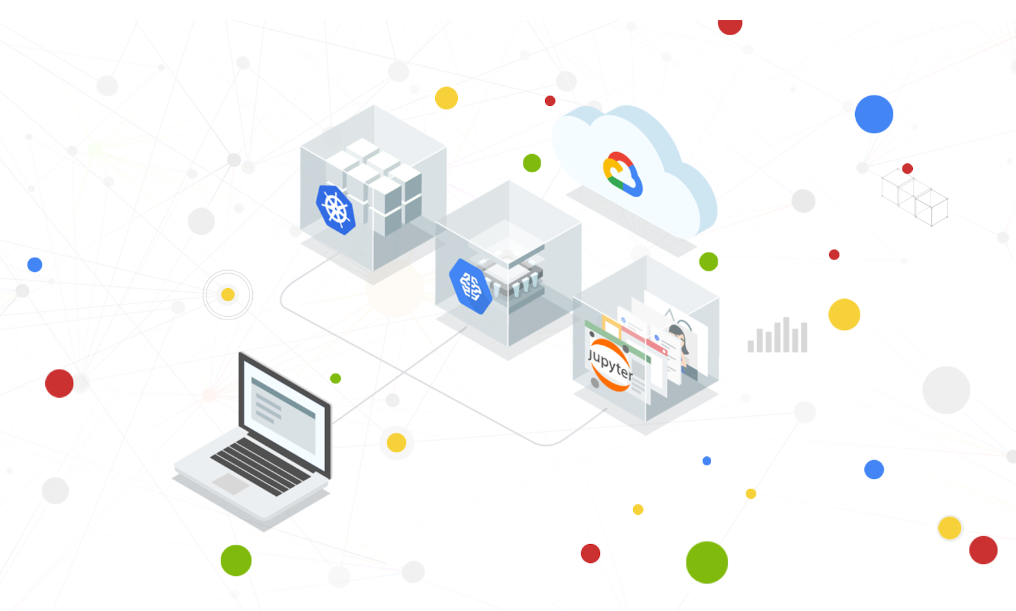
The service, called Deep Learning Containers, can be run both in the cloud or on-premises. It consists of numerous performance-optimized Docker containers that come packaged with various tools necessary to run deep learning algorithms. Those tools include preconfigured Jupyter Notebooks, which are interactive tools used to work with and share code, equations, visualizations and text, and Google Kubernetes Engine clusters, which are used to orchestrate multiple container deployments. The service also provides machine learning acceleration capabilities with Nvidia Corp.’s graphics processing units and Intel Corp.’s central processing units. Nvidia’s CUDA, cuDNN and NCCL machine learning libraries are also thrown in. In a blog post Wednesday, Google software engineer Mike Cheng explained that Deep Learning Containers are designed to provide all of the necessary dependencies needed to get applications up and running in the fastest possible time. The service also integrates with various Google Cloud services, such as BigQuery for analytics, Cloud DataProc for Apache Hadoop and Apache Spark, and Cloud Dataflow for batch processing and streaming data using Apache Beam.


Implementing IoT – overcoming barriers to commercial adoption


The basic architecture of IoT comprises four domains: the sensors, the connectivity of those sensors, the data hub that enables the data from all sorts of sensors to be interoperable (rather than stuck in silos), and the applications. The data hub plays a vital role in presenting the data to the applications in a uniform way, and Davies highlighted the work being done at CityVerve, a smart city demonstrator in Manchester encompassing a smart cycle light trial to understand cycle usage and improve cycle routes, an air quality trail which is linked to traffic density, and a water usage trial for leak management and demand management. Edge computing will play an important role in reducing connectivity demands, and zero-touch device management will be essential. Stuart Higgins, head of smart cities and IoT at Cisco, talked about some of the IoT trials and commercial deployments in the UK and worldwide. Many companies are digitising – seeing their operations and products as data to be managed in an IoT context.


3 serverless development strategies for stateful applications

Functions should be directly accessible to each other. Without immediate connections, functions depend on a slow storage medium to transport data from one function to another, building up latency. In real-time application scenarios -- such as 24/7 monitoring systems -- latency is unacceptable. Serverless functions predominantly underpin short-term workloads, which means that resources are allocated to them when requested and taken away once the request ends. Stateful applications developed on serverless functions can't use traditional mechanisms to work, such as global variables that can hold data throughout the application's lifetime. It's impossible for stateless functions to read from and write to disk, and the application can't maintain a constant connection to the database. To create stateful applications, serverless developers can manage application state with database connections, an event payload or backend as a service (BaaS) to integrate with the application.


Quote for the day:


"A leader is best when people barely know he exists, when his work is done, his aim fulfilled, they will say: we did it ourselves." -- Laotzu


Daily Tech Digest - July 04, 2019

Security flaws in a popular smart home hub let hackers unlock front doors

smart lock hero 1
The researchers conceded that their findings weren’t a perfect skeleton key into everyone’s homes. In order to exploit the flaws, an attacker would need to be on the same Wi-Fi network as the vulnerable smart hub. Dardaman said any hub connected directly to the internet would be remotely exploitable. The researchers found five such vulnerable devices using Shodan, a search engine for publicly available devices and databases. Zipato says it has 112,000 devices in 20,000 households, but the exact number of vulnerable hubs isn’t known. We asked SmartRent, a Zipato customer and one of the largest smart home automation providers, which said fewer than 5% of its apartment-owning customers were affected by the vulnerable technology. A spokesperson wouldn’t quantify the figure further. SmartRent said it had more than 20,000 installations in mid-February, just weeks before the researchers’ disclosure. For its part, Zipato fixed the vulnerabilities within a few weeks of receiving the researchers’ disclosure.


The big question now is whether this is a one-time breather in the "Windows as a service" schedule or whether it becomes the new normal for Windows 10 releases. The timing is certainly no accident. The 19H2 Windows 10 feature update is the last Windows 10 release before the end of free support for Windows 7 on January 14, 2020. The last thing Microsoft wants is any kind of discouraging publicity about negative upgrade experiences in those final few months before the free support window closes. This week's announcement is the latest in a series of major changes to the Windows 10 release schedule, including some that represent a 180-degree turnaround from the original "Windows as a service" model. The new rules depend on which Windows edition you've deployed. For OEM and retail Windows editions, even the lowly Windows 10 Home, feature updates are no longer mandatory. Instead, the twice-yearly feature updates are offered on PCs that Microsoft's algorithms deem suitable;


Mac Malware Pushed via Google Search Results, Masquerades as Flash Installer

macOS zero day flaw
The malware was discovered by researchers being distributed via numerous sites – some of which popped up on Google search results. One such site, called “GetComics,” purported to share digital copies of new comic books for free. The malware was also spread via high-ranking Google search results, which were observed redirecting users to multiple sites. “We were actually in the process of coming up with a name for CrescentCore, and searched for ‘CrescentCore’ in quotation marks, and one of the links in the first page of search results redirected to a page that happened to be distributing a new sample of CrescentCore,” Long said. The researcher said that oftentimes malware distributors will find vulnerable blogs or other sites with high Google search engine rankings, and add a redirection mechanism that bounces through a number of affiliate links – ultimately redirecting users to a fake Flash Player landing page. “So if a result for a previously almost unused word like CrescentCore happened to show up in search results, it’s extremely likely that other search results are poisoned with redirections to this malware as well,” he said.


The Future of Anti-Fraud Technology

Benchmarking-Technology-Report-thumb.jpg
Technological advancements present opportunities for both fraud perpetrators and those trying to stop them. As criminals find new ways to exploit technology to commit their schemes and target new potential victims, anti-fraud professionals must ensure they are likewise adopting new technologies that are the most effective in navigating the evolving threat landscape. But which technologies are most effective in helping organizations manage their fraud risk? Which tools provide benefits that outweigh the costs? How are organizations successfully harnessing the power of data and technology as part of their anti-fraud programs? These issues were discussed in today’s roundtable session, “Benchmarking Your Use of Anti-Fraud Technology.” The answers to those and other questions can be crucial in gaining management buy-in and successfully implementing new anti-fraud technologies. Luckily, attendees were able to review the recently released Anti-Fraud Technology Benchmarking Report. A publication of the ACFE, the report was developed in partnership with SAS and serves as a road map to what the future technological landscape will hold.


Neuroscience Is Going to Change How Businesses Understand Their Customers


Neuroscience, it turns out, can help change how companies think about new opportunities, and specifically, within the emerging field of applied neuroscience. Applied neuroscience is best described as the use of neuroscience tools and insights to measure and understand human behavior. Using applied neuroscience, leaders are able to generate data about critical moments of decision making, and then use this data to make confident choices that help to navigate the future of an initiative. Studies using applied neuroscience are often conducted outside of a lab context, and therefore rarely use large, stationary MRI (magnetic resonance imaging) scanners. Instead, these studies focus on using more mobile solutions such as EEG (electroencephalograph) headsets, combined with eye-tracking technology to capture precise data on how the brain reacts when presented with certain scenarios. Because of this, applied neuroscience is used primarily during one of two points in a new project — either at the onset while defining the business problem, or later in the cycle while seeking new solutions for users.


AI Differential Privacy and Federated Learning


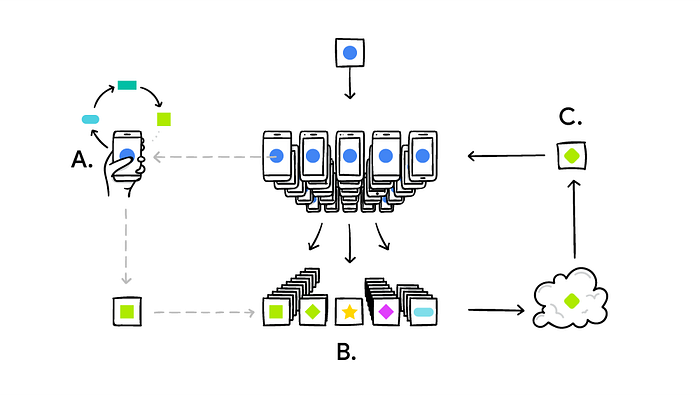
Differential Privacy enables us to quantify the level of privacy of a database. This can help us to experiment with different approaches in order to identify which is best to preserve the user’s privacy. By knowing our data privacy level we can then quantify the likelihood that someone might be able to leak sensitive information from the dataset and how much information can be leaked at most. ... Machine Learning models which make use of a large amount of data are traditionally trained using online servers. Companies like Google and Apple used to take the data records activity of the users of their mobile devices and then store them in their cloud services to create a centralized Machine Learning model able to improve the performances of their mobile services. Nowadays, these big companies are moving instead towards using a decentralized model approach called Federated Learning. Using Federated Learning, the Machine Learning model is trained on the data source and its output is then moved on the cloud for further analysis. This means that companies like Google and Apple no longer need to access their user's data to improve their services


Open Banking is less about technology, more about people


Key element is to be able to translate the opportunities of new technology to all stakeholders in the ecosystem. No, a bank will not become an ecosystem… it is an integral part of it. This means that collaboration is an essential part of the success, not imposing partnerships. This balanced partnership will (1) allow more creative thinking and (2) facilitate change management, as people are more open to change when dialogue is not top-down. To come back to the idea of the customer challenge: with partnerships I do not only mean technology partners, but also for example merchants and other parties that can help in convincing the end-customer to adapt to the new world of digital banking. Financial education is a key aspect of getting the market ready for Open Banking. You don’t need to explain what Open Banking is, but it may be useful to show the advantages of the new way of banking. Banks no longer have a monopoly on this financial education. To take the example of the wearables: it is good to have banks promoting it, but if the merchant does not promote it, the bank will get nowhere in volumes: it is a two-way street.


Thousands of Facebook Users Hit in Malware Distribution Campaign

Researchers from Check Point Software uncovered the campaign recently when investigating a Facebook page impersonating Khalifa Haftar, commander of the Libyan National Army. The page, created in April, offered posts about airstrikes, terrorists being captured, and other content likely of interest to people in Libya. With more than 11,000 followers, the page contained URLs for downloading files that were often described as documents containing evidence of countries like Qatar and Turkey conspiring against Libya, or containing photos of pilots captured when bombing Tripoli and other lures. Some URLs purported to be to sites where citizens could sign up for the army. Facebook users on mobile and desktop devices who clicked on these links ended up downloading a variety of known remote administration tools used for spying and stealing data. Check Point's investigation of the fake Khalifa Haftar Facebook page shows that the individual behind it had been distributing malicious links through more than 30 other Facebook pages since at least 2014.


The Role of Big Data Analytics and AI in the Future of Healthcare


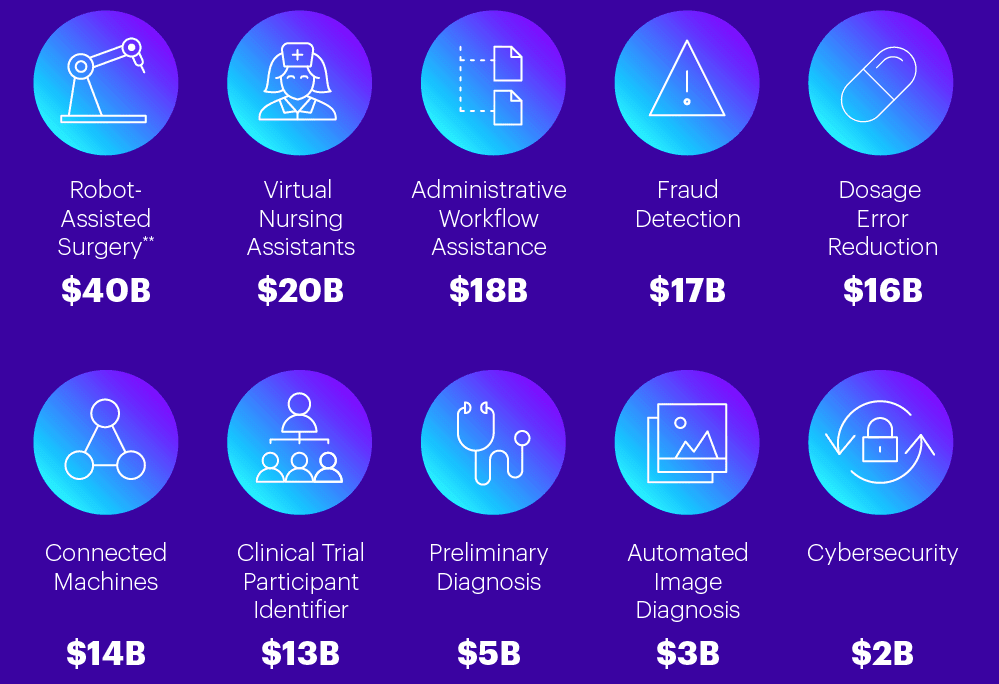
Machine learning algorithms can identify patterns and make predictions using cloud computing data lakes and data warehouses that clean (creating a single ‘source of truth’ in the data) and store huge amounts of data which enables the integration of multiple health care systems together. For the purpose of providing better and more targeted care to an individual’s electronic health record.  Oncology and cancer research have gotten the most investment into precision medicine by studying cancer genetics. In some instances, cancer treatments can be suggested based on genetic drivers of the cancer and not on the physical location of the cancer itself within the patient’s body. Moffitt Cancer Centerin Tampa, FL has been working on incorporating molecular genomics, demographics and trial outcomes to develop models for each patient. The use case. Of precision medicine will not only lower the risks of using sometimes incompatible treatments and medicines but it also building a new solutions for fighting disease and delivering healthcare. A startup called Deep Genomics uses (AI) and the genome to determine the best drug therapies for each individual.


How DHL is securing 'the world's most international company'

The aim? To "integrate and interoperate" with critical security technology components to better “identify, visualise and prioritise” critical security information in near real-time, in addition to providing timely remediation and responses to reduce possible business disruptions from cyber attacks. “With an influx of emerging and disruptive technologies such as ML, AI and the Internet of Things (IoT), organisations need to attain high levels of confidence in cybersecurity to compete and dominate in the digital space,” explained Chim. “Cybersecurity, rather than being a blocker or damage controller, has become a prioritised commercial investment for several businesses." “Organisations dealing with digital transformation in any form are enforcing cybersecurity in every technology surface to ensure secure operations and meeting data privacy compliance.” At the same time, Chim said cybersecurity industries are also adopting AI, sensor and blockchain solutions to collect, analyse and enrich significant number of events and intelligence to better prevent, detect and respond to security threats.


Quote for the day:


"Managers work to see numbers grow. Leaders work to see people grow." -- Simon Sinek