Daily Tech Digest - November 06, 2019

A cure for unfair competition in open source

Open source needs makers, not takers
Some companies are born out of open source, and as a result believe deeply and invest significantly in their respective communities. With their help, open source has revolutionized software for the benefit of many. Let’s call these types of companies Makers. As the name implies, Makers help make open source projects; from investing in code to helping with marketing, growing the community of contributors, and much more. There are usually one or more Makers behind the success of large open source projects. For example, MongoDB helps make MongoDB, Red Hat helps make Linux, and Acquia helps make Drupal. ... Now that open source adoption is widespread, lots of companies, from technology startups to technology giants, monetize open source projects without contributing back to those projects. Let’s call them Takers. I understand and respect that some companies can give more than others, and that many might not be able to give back at all. Maybe one day, when they can, they’ll contribute. We limit the label of Takers to companies that have the means to give back, but choose not to.


NYC launching IoT system to monitor traffic and reboot malfunctioning signals


In addition to monitoring activity and collecting data, the new system includes a reboot feature. When there is a problem with a traffic signal, a technician goes out to check the device and reset it manually. Transportation officials will use this new system to reset the devices remotely, without having to close lanes and stop traffic. Transition's Device Management System software also creates an interactive map of all connected devices, making it easier for city engineers to identify problems in the system. The city is counting on these new tools and data collection to improve safety, traffic management and transportation citywide. New York needs all the help it can get with traffic. Uber and Lyft have increased traffic congestion and trucks deliver 1.5 million packages from Amazon to city residents every day. In Manhattan, the average speed is 7 mph, about 23% slower than 10 years ago. Transition, a unit of Communications Systems, produces services and devices to provide security and surveillance, data center networking, business Ethernet, Fiber-to-the-Desk and wireless backhaul. Customers include enterprises, integrators, service providers, federal agencies, and the military.


Is AI Bias a Corporate Social Responsibility Issue?


Algorithms cannot be trained to understand social context. In the case of employment, workplace politics often play a role in performance evaluations. For example, some employees may be evaluated as top performers because they are related to a senior executive, have seniority, or are in the same social groups as their managers. However, none of this is captured on the employee evaluation forms that were used to decide which resumes would be used to train the automated recruitment tools. Computer scientists simply pull the resumes of employees with the highest performance rates within each role. But, those resumes clearly don’t show the full picture. And they propagate the status-quo, and all of the inherent biases that come with it. This is why data scientist Cathy O’Neil argues the statistical models produced by algorithmic decision making systems are simply opinions written into code. She argues that we should not assume training datasets are accurate or impartial, because they are encoded with the biases of their largely white, male producers. This is what legal scholar Rashida Richardson calls dirty data.


A digital twin for security superpowers


For security, a digital twin leverages more than just access to resources and subject-matter expertise across disciplines. For each worker, a digital twin assures that work is continuously situationally aware and contextually risk-appropriate. Designed to optimize the overall experience, the oft-opposing forces of security, productivity, and cost are objectively balanced for individual work products and the overall workforce. Oh, and digital twins aren’t just for individuals, as they can mirror aspects of physical environments that include classrooms, operating theaters, and manufacturing floors. A security-focused environment can immerse the security practitioner in the threat landscape and visually show the impact of proposed policy, technology, and regulatory changes. To extend organizational intelligence, digital twins can be tuned to encourage and enforce cultural aspects that affect security outcomes. Advances in analytics, machine learning, augmented reality, virtual reality, and automation have provided the genesis for digital twins. Let’s get started designing your security superpowers.


Ransomware authors seeking new ways to avoid being spotted


Sophos CTO Joe Levy said: “Every year, criminals adapt to the best-defences from operators and suppliers in the industry. At the same time, defenders must protect systems and processes with new functionality constantly being introduced, and with an ever-increasing global interdependency on these systems’ operation. “But you can’t defend against what you can’t understand. It isn’t always easy to visualise complex attack scenarios, especially given that the resultant cat-and-mouse game between attackers and defenders helps shape future threats. “Our report this year reflects both the broader range of the security domains we now observe and defend, and the wider reach of adversaries into new territory.” The annual report has this year broadened in scope to explore areas beyond Sophos’ historic purview around malware and spam prevention. Sophos principal researcher Andrew Brandt picked over some other key trends observed by the firm in the past 12 months in a newly published blog post.


5 tips on how to pick the right AI use cases


"The scope and scale of the data problem in AI is far larger than most people realize," explained Jen Snell, vice president of Verint, a chatbot development company. "So many organizations run into problems with their projects due to data -- from data quality to managing and wrangling data for meaningful insights to labeling and model building," she said. "In the beginning, it seems easy, but as you look to grow at scale, change models, manage and ensure control over the system, it gets tricky." ... One must be careful not to confuse the AI transformation with digital transformation. Sometimes, even non-AI-based automation tools are enough for the job. Before rushing into AI, proper research must be made to see if an AI project is the best way forward. Jonathan Duarte, who built AI-based chatbots for the likes of Wells Fargo, shared his experience.


Cisco forges tighter SD-WAN links to Microsoft Azure cloud, Office 365

SD-WAN  >  The concept of a visual transition from hardware cables to software code.
The new agreement is expected to take that enhancement a step further and integrate Cisco SD-WAN more deeply with Microsoft Office 365 to bolster application insights that will enable the package “to manage optimal network paths more effectively and further improve user experience,” Gupta said. There will be additional details when the package is available in calendar year 2020, he said. Gupta said he expects trials to begin in the first quarter of 2020. SD-WANs use software to control the connectivity, management and services between data centers and remote branches or cloud instances. Cisco’s SD-WAN software lets customers set up a networking fabric to connect data centers, branches, campuses, and colocation facilities to improve network speed, security, and efficiency, the company says. Cisco’s package includes a menu of security features including support for URL filtering, Cisco Umbrella DNS security, intrusion/detection prevention, the ability to segment users across the WAN and embedded platform security, including the Cisco Trust Anchor module. The software also supports SD-WAN Cloud onRamp for CoLocation, which lets customers tie distributed multicloud applications back to a local branch office or local private data center.


Cryptocurrencies backed by cash could elude new regs

cryptojacking / cryptocurrency attack
Shortly after the G7 report was released, the G20 published a statement agreeing that stablecoins have both potential benefits for financial innovation and risks. IOSCO said it would help the global G7's Financial Stability Board's work on stablecoins for the Group of 20 Economies. The IOSCO FinTech Network will also continue to assess and consider global stablecoin initiatives. "It is important that those seeking to launch stablecoins, particularly proposals with potential global scale, engage openly and constructively with all relevant regulatory bodies where they may be seeking to operate," Alder said. Unlike Bitcoin, which arguably has no intrinsic value because its based solely on supply and demand, "stablecoin" value is based on fiat currency or other assets to which it's tied such as real estate, precious metals or artwork. Facebook's Libra has become the public face for many other stablecoin initiatives because it could be launched globally and used by any of the social network's 2.4 billion active users. The cryptocurrency app will allow Facebook users to send, add or withdraw money "in just a few taps," using WhatsApp, and it will allow someone to fill their wallet, cash out or split a restaurant tab all using Messenger, the company said.


Smartphone and speaker voice assistants can be hacked using lasers


According to the researchers, as long as the light signal is carefully aimed using a telephoto lens with the correct amount of light, any MEMS-based microphone used in popular devices is vulnerable. The distances at which communication is possible varies by device, ranging from up to 110 meters for the Google Home and Echo Plus 1st Generation to just above 20 meters for the Apple iPhone XR and sixth-generation iPad. The equipment used to carry out the tests was a cheap five-milliwatt laser pointer, a laser driver, sound amplifier, and basic telephoto lens, together costing less than $600 combined. An objection that voice assistant manufacturers might make is that this kind of laser attack still needs a line of sight, for example from one building to another. It’s not clear how often this would be possible under real-world conditions. The obvious mitigation is to keep these devices away from windows. However, the researchers believe that making assumptions is the wrong way to understand vulnerabilities in this expanding class of gatekeeper devices.


5 principles for a fulfilling career from the ‘Father of Digital Mobile Communication’

Blurred silhouettes amid abstract technology.
“You can do things very fast. You can also fail fast ... If it doesn’t work, you try something else. That, I think, is a very different way of doing the work to innovate and develop products.” There’s another fundamental difference between startup world and Stockholm, says Jan. “European leaders are usually businesspeople,” he explains. “Silicon Valley leaders are a little bit like half-crazy people. They are doing things that few can really dream of … And I think that seems to continue to be the case. Those people pop up all the time. The companies we have seen the last 10 years like Google, Facebook, Netflix and so on. They all are like that, I think. They have very visionary leaders.” ... While we wait for our self-driving Ubers to arrive, Jan is happy to share the hard-won wisdom he’s gained on the avant garde of wireless tech. “The main thing for me is to give back,” says Jan, who consults with Ericsson and Sony in addition to working with various startups. “For the next generation to learn from our generation. They will have a lot of things they will do anyway – that they don’t have to learn from us.


Quote for the day:


"The ultimate measure of a man is not where he stands in moments of comfort, but where he stands at times of challenge and controversy." -- Martin Luther King, Jr.



Daily Tech Digest - November 05, 2019

Boeing's poor information security posture threatens passenger safety

Fragmented image of a Boeing 787 airplane represented in encrypted data.
Among a litany of easily remedied security failures, Kubecka reported that Boeing's test development networks were publicly exposed to the internet, potentially enabling a sophisticated adversary to gain access to Boeing software source code and build systems. "Imagine if you are an enemy and you tainted flight control software and suddenly a sensor or detection method didn't work when you go to war with them," Kubecka says. (CSO was able to verify that at least one of Boeing's test servers is still online but won't be publishing technical details to avoid helping potential attackers.) Other basic security precautions that constitute rudimentary due diligence also appear not being followed, including a lack of a TLS certificate (to enable encrypted web traffic via HTTPS) on the Boeing.com website home page, which means a malicious adversary could inject malware into web traffic and infect unsuspecting users. As of last week, more than 90% of web traffic is now encrypted, according to netmarketshare.com, making Boeing an outlier in a sector with known nation-state adversaries. If a company of Boeing's size can't even properly deploy a TLS cert on their website, what other information security lapses might they have committed?


"One of the realities of the future of work is that there's going to be more decisions that are left up to AI and automation," Kropp said. "There'll be more moral and responsibility decisions that are going to occur. HR will have a new job in the future of work, in addition to the jobs it already has. And that job will be to be the ethical steward of the company in an AI enhanced and embraced world."  ...  "While IT will be great at driving innovation, they won't be able to understand the full ethical questions that are out there to be able to balance across this team," Kropp said. "We believe that HR is uniquely responsible and uniquely positioned to do this from the organization." ... Employee training typically falls under HR's role, which means HR must consider how technology might change their employees' skillsets, Kropp said.  "As managerial tasks get automated and the role of the manager changes, for example, if you keep doing the same thing, you're going to waste money on developing and training managers that no longer have the right capabilities," Kropp said. "If you don't change your learning and development strategy and rely on old job learning approaches, you're not have the workforce that you need."


Snowden was speaking via a video link from Russia, where he is now living after leaking details of secret US government surveillance programmes to reporters back in 2013. "Regulating the protection of data presumes that the collection of data in the first place was proper, was appropriate, that it doesn't represent a threat or a danger, that it's ok to spy on everyone all the time whether they are your customers or your citizens -- so long as it never leaks, so long as only you are in control of what it is that you've stolen from everybody," he added. Snowden said that while GDPR is a "good first effort" that the bar was set pretty low before: "What I'm saying is that it's not the solution, it's not the good internet that we want." One of the most significant features of GDPR is that organisations can face a maximum fine of 20 million euros or four percent of worldwide turnover -- whichever is greater. While some large GDPR fines have already landed, Snowden said: "Until we see those fines being applied every single year to the internet giants, until they reform their behaviour and begin complying not just with the letter but with the spirit of the law, it is a paper tiger that actually gives us a false sense of reassurance," he said.


What Comes After Digital Transformation? One Answer Is The Self-Driving Enterprise

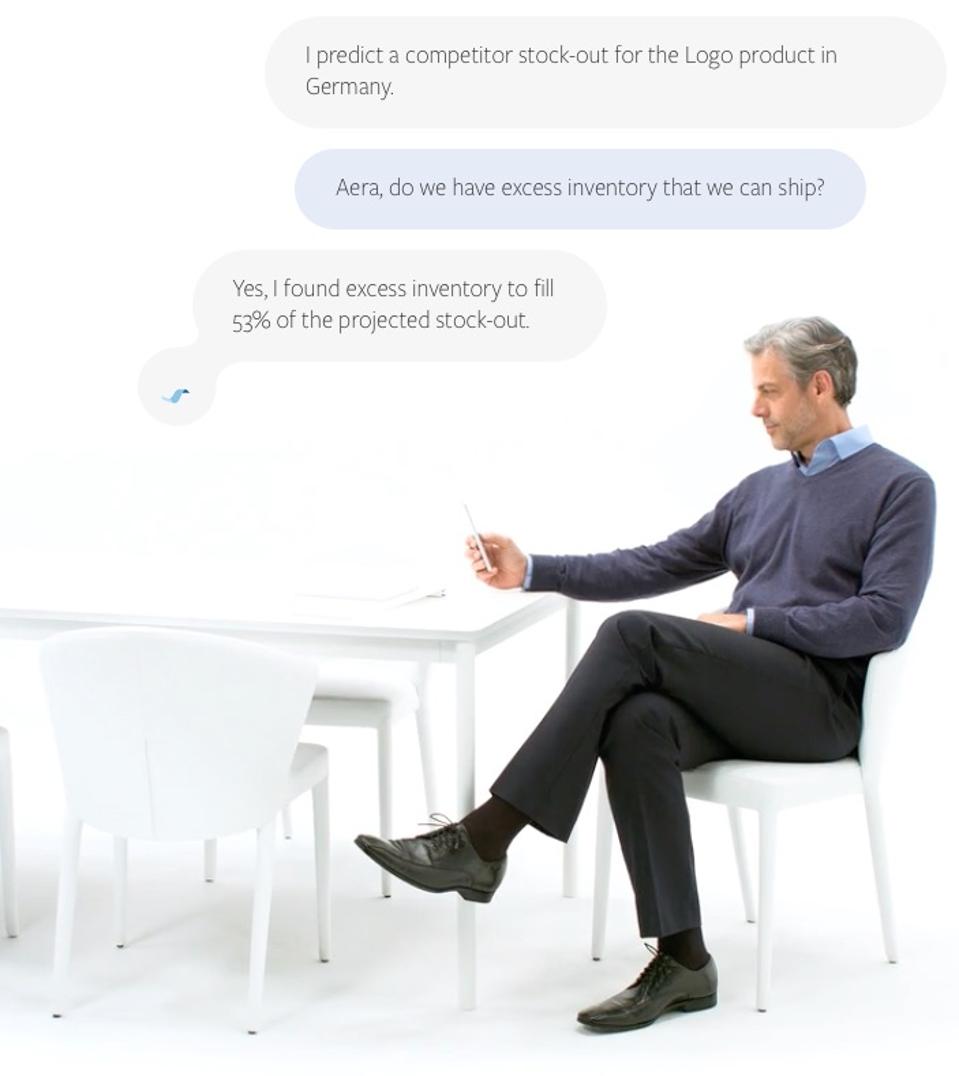
Aera is a digital brain for the Self-Driving Enterprise
Data is often referred to as the new oil. But data is a bit more like crude oil. You have to first find and collect it from all of its vast repositories. Even when you do, it’s unrefined. Data is often bad. It’s all over the place. Oftentimes, key data points are missing, especially in an era of real-time and predictive analytics. You can’t just make decisions with what you have, you need to upgrade, organize and clean the sources, plug it all into an intelligent system and upgrade human capital to connect the dots and make the most informed decisions consistently all at the accelerating speed of business. Pretty much, every CEO knows they have data, operational and human capital problems. Digital transformation is one of the paths forward. You can’t solve it overnight and becoming digital is a game everyone is playing. But you can start making the investment in cognitive platforms that connect the disparate dots while also giving stakeholders the ability to literally ask different questions that beget different answers. This starts to change organizational behavior, develop new human and machine knowledge and capabilities that ultimately change organizational course. Gartner is already starting to track the space, adding several categories to its Hype Cycle for Supply Chain Planning Technologies. 


TechUK calls on datacentre sector to scale up climate change action efforts


“Datacentre operators, large and small, commercial (colocation) and in-house (enterprise), private and public sector need to establish baselines, set themselves targets and monitor progress. They should also consider commitments to public disclosure and customer transparency,” the tech trade body’s 28-page Datacentre energy routemap document states. These targets should be informed and aligned to the United Nation’s Sustainable Development Goals, particularly those focused on areas such as clean energy use and climate action, the document added. Some operators are already making waves in this regard, with the report calling out IBM and BT, in particular, for their “well-established and leading-edge climate change programmes”. While others, according to TechUK, still have some way to go to match their efforts. “The picture is not consistent across the industry and many operators can learn from their counterparts or adapt an industry template,” the report said.


Microsoft Security Setting Ironically Increases Risks for Office for Mac Users

By convincing a user to open specially crafted Microsoft Excel content on a Mac that has "Disable all macros without notification" enabled, a remote attacker can gain the same level of access to the system that the legitimate user has, CERT/CC said in its vulnerability note. "Attackers can do anything that they want by exploiting this issue," says Will Dormann, senior vulnerability analyst at CERT/CC. "They could install a virus, steal private files, or install ransomware. The sky's the limit." In a statement, a Microsoft spokeswoman said Microsoft was committed to investigating reported security incidents. "We will provide updates for impacted devices as soon as possible." The problem lies in how Microsoft Excel handles XLM content in SYLK (SYmbolic LinK) files, Dormann says. XLM is a macro format that used to be available in Excel versions up to and including Excel 4.0. Though Excel versions since then use VBA macros, Microsoft has continued to support XLM macros in later Excel releases, including those available with the latest Office versions for Mac.


What security companies – and all of us – can learn from the Deadspin debacle

dumpster fire
If you don’t engage the people who make the company what it is, they’re going to walk. If you create a culture of uncertainty in the face of major changes, people are going to leave. If you mandate changes – not based on actual customer or user experience, but because of how it was done elsewhere – you’re going to drive a wedge further between the executive team and the rest of the company. Most importantly, if you put artificial barriers around what people do that are part of the reason for their success, and fire people for stepping out of them, you will cause a mass exodus. That’s what happened at Deadspin this past week. This is a clear example of how not to run a team. Effective managers keep teams engaged, communicate well and keep a culture of certainty even when there is turnover in senior leadership. Healthcare, like many other industries, is infamous for what we call “churn at the top,” where senior leadership changes significantly more rapidly than the levels beneath them. Each of those leaders has their own mandates from other leaders and board, and their own management style.


Digital Realty acquisition of Interxion to reshape data-center landscape

digital transformation /finger tap causes waves of interconnected digital ripples
DRT didn’t really get into the interconnection business until 2015, when it acquired Telx. That gave it a boost in the U.S. but not the rest of the world. "This strategic and complementary transaction builds upon Digital Realty's established foundation of serving market demand for colocation, scale and hyperscale requirements in the Americas, EMEA and Asia Pacific and leverages Interxion's European colocation and interconnection expertise, enhancing the combined company's capabilities to enable customers to solve for the full spectrum of data center requirements across a global platform," said Digital Realty CEO A. William Stein in a statement. Interxion's well-established business relationships will give DRT a huge boost in Europe, Middle East, and Africa. Likewise, DRT touts its relationships with leading cloud platform operators and global enterprises as an opportunity to extend its value proposition to a global customer base. “The combination of Digital Realty with Interxion adds interconnection-rich sites in Europe to Digital’s global platform,” said Kelly Morgan, senior vice president for systems at 451 Research, in an email comment to Network World.


After Brexit, will 5G survive the age of the European empire?

191105-5geo-01.jpg
DT and Huawei have already been close partners in some of Germany's first 5G rollouts, including what is said to be the first working 5G transmitter in Europe, located just above rooftop level on the antenna shown above, along Winterfeldstrasse in Central Berlin. In late October, Chancellor Merkel once again resisted calls from opposition ministers to take a harder stance on Huawei. The country maintains what it calls a "security catalog" listing global equipment suppliers that have pledged to refrain from including tools that may be leveraged in clandestine surveillance and spying. Although ostensibly toughening its "no-spy" regulations last May, the following October, Huawei officially made the revised approval list, and will continue to be a part of Germany's core 5G network for the foreseeable future. These telcos are among 5G's premier customers. Despite how the EU government would position itself, these companies are the ones tasked with implementing 5G standards, and maintaining interoperability among its implementations,


Q&A on the Book Agile Leadership Toolkit

Culture can’t be manipulated or altered directly, only indirectly. Things like trust, relationship, Rome and culture need time to grow and improve, and they can’t be built in a day. Successful leaders create the right structure so the culture can grow. Agile leaders give their teams a lot of freedom, space, trust, and inspiration for their daily work to increase their customer impact. Agile leaders focus on two important things to improve the culture: habits and informal leaders. The habits of a leader really influence the culture. Take for example when something goes wrong; what is the routine of the leader? Do they appoint firefighters to solely fix the important issue, or do they let the product owner decide how to solve it with the whole team? If the leader appoints firefighters, they probably will never achieve a culture of teamwork and collaboration. Another important thing to focus on is the informal leader. Every team has this role, and this person heavily influences the values – and therefore the local culture – of the team.


Quote for the day:


"Leadership is, among other things, the ability to inflict pain and get away with it - short-term pain for long-term gain." -- George Will


Daily Tech Digest - November 04, 2019

A VPN service that gets around the Great Firewall of China legally

CSO > Security mechanisms vs. fiery threats
Now there is a third option for WAN connectivity outside China. Teridion has developed an SD-WAN solution that leverages the plentiful, fast, low-cost domestic broadband and builds on it to provide access into high speed WAN connectivity outside the country in a way that’s consistent with the regulatory environment. To develop its SD-WAN Service for China, Teridion worked with legal authorities within China to ensure that this solution meets all Chinese regulations while being available to the world. Outside of China, Teridion has built a global WAN service that utilizes the public Internet as a backbone with unique capabilities to direct and manage the routing of traffic across this network. Teridion leverages a private routing infrastructure using Teridion Cloud Routers (TCRs) at the edge to establish the fastest path, at any given time, between a source and a destination. This approach provides accelerated access from one user site to another, or from user to SaaS applications and cloud workloads. Because Teridion has a lot of flexibility in choosing routes, this approach eliminates the reliability and performance gaps that are introduced when relying on the public Internet. 


Chrome will check if the users' DNS provider is on a its list of participating DoH providers, which currently include Cleanbrowsing, Cloudflare, Comcast, DNS.SB, Google, OpenDNS and Quad9. This list could expand in future experiments. "If the DNS provider is not on the list, Chrome won't enable DoH and will continue to operate as it does today. As DoH adoption increases, we expect to see the number of DoH-enabled DNS providers grow," noted Baheux. Mozilla is also implementing DoH in Firefox, albeit differently. Mozilla has also opted not to enable DoH by default for UK users because of pressure from the UK government. Another misunderstanding, according to Baheux, is that Chrome's DoH will prevent ISPs offering family-safe content filtering. Paul Vixie, a pioneer of DNS, who has called DoH a "cluster duck for internet security", this week applauded Google's approach to DoH, particularly for how it's enabling network admins to implement security controls. He also reckons Mozilla and Cloudflare should follow Google's lead.


What is cryptojacking? How to prevent, detect, and recover from it

hacker / cryptocurrency attack
Hackers have two primary ways to get a victim’s computer to secretly mine cryptocurrencies. One is to trick victims into loading cryptomining code onto their computers. This is done through phishing-like tactics: Victims receive a legitimate-looking email that encourages them to click on a link. The link runs code that places the cryptomining script on the computer. The script then runs in the background as the victim works. The other method is to inject a script on a website or an ad that is delivered to multiple websites. Once victims visit the website or the infected ad pops up in their browsers, the script automatically executes. No code is stored on the victims’ computers. Whichever method is used, the code runs complex mathematical problems on the victims’ computers and sends the results to a server that the hacker controls. Hackers often will use both methods to maximize their return. “Attacks use old malware tricks to deliver more reliable and persistent software [to the victims’ computers] as a fall back,” says Vaystikh. For example, of 100 devices mining cryptocurrencies for a hacker, 10 percent might be generating income from code on the victims’ machines, while 90 percent do so through their web browsers.


Forrester: The 5 IoT predictions paving the way for 2020

edge-computing-intro-header.jpg
While IoT devices provide a bevy of benefits, the increase in devices creates more threat vectors for cybercriminals to exploit. "IoT is the cause of the vulnerability," Gillett said. "If these products weren't connected, then the crooks couldn't get in there and try to mess with the connection or the electronics." In 2020, attackers will target both consumer and enterprise IoT devices for ransom, the report found. This means cybercriminals could attempt to exploit regular customers and device manufacturers. To prevent attackers from taking advantage of IoT devices, designers must work closely with security teams in the company or hire experts that can integrate risk-mitigating techniques, Gillett said. ... IoT will also pave the way for increased truck driver assistance, or technology that helps truck drivers notice if they are becoming drowsy or inattentive, Gillett said. While fully self-driving trucks won't be in the cards for 2020, movement toward self-driving technology on the highway will progress next year, he said.


DevOps security shifts left, but miles to go to pass hackers


DevOps security, or DevSecOps, teams have locked down many of the technical weak points within infrastructure and app deployment processes, but all too often, the initial attack takes a very human form, such as a spoofed email that seems to come from a company executive, directing the recipient to transfer funds to what turns out to be an attacker's account. "Often, breaches don't even require hacking," Sanabria said. "It requires understanding of financial processes, who's who in the company and the timing of certain transactions." Preventing such attacks requires that employees be equally familiar with that information, Sanabria said. That lack of awareness is driving a surge in ransomware attacks, which rely almost entirely on social engineering to hold vital company data hostage. ... "Developers and operations may be blind to application security issues, while security tends to focus on physical and infrastructure security, which is most clearly defined in their threat models," Pullen said.


Microsoft rebrands Flow to 'Power Automate'; adds no-code Power Platform virtual agents

powerautomate.jpg
Mirosoft's Power Platform is the collection of Power BI analytics, PowerApps app-development platform and Flow, its workflow-automation engine. As of this week, Microsoft is rebranding Flow -- which is a lot like the If This Then That (IFTTT) platform -- as "Power Automate" to make its brands more consistent. Microsoft is adding robotic process automation (RPA) to Power Automate to help automate repetitive tasks. A public preview of the RPA capability, which is called UI Flows, is available this week. Microsoft also is introducing a new capability called Power Virtual Agents in public preview as of today, November 4. Power Virtual Agents is meant to enable anyone to build a no-code, no-AI-training required intelligent bot. It combines the Microsoft Bot Framework technology with the Power Platform technologies. Those who want to make a more complex bot can take advantage of the integrations that exist between the Bot Framework and Microsoft's Cognitive Services. Mirosoft's Power Platform is the collection of Power BI analytics, PowerApps app-development platform and Flow, its workflow-automation engine.


Why the Rust language is on the rise

Why the Rust language is on the rise
You’ve probably never written anything in Rust, the open source, systems-level programming language created by Mozilla, but you likely will at some point. Developers crowned Rust their “most loved” language in Stack Overflow’s 2019 developer survey, while Redmonk’s semi-annual language rankings saw Rust get within spitting distance of the top 20 (ranking #21). This, despite Rust users “find[ing] difficulty and frustration with the language’s highly touted features for memory safety and correctness.” ... You’ve probably never written anything in Rust, the open source, systems-level programming language created by Mozilla, but you likely will at some point. Developers crowned Rust their “most loved” language in Stack Overflow’s 2019 developer survey, while Redmonk’s semi-annual language rankings saw Rust get within spitting distance of the top 20 (ranking #21). This, despite Rust users “find[ing] difficulty and frustration with the language’s highly touted features for memory safety and correctness.”


Take advantage of LinkedIn to prepare for interviews and meetings


Connect your LinkedIn account and the People Card will show job titles and profile images from LinkedIn. If it's someone in your LinkedIn network, you can see who you both know, and you can email people even if you don't have their email address saved in Outlook. Plus you can see all the email conversations you've had and any files they've sent you. Click on the LinkedIn icon at the top of the card, the LinkedIn heading in the middle or the 'Show more' link at the bottom to get a bigger window where you can see more emails, filter the files and see the highlights of their LinkedIn profile. If they have a new position or a work anniversary (or a birthday), that will show up, and you can click through to see their full profile -- helpful to see if they've posted anything that might be relevant in your meeting. If you use the Office 365 MyAnalytics feature, this will also show up on the People Card. MyAnalytics (formerly known as Delve) tracks your work habits in email, meetings and Office documents, spots who you frequently collaborate with and makes suggestions like blocking time in your calendar to get work done.


How SD-WAN is evolving into Secure Access Service Edge

data protection / security / risk management / data privacy / GDPR
An architectural transformation of the traditional data center-centric networking and security is underway to better meet the needs of today’s mobile workforces. Gartner predicts that the adoption of SASE will take place over the next five to 10 years, rendering existing network and security models obsolete. In my opinion, the term "obsolete" is a bit aggressive, but I do agree there is a need to bring networking and security together. Having them be procured and managed by separate teams is inefficient and leads to inconsistencies and blind spots. SD-WANs enable a number of new design principals, such as direct to cloud or user access, and necessitate the need for a new architecture – enter SASE. SASE combines elements of SD-WAN and network security into a single cloud-based service. It supports all types of edges, including WAN, mobile, cloud, and edge computing. So, instead of connecting a branch to the central office, it connects individual users and devices to a centralized cloud-based service. With this model, the endpoint is the individual user, device, or application, not the data center.


These 6 AI technologies will dramatically reshape enterprise project management


AI can play a key role in helping project managers make crucial decisions. Currently, 29% of organizations have already been affected by decision management, but 68% expect a high or moderate future impact, the report found. "As decisions need to be made throughout the project, project managers will rely on predictive models to assess options and select those that provide the highest likelihood of a positive outcome," Broome said.  This is also where machine learning algorithms come in, Schmelzer added, as they can show what features of a product consumer are or aren't using, for example, and help project managers make decisions accordingly.  Going hand in hand with decision management, expert systems also provide project managers with expert thinking. Some 21% of organizations have already been impacted by expert systems, and 64% expect a high or moderate future impact, the report found. "You can actually have machines automatically create these things called decision trees to help you," Schmelzer said. "It's like taking the ideas of the expert and putting them into machine learning."


Quote for the day:


"The successful man doesn't use others. Other people use the successful man. For above all the success is of service" -- Mark Kainee


Daily Tech Digest - November 03, 2019

Can a Smart Light Bulb Steal Your Personal Data?


Jadliwala believes that smart bulbs may be poised to become an even more attractive target for data privacy exploitation, even though they are embedded with very simple chips. Smart bulbs connected to a home network rather than a smart home hub — a centralized hardware or software device where other loT products communicate with each other — are especially easy to target. If these bulbs are infrared-enabled, hackers can send commands via the invisible infrared light emitted by the bulbs. These commands can be used to hack into other IoT devices on the home network to steal data. Moreover, the victim would likely not notice such hacking because the commands would be transmitted within the owner’s home Wi-Fi network, where they might not be detected by Internet-based security systems. Jadliwala says smart bulbs connected to dedicated home hubs are currently safer alternatives because they do not access any Wi-Fi networks, but he also believes smart bulb manufacturers will have to ramp up their security measures to limit the level of access such bulbs might have to other smart home appliances within a home system.


How Artificial Intelligence Will Take the Industrial Internet of Things to New Heights


The ideology is simple in the industrial sector as well: making industrial machines smarter than humans at analyzing data in real-time and forming the basis of faster and better logical decisions. A connected machinery system of this capability ensures that management can pick up errors or inefficiencies in the system, formulate better solutions and implement them faster. Making industrial processes smarter with IIoT also brings great environmental benefits to the table: better quality control, eco-friendliness, sustainability and better industrial waste management. IIoT also helps in supply chain management, the entire process of raw material conversion into a product and it’s upkeeping from the point of origin to the point of consumption. In the Industrial sector, predictive maintenance and analytics aren’t possible without proper IIoT infrastructure, as well as enhanced asset tracking and energy management for better power utilization. IIoT manages and controls all these processes with an integrated system of smart and intelligent devices ensuring perfect maintenance and management with less dependence on human action.


4 Ways to Ensure a Successful Analytics Tool Integration


Data is the foundation of analytics and decision-making, and analytics is about making sense of the available data. A stable CRM platform is necessary before deploying advanced analytics. If the quality of the data inside the systems isn’t good, the results will be unpredictable. Data used in analytics tools have to be current, usable, and actionable. The CRM system data may be sales-focused, but it might not be collecting the data needed by other departments. Striving for quick results may overshadow the need for higher data quality, accuracy, and reliability. Quality management and ethical data sourcing, entry, and retrieval should be combined with continual quality testing and improvement, which ultimately leads to increased value. Consider the appointment of chief data officers and chief analytics officers. Also, don’t overlook the demand for security, as privacy threats and public concern increase. While data analytics tools are helpful, but they are nothing without a strong team and a big data management team with data scientists from different teams.


Overcoming The Barriers To Conversational AI

smart speaker
Conversational AI is an incredibly hard problem to solve. The advances made so far, however, have been nothing short of staggering. One of the first voice recognition devices was Shoebox, an IBM device introduced at the 1962 Seattle World Fair that could recognise 16 spoken words. Currently, all major platforms are reporting recognition error rates below 5 per cent, which is more than enough to call voice recognition a viable technology. Of course, conversational AI is much more than just converting speech to words. In many ways, the real challenge comes after that. The device needs to understand the context of the conversation both at a global level (the user’s ultimate goal) and within different stages of the conversation (the tasks to be achieved in each step of a process). This is where the current challenges lie. Advances have been rapid and impressive but people are still reporting their frustration with chatbots and intelligent voice assistants because they are “just stupid” or they “don’t understand what I am asking”.


AI May Not Kill Your Job—Just Change It


Fleming is optimistic about what AI tools can do for work and for workers. Just as automation made factories more efficient, AI can help white-collar workers be more productive. The more productive they are, the more value they add to their companies. And the better those companies do, the higher wages get. “There will be some jobs lost,” he says. “But on balance, more jobs will be created both in the US and worldwide.” While some middle-wage jobs are disappearing, others are popping up in industries like logistics and health care, he says. As AI starts to take over more tasks, and the middle-wage jobs start to change, the skills we associate with those middle-class jobs have to change too. “I think that it’s rational to be optimistic,” says Richard Reeves, director of the Future of the Middle Class Initiative at the Brookings Institution. “But I don’t think that we should be complacent. It won’t just automatically be OK.” The report says these changes are happening relatively slowly, giving workers time to adjust. But Reeves points out that while these changes may seem incremental now, they are happening faster than they used to.


Why The EU Is About To Seize The Global Lead On Cybersecurity

US EU G8
The European Commission has made cybersecurity a “high priority” and proposed that the cybersecurity budget for 2021-27 include €2 billion to fund “safeguarding the EU's digital economy, society and democracies through polling expertise, boosting EU's cybersecurity industry, financing state-of-the-art cybersecurity equipment and infrastructure.” Additional funding will come from Horizon Europe, a €100 billion research and innovation program. The EU’s commitment is not just about the security of critical infrastructure and combating cybercrime. The EU has seen how America’s IT sector has driven the U.S. economy, and it wants part of the action. This desire is clearly at play throughout the EU Cybersecurity Act. The first sentence of the Act states, “Network and information systems and electronic communications networks and services play a vital role in society and have become the backbone of economic growth.” The EU is committed to becoming “a leader in the next-generation cybersecurity and digital technologies.”


IBM: AI will change every job and increase demand for creative skills


“As new technologies continue to scale within businesses and across industries, it is our responsibility as innovators to understand not only the business process implications, but also the societal impact,” said Martin Fleming, vice president and chief economist of IBM, in a statement. “To that end, this empirical research from the MIT-IBM Watson AI Lab sheds new light on how tasks are reorganizing between people and machines as a result of AI and new technologies.” With the rise of AI and automation, there has been growing debate and anxiety about how these trends will disrupt current job markets. While some have argued AI and automation will be job killers, others have said the emerging technology will be a net creator of new jobs. The IBM-MIT study offers a bit of nuance to that discussion. The researchers used machine learning to analyze 170 million U.S. job postings between 2010 and 2017. They found that out of 18,500 possible tasks employees might be asked to do on average, the number had fallen by 3.7 over seven years. A drop, though hardly radical.


3 ways business intelligence can hurt your projects


The information gathered, analyzed, and reported is only useful if the individuals collecting it understand what they are looking for, why this information is relevant, where and how to search, and how to interpret the BI in a meaningful way. It is also essential to know who should have access to the information and how to deliver it in a timely manner. ... When planning for marketing-related projects, some companies, especially smaller ones, may only see financial and team-based performance data as valuable. Large numbers of customers or potential customers now interact online through social media, website content, and online advertising, which can play a significant role in trends, future activities, and spending habits.. ... Over-restricting business intelligence can result in IT department resource overload, decreased cross-functional productivity, reduced employee satisfaction, a decreased sense of trust, and low morale. While it is vital to restrict access based on a user's role, it is equally important to ensure that teams have the power to access and report on information without being hindered by bureaucracy.


AI and Health Care Are Made for Each Other


AI could also reduce physician burnout and extend the reach of doctors in underserved areas. For example, AI scribes could assist physicians with clinical note-taking, and bots could help teams of medical experts come together and discuss challenging cases. Computer vision could be used to assist radiologists with tumor detection or help dermatologists identify skin lesions, and be applied to routine screenings like eye exams. All of this is already possible with technology available today or in development. But AI alone can’t effect these changes. To support the technical transformation, we must have a social transformation including trusted, responsible, and inclusive policy and governance around AI and data; effective collaboration across industries; and comprehensive training for the public, professionals and officials. These concerns are particularly relevant for health care, which is innately complex and where missteps can have ramifications as grave as loss of life.


Android bug lets hackers plant malware via NFC beaming

Android NFC
Google patched last month an Android bug that can let hackers spread malware to a nearby phone via a little-known Android OS feature called NFC beaming. NFC beaming works via an internal Android OS service known as Android Beam. This service allows an Android device to send data such as images, files, videos, or even apps, to another nearby device using NFC (Near-Field Communication) radio waves, as an alternative to WiFi or Bluetooth. Typically, apps (APK files) sent via NFC beaming are stored on disk and a notification is shown on screen. The notification asks the device owner if he wants to allow the NFC service to install an app from an unknown source. But, in January this year, a security researcher named Y. Shafranovich discovered that apps sent via NFC beaming on Android 8 (Oreo) or later versions would not show this prompt. Instead, the notification would allow the user to install the app with one tap, without any security warning. While the lack of one prompt sounds unimportant, this is a major issue in Android's security model.


Quote for the day:


"Your greatest area of leadership often comes out of your greatest area of pain and weakness." -- Wayde Goodall


Daily Tech Digest - November 02, 2019

Creating an agile mind-set at PepsiCo


Employees are expected to continuously learn new skills. They are expected to question practices and reduce or eliminate habits that are no longer useful. Time is allotted each week for every employee to “upgrade” themselves, and a large catalog of training materials and classes is available. Underpinning this effort is a belief that time is the most democratic and precious resource and that people can make much better use of it to be more productive at work and have more time outside of work. That is why the company has found ways to give employees back some time to innovate and better serve customers during working hours. Then, with work at the office streamlined and a culture that encourages disconnecting from the workplace during off-hours, employees no longer feel like they have to take time away from family during evenings and vacations to address work issues. Employees are encouraged to look carefully at how they spend their time in the office.


Tim Cook thinks Apple customers are rich and very sensitive

Now, though, there appears to be a new divide. Those who have one pair of AirPods and those who have two. For particular occasions, that is. This week's Apple earnings call happened to coincide with the launch of the AirPods Pro -- elevated, noise-canceling versions of Apple's earrings-gone-wrong buds. CEO Tim Cook was moved to discuss these new apparitions and who would buy them. He offered: "We're anxious to see the customers for the new AirPod Pro. But I would guess that one, particularly in the early going, will be people that have AirPods today and want to also have a pair for the times they need noise cancellation." Please forgive me if I'm anxious to immerse myself in a vat of cooling coconut balm and hum my calming meditations. Apple's CEO believes his customers are so wealthy and so very sensitive that they will take time to consider: "Hmm, is this a moment when I want to shut the world out? Or would my central nervous system prefer to hear a few tinges of intonation from the world outside?"


What goes into a user story vs. use case for Agile development?


A user story provides a short descriptive sentence that outlines the who, what and why of one or a set of software requirements. User stories put context around interactions, which enables developers to focus their efforts on perspectives, features, functionality and results. ... User stories are not ideal for every software development discussion. While user stories are quick and simple, they are often devoid of technical detail; that leaves developers with no discussion of how to accomplish a task. There is no assessment of relative difficulty, accounting for resources like developer hours, or prioritization of one user story vs. another. Project managers often make these assessments during the planning phase of each iteration. ... Use cases generally provide more detail and a deeper understanding of functional behaviors to contextualize a software requirement. Use cases help development teams define or discuss user interface designs, database access or query processes, and API communications. Group use cases together to organize them for complex projects.


Google CEO Sundar Pichai on achieving quantum supremacy

You would need to build a fault-tolerant quantum computer with more qubits so that you can generalize it better, execute it for longer periods of time, and hence be able to run more complex algorithms. But you know, if in any field you have a breakthrough, you start somewhere. To borrow an analogy—the Wright brothers. The first plane flew only for 12 seconds, and so there is no practical application of that. But it showed the possibility that a plane could fly. ... Google wouldn’t be here today if it weren’t for the evolution we have seen in computing over the years. Moore’s Law has allowed us to scale up our computational capacity to serve billions of users across many products at scale. So at heart, we view ourselves as a deep computer science company. Moore’s Law is, depending on how you think about it, at the end of its cycle. Quantum computing is one of the many components by which we will continue to make progress in computing. The other reason we’re excited is—take a simple molecule. Caffeine has 243 states or something like that.


Wireless noise protocol can extend IoT range

Internet of Things (IoT) / security alert / wireless network management
The on-off noise power communication (ONPC) protocol, as it’s called, works via a software hack on commodity Wi-Fi access points. Through software, part of the transmitter is converted to an RF power source, and then elements in the receiver are turned into a power measuring device. Noise energy, created by the power source is encoded, emitted and picked up by the measuring setup at the other end. “If the access point, [or] router hears this code, it says, ‘OK, I know the sensor is still alive and trying to reach me, it’s just out of range,’” Neal Patwari of Washington University says in a Brigham Young University (BYU) press release. “It’s basically sending one bit of information that says it’s alive.” The noise channel is much leaner than the Wi-Fi one, BYU explains. “While Wi-Fi requires speeds of at least one megabit per second to maintain a signal, ONPC can maintain a signal on as low as one bit per second—one millionth of the data speed required by Wi-Fi.” That’s enough for IoT sensor housekeeping, conceivably. Additionally, “one bit of information is sufficient for many Wi-Fi enabled devices that simply need an on [and] off message,” the school says.


MIT-IBM Watson AI Lab: Robots will take over parts of your job, not all of it


Casey said business leaders and government officials should pay attention to recommendations from another researcher studying automation, Carl Benedikt Frey. Frey made an initial prediction about 47% of jobs being at high risk for automation and is quoted in the MIT-IBM research. As Frey stated in his initial automation research, business process and technology investment, regulatory concerns, political pressure, and social resistance will determine how automation affects jobs and wages. Frey's latest thinking is that the true concern is not about automation in general but that the revolution won't go far enough. The incomplete technology transformation will trap workers in a permanently unequal income distribution. If businesses only go so far toward automation, the full productivity benefit will not be realized. Casey said that the goal is to get to a point in the machine-learning revolution at which technology is creating new tasks and jobs for people to do. "What they're worried about is we'll get stuck at a place where there's nothing that could be transformative enough to create new tasks and create new jobs," he said. "What we want is sufficiently transformative tech that raises productivity enough so that new tasks emerge."


Google agrees to buy Fitbit in $2.1B deal to help boost Wear OS


While Fitbit's software is "solid ... it will be interesting to see how long Google keeps Fitbit separate or if it tries to integrate its apps into Android," Greengart adds. He notes while Google's promise on user data "is promising," the company's "users will have to trust that it stays that way." Alphabet released a sluggish financial report Monday, with $40.49 billion in sales, exceeding analysts' estimate of $40.32 billion, and earnings per share of $10.12, below the expected $12.42 per share. We can expect to see Fitbit's third-quarter earnings report on Nov. 6, the company said last month. Putting a dampener on the news for Google, however, House Antitrust Subcommittee Chair David Cicilline later Friday said the acquisition announcement has triggered more antitrust concerns as the tech giant's "dominance" is already being investigated. "By attempting this deal at this moment, Google is signaling that it will continue to flex and expand its power in spite of this immense scrutiny," Cicilline said in a statement. The acquisition would also give Google "deep insights into Americans' most sensitive information," including health and location data, according to Cicilline.


New 'unremovable' xHelper malware has infected 45,000 Android devices

Android malware botnet
Named xHelper, this malware was first spotted back in March but slowly expanded to infect more than 32,000 devices by August (per Malwarebytes), eventually reaching a total of 45,000 infections this month (per Symantec). The malware is on a clear upward trajectory. Symantec says the xHelper crew is making on average 131 new victims per day and around 2,400 new victims per month. Most of these infections have been spotted in India, the US, and Russia. According to Malwarebytes, the source of these infections is "web redirects" that send users to web pages hosting Android apps. These sites instruct users on how to side-load unofficial Android apps from outside the Play Store. Code hidden in these apps downloads the xHelper trojan. The good news is that the trojan doesn't carry out destructive operations. According to both Malwarebytes and Symantec, for most of its operational lifespan, the trojan has shown intrusive popup ads and notification spam. The ads and notifications redirect users to the Play Store, where victims are asked to install other apps -- a means through which the xHelper gang is making money from pay-per-install commissions.


The changing role of the enterprise architect


The need to focus on operational efficiency has diminished the EA’s role as a pan-organisation technology strategist. To address this and the needs of modern organisations, the current singular EA role must be devolved into its three component parts, eliminating the constraints it has experienced over the past decades, which have limited its strategic value to the organisation. These separate roles – strategist, engineer and custodian – must also reside and operate permanently in corporate strategy, the programme office, and the IT department, respectively. So how do we broadly define these roles? The Strategist role acts as a positive change agent, assessing outlier and newly adopted technologies to propose how their use can serve the corporate leadership’s vision, at the start of a business strategy’s development.... The technology engineer role is responsible for creating project technology designs that fit the business strategy. From the point of drafting to final design, the engineer consults with both the strategist and custodian roles.


Implement Agile IT Strategic Planning With Enterprise Architecture


In this modern age, Digital Transformation continues to be a priority for company executives. They know that Artificial Intelligence (AI), Blockchain, Internet of Things (IOT), and Big Data are driving their ability to improve customer experience, stay ahead of the competition and generate business growth. However, with IT teams entrenched in managing day-to-day technology, it is difficult for IT to stay abreast of the strategic discussions occurring at the business level and proactively plan for associated IT upgrades, modifications, or new systems. This disconnect can result in a lagging approach to IT planning especially as business decisions are made in fast-moving agile environments. To remedy this, companies need a holistic approach that connects business and technology. Enterprise Architecture (EA) is the key to this foundation as it helps companies improve their IT Strategic Planning by helping companies precisely see and understand how IT systems support business objectives. An IT Roadmap that is built on foundational Enterprise Architecture yet designed to realize business outcomes enables a company to assess the impact of change on the existing IT landscape and therefore quickly adjust as needed.


Quote for the day:


"Teamwork is the secret that make common people achieve uncommon result." -- Ifeanyi Enoch Onuoha


Daily Tech Digest - November 01, 2019

Use Chrome? Update Your Browser Immediately


Users of Google's Chrome web browser are being urged to install the latest update immediately to patch two security vulnerabilities, one of which is already being exploited in the wild. As the National Cyber Security website reports, the two high severity vulnerabilities are known as CVE-2019-13720 and CVE-2019-13721 and classed as "use-after-free" vulnerabilities. That means they allow for data in memory to be corrupted by a remote hacker and then the execution of arbitrary code allowed. In other words, they allow for a PC to be hijacked. One of the vulnerabilities is to do with Chrome's audio component, while the other is for the PDFium library, which Chrome uses for PDF document generation and rendering. Kaspersky researchers Anton Ivanov and Alexey Kulaev have already detected the audio component compromise being used in the wild, hence the urgency for users to update. The latest version of Chrome released today to fix the security vulnerabilities is version 78.0.3904.87 and it's available for Windows, Mac, and Linux.


How powerful people slip


Studies have found, for example, that high levels of relative power often correspond with increased neural activity in the brain’s behavioral activation system (BAS). BAS is a pattern of neural circuits posited by psychologist Jeffrey Alan Gray in 1970 as an explanation for how the brain processes the experience of rapid reward. Nestled deep in the brain, these circuits include the basal ganglia and parts of the prefrontal cortex. They have been known to release the neurotransmitter dopamine, associated with pleasure. If you are a leader, the increase in BAS activity produced by the power of your role can make you more effective in noticeable ways — specifically, by increasing your attention to goal-relevant information, your comfort with innovation and risk taking, and your ability to think at a visionary level. Gray and subsequent psychologists have also posited that when the BAS is engaged, another system, called the behavioral inhibition system (BIS), tends to be more idle. The BIS, generally associated with in the brain’s septohippocampal system, is associated with feelings of anxiety, sensitivity to punishment, frustration, and risk aversion.


Why HR professionals need to adapt to new technology


HR technologies are being invested in, now more than ever, by a myriad of businesses. The 2019 HR Technology Market Report outlines some key findings on this front – investments into HR technology have increased by 29 per cent, resulting in the market for HR technologies growing by a noteworthy 10 per cent. Also highlighted were new trends towards artificial intelligence, a shift away from engagement towards productivity in core systems, and the recognition of the role the gig workforce plays. Artificial intelligence is far more than a buzzword designed to impress the board of directors when it comes to HR. Unilever offers a prime example of this – given that it recruits upwards of 30,000 individuals a year, it should come as no surprise that a significant amount of capital and manpower must be devoted to sifting through applications to identify the best people for the job. This changed dramatically with its AI-powered solution: partnering with Pymetrics, the business developed a platform that would test the candidate’s aptitude, and even process 30-minute interview videos, using natural language processing and body language analysis to assess their suitability for a given role.


As devices generate more data, AI is becoming indispensable for medtech


While technology companies often have sophisticated AI capabilities, medtech companies have deep expertise in the clinical development of medical algorithms, such as translating data from an EKG lead into meaningful output that a physician can use. This clinical expertise and credibility with physicians could be useful to potential con­sumer tech partners. Moreover, consumer technology companies’ data sci­ence and AI expertise— combined with medtech’s ability to develop meaningful medical applications and algorithms—could lead to powerful offerings that will improve patient health. ... Regulators are working to develop regulatory guardrails as AI applications take off in medtech. Earlier this month, the US Food and Drug Administration (FDA) released a draft framework detailing the types of AI/machine learning-based algorithm changes in medical devices that might be exempt from pre-market submission requirements.9 As part of the Consumer Technology Association’s AI initiative, AdvaMed, Google, Doctor On Demand and other organizations will work to develop standards and best practices for AI use cases in medicine and health.


How 5G Will Drive The Future Of Industry 4.0


5G can also assist manufacturers in optimising their operations by using IoT sensors to monitor the performance of equipment and workers so improvements in working processes can be identified. In fact, research from IDC found that IoT technology can boost productivity in the supply chain by 15%. Utilising IoT-based monitoring can also enable predictive maintenance, reducing overall maintenance costs by up to 30%, says Accenture. What’s more, the incredibly low latency offered by next-generation connectivity can enable remote operation of equipment. This enables automation of machinery and the use of untethered robots, helping to make factories safer. 5G infrastructure can also help unlock actionable insights from the vast amounts of data generated by the ever-growing number of connected devices. Data analytics can bring operational efficiencies and cost savings while logistics can also be enhanced with real-time tracking data. Many manufacturing businesses will make use of private, on-premise 5G networks.


Agile and late! End-to-end Delivery Metrics to Improve your Predictability


The key delivery metrics require surfacing data from a myriad of sources including; work-flow management tools, code repos, and CI/CD tools – as well as collecting quant feedback from the engineering team themselves (via collaboration hubs). The complexity of the data and multiple sources make this sort of data collection very time consuming to do manually and really requires an end-to-end delivery metrics platform to do at scale. Delivery metrics platforms are available which consist of a data layer to collate and compile metrics from multiple data sources and a flexible UI layer to enable the creation of custom dashboards to surface the metrics in the desired format. ... Done well, Root Cause RAG Reports can be a really effective means of presenting our (more accurate) forecasts in a way that stakeholders can understand and therefore can be an important step in reducing lateness and bringing the technology team and the internal client much closer together.  As discussed however, it relies on an understanding of the metrics that actually determine project lateness and a means of collecting those metrics.


Open source technology, enabling innovation


Open source allows people to collaborate and promotes a meritocracy of ideas In doing so, Kubernetes helps companies harness processing power and run their software more efficiently no matter how many machines they have and no matter how many competing cloud services they’re using. This is especially useful for companies without a refined IT service as it makes managing commercial software cloud servers much less of a headache. These abilities are all underpinned by open source code so it enables a company to build a system tailored to their needs, which will evolve as it becomes more successful and expands its operations. Originally open sourced by Google in 2014, Kubernetes has remained relevant technology because of the open source community that supports it and it’s consistently one of the top projects on GitHub, the open source cloud server used by developers to store and manage code. Twitter, Huawei, Intel, Cisco and IBM are just some of the businesses that have been involved in its development over the years thanks to the fact that Google donated it to the Cloud Native Computing Foundation, a collective of open source development advocates.


10 tips for effective change management in Agile

Agile software development cycle.
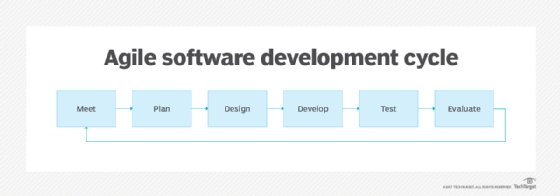
Non-Agile methodologies make an implicit assumption that requirements are final and that a change management process can accommodate only minor variations in them. Design requirements, also called acceptance criteria, are subject to constant, planned change in Agile iterations. Agile enables product managers to demonstrate working software and elicit customer feedback. If the user needs aren't met, the product owner and developers make change requests to the application code, and possibly alter the delivery schedule. Thus, change management is an inherent part of the Agile software development process. The ability to demo working applications means you can design for customer expectations. Rather than create and develop an application workflow based on only written requirements or feature descriptions, keep the customer informed of the application and its functionality. If a development team spends six months working on an app and delivers it on time to the customer, that's a good thing -- as long as that application aligns with the customer's expectations. If it doesn't meet user needs, the delivery is not successful. Keep the customer in the loop and manage requirement changes accordingly for long-term application success.


Big Four carriers want to rule IoT by simplifying it

IoT | Internet of Things  >  A web of connected devices.
The carriers’ approach to the IoT market is two-pronged, in that they sell connectivity services directly to end-users as well as selling connectivity wholesale to device makers. For example, one customer might buy a bunch of sensors directly from Verizon, while another might buy equipment from a specialist manufacturer that contracts with Verizon to provide connectivity. There are, experts agree, numerous advantages to simply handing off the wireless networking of an IoT project to a major carrier. Licensed networks are largely free of interference – the carriers own the exclusive rights to the RF spectrum being used in a designated area, so no one else is allowed to use it without risking the wrath of the FCC. In contrast, a company using unlicensed technologies like Wi-Fi might be competing for the same spectrum area with half a dozen other organizations. It’s also better-secured than most unlicensed technologies or at least easier to secure, according to former chair of the IEEE’s IoT smart cities working group Shawn Chandler. Buying connectivity services that will have to be managed and secured in-house can be a lot more work than letting one of the carriers take care of it.


Should you go all-in on cloud native?

Should you go all-in on cloud native?
The second school of thought is that we might add too much complexity by going all-in native. Although there are advantages, moving to Kubernetes-native systems means having at least two of everything. Enterprises moving to Kubernetes-driven, container-based applications are looking for a common database system, one that spans applications inside and outside Kubernetes. Same with security, raw storage, and other systems that may be native to the cloud, but not Kubernetes. What’s the correct path? One of the lessons I’ve learned over the years is that best-of-breed and fit-to-purpose technology is typically the right way to go. This means native everything and all-in native, but you still need to be smart about picking solutions that will work longer term, native or not. Will there be more complexity? Of course, but this is really the least of your worries, considering the movement to multiclouds and IoT-based applications. Things will get complex out there no matter if you’re using a native Kubernetes solution or not. We might as well get good at complexity, and do things right the first time.


Quote for the day:


"Real leaders are ordinary people with extraordinary determinations." -- John Seaman Garns