Daily Tech Digest - March 28, 2018

Cambridge Analytica’s secret coding sauce allegedly leaked


Security firm UpGuard claims that it found a large code repository from AggregateIQ (AIQ), a Canadian political data firm also active in the 2016 US presidential race, left publicly downloadable online. You might remember that data analytics firm’s name for its part in Brexit: the official Vote Leave campaign gave £3.5m to AIQ, which, like CA, specializes in highly targeted Facebook advertising. Over the weekend, The Guardian reported that CA has undisclosed links to AIQ. The Guardian reports that former CA employee/founder turned whistleblower Christopher Wylie has revealed that besides setting up CA, he was also a central figure in setting up AIQ. AIQ and CA’s parent company, SCL Group, are tied by an intellectual property license, but the threads that bind go way beyond that: Wylie says that some CA staff referred to AIQ as a “department” within the company and that the two businesses shared the same underlying technology. According to UpGuard, it found that technology within an open repository that holds a smorgasbord of tools used to influence individuals


Cisco emboldens its disaggregation strategy

Cisco emboldens its disaggregation strategy
“We are already seeing customers use these early capabilities to run applications for network analytics, security, network operations workflows and IoT on the network infrastructure,” Cisco said.  For its data center customers, Cisco said it will now offer a number of portability options for its Nexus switches and the Nexus Operating System (NX-OS) — including the Cisco Cloud Scale Switch Abstraction Interface (SAI). “SAI lets customers the freedom run the network operating system of their choice on our SAI-ready Nexus platforms. Microsoft and other web-scale customers are now running their Sonic operating system on these Nexus 9200/9300 platforms,” Cisco stated.  In addition Cisco said it’s now possible to run its Nexus Operating System (NX OS) on third-party hardware platforms — independent of Nexus switches. Cisco also now offers a virtual NX OS that “will let customers simulate new features during upgrades through the software upgrade impact on existing tooling environment for their actual large-scale topologies.”


Fixing Hacks Has Deadly Impact on Hospitals

Choi says that hospitals should be careful to focus changes in their security processes, procedures, and technology to improve both data security and patient outcomes. Ponemon sees healthcare organizations starting to improve in security. "We do see healthcare organizations starting to take care of security and rising to the next level of security. I think the public demands it," he says. Two factors contribute to the improvement across the industry, he says. The first is the simple acknowledgement that doctors and hospitals are targets - an acknowledgement that was a long time coming. The next is the march of technology. "There are technologies that healthcare can now afford because they're available in the cloud and it provides the opportunities for healthcare security to improve," Ponemon says. The improved security may come just in time to have an impact on a looming area of security concern: The medical IoT. "There's a universe of devices, many of which are implanted and many can be communicated with through WiFI or Bluetooth," Ponemon says. "Right now, the providers are looking at records but the devices are really an area of huge concern."


A Different Take on Voice Interfaces, IBM Launches Watson Assistant

(Image: Watson Assistant, courtesy of IBM)
IBM's deployment model is a little different from the other assistants, however. You won't be able to download an IBM Watson app directly from IBM, Greenstein said, or buy an IBM smart speaker. Instead, IBM is offering Watson Assistant to business/technology partners who will incorporate it into their own offerings. Those offerings will then be offered to consumers. For instance, an automobile company could embed the assistant in the car dashboard. One early partner is automotive embedded electronics company Harman. Hotels may offer the assistant in a mobile app that consumers can use to control the experience in their hotel rooms in terms of lighting, music, and other features. The service is delivered through the IBM Cloud, and IBM says it also incorporates contextual elements, such as delivering particular experiences to consumers based on their location and time of day, anticipating their needs and proactively making recommendations, the company said. For instance, a traveler may be listening to certain music in her rental car. Watson Assistant could then ensure that same music is playing in her hotel room once she checks in.


Is 2018 the Tipping Point in Digital Transformation?

Digital is destroying this equation by creating more value for customers than for firms. For example, digital competitors with niche products and agile delivery offerings are forcing organizations to unbundle profitable product and service offerings. This results in more freedom of choice for customers to buy only what they need (and not being forced to buy what they don’t need). This is shifting the profit pools and decision making away from the firms and towards the customers. Digital also renders physical distribution intermediaries obsolete. Consider, how healthy is your nearest big-box store? With digital distribution providing limitless choice and price transparency, digital offerings can be reproduced freely, instantly, and perfectly, shifting value to hyper-scale players while driving marginal costs – and product margins – towards zero. ... Profits are no longer distributed across a large number of participants. Think about how Amazon’s market capitalization towers above that of other retailers or how the iPhone regularly captures over 90+ percent of ALL the smartphone industry profits.


Why IoT security should keep you up at night

Why IoT security should keep you up at night
Despite the steady year-over-year growth in worldwide spending, Gartner predicts that through 2020 the biggest inhibitor to growth for IoT security will come from a lack of prioritization and implementation. This means that companies using IoT won’t follow security best practices and use the right tools in IoT planning. This will hamper the potential spend on IoT security by 80 percent, which means that the hackers will go after these connected devices, like they would a bank vault with a screen door. The fact of the matter is that keep things secure—your cloud-based systems, traditional on-premises systems, and now IoT devices—everything must be secure that is interconnected. Security is like the links of a chain: It’s only as strong as the weakest link. This weakest link is now typically a robot on the factory floor, the thermostat on the wall, or even the fitness tracking watches you’re probable wearing right now. Cloud computing security is holistic, meaning it needs to be systemic to all cloud-based platforms and workloads—including any systems connected to those workloads, and any devices connected to the cloud. 


How to Use AI and Blockchain in a Disruptive World

Actively seek out opinions that contradict your own. Don't allow yourself to live within an echo chamber, including only those opinions you already agree with. The truest measure of intelligence is the ability to hold two opposing views at the same time, so practice this. The world is becoming more decentralized, resulting in competing and vastly divergent realities. Nobody's willing to change their mind, and everyone has plenty of evidence that they're right and everyone else is wrong. This is a form of anarchy. Do it differently. Success amidst anarchy requires defiant leadership! The most strategic thing you can do is fine-tune your unique value proposition. Open a document on your computer, or pull out a notebook and write down your thoughts to this: Who are you? What do you stand for? Since the world is characterized by competing realities, you have to pick your reality and ignore the rest. You can't change people's minds. Build your tribe and ignore the haters.


What is the Open Compute Project?

big basin v2
When Facebook designed the hardware for its first dedicated data center in Prineville, Ore., it wanted to make savings on three fronts: energy, materials and money. It boosted energy efficiency by cutting wastage in the power supply and by making the servers taller, which left room for bigger, more effective heatsinks and meant that it could use fans of a larger diameter, able to move more air with less energy. By doing away with vanity faceplates, paint, logos, unneeded expansion slots and components such as video cards and even mounting screws, it saved more than 6 pounds of material per server. That inevitably led to cost reductions, as you don’t pay for electricity you don’t consume or parts you don’t use. On top of that, it made savings on labor: Without the mounting screws, racking and unracking servers was quicker; standardization saved time dealing with spares, and overall systems coulc be deployed more quickly. In its 2018 spending study, IHS Markit identified the three main barriers to the adoption of OCP hardware as being concerns about security, sourcing, and integration.


Time for Transformational Cybersecurity!

The exponential growth of cyber-attacks, as evidenced by newspaper headlines describing massive loss of our personal information, including credit information and passwords, is now a Presidential level challenge and has elevated cyber to a U.S. National Security warfare area. Not often discussed or considered is the fact that every cyber malware attack must borrow a Computer Processing Unit (CPU) instruction from the attack target system in order for attacking software to operate the malware instructions! In the physical world equivalent, such as bank robberies, criminals must borrow access to city streets, bank buildings, and bank vaults to conduct successful robberies. Fortunately, in cyber space, new synergistic technologies are now available to prevent malware from borrowing CPU instructions, thereby significantly enhancing cyber defense-in-depth. Unfortunately, most organizations are reluctant to purchase this enhanced cybersecurity because they are confused by all of the cybertool hype and fall back on the mythology that persistent cyber intruders will always win so what they have is good enough.


IT Leadership: Winning at What Cost?

Companies establish and center their culture on a code of conduct that highlights their company’s values. Values start skewing when winning comes into play. All for-profit companies strive to make money, grow business, and put competitors out of business. That is the nature of the game. Thus, winning is also where “shades of grey” can come into play, as sinful deeds can lead to gainful deals. These situations provide leaders with an opportunity to show their true character and deliver their core leadership values. Their team members are watching and observing the rules of engagement. What is allowed? What is a foul? And what falls in between? The simple question they want answered is: How is one rewarded within an organization by its leadership team? This question and its answer drive the behavior of the people within an organization and set the culture for the organization as a whole. For better or worse, leaders need to understand the dynamics with respect to delivering wins because too much rewarding for sins leads to a lethargy from team members who are playing it straight up.


Quote for the day:


"If no good can come from a decision, then no decision should be made." -- Simon Sinek


Daily Tech Digest - March 27, 2018

DDI Market: Rising Demand Of Industrial Internet Of Things (Iiot)


Global DDI (DNS, DHCP and IP address management) solution market has been segmented on the basis of component, application, deployment, size of organization, end use industry and geography. On the basis of component type, global DDI market has been segmented into services and solution. Additionally, global DDI market has been separated on the basis of application which includes virtualization and cloud, network security, data center transformation and network automation among others. Moreover, the evolution to IPv6 from the IPv4 Internet protocol (IP) is anticipated to contribute expressively to industrial demand. Across the globe, the cumulative focus on consciousness of impending implementations of IPv6, need to streamline IP address management and security risks among others important factors are expected to assist the growth of DDI service provider. Security plays a significant role in this development and is likely to drive the growth of DDI market during the forecast period.


A robot’s biggest challenge? Teenage bullies

There’s also the question of how to ensure that the robots’ interactions with people go smoothly. Hitch says that at first, some store employees are more reluctant than others to accept that the robots don’t pose any physical danger. Eventually, though, human workers warm up to their mechanical coworkers and often give the robots names, like Megan or Eric Jr. Robots are also learning to solve issues that are less simple, like the last-mile problem. Rui Li, ‎the CEO and cofounder of Robby Technologies, showed off a video of his company’s new Robby 2.0, a cooler-size robot on wheels that can deliver up to “70 liters of booze” (or any other order of that size). The robots say “Excuse me” when blocked by pedestrians, and “Thank you” if the people move. Li says besides making the robots polite, the researchers also trained them to stick to one side of the sidewalk, which helped let humans know how to interact with them. “This simple change in the behavior of the robot has solved a big problem,” Li said.


What is the right storage software needed for DevOps to be a success?

Storage Software DevOps
An effective storage platform should combine the performance, control and management of internal data centres with the agility and scale of public cloud. This provides organisations with the ability to build and run agile environments for cloud-native and mission critical applications in their own data centres. The attraction is that it helps to solve the fundamental mismatch between infrastructure and virtual applications and aids in an organisation’s preparation to adopt DevOps practices, which cannot be fully supported by traditional infrastructure. Businesses are increasingly attracted to the DevOps model as a means to accelerate development efforts and deliver new applications and services. DevOps essentially seeks to merge two personas into one and achieve the best communication and collaboration between developers who create platforms and runtimes, and operations teams, who lead configuration management. The requirements for DevOps is to have the ability to build applications with the latest production data, distribute updates quickly with more application testing in less time, accelerate the release cycle, speed up integration testing and reduce restoration time.


The Impact of IoT on Application Development

With the emergence of IoT, the inheritance of technology into our lives has gone up by a notch. In the simplest terms, IoT is the concept of connecting various things, or smart devices, as they are called, to the internet. The platform of The Internet of Things brings diverse information together and provides the common language of devices and apps to communicate with each other. IoT, since its arrival, has changed the paradigm of technology entirely. Even our daily routine activities have transformed since the arrival of IoT, from how we drive, to how we make purchases, to how we make use of energy in our homes. The arrival of IoT took place at a very convenient time, when users were looking for something to make their lives more convenient and easy, which is why IoT is such a big hit! You can check out the infographic for more details about IoT.


The Complexities of Scaling IoT Projects

The Complexities of Scaling IoT Projects
There must be a complete management UI that encompasses the ability to seamless connect to a wide number of PLCs, CNCs and robotic systems via edge gateways, with the ability to manage devices and deploy applications and analytics at the edge. The only way to successfully implement an IoT project that scales and allows the enterprise to incorporate new types of information is to use a flexible platform that can adapt to the future. Without such platform adaptability, application development means a lot of headaches. Companies risk being stuck with a static system, which forces them to constantly invest resources—significantly, time—in developing their next generation IoT products and services. There is a strategic dimension to developing adaptive IoT products. Applying good IoT techniques and design principles will probably generate revenue value-added services that will likely generate revenue, but for enterprises to have the biggest impact they will have to leverage the network effects of a big-data ecosystem, either pre-existing or self-created. The risks of not doing so, and the rewards of achieving this, should be apparent.


Facebook could be hit with $2tn fine after FTC inquiry

“The FTC takes very seriously recent press reports raising substantial concerns about the privacy practices of Facebook,” said Tom Pahl, acting director of the FTC’s bureau of consumer protection. The investigation is in response to “substantial concerns about the privacy practices of Facebook” and will look at whether Facebook engaged in “unfair acts that cause substantial injury to consumers” by sharing data with Cambridge Analytica for use in political campaigns without the knowledge of the data owners. A similar investigation has been launched in the UK by the Information Commissioner’s Office (ICO) which is charged with protecting the privacy of UK citizens. Facebook has responded to news of the FTC investigation by saying the social networking firm remains “strongly committed” to protecting people’s information and “appreciates the opportunity” to answer the FTC’s questions.


Skip containers and do serverless computing instead

Skip containers and do serverless computing instead
“Serverless” refers to services like AWS Lambda that offer developers a way to focus on writing application logic rather than server infrastructure. Yes, this means a developer must trust that AWS, Microsoft, or Google get that infrastructure right, but the upside to embracing these cloud back ends is huge. As such, Stackery told Governor, “Serverless is being driven by mainstream enterprises. We see them leapfrogging containers so they can take something off the shelf and move quickly.” In other words, they’d love to get into containers, but they may lack the expertise. So they’re borrowing that expertise from Amazon or another serverless vendor and skipping the container revolution. For those enterprises less willing to trust their application infrastructure to a cloud vendor, some have hoped to bring serverless “in house,” running it on-premises in a corporate datacenter, just as some hope to ape the benefits of public cloud computing in so-called private clouds in their datacenters. It’s a nice theory. Unfortunately, it doesn’t work. Not for most companies, anyway.


Five Steps to help your organisation implement Machine Learning technologies

Despite investing in machine learning, the new survey indicates that most CIOs do not have the skilled talent, data quality and budgets to fully leverage the technology. For most CIOs, many decisions still require human input. Only 8% of respondents say their use of machine learning is substantially or highly developed, as opposed to 35% for the Internet of things or 65% for analytics. According to a McKinsey study, the three main challenges companies have related to machine learning are designing an organisational structure to support data and analytics, having an effective technology infrastructure, and ensuring senior management are involved. The study then goes on to state that organisations that can harness these capabilities effectively will be able to create significant value and differentiate themselves, while those that fail will find themselves increasingly at a disadvantage. Achieving great value from machine learning doesn’t come from just investing in new technologies, it is also necessary to make significant organisational and process changes, including approaches to talent, IT management and risk management.


Unity Replaces Mono-Based IDE with Visual Studio


Reasons for the change, Unity Technologies said, include taking advantage of new features in the C# programming language starting with version 6.0, and the ability to leverage an upgrade to the .NET 4.6 scripting runtime, which is still in the experimental stage. The company said MonoDevelop-Unity 5.9.6, the latest version of the open source IDE to ship with Unity, doesn't support many of the new C# features and can't debug C# scripts in the new experimental scripting runtime. "It [is] very important for us at Unity that we also provide a great C# IDE experience to accompany the new C# features," Unity Technologies said. Microsoft yesterday noted that Unity development was one of the first scenarios supported out-of-the-box when Visual Studio for Mac was released last year and applauded the move to make it the default IDE for Unity going forward. "This means that everyone will be able to utilize the benefits of the .NET 4.6 scripting runtime upgrade in Unity (currently an experimental feature) , including all the goodies of C# 6.0 and access to the Microsoft Azure SDK to add powerful cloud services to your games," Microsoft said.


To protect artificial intelligence from attacks, show it fake data

Goodfellow is best known as the creator of generative adversarial networks (GANs), a type of artificial intelligence that makes use of two networks trained on the same data. One of the networks, called the generator, creates synthetic data, usually images, while the other network, called the discriminator, uses the same data set to determine whether the input is real. Goodfellow went through nearly a dozen examples of how different researchers have used GANs in their work, but he focused on his current main research interest, defending machine-learning systems from being fooled in the first place. He says for earlier technologies, like operating systems, defense of the technology was added afterwards, a mistake he doesn’t want made with machine learning. “I want it to be as secure as possible before we rely on it too much,” he says. GANs are very good at creating realistic adversarial examples, which end up being a very good way to train AI systems to develop a robust defense. If systems are trained on adversarial examples that they have to spot, they get better at recognizing adversarial attacks. The better those adversarial examples, the stronger the defense.


Quote for the day:


"People who think that they are being "exploited" should ask themselves whether they would be missed if they left, or whether people would say: 'Good riddance'?" -- Thomas Sowell


Daily Tech Digest - March 26, 2018

Threat Landscape for Industrial Automation Systems in H2 2017


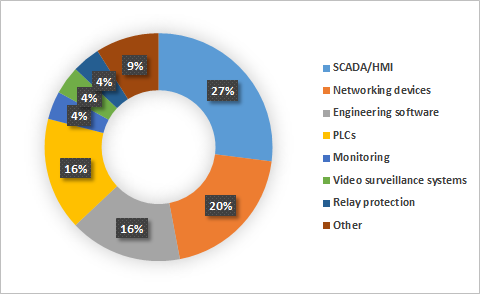
It should be noted that the CVSS base score does not account for the aspects of security that are specific to industrial automation systems or for the distinctive characteristics of each organization’s industrial processes. This is why, when assessing the severity of a vulnerability, we recommend keeping in mind, in addition to the CVSS score, the possible consequences of its exploitation, such as the non-availability or limited availability of ICS functionality that affects the continuity of the industrial process. The most common types of vulnerabilities include buffer overflow (Stack-Based Buffer Overflow, Heap-Based Buffer Overflow) and improper authentication (Improper Authentication). At the same time, 23% of all vulnerabilities identified are web-related (Injection, Path Traversal, Cross-Site Request Forgery (CSRF), Cross-Site Scripting) and 21% are associated with authentication issues (Improper Authentication, Authentication Bypass, Missing Authentication for Critical Function) and with access control problems.


Global organisations are failing to invest in much-needed security ahead of GDPR

GDPR Security
Less than a third (31%) said they have invested in encryption, despite it being one of the few technologies named in the GDPR. Similarly, few organisations have spent money on data loss prevention (33%) or advanced technologies designed to detect network intruders (34%). A quarter of organisations (25%) claimed that limited resource are the biggest challenge to compliance, providing further insight into some of the reasons behind this under-investment. “The GDPR is clear that organisations must find state-of-the-art technologies to help repel cyber-threats and keep key data and systems secure. It’s concerning that IT leaders either don’t have the funds, or can’t find the right tools to tackle compliance,” said Simon Edwards, cyber security solution architect at Trend Micro. “Organisations need defence-in-depth combining a cross-generational blend of tools and techniques, from the endpoint to the network and hybrid cloud environment.”


To understand digital advertising, study its algorithms


Skinner invented a device, now known as a Skinner box, which standardised the process of behavioural experimentation. He used his boxes to control input stimuli (food, light, sound, pain) and then observed output behaviour in an attempt to link the one to the other. Though by no means perfect, the Skinner box was a big advance in the field. Dr Rahwan hopes to do something similar to software using what he calls a Turing box. This “box” is itself a piece of software. Place an algorithm in it, control the data inputs, measure the outcomes, and you will be able to work out exactly how it behaves in different circumstances. Anyone who wants to study an algorithm could upload it to a Turing box. The box’s software would then start running the algorithm through a standard data set of the kind it was designed to crunch. All face-recognition algorithms, for example, would be given the same scientifically validated set of faces. The algorithm’s output—in this case how it classifies different faces—would be recorded and analysed.


Where do mobile users fit in with SD-WAN as a service?


Two trends are causing network architects to take a closer look at how mobile users connect to and access company resources using modern technologies. The first is the fact that most workforces are becoming increasingly mobile in nature. Employees often have the need to work from home or on the go. These employees want to be able to seamlessly access business apps whether they're at home, at a coffee shop or in a taxi driving across town. The second trend is a movement toward the use of public cloud, as opposed the company's private data center. Common remote access network designs force users to connect to the corporate office network before accessing company resources. This is typically achieved by using remote access VPN client software. If the apps and data no longer reside on the corporate network, however, it's inefficient for users to connect to the corporate office first, only to be redirected back through the internet to public cloud resources.


Great expectations lead to a brave new world

Cloud adoption doesn't just happen; there is a reason for its use. It may be the development of a new application, it may be the end of life of existing hardware or it may be a strategic decision at the highest level. But the decision to use cloud is usually a perfect storm of factors – the current price of resources, issues in finding appropriate staff, a desire to scale and grow, or the ease of using a third party. The spark represents the 'why do this now?' The factors represent the 'why use cloud now?' A primary factor for cloud adoption is reduced costs compared with traditional models, as shown in this chart from Voice of the Enterprise: Cloud Transformation, Organizational Dynamics 2017. CIOs have great expectations with regard to the cost savings that might be achieved relative to traditional platforms. But cost isn't the only driver: The inherent nature of pay-as-you-go pricing and the scalability and time to market it enables are also major motivations, as are availability and performance.


Why Monero Is Going to War Against Big Miners

Largely referred to as monero's first move in a "war" against ASICs, the upcoming software upgrade will render the Antminer X3 ineffective. Not only that but to keep hardware manufacturers from catching up, these algorithm edits are planned to continue with bi-annual networks upgrades. Stepping back, the move is a defense of the mining made possible by monero's current algorithm, Cryptonight, which can successfully mine monero on consumer-grade laptops. Faced with competition by highly efficient ASICs, the fear is affordable laptop mining would be silenced. And that's not a development developers are taking lightly. "I will do everything in my power to help the community prevent the proliferation of centralization-inducing ASICs on the monero network," core developer Riccardo "Fluffypony" Spagni declared on GitHub. Currently issued by a sole supplier, Bitmain, concerns exist that the Antminer X3 could lead to certain kinds of attacks, namely ones in which a mining pool takes over the majority of a cryptocurrency's hashrate, creating false transaction histories, double spending coins and censoring payments.


Transparent Digital Transformations Mitigate Risk, Aid Business Objectivity


In order to stay competitive, business leaders need to ensure their organisations embrace new technologies, which are already digitally transforming their organisation and industry. However, without an accurate foundation of knowledge about their existing IT infrastructure, their technology procurement decisions will always be risky. Digital Transformation occurs in two ways. Firstly, organisations implement incremental improvements that help parts of the organisation to better perform their fundamental business tasks. Secondly, the organisation completely changes the way it does business—by adjusting its business model or taking advantage of new markets or products—which has the potential to transform the industry and disrupt several others. All large organisations run complicated IT systems that contain a mix of hardware, software and services from a variety of vendors. Making fundamental changes to any such system can result in unexpected side-effects, complications and costs.


The Power of Doubt in Software Testing

It starts with being skeptical of ourselves, with knowing our own biases. We can't trust our eyes, ears or even our memories. Realise that we get fooled easily, on a daily basis. Knowing that we are easy to fool keeps us on our toes, and forces our mind to work harder. I also try to be skeptical of what the majority believes. When you share your opinion with others, it becomes difficult to change your mind. It’s hard to argue against what everyone else believes, conventional wisdom and "accepted truths”. When one person posits a belief, there can be disagreement or debate. But when more than one person agrees that something is the truth, this often shuts down our own inquiry. My adventures in skepticism taught me that we should also be skeptical of certainty. The feeling of certainty is a tricky thing. Scientific studies have shown that, despite how certainty feels, it is neither a conscious choice nor even a thought process. Certainty arises out of brain mechanisms that, like love or anger, function independently of reason.


6 Myths CEOs Believe About Security

fact fiction debunk myths truth
Part of the reason for the nihilistic belief that hackers and malware can never be fixed is that the world thinks that hackers are all brilliant, can’t-be-stopped, super geniuses. This romantic ideal is readily promoted in Hollywood films that often show the hacker taking over the entire world’s computers by easily guessing passwords into any system they are presented with. Movie hackers outsmart everyone and can launch nuclear missiles and erase people’s digital identities with a few keystrokes. This mistaken ideal is believed because most people that get hacked or infected with malware aren’t programmers or IT security people. To them it’s sort of like a magical event that must have required Lex Luthor superpowers. The reality is that most hackers are average joes with average intelligence and are more akin to plumbers and electricians than Einstein. Hackers just know how to accomplish a particular trade using particular tools passed down by previous tradespeople, but instead of plumbing and electricity, it’s computer hacking. 


Behavior-tracking security tech gaining traction at banks

Statistics on biometric growth expectations in devices
“The thing about most of these behavioral biometrics is that they’re passive. They’re happening in the background and the end user doesn’t feel intruded upon,” said Kathleen Peters, Experian’s senior vice president of global fraud and security. BioCatch is now exploring other use cases, like authenticating new customers at the time of sign up, said Frances Zelazny, vice president of marketing at BioCatch. It is also expanding into other industries, such as payroll processing and insurance, she said. ...  Increasingly, companies in need of fraud prevention are asking their service providers whether they also offer those same behavioral biometrics protections. “If you’ve worked with product managers, you know it takes a while to integrate those capabilities and things that show up on product road maps, but we’re actually seeing these capabilities being integrated with other solutions and they’re live,” Pascual said. “That tells you that in this short time frame since BioCatch came into existence, how much interest there really is.”


Quote for the day:


"A bad habit never disappears miraculously; it's an undo-it-yourself project." -- Abigail Van Buren


Daily Tech Digest - March 25, 2018

The Top 10 IoT Trends


In what might be the most obvious prediction of the decade, the IoT will continue to expand next year, with more and more devices coming online every single day. What isn’t so obvious about this prediction: where that growth will occur. The retail, healthcare, and industrial/supply chain industries will likely see the greatest growth. Forrester Research has predicted the IoT will become “the backbone” of customer value as it continues to grow. It is no surprise that retail is jumping aboard, hoping to harness the power of the IoT to connect with customers, grow their brands, and improve the customer journey in deeply personal ways. But industries like healthcare and supply are not far behind. They’re using the technology to connect with patients via wearable devices, and track products from factory to floor. In many ways, the full potential of the IoT is still being realized; we’ll likely see more of that in 2018.


Securing the Operational Technology (OT) - The Challenges

The increasing connectivity of previously isolated manufacturing systems, together with a reliance on remote supporting services for operational maintenance, has introduced new vulnerabilities for cyber attack. Not only is the number of attacks growing, but so is their sophistication. As OT security becomes a widely discussed topic, the awareness of OT operators is rising, but so is the knowledge and understanding of OT-specific problems and vulnerabilities in the hacker community. It’s true that the systems and devices involved in OT are often based on the same technologies as that of IT and as such many of the threats they face are exactly the same. However, it is an open secret that OT security is not the same as IT security. While securing OT systems requires an integrated approach similar to IT, its objectives are inverted, with availability being the primary requirement, followed by integrity and confidentiality. There are certain other important differences as well that mean that the OT infrastucture can not be managed as an extension of the IT infrastructure


How Blockchain Is Replacing Branding As A Source Of Trust


It's not difficult to see why we're heading towards brandless trust. If you think about a supply chain that's obsessed with finding a more efficient way of doing things, you see why we have a system that's always adding more agencies in between the beginning and the end points. And why there's a decreasing visibility of what's really going on. Where Molly was a single agency brand, her modern counterparts would be adding agencies everywhere to make things work cheaper, better and faster. If you can turn one link of the chain into two sub-links and bring an economy in here or there, you've 'improved' the system. Sure, you've opened it up to a greater risk of fraud, but that will be someone else's problem, higher up the chain. What we're witnessing isn't an accident of occasional fraud, it's an unavoidable consequence of our desire for cheaper, better and faster.


MIT researchers find that graphene can function as a superconductor


Due to its high conductivity, graphene could be used in semiconductors to greatly increase the speed at which information travels. Recently the Department of Energy conducted tests which demonstrated that semiconductive polymers conduct electricity much faster when placed atop a layer of graphene than a layer of silicon. This holds true even if the polymer is thicker. A polymer 50-nanometers thick, when placed on top of a graphene layer, conducted a charge better than a 10 nm thick layer of the polymer. This flew in the face of previous wisdom which held that the thinner a polymer is, the better it can conduct charge. Yet another example of graphene’s remarkable properties. The biggest obstacle to graphene’s use in electronics is its lack of a band gap, the gap between valence and conduction bands in a material that, when crossed, allows for a flow of electrical current. The band gap is what allows semiconductive materials such as silicon to function as transistors; they can switch between insulating or conducting an electric current, depending on whether their electrons are pushed across the band gap or not.


The importance of integrating legacy enterprises

gear turn industry machine motion integration
CIOs feel as well that the inability to integrate can be a source of competitive disadvantage. How many strategic planners have this in their SWOTT analysis? CIOs are clear, however, that integration alone isn’t sufficient to drive a competitive advantage. They say it is people collaborating on market driven priorities backed by integrated practices that drives competitive advantage. Jack Gold concluded this discussion by saying “the organizations that win in the future are the ones that can make best use of ALL of their data and apps – legacy or otherwise.” It seems clear that legacy organizations that are built and integrated like the famed Winchester House will find themselves at a distinct disadvantage in an era of digital disruption. The speed and agility of integrating applications, data, and business capabilities matters today. Here, CIOs need to build internal competency versus perpetuating “duct tape” integrations. How well they do this can be a source of competitive advantage or competitive disadvantage.


What kind of AI future do we want?

"What will the role of humans be, if machines can do everything better and cheaper than us?" asked Max Tegmark, a professor of physics at the Massachusetts Institute of Technology and the author of Life 3.0: Being Human in the Age of Artificial Intelligence. He was speaking at the Beyond Impact summit on artificial intelligence Friday at The Globe and Mail in Toronto, presented in conjunction with the University of Waterloo. The assumption in such questions is that artificial intelligence is trying to progress to AGI, or artificial general intelligence, in which a machine will basically think a thought, or at least do an intellectual task on its own, as a human can. Some believe we may never reach true AGI, Dr. Tegmark noted. Machines may never have the consciousness of a living entity or show true creativity. Yet, "the future development of AI might go faster than typical human development, and there is a very controversial possibility of an intelligence explosion, where self-improving AI might rapidly leave human intelligence far behind," he said.


5 Blockchain Innovations Wall Street Is Watching in 2018

5 Blockchain Innovations Wall Street Is Watching in 2018
The biggest upside for using blockchain is system integrity. Cryptocurrencies and blockchain technology eliminate the need for middlemen. Hence, it's these middlemen that tend to overcomplicate payments and charge expensive fees on top of large transactions. As such, the very design of blockchain lends itself to security. Blockchain is a decentralized ledger. Therefore, transactions are not visible to any person besides the two parties engaging in the asset transfer. Also, crypto wallets are essentially immune to fraud due to their complexity and uniqueness. Hence, it's difficult to steal assets. The assets become invulnerable to forgery. For example, the Internet of Services Foundation has created a scalable blockchain infrastructure for the future of online business. Its high throughput processing and security offer an intriguing alternative from cryptocurrency mainstays like Bitcoin and Ethereum. To date, these cryptocurrencies have been unable to scale for mass adoption.


UK launches the world’s first crypto assets task force

UK launches the world̢۪s first crypto assets task force
The initiative is part of a larger collective fintech sector strategy; one which will “help the UK to manage the risks around crypto assets, as well as harnessing the potential benefits of the underlying technology,” as per Hammond. Philip Hammond is expected to announce the task force — which will comprise of Bank of England, the Financial Conduct Authority, and the Treasury itself — on Thursday, at the government’s second International Fintech Conference. The statement also announced the government’s interest in creating a UK-Australia ‘fintech bridge’, which will aim to connect the countries’ respective markets and help UK firms expand internationally. The British government has been mostly supportive of cryptocurrencies and blockchain technology, only sporadically calling for increased regulations in the industry. British Prime Minister Theresa May, speaking at the World Economic Forum in January, shared her concerns about potential criminal usage of cryptocurrencies.


J.P.Morgan’s massive guide to machine learning and big data jobs in finance

Machine learning banking
Before machine learning strategies can be implemented, data scientists and quantitative researchers need to acquire and analyze the data with the aim of deriving tradable signals and insights. J.P. Morgan notes that data analysis is complex. Today’s datasets are often bigger than yesterday’s. They can include anything from data generated by individuals (social media posts, product reviews, search trends, etc.), to data generated by business processes (company exhaust data, commercial transaction, credit card data, etc.) and data generated by sensors (satellite image data, foot and car traffic, ship locations, etc.). These new forms of data need to be analyzed before they can be used in a trading strategy. They also need to be assessed for ‘alpha content’ – their ability to generate alpha. Alpha content will be partially dependent upon the cost of the data, the amount of processing required and how well-used the dataset is already.


8 questions to ask about your industrial control systems security

supply chain management logistics - ERP - Enterprise Resource Planning
An ICS is any device, instrumentation, and associated software and networks used to operate or automate industrial processes. Industrial control systems are commonly used in manufacturing, but they are also vital to critical infrastructure such as energy, communications, and transportation. Many of these systems connect to sensors and other devices over the internet—the industrial Internet of things (IIoT), which increases the potential ICS attack surface. "It is important that organizations leverage lessons learned securing enterprise IT but adapt those lessons to the unique characteristics of OT," says Eddie Habibi, CEO and founder of ICS security vendor PAS Global. "This includes moving beyond perimeter-based security in a facility and adding security controls to the assets that matter most – the proprietary control systems, which have primary responsibility for process safety and reliability," he says. The following are some of the key questions that plant operators, process control engineers, manufacturing IT specialists, and security personnel need to be asking when planning for ICS security, according to several experts.


Quote for the day:


"Acknowledging what you don't know is the dawning of wisdom." -- Charlie Munger


Daily Tech Digest - March 24, 2018

Cryptomining Botnets: A Threat to Your Security


Unauthorized mining has been going on for several years, but it’s only since 2017 that it’s been a major issue. The biggest mining botnets have pulled in millions of dollars. If you get infected by this type of software, you might not notice. It’s technically not malware, except for the fact that it shouldn’t be on your computer. People use the same software for legitimate mining. Security software often can’t detect it, but it costs you in several ways. Unauthorized mining can slow down your computers. Since computers performing active tasks consume more energy than idle ones, it increases your electric bill. If it has bugs, it can make your computers crash more often. It could create security holes and load more nasty software onto your machines. Some kinds of software can grab a computer’s processing cycles for mining without even breaking its security. A controversial Web application called Coinhive runs code on browsers to do mining. When the site owner says so up front and uses it instead of ads to fund the site, it’s generally considered OK.


How insurers can get the most out of digital transformation

Many new skills are required for a successful digital transformation, including an understanding of analytics and the perpetual evolution of IT architecture to modernize IT. Insurers are struggling to attract talent, because these and other necessary skills are new, not only in insurance but across industries. Demand for talent in areas like big data is expected to exceed available supply by a factor of four. The resulting talent shortage means that leaders are responsible for establishing an environment that attracts talent, promotes personal growth, and offers a desirable and interconnected work environment and flexibility. Few insurers will become leading tech companies, as they will struggle to attract tech talent at scale on a par with the likes of digital natives. But digital leaders in the insurance sector, having prioritized technological literacy and infused areas like engineering, design, and agile with more talent, better understand the investments and trade-offs required in the digital age.


How ‘Not Invented Here’ Limits Innovation


NIH is a surprisingly common feature of the innovation landscape, and there are many other famous examples. Not least Kodak’s rejection of both Edwin Land’s idea for the Polaroid process and Chester Carlson’s xerography underline how easy it is to put up defenses against ideas originating from outside. NIH is a theme which my colleague Oana-Maria Pop has written a great blog post about, but its persistence makes it worthwhile to take another look. Elting E. Morison gives a wonderful example in his detailed study of “Gunfire at Sea,” which explores the tortuous journey the innovation of continuous-aim gunnery had in finding its way on to the decks of U.S. warships. Back in the late 19th century, naval gunnery was not very accurate. A U.S. Bureau of Ordnance study of one thousand shells fired during an exercise around the time of the Spanish-American war suggested that less than 3 percent were hitting the target. That’s a problem. A long way away in the South China Sea, Admiral Percy Scott of the British Navy was working on the solution. His squadron was doing gunnery practice with similarly poor results


Shedding light on broadband performance for an optimized SD-WAN

smart city - IoT internet of things - mobile wireless network
The catalyst for this has been the rise of software-defined WANs (SD-WANs). Their multipath capabilities and network optimization make it possible to use broadband for business connectivity, and organizations of all sizes have been jumping aboard this trend. One of the challenges that remain, though, is that not all connections or types of broadband are created equal. A network manager at a business with branches located nationwide recently told me that his company's preferred broadband type has been cable, but he has been surprised by the variability in the resulting bandwidth by location and time of day. For example, in one large metro area, he is purchasing 50MB of bandwidth, more than adequate for most branches. During the mornings he often sees throughput of 100MB or more. Later in the day, however, when kids get home from school and the Xboxes and Netflix subscriptions start coming online, he has seen his bandwidth drop to as low as 8MB.


Impact of Artificial Intelligence on Paid Advertising


AI is the advancement of research technology that brings together many different factors based on the internet habits of the user. In other words, it is the gathering of information on the personal habits of the potential customer so that paid advertising can be better directed at the right audience. There are ethical implications of AI as many feel that it crosses the line in gathering personal information. However, there is no doubt that it has helped improve the targeting of paid advertising efforts. AI does more that break down the demographics, it takes every search you make and every page you visit and turns that into information about your personal habits on the internet. By not only addressing your actions, it also considers your vulnerabilities which means that paid advertising in places like Google AdWords and Facebook PPC becomes more potent in its effects. Over the past few years, AI has had a major impact on the collection, interpretation, and distribution of the information provided to marketers so they can purchase advertising in the right places. 


Citi wants fintech startups to disrupt institutional banking

Citi Naveed Sultan MWC18
“Contrary to the common belief, I think there is more opportunity for collaboration with fintech than disruption,” he added. “Particularly on the institutional side.” Sultan said Citi is already “very engaged” with the fintech space, scanning “thousands” of startups every year — saying it’s taken an equity position in “about 30” so far. It has established four “innovation centers” in Singapore, Dublin, Tel-Aviv and London to act as its feelers on the fintech scene. And its investments are focused in four key areas, according to Sultan — namely: Client experience; scalability; operating model agility; and innovation. “Pretty much every one of [the fintech startups it’s invested in] have an operating relationship with the businesses,” he continued. “So we are using their technology and integrating into our solutions. And helping them commercialize, appreciate our equity, as well as delivering a better solution to the client. “So I think the philosophical change is you cannot get to the market fast enough on a proprietary basis.”


CEO Insights: As plants get smarter, manufacturers need to “watch the robots”

We are seeing three big drivers. The first is the rapidly decreasing cost and size of cameras. The number of cameras deployed will grow dramatically. Five years ago, where we were putting in half a dozen cameras in to provide an overview of what was going on in the warehouse or factory floor – today we are putting 4 or 5 times as many on the ends of forklift trucks and inside industrial machinery. Wherever an operator doesn't have exactly the view they need, we are going to be placing cameras. This will just keep growing. The second big driver is increasing intelligence in cameras. More and more video analytics and storage are moving to the edge – inside the camera. Customers keep finding new opportunities to have the cameras provide not only images but also actionable data. For us, this is a great opportunity, and we are pushing forward with specialized analytics for industrial applications.


Still don't understand the blockchain? This explainer will help

Soccer Football - Premier League - West Ham United vs Newcastle United - London Stadium, London, Britain - December 23, 2017   General view of a bubble inside the stadium    Action Images via Reuters/Tony O'Brien    EDITORIAL USE ONLY. No use with unauthorized audio, video, data, fixture lists, club/league logos or "live" services. Online in-match use limited to 75 images, no video emulation. No use in betting, games or single club/league/player publications.  Please contact your account representative for further details. - RC11B9B70E90
“I think the blockchain is going to do really interesting things around the transfer of value,” writer and academic Rachel Botsman noted at Davos. Even though traditionally much of the chatter in the cryptocurrency communities has centred on disrupting the financial industry, Botsman doubts this technology will altogether result in currency exchanges bypassing the banks. “I don’t understand where that hype is coming from,” Botsman told the Forum's annual meeting. Indeed, many banks, though hardly endorsing the exchange of cryptocurrencies, are certainly waking up to the possibilities of the blockchain, which could eventually allow them to automate many systems that currently require a large in-office staff. As Brian Behlendorf, executive director of Hyperledger, explained to me at the Forum's annual meeting this year: “[Banks] can do a lot of what they do today (...) just faster and cheaper and with greater guarantees that the parties that they’re working with will make good on their commitments.”


Use your brain; AI won't soon replace it


The human brain may not be the most efficient form of intelligence; it needs a lot of biological backup machinery to make up for cells that die all the time, and its ability to store data is not as reliable as that of computers. Someday, many years from now, technology will probably exist that will be able to reconstruct the brain while cutting some corners for improved efficiency. But it's unlikely to be able to replicate every nuance of perception, memory, emotion, intuition. We often talk about today's artificial intelligence -- based on algorithms that essentially use the brute force of computers to crunch problems such as image recognition -- as if it'll soon replace humans at complex creative and communicative tasks. That kind of AI, however, will never do it. Progress along the same lines can produce smarter digital assistants than today's Siri or Alexa. But a human, equipped with a computer, will still run circles around them because of the sheer, currently irreproducible complexity of the human brain.


How Federal Cybersecurity is Evolving

In 2017, Congress passed the 500 million dollar Modernizing Government Technology Act, which is part of defense funding. Although the act promises to play a role in improving lax cybersecurity efforts, it’s also aimed to replace legacy systems with more modern systems, purportedly in an effort to cut back on operating expenses. Although the act, if properly funded, will bring extra attention to cybersecurity, replacing legacy systems also increases the burden of implementing proper security. The act will likely have benefits to users, as modern systems should be able to outperform legacy ones. However, there’s no guarantee that security efforts will be enough to prevent potentially large and damaging cyberattacks. The cost of proper cybersecurity can be expensive, and the slow pace of the government means new technology can be slow to adopt. On the other side, paying for hackers is relatively inexpensive, and even the smallest of security holes can eventually led to massive attacks.


Quote for the day:


"Having more data does not always give you the power to make better decisions." -- Jeffrey Fry


Daily Tech Digest - March 23, 2018

Google Enemy
There are countless other examples of Google acting as its own worst enemy and failing to follow through with a commendable initial vision. Look at the company's never-ending messaging mess, for instance, or the awkward implementation of Apple-like app shortcuts in Android 7.1. In the latter case, as I said at the time, "instead of thinking through what'd be the most sensible and user-friendly way for a feature like this to work, Google seemed to just emulate the way Apple did it." See the pattern? To a degree, a company being flexible and open to the evolution of its products — even when said transformation blatantly revolves around "borrowing" inspiration from other sources — can be an asset. But there's also something to be said for having the stones to stand by the value of your own ideas and remaining willing to recognize when you've got a good thing going, even if that thing requires a mix of refinement and promotion to reach its potential.


multiple-exposure image of FinTech symbols, laptop, circuit board, and a dollar bill
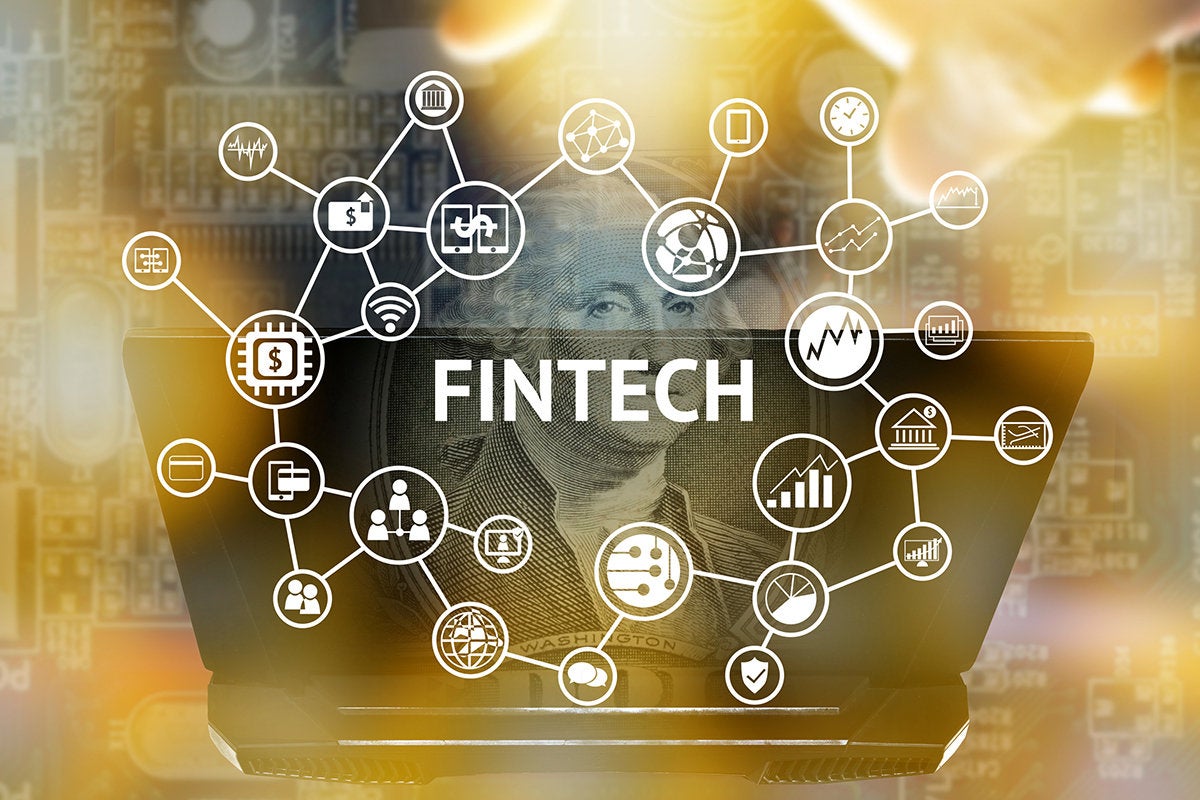
Starting in May, GDPR will force European banks to rethink how they store, manage, use and disseminate personally identifiable information, according to the report. "If they wish to partake in blockchain-based AML and EFM device, whitelist, and transactional data sharing, [financial institutions] must adapt their privacy policies and tools to be able to cope with this requirement," Forrester said. ... AML and EFM are harder than ever to enforce and need to rely on the most diverse data possible, Forrester said, adding that "verifying identities before allowing them to transact helps avoid fraud losses in a complex payment ecosystem." That's where blockchain can be useful. Because it is an immutable, auditable electronic record, blockchain ensures that transaction records contain artifacts and identifiers of previous transactions. "This allows authorized investigators to backtrack transactions on the blockchain more easily than with current AML and EFM systems," Forrester said.


Java security issues are real. Java was designed to be as secure as most other popular programming languages, and it offers features like SecurityManager to help improve security in certain contexts. However, Java applications are subject to a number of potential security vulnerabilities, including, but not limited to, various injection attacks. It's crucial for Java developers and administrators to keep common Java security vulnerabilities in mind as they write and deploy Java applications. Security-first programming is especially important in the case of Java because the cross-platform nature of Java code means that OS-level security frameworks can't always be trusted to keep applications secure. Nor should you expect end users to be able to manage Java security threats effectively. Sure, you can blame your users for running untrusted Java code or disabling automatic updates to their Java runtimes, but ultimately, the burden of writing secure Java applications and isolating code within a Java environment that might not be secure lies with developers.


Short sprints vs. big bang: the best way to adopt the cloud
When it comes to cloud adoption, large enterprises and government agencies focus on quick wins, using quick sprints, and are typically more successful than those companies that try to drive huge change over a longer period of time, aka the big-bang approach. ... The objectives of each may be exactly the same—to migrate most of the enterprise’s workloads—but the short-sprint approach is ten times more likely to demonstrate success and thus value than the big-bang approach.  The short-sprint approach also aligns with the typical corporate culture. People think in small tactical ways versus large and strategic, so expectations are for small, quick wins. The larger, longer strategic wins simply are not as valued by the executives and investors in the standard corporate culture. The big-bang approach can and does work—if the company can hold to its commitment that long and doesn’t need ROI along the way. 


4 best practices for automating mobile app testing

How can you test your mobile apps on a diversity of mobile devices, and in geographic locales that you're not even thinking of? This is the problem that BrowserStack, and other companies like it, set out to solve. These companies offer cloud-based test automation software and processes that enable you to test your app in virtually any simulated mobile device environment and in any test scenario. The test automation can eliminate steps for your QA staff, such as checking out app navigation, displays of data and images, and even data access, retrieval and update to a database. "Our goal was to develop tools that could automate as much of the diverse mobile app test process as possible, to save time, and to speed these apps to market," said Rao. "We were also aware of the mobile developer shortage in enterprises, and the fact that many companies can't secure the mobile app development talent that they need. Consequently, they have to find other ways to speed app development and test, like automating more of the process."


Intel To Release Most Powerful Mainstream Processor Ever To Beat AMD


Intel largely succeeded here, and thanks to higher clock speeds (and unfortunately a higher price too) on the CPU compared to AMD's equivalents price-wise, the Core i7-8700K was faster in many tests despite a two core deficit. However, where raw multi-threaded performance is concerned, especially in benchmarks that aren't otherwise Intel-optimised, AMD gained the upper hand meaning that Intel can't quite claim to be faster in everything. This is what it's looking to address with the new CPU, because even with better boosting algorithms, AMD's soon-expected Ryzen second generations CPUs, due next month, probably won't be able to match something akin to a Core i7-8700K, but with eight cores. Interestingly, AMD's 12-core Threadripper 1920X retails for $670, which means that there's a big gap for Intel to play with price-wise with its new eight-core CPU. The Core i7-8700K retails for around $350, so even if the new CPU costs $500, it's potentially going to blur the lines between both AMD and Intel's high-end desktop platforms.


How Microsoft and Databricks crafted a unique partnership for AI data processing

Using Azure Databricks, customers can take in data ingested through other services, prepare it, and process it using machine learning algorithms and other techniques. After that, it can be funneled out to other services like Cosmos DB and Power BI. Making a deep integration possible required a great deal of work on the part of both firms, however. Company representatives made many trips back and forth between Databricks’ office in San Francisco and Microsoft’s in Redmond. The partnership wasn’t without its challenges on either end, but both companies were committed to it for the sake of their joint customers. Andreessen Horowitz cofounder Ben Horowitz, who sits on Databricks’ board, has a close relationship with Microsoft CEO Satya Nadella and helped facilitate the two companies’ collaboration. Microsoft had to work through concerns about what it would mean for the company to deeply integrate Databricks with Azure systems, including those for incident management, handling support requests, and other functions. 


Why the Waterfall or Agile debate will be around forever


"What's wrong is to assume one or the other is always the answer," Raschke said. "When you look at a product and it needs flexibility [or] the client is not sure what they want, what the market needs or there is innovation required, Scrum is important. If it is embedded or mission-critical software, Waterfall might be a better choice." What phase the project is on also determines which methodology a team should use. Business case development, choice of infrastructure and decisions on deployment and maintenance are all aspects of the software development lifecycle that don't necessarily lend themselves to the Agile approach. When forced to align with either Waterfall or Agile, these business cases tend to fall more in line with Waterfall. Once those outlines are in place, the actual development might trend more toward either Waterfall or Agile, depending on the purpose and nature of the project. Raschke said to remember what is most important. "The question is: What do we need to do to get it to the customer? In that case, it usually ends up as hybrid."


CISCO, Verizon Take Information-Centric Networking For a Real World Spin

mobile wireless network
Cisco has developed what it calls Hybrid ICN (hICN), which enables the deployment of ICN within IP rather than as an overlay or replacement of IP. It preserves all features of ICN communication by encoding ICN names into IP addresses, according to Giovanna Carofiglio, a Cisco Distinguished Engineer.  “hICN supports IPv4- or IPv6-RFC compliant packet formats, and guarantees transparent interconnection with standard IP networking equipment, simplifying the insertion of ICN technology in existing IP infrastructure and enabling coexistence with legacy IP traffic,” Carofiglio said. Cisco and Verizon expect that hICN will become a strong technology for 5Genvironments in that ICN adoption may dramatically simplify next generation network architecture by offering a unified content-aware and access-agnostic network substrate for the integration of heterogeneous networks, Carofiglio said. It is the hICN technology Verizon tested in its lab recently.


Optimising the smart office: A marriage of technology and people

A strong digital culture is clearly a positive thing, but there's room for improvement: the percentages of employees in strong-digital-culture businesses who rate themselves highly on empowerment (47%), innovativeness (39%) and -- in particular -- productivity (22%) might be expected to be higher, for example. Management consultancy McKinsey has recently suggested that productivity benefits from digitisation have yet to materialise at scale for several reasons, including "lag effects due to the need to reach technological and business readiness" and "costs associated with the absorption of management's time and focus on digital transformation". Another KPI Microsoft examined was engagement, or 'flow' -- the ability for workers to focus on the task at hand and deliver a better end result more efficiently. Overall, just 20 percent of respondents felt highly engaged at work, but there was a fourfold difference between engagement levels in businesses with strong versus weak digital cultures.


Quote for the day:


"Rarely have I seen a situation where doing less than the other guy is a good strategy." -- Jimmy Spithill