Quote for the day:
“Motivation comes from working on things we care about. It also comes from working with people we care about.” -- Sheryl Sandberg
🎧 Listen to the audio debrief on YouTube
▶ Play Audio DigestDuration: 5 mins • Perfect for listening on the go.
Managing the cyber risk of agentic AI
 The UK’s National Cyber Security Centre recently released guidance on how
organizations can securely deploy and manage the risks associated with agentic
artificial intelligence. Unlike earlier discussions that focused mainly on
securing standalone models against common exploits or data leaks, this advice
shifts the focus to securing the agent in operation. When an autonomous system
can retrieve records, trigger workflows, and interact with external
applications, the primary security question becomes what the system is permitted
to do, rather than simply what it knows. To safely integrate these tools, the
center emphasizes treating them as active participants within your digital
environment. A core recommendation is assigning distinct identities to agents,
which enables independent monitoring and prevents their activities from blending
into human or service accounts. Organizations should apply practical safeguards,
including sandboxing, strict permission limits, and targeted access controls
tailored to the agent's level of autonomy. Most importantly, the guidance
stresses the need for active human oversight and the ongoing ability to
intervene if an agent behaves unexpectedly in a production setting. By fostering
direct collaboration among developers, operators, and security teams, leaders
can adapt traditional security measures to manage these evolving operational
risks with clear expectations and steady control.
The UK’s National Cyber Security Centre recently released guidance on how
organizations can securely deploy and manage the risks associated with agentic
artificial intelligence. Unlike earlier discussions that focused mainly on
securing standalone models against common exploits or data leaks, this advice
shifts the focus to securing the agent in operation. When an autonomous system
can retrieve records, trigger workflows, and interact with external
applications, the primary security question becomes what the system is permitted
to do, rather than simply what it knows. To safely integrate these tools, the
center emphasizes treating them as active participants within your digital
environment. A core recommendation is assigning distinct identities to agents,
which enables independent monitoring and prevents their activities from blending
into human or service accounts. Organizations should apply practical safeguards,
including sandboxing, strict permission limits, and targeted access controls
tailored to the agent's level of autonomy. Most importantly, the guidance
stresses the need for active human oversight and the ongoing ability to
intervene if an agent behaves unexpectedly in a production setting. By fostering
direct collaboration among developers, operators, and security teams, leaders
can adapt traditional security measures to manage these evolving operational
risks with clear expectations and steady control.
Building data centers is getting easier. Building trust is not
While the physical construction of data centers has become significantly more streamlined in recent years, securing the confidence of local communities and regulators remains a steep challenge. Technological advancements, modular designs, and standardized construction processes have made it easier than ever to bring new facilities online efficiently. Developers have largely solved the engineering puzzle of deploying vast digital infrastructure at scale. However, this operational efficiency does not automatically translate into public acceptance. As these facilities grow in size and number, they place immense demands on local power grids and water supplies, leading to heightened scrutiny from residents and local governments. People are increasingly concerned about the environmental impact and the strain on public resources. Consequently, the industry is facing a landscape where technical execution is no longer the primary bottleneck for expansion. Instead, the real difficulty lies in navigating complex zoning laws, addressing community anxieties, and proving a genuine commitment to sustainable practices. Building trust requires transparent communication, investments in renewable energy, and a willingness to integrate into the community rather than simply occupying space. Ultimately, developers must realize that while pouring concrete and installing servers is straightforward, earning the social license to operate takes steady, consistent effort.Surveillance – Everything You Wanted to Know, But Were Afraid to Ask
 Surveillance has become an unavoidable reality, with various groups tracking our
everyday activities for their own specific benefit rather than ours. Commercial
companies monitor us to drive sales through targeted advertisements and complex
internet cookies, while employers increasingly track employee behavior, private
communications, and daily productivity to maintain control. On the malicious
side, criminals use harmful software to quietly steal personal data, passwords,
and digital credentials for financial gain. Law enforcement agencies also
monitor the general public, often justifying their actions under the banner of
public safety. However, this well-intended monitoring can easily overstep its
boundaries, capturing far more personal information than necessary and sharing
it widely. Across all these distinct groups, the rapid integration of artificial
intelligence is accelerating the scale and depth of continuous surveillance,
making it much easier to analyze our behaviors, conversations, and habits. These
practices carry significant consequences for our personal privacy, individual
freedom, bank balances, and even employment status. Despite these growing
capabilities, our primary defenses remain largely limited to legal regulations
and our own ongoing personal awareness. Ultimately, whether driven by profit,
control, theft, or public safety, continuous observation is a fixture of modern
life that requires strict accountability and clear boundaries.
Surveillance has become an unavoidable reality, with various groups tracking our
everyday activities for their own specific benefit rather than ours. Commercial
companies monitor us to drive sales through targeted advertisements and complex
internet cookies, while employers increasingly track employee behavior, private
communications, and daily productivity to maintain control. On the malicious
side, criminals use harmful software to quietly steal personal data, passwords,
and digital credentials for financial gain. Law enforcement agencies also
monitor the general public, often justifying their actions under the banner of
public safety. However, this well-intended monitoring can easily overstep its
boundaries, capturing far more personal information than necessary and sharing
it widely. Across all these distinct groups, the rapid integration of artificial
intelligence is accelerating the scale and depth of continuous surveillance,
making it much easier to analyze our behaviors, conversations, and habits. These
practices carry significant consequences for our personal privacy, individual
freedom, bank balances, and even employment status. Despite these growing
capabilities, our primary defenses remain largely limited to legal regulations
and our own ongoing personal awareness. Ultimately, whether driven by profit,
control, theft, or public safety, continuous observation is a fixture of modern
life that requires strict accountability and clear boundaries.
The Swivel Chair Problem Holding Back Enterprise AI With Clio
In a recent episode of the Tech Talks Daily podcast, host Neil C. Hughes explores a major barrier to adopting new workplace tools: the swivel chair problem. Speaking with a guest from Clio, the conversation focuses on the hidden problems holding back the effective use of artificial intelligence in modern businesses. The central idea asks listeners to consider how much of their office software relies on employees acting as human bridges between disconnected programs. When systems cannot talk to each other, people are forced to quietly compensate by swiveling between multiple screens and manually copying information from one application to another. This routine manual effort not only wastes valuable time but also creates a messy setup that prevents advanced tools from working as intended. The episode, which runs for about thirty minutes, breaks down why organizations must address these basic communication gaps before expecting new systems to deliver real value. Rather than focusing on complex technical ideas, the discussion highlights a practical reality. Businesses must connect their foundational tools and eliminate repetitive manual entry. By solving the swivel chair problem, companies can build a smooth process where technology actually serves the workforce, ultimately setting the stage for more effective and reliable results.80% of developers find AI coding more addictive than helpful
 AI programming tools help developers write code faster, but they are also
introducing new challenges like addiction and burnout. A recent survey revealed
that eighty percent of developers feel dependent on these tools rather than
simply aided by them. Because AI tools provide an engaging, continuous feedback
loop, many programmers find it difficult to stop working. The process of
watching an AI agent generate code can trigger cycles of anticipation and
reward, which keeps developers hooked long after their normal work hours should
end. Beyond the daily struggle to log off, the quality of AI-generated work is
creating hidden problems. While adoption continues to climb, overall trust in
the accuracy of AI output has dropped significantly. Developers report growing
frustration with code that is nearly correct but requires time-consuming
debugging. This creates what the industry calls verification debt. The time
saved by generating code quickly is often lost because developers still need to
carefully review it for security, system compatibility, and overall accuracy.
Furthermore, employers routinely expect more output from developers using these
tools, which offsets any potential time savings. Ultimately, the integration of
AI into software development has become a pressing work-life balance issue,
leaving programmers struggling to set clear professional boundaries.
AI programming tools help developers write code faster, but they are also
introducing new challenges like addiction and burnout. A recent survey revealed
that eighty percent of developers feel dependent on these tools rather than
simply aided by them. Because AI tools provide an engaging, continuous feedback
loop, many programmers find it difficult to stop working. The process of
watching an AI agent generate code can trigger cycles of anticipation and
reward, which keeps developers hooked long after their normal work hours should
end. Beyond the daily struggle to log off, the quality of AI-generated work is
creating hidden problems. While adoption continues to climb, overall trust in
the accuracy of AI output has dropped significantly. Developers report growing
frustration with code that is nearly correct but requires time-consuming
debugging. This creates what the industry calls verification debt. The time
saved by generating code quickly is often lost because developers still need to
carefully review it for security, system compatibility, and overall accuracy.
Furthermore, employers routinely expect more output from developers using these
tools, which offsets any potential time savings. Ultimately, the integration of
AI into software development has become a pressing work-life balance issue,
leaving programmers struggling to set clear professional boundaries.
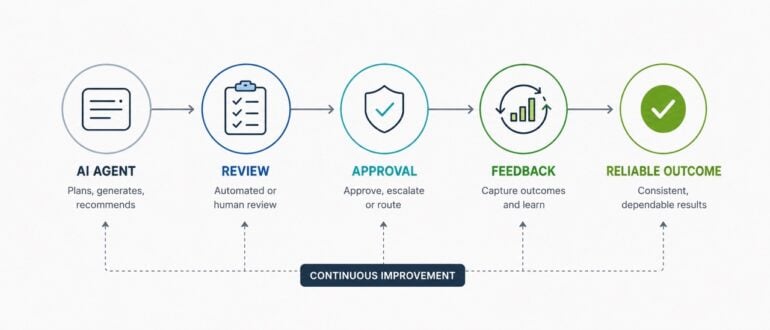
Enterprises winning with AI agents are limiting how much the agents can do alone
 Over the past two years, many businesses believed that giving artificial
intelligence agents complete freedom to handle complex tasks would automatically
boost performance. However, recent real-world applications show that this fully
independent approach is largely failing. Capability is currently outpacing
control, leading to rising costs, unclear value, and significant risk management
issues. In fact, industry forecasts suggest that a large portion of current AI
projects will be canceled within a few years due to these exact governance
problems. Instead of racing to build the most independent systems, successful
organizations are prioritizing trust and reliability. They are actively limiting
what their AI tools can do without human oversight. Rather than relying on
broad, general-purpose programs, these companies design agents with narrow,
highly specific responsibilities. By creating tightly bounded rules and breaking
large workflows into smaller tasks, they make errors much easier to audit and
fix. Furthermore, they are enforcing strict human verification for any high-risk
actions. This approach acknowledges that while AI can greatly reduce manual
effort, human judgment remains essential for safety and compliance. The true
advantage goes to companies that establish clear boundaries, ensuring their
tools operate safely within well-defined limits rather than running
unconstrained.
Over the past two years, many businesses believed that giving artificial
intelligence agents complete freedom to handle complex tasks would automatically
boost performance. However, recent real-world applications show that this fully
independent approach is largely failing. Capability is currently outpacing
control, leading to rising costs, unclear value, and significant risk management
issues. In fact, industry forecasts suggest that a large portion of current AI
projects will be canceled within a few years due to these exact governance
problems. Instead of racing to build the most independent systems, successful
organizations are prioritizing trust and reliability. They are actively limiting
what their AI tools can do without human oversight. Rather than relying on
broad, general-purpose programs, these companies design agents with narrow,
highly specific responsibilities. By creating tightly bounded rules and breaking
large workflows into smaller tasks, they make errors much easier to audit and
fix. Furthermore, they are enforcing strict human verification for any high-risk
actions. This approach acknowledges that while AI can greatly reduce manual
effort, human judgment remains essential for safety and compliance. The true
advantage goes to companies that establish clear boundaries, ensuring their
tools operate safely within well-defined limits rather than running
unconstrained.
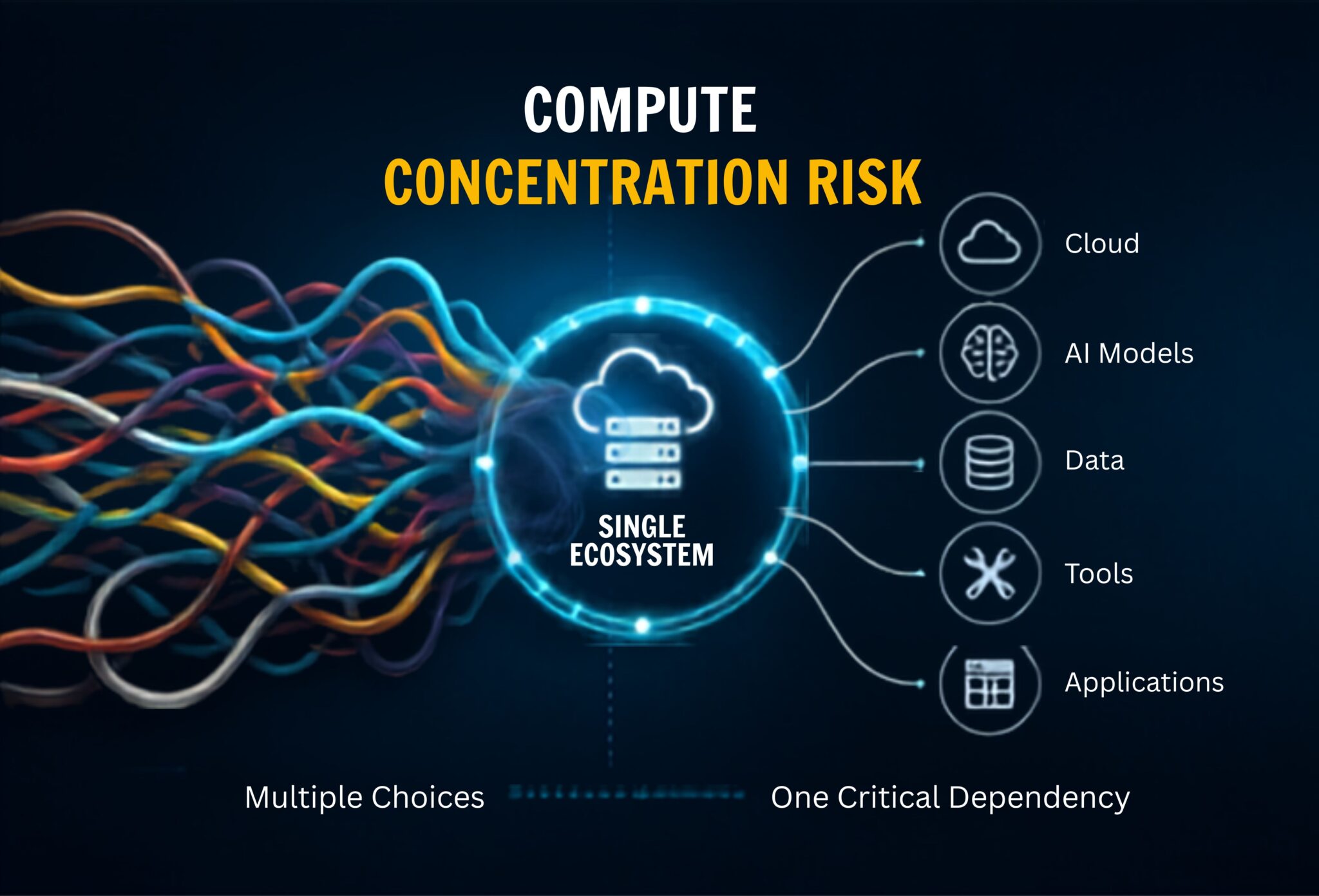
The tug-of-war between AI and traditional cloud services
 Major cloud service providers are currently pouring money and attention into
artificial intelligence to capture the high revenue it promises, but this
intense focus risks leaving their core services behind. Most businesses rely
daily on foundational cloud tools like storage, computing power, databases, and
networking to keep operations running smoothly. While introducing new artificial
intelligence features into these older systems might look impressive on the
surface, adding a chatbot or search assistant does not actually improve the
underlying reliability, speed, or overall value of the service. If providers
neglect the essential updates and maintenance required for these traditional
tools, customers will eventually suffer from unresolved bugs, poor support, and
frustrating outages. Traditional infrastructure is not an outdated concept; it
is the essential bedrock of modern business technology. Customers should not
simply accept that all services are improving at the same rate. Instead, they
need to closely watch product updates and release notes to verify that the core
tools they depend on are receiving genuine upgrades rather than just decorative
updates. Furthermore, businesses must use their negotiating power during
contract renewals to clearly demand that cloud providers continue investing in
the everyday infrastructure that keeps their digital doors safely open.
Major cloud service providers are currently pouring money and attention into
artificial intelligence to capture the high revenue it promises, but this
intense focus risks leaving their core services behind. Most businesses rely
daily on foundational cloud tools like storage, computing power, databases, and
networking to keep operations running smoothly. While introducing new artificial
intelligence features into these older systems might look impressive on the
surface, adding a chatbot or search assistant does not actually improve the
underlying reliability, speed, or overall value of the service. If providers
neglect the essential updates and maintenance required for these traditional
tools, customers will eventually suffer from unresolved bugs, poor support, and
frustrating outages. Traditional infrastructure is not an outdated concept; it
is the essential bedrock of modern business technology. Customers should not
simply accept that all services are improving at the same rate. Instead, they
need to closely watch product updates and release notes to verify that the core
tools they depend on are receiving genuine upgrades rather than just decorative
updates. Furthermore, businesses must use their negotiating power during
contract renewals to clearly demand that cloud providers continue investing in
the everyday infrastructure that keeps their digital doors safely open.
Beyond Legacy Processes: Engineering the High-Velocity Enterprise
In a recent podcast episode, Isaac Sacolick speaks with Daniel Meyer, the chief technology officer of Camunda, about updating outdated business processes for the modern workplace. Meyer explains that companies can improve older manual workflows by organizing them entirely from start to finish before carefully introducing artificial intelligence. He shares a specific example where this approach made loan underwriting significantly faster. A panel of experts, including Joanne Friedman, Joseph Puglisi, and John Patrick Luethe, joined the conversation to share their perspectives. They highlight the importance of building trust in artificial intelligence gradually over time. The panel emphasizes the need for safety measures, clear observation, and consistent human oversight when adopting these systems. The discussion also explores how to best organize tasks across an organization. Meyer favors a central approach to manage different activities effectively. Looking ahead, the group envisions a future where both customers and employees interact with technology in a more natural, conversational way. Artificial intelligence will likely handle complex tasks across various systems, potentially removing traditional barriers between corporate departments. The conversation touches on maintaining compliance, keeping clear records, and managing systems that learn continuously. Finally, Sacolick notes his upcoming speech in New York City about redesigning work processes.Ransomware takes aim at enterprise resilience
 Ransomware has evolved from a basic encryption threat into a complex strategy
aimed at total business disruption. Attackers now routinely bypass encryption
entirely, opting to steal sensitive data and threaten public release to extort
payments. This shift means the focus for organizations is no longer just
restoring systems, but maintaining daily operations and protecting customer
trust during an active incident. The rapid adoption of artificial intelligence
complicates this landscape by creating new entry points for attackers and
accelerating the speed of phishing and extortion campaigns. Furthermore,
businesses face growing risks from interconnected third-party vendors, making
supply chain security as crucial as internal defenses. Consequently, ransomware
has become a top priority for corporate boards, requiring security leaders to
step into strategic roles. Security teams must look beyond standard prevention
measures to focus on overall operational resilience. Essential practices include
keeping offline backups, enforcing strict access controls, and developing
thorough response plans that address executive communication and legal
obligations. Ultimately, the benchmark for security success is shifting.
Organizations must accept that no defense is perfect and focus instead on
embedding resilience into their core strategy, measuring success by how
effectively they can recover and maintain continuity when an attack inevitably
occurs.
Ransomware has evolved from a basic encryption threat into a complex strategy
aimed at total business disruption. Attackers now routinely bypass encryption
entirely, opting to steal sensitive data and threaten public release to extort
payments. This shift means the focus for organizations is no longer just
restoring systems, but maintaining daily operations and protecting customer
trust during an active incident. The rapid adoption of artificial intelligence
complicates this landscape by creating new entry points for attackers and
accelerating the speed of phishing and extortion campaigns. Furthermore,
businesses face growing risks from interconnected third-party vendors, making
supply chain security as crucial as internal defenses. Consequently, ransomware
has become a top priority for corporate boards, requiring security leaders to
step into strategic roles. Security teams must look beyond standard prevention
measures to focus on overall operational resilience. Essential practices include
keeping offline backups, enforcing strict access controls, and developing
thorough response plans that address executive communication and legal
obligations. Ultimately, the benchmark for security success is shifting.
Organizations must accept that no defense is perfect and focus instead on
embedding resilience into their core strategy, measuring success by how
effectively they can recover and maintain continuity when an attack inevitably
occurs.