Quote for the day:
"Winners are not afraid of losing. But losers are. Failure is part of the process of success. People who avoid failure also avoid success." -- Robert T. Kiyosaki
🎧 Listen to this digest on YouTube Music
▶ Play Audio DigestDuration: 18 mins • Perfect for listening on the go.
Cloud repatriation is back on the agenda
 Cloud repatriation is making a significant return to the enterprise agenda,
driven by the need to optimize workload placement rather than a simple nostalgia
for on-premises infrastructure. Organizations are increasingly shifting
applications and data from public clouds to colocation centers, hosted private
clouds, or managed service providers. The primary catalyst for this shift is
cost. While public cloud pricing is excellent for variable workloads, the
expenses associated with predictable, always-on core systems—like compute,
storage, and egress fees—often balloon unexpectedly over time. Performance is
another critical factor. Many data-heavy applications benefit from being
physically closer to users or systems to reduce latency and manage data gravity
effectively. Additionally, stringent compliance, data sovereignty, and security
requirements make dedicated infrastructure safer and easier to audit than
sprawling hyperscale setups. Finally, repatriation helps companies avoid vendor
lock-in, restoring architectural control and operational freedom. This trend
does not indicate a failure of the public cloud model. Instead, it reflects a
maturation in enterprise IT strategy. Leaders are moving away from a
one-size-fits-all approach, thoughtfully evaluating whether each application
belongs in the cloud or in a more predictable, closely controlled environment.
Cloud repatriation is making a significant return to the enterprise agenda,
driven by the need to optimize workload placement rather than a simple nostalgia
for on-premises infrastructure. Organizations are increasingly shifting
applications and data from public clouds to colocation centers, hosted private
clouds, or managed service providers. The primary catalyst for this shift is
cost. While public cloud pricing is excellent for variable workloads, the
expenses associated with predictable, always-on core systems—like compute,
storage, and egress fees—often balloon unexpectedly over time. Performance is
another critical factor. Many data-heavy applications benefit from being
physically closer to users or systems to reduce latency and manage data gravity
effectively. Additionally, stringent compliance, data sovereignty, and security
requirements make dedicated infrastructure safer and easier to audit than
sprawling hyperscale setups. Finally, repatriation helps companies avoid vendor
lock-in, restoring architectural control and operational freedom. This trend
does not indicate a failure of the public cloud model. Instead, it reflects a
maturation in enterprise IT strategy. Leaders are moving away from a
one-size-fits-all approach, thoughtfully evaluating whether each application
belongs in the cloud or in a more predictable, closely controlled environment.
The Hidden Risks of Holding Excessive Data
While many organizations naturally want to hold onto as much information as possible, storing excessive data is a growing liability. The principle of data minimization by collecting only what is strictly necessary and properly disposing of it afterward is now a baseline requirement across global privacy frameworks like the GDPR and California privacy laws. When companies retain outdated emails, redundant files, and obsolete system logs, they significantly increase their vulnerability to data breaches, regulatory fines, and legal action. Unnecessary data also inflates operational and financial costs by straining backup systems and increasing cloud storage expenses for information that serves no real business purpose. Simply having a policy for data retention is not enough; organizations must ensure that they securely and permanently erase information they no longer need. Traditional deletion methods often leave underlying files intact and recoverable, whereas secure erasure completely destroys the data. By adopting secure file disposal practices, companies can systematically reduce their risk exposure, improve the effectiveness of their overall security posture, and limit their legal liability. Ultimately, treating data minimization as a practical routine helps businesses reduce unnecessary costs while safely strengthening their long-term operational resilience and stability.A CIO's guide to building a strategic finance roadmap that delivers ROI from week one.
 The introduction of artificial intelligence requires organizations to completely
rethink how they handle finance transformation. Instead of simply updating old
systems piece by piece, companies must rebuild their financial operations from
the ground up. This structural shift forces financial officers and IT leaders to
collaborate from the very beginning, breaking down traditional departmental
silos. To succeed, businesses need a strategic roadmap created by a planner who
can effectively bridge the gap between complex technology and daily finance. A
core principle of this approach is to "live on the first floor while building
the second." This means designing initiatives that deliver immediate, continuous
returns rather than making stakeholders wait years for a final payoff. Long-term
projects without short-term results often suffer from lost funding and team
fatigue. By securing quick, measurable wins, leaders maintain the momentum and
confidence required to fund future phases. Underpinning this new structure is a
rock-solid data foundation, which acts as the essential plumbing for all future
tools, compliance, and security measures. Ultimately, the finance department of
the future will seamlessly blend human expertise with advanced digital tools
through careful, step-by-step implementation.
The introduction of artificial intelligence requires organizations to completely
rethink how they handle finance transformation. Instead of simply updating old
systems piece by piece, companies must rebuild their financial operations from
the ground up. This structural shift forces financial officers and IT leaders to
collaborate from the very beginning, breaking down traditional departmental
silos. To succeed, businesses need a strategic roadmap created by a planner who
can effectively bridge the gap between complex technology and daily finance. A
core principle of this approach is to "live on the first floor while building
the second." This means designing initiatives that deliver immediate, continuous
returns rather than making stakeholders wait years for a final payoff. Long-term
projects without short-term results often suffer from lost funding and team
fatigue. By securing quick, measurable wins, leaders maintain the momentum and
confidence required to fund future phases. Underpinning this new structure is a
rock-solid data foundation, which acts as the essential plumbing for all future
tools, compliance, and security measures. Ultimately, the finance department of
the future will seamlessly blend human expertise with advanced digital tools
through careful, step-by-step implementation.
The SBOM Just Became a Liability With a Date on It
For years, creating a software bill of materials—a detailed list of all the components inside an application—was simply a good habit. Now, upcoming regulations like the EU Cyber Resilience Act are turning this voluntary practice into a strict legal requirement by late 2027. This shift fundamentally changes how organizations must handle the open-source code they use. Currently, an incomplete list of software components is just an operational blind spot that teams can fix on their own schedule. Soon, however, it will become a documented legal liability. Failing to accurately report software dependencies will be treated much like a financial misstatement, directly exposing executives to accountability. The core issue is that relying on external, open-source code introduces real risks if those tools fail or are compromised, similar to a manufacturer relying on an unpredictable supplier. To prepare, companies cannot rely on manual, last-minute audits to satisfy regulators. Instead, they must integrate strong tracking directly into how they build and source their software. The goal is no longer just having the document, but ensuring that the information inside it is entirely accurate and defensible.The AI Token Costs That Can Break Cybersecurity
 As cybersecurity tools increasingly adopt artificial intelligence to detect and
investigate threats automatically, organizations face a new, unpredictable
challenge: skyrocketing costs. Traditional security software is typically priced
through predictable licenses. In contrast, advanced AI models charge by the
token, meaning companies pay for every piece of data the system reads or writes.
While basic machine learning and simple text generation have manageable costs,
autonomous AI agents can run continuously, analyzing massive amounts of security
data to track down threats. Because these agents operate without human pacing, a
single complex investigation can consume millions of tokens in minutes, quickly
exhausting security budgets. This financial unpredictability puts security
leaders in a difficult position. If budgets run dry, teams might be forced to
limit the data they analyze or disable automated investigations, which creates
blind spots and compromises safety. To maintain strong defenses without breaking
the bank, organizations must strategically balance their use of different AI
technologies. By using traditional machine learning for broad detection and
reserving costly autonomous agents for targeted actions, companies can achieve
effective security outcomes while keeping their operational expenses manageable.
As cybersecurity tools increasingly adopt artificial intelligence to detect and
investigate threats automatically, organizations face a new, unpredictable
challenge: skyrocketing costs. Traditional security software is typically priced
through predictable licenses. In contrast, advanced AI models charge by the
token, meaning companies pay for every piece of data the system reads or writes.
While basic machine learning and simple text generation have manageable costs,
autonomous AI agents can run continuously, analyzing massive amounts of security
data to track down threats. Because these agents operate without human pacing, a
single complex investigation can consume millions of tokens in minutes, quickly
exhausting security budgets. This financial unpredictability puts security
leaders in a difficult position. If budgets run dry, teams might be forced to
limit the data they analyze or disable automated investigations, which creates
blind spots and compromises safety. To maintain strong defenses without breaking
the bank, organizations must strategically balance their use of different AI
technologies. By using traditional machine learning for broad detection and
reserving costly autonomous agents for targeted actions, companies can achieve
effective security outcomes while keeping their operational expenses manageable.
Architectural Patterns: Moving Beyond Cloud-Native to Local-First
In a recent InfoQ podcast, Adam Wiggins, co-founder of Heroku and Ink & Switch, discusses the architectural shift from a strictly cloud-native approach to a "local-first" paradigm. He notes that while the cloud era brought immense benefits like real-time collaboration and easy sharing, it also led to an over-reliance on centralized infrastructure for simple operations. This "everything-in-the-cloud" model can strip users of the control and data ownership they once had with traditional desktop files, and it creates critical vulnerabilities when network connectivity drops or servers fail. To bridge this gap, Wiggins advocates for local-first software that prioritizes offline capability, low latency, and user agency, without sacrificing cloud collaboration. He highlights how mature technologies like Conflict-free Replicated Data Types (CRDTs) allow local nodes—such as a user's phone or computer—to operate independently and sync seamlessly with a central server, much like the speedy issue-tracking tool Linear. Furthermore, he anticipates future advancements like bringing robust version control (branching, merging) to non-code tools and running smaller, high-performance AI models locally for routine tasks. Ultimately, the local-first movement is not a rejection of the cloud, but a pragmatic correction aiming for a balanced, resilient middle ground.How to Build a CDO Career That Lasts Beyond 3 Years: Lessons From a 10-Year Stint In the Same Organization
 Chief Data Officers (CDOs) often struggle to maintain their positions beyond
three years because data transformations require long-term commitment, yet
expectations are frequently set for short-term fixes. Based on the ten-year
tenure of Justin Heller, former CDO of Synchrony Financial, building a lasting
data career requires shifting the perspective from viewing data management as a
temporary project to treating it as an ongoing operational capability. A
successful CDO prioritizes business processes over technology and focuses on
establishing clear data ownership based on expertise rather than mandates.
Effective data governance should not be a policing function; instead, it must
serve as an enabler that solves actual business problems, addresses regulatory
risks, and supports decision-making. To drive adoption, leaders must focus on
shared risks and outcomes rather than rigid compliance. While technology
buzzwords come and go, the core challenges of trust, accountability, and
documentation remain unchanged. Ultimately, a CDO's longevity depends on their
ability to translate technical initiatives into tangible business impacts, such
as improved efficiency and reduced risk, acting as a bridge between technical
teams and business stakeholders.
Chief Data Officers (CDOs) often struggle to maintain their positions beyond
three years because data transformations require long-term commitment, yet
expectations are frequently set for short-term fixes. Based on the ten-year
tenure of Justin Heller, former CDO of Synchrony Financial, building a lasting
data career requires shifting the perspective from viewing data management as a
temporary project to treating it as an ongoing operational capability. A
successful CDO prioritizes business processes over technology and focuses on
establishing clear data ownership based on expertise rather than mandates.
Effective data governance should not be a policing function; instead, it must
serve as an enabler that solves actual business problems, addresses regulatory
risks, and supports decision-making. To drive adoption, leaders must focus on
shared risks and outcomes rather than rigid compliance. While technology
buzzwords come and go, the core challenges of trust, accountability, and
documentation remain unchanged. Ultimately, a CDO's longevity depends on their
ability to translate technical initiatives into tangible business impacts, such
as improved efficiency and reduced risk, acting as a bridge between technical
teams and business stakeholders.
What happens when an insurer thinks like a tech company
Aviva India is redefining its approach to insurance by shifting away from traditional methods and acting more like a technology company. Led by Chief Technology Officer Gyanendra Singh, the company is focusing on reducing friction for customers by using technology to create simpler and faster experiences. One of their major achievements is speeding up policy issuance from weeks to just a few minutes, primarily by integrating digital public infrastructure and paperless purchasing systems. They are also utilizing artificial intelligence for practical improvements, such as health assessment kiosks that use facial scans and automated document processing to speed up underwriting decisions. Instead of treating insurance as a product that is only used during emergencies or yearly renewals, Aviva is building a broader wellness system that tracks physical activity, offers diet recommendations, and rewards healthy behavior. Singh emphasizes that all technological investments must prove their value by directly improving customer experience and operational efficiency. Looking to the future, the company aims to move from a reactive model to a proactive one that actively prevents risks. Ultimately, Aviva believes that combining this modern, data-driven approach with strong data privacy and human empathy will set successful insurers apart in the coming decade.12 System Design Patterns Every Developer Should Know
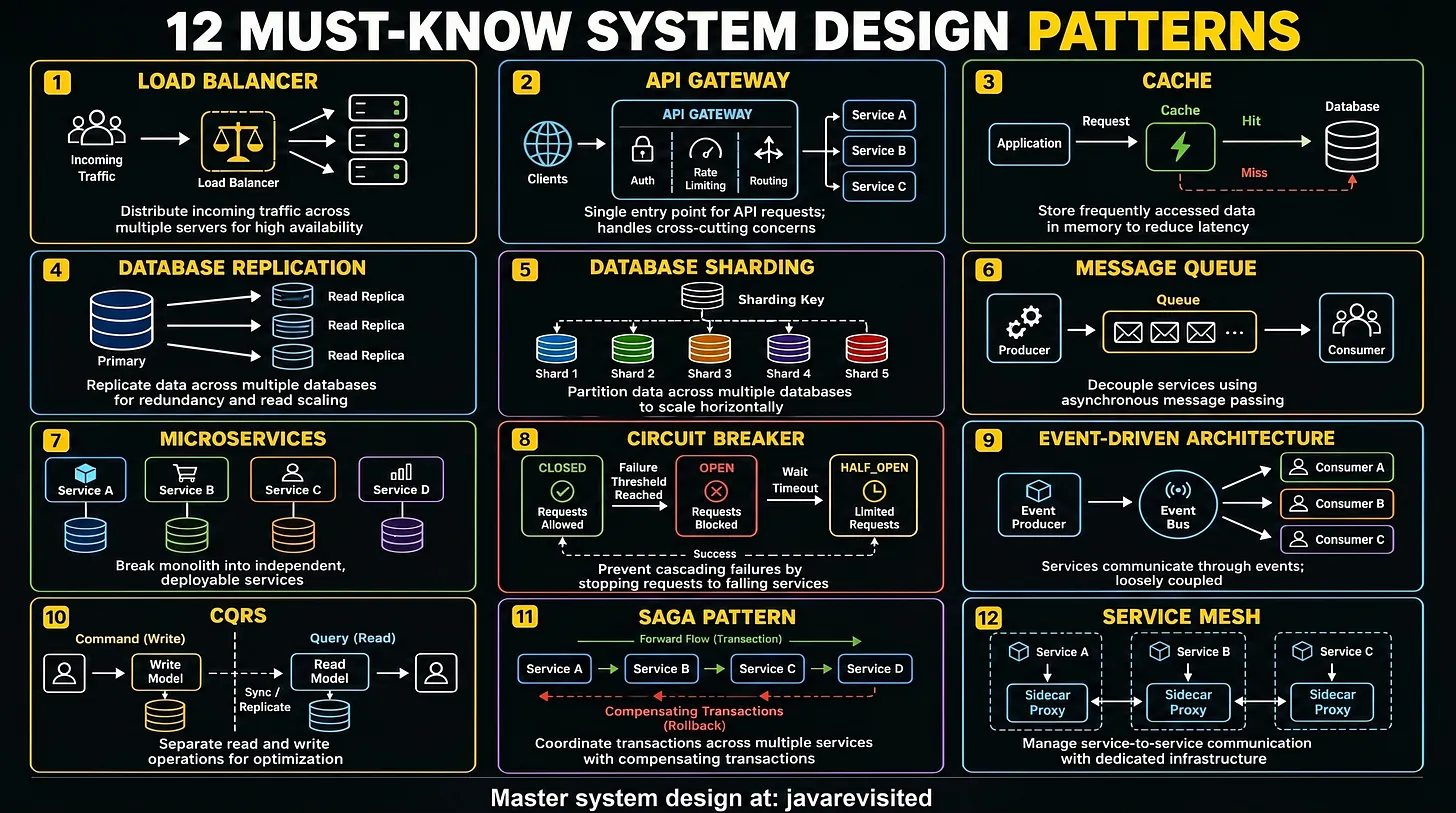 The recently published article outlines twelve fundamental design patterns that
are necessary for software developers to master in order to build reliable and
efficient applications. Understanding these common patterns provides a clear and
structured approach to solving complex architectural challenges and is
particularly useful for engineers preparing for technical interviews. The text
emphasizes that rather than simply memorizing solutions, developers should
deeply grasp the underlying concepts of how different components interact within
a larger network. The discussed patterns focus on strategies for managing
network traffic and preventing server overload, utilizing tools such as
gateways, load balancers, and rate limiters. The resource also highlights
methods for ensuring data consistency and general availability, touching on
database separation, temporary data storage, and message publication models.
Furthermore, concepts like the circuit breaker pattern are presented as
essential ways for maintaining application stability when external or dependent
services fail. By integrating these basic architectural blueprints into their
standard knowledge base, developers can make informed decisions regarding speed,
wait times, and system resilience. Ultimately, familiarizing oneself with these
twelve structural patterns equips engineers with the practical methods required
to design systems capable of handling actual operational demands effectively.
The recently published article outlines twelve fundamental design patterns that
are necessary for software developers to master in order to build reliable and
efficient applications. Understanding these common patterns provides a clear and
structured approach to solving complex architectural challenges and is
particularly useful for engineers preparing for technical interviews. The text
emphasizes that rather than simply memorizing solutions, developers should
deeply grasp the underlying concepts of how different components interact within
a larger network. The discussed patterns focus on strategies for managing
network traffic and preventing server overload, utilizing tools such as
gateways, load balancers, and rate limiters. The resource also highlights
methods for ensuring data consistency and general availability, touching on
database separation, temporary data storage, and message publication models.
Furthermore, concepts like the circuit breaker pattern are presented as
essential ways for maintaining application stability when external or dependent
services fail. By integrating these basic architectural blueprints into their
standard knowledge base, developers can make informed decisions regarding speed,
wait times, and system resilience. Ultimately, familiarizing oneself with these
twelve structural patterns equips engineers with the practical methods required
to design systems capable of handling actual operational demands effectively.