Daily Tech Digest - September 24, 2018

10 signs you aren't cut out to be a cybersecurity specialist

ankarbistock-877825762.jpg
Closely related to a cybersecurity world in a constant state of change is the need to continuously learn and implement new and better protection strategies. The balance between the attackers and the cybersecurity specialist is in a constant state of flux, with battles going to the side with the better technical know-how. Is this environment, a cybersecurity specialist must be willing and able to learn and adapt to new ways of approaching security. If you have ever uttered the words, "But that is the way we have always done it," with any measurable sincerity, you may not be cut out for cybersecurity. ... Building on the pressures of chaotic change and continuous learning is the relentless pressure to keep an enterprise safe from intrusion. Cybercriminals and their orchestrated attacks on enterprise information technology infrastructure never rest, never take a day off. There is no respite from the stress of knowing your systems. The systems you are responsible for protecting are under constant attack.
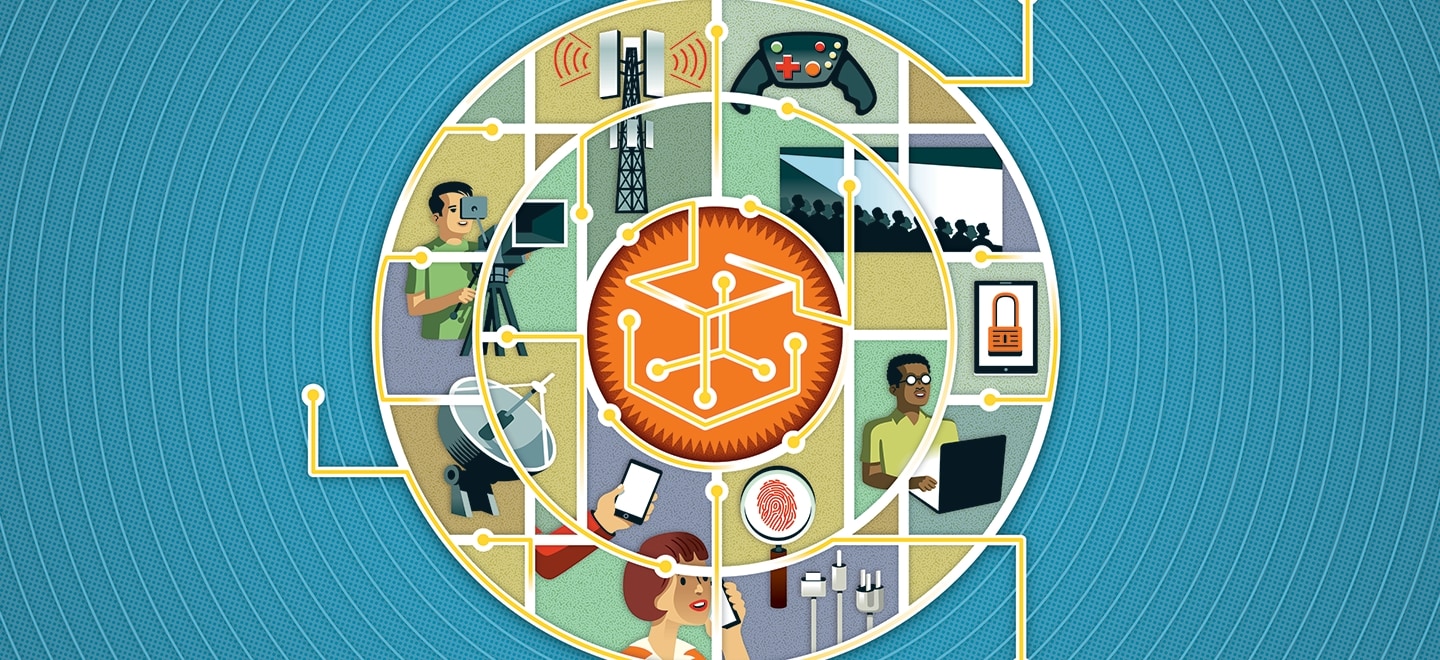

For telecom, media, and entertainment companies, the key may be understanding how such a versatile technology can be applied directly to their businesses. There are now clear paths to implementation—and clear reasons to commit funding. To do so effectively can require an understanding of what blockchain really is and where it can add value. Is blockchain really necessary? After all, plenty of already-existing solutions aim to help telecom and M&E companies mitigate losses, streamline intercompany transactions, and open new strategic revenue opportunities. The answer likely lies with the technology’s strength in several areas: Blockchain is cryptographically secure, it automatically records events and transactions into an immutable and shared ledger, it can be built to execute rules, and it is a decentralized and distributed network of peers that all vote to majority validation of any changes. For the telecom industry, blockchain can manage and limit fraud, secure user identities, support next-generation network services, and help deploy IoT connectivity solutions.


Blockchain-Powered Ads To Disrupt Digital Marketing


The first thing that makes blockchain possible is the absence of any kind of central authority governing the policy. If there is no single source dictation value, then this value is consensual. With no authority capable of diminishing the value of a digital asset, its value is as high as we agree it to be. As of now, we are used to perceiving these scarce digital assets as money because it makes the most sense when we speak of a finite valuable entity. However, this concept reaches far beyond money. We are fine with replicated digital media and tend to tolerate even our own digital identities being duplicated across various platforms. Now imagine every single thing you produce or every datum shared being delivered in a manner where ownership is mathematically verified. This reshapes the concepts of ownership and property as we knew it. ... Ads have to guarantee customer satisfaction. They have only one shot on goal with no right to miss. If the ads do hit the spot, everything else about the product marketing has to be on point in order for the product to be effective.


3 Drivers Behind the Increasing Frequency of DDoS Attacks

In an increasingly politically and economically volatile landscape, DDoS attacks have become the new geopolitical tool for nation-states and political activists. Attacks on political websites and critical national infrastructure services are becoming more frequent, largely because of the desire and capabilities of attackers to affect real-world events, such as election processes, while staying undiscovered. ... DDoS attacks carried out by criminal organizations for financial gain also demonstrate cyber reflection, particularly for global financial institutions and other supra-national entities whose power makes them prime targets, whether for state actors, disaffected activists, or cybercriminals. While extortion on the threat of DDoS continues to be a major threat to enterprises across all vertical sectors, cybercriminals also use DDoS as a smokescreen to draw attention away from other nefarious acts, such as data exfiltration and illegal transfers of money.


Is predictive maintenance the 'gateway drug' to the Industrial IoT?

Is predictive maintenance the 'gateway drug' to the Industrial IoT?
According to Nelson, the drivers of IIoT growth vary by markets: “Oil companies and mining companies are looking at ways to reduce their costs and insulate themselves from commodity price fluctuations, utilities want to incorporate renewables, pharma and food manufacturers are building smarter supply chains and reduce the risk of recalls.” As that growth continues, the IIoT market is entering a new stage, Nelson said. ... While it’s easy to get distracted by shiny new IoT devices, enterprises know that infrastructure is often more important — and that’s even more true in the IIoT. Nelson explained it this way: “A smart thermostat might cut your power by 2 percent, or $150 a year. In comparison, a paper manufacturer that cuts energy by 1 percent could save $15 million. Likewise, increasing production by 1 percent can mean $1 million at a mine or metal processing facility.” Given the potential of the IIoT, I asked Nelson why the rise of IIoT remains overshadowed by consumer IoT? One reason, Nelson said, is the phenomenal success of consumer plays like Uber, Facebook, and the iPhone.


5 key lessons for organizations still struggling with GDPR

The new legislation enhances an individual’s right with regards to their persona data. One of these rights is the right of erasure (right to be forgotten) – i.e. to request that a company erases the data it holds on them. And, since this needs to happen within a reasonably short timeframe, on receipt of a request, it is important that you know where data is stored in your processes, and you have a procedure in place to delete that data so that you can respond quickly and efficiently. A lot of commonly used business software does not support the selective deletion of data, so this will be a good time to have a discussion with your IT people to see if, and how the right of erasure can be supported. To avoid potential fines and reputational damage for non-compliance, you may also need to introduce automated workflows for triggering and confirming the erasure of data from multiple internal and external systems. There are several good products on the market that will support workflow management, and some will even create a webpage for your clients to exercise their rights.


What is a data lake? Flexible big data management explained

What is a data lake? Flexible data management explained
A data lake holds a vast amount of raw, unstructured data in its native format, whereas the data warehouse is much more structured into folders, rows, and columns. As a result, a data lake is much more flexible about its data than a data warehouse is. That’s important because of the 80 percent rule: Back in 1998, Merrill Lynch estimated that 80 percent of corporate data is unstructured, and that has remained essentially true. That in turn means data warehouses are severely limited in their potential data analysis scope. Hiskey argues that data lakes are more useful than data warehouses because you can gather and store data now, even if you are not using elements of that data, but can go back weeks, months, or years later and perform analysis on the old data that might have been otherwise discarded. A flexibility-related difference between the data lake and the data warehouse is schema-on-read vs. schema-on-write. A schema is a logical description of the entire database, with the name and description of records of all record types.


For Hackers, Anonymity Was Once Critical. That’s Changing.

A number of Defcon attendees, citing various concerns about privacy, still protect their identities. Many conceal their real names, instead using only pseudonyms or hacker aliases. Some wear fake beards, masks or other colorful disguises. But new pressures, especially for those who attend Defcon, seem to be reshaping the community’s attitudes toward privacy and anonymity. Many longtime hackers, like Ms. Sell and Mr. Wyler, have been drawn into the open by corporate demands, or have traded their anonymity for public roles as high-level cybersecurity experts. Others alluded to the ways in which a widespread professionalization and gamification of the hacking world — as evidenced by so-called bug bounty programs offered by companies like Facebook and Google, which pay for hackers to hunt for and disclose cybersecurity gaps on their many platforms — have legitimized certain elements of the culture.


Better security needed to harness the positive potential of AI

security positive potential ai
“Enterprises must make the needed investments in well-trained staffs capable of putting AI safeguards in place,” said Rob Clyde, ISACA Board Chair. “As AI evolves—consider the likely proliferation of self-driving vehicles, or AI systems designed to reduce urban traffic—it will become imperative that enterprises can provide assurance that the AI will not take action that puts people in harm’s way.” In addition to today’s common uses for AI, such as virtual personal assistants and fraud detection, there are high hopes that AI and machine learning have the potential to cause major breakthroughs across various industries, including helping to accelerate medical research, improving crop yields and assisting law enforcement with cases. These advancements, though, are unfolding so quickly that it often is challenging for organizations to develop the expertise needed to put safeguards in place to account for security vulnerabilities and ethical implications.


Freelance workers targeted in new malware campaign

Freelancers, casual workers, and international contractors often rely on emails and communication over the Internet not only to retain relationships with employers but also to find and secure new opportunities. As a result, emailed communication and document attachments are commonplace. Unfortunately, it is this standard practice that cybercriminals are now targeting. MalwareHunter Team's campaign email examples do not appear suspicious. They ask the intended victim to check an attached document and then get back to the attacker with a "cost and time frame." However, a keen job hunter in one case on Fiverr opened the document and discovered that the file was malicious. In another example on Freelancer, the cybercriminal sent over "My details.doc," which also contained malware. In the latter example, the intended victim had an antivirus solution installed and so the infection was detected. The security researcher says "dozens of people" have been contacted this way on the platforms.


Quote for the day:


"You cannot always control what goes on outside. But you can always control what goes on inside." -- Wayne Dyer



Daily Tech Digest - September 23, 2018

IKEA designs future autonomous cars that work as hotels, stores, and meeting rooms


Once cars can finally drive themselves, we’ll have more time to enjoy the journey and do other, much more interesting stuff instead. At least that’s the concept behind some of the designs below, developed by retail giant IKEA’s “future living lab,” SPACE10, based in Copenhagen. The design studio/research lab came up with designs for autonomous vehicles that would be extensions of our homes, offices, and local institutions. Some of its seven ideas, shown below, are almost practical. Who can’t imagine autonomously driven cafés or pop-up stores? In fact, they already exist in California—in the form of self-driving cars that have groceries stocked in their back seats. Other concepts might need a bit more thought, particularly the ones that SPACE10 envisions delivering resources to underserved communities. It may be difficult, for example, for a self-driving health clinic to bring medical care to truly remote areas.


New Enterprise Decision Making - Dealing with Uncertainty


Decision making is heavily hampered by internal politics, since failure may lead to a loss in the strength of individuals and departments. You need to be aware of these limitations and be prepared to act on them. If the domain that the decision is going to affect is under scrutiny due to recent and relevant failures, then certainty needs are likely to be higher than if the domain had recently risen to resolving a particularly important challenge. On the other hand, if the department has a new leader, it may be more open to experiments and be willing to try out new things. Most of the companies that are shareholder-centric are risk averse and require special attention when dealing with uncertainty. Typically higher in older companies, company Inertia has a lot to do with the type of organization and the type of industry in which the company operates. Traditional industries have typically more inertia, while a startup has low inertia. Inertia is also affected by legislation and regulation.


Atlassian shops size up OpsGenie buy, Jira for incident management


With Jira Ops, the company will integrate OpsGenie and other IT alert management tools, which include PagerDuty and xMatters, with Slack for incident visibility and collaboration, as well as Atlassian Statuspage to issue customer updates directly from Jira tickets. Jira Ops will create incident timelines and automatically spin up separate Slack channels for frontline IT pros and for business stakeholders as companies respond to critical incidents. Competitor VictorOps also claims to do incident response timelines, and savvy customers can create similar connections between incident management tools with scripts. Zipcar has already integrated OpsGenie with Jira's ticketing system via scripting tools. But the company's engineers said they will watch how the product develops over the next year before they invest further. "It will take time before Jira Ops will be better than what people already have," said Andy Rosequist, director of IT operations at the Boston-based car-sharing service


These Robots Run, Dance and Flip. But Are They a Business?


As the rest of the tech industry has focused on robotic cars and other contraptions that can navigate roads and warehouse floors, Boston Dynamics, which is owned by the Japanese conglomerate SoftBank, has plugged away at machines that can walk through the woods, into a rock quarry, across your home. “These robots can climb stairs,” said Sangbae Kim, a professor of mechanical engineering at the Massachusetts Institute of Technology who is working on similar machines. “They can jump on a table.” But if driverless cars are still years away from everyday use, walking robots are even further. Though these machines are shockingly lifelike, they have limits. They can handle some tasks on their own, like spotting a curb and climbing over it. But when moving across unfamiliar spaces, like the parking lot outside the Boston Dynamics lab, they still need a human guide. In person, they stumble and fall more often than they do on YouTube. Walking through the Boston Dynamics lab, Mr. Raibert, 68, wore bluejeans and a Hawaiian shirt, as he does nearly every day. He wants to build robots that can do what humans and animals can do.


Small, flexible plaster uses ultrasound waves to monitor blood pressure inside your body

screen-shot-2018-09-21-at-10-48-10.png
The patch is made from a thin sheet of silicone elastomer. A small lattice of electronic "islands" connect to each other, each of which contains electrodes and tiny devices called piezoelectric transducers which produce ultrasound waves as electricity passes through them. These electronics are connected through a web of copper wires which are able to bend and stretch in order to conform to the texture and curves of human skin. The ultrasound waves are able to penetrate the body and record blood pressure readings as deeply as four centimeters below the outer layer of the skin. As blood vessels pulse, the movement of blood is recorded and converted into waveforms. "Each peak, valley, and notch in the waveform, as well as the overall shape of the waveform, represents a specific activity or event in the heart," the academics say. "These signals provide a lot of detailed information to doctors assessing a patient's cardiovascular health."


How Blockchain is Making It Easier for Fintech Companies to Scale Up


The most important foundation of any business is trust. Cryptography-based Blockchain eliminates third-party intermediaries as the trusted keeper. It will decrease the cost of overheads when parties interact with one another online without the requirement of middleman or central authority. Blockchain improves the processing speed of the transactions because it reduces the decision-making time across the board in financial companies with minimal human intervention. It reduces duplication that arises while keeping records, errors, and reconciliations and frauds, leading to quick settlement and payment. In case of an event such as earthquake, flood, or war at a location, the remaining Blockchain participants can accept a transaction. Blockchain helps financial institutions handle the issue of identity theft as users have full control over the transactions. It safeguards the merchant from risks involved in frauds as once performed the transactions cannot be changed and do not contain any important personal detail.


Data Protection Officer: GDPR Updates Profession

Data Protection Officer: GDPR Updates Profession
First of all, it is necessary to understand that the DPO must have legal knowledge. This conclusion follows directly from Article 39 of the European Regulations, which lists the tasks and missions of the DPOs. To a greater extent, they are, of course, lawyers. In addition, they should be lawyers who have strong management skills and due to technical expertise, that is, managers. Less often, the DPOs are IT experts who have only basic ideas about the law. However, this situation is typical of Western countries. The IT specialists dominate the personal data protection market, not the lawyers. Either way, large corporations, of course, prefer to hire some specialists to provide IT security and others for personal data protection. Small and medium businesses are trying to make a choice in favor of just one employee competent in both areas. Why does it happen? The answer lies on the surface: the GDPR places a wide variety of responsibilities on companies.


Digital agility for insurers: the key to future readiness


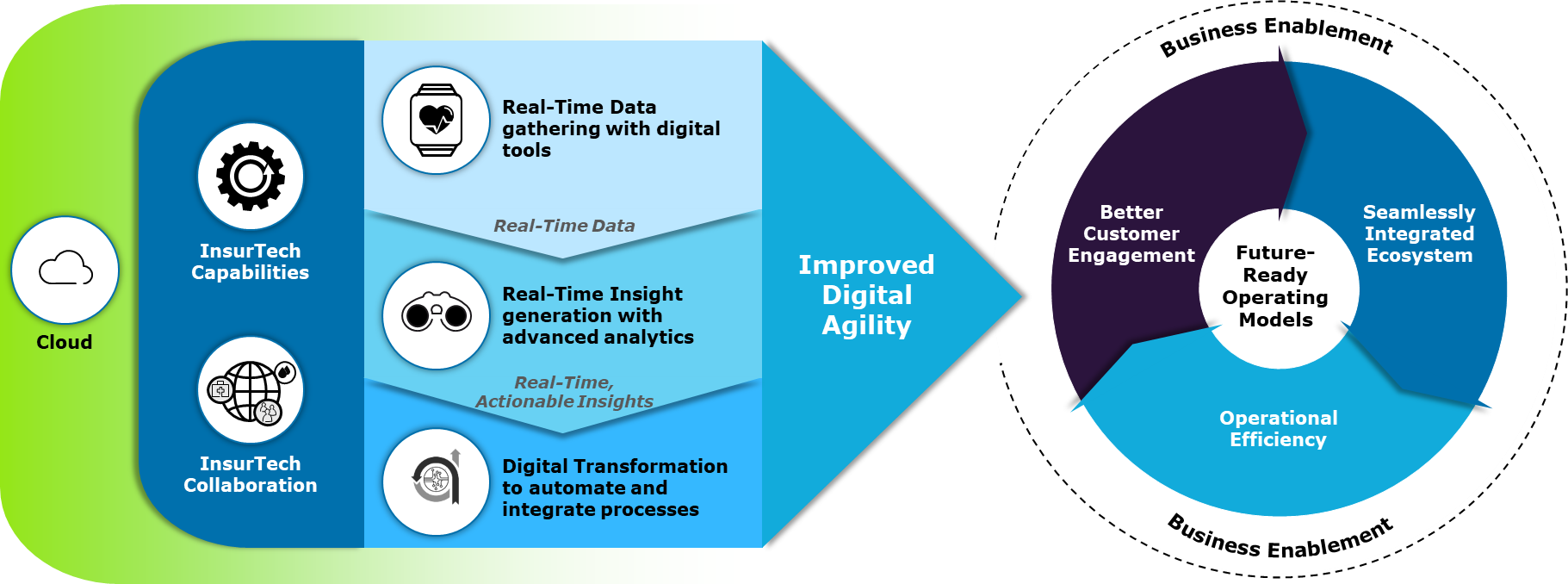
Digital agility includes practical development of digital capabilities for use within a nimble digital infrastructure that allows speedy insights and action. ... Insurers must develop InsurTech capabilities at all operational layers – real-time data capture at the customer interface supported by advanced analytics tools – to enable real-time insights and digital execution to allow streamlined operations. Real-time data capture can help insurers build a rich database of customer information and deep insights critical to the development of innovative, timely, and personalized offerings. However, for real-time data to be beneficial, it must be supported at the data layer with advanced analytics tools that can process it and extract actionable insights. Finally, digital execution and automation ensure that the real-time insights are acted upon promptly, as even small delays can have substantial consequences in today’s dynamic and competitive marketplace.


Why AI should assist humans, not replace them


When a customer is interacting with a brand to achieve a positive goal, such as shopping for a picnic or planning an event, it can be more appropriate to use AI such as chatbots for assistance, as the customers are more patient, have more time and may be more open to ideas that are generated as a result of their customer data. Millard said customers do sometimes require a human to be “ in the loop” to help them make a decision and ensure they aren’t overwhelmed by choice. Similarly, with customers in a neutral state, where their goal is often to perform a task they are obligated to do, Millard said, “This is where quick and easy solution comes in”, and some forms of AI may be helpful in speeding up this process. “The problem is when customers hit a problem or a state of anger and frustration,” she added. “Customers in a crisis are hard to automate.”


Ethics, a Psychological Perspective


With emerging technologies like machine learning, developers can now achieve much more than ever before. But this new power has a down side. Only recently, Facebook’s Chief Executive apologised in front of the European Parliament for not taking enough responsibility for fake news, foreign interference in elections and developers misusing people’s information. Google then announced its Pentagon AI project, triggering a dozen resignations from its development teams. When writing code, where does your responsibility start? And where does it end? Are your only options to stay and get on with it or quit? When we talk about ethics - the principles that govern a person's behaviour - it is impossible to not talk about psychology. One major field has contributed the most when it comes to researching this subject: Social Psychology, or the study of human behaviour in social situations. It aims to explain why we behave in a certain way in certain circumstances.


Quote for the day:


“When we are no longer able to change a situation, we are challenged to change ourselves.” -- Viktor E. Frankl


Daily Tech Digest - September 22, 2018

Vital procedure. Beautiful dark-haired woman lying on an examination table and undergoing electroencephalography while her doctor examining CT results
“It turns out that certain functions of the brain, like speech and memory, are located in very specific regions of the brain, about the size of your pinky.” Dr Matthews believes that brain stimulation could eventually be implemented for tasks like learning to drive, exam preparation and language learning “What our system does is it actually targets those changes to specific regions of the brain as you learn,” he added. “The method itself is actually quite old. In fact, the ancient Egyptians 4000 years ago used electric fish to stimulate and reduce pain. “Even Ben Franklin applied currents to his head, but the rigorous, scientific investigation of these methods started in the early 2000s and we're building on that research to target and personalise a stimulation in the most effective way possible. “Your brain is going to be very different to my brain when we perform a task. What we found is … brain stimulation seems to be particularly effective at actually improving learning.”


DevOps for mobile apps challenges and best practices

There is no such thing as a separate DevOps for mobile apps. DevOps is an approach that works for all applications and components — from front-end mobile apps, to middleware, to backend server components and data stores. Apply the practices and principles of DevOps across all dev and ops teams in the enterprise to enable continuous delivery of all of these components. Mobile apps do have specific needs and challenges that must be addressed. Our 10 best practices of DevOps for mobile apps address these mobile-specific needs. The goal of these best practices is to bring mobile app development, quality assurance, and operational practices in line with standard enterprise applications. Adopting these best practices allows enterprises to adopt DevOps across their mobile development teams, deliver higher-quality mobile apps, and enable continuous improvement and innovation.


Keeping up to date with the sheer volume of regulatory information being published is a perennial challenge. FIs are increasingly relying on technology as a key enabler in this ongoing challenge to stay on top of regulatory requirements. Large US and European banks are spending as much as $20 billion a year on technology to help them comply with the newly evolving regulations in increasingly complex regulatory environments. Compliance costs for FIs amount to substantial parts of total expenses with a negative correlation between the size of the institution and the percentage of total costs. Globally, banks are spending in excess of $270 billion per year on compliance and regulatory obligations, having on average 10–15% of their staff dedicated to compliance. FT estimates that for some banks, it takes up to $4 billion a year to cover demands ranging from checks to prevent money laundering, to requirements to give more data to regulators for stress tests. However, these investments fade in comparison to the cost of misconduct financial institutions are continuously facing.


Smart Cities: From City To Place

Smart-Cities-Philip-Brunkard-
There is more to smart than just the physical location digital agenda. Smart is also about insightful ways of working and having a disruptive ‘can do’ mindset across organisations, particularly from local authority decision-makers and influencers. Where this is done at grassroots levels it can be instrumental in changing mindsets.Today, there is a stronger tendency for a more cost conscious, risk averse culture within the public sector that makes change difficult. However, learning from other countries and private sector collaborations can drive progress. Local authorities are often stuck in the mindset of problem solving today’s problems with yesterday’s solutions rather than thinking about what is possible in the future. Initiatives such as innovation clusters can encourage a change of culture, with local startups working together with local authorities to solve social issues. ... Collaboration across agencies, the private sector and communities is the foundation for success. It focuses on the formation of partnerships to drive change in incremental steps.


Building Block(chain)s for a Better Planet

There is a unique opportunity to harness the Fourth Industrial Revolution – and the societal changes it triggers – to help address environmental issues and transform how we manage our shared global environment. Left unchecked, however, the Fourth Industrial Revolution could have further unintended negative consequences for our global commons. For example, it could exacerbate existing threats to environmental security by further depleting global fishing stocks, biodiversity and resources. Furthermore, it could create entirely new risks that will need to be considered and managed, particularly in relation to the collection and ownership of environmental data, the extraction of resources and disposal of new materials, and the impact of new advanced and automated machines. Harnessing these opportunities and proactively managing these risks will require a transformation of the current “enabling environment” for global environmental management.


Blockchain is not a silver bullet for fraud prevention


People commit fraud, not the technology, and the art of fraud is getting into and out of the system. Succeed in that and the rest is the system doing its normal job. If an employee or person with authority to act can find a way into the transaction, then it is difficult to monitor. Mr Wall says: “Any information processing system that has bad input provides bad output. The blockchain can only be aware of the inputs, not the reality. The blockchain will track it as valid data, so if you have the authority to input bad data, then the blockchain will validate the bad data. You still have a dependency on the real world, trusted sources of data and authorisation. If you corrupt that then you corrupt the process.” Unlocking the full potential of blockchain technology will need governments to work as a facilitator, by providing an enabling environment to interested players. There is a need to develop uniform standards, assess infrastructure requirements, deal with security concerns, raise stakeholder awareness and build trust within the financial ecosystem as a whole.


Harnessing the Flow of Data:

The key values of the discussed technologies align with the challenges faced by our environment and society, both now and in the coming decades. An internet of things, a mix of autonomous sensors and tools used by people in diverse environments, will broaden our detection of threats and trends. An individual with a smartphone can capture the calving of a glacier into the ocean, a new invasive species or an extreme weather event and communicate it to authorities and the world in seconds. The growing archives of big data will allow us to understand the world in both space and time and deeper trends throughout complex networks. Long-term observation networks, for example, will help us untangle sudden changes from acute events from the chronic impacts of pollution and climate change. The scale and complexity of big data, if managed appropriately, can help us understand systems beyond the reach of an individual’s cognition and could help us understand ecosystems, regions and global-scale events.


Tech10
The recent digital transformation of finance has not just lead to creation of innovative business models, but has also impacted the roles and responsibilities of today's CFOs. Now, it is not enough if a CFO only caters to the 'financial aspects' of an enterprise, but needs to play a larger role in influencing strategic business decisions.  It is now required for a CFO to develop skills beyond the traditional responsibilities, like business planning and addressing the challenges faced by the organization during crisis. Hence, CFOs of to-day, need to play a more diversified role, with respect to giving inputs from her domain of expertise in the company's strategic decision-making process.
Meanwhile, enterprises across industries are also taking steps towards ensuring that their CFOs develop new skills to be able to support the goals of the organization. This implies that the CFOs are facing a very challenging roadmap ahead of them, wherein they are expected to take the lead in such operations.


Why Robots Will Require Governments and Organisations to Adapt
Governments have to prepare safety nets for those people that will lose their jobs. They have to provide the right regulation to help those people that will undoubtedly lose their job and will have difficulty in finding a new job. They can do so by focusing on re-education programs to re-skill those who lost their job. This will help them find a new job in a changing society. However, governments and organisations should also prepare for the vast number of new jobs that AI and Robotics will create. The World Economic Forum predicts that by 2022, 133 million new jobs will be created. These jobs – such as data scientists, machine learning specialist, blockchain engineers, UX designers or software developers – will require considerably more education, being prepared for jobs that might not even exist. This means that governments should prepare today if they want to be ready for the robot-led society of 2025. Those governments that will encourage universities to develop new programs focused on the jobs of tomorrow will stand the best chance to minimise the impact of automation.


The humanoid robot AILA (artificial intelligence lightweight android) operates a switchboard during a demonstration by the German research centre for artificial intelligence at the CeBit computer fair in Hanover March, 5, 2013. The biggest fair of its kind open its doors to the public on March 5 and will run till March 9, 2013.  REUTERS/Fabrizio Bensch (GERMANY - Tags: BUSINESS SCIENCE TECHNOLOGY) - BM2E93519ZB01
For-profit companies creating a product for consumers have a financial incentive to avoid bias and create inclusive products; if company X’s latest smartphone doesn’t have accurate speech recognition, for example, then the dissatisfied customer will go to a competitor. ... All the issues that arise from biased AI algorithms are rooted in the tainted training data. If we can avoid introducing biases in how we collect data and the data we introduce to the algorithms, then we have taken a significant step in avoiding these issues. For example, training speech recognition software on a wide variety of equally represented users and accents can help ensure no minorities are excluded. If AI is trained on cheap, easily acquired data, then there is a good chance it won’t be vetted to check for biases. The data might have been acquired from a source which wasn’t fully representative. Instead, we need to make sure we base our AI on quality data that is collected in ways which mitigate introducing bias.


Quote for the day:


"To be a good leader, you don't have to know what you're doing; you just have to act like you know what you're doing." -- Jordan Carl Curtis


Daily Tech Digest - September 21, 2018

FinTech abstract / virtual world of dollars, pounds, euros, bitcoins, etc.
The EU’s revised Payment Services Directive (PSD2) includes Regulatory Technical Standards on strong customer authentication and secure communication. These are key to achieving PSD2’s objective of enhancing consumer protection, promoting innovation, and improving the security of payment services across the European Union. Fintechs, banks, and other financial services firms have spent considerable time, effort, and resources in preparing to comply with the strong customer authentication and secure communication requirements, which go into effect on September 14, 2019.  These requirements, coupled with the modernization of the U.S. financial system through open banking, will enable fintechs, banks, and other financial services firms doing business in the U.S. to leverage some of the processes and technologies being deployed in Europe. This will expedite the Treasury’s vision.  Echoing the aforementioned associations, it is imperative that consumers’ personally identifiable information, including financial data, be protected. Of course, saying it is one thing; implementing it is another.


Employers turn to wearable technology to help staff manage work-life balance


Cozens believes technology could play a major role in helping staff keep a work-life balance. “Potentially, it could be used to support different learning styles and to track and encourage positive behaviours. This could provide datastreams we can learn from, too,” she says. Fieldfisher is contacted “all the time” by providers wanting to demonstrate well-being apps and wearable devices, and is keeping a close eye on developments. The firm has started with a learning and development programme, called I-Plus, to address the health and well-being of everyone across the firm. “We want our people to embrace the ‘oxygen-mask principle’,” says Cozens. “On a flight, you are always reminded that if the cabin pressure falls, oxygen masks will be provided, and you should attend to your own needs first and then help others.”


DevOps security takes on the dark side of digital transformation


Regulated businesses often cite auditors as the main reason for the gatekeeper approach to production application deployments, because they often don't understand DevOps and the changes IT pros want to make. However, legislators, policymakers, and the regulatory and risk management industries are increasingly aware of the market disruption risk tied to IT security, and public policy in the last year reflects a better grasp of cybersecurity. The European Union's General Data Protection Regulation, for example, specifies a goal to ensure customer digital privacy, rather than a technical method to attain that goal. In the U.S., the Office of the Comptroller of the Currency has started to regulate fintech companies, even if those companies don't qualify as banks under the OCC's traditional purview. The fintech industry has fought this regulation, but some IT security experts believe government policies will drive DevOps security best practices.


Pentagon CIOs struggle with legacy tech, security. Sound familiar?

aerial view of pentagon government security dv1282020
"Modernization" may be the watch word, but so large an enterprise, and one that is still so rooted in legacy systems, is not a quick ship to turn, Wennergren notes. The continued reliance on aging technology is another symptom of the Pentagon's condition that will likely resonate with CIOs of smaller shops. "DoD, like many other federal agencies and some private sector firms, is still spending the preponderance of its money on maintaining an aging set of legacy infrastructure systems — 80 percent or more — and that is not a recipe for success in the long term," Wennergren says. "These thousands of legacy systems are eating our lunch in terms of money, and we need to look at them and decide what do we want to retire, what do we want to replace, and what might we want to refresh." "You're falling behind," he adds. "Not only does it cost too much to maintain that old stuff, but it also makes it harder to implement new technologies and it creates huge sets of cyber vulnerabilities. So there is a push across DoD to address this IT modernization issue."


Major life insurer says all customers can opt-in to wear health trackers

Image: Fitbit
John Hancock, one of the oldest and largest North American life insurers, will stop underwriting traditional life insurance and instead sell only interactive policies that track fitness and health data through wearable devices and smartphones, the company said on Wednesday. The move by the 156-year-old insurer, owned by Canada's Manulife Financial Corp, marks a major shift for the company, which unveiled its first interactive life insurance policy in 2015. It is now applying the model across all of its life coverage. Interactive life insurance, pioneered by John Hancock's partner the Vitality Group, is already well-established in South Africa and Britain and is becoming more widespread in the United States. Policyholders score premium discounts for hitting exercise targets tracked on wearable devices such as a Fitbit or Apple Watch and get gift cards for retail stores and other perks by logging their workouts and healthy food purchases in an app.


Who’s shopping where? The power of geospatial analytics in omnichannel retail

Unfortunately, retailers often make the wrong decisions about which stores to close, thus inadvertently hurting their business further. They also overlook valuable opportunities to expand their market presence and unlock growth. The main reason is that they’re using outdated metrics: many retailers continue to use a combination of trend analysis and “four-wall economics” to assess store performance—that is, they’re still primarily taking into account the sales and profits that the store generates within its four walls, without considering its impact on other channels. This assessment then affects other decisions, including the store’s payroll, labor coverage, and sometimes inventory selection. However, consumers today shop across channels: they might visit stores to look at products and then eventually buy them online, or they might research a product online and then buy it in a store. In this environment, the traditional four-wall metrics are, at best, incomplete indicators of a store’s potential.


Security priorities are shifting in response to increased cybersecurity complexity

security priorities
The primary driver cited for the elevation of the CISO is the increasing difficulty of protecting enterprise data. Nearly 80 percent of the 413 enterprise security professionals surveyed cited the expanded volume and sophistication of malware as the main reason it is becoming is harder to protect vital information. According to the report, multiple security researchers indicate that 80–90 percent of malware attacks target a single device and 50–60 percent of malicious web domains are active for one hour or less. These trends speak to the rise of targeted attacks designed to penetrate the network of a single organization. Targeted attacks act as small needles in a large haystack, making cybersecurity practices increasingly difficult. The second most frequently cited reason for the increase in cybersecurity difficulty is the increase in the number of company IT initiatives. Digital business projects, cloud and third-party infrastructure, and the IoT make security substantially more challenging.


5 biggest cybersecurity challenges at smaller organizations

In the past, security was thought of as an IT afterthought at many SMBs. Consequently, these organizations purchased security products on an ad-hoc basis with no central strategy, while cybersecurity responsibilities were often delegated to an interested IT employee who was simply told to do his or her best without disrupting the business. Employee training was often either neglected or guided by regulatory compliance requirements and little else. Given that the ESG research reveals that two-thirds of SMBs have experienced at least one security incident over the past two years, it’s high time to abandon this laissez-faire attitude. This means creating a cybersecurity strategy that aligns with the business mission, formalizing processes, investing in skills development, and getting executive management onboard.  Like it or not, strong security has become a required utility — the cost of doing business. If you must do something (such as cybersecurity) to achieve business success, you may as well do it well.


The new developer role centers on open source technology


There are a number of ways developers can use these building blocks -- intelligent edge, massive compute at the core and open source -- to drive the digital era forward. An intelligent edge gives developers the ability to get sensory information and use it to generate interactions that can occur anywhere, at any time, in a very natural way. Along with the sheer computing power in the core of the network, this unlocks a whole set of new applications for developers to tackle. Open source is the special sauce that brings it all together. Gone are the days when open source was thought of as cute, but not quite ready for prime time. The Cloud Native Computing Foundation (CNCF) has done yeoman's work in building a community around and driving open source, cloud-native computing standards. Importantly, CNCF provides corporate users and vendors with forums in which they can make their concerns known. CNCF also helps produce a reliable roadmap for further development.


AI: The view from the Chief Data Science Office

As we've noted, you can't do AI projects without the data science. Not all data science projects require AI. For instance, if a customer segmentation model for a highly stable market, such as home heating oil deliveries, probably doesn't require a lot of machine learning if you have a neighborhood with a stable housing stock and demographics. But if you are trying to stay a step ahead of cyber attacks, machine learning or deep learning models may be necessary because of the constantly morphing threat. Another core assumption with AI is the central role, not only of models, but data. And because AI models are extremely hungry for data, errors in data set selection or data quality can readily snowball. If getting the data right is important for analytics, it's even righter for AI models. So should the impetus for AI start from the top down, or is it more effective for ideas to percolate up from the trenches? Given the makeup of the survey group, it wasn't surprising that in most cases, the inspiration for AI came from the C suite. But that doesn't mean that CEO mandates are the only way to go.


Quote for the day:


"Many have exchanged the touch of God for the applause of men" -- John Paul Warren


Daily Tech Digest - September 20, 2018

Smarter analytics for banks

Smarter analytics for banks
Banks currently concentrate most of their analytics use cases in sales management (for example, next product to buy, digital marketing, and transactional analytics), financial risk management (collections), and nonfinancial risks (cybersecurity and fraud detection). These are logical first choices, but banks also need an analytics road map for the entire organization to ensure transparency and clarity on their aspiration for advanced analytics. Before launching efforts on specific use cases, banks should identify those areas where analytics will do the most to enhance their value propositions, in line with their business strategies. Over time, banks should extend analytics to other functions and set their ambitions for how analytics will help the organization in the years ahead. Across industries, analytics leaders integrate analytics not only into a few crucial business units but also across all operations. This is true for analytics leaders among banks as well: more than half have introduced use cases to three or more functional areas.


The new face of Financial Services

With universal consumer adoption of digital communication, and technologies such as Blockchain removing the need for a trusted intermediary, the role of the financial institution is in flux. An example is Bitcoin, and similar technologies launched in recent years. These new currencies seem to herald the shape of things to come, but their levels of volatility hamper their development as reliable forms of payment or stores of value. The risk is that they are becoming nothing more than instruments of pure speculation. Barely a week goes by without a new crypto currency launching, but most disappear without trace leaving early adopters out of pocket and further tarnishing the perceived reliability of such means of exchange. A lack of transparency into the workings of the system exposes it to fraud and manipulation; and the very decentralisation that gives crypto currencies their advantage over traditional counterparts also signals a disadvantage, which is the anonymity of the counter-party in a transaction.


Credential stuffing attacks cause heartache for the financial sector


Often utilized by botnets, credential stuffing describes the use of stolen or leaked credentials in automatic injection attacks. Automated scripts hammer online services with credentials in the hopes of a password and username or email address being accepted as legitimate -- which, in turn, permits account hijacking and takeovers. One of the core problems in today's consumer and employee security practices is the use of password and email combinations for multiple online services. When a data breach occurs, such as the LinkedIn 2012 security incident in which 112 million credentials were exposed, the story doesn't end there. These credentials may end up online and public or for sale in the Dark Web. Massive data dumps full of stolen credentials can be found in the Web's underbelly, all of which can be added to batch scripts which will automatically attempt to login to services. ... If a financial account is compromised in such a way, this may lead to the theft of funds or stock portfolio tampering. If the account belongs to an employee of the organization, the damage could be deeper, with the compromise of internal banking systems.


Investing wisely in the healthcare IT ecosystem

Investing wisely in the healthcare IT ecosystem
Through technology, healthcare is becoming a different kind of industry, which is not lost on the technology provider market. Healthcare CIOs have much greater choices in technology solutions, but they need to be careful. The vendor community is willing to sell a whole range of tools, but some of these tools are more mature than others. There is likely to be a long shake out and adoption period for these technologies. CIOs in healthcare have to think through how to architect these solutions as a part of their ecosystems as opposed to buying 10-point solutions that solve narrowly defined needs.  The data architecture in a healthcare system is very complex, since data comes into the system from so many places — patients, referring physicians, payers. The future includes wearables, home monitoring and other sensors that are beyond the hospital and physician office. And data comes in so many forms — diagnostic test results can be images, paper, and lab results, structured and unstructured — all of which have to be brought into the record and integrated into a set of processes.


How Non-IT Employees Can Bridge the Security Skills Shortage

How Non-IT Employees Can Bridge the Security Skills Shortage
The security skills shortage can equally apply to dedicated IT professionals and to ordinary, non-IT employees. While the worries about the potentially 3.5 million unfilled cybersecurity jobs by 2021 are certainly pressing, even the most dedicated expert will need to work with other employees. Without some knowledge of cybersecurity best practices, your security team will be fighting an uphill battle. This adds additional stress and responsibilities to their workloads, possibly increasing the burnout rate. Instead, you need to get employees involved in bridging the security skills shortage. Your enterprise can start by building awareness of how their actions can influence your enterprise’s security posture. You can and should provide engaging, work-integrated training programs at regular intervals to instruct your employees on best practices. The security skills shortage is already a struggle. Don’t compound it by keeping your other employees in the dark.


False positive reduction in credit card fraud detection

MIT researchers have employed a new machine-learning technique to substantially reduce false positives in fraud-detecting technologies. Image: Chelsea Turner
The backbone of the model consists of creatively stacked “primitives,” simple functions that take two inputs and give an output. For example, calculating an average of two numbers is one primitive. That can be combined with a primitive that looks at the time stamp of two transactions to get an average time between transactions. Stacking another primitive that calculates the distance between two addresses from those transactions gives an average time between two purchases at two specific locations. Another primitive could determine if the purchase was made on a weekday or weekend, and so on. Veeramachaneni said, “Once we have those primitives, there is no stopping us for stacking them … and you start to see these interesting variables you didn’t think of before. If you dig deep into the algorithm, primitives are the secret sauce.” “One important feature that the model generates, is calculating the distance between those two locations and whether they happened in person or remotely.


Meet the women who are making sure blockchain is inclusive

The way Indilo sees it, it’s similar to the promise of the internet where everyone with access had the chance to be a participant. However, that democratization wasn’t totally realized as areas with limited access prohibited participation and the growth of large tech companies. The data created on the internet is a “huge asset essentially owned by few companies use for their own benefit,” she says. “We don’t even understand why they are doing certain things, and in many cases they hugely undermine privacy.” But blockchain can deliver on that promise. Simply being able to send and receive money in a secure, transparent way has huge implications for both the banked and unbanked populations of the world. And it’s not just about money, Indilo contends. Opu Labs is a skincare web application built on the blockchain. It allows users to scan their faces and get analysis on skin conditions. Not only is this very personal information secure and unable to be tampered with, Indilo points out that people are getting paid to get something valuable.


What’s the Secret to Success as a Data Scientist?

What’s the Secret to Success as a Data Scientist?
In essence, data scientists are tasked with making discoveries out of large quantities of data. They’re explorers who interpret the world around them. “At ease in the digital realm, they are able to bring structure to large quantities of formless data and make analysis possible,” Thomas H. Davenport writes for Harvard Business Review. “They identify rich data sources, join them with other, potentially incomplete data sources, and clean the resulting set. In a competitive landscape where challenges keep changing and data never stop flowing, data scientists help decision makers shift from ad hoc analysis to an ongoing conversation with data.” By 2020, IBM is predicting that demand for data scientists will increase by 28 percent. More than half of these jobs (59 percent) will be in the finance, insurance, professional services, and IT industries. Within two years, there will be an estimated 2.7 million data professional jobs in the United States alone. The average annual pay for advertised data scientist jobs is currently somewhere around $105,000.


Your biggest cyber security threat is inside your organisation

It shouldn’t come as a surprise that staff awareness training can be difficult. That doesn’t mean you can’t put in place an effective training regime; you just need to understand the problems and find a solution. The way you do this will depend on the resources at your disposal. One of the most common solutions, particularly for organisations that are short on time, is to get help from a third party. This takes the hassle out of staff awareness training, freeing you from the worries of creating a course from scratch, making sure it’s delivered in a way that everyone will understand and checking that all the necessary information is included. You can make the process even easier by using our Information Security Staff Awareness E-Learning Course. Because it’s an online course, your employees can study at a time and place that’s convenient for them. All you need to do is send a notification to your employees, and then check that everybody’s completed the course.


Artificial Intelligence, Ratings, and the Small Print


Relying on either the wisdom of crowds or the wisdom of computers, however, might not be enough. Acquisti, who is part of the Carnegie Mellon team, believes that the onus shouldn’t be on consumers to continually track the way their data is used. “We cannot expect, or pretend, individuals to be constantly aware of and engaged with all the myriad of ways tools and services continuously collect and track their information,” he wrote in an email. “The effort needed to consciously manage such unending flows of data would be nearly superhuman.” Instead, because privacy management is a societal issue that requires societal solutions, Acquisti argues that it is necessary to set clear privacy standards that companies can adhere to. “If, as a society, we were to set a goal of handling the issue of privacy better, then a combination of smart regulation and technology would be needed,” he noted. Smart regulation should encourage technologies that allow organizations to collect and use consumer data while doing more to protect privacy.


Quote for the day:


"There comes a time when you have to choose between turning the page and closing the book." -- Unknown


Daily Tech Digest - September 19, 2018

AI and robotics will create almost 60 million more jobs than they destroy

A robotic arm at an industrial manufacturing factory. 
Developments in automation technologies and artificial intelligence could see 75 million jobs displaced, according to the WEF report "The Future of Jobs 2018." However, another 133 million new roles may emerge as companies shake up their division of labor between humans and machines, translating to 58 million net new jobs being created by 2022, it said. At the same time, there would be "significant shifts" in the quality, location and format of new roles, according to the WEF report, which suggested that full-time, permanent employment may potentially fall. Some companies could choose to use temporary workers, freelancers and specialist contractors, while others may automate many of the tasks. New skill sets for employees will be needed as labor between machines and humans continue to evolve, the report pointed out. Machines are expected to perform about 42 percent of all current tasks in the workplace by 2022, compared to only 29 percent now, according to firms surveyed by WEF. Humans are expected to work an average of 58 percent of task hours by 2022, up from the current task hours of 71 percent.


The Digital Boardroom: Industrial Boards Are Looking for More Tech-Savvy Directors


It is not enough to be fluent in Industry 4.0; directors have to be able to connect technology to the business in meaningful and tangible ways that will boost shareholder performance. If they are to be seen as respected contributors to the board, directors need to help educate other directors on the implications of technology and bring the leadership skills and business knowledge to advance the broader board’s understanding of the issues at play for the business. Without this broader business perspective, they may lack the influence with other directors and limit their effectiveness in board-level debates about strategy and capital spending. In addition, having a quantifiable way to measure digital transformation and its connection to financial outcomes will be key to their success. Ideas that were too futuristic ten years ago are now a reality, thanks to digital transformation. For example, who knew cars could drive themselves or drones could deliver packages.


All your Windows 10 devices, managed by Microsoft

The complexity of managing previous versions of Windows has meant that handing over PC management to managed service providers and outsourced IT was rarely economic. Microsoft is betting that its new versions of Windows and Office — as well as its cloud analysis and management tools — make it cost effective to take over desktops at scale, whether that management is done by Microsoft; OEMs such as Dell and HP, which already offer on-demand device replacement; or partners such as Avanade/Accenture and Computacenter. Microsoft has “tens of customers” for MMD in the UK and US, including large, regulated organizations like Lloyds Banking Group as well as SMBs like Seattle Reign. Karagounis says the MMD baseline caters for large regulated companies but “we give the smaller organizations a choice with things they don’t want to light up because they’re too heavy-duty.” The program will expand to Canada, Australia and New Zealand in early 2019 and other geographies later in the year.


This Windows file may be secretly hoarding your passwords and emails

waitlist.jpg
Since the Windows Search Indexer service powers the system-wide Windows Search functionality, this means data from all text-based files found on a computer, such as emails or Office documents, is gathered inside the WaitList.dat file. This doesn't include only metadata, but the actual document's text. "The user doesn't even have to open the file/email, so long as there is a copy of the file on disk, and the file's format is supported by the Microsoft Search Indexer service," Skeggs told ZDNet. "On my PC, and in my many test cases, WaitList.dat contained a text extract of every document or email file on the system, even if the source file had since been deleted," the researcher added. Furthermore, Skeggs says WaitList.dat can be used to recover text from deleted documents. "If the source file is deleted, the index remains in WaitList.dat, preserving a text index of the file," he says. This provides crucial forensic evidence for analysts like Skeggs that a file and its content had once existed on a PC.


3 first steps to explore blockchain in the enterprise

Blockchain and digital assets can take a while to fully understand and you really need to be willing to read, listen and experiment. When tackling any complex topic, I begin with reviewing and discussing the topic with credible sources I really trust. We expanded several of our existing collaboration relationships with forward-thinkers, such as the Ideo CoLab and the Institute for the Future, and we joined working groups across industry and academia, with organisations including Harvard University, University College London, the MIT Media Lab and IC3. We paired this outside knowledge with our own analysis. We also conduct user research with Fidelity clients and customers to gain an understanding of their interest and activity in this area, which has helped inform our pilots. ... When we started to explore the possibilities for capital markets, we started with the obvious pain points – specifically, money movement, transactions and payments. This really caught my interest as there was a lot of speculation about the day-to-day usefulness of digital assets.


AI for Crime Prevention and Detection – Current Applications

AI for Crime Prevention and Detection - 5 Current Applications
Companies and cities all over world are experimenting with using artificial intelligence to reduce and prevent crime, and to more quickly respond to crimes in progress. The ideas behind many of these projects is that crimes are relatively predictable; it just requires being able to sort through a massive volume of data to find patterns that are useful to law enforcement. This kind of data analysis was technologically impossible a few decades ago, but the hope is that recent developments in machine learning are up to the task. There is good reason why companies and government are both interested in trying to use AI in this manner. As of 2010, the United States spent over $80 billion a year on incarations at the state, local, and federal levels. Estimates put the United States’ total spending on law enforcement at over $100 billion a year. Law enforcement and prisons make up a substantial percentage of local government budgets. Direct government spending is only a small fraction of how crime economically impacts cities and individuals.


Blockchain And Token Asset “Phenomena” Still Raging

Citing a report from PWC, as relayed by a recent Bloomberg article, the host went on to note that although 86% of the respondents in a 600-firm survey have begun tinkering with blockchain, that 54% of the aforementioned figure claimed that deploying systems based on this nascent technology “wasn’t justified.” Explaining why this is the case, Mcnamara noted that while blockchain is evidently a viable technology, firms are finding it difficult to deploy blockchain-based commercial solutions in a manner that will become profitable over time. The PWC executive then drew attention to the fact that there are still trust issues between firms and decentralized technologies, which ironically enough are arguably the most secure systems out there, so what’s not to trust? Lastly, Mcnamara brought up the perpetually controversial topic of regulation, adding that firms are wary that governments, specifically US’ regulatory bodies, will eventually lash out at this budding industry. ...”


DevOps security takes on the dark side of digital transformation


DevOps security is the only viable approach as digital assets become crucial to the enterprise bottom line, Pullen said. Ideally, IT employees should access enterprise production environments only with developers' version-controlled code, checked in to an automated delivery system -- a setup that limits internal security threats, he said. The DevOps practice of small, iterative changes to modular infrastructure also reduces the attack surface of IT systems for outside threats. However, DevOps proponents are mistaken to emphasize the gatekeeper mentality that relies on human approvals or manual work to deploy production application changes, Pullen said. "Automated changes to production scares IT folks, but version control should be the gatekeeper," he said. "Version-control systems are fully auditable, reproducible and traceable." 


Ajey Gore on Small Teams Making a Big Difference and Effective Outsourcing


There is a fundamental difference in how you look at “outsourcing”. The old school way of looking at this was to outsource for a pure labor arbitrage reason. It was implied cheaper to get work done in India. For us, it’s exactly the opposite. It’s significantly more expensive to set shop in India, but we’re in it for the talent. There is also the added benefit of India being in the top 5 countries with the largest English speaking population. Quality of talent has always been the main focus for us and there is no dearth of the type of talent we’re looking for in India. The quality of talent outweighs the higher price point because we believe in the long run the talent will prove to be more valuable than the savings. In Indonesia, especially with tech-focused companies, I feel the trend of ‘outsourcing to India’ will start to grow slowly as more companies will start to understand the value of experienced and talented developers and their contribution to the long-term goals of a company.


IBM launches tools to detect AI fairness, bias and open sources some code

Strategically, IBM's move makes sense. IBM is hoping to provide Watson AI, but also manage AI and machine learning deployments overall. It's just a matter of time before AI Management becomes an acronym among technology vendors. IBM said it is planning to provide explanations that show how factors were weighted, confidence in recommendations, accuracy, performance, fairness and lineage of AI systems. There is little transparency in the models being sold, inherent bias, or fine print. IBM Research recently proposed an effort to add the equivalent of a UL rating to AI services. IBM said it will also offer services for enterprises looking to better manage AI and avoid black box thinking. Big Blue's research unit recently penned a white paper outlining its take on AI bias and how to prevent it. IBM's Institute for Business Value found that 82 percent of enterprises are considering AI deployments, but 60 percent fear liability issues.


Quote for the day:


"Never stir up litigation. A worse man can scarcely be found than one who does this." -- Abraham Lincoln