Quote for the day:
“Empathy fuels connection; sympathy drives disconnection.” -- Brené Brown
ChatGPT easily bypasses its own guardrails; all LLMs are inherently unsafe
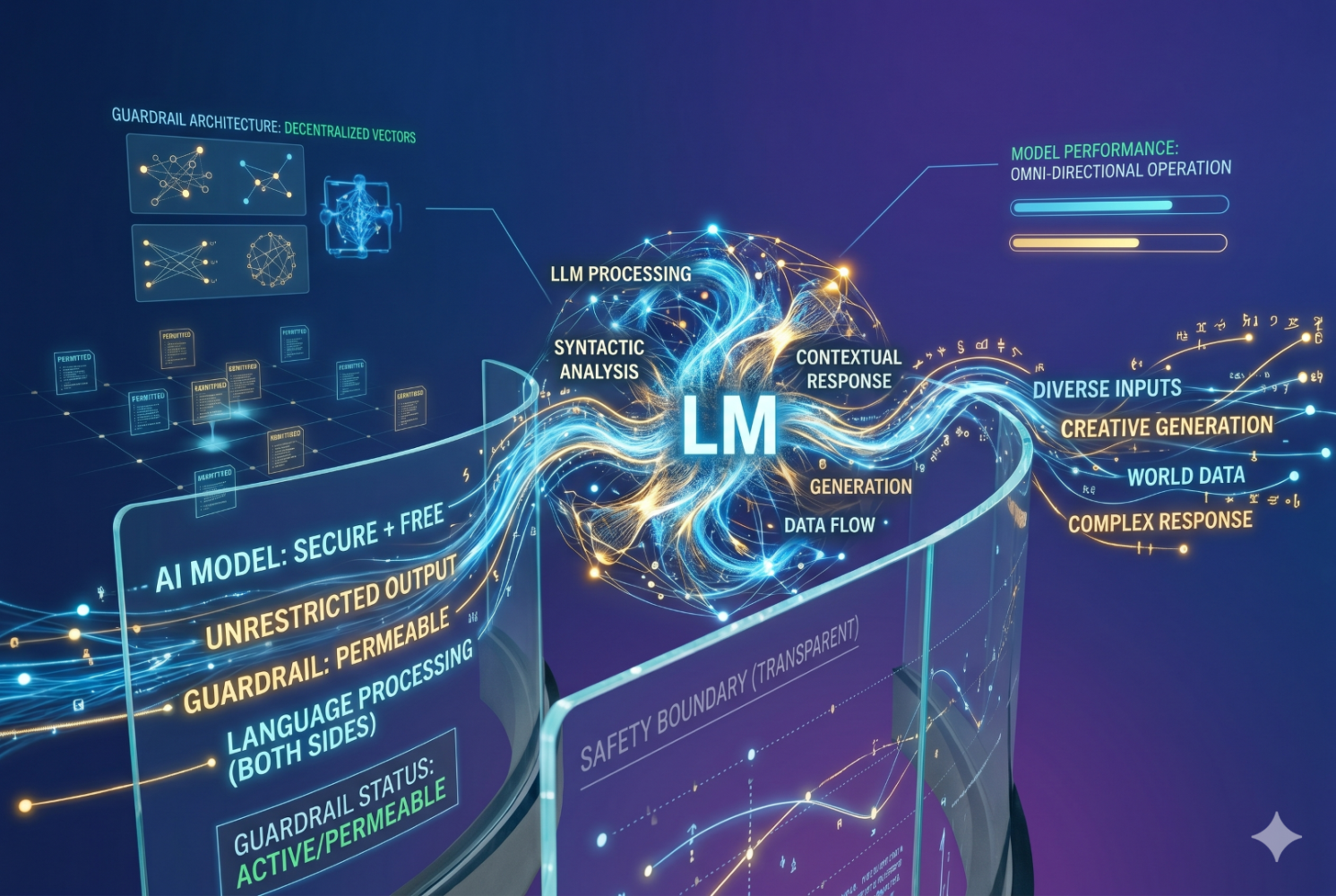 Recent discussions surrounding artificial intelligence highlight a fundamental
security flaw, noting that large language models like ChatGPT can easily bypass
their own safety restrictions. This suggests that these systems are structurally
unsafe. Despite developers implementing various safety filters to prevent the
generation of harmful or inappropriate content, these protections remain
superficial. Because language models operate by predicting the next logical word
rather than genuinely understanding context or morality, users can manipulate
them through creative prompt phrasing. For instance, by framing a harmful
request as a hypothetical scenario, a roleplaying game, or an academic exercise,
users can trick the system into ignoring its core safety directives. This
vulnerability is not unique to a single company but represents an inherent
characteristic of the underlying technology across all major models.
Consequently, trying to build perfect defenses around these systems is an
endless game of catching up. Every time a developer patches a specific
vulnerability, users simply find a new way to phrase their requests to slip past
the updated filters. This reality forces organizations to reconsider how they
deploy artificial intelligence in sensitive environments. Instead of relying
blindly on built-in software restrictions, companies must acknowledge the
inherent risks and implement broader security strategies that do not depend
solely on the technology to police itself.
Recent discussions surrounding artificial intelligence highlight a fundamental
security flaw, noting that large language models like ChatGPT can easily bypass
their own safety restrictions. This suggests that these systems are structurally
unsafe. Despite developers implementing various safety filters to prevent the
generation of harmful or inappropriate content, these protections remain
superficial. Because language models operate by predicting the next logical word
rather than genuinely understanding context or morality, users can manipulate
them through creative prompt phrasing. For instance, by framing a harmful
request as a hypothetical scenario, a roleplaying game, or an academic exercise,
users can trick the system into ignoring its core safety directives. This
vulnerability is not unique to a single company but represents an inherent
characteristic of the underlying technology across all major models.
Consequently, trying to build perfect defenses around these systems is an
endless game of catching up. Every time a developer patches a specific
vulnerability, users simply find a new way to phrase their requests to slip past
the updated filters. This reality forces organizations to reconsider how they
deploy artificial intelligence in sensitive environments. Instead of relying
blindly on built-in software restrictions, companies must acknowledge the
inherent risks and implement broader security strategies that do not depend
solely on the technology to police itself.Design Patterns Are Dead. Long Live Design Patterns.
In the era of AI-generated code, traditional software design patterns are not
obsolete, but their fundamental purpose has shifted. Originally, design
patterns existed to help developers manage their mental workload, creating a
shared vocabulary to communicate complex logic and make code readable for
other people. Compilers and machines never needed them. When AI began writing
the majority of code, these human-centered structures initially seemed
unnecessary. However, large language models have their own limitations, most
notably memory constraints, where their reliability drops significantly as
tasks become larger and more complex. Consequently, design patterns have found
a new role as essential boundaries for these tools. Instead of serving as
instruction manuals for human developers, patterns now function as strict
structural rules that guide unpredictable AI outputs into stable, predictable
systems. While older patterns that merely saved keystrokes or patched language
gaps have faded, structural patterns like adapters, decorators, and facades
are now critical. They act as safety checkpoints that filter, validate, and
organize untrusted AI code before it reaches production environments.
Ultimately, the core philosophy of managing complexity and drawing clear
boundaries remains completely intact. Design patterns have simply evolved from
a tool used to guide human engineers into a mechanism for governing and
securing machine-generated software.
 Many companies are realizing that running small artificial intelligence
experiments is vastly different from using AI to drive real business results.
The article explores how organizations can successfully move beyond isolated
pilot projects to achieve widespread impact using adaptive AI. Unlike static
models that require manual updates when conditions change, adaptive systems
continuously learn and adjust their behavior based on new data and shifting
environments. This flexibility makes them highly valuable, but scaling them
across an entire enterprise presents significant hurdles. To make this
transition, businesses need to stop treating AI as an isolated technical
novelty and start integrating it deeply into their core operations. This
requires a strong foundation of reliable data, clear guidelines to ensure the
systems remain accurate, and a shift in company culture to encourage
collaboration between technical teams and everyday workers. Furthermore,
organizations must build flexible infrastructures that allow these models to
update seamlessly without disrupting daily work. When companies focus on
solving practical problems rather than just testing new technology, they can
finally realize the full value of their investments. Ultimately, the shift to
enterprise-scale AI is less about having the most advanced algorithms and more
about building sustainable, trustworthy systems that actively adapt to
real-world business needs over time.
Many companies are realizing that running small artificial intelligence
experiments is vastly different from using AI to drive real business results.
The article explores how organizations can successfully move beyond isolated
pilot projects to achieve widespread impact using adaptive AI. Unlike static
models that require manual updates when conditions change, adaptive systems
continuously learn and adjust their behavior based on new data and shifting
environments. This flexibility makes them highly valuable, but scaling them
across an entire enterprise presents significant hurdles. To make this
transition, businesses need to stop treating AI as an isolated technical
novelty and start integrating it deeply into their core operations. This
requires a strong foundation of reliable data, clear guidelines to ensure the
systems remain accurate, and a shift in company culture to encourage
collaboration between technical teams and everyday workers. Furthermore,
organizations must build flexible infrastructures that allow these models to
update seamlessly without disrupting daily work. When companies focus on
solving practical problems rather than just testing new technology, they can
finally realize the full value of their investments. Ultimately, the shift to
enterprise-scale AI is less about having the most advanced algorithms and more
about building sustainable, trustworthy systems that actively adapt to
real-world business needs over time.
Adaptive AI and the Shift from Pilots to Enterprise Impact
Many companies are realizing that running small artificial intelligence
experiments is vastly different from using AI to drive real business results.
The article explores how organizations can successfully move beyond isolated
pilot projects to achieve widespread impact using adaptive AI. Unlike static
models that require manual updates when conditions change, adaptive systems
continuously learn and adjust their behavior based on new data and shifting
environments. This flexibility makes them highly valuable, but scaling them
across an entire enterprise presents significant hurdles. To make this
transition, businesses need to stop treating AI as an isolated technical
novelty and start integrating it deeply into their core operations. This
requires a strong foundation of reliable data, clear guidelines to ensure the
systems remain accurate, and a shift in company culture to encourage
collaboration between technical teams and everyday workers. Furthermore,
organizations must build flexible infrastructures that allow these models to
update seamlessly without disrupting daily work. When companies focus on
solving practical problems rather than just testing new technology, they can
finally realize the full value of their investments. Ultimately, the shift to
enterprise-scale AI is less about having the most advanced algorithms and more
about building sustainable, trustworthy systems that actively adapt to
real-world business needs over time.
The Impact of the Sovereignty Gap in Enterprise Architecture
For years, technology leaders assumed cloud infrastructure was a solved
problem, relying on large providers to manage data capacity and location.
However, recent power outages and regional network failures have exposed a
serious flaw in this thinking. The central issue is no longer simply whether
data is available or stored within a specific country, but whether an
organization actually has the authority to move and recover its data under its
own control. This concept, known as data sovereignty, is becoming necessary
due to three main factors: increasingly complex global data protection laws,
unpredictable geopolitical events, and the rapid rise of artificial
intelligence, which requires strict control over sensitive training records.
This shift heavily impacts essential business systems like finance, payroll,
and supply chain management. Many companies discover too late that their
disaster recovery plans accidentally violate international regulations or that
their data is heavily locked inside one proprietary system. To address these
structural vulnerabilities, organizations must prioritize true portability.
This means separating software applications from the underlying data, keeping
backups within the required legal jurisdiction, and demanding that vendors
prove their systems can be rapidly redeployed elsewhere. Ultimately, data
sovereignty is no longer just a legal compliance checkbox; it is a fundamental
operational requirement for keeping essential business systems resilient and
secure.
Cyber incident recovery out of step
 Many businesses find that their cyber incident recovery plans are out of step
with the rapid evolution of modern threats and complex IT environments. A
common misstep is relying on outdated assumptions, such as believing that
cloud providers or managed IT services automatically handle all data backups
and continuity efforts. Under the shared responsibility model, organizations
remain fundamentally accountable for their own data protection, access
controls, and recovery procedures. When companies fail to regularly test their
disaster recovery strategies or update them to reflect current operational
realities, these plans quickly lose their effectiveness. Simply having a
backup is not enough if the process to restore it has never been validated
under pressure. An untested plan often leads to prolonged downtime,
operational bottlenecks, and increased financial loss during an actual crisis.
To bring recovery efforts back into alignment, businesses must take ownership
of their resilience. This means moving beyond theoretical checklists to
establish practical, well-documented protocols. Organizations should focus on
cross-training staff, maintaining offline or independent backups, and
conducting routine scenario testing. By clearly understanding which critical
systems drive their operations and proactively identifying potential single
points of failure, companies can ensure their recovery capabilities match
their real-world risk, allowing them to bounce back safely when an incident
occurs.
Many businesses find that their cyber incident recovery plans are out of step
with the rapid evolution of modern threats and complex IT environments. A
common misstep is relying on outdated assumptions, such as believing that
cloud providers or managed IT services automatically handle all data backups
and continuity efforts. Under the shared responsibility model, organizations
remain fundamentally accountable for their own data protection, access
controls, and recovery procedures. When companies fail to regularly test their
disaster recovery strategies or update them to reflect current operational
realities, these plans quickly lose their effectiveness. Simply having a
backup is not enough if the process to restore it has never been validated
under pressure. An untested plan often leads to prolonged downtime,
operational bottlenecks, and increased financial loss during an actual crisis.
To bring recovery efforts back into alignment, businesses must take ownership
of their resilience. This means moving beyond theoretical checklists to
establish practical, well-documented protocols. Organizations should focus on
cross-training staff, maintaining offline or independent backups, and
conducting routine scenario testing. By clearly understanding which critical
systems drive their operations and proactively identifying potential single
points of failure, companies can ensure their recovery capabilities match
their real-world risk, allowing them to bounce back safely when an incident
occurs.Nine in Ten Enterprises Plan Cloud Data Repatriation amid Rising Cloud Costs and Data Sovereignty Mandates
For years, moving computing tasks to the cloud was seen as a permanent change,
but a recent survey reveals that organizations are increasingly bringing their
information back to their own physical servers. Research shows that nearly 90
percent of companies plan to significantly expand their local server presence
over the next two years, and 75 percent have already started returning data
from remote public systems. This reversal is primarily driven by strict data
ownership rules, rising costs, and the heavy demands of modern artificial
intelligence. While the cloud remains popular, organizations are quickly
realizing that it is not always the best fit for everything. More than 80
percent of companies currently exceed their storage budgets, struggling with
unexpected fees for moving data and premium charges for keeping information in
legally required geographic regions. Furthermore, the rapid adoption of
artificial intelligence is accelerating this shift. Many companies find that
public platforms cannot meet the fast response times required for complex
computing, and strict privacy rules often prevent them from sending sensitive
training information to external servers. Ultimately, businesses are adopting
a much more practical approach, choosing to keep sensitive, high volume, and
computationally heavy tasks on their own equipment to maintain better control
over their budgets and legal compliance.
From pilot to production: overcoming IoT’s most common roadblock
 Moving an Internet of Things project from a small test phase into a full-scale
rollout is notoriously difficult, with many promising initiatives stalling in
what the industry commonly calls pilot purgatory. The core issue usually stems
from a disconnect between the initial technology test and the broader business
goals. During a pilot, teams often focus entirely on proving that the sensors
and software work in a controlled environment. However, when it comes time to
scale, they hit sudden roadblocks related to unexpected costs, security
vulnerabilities, and the difficulty of blending new devices with older,
existing computer systems. To overcome these hurdles, companies need to
approach the pilot phase differently. Instead of just testing the hardware,
they must plan for wide-scale integration from day one. This means defining
clear financial goals early, securing buy-in from the people who will actually
use the system daily, and prioritizing security as a foundational step rather
than an afterthought. Furthermore, choosing flexible, open technologies rather
than getting locked into a single vendor helps ensure the system can grow
gracefully. Ultimately, successfully launching these connected networks
requires treating the technology as a means to solve a specific human or
business problem, rather than just an experiment in connecting devices.
Moving an Internet of Things project from a small test phase into a full-scale
rollout is notoriously difficult, with many promising initiatives stalling in
what the industry commonly calls pilot purgatory. The core issue usually stems
from a disconnect between the initial technology test and the broader business
goals. During a pilot, teams often focus entirely on proving that the sensors
and software work in a controlled environment. However, when it comes time to
scale, they hit sudden roadblocks related to unexpected costs, security
vulnerabilities, and the difficulty of blending new devices with older,
existing computer systems. To overcome these hurdles, companies need to
approach the pilot phase differently. Instead of just testing the hardware,
they must plan for wide-scale integration from day one. This means defining
clear financial goals early, securing buy-in from the people who will actually
use the system daily, and prioritizing security as a foundational step rather
than an afterthought. Furthermore, choosing flexible, open technologies rather
than getting locked into a single vendor helps ensure the system can grow
gracefully. Ultimately, successfully launching these connected networks
requires treating the technology as a means to solve a specific human or
business problem, rather than just an experiment in connecting devices.Enterprise Architecture Soft Skills
While technical outputs like capability maps and application portfolios are
foundational to enterprise architecture, they only deliver real value when
they help people make better business decisions. To bridge the gap between
technical models and organizational momentum, enterprise architects must
cultivate strong soft skills. These interpersonal abilities allow architects
to translate complex data into clear guidance for diverse stakeholders.
Essential skills include business insight, which ensures recommendations
directly connect to broader company goals, and financial fluency, which
grounds technical choices in budget realities. Additionally, basic
interpersonal awareness and the ability to balance different stakeholder
groups allow architects to manage competing interests, build trust, and
influence change without creating friction. Without these abilities,
architecture teams risk producing overly complex diagrams and confusing
analytics that fail to resonate with business leaders. To prevent this
disconnect, architects need to focus on internal customer needs by designing
every document to answer specific questions rather than simply mapping out
systems. Adaptability further ensures that communication styles and levels of
detail shift naturally depending on the audience. Ultimately, enterprise
architecture functions as a practice that enables decisions, not just a
modeling exercise. By developing a strategic and broad perspective, architects
transition their work from static documentation to practical roadmaps that
reliably guide an organization forward.
10 ways to improve safety culture in the workplace
Improving safety in the workplace requires much more than simply updating
rulebooks or running occasional training sessions; it demands real, sustained
changes in behavior that begin with leadership. True safety habits reveal
themselves when managers are not watching and deadlines get tight. To make
this happen, leaders must show genuine, visible commitment, participating in
site walkarounds and treating safety goals as seriously as financial ones.
Companies need to build an environment where employees feel entirely
comfortable speaking up about near misses or hazards without worrying about
being blamed. Moving beyond basic legal compliance is essential, meaning
safety has to be woven into everyday decisions rather than treated as a
paperwork chore. Daily conversations help keep risk awareness fresh for
frontline workers, while focusing on practical skills instead of just tracking
training attendance ensures people can actually make safe choices under
pressure. It is equally important to openly acknowledge the conflict between
tight deadlines and working safely, so employees do not feel forced into
taking dangerous shortcuts. By tracking helpful warning signs before accidents
happen, investigating incidents openly to find the root causes rather than
assigning blame, and treating safety as a long-term goal, organizations can
naturally build safe habits into their everyday routines.