Quote for the day:
“We are all failures - at least the best of us are.” -- J.M. Barrie
AI Governance Reaches an Inflection Point
 AI adoption has made privacy, compliance, and risk management dramatically
more complex. Unlike traditional software, AI models are probabilistic,
adaptive, and capable of generating outcomes that are harder to predict or
explain. As Blake Brannon, OneTrust’s chief innovation officer, summarized:
“The speed of AI innovation has exposed a fundamental mismatch. While AI
projects move at unprecedented speed, traditional governance processes are
operating at yesterday’s pace.” ... These dynamics explain why, several years
ago, Dresner Advisory Services shifted its research lens from data governance
to data and analytics (D&A) governance. AI adoption makes clear that
organizations must treat governance not as a siloed discipline, but as an
integrated framework spanning data, analytics, and intelligent systems.
D&A governance is broader in scope than traditional data governance. It
encompasses policies, standards, decision rights, procedures, and technologies
that govern both data and analytic content across the organization. ... The
modernization is not just about oversight — it is about rethinking priorities.
Survey respondents identify data quality and controlled access as the most
critical enablers of AI success. Security, privacy, and the governance of data
models follow closely behind. Collectively, these priorities reflect an
emerging consensus: The real foundation of successful AI is not model
architecture, but disciplined, transparent, and enforceable governance of data
and analytics.
AI adoption has made privacy, compliance, and risk management dramatically
more complex. Unlike traditional software, AI models are probabilistic,
adaptive, and capable of generating outcomes that are harder to predict or
explain. As Blake Brannon, OneTrust’s chief innovation officer, summarized:
“The speed of AI innovation has exposed a fundamental mismatch. While AI
projects move at unprecedented speed, traditional governance processes are
operating at yesterday’s pace.” ... These dynamics explain why, several years
ago, Dresner Advisory Services shifted its research lens from data governance
to data and analytics (D&A) governance. AI adoption makes clear that
organizations must treat governance not as a siloed discipline, but as an
integrated framework spanning data, analytics, and intelligent systems.
D&A governance is broader in scope than traditional data governance. It
encompasses policies, standards, decision rights, procedures, and technologies
that govern both data and analytic content across the organization. ... The
modernization is not just about oversight — it is about rethinking priorities.
Survey respondents identify data quality and controlled access as the most
critical enablers of AI success. Security, privacy, and the governance of data
models follow closely behind. Collectively, these priorities reflect an
emerging consensus: The real foundation of successful AI is not model
architecture, but disciplined, transparent, and enforceable governance of data
and analytics.Shai-Hulud Supply Chain Attack: Worm Used to Steal Secrets, 180+ NPM Packages Hit
 The packages were injected with a post-install script designed to fetch the
TruffleHog secret scanning tool to identify and steal secrets, and to harvest
environment variables and IMDS-exposed cloud keys. The script also validates
the collected credentials and, if GitHub tokens are identified, it uses them
to create a public repository and dump the secrets into it. Additionally, it
pushes a GitHub Actions workflow that exfiltrates secrets from each repository
to a hardcoded webhook, and migrates private repositories to public ones
labeled ‘Shai-Hulud Migration’. ... What makes the attack different is
malicious code that uses any identified NPM token to enumerate and update the
packages that a compromised maintainer controls, to inject them with the
malicious post-install script. “This attack is a self-propagating worm. When a
compromised package encounters additional NPM tokens in a victim environment,
it will automatically publish malicious versions of any packages it can
access,” Wiz notes. ... The security firm warns that the self-spreading
potential of the malicious code will likely keep the campaign alive for a few
more days. To avoid being infected, users should be wary of any packages that
have new versions on NPM but not on GitHub, and are advised to pin
dependencies to avoid unexpected package updates.
The packages were injected with a post-install script designed to fetch the
TruffleHog secret scanning tool to identify and steal secrets, and to harvest
environment variables and IMDS-exposed cloud keys. The script also validates
the collected credentials and, if GitHub tokens are identified, it uses them
to create a public repository and dump the secrets into it. Additionally, it
pushes a GitHub Actions workflow that exfiltrates secrets from each repository
to a hardcoded webhook, and migrates private repositories to public ones
labeled ‘Shai-Hulud Migration’. ... What makes the attack different is
malicious code that uses any identified NPM token to enumerate and update the
packages that a compromised maintainer controls, to inject them with the
malicious post-install script. “This attack is a self-propagating worm. When a
compromised package encounters additional NPM tokens in a victim environment,
it will automatically publish malicious versions of any packages it can
access,” Wiz notes. ... The security firm warns that the self-spreading
potential of the malicious code will likely keep the campaign alive for a few
more days. To avoid being infected, users should be wary of any packages that
have new versions on NPM but not on GitHub, and are advised to pin
dependencies to avoid unexpected package updates.Scattered Spider Tied to Fresh Attacks on Financial Services
 The financial services sector appears to remain at high risk of attack by the
group. Over the past two months, elements of Scattered Spider registered "a
coordinated set of ticket-themed phishing domains and Salesforce credential
harvesting pages" designed to target the financial services sector as well as
providers of technology services, suggesting a continuing focus on those
sectors, ReliaQuest said. Registering lookalike domain names is a repeat
tactic used by many attackers, from Chinese nation-state groups to Scattered
Spider. Such URLs are designed to trick victims into thinking a link that they
visit is legitimate. ... Members of Scattered Spider and ShinyHunters excel at
social engineering, including voice phishing, aka vishing. This often involves
tricking a help desk into believing the attacker is a legitimate employee,
leading to passwords being reset and single sign-on tokens intercepted. In
some cases, experts say, the attackers trick a victim into visiting lookalike
support panels they've created which are part of a phishing attack. Since the
middle of the year, members of Scattered Spider have breached British
retailers Marks & Spencer, followed by American retailers such as Adidas
and Victoria's Secret. The group has been targeting American insurers such as
Aflac and Allianz Life, global airlines including Air France, KLM and Qantas,
and technology giants Cisco and Google.
The financial services sector appears to remain at high risk of attack by the
group. Over the past two months, elements of Scattered Spider registered "a
coordinated set of ticket-themed phishing domains and Salesforce credential
harvesting pages" designed to target the financial services sector as well as
providers of technology services, suggesting a continuing focus on those
sectors, ReliaQuest said. Registering lookalike domain names is a repeat
tactic used by many attackers, from Chinese nation-state groups to Scattered
Spider. Such URLs are designed to trick victims into thinking a link that they
visit is legitimate. ... Members of Scattered Spider and ShinyHunters excel at
social engineering, including voice phishing, aka vishing. This often involves
tricking a help desk into believing the attacker is a legitimate employee,
leading to passwords being reset and single sign-on tokens intercepted. In
some cases, experts say, the attackers trick a victim into visiting lookalike
support panels they've created which are part of a phishing attack. Since the
middle of the year, members of Scattered Spider have breached British
retailers Marks & Spencer, followed by American retailers such as Adidas
and Victoria's Secret. The group has been targeting American insurers such as
Aflac and Allianz Life, global airlines including Air France, KLM and Qantas,
and technology giants Cisco and Google.Tech’s Tarnished Image Spurring Rise of Chief Trust Officers
 In today’s highly competitive world, organizations need every advantage they
can get, which can include trust. “Part of selecting vendors, whether it is an
official part of the process or not, is evaluating the trust you have in that
vendor,” explained Erich Kron ... “By signifying someone in a high level
of leadership as the person responsible and accountable for culminating and
maintaining that level of trust, the organization may gain significant
competitive advantages through loyalty and through competitive means,” he told
TechNewsWorld. “The chief trust officer role is a visible, external and
internal sign of an organization’s commitment to trust,” added Jim Alkove. ...
“It’s an explicit statement of intent to your employees, to your customers, to
your partners, to governments that your company cares so much about trust and
that you’ve announced that there’s a leader responsible for it,” Alkove, a
former CTrO at Salesforce, told TechNewsWorld. ... Forrester noted that trust
has become a revenue problem for B2B software companies, and CTrOs provide a
means to resolve issues that could stall deals and impact revenue. “When
procurement and third-party risk management teams identified issues with a
business partner’s cybersecurity posture, contracts stalled,” the report
explained. “These issues reflected on the competence, consistency, and
dependability of the potential partner. Chief trust officers and their teams
step in to remove those obstacles and move deals along.”
In today’s highly competitive world, organizations need every advantage they
can get, which can include trust. “Part of selecting vendors, whether it is an
official part of the process or not, is evaluating the trust you have in that
vendor,” explained Erich Kron ... “By signifying someone in a high level
of leadership as the person responsible and accountable for culminating and
maintaining that level of trust, the organization may gain significant
competitive advantages through loyalty and through competitive means,” he told
TechNewsWorld. “The chief trust officer role is a visible, external and
internal sign of an organization’s commitment to trust,” added Jim Alkove. ...
“It’s an explicit statement of intent to your employees, to your customers, to
your partners, to governments that your company cares so much about trust and
that you’ve announced that there’s a leader responsible for it,” Alkove, a
former CTrO at Salesforce, told TechNewsWorld. ... Forrester noted that trust
has become a revenue problem for B2B software companies, and CTrOs provide a
means to resolve issues that could stall deals and impact revenue. “When
procurement and third-party risk management teams identified issues with a
business partner’s cybersecurity posture, contracts stalled,” the report
explained. “These issues reflected on the competence, consistency, and
dependability of the potential partner. Chief trust officers and their teams
step in to remove those obstacles and move deals along.”AI ROI Isn't About Cost Savings Anymore
 The traditional metrics of ROI, including cost savings, headcount reduction
and revenue uplift, are no longer sufficient. Let's start with the obvious
challenge: ROI today is often measured vertically, at the use-case or project
level, tracking model accuracy or incremental sales. Although necessary, this
vertical lens misses the broader picture. What's needed is a horizontal
perspective on ROI - metrics that capture how investments in cloud
infrastructure, data engineering and cross-silo integration accelerate every
subsequent AI initiative. ... When data is cleaned and standardized for one
use case, the next model development becomes faster and more reliable. Yet
these productivity gains rarely appear in ROI calculations. The same applies
to interoperability across functions. For example, predictive models developed
for finance may inform HR or marketing strategies, multiplying AI's value in
ways traditional KPIs overlook. ... Emerging models, such as Gartner's
multidimensional AI measurement frameworks, and India's evolving AI governance
standards offer early guidance. But turning them into practice requires rigor
- from assessing how data improvements accelerate downstream use cases to
quantifying cross-team synergies, and even recognizing softer outcomes like
trust and employee well-being. "AI is neither hype nor savior - it is a tool,"
Gupta said.
The traditional metrics of ROI, including cost savings, headcount reduction
and revenue uplift, are no longer sufficient. Let's start with the obvious
challenge: ROI today is often measured vertically, at the use-case or project
level, tracking model accuracy or incremental sales. Although necessary, this
vertical lens misses the broader picture. What's needed is a horizontal
perspective on ROI - metrics that capture how investments in cloud
infrastructure, data engineering and cross-silo integration accelerate every
subsequent AI initiative. ... When data is cleaned and standardized for one
use case, the next model development becomes faster and more reliable. Yet
these productivity gains rarely appear in ROI calculations. The same applies
to interoperability across functions. For example, predictive models developed
for finance may inform HR or marketing strategies, multiplying AI's value in
ways traditional KPIs overlook. ... Emerging models, such as Gartner's
multidimensional AI measurement frameworks, and India's evolving AI governance
standards offer early guidance. But turning them into practice requires rigor
- from assessing how data improvements accelerate downstream use cases to
quantifying cross-team synergies, and even recognizing softer outcomes like
trust and employee well-being. "AI is neither hype nor savior - it is a tool,"
Gupta said.How a fake ICS network can reveal real cyberattacks
 Most ICS honeypots today are low interaction, using software to simulate
devices like programmable logic controllers (PLCs). These setups are useful
for detecting basic threats but are easy for skilled attackers to identify.
Once attackers realize they are interacting with a decoy, they stop revealing
their tactics. ... ICSLure takes a different approach. It combines actual PLC
hardware with realistic simulations of physical processes, such as the
movement of machinery on a factory floor. This creates what the researchers
call a very high interaction environment. For attackers, ICSLure feels like a
live industrial network. For defenders, it provides more accurate data about
how adversaries move inside an ICS environment and the techniques they use to
disrupt operations. Angelo Furfaro, one of the researchers behind ICSLure, told Help Net Security that
deploying this type of environment safely requires careful planning. “The
honeypot infrastructure must be completely segregated from any production
network through dedicated VLANs, firewalls, and demilitarized zones, ensuring
that malicious activity cannot spill over into critical operations,” he said.
“PLCs should only interact with simulated plants or digital twins, eliminating
the possibility of executing harmful commands on physical processes.”
Most ICS honeypots today are low interaction, using software to simulate
devices like programmable logic controllers (PLCs). These setups are useful
for detecting basic threats but are easy for skilled attackers to identify.
Once attackers realize they are interacting with a decoy, they stop revealing
their tactics. ... ICSLure takes a different approach. It combines actual PLC
hardware with realistic simulations of physical processes, such as the
movement of machinery on a factory floor. This creates what the researchers
call a very high interaction environment. For attackers, ICSLure feels like a
live industrial network. For defenders, it provides more accurate data about
how adversaries move inside an ICS environment and the techniques they use to
disrupt operations. Angelo Furfaro, one of the researchers behind ICSLure, told Help Net Security that
deploying this type of environment safely requires careful planning. “The
honeypot infrastructure must be completely segregated from any production
network through dedicated VLANs, firewalls, and demilitarized zones, ensuring
that malicious activity cannot spill over into critical operations,” he said.
“PLCs should only interact with simulated plants or digital twins, eliminating
the possibility of executing harmful commands on physical processes.”The Biggest Barriers Blocking Agentic AI Adoption
 To achieve the critical mass of adoption needed to fuel mainstream adoption of
AI agents, we have to be able to trust them. This is true on several levels;
we have to trust them with the sensitive and personal data they need to make
decisions on our behalf, and we have to trust that the technology works, our
efforts aren’t hampered by specific AI flaws like hallucinations. And if we
are trusting it to make serious decisions, such as buying decisions, we have
to trust that it will make the right ones and not waste our money. ... Another
problem is that agentic AI relies on the ability of agents to interact and
operate with third-party systems, and many third-party systems aren’t set up
to work with this yet. Computer-using agents (such as OpenAI Operator and
Manus AI) circumvent this by using computer vision to understand what’s on a
screen. This means they can use many websites and apps just like we can,
whether or not they’re programmed to work with them. ... Finally, there are
wider cultural concerns that go beyond technology. Some people are
uncomfortable with the idea of letting AI make decisions for them, regardless
of how routine or mundane those decisions may be. Others are nervous about the
impact that AI will have on jobs, society or the planet. These are all totally
valid and understandable concerns and can’t be dismissed as barriers to be
overcome simply through top-down education and messaging.
To achieve the critical mass of adoption needed to fuel mainstream adoption of
AI agents, we have to be able to trust them. This is true on several levels;
we have to trust them with the sensitive and personal data they need to make
decisions on our behalf, and we have to trust that the technology works, our
efforts aren’t hampered by specific AI flaws like hallucinations. And if we
are trusting it to make serious decisions, such as buying decisions, we have
to trust that it will make the right ones and not waste our money. ... Another
problem is that agentic AI relies on the ability of agents to interact and
operate with third-party systems, and many third-party systems aren’t set up
to work with this yet. Computer-using agents (such as OpenAI Operator and
Manus AI) circumvent this by using computer vision to understand what’s on a
screen. This means they can use many websites and apps just like we can,
whether or not they’re programmed to work with them. ... Finally, there are
wider cultural concerns that go beyond technology. Some people are
uncomfortable with the idea of letting AI make decisions for them, regardless
of how routine or mundane those decisions may be. Others are nervous about the
impact that AI will have on jobs, society or the planet. These are all totally
valid and understandable concerns and can’t be dismissed as barriers to be
overcome simply through top-down education and messaging.The Legal Perils of Dark Patterns in India: Intersection between Data Privacy and Consumer Protection
Dark patterns are any deceptive design pattern using UI or UX that
misleads or tricks users by subverting their autonomy and manipulating them
into taking actions which otherwise they would not have taken. Coined by UX
designer Harry Brignull, who registered a website called darkpatterns.org,
which he intended to be designed like a library wherein all types of such
UX/UI designs are showcased in public interest, hence the name “dark pattern”
came into being. ... The CCPA can order for recall goods, withdraw services or
even stop such services in instance it finds that an entity is engaging in
dark pattern as per Section 20 of the CP Act, in instance of breach of
guidelines. ... By their very design, some patterns harm the user in two ways:
first, by manipulating them into choices they would not have otherwise made;
and second, by compelling the collection or processing of personal data in
ways that breach data protection requirements. In such cases, the entity is
not only exploiting the individual but is also failing to meet its legal
duties under the DPDPA thereby creating exposure under both the CP Act and the
DPDPA. ... Under the DPDPA, the stakes are now significantly higher. The Data
Protection Board of India has the authority to impose financial penalties of
up to Rs 50 crores for not obtaining purposeful consent or for
disregarding technical and organisational measures.
In Order to Scale AI with Confidence, Enterprise CTOs Must Unlock the Value of Unstructured Data
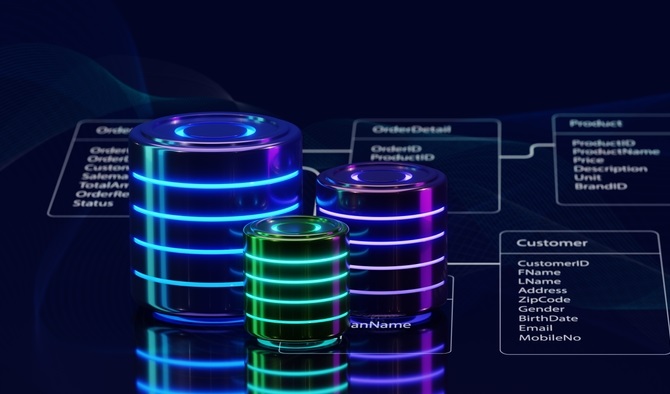 Over the past two years, we’ve witnessed rapid advancements in Large Language
Models (LLMs). As these models become increasingly powerful–and more
commoditized–the true competitive edge for enterprises will lie in how
effectively they harness their internal data. Unstructured content forms the
foundation of modern AI systems, making it essential for organizations to build
strong unstructured data infrastructure to succeed in the AI-driven era. This is
what we mean by an unstructured data foundation: the ability for companies to
rapidly identify what unstructured data exists across the organization, assess
its quality, sensitivity, and safety, enrich and contextualize it to improve AI
performance, and ultimately create a governed system for generating and
maintaining high-quality data products at scale. In 2025, unstructured data is
as much about quality as it is about quantity. “Quality” in the context of
unstructured data remains largely uncharted territory. Companies need clear
frameworks to assess dimensions like relevance, freshness, and duplication. Over
the past six years, the volume and variety of unstructured data–and the number
of AI applications that generate or depend on it–have exploded. Many have called
it the largest and most valuable source of data within an organization, and I’d
agree–especially as AI becomes increasingly central to how enterprises operate.
Here’s why.
Over the past two years, we’ve witnessed rapid advancements in Large Language
Models (LLMs). As these models become increasingly powerful–and more
commoditized–the true competitive edge for enterprises will lie in how
effectively they harness their internal data. Unstructured content forms the
foundation of modern AI systems, making it essential for organizations to build
strong unstructured data infrastructure to succeed in the AI-driven era. This is
what we mean by an unstructured data foundation: the ability for companies to
rapidly identify what unstructured data exists across the organization, assess
its quality, sensitivity, and safety, enrich and contextualize it to improve AI
performance, and ultimately create a governed system for generating and
maintaining high-quality data products at scale. In 2025, unstructured data is
as much about quality as it is about quantity. “Quality” in the context of
unstructured data remains largely uncharted territory. Companies need clear
frameworks to assess dimensions like relevance, freshness, and duplication. Over
the past six years, the volume and variety of unstructured data–and the number
of AI applications that generate or depend on it–have exploded. Many have called
it the largest and most valuable source of data within an organization, and I’d
agree–especially as AI becomes increasingly central to how enterprises operate.
Here’s why.
Scaling Databases for Large Multi-Tenant Applications
 Building and maintaining multi-tenant database applications is one of the more
challenging aspects of being a developer, administrator or analyst. Until the
debut of AI systems, with their power-hungry GPUs, database workloads
represented the most expensive workloads because of their demands on memory, CPU
and storage performance to work effectively. ... Sharding is a data management
technique that effectively partitions data across multiple databases. At its
center, you need something that I like to call a command and control database.
Still, I've also seen it called a shard-map manager or a router database. This
database contains the metadata around the shards and your environment, and
routes application calls to the appropriate shard or database. ... If you are
working on the Microsoft stack, I'm going to give a shout out to elastic
database tools . This .NET library gives you all the tools like shard-map
management, the ability to do data-dependent routing, and doing multi-shard
queries as needed. Additionally, consider the ability to add and remove shards
to match shifting demands. ... Some other tooling you need to think about in
planning, are how to execute schema changes across your partitions. Database
DevOps is a mature practice, but rolling out changes across is fleet of
databases requires careful forethought and operations.
Building and maintaining multi-tenant database applications is one of the more
challenging aspects of being a developer, administrator or analyst. Until the
debut of AI systems, with their power-hungry GPUs, database workloads
represented the most expensive workloads because of their demands on memory, CPU
and storage performance to work effectively. ... Sharding is a data management
technique that effectively partitions data across multiple databases. At its
center, you need something that I like to call a command and control database.
Still, I've also seen it called a shard-map manager or a router database. This
database contains the metadata around the shards and your environment, and
routes application calls to the appropriate shard or database. ... If you are
working on the Microsoft stack, I'm going to give a shout out to elastic
database tools . This .NET library gives you all the tools like shard-map
management, the ability to do data-dependent routing, and doing multi-shard
queries as needed. Additionally, consider the ability to add and remove shards
to match shifting demands. ... Some other tooling you need to think about in
planning, are how to execute schema changes across your partitions. Database
DevOps is a mature practice, but rolling out changes across is fleet of
databases requires careful forethought and operations.