
Core Concepts in Infrastructure Cost Management
The article revisits how organizations should think about infrastructure cost management by comparing on‑premise and cloud deployment patterns. It notes that a decade ago, cloud was widely seen as the inevitable future, but recent shifts show that on‑premise environments still offer advantages worth reconsidering. On‑premise setups involve not just servers but the full physical ecosystem — racks, networking gear, cooling, power, and security — all of which carry long‑term financial and operational implications. The piece explains that while on‑premise environments are often labeled inflexible, they can be surprisingly adaptable when paired with modern automation frameworks. The real challenges lie in hardware lifespan decisions, sizing development and QA environments, managing shared analytic workloads, and maintaining disaster‑recovery sites that are costly to keep idle. These factors shape both capital and operational expenses over many years. The article’s steady message is that cost management requires understanding the trade‑offs between flexibility, predictability, and long‑term commitments, and that both cloud and on‑premise models have strengths that deserve thoughtful evaluation rather than assumptions.
Container Security Checklist for CI/CD Pipelines: 30 Checks From Commit to Runtime
This article presents a practical security checklist containing 30 checks for container images as they move through continuous integration and deployment pipelines. The core message is that actual security comes from enforcing rules, not just listing best practices. The checks span eight stages, from the initial code commit to runtime monitoring. In the early stages, teams should build minimal images, remove all secrets, and lock down third-party actions. Later stages focus on vulnerability scanning that blocks risky deployments, generating software bills of materials, and digitally signing images to guarantee they came from a trusted build. At deployment, admission controllers must verify signatures and restrict permissions so images cannot run with root access or modify the underlying host. Because the pipeline itself is a high-privilege system that can be compromised, securing the build process is just as important as securing the image. Implementing these checks incrementally—starting with basic Dockerfile hygiene—prevents common mistakes and ensures a cleaner, safer production environment.

Cloud repatriation: What CISOs need to know
The article explains that cloud repatriation is becoming a practical concern for CISOs, not because enterprises are abandoning the cloud, but because many workloads no longer fit the cloud‑first assumptions of the past decade. Surveys show that while 86% of CIOs plan to move at least some workloads back on‑premises, only about 8–9% intend a full exit, meaning most organizations are simply recalibrating workload placement rather than rejecting cloud altogether. Cost discipline is a major driver, with private cloud often delivering 40–50% lower total cost of ownership for steady‑state workloads. Compliance, data‑gravity issues, and high‑intensity AI workloads also push certain systems back into controlled environments. The article stresses that hybrid infrastructure is becoming the long‑term norm, where each workload “earns” its placement based on economics, performance, and risk. For CISOs, this shift introduces new responsibilities: reassessing threat models, ensuring consistent controls across mixed environments, and preparing for operational risks tied to vendor concentration and geopolitical disruptions. The message is steady — repatriation is about precision, not retreat, and CISOs must adapt security strategies accordingly.
The Cybersecurity Reality Check: Ten Myths That Matter
The article challenges ten common assumptions that often mislead leaders about cybersecurity and explains why these misconceptions create real risk. It notes that serious incidents rarely stem from exotic technical failures; instead, they usually begin with flawed beliefs about who attackers target, where responsibility sits, or what “adequate protection” really means. One myth is that small organizations are too insignificant to attract attention, but attackers typically exploit exposed systems using automated tools, making size irrelevant. Smaller firms may even be more vulnerable because they have fewer security resources and weaker monitoring. Another misconception is that cybersecurity is purely an IT function, when governance and accountability actually rest with leadership. The article stresses that regulatory scrutiny in the UK and EU has intensified, and breaches can quickly lead to investigations, litigation, business interruption, and reputational harm. Ultimately, the piece argues that organizations must be able to justify their security measures as proportionate to their risks and abandon assumptions that no longer match today’s threat landscape.

When Trust Fails: What the eMudhra Certificate Incident and PHP Vulnerabilities Teach Us About Zero Trust Security
In October 2026, two distinct cybersecurity events—a certificate failure by eMudhra and critical remote code execution flaws in PHP—highlighted a fundamental lesson for software engineers: trust must be constantly verified. The eMudhra incident involved weak intermediate cryptographic keys generated by a flawed process. Even though eMudhra itself was not hacked, the incident proved that secure connections rely on trustworthy underlying processes, not just a padlock icon. Meanwhile, the PHP vulnerabilities demonstrated that securing an application requires patching the entire software stack, not just the core code, because a vulnerable runtime can serve as an easy entry point. Together, these events show why modern systems must move away from assuming that any internal network or familiar request is automatically safe. Instead, engineers should adopt a strict verification approach. This means validating identity, authorization, and context at every boundary, properly handling access tokens, and protecting communication between internal services. Ultimately, security is an ongoing engineering process of continuous verification rather than a single static feature or one-time setup.
What OT detection actually reveals
Securing operational technology (OT) environments requires a fundamentally different approach than standard IT security. While conventional IT tools excel at spotting network anomalies, they lack the critical physical process context needed to recognize when otherwise legitimate industrial commands are used for malicious disruption. OT detection platforms solve this by combining industrial protocol awareness with a deep understanding of normal operational behavior and physical constraints. A solid asset inventory is the foundational first step. From there, effective OT security relies on five core capabilities: monitoring industrial protocol anomalies, establishing strict baselines for process behavior, tracking engineering workstation activity, closely managing remote vendor access, and correlating traffic across the IT/OT boundary. Because OT involves physical processes where any disruption can impact safety, detection must be paired with structured, pre-planned response strategies. Automated actions are generally safe only at the IT or DMZ layers. Any direct intervention touching physical plant controllers requires clear authorization from operations teams to ensure production environments remain safe and stable.
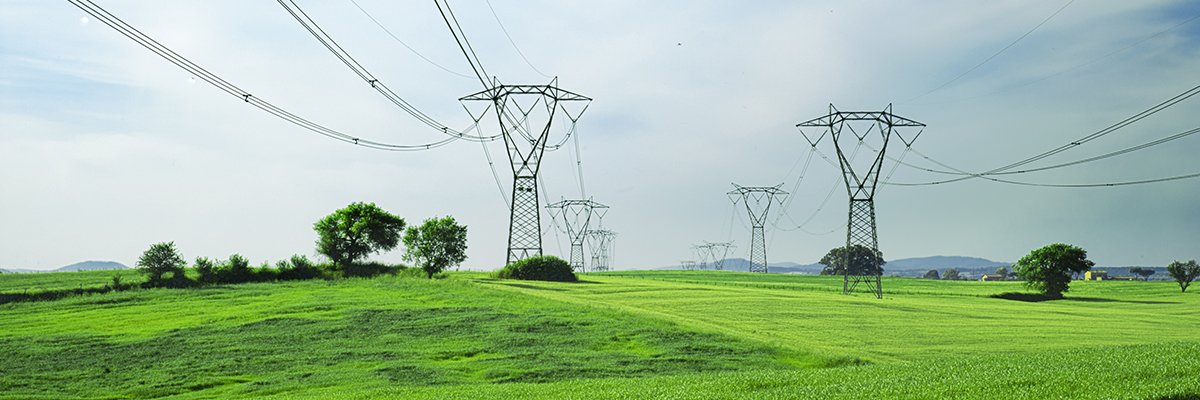
AI accelerates path from IT compromise to OT targeting
The article explains that AI is accelerating the path from IT compromise to OT targeting, making industrial environments more exposed than before. Attackers can now use AI to quickly analyze stolen IT data, map relationships, and identify the most valuable operational assets to target. This shortens the traditional gap between breaching corporate networks and moving into industrial systems. The piece notes that modern OT environments are increasingly connected to cloud services, remote access tools, and SaaS platforms, creating more entry points and making it harder to maintain clear separation between IT and OT. AI also helps attackers craft more convincing phishing messages, automate reconnaissance, and generate malware tailored to specific environments. At the same time, defenders struggle with legacy systems, inconsistent visibility, and slow patch cycles. The article argues that organizations must rethink OT security by improving asset inventories, tightening identity controls, and preparing for faster, more automated attack chains. Its message is steady: AI has changed the tempo of intrusions, and OT security must adapt to match that speed.
The next manufacturing cyber threat is manipulation of AI-driven decisions
As manufacturing becomes increasingly connected, the nature of cybersecurity threats is shifting. According to Pradipta Patro, Chief Information Security Officer at Polycab India Limited, the next major risk isn't just about keeping hackers out of the network. It is about protecting the artificial intelligence systems that influence critical operational decisions. If an attacker manipulates the data feeding an AI model, the system could make unsafe or faulty decisions without triggering traditional alarms. This goes beyond compromised information, directly threatening production quality, equipment reliability, and even worker safety on the factory floor. To address this, security must be built into factories from the ground up rather than added later as an afterthought. Manufacturers need complete visibility into all connected devices, strong network boundaries between IT and operations, and meaningful human oversight of AI decisions. Ultimately, cyber resilience must be treated as a core business continuity issue. The most successful factories will be those that can fully trust their automated systems because they secured the underlying data first.

Digital twins in oil and gas: from simulation to real-time optimisation
Digital twins in the oil and gas sector are evolving from isolated engineering studies into practical tools that drive daily operations. Historically, creating a digital twin took months and became outdated as soon as the physical equipment changed. Today, advanced models can be built quickly, update automatically alongside physical wear, and connect across entire systems. A key shift is the use of physics-based modeling rather than just relying on historical data. Purely statistical models struggle when equipment faces new or unobserved conditions. By grounding the software in the actual laws of fluid dynamics and heat transfer, operators receive reliable, real-time recommendations they can trust. This approach accounts for uncertainty, allowing teams to optimize active equipment and reduce waste like methane flaring by safely pushing production closer to its true limits. Solving the challenge of scaling these tools in energy operations also opens the door for similar efficiency gains in other complex, high-demand environments, such as data centers and power grids.
Data Sovereignty is Becoming a Design Principle for Enterprise AI
In the past, data sovereignty simply meant knowing the physical location of your company’s servers to meet regional laws. Today, artificial intelligence has fundamentally changed this. Because data now constantly flows through various external applications, language models, and processing tools, maintaining control over it has become much more complex. Instead of trying to lock down an entire organization, companies should focus on individual tasks. For example, processing public marketing information requires far less strict control than handling sensitive medical records. A major challenge is ensuring that safety rules follow the information wherever it goes. When original records are transformed into formats that AI can read, those new formats must inherit the same restrictions. Tracking this movement requires strong underlying data tagging. To manage this effectively, businesses should view sovereignty as a flexible budget. They must calmly weigh the need for strict control against the benefits of using advanced, external technology. Ultimately, building a flexible setup allows teams to continuously adjust their safety measures as rules and technology evolve.


No comments:
Post a Comment