Quote for the day:
"Failure will never overtake me if my determination to succeed is strong enough." -- Og Mandino
🎧 Listen to the audio debrief on YouTube
▶ Play Audio DigestDuration: 22 mins • Perfect for listening on the go.
AI inference attacks put new pressure on enterprise privacy
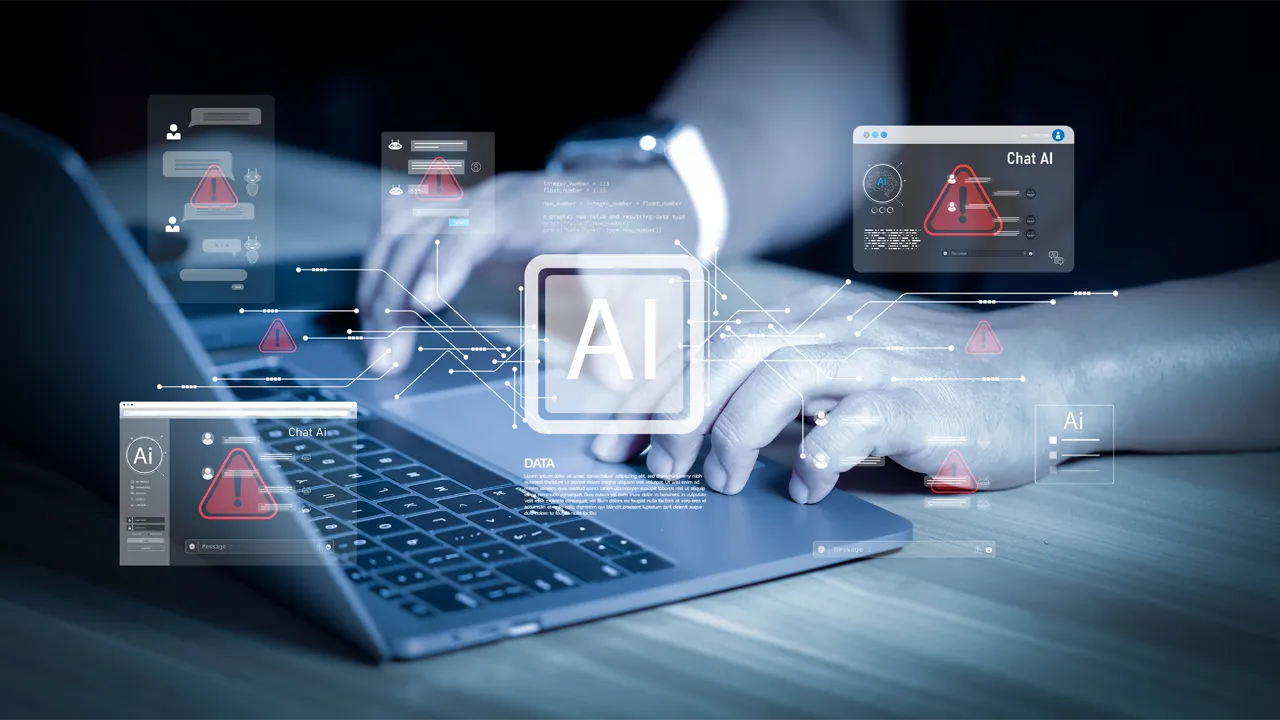 Artificial intelligence is changing how we protect personal data, and
traditional privacy rules are struggling to keep up. Experts predict that in a
few years, most privacy breaches will not come from stolen names or social
security numbers. Instead, they will happen because artificial intelligence can
guess sensitive details about people by analyzing ordinary, everyday
information. Even when companies try to hide customer identities in their
records, modern algorithms can piece together travel habits, social media posts,
and purchase histories to figure out exactly who someone is. This means that
seemingly harmless details like an employee list or a supplier relationship can
be combined to launch highly targeted phishing emails and extortion attempts.
Bad actors no longer need to break into medical or human resource files; they
simply let the algorithms connect the dots at incredible speeds. To defend
against this, organizations must rethink how they handle information. The most
effective step is to permanently delete old data when it is no longer strictly
necessary for business operations. Companies should also set clear guidelines
for algorithm development, use specialized tools that encrypt information during
processing, and ensure human oversight remains a central part of any automated
system.
Artificial intelligence is changing how we protect personal data, and
traditional privacy rules are struggling to keep up. Experts predict that in a
few years, most privacy breaches will not come from stolen names or social
security numbers. Instead, they will happen because artificial intelligence can
guess sensitive details about people by analyzing ordinary, everyday
information. Even when companies try to hide customer identities in their
records, modern algorithms can piece together travel habits, social media posts,
and purchase histories to figure out exactly who someone is. This means that
seemingly harmless details like an employee list or a supplier relationship can
be combined to launch highly targeted phishing emails and extortion attempts.
Bad actors no longer need to break into medical or human resource files; they
simply let the algorithms connect the dots at incredible speeds. To defend
against this, organizations must rethink how they handle information. The most
effective step is to permanently delete old data when it is no longer strictly
necessary for business operations. Companies should also set clear guidelines
for algorithm development, use specialized tools that encrypt information during
processing, and ensure human oversight remains a central part of any automated
system.Post-Quantum Cryptography Timelines: When Will Organizations Migrate?
The article outlines how different sectors are preparing to adopt new cryptographic standards to protect sensitive data from future advanced computers. It observes that organizations closest to the development of these new technologies are acting the fastest, with no major group choosing to delay action. On the regulatory side, guidelines mandate that older encryption methods must be phased out by the year 2030 and fully retired by 2035. Additionally, certain national security systems are required to support the updated standards starting in early 2027. Many technology companies are moving well ahead of these official government deadlines. Major firms aim to complete their network security upgrades between 2029 and 2033, motivated by rapid progress in new hardware capabilities. Financial institutions are also acting quickly and effectively to combat the specific threat of adversaries stealing encrypted data today with the intention of unlocking it later. They are implementing early network upgrades to protect long term financial records and sensitive customer information. The blockchain industry faces a more complex challenge, as some networks lack strict timelines, making historical public transactions difficult to secure retroactively. Ultimately, the transition is already underway across multiple industries, relying on newly finalized standards to ensure that digital security remains intact.Navigating The Security Paradox Of IT/OT Convergence
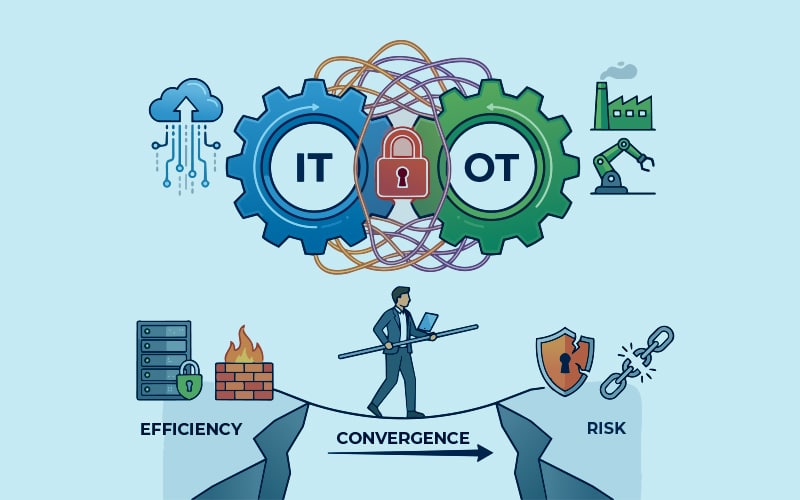 The convergence of information technology and operational technology systems
creates significant new security challenges for modern organizations.
Historically, operational systems were kept completely isolated from digital
networks because they directly control physical equipment in critical
infrastructure, where failures can threaten human safety. However, as these
environments merge, relying on physical isolation alone provides a false sense
of security. Attackers are now extracting operational data to create digital
replicas and train models for highly precise future attacks. Even without direct
internet access, isolated systems remain vulnerable to human error, temporary
maintenance connections, supply chain weaknesses, and portable drives.
Furthermore, the growing reliance on artificial intelligence introduces
unpredictable variables, making outcomes harder to calculate than with
traditional systems. To address these threats, organizations must move beyond
simple perimeter defense and adopt a continuous verification approach, treating
every connection as a potential risk. Every device and sensor should receive a
unique digital identity to ensure that all commands originate from verified
sources. By combining this strict verification process with structured
architectural frameworks that divide industrial systems into distinct,
controlled layers, organizations can effectively contain security breaches and
build a more resilient foundation capable of protecting all their digital and
physical assets.
The convergence of information technology and operational technology systems
creates significant new security challenges for modern organizations.
Historically, operational systems were kept completely isolated from digital
networks because they directly control physical equipment in critical
infrastructure, where failures can threaten human safety. However, as these
environments merge, relying on physical isolation alone provides a false sense
of security. Attackers are now extracting operational data to create digital
replicas and train models for highly precise future attacks. Even without direct
internet access, isolated systems remain vulnerable to human error, temporary
maintenance connections, supply chain weaknesses, and portable drives.
Furthermore, the growing reliance on artificial intelligence introduces
unpredictable variables, making outcomes harder to calculate than with
traditional systems. To address these threats, organizations must move beyond
simple perimeter defense and adopt a continuous verification approach, treating
every connection as a potential risk. Every device and sensor should receive a
unique digital identity to ensure that all commands originate from verified
sources. By combining this strict verification process with structured
architectural frameworks that divide industrial systems into distinct,
controlled layers, organizations can effectively contain security breaches and
build a more resilient foundation capable of protecting all their digital and
physical assets.
How to Make Trust Your Competitive Edge in the Era of Digital Banking
In today's digital banking landscape, building and maintaining customer trust has emerged as a primary way for financial institutions to distinguish themselves from competitors. Because customers no longer visit physical branches as often, their relationship with a bank relies heavily on the reliability and security of its digital platforms. The article emphasizes that trust is no longer just about keeping money safe; it is about protecting personal data, providing transparent communication, and delivering consistent online experiences without errors. When a bank repeatedly demonstrates that its app or website works flawlessly and that customer information is fiercely guarded, it earns a deep level of loyalty that is hard for competitors to break. Furthermore, resolving problems quickly and honestly when things do go wrong shows customers that they are valued, which reinforces this bond. Financial institutions that prioritize these straightforward principles of reliability and transparency find that their customers are more likely to stay and recommend their services to others. By moving away from complex jargon and focusing on clear, everyday communication, banks can bridge the gap created by the lack of face-to-face interaction. Ultimately, when a digital bank makes trust its core foundation, it gains a lasting advantage that technology alone cannot provide.'Move fast, but do it with trust built in': EY CIO tells us why the rapid pace of AI means trust is now a critical business imperative
 The rapid evolution of artificial intelligence means organizations can no
longer delay their digital transformation without risking their competitive
edge. However, adopting these tools quickly requires a strong foundation of
trust. According to Joe Depa, EY's Global CIO, companies that fail to build
this trust often find themselves stuck in endless testing phases rather than
achieving measurable business outcomes. To succeed, businesses must cultivate
trust across their data, technology, processes, and workforce. Crucially,
providing employees with proper training allows them to transition from
passive users into confident agents of change. Furthermore, organizations
should shift their focus from merely tracking usage to prioritizing the most
valuable applications of the technology. For instance, EY managed to decrease
its token consumption by sixty percent while simultaneously increasing the
value delivered. Many view governance as a barrier to innovation, but
establishing clear guardrails early actually acts as an accelerator. When
employees operate within a secure and well-governed environment, they are more
willing to experiment without fear of creating compliance issues. Ultimately,
trust in artificial intelligence is a commercial necessity, not just a
regulatory hurdle. Boards must develop technological fluency and implement
practical controls to manage exposure effectively, ensuring that innovation
proceeds safely and confidently.
The rapid evolution of artificial intelligence means organizations can no
longer delay their digital transformation without risking their competitive
edge. However, adopting these tools quickly requires a strong foundation of
trust. According to Joe Depa, EY's Global CIO, companies that fail to build
this trust often find themselves stuck in endless testing phases rather than
achieving measurable business outcomes. To succeed, businesses must cultivate
trust across their data, technology, processes, and workforce. Crucially,
providing employees with proper training allows them to transition from
passive users into confident agents of change. Furthermore, organizations
should shift their focus from merely tracking usage to prioritizing the most
valuable applications of the technology. For instance, EY managed to decrease
its token consumption by sixty percent while simultaneously increasing the
value delivered. Many view governance as a barrier to innovation, but
establishing clear guardrails early actually acts as an accelerator. When
employees operate within a secure and well-governed environment, they are more
willing to experiment without fear of creating compliance issues. Ultimately,
trust in artificial intelligence is a commercial necessity, not just a
regulatory hurdle. Boards must develop technological fluency and implement
practical controls to manage exposure effectively, ensuring that innovation
proceeds safely and confidently.Rethinking manufacturing cybersecurity as ERP and enterprise IT become critical to production continuity and resilience
Enterprise Resource Planning (ERP) systems have become the central hub for
modern manufacturing operations, managing everything from scheduling to
material movement. However, this deep integration means that when an ERP
system fails, whether due to a cyberattack or a system outage, factory floors
often grind to a halt, even if the operational technology network remains
perfectly intact. While physical production systems like programmable logic
controllers and safety mechanisms are designed to run independently for short
periods using cached work orders or manual backups, this resilience usually
only lasts for a few hours or a day. Eventually, the lack of fresh
instructions and inventory updates disrupts efficiency. Moving ERP systems to
the cloud complicates this dynamic by shifting a local network reliance into a
broader internet dependency. A cloud disruption or severed connection now
carries the same production risk as a direct breach of the plant floor. To
maintain operational continuity, manufacturers must clearly map the security
boundaries between enterprise IT and factory systems using layered
architectures and firewalls. Ensuring resilient connectivity and practicing
tested response plans for ERP outages are just as vital as protecting the
operational technology itself. This proves that production disruptions no
longer require a direct attack on factory equipment.
/dq/media/media_files/2026/08/08/ai-layoffs-2026-08-08-15-03-35.png) The recent wave of layoffs in 2026 is frequently blamed on artificial
intelligence, but the reality behind these workforce reductions is far more
complex. While over forty major corporations, including prominent names like
Oracle, Block, Coinbase, and Atlassian, have announced significant job cuts,
AI is rarely the sole culprit. It is true that some companies are directly
attributing their smaller workforces to the adoption of automation and the
productivity gains expected from new intelligence tools. They are actively
redesigning their operational models to rely on leaner, AI-assisted teams.
However, many of these same organizations are simultaneously navigating
traditional business challenges. Broad organizational restructuring, intense
cost pressures, shifting consumer demands, and the need to correct rapid
overhiring from earlier growth cycles are equally responsible for the current
downsizing trend. For example, some companies are cutting operational roles
simply because of lower business volumes rather than technological
replacement. Ultimately, the impact of AI on the workforce is better
understood as a structural transformation rather than a simple collapse in
employment. The current landscape is a complicated business reset where AI
accelerates changes companies were already pressured to make, meaning we
cannot categorize every recent job cut under a single technological label.
The recent wave of layoffs in 2026 is frequently blamed on artificial
intelligence, but the reality behind these workforce reductions is far more
complex. While over forty major corporations, including prominent names like
Oracle, Block, Coinbase, and Atlassian, have announced significant job cuts,
AI is rarely the sole culprit. It is true that some companies are directly
attributing their smaller workforces to the adoption of automation and the
productivity gains expected from new intelligence tools. They are actively
redesigning their operational models to rely on leaner, AI-assisted teams.
However, many of these same organizations are simultaneously navigating
traditional business challenges. Broad organizational restructuring, intense
cost pressures, shifting consumer demands, and the need to correct rapid
overhiring from earlier growth cycles are equally responsible for the current
downsizing trend. For example, some companies are cutting operational roles
simply because of lower business volumes rather than technological
replacement. Ultimately, the impact of AI on the workforce is better
understood as a structural transformation rather than a simple collapse in
employment. The current landscape is a complicated business reset where AI
accelerates changes companies were already pressured to make, meaning we
cannot categorize every recent job cut under a single technological label.
AI Layoffs: Are companies cutting jobs because of AI or using AI to explain a wider business reset?
The recent wave of layoffs in 2026 is frequently blamed on artificial
intelligence, but the reality behind these workforce reductions is far more
complex. While over forty major corporations, including prominent names like
Oracle, Block, Coinbase, and Atlassian, have announced significant job cuts,
AI is rarely the sole culprit. It is true that some companies are directly
attributing their smaller workforces to the adoption of automation and the
productivity gains expected from new intelligence tools. They are actively
redesigning their operational models to rely on leaner, AI-assisted teams.
However, many of these same organizations are simultaneously navigating
traditional business challenges. Broad organizational restructuring, intense
cost pressures, shifting consumer demands, and the need to correct rapid
overhiring from earlier growth cycles are equally responsible for the current
downsizing trend. For example, some companies are cutting operational roles
simply because of lower business volumes rather than technological
replacement. Ultimately, the impact of AI on the workforce is better
understood as a structural transformation rather than a simple collapse in
employment. The current landscape is a complicated business reset where AI
accelerates changes companies were already pressured to make, meaning we
cannot categorize every recent job cut under a single technological label.
Technology Selections in the AI Era: 7 Criteria to Evaluate a Vendor’s Ecosystem
 When evaluating technology in the age of artificial intelligence, many
organizations find themselves struggling to make the right vendor selections.
Leaders frequently run into complex integration issues or end up overanalyzing
their criteria, which only slows down progress and creates unnecessary
friction. Making mistakes in how you judge potential value and underlying risk
can eventually lead to a difficult situation known as AI debt, where poor
initial choices become expensive and incredibly hard to fix later. To avoid
these common pitfalls, a smarter approach to evaluating new software requires
a balanced focus on three main areas: overall value, risk management, and the
true strength of the vendor's ecosystem. Instead of getting lost in endless
technical feature comparisons, decision-makers should look closely at
practical factors that ensure lasting success. These essential criteria
include checking for straightforward data portability so you are never locked
into a single provider, understanding actual integration capabilities with
your current systems, and thoughtfully assessing the general community
sentiment around the tools you plan to adopt. Additionally, looking at
leadership accessibility within the vendor's organization helps build a
reliable partnership. By keeping your focus on these straightforward areas,
you can confidently navigate the crowded software market and build a highly
sustainable technology foundation for the future.
When evaluating technology in the age of artificial intelligence, many
organizations find themselves struggling to make the right vendor selections.
Leaders frequently run into complex integration issues or end up overanalyzing
their criteria, which only slows down progress and creates unnecessary
friction. Making mistakes in how you judge potential value and underlying risk
can eventually lead to a difficult situation known as AI debt, where poor
initial choices become expensive and incredibly hard to fix later. To avoid
these common pitfalls, a smarter approach to evaluating new software requires
a balanced focus on three main areas: overall value, risk management, and the
true strength of the vendor's ecosystem. Instead of getting lost in endless
technical feature comparisons, decision-makers should look closely at
practical factors that ensure lasting success. These essential criteria
include checking for straightforward data portability so you are never locked
into a single provider, understanding actual integration capabilities with
your current systems, and thoughtfully assessing the general community
sentiment around the tools you plan to adopt. Additionally, looking at
leadership accessibility within the vendor's organization helps build a
reliable partnership. By keeping your focus on these straightforward areas,
you can confidently navigate the crowded software market and build a highly
sustainable technology foundation for the future.
Forecasting the AI bubble: When scarcity turns to surplus
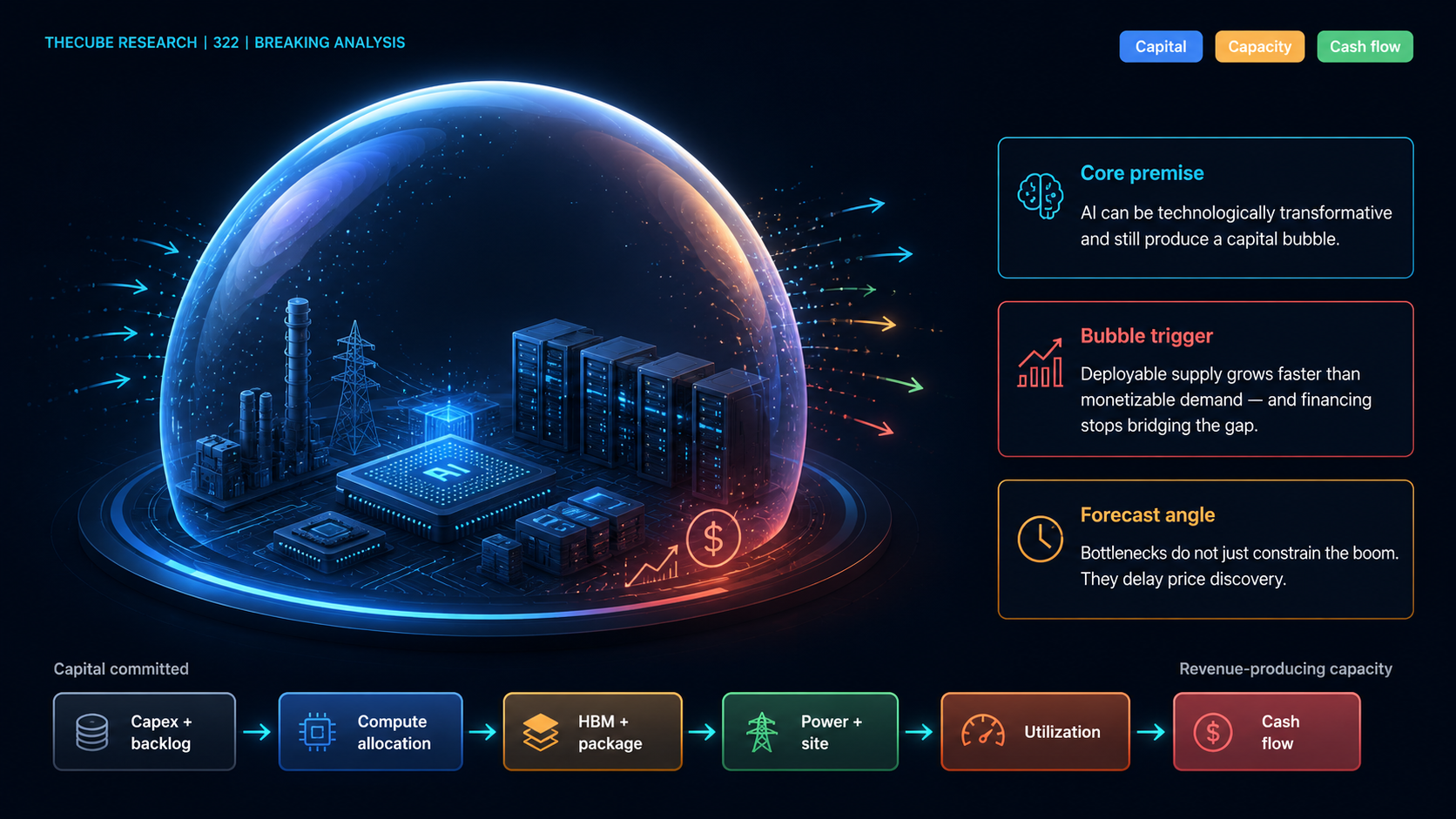 The artificial intelligence industry is currently experiencing a massive wave
of investment, but this does not mean the technology itself is flawed.
Instead, a financial bubble typically bursts when the supply of deployable
technology and the money spent on it grow faster than the actual revenue it
generates. Right now, a market correction is being delayed by physical limits
in the supply chain, such as severe shortages in advanced memory, packaging,
networking equipment, and power availability. These temporary roadblocks slow
down how fast new systems can be deployed, successfully masking whether the
market has already built more capacity than customers actually need at this
moment. A major challenge is the mismatch between two very different
timelines. The cycle for building and shipping computer chips moves relatively
fast, often taking only months or a few years. In contrast, the timeline for
securing land, building data centers, and connecting to power grids takes much
longer. Consequently, companies are making massive financial commitments today
for capacity that will not generate cash for several years. The primary risk
is not simply the total amount of money being spent, but the growing gap
between rapid hardware purchases and the long wait for those systems to become
profitable.
The artificial intelligence industry is currently experiencing a massive wave
of investment, but this does not mean the technology itself is flawed.
Instead, a financial bubble typically bursts when the supply of deployable
technology and the money spent on it grow faster than the actual revenue it
generates. Right now, a market correction is being delayed by physical limits
in the supply chain, such as severe shortages in advanced memory, packaging,
networking equipment, and power availability. These temporary roadblocks slow
down how fast new systems can be deployed, successfully masking whether the
market has already built more capacity than customers actually need at this
moment. A major challenge is the mismatch between two very different
timelines. The cycle for building and shipping computer chips moves relatively
fast, often taking only months or a few years. In contrast, the timeline for
securing land, building data centers, and connecting to power grids takes much
longer. Consequently, companies are making massive financial commitments today
for capacity that will not generate cash for several years. The primary risk
is not simply the total amount of money being spent, but the growing gap
between rapid hardware purchases and the long wait for those systems to become
profitable.Why Your Network Segmentation Strategy Is a False Sense of Security—And What Real Protection Looks Like
Many businesses believe their network is secure simply because they have
implemented basic segmentation tools like separated areas and standard
firewalls. However, this common setup often creates a false sense of safety,
leaving organizations completely vulnerable to threats spreading internally
during a data breach. The reality is that most network division strategies are
outdated or largely incomplete. They were designed for older, simpler
environments rather than today's modern mix of remote work, cloud services,
and smart devices. Without strict, properly configured enforcement mechanisms,
a network boundary exists only on paper. Once an internal threat bypasses the
main perimeter, outdated defenses become practically useless. To achieve real
protection, companies must begin by thoroughly mapping out all their connected
assets, including unmanaged devices and hidden cloud systems. True security
requires defining clear trust zones based on actual risk and using precise
inspections instead of basic rules. Adopting a model that never defaults to
trusting any user or device is essential, alongside regular audits to ensure
the network matches company policy. While strict security can sometimes slow
daily operations, the solution is adopting smarter access controls rather than
weakening defenses. Ultimately, proper segmentation is a necessary foundation
that effectively minimizes operational damage during inevitable cyber security
incidents.


No comments:
Post a Comment