Quote for the day:
"Develop success from failures. Discouragement and failure are two of the surest stepping stones to success." -- Dale Carnegie
Design in the age of AI: How small businesses are building big brands faster
 Instead of hiring separate agencies for naming, logo design, and web
development, small businesses are turning to unified AI platforms that handle
the full early-stage design stack. Tools like Design.com merge naming, logo
creation, and website generation into a single workflow — turning an
entrepreneur’s first sketch into a polished brand system within minutes. ...
Behind the surge in AI design tools lies a broader ecosystem shift. Companies
like Canva and Wix made design accessible; the current wave — led by AI-native
platforms like Design.com — is more personal and adaptive. Unlike templated
platforms, these tools understand context. A restaurant founder and a SaaS
startup will get not just different visuals, but different copy tones,
typography systems, and user flows — automatically. “What we’re seeing,” Lynch
explains, “isn’t just growth in one product category. It’s a movement toward
connected creativity — where every part of the brand experience learns from
every other.” ... Imagine naming a company and watching an AI instantly generate
a logo, color palette, and homepage layout that all reflect the same
personality. As your audience grows, the same system helps you update your
visual identity or tone to match new goals — while preserving your original
DNA.
Instead of hiring separate agencies for naming, logo design, and web
development, small businesses are turning to unified AI platforms that handle
the full early-stage design stack. Tools like Design.com merge naming, logo
creation, and website generation into a single workflow — turning an
entrepreneur’s first sketch into a polished brand system within minutes. ...
Behind the surge in AI design tools lies a broader ecosystem shift. Companies
like Canva and Wix made design accessible; the current wave — led by AI-native
platforms like Design.com — is more personal and adaptive. Unlike templated
platforms, these tools understand context. A restaurant founder and a SaaS
startup will get not just different visuals, but different copy tones,
typography systems, and user flows — automatically. “What we’re seeing,” Lynch
explains, “isn’t just growth in one product category. It’s a movement toward
connected creativity — where every part of the brand experience learns from
every other.” ... Imagine naming a company and watching an AI instantly generate
a logo, color palette, and homepage layout that all reflect the same
personality. As your audience grows, the same system helps you update your
visual identity or tone to match new goals — while preserving your original
DNA.Henkel CISO on the messy truth of monitoring factories built across decades
On the factory floor, it is common to find a solitary engineering workstation
that holds the only up-to-date copies of critical logic files, proprietary
configuration tools, and project backups. If that specific computer suffers a
hardware failure or is compromised by ransomware, the maintenance team loses
the ability to diagnose errors or recover the production line. ... If the
internet connection is severed, or if the third-party cloud provider suffers
an outage, the equipment on the floor stops working. This architecture fails
because it prioritizes connectivity over local autonomy, creating a fragile
ecosystem where a disruption in a remote cloud environment creates a “digital
brick” out of physical machinery. ... An attacker does not need sophisticated
“zero-day” exploits to compromise a fifteen-year-old human-machine interface,
they often just need publicly known vulnerabilities that will never be fixed
by the vendor. By compromising a peripheral camera or an outdated
visualization node, they gain a persistence mechanism that security teams
rarely monitor, allowing them to map the operational technology network and
prepare for a disruptive attack on the critical control systems at their
leisure. ... A critical question for CISOs to ask is: “Can you provide a
continuously updated Software Bill of Materials for your firmware, and what is
your specific process for mitigating vulnerabilities in embedded third-party
libraries?”
 Even without full production status, the fact that so many organizations are
rebuilding components of their agent tech stacks every few months demonstrates
not only the speed of change in the AI landscape but also a lack of faith in
agentic results, Northcutt claims. Changes in the agent tech stack range from
something as simple as updating the underlying AI model’s version, to moving
from a closed-source to an open-source model or changing the database where
agent data is stored, he notes. In many cases, replacing one component in the
stack sets off a cascade of changes downstream, he adds. ... While the speed
of AI evolution can drive frequent rebuilds, part of the problem lies in the
way AI models are tweaked, she says. “The deeper issue is that many agent
systems rely on behaviors that sit inside the model rather than on clear
rules,” Hashem explains. “When the model updates, the behavior drifts. When
teams set clear steps and checks for the agent, the stack can evolve without
constant breakage.” ... “What works now may become suboptimal later on,” he
says. “If organizations don’t actively keep up to date and refresh their
stack, they risk falling behind in performance, security, and reliability.”
Constant rebuilds don’t have to create chaos, however, Balabanskyy adds. CIOs
should take a layered approach to their agent stacks, he recommends, with
robust version control, continuous monitoring, and a modular deployment
approach.
Even without full production status, the fact that so many organizations are
rebuilding components of their agent tech stacks every few months demonstrates
not only the speed of change in the AI landscape but also a lack of faith in
agentic results, Northcutt claims. Changes in the agent tech stack range from
something as simple as updating the underlying AI model’s version, to moving
from a closed-source to an open-source model or changing the database where
agent data is stored, he notes. In many cases, replacing one component in the
stack sets off a cascade of changes downstream, he adds. ... While the speed
of AI evolution can drive frequent rebuilds, part of the problem lies in the
way AI models are tweaked, she says. “The deeper issue is that many agent
systems rely on behaviors that sit inside the model rather than on clear
rules,” Hashem explains. “When the model updates, the behavior drifts. When
teams set clear steps and checks for the agent, the stack can evolve without
constant breakage.” ... “What works now may become suboptimal later on,” he
says. “If organizations don’t actively keep up to date and refresh their
stack, they risk falling behind in performance, security, and reliability.”
Constant rebuilds don’t have to create chaos, however, Balabanskyy adds. CIOs
should take a layered approach to their agent stacks, he recommends, with
robust version control, continuous monitoring, and a modular deployment
approach.
AI churn has IT rebuilding tech stacks every 90 days
Even without full production status, the fact that so many organizations are
rebuilding components of their agent tech stacks every few months demonstrates
not only the speed of change in the AI landscape but also a lack of faith in
agentic results, Northcutt claims. Changes in the agent tech stack range from
something as simple as updating the underlying AI model’s version, to moving
from a closed-source to an open-source model or changing the database where
agent data is stored, he notes. In many cases, replacing one component in the
stack sets off a cascade of changes downstream, he adds. ... While the speed
of AI evolution can drive frequent rebuilds, part of the problem lies in the
way AI models are tweaked, she says. “The deeper issue is that many agent
systems rely on behaviors that sit inside the model rather than on clear
rules,” Hashem explains. “When the model updates, the behavior drifts. When
teams set clear steps and checks for the agent, the stack can evolve without
constant breakage.” ... “What works now may become suboptimal later on,” he
says. “If organizations don’t actively keep up to date and refresh their
stack, they risk falling behind in performance, security, and reliability.”
Constant rebuilds don’t have to create chaos, however, Balabanskyy adds. CIOs
should take a layered approach to their agent stacks, he recommends, with
robust version control, continuous monitoring, and a modular deployment
approach.Why Losing One Security Engineer Can Break Your Defences
When tools are hard to manage – or if you need to bundle numerous tools from different vendors together – tribal knowledge builds up in one engineer’s head. It’s unrealistic to expect them to document it. Gartner recently said that organizations use an average of 45 cybersecurity tools and called for security leaders to optimize their toolsets. And in that context, losing the one person who understands how these systems actually work is not just inconvenient: it's a structural risk. And the impact this has is seen in the data from the State of AI in Security & Development report; using numerous vendors for security tools correlates with more incidents, more time spent prioritising alerts and slower remediation. In short, a security engineer has too much on their plate, and most security tools aren’t making their job any easier. ... “Organisations tend to be all looking for the same blend of technical cloud, integration, SecOps, IAM experience but with extensive knowledge in each pillar,” says James Walsh, National Lead for Cyber, Data & Cloud UK&I at Hays. “Everyone wants the unicorn security engineer whose experience spans all of this, but it comes at too high a price for lots of organisations,” he adds. Walsh notes that hiring is often driven by teams below the CISO — such as Heads of SecOps — which can create inconsistent expectations of what a ‘fully competent’ engineer should look like.Overload Protection: The Missing Pillar of Platform Engineering
/articles/overload-protection-platform-engineering/en/smallimage/overload-protection-platform-engineering-1764921362184.jpg) Some limits exist to protect systems. Others enforce fairness between
customers or align with contractual tiers. Regardless of the reason, these
limits must be enforced predictably and transparently. ... In data-intensive
environments, bottlenecks often appear in storage, compute, or queueing
layers. One unbounded query or runaway job can starve others, impacting entire
regions or tenants. Without a unified overload protection layer, every team
becomes a potential failure domain. ... Enterprise customers often face
challenges when quota systems evolve organically. Quotas are published
inconsistently, counted incorrectly, or are not visible to the right teams.
Both external customers and internal services need predictable limits. A
centralized Quota Service solves this. It defines clear APIs for tracking and
enforcing usage across tenants, resources, and time intervals. ... When
overload protection is not owned by the platform, teams reinvent it
repeatedly. Each implementation behaves differently, often under pressure. The
result is a fragile ecosystem where: Limits are enforced inconsistently, for
example, some endpoints apply resource limits, while others run requests
without enforcing any limits, leading to unpredictable behavior and downstream
problems; Failures cascade unpredictably, for example, a runaway data pipeline
job can saturate a shared database, delaying or failing unrelated jobs and
triggering retries and alerts across teams
Some limits exist to protect systems. Others enforce fairness between
customers or align with contractual tiers. Regardless of the reason, these
limits must be enforced predictably and transparently. ... In data-intensive
environments, bottlenecks often appear in storage, compute, or queueing
layers. One unbounded query or runaway job can starve others, impacting entire
regions or tenants. Without a unified overload protection layer, every team
becomes a potential failure domain. ... Enterprise customers often face
challenges when quota systems evolve organically. Quotas are published
inconsistently, counted incorrectly, or are not visible to the right teams.
Both external customers and internal services need predictable limits. A
centralized Quota Service solves this. It defines clear APIs for tracking and
enforcing usage across tenants, resources, and time intervals. ... When
overload protection is not owned by the platform, teams reinvent it
repeatedly. Each implementation behaves differently, often under pressure. The
result is a fragile ecosystem where: Limits are enforced inconsistently, for
example, some endpoints apply resource limits, while others run requests
without enforcing any limits, leading to unpredictable behavior and downstream
problems; Failures cascade unpredictably, for example, a runaway data pipeline
job can saturate a shared database, delaying or failing unrelated jobs and
triggering retries and alerts across teams
Is your DR plan just wishful thinking? Prove your resilience with chaos engineering
At its core, it’s about building confidence in your system’s resilience. The process starts with understanding your system's steady state, which is its normal, measurable, and healthy output. You can't know the true impact of a failure without first defining what "good" looks like. This understanding allows you to form a clear, testable hypothesis: a statement of belief that your system's steady state will persist even when a specific, turbulent condition is introduced. To test this hypothesis, you then execute a controlled action, which is a precise and targeted failure injected into the system. This isn't random mischief; it's a specific simulation of real-world failures, such as consuming all CPU on a host (resource exhaustion), adding network latency (network failure), or terminating a virtual machine (state failure). While this action is running, automated probes act as your scientific instruments, continuously monitoring the system's state to measure the effect. ... Beyond simply proving system availability, chaos engineering builds trust in your reliability metrics, ensuring that you meet your SLOs even when services become unavailable. An SLO is a specific, acceptable target level of your service's performance measured over a specified period that reflects the user's experience. SLOs aren't just internal goals; they are the bedrock of customer trust and the foundation of your contractual service level agreements (SLAs).The data center of the future: high voltage, liquid cooled, up to 4 MW per rack
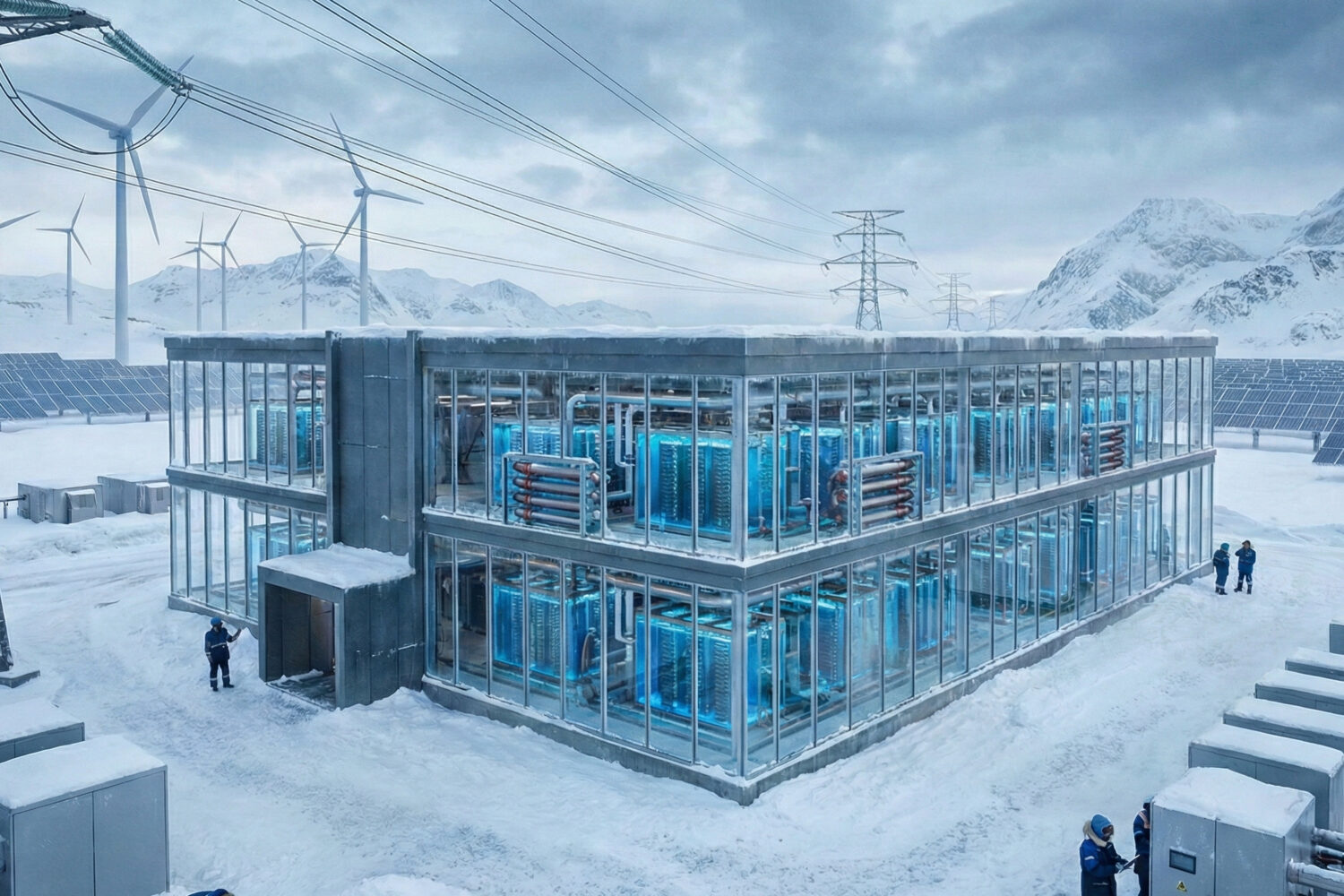 Developments such as microfluidic cooling could have a profound impact on how
racks and accompanying infrastructure will be built towards the future. Also,
it is not all about the type of cooling, but also about the way chips
communicate with each other and communicate internally. What will the impact
of an all-photonics network be on cooling, for example? The first couple of
stages building that type of end-to-end connection have been completed. The
interesting parts for the discussion we have here are next on the roadmap for
all-photonics networks: using photonics connections between and inside silicon
on boards. ... However, there are many moving parts to take into account. It
will need a more dynamic approach to selling space in data centers, which is
usually based on the amount of watts a customer wants. Irrespective of the
actual load, the data center reserves that for the customer. If data centers
need to be more dynamic, so do the contracts. ... The data center of the
future will be characterized by high-density computing, liquid cooling,
sustainable power sources, and a more integrated role in the grid ecosystem.
As technology continues to advance, data centers will become more efficient,
flexible, and environmentally responsible. That may sound like an oxymoron to
many people nowadays, but it’s the only way to get to the densities we need
moving forward.
Developments such as microfluidic cooling could have a profound impact on how
racks and accompanying infrastructure will be built towards the future. Also,
it is not all about the type of cooling, but also about the way chips
communicate with each other and communicate internally. What will the impact
of an all-photonics network be on cooling, for example? The first couple of
stages building that type of end-to-end connection have been completed. The
interesting parts for the discussion we have here are next on the roadmap for
all-photonics networks: using photonics connections between and inside silicon
on boards. ... However, there are many moving parts to take into account. It
will need a more dynamic approach to selling space in data centers, which is
usually based on the amount of watts a customer wants. Irrespective of the
actual load, the data center reserves that for the customer. If data centers
need to be more dynamic, so do the contracts. ... The data center of the
future will be characterized by high-density computing, liquid cooling,
sustainable power sources, and a more integrated role in the grid ecosystem.
As technology continues to advance, data centers will become more efficient,
flexible, and environmentally responsible. That may sound like an oxymoron to
many people nowadays, but it’s the only way to get to the densities we need
moving forward.
Vietnam integrating biometrics into daily life in digital transformation drive
 Vietnam is rapidly integrating biometrics and digital identity into everyday
life, rolling out identity‑based systems across public transport, air travel
and banking as part of an ambitious national digital transformation drive. New
deployments in Hanoi’s metro, airports nationwide and the financial sector
show how VNeID and biometric verification increasingly constitute Vietnam’s
infrastructure. ... Officials argue the initiative strengthens Hanoi’s
ambitions as a smart city and improves interoperability across transport
modes. It also introduces a unified digital identity layer for public transit,
which no other Vietnamese city can yet boast. Passenger data, operations and
transactions are now centralized on a single platform, enabling targeted
subsidies based on usage patterns rather than flat‑rate models. The Hanoi
Metro app, available on major app stores, supports tap‑and‑go access and
discounted fares for verified digital identities. ... The new rules require
banks to conduct face‑to‑face identity checks and verify biometric data, such
as facial information, before issuing cards to individual customers. The same
requirement applies to the legal representatives of corporate clients, with
limited exceptions, reports Vietnam Plus. ... Foreigners without electronic
identity credentials, as well as Vietnamese nationals with undetermined
citizenship status, will undergo in‑person biometric collection using data
from the National Population Database.
Vietnam is rapidly integrating biometrics and digital identity into everyday
life, rolling out identity‑based systems across public transport, air travel
and banking as part of an ambitious national digital transformation drive. New
deployments in Hanoi’s metro, airports nationwide and the financial sector
show how VNeID and biometric verification increasingly constitute Vietnam’s
infrastructure. ... Officials argue the initiative strengthens Hanoi’s
ambitions as a smart city and improves interoperability across transport
modes. It also introduces a unified digital identity layer for public transit,
which no other Vietnamese city can yet boast. Passenger data, operations and
transactions are now centralized on a single platform, enabling targeted
subsidies based on usage patterns rather than flat‑rate models. The Hanoi
Metro app, available on major app stores, supports tap‑and‑go access and
discounted fares for verified digital identities. ... The new rules require
banks to conduct face‑to‑face identity checks and verify biometric data, such
as facial information, before issuing cards to individual customers. The same
requirement applies to the legal representatives of corporate clients, with
limited exceptions, reports Vietnam Plus. ... Foreigners without electronic
identity credentials, as well as Vietnamese nationals with undetermined
citizenship status, will undergo in‑person biometric collection using data
from the National Population Database.
Why 2025 broke the manager role — and what it means for leadership ahead
 Managers did far more than supervise. “They became mentors, skill-builders,
culture carriers and the first line of emotional support,” Tyagi said. They
coached diverse teams, supported women and marginalised groups entering new
roles, and navigated talent crunches by building internal pipelines. They
adopted learning apps, facilitated experience-sharing sessions and absorbed the
emotional load of stretched teams. ... Sustaining morale amid continual
uncertainty was the most difficult task, Tyagi said. Workloads were
redistributed constantly. Managers had to reassure employees while balancing
performance expectations with wellbeing. Chopra saw the same tensions.
Recognition and feedback remained inconsistent. Gallup research showed a gap
between managers’ belief that they offered regular feedback and employees’
experience that they rarely received it. Remote work deepened disconnection.
“Creating team cohesion, trust and belonging when people are dispersed remains
difficult,” she said. ... Empathy dominated the management skill-set in 2025.
Transparency, communication and emotional intelligence were indispensable as
uncertainty persisted. Coaching and talent development grew central, especially
in organisations investing in women, new hires and marginalised communities.
Chopra pointed to several non-negotiables: emotional intelligence, tech
literacy, outcome-focused leadership, psychological safety, coaching and ethical
awareness in technology use.
Managers did far more than supervise. “They became mentors, skill-builders,
culture carriers and the first line of emotional support,” Tyagi said. They
coached diverse teams, supported women and marginalised groups entering new
roles, and navigated talent crunches by building internal pipelines. They
adopted learning apps, facilitated experience-sharing sessions and absorbed the
emotional load of stretched teams. ... Sustaining morale amid continual
uncertainty was the most difficult task, Tyagi said. Workloads were
redistributed constantly. Managers had to reassure employees while balancing
performance expectations with wellbeing. Chopra saw the same tensions.
Recognition and feedback remained inconsistent. Gallup research showed a gap
between managers’ belief that they offered regular feedback and employees’
experience that they rarely received it. Remote work deepened disconnection.
“Creating team cohesion, trust and belonging when people are dispersed remains
difficult,” she said. ... Empathy dominated the management skill-set in 2025.
Transparency, communication and emotional intelligence were indispensable as
uncertainty persisted. Coaching and talent development grew central, especially
in organisations investing in women, new hires and marginalised communities.
Chopra pointed to several non-negotiables: emotional intelligence, tech
literacy, outcome-focused leadership, psychological safety, coaching and ethical
awareness in technology use.


No comments:
Post a Comment