Quote for the day:
"There is only one success – to be able to spend your life in your own way." -- Christopher Morley
5 Critical Questions For Adopting an AI Security Solution
 An AI-SPM solution must be capable of seamless AI model discovery, creating a
centralized inventory for complete visibility into deployed models and
associated resources. This helps organizations monitor model usage, ensure
policy compliance, and proactively address any potential security
vulnerabilities. By maintaining a detailed overview of models across
environments, businesses can proactively mitigate risks, protect sensitive
data, and optimize AI operations. ... An effective AI-SPM solution must tackle
risks that are specific to AI systems. For instance, it should protect
training data used in machine learning workflows, ensure that datasets remain
compliant under privacy regulations, and identify anomalies or malicious
activities that might compromise AI model integrity. Make sure to ask whether
the solution includes built-in features to secure every stage of your AI
lifecycle—from data ingestion to deployment. ... When evaluating an AI-SPM
solution, ensure that it automatically maps your data and AI workflows to
governance and compliance requirements. It should be capable of detecting
non-compliant data and providing robust reporting features to enable audit
readiness. Additionally, features like automated policy enforcement and
real-time compliance monitoring are critical to keeping up with regulatory
changes and preventing hefty fines or reputational damage.
An AI-SPM solution must be capable of seamless AI model discovery, creating a
centralized inventory for complete visibility into deployed models and
associated resources. This helps organizations monitor model usage, ensure
policy compliance, and proactively address any potential security
vulnerabilities. By maintaining a detailed overview of models across
environments, businesses can proactively mitigate risks, protect sensitive
data, and optimize AI operations. ... An effective AI-SPM solution must tackle
risks that are specific to AI systems. For instance, it should protect
training data used in machine learning workflows, ensure that datasets remain
compliant under privacy regulations, and identify anomalies or malicious
activities that might compromise AI model integrity. Make sure to ask whether
the solution includes built-in features to secure every stage of your AI
lifecycle—from data ingestion to deployment. ... When evaluating an AI-SPM
solution, ensure that it automatically maps your data and AI workflows to
governance and compliance requirements. It should be capable of detecting
non-compliant data and providing robust reporting features to enable audit
readiness. Additionally, features like automated policy enforcement and
real-time compliance monitoring are critical to keeping up with regulatory
changes and preventing hefty fines or reputational damage.The architecture of lies: Bot farms are running the disinformation war
 As bots become more common and harder to tell from real users, people start to
lose confidence in what they see online. This creates the liars dividend,
where even authentic content is questioned simply because everyone knows fakes
are out there. If any critical voice or inconvenient fact can be dismissed as
just a bot or a deepfake, democratic debate takes a hit. AI-driven bots can
also create the illusion of consensus. By making a hashtag or viewpoint trend,
they create the impression that everyone is talking about it, or that an
extreme position enjoys broader support than it appears to have. ...
It’s still an open question how well online platforms stop malicious,
bot-driven content, even though they are the ones responsible for policing
their own networks. Harmful AI bots continue to get through the defenses of
major social media platforms. Even though most have rules against automated
manipulation, enforcement is weak and bots exploit the gaps to spread
disinformation. Current detection systems and policies aren’t keeping up, and
platforms will need stronger measures to address the problem. ... The EU and
the US are both moving to address bot-driven disinformation. In the EU, the
Digital Services Act obliges large online platforms to assess and mitigate
systemic risks such as manipulation, and to provide vetted researchers with
access to platform data.
As bots become more common and harder to tell from real users, people start to
lose confidence in what they see online. This creates the liars dividend,
where even authentic content is questioned simply because everyone knows fakes
are out there. If any critical voice or inconvenient fact can be dismissed as
just a bot or a deepfake, democratic debate takes a hit. AI-driven bots can
also create the illusion of consensus. By making a hashtag or viewpoint trend,
they create the impression that everyone is talking about it, or that an
extreme position enjoys broader support than it appears to have. ...
It’s still an open question how well online platforms stop malicious,
bot-driven content, even though they are the ones responsible for policing
their own networks. Harmful AI bots continue to get through the defenses of
major social media platforms. Even though most have rules against automated
manipulation, enforcement is weak and bots exploit the gaps to spread
disinformation. Current detection systems and policies aren’t keeping up, and
platforms will need stronger measures to address the problem. ... The EU and
the US are both moving to address bot-driven disinformation. In the EU, the
Digital Services Act obliges large online platforms to assess and mitigate
systemic risks such as manipulation, and to provide vetted researchers with
access to platform data.Is the CISO chair becoming a revolving door?
 “A CISO is interacting with a lot of interfaces, and you need to have soft
skills and communicate well with others. In many cases, you need to drive others
to take action, and that’s super tedious. It’s very difficult to keep doing it
over time,” Geiger Maor says. “In many cases, you’re in direct conflict with
company goals and your goals. You’re like a salmon fish going upstream against
everybody else. This makes it very difficult to keep a long tenure.” ... That
constant exposure to risk and blame is another reason some CISOs hesitate to
take the role in the first place, according to Rona Spiegel, senior manager,
security and trust, mergers and acquisitions at Autodesk and former cloud
governance leader at Wells Fargo and Cisco. “The bad guys, especially now with
AI and automation, they’re getting more sophisticated, and they only have to be
right once, but the CISO has to be right all day every day. They only have to be
wrong once, and they get blamed … you’re an operational cost centre no matter
what because you’re not bringing in revenue, so if something goes wrong … all
roads lead to the CISO,” Spiegel says. ... Chapman is also seeing a rise in
fractional CISOs, brought in part-time to set up frameworks or oversee specific
projects. “It really comes down to the individual,” he says. “Some want that top
seat, speaking to the board, communicating risk. But I am also seeing some say,
‘It doesn’t have to be a CISO role.’”
“A CISO is interacting with a lot of interfaces, and you need to have soft
skills and communicate well with others. In many cases, you need to drive others
to take action, and that’s super tedious. It’s very difficult to keep doing it
over time,” Geiger Maor says. “In many cases, you’re in direct conflict with
company goals and your goals. You’re like a salmon fish going upstream against
everybody else. This makes it very difficult to keep a long tenure.” ... That
constant exposure to risk and blame is another reason some CISOs hesitate to
take the role in the first place, according to Rona Spiegel, senior manager,
security and trust, mergers and acquisitions at Autodesk and former cloud
governance leader at Wells Fargo and Cisco. “The bad guys, especially now with
AI and automation, they’re getting more sophisticated, and they only have to be
right once, but the CISO has to be right all day every day. They only have to be
wrong once, and they get blamed … you’re an operational cost centre no matter
what because you’re not bringing in revenue, so if something goes wrong … all
roads lead to the CISO,” Spiegel says. ... Chapman is also seeing a rise in
fractional CISOs, brought in part-time to set up frameworks or oversee specific
projects. “It really comes down to the individual,” he says. “Some want that top
seat, speaking to the board, communicating risk. But I am also seeing some say,
‘It doesn’t have to be a CISO role.’”
RPA versus hyperautomation: Understanding accuracy (performance) benchmarks in practice
 RPA is like that reliable coworker who never complains and does exactly what you
ask. It loves repetitive, predictable tasks such as copying and pasting data,
moving files between systems or generating standard reports. When everything
goes according to plan, RPA is perfect. ... Hyperautomation is the next-level
upgrade. It combines RPA with AI, natural language processing (NLP), intelligent
document processing (IDP), process mining and workflow orchestration. In simple
terms, it doesn’t just follow rules. It learns, adapts and keeps things moving
even when the world throws curveballs. With hyperautomation, processes that
would have stopped RPA cold continue without a hitch. ... RPA and
Hyperautomation are not rivals. They are more like teammates with different
strengths. RPA shines when tasks are stable and repetitive, quietly doing its
job without fuss. Hyperautomation brings in intelligence, flexibility and the
ability to handle entire processes from start to finish. When applied
thoughtfully, hyperautomation cuts down on manual corrections, handles
exceptions smoothly and delivers value at scale. All this happens without the IT
team needing to hire extra coffee runners to fix errors or babysit the robots.
The real goal is to build automation that works at the process level, adapts to
change and keeps running even when things go off script.
RPA is like that reliable coworker who never complains and does exactly what you
ask. It loves repetitive, predictable tasks such as copying and pasting data,
moving files between systems or generating standard reports. When everything
goes according to plan, RPA is perfect. ... Hyperautomation is the next-level
upgrade. It combines RPA with AI, natural language processing (NLP), intelligent
document processing (IDP), process mining and workflow orchestration. In simple
terms, it doesn’t just follow rules. It learns, adapts and keeps things moving
even when the world throws curveballs. With hyperautomation, processes that
would have stopped RPA cold continue without a hitch. ... RPA and
Hyperautomation are not rivals. They are more like teammates with different
strengths. RPA shines when tasks are stable and repetitive, quietly doing its
job without fuss. Hyperautomation brings in intelligence, flexibility and the
ability to handle entire processes from start to finish. When applied
thoughtfully, hyperautomation cuts down on manual corrections, handles
exceptions smoothly and delivers value at scale. All this happens without the IT
team needing to hire extra coffee runners to fix errors or babysit the robots.
The real goal is to build automation that works at the process level, adapts to
change and keeps running even when things go off script.
The pros and cons of AI coding in the IT industry
 Although now being used by the majority of programmers, AI tools were not
universally welcomed upon their launch, and it has taken time to move beyond the
initial doubts and suspicion surrounding generative AI. It’s important to note
that risks remain when using AI-generated code, which organizations will have to
mitigate. “Integrating AI into our coding processes was initially met with
skepticism, both within our organization and across the industry,” Jain
explains. “Concerns included AI's ability to comprehend complex codebases, the
potential for generating buggy code, adherence to company standards, and issues
surrounding code and data privacy.” However, since the launch of the first
generative AI tools at the end of 2022, Jain says that the rapid evolution of AI
technology’s implementation has alleviated many concerns, with features such as
codebase indexing and secure training protocols addressing major concerns.
“These advancements have enabled AI tools to understand code context, follow
company standards, and maintain robust security measures,” Jain tells ITPro.
Nevertheless, security and accountability are also major factors for any IT
company to consider when looking to use AI as part of the development process,
and research continues to show glaring vulnerabilities in AI code. There are
certain steps that simply can’t be replaced by AI.
Although now being used by the majority of programmers, AI tools were not
universally welcomed upon their launch, and it has taken time to move beyond the
initial doubts and suspicion surrounding generative AI. It’s important to note
that risks remain when using AI-generated code, which organizations will have to
mitigate. “Integrating AI into our coding processes was initially met with
skepticism, both within our organization and across the industry,” Jain
explains. “Concerns included AI's ability to comprehend complex codebases, the
potential for generating buggy code, adherence to company standards, and issues
surrounding code and data privacy.” However, since the launch of the first
generative AI tools at the end of 2022, Jain says that the rapid evolution of AI
technology’s implementation has alleviated many concerns, with features such as
codebase indexing and secure training protocols addressing major concerns.
“These advancements have enabled AI tools to understand code context, follow
company standards, and maintain robust security measures,” Jain tells ITPro.
Nevertheless, security and accountability are also major factors for any IT
company to consider when looking to use AI as part of the development process,
and research continues to show glaring vulnerabilities in AI code. There are
certain steps that simply can’t be replaced by AI.
Why AI Is Forcing an Invisible Shift in Risk Management
 Without the need for complex, technical coding knowledge, there are increasingly
more departments within a business capable of driving and contributing to the
development lifecycle, forcing a shift from centralized innovation to
development that is fractalized across the entire organization. This shift has
been revolutionary, driving more lucrative development by empowering technical
teams and business leaders to align on goals and work hand-in-hand. Still, this
transition has changed the organization’s relationship with risk. ... In the age
of distributed application building, organizations have to raise more questions
as it relates to governance and risk, which can mean many different things
depending on where the technology sits in the business. Is the application going
to be customer-facing? How sensitive is the data? How should it be stored? What
are some other privacy considerations? These are all questions businesses must
ask in the age of fractured development — and the answers will vary from case to
case. ... The shift to decentralized development is not the first change
technology has seen, and it’s certainly not the last. The key to staying ahead
of the curve is paying attention to the invisible shifts that come with these
disruptions, such as the changes that have recently come with the adoption of AI
and low code. As these technologies reimagine the typical risk management and
compliance model, it’s important for businesses to come to terms with adaptive
governance and react as such.
Without the need for complex, technical coding knowledge, there are increasingly
more departments within a business capable of driving and contributing to the
development lifecycle, forcing a shift from centralized innovation to
development that is fractalized across the entire organization. This shift has
been revolutionary, driving more lucrative development by empowering technical
teams and business leaders to align on goals and work hand-in-hand. Still, this
transition has changed the organization’s relationship with risk. ... In the age
of distributed application building, organizations have to raise more questions
as it relates to governance and risk, which can mean many different things
depending on where the technology sits in the business. Is the application going
to be customer-facing? How sensitive is the data? How should it be stored? What
are some other privacy considerations? These are all questions businesses must
ask in the age of fractured development — and the answers will vary from case to
case. ... The shift to decentralized development is not the first change
technology has seen, and it’s certainly not the last. The key to staying ahead
of the curve is paying attention to the invisible shifts that come with these
disruptions, such as the changes that have recently come with the adoption of AI
and low code. As these technologies reimagine the typical risk management and
compliance model, it’s important for businesses to come to terms with adaptive
governance and react as such.
How cross-functional teams rewrite the rules of IT collaboration
 When done right, IT isn’t just an optional part of cross-functional
collaboration, it’s an integral part of what makes collaboration possible.
“There’s a lot of overlap now between IT, sales, finance and regulatory
compliance,” says George Dimov, managing owner of Dimov Tax. ... What happens
when IT plays a key role in breaking down barriers? First, getting IT involved
in cross-functional teams means IT is at the table from day one. Rather than
having an environment where a department requests a report or tool from IT after
the fact, or has it digitize information later on, IT is present in all
meetings. As more organizations recognize the inherent importance of digital
transformation, the need for IT expertise — including perspectives from
individuals with different types of IT experience — becomes more pronounced.
It’s up to the CIO to provide the cross-functional leadership that ensures IT is
involved in such efforts from the start. ... Even in situations when IT isn’t
directly involved in day-to-day collaboration, it can still play a valuable role
by providing technology resources that aid and facilitate collaboration.
Ideally, IT should be part of the solution to eliminate barriers, whether that’s
through digital sharing tools, reporting mechanisms, or something else. IT can
and should be at the forefront of enabling cross-functional collaboration
between teams and departments.
When done right, IT isn’t just an optional part of cross-functional
collaboration, it’s an integral part of what makes collaboration possible.
“There’s a lot of overlap now between IT, sales, finance and regulatory
compliance,” says George Dimov, managing owner of Dimov Tax. ... What happens
when IT plays a key role in breaking down barriers? First, getting IT involved
in cross-functional teams means IT is at the table from day one. Rather than
having an environment where a department requests a report or tool from IT after
the fact, or has it digitize information later on, IT is present in all
meetings. As more organizations recognize the inherent importance of digital
transformation, the need for IT expertise — including perspectives from
individuals with different types of IT experience — becomes more pronounced.
It’s up to the CIO to provide the cross-functional leadership that ensures IT is
involved in such efforts from the start. ... Even in situations when IT isn’t
directly involved in day-to-day collaboration, it can still play a valuable role
by providing technology resources that aid and facilitate collaboration.
Ideally, IT should be part of the solution to eliminate barriers, whether that’s
through digital sharing tools, reporting mechanisms, or something else. IT can
and should be at the forefront of enabling cross-functional collaboration
between teams and departments.
Service-as-software: The new control plane for business
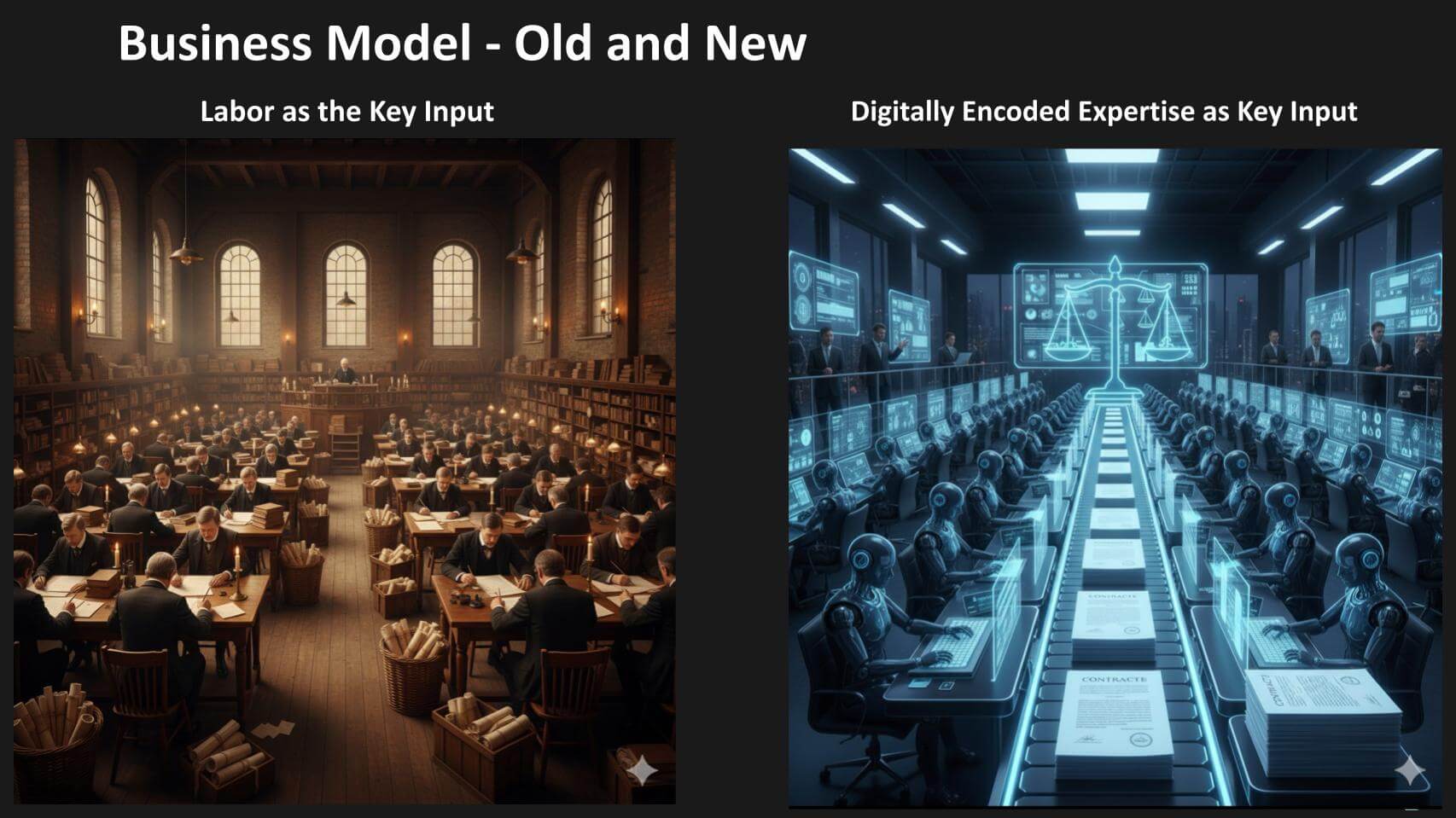 Historically, enterprises ran on islands of automation — enterprise resource
planning for the back office and, later, a proliferation of apps. Customer
relationship management was the first to introduce a new operating model and a
new business model. Today, the enterprise itself must begin to operate like a
software company. That requires harmonizing those islands into a single unified
layer where data and application logic collapse into an integrated System of
Intelligence. Agents rely on this harmonized context to make decisions and, when
needed, invoke legacy applications to execute workflows. Operating this way also
demands a new operations model: a build-to-order assembly line for knowledge
work that blends the customization of consulting with the efficiency of
high-volume fulfillment. Humans supervise agents, and in doing so progressively
encode their expertise into the system. ... The important point to remember is
that islands of automation impede management’s core function – planning,
resource allocation and orchestration with full visibility across levels of
detail and business domains. Data lakes do not solve this by themselves; each
star schema is another island. Near-term, organizations can start small and let
agents interrogate a single domain (for example, the sales cube) and take
limited actions by calling systems of record via MCP servers, for example,
viewing a customer’s complaints and initiating a return authorization.
Historically, enterprises ran on islands of automation — enterprise resource
planning for the back office and, later, a proliferation of apps. Customer
relationship management was the first to introduce a new operating model and a
new business model. Today, the enterprise itself must begin to operate like a
software company. That requires harmonizing those islands into a single unified
layer where data and application logic collapse into an integrated System of
Intelligence. Agents rely on this harmonized context to make decisions and, when
needed, invoke legacy applications to execute workflows. Operating this way also
demands a new operations model: a build-to-order assembly line for knowledge
work that blends the customization of consulting with the efficiency of
high-volume fulfillment. Humans supervise agents, and in doing so progressively
encode their expertise into the system. ... The important point to remember is
that islands of automation impede management’s core function – planning,
resource allocation and orchestration with full visibility across levels of
detail and business domains. Data lakes do not solve this by themselves; each
star schema is another island. Near-term, organizations can start small and let
agents interrogate a single domain (for example, the sales cube) and take
limited actions by calling systems of record via MCP servers, for example,
viewing a customer’s complaints and initiating a return authorization.
Companies are making the same mistake with AI that Tesla made with robots
 Shai Ahrony, CEO of marketing agency Reboot Online, calls this phenomenon the
"AI aftershock." "Companies that rushed to cut jobs in the name of AI savings
are now facing massive, and often unexpected costs," he told ZDNET. "We've seen
customers share examples of AI-generated errors -- like chatbots giving wrong
answers, marketing emails misfiring, or content that misrepresents the brand --
and they notice when the human touch is missing." ... Some companies have
already learned painful lessons about AI's shortcomings and adjusted course
accordingly. In one early example from last year, McDonald's announced that it
was retiring an automated order-taking technology that it had developed in
partnership with IBM after the AI-powered system's mishaps went viral across
social media. ... McDonalds' and Klarna's decisions to backtrack on AI in favor
of humans is reminiscent of a similar about-face from Tesla. In 2018, after
Tesla failed to meet production quotas for its Model 3, CEO Elon Musk admitted
in a tweet that the electric vehicle company's reliance upon "excessive
automation…was a mistake." "Humans are underrated," he added. Businesses
aggressively pushing to deploy AI-powered customer service initiatives in the
present could come to a similar conclusion: that even though the technology
helps to cut spending and boost efficiency in some domains, it isn't able to
completely replicate the human touch.
Shai Ahrony, CEO of marketing agency Reboot Online, calls this phenomenon the
"AI aftershock." "Companies that rushed to cut jobs in the name of AI savings
are now facing massive, and often unexpected costs," he told ZDNET. "We've seen
customers share examples of AI-generated errors -- like chatbots giving wrong
answers, marketing emails misfiring, or content that misrepresents the brand --
and they notice when the human touch is missing." ... Some companies have
already learned painful lessons about AI's shortcomings and adjusted course
accordingly. In one early example from last year, McDonald's announced that it
was retiring an automated order-taking technology that it had developed in
partnership with IBM after the AI-powered system's mishaps went viral across
social media. ... McDonalds' and Klarna's decisions to backtrack on AI in favor
of humans is reminiscent of a similar about-face from Tesla. In 2018, after
Tesla failed to meet production quotas for its Model 3, CEO Elon Musk admitted
in a tweet that the electric vehicle company's reliance upon "excessive
automation…was a mistake." "Humans are underrated," he added. Businesses
aggressively pushing to deploy AI-powered customer service initiatives in the
present could come to a similar conclusion: that even though the technology
helps to cut spending and boost efficiency in some domains, it isn't able to
completely replicate the human touch.
How Can the Usage of AI Help Boost DevOps Pipelines
 In recent times, AI is playing a key role in CI/CD by using machine learning
algorithms and intelligent automation to detect errors proactively, optimize
resource usage and faster release cycles. With AI, CI/CD pipelines can learn,
adapt and optimize themselves, redefining software development from start to
finish. By combining AI and DevOps, you can eliminate silos, recover faster from
outages and open up new business revenue streams. Today’s businesses are
increasingly leveraging artificial intelligence capabilities throughout their
DevOps pipelines to make their CI/CD pipelines intelligent, thereby enabling
them to predict problems faster, optimize the pipelines if needed, and recover
from failures without the need for any human intervention. ... When you adopt AI
into the DevOps practices in your organization, you are applying specific
technologies to automate, optimize, and enhance each stage of the software
development lifecycle – coding, testing, deployment, and monitoring. Today’s
organizations are using AI in their DevOps pipelines to drive innovation,
enabling teams to work seamlessly and achieve rapid development and deployment
cycles. ... AI can help in DevSecOps in ways such as automating security
testing, automating threat detection, and streamlining incident response. You
can use AI-powered tools to scan your application source code for security
vulnerabilities, automate software patches, automate incident responses, and
monitor in real-time to identify anomalies.
In recent times, AI is playing a key role in CI/CD by using machine learning
algorithms and intelligent automation to detect errors proactively, optimize
resource usage and faster release cycles. With AI, CI/CD pipelines can learn,
adapt and optimize themselves, redefining software development from start to
finish. By combining AI and DevOps, you can eliminate silos, recover faster from
outages and open up new business revenue streams. Today’s businesses are
increasingly leveraging artificial intelligence capabilities throughout their
DevOps pipelines to make their CI/CD pipelines intelligent, thereby enabling
them to predict problems faster, optimize the pipelines if needed, and recover
from failures without the need for any human intervention. ... When you adopt AI
into the DevOps practices in your organization, you are applying specific
technologies to automate, optimize, and enhance each stage of the software
development lifecycle – coding, testing, deployment, and monitoring. Today’s
organizations are using AI in their DevOps pipelines to drive innovation,
enabling teams to work seamlessly and achieve rapid development and deployment
cycles. ... AI can help in DevSecOps in ways such as automating security
testing, automating threat detection, and streamlining incident response. You
can use AI-powered tools to scan your application source code for security
vulnerabilities, automate software patches, automate incident responses, and
monitor in real-time to identify anomalies. 





/articles/zero-downtime-cloud-upgrades/en/smallimage/zero-downtime-cloud-upgrades-thumbnail-1754398638654.jpg)