Showing posts with label accounting. Show all posts

Daily Tech Digest - September 29, 2024

Updating Enterprise Technology to Scale to ‘AI Everywhere’

Operational systems with significant unstructured data will face substantial re-architecting due to generative AI’s ability to make use of previously underutilized data sources. In our experience, the most common solution patterns for generative AI use cases in operational systems fall within the areas of content generation, knowledge management, and reporting and documentation ... As generative AI model use cases get deployed across critical systems and complexity increases, it will put further demands on collaboration, quality control, reliability, and scalability. AI models will need to be treated with the same discipline as software code by adopting MLOps processes that use DevOps to manage models through their life cycle. Companies should set up a federated AI development model in line with the AIaaS platform. This should define the roles of teams that produce and consume AI services, as well as the processes for federated contribution and how datasets and models are to be shared. Given the pace of evolution of generative AI, it is also imperative to create AI-first software development processes that allow for rapid iteration of new solutions and architectures. 


EPSS vs. CVSS: What's the Best Approach to Vulnerability Prioritization?

EPSS is a model that provides a daily estimate of the probability that a vulnerability will be exploited in the wild within the next 30 days. The model produces a score between 0 and 1 (0 and 100%), with higher scores indicating a higher probability of exploitation. The model works by collecting a wide range of vulnerability information from various sources, such as the National Vulnerability Database (NVD), CISA KEV, and Exploit-DB, along with evidence of exploitation activity. ... By considering EPSS when prioritizing vulnerabilities, organizations can better align their remediation efforts with the actual threat landscape. For example, if EPSS indicates a high probability of exploitation for a vulnerability with a relatively low CVSS score, security teams might consider prioritizing that vulnerability over others that may have higher CVSS scores but a lower likelihood of exploitability. ... Intruder is a cloud-based security platform that helps businesses manage their attack surface and identify vulnerabilities before they can be exploited. By offering continuous security monitoring, attack surface management, and intelligent threat prioritization, Intruder allows teams to focus on the most critical risks while simplifying cybersecurity.


How To Embrace The Enterprise AI Era

As enterprises rush to adopt AI technologies, there's a growing concern about the responsible use of these powerful tools. Ramaswamy stresses the importance of a thoughtful approach to AI implementation: "We mandated very early that any models that we train needed obviously to only take data that we had free use rights on, but we said they also need to have model cards so that if there is a problem with the data source, you can go back, retrain a model without the data source." ... Developing a robust data strategy is essential for AI success. Organizations need a clear plan for managing, sharing, and leveraging data across the enterprise. This includes establishing data governance policies, ensuring data quality and consistency, and creating a unified data architecture that supports AI initiatives. A well-designed data strategy enables companies to break down silos, improve data accessibility, and create a solid foundation for AI-driven insights and decision-making. Embracing interoperability is another critical aspect of preparing for the enterprise AI era. Companies should look for solutions that support open data formats and easy integration with other tools and platforms. 


The Hidden Language of Data: How Linguistic Analysis Is Transforming Data Interpretation

Unlike conventional methods that focus on structured data, linguistic analysis delves into the complexities of human communication. It examines patterns, context, and meaning in text data, allowing us to extract trends and insights from sources like social media posts, customer reviews, and open-ended survey responses. Linguistic analysis in data science marries principles from the two fields. From linguistics, we borrow concepts like syntax (sentence structure), semantics (meaning), and pragmatics (context). These help us understand not just what words say, but how they’re used and what they imply. On the data science side, we leverage technologies like machine learning and natural language processing (NLP). These technologies allow us to automate the analysis of large volumes of text, identify patterns, and extract meaningful information at scale. ... Sentiment analysis is the process of determining the emotional tone behind words. It analyzes language to understand attitudes, opinions, and emotions expressed within text and identify whether a piece of text is positive, negative, or neutral.


Is Synthetic Data the Future of AI Model Training?
It is likely that the use of synthetic data will increase in the AI space. Gartner anticipates that it will outweigh the use of real data in AI models by 2030. “The use of it is going to grow over time, and if done correctly, [it will] allow us to create more evolved, more powerful, and more numerous models to inform the software that we're building,” Brown predicts. That potential future seems bright, but the road there is likely to come with a learning curve. “Mistakes are going to be made almost undoubtedly in the use of synthetic data initially. You're going to forget a key metric that would judge quality of data,” says Brown. “You're going to implement a biased model of some sort or a model that hallucinates maybe more than a previous model did.” Mistakes may be inevitable, but there will be new ways to combat them. As the use of synthetic data scales, the development of tools for robust quality checks will need to as well. “Just the same way that we've kept food quality high, we [need to] do the same thing to keep the model quality high,” Hazard argues.


Are You Sabotaging Your Cybersecurity Posture?

When ITDR entered the picture in 2020, it was in response to a cybersecurity industry struggling to protect suddenly remote COVID-era workforces with existing identity and access management (IAM) solutions. ... Organizations should never attempt to solve cybersecurity issues they’re not prepared to handle. Investing in the right specialists — whether in-house or externally — and ongoing training is essential to maintaining strong defenses. Your organization will fall behind quickly if your team isn’t continuously evolving. Where business leaders are concerned, cybersecurity is often an attractive place to trim expenses. But businesses simply cannot cut their cybersecurity budget and hope they don’t suffer a breach. Hackers aren’t stopping, so you can’t either. ... Operating on an “it won’t happen to us” mindset will always get your organization in trouble. When it comes to strengthening your organization’s cybersecurity posture, a shift from a reactive to a proactive mindset is crucial to staying ahead of evolving threats and preventing costly and damaging breaches. A comprehensive, identity-focused cybersecurity is the best way to proactively defend against threats. 


Millions of Kia Vehicles Open to Remote Hacks via License Plate

The researchers found that it was relatively easy to register a Kia dealer account and authenticate it to the account. They could then use the generated access token to call APIs reserved for use by dealers, for things like vehicle and account lookup, owner enrollment, and several other functions. After some poking around, the researchers found that they could use their access to the dealer APIs to enter a vehicle's license-plate information and retrieve data that essentially allowed them to control key vehicle functions. These included functions like turning the ignition on and off, remotely locking and unlocking vehicles, activating its headlights and horn, and determining its exact geolocation. In addition, they were able to retrieve the owner's personally identifying information (PII) and quietly register themselves as the primary account holder. That meant they had control of functions normally available only the owner. The issues affected a range of Kia model years, from 2024 and 2025 all the way back to 2013. With the older vehicles, the researchers developed a proof-of-concept tool that showed how anyone could enter a Kia's vehicle license plate info and in a matter of 30 seconds execute remote commands on the vehicle.


How AI is reshaping accounting

For a while, the finance industry started to consider how to provide better information to guide investment decisions beyond just financial performance and ESG through integrated reporting. The term has fallen out of vogue. ... The corollary to continual close is that businesses will be able to make decisions using real-time data. Forrester predicts that over 70% of SMBs will integrate real-time data into financial decisions, empowering them to drive growth and innovation by 2030. Harris acknowledges that today, not all business is captured in real-time. Existing tools and infrastructure are insufficient to capture everything with the assurance that it is reliable. So, accounting data can get out of step by a few days to weeks. The vision is that with the right technology, particularly AI, they can take that delay down to zero to keep accounting data in lockstep with the business.
New opportunities The last prediction is that AI will automate many routine tasks and free accountants to focus on strategic thinking and provide business insights. This will create opportunities for accountants to expand into new roles that improve business strategy and facilitate innovation. 


Harnessing AI and knowledge graphs for enterprise decision-making

Whether a company’s goal is to increase customer satisfaction, boost revenue, or reduce costs, there is no single driver that will enable those outcomes. Instead, it’s the cumulative effect of good decision-making that will yield positive business outcomes. It all starts with leveraging an approachable, scalable platform that allows the company to capture its collective knowledge so that both humans and AI systems alike can reason over it and make better decisions. Knowledge graphs are increasingly becoming a foundational tool for organizations to uncover the context within their data. What does this look like in action? Imagine a retailer that wants to know how many T-shirts it should order heading into summer. A multitude of highly complex factors must be considered to make the best decision: cost, timing, past demand, forecasted demand, supply chain contingencies, how marketing and advertising could impact demand, physical space limitations for brick-and-mortar stores, and more. We can reason over all of these facets and the relationships between using the shared context a knowledge graph provides.


Data Blind Spots and Data Opportunities: What Banks and Credit Unions May Be Missing

Financial services leaders understand that getting the deal done is only half the battle. Effective execution of a merger or acquisition is famously difficult: across all industries, between 70% and 90% of mergers and acquisitions fail to achieve their intended goals or create shareholder value, according to research by McKinsey, Harvard Business Review and others. These failures can be due to a range of factors, including poor strategic fit, cultural clashes, integration challenges, or failure to realize projected synergies. For financial institutions in particular — FDIC data since 2019 indicates that some 4-5% of insured depositories merge annually—M&A can be a way of life and effective integration demands a data-first approach. When management data — such as financial reports, risk assessments, and accountholder information—is consolidated quickly, both institutions can harmonize their strategies, avoid duplicative efforts, and identify risks and synergies earlier. This data integration allows leadership teams to monitor KPIs, streamline operations, and make informed decisions that align with the newly combined FI’s objectives.


Quote for the day:

"Effective team leaders realize they neither know all the answers, nor can they succeed without the other members of the team." -- Katzenbach & Smith

Daily Tech Digest - July 28, 2020

The 6 Biggest Technology Trends In Accounting And Finance

When the internet of things, the system of interconnected devices and machines, combines with artificial intelligence, the result is the intelligence of things. These items can communicate and operate without human intervention and offer many advantages for accounting systems and finance professionals. The intelligence of things helps finance professionals track ledgers, transactions, and other records in real-time. With the support of artificial intelligence, patterns can be identified, or issues can be resolved quickly.  ... Robots don't have to be physical entities. In accounting and finance, robotic process automation (RPA) can handle repetitive and time-consuming tasks such as document analysis and processing, which is abundant in any accounting department. Freed up from these mundane tasks, accountants are able to spend time on strategy and advisory work. Intelligent automation (IA) is capable of mimicking human interaction and can even understand inferred meaning in client communication and adapt to an activity based on historical data. In addition, drones and unmanned aerial vehicles can even be deployed on appraisals and the like.


Transportation takes a leading edge with smart technology

As airports and aircraft become digitally connected through Edge IoT technology, many potential opportunities to improve air travel become an everyday reality. By harnessing Edge technology, 5G, and computer vision, many airlines are now able to drive significant operational efficiency. There are many use cases here, including: visual inspection-based pre-emptive maintenance that reduces downtime and delays, smarter scheduling and runway utilization, and cost-savings through smarter fuel usage. Safety and security can be significantly enhanced through Edge computing. Combining computer vision, computer audition, and analytics at the Edge can facilitate less disruptive and more rigorous safety and security. For example, facial recognition can be employed at smart gates to help tackle crime, and smart technology can be used to improve health screenings at airports. And there is huge potential for improving customer experience. By using Edge computing and smart technologies, the whole passenger journey can be connected and made smoother; from parking and arrival at the airport, through check-in, boarding, and inflight entertainment to arrival and baggage claim.


Attackers Exploiting High-Severity Network Security Flaw, Cisco Warns

The flaw specifically exists in the web services interface of Firepower Threat Defense (FTD) software, which is part of Cisco’s suite of network security and traffic management products; and its Adaptive Security Appliance (ASA) software, the operating system for its family of ASA corporate network security devices. The potential threat surface is vast: Researchers with Rapid7 recently found 85,000 internet-accessible ASA/FTD devices. Worse, 398 of those are spread across 17 percent of the Fortune 500, researchers said. The flaw stems from a lack of proper input validation of URLs in HTTP requests processed by affected devices. Specifically, the flaw allows attackers to conduct directory traversal attacks, which is an HTTP attack enabling bad actors to access restricted directories and execute commands outside of the web server’s root directory. Soon after patches were released, proof-of-concept (POC) exploit code was released Wednesday for the flaw by security researcher Ahmed Aboul-Ela. A potential attacker can view more sensitive files within the web services file system: The web services files may have information such as WebVPN configuration, bookmarks, web cookies, partial web content and HTTP URLs.


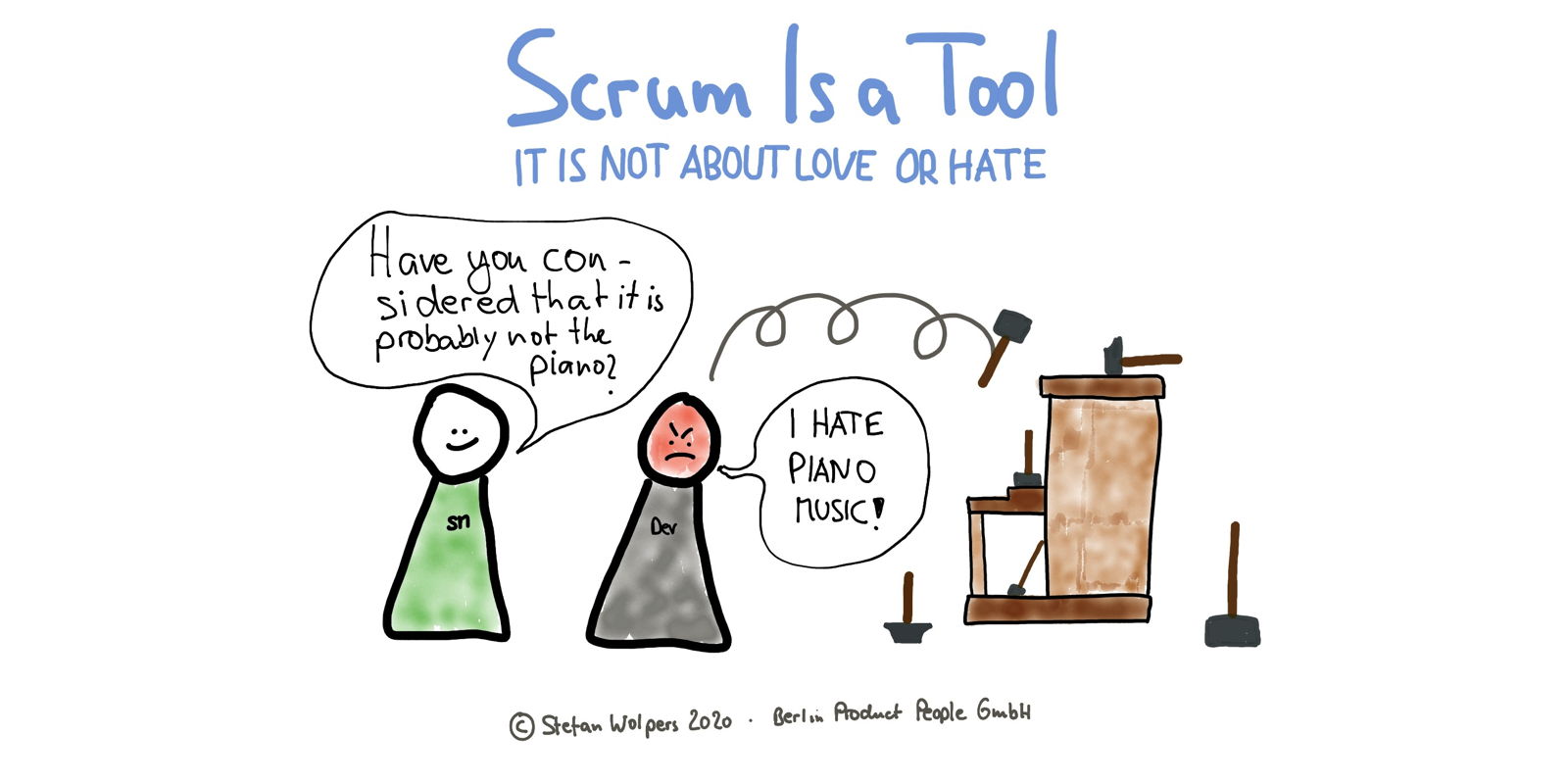
Scrum’s Nature: It Is a Tool; It Is Not About Love or Hate 

The question then is: Why would I “hate” a tool unsuited for the intended purpose or applied incompetently? Would I hate a hammer for not being capable of accurately driving a screw into a wooden beam? Probably not, as the hammer wasn’t designed for that purpose, and neither sheer will-power nor stamping with your feet will change the fact. ... The job of the Scrum Master is hence to support the Scrum team by removing impediments—problems the team members cannot solve by themselves-thus supporting this decentralized leadership approach. Moreover, those impediments are mostly situated at an organizational level. Here, change is not happening by simply “getting things done,” but by working with other stakeholders and their plans, agendas, objectives, etc. ... Agile software development is not about solving (code) puzzles all day long. As a part of creating new products in complex environments, it is first-of-all about identifying which problems are worth solving from a customer perspective. Once that is established, and Scrum’s empirical approach has proven to be supportive in that respect, we strive to solve these puzzles with as little code as possible.


Dave: Mobile Banking App Breach Exposes 3 Million Accounts

Dave says the breach traces to the Waydev analytics platform for engineering teams that it formerly used. "As the result of a breach at Waydev, one of Dave's former third-party service providers, a malicious party recently gained unauthorized access to certain user data at Dave, including user passwords that were stored in hashed form using bcrypt, an industry-recognized hashing algorithm," Dave says in its Saturday data breach notification. Waydev, which is based in San Francisco, first warned on July 2 that its service may have been breached. "We learned from one of our trial environment users about an unauthorized use of their GitHub OAuth token," Waydev says in a data breach notification posted on its site that details security measures it recommends all users take. "The security of your data is our highest priority. Therefore, as a precautionary measure to protect your account, we revoked all GitHub OAuth tokens." Beyond that notice, "we notified the potentially affected users" directly, Waydev's Mike Dums tells Information Security Media Group. The company says that it immediately hired a third-party cybersecurity firm, Bit Sentinel to help investigate the intrusion and lock down its environment, including having now fixed the vulnerability exploited by attackers.


Intelligent ways to tackle cyber attack

Absalom recommends that security practitioners balance the need for human oversight with the confidence to allow AI-supported controls to act autonomously and effectively. He says: “Such confidence will take time to develop, just as it will take time for practitioners to learn how best to work with intelligent systems.”  Given time to develop and learn together, Absalom believes the combination of human and artificial intelligence should become a valuable component of an organisation’s cyber defences. As Morris points out, fraud management, SIEM, network traffic detection and endpoint detection all make use of learning algorithms to identify suspicious activity – based on previous usage data and shared pattern recognition – to establish “normal” patterns of use and flag outliers as potentially posing a risk to the organisation. For companies with a relatively small and/or simple IT infrastructure, Wenham argues that the cost of an AI-enabled SIEM would probably be prohibitive while offering little or no advantage when coupled with good security hygiene. On the other hand, for an enterprise with a large and complex IT infrastructure, Wenham says the cost of an AI-enabled SIEM might well be justified. 


Are newer medical IoT devices less secure than old ones?

Mularski does concede that some particularly vulnerable old devices are often more isolated on the network by design, in part because they’re more recognizable as vulnerable assets. Windows 95-vintage x-ray machines, for example, are easy to spot as a potential target for a bad actor. “For the most part, I think most of the hospital environments, they do a good job at recognizing that they have these old deices, and the ones that are more vulnerable,” he said. This underlines a topic most experts on – simple awareness of the potential security flaws on a given network are central to securing healthcare networks. Greg Murphy is the CEO of Ordr, a network visibility and security startup based in Santa Clara. He said that both Mularski and Staynings have points in their favor. “Anyone who minimizes the issue of legacy devices needs to walk a mile in the shoes of the biomedical engineering department at a hospital,” he said. “[But] on the flipside, new devices that are being connected to the network have huge vulnerabilities themselves. Many manufacturers themselves don’t know what vulnerabilities their devices have.”


The Opportunity in App Modernization

Domain Driven Design and modeling techniques like SWIFT, Wardley Maps, Bounded Context Canvas have provided the technical and business heuristics in carving out microservices. There is however an emerging backlash from the complexity of microservices and an impetus to move towards simpler deployment architectures like modular monoliths. See To Microservices and Back Again. There are significant gaps that libraries and frameworks can fill by driving a backlog of stories and implementation from event storming or monolith decomposition. Generating a backlog of user stories and epics from event storming is a work of art and requires heavy facilitation because DDD Is Broken. Dividing business capabilities in sub-business capabilities is tough and candidate microservices need expert judgment before implementation. Observability tools and frameworks that aid in understanding the existing application runtime metadata paired with a profiler theoretically have the information needed to make recommendations on starting points to decomposing monoliths. A tool that has started to look at this problem is vFunction.


Ten ‘antipatterns’ that are derailing technology transformations

One of the biggest sources of impact in technology transformations comes from simplifying the path to production, the steps involved from defining requirements to releasing software and using it with disciplined repetition across teams. This requires a lot of organizational and executive patience, as the impacted teams—app development, operations, security, support—can take weeks and months to perfect this coordinated dance. Tools and architecture changes can help, but to be effective, they need to be paired with changes to engineering practices, processes, and behaviors. Launching programs for large architecture and tooling changes often requires minimal effort, catches the executive and board’s fancy, and represents that things are moving. However, in our experience, without changes to engineering practices, processes, and behaviors, such programs have minimal or no impact. ... After months of futile top-down incentives and nudges for tools adoption, the bank refocused on how the tools enabled a new set of engineering practices and collaboration between teams. It showed how the new tools could simplify the path to production. 


Is Robotic Process Automation As Promising As It Looks?

RPA works best when application interfaces are static, procedures don’t change, and data patterns stay stable – a mix that is progressively uncommon in today’s dynamic, digital scenario. The issue with RPA, in any case, isn’t that the tools aren’t clever enough. Rather, its main challenge is progressively about strength –handling the unexpected sudden changes in the IT world. Adding cognitive abilities to RPA doesn’t resolve these strength issues – you essentially end up with more intelligent technology that is still similarly as weak it was in the past. RPA is still in the phase of advancement, thus it can introduce difficulties that may bring about undesirable results. Consequently, it is difficult for associations to decide whether they ought to put their resources into robotic automation or wait until its extension. A far-reaching business model must be created while thinking about the implementation of this technology; else, it will be futile if returns are just marginal, which may not be worth taking the risk. RPA is equipped for dealing with specific tasks and assignments, however isn’t planned to deal with processes. Therefore, it appears to be legitimate to believe that combined with other more specific instruments, it can drive better execution.


Quote for the day:

"Leaders must encourage their organizations to dance to forms of music yet to be heard." -- Warren G. Bennis

Daily Tech Digest - November 07, 2018

Accountancy and technology: the changing role of the accountant

Accountancy and technology: the changing role of the accountant
The change is probably less in classic, financial accounting but more on the side of financial analysis and managerial accounting. It will be shifting from getting the numbers out of the system in an error-free way into PowerPoint into really doing something meaningful with these numbers, becoming a business partner and advising the counterparts in the business. So that may be understanding drivers, reviewing trends, and coming to conclusions. Also there’s the interpersonal skills. It’s about not just working with the numbers but working with the people on the business side. ... Like many disruptive changes, it’s starting now and it will take its time to fully come to fruition. There is a learning curve that the industry will have to go through. It will take some time, we will find that some problems will lend themselves better to the algorithms we have today, and the algorithms are getting better all the time.


Event Sourcing to the Cloud at HomeAway

Event sourcing allows services to separate their read and write concern and truly allows services to encapsulate data. Having full encapsulation not only prevents a death star architecture, but reduces integration cost for each microservice. One of the biggest advantages of an event sourcing architecture is data democratization. Having data in the center of the architecture allows services to easily discover and subscribe, which is essential for developer velocity and implementing near real time experiences. Event sourcing also opens the door for pattern based programming. If the pattern and libraries are set in place, the goal should be to have an entry level engineer execute the development lifecycle with very little ramp up time, or training. Event sourcing provides a great audit trail as the entirety of history is persisted, which makes auditing and visualizing what happened very easy. I think this is a very critical aspect as services become more asynchronous, as customers need real time updates or feedback about the state of their transaction.


Cybersecurity, AI skills to dominate IT staff hires in 2019

While large, enterprise firms will focus on cybersecurity and AI, small to midsize firms are more likely to seek new employees with DevOps skills, end-user hardware experience, and proficiency in IT infrastructure. Enterprise staff reported that keeping infrastructure up-to-date and implementing new, innovative solutions -- such as AI, and Internet-of-Things (IoT) technologies are some of the biggest challenges in IT faced today by organizations. Smaller companies, however, are faced with the problem of convincing boards of the importance of implementing IT projects and how to adhere to acceptable security practices and standards. The report includes responses from 1,000 IT professionals. When asked about their own prospects, 26 percent of respondents said they planned to find a new role; eight percent plan to leave the field entirely, six percent hope to transition into IT consultancy, and five percent are on the way to retirement.


Despite Fraud Awareness, Password Reuse Persists for Half of U.S. Consumers


As National Fraud Day approaches (Nov. 11), it remains clear that more consumer education is required when it comes to thwarting scammers and identity thieves. Despite almost half of U.S. consumers (49 percent) believing their security habits make them vulnerable to information fraud or identity theft, 51 percent admit to reusing passwords/PINs across multiple accounts such as email, computer log in, phone passcode and bank accounts. ,,, The good news is, more than nine in 10 (91 percent) Baby Boomers closely monitor their financial account activity such as bank statements, credit reports and credit card statements each week, compared to Millennials (85 percent) and Gen Zs (86 percent). Even so, nearly three in 10 of polled consumers (27 percent) said that they don’t know how to find out if they’ve become a victim; and one in five consumers (20 percent) admit that if they became a victim of fraud, they wouldn’t necessarily know how to report it.


5 best practices for third-party data risk management

Recent events leading to overshared data, breached data, operational failures and other incidents have prompted many businesses to re-evaluate how they approach third-party risk management (TPRM) as many of these situations were attributed to a third party. As such, boards of directors and their C-suite teams understand the critical need to be more focused and informed about their third parties, related risk management activities and key decisions, especially for those third parties deemed critical to the organization. EY recently conducted its sixth annual global financial services third-party risk management survey. In a nutshell, it shows that many companies are continuing to make upgrades to the governance and oversight of this function. Yet, it’s clear that formidable challenges remain. To help businesses stay ahead of the curve, outlined below are five leading practices in third-party risk management from which organizations can benefit


In the Age of A.I., Is Seeing Still Believing?


“Prediction is really the hallmark of intelligence,” Efros said, “and we are constantly predicting and hallucinating things that are not actually visible.” In a sense, synthesizing is simply imagining. The apparent paradox of Farid’s license-plate research—that unreal images can help us read real ones—just reflects how thinking works. In this respect, deepfakes were sparks thrown off by the project of building A.I. ... A world saturated with synthesis, I’d begun to think, would evoke contradictory feelings. During my time at Berkeley, the images and videos I saw had come to seem distant and remote, like objects behind glass. Their clarity and perfection looked artificial (as did their gritty realism, when they had it). But I’d also begun to feel, more acutely than usual, the permeability of my own mind. I thought of a famous study in which people saw doctored photographs of themselves. As children, they appeared to be standing in the basket of a hot-air balloon.


Breach Settlement Has Unusual Penalty

This case is noteworthy for several reasons, including the state attorney choosing to take action against both the covered entity and business associate involved with the breach, but also for the enforcement action against the BA's owner. "The attorney general of New Jersey has an array of penalties and relief to enforce the state's Consumer Fraud Act, including fines and suspension or revocation of authority against a company or individual to do business in the state," says privacy attorney David Holtzman, vice president of security compliance at the consultancy CynergisTek. "While it is not uncommon for a negotiated settlement agreement to include a period of exclusion for a company or its officers, this the first time I am aware of the New Jersey attorney general applying this in relation to an investigation regarding unauthorized disclosure of health information. " There have been a handful of similar actions by state and federal regulators in other cases involving data security, he notes.


How to move beyond REST for microservices communication


From a design and architecture perspective, request synchronicity breaks a fundamental part of good microservice design: autonomy. It's presumed that, when synchronous calls block a microservice, it is no longer an open resource. However, when that presumption is untrue, it can lead to confusion and instability. It's possible to make REST semisynchronous through methods such as HTML polling. The server-push features of HTTP/2 also alleviate issues around binary payloads and can multiplex requests on a single port. Microservices developers who want to keep the HTTP model can settle on HTTP/2, but there are still other options. In asynchronous microservices communication, a message is sent to one microservice, and it moves along until it requires a response. That response may come in the form of an event or a callback. Asynchronous microservices make connections through some form of a service or message bus.


Sending WhatsApp Messages from a Win32 C++ Program

This article is the second part, following the first part. In this part, I will explain how to send images and documents to a group. As mentioned in part 1, there are several service providers and we have chosen one of them (WhatsAppMate) and started a free trial. However, their code samples for using their services are in almost any programming language except for C++. So we wrote our own C++ class for that purpose. Sending documents and files is a bit more complicated and will be explained in this article. WhatsApp is a multi-platform free service for chatting via video or voice and for sending messages to individuals or groups, including files, media, etc. WhatsApp is better than the old SMS because it is free and has more features. During our day to day work, we need to set up all sort of alerts to be sent to a group who share a job or work on a feature and when that's done automatically, it makes life easier to be notified.


Decoupling in Cloud Era: Building Cloud Native Microservices with Spring Cloud Azure


Cloud native technologies empower organizations to build and run scalable applications in modern, dynamic environments such as public, private, and hybrid clouds. Containers, service meshes, microservices, immutable infrastructure, and declarative APIs exemplify this approach. ... A cloud native application is specifically designed for a cloud computing environment as opposed to simply being migrated to the cloud. ... Microservice architectural style is an approach to developing a single application as a suite of small services, each running in its own process and communicating with lightweight mechanisms, often an HTTP resource API. These services are built around business capabilities and independently deployable by fully automated deployment machinery. There is a bare minimum of centralized management of these services, which may be written in different programming languages and use different data storage technologies.


Quote for the day:


"A leadership disposition guides you to take the path of most resistance and turn it into the path of least resistance." -- Dov Seidman


Daily Tech Digest - August 08, 2018

Modern buildingKnowing how the figures work will end up meaning no more than that you will see the writing on the wall more quickly than the average business owner might. But that will mean little if you can’t solve the problem. So how does the huge technological transformation that we are now going through affect the task of running a practice successfully? The obvious answer is, in many and various ways. The app and smartphone combination has completely transformed both the way a firm can get information from clients and the speed with which it can gather that information. Throw in instant messaging and a user base that is increasingly filling up with people who can use both thumbs to tap out replies on their favourite phone – and who do this day in and day out, regardless – and, yes, we are definitely in a different world by comparison with, say, a decade ago. As a firm, if you’re not already taking advantage of this change, well, one worries for you. As Gavin Fell, VP EMEA at Receipt Bank observes, there’s no longer any excuse for clients turning up once a month with a shopping bag full of receipts.


Artificial Intelligence in Singapore: pervasive, powerful and present

BT_20180803_RYAI_3520927.jpg
People and businesses are unanimous in their opinion that AI will impact our daily lives, and that there are productivity gains to be enjoyed through the adoption of this technology. Overall, we can expect to see a spike in the frequency, flexibility and immediacy of data analysis across industries and applications to drive business decisions. One example is the financial services industry in Singapore, which has been at the forefront of developing and adopting AI technologies across functions in their businesses. AI-based automated chat systems that can interact with customers on personal finance queries in real time are now common in several local banking platforms in Singapore. DBS Bank's AI-driven Virtual Assistant handles over 80 per cent of requests on Facebook Messenger accurately without human intervention ... Such services will ultimately improve service delivery, remove the stress and complexity of manual number crunching, and offer insights at greater speed and accuracy to facilitate quicker decision making in an industry where time is money.


Inside the updated Windows Console

windows-consoleapps.jpg
While commands still have many of the same names, and many DOS apps will still run in the Windows console, it's a long way removed from that old text-mode DOS prompt, building on the evolution of the Windows platform. Over the years it's been joined in the Windows console by PowerShell, the default system administration scripting language for Windows and Windows Server, with tools for remote management of both Office 365 and Azure. PowerShell's blue console and color-coded command strings are a long way removed from the old black-and-white DOS window. Its action-oriented command vocabulary is also very different, letting you get and set system settings, building actions into complex scripts that can manage whole fleets of servers. If the Windows command line is a tool for working with a single PC, then PowerShell is a sysadmin's Swiss Army knife for an entire organization full of PCs and servers. Windows 10 recently brought along a third command-line environment — Linux — thanks to the Windows Subsystem for Linux. 


The Galaxy Tab S4 is a great productivity machine precisely because it’s an Android tablet

galaxy tab s4 android beauty
The desktop experience really does feel a lot like Windows. You can resize the windows of DeX-optimized Android apps. You can launch multiple app windows, and Alt-Tab among them. You can drag and drop content between two compatible apps. You can save shortcuts to the desktop. You can right-click to launch contextual menus. You can navigate a taskbar that lets you see previews of open apps on the left, and system tools like Bluetooth, Volume, and Search on the right. ... There are DeX versions of Microsoft Word, Excel, Outlook, PowerPoint, OneNote, OneDrive and Skype. There’s also DeX support for Adobe Acrobat Reader, Photoshop Lightroom, and Photoshop Express (making my job possible on the road). Nine Mail, my preferred app for secure email, has a DeX version too. Of course, so much work today gets done in web browsers and is executed in the cloud (think about all of Google’s apps, let alone Office 365), so you could argue no one even needs apps for 90 percent of the work we do. Still, from a purely psychological, I’m-happy-in-my-comfort-zone perspective, I embrace what DeX delivers.


What to do when IPv4 and IPv6 policies disagree


An obvious takeaway for network and security administrators is that security policies should be more homogeneously applied to both IPv4 and IPv6, and that the enforcement of security policies on both internet protocols should become part of normal operation and management procedures. It is also advisable for sites that don't currently support IPv6 to apply IPv6 packet filtering policies that are similar to those applied to the IPv4 counterparts. This way, when IPv6 is finally deployed on those sites, the servers and other network elements will not be caught off guard. Recent studies have indicated that mismatches between IPv4 and IPv6 security policies are rather common. Network and security administrators must take action to ensure that the policies applied to both protocols are homogeneous. These common mismatches warrant that, when port scanning a site as part of a penetration test, for example, all of the available addresses must be subject to port scans, as the results for different addresses and different internet protocols may differ.


Legal and compliance teams critical to machine learning success

Companies run into problems with ML in a couple of ways. First, and most dangerous, is the failure to involve legal and compliance teams in the formulation of ML projects. With the rapid evolution of privacy regulations, it’s essential for enterprises to ensure they remain compliant. Another common issue is when companies focus on the technology first. Companies often invest millions of dollars and perhaps years developing a machine learning platform, convinced the organization will derive numerous benefits from different departments flocking to take advantage of it. Unsurprisingly, they don’t get the adoption they expect because they didn’t present a successful use case to their internal customers. A third critical mistake organizations make is not understanding the human part of the equation, that is, failing to adequately train the machine learning engine. It’s essential to use an iterative approach to ensure the ML engine is accurate in its analysis or identification. Failure to do this will undoubtedly lead to a high error rate.


Seagate announces new flash drives for hyperscale markets

Seagate announces new flash drives for hyperscale markets
The surprising aspect of the Nytros is they use the SATA interface. SATA is an old interface, a legacy from hard drives, and nowhere near capable of fully utilizing SSD’s performance. For true parallel throughput, you need a PCI Express or M.2 interface, which are designed specifically for the nature of how flash memory works. “People keep expecting SATA to go away, but SATA is lingering. It’s a very easy way of using your bits. It’s simple, it replaces hard disk drives and still give 30 times faster performance with the same security and same management [as PCI Express drives] and gives our portfolio a no-brainer for our customers,” said Tony Afshary, director of product management for SSD storage products at Seagate. But there are also PCI Express drives, and they bring new features to the table, as well. The new Nytro 5000 for hyperscale data centers doubles the read and write performance of the previous model while adding some NVMe features such as SRIOV for virtualization, additional name spaces, and support for multi streams.


How AI and Intelligent Automation Impact HR Practices

Image: Shutterstock
Right now, HR employees are buried in transactional work that involves data entry and simple math calculations. Those types of things can be done faster, cheaper and more accurately using Robotics Processing Automation (RPA). EY started with a brainstorming session that mapped out current processes and identified opportunities for change. "We probably came up with a half a dozen areas that we felt were not good use of human time, but a very good use of robots [such as] onboarding people, reconciliations for benefits, table batching and validation, travel and expenses, [and] learning and administration," said Fiore. For example, each of EY's 13,000 tax practice employees must attend training that results in certification. The certification needs to be validated, which involves notifying employees and managers and making sure the certification is recorded properly. "There's this whole process where people are pushing emails and spreadsheets for all the training that we do," said Fiore. "It's a team of people that are doing that kind of work we can free up."


Raising the Bar for Ethical Cryptocurrency Mining


Cybercriminals over the years have been using third-party scripts to compel people into getting involved in malicious activities without being aware of it. This was typically observed in the case of Texthelp, when cybercriminals injected a Coinhive script into one of Texthelp’s plugins. This made several U.K.-based government websites take part in malicious cryptomining activities unknowingly. For quite some time, we have been discussing malicious cryptomining. By now, you may be hoping to get some information about what an appropriate cryptomining process should be and whether it is really feasible to practice it decently in a predominantly-malicious environment. This is what we would refer to as ethical cryptomining. People engaged in this use their own systems to decipher complex mathematical problems to validate or process cryptocurrency transactions. Interestingly, as cryptocurrency continues to become more popular and its value witnesses a sharp rise, the complexity of the math problems further rises, demanding more CPU/GPU to be harnessed and prompting miners to opt for more high-end graphics cards.


Getting the most from OneNote, part 2: OneNote 10 is catching up

To make your notes easier to organise, you can tag key paragraphs and then search for all notes with a specific tag. OneNote 2016 has a drop-down list of more than 20 tags on the Home tab. You can apply the first nine tags quickly by typing Ctrl-1 through 9, and you can choose Customize Tags to reorder the existing tags — and create your own custom tags, choosing the tag icon and text formatting they apply. You can move those further up the list to give them keyboard shortcuts, and tags you apply will sync to other devices. However, you'll have to right-click on them and add them as custom tags on each new machine. You can also tag something in OneNote as an Outlook task, complete with an Outlook reminder, and monitor it from both applications. OneNote Online has the same long list of tags as OneNote 2016, but they're not customizable (although custom tags you've added to your notes will show up). Currently, OneNote 10 only has the first nine tags from OneNote 2016 — To Do (which doesn't sync to Outlook), Important, Question, Remember for later, Definition, Highlight, Contact, Address and Phone Number.


Quote for the day:

"Be The Kind Of Leader You Would Want To Follow." -- Gordon TredGold