Quote for the day:
“You may be disappointed if you fail, but you are doomed if you don’t try.” -- Beverly Sills
🎧 Listen to the audio debrief on YouTube
▶ Play Audio DigestDuration: 22 mins • Perfect for listening on the go.
 Digital twins are evolving from passive virtual mirrors into active decision environments, making their underlying data structures more critical. As artificial intelligence agents are introduced into these environments, they must evaluate complex layers of information such as sensor data, equipment dependencies, and historical records to make sound operational decisions. However, AI agents demand more than standard data access; they require durable, long term memory. Rather than forcing information into prompt windows or attaching separate storage systems, organizations should treat agent memory as primary data within the twin itself. This approach means accurately tracking the source of every fact, its historical context, and its validity over time. Crucially, when new information contradicts an older belief, the system should not simply overwrite the past. Instead, it must retain the original data and link it to the update. Preserving this chain of reasoning creates an essential audit trail that builds trust and supports proper governance. To handle this complexity at scale, unified data foundations are necessary to seamlessly link documents, temporal states, and structured records. Ultimately, the challenge is no longer just building the digital model, but constructing the comprehensive memory around it, ensuring that human operators and machines can act with complete confidence.
AI Slop in the Enterprise: What Happens When Engineers Stop Reviewing AI-Generated Code
AI slop in enterprise software engineering refers to low-quality, AI-generated code that appears functional on the surface but introduces hidden defects, security flaws, and severe maintenance burdens. This phenomenon occurs when developers use AI tools to generate code much faster than teams can responsibly review it. Consequently, pull requests accumulate, and code is frequently merged without thorough human oversight. Because AI-generated code lacks clear human intent, reviewing it requires significantly more effort to identify subtle architectural errors, ultimately doubling review times and placing a heavy burden on senior engineers. This growing review tax leads to burnout and a divide between responsible developers and those who submit AI output without understanding it. The business impact is substantial. Studies show that while AI increases coding volume, it also introduces security vulnerabilities at a vastly accelerated rate, with nearly half of AI-generated samples containing fundamental flaws. Furthermore, unmanaged AI code can quadruple technical debt by the second year, silently embedding architectural mistakes that slow down future development. To solve this problem, enterprises must shift their focus from raw coding speed to strict governance. Solutions involve implementing visible quality metrics, enforcing architectural fit, and applying automated rule sets to verify AI output before human review even begins.
The three layers of agentic AI security: A defense-in-depth architecture for autonomous agents
 The VentureBeat article outlines a comprehensive security architecture
designed to address the specific risks of autonomous AI agents. Traditional
security measures fall short because these agents operate independently and
can inadvertently cause data leaks or execute unintended commands. To manage
these new risks, the piece proposes a security model built on three distinct
layers. First, the infrastructure layer establishes a secure foundation by
verifying the physical and digital environments where agents run. By using
methods such as hardware level trust and secure isolation, this step ensures
that only authorized workloads operate, which is especially important for
regulated industries like finance. Second, the network layer manages how
agents communicate with other systems and data sources. Because agents
generate complex and dynamic traffic patterns, traditional static network
rules no longer work. Instead, organizations must adopt dynamic, strict access
policies that closely control internal movement and data retrieval. Finally,
the control plane acts as the central management hub for permissions and
resource allocation. This layer enforces rules consistently across the entire
system, preventing agents from using unauthorized tools or consuming excessive
computing power. Together, these three layers provide a structured approach to
securing independent AI systems, allowing organizations to maintain effective
control and continuous oversight.
The VentureBeat article outlines a comprehensive security architecture
designed to address the specific risks of autonomous AI agents. Traditional
security measures fall short because these agents operate independently and
can inadvertently cause data leaks or execute unintended commands. To manage
these new risks, the piece proposes a security model built on three distinct
layers. First, the infrastructure layer establishes a secure foundation by
verifying the physical and digital environments where agents run. By using
methods such as hardware level trust and secure isolation, this step ensures
that only authorized workloads operate, which is especially important for
regulated industries like finance. Second, the network layer manages how
agents communicate with other systems and data sources. Because agents
generate complex and dynamic traffic patterns, traditional static network
rules no longer work. Instead, organizations must adopt dynamic, strict access
policies that closely control internal movement and data retrieval. Finally,
the control plane acts as the central management hub for permissions and
resource allocation. This layer enforces rules consistently across the entire
system, preventing agents from using unauthorized tools or consuming excessive
computing power. Together, these three layers provide a structured approach to
securing independent AI systems, allowing organizations to maintain effective
control and continuous oversight.The Board’s Role in Crisis Management and Scenario Planning
In an era of unpredictable disruptions, a board of directors must shift from merely reacting to crises to actively preparing for them. The core responsibility of the board in crisis management is oversight and strategic guidance, rather than day-to-day execution. While senior management is tasked with implementing response plans when an emergency strikes, the board ensures that robust frameworks, ethical standards, and clear communication channels are already established. A critical tool in this proactive approach is scenario planning. By anticipating potential threats, ranging from financial downturns and operational failures to reputational damage, boards can guide management in developing practical response strategies before a crisis occurs. This involves conducting regular risk assessments and participating in crisis simulations to build organizational resilience. Scenario planning helps uncover hidden vulnerabilities and tests the effectiveness of current policies, allowing companies to respond swiftly and confidently when real challenges arise. Furthermore, effective governance during a crisis requires clear decision-making processes and an unwavering commitment to the company's long-term stability. After a crisis, the board must also lead the review process to identify lessons learned and improve future readiness. Ultimately, strong board leadership transforms crisis management from a frantic scramble into a structured, reliable process that protects the organization and its stakeholders.Most Organizations Declare Victory Over a Breach Too Early
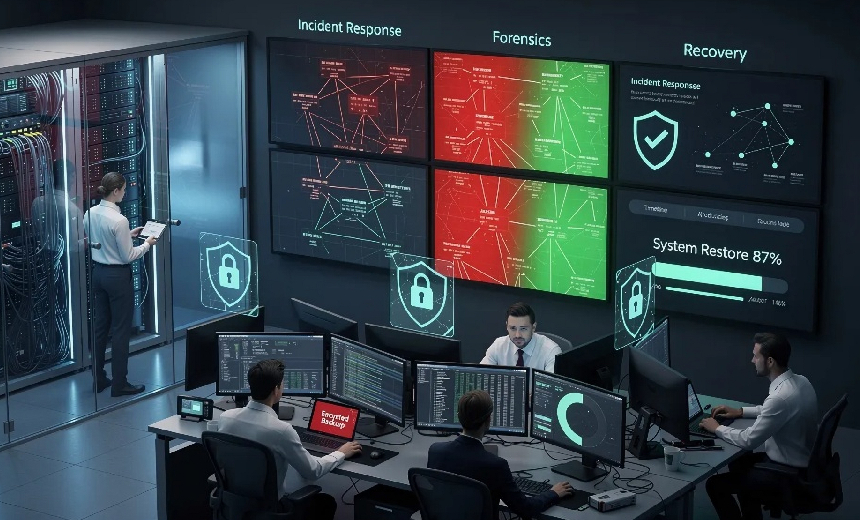 When dealing with a security incident, business leaders often feel pressured
to return to normal operations as quickly as possible. This pressure leads
many organizations to declare victory over a breach long before the threat is
fully removed. In their rush to restore services, response teams typically
address the most obvious signs of an attack, such as isolating a compromised
server or resetting user passwords. However, stopping the investigation at
this early stage is a critical mistake. Intruders often establish hidden
backdoors, create secondary accounts, or move laterally across the network
well before the initial detection occurs. If responders fail to conduct a
thorough forensic analysis, these hidden footholds remain active, allowing the
attackers to quietly regain access days or weeks later. To effectively resolve
a cyber incident, organizations must shift their focus from mere speed to
complete threat eradication. This requires committing to extended monitoring
and ensuring that all affected systems are deeply analyzed for residual
threats. Teams should wait until they have clear evidence that the environment
is genuinely secure before announcing that the crisis has passed. By taking a
careful, methodical approach to recovery, companies can better protect
themselves from falling victim to the exact same intruders twice.
When dealing with a security incident, business leaders often feel pressured
to return to normal operations as quickly as possible. This pressure leads
many organizations to declare victory over a breach long before the threat is
fully removed. In their rush to restore services, response teams typically
address the most obvious signs of an attack, such as isolating a compromised
server or resetting user passwords. However, stopping the investigation at
this early stage is a critical mistake. Intruders often establish hidden
backdoors, create secondary accounts, or move laterally across the network
well before the initial detection occurs. If responders fail to conduct a
thorough forensic analysis, these hidden footholds remain active, allowing the
attackers to quietly regain access days or weeks later. To effectively resolve
a cyber incident, organizations must shift their focus from mere speed to
complete threat eradication. This requires committing to extended monitoring
and ensuring that all affected systems are deeply analyzed for residual
threats. Teams should wait until they have clear evidence that the environment
is genuinely secure before announcing that the crisis has passed. By taking a
careful, methodical approach to recovery, companies can better protect
themselves from falling victim to the exact same intruders twice. Artificial intelligence is fundamentally changing how enterprise software
is built, shifting the industry away from large, specialized teams toward
smaller, highly skilled groups. At the center of this shift is the IT
architect. Rather than simply overseeing design, architects are returning to
direct implementation. AI tools allow them to compress the traditional
software process into a single, continuous loop that includes analysis,
design, coding, testing, and deployment. To succeed today, these architects
must combine a deep understanding of business operations with strong
technical judgment. By using AI to close the gap between an initial idea and
working software, small, architecture-led teams can deliver solid results in
a fraction of the time. For instance, a recent legacy system update was
finished in just five months instead of the usual two years, without
sacrificing basic security, data integrity, or accuracy. This newfound
efficiency completely changes the underlying economics of technology
development. Traditional systems integrators and major software providers
that rely on large staffs and lengthy timelines will face serious market
pressure. Highly experienced professionals equipped with modern tools can
now build complex systems much faster and more affordably. Consequently,
business leaders must rethink their approach to building and buying
technology before smaller, more capable competitors outpace them.
Artificial intelligence is fundamentally changing how enterprise software
is built, shifting the industry away from large, specialized teams toward
smaller, highly skilled groups. At the center of this shift is the IT
architect. Rather than simply overseeing design, architects are returning to
direct implementation. AI tools allow them to compress the traditional
software process into a single, continuous loop that includes analysis,
design, coding, testing, and deployment. To succeed today, these architects
must combine a deep understanding of business operations with strong
technical judgment. By using AI to close the gap between an initial idea and
working software, small, architecture-led teams can deliver solid results in
a fraction of the time. For instance, a recent legacy system update was
finished in just five months instead of the usual two years, without
sacrificing basic security, data integrity, or accuracy. This newfound
efficiency completely changes the underlying economics of technology
development. Traditional systems integrators and major software providers
that rely on large staffs and lengthy timelines will face serious market
pressure. Highly experienced professionals equipped with modern tools can
now build complex systems much faster and more affordably. Consequently,
business leaders must rethink their approach to building and buying
technology before smaller, more capable competitors outpace them.
In a recent interview at Black Hat USA 2026, Omdia analyst Theresa Lanowitz
shared findings on how artificial intelligence is shifting the landscape of
cybersecurity. She notes that older methods like standard penetration testing
and simulated attacks are no longer enough to keep up with the speed at which
threats operate today. Because of this, organizations are rethinking their
defense strategies and increasing their investments in offensive security. In
fact, research shows that a vast majority of companies are willing to spend
more to gain continuous visibility and better track devices across their
networks. However, deploying automated tools for defense introduces its own
set of challenges. Companies are rightly concerned about the risks of these
systems behaving unpredictably, falling victim to manipulative inputs, or
simply driving up costs. To manage these risks, experts recommend establishing
strict boundaries to limit the potential damage if a system goes off track.
Furthermore, securing the software supply chain has become incredibly
critical. While nearly all organizations recognize its importance and are
investing heavily in it, less than half are documenting their software
components during the build process. Ultimately, business leaders are
prioritizing overall resilience to ensure they can withstand and recover from
unexpected incidents.
CTEM can give your security team a contextual edge
 Traditional vulnerability management relies on periodic assessments and
patching, but this approach is no longer enough to keep up with fast-moving
cyber threats. Many security teams are now turning to continuous threat
exposure management (CTEM) to stay ahead. Unlike standard scanners that only
flag software flaws, CTEM takes a much broader view of an organization's
actual risk. It actively monitors for misconfigurations, identity risks, and
excessive permissions across cloud environments, applications, and networks. A
major advantage of this continuous model is that it focuses on validation and
action. Instead of simply generating long lists of potential issues, it helps
teams determine whether a vulnerability is truly exploitable under their
current defenses. It also ensures specific people are assigned to fix the most
critical problems, shifting the goal from counting flaws to actually closing
attack paths. To work well, this approach relies heavily on automation and
contextual intelligence, combining technical data with business priorities.
However, adopting this new model requires significant cultural shifts.
Security leaders must overcome tool fatigue, break down departmental silos,
and change their teams' mindsets. Rather than just hunting for every single
technical error, the focus must shift toward steadily reducing the overall
risk to the core business.
Traditional vulnerability management relies on periodic assessments and
patching, but this approach is no longer enough to keep up with fast-moving
cyber threats. Many security teams are now turning to continuous threat
exposure management (CTEM) to stay ahead. Unlike standard scanners that only
flag software flaws, CTEM takes a much broader view of an organization's
actual risk. It actively monitors for misconfigurations, identity risks, and
excessive permissions across cloud environments, applications, and networks. A
major advantage of this continuous model is that it focuses on validation and
action. Instead of simply generating long lists of potential issues, it helps
teams determine whether a vulnerability is truly exploitable under their
current defenses. It also ensures specific people are assigned to fix the most
critical problems, shifting the goal from counting flaws to actually closing
attack paths. To work well, this approach relies heavily on automation and
contextual intelligence, combining technical data with business priorities.
However, adopting this new model requires significant cultural shifts.
Security leaders must overcome tool fatigue, break down departmental silos,
and change their teams' mindsets. Rather than just hunting for every single
technical error, the focus must shift toward steadily reducing the overall
risk to the core business.
Cybersecurity in manufacturing is no longer just an IT concern; it is a
fundamental operational discipline. When a cyber incident strikes a factory,
it halts production, impacts product quality, and compromises worker safety.
Because modern facilities connect legacy machinery with cloud services,
robots, and artificial intelligence, the boundaries of the factory floor
have expanded. This creates new vulnerabilities, yet many companies still
rely on traditional IT security methods. Standard IT practices, like
aggressive scanning and immediate patching, can actually disrupt continuous
manufacturing processes. Instead, protecting operational technology requires
a different approach focused on system availability, using passive
monitoring and protective architecture around older equipment rather than
replacing it. A major challenge is the division of responsibility between
IT, engineering, and plant operations, which often leaves critical decisions
unresolved during an attack. To build real resilience, plant leaders need
clear ownership of cyber risks, treating them with the same importance as
workplace safety and product quality. By developing specific response plans
before an incident occurs, teams can drastically reduce recovery time.
Ultimately, manufacturers must merge technical threat knowledge with
practical engineering experience to ensure that their facilities run
reliably and securely in an increasingly connected world.
Security Readiness Looks Good On Paper. Investigations Say Otherwise
 Organizations frequently overestimate their cybersecurity readiness, assuming
that purchasing an array of security tools makes them safe. In reality, the
true strength of a security program is only revealed during an actual breach,
which often exposes a gap between what leaders believe and what is actually
happening. Many companies buy defenses like endpoint detection or backup
systems but fail to fully implement or monitor them around the clock.
Attackers capitalize on these cumulative, minor weaknesses, such as delayed
updates or lingering credentials, rather than relying on a single
sophisticated exploit. Furthermore, detecting threats has become increasingly
difficult as attackers use stealthy methods and artificial intelligence to
blend their movements with normal daily operations. Instead of waiting for a
breach to happen to secure funding and buy the newest marketed tools, leaders
should adopt a proactive mindset. This means asking what protective measures
they would wish they had in place if an attack happened tomorrow. By relying
on forensic evidence from actual incidents rather than theoretical product
demonstrations, companies can focus on battle-tested solutions and practical
fixes. Closing the gap between perceived readiness and actual defense
capabilities allows organizations to address their vulnerabilities before
attackers can exploit them.
Organizations frequently overestimate their cybersecurity readiness, assuming
that purchasing an array of security tools makes them safe. In reality, the
true strength of a security program is only revealed during an actual breach,
which often exposes a gap between what leaders believe and what is actually
happening. Many companies buy defenses like endpoint detection or backup
systems but fail to fully implement or monitor them around the clock.
Attackers capitalize on these cumulative, minor weaknesses, such as delayed
updates or lingering credentials, rather than relying on a single
sophisticated exploit. Furthermore, detecting threats has become increasingly
difficult as attackers use stealthy methods and artificial intelligence to
blend their movements with normal daily operations. Instead of waiting for a
breach to happen to secure funding and buy the newest marketed tools, leaders
should adopt a proactive mindset. This means asking what protective measures
they would wish they had in place if an attack happened tomorrow. By relying
on forensic evidence from actual incidents rather than theoretical product
demonstrations, companies can focus on battle-tested solutions and practical
fixes. Closing the gap between perceived readiness and actual defense
capabilities allows organizations to address their vulnerabilities before
attackers can exploit them.

No comments:
Post a Comment