Quote for the day:
"Winning products come from the deep understanding of the user's needs combined with an equally deep understanding of what's just now possible."-- Marty Cagan
🎧 Listen to the audio debrief on YouTube
▶ Play Audio DigestDuration: 26 mins • Perfect for listening on the go.
What ISVs still get wrong about PCI DSS 4.0.1
 Independent software developers need to update their approach to payment
security standards, as the recent PCI DSS 4.0.1 guidelines make previously
recommended practices strictly mandatory. As of March 2025, future-dated
requirements from version 4.0 are fully enforced, meaning developers must
validate their systems against the complete standard rather than relying on past
assessments. This applies to any software that touches card information, even
indirectly through hosted pages or embedded frames. Assessors are now enforcing
stricter authentication rules, such as requiring twelve-character passwords and
closely reviewing multi-factor authentication methods to ensure they meet exact
security criteria rather than just the general intent. Additionally, the updated
rules provide clearer boundaries on compliance responsibilities between software
providers and their customers. A common mistake developers make is assuming a
past validation still holds or failing to reduce their audit scope by using
tokenization and encryption to keep raw card data entirely out of their systems.
To prepare properly, developers should ignore unofficial vendor certificates and
rely only on official attestations of compliance. The most practical step right
now is to sit down with engineering teams and conduct a straightforward gap
analysis against the current requirements before scheduling the next official
assessment.
Independent software developers need to update their approach to payment
security standards, as the recent PCI DSS 4.0.1 guidelines make previously
recommended practices strictly mandatory. As of March 2025, future-dated
requirements from version 4.0 are fully enforced, meaning developers must
validate their systems against the complete standard rather than relying on past
assessments. This applies to any software that touches card information, even
indirectly through hosted pages or embedded frames. Assessors are now enforcing
stricter authentication rules, such as requiring twelve-character passwords and
closely reviewing multi-factor authentication methods to ensure they meet exact
security criteria rather than just the general intent. Additionally, the updated
rules provide clearer boundaries on compliance responsibilities between software
providers and their customers. A common mistake developers make is assuming a
past validation still holds or failing to reduce their audit scope by using
tokenization and encryption to keep raw card data entirely out of their systems.
To prepare properly, developers should ignore unofficial vendor certificates and
rely only on official attestations of compliance. The most practical step right
now is to sit down with engineering teams and conduct a straightforward gap
analysis against the current requirements before scheduling the next official
assessment.
Beyond Compliance: The Legal Power of a Sophisticated Board of Directors
The article "Beyond Compliance: The Legal Power of a Sophisticated Board of Directors" examines how modern corporate boards must evolve past simple regulatory adherence to become proactive drivers of legal and strategic advantage. Written by corporate law expert León Patiño, the piece emphasizes that a truly sophisticated board does much more than check basic boxes for routine compliance. Instead, it leverages deep governance expertise to anticipate difficult legal challenges, mitigate serious risks before they fully materialize, and firmly protect the organization’s fundamental long-term interests. In today’s increasingly complex regulatory environment, directors are expected to fully understand their fiduciary duties and integrate legal foresight directly into their core business strategies. A highly functional board acts as a critical line of defense, ensuring that all corporate actions consistently align with both strict legal mandates and broad ethical standards. By moving beyond a reactive compliance mindset, these active boards help organizations carefully navigate volatile markets, safeguard corporate reputation, and secure a meaningful competitive edge. Ultimately, the presence of experienced, knowledgeable directors transforms corporate governance from a standard administrative obligation into a highly effective tool for sustainable growth and robust risk management. This proactive approach ensures companies remain resilient and legally sound in the face of ongoing global commercial challenges.The CISO’s AI Defense Playbook: A Practical Framework
 The article outlines a practical five-step framework for security leaders to
update their defenses against rapid automated threats. With attack speeds
compressing to under thirty minutes, traditional security assumptions and simple
compliance models are no longer sufficient. The author notes that being
compliant does not guarantee that a system is truly secure. The framework begins
with mapping the attack surface, which involves cataloging software risks and
auditing complex system dependencies. It also requires thoroughly inventorying
machine identities, such as API keys and service accounts, which now vastly
outnumber human users. Next, organizations must embed advanced scanning directly
into their software development pipelines. This step uses intelligent analysis
to spot complex vulnerabilities and behavioral shifts that traditional tools
miss. The third phase focuses on speeding up response times by automating
initial checks and pre-approving action plans for critical scenarios. Fourth,
the playbook tackles the urgent need to manage machine identities by replacing
static passwords with brief, automated access tokens. This significantly reduces
the window of opportunity for attackers. Finally, the strategy involves training
a capable security team to handle these new challenges. Ultimately, this
structured approach provides a clear, sensible path for leaders to secure their
environments against modern threats.
The article outlines a practical five-step framework for security leaders to
update their defenses against rapid automated threats. With attack speeds
compressing to under thirty minutes, traditional security assumptions and simple
compliance models are no longer sufficient. The author notes that being
compliant does not guarantee that a system is truly secure. The framework begins
with mapping the attack surface, which involves cataloging software risks and
auditing complex system dependencies. It also requires thoroughly inventorying
machine identities, such as API keys and service accounts, which now vastly
outnumber human users. Next, organizations must embed advanced scanning directly
into their software development pipelines. This step uses intelligent analysis
to spot complex vulnerabilities and behavioral shifts that traditional tools
miss. The third phase focuses on speeding up response times by automating
initial checks and pre-approving action plans for critical scenarios. Fourth,
the playbook tackles the urgent need to manage machine identities by replacing
static passwords with brief, automated access tokens. This significantly reduces
the window of opportunity for attackers. Finally, the strategy involves training
a capable security team to handle these new challenges. Ultimately, this
structured approach provides a clear, sensible path for leaders to secure their
environments against modern threats.
Types of Quantum Computers: 6 Major Quantum Computing Approaches
The recent article from The Quantum Insider outlines the primary approaches researchers use to build quantum computers, focusing on the underlying hardware rather than the theoretical math. Superconducting systems, currently the most common, use tiny electrical circuits cooled to extreme temperatures to manage quantum information. While effective, they require massive cooling systems. Trapped ion computers offer an alternative by suspending individual charged atoms in electromagnetic fields. This method provides high precision and stability but faces challenges in scaling up to larger machine sizes. Neutral atom systems are similar but use lasers to hold uncharged atoms in place, allowing researchers to pack them closer together for potential space efficiency. Photonic quantum computers take a completely different path, using particles of light to process information. Because they operate at room temperature, they do not need the complex cooling systems required by other methods, though controlling the light particles remains difficult. Finally, the article touches on topological approaches, which aim to weave particles together to make them naturally resistant to errors, though this remains largely in the experimental phase. Overall, the piece clarifies that there is no single best method available just yet, as each hardware design presents its own distinct set of engineering challenges.Your Cyber Insurer May Define AI Accountability Before Your Board Does
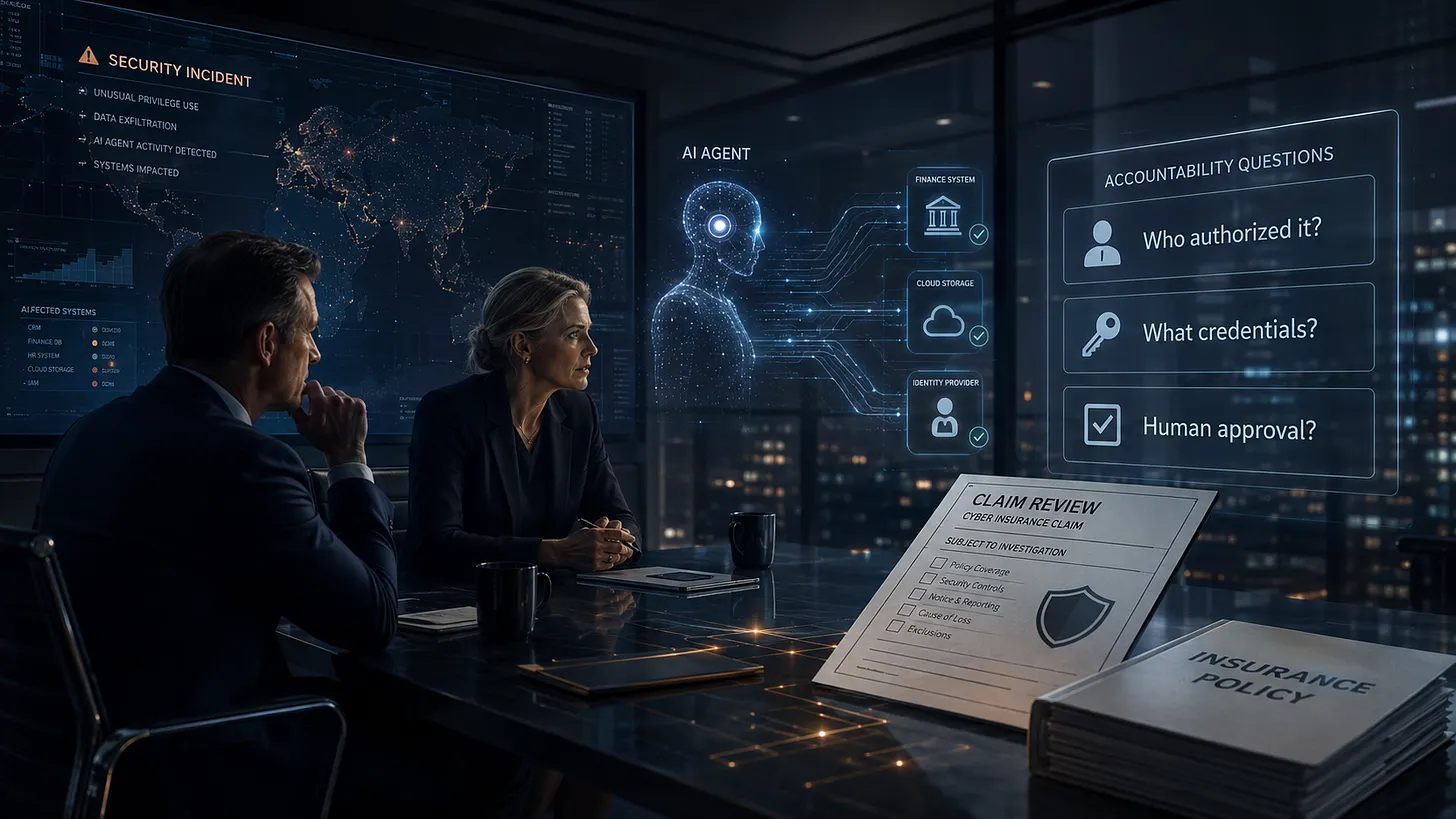 As organizations increasingly deploy artificial intelligence systems capable of
taking independent actions, they face a critical gap in accountability that
their insurance providers might expose before their own leadership does. When an
automated system holds access credentials and the authority to execute tasks
without human oversight, a malfunction can result in significant financial
damage. Currently, many companies rely on vague governance policies that offer a
false sense of security. Meanwhile, most insurance policies treat these
exposures as silent risks, meaning they are neither explicitly covered nor
excluded. However, insurance companies are beginning to demand the same level of
precision for artificial intelligence that they require for traditional
cybersecurity. To prevent denied claims and internal confusion, companies should
conduct a thorough review of their automated systems now. This involves
identifying every active system and assigning a single, accountable business
owner rather than relying on a committee. Leadership must clearly define what
each system is authorized to do, strictly control its access, mandate human
approval for sensitive actions, and implement technical safeguards to prevent it
from exceeding its limits. Organizations must also ensure they can completely
audit the system's actions and shut it down immediately if unexpected issues
arise during normal operations.
As organizations increasingly deploy artificial intelligence systems capable of
taking independent actions, they face a critical gap in accountability that
their insurance providers might expose before their own leadership does. When an
automated system holds access credentials and the authority to execute tasks
without human oversight, a malfunction can result in significant financial
damage. Currently, many companies rely on vague governance policies that offer a
false sense of security. Meanwhile, most insurance policies treat these
exposures as silent risks, meaning they are neither explicitly covered nor
excluded. However, insurance companies are beginning to demand the same level of
precision for artificial intelligence that they require for traditional
cybersecurity. To prevent denied claims and internal confusion, companies should
conduct a thorough review of their automated systems now. This involves
identifying every active system and assigning a single, accountable business
owner rather than relying on a committee. Leadership must clearly define what
each system is authorized to do, strictly control its access, mandate human
approval for sensitive actions, and implement technical safeguards to prevent it
from exceeding its limits. Organizations must also ensure they can completely
audit the system's actions and shut it down immediately if unexpected issues
arise during normal operations.A Tale of Two SOCs: Insights From Two Red Team Assessments
The Cybersecurity and Infrastructure Security Agency (CISA) recently conducted
concurrent red team assessments at two different critical infrastructure
organizations to evaluate their threat detection and incident response
capabilities. While the red team successfully achieved full domain compromise
and accessed sensitive business systems and cloud resources in both
environments, the defensive outcomes varied significantly. Organization A
failed to detect the malicious activity due to untuned detection tools that
created excessive alert noise, allowing the threat actors to move laterally
without resistance. Furthermore, organizational silos and fragmented
communication severely hindered their ability to respond effectively. In
contrast, Organization B successfully identified the initial intrusion
attempts, promptly isolated the compromised systems, and forced the assessment
into an assume-breach scenario. This stark contrast highlights several key
lessons for network defenders. Organizations must recognize the risks of
unmanaged cloud environments and prioritize foundational security hygiene. The
advisory strongly recommends that security teams establish clear network
baselines, fine-tune their alerting mechanisms to reduce false positives, and
break down bureaucratic hurdles to empower incident responders. Additionally,
organizations should implement strict conditional access policies for cloud
identities and develop comprehensive procedures to detect, remediate, and
revoke unauthorized access to safeguard both their on-premises and their cloud
computing infrastructures.
Your Board Has A Financial Expert—Why Doesn't It Have A Cyber One?
 Corporate boards universally mandate the inclusion of financial experts to
ensure robust oversight, yet they rarely apply the same standard to
cybersecurity. Currently, board-level cyber discussions often occur at the end
of meetings and focus narrowly on recent incidents. Because many directors
lack technical backgrounds, they rely heavily on the Chief Information
Security Officer to explain risks and set benchmarks. This dynamic creates
circular governance, where the person being supervised dictates the terms of
their own oversight, often resulting in superficial scrutiny. This lack of
independent technical expertise leaves companies vulnerable to complex,
long-term challenges. A pressing example is the impending transition to
post-quantum cryptography. With strict federal deadlines approaching in 2030
and modern threats like data harvesting for future decryption already
underway, companies face significant strategic and procurement hurdles.
Directors without specific cryptographic knowledge struggle to evaluate
management's long-term roadmaps or ask the right questions before a crisis
hits. Ultimately, adding a cybersecurity expert to the board is not about
delegating responsibility to one person, but about ensuring the entire group
can independently test management assumptions. Choosing to operate without
this expertise is a deliberate decision about which strategic blind spots a
company is willing to accept.
Corporate boards universally mandate the inclusion of financial experts to
ensure robust oversight, yet they rarely apply the same standard to
cybersecurity. Currently, board-level cyber discussions often occur at the end
of meetings and focus narrowly on recent incidents. Because many directors
lack technical backgrounds, they rely heavily on the Chief Information
Security Officer to explain risks and set benchmarks. This dynamic creates
circular governance, where the person being supervised dictates the terms of
their own oversight, often resulting in superficial scrutiny. This lack of
independent technical expertise leaves companies vulnerable to complex,
long-term challenges. A pressing example is the impending transition to
post-quantum cryptography. With strict federal deadlines approaching in 2030
and modern threats like data harvesting for future decryption already
underway, companies face significant strategic and procurement hurdles.
Directors without specific cryptographic knowledge struggle to evaluate
management's long-term roadmaps or ask the right questions before a crisis
hits. Ultimately, adding a cybersecurity expert to the board is not about
delegating responsibility to one person, but about ensuring the entire group
can independently test management assumptions. Choosing to operate without
this expertise is a deliberate decision about which strategic blind spots a
company is willing to accept.Strategic Technology Roadmapping: How Growing Businesses Align Tech with Long-Term Goals
 Strategic technology roadmapping involves creating a clear, practical plan to
ensure a company's software and hardware choices support its broader business
objectives over time. For growing companies, this process is essential to
avoid wasting money on tools that do not fit their future needs. Instead of
buying new software on impulse or following the latest trends, business
leaders use a roadmap to match their technology purchases with specific goals,
such as improving customer service or expanding into new markets. The first
step in this process is taking a close look at the tools the business
currently uses. This helps identify gaps or outdated systems that might slow
down progress. Next, leaders must define where they want the business to be in
the next few years. With these two pieces of information, they can create a
step-by-step timeline that shows exactly when and how to introduce new
technology. This approach keeps the company organized and prevents employees
from feeling overwhelmed by sudden changes. A well-planned roadmap also makes
it easier to track progress and adjust the plan if the market changes.
Ultimately, matching technology with long-term goals gives growing companies a
steady foundation, allowing them to scale smoothly and operate efficiently
without unnecessary stress.
Strategic technology roadmapping involves creating a clear, practical plan to
ensure a company's software and hardware choices support its broader business
objectives over time. For growing companies, this process is essential to
avoid wasting money on tools that do not fit their future needs. Instead of
buying new software on impulse or following the latest trends, business
leaders use a roadmap to match their technology purchases with specific goals,
such as improving customer service or expanding into new markets. The first
step in this process is taking a close look at the tools the business
currently uses. This helps identify gaps or outdated systems that might slow
down progress. Next, leaders must define where they want the business to be in
the next few years. With these two pieces of information, they can create a
step-by-step timeline that shows exactly when and how to introduce new
technology. This approach keeps the company organized and prevents employees
from feeling overwhelmed by sudden changes. A well-planned roadmap also makes
it easier to track progress and adjust the plan if the market changes.
Ultimately, matching technology with long-term goals gives growing companies a
steady foundation, allowing them to scale smoothly and operate efficiently
without unnecessary stress.AI alignment, not replacement: How CIOs are rebuilding IT value
 Forward-thinking Chief Information Officers are now shifting their focus from
using artificial intelligence as a simple replacement for human workers to
adopting a strategy of AI alignment. Rather than viewing AI as a tool for
workforce reduction, these IT leaders are choosing to reorganize their
departments and redesign their operating models to maximize the combined
strengths of both technology and personnel. This realignment process involves
strategically reshaping teams, redistributing decision-making authority, and
redefining specific roles so that employees can work effectively alongside AI
systems instead of competing against them. The realization is that simply
replacing staff with automated systems often leads to unintended consequences
and hidden financial costs, whereas integrating AI as a supportive partner
helps to rebuild long-term IT value. To achieve this, CIOs are currently
navigating a significant talent gap, actively seeking specialized
professionals like AI architects and data engineers who can guide these
complex integrations. By moving away from a purely cost-cutting mindset and
focusing instead on how AI can augment existing capabilities, organizations
are creating more resilient and adaptable IT environments. Ultimately, this
approach ensures that technological advancements empower the workforce,
driving long-term sustainable growth and establishing a more robust foundation
for the future of enterprise IT operations.
Forward-thinking Chief Information Officers are now shifting their focus from
using artificial intelligence as a simple replacement for human workers to
adopting a strategy of AI alignment. Rather than viewing AI as a tool for
workforce reduction, these IT leaders are choosing to reorganize their
departments and redesign their operating models to maximize the combined
strengths of both technology and personnel. This realignment process involves
strategically reshaping teams, redistributing decision-making authority, and
redefining specific roles so that employees can work effectively alongside AI
systems instead of competing against them. The realization is that simply
replacing staff with automated systems often leads to unintended consequences
and hidden financial costs, whereas integrating AI as a supportive partner
helps to rebuild long-term IT value. To achieve this, CIOs are currently
navigating a significant talent gap, actively seeking specialized
professionals like AI architects and data engineers who can guide these
complex integrations. By moving away from a purely cost-cutting mindset and
focusing instead on how AI can augment existing capabilities, organizations
are creating more resilient and adaptable IT environments. Ultimately, this
approach ensures that technological advancements empower the workforce,
driving long-term sustainable growth and establishing a more robust foundation
for the future of enterprise IT operations.The CFO’s playbook for building AI-ready finance data
 In today's business environment, financial leaders face increasing pressure to
adopt artificial intelligence. However, they often encounter a significant
obstacle: financial data is notoriously messy, spread across multiple systems,
spreadsheets, and departments. Rather than rushing to implement new
technology, the focus should shift to ensuring that the underlying data is
trustworthy and prepared for these advanced tools. To be useful, financial
information must be clean, standardized, and tailored to specific goals. It
needs to be combined accurately from various sources while remaining
transparent, controlled, and easy to update as the company evolves. When
information meets these standards, it becomes highly valuable for essential
tasks such as speeding up the financial close, forecasting cash flow,
detecting errors or fraud, and creating clear financial reports. A common
challenge is the disconnect between technology teams, who manage the systems,
and finance teams, who understand the business context. Bridging this gap
requires reliable processes that allow finance professionals to organize and
clean their information with proper oversight from technology departments. The
most effective approach is to start small by focusing on a single, repetitive
task. By first building a reliable and clean foundation of information,
organizations can then apply new technology to improve decision-making and
reduce risk safely.
In today's business environment, financial leaders face increasing pressure to
adopt artificial intelligence. However, they often encounter a significant
obstacle: financial data is notoriously messy, spread across multiple systems,
spreadsheets, and departments. Rather than rushing to implement new
technology, the focus should shift to ensuring that the underlying data is
trustworthy and prepared for these advanced tools. To be useful, financial
information must be clean, standardized, and tailored to specific goals. It
needs to be combined accurately from various sources while remaining
transparent, controlled, and easy to update as the company evolves. When
information meets these standards, it becomes highly valuable for essential
tasks such as speeding up the financial close, forecasting cash flow,
detecting errors or fraud, and creating clear financial reports. A common
challenge is the disconnect between technology teams, who manage the systems,
and finance teams, who understand the business context. Bridging this gap
requires reliable processes that allow finance professionals to organize and
clean their information with proper oversight from technology departments. The
most effective approach is to start small by focusing on a single, repetitive
task. By first building a reliable and clean foundation of information,
organizations can then apply new technology to improve decision-making and
reduce risk safely.

No comments:
Post a Comment