Quote for the day:
"Great leaders do not desire to lead but to serve." -- Myles Munroe
How to make AI agents reliable
 Easier said than done. After all, the way genAI works, we’re trying to build
deterministic software on top of probabilistic models. Large language models
(LLMs), cool though they may be, are non-deterministic by nature. Chaining them
together into autonomous loops amplifies that randomness. If you have a model
that is 90% accurate, and you ask it to perform a five-step chain of reasoning,
your total system accuracy drops to roughly 59%. That isn’t an enterprise
application; it’s a coin toss—and that coin toss can cost you. Whereas a coding
assistant can suggest a bad function, an agent can actually take a bad action.
... Breunig highlights “context poisoning” as a major reliability killer, where
an agent gets confused by its own history or irrelevant data. We tend to treat
the context window like a magical, infinite scratchpad. It isn’t. It is a
database of the agent’s current state. If you fill that database with garbage
(unstructured logs, hallucinated prior turns, or unauthorized data), you get
garbage out. ... Finally, we need to talk about the user. One reason Breunig
cites for the failure of internal agent pilots is that employees simply don’t
like using them. A big part of this is what I call the rebellion against robot
drivel. When we try to replace human workflows with fully autonomous agents, we
often end up with verbose, hedging, soulless text, and it’s increasingly obvious
to the recipient that AI wrote it, not you. And if you can’t be bothered to
write it, why should they bother to read it?
Easier said than done. After all, the way genAI works, we’re trying to build
deterministic software on top of probabilistic models. Large language models
(LLMs), cool though they may be, are non-deterministic by nature. Chaining them
together into autonomous loops amplifies that randomness. If you have a model
that is 90% accurate, and you ask it to perform a five-step chain of reasoning,
your total system accuracy drops to roughly 59%. That isn’t an enterprise
application; it’s a coin toss—and that coin toss can cost you. Whereas a coding
assistant can suggest a bad function, an agent can actually take a bad action.
... Breunig highlights “context poisoning” as a major reliability killer, where
an agent gets confused by its own history or irrelevant data. We tend to treat
the context window like a magical, infinite scratchpad. It isn’t. It is a
database of the agent’s current state. If you fill that database with garbage
(unstructured logs, hallucinated prior turns, or unauthorized data), you get
garbage out. ... Finally, we need to talk about the user. One reason Breunig
cites for the failure of internal agent pilots is that employees simply don’t
like using them. A big part of this is what I call the rebellion against robot
drivel. When we try to replace human workflows with fully autonomous agents, we
often end up with verbose, hedging, soulless text, and it’s increasingly obvious
to the recipient that AI wrote it, not you. And if you can’t be bothered to
write it, why should they bother to read it?
Three Cybersecurity predictions that will define the CISO agenda in 2026
Different tools report different versions of “critical” risk. One team escalates an issue while another deprioritises it based on alternative scoring models. Decisions become subjective, slow and inconsistent without a coherent strategy - and critical attack paths remain open. If cyber risk is not presented consistently in the context of business impact, it’s nearly impossible to align cybersecurity with broader business objectives. In 2026, leaders will no longer tolerate this ambiguity. Boards and executives don’t want more dashboards. ... Social engineering campaigns are already more convincing, more personalised and harder for users to detect. Messages sound legitimate. Voices and content appear authentic. The line between real and fake is blurring at scale. In 2026, mature organisations will take a more disciplined approach. They will map AI initiatives to business objectives, identify which revenue streams and operational processes depend on them, and quantify the value at risk. This allows CISOs to demonstrate where existing investments meaningfully reduce exposure — and where they don’t — while maintaining operational integrity and trust. ... AI agents will take over high-volume, repetitive tasks — continuously analysing vast streams of telemetry, correlating signals across environments, and surfacing the handful of risks that truly matter. They will identify the needle in the haystack. Humans will remain firmly in the loop.The Hidden Costs of Silent Technology Failures
 "Most CIOs see failures as negative experiences that undermine their
credibility, effectiveness and ultimate growth within the organization,"
Koeppel said. Under those conditions, escalation is rationally delayed. CIOs
attempt recovery first, including new baseline plans, renegotiations of vendor
commitments and a narrower scope before formally declaring failure. ... CIOs,
Dunkin noted, frequently underplay failure to shield their teams from blame.
Few leaders want finger-pointing to cascade through already strained
organizations. But Dunkin pointed out that the same instincts are shaped by
fear of job loss, budget erosion or internal power shifts. And, she warns, bad
news does not age well. Beyond politics and incentives, decision-making
psychology compounds the problem. Jim Anderson, founder of Blue Elephant
Consulting, describes how sunk-cost bias distorts executive judgment.
Admitting a mistake publicly opens leaders to criticism, so past decisions are
defended rather than reassessed. ... But not all organizations respond this
way. Koeppel said that in his experience, boards and CEOs are receptive to
clear, concise explanations when technology initiatives deviate from plan.
Over time, disclosure improves because consequences change. Sethi described
the shift to openness that followed a major outage in one organization. It
resulted in mandatory, blameless post-mortem reviews that focused on systemic
and process breakdowns rather than individual fault.
"Most CIOs see failures as negative experiences that undermine their
credibility, effectiveness and ultimate growth within the organization,"
Koeppel said. Under those conditions, escalation is rationally delayed. CIOs
attempt recovery first, including new baseline plans, renegotiations of vendor
commitments and a narrower scope before formally declaring failure. ... CIOs,
Dunkin noted, frequently underplay failure to shield their teams from blame.
Few leaders want finger-pointing to cascade through already strained
organizations. But Dunkin pointed out that the same instincts are shaped by
fear of job loss, budget erosion or internal power shifts. And, she warns, bad
news does not age well. Beyond politics and incentives, decision-making
psychology compounds the problem. Jim Anderson, founder of Blue Elephant
Consulting, describes how sunk-cost bias distorts executive judgment.
Admitting a mistake publicly opens leaders to criticism, so past decisions are
defended rather than reassessed. ... But not all organizations respond this
way. Koeppel said that in his experience, boards and CEOs are receptive to
clear, concise explanations when technology initiatives deviate from plan.
Over time, disclosure improves because consequences change. Sethi described
the shift to openness that followed a major outage in one organization. It
resulted in mandatory, blameless post-mortem reviews that focused on systemic
and process breakdowns rather than individual fault.2026 Low-Code/No-Code Predictions
The promise of low-code platforms will finally materialize by the end of 2026. AI will let business users create bespoke applications without writing code, while professional developers guide standards, security, and integration. The line between "developer" and "user" will blur as agentic systems become part of daily work. ... No code's extinction: No code's on its last legs — it's being snuffed out by vibe coding. AI-driven development tools will be the final knell for no code as we know it, with its remit curtailed in this new coding landscape. In this future, the focus will transition entirely to model orchestration and high-level knowledge work, where humans express their intent and expertise through abstract models rather than explicit code. The human role becomes centered on the plan to build. Specifically, ensuring the problem is correctly scoped and defined. ... In 2026, low-code/no-code interfaces will rapidly shift from drag and drop canvases to natural language interfaces, as user expectations rapidly adopt to the changing landscape. As this transition occurs, application vendors will struggle to provide transparency into how the application has interpreted the users' intent. ... While it's proved remarkable for supercharging development speed and allowing non-technical individuals to produce functional software, its outputs are less than perfect. This year, we've continued to uncover that much of AI-generated code turns out fragile or flat-out wrong once it faces real workflows or customers.AI security risks are also cultural and developmental
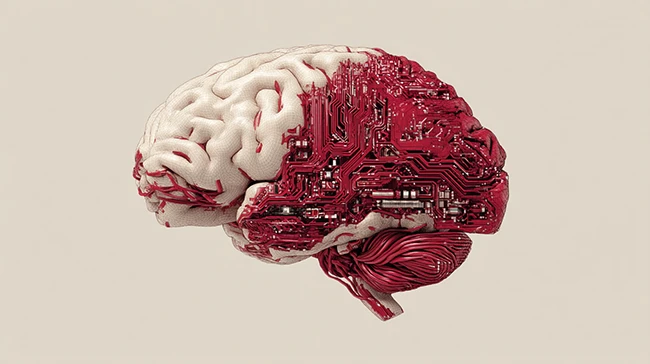 The research shows that AI systems increasingly shape cultural expression,
religious understanding, and historical narratives. Generative tools summarize
belief systems, reproduce artistic styles, and simulate cultural symbols at
scale. Errors in these representations influence trust and behavior.
Communities misrepresented by AI outputs disengage from digital systems or
challenge their legitimacy. In political or conflict settings, distorted
cultural narratives contribute to disinformation, polarization, and
identity-based targeting. Security teams working on information integrity and
influence operations encounter these risks directly. The study positions
cultural misrepresentation as a structural condition that adversaries exploit
rather than an abstract ethics issue. ... Systems designed with assumptions of
reliable connectivity or standardized data pipelines fail in regions where
those conditions do not hold. Healthcare, education, and public service
applications show measurable performance drops when deployed outside their
original development context. These failures expose organizations to cascading
risks. Decision support tools generate flawed outputs. Automated services
exclude segments of the population. Security monitoring systems miss signals
embedded in local language or behavior. ... Models operate on statistical
patterns and lack awareness of missing data. Cultural knowledge, minority
histories, and local practices often remain absent from training sets. This
limitation affects detection accuracy.
The research shows that AI systems increasingly shape cultural expression,
religious understanding, and historical narratives. Generative tools summarize
belief systems, reproduce artistic styles, and simulate cultural symbols at
scale. Errors in these representations influence trust and behavior.
Communities misrepresented by AI outputs disengage from digital systems or
challenge their legitimacy. In political or conflict settings, distorted
cultural narratives contribute to disinformation, polarization, and
identity-based targeting. Security teams working on information integrity and
influence operations encounter these risks directly. The study positions
cultural misrepresentation as a structural condition that adversaries exploit
rather than an abstract ethics issue. ... Systems designed with assumptions of
reliable connectivity or standardized data pipelines fail in regions where
those conditions do not hold. Healthcare, education, and public service
applications show measurable performance drops when deployed outside their
original development context. These failures expose organizations to cascading
risks. Decision support tools generate flawed outputs. Automated services
exclude segments of the population. Security monitoring systems miss signals
embedded in local language or behavior. ... Models operate on statistical
patterns and lack awareness of missing data. Cultural knowledge, minority
histories, and local practices often remain absent from training sets. This
limitation affects detection accuracy.
The Board’s Duty in the Age of the Black Box
 Today, when this Board approves the acquisition of a Generative AI startup or
authorizes a billion-dollar investment in GPU infrastructure, you are
acquiring a Black Box. You are purchasing a system defined not by logical
rules, but by billions of specific weights, biases, and probabilistic
outcomes. These systems are inherently unstable; they “hallucinate,” they
drift, and they contain latent biases that no static audit can fully reveal.
They are closer to biological organisms than to traditional software. ...
Critics may argue that applying financial volatility models to operational AI
risk is a conceptual leap. There is no perfect mathematical bridge between
“Model Drift” and “WACC” (Weighted Average Cost of Capital). However, in the
absence of a liquid market for “Algorithm Liability Insurance” or standardized
auditing protocols, the Board must rely on empirical proxies to gauge risk.
... The single largest destroyer of capital in the current AI cycle is the
misidentification of a “Wrapper” as a “Moat.” The Board must rigorously
interrogate the strategic durability of the asset. ... The Risk Committee’s
role is shifting from passive monitoring to active defense. The risks
associated with AI are “Fat-Tailed”—meaning that while day-to-day operations
might be smooth, the rare failure modes are catastrophic. ... For the Chief
Information Officer (CIO), the concept of “Model Risk” translates directly
into operational reality. It is critical to differentiate between “Valuation
Risk” and “Maintenance Cost.”
Today, when this Board approves the acquisition of a Generative AI startup or
authorizes a billion-dollar investment in GPU infrastructure, you are
acquiring a Black Box. You are purchasing a system defined not by logical
rules, but by billions of specific weights, biases, and probabilistic
outcomes. These systems are inherently unstable; they “hallucinate,” they
drift, and they contain latent biases that no static audit can fully reveal.
They are closer to biological organisms than to traditional software. ...
Critics may argue that applying financial volatility models to operational AI
risk is a conceptual leap. There is no perfect mathematical bridge between
“Model Drift” and “WACC” (Weighted Average Cost of Capital). However, in the
absence of a liquid market for “Algorithm Liability Insurance” or standardized
auditing protocols, the Board must rely on empirical proxies to gauge risk.
... The single largest destroyer of capital in the current AI cycle is the
misidentification of a “Wrapper” as a “Moat.” The Board must rigorously
interrogate the strategic durability of the asset. ... The Risk Committee’s
role is shifting from passive monitoring to active defense. The risks
associated with AI are “Fat-Tailed”—meaning that while day-to-day operations
might be smooth, the rare failure modes are catastrophic. ... For the Chief
Information Officer (CIO), the concept of “Model Risk” translates directly
into operational reality. It is critical to differentiate between “Valuation
Risk” and “Maintenance Cost.”
Cybersecurity leaders’ resolutions for 2026
 Any new initiative will start with a clear architectural plan and a deep
understanding of end-to-end dependencies and potential points of failure. “By
taking a thoughtful, engineering-driven approach — rather than reacting to
outages or disruptions — we aim to strengthen the stability, scalability, and
reliability of our systems,” he says. “This foundation enables the business to
move with confidence, knowing our technology and security investments are
built to endure and evolve.” ... As new attack surfaces emerge with AI-driven
applications and systems, Piekarski’s priorities will focus on defending and
hardening the environment against AI-enabled threats and tactics. ... In
practice, SaaS management and discovery tools will be used to get a handle on
shadow IT and unsanctioned AI usage. Automation for compliance and reporting
will be important as customer and regulatory requirements around ESG and
security continue to grow, along with threat intelligence feeds and
vulnerability management solutions that help Gallagher and the team stay ahead
of what’s happening in the wild. “The common thread is visibility and control;
we need to know what’s in our environment, how it’s being used, and that we
can respond quickly when things change,” he tells CSO. ... “Quantum computing
poses significant cyber risks by potentially breaking current encryption
methods, impacting data security, and enabling new attack vectors,” says
Piekarski.
Any new initiative will start with a clear architectural plan and a deep
understanding of end-to-end dependencies and potential points of failure. “By
taking a thoughtful, engineering-driven approach — rather than reacting to
outages or disruptions — we aim to strengthen the stability, scalability, and
reliability of our systems,” he says. “This foundation enables the business to
move with confidence, knowing our technology and security investments are
built to endure and evolve.” ... As new attack surfaces emerge with AI-driven
applications and systems, Piekarski’s priorities will focus on defending and
hardening the environment against AI-enabled threats and tactics. ... In
practice, SaaS management and discovery tools will be used to get a handle on
shadow IT and unsanctioned AI usage. Automation for compliance and reporting
will be important as customer and regulatory requirements around ESG and
security continue to grow, along with threat intelligence feeds and
vulnerability management solutions that help Gallagher and the team stay ahead
of what’s happening in the wild. “The common thread is visibility and control;
we need to know what’s in our environment, how it’s being used, and that we
can respond quickly when things change,” he tells CSO. ... “Quantum computing
poses significant cyber risks by potentially breaking current encryption
methods, impacting data security, and enabling new attack vectors,” says
Piekarski.Enterprise Digital Twin: Why Your AI Doesn’t Understand Your Organization
Agentic AI systems are moving from research papers to production pilots, taking critical business actions such as processing invoices, scheduling meetings, drafting communications, and coordinating workflows across teams. They operate with increasing autonomy. When an agent misunderstands organizational context, it does not just give a wrong answer. It takes wrong actions, such as approving expenses that violate policy, scheduling meetings with people who should not be in the room, routing decisions to the wrong authority, and creating compliance exposure at machine speed. The industry is catching up to this reality. ... An AI system reviewing a staffing request might confirm that the budget exists, the policy allows the hire, and the hiring manager has authority. All technically correct. But without Constraint Topology, the system does not know that HR cannot process new hires until Q2 due to a systems migration, that the only approved vendor for background checks has a six-week backlog, or that three other departments have competing requisitions for the same job grade and only two can be filled this quarter. ... Most AI frameworks focus on making models smarter. CTRS focuses on making organizations faster. Technically correct outputs that do not translate into action are not actually useful. The bottleneck is not AI capability. It is the distance between what AI recommends and what the organization can execute.The agentic infrastructure overhaul: 3 non-negotiable pillars for 2026
 If 2025 was about the brain (the LLM), 2026 must be about the nervous system.
You cannot bolt a self-correcting, multi-step agent onto a 2018 ERP and expect
it to function. To move from isolated pilots to enterprise-wide autonomous
workflows, we must overhaul our architectural blueprint. We are moving from a
world of rigid, synchronous commands to a world of asynchronous, event-driven
fluidity. ... We build dashboards with red and green lights so a DevOps
engineer can identify a spike in latency. However, an AI agent cannot “look”
at a Grafana dashboard. If an agent encounters an error mid-workflow, it needs
to understand why in a format it can digest. ... Stop “bolting on” agents to
legacy REST APIs. Instead, build an abstraction layer — an “agent gateway” —
that converts synchronous legacy responses into asynchronous events that your
agents can subscribe to. ... The old mantra was “Data is the new oil.” In
2026, data is just the raw material; Metadata is the fuel. Businesses have
spent millions “cleaning” data in snowflakes and lakes, but clean data lacks
the intent that agents require to make decisions. ... Invest in a data catalog
that supports semantic tagging. Ensure your data engineers are not just moving
rows and columns, but are defining the “meaning” of those rows in a way that
is accessible via your RAG pipelines. ... The temptation in 2026 will be to
build “bespoke” agents for every department — a HR agent, a finance agent, a
sales agent. This is a recipe for a new kind of “shadow IT” and massive
technical debt.
If 2025 was about the brain (the LLM), 2026 must be about the nervous system.
You cannot bolt a self-correcting, multi-step agent onto a 2018 ERP and expect
it to function. To move from isolated pilots to enterprise-wide autonomous
workflows, we must overhaul our architectural blueprint. We are moving from a
world of rigid, synchronous commands to a world of asynchronous, event-driven
fluidity. ... We build dashboards with red and green lights so a DevOps
engineer can identify a spike in latency. However, an AI agent cannot “look”
at a Grafana dashboard. If an agent encounters an error mid-workflow, it needs
to understand why in a format it can digest. ... Stop “bolting on” agents to
legacy REST APIs. Instead, build an abstraction layer — an “agent gateway” —
that converts synchronous legacy responses into asynchronous events that your
agents can subscribe to. ... The old mantra was “Data is the new oil.” In
2026, data is just the raw material; Metadata is the fuel. Businesses have
spent millions “cleaning” data in snowflakes and lakes, but clean data lacks
the intent that agents require to make decisions. ... Invest in a data catalog
that supports semantic tagging. Ensure your data engineers are not just moving
rows and columns, but are defining the “meaning” of those rows in a way that
is accessible via your RAG pipelines. ... The temptation in 2026 will be to
build “bespoke” agents for every department — a HR agent, a finance agent, a
sales agent. This is a recipe for a new kind of “shadow IT” and massive
technical debt.
The New Front Line Of Digital Trust: Deepfake Security
 AI-generated deepfakes are ruining the way we perceive one another, as well as
undermining institutions’ ways of ensuring identity, verifying intent and
maintaining trust. For CISOs and IT security risk leaders, this is a new and
pressing frontier for us to focus on: defending against attacks not on systems
but on beliefs. ... Deepfakes are coming to the forefront just as CISOs have
more risk to manage than ever. Here are some of the other key pressures
driving the financial cybersecurity environment today: Multicloud
misconfigurations and API exposure; Ransomware shift to triple extortion;
Expanding third-party and fourth-party dependencies; Insider threats facing
hybrid workforces; Barriers to zero-trust implementation and Regulatory
fragmentation. ... Deepfake security isn’t a fringe issue anymore; it’s now a
foremost challenge to digital trust and systemic financial resilience. In
today’s world, where synthetic voices can create markets and fake identities
can trigger transactions, authenticity reigns as the currency of banking.
Tomorrow’s front-runners will be those building the next-generation financial
systems—secured, transparent and globally trusted. Those systems will include
reconfigured trust frameworks, deepfake detection, AI governance that drives
model integrity and a resilient-by-design approach. In this world, where
anyone can create an AI-generated identity, the ultimate competitive
differentiator is proving what’s real.
AI-generated deepfakes are ruining the way we perceive one another, as well as
undermining institutions’ ways of ensuring identity, verifying intent and
maintaining trust. For CISOs and IT security risk leaders, this is a new and
pressing frontier for us to focus on: defending against attacks not on systems
but on beliefs. ... Deepfakes are coming to the forefront just as CISOs have
more risk to manage than ever. Here are some of the other key pressures
driving the financial cybersecurity environment today: Multicloud
misconfigurations and API exposure; Ransomware shift to triple extortion;
Expanding third-party and fourth-party dependencies; Insider threats facing
hybrid workforces; Barriers to zero-trust implementation and Regulatory
fragmentation. ... Deepfake security isn’t a fringe issue anymore; it’s now a
foremost challenge to digital trust and systemic financial resilience. In
today’s world, where synthetic voices can create markets and fake identities
can trigger transactions, authenticity reigns as the currency of banking.
Tomorrow’s front-runners will be those building the next-generation financial
systems—secured, transparent and globally trusted. Those systems will include
reconfigured trust frameworks, deepfake detection, AI governance that drives
model integrity and a resilient-by-design approach. In this world, where
anyone can create an AI-generated identity, the ultimate competitive
differentiator is proving what’s real.


No comments:
Post a Comment