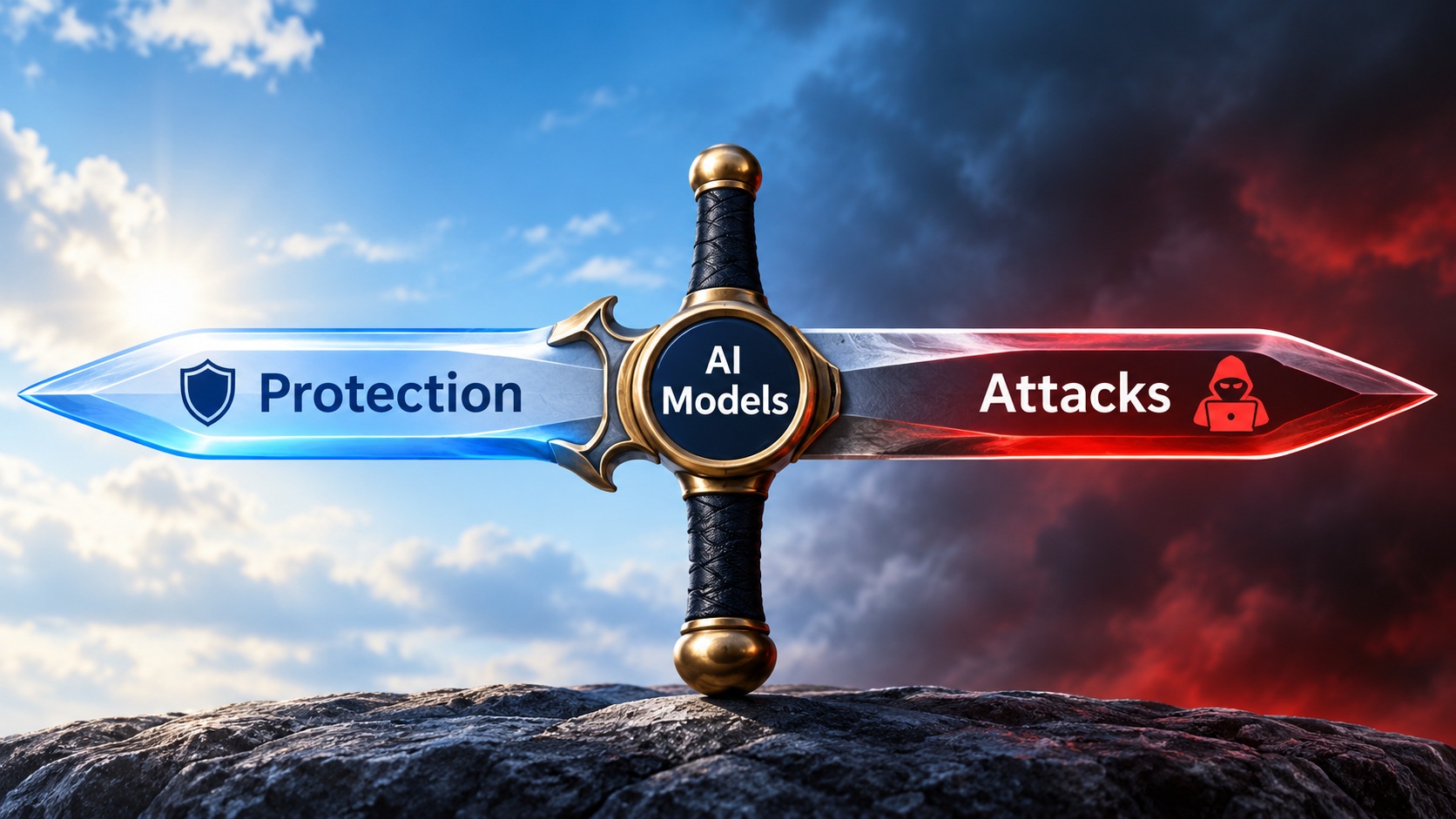
Cutting both ways: AI sharpens systems protection while opening new exploits for malicious actors
The recent article highlights the dual role of artificial intelligence in modern cybersecurity. While organizations use advanced AI models to quickly spot vulnerabilities in their source code, malicious actors are leveraging those exact same tools to exploit weaknesses faster than ever before. Because these highly sophisticated attacks often strike without warning, industry experts emphasize that standard defenses are no longer enough. Instead, the focus has shifted toward building true cyber resilience. This approach requires companies to maintain a strong recovery posture focused on deep data integrity, ensuring they can quickly restore clean, uncompromised information after an inevitable breach occurs. Furthermore, as emerging threats like post-quantum computing begin to surface, businesses face the urgent task of upgrading their foundational encryption and infrastructure layers. Ultimately, securing enterprise environments now demands continuous backup validation, reliable data pipelines, and a fundamental shift from treating security as an optional add-on to making it a core, inseparable part of every digital operation.
Communications Infrastructure Is Now A Security Issue
Enterprise communications platforms are no longer just background IT systems; they have become a critical part of mission assurance and core security infrastructure. Historically viewed simply as tools for routing calls and connecting people, these systems now support essential, regulated workflows and incident response efforts. When they fail, the disruption quickly ripples out to affect business continuity, impacting customers and employees alike. Consequently, modernization efforts, such as moving to the cloud or integrating artificial intelligence, must prioritize reliability and resilience over mere capability upgrades. Moving a vulnerable system to the cloud does not automatically make it secure; resilience must be built into the architecture from the start. AI, while powerful, introduces new risks that require the same strict access controls and oversight applied to privileged human users. Security leaders must identify critical communication workflows, define concrete resilience requirements, and regularly test against realistic failure scenarios in their tabletop exercises. Ultimately, modernizing communications should never compromise the systems a business depends on to survive a crisis.

Does Your Manufacturing Data Deserve Your Trust?
Manufacturers today collect vast amounts of information from their production lines, but many struggle with a fundamental problem: they cannot trust their own data. As operations expand and new equipment is added, inconsistencies naturally develop across different systems. When teams see conflicting numbers for the same metric, discussions shift away from solving actual production issues and instead focus on figuring out which report is accurate. This lack of reliability slows down decision-making and drains operational confidence. Simply gathering more information is not the answer and often just creates additional noise. To make effective decisions, companies need data that is accurate, consistent, and easy to access across the entire organization. This reliable foundation is especially critical before investing in advanced technologies like artificial intelligence or predictive maintenance, which rely entirely on the quality of the information they process. Ultimately, the goal is not to hoard more statistics, but to build a dependable system where teams can confidently use the information they already have to improve their daily operations.

A free open-source backup app that makes traditional backups feel outdated
The article describes how Kopia, a free open‑source backup tool, makes traditional backup methods feel outdated by focusing on snapshots and efficiency rather than repeated full copies. The author explains that most backup tools still follow the old pattern of selecting files, choosing a destination, and hoping the process works — often with key features locked behind paid subscriptions. Kopia stood out because it is flexible, doesn’t require an account, and supports Windows, macOS, and Linux through a simple graphical interface. After creating an encrypted repository, users can start with a basic setup and explore advanced options later. The real improvement comes from Kopia’s snapshot‑based design: instead of copying everything each time, it saves only new or changed data, making backups faster and less wasteful. Built‑in deduplication further reduces storage use by avoiding duplicate data. The article’s steady message is that Kopia offers a more modern, efficient, and transparent way to back up files without the complexity or cost of traditional tools.

Choosing a Custom Business Software Development Company: A Testing and Quality Evaluation Framework
Selecting the right custom software development company requires looking past polished sales pitches and headline prices to evaluate factors that actually predict a project's success. Before speaking with vendors, clearly define your business problem, measurable success metrics, and absolute constraints. This clarity ensures you receive proposals based on your reality rather than vendor assumptions. When evaluating candidates, assess them across six key dimensions: their grasp of your underlying business goals, specific experience solving similar problems, their actual delivery process, the exact team members assigned to your project, the quality and maintainability of their code, and the alignment of their commercial terms with your risk tolerance. Watch out for red flags like detailed quotes provided without any discovery work or a reluctance to introduce the technical lead. To minimize risk, consider starting with a paid discovery phase. This small initial engagement allows you to test the working relationship, refine the project scope, and ensure your chosen vendor truly aligns with your objectives before committing to a major investment.

What EvilTokens teaches us about defending against AI-assisted attacks
Artificial intelligence is changing the pace of cyberattacks, as demonstrated by a recent phishing tool called EvilTokens. Rather than stealing passwords, EvilTokens tricks users into granting access to their Microsoft accounts. Once inside, the tool uses AI to quickly figure out who handles payments, identify trusted business relationships, and write convincing fake emails. This automation speeds up the time it takes an attacker to move from initial access to actual harm. Because AI removes the usual hurdles that slow attackers down, traditional security measures based on average detection and response times are no longer enough. Even a fast response might be too late if the attacker can accomplish their goals in minutes. To defend against these faster threats, organizations need to test their entire security setup as a connected system, not just check individual tools in isolation. By understanding exactly how an attacker might move through their network, security teams can proactively close gaps and stop these automated threats before they cause lasting damage.

Between alerts: What Attackers Do in the Spaces Ordinary Detection Misses
Modern cyber attackers are increasingly using artificial intelligence to move quickly, but they still rely on stealth to evade detection. To stay hidden, they operate in the quiet spaces between security alerts, dragging out their operations and hiding within standard administrative tools like DNS queries or SMB connections. Because these individual actions look like ordinary business operations, security teams and siloed tools often miss them. An attacker might spend days or weeks slowly gathering credentials or mapping systems without triggering a high-priority alarm. To catch these subtle intrusions, Security Operations Centers (SOCs) need network detection and response (NDR) platforms that capture detailed network evidence over time. Instead of just looking at isolated alerts, NDR provides the necessary context to connect distinct events into a clear timeline. By applying AI to this comprehensive network data, defense teams can quickly identify hidden relationships across hosts and protocols. This approach allows analysts to spot the broader progression of an attack and make smarter risk decisions, rather than getting overwhelmed by thousands of disconnected alerts.

How to make enterprise APIs agent-ready
As large organizations integrate AI agents into their workflows, they face a major hurdle: connecting these agents to thousands of internal APIs. The standard approach of mapping every single API operation to a separate tool quickly breaks down. It creates high costs from excessive token usage, slows down response times, and confuses the AI, leading to poor accuracy. To solve this, technical teams are shifting to a method known as "code mode." Instead of overwhelming the agent with a massive list of individual tools, this approach provides a single, streamlined interface. The agent then writes and executes short code snippets to find exactly what it needs. This keeps the data load small and efficient. Just as importantly, organizations must route these agent requests through their existing API gateways. Doing so ensures that the agents follow the same security, authentication, and access rules as any other user. By treating AI agents as standard clients, companies can safely grant them access to essential systems without losing control or slowing down performance.

CIOs rethink roles, skills, training, and talent models for the future
As technology rapidly changes how organizations operate, IT leaders are actively redesigning their teams, roles, and training methods to prepare for the future. With artificial intelligence taking over many routine coding and manual tasks, the traditional emphasis on deep, specialized technical skills is steadily shifting. Instead, companies increasingly value broad problem-solving abilities, strong communication, and a clear understanding of the business itself. IT professionals will need to focus less on simply building software and more on carefully deciding whether a project truly adds value before starting it. To keep up with this fast pace, long-term training programs are giving way to short, continuous lessons that happen directly on the job. Job roles are also becoming more flexible, with staff acting as general engineers who can move smoothly between different areas like networking and databases as needs arise. Ultimately, building a workforce that can quickly adapt, learn, and apply new tools to practical challenges is becoming the most reliable way to navigate an unpredictable technological landscape.

IT and security leaders of the AI era must go back to basics and beware the hype
As artificial intelligence rapidly evolves, IT and security leaders must avoid getting distracted by the hype and instead focus on foundational security principles. While modern AI tools are powerful and can expose new vulnerabilities or discover system weaknesses faster than ever, the core issue remains poor identity management. Hackers and AI agents alike exploit basic failures, such as unrevoked access, forgotten credentials, and over-privileged accounts. When organizations adopt AI, they often deploy agents with broad permissions and unclear oversight, mirroring the mistakes made during the early days of cloud computing. To protect their systems, companies do not need entirely new security frameworks; they need to rigorously apply established practices. This means enforcing least privilege, ensuring just-in-time access, and maintaining strict oversight of both human and non-human identities. By mastering these basic controls and clearly assigning responsibility for entitlement governance, organizations can safely navigate the current wave of technological change without leaving their digital doors unlocked.

