
OWASP Global AppSec: Cybersecurity industry overdue for a ‘market correction’
At the recent OWASP Global AppSec conference, cybersecurity veteran Jeremiah Grossman warned that the industry is heading for a significant market correction. For years, the sector has relied on "compliance and FUD" (fear, uncertainty, and doubt) to sell products, essentially asking enterprises to buy security on faith. Grossman argues this model is unsustainable and that a reckoning is imminent, driven largely by cyber-insurance carriers. As insurance companies accumulate actuarial data on vulnerabilities and breaches, they will soon be able to definitively prove which security tools actually work and which are merely hype. Early findings suggest that a majority of current cybersecurity efforts fail to positively impact an organization's bottom line. When empirical data replaces blind faith, organizations will shift from panic buying the latest tools to demanding demonstrable risk reduction and return on investment. Consequently, vendors will face pressure to consolidate point solutions into integrated platforms, focus on the vulnerabilities attackers actually exploit, and potentially even offer financial guarantees to back up their products' effectiveness. Ultimately, this shift toward data-driven accountability will strengthen the entire cybersecurity landscape.
Chatbot Rules Continue To Evolve In California And Colorado
The Chatbot Rules Continue To Evolve In California And Colorado article explains how both states are moving beyond simple AI disclosure requirements toward detailed rules covering chatbot safety, design, verification, and accountability. California’s new measures place particular emphasis on companion chatbots available to children. Operators will face requirements around age assurance, documented risk assessments, child safety policies, parental controls, advertising and data restrictions, crisis-response procedures, and limits on designs that encourage emotional dependence. Independent child-safety audits will also be required for covered operators, while companion chatbots in toys intended for children under 16 are prohibited until 2031. Colorado’s Chatbot Safety Act takes a broader approach, covering conversational AI services that primarily simulate human conversation. It requires AI disclosure, age estimation, protections for minors, self-harm response procedures, and annual reporting. The state also restricts chatbots from presenting their outputs as equivalent to advice from qualified healthcare, legal, mental-health, or dietary professionals. The article’s central message is that companies should assess their products early, because chatbot regulation is moving quickly from transparency toward documented safety controls and ongoing oversight.

AI economics: How to decide which AI investments are worth scaling
The article explores how organizations can decide which AI investments are worth scaling by shifting from viewing them as individual projects to managing them as a portfolio. While AI spending is increasing, many initiatives fail to deliver expected business value. To address this, organizations must understand the true total cost of ownership of AI, including infrastructure, labor, and model consumption. This concept, known as AI economics, allows leaders to evaluate investments based on cost per outcome rather than just comparing expenses. This approach requires CIOs, CFOs, and business leaders to collaborate and connect financial, operational, and organizational data. The article proposes a framework based on two questions: whether the business value is real and measured against a baseline, and whether the cost per outcome is lower than previous methods. Based on the answers, initiatives are categorized to start, stop, optimize, or scale. Projects that demonstrate measurable value at a sustainable cost should be scaled, while those failing to meet outcomes should be stopped to free up resources. Projects with value but high costs should be optimized. By managing AI as an investment portfolio, leaders can make evidence-based decisions and clearly communicate the value of AI spending to their boards.
The New Knowledge Artifacts of the AI Economy
Artificial intelligence is shifting the focus of software development away from traditional source code and toward new forms of shareable knowledge artifacts. According to Tim O'Reilly, writing for O'Reilly Radar, developers are increasingly less interested in borrowing preexisting code libraries. Because AI agents can generate custom code so effortlessly, engineers prefer to extract specific context and patterns to create bespoke solutions tailored exactly to their needs. This transition mirrors historical shifts, such as the move from distributing proprietary binaries to sharing open-source code repositories. However, this new reality brings unique challenges. Traditional open-source maintainers face a surge of low-quality, automated contributions, and scientific computing communities worry that relying on unverified AI-generated forks could threaten the reliability of foundational tools. While massive SaaS applications and shared source code will remain necessary for standardized environments, the developer community must figure out exactly what these new AI-driven artifacts—like natural language prompts, generation processes, and developer skills—look like. They must also develop new mechanisms and incentives for sharing this contextual knowledge so that the open-source ethos of collaboration and peer production can survive and adapt.

Why Critical Infrastructure's Biggest Threats are Hard to Find
Critical infrastructure faces growing threats from sophisticated supply chain compromises and AI-assisted intrusions, but the biggest challenge for organizations is a severe lack of operational visibility. Modern operational technology environments are increasingly complex, often blending legacy equipment with poorly monitored network systems and intricate software dependencies. This lack of oversight allows malicious actors to embed themselves deeply and remain undetected for extended periods. Real-world incidents, such as the poisoning of widely used software libraries or AI-driven reconnaissance of municipal water utilities, demonstrate how quickly these threats can spread across an unprotected landscape. While many companies are rapidly adopting agentic AI to improve efficiency, less than half have established comprehensive AI security literacy, creating a dangerous gap in structural visibility and control. To combat these risks, organizations must implement robust layered defenses, including maintaining a software bill of materials, establishing baseline behavior detection, isolating network segments, and retaining transparent, vendor-independent audit logs. Prioritizing end-to-end visibility ensures that when incidents inevitably occur, security teams can rapidly identify root causes, understand the full scope of the disruption, and prevent future recurrences.

Taming Cloud Costs: A Guide to the FinOps Framework in Google Cloud
The article explains how the shift to cloud computing requires a new approach to managing infrastructure costs, a discipline known as Cloud FinOps. In modern cloud environments, developers can instantly provision resources, creating a "tragedy of the commons" where decentralized spending frequently leads to unchecked financial waste. Just as DevOps successfully united software development with IT operations, FinOps bridges the traditional gap between engineering and finance. Instead of enforcing rigid financial approvals that hinder innovation, organizations can leverage the Google Cloud FinOps Framework to integrate cost efficiency directly into the daily developer workflow. This specific strategy involves shifting company culture, updating financial processes to match agile delivery, and utilizing native cloud technology for granular cost visibility. A clear operating model establishes defined roles and communication plans to ensure all stakeholders remain aligned on business goals. Ultimately, FinOps functions as a continuous, proactive cycle of informing, optimizing, and operating. By equipping engineering teams with real-time billing data, automated guardrails, and dynamic forecasting tools, companies can balance rapid software deployment with strict fiscal responsibility, ensuring computing capital is always managed efficiently.
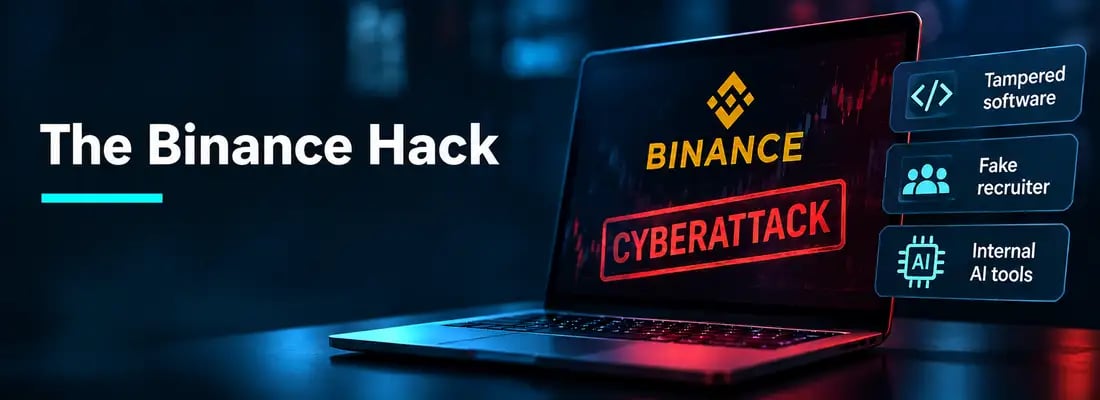
Binance's $6.34 Billion Cyber Attack: Lessons for Business Leaders
The October 2026 cyberattack on Binance, impacting roughly $6.34 billion in digital assets, serves as a crucial wake-up call for business leaders regarding modern security vulnerabilities. Carried out over several months and attributed to North Korea, the breach did not result from a single failure. Instead, attackers used a sophisticated combination of compromised developer tools found via search engines, elaborate social engineering through fake recruitment processes, and the exploitation of an internal AI tool to maneuver deep into the company’s systems. For organizations outside the crypto space, this incident highlights several vital lessons. First, third-party risk management must extend beyond formal vendors to include the everyday software employees download and the external interactions they have. Second, social engineering is evolving far past simple phishing emails, requiring updated employee awareness training. Third, as companies integrate internal AI tools, they must strictly govern access and permissions. Finally, the attack underscores that standard incident containment measures—like suspending services—may fail if attackers have established alternative access routes, proving the necessity of rigorously testing incident response plans under realistic conditions.
Better OT security: You can't plug every hole, so think differently
As operational technology (OT) systems become increasingly connected to digital networks, they face a rising wave of cyber threats, illustrated by a recent attack that compromised the refrigeration systems of over 700 French supermarkets. Unlike traditional IT systems like servers, which can be easily duplicated or shut down for maintenance, OT devices interact directly with the physical world, making downtime far more complicated. Securing these systems requires a fundamental shift in perspective. Instead of treating OT security exactly like IT and attempting to patch every single vulnerability, organizations should prioritize business resilience and operational continuity. Security teams must evaluate risks through an operational lens, weighing the safety and continuity of physical systems against the threat landscape. A layered defense framework—focusing on device discovery, continuous monitoring, tight access controls, and integrated incident response—allows companies to manage these risks effectively. By shaping modern digital security practices to fit the unique requirements and cadence of physical infrastructure, businesses can build resilient environments that protect both their digital networks and their vital physical operations without causing unnecessary disruptions.

10 ways the oil and gas industry can leverage digital twin technology
The oil and gas industry faces mounting pressure from market changes and environmental concerns, driving a shift toward digital twin technology. A digital twin is a dynamic virtual model of a physical asset that uses live data to predict behavior and improve daily efficiency. For energy operators, this tool enables predictive maintenance by constantly monitoring equipment to prevent costly breakdowns. It allows teams to simulate different drilling strategies, optimize reservoir extraction rates, and test new facility designs safely in a virtual space. Beyond normal operations, digital twins enhance safety by helping workers prepare for emergencies and reduce environmental impact by modeling clear emission reduction strategies. As the sector adopts more artificial intelligence and connected devices, digital twins will likely lead to fully automated drilling and smarter distribution grids. They also offer a viable path toward cleaner energy by optimizing the performance of wind and solar assets. Managing these highly complex systems requires reliable management platforms to bridge the physical and digital worlds. Ultimately, these virtual models are helping the energy industry build a safer, highly efficient, and highly adaptable operating future.

How the Democrats' midterm victory could reshape tech policy
The Democratic Party's sweeping victory in the 2026 midterm elections shifts control of Congress and signals potential changes in federal technology policy. With renewed legislative majorities, lawmakers are expected to intensify their oversight of artificial intelligence accountability, data privacy, and the expanding power of large tech platforms. While the realities of a divided government may slow the passage of comprehensive new laws, immediate impacts could surface through increased congressional hearings and stricter federal procurement requirements that demand robust AI governance from contractors. At the same time, this election exposed growing local pushback against rapid data center expansion, with several communities voting to restrict new developments due to concerns over heavy power and water usage. Consequently, technology leaders can no longer view enterprise IT as politically neutral. Experts advise CIOs to incorporate policy literacy into their long-term planning, as navigating federal scrutiny, state-level infrastructure limitations, and debates over AI-driven automation will become essential for maintaining stability and guiding future investments in the tech industry.


No comments:
Post a Comment