Showing posts with label portability. Show all posts

Daily Tech Digest - November 04, 2026

Quote for the Day
“The team owns the process — the Scrum Master owns the improvement.”
— Henrik Kniberg
Audio Edition — Listen to Today’s Digest
Narrated version of the Daily Tech Digest
Article Thumbnail

How good is your cloud exit strategy?

The article argues that most enterprises assume they can leave a cloud provider whenever they want, but the way systems are actually built makes that far harder in practice. A cloud exit strategy isn’t about abandoning the cloud; it’s about avoiding architectural choices that quietly lock the business into one provider. The piece explains that portability is a business requirement, not just a technical ideal. If pricing changes, regulations shift, or a region goes down, the organization should have options that don’t require a multi‑year rewrite. The article highlights four areas where lock‑in usually hides: identity systems tied too tightly to a provider’s access model, data stored in proprietary formats or managed services without a clear extraction path, networking built around provider‑specific constructs, and infrastructure‑as‑code templates that encode assumptions only one cloud understands. It stresses that using native services is fine as long as the dependency is intentional and documented. The steady message is that cloud exit architecture is about flexibility — knowing what can move, what can’t, and what trade‑offs you’re accepting before they become constraints.

Read Original Article →

Industrial AI adoption outpaces security readiness, leaving OT environments exposed to emerging threats

The integration of artificial intelligence into industrial and operational technology is happening faster than the security measures needed to protect it. While many organizations are adopting AI to improve efficiency and predictive maintenance, they often lack the tools to detect when these models or the data feeding them have been compromised. Unlike traditional cyberattacks, a manipulated AI model might not trigger standard security alerts. Instead, it often looks like a routine equipment failure, a slow loss of efficiency, or a subtle change in physical processes, making it hard to identify. Attackers can exploit these systems by feeding them bad data or manipulating the models to make unsafe decisions. Because AI relies on sensor inputs that were not originally designed with modern security in mind, the physical safety of industrial plants is at risk. To safely use AI, organizations must treat these tools as advisors rather than giving them direct operational control. They should also rely on strict engineering practices, continuous monitoring, and independent safety systems to ensure reliable operations.

Read Original Article →
Article Thumbnail

Your Tools Should Answer to the Profession

Enterprise architects are often trapped by software tools that force them into proprietary data models, making it difficult to transfer work or change vendors. Instead of software companies dictating what an architecture artifact is, the profession itself should define the standards. Using the Business Technology Architecture Body of Knowledge (BTABoK), architects can rely on open models and shared formats, ensuring that their daily work remains highly accessible and transferable. When tools adopt these open standards, they no longer need to invent custom data structures that limit flexibility. Instead, software vendors can compete on practical features like better editing, deeper analysis, and smoother collaboration. To support this shift, a formal licensing and accreditation program ensures tools faithfully read and write standard formats without quietly altering them. While experimental platforms like Ergane help test and refine these open standards, the ultimate goal is a diverse market of independent tools that all speak the same language. By taking control of the standards, architects ensure their models remain readable, portable, and relevant for years, freeing teams from restrictive vendor lock-in.

Read Original Article →
Article Thumbnail

Beyond the HR File: Governing Employee Data Under India’s DPDP Act

ndia’s Digital Personal Data Protection (DPDP) Act of 2023 changes how businesses must handle employee information, clarifying that employment itself does not grant a company unlimited rights to an individual’s personal data. While the law permits organizations to process data for specific employment purposes—such as managing payroll or protecting corporate assets—it does not offer a blanket exemption for activities like using personal phone numbers for public customer service, featuring employee photographs in marketing campaigns, or circulating full resumes to prospective clients. Employers must carefully examine the true purpose of their data collection, establish clear legal boundaries, and ensure that data is only shared or retained as strictly necessary. For uses outside essential employment functions, companies must obtain specific, informed, and optional consent without pressuring staff. To stay compliant and lower risks, organizations should document their data practices, implement strong security controls, rely on business-managed communication tools, and minimize the personal details shared externally. Ultimately, safeguarding employee privacy requires treating their data with the same careful governance applied to customer information.

Read Original Article →
Article Thumbnail

Elon Musk Says Neuralink's Blindsight Will Bring Sight to the Blind

Elon Musk recently announced that Neuralink’s second product, Blindsight, is engineering-ready and aims to restore vision for the blind, including those without sight since birth. The device works by bypassing the eyes entirely, using a camera to send visual data directly to a brain implant. This implant stimulates the visual cortex to create tiny flashes of light, forming a low-resolution map of a person's surroundings. While the hardware and robotic surgical implementation represent notable engineering progress, medical experts advise caution regarding the real-world timeline and functional results. Regulatory approval for such a complex brain implant will likely take years of rigorous safety trials. Furthermore, researchers point out that previous attempts at cortical stimulation have struggled to produce useful, patterned vision beyond simple flickering lights. For patients blind since birth, the brain often repurposes the visual cortex for other senses, complicating how these signals might be perceived. Ultimately, while Blindsight brings advanced hardware to the table, solving the long-term biological and neurological challenges of artificial vision remains a significant hurdle.

Read Original Article →
Article Thumbnail

The most popular programming languages in 2026 – and some good news on developer job growth

Recent data from 2026 shows that despite the rapid rise of autonomous AI coding assistants, the core landscape of software development remains remarkably stable. According to an analysis of multiple industry surveys, the most popular programming languages have barely shifted. Python, Java, and JavaScript continue to dominate the top three spots, while legacy systems ensure languages like COBOL and Fortran maintain a persistent presence. However, the most significant finding contradicts the widespread fear of a developer replacement crisis. Since the widespread adoption of these advanced coding tools, the month-over-month growth rate for software development jobs has actually increased. In fact, current demand for developers is actively outpacing overall job market growth. The data suggests that rather than eliminating the need for human programmers, these efficiencies may be driving new demands and altering the structure of the profession. Ultimately, the fundamental tools of the trade remain the same, and the market for developers continues to expand, proving that human oversight and architectural skills are still highly valued in the industry.

Read Original Article →
Article Thumbnail

The End Of Software Archaeology: Why The Old Rules Of System Modernization No Longer Apply

Modernizing older business software systems has historically felt like archaeology. As systems age, they accumulate layers of unrecorded choices, outdated assumptions, and quick fixes that make them difficult to update without causing unexpected failures. For a long time, developers had to manually trace how these systems worked before they could safely improve them, a slow and risky process that often took up the majority of their time. However, the approach to system modernization is changing because of artificial intelligence. Instead of manually digging through old code, engineering teams can now use AI to generate detailed maps of a system's structure. These tools analyze dependencies and business context, revealing exactly how different components interact and where vulnerabilities hide. By providing a clear picture of what relies on what, AI helps organizations decide precisely which parts of a system require an update and which reliable elements they can leave alone. This targeted approach prevents the need for complete, expensive system rebuilds, allowing companies to upgrade their technology safely, efficiently, and with much greater clarity.

Read Original Article →

Future-proofing enterprise AI: The impact of post-quantum cryptography on Red Hat AI Enterprise

As the rapid growth of generative AI collides with the emerging threat of quantum computing, organizations must rethink how they protect their data. Current encryption methods are vulnerable to "harvest now, decrypt later" attacks, where malicious actors intercept and store sensitive AI models and proprietary data until quantum computers become powerful enough to break standard security. To counter this, Red Hat is integrating new post-quantum cryptography standards into its AI platform. Rather than abruptly abandoning classical encryption, this approach uses a hybrid model, combining traditional and quantum-safe algorithms to secure data in transit. This shift fundamentally protects the entire machine learning lifecycle. During data ingestion, upgraded network connections prevent surveillance. Within automated pipelines, quantum-safe digital signatures verify software components, blocking compromised code before it runs. Finally, securely signing the trained AI models ensures that these valuable assets remain tamper-proof in storage. By embedding these advanced cryptographic defenses across the architecture, organizations can confidently build and deploy artificial intelligence without exposing their most valuable intellectual property to future quantum threats.

Read Original Article →

Digital sovereignty starts with knowing your exit

Digital sovereignty is increasingly becoming a board-level priority as organizations recognize the risks of deep dependence on single technology vendors. Triggered by geopolitical events and sudden technology restrictions, business leaders are realizing that true operational resilience requires more than just securing data; it demands a clear exit strategy from key suppliers. Rather than completely avoiding major providers, organizations are urged to build flexible, modular systems that allow them to switch services if costs spike or access is restricted. Experts recommend taking an inventory of current vendor dependencies and identifying critical areas where alternative solutions are necessary. Open-source software offers a pathway to independence, as it grants organizations the right to inspect, modify, and migrate their code without being locked into proprietary constraints. Ultimately, achieving digital resilience means negotiating exit terms before signing new contracts and treating core services like cloud computing as interchangeable utilities. By planning for departure from the start, companies can ensure that staying with a vendor remains a deliberate choice rather than a costly necessity.

Read Original Article →

The rise of AI governance: Why organisations need a new generation of risk leaders

The article argues that as AI becomes deeply embedded in business decisions, organisations need a new generation of risk leaders who can oversee how these systems are designed, deployed, monitored, and challenged. Michael Sell of GARP explains that AI governance can’t sit only with technical teams; it requires shared accountability across boards, business leaders, risk functions, technology, and HR. He highlights the growing demand for roles such as AI risk managers, governance officers, assurance specialists, and model‑risk experts, along with the need to upskill existing professionals in areas like bias, data quality, security, model drift, and responsible‑AI principles. Sell stresses that oversight must span the entire AI lifecycle and that employees should feel confident questioning AI outputs rather than accepting them automatically. He also notes that leadership must develop enough literacy to understand AI risks and their impact on strategy and accountability. The article’s steady message is that organisations cannot scale AI safely without building governance talent, strengthening human judgement, and creating a culture where people can challenge machine‑generated decisions.

Read Original Article →

Daily Tech Digest - November 04, 2025


Quote for the day:

"Listen with curiosity, speak with honesty act with integrity." -- Roy T Bennett


What does aligning security to the business really mean?

“Alignment to me means that information security supports the strategy of the organization,” says Sattler, who also serves as a board director with the governance association ISACA. ... “It’s not enough to say it; you actually have to do it,” she explains. “There is a contingent of cybersecurity that sees itself as an island, implementing defense in depth in every corner of the organization, adopting all these frameworks and standards, but there is diminishing returns in doing that. So instead of saying, ‘This is our cybersecurity discipline and we’re doing all these things because the benchmarks tell us to,’ CISOs have to align their efforts to their organization’s business model.” ... To align, she says, security leaders must “know the objectives the business has and use those to shape strategy, whether it’s cost containment, going into new markets, adopting cloud. The playbook starts from understanding the organizational priorities and then layering in what threat actors are doing in that industry and what could go wrong, what is the risk we can live with, and understanding and articulating the business impact of security incidents.” ... “When security is not aligned, security is reacting to changes rather than shaping changes,” says Matt Gorham. “But when security isn’t chasing the business it’s because it’s at the table from the beginning and is saying, ‘Here’s how I can help the business grow and grow securely.’”


CISO Burnout – Epidemic, Endemic, or Simply Inevitable?

“Burnout and PTSD are different conditions, though they can coexist and share some symptoms,” says Ventura. “The constant hypervigilance required in our roles can mirror PTSD symptoms, and some cyber security professionals do experience what could be considered secondary trauma from constantly dealing with the aftermath of cyber-attacks.” Experiencing trauma can make you more susceptible to burnout, and burnout can exacerbate existing trauma responses. “Both conditions are serious and treatable, but they require different approaches,” she suggests. And both are further complicated by neurodivergence, a characteristic that is particularly prevalent in cybersecurity, and especially among CISOs. ... “From my experience working with senior cyber security leaders,” she continues, “burnout also affects their ability to lead their teams effectively. They become less empathetic, more prone to micromanaging, and, ironically, more likely to create the very conditions that lead to burnout in their staff. The strategic thinking that makes a great CISO (the ability to see the big picture, anticipate threats, and balance risk with business needs) gets clouded by exhaustion and cynicism. Perhaps most dangerously, burned-out CISOs often develop tunnel vision, focusing obsessively on certain threats while missing others entirely. When the person responsible for an organization’s entire security posture is running on empty, everyone is at risk.”


Uncovering the risks of unmanaged identities

Unmanaged AI agents often operate independently, making it difficult to track and monitor their activities without a centralized management system. These agents can adapt and change their behavior autonomously, which complicates efforts to predict and control their actions. While performing their duties, AI agents can even spin up other models and agents that have access to valuable data. ... Unmanaged identities significantly expand the attack surface, providing more entry points for attackers. They are prime targets for credential theft, which can lead to lateral movement within an organization’s network. Forgotten or over-permissioned accounts can facilitate privilege escalation, allowing attackers to gain unauthorized access to sensitive data. Real-world breaches have been linked to unmanaged identities, underscoring the critical need for effective identity management. ... Inefficient access management due to unmanaged identities increases IT overhead and complexity. Unauthorized access or accidental deletions can disrupt business operations, leading to breaches, financial losses, and diminished customer trust. ... Unmanaged identities present a clear and present danger to organizations. They increase the risk of security breaches, compliance failures, and operational disruptions. It is imperative for organizations to prioritize identity discovery and management as a core security practice.


Empowering Teams: Decentralizing Architectural Decision-Making

Decisions form the core of software architecture, and practicing software architecture means working with decisions. Software development itself represents a constant stream of decisions. In a decentralized decision-making process, everyone contributes to architectural decisions, from developers to architects. For this approach, identifying whether a decision is architecturally significant and will impact the system now or in the future matters more than who made the decision or how long it took. Recording architectural decisions captures the why behind every what, creating valuable context for future learning and shared understanding. ... Timing for seeking feedback or advice depends on the nature of the decision. For impactful decisions affecting multiple system parts, or when lacking business or technical knowledge, seeking advice during the decision-making process yields better results. ADRs are immutable documents; once marked as adopted, they cannot be changed. If a decision needs revision, the previous ADR is superseded and a new one created. ... From the program leadership perspective, watching teams make independent decisions felt like being the first test driver in a Tesla using autopilot and hoping to avoid crashing. Staying out of decisions required conscious effort to avoid undermining the advice process and resorting back to make the decisions for the team.


The Fractured Cloud: How CIOs Can Navigate Geopolitical and Regulatory Complexity

Initially, cloud environments were largely interchangeable from a governance, compliance, and security perspective. It didn't really matter exactly which cloud data center hosted an organization's workloads, or which jurisdiction the data center was located in. IT leaders had the luxury of choosing cloud platforms and regions based primarily on factors such as pricing and latency, without having to consider geopolitics or the global regulatory environment. Fast forward to the present, however, and planning a cloud architecture -- let alone evolving an existing cloud strategy in response to changing needs -- has become much more complex. ... During the past decade or so, a host of regulations have emerged that apply to specific jurisdictions, including the GDPR and California Public Records Act (CPRA). Regulations dealing with AI, which are just now coming online, are likely to add even more diversity as different states or countries introduce varying laws. ... A related issue is the increasing pressure organizations face surrounding data localization, which refers to the practice of keeping data within a certain country or jurisdiction. Regulations require this in some cases. Even if they don't, businesses may voluntarily choose to ensure data localization for the purposes of improving workload performance, or to assure customers that their data never leaves their home region.


Let's Get Physical: A New Convergence for Electrical Grid Security

Power plants and transmission/distribution system operators (TSOs and DSOs) have long focused on maintaining uptime and enhancing the resilience of their services; keeping the lights on is always the goal. That's especially true as the past few years have seen the rise of OT/OT convergence, wherein formerly siloed equipment that runs physical processes for critical infrastructure (operational technology, or OT) has been hooked up to the IT network and the Internet in some cases, exposing it to more cyberthreats. Now, another type of convergence been forcing a new conversation. ... In this new world, both industry regulators and analysts, like those at Black & Veatch, are arguing the same point: that where once keeping the lights on might have just meant maintaining equipment and avoiding fallen trees, today's grid operators need a robust, integrated physical and cybersecurity strategy to maintain continuous service.  ... an IT operation might primarily concern itself with firewalls, or network monitoring; but "in many cases, cyberattacks can often involve physical access to sites, whether by malicious insiders or unwitting employees and contractors. Understanding who is present on-site, when and why, is critical to investigating and mitigating attacks on operations," Bramson explains.


Was data mesh just a fad?

Data mesh architecture promised to solve these problems. A polar opposite approach from a data lake, a data mesh gives the source team ownership of the data and the responsibility to distribute the dataset. Other teams access the data from the source system directly, rather than from a centralized data lake. The data mesh was designed to be everything that the data lake system wasn’t. ... But the excitement around data mesh didn’t last. Many users became frustrated. Beneath the surface, almost every bottleneck between data providers and data consumers became an implementation challenge. The thing is, the data mesh approach isn’t a once-and-done change, but a long-term commitment to prepare a data schema in a certain way. Although every source team owns their dataset, they must maintain a schema that allows downstream systems to read the data, rather than replicating it. ... No, data mesh is not a fad, nor is it the next big thing that will solve all of your data challenges. But data mesh can dramatically reduce data management overhead, and at the same time improve data quality, for many companies. In essence, data mesh is a shift in mindset, one that completely changes the way you view data. Teams must envision data as a product, continuously showing commitment for the source team to own the data set and discouraging duplication. 


8 ways to make responsible AI part of your company's DNA

"Responsible AI is a team sport," the report's authors explain. "Clear roles and tight hand-offs are now essential to scale safely and confidently as AI adoption accelerates." To leverage the advantages of responsible AI, PwC recommends rolling out AI applications within an operating structure with three "lines of defense." First line: Builds and operates responsibly. Second line: Reviews and governs. Third line: Assures and audits. ... "For tech leaders and managers, making sure AI is responsible starts with how it's built," Rohan Sen, principal for cyber, data, and tech risk with PwC US. "To build trust and scale AI safely, focus on embedding responsible AI into every stage of the AI development lifecycle, and involve key functions like cyber, data governance, privacy, and regulatory compliance," said Sen. ... "Start with a value statement around ethical use," said Logan. "From here, prioritize periodic audits and consider a steering committee that spans privacy, security, legal, IT, and procurement. Ongoing transparency and open communication are paramount so users know what's approved, what's pending, and what's prohibited. Additionally, investing in training can help reinforce compliance and ethical usage." ... Make it a priority to "continually discuss how to responsibly use AI to increase value for clients while ensuring that both data security and IP concerns are addressed," said Tony Morgan, senior engineer at Priority Designs.


Context Engineering: The Next Frontier in AI-Driven DevOps

Context Engineering represents a significant evolution from the early days of prompt engineering, which focused on crafting the perfect, isolated instruction for an AI model. Context engineering, in contrast, is about orchestrating the entire information ecosystem around the AI. It’s the difference between giving someone a map (prompt engineering) and providing them with a real-time GPS that has traffic updates, road closures, and understands your personal driving preferences. ... The core components of context engineering in a DevOps environment include: Dynamic Information Assembly: Aggregating data from a multitude of DevOps tools, including monitoring platforms, CI/CD pipelines, and infrastructure as code (IaC) repositories. Multi-Source Integration: Connecting to APIs, databases, and internal documentation to create a comprehensive view of the entire system. Temporal Awareness: Understanding the history of changes, incidents, and performance to identify patterns and predict future outcomes. ... In a traditional setup, the CI/CD pipeline would run a standard set of tests. But with context engineering, a context-aware AI agent analyzes the change. It recognizes the high-risk nature of the code, cross-references it with a recent security audit that flagged a related library, and automatically triggers an extended security testing suite. It also notifies the security team for a priority review. This is a far cry from the old days of one-size-fits-all pipelines.


Drowning in Data? Here’s Why You Need to Ditch the Rowboat for an Aircraft Carrier

In an effort to stay afloat, many enterprises are trying to patch their systems with incremental upgrades. They add more cloud instances. They layer on external tools. They spin up new teams to manage increasingly fragmented stacks. But scaling up a fragile system doesn’t make it strong. It just makes the cracks bigger. ... The deeper issue is this: the dominant architecture most enterprises still rely on was designed over a decade ago. It served a world where workloads operated in gigabytes or single-digit terabytes. Today, companies are navigating hundreds of petabytes, yet many are still using infrastructure built for a far smaller scale. It’s no wonder the systems are buckling under the weight. ... As organizations reevaluate their data architectures, several priorities are coming into sharper focus: Reducing fragmentation by moving toward more unified environments, where systems work in concert rather than in silos. Improving performance and cost-efficiency not just through hardware, but through smarter architecture and workload optimization. Lowering latency for high-demand workloads like geospatial, AI, and real-time analytics, where speed directly impacts decision-making. Managing the energy consumption bottleneck in ways that align with both financial and sustainability goals. Ultimately, this shift is about enabling teams to go from playing defense (maintaining systems and containing cost) to playing offense with faster, more actionable insights.

Daily Tech Digest - September 03, 2024

Cloud application portability remains unrealistic

Enterprises can deploy an application across multiple cloud providers to distribute risk and reduce dependency on a single vendor. This strategy also offers leverage when negotiating terms or migrating services. It may prevent vendor lock-in and provide flexibility to optimize costs by leveraging the most cost-effective services available from different providers. That said, you’d be wrong if you think multicloud is the answer to a lack of portability. You’ll have to attach your application to native features to optimize them for the specific cloud provider. As I’ve said, portability has been derailed, and you don’t have good options. A “multiple providers” approach minimizes the negative impact but does not solve the portability problem. Build applications with portability in mind. This approach involves containerization technologies, such as Docker, and orchestration platforms, such as Kubernetes. Abstracting applications from the underlying infrastructure ensures they are compatible with multiple environments. Additionally, avoiding proprietary services and opting for open source tools can enhance portability and reduce costs associated with reconfigurations or migrations. 


Will Data Centers in Orbit Launch a New Phase of Sustainability?

Space offers an appealing solution for many of the problems that plague terrestrial data centers. Space-based data centers could use solar arrays to draw power from the sun, alleviating the burden on electrical grids here on Earth. They would not require water for cooling. They would not take up land, disturb people or wildlife. Additionally, natural disasters that can damage or wipe out data centers on Earth -- earthquakes, wildfires, floods, tsunamis -- are a non-issue in space. ... While the upsides of data centers in space are easy to imagine, what will it take to make them a reality? The Advanced Space Cloud for European Net zero emission and Data sovereignty (ASCEND) study set out to answer questions about space data centers technical feasibility and their environmental benefits. The study is funded by the European Commission as part of the Horizon Europe, a scientific research program. Thales Alenia Space led the study with a consortium of 11 partners, including research organizations and industrial companies from five European countries. Thales Alenia Space announced the results of the 16-month study at the end of June. 


Workload Protection in the Cloud: Why It Matters More Than Ever

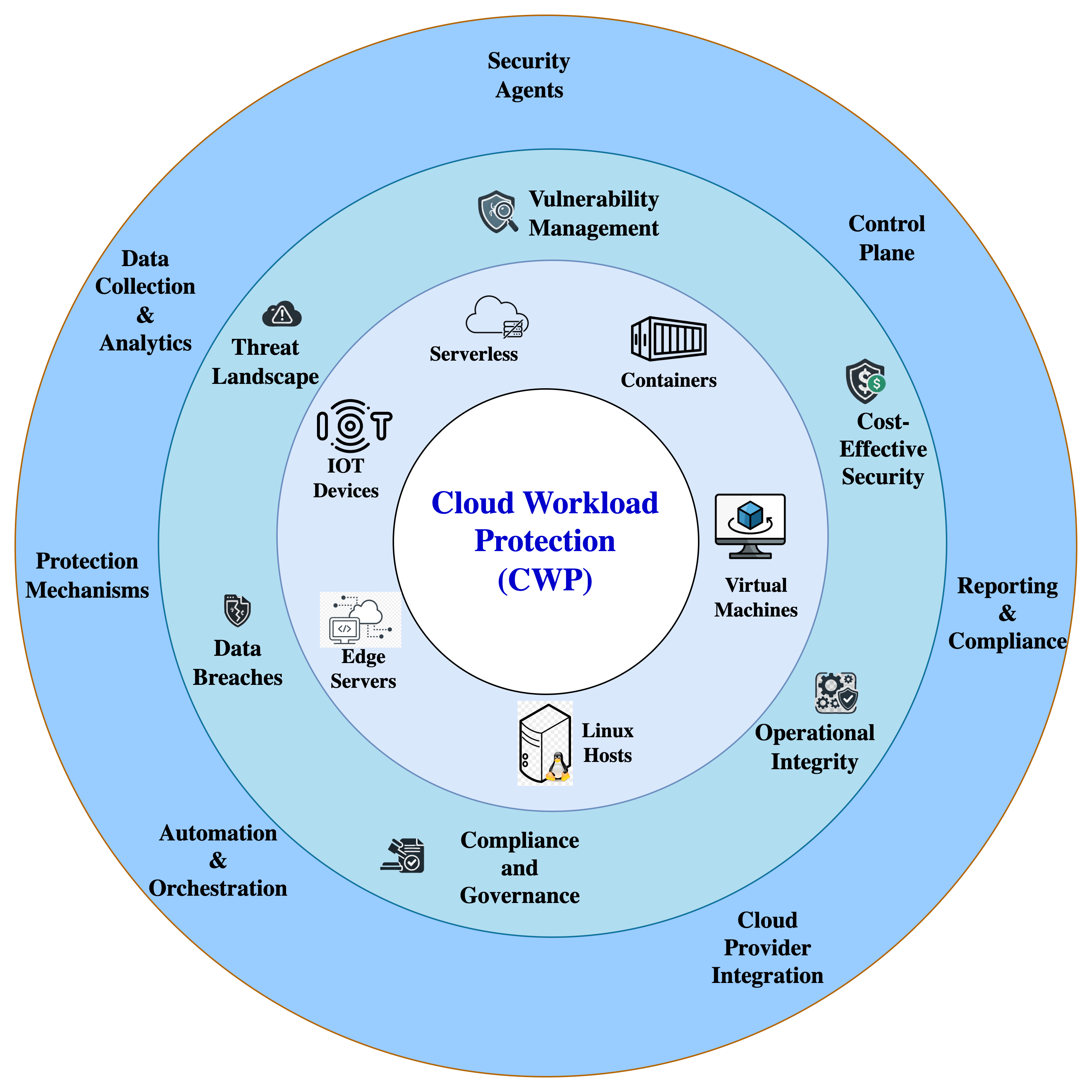
CWP is a necessity that must not be ignored. As the adoption of cloud technology grows, the scale and complexity of threats also escalate. Here are the reasons why CWP is critical: Increased threat environment: Cyber threats are becoming more complex and frequent. CWP tools are crafted to detect and counter these changing threats in real time, delivering enhanced protection for cloud workloads exposed across various networks and environments. Protection against data breaches and compliance: Data breaches can lead to severe financial and reputational harm. CWP tools assist organizations in complying with strict regulations like GDPR, HIPAA, and PCI-DSS by implementing strong security protocols and compliance checks. Maintenance of operational integrity: It is essential for businesses to maintain the uninterrupted operation of their cloud workloads without being affected by security incidents. CWP tools offer extensive threat detection and automated responses, minimizing disruptions and upholding operational integrity. Cost implications: Security breaches can incur substantial costs. Investing in CWP tools helps avert these risks by early identification of vulnerabilities and threats, finally protecting organizations from potential financial losses due to breaches and service interruptions.


How Human-Informed AI Leads to More Accurate Digital Twins

The value of a DT is directly proportional to its accuracy, which in turn depends on the data available. But data availability remains a challenge — ironically, often in the business use cases that could benefit the most from DTs — and it’s a big reason why DTs are still in their infancy. DTs could help guide the expansion of current products to new market domains, accelerating R&D and innovation by enabling virtual experimentation. But research activities often involve exploring new territory where data is scarce or protected by patents owned by other organizations. For example, while DTs could inform an organization’s understanding of how a new topology may affect heavy construction equipment or how a smart building may behave under unusual weather conditions, there is limited data available about these new domains. ... DTs can add immense value by reducing costs and the time it takes to develop new processes, but data to develop these models is limited given that the work explores new territory. Further, data-sharing across the supply chain is sharply limited due to extreme sensitivity about intellectual property.


Leveraging AI for enhanced crime scene investigation

Importantly, as crimes are committed or solved, the algorithms and software based on them become more sophisticated. Interestingly, these algorithms use information obtained from various sources without any human intervention, reducing the chances of bias or error. With the increasing use of mobile phones and the internet, information is flooding in the form of photos, videos, audios, emails, letters, newspaper reports, speeches, social media posts, locations, and more. Various AI & ML-based algorithms are used to quickly analyse this data, perform mathematical transformations, draw inferences, and reach conclusions. This makes it possible to predict the likelihood of crimes in a very short time, which is almost impossible otherwise. A smart city-related company in Israel called ‘Cortica’ has developed software that analyzes the information obtained through CCTV. This software utilizes certain AI algorithms to recognize the faces in a crowd, identify crowd behavior and movement, and predict the likelihood and nature of a crime. Interestingly, these intelligent algorithms make it possible to analyze several terabytes of video footage in minimal time and make quite precise inferences. 


There are many reasons why companies struggle to exploit generative AI

Some qualitative remarks by executives interviewed revealed more detail on where that lack of preparedness lies. For example, a former vice president of data and intelligence for a media company told Rowan and team that the "biggest scaling challenge" for the company "was really the amount of data that we had access to and the lack of proper data management maturity." The executive continued: "There was no formal data catalog. There was no formal metadata and labeling of data points across the enterprise. We could go only as fast as we could label the data." ... Uncertainty about novel regulations is also causing companies to pause and think, Rowan and team stated in the report: "Organizations were exceedingly uncertain about the regulatory environment that may exist in the future (depending on the countries they operate in)." In response to both concerns, companies are pursuing a variety of strategies, Rowan and team found. These strategies include: "shut off access to specific Generative AI tools for staff"; "put in place guidelines to prevent staff from entering organizational data into public LLMs"; and "build walled gardens in private clouds with safeguards to prevent data leakage into the public cloud."


The role of behavioral biometrics in a world of growing cyberthreats

Behavioral biometrics might be an evolving form of biometric technology, but its foundations are already quite well established. For retail and ecommerce, for example, the lines blur slightly between the terms, ‘behavioral biometrics’ and ‘risk-based authentication’. Behavior in this sense isn’t just how people interact with their device, but the location they’re ordering from and to, or the time zone and time of day they’re looking to make a purchase. The extent of risk rises up and down relative to what is deemed ‘typical behavior’ in the broader sense and for that individual transaction. ‘Risk’ refers to the degree of confidence in authentication accuracy and will be key to the rise of behavioral biometrics in other industries too, including healthcare and banking where it is already being deployed to varying extents. It is more about the use case and whether the risk posed is suitable for passive authentication in these cases. In healthcare, for example, passive authentication wouldn’t be sufficient to access patient databases, but once logged in, it could help confirm that the same user is still active or online. ... Aside from the securitization element, behavioral biometrics can also enable improved personalization and marketing strategies. 


Data center sustainability is no longer optional

A recent empirical investigation conducted by the Borderstep Institute, in collaboration with the EU, revealed that digital technologies already account for approximately five-nine percent of global electricity consumption and carbon emissions, a number expected to increase as the demand for compute power, driven by the rise of generative artificial intelligence (gen AI) and foundation models, continues to grow. ... Databases are a significant contributor to data center workloads. They are critical for storing, managing, and retrieving large volumes of data, are computationally intensive, and significantly contribute to the overall energy consumption of data centers on thousands of database instances. Therefore, artificial intelligence database tuning will be central to any sustainability strategy to increase efficiency. ... Artificial intelligence database tuning offers a revolutionary approach to database management, enabling businesses to achieve high database performance while minimizing their environmental impact. By observing real-time data, AI can identify more effective PostgreSQL configurations that minimize energy usage. 


Building an Accessible Future in the Private Sector

Just like the public sector must make its services accessible to all groups, so must the private sector. Luckily, several regulations make accessibility a legal requirement for the private sector. The most notable is the Americans with Disabilities Act (ADA), a federal law passed in 1990 to prohibit discrimination against people with disabilities in many areas of public life. Title III of the ADA considers websites "public accommodations" and mandates that people with disabilities have equal access. However, true digital accessibility in the modern age needs to go further to ensure all digital products — websites, kiosks, mobile, and web applications — are equally accessible to people with disabilities. ... Companies leading the charge on accessibility are viewed as socially responsible and inclusive, attributes that matter to this generation of consumers. Organizations that value cultivating relationships with diverse customer groups often experience stronger customer loyalty. Brands like Apple and Microsoft are shining examples and have long been praised for providing inclusive technology and experiences. 


How to ensure cybersecurity strategies align with the company’s risk tolerance

One way for CISOs to align cybersecurity strategies with organizational risk tolerance is strategic involvement across the organization. “By forming risk committees and engaging in business discussions, CISOs can better understand and address the risks associated with new technologies and initiatives, and support the organization’s overall strategy,” Carmichael says. An information security committee is vital to this mission, according to Carl Grifka, MD of SingerLewak LLP, an advisory firm that specializes in risk and cybersecurity. “There needs to be a regular assessment of not just the cybersecurity environment, but also the risk tolerance and risk appetite, which is going to drive the controls that we’re going to put in place,” Grifka tells CSO. The committee operates as a cross-functional team that brings together different members of the business, including the executive, IT, security and maybe even a board representative on a more regular basis. Organizations low on the maturity level probably need to meet every couple of weeks, especially if they’re in a remediation phase and working to reduce gaps in the security posture. 


Quote for the day:

"Those who have succeeded at anything and don’t mention luck are kidding themselves." -- Larry King