Quote for the day:
“Rarely have I seen a situation where doing less than the other guy is a good strategy.” -- Jimmy Spithill
Is Your Enterprise Architecture Ready for AI?
/pcq/media/media_files/2025/12/24/is-your-enterprise-architecture-ready-for-ai-2025-12-24-18-39-21.webp) The old model of building, deploying, and governing apps is being reshaped
into a composable enterprise blueprint. By abstracting complexity through
visual models and machine intelligence, businesses are creating systems that
are faster to adapt yet demand stronger governance, interoperability, and
security. What emerges is not just acceleration but transformation at the
foundation. ... With AI copilots spitting out code at scale, the traditional
software development life cycle faces an existential test. Developers may not
fully understand every line of AI-generated code, making manual reviews
insufficient. The solution: automate aggressively. ... This new era also
demands AI observability in SDLC, tracking provenance, explainability, and
liability. Provenance shows the chain of prompts and responses. Explainability
clarifies decisions. Bias and drift monitoring ensure AI systems don’t quietly
shift into harmful or unreliable patterns. Without these, enterprises risk
blind trust in black-box code. ... The destination for enterprises is clear:
AI-native enterprise architecture and composable enterprise blueprint
strategies, where every capability is exposed as an API and orchestrated by
LCNC and AI. The road, however, is slowed by legacy monoliths in industries
like banking and healthcare. These systems won’t vanish overnight. Instead,
strategies like wrapping monoliths with APIs and gradually replacing
components will define the journey.
The old model of building, deploying, and governing apps is being reshaped
into a composable enterprise blueprint. By abstracting complexity through
visual models and machine intelligence, businesses are creating systems that
are faster to adapt yet demand stronger governance, interoperability, and
security. What emerges is not just acceleration but transformation at the
foundation. ... With AI copilots spitting out code at scale, the traditional
software development life cycle faces an existential test. Developers may not
fully understand every line of AI-generated code, making manual reviews
insufficient. The solution: automate aggressively. ... This new era also
demands AI observability in SDLC, tracking provenance, explainability, and
liability. Provenance shows the chain of prompts and responses. Explainability
clarifies decisions. Bias and drift monitoring ensure AI systems don’t quietly
shift into harmful or unreliable patterns. Without these, enterprises risk
blind trust in black-box code. ... The destination for enterprises is clear:
AI-native enterprise architecture and composable enterprise blueprint
strategies, where every capability is exposed as an API and orchestrated by
LCNC and AI. The road, however, is slowed by legacy monoliths in industries
like banking and healthcare. These systems won’t vanish overnight. Instead,
strategies like wrapping monoliths with APIs and gradually replacing
components will define the journey. After LLMs and agents, the next AI frontier: video language models
 World models — which some refer to as video language models — are the new
frontier in AI, following in the footsteps of the iconic ChatGPT and more
recently, AI agents. Current AI tech largely affects digital outcomes, but
world models will allow AI to improve physical outcomes. World models are
designed to help robots understand the physical world around them, allowing
them to track, identify and memorize objects. On top of that, just like humans
planning their future, world models allow robots to determine what comes next
— and plan their actions accordingly. ... Beyond robotics, world models
simulate real-world scenarios. They could be used to improve safety features
for autonomous cars or simulate a factory floor to train employees. World
models pair human experiences with AI in the real world, said Deepak Seth,
director analyst at Gartner. “This human experience and what we see around us,
what’s going on around us, is part of that world model, which language models
are currently lacking,” Seth said. ... World models are one of several tools
that will be used to deploy robots in the real world, and they will continue
to improve, said Kenny Siebert, AI research engineer at Standard Bots. But the
models suffer from similar problems — the hallucinations and degradation —
that affect the likes of ChatGPT and video-generators. Moving hallucinations
into the physical world could cause harm, so researchers are trying to solve
those kinds of issues.
World models — which some refer to as video language models — are the new
frontier in AI, following in the footsteps of the iconic ChatGPT and more
recently, AI agents. Current AI tech largely affects digital outcomes, but
world models will allow AI to improve physical outcomes. World models are
designed to help robots understand the physical world around them, allowing
them to track, identify and memorize objects. On top of that, just like humans
planning their future, world models allow robots to determine what comes next
— and plan their actions accordingly. ... Beyond robotics, world models
simulate real-world scenarios. They could be used to improve safety features
for autonomous cars or simulate a factory floor to train employees. World
models pair human experiences with AI in the real world, said Deepak Seth,
director analyst at Gartner. “This human experience and what we see around us,
what’s going on around us, is part of that world model, which language models
are currently lacking,” Seth said. ... World models are one of several tools
that will be used to deploy robots in the real world, and they will continue
to improve, said Kenny Siebert, AI research engineer at Standard Bots. But the
models suffer from similar problems — the hallucinations and degradation —
that affect the likes of ChatGPT and video-generators. Moving hallucinations
into the physical world could cause harm, so researchers are trying to solve
those kinds of issues.Hub & Spoke: The Operating System for AI-Enabled Enterprise Architecture
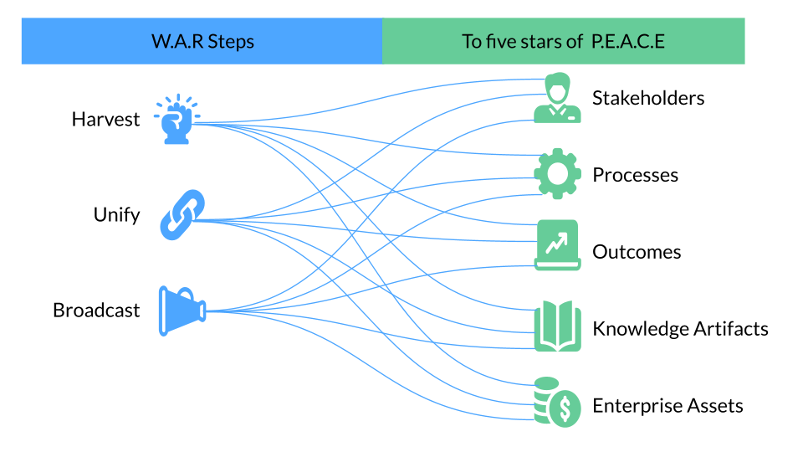 Today most enterprises still run on heroics, emails, slide decks, and
200-person conference calls. Even when a good repository and healthy
collaboration culture exist, nothing “sticks” without a mechanism that
relentlessly harvests reality, unifies understanding, and broadcasts the right
truth to the right person at the right moment. That mechanism is a new
application of hub-and-spoke – not just for data integration, but for
architecture governance itself. We call it simply Hub & Spoke. ... At the
centre runs a continuous cycle of three actions: Harvest – Ingest everything
that matters: scanner output, CI/CD metadata, application inventories, risk
registers, process models, meeting outcomes, human feedback, and
(increasingly) agentic AI crawls; Unify – Connect the dots. Establish
relationships, resolve duplicates, detect patterns and anti-patterns, and
maintain one coherent model of the enterprise; and Broadcast – Push the right
view, in the right language, through the right channel, at the right time. A
CIO sees strategic heatmaps; a developer receives contextual architecture
guardrails inside the IDE; a regulator gets a compliance report on demand. ...
To fully leverage the H.U.B. actions, we apply them to five fundamental
capabilities that drive any organisation, encapsulated in S.P.O.K.E.:
Stakeholders – who cares and who decides; Processes – sequences that
deliver value; Outcome – the why (always placed in the centre of the
model); Knowledge – codified artefacts (models, policies, decisions,
blueprints); and Enterprise Assets – systems, data, infrastructure,
contracts
Today most enterprises still run on heroics, emails, slide decks, and
200-person conference calls. Even when a good repository and healthy
collaboration culture exist, nothing “sticks” without a mechanism that
relentlessly harvests reality, unifies understanding, and broadcasts the right
truth to the right person at the right moment. That mechanism is a new
application of hub-and-spoke – not just for data integration, but for
architecture governance itself. We call it simply Hub & Spoke. ... At the
centre runs a continuous cycle of three actions: Harvest – Ingest everything
that matters: scanner output, CI/CD metadata, application inventories, risk
registers, process models, meeting outcomes, human feedback, and
(increasingly) agentic AI crawls; Unify – Connect the dots. Establish
relationships, resolve duplicates, detect patterns and anti-patterns, and
maintain one coherent model of the enterprise; and Broadcast – Push the right
view, in the right language, through the right channel, at the right time. A
CIO sees strategic heatmaps; a developer receives contextual architecture
guardrails inside the IDE; a regulator gets a compliance report on demand. ...
To fully leverage the H.U.B. actions, we apply them to five fundamental
capabilities that drive any organisation, encapsulated in S.P.O.K.E.:
Stakeholders – who cares and who decides; Processes – sequences that
deliver value; Outcome – the why (always placed in the centre of the
model); Knowledge – codified artefacts (models, policies, decisions,
blueprints); and Enterprise Assets – systems, data, infrastructure,
contracts Orchestrating value: The new discipline of continuous digital transformation
The most important principle for any CIO today is deceptively simple: every transformation must begin with value and be engineered for agility. In a volatile and fast-moving environment, success depends not on how much technology you deploy, but on how effectively you align it to outcomes that matter. Every initiative should begin with clarity of purpose. What is the value hypothesis? What problem are we solving? Who owns the outcome, and when will impact be visible? ... Architecture then becomes the critical enabler. Agility must be built into the design, through modular platforms, adaptable processes, and feedback-driven operating models that allow business change, talent movement, and technological evolution to coexist seamlessly. Measurement turns agility from theory into discipline. Continuous value reviews, architectural checkpoints, and strategy resets ensure transformation remains evidence-led rather than aspirational. Every initiative must answer three questions: Why value? Why now? Why this architecture? In a world defined by velocity and volatility, transformation isn’t about doing more – it’s about doing what matters, faster, smarter, and with enduring value. ... Today’s CIOs also demand composable, interoperable platforms that integrate seamlessly into existing ecosystems, avoiding vendor lock-in while accelerating scale through APIs, microservices, and modular architectures. Partners must bring both agility and discipline – speed balanced with governance.Why Integration Debt Threatens Enterprise AI and Modernization
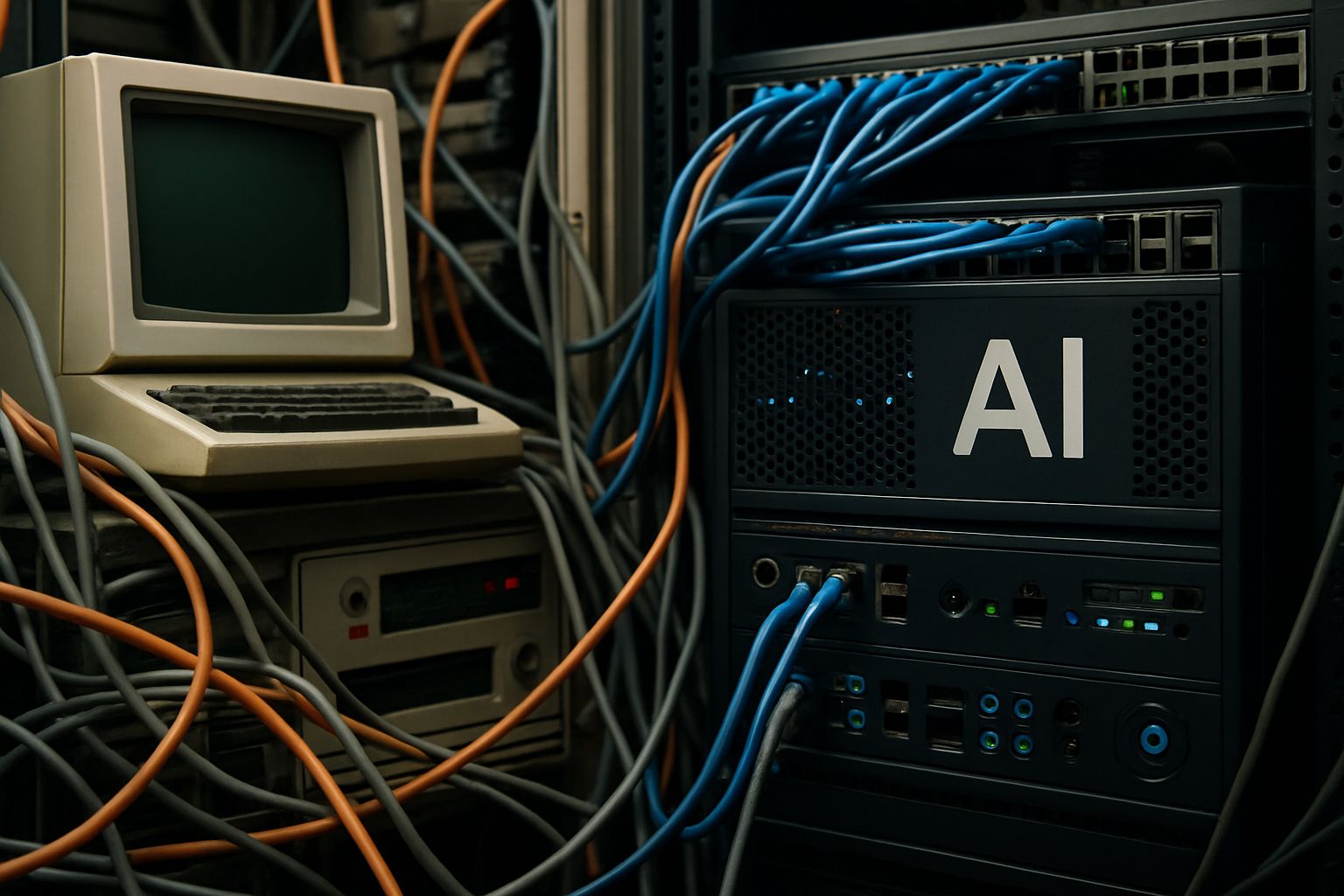 AI agents rely on fast, trusted data exchanges across applications. However,
point-to-point connectors often break under new query loads. Matt McLarty of
MuleSoft states that integration challenges slow digital transformation.
Integration Debt surfaces here as latent System Friction that derails AI pilots.
Furthermore, developers spend 39% of their time writing custom glue code.
Consequently, innovation budgets shrink while maintenance backlogs grow. Such
opportunity cost defines Integration Debt in real dollars and morale.
Disconnected integrations throttle AI benefits and drain talent. In contrast,
scale introduces additional complexity exposed next. ... Effective governance
establishes shared schemas, versioning, and certification for every API.
Nevertheless, shadow IT and citizen developers complicate enforcement.
Therefore, leading CIOs create integration review boards with quarterly
scorecards. Accenture and Deloitte embed such controls in Modernization
playbooks to prevent relapse. Additionally, companies publish portal dashboards
that display live Integration Debt metrics to executives. ... The evidence
is clear: disconnected architectures tax innovation, security, and profits.
Ramsey Theory Group reminds leaders that random complexity often concentrates
risk in surprising places. Similarly, unchecked System Friction erodes developer
morale and board confidence. However, organizations that quantify debt, enforce
governance, and adopt reusable APIs accelerate Modernization success.
AI agents rely on fast, trusted data exchanges across applications. However,
point-to-point connectors often break under new query loads. Matt McLarty of
MuleSoft states that integration challenges slow digital transformation.
Integration Debt surfaces here as latent System Friction that derails AI pilots.
Furthermore, developers spend 39% of their time writing custom glue code.
Consequently, innovation budgets shrink while maintenance backlogs grow. Such
opportunity cost defines Integration Debt in real dollars and morale.
Disconnected integrations throttle AI benefits and drain talent. In contrast,
scale introduces additional complexity exposed next. ... Effective governance
establishes shared schemas, versioning, and certification for every API.
Nevertheless, shadow IT and citizen developers complicate enforcement.
Therefore, leading CIOs create integration review boards with quarterly
scorecards. Accenture and Deloitte embed such controls in Modernization
playbooks to prevent relapse. Additionally, companies publish portal dashboards
that display live Integration Debt metrics to executives. ... The evidence
is clear: disconnected architectures tax innovation, security, and profits.
Ramsey Theory Group reminds leaders that random complexity often concentrates
risk in surprising places. Similarly, unchecked System Friction erodes developer
morale and board confidence. However, organizations that quantify debt, enforce
governance, and adopt reusable APIs accelerate Modernization success.
The Widening AI Value Gap: Strategic Imperatives for Business Leaders
 AI value creation in business settings extends far beyond narrow efficiency
gains or cost reductions. Contemporary frameworks increasingly distinguish
between three fundamental pathways through which AI generates economic returns:
deploying efficiency-enhancing tools, reshaping existing workflows, and
inventing entirely new business models ... Reshaping represents a more ambitious
approach, targeting core business workflows for end-to-end transformation.
Rather than automating existing steps in isolation, reshaping asks: How would we
design this workflow from scratch if AI capabilities were available from the
outset? This might involve redesigning marketing campaign development to
leverage AI-driven personalization at scale, restructuring supply chain
management around predictive demand algorithms, or reimagining customer service
through intelligent agent orchestration. ... Value measurement frameworks must
capture both tangible and strategic dimensions. Tangible metrics include revenue
increases (projected at 14.2% for future-built companies in areas where AI
applies by 2028), cost reductions (9.6% for leaders), and measurable
improvements in key performance indicators such as time-to-hire, customer
satisfaction scores, and defect rates ... The strategic implications extend
beyond near-term financial performance. Organizations trailing in AI maturity
face deteriorating competitive positions as digital-native competitors and
AI-advanced incumbents reshape industry economics.
AI value creation in business settings extends far beyond narrow efficiency
gains or cost reductions. Contemporary frameworks increasingly distinguish
between three fundamental pathways through which AI generates economic returns:
deploying efficiency-enhancing tools, reshaping existing workflows, and
inventing entirely new business models ... Reshaping represents a more ambitious
approach, targeting core business workflows for end-to-end transformation.
Rather than automating existing steps in isolation, reshaping asks: How would we
design this workflow from scratch if AI capabilities were available from the
outset? This might involve redesigning marketing campaign development to
leverage AI-driven personalization at scale, restructuring supply chain
management around predictive demand algorithms, or reimagining customer service
through intelligent agent orchestration. ... Value measurement frameworks must
capture both tangible and strategic dimensions. Tangible metrics include revenue
increases (projected at 14.2% for future-built companies in areas where AI
applies by 2028), cost reductions (9.6% for leaders), and measurable
improvements in key performance indicators such as time-to-hire, customer
satisfaction scores, and defect rates ... The strategic implications extend
beyond near-term financial performance. Organizations trailing in AI maturity
face deteriorating competitive positions as digital-native competitors and
AI-advanced incumbents reshape industry economics.
4 mandates for CIOs to bridge the AI trust gap
 As a CIO, you must recognize that low trust in public AI eventually seeps into
the enterprise. If your customers or employees see AI being used unethically in
media scenarios through misinformation and bias, or in personal scenarios like
cybercrime, their skepticism will bleed into your enterprise-grade CRM or HR
systems. The recommendation is to build on the existing trust in the workplace.
Use the enterprise as a model for responsible deployment. Document and
communicate your AI internal usage policies with exceptional clarity, and allow
this transparency to be your market differentiator. Show your customers and
partners the standards you hold your internal AI to, and then extrapolate those
standards to your external products. ... For CIOs in highly regulated industries
such as finance and healthcare, the mandate is to not just maintain but elevate
the current level of rigor. The existing regulatory compliance is the baseline,
not the ceiling, and the market will punish the first major breach or bias
incident, undoing years of consumer confidence. ... We must stop telling end
users AI is trustworthy and start showing them through tangible experience.
Trust is a feature that must be designed from the start, not something patched
in later. The first step is to involve the customer. Implement co-design
programs where the end-users and customers, not just product managers, are
involved in the design and testing phases of new AI applications.
As a CIO, you must recognize that low trust in public AI eventually seeps into
the enterprise. If your customers or employees see AI being used unethically in
media scenarios through misinformation and bias, or in personal scenarios like
cybercrime, their skepticism will bleed into your enterprise-grade CRM or HR
systems. The recommendation is to build on the existing trust in the workplace.
Use the enterprise as a model for responsible deployment. Document and
communicate your AI internal usage policies with exceptional clarity, and allow
this transparency to be your market differentiator. Show your customers and
partners the standards you hold your internal AI to, and then extrapolate those
standards to your external products. ... For CIOs in highly regulated industries
such as finance and healthcare, the mandate is to not just maintain but elevate
the current level of rigor. The existing regulatory compliance is the baseline,
not the ceiling, and the market will punish the first major breach or bias
incident, undoing years of consumer confidence. ... We must stop telling end
users AI is trustworthy and start showing them through tangible experience.
Trust is a feature that must be designed from the start, not something patched
in later. The first step is to involve the customer. Implement co-design
programs where the end-users and customers, not just product managers, are
involved in the design and testing phases of new AI applications.
The Enterprise “Anti-Cloud” Thesis: Repatriation of AI Workloads to On-Premises Infrastructure
 Today, a new inflection point has arrived: the dawn of artificial intelligence
and large-scale model training. Running in parallel is an observable and rapidly
growing trend in which companies are repatriating AI workloads from the public
cloud to on-premises environments. This “anti-cloud” thesis represents a
readjustment, rather than a backlash, mirroring other historical shifts in
leadership in which prescience reordered entire industries. As Gartner has
remarked, “By 2025, 60% of organizations will use sovereignty requirements as a
primary factor in selecting cloud providers.” ... Navigating this transition
requires fundamentally different abilities, integrating deep technical fluency
with disciplined strategic thinking. AI infrastructure differs sharply from
other traditional cloud workloads in that it is compute-intensive, highly
resource-intensive, latency-sensitive, and tightly connected with data
governance. ... The repatriation of AI workloads brings several challenges:
lack of AI infrastructure talent, high upfront GPU procurement costs,
operational overhead, security risks, and sustainability concerns. Leaders must
manage hardware supply chain volatility, model reliability, and energy
efficiency. Lacking disciplined governance, repatriation creates a high risk of
cost overruns and fragmentation. The central challenge is to balance innovation
with control, calling for transparency of plans and scenario modeling.
Today, a new inflection point has arrived: the dawn of artificial intelligence
and large-scale model training. Running in parallel is an observable and rapidly
growing trend in which companies are repatriating AI workloads from the public
cloud to on-premises environments. This “anti-cloud” thesis represents a
readjustment, rather than a backlash, mirroring other historical shifts in
leadership in which prescience reordered entire industries. As Gartner has
remarked, “By 2025, 60% of organizations will use sovereignty requirements as a
primary factor in selecting cloud providers.” ... Navigating this transition
requires fundamentally different abilities, integrating deep technical fluency
with disciplined strategic thinking. AI infrastructure differs sharply from
other traditional cloud workloads in that it is compute-intensive, highly
resource-intensive, latency-sensitive, and tightly connected with data
governance. ... The repatriation of AI workloads brings several challenges:
lack of AI infrastructure talent, high upfront GPU procurement costs,
operational overhead, security risks, and sustainability concerns. Leaders must
manage hardware supply chain volatility, model reliability, and energy
efficiency. Lacking disciplined governance, repatriation creates a high risk of
cost overruns and fragmentation. The central challenge is to balance innovation
with control, calling for transparency of plans and scenario modeling.
The Fragile Edge: Chaos Engineering For Reliable IoT
 Chaos engineering is mostly used in cloud environments because it works very
well there. However, it is more difficult to apply to IoT and edge computing
systems. IoT devices are physical, often located in remote places and sometimes
perform critical tasks. This makes managing them even more challenging.
Restarting cloud servers using scripts is usually simple. But rebooting medical
devices like pacemakers, industrial robots or warehouse sensors is much more
complex and can be dangerous. Resetting edge devices also takes longer because
system failures often have immediate physical outcomes. Chaos engineering in IoT
systems has both benefits and challenges. Engineers need to design methods to
test failures safely without harming devices. The testing process aims to detect
equipment breakdowns while developing systems that function during actual
operational conditions. The proven cloud software methods of chaos engineering
enable organisations to meet the requirements of edge devices. ... The
implementation of chaos engineering for IoT systems requires both strategic
planning and innovative solutions. Engineers should perform system vulnerability
tests, which ensure operational safety and reliability for real world
deployment. The risk assessment process needs tested and accurate methods to
protect both system devices and their users from harm. ... Organisations need to
maintain ethical standards when they use chaos engineering to safeguard their
IoT systems. Engineers who want to perform IoT chaos testing need to follow
established safety protocols.
Chaos engineering is mostly used in cloud environments because it works very
well there. However, it is more difficult to apply to IoT and edge computing
systems. IoT devices are physical, often located in remote places and sometimes
perform critical tasks. This makes managing them even more challenging.
Restarting cloud servers using scripts is usually simple. But rebooting medical
devices like pacemakers, industrial robots or warehouse sensors is much more
complex and can be dangerous. Resetting edge devices also takes longer because
system failures often have immediate physical outcomes. Chaos engineering in IoT
systems has both benefits and challenges. Engineers need to design methods to
test failures safely without harming devices. The testing process aims to detect
equipment breakdowns while developing systems that function during actual
operational conditions. The proven cloud software methods of chaos engineering
enable organisations to meet the requirements of edge devices. ... The
implementation of chaos engineering for IoT systems requires both strategic
planning and innovative solutions. Engineers should perform system vulnerability
tests, which ensure operational safety and reliability for real world
deployment. The risk assessment process needs tested and accurate methods to
protect both system devices and their users from harm. ... Organisations need to
maintain ethical standards when they use chaos engineering to safeguard their
IoT systems. Engineers who want to perform IoT chaos testing need to follow
established safety protocols.


No comments:
Post a Comment