
The unit of scale is not headcount
The article argues that organizations often think about scale in terms of headcount, but real scale comes from ownership — specifically, small engineering pods with clear charters and end‑to‑end responsibility. Adding people may seem like the obvious way to increase throughput, yet it usually creates more coordination, onboarding, and decision overhead than actual capacity. The author explains that small pods work because they reduce complexity: each pod owns a well‑defined scope, makes decisions quickly, and lives with the consequences of what it builds. This clarity allows teams to rely heavily on automation, shared platforms, and AI to multiply their impact rather than simply working harder. The piece emphasizes that leadership must defend pod boundaries, retire systems that no longer serve a purpose, and say no to work that doesn’t fit the charter. It also stresses that measuring leverage — such as reduced toil, faster decisions, and more scope owned per engineer — matters more than counting activity. The steady message is that sustainable scale comes from designing organizations where small groups can own large scopes without drowning in complexity, not from increasing headcount.
The Rise of Architect-Made Enterprise Architecture Tools Through Vibe Coding
The article describes a shift in the enterprise architecture (EA) world: instead of relying on large, generic EA platforms, architects are increasingly building their own lightweight, AI‑powered tools tailored to how they actually work. Traditional EA tools often feel bloated, slow, and disconnected from day‑to‑day architectural practice. They demand heavy data entry, rigid modeling, and long implementation cycles, which leads many architects to abandon them or use them only for compliance reporting. In contrast, architect‑made tools focus on solving practical problems — mapping systems, analyzing dependencies, generating diagrams, and keeping documentation current — without forcing users into complex frameworks. AI accelerates this trend by making it easy to automate modeling, generate architecture views, and maintain inventories with far less manual effort. The article argues that this bottom‑up movement will reshape the EA tooling market: instead of monolithic platforms, organizations will adopt smaller, purpose‑built tools that integrate through APIs and shared data models. Its steady message is that the future of EA tooling will be shaped by architects themselves, using AI to build tools that match real workflows rather than vendor assumptions.
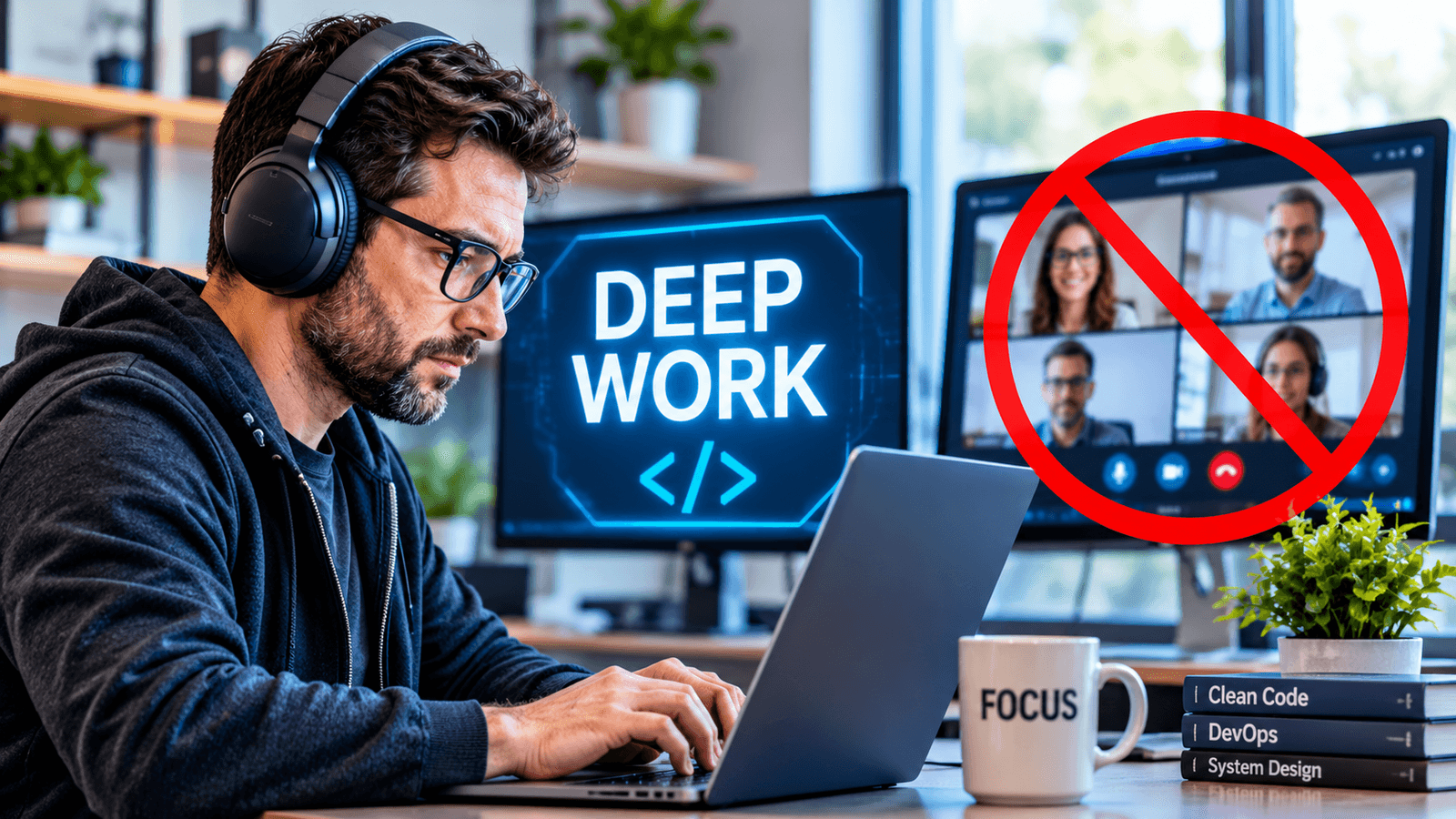
The Hidden Productivity Trap in an Engineer’s Workday
The modern engineering workday is increasingly derailed by a hidden productivity trap: constant interruptions from meetings and notifications. While managers often view meetings as simple calendar slots, for developers tackling complex problems, these breaks destroy the sustained concentration required for their work. Regaining focus after an interruption can take up to forty-five minutes, leading to more mistakes, slower delivery, and reduced skill growth over time. Despite the rapid rise of AI coding assistants, this core problem persists because developers still need uninterrupted time to evaluate generated code and make critical architectural decisions. To protect productivity, organizations must shift their culture rather than just their calendars. This means eliminating unnecessary meetings, setting predictable times for code reviews, and containing urgent incidents by assigning rotating triage engineers. Additionally, pausing routine chat notifications during dedicated coding blocks can significantly increase focus time without hurting team communication. By tracking the true financial cost of meetings and prioritizing actual delivery outcomes over visible activity, teams can reclaim their time and build a stable work environment where complex problem solving can truly thrive and succeed.

What does disaster recovery look like in an AI-centric world?
As artificial intelligence evolves from a helpful add-on into core operational infrastructure, organizations must rethink traditional disaster recovery strategies. While the fundamental goal of restoring a business's critical functions remains exactly the same, the components that make up a "minimum viable company" now include AI assets such as proprietary data models, configurations, and prompts. Unlike conventional applications, some AI tools rely on external third-party services that businesses cannot restore internally during an outage. To maintain resilience, experts advise implementing failovers, such as backup AI models or temporary manual workflows, that can keep operations running smoothly. Furthermore, recovering an AI system requires more than simply bringing it back online. Because AI outputs can be unpredictable or potentially corrupted by data poisoning, teams must carefully validate the restored workloads to ensure they are safe and accurate. This challenge is heightened by autonomous AI agents that can rapidly execute actions across various platforms, meaning recovery might also involve quickly rolling back unintended automated errors without disrupting legitimate operations.

When Industrial Recovery Faces a Second Disruption
When an industrial plant recovering from a cyber incident faces a second unexpected disruption, standard recovery plans often fall short. A facility operating at reduced capacity relies on strained resources, such as exhausted staff working extended shifts or temporary manual setups, making it uniquely vulnerable to further problems. Continuity teams must actively plan for the possibility that the recovery process itself might be interrupted. Before approving temporary operations, organizations need to identify the specific dependencies of these temporary workarounds, clearly define how long they can safely remain in place, and establish exact conditions that would trigger a controlled pause if a dependency fails. Instead of relying on improvised fixes or generic system uptime metrics, recovery teams should document clear physical limits and determine exactly who holds the authority to make emergency decisions. The author strongly advises conducting practical tabletop exercises that simulate a secondary failure during the initial recovery phase to expose hidden bottlenecks, such as scheduling conflicts or missing handover records. Fixing these gaps ensures contingency plans survive real complications, keeping operations safe even when normal tools fail.
Initial access techniques and how to detect each one
The initial access phase is a critical moment when attackers first breach a system, often using methods like stolen passwords, malicious emails, vulnerable VPNs, or compromised third-party connections. For defenders, identifying this foothold requires more than just noting how it happened; it demands cross-referencing telemetry across identity, email, endpoint, network, and application layers. Detecting these intrusions is particularly challenging for small and medium-sized enterprises because malicious actions frequently mimic normal business activities, such as a supplier logging in or a user accessing an account from a new device. The most effective detection strategies rely on combining subtle indicators—like an unusual sign-in paired with a sudden mailbox rule change—with a clear understanding of normal network behavior. Different attack vectors, including phishing, credential stuffing, and exposed remote services, require tailored monitoring approaches and specific alert logic. When logging resources are constrained, organizations should prioritize monitoring identity, email, endpoint, reverse proxy, and VPN data, as these sources provide the earliest and most actionable warnings to contain a breach before it spreads.

The Trust Gap in AI-Powered Cybersecurity
The article explains that the real barrier to autonomous AI in cybersecurity isn’t model quality but trust — specifically, the lack of evidence showing how agents behave when they act on their own. Many enterprises already use AI to investigate alerts, prioritize vulnerabilities, and recommend fixes, but only a small minority allow agents to execute actions without human approval. The author argues this caution is rational: trust in security systems has always come from understanding their behavior, not from assuming reliability. Once AI begins taking actions, the model becomes only one part of the risk picture. What matters just as much are the agent’s permissions, its access paths, the tools it can invoke, and the blast radius if something goes wrong. The article also notes that cost patterns can reveal operational issues, such as runaway workflows or agents repeatedly calling expensive models. Autonomy, it says, should expand gradually — starting with low‑risk tasks, observing performance, and increasing responsibility only when evidence supports it. The steady message is that trustworthy AI security comes from disciplined governance, clear controls, and a growing body of real‑world behavior, not from assuming smarter models automatically deserve more authority.
Digital sovereignty in practice: three examples of balancing control with global reach
Digital sovereignty is increasingly essential for business and technology leaders, but it has no single definition. Instead of an off-the-shelf product, it is a broad framework that gives organizations control over their data, networks, operations, and AI. True sovereignty goes beyond mere legal compliance to active risk mitigation, requiring careful planning and strategic partnerships to balance local rules with global business goals like speed, resilience, and scale. Three practical examples show how diverse these solutions can be. In Australia, a disaster recovery provider uses colocation centers and geographically bounded routing to keep sensitive data onshore while maintaining vital cloud connectivity. A United Kingdom government agency modernized its legacy VPN access by deploying secure virtual firewalls, improving speed and performance while retaining strict network control. Meanwhile, a Brazilian stock exchange built an infrastructure model that allows international financial firms to trade locally without moving sensitive data outside national regulatory boundaries. As AI and global operations expand, building adaptable, scalable architecture is critical for maintaining true digital control in a complex world.
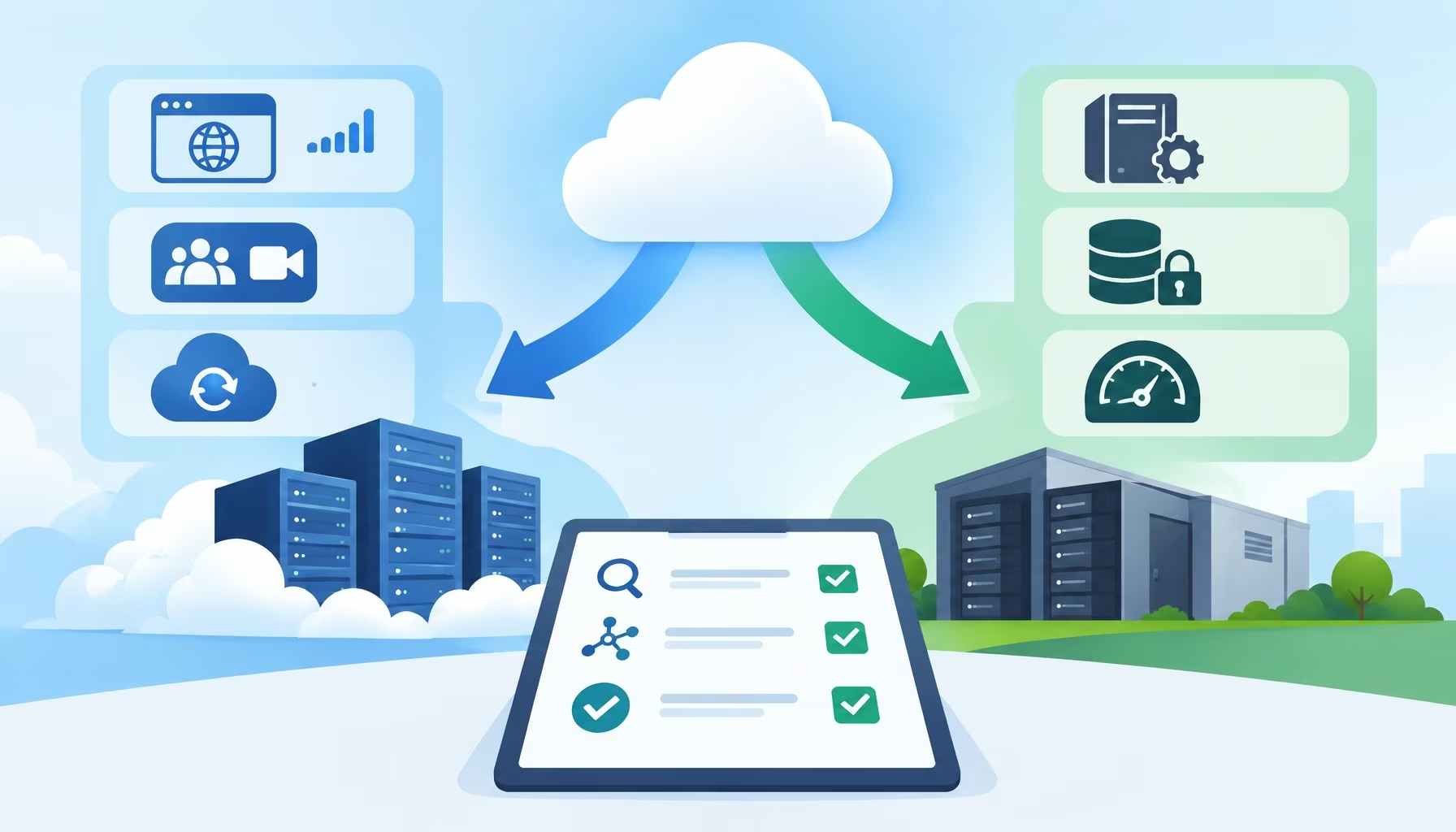
Which Workloads Should Move to the Cloud?
Moving your entire technology infrastructure to the cloud is rarely the right strategic move. While it is tempting to migrate everything at once, a smart approach requires evaluating each system independently. The cloud is an excellent home for applications with unpredictable traffic spikes, remote collaboration tools, and offsite disaster recovery systems. These workloads naturally benefit from flexible capacity and reliable access across different locations. However, certain systems are better left on local servers. Older legacy software built for specific hardware configurations can suffer from performance issues and high rebuilding costs if forced into a new environment. Similarly, sensitive health and financial data often require the direct control and strict security that local hosting provides. High performance computing that processes massive amounts of data should also remain onsite to avoid lag and unexpected data transfer fees. Before committing to a full rollout, it is wise to test a noncritical workload to uncover hidden dependencies and verify budget assumptions. Ultimately, keeping some systems local while moving others often creates the most stable and cost effective foundation for your business over the long term.

9 Cyber Awareness Tips That Actually Match Today's Maze of Threats
The cybersecurity landscape requires businesses to move beyond generic advice and focus on how attacks actually occur today through everyday habits and misplaced trust. Instead of merely reminding employees to be careful, organizations must implement practical behaviors and stronger default safeguards. First, recognize that AI models are not inherently secure; they must be treated as high-impact systems with strict access controls and human oversight. Second, train staff to identify "ClickFix" attacks, where fake error prompts trick users into executing malicious scripts manually. Third, treat social media advertisements with extreme caution, as many lead to scams or malware, and encourage navigating to brands directly. Fourth, acknowledge that executive families are now part of the attack surface, requiring expanded digital footprint reduction and home network security. Finally, accept that high-profile roles, such as executives and administrators, require more security friction, not less, due to their privileged access. By adopting these specific, repeatable habits and prioritizing robust configurations like phishing-resistant authentication, companies can effectively reduce enterprise risk and better protect themselves against a complex maze of modern threats.

