Quote for the day:
“The more you loose yourself in something bigger than yourself, the more energy you will have.” -- Norman Vincent Peale
🎧 Listen to the audio debrief on YouTube
▶ Play Audio DigestDuration: 25 mins • Perfect for listening on the go.
The blind spots in business continuity
 Business continuity planning has fundamentally shifted from merely ensuring
internal operations to mapping out external vulnerabilities. Modern
organizations depend heavily on complex networks of third-party suppliers,
software providers, and outsourced partners. According to a recent survey by DRI
International, a significant 55% of resilience professionals identified outside
vendors and supply chains as their biggest blind spot. This highlights that
third-party dependency is no longer just an administrative issue but a core
operational risk. Disruptions like extreme weather, cyber attacks, and
technology outages frequently expose how vulnerable digital supply chains
actually are. Meanwhile, 25% of respondents pointed to legacy IT systems as
their primary concern. Old hardware and software are often difficult to
maintain, susceptible to cyber threats, and lack the speed required for modern
recovery targets. While less visible, executive succession planning also remains
a quiet continuity risk. Only 14% of professionals flagged it, yet many
organizations still lack clear plans for leadership continuity during a crisis.
Lastly, remote work is now largely considered business as usual rather than a
major blind spot. Ultimately, organizations must move beyond static supplier
lists and internal recovery plans to deeply understand and protect the
interconnected ecosystems they rely on daily.
Business continuity planning has fundamentally shifted from merely ensuring
internal operations to mapping out external vulnerabilities. Modern
organizations depend heavily on complex networks of third-party suppliers,
software providers, and outsourced partners. According to a recent survey by DRI
International, a significant 55% of resilience professionals identified outside
vendors and supply chains as their biggest blind spot. This highlights that
third-party dependency is no longer just an administrative issue but a core
operational risk. Disruptions like extreme weather, cyber attacks, and
technology outages frequently expose how vulnerable digital supply chains
actually are. Meanwhile, 25% of respondents pointed to legacy IT systems as
their primary concern. Old hardware and software are often difficult to
maintain, susceptible to cyber threats, and lack the speed required for modern
recovery targets. While less visible, executive succession planning also remains
a quiet continuity risk. Only 14% of professionals flagged it, yet many
organizations still lack clear plans for leadership continuity during a crisis.
Lastly, remote work is now largely considered business as usual rather than a
major blind spot. Ultimately, organizations must move beyond static supplier
lists and internal recovery plans to deeply understand and protect the
interconnected ecosystems they rely on daily.
Stop playing with the CISO role. Fix cybersecurity leadership
 Organizations expect too much from their Chief Information Security Officers,
asking them to handle complex technology while also acting as strategic business
partners. This creates a structural flaw because the CISO holds accountability
for cybersecurity but lacks the authority to influence broader business
decisions across the company. Instead of forcing technical experts to become
universal executives, companies should establish a distinct, elevated role: the
Chief Security Officer. This position should sit above traditional cybersecurity
and focus entirely on protecting the organization's ability to operate and
compete. The CSO acts as a senior business leader with the mandate to unite
conflicting departments, from legal and finance to technology and operations,
ensuring that protective strategies align with business goals. Under this model,
the CISO can return to their natural area of expertise. They report to the CSO
and focus completely on the technical execution of security, managing
architecture, engineering, and operations. This clear division of labor solves
the long-standing problem of misaligned security efforts. By separating
technical delivery from enterprise-level governance, businesses build a
healthier management structure. Security stops being an isolated technology
issue and naturally becomes a core part of how the company operates, makes
decisions, and protects its future.
Organizations expect too much from their Chief Information Security Officers,
asking them to handle complex technology while also acting as strategic business
partners. This creates a structural flaw because the CISO holds accountability
for cybersecurity but lacks the authority to influence broader business
decisions across the company. Instead of forcing technical experts to become
universal executives, companies should establish a distinct, elevated role: the
Chief Security Officer. This position should sit above traditional cybersecurity
and focus entirely on protecting the organization's ability to operate and
compete. The CSO acts as a senior business leader with the mandate to unite
conflicting departments, from legal and finance to technology and operations,
ensuring that protective strategies align with business goals. Under this model,
the CISO can return to their natural area of expertise. They report to the CSO
and focus completely on the technical execution of security, managing
architecture, engineering, and operations. This clear division of labor solves
the long-standing problem of misaligned security efforts. By separating
technical delivery from enterprise-level governance, businesses build a
healthier management structure. Security stops being an isolated technology
issue and naturally becomes a core part of how the company operates, makes
decisions, and protects its future.Risk Has No Department: Building an Enterprise-Wide Risk Ownership Culture Through ESRM
 The traditional model where the security department solely owns all
organizational risk is no longer sustainable. Today’s business environment is
deeply interconnected, with risks spanning physical security, cybersecurity,
human capital, and supply chains. As a result, Enterprise Security Risk
Management (ESRM) shifts this paradigm by distributing risk ownership to the
actual asset owners—the individuals who create, manage, or benefit from the
assets. Instead of making all the final decisions, security professionals now
act as trusted advisors who facilitate informed choices, while leaders in
departments like human resources, operations, and information technology
maintain ultimate accountability. To make this transition successful,
organizations must establish a formal risk ownership matrix that clearly maps
specific risks to their corresponding functions. This eliminates ambiguity and
ensures that risk management is integrated directly into daily operational
decisions rather than treated as an afterthought. Furthermore, to cement this
culture of shared accountability, organizations should tie risk management
effectiveness to leadership performance through key performance indicators and
formal risk acceptance thresholds. Ultimately, creating an enterprise-wide risk
ownership culture requires strong top-down support from executive leadership and
boards of directors, ensuring that risk becomes a strategic business
consideration rather than just a compliance checkbox.
The traditional model where the security department solely owns all
organizational risk is no longer sustainable. Today’s business environment is
deeply interconnected, with risks spanning physical security, cybersecurity,
human capital, and supply chains. As a result, Enterprise Security Risk
Management (ESRM) shifts this paradigm by distributing risk ownership to the
actual asset owners—the individuals who create, manage, or benefit from the
assets. Instead of making all the final decisions, security professionals now
act as trusted advisors who facilitate informed choices, while leaders in
departments like human resources, operations, and information technology
maintain ultimate accountability. To make this transition successful,
organizations must establish a formal risk ownership matrix that clearly maps
specific risks to their corresponding functions. This eliminates ambiguity and
ensures that risk management is integrated directly into daily operational
decisions rather than treated as an afterthought. Furthermore, to cement this
culture of shared accountability, organizations should tie risk management
effectiveness to leadership performance through key performance indicators and
formal risk acceptance thresholds. Ultimately, creating an enterprise-wide risk
ownership culture requires strong top-down support from executive leadership and
boards of directors, ensuring that risk becomes a strategic business
consideration rather than just a compliance checkbox.How to keep your mission-critical cloud workloads running
 To ensure that mission-critical cloud workloads stay online, organizations must
take proactive control of their infrastructure's resilience. While cloud
providers guarantee the availability of their own hardware, the responsibility
for keeping specific applications running falls squarely on the user. True
application resilience relies on four essential components: clustering, data
replication, failover, and disaster recovery. Historically, clustering depended
on expensive physical hardware, but modern software-based clusters offer the
flexibility needed for hybrid and multi-cloud environments. These modern setups
eliminate single points of failure by seamlessly connecting multiple systems
together across varied locations. Meanwhile, keeping data consistently
synchronized across these nodes through real-time replication ensures that
backup systems are always fully prepared to take over. When a disruption occurs,
automated failover mechanisms instantly shift workloads to standby resources
without requiring manual intervention or new database builds. Furthermore, a
strong disaster recovery plan incorporates geographic distance and asynchronous
replication to protect against large-scale regional outages. Using these
software-driven strategies not only protects against unexpected crashes but also
makes planned maintenance and security patching much safer. By embracing this
comprehensive approach, businesses can confidently protect their operations,
prevent costly downtime, and keep their most important applications running
smoothly regardless of unexpected external failures.
To ensure that mission-critical cloud workloads stay online, organizations must
take proactive control of their infrastructure's resilience. While cloud
providers guarantee the availability of their own hardware, the responsibility
for keeping specific applications running falls squarely on the user. True
application resilience relies on four essential components: clustering, data
replication, failover, and disaster recovery. Historically, clustering depended
on expensive physical hardware, but modern software-based clusters offer the
flexibility needed for hybrid and multi-cloud environments. These modern setups
eliminate single points of failure by seamlessly connecting multiple systems
together across varied locations. Meanwhile, keeping data consistently
synchronized across these nodes through real-time replication ensures that
backup systems are always fully prepared to take over. When a disruption occurs,
automated failover mechanisms instantly shift workloads to standby resources
without requiring manual intervention or new database builds. Furthermore, a
strong disaster recovery plan incorporates geographic distance and asynchronous
replication to protect against large-scale regional outages. Using these
software-driven strategies not only protects against unexpected crashes but also
makes planned maintenance and security patching much safer. By embracing this
comprehensive approach, businesses can confidently protect their operations,
prevent costly downtime, and keep their most important applications running
smoothly regardless of unexpected external failures.Who gets to decide? The CIO and the new architecture of enterprise authority
 As artificial intelligence evolves from merely recommending actions to
independently executing them, organizations face a critical new challenge. The
core issue is no longer just what the technology can do, but who, or what, has
the authority to do it. This creates an enterprise authority gap, where
intelligent systems act faster than businesses can define or control their
boundaries. Because modern AI interprets intent rather than just following
rigid rules, it can easily cross organizational boundaries and create
unintended risks if decision rights remain ambiguous. To safely manage this
shift, Chief Information Officers must lead the creation of a new enterprise
authority architecture. This approach requires businesses to clearly define
the desired decision before selecting the technology and firmly separate a
system's capability from its actual authority. Furthermore, this delegated
authority must be technically enforceable through clear limits, approval
gates, and continuous monitoring. Leaders also need to evaluate the true
economic cost of autonomous decisions, accounting for oversight, error
correction, and potential harm. Ultimately, the new mandate for technology
leaders is not about maximizing how much artificial intelligence is deployed.
Instead, success depends on how wisely and safely the enterprise distributes
decision-making authority to these intelligent systems.
As artificial intelligence evolves from merely recommending actions to
independently executing them, organizations face a critical new challenge. The
core issue is no longer just what the technology can do, but who, or what, has
the authority to do it. This creates an enterprise authority gap, where
intelligent systems act faster than businesses can define or control their
boundaries. Because modern AI interprets intent rather than just following
rigid rules, it can easily cross organizational boundaries and create
unintended risks if decision rights remain ambiguous. To safely manage this
shift, Chief Information Officers must lead the creation of a new enterprise
authority architecture. This approach requires businesses to clearly define
the desired decision before selecting the technology and firmly separate a
system's capability from its actual authority. Furthermore, this delegated
authority must be technically enforceable through clear limits, approval
gates, and continuous monitoring. Leaders also need to evaluate the true
economic cost of autonomous decisions, accounting for oversight, error
correction, and potential harm. Ultimately, the new mandate for technology
leaders is not about maximizing how much artificial intelligence is deployed.
Instead, success depends on how wisely and safely the enterprise distributes
decision-making authority to these intelligent systems.Large Enterprises Targeted in Fake Merger & Acquisition Scams
 Cybercriminals are using highly sophisticated social engineering tactics to
steal massive sums of money from large enterprises through fake merger and
acquisition (M&A) schemes. In a recently uncovered campaign dubbed
"Phantom Deal," attackers thoroughly researched mid-level employees who might
be involved in corporate dealmaking. The scammers then impersonated company
executives and external auditors, crafting a plausible but fake acquisition
narrative based on real corporate history. To keep the target isolated, the
attackers issued fake non-disclosure agreements and insisted all communication
remain strictly on personal channels like WhatsApp, keeping the interactions
hidden from corporate security monitors. The ultimate goal was to trick the
employee into authorizing a massive wire transfer to overseas accounts.
Security experts note that these scammers gather extensive, publicly available
details—such as job roles and company history—to make their ruses remarkably
convincing. However, organizations can protect themselves by emphasizing
strict adherence to internal verification and payment controls. Employees
should be trained to question whether the requested process is legitimate,
rather than just trusting the identity presented on a screen. When something
feels off, the safest action is to immediately halt the process and report the
suspicious request through official channels.
Cybercriminals are using highly sophisticated social engineering tactics to
steal massive sums of money from large enterprises through fake merger and
acquisition (M&A) schemes. In a recently uncovered campaign dubbed
"Phantom Deal," attackers thoroughly researched mid-level employees who might
be involved in corporate dealmaking. The scammers then impersonated company
executives and external auditors, crafting a plausible but fake acquisition
narrative based on real corporate history. To keep the target isolated, the
attackers issued fake non-disclosure agreements and insisted all communication
remain strictly on personal channels like WhatsApp, keeping the interactions
hidden from corporate security monitors. The ultimate goal was to trick the
employee into authorizing a massive wire transfer to overseas accounts.
Security experts note that these scammers gather extensive, publicly available
details—such as job roles and company history—to make their ruses remarkably
convincing. However, organizations can protect themselves by emphasizing
strict adherence to internal verification and payment controls. Employees
should be trained to question whether the requested process is legitimate,
rather than just trusting the identity presented on a screen. When something
feels off, the safest action is to immediately halt the process and report the
suspicious request through official channels.Enterprise architecture and software architecture as the core CTO model
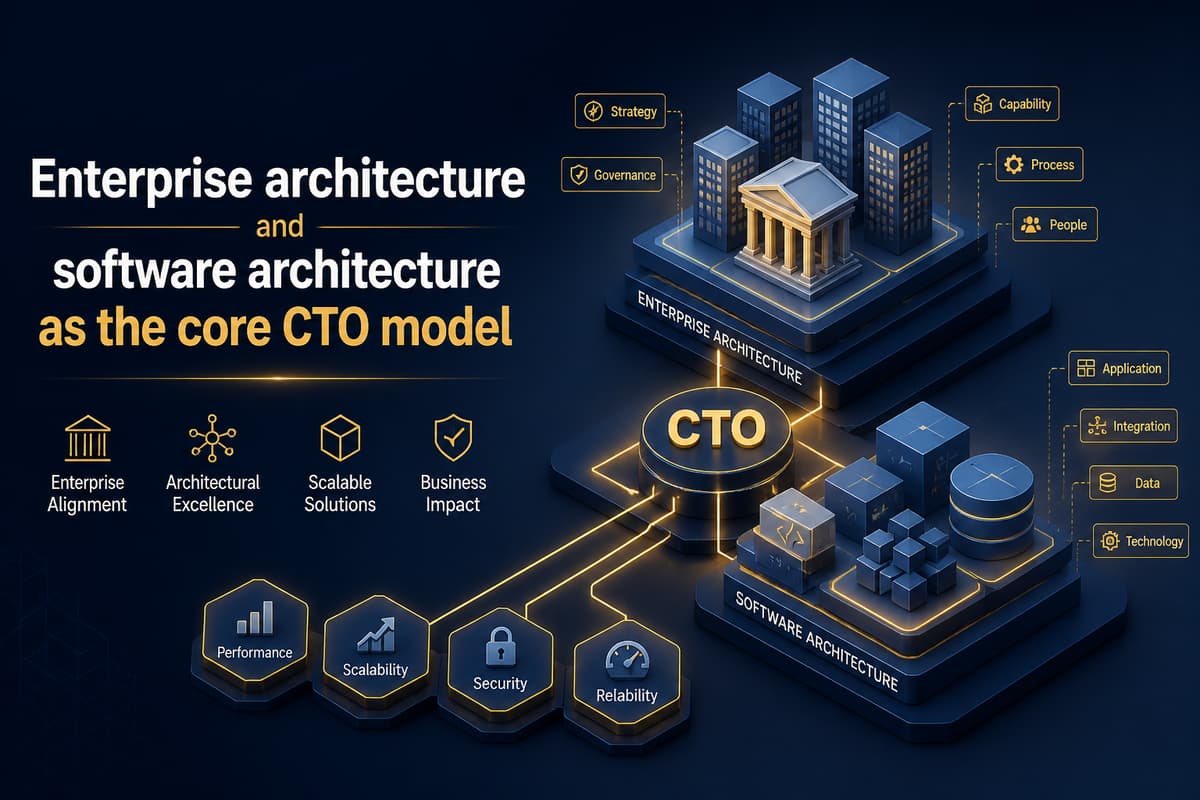 Enterprise architecture and software architecture are not just documentation
tasks; they are essential frameworks that allow technology leaders to manage
change safely and efficiently. Enterprise architecture maps business
capabilities directly to applications, data, and risks, acting as the clear
rulebook for technological decisions. Meanwhile, software architecture
translates those rules into constraints that development teams can actually
code against, ensuring systems perform well under stress and failure. Relying
on one without the other leads to immediate problems. Enterprise architecture
alone becomes an ignored catalog, while software architecture alone creates
disorganized local successes that fail to serve the broader business. To
succeed, leaders must adopt a continuous loop of deciding, designing,
delivering, and defending their architecture choices. While artificial
intelligence speeds up development, it also increases the risk of deploying
bad systems quickly, making strong architectural guardrails more critical than
ever. Effective leaders treat architecture like a living product rather than a
static diagram. They build this practice systematically, starting with a
thirty-day inventory of vital systems, followed by a ninety-day framework of
automated policies, and finally establishing long-term guiding principles.
Ultimately, practical architecture directly improves the four outcomes that
matter most to any business: delivery speed, operational costs, system risk,
and developer retention.
Enterprise architecture and software architecture are not just documentation
tasks; they are essential frameworks that allow technology leaders to manage
change safely and efficiently. Enterprise architecture maps business
capabilities directly to applications, data, and risks, acting as the clear
rulebook for technological decisions. Meanwhile, software architecture
translates those rules into constraints that development teams can actually
code against, ensuring systems perform well under stress and failure. Relying
on one without the other leads to immediate problems. Enterprise architecture
alone becomes an ignored catalog, while software architecture alone creates
disorganized local successes that fail to serve the broader business. To
succeed, leaders must adopt a continuous loop of deciding, designing,
delivering, and defending their architecture choices. While artificial
intelligence speeds up development, it also increases the risk of deploying
bad systems quickly, making strong architectural guardrails more critical than
ever. Effective leaders treat architecture like a living product rather than a
static diagram. They build this practice systematically, starting with a
thirty-day inventory of vital systems, followed by a ninety-day framework of
automated policies, and finally establishing long-term guiding principles.
Ultimately, practical architecture directly improves the four outcomes that
matter most to any business: delivery speed, operational costs, system risk,
and developer retention.From IT Security to Business Strategy: Navigating Cyber Risk in Digital India
As India rapidly expands its digital economy, managing cyber risk has
fundamentally shifted from a narrow technical concern into a core business
strategy. For many years, organizations treated cybersecurity merely as an IT
function focused on defending perimeters and protecting data. However, the
modern digital landscape, fueled by cloud adoption, artificial intelligence,
and complex regulatory changes like the DPDP Act, demands a far more holistic
approach. Today, business leaders must carefully balance rapid technological
innovation with strong governance, compliance, and resilience to maintain
stakeholder trust. Cybersecurity is no longer just about preventing
unauthorized access; it is about ensuring that critical operations remain
consistently available and that users feel psychologically safe when
interacting with digital services. Building this digital trust requires
enterprises to integrate risk management across their entire ecosystem,
including third party vendor networks and evolving AI models. By shifting
their perspective, executives can transform security from a defensive cost
center into a strategic enabler of sustainable growth. This proactive mindset
allows companies to navigate evolving regulatory obligations effectively while
adapting their infrastructure to meet user needs at lightning speed.
Ultimately, treating cyber risk as a central business priority ensures that
organizations can innovate responsibly and thrive securely in India’s dynamic
digital future.
 While most organizations want to achieve strong cyber resilience to withstand
attacks and keep operations running, the reality often falls short of their
goals. Even when leadership provides adequate support and resources,
resilience efforts frequently break down in the space between broad strategy
and daily execution. Several major obstacles consistently hold companies back
from properly securing their systems. Chief among these are mounting technical
debt, persistent shortages in skilled security professionals, and increasingly
complex identity risks. When older systems are neglected or vulnerabilities go
unreviewed, they quietly compound into technical debt. This creates dangerous
operational blind spots that attackers can easily exploit. Furthermore,
without enough trained staff to manage these environments, security teams
struggle to keep pace with evolving threats. The rapid expansion of user
identities across different platforms only adds to the challenge, making it
difficult to control who has access to sensitive information. Ultimately, true
resilience is not just an idealistic goal or a passing project. It requires
bridging the gap between management intentions and actual daily operations. To
succeed, businesses must actively address these practical challenges, paying
down their technical debt and heavily investing in their workforce to ensure
that protective measures are flawlessly integrated into everyday tasks.
While most organizations want to achieve strong cyber resilience to withstand
attacks and keep operations running, the reality often falls short of their
goals. Even when leadership provides adequate support and resources,
resilience efforts frequently break down in the space between broad strategy
and daily execution. Several major obstacles consistently hold companies back
from properly securing their systems. Chief among these are mounting technical
debt, persistent shortages in skilled security professionals, and increasingly
complex identity risks. When older systems are neglected or vulnerabilities go
unreviewed, they quietly compound into technical debt. This creates dangerous
operational blind spots that attackers can easily exploit. Furthermore,
without enough trained staff to manage these environments, security teams
struggle to keep pace with evolving threats. The rapid expansion of user
identities across different platforms only adds to the challenge, making it
difficult to control who has access to sensitive information. Ultimately, true
resilience is not just an idealistic goal or a passing project. It requires
bridging the gap between management intentions and actual daily operations. To
succeed, businesses must actively address these practical challenges, paying
down their technical debt and heavily investing in their workforce to ensure
that protective measures are flawlessly integrated into everyday tasks.
Why cyber resilience fails: 5 obstacles holding orgs back
While most organizations want to achieve strong cyber resilience to withstand
attacks and keep operations running, the reality often falls short of their
goals. Even when leadership provides adequate support and resources,
resilience efforts frequently break down in the space between broad strategy
and daily execution. Several major obstacles consistently hold companies back
from properly securing their systems. Chief among these are mounting technical
debt, persistent shortages in skilled security professionals, and increasingly
complex identity risks. When older systems are neglected or vulnerabilities go
unreviewed, they quietly compound into technical debt. This creates dangerous
operational blind spots that attackers can easily exploit. Furthermore,
without enough trained staff to manage these environments, security teams
struggle to keep pace with evolving threats. The rapid expansion of user
identities across different platforms only adds to the challenge, making it
difficult to control who has access to sensitive information. Ultimately, true
resilience is not just an idealistic goal or a passing project. It requires
bridging the gap between management intentions and actual daily operations. To
succeed, businesses must actively address these practical challenges, paying
down their technical debt and heavily investing in their workforce to ensure
that protective measures are flawlessly integrated into everyday tasks.
The next cyber crisis is already taking shape
The financial sector is currently facing an emerging cybersecurity crisis
driven by the convergence of two major technological shifts. First, rapid
advances in artificial intelligence are drastically lowering the barriers to
entry for threat actors. Cybercriminals can now use sophisticated AI tools to
quickly identify hidden vulnerabilities, develop exploits, and launch attacks
at an unprecedented scale, making threats faster and harder to predict.
Second, banks are undergoing a massive, complex transition to post-quantum
cryptography to protect their infrastructure against future computing power
that could easily break current encryption standards. Because modern banking
relies entirely on deeply embedded cryptographic systems, updating them
requires years of careful planning. Unlike the Y2K bug, this transition lacks
a strict universal deadline, which can dangerously lead to delayed action and
increased exposure for institutions. Together, these dual challenges mean that
traditional security playbooks are no longer sufficient. Simply recovering
systems after a breach is inadequate when facing AI-accelerated attacks and
disruptive infrastructure overhauls. Instead, organizations must embrace a
strategy of managed degradation. True enterprise resilience now requires
maintaining core financial operations and preserving customer trust even while
systems are actively compromised. Financial institutions must proactively
address this growing imbalance and begin their extensive security upgrades
before time runs out.

