Showing posts with label BCP. Show all posts

Daily Tech Digest - May 18, 2020

Creating a safe path to digital with open standards
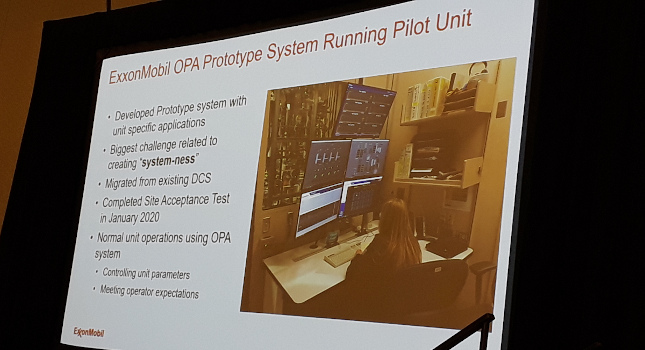

Despite the process automation industries being vastly different in their outputs, there are many commonalities in the desire for efficiency, interoperability and the ability to integrate best-in-class technologies. Recognizing the need for cross-industry collaboration, a group of companies representing a variety of verticals got together three years ago to discuss the possibility of developing an open standard for process automation. Each company in attendance was driven by the need for more flexible solutions. Shortly after, the Open Process Automation Forum (OPAF) was born under the guidance of The Open Group. Since then, the Forum has worked to lay the foundations for developing a standard to ensure the security, interoperability and scalability of new control systems. A year ago, over 90 member organizations were involved with the creation of OPAF’s O-PAS Standard, Version 1.0, which is now a full standard of The Open Group. While industry standards for process automation are already available in the marketplace and fit-for-purpose, the O-PAS Standard focuses on interoperability, using existing industry standards and adopting and adapting them to create a “standard of standards.”


Should AI assist in surgical decision-making?

surgery.jpg
Fully automated surgeries performed by robots is still a ways off. In the meantime, developers are trying to beat those grim numbers by harnessing the best of human decision making and coupling it with truly exceptional technology tools designed to assist surgeons. Artificial intelligence and machine learning are often touted as solutions for call centers and to provide intelligent insights to companies that have reams of data that needs to be processed, but leveraging AI/ML to better medical outcomes could be one of the transformative technologies of our time. "Surgical decision-making is dominated by hypothetical-deductive reasoning, individual judgment, and heuristics," write the authors of a recent JAMA Surgery paper called Artificial Intelligence and Surgical Decision-making. "These factors can lead to bias, error, and preventable harm. Traditional predictive analytics and clinical decision-support systems are intended to augment surgical decision-making, but their clinical utility is compromised by time-consuming manual data management and suboptimal accuracy."


Home office technology will need to evolve in the new work normal


Technology will have to know our contexts. The home technology experience will have to adapt to our various modes and have the capacity to manage the compute requirements. "There is a very large innovation cycle coming to really make the world at home adaptable to all of these contexts as we look forward," said Roese. Edge computing will come to the home. As remote work evolves more to include augmented and virtual reality as well as video conferencing and data intensive applications IT infrastructure at home will change. Roese said that edge computing devices may be deployed in homes by enterprises to beef up home infrastructure. "Early, when we were talking about edge, it was all about smart factories and smart cities and smart hospitals, but there's another class of edge compute that's really interesting in this new world," said Roese. "And that is to augment the compute capacity of the devices that attach to that edge."  5G, AR, VR and applications that need horsepower would use these edge compute devices. Edge computing in the home could provide more real-time experiences, compute capacity and improve experiences.These edge devices at home would also offer scale on demand.


Grafana: The Open Observability Platform

Grafana is open-source visualization and analytics software that works with lots of different databases and data sources. It connects to data regardless of where it resides — in the cloud, on-premises, or somewhere else — and helps organizations build the perfect picture to help them understand their data. Perhaps Grafana's most unique feature is that its data source neutral, meaning it doesn't matter where your data is stored, Grafana can unify it. These sources can include time-series, logging, SQL and document databases, cloud data sources, enterprise plugins, and more options from community-contributed plugins. No matter the source, the data stays where it is, and you can visualize and analyze it at will. This makes Grafana a versatile tool and open to use for a wide range of applications. There is one caveat to the statement above, and that's that for Grafana to be useful, your data should be time-series data, i.e., data taken at particular points in time. This describes a lot of data sources, but not all of them.


Why open source is heading for a new breakthrough


While anticipating an increase in uptake, Miller doesn't anticipate Apple and Microsoft fans to begin jumping ship en masse – indeed, he acknowledges the platform will likely retain its more geeky audience. But that's not to say that Fedora 32 Workstation doesn't have the technical chops to go toe-to-toe with mainstream operating systems, with Miller alluding to the huge advances that Linux as a desktop has made over the past 15 years as it has moved from the server to being the default choice for embedded everything everywhere. "It's so flexible and so able to fit into all of these different use cases," he says. "To me, it's clear that Linux is technically superior." And he adds: "It's not a money-saver option – this is something you should pick if you actually want this." Of course, the technical capability of Fedora is just one small piece of the package that forms the philosophy not just of Fedora Workstation but Linux and the open-source community in its entirety. "The real appeal of it is that this is an operating system that we own. It belongs to the people," he says. Looking to the future, Miller sees Linux as well-positioned to capitalize on the move to hybrid-type mobile devices, particularly as more OEMs throw their support behind the platform.


Will the solo open source developer survive the pandemic?

The last several weeks have been anything but. I’m not alone in finding it rough-going. For Julia Ferraioli, this isn’t because of “WFH.” It’s because of “WDP” [working during pandemic]: “I’ve been working remotely for 2.5 years. The past 2.5 months have left me more exhausted than ever before. This is your reminder that you’re not working remotely. You’re working remotely during a global health crisis.” This same pressure applies to open source maintainers, Fischer says: Today independent maintainers are, like many people, under more time and financial pressure than they were only a month or two ago. Most of these creators work on their projects on the side — not as their main day jobs — and personal and professional obligations come before open source work for many. Even before the coronavirus pandemic hit, this was a true statement. In my interviews with a diverse range of open source maintainers, from curl’s Daniel Stenberg SolveSpace’s Whitequark, most have contributed as a side project, not their day job.


Why a pandemic-specific BCP matters


If you have not already done so, your organisation should develop BCPs specific to a pandemic or epidemic. Most existing BCPs address business recovery and resumption after events such as extreme weather, terrorism and power outages, but do not adequately address the repercussions of a pandemic. Unlike these other risks, disease outbreaks affect people more than they do datacentres and corporate facilities, and their duration is much longer. As already seen, disease outbreaks can flare up, subside, and then flare up again. Forrester recommended a three-step process to ensure that a pandemic response plan is thorough and effective. That includes identifying an executive sponsor and building a pandemic planning team, assessing critical operations, supplier and customer relationships, as well as the impact on the workforce. According to Forrester’s data and its own direct experience, organisations still fail to exercise their plans on a regular basis.


Time is Running Out on Silverlight

This situation came about because Silverlight is not a stand-alone platform, it requires a browser to host it. And in a way, it was doomed from the start. Silverlight was first released in 2007, the very same year that Apple announced that it won’t support browser plugins such as Adobe Flash for iPhone. This essentially killed the consumer market for Silverlight, though it did live on for a while thanks to streaming services such as Netflix. Currently the only browsers that continues to run Silverlight are Internet Explorer 10 and 11. “There is no longer support for Chrome, Firefox, or any browser using the Mac operating system.” While Silverlight is essentially gone from the public web, it did get some popularity was internal applications. For many companies this was seen as a way of quickly building line-of-business applications with better features and performance than HTML/JavaScript applications of the time. Such applications would normally be written in WinForms or WPF, but Silverlight made deployment and updating easier.


How Technologists Can Translate Cybersecurity Risks Into Business Acumen

Photo:
The technology space can easily seem abstract, and therefore confusing and overwhelming. To alleviate the fear that stems from uncertainty, technologists can distill foundational principles into checkpoints that empower business people to ask the right questions in the right environment. A good place to start is by establishing the top metrics affecting an organization by answering questions such as, “Does the organization have subject matter experts leading security?” “Who is assigned to manage this specific piece of technology?” “How do we measure this space?” “What portion of the budget is invested in protecting this technology?” “How does this technology tie into our broader risk appetite statement?” You may well find that how you measure these risks is your greatest risk. Most organizations assess risk on a quarterly basis, in addition to an annual deep-dive. In general, the more time devoted to assessing and reassessing cybersecurity threats and technology, the better. One of the foundational principles of security and risk management is that the efficacy of controls degrades over time. Technology is analogous to topography in this regard; just as you would expect natural elements like water and wind to erode a stone wall over time, technology’s architecture will likewise deteriorate – only much more quickly.


Data protection and GDPR: what are my legal obligations as a business?

Data protection and GDPR: what are my legal obligations as a business? image
The GDPR requires that anyone holding or processing personal data take both ‘technical’ and ‘organisational’ measures to ensure that personal data is secure and that data subjects’ rights are maintained. Technical measures refer to firewalls, password protection, penetration testing etc. and anyone holding personal data on electronic systems should consult with IT professionals to ensure that adequate security measures are in place to protect data. Organisational measures refers to internal policies, staff training etc. Ideally businesses will have both internal data protection policies and a program of staff training (often this is done online). ... Some countries have been deemed to have an adequate data protection framework (e.g. Switzerland, Canada) and data can be transferred to these territories (but note that any processors will still need to enter into a formal processing agreement as described above). If you are transferring to a US company then they may be certified under the “Privacy Shield” framework which allows for transfers to those specific companies.


Quote for the day:


"Time is neutral and does not change things. With courage and initiative, leaders change things." -- Jesse Jackson


Daily Tech Digest - July 18, 2017

Why automation isn’t everything in cybersecurity

Some new generation solutions are purely focused on AI and machine learning. The promise is you turn it on in your environment and after a few days of the system learning on its own, it will be able to detect all the bad stuff. However, these systems suffer from a fatal flaw: missing the business context, adaptability and explainability needed to be truly effective. What do human analysts know better than any system or, more importantly, any intruder? They know their own environment and the enterprise context, as well as having an intuition about how their system operates and what is normal versus what is questionable. Humans also adapt quickly to fast changing conditions and can always explain why they did something. On the other hand, humans cannot scale and could struggle with mistakes and inconsistencies. Machines, as we know, are exponentially faster and consistent.


NEC claims new vector processor speeds data processing 50-fold

The company said its vector processor, called the Aurora Vector Engine, leverages “sparse matrix” data structures to accelerate processor performance in executing machine learning tasks. Vector-based computers are basically supercomputers built specifically to handle large scientific and engineering calculations. Cray used to build them in previous decades before shifting to x86 processors.  It fell out of favor as x86 closed the performance gap, but NEC has a series of supercomputers called SX that really up the ante. Each CPU in the new generation, SX-ACE, can crank out 256 gigaFLOPs of performance and address 1TB of memory, which is pretty powerful.  NEC said it also developed middleware incorporating sparse matrix structures to simplify machine-learning tasks.


How To Create An Effective Business Continuity Plan

Because restoring IT is critical for most companies, numerous disaster recovery solutions are available. You can rely on IT to implement those solutions. But what about the rest of your business functions? Your company's future depends on your people and processes. ... "There's an increase in consumer and regulatory expectations for security today," says Lorraine O'Donnell, global head of business continuity at Experian. "Organizations must understand the processes within the business and the impact of the loss of these processes over time. These losses can be financial, legal, reputational and regulatory. The risk of having an organization's "license to operate" withdrawn by a regulator or having conditions applied (retrospectively or prospectively) can adversely affect market value and consumer confidence. Build your recovery strategy around the allowable downtime for these processes."


Amazon Alexa is so smart it's stupid

Today, Alexa skills are somewhat like obscure command line directives: “Alexa, ask the Magic 8-Ball if I’ll ever remember any of these skills.” Amazon has built intelligence into Alexa that makes it easy for me to use Amazon services (e.g., buy replacement air filters, play Audible books, etc.) but has left much of the skills territory to third-party developers. This would be awesome if, as mentioned, it were easier to uncover these skills. But wait, you say, there’s a website devoted to helping you find new and exciting Alexa skills. That’s correct. Not only to discover but then enable a new skill—Alexa skills nearly always require enablement and then a special set of voice commands to trigger them—you have to visit a website. It’s a voice interface that requires you to type into a desktop web interface. Kinda silly, don’t you think?


Who controls the marketing tech stack in 2017: The CIO or CMO?

In an earlier era, one simply had to go through the IT department to get the technology one needed that would actually work with the existing infrastructure, technology standards, and enterprise architecture. No longer. The cloud and especially software-as-a-service (SaaS), has changed this equation forever. Every IT department is now faced with the most formidable possible day-to-day competitor: The combined services inventory of the entire SaaS industry, along with all the available mobile and enterprise app stores. These new sources of marketing IT collectively represent to the CMO -- as marketing technology tracker Scott Brinker has noted in his terrific industry analysis -- a genuine explosion of new options, going from a mere 150 business-ready marketing apps in 2011 to over an astonishing 3,500 in 2016.


'Absolutely Necessary': How Blockchain Could Help Tech Giant Cisco Reboot

It turns out, not only is Cisco exploring how to distribute identity to simplify employee logins across more than 20 of the company's subsidiaries, but that Cisco's customers themselves may someday use the service to better audit the transactions of suppliers. According to Greenfield, many database standards still have difficulty recognizing that a subsidiary is actually part of a parent company, making it hard to track who conducted which transactions and under whose authority. "We wanted to create a blockchain ID use case that uses the different APIs across these different organizations, and internal applications to establish one identity for internal users," he said. "But also customers as well, where it’s going to be easier to perform analysis."


3 compliance considerations for containerized environments

Instead of going to an operations team to get an app up and running, developers often build and deploy it themselves This means that many of the traditional workflows that organizations used to check for compliance before deploying new systems may no longer be in the loop. For example, in the past your operations team may have been responsible for ensuring PCI compliance before your retail app was updated. In a model in which the dev team can push that upgrade directly to production themselves, that manual check adds friction and delays to the process, if it happens at all.  Rather than relying on manual interaction, organizations can benefit from tools that integrate directly with the workflow and stress efficiency and prevention, rather than manual tasks and reaction.


Painlessly Migrating to Java Jigsaw Modules - a Case Study

The feature you’ll hear most about in the context of Java 9 is Project Jigsaw, the introduction of modules to Java. There are lots of tutorials and articles on exactly what this is or how it works, this article will cover how you can migrate your existing code to use the new Java Platform Module System. Many developers are surprised to learn that they don’t have to add modularity to their own code in order to use Java 9. The encapsulation of internal APIs is probably one of the features that concerns developers when considering Java 9, but just because that part of Jigsaw may impact developers does not mean that developers need to fully embrace modularity in order to make use of Java 9. If you do wish to take advantage of the Java Platform Module System (JPMS), there are tools to help you, for example the jdeps dependency analyzer, the Java compiler and your own IDE.


The 5 Fundamentals Of Effective Cloud Management

“A big mistake that many companies make is that they treat, particularly public cloud service, as though it is cable service, where you use it every month and pay a bill at the end of the month,” says Dennis Smith, a Gartner analyst who tracks the cloud management space. “Many find they’re spending more money than they did before [using their on-premises service]. Public cloud providers aren’t going to tell you there are more efficient ways of using their services. You need to manage it similar to the way you’d manage on-premises infrastructure." CIOs need to learn to manage those cloud systems with regard to cost, capacity planning, security and other conditions. That need has spawned a modest but growing market for cloud management tools, which companies use to apply policy to as well as automate and orchestrate across public and private cloud services in a uniform way, according to Smith.


How to sell to the CIO

There is good news: IT sales teams who develop a proactive, personal approach to CIOs can get a permanent foot in the door. Yet there's no room for complacency once a contract is signed. Proactivity must also extend to ongoing account management, which can be a merry-go-round. CIOs suggest salespeople tend to move accounts regularly, often as an IT leader has got used to a manager and the individual in question has begun to understand the demands of the CIO and his or her business. "The churn risk is huge," says interim CIO and consultant Toby Clarke, who adds that consistency will be rewarded. "The companies I've brought products from tend to have longevity in their account management team. It shows me that they have faith in the stuff they're selling because they're still working for the company."


Quote for the day:


"The greatest danger in times of turbulence is not the turbulence; it is to act with yesterday's logic." -- Peter Drucker


March 06, 2013

Ageing hardware is driving up your datacentre costs, businesses warned
UK organisations do not realise that in three years they spend as much on cooling inefficient and poorly performing servers as they would on buying new hardware, Bitterlin said, speaking at the Datacentre World 2013 conference. Every time datacentres change servers, they cut their power consumption by half and double capacity at the same time, he said.


Microsoft acquires cloud-monitoring startup MetricsHub
"MetricsHub will now offer all Windows Azure customers our premium product as a pre-release, no charge, service available through the Windows Azure Store," the company said in a statement. "We will also be converting all paying customers to this no-charge version of the service and MetricsHub technology will continue to keep your cloud applications running."


Businesses Concerned About State-Sponsored Cyber Attacks
"The number of organizations that are potential targets for state-sponsored cyber-attacks is probably much higher than 50 percent, because if attackers can't break into a targeted organization, they will go after partners and suppliers," nCircle chief research officer Tim Keanini said in a statement. "Frankly, I'm surprised that the level of paranoia among information security professionals isn't higher."


Using SQL Bulk Insert with the .NET Framework
The migration of the Bulk Insert process to the integrated coding environment has opened many more effective uses of Bulk Insert to .NET developers. The goal of this article is not just to show developers how to use the SQL Bulk Insert component within the .NET Framework, but to show how it can be effectively integrated into an automated system to greatly improve flexibility, code reuse, speed and efficiency.


Cloud: Fail to Prepare and Prepare to Fail
As a greater proportion of workloads make their way to the cloud each year, enterprises have a vested interest in expanding network capabilities and evolving critical data center infrastructure to accommodate an ever-increasing array of cloud-based applications and data storage requirements. So how do you put the foundations in place for successful cloud experience? On March 20th, MeetTheBoss TV will be hosting a virtual roundtable for six leading end-users – entirely free from the comfort of your own office – to find out.


Addressing Messaging Challenges Using Open Technologies
Tom McCuch, Solution Engineer for Hortonworks with over twenty two years of experience in software engineering and Oleg Zhurakousky, Sr. Software Engineer with SpringSource/VMWare and has 14+ years of experience in software engineering across multiple disciplines explain and demonstrate providing messaging for distributed systems with Spring AMQP, Spring Integration and RabbitMQ.


The Art of Failure
"I'm OK with having failed at this part of the journey," Andrew Mason wrote in his open memo, posted on the Groupon external blog. "If Groupon was Battletoads," he wrote, "it would be like I made it all the way to the Terra Tubes without dying on my first ever play through." ... And one trait that too many corporates, and no more so that then their communicators, seem to share is the fear perpetuated by failure.


BCP for SaaS a must on unstable broadband
"The very idea of being constantly online to use a particular app has its challenges [due] to the difficulty in having uninterrupted Internet connectivity," Ghosh explained. "This is one of the fundamental reasons why companies [in these locations] hesitate to move to the cloud model." If companies want to try out SaaS, they will first do so with non-mission critical apps, he noted.


Closing the app gap on risk
Many organizations are drowning in technical debt from more applications than their internal software security programs can handle. Many of these enterprises are turning to cloud services for support. With the support of SaaS-based software security partners, the enterprise can focus on those applications that are critical to core business. The first step, though, is to identify that there is a gap.


Accountants Will Save the World
Make no mistake, I am a capitalist: Someone who puts capital to work, and wants something back. But where we've lost the plot is that we only demand — and manage — a return on financial capital. In order to address current economic crises in a systematic way, we must begin to demand a return on social and natural capital as well. That's where we need to change the rules of the game.


Quote for the day:

"A good leader is a person who takes a little more than his share of the blame and a little less than his share of the credit." -- John C Maxwell

July 21, 2012

IT: Becoming less about tech skills, more about integration
The term “enterprise architect” has become a bit hackneyed, but the analogy is a good one. An architect may not be the best person to swing a hammer, but does have a good idea of modern materials, construction techniques, and vendors who can execute their vision.

Google Keep(ing) Secrets? What is Google Keep?
We will see Google Keep I think once Google Now catches on. Google Keep will be a feature where you can select the sites you want to “Keep” updated to be in the “Now” and not some static offline version point in time.

10 Disaster Preparedness Questions to Ask Your Cloud Services Provider
While the typical cloud contract contains uptime clauses and credits for missed service levels, it often fails to adequately protect the enterprise customer. Here are some questions the intelligent customer can ask to make sure they are sheltered from potential storms in the cloud.

4 tech trends in IT disaster recovery
Disaster recovery (DR) is a subset of business continuity (BC), and like BC, it's being influenced by some of the key trends in the IT industry. Foremost among these are cloud services, server and esktop virtualization, the proliferation of mobile devices in the workforce and the growing popularity of social networking as a business tool.

hi1.4xlarge: AWS SSD EC2 High I/O Quadruple Extra Large (and a Dr Pepper)
Amazon (NASDAQ:AMZN) is crowing about its super-fast, SSD-backed, hi1.4xlarge AWS EC2 instance type. Its full name is quite a mouthful: High I/O Quadruple Extra Large, but Amazon claims it can achieve 120,000 IOPS. In IT Blogwatch, bloggers scrape together $3.10 to try it for an hour.

Time To Build Your Big-Data Muscles
McKinsey Global Institute gauges that by 2018, the United States will create 290,000 to 340,000 new big data jobs and 140,000 to 190,000 (more than half) could go unfilled because skilled candidates are in short supply.

Obama: Cyber attack serious threat to economy, national security
U.S. President Barack Obama is urging the Senate to pass the Cybersecurity Act of 2012. He believes legislation will help the U.S. fight "the cyber threat to our nation," which he calls "one of the most serious economic and national security challenges we face."


New Analyst Report Rips Agile: Says It's 'Designed To Sell Services ...
"In spite of the specialization of resources which limits the scope of the work of developers, the Agile movement might inspire and encourage developers to push back on processes, tools, documentation, and following plans,"

Mobile App Security Techniques and Traps
Graham Lee discusses designing, building and testing a secure mobile app, detailing several vulnerabilities that can be found in such apps and ways to deal with them.


Quote for the day:

To be effective for the long haul, you have to make room for the strategy work."  --Jamillah Warner, marketing coordinator at Nobuko Solutions