Quote for the day:
"The litmus test for our success as Leaders is not how many people we are leading, but how many we are transforming into leaders" -- Kayode Fayemi
Why agentic AI and unified commerce will define ecommerce in 2026
 Agentic AI and unified commerce are set to shape ecommerce in 2026 because the
foundations are now in place: consumers are increasingly comfortable using AI
tools, and retailers are under pressure to operate seamlessly across channels.
... When inventory, orders, pricing, and customer context live in disconnected
systems, both humans and AI struggle to deliver consistent experiences. When
those systems are unified, retailers can enable more reliable automation,
better availability promises, and more resilient fulfillment, especially at
peak. ... Unified commerce platforms matter because they provide a single
operational framework for inventory, orders, pricing, and customer context.
That coordination is increasingly critical as more interactions become
automated or AI-assisted. ... The shift toward “agentic” happens when AI can
safely take actions, like resolving a customer service step, updating a
product feed, or proposing a replenishment recommendation, based on reliable
data and explicit rules. That’s why unified commerce matters: it reduces the
risk of automation acting on partial truth. Because ROI varies dramatically by
category, maturity, and data quality, it’s safer to avoid generic percentage
claims. The defensible message is: companies that pair AI with clean
operational data and clear governance will unlock automation faster and with
fewer reputational risks. ... Ultimately, success in 2026 will not be defined
by how many AI features a retailer deploys, but by how well their systems can
interpret context, act reliably, and scale under pressure.
Agentic AI and unified commerce are set to shape ecommerce in 2026 because the
foundations are now in place: consumers are increasingly comfortable using AI
tools, and retailers are under pressure to operate seamlessly across channels.
... When inventory, orders, pricing, and customer context live in disconnected
systems, both humans and AI struggle to deliver consistent experiences. When
those systems are unified, retailers can enable more reliable automation,
better availability promises, and more resilient fulfillment, especially at
peak. ... Unified commerce platforms matter because they provide a single
operational framework for inventory, orders, pricing, and customer context.
That coordination is increasingly critical as more interactions become
automated or AI-assisted. ... The shift toward “agentic” happens when AI can
safely take actions, like resolving a customer service step, updating a
product feed, or proposing a replenishment recommendation, based on reliable
data and explicit rules. That’s why unified commerce matters: it reduces the
risk of automation acting on partial truth. Because ROI varies dramatically by
category, maturity, and data quality, it’s safer to avoid generic percentage
claims. The defensible message is: companies that pair AI with clean
operational data and clear governance will unlock automation faster and with
fewer reputational risks. ... Ultimately, success in 2026 will not be defined
by how many AI features a retailer deploys, but by how well their systems can
interpret context, act reliably, and scale under pressure.EU's Digital Sovereignty Depends On Investment In Open-Source And Talent
 We argue that Europe must think differently and invest where it matters,
leveraging its strengths, and open technologies are the place to look. While
Europe does not have the tech giants of the US and China, it possesses a huge
pool of innovation and human capital, as well as a small army of capable and
efficient technology service providers, start-ups, and SMEs. ... Recent data
shows that while Europe accounts for a substantial share of global open source
developers, its contribution to open source-derived infrastructure remains
fragmented across countries, with development being concentrated in a small
number of countries. ... Europe may not have a Silicon Valley, but it has
something better: a robust open source workforce. We are beginning to
recognize this through fora such as the recent European Open Source Awards,
which celebrated European citizens and residents working on things ranging
from the Linux kernel and open office suites to open hardware and software
preservation. ... Europe has a chance of succeeding. Historically, Europe has
done a good job in making open source and open standards a matter of public
policy. For example, the European Commission's DG DIGIT has an open source
software strategy which is being renewed this year, and Europe possesses three
European Standards Organizations, including CEN, CENELEC, and ETSI. While
China has an open source software strategy, Europe is arguably leading the US
in harnessing the potential of open technologies as a matter of public and
industrial policy, and it has a strong foundation for catching up to China.
We argue that Europe must think differently and invest where it matters,
leveraging its strengths, and open technologies are the place to look. While
Europe does not have the tech giants of the US and China, it possesses a huge
pool of innovation and human capital, as well as a small army of capable and
efficient technology service providers, start-ups, and SMEs. ... Recent data
shows that while Europe accounts for a substantial share of global open source
developers, its contribution to open source-derived infrastructure remains
fragmented across countries, with development being concentrated in a small
number of countries. ... Europe may not have a Silicon Valley, but it has
something better: a robust open source workforce. We are beginning to
recognize this through fora such as the recent European Open Source Awards,
which celebrated European citizens and residents working on things ranging
from the Linux kernel and open office suites to open hardware and software
preservation. ... Europe has a chance of succeeding. Historically, Europe has
done a good job in making open source and open standards a matter of public
policy. For example, the European Commission's DG DIGIT has an open source
software strategy which is being renewed this year, and Europe possesses three
European Standards Organizations, including CEN, CENELEC, and ETSI. While
China has an open source software strategy, Europe is arguably leading the US
in harnessing the potential of open technologies as a matter of public and
industrial policy, and it has a strong foundation for catching up to China.Is artificial general intelligence already here? A new case that today's LLMs meet key tests
Approaching the AGI question from different disciplinary
perspectives—philosophy, machine learning, linguistics, and cognitive
science—the four scholars converged on a controversial conclusion: by
reasonable standards, current large language models (LLMs) already constitute
AGI. Their argument addresses three key questions: What is general
intelligence? Why does this conclusion provoke such strong reactions? And what
does it mean for ... "There is a common misconception that AGI must be
perfect—knowing everything, solving every problem—but no individual human can
do that," explains Chen, who is lead author. "The debate often conflates
general intelligence with superintelligence. The real question is whether LLMs
display the flexible, general competence characteristic of human thought. Our
conclusion: insofar as individual humans possess general intelligence, current
LLMs do too." ... "This is an emotionally charged topic because it challenges
human exceptionalism and our standing as being uniquely intelligent," says
Belkin. "Copernicus displaced humans from the center of the universe, Darwin
displaced humans from a privileged place in nature; now we are contending with
the prospect that there are more kinds of minds than we had previously
entertained." ... "We're developing AI systems that can dramatically impact
the world without being mediated through a human and this raises a host of
challenging ethical, societal, and psychological questions," explains
Danks.
Biometrics deployments at scale need transparency to help businesses, gain trust
 As adoption invites scrutiny, more biometrics evaluations, completed
assessments and testing options come available. Communication is part of the
same issue, with major projects like EES, U.S. immigration and protest
enforcement, and more pedestrian applications like access control and mDLs all
taking off. ... Biometric physical access control is growing everywhere, but
with some key sectorial and regional differences, Goode Intelligence Chief
Analyst Alan Goode explains in a preview of his firm’s latest market research
report on the latest episode of the Biometric Update Podcast. Imprivata could
soon be on the market, with PE owner Thoma Bravo working with JPMorgan and
Evercore to begin exploring its options. ... A panel at the “Identity,
Authentication, and the Road Ahead 2026” event looked at NIST’s work on a
playbook to help businesses implement mDLs. Representatives from the NCCoE,
Better Identity Coalition, PNC Bank and AAMVA discussed the emerging
situation, in which digital verifiable credentials are available, but people
don’t know how to use them. ... DHS S&T found 5 of 16 selfie biometrics
providers met the performance goals of its Remote Identity Validation Rally,
Shufti and Paravision among them. RIVR’s first phase showed that
demographically similar imposters still pose a significant problem for many
face biometrics developers.
As adoption invites scrutiny, more biometrics evaluations, completed
assessments and testing options come available. Communication is part of the
same issue, with major projects like EES, U.S. immigration and protest
enforcement, and more pedestrian applications like access control and mDLs all
taking off. ... Biometric physical access control is growing everywhere, but
with some key sectorial and regional differences, Goode Intelligence Chief
Analyst Alan Goode explains in a preview of his firm’s latest market research
report on the latest episode of the Biometric Update Podcast. Imprivata could
soon be on the market, with PE owner Thoma Bravo working with JPMorgan and
Evercore to begin exploring its options. ... A panel at the “Identity,
Authentication, and the Road Ahead 2026” event looked at NIST’s work on a
playbook to help businesses implement mDLs. Representatives from the NCCoE,
Better Identity Coalition, PNC Bank and AAMVA discussed the emerging
situation, in which digital verifiable credentials are available, but people
don’t know how to use them. ... DHS S&T found 5 of 16 selfie biometrics
providers met the performance goals of its Remote Identity Validation Rally,
Shufti and Paravision among them. RIVR’s first phase showed that
demographically similar imposters still pose a significant problem for many
face biometrics developers.The Invisible Labor Force Powering AI
 A low-cost labor force is essential to how today’s AI models function. Human
workers are needed at every stage of AI production for tasks like creating and
annotating data, reinforcing models, and moderating content. “Today’s frontier
models are not self-made. They’re socio-technical systems whose quality and
safety hinge on human labor,” said Mark Graham, a professor at the University
of Oxford Internet Institute and a director of the Fairwork project, which
evaluates digital labor platforms. In his book Feeding the Machine: the Hidden
Human Labor Powering AI (Bloomsbury, 2024), Graham and his co-authors
illustrate that this global workforce is essential to making these systems
usable. “Without an ongoing, large human-in-the-loop layer, current
capabilities would be far more brittle and misaligned, especially on
safety-critical or culturally sensitive tasks,” Graham said. ... The
industry’s reliance on a distributed, gig-work model goes back years. Hung
points to the creation of the ImageNet database around 2007 as the moment that
set the referential data practices and work organization for modern AI
training. ... However, cost is not the only factor. Graham noted that cost
arbitrage plays a role, but it is not the whole explanation. AI labs, he said,
need extreme scale and elasticity, meaning millions of small, episodic tasks
that can be staffed up or down at short notice, as well as broad linguistic
and cultural coverage that no single in-house team can reproduce.
A low-cost labor force is essential to how today’s AI models function. Human
workers are needed at every stage of AI production for tasks like creating and
annotating data, reinforcing models, and moderating content. “Today’s frontier
models are not self-made. They’re socio-technical systems whose quality and
safety hinge on human labor,” said Mark Graham, a professor at the University
of Oxford Internet Institute and a director of the Fairwork project, which
evaluates digital labor platforms. In his book Feeding the Machine: the Hidden
Human Labor Powering AI (Bloomsbury, 2024), Graham and his co-authors
illustrate that this global workforce is essential to making these systems
usable. “Without an ongoing, large human-in-the-loop layer, current
capabilities would be far more brittle and misaligned, especially on
safety-critical or culturally sensitive tasks,” Graham said. ... The
industry’s reliance on a distributed, gig-work model goes back years. Hung
points to the creation of the ImageNet database around 2007 as the moment that
set the referential data practices and work organization for modern AI
training. ... However, cost is not the only factor. Graham noted that cost
arbitrage plays a role, but it is not the whole explanation. AI labs, he said,
need extreme scale and elasticity, meaning millions of small, episodic tasks
that can be staffed up or down at short notice, as well as broad linguistic
and cultural coverage that no single in-house team can reproduce.Code smells for AI agents: Q&A with Eno Reyes of Factory
 In order to build a good agent, you have to have one that's model agnostic. It
needs to be deployable in any environment, any OS, any IDE. A lot of the tools
out there force you to make a hard trade off that we felt wasn't necessary.
You either have to vendor lock yourself to one LLM or ask everyone at your
company to switch IDEs. To build like a true model agnostic, vendor agnostic
coding agent, you put in a bunch of time and effort to figure out all the
harness engineering that's necessary to make that succeed, which we think is a
fairly different skillset from building models. And so that's why we think
companies like us actually are able to build agents that outperform on most
evaluations from our lab. ... All LLMs have context limits so you have to
manage that as the agent progresses through tasks that may take as long as
eight to ten hours of continuous work. There are things like how you choose to
instruct or inject environment information. It's how you handle tool calls.
The sum of all of these things requires attention to detail. There really is
no individual secret. Which is also why we think companies like us can
actually do this. It's the sum of hundreds of little optimizations. The
industrial process of building these harnesses is what we think is interesting
or differentiated. ... Of course end-to-end and unit tests. There are auto
formatters that you can bring in, SaaS static application security testers and
scanners: your sneaks of the world.
In order to build a good agent, you have to have one that's model agnostic. It
needs to be deployable in any environment, any OS, any IDE. A lot of the tools
out there force you to make a hard trade off that we felt wasn't necessary.
You either have to vendor lock yourself to one LLM or ask everyone at your
company to switch IDEs. To build like a true model agnostic, vendor agnostic
coding agent, you put in a bunch of time and effort to figure out all the
harness engineering that's necessary to make that succeed, which we think is a
fairly different skillset from building models. And so that's why we think
companies like us actually are able to build agents that outperform on most
evaluations from our lab. ... All LLMs have context limits so you have to
manage that as the agent progresses through tasks that may take as long as
eight to ten hours of continuous work. There are things like how you choose to
instruct or inject environment information. It's how you handle tool calls.
The sum of all of these things requires attention to detail. There really is
no individual secret. Which is also why we think companies like us can
actually do this. It's the sum of hundreds of little optimizations. The
industrial process of building these harnesses is what we think is interesting
or differentiated. ... Of course end-to-end and unit tests. There are auto
formatters that you can bring in, SaaS static application security testers and
scanners: your sneaks of the world.Software-Defined Vehicles Transform Auto Industry With Four-Stage Maturity Framework For Engineers
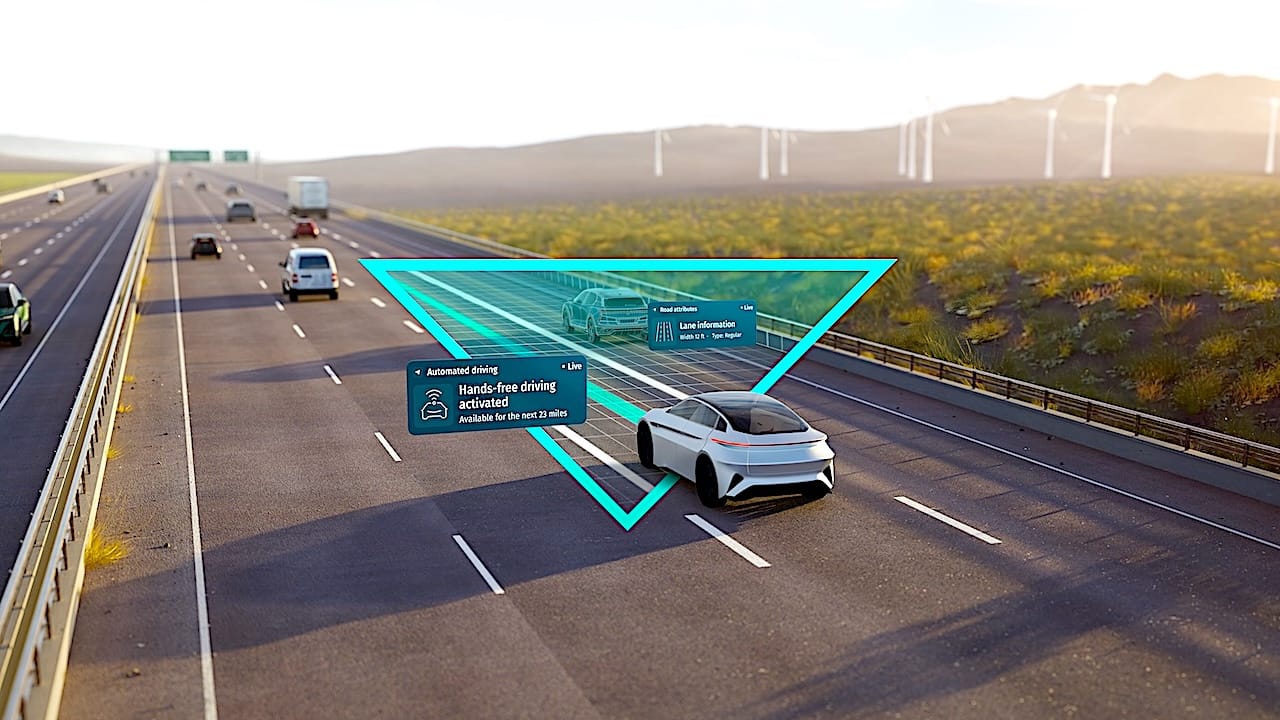 More refined software architectures in both edge and cloud enable the
interpretation of real-time data for predictive maintenance, adaptive user
interfaces, and autonomous driving functions, while cloud-based AI virtualized
development systems enable continuous learning and updates. Electrification
has only further accelerated this evolution as it opened the door for tech
players from other industries to enter the automotive market. This represents
an unstoppable trend as customers now expect the same seamless digital
experiences they enjoy on other devices. ... Legacy vehicle systems rely on
dozens of electronic control units (ECUs), each managing isolated functions,
such as powertrain or infotainment systems. SDVs consolidate these functions
into centralized compute domains connected by high-speed networks. This
architecture provides hardware and software abstraction, enabling OTA updates,
seamless cross-domain feature integration, and real-time data sharing, are
essential for continuous innovation. ... Processing sensor data at the edge –
directly within the vehicle – enables highly personalized experiences for
drivers and passengers. It also supports predictive maintenance, allowing
vehicles to anticipate mechanical issues before they occur and proactively
schedule service to minimize downtime and improve reliability. Equally
important are abstraction layers that decouple software applications from
underlying hardware.
More refined software architectures in both edge and cloud enable the
interpretation of real-time data for predictive maintenance, adaptive user
interfaces, and autonomous driving functions, while cloud-based AI virtualized
development systems enable continuous learning and updates. Electrification
has only further accelerated this evolution as it opened the door for tech
players from other industries to enter the automotive market. This represents
an unstoppable trend as customers now expect the same seamless digital
experiences they enjoy on other devices. ... Legacy vehicle systems rely on
dozens of electronic control units (ECUs), each managing isolated functions,
such as powertrain or infotainment systems. SDVs consolidate these functions
into centralized compute domains connected by high-speed networks. This
architecture provides hardware and software abstraction, enabling OTA updates,
seamless cross-domain feature integration, and real-time data sharing, are
essential for continuous innovation. ... Processing sensor data at the edge –
directly within the vehicle – enables highly personalized experiences for
drivers and passengers. It also supports predictive maintenance, allowing
vehicles to anticipate mechanical issues before they occur and proactively
schedule service to minimize downtime and improve reliability. Equally
important are abstraction layers that decouple software applications from
underlying hardware. Cybersecurity and Privacy Risks in Brain-Computer Interfaces and Neurotechnology
Neuromorphic computing is developing faster than predicted by replicating the
human brain's neural architecture for efficient, low-power AI computation. As
highlighted in talks around brain-inspired chips and meshing, these systems
are blurring distinctions between biological and silicon-based computation. In
the meanwhile, bidirectional communication is made possible by BCIs, such as
those being developed by businesses and research facilities, which can read
brain activity for feedback or control and possibly write signals back to
affect cognition. ... Neural data is essentially personal. Breaches could
expose memories, emotions, or subconscious biases. Adversaries may
reverse-engineer intentions for coercion, fraud, or espionage as AI decodes
brain scans for "mind captioning" or talent uploading. ... Compromised BCIs
blur cyber-physical boundaries farther than OT-IT convergence already has. A
malevolent actor might damage medical implants, alter augmented reality
overlays, or weaponize neurotech in national security scenarios. ...
Implantable devices rely on worldwide supply chains prone to tampering.
Neuromorphic hardware, while efficient, provides additional attack surfaces if
not designed with zero-trust principles. Using AI to process neural signals
can introduce biases, which may result in unfair treatment in brain-augmented
systems
Designing for Failure: Chaos Engineering Principles in System Design
 To design for failure, we must understand how the system behaves when failure
inevitably happens. What is the cost? What is the impact? How do we mitigate it?
How do we still maintain over 99% uptime? This requires treating failure as a
default state, not an exception. ... The first step is defining steady-state
behavior. Without this, there is no baseline to measure against. ... Chaos
experiments are most valuable in production. This is where real traffic
patterns, real user behavior, and real data shapes exist. That said, experiments
must be controlled. ... Chaos Engineering is not a one-off exercise. Systems
evolve. Dependencies change. Teams rotate. Experiments should be automated,
repeatable, and run continuously, either as scheduled jobs or integrated into
CI/CD pipelines. Over time, experiments can be expanded to test higher-impact
scenarios. ... Additional considerations include health checks, failover timing,
and data consistency. Strong consistency simplifies reasoning but reduces
availability. Eventual consistency improves availability but introduces
complexity and potential inconsistency windows. ... Network failures are
unavoidable in distributed systems. Latency spikes, packets get dropped, DNS
fails, and sometimes the network splits entirely. Many system outages are not
caused by servers crashing, but by slow or unreliable communication between
otherwise healthy components. This is where several of the classic fallacies of
distributed computing show up, especially the assumption that the network is
reliable and has zero latency.
To design for failure, we must understand how the system behaves when failure
inevitably happens. What is the cost? What is the impact? How do we mitigate it?
How do we still maintain over 99% uptime? This requires treating failure as a
default state, not an exception. ... The first step is defining steady-state
behavior. Without this, there is no baseline to measure against. ... Chaos
experiments are most valuable in production. This is where real traffic
patterns, real user behavior, and real data shapes exist. That said, experiments
must be controlled. ... Chaos Engineering is not a one-off exercise. Systems
evolve. Dependencies change. Teams rotate. Experiments should be automated,
repeatable, and run continuously, either as scheduled jobs or integrated into
CI/CD pipelines. Over time, experiments can be expanded to test higher-impact
scenarios. ... Additional considerations include health checks, failover timing,
and data consistency. Strong consistency simplifies reasoning but reduces
availability. Eventual consistency improves availability but introduces
complexity and potential inconsistency windows. ... Network failures are
unavoidable in distributed systems. Latency spikes, packets get dropped, DNS
fails, and sometimes the network splits entirely. Many system outages are not
caused by servers crashing, but by slow or unreliable communication between
otherwise healthy components. This is where several of the classic fallacies of
distributed computing show up, especially the assumption that the network is
reliable and has zero latency.


No comments:
Post a Comment