Quote for the day:
“We are what we repeatedly do. Excellence, then, is not an act but a habit.” -- Aristotle
🎧 Listen to this digest on YouTube Music
▶ Play Audio DigestDuration: 19 mins • Perfect for listening on the go.
Attackers scale deception with AI. Defenders need truth at machine speed
 As artificial intelligence makes it cheaper and faster for malicious actors to
create convincing fake identities and phishing lures, cybersecurity teams face
a growing challenge. The main problem for defenders is no longer just
detecting threats, but quickly verifying them. Currently, security data is
often scattered across different tools and systems, meaning teams waste
valuable time gathering evidence rather than investigating the actual
incident. If data is incomplete or out of date, defensive artificial
intelligence tools cannot function effectively and will only increase
uncertainty. To address this, organizations need a central system that
connects raw information with business context and clear rules. Instead of
just storing logs for later review, this system must preserve reliable
evidence, access information wherever it is stored, provide necessary context,
and govern how automated actions are taken. Modern security operations centers
do not lack information; they lack usable context. Ultimately, defenders
cannot win by trying to match the sheer volume of attacks. Instead, they must
focus on moving quickly to establish the truth, ensuring that every security
decision is based on solid, reliable evidence that both humans and automated
systems can inherently trust.
As artificial intelligence makes it cheaper and faster for malicious actors to
create convincing fake identities and phishing lures, cybersecurity teams face
a growing challenge. The main problem for defenders is no longer just
detecting threats, but quickly verifying them. Currently, security data is
often scattered across different tools and systems, meaning teams waste
valuable time gathering evidence rather than investigating the actual
incident. If data is incomplete or out of date, defensive artificial
intelligence tools cannot function effectively and will only increase
uncertainty. To address this, organizations need a central system that
connects raw information with business context and clear rules. Instead of
just storing logs for later review, this system must preserve reliable
evidence, access information wherever it is stored, provide necessary context,
and govern how automated actions are taken. Modern security operations centers
do not lack information; they lack usable context. Ultimately, defenders
cannot win by trying to match the sheer volume of attacks. Instead, they must
focus on moving quickly to establish the truth, ensuring that every security
decision is based on solid, reliable evidence that both humans and automated
systems can inherently trust.How to Get IT Buy-In for OT-First Secure Remote Access
 Getting IT teams to approve a secure remote access solution for operational
technology often requires addressing their specific concerns rather than just
highlighting operational benefits. While plant managers clearly understand
that remote access helps external vendors troubleshoot equipment and internal
teams respond faster to mechanical maintenance issues, IT and security
departments frequently worry about unexpected network changes, complicated
identity management, and serious compliance risks. They already manage
incredibly heavy workloads and are naturally cautious about adopting new tools
that might create more support tickets or auditing blind spots. To build a
highly successful case, operational technology leaders must demonstrate that a
modern access system aligns strictly with IT requirements. By explaining that
the primary goal is not to disrupt existing corporate infrastructure but to
steadily improve oversight, leaders can effectively ease fears of unmanaged
access paths. The best approach involves framing the request around shared,
practical goals: reducing the burden of manual vendor access approvals,
improving daily activity monitoring, and proving that remote access is
securely governed. Ultimately, addressing these common IT objections directly
helps turn a potential conflict into a lasting mutual benefit for both
departments and the entire organization.
Getting IT teams to approve a secure remote access solution for operational
technology often requires addressing their specific concerns rather than just
highlighting operational benefits. While plant managers clearly understand
that remote access helps external vendors troubleshoot equipment and internal
teams respond faster to mechanical maintenance issues, IT and security
departments frequently worry about unexpected network changes, complicated
identity management, and serious compliance risks. They already manage
incredibly heavy workloads and are naturally cautious about adopting new tools
that might create more support tickets or auditing blind spots. To build a
highly successful case, operational technology leaders must demonstrate that a
modern access system aligns strictly with IT requirements. By explaining that
the primary goal is not to disrupt existing corporate infrastructure but to
steadily improve oversight, leaders can effectively ease fears of unmanaged
access paths. The best approach involves framing the request around shared,
practical goals: reducing the burden of manual vendor access approvals,
improving daily activity monitoring, and proving that remote access is
securely governed. Ultimately, addressing these common IT objections directly
helps turn a potential conflict into a lasting mutual benefit for both
departments and the entire organization.Tips for successfully exiting AI vendor contracts
 Ending a contract with an artificial intelligence provider requires careful
planning to protect your business and its sensitive information. When
preparing to transition away from a vendor, the primary focus should always be
on securing your data and maintaining full ownership of any custom models or
algorithms developed during the partnership. A well-structured exit strategy
starts long before the contract actually ends. It involves negotiating clear
terms for data extraction, ensuring the vendor permanently deletes your
information from their systems, and verifying that no residual intellectual
property remains in their possession. It is also highly important to establish
a clear timeline for the transition to minimize disruptions to your daily
operations. You need a reliable contingency plan to handle the loss of
service, which might involve switching to an alternative provider or bringing
the technology entirely in-house. Clear communication with your legal team is
essential to successfully enforce these exit clauses and avoid unexpected
hidden costs. By anticipating these specific challenges early and maintaining
strict control over your digital assets, your organization can smoothly
navigate the separation and preserve the value of its technology investments
without unnecessary risk or operational downtime.
Ending a contract with an artificial intelligence provider requires careful
planning to protect your business and its sensitive information. When
preparing to transition away from a vendor, the primary focus should always be
on securing your data and maintaining full ownership of any custom models or
algorithms developed during the partnership. A well-structured exit strategy
starts long before the contract actually ends. It involves negotiating clear
terms for data extraction, ensuring the vendor permanently deletes your
information from their systems, and verifying that no residual intellectual
property remains in their possession. It is also highly important to establish
a clear timeline for the transition to minimize disruptions to your daily
operations. You need a reliable contingency plan to handle the loss of
service, which might involve switching to an alternative provider or bringing
the technology entirely in-house. Clear communication with your legal team is
essential to successfully enforce these exit clauses and avoid unexpected
hidden costs. By anticipating these specific challenges early and maintaining
strict control over your digital assets, your organization can smoothly
navigate the separation and preserve the value of its technology investments
without unnecessary risk or operational downtime.The Convergence of Risk: Cyber, Data and AI Disputes
Rapid technological changes and shifting rules are moving faster than the
methods most organizations use to manage cyber, data, and artificial
intelligence issues. This growing gap creates practical difficulties and
complicates international reporting. A recent survey of 600 senior decision
makers reveals that companies face a complicated landscape of enforcement,
operational, reputational, and legal challenges. Technology and geopolitical
pressures are primary drivers of these potential conflicts, with cyber and
data concerns ranking at the very top for most leaders. Managing the specific
risks and internal oversight tied to artificial intelligence is a major
hurdle, cited by more than half of the surveyed executives. Organizations are
also working to address other demanding areas, such as sharing sensitive
information with international regulators and law enforcement. Furthermore,
there is steady pressure to comply with strict rules for critical
infrastructure and to manage reporting duties across various countries.
Ultimately, leaders must navigate increasingly complex regulations while
focusing on stability and preparedness. These findings highlight the absolute
necessity of updating internal structures to effectively address the clear
overlap of modern technological and legal vulnerabilities globally.
Module Federation Needs a Failure Plan
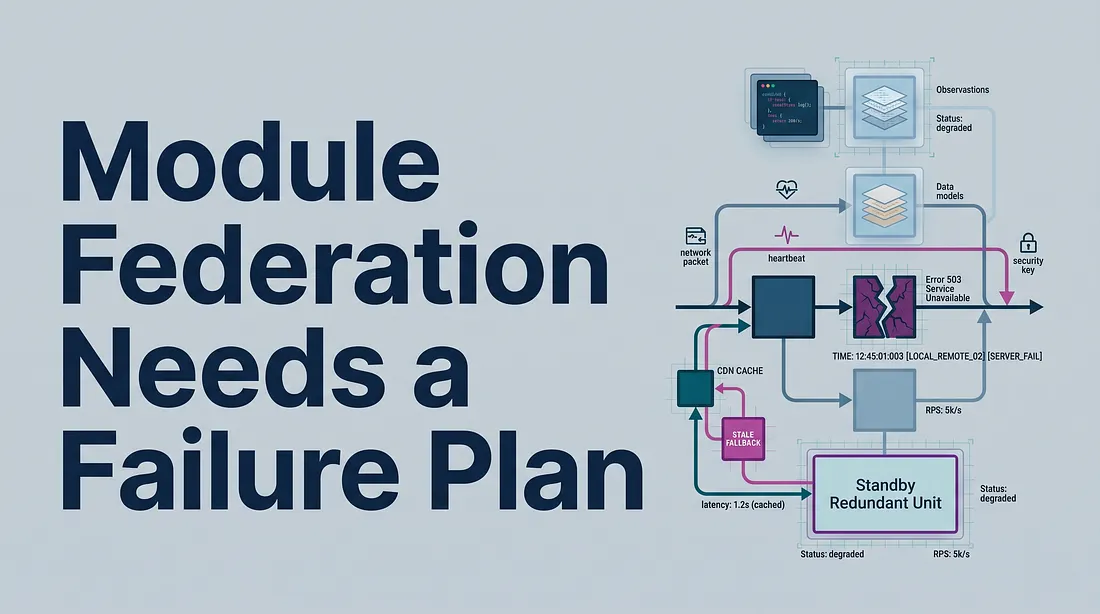 In his article, Roman Fedytskyi discusses the operational challenges of using
Module Federation to build micro-frontends. While this architecture allows
independent engineering teams to deploy separate parts of a website on their
own schedules, a failure in just one remote component can easily crash the
host application. To address this risk, Fedytskyi highlights a new open-source
package called federation-resilience. This tool focuses strictly on
application stability at runtime by introducing structured error handling.
Instead of letting a broken piece disrupt the entire website for visitors, it
provides automated retries with timed delays, cache clearing to bypass corrupt
file paths, and predictable fallbacks to local code or stable alternative
versions. Crucially, the utility operates independently of specific user
interface frameworks like React and avoids mixing safety features with release
or authorization logic. Fedytskyi suggests that platform teams should
categorize their modules by importance, centralize loading pathways, and
pre-load alternative backups during idle browser time. By tracking success and
failure rates through built-in monitoring, software teams can safely manage
these glitches rather than reacting to unexpected site outages. Ultimately,
true architectural maturity occurs when system failure is treated as a normal,
expected condition of running web applications.
In his article, Roman Fedytskyi discusses the operational challenges of using
Module Federation to build micro-frontends. While this architecture allows
independent engineering teams to deploy separate parts of a website on their
own schedules, a failure in just one remote component can easily crash the
host application. To address this risk, Fedytskyi highlights a new open-source
package called federation-resilience. This tool focuses strictly on
application stability at runtime by introducing structured error handling.
Instead of letting a broken piece disrupt the entire website for visitors, it
provides automated retries with timed delays, cache clearing to bypass corrupt
file paths, and predictable fallbacks to local code or stable alternative
versions. Crucially, the utility operates independently of specific user
interface frameworks like React and avoids mixing safety features with release
or authorization logic. Fedytskyi suggests that platform teams should
categorize their modules by importance, centralize loading pathways, and
pre-load alternative backups during idle browser time. By tracking success and
failure rates through built-in monitoring, software teams can safely manage
these glitches rather than reacting to unexpected site outages. Ultimately,
true architectural maturity occurs when system failure is treated as a normal,
expected condition of running web applications.AI needs young developers – and old developers
 To successfully implement artificial intelligence, organizations must
thoroughly rethink their software development processes rather than simply
attaching new tools to outdated workflows. According to the article, the true
potential of AI will only be realized when teams combine the distinct
strengths of both junior and senior developers. Younger developers are highly
valuable because they approach problems with a fresh perspective. Unburdened
by traditional methods, they are much more willing to question established
practices, experiment with unfamiliar tools, and propose entirely new ways to
redesign workflows from the ground up. However, their natural impatience
requires careful guidance to avoid generating unreliable code or creating
long-term technical problems. This is exactly where experienced developers
become indispensable. Senior engineers provide necessary context, mature
judgment, and a deep understanding of security, scale, and compliance
constraints. Instead of acting as roadblocks to change, these seasoned
professionals should establish safe boundaries and standard patterns that
allow newer developers to explore freely. By forming highly collaborative
teams that thoughtfully blend youthful innovation with experienced oversight,
enterprises can successfully modernize their daily operations, eliminate old
processes, and finally unlock the full productivity benefits of modern
artificial intelligence.
To successfully implement artificial intelligence, organizations must
thoroughly rethink their software development processes rather than simply
attaching new tools to outdated workflows. According to the article, the true
potential of AI will only be realized when teams combine the distinct
strengths of both junior and senior developers. Younger developers are highly
valuable because they approach problems with a fresh perspective. Unburdened
by traditional methods, they are much more willing to question established
practices, experiment with unfamiliar tools, and propose entirely new ways to
redesign workflows from the ground up. However, their natural impatience
requires careful guidance to avoid generating unreliable code or creating
long-term technical problems. This is exactly where experienced developers
become indispensable. Senior engineers provide necessary context, mature
judgment, and a deep understanding of security, scale, and compliance
constraints. Instead of acting as roadblocks to change, these seasoned
professionals should establish safe boundaries and standard patterns that
allow newer developers to explore freely. By forming highly collaborative
teams that thoughtfully blend youthful innovation with experienced oversight,
enterprises can successfully modernize their daily operations, eliminate old
processes, and finally unlock the full productivity benefits of modern
artificial intelligence.The 11 hardest IT roles to fill in 2026 — and what’s changed
 In 2026, technology leaders face a changing environment when it comes to
hiring. Artificial intelligence and cybersecurity are currently the most
difficult areas to staff, followed closely by data science. However, the
specific needs within these fields have changed. Companies are no longer
looking for basic specialists. Instead, they need professionals who can blend
coding skills with a deep understanding of business operations to build,
manage, and safely govern complex programs. At the same time, the demand for
senior cybersecurity experts has increased. As networks become more
complicated and potential threats grow, organizations need experienced
architects who can make practical security decisions under pressure. Roles
related to automation and risk management are also becoming harder to fill
because introducing new technologies requires careful planning to prevent
errors and ensure safety. Meanwhile, some previously difficult areas have
stabilized. Finding cloud experts is much easier today since most companies
have already established their systems. Typical software engineering roles are
also decreasing as newer tools handle routine tasks. To adapt to these
changes, many organizations find that retraining their existing staff is far
more effective and reliable than constantly searching for outside talent.
In 2026, technology leaders face a changing environment when it comes to
hiring. Artificial intelligence and cybersecurity are currently the most
difficult areas to staff, followed closely by data science. However, the
specific needs within these fields have changed. Companies are no longer
looking for basic specialists. Instead, they need professionals who can blend
coding skills with a deep understanding of business operations to build,
manage, and safely govern complex programs. At the same time, the demand for
senior cybersecurity experts has increased. As networks become more
complicated and potential threats grow, organizations need experienced
architects who can make practical security decisions under pressure. Roles
related to automation and risk management are also becoming harder to fill
because introducing new technologies requires careful planning to prevent
errors and ensure safety. Meanwhile, some previously difficult areas have
stabilized. Finding cloud experts is much easier today since most companies
have already established their systems. Typical software engineering roles are
also decreasing as newer tools handle routine tasks. To adapt to these
changes, many organizations find that retraining their existing staff is far
more effective and reliable than constantly searching for outside talent.Who Owns the Code Claude Wrote?
The recent accidental leak of Claude Code’s source by Anthropic has sparked a
complex legal debate about the ownership of software generated by artificial
intelligence. After a routine update exposed over half a million lines of
code, independent developers rapidly mirrored and translated the repository.
Anthropic responded with thousands of DMCA takedown notices, but this
enforcement immediately raised profound questions about their actual legal
standing. Anthropic’s own engineering team previously admitted that Claude
itself predominantly authored the leaked codebase. Under current United States
copyright law, particularly following recent judicial decisions affirming that
works lacking meaningful human authorship are strictly ineligible for
copyright protection, purely AI-generated code might technically reside in the
public domain. This specific situation highlights a glaring gap between the
rapid adoption of automated coding assistants and our existing intellectual
property framework. If software developers merely guide an AI without
contributing substantial creative input, they run the significant risk of
producing digital work they cannot legally protect. As modern companies
increasingly rely on these language models to build commercial software, they
must carefully document their human creative decisions to maintain valid
ownership claims and avoid unexpected future legal vulnerabilities
altogether.
How To Turn Industry Experience Into Expert Authority
 Transforming simple industry experience into recognized expert authority
requires much more than just accumulating years on the job or seeking
continuous visibility. According to insights from various business leaders,
true authority is built through consistency, clarity, and usefulness. Rather
than focusing on self-promotion or basic sales pitches, professionals should
aim to educate their audience by sharing practical, real-world lessons and
repeatable frameworks that help others solve actual problems. To truly stand
out, it is highly effective to challenge outdated industry norms, own a
specific niche question, and make complex concepts easy to understand for your
target audience. Furthermore, genuine expertise stems from actual
accomplishments; you must achieve real results before expecting others to
value your perspective. By documenting your ongoing learning process,
admitting when you do not have all the answers, and publicly addressing
challenges that others only discuss in private, you naturally build a strong
foundation of deep trust. Ultimately, becoming an industry authority is not
about claiming a prestigious title or being the loudest voice in the room. It
is about consistently demonstrating clear judgment under pressure, remaining
genuinely curious, and making your daily insights undeniably valuable to those
around you.
Transforming simple industry experience into recognized expert authority
requires much more than just accumulating years on the job or seeking
continuous visibility. According to insights from various business leaders,
true authority is built through consistency, clarity, and usefulness. Rather
than focusing on self-promotion or basic sales pitches, professionals should
aim to educate their audience by sharing practical, real-world lessons and
repeatable frameworks that help others solve actual problems. To truly stand
out, it is highly effective to challenge outdated industry norms, own a
specific niche question, and make complex concepts easy to understand for your
target audience. Furthermore, genuine expertise stems from actual
accomplishments; you must achieve real results before expecting others to
value your perspective. By documenting your ongoing learning process,
admitting when you do not have all the answers, and publicly addressing
challenges that others only discuss in private, you naturally build a strong
foundation of deep trust. Ultimately, becoming an industry authority is not
about claiming a prestigious title or being the loudest voice in the room. It
is about consistently demonstrating clear judgment under pressure, remaining
genuinely curious, and making your daily insights undeniably valuable to those
around you.Europe’s AI Sovereignty Problem Runs Far Deeper Than Frontier Access
Europe's current strategy for achieving technological independence in
artificial intelligence relies heavily on the software application
level—meaning that it encourages building user-facing products on top of
existing American tech infrastructure. While European startups following this
path are frequently celebrated as major successes, this approach fundamentally
deepens the region's reliance on foreign technology. Relying on foundational
systems developed by companies like Google or Anthropic presents three severe
risks for European business. First, there is a constant threat of direct
competition. The massive companies providing the underlying technology can
easily introduce new features that directly copy and replace the services
smaller startups have built. Second, founders surrender control over their
basic inputs, leaving them highly vulnerable to sudden price hikes or changes
in system behavior. Finally, the economic value overwhelmingly flows upstream.
The substantial costs of computing power and network access mean that a large
portion of European revenue ultimately goes back to American providers.
Furthermore, standard funding cycles often push successful regional startups
to sell out to these same large incumbents. Ultimately, acting as an
outsourced research department for foreign tech monopolies will not grant
Europe true technological sovereignty or long-term economic independence.