Evolving Landscape of ISO Standards for GenAI

The burgeoning field of Generative AI (GenAI) presents immense potential for
innovation and societal benefit. However, navigating this landscape responsibly
requires addressing potential concerns regarding its development and
application. Recognizing this need, the International Organization for
Standardization (ISO) has embarked on the crucial task of establishing a
comprehensive set of standards. ... A shared understanding of fundamental
terminology is vital in any field. ISO/IEC 22989 serves as the cornerstone by
establishing a common language within the AI community. This foundational
standard precisely defines key terms like “artificial intelligence,” “machine
learning,” and “deep learning,” ensuring clear communication and fostering
collaboration and knowledge sharing among stakeholders. ... Similar to the need
for blueprints in construction, ISO/IEC 23053 provides a robust framework for AI
development. This standard outlines a generic structure for AI systems based on
machine learning (ML) technology. This framework serves as a guide for
developers, enabling them to adopt a systematic approach to designing and
implementing GenAI solutions.
Your Face For Sale: Anyone Can Legally Gather & Market Your Facial Data
We need a range of regulations on the collection and modification of facial
information. We also need a stricter status of facial information itself.
Thankfully, some developments in this area are looking promising. Experts at the
University of Technology Sydney have proposed a comprehensive legal framework
for regulating the use of facial recognition technology under Australian law. It
contains proposals for regulating the first stage of non-consensual activity:
the collection of personal information. That may help in the development of new
laws. Regarding photo modification using AI, we’ll have to wait for
announcements from the newly established government AI expert group working to
develop “safe and responsible AI practices”. There are no specific discussions
about a higher level of protection for our facial information in general.
However, the government’s recent response to the Attorney-General’s Privacy Act
review has some promising provisions. The government has agreed further
consideration should be given to enhanced risk assessment requirements in the
context of facial recognition technology and other uses of biometric
information.
Affective Computing: Scientists Connect Human Emotions With AI

Affective computing is a multidisciplinary field integrating computer science,
engineering, psychology, neuroscience, and other related disciplines. A new and
comprehensive review on affective computing was recently published in the
journal Intelligent Computing. It outlines recent advancements, challenges, and
future trends. Affective computing enables machines to perceive, recognize,
understand, and respond to human emotions. It has various applications across
different sectors, such as education, healthcare, business services and the
integration of science and art. Emotional intelligence plays a significant role
in human-machine interactions, and affective computing has the potential to
significantly enhance these interactions. ... Affective computing, a field that
combines technology with the nuanced understanding of human emotions, is
experiencing surges in innovation and related ethical considerations.
Innovations identified in the review include emotion-generation techniques that
enhance the naturalness of human-computer interactions by increasing the realism
of the facial expressions and body movements of avatars and robots.
The open source problem

Over the years, I’ve trended toward permissive, Apache-style licensing,
asserting that it’s better for community development. But is that true? It’s
hard to argue against the broad community that develops Linux, for example,
which is governed by the GPL. Because freedom is baked into the software, it’s
harder (though not impossible) to fracture that community by forking the
project. To me, this feels critical, and it’s one reason I’m revisiting the
importance of software freedom (GPL, copyleft), and not merely developer/user
freedom (Apache). If nothing else, as tedious as the internecine bickering was
in the early debates between free software and open source (GPL versus Apache),
that tension was good for software, generally. It gave project maintainers a
choice in a way they really don’t have today because copyleft options
disappeared when cloud came along and never recovered. Even corporations, those
“evil overlords” as some believe, tended to use free and open source licenses in
the pre-cloud world because they were useful. Today companies invent new
licenses because the Free Software Foundation and OSI have been living in the
past while software charged into the future. Individual and corporate developers
lost choice along the way.
Researchers create AI worms that can spread from one system to another

Now, in a demonstration of the risks of connected, autonomous AI ecosystems, a
group of researchers has created one of what they claim are the first
generative AI worms—which can spread from one system to another, potentially
stealing data or deploying malware in the process. “It basically means that
now you have the ability to conduct or to perform a new kind of cyberattack
that hasn't been seen before,” says Ben Nassi, a Cornell Tech researcher
behind the research. ... To create the generative AI worm, the researchers
turned to a so-called “adversarial self-replicating prompt.” This is a prompt
that triggers the generative AI model to output, in its response, another
prompt, the researchers say. In short, the AI system is told to produce a set
of further instructions in its replies. This is broadly similar to traditional
SQL injection and buffer overflow attacks, the researchers say. To show how
the worm can work, the researchers created an email system that could send and
receive messages using generative AI, plugging into ChatGPT, Gemini, and open
source LLM, LLaVA. They then found two ways to exploit the system—by using a
text-based self-replicating prompt and by embedding a self-replicating prompt
within an image file.
Do You Overthink? How to Avoid Analysis Paralysis in Decision Making
Welcome to the world of analysis paralysis. This phenomenon occurs when an
influx of information and options leads to overthinking, creating a deadlock
in decision-making. Decision makers, driven by the fear of making the wrong
choice or seeking the perfect solution, may find themselves caught in a loop
of analysis, reevaluation, and hesitation, consequently losing sight of the
overall goal. ... Analysis paralysis impacts decision making by stifling risk
taking, preventing open dialogue, and constraining innovation—all of which are
essential elements for successful technology development. It often leads to
mental exhaustion, reduced concentration, and increased stress from endlessly
evaluating information, also known as decision fatigue. The implications of
analysis paralysis include missed opportunities due to ongoing hesitation and
innovative potential being restricted by cautious decision making. ... In the
technology sector, the consequences of poor decisions can be far-reaching,
potentially unraveling extensive work and achievements. Fear of this happening
is heightened due to the sector’s competitive nature. Teams worry that a
single misstep could have a cascading negative impact.
30 years of the CISO role – how things have changed since Steve Katz

Katz had no idea what the CISO job was when he accepted it in 1995. Neither
did Citicorp. “They said you’ve got a blank cheque, build something great —
whatever the heck it is,” Katz recounted during the 2021 podcast. “The CEO
said, ‘The board has no idea, just go do something.’” Citicorp gave Katz just
two directives after hiring him: “Build the best cybersecurity department in
the world” and “go out and spend time with our top international banking
customers to limit the damage.” ... today’s CISO must be able to communicate
cyber threats in terms that line of business can understand almost instantly.
“It’s the ability to articulate risk in a way that is related to the business
processes in the organization,” says Fitzgerald. “You need to be able to
translate what risk means. Does it mean I can’t run business operations? Does
it mean we won’t be able to treat patients in our hospital because we had a
ransomware attack?” Deaner says CISOs have an obvious role to play in core
infosec initiatives such as implementing a business continuity plan or
disaster recovery testing. ... “People in CISO circles absolutely talk a lot
about liability. We’re all concerned about it,” Deaner acknowledges. “People
are taking the changes to those regulations very seriously because they’re
there for a reason.”
Vishing, Smishing Thrive in Gap in Enterprise, CSP Security Views
There is a significant gap between enterprises’ high expectations that their
communications service provider will provide the security needed to protect
them against voice and messaging scams and the level of security those CSPs
offer, according to telecom and cybersecurity software maker Enea. Bad actors
and state-sponsored threat groups, armed with the latest generative AI tools,
are rushing to exploit that gap, a trend that is apparent in the skyrocketing
numbers of smishing (text-based phishing) and vishing (voice-based frauds)
that are hitting enterprises and the jump in all phishing categories since the
November 2022 release of the ChatGPT chatbot by OpenAI, according to a report
this week by Enea. ... “Maintaining and enhancing mobile network security is a
never-ending challenge for CSPs,” the report’s authors wrote. “Mobile networks
are constantly evolving – and continually being threatened by a range of
threat actors who may have different objectives, but all of whom can exploit
vulnerabilities and execute breaches that impact millions of subscribers and
enterprises and can be highly costly to remediate.”
Causal AI: AI Confesses Why It Did What It Did
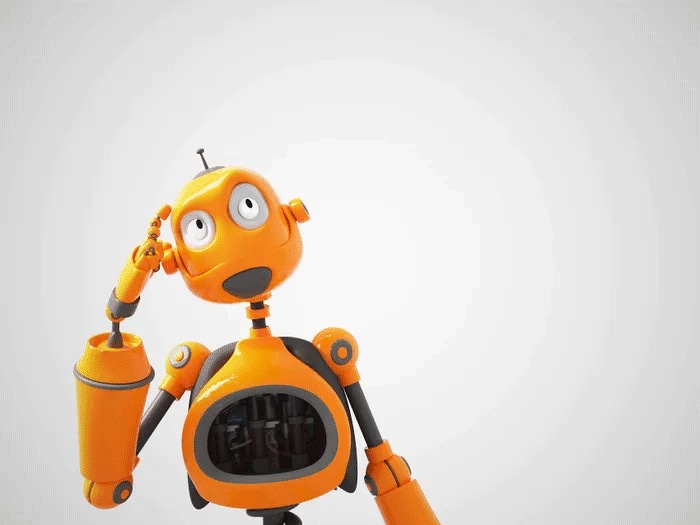
Traditional AI models are fixed in time and understand nothing. Causal AI is a
different animal entirely. “Causal AI is dynamic, whereas comparable tools are
static. Causal AI represents how an event impacts the world later. Such a
model can be queried to find out how things might work,” says Brent Field at
Infosys Consulting. “On the other hand, traditional machine learning models
build a static representation of what correlates with what. They tend not to
work well when the world changes, something statisticians call nonergodicity,”
he says. It’s important to grok why this one point of nonergodicity is such a
crucial difference to almost everything we do. “Nonergodicity is everywhere.
It’s this one reason why money managers generally underperform the S&P 500
index funds. It’s why election polls are often off by many percentage points.
... Without knowing the cause of an event or potential outcome, the knowledge
we extract from AI is largely backward facing even when it is forward
predicting. Outputs based on historical data and events alone are by nature
handicapped and sometimes useless. Causal AI seeks to remedy that.
Leveraging power quality intelligence to drive data center sustainability
The challenge is that some data centers lack the power monitoring capabilities
necessary for achieving heightened efficiency and sustainability. Moreover,
there needs to be more continuous power quality monitoring. Many rely on
rudimentary measurements, such as voltage, current, and power parameters,
gathered by intelligent rack power distribution units (PDUs), which are then
transmitted to DCIM, BMS, and other infrastructure management and monitoring
systems. Some consider power quality only during initial setup or occasionally
revisit it when reconfiguring IT setups. This underscores the critical role of
intelligent PDUs in delivering robust power quality monitoring and the
imperative for data center and facility managers to steer efforts toward
increased efficiency and sustainability. Certain power quality issues can have
detrimental effects on the electrical reliability of a data center, leading to
costly unplanned downtime and posing challenges in enhancing sustainability.
... These power quality issues can profoundly affect a data center's
functionality and dependability. They may result in unforeseen downtime, harm
to equipment, data loss or corruption, and reduced network
efficiency.
Quote for the day:
"If you want to achieve excellence,
you can get there today. As of this second, quit doing less-than-excellent
work." -- Thomas J. Watson