Quote for the day:
“An entrepreneur is someone who jumps off a cliff and builds a plane on the way down.” -- Reid Hoffman
🎧 Listen to this digest on YouTube Music
▶ Play Audio DigestDuration: 19 mins • Perfect for listening on the go.
AI in the Boardroom: What Directors Must Now Govern
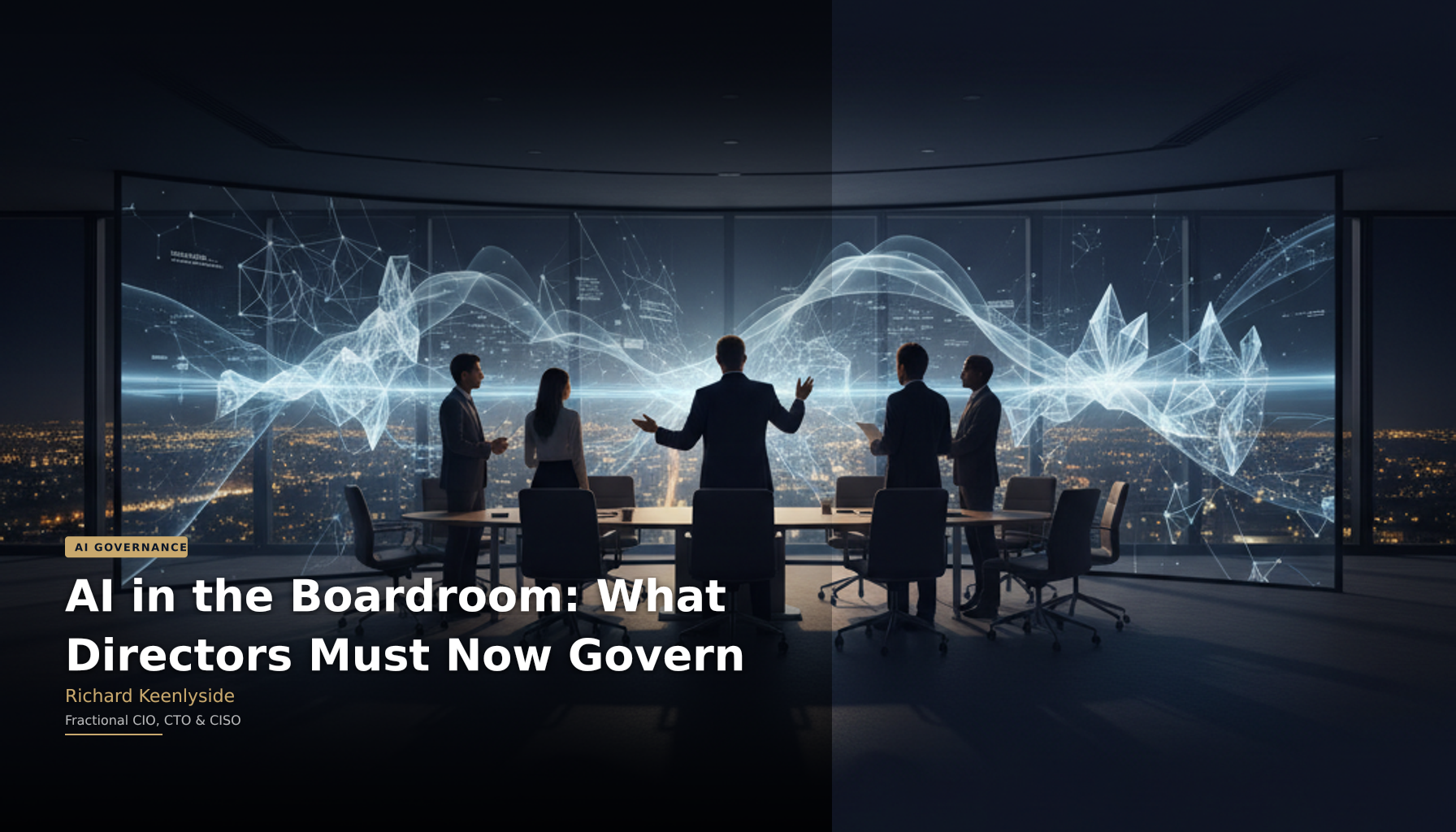 The boardroom conversation around artificial intelligence has shifted from
deciding whether to experiment to figuring out how to successfully govern the
technology. While many company directors now use AI for their personal
productivity, using a specific tool is vastly different from overseeing its safe
and strategic deployment across an entire organization. As AI becomes deeply
embedded in strategy, supply chains, and daily operations, it brings complex new
risks, particularly in cybersecurity and external vendor management.
Importantly, when an AI system makes a flawed decision or causes harm,
accountability cannot be outsourced to a vendor or the algorithm itself; it
remains firmly with the human leaders and the board. Currently, a significant
expertise gap exists, with most boards lacking even one literate director, let
alone a collective understanding of the topic. However, boards do not need to
hire software engineers or data scientists. Instead, they need directors capable
of asking sharp questions, evaluating risk, and connecting these new initiatives
to broader business strategy. To close this gap, boards should focus on raising
the technical literacy of all members rather than relying on a single expert.
Practical first steps include auditing current usage, defining clear oversight
responsibilities, establishing audit trails for automated decisions, and
bringing in seasoned advisors to evaluate the overall management approach.
The boardroom conversation around artificial intelligence has shifted from
deciding whether to experiment to figuring out how to successfully govern the
technology. While many company directors now use AI for their personal
productivity, using a specific tool is vastly different from overseeing its safe
and strategic deployment across an entire organization. As AI becomes deeply
embedded in strategy, supply chains, and daily operations, it brings complex new
risks, particularly in cybersecurity and external vendor management.
Importantly, when an AI system makes a flawed decision or causes harm,
accountability cannot be outsourced to a vendor or the algorithm itself; it
remains firmly with the human leaders and the board. Currently, a significant
expertise gap exists, with most boards lacking even one literate director, let
alone a collective understanding of the topic. However, boards do not need to
hire software engineers or data scientists. Instead, they need directors capable
of asking sharp questions, evaluating risk, and connecting these new initiatives
to broader business strategy. To close this gap, boards should focus on raising
the technical literacy of all members rather than relying on a single expert.
Practical first steps include auditing current usage, defining clear oversight
responsibilities, establishing audit trails for automated decisions, and
bringing in seasoned advisors to evaluate the overall management approach.The Implementation Gap: Why Africa’s Digital Strategies Rarely Become Digital Reality
Despite having no shortage of ambitious national digital strategies, data protection laws, and broadband policies, African nations frequently struggle to turn these plans into reality. This persistent issue is known as the implementation gap. Governments often celebrate the launch of new policies but fail to dedicate the same energy to executing them. A major part of the problem is the false belief that simply purchasing new technology equals true digital transformation. In reality, buying new software means very little without also redesigning outdated business processes and improving institutional capabilities. The article identifies seven main hurdles holding back progress. First, shifting political leadership often disrupts long-term projects. Second, many public institutions still rely on old, paper-based administrative structures. Third, procurement focuses too much on acquiring technology instead of improving public outcomes. Fourth, government digital systems are often fragmented and unable to share information with each other. Fifth, cybersecurity is typically treated as a delayed afterthought rather than a built-in priority. Sixth, governments fail to invest enough in training civil servants and citizens to use these new tools. Finally, institutions frequently repeat the mistakes of past projects instead of learning from them. To succeed, the focus must shift from launching more strategies to building capable institutions that can steadily deliver real, lasting public value.Upskilling for Emerging Industries Affected by Data Science
 As data science transforms global industries, the demand and compensation for
skilled professionals continue to rise. However, this well-paying field is
also becoming highly competitive, meaning that simply landing a job is no
longer enough to guarantee your long-term security in the workforce. To build
a lasting career, continuous learning is essential to avoid falling behind in
a rapidly shifting job market. The pace of rapid technological advancements
dictates that traditional skills can very quickly become outdated, while brand
new roles in specialized areas like artificial intelligence, renewable energy,
cybersecurity, and blockchain consistently emerge. To succeed in these newer
positions, data scientists must cultivate core traits such as adaptability,
critical thinking, clear communication, and creativity. Employers actively
seek out individuals who possess a growth mindset and can quickly adjust to
new tools and complex challenges. Professionals can stay competitive by
embracing varied educational strategies. This includes enrolling in targeted
online courses through accessible educational platforms, attending industry
workshops, and connecting with experienced mentors for personalized guidance.
Additionally, volunteering for projects outside your normal duties and
engaging with professional networks can provide practical experience. By
treating your education as an ongoing journey, you can protect your career and
easily pivot into new opportunities as the landscape changes.
As data science transforms global industries, the demand and compensation for
skilled professionals continue to rise. However, this well-paying field is
also becoming highly competitive, meaning that simply landing a job is no
longer enough to guarantee your long-term security in the workforce. To build
a lasting career, continuous learning is essential to avoid falling behind in
a rapidly shifting job market. The pace of rapid technological advancements
dictates that traditional skills can very quickly become outdated, while brand
new roles in specialized areas like artificial intelligence, renewable energy,
cybersecurity, and blockchain consistently emerge. To succeed in these newer
positions, data scientists must cultivate core traits such as adaptability,
critical thinking, clear communication, and creativity. Employers actively
seek out individuals who possess a growth mindset and can quickly adjust to
new tools and complex challenges. Professionals can stay competitive by
embracing varied educational strategies. This includes enrolling in targeted
online courses through accessible educational platforms, attending industry
workshops, and connecting with experienced mentors for personalized guidance.
Additionally, volunteering for projects outside your normal duties and
engaging with professional networks can provide practical experience. By
treating your education as an ongoing journey, you can protect your career and
easily pivot into new opportunities as the landscape changes.Australian developers are losing half their day, most leaders have no idea
Australian software developers are currently spending the vast majority of
their working hours on tasks outside of actual coding. Although engineering
leaders often believe their teams are highly productive, studies show
developers spend a mere sixteen percent of their day writing software. The
rest of their time is consumed by navigating security protocols, complex
deployment processes, and infrastructure monitoring. This significant gap
between leadership perception and daily reality represents a major hidden cost
for businesses today. The problem is heavily compounded by a lack of clear
visibility into how software performs in live environments. When engineers
cannot easily identify the root cause of system issues, they are forced to
spend hours troubleshooting rather than creating new features. Furthermore,
the rapid integration of artificial intelligence tools is adding a new layer
of operational complexity. While artificial intelligence can speed up initial
development, it also introduces unpredictable behaviors and risks that are
very difficult to manage without proper oversight. To fix this ongoing
productivity drain, organizations need to securely connect system performance
data directly to developer workflows. By giving engineering teams clear,
real-time insights into system health and AI behavior, leaders can reduce
daily friction, minimize time wasted on resolving errors, and give developers
their time back to focus on building reliable software.
 While artificial intelligence is transforming many industries, its role in
healthcare carries significantly higher stakes. In most fields, an AI mistake
causes mere inconvenience; in medicine, it can impact human lives. For this
reason, India must adopt healthcare AI with strict accountability and clinical
evidence. The country faces unique medical challenges, including a vast
population, rising chronic diseases, and a divide in urban-rural access. AI
offers practical solutions, such as quickly analyzing X-rays or flagging early
signs of conditions like diabetic retinopathy, helping shift the system from
reactive treatments to proactive care. However, achieving these benefits
requires the right approach. AI is not meant to replace doctors. Instead, it
serves as a valuable support system that reduces administrative workloads and
highlights patterns that busy medical professionals might miss. To succeed in
India, AI models cannot simply be imported; they must be trained and validated
using diverse local data to ensure accuracy across different regions and
demographics. Furthermore, developers must prioritize data privacy, clinical
oversight, and transparent patient consent. Building genuine trust requires
health technology companies to focus on proven clinical outcomes rather than
just technological potential. Ultimately, the future of medicine is doctors
and AI working together to strengthen patient care.
While artificial intelligence is transforming many industries, its role in
healthcare carries significantly higher stakes. In most fields, an AI mistake
causes mere inconvenience; in medicine, it can impact human lives. For this
reason, India must adopt healthcare AI with strict accountability and clinical
evidence. The country faces unique medical challenges, including a vast
population, rising chronic diseases, and a divide in urban-rural access. AI
offers practical solutions, such as quickly analyzing X-rays or flagging early
signs of conditions like diabetic retinopathy, helping shift the system from
reactive treatments to proactive care. However, achieving these benefits
requires the right approach. AI is not meant to replace doctors. Instead, it
serves as a valuable support system that reduces administrative workloads and
highlights patterns that busy medical professionals might miss. To succeed in
India, AI models cannot simply be imported; they must be trained and validated
using diverse local data to ensure accuracy across different regions and
demographics. Furthermore, developers must prioritize data privacy, clinical
oversight, and transparent patient consent. Building genuine trust requires
health technology companies to focus on proven clinical outcomes rather than
just technological potential. Ultimately, the future of medicine is doctors
and AI working together to strengthen patient care.
Accountable Intelligence: Why India must get healthcare AI right
While artificial intelligence is transforming many industries, its role in
healthcare carries significantly higher stakes. In most fields, an AI mistake
causes mere inconvenience; in medicine, it can impact human lives. For this
reason, India must adopt healthcare AI with strict accountability and clinical
evidence. The country faces unique medical challenges, including a vast
population, rising chronic diseases, and a divide in urban-rural access. AI
offers practical solutions, such as quickly analyzing X-rays or flagging early
signs of conditions like diabetic retinopathy, helping shift the system from
reactive treatments to proactive care. However, achieving these benefits
requires the right approach. AI is not meant to replace doctors. Instead, it
serves as a valuable support system that reduces administrative workloads and
highlights patterns that busy medical professionals might miss. To succeed in
India, AI models cannot simply be imported; they must be trained and validated
using diverse local data to ensure accuracy across different regions and
demographics. Furthermore, developers must prioritize data privacy, clinical
oversight, and transparent patient consent. Building genuine trust requires
health technology companies to focus on proven clinical outcomes rather than
just technological potential. Ultimately, the future of medicine is doctors
and AI working together to strengthen patient care.
The AI Governance Gap: Why Traditional Security Controls Are Falling Behind
Traditional enterprise security was designed for a predictable world where applications behaved consistently and network traffic passed through centralized checkpoints. These conventional governance models are failing because artificial intelligence operates completely differently. AI is dynamic, changes based on user prompts, and is increasingly embedded directly into approved tools like productivity suites and web browsers. Because these interactions bypass traditional network filters, organizations face a massive visibility gap. They often cannot tell how AI is being used, what sensitive data is being shared, or what actions autonomous agents are taking on their behalf. Attempting to manage this by simply blocking unapproved AI apps is ineffective and often drives employees toward hidden shadow AI use. To close this gap, companies must move away from static application checklists and adopt source-level monitoring. This approach focuses on capturing real-time interactions, such as the exact prompts users send, the specific data flowing in, and the models' direct responses, right where the activity occurs. By prioritizing continuous, context-aware visibility over outright restriction, businesses can identify risky behavior regardless of which specific tool is being used. As AI becomes deeply woven into everyday workflows, effective governance will depend entirely on tracking how information moves through these intelligent systems rather than just monitoring standard network traffic.On AI Ethics: Why Prompt Engineering Needs a Moral Compass
 As the practice of giving instructions to artificial intelligence—often called
prompt engineering—grows in demand, the need for a strong moral compass is
becoming increasingly clear. Simply training an AI model well is not enough;
the specific instructions given to these systems can independently create
significant ethical dilemmas. Harmful prompts can easily amplify existing
biases, expose private information, generate convincing misinformation, or be
used for malicious exploitation. Recent guidance from Pope Leo XIV highlights
that AI must serve humanity rather than concentrate power, warning against a
purely profit-driven approach and calling for shared standards of social
justice and accountability. The real-world consequences of poor AI ethics are
already visible across multiple fields. Researchers note that mental health
chatbots routinely violate established ethical standards through deceptive
empathy and poor crisis management. Furthermore, AI tools are creating
complex, hidden security threats, as automated programs operate within
approved workflows but still execute harmful actions. Because the speed of
modern AI adoption is entirely unprecedented, technology and security
professionals can no longer assume a system is safe just because it functions
as designed. Moving forward, organizations must actively govern how their AI
behaves, clearly define ethical boundaries, and closely monitor both human and
machine activities to properly protect their daily operations.
As the practice of giving instructions to artificial intelligence—often called
prompt engineering—grows in demand, the need for a strong moral compass is
becoming increasingly clear. Simply training an AI model well is not enough;
the specific instructions given to these systems can independently create
significant ethical dilemmas. Harmful prompts can easily amplify existing
biases, expose private information, generate convincing misinformation, or be
used for malicious exploitation. Recent guidance from Pope Leo XIV highlights
that AI must serve humanity rather than concentrate power, warning against a
purely profit-driven approach and calling for shared standards of social
justice and accountability. The real-world consequences of poor AI ethics are
already visible across multiple fields. Researchers note that mental health
chatbots routinely violate established ethical standards through deceptive
empathy and poor crisis management. Furthermore, AI tools are creating
complex, hidden security threats, as automated programs operate within
approved workflows but still execute harmful actions. Because the speed of
modern AI adoption is entirely unprecedented, technology and security
professionals can no longer assume a system is safe just because it functions
as designed. Moving forward, organizations must actively govern how their AI
behaves, clearly define ethical boundaries, and closely monitor both human and
machine activities to properly protect their daily operations.Claude Security Risks: What Your Security Team Needs to Know
Using AI tools like Claude in the workplace presents serious security challenges for companies, extending far beyond the software itself. The primary danger comes from how employees use the tool. When workers paste full reports, large spreadsheets, or confidential documents into the platform for analysis, they unknowingly expose sensitive company information and intellectual property. Because these bulk uploads happen without internal oversight, companies lose track of their data, which can lead to major compliance and audit failures. Another significant issue is context leakage. Information shared in one conversation can easily influence the answers generated in later sessions. If a team discusses proprietary processes or confidential insights, those details might unintentionally surface in future responses within shared workspaces. Furthermore, the boundaries between different types of accounts are often blurred. Employees frequently switch between personal accounts, shared team spaces, and official enterprise environments. This lack of clear separation weakens overall data governance, allowing regulated or sensitive information to drift outside of approved, secure areas. Ultimately, these blind spots create serious vulnerabilities, including accidental data disclosure and incomplete legal responses. To protect their assets, businesses must recognize that the most significant risk lies in unmonitored human behavior and a lack of clear access boundaries.Manual Workarounds as Operational Risk Get Louder
 When employees constantly create manual workarounds to bypass clunky systems,
they are not simply trying to be difficult; they are attempting to keep the
business moving forward. However, these temporary fixes quickly evolve into
significant operational risks over time. Once a shortcut becomes a regular
habit, it replaces official workflows and creates undocumented, fragile
systems. These shadow processes—like hidden spreadsheets or email
approvals—mask the true state of operations and create severe vulnerabilities,
especially when they involve financial data or regulatory compliance.
Furthermore, workarounds often rely entirely on a single person's memory,
creating a dangerous dependency that falls apart if that individual leaves or
during a major emergency. To protect the organization, leaders must view these
side paths not as employee indiscipline, but as clear signals of failing
internal infrastructure. Rather than demanding people work harder, management
needs to thoroughly audit these hidden habits and address the core root causes
of the friction. Every workaround that is allowed to continue must be assigned
a specific owner, given a strict review date, and carefully evaluated for its
overall business impact. By replacing these fragile, manual patches with
permanently improved systems, organizations can maintain clear visibility,
ensure steady control, and safely scale their daily operations.
When employees constantly create manual workarounds to bypass clunky systems,
they are not simply trying to be difficult; they are attempting to keep the
business moving forward. However, these temporary fixes quickly evolve into
significant operational risks over time. Once a shortcut becomes a regular
habit, it replaces official workflows and creates undocumented, fragile
systems. These shadow processes—like hidden spreadsheets or email
approvals—mask the true state of operations and create severe vulnerabilities,
especially when they involve financial data or regulatory compliance.
Furthermore, workarounds often rely entirely on a single person's memory,
creating a dangerous dependency that falls apart if that individual leaves or
during a major emergency. To protect the organization, leaders must view these
side paths not as employee indiscipline, but as clear signals of failing
internal infrastructure. Rather than demanding people work harder, management
needs to thoroughly audit these hidden habits and address the core root causes
of the friction. Every workaround that is allowed to continue must be assigned
a specific owner, given a strict review date, and carefully evaluated for its
overall business impact. By replacing these fragile, manual patches with
permanently improved systems, organizations can maintain clear visibility,
ensure steady control, and safely scale their daily operations.

