
Sent or Just Written? The Outbox Problem in a Communications Outage
During a network outage, typical messaging tools often create a dangerous gray zone by simply labeling a message as "sent" the moment a user hits the button, even if it has not left the device. This false confidence can derail incident response efforts. When users are unsure if their updates went through, they tend to resend them repeatedly, leading to duplicate records. Additionally, when a device finally reconnects, stale messages can arrive looking fresh, or a sudden burst of old drafts can overwhelm the receiving team. To prevent these failures, organizations must recognize a middle state where a message is pending rather than fully delivered. While upgrading to tools that clearly display when a message is still on the device or unconfirmed is ideal, teams can also adapt their current processes. Business continuity plans should require users to include the time directly in the text of their updates, define clear rules for resending, and designate a person to acknowledge receipt. Testing these tools in airplane mode during routine drills ensures teams know exactly how their software behaves when the connection fails.
What is the difference between an HSM and a vault for key storage?
The core difference between a Hardware Security Module (HSM) and a vault lies in how they handle the exportability and processing of sensitive cryptographic data. An HSM is a dedicated, tamper-resistant hardware device designed to generate, store, and utilize keys entirely within its protected boundary. Because the private key material never leaves the hardware during signing or decryption processes, HSMs offer the highest level of assurance against memory scraping, host compromise, or accidental copying. In contrast, a vault is a broader secret-management system focused on orchestrating, centrally storing, and distributing credentials or application secrets on demand. A vault typically delivers secrets to an application over an authenticated channel, meaning the data exists temporarily in process memory. Many modern security architectures layer both solutions for maximum efficiency. Teams often use vaults as an operational control plane to manage developer workflows, automation, and general low-to-medium sensitivity secrets. They then reserve the HSM as a cryptographic trust anchor to secure non-exportable, high-value assets like root certificates and signing keys where exposure would be devastating.
Before you automate, ask whether the process should exist: The missing question in Enterprise AI
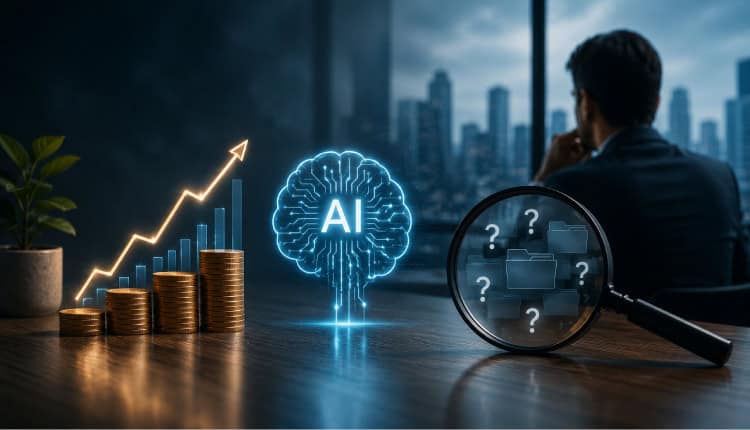
Before adopting enterprise AI, many organizations make a critical mistake: they focus on automating existing processes without first evaluating if those processes are actually necessary. When companies rush to implement artificial intelligence, they often end up hardwiring inefficient or outdated workflows into their digital systems. This approach does not truly solve underlying business problems; it merely speeds up a broken system, creating long-term operational friction. To genuinely benefit from AI, business leaders must view automation as an opportunity for structural redesign. The essential first step is to completely map out current workflows and ask whether each step provides real value or simply exists due to legacy habits. If a process is redundant, overly complex, or fails to directly serve business goals, it should be eliminated or entirely redesigned before any software is introduced. By prioritizing process optimization over mindless automation, companies can ensure their AI investments drive meaningful efficiency, reduce operational waste, and foster a more agile enterprise. Ultimately, the best automation strategy is one that avoids automating what shouldn't be done in the first place.
What a security leader should tell the CEO about leaked credentials
In a recent interview, GitGuardian CEO Eric Fourrier discusses the evolving challenges of managing leaked credentials and the increasing personal liability facing security leaders. While holding executives accountable has forced boards to take cyber risk more seriously, it can also backfire by making employees afraid to report mistakes. This fear often leads developers to hide exposed secrets rather than properly revoking them, leaving the underlying security risk unresolved. Fourrier emphasizes that companies must separate accountability from blame, creating a culture where rapid reporting is encouraged and prioritized over punishment. When speaking to leadership, security chiefs need to confidently demonstrate that they can detect exposed credentials even in external or personal repositories, and they must track the time it takes from discovery to full revocation. Looking ahead to 2027, Fourrier warns that the rise of AI tools and autonomous agents is expanding the attack surface. As more non-engineers handle sensitive data through AI workflows, the paths for secrets to leak into public view are multiplying, requiring broader monitoring strategies to keep organizations secure.

How AI Is Changing the Role of QA Engineers
The introduction of AI in software testing is fundamentally reshaping the role of Quality Assurance (QA) engineers, moving their core responsibility from executing tests to evaluating results. While AI tools now excel at automating repetitive tasks like test generation, locator maintenance, visual comparisons, and failure triage, they do not eliminate the need for human oversight. Instead, the focus shifts to verifying the machine’s decisions. For instance, when an AI tool automatically heals a broken locator, a QA engineer must confirm it actually targeted the correct element rather than masking a genuine issue. Furthermore, testing AI-driven features introduces unique complexities like non-deterministic outputs, hallucination, and model drift. Traditional pass/fail assertions are no longer adequate; QA teams must now build evaluation sets and scoring rules to judge acceptable model behavior. Ultimately, the notion that AI will replace testers completely misunderstands the process. As AI accelerates code generation, the volume of plausible but subtly flawed code increases. This "almost right" output demands stronger human judgment, meaning QA engineers remain essential to define what correct behavior looks like in increasingly complex systems.

Gartner says CIOs must apply the brakes on AI to balance value and risk
Gartner is urging CIOs to slow the pace of AI adoption enough to ensure investment produces real business value without exposing organizations to poorly understood risks. The message is not to retreat from AI, but to bring greater discipline to decisions about where and how it is used. As businesses push ahead with AI initiatives, technology leaders face growing pressure to balance experimentation with governance, security, cost, and measurable outcomes. Gartner’s position suggests that enthusiasm alone is not a sufficient reason to expand AI programs. CIOs need to determine whether individual projects address genuine business needs and whether their benefits justify the resources and risks involved. This also means paying closer attention to controls and accountability rather than allowing adoption to run ahead of an organization’s ability to manage it. The broader point is that successful AI use will depend less on adopting the technology quickly and more on making deliberate choices about where it adds meaningful value. For CIOs, applying the brakes therefore means creating enough space for sound judgement while continuing to pursue worthwhile opportunities.

Panic over cloud capacity is out of hand
The article argues that talk of cloud AI capacity being “sold out” is creating unnecessary confusion for enterprises. While demand for GPUs is high and constraints around hardware, power, regional availability, and long-term reservations are real, that does not mean organizations cannot obtain cloud resources for AI projects. Most enterprises are not training enormous models from scratch; they are running inference, building retrieval-augmented generation systems, fine-tuning smaller models, testing copilots, or experimenting with agents, each with different infrastructure requirements. The author warns that broad claims about shortages can push companies toward rushed capacity commitments or unnecessary changes to their cloud strategies. Instead, enterprises should first define the workloads they actually need to support, then confirm availability, pricing, quotas, reservation terms, lead times, and alternatives directly with providers. Architectures should also preserve flexibility by avoiding needless dependence on a single capacity option. The central message is straightforward: cloud capacity constraints deserve careful planning, but exaggerated headlines obscure important differences between workloads. Organizations will make better decisions by relying on specific facts, realistic requirements, and flexible architecture rather than reacting to market anxiety.
The Invisible Security Paradigm: Embedding Cyber Resilience into Operational Workflows
The article explains why cyber resilience in logistics must become part of everyday operations rather than remain a separate security activity. As supply chains rely more heavily on cloud platforms, APIs, connected devices, applications, partners, and third parties, cyber incidents can disrupt shipments, customer communication, operational systems, and business continuity, not simply expose data. Security leaders therefore need to move beyond compliance and prioritize risks according to exposure, exploitability, and the importance of affected assets. Strong resilience starts with clear visibility of assets, identities, data flows, and external dependencies, supported by measures such as least-privilege access, encryption, network segmentation, and tested detection and recovery capabilities. AI can help security teams analyze large volumes of information, identify unusual patterns, prioritize alerts, and speed investigations, but human judgement and reliable data remain essential. The article also stresses that security controls must fit operational realities rather than obstruct legitimate work. Ultimately, CISOs need to connect cyber risk with business continuity, customer trust, financial impact, and reputation, while making secure behaviour a normal part of everyday decision-making.

Who Should Own Data Quality? What Changed When We Moved It
Historically, organizations assign data quality ownership to platform teams simply because they manage the technical infrastructure. However, this default approach causes significant delays. While technical teams can easily detect anomalies like sudden spikes in missing values, they lack the specific business context required to determine whether an anomaly is a genuine error, a documented rule change, or a valid edge case. To solve this problem, organizations should keep detection mechanisms centralized while shifting the responsibility for data definitions and incident resolution directly to the lines of business. When business units own the meaning of their data and have dedicated time allocated to resolve issues, incident resolution times can drop dramatically from several days to just a few hours. A successful transition also requires a thin enterprise governance layer to maintain a central definition registry, preventing individual departments from creating conflicting rules. By centralizing the detection of issues and decentralizing the judgment of those issues to the people who understand the data best, organizations build a highly responsive and accountable system that consistently maintains core data integrity without unfairly overburdening their technical teams.
Six questions to ask your MDR provider
As business technology environments grow more complex, organizations must regularly reassess their managed detection and response providers to ensure they still offer effective protection. It is no longer enough to rely on a list of features or assume that initial capabilities remain sufficient. Instead, security teams should focus on what a provider can genuinely see and address across the entire environment. This includes asking whether they can monitor machine identities, such as automated tools or system accounts, and tell the difference between normal and unusual behavior. Furthermore, a reliable provider must connect data from various systems, spanning across clouds, endpoints, and local networks, to spot threats that cross traditional boundaries. Simply collecting more data is useless without the proper context needed to interpret it. Organizations should also verify how the provider adapts to new types of attacks and exactly how artificial intelligence is applied alongside human expertise. Ultimately, the best way to evaluate a provider is to ask them to demonstrate their capabilities using a real incident. This proves they can connect subtle warning signs, understand their true meaning, and take decisive action.

