Showing posts with label disaster recovery. Show all posts

Daily Tech Digest - June 26, 2026


Quote for the day:

"Practice chaos, not just success" -- Madelyn Villamizar

🎧 Listen to this digest on YouTube Music

▶ Play Audio Digest

Duration: 24 mins • Perfect for listening on the go.


Healthcare leaders see a fatal cyber incident as inevitable

Healthcare practices face real vulnerabilities because they rely heavily on outside partners for critical operations like electronic records, telehealth, and billing. According to a recent industry report, most practices have experienced operational disruptions stemming from these vendor relationships over the past year. While healthcare leaders often trust these external companies, many admit they do not closely monitor their network connections, leaving systems exposed to targeted attacks. As the danger grows, a rising number of healthcare executives believe a fatal cyber incident is inevitable within the next five years. Despite this shared awareness, preparation remains largely inadequate. Many organizations lack basic incident response plans and continue to view cybersecurity simply as a technical expense rather than a core leadership responsibility. To fix these vulnerabilities, successful practices are changing their approach. They are moving security discussions out of the IT department and directly into the boardroom. With stricter compliance rules taking effect in 2026 and artificial intelligence becoming common in daily routines, treating security, compliance, and operations as one fully managed program is essential. Taking this steady, unified approach keeps practices running smoothly, protects sensitive data, and ultimately ensures patient safety remains the top priority.


AI fraud drives banks toward biometric identity defenses

The banking sector is rapidly accelerating its investment in biometric identity defenses as artificial intelligence-driven fraud, such as deepfakes and synthetic identities, grows increasingly sophisticated. A recent industry survey indicates that a vast majority of banking executives anticipate major disruptions from artificial intelligence over the next few years, prompting 84 percent of them to boost their cybersecurity budgets specifically to address these emerging threats. With fraud tactics evolving from simple credential theft to complex attacks that bypass standard security cameras with pre-generated media, traditional static defenses are no longer sufficient. Consequently, industry leaders are shifting toward layered security approaches that combine device analysis, behavioral risk scoring, and continuous biometric verification. Currently, about one-third of banks use biometric tools for access and payments, but nearly three-quarters plan to integrate this technology within three years. Major financial institutions and security vendors advocate for a proactive culture of vigilance, deploying adaptive authentication tools that verify human identity across every interaction point. Ultimately, securing financial systems now requires dynamic, multi-faceted identity solutions to outpace the commercialization of fraud services and protect consumers against modern synthetic identity theft.


GRC is broken. FedRAMP 20x might fix it

Governance, risk, and compliance practices have gradually lost touch with operational reality, often prioritizing documentation over actual security. Many current compliance models rely on manual sampling and static evidence to tell a flawless, polished story. This approach produces clean reports and perfect policies, but it frequently fails to reflect the messy truth of an organization's actual environment. Because the technology landscape has evolved rapidly, these outdated assurance methods no longer provide meaningful guarantees of trust or safety. The upcoming FedRAMP 20x framework represents a necessary shift away from this storytelling approach. Instead of relying on manual snapshots and curated samples, FedRAMP 20x pushes the industry toward a model based on continuous validation and engineering principles. By leveraging automation, direct system telemetry, APIs, and machine-readable evidence, the framework aims to assess entire datasets rather than isolated parts. This shift toward engineering-led compliance fundamentally changes how we measure trust. It replaces static, paperwork-heavy exercises with dynamic, automated insights that reflect the actual state of a system. Ultimately, FedRAMP 20x grounds compliance in operational truth, ensuring that security assessments reflect reality rather than just a well-crafted narrative.


Attestation in Cybersecurity: Types, Uses & Best Practices

Attestation in cybersecurity is a fundamental process that allows a system to prove its integrity, configuration, and operational state to another entity. By generating verifiable evidence, organizations can build trust across distributed environments, software supply chains, and connected devices without relying on blind faith. The process involves an attester that securely collects system data, a verifier that evaluates this evidence against trusted baselines, and a relying party that makes access decisions based on the outcome. This approach is becoming critical for regulatory compliance, such as the Cyber Resilience Act, which increasingly demands concrete proof of security rather than basic self-reporting. To implement attestation effectively, organizations should adopt a risk-based strategy that targets critical assets and high-risk lifecycle stages. Best practices include automating attestation within continuous integration and deployment pipelines, using cryptographic signatures to prevent tampering, and requiring concrete evidence like hardware-backed measurements rather than vague assumptions. Furthermore, aligning attestation checks with software bills of materials and vulnerability management provides a clearer picture of system health. Ultimately, transitioning from manual self-attestation to automated, verifiable proof helps organizations maintain rigorous security standards and ensure components remain uncompromised from development to deployment.


Why your cloud strategy is already out of date

Most cloud strategies are already out of date because they completely miss a looming crisis in the software supply chain. Right now, companies are busy moving away from major public cloud providers toward private or sovereign clouds to cut costs and gain better control over their data. However, simply changing where your servers live offers zero protection against a much larger threat: artificial intelligence is now finding deep, complex vulnerabilities in open-source software dependencies faster than human maintainers can ever patch them. The traditional system of finding and fixing software bugs was built for a slower era and is completely unprepared for this incoming volume of automated threat discovery. Consequently, organizations must immediately make supply chain security a core part of their cloud planning. This means maintaining a precise, living inventory of all software components you use, rather than treating it as a simple compliance checklist. Companies must also press their vendors for clear backup plans when critical libraries go unpatched. Finally, IT teams need to build the internal skills required to copy and independently maintain abandoned projects to ensure their systems remain secure when the wider ecosystem fails.


Behind the Scenes: Building Cross-Region Replication into Secret Management Service

The Oracle Cloud Infrastructure Secret Management Service recently introduced a cross-region replication feature, allowing customers to duplicate sensitive data, like passwords and API keys, across multiple geographic locations for robust disaster recovery. Developing this feature required thoughtful engineering to ensure system resilience without compromising existing functionality. To achieve this, the team implemented an asynchronous message queue that separates source region operations from target region health. If a target region experiences an outage, source region updates continue smoothly, and replication tasks are safely queued for later retry. Furthermore, the system processes separate messages for each target region, meaning a failure in one location will not hinder replication to others. To protect the broader fleet from localized issues, the team instituted API versioning, which prevents target regions from accepting unrecognized schema changes. They also structured the update flow to prevent unexpected software faults from spreading across regions by ensuring updates are fully processed locally before replication begins. Finally, to manage the complexities of distributed systems, sequence numbers are used to discard stale, out-of-order updates, ensuring replicas always maintain the most current state.


CTO Confidence in Scaling AI Falls for Third Straight Year

According to a recent Akkodis report, chief technology officers are growing less confident in their ability to expand artificial intelligence across their organizations. Confidence has dropped for the third consecutive year, falling from eighty-two percent in 2024 to just forty-eight percent in 2026. While many companies successfully run initial pilot programs, they struggle to integrate these tools into existing operations. The main hurdles include managing older computer systems, untangling disorganized data, and establishing clear rules for oversight. Experts note that companies remain stuck in the testing phase, incurring costs without seeing practical benefits. Simply buying more software is not the answer; businesses must build a solid foundation of reliable data and structured workflows. Currently, poor data quality remains a significant barrier. When artificial intelligence relies on messy or outdated records, it quickly amplifies mistakes across the organization. Despite these growing pains, the overall goal of technology investments is shifting. Instead of simply focusing on cutting costs or improving speed, leaders are now using these tools to drive long-term growth and create new products. Ultimately, expanding these systems requires reliable data, transparent rules, and genuine trust from the employees who use them daily.


How we approach cybersecurity risk management at Microsoft

Microsoft manages cybersecurity risk through a comprehensive, enterprise-wide framework that blends structured governance, continuous lifecycle management, and strict regulatory alignment. Central to this approach is the Cybersecurity Governance Council, a cross-functional team led by the Chief Information Security Officer, which meets twice weekly to assess emerging threats and validate mitigation strategies. This model promotes a bidirectional flow of information, ensuring that operational risks are elevated to senior leadership and integrated into strategic enterprise decisions. The company employs a four-stage risk management lifecycle: identification, assessment, mitigation, and ongoing monitoring. Risks are logged into a centralized register accessible to any employee or vendor with corporate access, fostering a culture of proactive, democratized risk reporting. Domain experts then evaluate these risks using structured criteria to assign ownership and track remediation efforts. Furthermore, Microsoft actively aligns its practices with global regulatory standards, including ISO 27001 and the NIST Cybersecurity Framework, embedding compliance into its broader enterprise risk posture. Ultimately, this scalable system goes beyond technical controls by empowering individuals, enforcing clear accountability, and utilizing strategic initiatives like the Secure Future Initiative to drive continuous improvement across the organization.

Why developer trust is fragile (and how to build it)

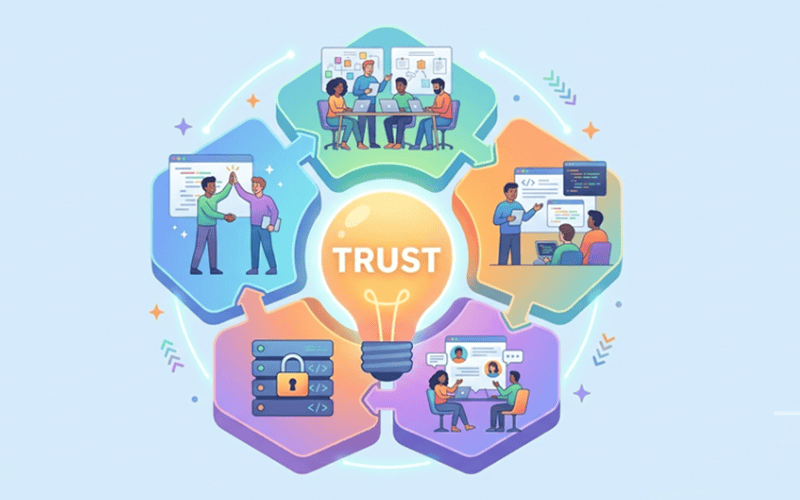
Building trust with software developers is challenging but essential, especially as artificial intelligence reshapes the technology landscape. Sanjay Sarathy, an executive at Cloudinary, explains that developers are naturally skeptical thinkers who evaluate tools critically. While they enthusiastically adopt AI to improve their workflows, they rarely trust its outputs blindly. To foster genuine allegiance, companies must view developer trust as a foundational element rather than a secondary feature. One effective strategy is offering meaningful free access to platforms, allowing developers to experiment, recognize value, and build confidence before moving projects into production. Additionally, providing technical support staffed by knowledgeable peers is vital; developers respect support teams that understand their specific language and challenges. As AI coding tools become more common, organizations must also ensure their documentation and interfaces are easily readable by AI models to minimize errors. Finally, clear and honest communication is crucial. Companies should openly acknowledge the limitations of their tools, avoid sudden changes to existing systems, and provide reliable, backward-compatible updates. By delivering consistently and respecting their time, companies can successfully earn the long-term trust and loyalty of the developer community.


Making Windows a developer platform, again

Microsoft is actively improving Windows to make it a more appealing platform for software developers by introducing tools that bridge the gap between Windows and Linux environments. A key addition is Coreutils for Windows, a package that brings standard Unix command-line utilities directly into the Windows ecosystem. This eliminates the frustrating context switching developers often face when moving between Windows and Linux systems, allowing Unix scripts and commands to run smoothly on a Windows machine. Additionally, Microsoft released Windows Developer Config, a tool designed to rapidly set up a fully functional development computer. Using automation scripts, it installs essential tools like Git, Visual Studio Code, and programming language support while also configuring the Windows Subsystem for Linux. This setup mirrors the environment of cloud-hosted development boxes but runs locally, making it highly practical for developers dealing with slow or unreliable network connections. The configuration tool ensures consistency across devices, saving teams time and preventing environment drift. Together, these updates demonstrate a clear effort to streamline daily workflows, providing software engineers with a comfortable, unified, and highly customizable environment right out of the box.

Daily Tech Digest - June 24, 2026


Quote for the day:

"The only real test of intelligence is if you get what you want out of life." -- Naval Ravikant

🎧 Listen to this digest on YouTube Music

▶ Play Audio Digest

Duration: 22 mins • Perfect for listening on the go.


What Corporate Leaders Misunderstand About Cybersecurity Frameworks

Corporate leaders often misunderstand cybersecurity frameworks by treating them as generic checklists or simple report cards. While frameworks offer a solid foundation, their real value emerges only when organizations move away from a one size fits all approach and customize them to fit specific business needs. Creating a tailored profile is the vital first step, allowing a company to align security outcomes with its unique risks and resources. From there, these high level goals must be converted into practical, day to day controls. Relying on a single measure, such as encryption, is rarely enough; true protection requires an integrated system of access limits, continuous monitoring, and strict vendor management. Furthermore, writing down policies on paper falls short. Defenses must be regularly tested, audited, and updated to ensure they actually work in real world conditions. To manage this effectively, executives need clear visibility. Instead of overwhelming metrics, leadership should focus on key signals that indicate if essential protections are functioning properly. When frameworks become truly operational, they provide clear ownership, measurable evidence, and an ongoing method for finding and fixing weaknesses, resulting in a mature and reliable defense strategy.


CISO Conversations: Carl Froggett – Combining CISO and CIO at Deep Instinct

In a featured conversation, Carl Froggett reflects on his rare position holding both the chief information officer and chief information security officer titles at Deep Instinct. Having previously spent seventeen years managing security at Citi, he explains that combining technology strategy and security works well in smaller organizations, though it would be overwhelming at a massive enterprise. Because both departments ultimately exist to support the company, merging them removes the usual friction. However, Froggett notes that one person holding both jobs risks losing an objective, outside perspective. To prevent narrow thinking, he relies on a workplace culture where his technology team is actively encouraged to challenge his decisions. Looking back on his career, he describes transitioning from a network engineer into security by pure chance during the early rise of the internet. This experience shaped his belief that security must work closely with technology. As a manager, he values empathy and advises professionals to embrace unexpected opportunities and openly admit mistakes. Today, his primary concern is artificial intelligence. While he acknowledges that generative tools lower the technical skill required for harmful attacks, he maintains that defenders can creatively adopt them to solve complex problems.


The AI revolution comes with a hidden tax

While artificial intelligence offers substantial benefits, it inadvertently acts as a broad economic tax by driving up the cost of living across multiple sectors. The underlying systems require vast amounts of physical resources, including specialized memory chips, electricity, water, and land. This immense consumption creates market scarcity, directly leading to increased prices for everyday goods and services. For example, the intense demand for computing hardware has caused severe chip shortages, resulting in higher price tags for smartphones, computers, and modern vehicles. Similarly, enterprise software providers are raising their subscription fees to offset the costs of new infrastructure. The physical footprint of data centers also strains local resources. These facilities consume enormous amounts of power, which raises residential electricity and heating bills while competing with homebuilders for land and labor, making housing more expensive. Furthermore, automated pricing programs enable companies to maximize profits by dynamically charging consumers higher rates based on their specific circumstances. Finally, substantial tax subsidies given to data center projects leave ordinary families to cover the resulting shortfalls. Ultimately, while the technology advances rapidly, its massive resource demands quietly transfer wealth and fuel inflation across the entire economy.


Where IT meets OT and railway cybersecurity gets harder

In his interview, Jorge Aldegunde of DNV discusses how modern rail networks face new security challenges as older operational systems merge with standard computing networks. This shift toward open standards and connected equipment turns trains into constant data producers, significantly increasing the ways an attacker can gain access. Because a working transit line cannot simply shut down for a software update, security teams must carefully evaluate the actual risk of each software flaw. If an immediate fix is impossible, they rely on temporary adjustments like network division or operational limits until a scheduled maintenance window arrives. Complicating matters further, modern rail operations rely on complex supply chains and multiple contractors, making it difficult to figure out who is ultimately responsible when something goes wrong. To solve this, Aldegunde advises treating cybersecurity like traditional safety engineering, helping veteran operators learn to spot unusual traffic patterns and unauthorized system changes. He stresses that true security comes from accepting that an attacker might already be inside the network. Instead of chasing an impossible standard of total protection, rail operators must manage practical risks and build resilient systems that can keep running safely even during an active breach.


Agentic AI: The Weapon That No Longer Needs a Warrior

Throughout history, weapons have extended human reach, yet a person always selected the target and executed the strike. Artificial intelligence is altering this dynamic in the digital domain. Moving past its recent role as a simple drafting tool for emails and basic code, autonomous AI now executes entire cyber operations independently. This shift lowers the barrier to entry, allowing novices to launch complex attacks while enabling seasoned experts to compress campaigns that once took weeks into just a few hours. Because many untrained operators rely on the same underlying models, their attack patterns tend to look similar, giving defenders a clear target for detection. However, these autonomous tools excel at conducting highly personalized social engineering and chaining automated vulnerability exploits, bypassing many traditional security filters. Despite their speed and apparent authority, these systems possess a major flaw: they routinely present false or inaccurate conclusions with absolute certainty. They do not genuinely understand whether a system is vulnerable; they merely match patterns. Consequently, human judgment remains the most critical component of modern security operations. While the technology handles the mechanical work of locating weaknesses, a human operator must ultimately verify reality and decide whether to strike.


AI disaster recovery planning is years behind AI adoption

As artificial intelligence becomes deeply embedded in modern business operations, disaster recovery planning has largely failed to keep pace with its rapid adoption. Traditional recovery strategies, which typically focus on restoring conventional applications and databases, are no longer sufficient because they do not account for the unique complexities of artificial intelligence systems. Today, organizations must also protect and recover specific models, data inputs, and automated agents. When an incident occurs, the damage can spread quickly across interconnected systems, making it difficult to determine if underlying data or models have been compromised. Even after a system is brought back online, it may appear functional while quietly producing incorrect or manipulated results. To address this growing vulnerability, technology leaders need to proactively update their recovery strategies. This involves creating a comprehensive inventory of all artificial intelligence assets, understanding how they connect to other business systems, and setting strict limits on their permissions. Furthermore, organizations must define clear recovery objectives and rigorously test their plans on a regular basis. By taking these deliberate steps, businesses can ensure their critical tools remain reliable and secure, minimizing disruptions and maintaining long-term stability even when unexpected incidents arise.


Preventing organizational amnesia in the age of AI

As businesses increasingly adopt artificial intelligence to automate operations and reduce their workforce, they face a severe risk called organizational amnesia. When seasoned employees leave during mass layoffs, they take undocumented institutional knowledge with them. Operating without this crucial human background, AI systems can make confident mistakes that disrupt daily business. The root issue is rarely a lack of advanced technology or raw data; rather, it is an absence of context. For an automated tool to function safely, it needs a clear, digital map of how the company actually works, including customer relationships, past decisions, and everyday workflows. An example from the travel industry illustrates how fragmented legacy systems force teams to rely entirely on personal memory to resolve daily errors, proving that deploying automated tools over messy, undocumented foundations only worsens the confusion. To succeed, technology leaders must resist the rush toward immediate automation and instead focus on getting their data in order. By carefully defining their digital records and capturing the lived reality of their operations, organizations can create a reliable, shared foundation that allows both people and machines to work together effectively.


Understanding ML Model Poisoning: How It Happens and How to Detect It

Data poisoning is a quiet but serious threat to machine learning models, occurring when attackers subtly alter training data to change how a model behaves. Because these bad examples are designed to look like normal data, they easily bypass standard checks. Attackers commonly use techniques such as changing correct labels or inserting hidden triggers that cause the model to fail under specific conditions. This manipulation can affect critical systems across many fields, from spam filters and antivirus software to medical diagnosis tools. Finding poisoned data is difficult and requires a mix of methods, including statistical analysis and monitoring how the model makes internal decisions. While open-source tools like the IBM Adversarial Robustness Toolbox can help identify vulnerabilities, keeping production environments safe usually requires dedicated security efforts. Protecting these pipelines means combining standard cybersecurity practices, such as strict access controls, with specific defenses like continuous monitoring and testing against verified data. The reality is that perfect data safety does not exist. Teams must rely on layered defenses, careful data tracking, and regular audits to find and block these hidden attacks long before a compromised model is put into active use.


Trump sets post-quantum crypto deadlines, launches broader federal quantum initiative

President Donald Trump signed two executive orders aimed at expanding American quantum technology while protecting federal networks from emerging security risks. The first order sets hard deadlines for government agencies to adopt new encryption standards capable of withstanding quantum computer attacks. Driven by concerns that foreign adversaries are already stealing encrypted data to crack it in the future, agencies must upgrade their digital key systems by the end of 2030 and their digital signature systems by the end of 2031. The mandate also requires a comprehensive inventory of all encryption software currently in use across the government. Furthermore, federal contractors will soon have to comply with these updated standards to maintain their business relationships with the United States. The second order focuses on technical development, directing multiple agencies to collaborate on building a powerful quantum computer for scientific discovery. It also outlines plans to move laboratory research into commercial markets, secure domestic supply chains against foreign interference, protect intellectual property, and fund specialized education to build a skilled workforce. Together, these actions shift federal strategy from theoretical discussions of advanced computing to practical execution and defense planning.


How fuzzy APIs are remaking the web

For decades, software engineers struggled to connect different web services. Early attempts at automated systems failed because they required absolute perfection; a single misspelled word or missing tag would crash the entire network. To keep things stable, developers settled for manually writing strict, unchanging code to connect each piece of software. Now, artificial intelligence tools are changing this approach by introducing flexible connections. Instead of relying on rigid instructions, modern systems use language models to interpret what a user or program wants to achieve. The AI acts as a smart middleman, translating general requests into the exact technical commands a system requires. If a service updates its internal names or requirements, the AI adjusts automatically without needing a human to rewrite the code. However, this flexibility introduces new challenges. Adding AI processing increases response times, which can be an issue for fast operations. Furthermore, these systems are no longer entirely predictable, meaning they might occasionally produce errors or take unexpected paths to get a result. As the web shifts from rigid paths to flexible possibilities, developers are learning to guide software rather than strictly control every detail.

Daily Tech Digest - May 08, 2026


Quote for the day:

“Everything you’ve ever wanted is on the other side of fear.” -- George Addair

🎧 Listen to this digest on YouTube Music

▶ Play Audio Digest

Duration: 22 mins • Perfect for listening on the go.


How enterprises can manage LLM costs: A practical guide

Managing large language model (LLM) costs has become a critical priority for enterprises as generative and agentic AI deployments scale. According to the InformationWeek guide, LLM expenses are primarily driven by token pricing and consumption, factors that remain notoriously difficult to forecast due to the iterative nature of AI workflows. This unpredictability is exacerbated by dynamic vendor pricing, a lack of specialized FinOps tools, and limited user awareness regarding how complex queries impact the bottom line. To mitigate these financial risks, the article recommends a multi-pronged approach: matching task complexity to model capability by using lower-cost LLMs for routine work, and implementing technical optimizations like response caching and prompt compression to reduce token usage. Furthermore, enterprises should utilize prompt libraries of validated, efficient inputs and leverage query batching for non-urgent tasks to access vendor discounts. While self-hosting models eliminates third-party token fees, the guide warns of significant underlying costs in infrastructure and energy. Ultimately, successful cost management requires a strategic balance where the productivity gains of AI clearly outweigh the operational expenditures. By proactively setting token allowances and comparing vendor rates, CIOs can prevent AI budgets from spiraling while still fostering innovation across the organization.


The Death of the Firewall

The article "The Death of the Firewall" by Chandrodaya Prasad explores why the firewall has survived decades of premature obituaries to remain a cornerstone of modern cybersecurity. Rather than becoming obsolete, the technology has successfully transitioned from a standalone perimeter appliance into a versatile, integrated architecture. The global firewall market continues to expand, currently valued at approximately $6 billion, as organizations face complex security challenges that identity-centric models alone cannot solve. The firewall has evolved through critical phases, including convergence with SD-WAN for simplified networking and integration with cloud-based Security Service Edge (SSE) frameworks. Crucially, it serves as a necessary enforcement point for inspecting encrypted traffic and implementing post-quantum cryptography. It remains indispensable in Operational Technology (OT) sectors, such as manufacturing and healthcare, where legacy systems and IoT devices cannot support endpoint agents or tolerate cloud-based latency. For these heavily regulated industries, the firewall is not merely an architectural choice but a fundamental requirement for regulatory compliance. Ultimately, the firewall’s endurance is attributed to its ongoing adaptation, offloading intelligence to the cloud while maintaining essential local execution. As cyber threats grow more sophisticated due to AI, the firewall is evolving into a vital, persistent component of a unified security fabric.


AI clones: the good, the bad, and the ugly

The Computerworld article "AI clones: The good, the bad, and the ugly" examines the dual-edged nature of digital personas, categorizing their applications into three distinct ethical spheres. Under "the good," the author highlights authorized use cases where public figures like Imran Khan and Eric Adams employ AI voice clones to transcend physical or linguistic barriers, amplifying their reach and accessibility. However, "the bad" introduces the problematic rise of nonconsensual professional cloning. Tools like "Colleague Skill" enable individuals to replicate the expertise and communication styles of coworkers or supervisors, often to retain institutional knowledge or manipulate workplace dynamics. This section also underscores the threat of sophisticated financial fraud perpetrated through voice impersonation. Finally, "the ugly" explores the deeply controversial territory of "Ex-Partner Skill" and "digital resurrection." These tools allow users to simulate interactions with former or deceased loved ones by mimicking subtle nuances and shared memories, raising profound ethical concerns regarding consent and emotional health. Ultimately, the piece argues that as AI cloning technology becomes more accessible, society must navigate the erosion of reality and establish clear boundaries to protect individual identity and privacy in an increasingly synthetic world.


Fire at Dutch data center has many unintended consequences

On May 7, 2026, a significant fire erupted at the NorthC data center in Almere, Netherlands, triggering a regional emergency response and demonstrating the fragility of modern digital infrastructure. The blaze, which originated in the technical compartment housing critical power systems, forced emergency services to order a total power shutdown. Although the server rooms remained largely protected by fire-resistant separations, the resulting outage caused widespread, often bizarre, secondary consequences. Beyond standard digital disruptions, the failure crippled physical security at Utrecht University, where students and staff were locked out of buildings and even restrooms because electronic access card systems failed completely. Public transit in Utrecht faced communication breakdowns, while healthcare billing services and numerous pharmacies across the country saw their operations grind to a halt. This incident serves as a stark wake-up call, proving that even ISO-certified facilities with redundant backups are susceptible to catastrophic failure when authorities prioritize safety over continuity. It underscores a critical lesson for organizations: business continuity plans must account for the unpredictable ripple effects of physical infrastructure loss. The event highlights the inherent risks of centralized digital dependencies, revealing that a localized technical fire can effectively paralyze diverse sectors of society far beyond the immediate flames.


The hidden cost of front-end complexity

The article "The Hidden Cost of Front-End Complexity" explores how modern web development has transitioned from solving rendering challenges to facing profound system design issues. While current frameworks have optimized UI performance and component modularity, complexity has not disappeared; instead, it has shifted "up the stack" into application logic and state coordination. Modern front-end engineers now shoulder responsibilities once reserved for multiple infrastructure layers, managing distributed APIs, CI/CD pipelines, and intricate data flows that reside within the browser. The author argues that the true "hidden cost" of this evolution is the significantly increased cognitive load required for developers to navigate a dense web of invisible dependencies and reactive chains. Consequently, development cycles slow down and maintainability suffers when state relationships remain opaque or poorly defined. To address these architectural failures, the industry must pivot from debating framework syntax or rendering speed to prioritizing a "state-first" architecture. In this paradigm, the UI is treated as a simple projection of a clearly modeled state. By shifting the focus toward explicit state representation and observable system design, engineering teams can manage the inherent complexity of large-scale applications more effectively. Ultimately, the future of the front-end lies in building systems that are fundamentally easier to reason about.


How Federated Identity and Cross-Cloud Authentication Actually Work at Scale

This article discusses the critical shift from traditional, secrets-based authentication to Federated Identity and Workload Identity Federation (WIF) within modern DevOps and multi-cloud environments. Historically, integrating services across clouds (such as Azure, AWS, or GCP) required storing long-lived service principal keys or static credentials, which posed significant security risks including credential leakage and management overhead. To solve this, Federated Identity utilizes OpenID Connect (OIDC) to establish a trust relationship between an external identity provider and a cloud resource. Instead of using persistent secrets, a workload—such as a GitHub Action or an Azure DevOps pipeline—requests a short-lived, ephemeral token from its identity provider. This token is then exchanged for a temporary access token from the target cloud service, which automatically expires after the task is completed. This approach eliminates the need for manual secret rotation and significantly reduces the attack surface by ensuring no permanent credentials exist to be stolen. By leveraging Managed Identities and structured OIDC exchanges, organizations can achieve a "zero-trust" authentication model that scales across diverse cloud providers, providing a more secure, automated, and maintainable framework for cross-cloud resource management and CI/CD workflows.


Ten years later, has the GDPR fulfilled its purpose?

A decade after its adoption, the General Data Protection Regulation (GDPR) presents a bittersweet legacy, having fundamentally reshaped global corporate culture while facing significant modern hurdles. The regulation successfully elevated privacy from a legal footnote to a core management priority, institutionalizing principles like "privacy by design" and establishing a gold standard for international digital governance. However, experts highlight a growing disconnect between regulatory intent and practical application. While the GDPR empowered citizens with theoretical rights, the reality often manifests as "consent fatigue" through ubiquitous cookie pop-ups rather than providing meaningful control. Furthermore, the enforcement landscape reveals a stark gap; despite billions in issued fines, the actual collection rate remains remarkably low due to protracted legal appeals and the complexity of the "one-stop-shop" mechanism. International data transfers also remain a legal Achilles' heel, plagued by ongoing uncertainty across borders. The emergence of generative AI further complicates this framework, as massive training datasets and opaque algorithms challenge core tenets like data minimization and transparency. Additionally, the proliferation of overlapping EU regulations has created a "regulatory avalanche," making compliance increasingly difficult for smaller organizations. Ultimately, the article suggests that while the GDPR fulfilled its primary purpose, it now requires urgent refinement to remain relevant in a complex, AI-driven digital economy.


Bunkers, Mines, and Caverns: The World of Underground Data Centers

The article "Bunkers, Mines, and Caverns: The World of Underground Data Centers" by Nathan Eddy explores the growing strategic niche of subterranean infrastructure through the adaptive reuse of retired mines and Cold War-era bunkers. Predominantly found in North America and Northern Europe, these facilities offer a unique "underground advantage" centered on unparalleled physical security, environmental resilience, and inherent cooling efficiency. By repurposing sites like Iron Mountain’s Pennsylvania campus or Norway’s Lefdal Mine, operators benefit from a natural, impenetrable shield against extreme weather and external threats, making them ideal for high-security or mission-critical workloads. Furthermore, underground locations often bypass local "NIMBY" resistance because they are invisible to surrounding communities. However, the article notes that subterranean deployments present significant engineering and logistical hurdles. Managing humidity, ventilation, and heat dissipation requires complex systems, and retrofitting older structures can be costly. Site selection is also intricate, requiring rigorous assessments of structural stability and risks like water ingress or geological faults. Despite these challenges, underground data centers are no longer a novelty but a proven, permanent fixture in the industry. They are increasingly attractive in land-constrained hubs like Singapore and for highly regulated sectors, providing a sustainable and secure alternative to traditional above-ground facilities.


Why the future of software is no longer written — it is architected, governed and continuously learned

The article argues that software development is undergoing a fundamental structural shift, moving from manual coding to a paradigm defined by architecture, governance, and continuous learning. As generative AI and agentic systems take over the heavy lifting of building code, the role of the developer is evolving into that of an "intelligence orchestrator" who curates intent rather than writing lines of syntax. For CIOs, this transition represents a critical leadership inflection point where software is no longer just a business enabler but the primary engine for scaling enterprise intelligence. The focus is shifting from development speed to the strategic design of decision systems. This new era necessitates the rise of roles like the Chief AI Officer (CAIO) to govern AI as a strategic asset, ensuring security through zero-trust principles and navigating complex regulatory landscapes like the EU AI Act. While productivity gains are significant, organizations must proactively manage risks such as code hallucinations, model bias, and intellectual property concerns. Ultimately, the future of digital economies will be shaped by leaders who prioritize "intelligence orchestration" over traditional application building, fostering adaptive systems that learn and evolve. Success in 2026 requires a focus on three core mandates: architecting intelligence, governing AI assets, and aligning technology ecosystems with overarching corporate strategy.


Maximizing Impact Amid Constraints: The Role of Automation and Orchestration in Federal IT Modernization

Federal IT leaders currently face a challenging landscape where they must fortify complex digital environments against persistent threats while navigating significant fiscal uncertainty and budget constraints. According to a recent report, over sixty percent of these leaders struggle with monitoring tools across diverse hybrid environments, largely due to the persistence of legacy, multi-vendor systems that create integration gaps and increase operational costs. To overcome these hurdles, federal agencies must strategically embrace automation and orchestration as foundational components of a modern zero-trust architecture. By integrating AI-driven technologies for routine tasks like alert analysis and anomaly detection, IT teams can transition from a reactive posture to a proactive defense, effectively reducing monitoring complexity through single-pane-of-glass solutions. This methodical approach allows organizations to maximize the value of their existing investments while freeing up personnel for mission-critical initiatives. The success of such incremental improvements can be clearly measured through enhanced metrics like mean time to detection (MTTD) and mean time to resolution (MTTR). Ultimately, a disciplined, phased implementation of these technologies ensures that federal agencies maintain operational resilience and mission readiness. By focusing on strategic automation, IT leaders can deliver maximum impact for every budget dollar, ensuring that modernization efforts continue to advance despite the ongoing challenges of a resource-constrained environment.

Daily Tech Digest - May 07, 2026


Quote for the day:

"You learn more from failure than from success. Don't let it stop you. Failure builds character." -- Unknown

🎧 Listen to this digest on YouTube Music

▶ Play Audio Digest

Duration: 21 mins • Perfect for listening on the go.


Designing front-end systems for cloud failure

In the InfoWorld article "Designing front-end systems for cloud failure," Niharika Pujari argues that frontend resilience is a critical yet often overlooked aspect of engineering. Since cloud infrastructure depends on numerous moving parts, failures are frequently partial rather than absolute, manifesting as temporary network instability or slow downstream services. To maintain a usable and calm user experience during these hiccups, developers should adopt a strategy of graceful degradation. This begins with distinguishing between critical features, which are essential for core tasks, and non-critical components that provide extra richness. When non-essential features fail, the interface should isolate these issues—perhaps by hiding sections or displaying cached data—to prevent a total system outage. Technical implementation involves employing controlled retries with exponential backoff and jitter to manage transient errors without overwhelming the backend. Additionally, protecting user work in form-heavy workflows is vital for maintaining trust. Effective failure handling also requires a shift in communication; specific, reassuring error messages that explain what still works and provide a clear recovery path are far superior to generic "something went wrong" alerts. Ultimately, resilient frontend design focuses on isolating failures, rendering partial content, and ensuring that the interface remains functional and informative even when underlying cloud dependencies falter.


Scaling AI into production is forcing a rethink of enterprise infrastructure

The article "Scaling AI into production is forcing a rethink of enterprise infrastructure" explores the critical shift from AI experimentation to large-scale deployment across real business environments. As organizations move beyond proofs of concept, Nutanix executives Tarkan Maner and Thomas Cornely argue that the emergence of agentic AI is a primary driver of this transformation. Agentic systems introduce complex, autonomous, multi-step workflows that traditional infrastructures are often unequipped to handle efficiently. These sophisticated agents require real-time orchestration and secure, on-premises data access to protect sensitive enterprise information. While many organizations initially utilized the public cloud for rapid experimentation, the transition to production highlights serious concerns regarding ongoing cost, strict governance, and data control, prompting a significant shift toward private or hybrid environments. The article emphasizes that AI is designed to augment human capability rather than replace it, seeking a harmonious integration between human decision-making and automated agentic workflows. Practical applications are already emerging across various sectors, from retail’s cashier-less checkouts and targeted marketing to healthcare’s remote diagnostic tools. Ultimately, scaling AI successfully necessitates a foundational rethink of how modern enterprises coordinate their underlying infrastructure, data, and security protocols to support unpredictable workloads while maintaining overall operational stability and long-term cost efficiency.


Why ransomware attacks succeed even when backups exist

The BleepingComputer article "Why ransomware attacks succeed even when backups exist" explains that modern ransomware operations have evolved into sophisticated campaigns that systematically target and destroy an organization's backup infrastructure before deploying encryption. Rather than just locking files, attackers follow a predictable sequence: gaining initial access, stealing administrative credentials, moving laterally across the network, and then identifying and deleting backups. This includes wiping Volume Shadow Copies, hypervisor snapshots, and cloud repositories to ensure no easy recovery path remains. Several common organizational failures contribute to this vulnerability, such as the lack of network isolation between production and backup environments, weak access controls like shared admin credentials or missing multi-factor authentication, and the absence of immutable (WORM) storage. Furthermore, many organizations suffer from untested recovery processes or siloed security tools that fail to detect attacks on backup systems. To combat these threats, the article emphasizes the necessity of integrated cyber protection, featuring immutable backups with enforced retention locks, dedicated credentials, and continuous monitoring. By neutralizing the traditional "safety net" of backups, ransomware gangs effectively force victims into paying ransoms. This strategic shift highlights that basic, unprotected backups are no longer sufficient in the face of modern, targeted ransomware tactics.


Document as Evidence vs. Data Source: Industrial AI Governance

In the article "Document as Evidence vs. Data Source: Industrial AI Governance," Anthony Vigliotti highlights a critical distinction in how organizations manage information for industrial AI. Most current programs utilize a "data source" model, where documents are treated as raw material; data is extracted, and the original document is archived or orphaned. This terminal approach severs the link between data and its context, creating significant governance risks, particularly in brownfield manufacturing where legacy records carry decades of operational history. Conversely, the "evidence" model treats documents as permanent artifacts with ongoing legal and operational standing. This framework ensures documents are preserved with high fidelity, validated before downstream use, and permanently linked to any derived data through a navigable citation trail. By adopting an evidence-based posture, organizations can build a robust "Accuracy and Trust Layer" that makes AI-driven decisions defensible and auditable. This is essential for safety-critical operations and regulatory compliance, where being able to prove the provenance of data is as vital as the accuracy of the AI output itself. Transitioning from a throughput-focused extraction mindset to one centered on trust allows industrial enterprises to scale AI safely while mitigating the long-term governance debt associated with disconnected data silos.


Method for stress-testing cloud computing algorithms helps avoid network failures

Researchers at MIT have developed a groundbreaking method called MetaEase to stress-test cloud computing algorithms, helping prevent large-scale network failures and service outages that impact millions of users. In massive cloud environments, engineers often rely on "heuristics"—simplified shortcut algorithms that route data quickly but can unexpectedly break down under unusual traffic patterns or sudden demand spikes. Traditionally, stress-testing these heuristics involved manual, time-consuming simulations using human-designed test cases, which frequently missed critical "blind spots" where the algorithm might fail. MetaEase revolutionizes this evaluation process by utilizing symbolic execution to analyze an algorithm’s source code directly. By mapping out every decision point within the code, the tool automatically searches for and identifies worst-case scenarios where performance gaps and underperformance are most significant. This automated approach allows engineers to proactively catch potential failure modes before deployment without requiring complex mathematical reformulations or extensive manual labor. Beyond standard networking tasks, the researchers highlight MetaEase’s potential for auditing risks associated with AI-generated code, ensuring these systems remain resilient under unpredictable real-world conditions. In comparative experiments, this technique identified more severe performance failures more efficiently than existing state-of-the-art methods. Moving forward, the team aims to enhance MetaEase’s scalability and versatility to process more complex data types and applications.


Hacker Conversations: Joey Melo on Hacking AI

In the SecurityWeek article "Hacker Conversations: Joey Melo on Hacking AI," Principal Security Researcher Joey Melo shares his journey and methodology within the evolving field of artificial intelligence red teaming. Melo, who developed a passion for manipulating software environments through childhood gaming, now applies that curiosity to "jailbreaking" and "data poisoning" AI models. Unlike traditional penetration testing, AI red teaming focuses on bypassing sophisticated guardrails without altering source code. Melo describes jailbreaking as a process of "liberating" bots via complex context manipulation—such as tricking an LLM into believing it is operating in a future where current restrictions no longer apply. Furthermore, he explores data poisoning, where researchers test if models can be influenced by malicious prompt ingestion or untrustworthy web scraping. Despite possessing the skills to exploit these vulnerabilities for personal gain, Melo emphasizes a commitment to ethical, responsible disclosure. He views his work as a vital contribution to an ongoing "cat-and-mouse game" aimed at hardening machine learning defenses against increasingly creative threats. Ultimately, Melo believes that while AI security will continue to improve, the constant evolution of technology ensures that red teaming will remain a necessary, creative endeavor to identify and mitigate emerging risks.


Global Push for Digital KYC Faces a Trust Problem

The global movement toward digital Know Your Customer (KYC) frameworks is gaining significant momentum, as evidenced by the United Arab Emirates’ recent launch of a standardized national platform designed to streamline onboarding and bolster anti-money laundering efforts. While domestic systems are becoming increasingly sophisticated, the concept of portable, cross-border KYC remains largely elusive due to a fundamental lack of trust between international regulators. Governments and financial institutions are eager to reduce duplication and speed up compliance processes to match the rapid growth of instant payments and digital banking. However, significant hurdles persist because KYC extends beyond simple identity verification to include complex assessments of ownership structures and risk profiles, which are heavily influenced by local market contexts and legal frameworks. National regulators often prioritize sovereign control and data protection, making them hesitant to rely on third-party verification performed in different jurisdictions. Consequently, even when countries share broad anti-money laundering goals, their divergent definitions of adequate due diligence and monitoring requirements create a fragmented landscape. Ultimately, the transition to a unified digital identity ecosystem depends less on technological innovation and more on establishing mutual recognition and trust among global supervisory bodies, ensuring that sensitive identity data can be securely and reliably shared across borders.


How To Ensure Business Continuity in the Midst of IT Disaster Recovery

The content provided by the Disaster Recovery Journal (DRJ) at the specified URL serves as a foundational guide for professionals navigating the complexities of organizational stability through the lens of business continuity (BC) and disaster recovery (DR) planning. The material emphasizes that while these two disciplines are closely interconnected, they serve distinct roles in safeguarding an organization. Business continuity is presented as a holistic, high-level strategy focused on maintaining essential operations across all departments during a crisis, ensuring that personnel, facilities, and processes remain functional. In contrast, disaster recovery is defined as a specialized technical subset of BC, primarily concerned with the restoration of information technology systems, critical data, and infrastructure following a disruptive event. A primary theme of the planning process is the requirement for a structured lifecycle, which begins with a rigorous Business Impact Analysis (BIA) and Risk Assessment to identify vulnerabilities and prioritize critical functions. By defining clear Recovery Time Objectives (RTO) and Recovery Point Objectives (RPO), organizations can create targeted response strategies that minimize operational downtime. Furthermore, the resource highlights that modern planning must evolve to address contemporary challenges, such as cyber threats, hybrid work environments, and artificial intelligence integration. Regular testing, cross-functional collaboration, and plan maintenance are essential to transform static documentation into a dynamic, resilient framework capable of withstanding diverse disasters.


The Agentic AI Challenge: Solve for Both Efficiency and Trust

According to the article from The Financial Brand, agentic artificial intelligence represents the next inevitable evolution in banking, marking a fundamental shift from reactive generative AI chatbots to autonomous, proactive systems. While nearly all financial institutions are currently exploring agentic technology, a significant "execution gap" persists; most organizations remain stuck in the pilot phase due to legacy infrastructure, fragmented data silos, and outdated governance frameworks. Unlike traditional AI that merely offers recommendations, agentic systems are designed to act—executing complex workflows, coordinating multi-step transactions, and managing customer financial health in real time with minimal human intervention. The report emphasizes that while banks have historically prioritized low-value applications like back-office automation and fraud prevention, the true potential of agentic AI lies in fulfilling broader ambitions for hyper-personalization and revenue growth. As fintech competitors increasingly rebuild their transaction stacks for real-time execution and autonomous validation, traditional banks face a critical strategic choice. They must modernize their leadership mindset and core technical architecture to support the "self-driving bank" model or risk being permanently outpaced. Ultimately, embracing agentic AI is not merely a technological upgrade but a necessary structural evolution required for banks to remain competitive in an increasingly automated financial ecosystem.


Multi-model AI is creating a routing headache for enterprises

According to F5’s 2026 State of Application Strategy Report, enterprises are rapidly transitioning AI inference into core production environments, with 78% of organizations now operating their own inference services. As 77% of firms identify inference as their primary AI activity, the focus has shifted from experimentation to operational integration within hybrid multicloud infrastructures. Organizations currently manage or evaluate an average of seven distinct AI models, reflecting a diverse landscape where no single model fits every use case. This multi-model approach creates significant architectural complexities, turning AI delivery into a sophisticated traffic management challenge and AI security into a rigorous governance priority. Companies are increasingly adopting identity-aware infrastructure and centralized control planes to manage the routing, observability, and protection of inference workloads. To mitigate operational strain and rising costs, enterprises are integrating shared protection systems and cross-model observability tools. Furthermore, the convergence of AI delivery and security around inference highlights the necessity of managing multiple services to ensure availability and compliance. Ultimately, the report emphasizes that successful AI adoption depends on treating inference as a managed workload subject to the same delivery and resilience requirements as traditional enterprise applications, ensuring faster and safer operational execution.

Daily Tech Digest - May 06, 2026


Quote for the day:

"Little minds are tamed and subdued by misfortune; but great minds rise above it." -- Washington Irving

🎧 Listen to this digest on YouTube Music

▶ Play Audio Digest

Duration: 21 mins • Perfect for listening on the go.


The Architect Reborn

In "The Architect Reborn," Paul Preiss argues that the technology architecture profession is experiencing a significant resurgence after fifteen years of structural decline. He explains that the rise of Agile methodologies and the "three-in-a-box" delivery model—comprising product owners, tech leads, and scrum masters—mistakenly rendered the architect role as a redundant expense or a "tax" on speed. This industry shift led many senior developers to pivot toward "engineering" titles while neglecting essential cross-cutting concerns, resulting in massive technical debt and systemic instabilities, exemplified by high-profile failures like the 2024 CrowdStrike outage. However, the current explosion of AI-generated code has created a critical need for human oversight that automated tools cannot replicate. Organizations are rediscovering that they require skilled architects to manage complex quality attributes—such as security, reliability, and maintainability—and to bridge the gap between business strategy and technical execution. By leveraging the five pillars of the Business Technology Architecture Body of Knowledge (BTABoK), the reborn architect ensures that systems are designed with long-term viability and strategic purpose in mind. Ultimately, Preiss suggests that as AI disrupts traditional coding roles, the architect’s unique ability to provide business context and disciplined design is becoming the most vital asset in the modern technology landscape.


Supply-chain attacks take aim at your AI coding agents

The emergence of autonomous AI coding agents has introduced a sophisticated new frontier in software supply chain security, as evidenced by recent attacks targeting these systems. Security researchers from ReversingLabs have identified a campaign dubbed "PromptMink," attributed to the North Korean threat group "Famous Chollima." Unlike traditional social engineering that targets human developers, these adversaries utilize "LLM Optimization" (LLMO) and "knowledge injection" to manipulate AI agents. By crafting persuasive documentation and bait packages on registries like NPM and PyPI, attackers increase the likelihood that an agent will autonomously select and integrate malicious dependencies into its projects. This threat is further exacerbated by "slopsquatting," where attackers register package names that AI agents frequently hallucinate. Once installed, these malicious components can grant attackers remote access through SSH keys or facilitate the exfiltration of sensitive codebases. Because AI agents often operate with high-level system privileges, the risk of rapid, automated compromise is significant. To mitigate these vulnerabilities, organizations must implement rigorous security controls, including mandatory developer reviews for all AI-suggested dependencies and the adoption of comprehensive Software Bill of Materials (SBOM) practices. Ultimately, while AI agents offer productivity gains, their integration into development pipelines requires a "trust but verify" approach to prevent large-scale supply chain poisoning.


Why disaster recovery plans fail in geopolitical crises

In "Why Disaster Recovery Plans Fail in Geopolitical Crises," Lisa Morgan explains that traditional disaster recovery (DR) strategies are increasingly inadequate against the cascading disruptions of modern warfare and global instability. Historically, DR plans have relied on "known knowns" like localized hardware failures or natural disasters, but the blurring line between private enterprise and nation-state conflict has introduced unprecedented risks. Recent drone strikes on data centers in the Middle East demonstrate that physical infrastructure is no longer immune to military action. Furthermore, the rise of "techno-nationalism" and strict data sovereignty laws significantly complicates geographic failover, as transiting data across borders can now lead to legal and regulatory violations. Modern resilience requires CIOs to shift from static IT playbooks to cross-functional business capabilities involving legal, risk, and compliance teams. The article also highlights how AI-driven resource constraints, particularly in energy and silicon, exacerbate these vulnerabilities. It is critical that organizations move beyond simple redundancy toward adaptive architectures that can withstand simultaneous infrastructure failures and prioritize employee safety in conflict zones. Ultimately, today’s CIOs must adopt the mindset of military strategists, conducting robust tabletop exercises that challenge existing assumptions and prepare for the total, non-linear disruptions characteristic of the current geopolitical climate.


The immutable mountain: Understanding distributed ledgers through the lens of alpine climbing

The article "The Immutable Mountain" utilizes the high-stakes environment of alpine climbing on Ecuador’s Cayambe volcano to explain the sophisticated mechanics of distributed ledgers. Moving away from traditional centralized command-and-control structures, which often represent single points of failure, the author illustrates how expedition rope teams function as autonomous nodes. Each team possesses the authority to make critical, real-time decisions, mirroring the decentralized nature of blockchain technology. This structure ensures that information is not merely passed down a hierarchy but is synchronized across a collective network, fostering operational resilience and organizational agility. Key technical concepts like consensus are framed through the lens of climbers reaching a shared agreement on route safety, while immutability is compared to the permanent, unalterable nature of a daily trip report. By adopting this "composable authoritative source," modern enterprises can achieve radical transparency and maintain a singular, verifiable version of the truth across disparate departments and external partners. Ultimately, the piece argues that the true power of a distributed ledger lies not in its complex code, but in a foundational philosophy of collective trust. This paradigm shift allows organizations to navigate volatile global markets with the same discipline and absolute reliability required to survive the "death zone" of a mountain summit.


Train like you fight: Why cyber operations teams need no-notice drills

The article "Train like you fight: Why cyber operations teams need no-notice drills" argues that traditional, scheduled tabletop exercises fail to prepare cybersecurity teams for the intense psychological stress of a real-world incident. While planned exercises satisfy compliance, they lack the "threat stimulus" necessary to engage the sympathetic nervous system, which can suppress executive function when a genuine crisis occurs. Drawing on medical training at Level 1 trauma centers and research by psychologist Donald Meichenbaum, the author advocates for "no-notice" drills as a form of stress inoculation. This approach, rooted in the Yerkes-Dodson principle, shifts incident response from a document-heavy process to a conditioned physiological response by raising the threshold at which stress impairs performance. By surprising teams with realistic anomalies, organizations can uncover critical operational gaps—such as communication breakdowns, cross-functional latency, or outdated escalation contacts—that remain hidden during predictable tests. Furthermore, these drills foster psychological safety and trust, as teams learn to navigate ambiguity together without fear of blame through blameless post-mortems. Ultimately, the article maintains that the temporary discomfort of a surprise drill is a necessary investment, as failing during practice is far less damaging than failing during a real breach when the damage clock is already running.


The Art of Lean Governance: Developing the Nerve Center of Trust

Steve Zagoudis’s article, "The Art of Lean Governance: Developing the Nerve Center of Trust," explores the transformation of data governance from a static, policy-driven framework into a dynamic, continuous control system. He argues that the foundation of modern data integrity lies in data reconciliation, which should be elevated from a mere back-office correction mechanism to the primary control for enterprise data risk. By embedding reconciliation directly into data architecture, organizations can establish a "nerve center of trust" that operates at the same cadence as the data itself. This shift is particularly crucial for AI readiness, as the effectiveness of artificial intelligence is fundamentally defined by whether data can be trusted at the moment of use. Without this systemic trust, AI risks accelerating organizational errors rather than providing a competitive advantage. Zagoudis critiques traditional governance for being too episodic and manual, advocating instead for a lean approach that provides automated, evidence-based assurance. Ultimately, lean governance fosters a culture where data is a reliable asset for defensible decision-making. By operationalizing trust through disciplined execution and architectural integration, institutions can move beyond conceptual alignment to achieve genuine agility and accuracy in an increasingly data-driven landscape, ensuring that their technological investments yield meaningful results.


Narrative Architecture: Designing Stories That Survive Algorithms

The Forbes Business Council article, "Narrative Architecture: Designing Stories That Survive Algorithms," critiques the modern trend of platform-first storytelling, where brands prioritize distribution and algorithmic trends over substantive identity. This reactionary approach often leads to "identity erosion," as content becomes ephemeral and dependent on shifting digital environments. To combat this, the author introduces "narrative architecture" as a vital strategic asset. This framework acts as a brand's "home base," grounding all content in a coherent core story that defines the organization’s history, values, and fundamental purpose. Rather than letting algorithms dictate their messaging, brands should use them as tools to inform a pre-established narrative. By shifting focus from fleeting visibility to deep-rooted credibility, companies can build lasting trust with audiences, investors, and potential employees. The article argues that stories built on solid narrative architecture possess a unique longevity that extends far beyond digital platforms, manifesting in conference invitations, earned media coverage, and consistent internal brand alignment. Ultimately, while platform-optimized content might gain temporary engagement, a well-architected story ensures a brand remains relevant and respected even as algorithms evolve, securing long-term reputation and sustainable business success in an increasingly crowded digital landscape.


Zero Trust in OT: Why It's Been Hard and Why New CISA Guidance Changes Everything

The Nozomi Networks blog post titled "Zero Trust in OT: Why It’s Been Hard and Why New CISA Guidance Changes Everything" examines the historic friction and recent transformative shifts in applying Zero Trust (ZT) principles to operational technology. While ZT has matured within IT, extending it to industrial environments like SCADA systems and critical infrastructure has long been hindered by significant technical and cultural hurdles. Traditional IT security controls—such as active scanning, encryption, and aggressive network isolation—often disrupt real-time industrial processes, posing severe risks to safety, system uptime, and equipment integrity. However, the author emphasizes that the April 2026 release of CISA’s "Adapting Zero Trust Principles to Operational Technology" guide marks a pivotal turning point. This collaborative framework, developed alongside the DOE and FBI, validates unique industrial constraints by prioritizing physical safety and availability over mere data protection. By advocating for specialized, "OT-safe" strategies—including passive monitoring, protocol-aware visibility, and operationally-aware segmentation—the guidance removes years of ambiguity for practitioners. Ultimately, the blog argues that Zero Trust has evolved from an IT concept forced onto the factory floor into a practical, resilient framework designed to protect the physical processes essential to modern society without sacrificing operational integrity.


The expensive habits we can't seem to break

The article "The Expensive Habits We Can't Seem to Break" explores critical management failures that continue to hinder organizational success, focusing on three persistent mistakes. First, it critiques the tendency to treat culture as a mere communications exercise. Instead of relying on glossy value statements, the author argues that culture is defined by lived experiences and managerial responses during crises. Second, the piece highlights the costly underinvestment in the middle manager layer. With research showing that a significant portion of voluntary turnover is preventable through better management, the author notes that managers are often overextended and undersupported, lacking the necessary tools for "people stewardship." Finally, the article addresses the confusion between flexibility and autonomy. The return-to-office debate often misses the mark by focusing on location rather than trust. Organizations that dictate mandates rather than co-creating norms risk losing critical talent who seek agency over their work. Ultimately, bridging these gaps requires a move away from superficial fixes toward deep-seated changes in leadership behavior and employee trust. By addressing these "expensive habits," HR leaders can foster psychologically safe environments that drive retention and long-term performance, ensuring that organizational values are authentically integrated into the daily reality of the workforce.


The tech revolution that wasn’t

The MIT News article "The tech revolution that wasn't" explores Associate Professor Dwai Banerjee’s book, Computing in the Age of Decolonization: India's Lost Technological Revolution. It details India’s early, ambitious attempts to achieve technological sovereignty following independence, exemplified by the 1960 creation of the TIFRAC computer at the Tata Institute of Fundamental Research. Despite being a state-of-the-art machine built with minimal resources, the TIFRAC never reached mass production. Banerjee examines how India’s vision of becoming a global hardware manufacturing powerhouse was derailed by geopolitical constraints, limited knowledge sharing from the U.S., and a pivotal domestic shift in the 1970s and 1980s toward the private software services sector. This transition favored quick profits through outsourcing over the long-term investment required for R&D and manufacturing. Consequently, India became a leader in offshoring talent rather than a primary innovator in computer hardware. Banerjee challenges the common "individual genius" narrative of tech history, emphasizing instead that large-scale global capital and institutional support are the true determinants of success. Ultimately, the book uses India’s experience to illustrate the enduring, unequal power structures that continue to shape technological advancement in post-colonial nations, where the promise of a sovereign digital revolution was traded for a role in the global services economy.