Showing posts with label risk management. Show all posts

Daily Tech Digest - June 26, 2026


Quote for the day:

"Practice chaos, not just success" -- Madelyn Villamizar

🎧 Listen to this digest on YouTube Music

▶ Play Audio Digest

Duration: 24 mins • Perfect for listening on the go.


Healthcare leaders see a fatal cyber incident as inevitable

Healthcare practices face real vulnerabilities because they rely heavily on outside partners for critical operations like electronic records, telehealth, and billing. According to a recent industry report, most practices have experienced operational disruptions stemming from these vendor relationships over the past year. While healthcare leaders often trust these external companies, many admit they do not closely monitor their network connections, leaving systems exposed to targeted attacks. As the danger grows, a rising number of healthcare executives believe a fatal cyber incident is inevitable within the next five years. Despite this shared awareness, preparation remains largely inadequate. Many organizations lack basic incident response plans and continue to view cybersecurity simply as a technical expense rather than a core leadership responsibility. To fix these vulnerabilities, successful practices are changing their approach. They are moving security discussions out of the IT department and directly into the boardroom. With stricter compliance rules taking effect in 2026 and artificial intelligence becoming common in daily routines, treating security, compliance, and operations as one fully managed program is essential. Taking this steady, unified approach keeps practices running smoothly, protects sensitive data, and ultimately ensures patient safety remains the top priority.


AI fraud drives banks toward biometric identity defenses

The banking sector is rapidly accelerating its investment in biometric identity defenses as artificial intelligence-driven fraud, such as deepfakes and synthetic identities, grows increasingly sophisticated. A recent industry survey indicates that a vast majority of banking executives anticipate major disruptions from artificial intelligence over the next few years, prompting 84 percent of them to boost their cybersecurity budgets specifically to address these emerging threats. With fraud tactics evolving from simple credential theft to complex attacks that bypass standard security cameras with pre-generated media, traditional static defenses are no longer sufficient. Consequently, industry leaders are shifting toward layered security approaches that combine device analysis, behavioral risk scoring, and continuous biometric verification. Currently, about one-third of banks use biometric tools for access and payments, but nearly three-quarters plan to integrate this technology within three years. Major financial institutions and security vendors advocate for a proactive culture of vigilance, deploying adaptive authentication tools that verify human identity across every interaction point. Ultimately, securing financial systems now requires dynamic, multi-faceted identity solutions to outpace the commercialization of fraud services and protect consumers against modern synthetic identity theft.


GRC is broken. FedRAMP 20x might fix it

Governance, risk, and compliance practices have gradually lost touch with operational reality, often prioritizing documentation over actual security. Many current compliance models rely on manual sampling and static evidence to tell a flawless, polished story. This approach produces clean reports and perfect policies, but it frequently fails to reflect the messy truth of an organization's actual environment. Because the technology landscape has evolved rapidly, these outdated assurance methods no longer provide meaningful guarantees of trust or safety. The upcoming FedRAMP 20x framework represents a necessary shift away from this storytelling approach. Instead of relying on manual snapshots and curated samples, FedRAMP 20x pushes the industry toward a model based on continuous validation and engineering principles. By leveraging automation, direct system telemetry, APIs, and machine-readable evidence, the framework aims to assess entire datasets rather than isolated parts. This shift toward engineering-led compliance fundamentally changes how we measure trust. It replaces static, paperwork-heavy exercises with dynamic, automated insights that reflect the actual state of a system. Ultimately, FedRAMP 20x grounds compliance in operational truth, ensuring that security assessments reflect reality rather than just a well-crafted narrative.


Attestation in Cybersecurity: Types, Uses & Best Practices

Attestation in cybersecurity is a fundamental process that allows a system to prove its integrity, configuration, and operational state to another entity. By generating verifiable evidence, organizations can build trust across distributed environments, software supply chains, and connected devices without relying on blind faith. The process involves an attester that securely collects system data, a verifier that evaluates this evidence against trusted baselines, and a relying party that makes access decisions based on the outcome. This approach is becoming critical for regulatory compliance, such as the Cyber Resilience Act, which increasingly demands concrete proof of security rather than basic self-reporting. To implement attestation effectively, organizations should adopt a risk-based strategy that targets critical assets and high-risk lifecycle stages. Best practices include automating attestation within continuous integration and deployment pipelines, using cryptographic signatures to prevent tampering, and requiring concrete evidence like hardware-backed measurements rather than vague assumptions. Furthermore, aligning attestation checks with software bills of materials and vulnerability management provides a clearer picture of system health. Ultimately, transitioning from manual self-attestation to automated, verifiable proof helps organizations maintain rigorous security standards and ensure components remain uncompromised from development to deployment.


Why your cloud strategy is already out of date

Most cloud strategies are already out of date because they completely miss a looming crisis in the software supply chain. Right now, companies are busy moving away from major public cloud providers toward private or sovereign clouds to cut costs and gain better control over their data. However, simply changing where your servers live offers zero protection against a much larger threat: artificial intelligence is now finding deep, complex vulnerabilities in open-source software dependencies faster than human maintainers can ever patch them. The traditional system of finding and fixing software bugs was built for a slower era and is completely unprepared for this incoming volume of automated threat discovery. Consequently, organizations must immediately make supply chain security a core part of their cloud planning. This means maintaining a precise, living inventory of all software components you use, rather than treating it as a simple compliance checklist. Companies must also press their vendors for clear backup plans when critical libraries go unpatched. Finally, IT teams need to build the internal skills required to copy and independently maintain abandoned projects to ensure their systems remain secure when the wider ecosystem fails.


Behind the Scenes: Building Cross-Region Replication into Secret Management Service

The Oracle Cloud Infrastructure Secret Management Service recently introduced a cross-region replication feature, allowing customers to duplicate sensitive data, like passwords and API keys, across multiple geographic locations for robust disaster recovery. Developing this feature required thoughtful engineering to ensure system resilience without compromising existing functionality. To achieve this, the team implemented an asynchronous message queue that separates source region operations from target region health. If a target region experiences an outage, source region updates continue smoothly, and replication tasks are safely queued for later retry. Furthermore, the system processes separate messages for each target region, meaning a failure in one location will not hinder replication to others. To protect the broader fleet from localized issues, the team instituted API versioning, which prevents target regions from accepting unrecognized schema changes. They also structured the update flow to prevent unexpected software faults from spreading across regions by ensuring updates are fully processed locally before replication begins. Finally, to manage the complexities of distributed systems, sequence numbers are used to discard stale, out-of-order updates, ensuring replicas always maintain the most current state.


CTO Confidence in Scaling AI Falls for Third Straight Year

According to a recent Akkodis report, chief technology officers are growing less confident in their ability to expand artificial intelligence across their organizations. Confidence has dropped for the third consecutive year, falling from eighty-two percent in 2024 to just forty-eight percent in 2026. While many companies successfully run initial pilot programs, they struggle to integrate these tools into existing operations. The main hurdles include managing older computer systems, untangling disorganized data, and establishing clear rules for oversight. Experts note that companies remain stuck in the testing phase, incurring costs without seeing practical benefits. Simply buying more software is not the answer; businesses must build a solid foundation of reliable data and structured workflows. Currently, poor data quality remains a significant barrier. When artificial intelligence relies on messy or outdated records, it quickly amplifies mistakes across the organization. Despite these growing pains, the overall goal of technology investments is shifting. Instead of simply focusing on cutting costs or improving speed, leaders are now using these tools to drive long-term growth and create new products. Ultimately, expanding these systems requires reliable data, transparent rules, and genuine trust from the employees who use them daily.


How we approach cybersecurity risk management at Microsoft

Microsoft manages cybersecurity risk through a comprehensive, enterprise-wide framework that blends structured governance, continuous lifecycle management, and strict regulatory alignment. Central to this approach is the Cybersecurity Governance Council, a cross-functional team led by the Chief Information Security Officer, which meets twice weekly to assess emerging threats and validate mitigation strategies. This model promotes a bidirectional flow of information, ensuring that operational risks are elevated to senior leadership and integrated into strategic enterprise decisions. The company employs a four-stage risk management lifecycle: identification, assessment, mitigation, and ongoing monitoring. Risks are logged into a centralized register accessible to any employee or vendor with corporate access, fostering a culture of proactive, democratized risk reporting. Domain experts then evaluate these risks using structured criteria to assign ownership and track remediation efforts. Furthermore, Microsoft actively aligns its practices with global regulatory standards, including ISO 27001 and the NIST Cybersecurity Framework, embedding compliance into its broader enterprise risk posture. Ultimately, this scalable system goes beyond technical controls by empowering individuals, enforcing clear accountability, and utilizing strategic initiatives like the Secure Future Initiative to drive continuous improvement across the organization.

Why developer trust is fragile (and how to build it)

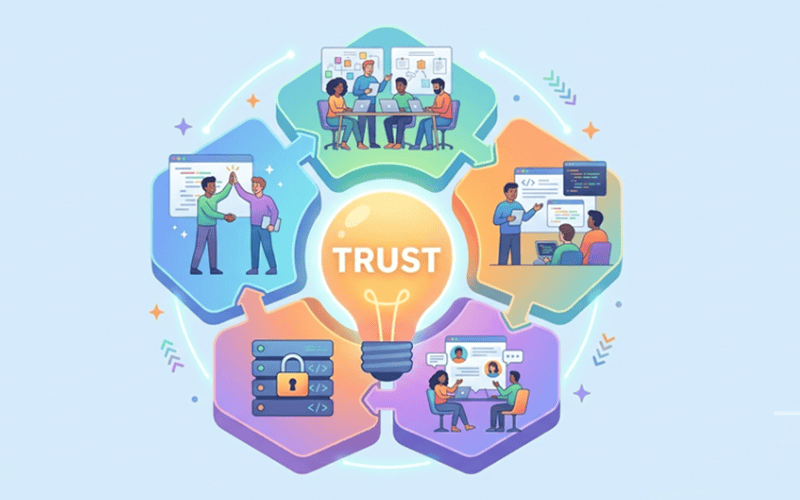
Building trust with software developers is challenging but essential, especially as artificial intelligence reshapes the technology landscape. Sanjay Sarathy, an executive at Cloudinary, explains that developers are naturally skeptical thinkers who evaluate tools critically. While they enthusiastically adopt AI to improve their workflows, they rarely trust its outputs blindly. To foster genuine allegiance, companies must view developer trust as a foundational element rather than a secondary feature. One effective strategy is offering meaningful free access to platforms, allowing developers to experiment, recognize value, and build confidence before moving projects into production. Additionally, providing technical support staffed by knowledgeable peers is vital; developers respect support teams that understand their specific language and challenges. As AI coding tools become more common, organizations must also ensure their documentation and interfaces are easily readable by AI models to minimize errors. Finally, clear and honest communication is crucial. Companies should openly acknowledge the limitations of their tools, avoid sudden changes to existing systems, and provide reliable, backward-compatible updates. By delivering consistently and respecting their time, companies can successfully earn the long-term trust and loyalty of the developer community.


Making Windows a developer platform, again

Microsoft is actively improving Windows to make it a more appealing platform for software developers by introducing tools that bridge the gap between Windows and Linux environments. A key addition is Coreutils for Windows, a package that brings standard Unix command-line utilities directly into the Windows ecosystem. This eliminates the frustrating context switching developers often face when moving between Windows and Linux systems, allowing Unix scripts and commands to run smoothly on a Windows machine. Additionally, Microsoft released Windows Developer Config, a tool designed to rapidly set up a fully functional development computer. Using automation scripts, it installs essential tools like Git, Visual Studio Code, and programming language support while also configuring the Windows Subsystem for Linux. This setup mirrors the environment of cloud-hosted development boxes but runs locally, making it highly practical for developers dealing with slow or unreliable network connections. The configuration tool ensures consistency across devices, saving teams time and preventing environment drift. Together, these updates demonstrate a clear effort to streamline daily workflows, providing software engineers with a comfortable, unified, and highly customizable environment right out of the box.

Daily Tech Digest - June 23, 2026


Quote for the day:

“Growth is painful. Change is painful. But nothing is as painful as staying stuck.” -- N.R. Narayana Murthy

🎧 Listen to this digest on YouTube Music

▶ Play Audio Digest

Duration: 23 mins • Perfect for listening on the go.


Your AI strategy may be training employees to stop thinking

Relying too heavily on artificial intelligence for routine writing and summarizing is quietly wearing away the critical thinking skills that businesses depend on. Researchers warn that as employees repeatedly use automated tools to generate content, the original context and factual accuracy of that information begin to break down. Over time, errors multiply, outputs become generic, and staff members lose trust in their own daily processes. Correcting these automated mistakes often demands so much human review that it completely wipes out any initial time savings. To protect the quality of their work, companies need to establish clear boundaries. Instead of allowing workers to use automated tools for broad tasks like writing generic reports or crafting standard job applications, managers should require structured, factual information that relies on genuine human experience. Using tailored internal data rather than generic public systems also helps keep facts straight. By pairing genuine human judgment with automated efficiency, businesses can use technology to organize actual human knowledge rather than replace the thinking process entirely. Setting these practical limits ensures that automated tools actually support staff rather than encouraging them to stop thinking altogether.


Loop Engineering

The recent O'Reilly Radar article by Jonas Steinberger and Addy Osmani introduces loop engineering, which marks a major shift in how developers interact with artificial intelligence. Rather than relying on traditional prompt engineering, where a human types instructions and waits for responses one step at a time, loop engineering focuses on building systems that correct themselves and operate independently. In this new model, the artificial intelligence is simply one part of a larger machine built to plan tasks, utilize tools, evaluate its own work, and fix mistakes without constant human oversight. Developers are no longer just conductors of single tasks; they become orchestrators who manage entire automated workflows. The authors explain that the core of this method is the surrounding code that enforces rules, budget limits, and safety checks to ensure the intelligence stays on track. By setting firm boundaries, such as a maximum number of steps or cost caps, developers prevent the system from getting trapped in endless errors. Finally, the authors caution against blindly trusting the system, warning that developers risk losing their understanding of how the code actually functions if they surrender too much control.


Why open infrastructure will define the AI era

Software engineers increasingly rely on paid artificial intelligence tools to assist with writing code, which introduces the risk of becoming trapped within the closed systems of a few large technology corporations. Building an entire strategy on proprietary platforms forces companies to accept the shifting rules, sudden policy changes, and rising prices of specific vendors, creating expensive and fragile technical dependencies. In response to these challenges, a growing movement toward open foundations is gaining momentum across the software industry, mirroring the historical development of the early internet and operating systems like Linux. By adopting publicly accessible models, shared communication standards, and neutral management tools, organizations retain the practical freedom to swap out individual parts as their needs change. This open approach prevents businesses from being locked into the network of a single provider and eliminates the need to rebuild systems completely whenever a vendor alters its direction. Connecting different layers of technology through universal agreements provides essential stability and flexibility. Ultimately, historical patterns in computing suggest that open systems succeed because they grant organizations lasting control and independence, ensuring they do not pay endless rent for basic operational tools.


The Hidden Engineering Challenge Behind Successful GenAI Deployment

While many organizations invest in generative artificial intelligence pilots, very few successfully transition these into scalable business operations. The primary hurdle is rarely the model itself, but rather the operational and systems engineering challenges required for safe, effective deployment. Pilots often fail because they rely on controlled datasets that do not easily translate to complex enterprise systems, leading to errors and risks. To overcome this, organizations must shift their focus from simply selecting the best model to building a resilient infrastructure. This involves adopting a comprehensive, multidimensional evaluation framework that measures performance at the component, task, and broader business outcome levels. Additionally, a robust foundation requires five essential layers: data, orchestration, training, observability, and security. Relying on flexible, open-source frameworks allows companies to adapt quickly and build reusable systems. Strategically, businesses should begin with human-assisted augmentation rather than full automation, ensuring strict safeguards and continuous human oversight. By fostering cross-functional collaboration among engineering, product, and subject matter experts, companies can align technical implementations with shared business goals. Ultimately, achieving sustainable value depends entirely on rigorous planning, structured implementation, and maintaining dependable operational guardrails rather than merely chasing the largest models.


6 security leader tips for mastering business risk

As cybersecurity increasingly dictates financial health, Chief Information Security Officers must expand their focus beyond technology to manage broader company risks. The article outlines six practical steps for security leaders making this transition. First, they should partner directly with colleagues in finance, legal, and operations to understand the company’s actual risk tolerance. Second, security strategies must support overarching business goals, ensuring that protective measures do not inadvertently hinder operations or harm employee satisfaction. Third, leaders need to build strong internal relationships through routine conversations to learn what genuinely worries their fellow executives. Fourth, crisis simulations should test real business dilemmas, such as whether to pay a ransom or when to disclose a breach, rather than stopping at technical fixes. Fifth, security chiefs should study the business itself by reading annual reports and earnings transcripts, or by pursuing formal corporate governance education. Finally, cyber risks must be quantified in actual financial figures and placed on the central enterprise risk register alongside legal and market threats. By speaking the language of revenue and probability rather than technical jargon, security professionals can secure the executive support necessary to protect the entire organization.


The Cost of ‘Good Enough’ SQL in a High-Volume Database Environment

In high-volume database environments, settling for "good enough" SQL queries can become surprisingly expensive. While a query might pass testing and return accurate results, minor inefficiencies like a suboptimal join or an unnecessary table scan are magnified exponentially in production. Because these queries are executed thousands or millions of times, small flaws accumulate into massive resource drains. This multiplier effect leads to increased CPU consumption, higher software licensing costs, and slower overall system performance. The problem often starts during development, where time pressures, overreliance on automated tools, and a lack of deep database expertise cause developers to prioritize immediate functionality over long-term efficiency. As data volumes grow and concurrency increases, what was once an acceptable access path can become a major bottleneck. To prevent these hidden taxes from dragging down the system, organizations must stop treating SQL performance as an afterthought. Instead, teams should adopt a continuous and intentional approach to database management. By thoroughly reviewing queries for actual efficiency, carefully designing indexes, and prioritizing performance just as highly as functionality, companies can ensure their database workloads remain stable, predictable, and cost-effective as they scale.


Scrum That Actually Works for DevOps Teams

Applying standard Scrum to infrastructure and operations teams often fails because rigid two week cycles ignore the daily reality of unexpected outages, urgent security patches, and routine support requests. Rather than abandoning the framework completely, teams can adapt it into a practical tool by stripping away strict rituals and keeping only what helps them coordinate and finish work. The first step is cleaning up the task backlog. Instead of a messy pile of vague technical chores, tasks should be written as clear outcomes that explain why the work matters, with only the next few weeks planned in detail. Next, teams must practice honest capacity planning. Because platform engineers routinely handle urgent interruptions, scheduling total uninterrupted project focus is unrealistic. By explicitly setting aside a time buffer for reactive support and maintenance based on past data, teams avoid the recurring frustration of missed targets. In addition, sprint goals should be broad enough to survive sudden disruptions. Finally, daily meetings should remain short and focused entirely on helping team members solve immediate problems, rather than serving as tedious status reports for management. These straightforward adjustments create a balanced workflow that accommodates daily chaos without unnecessary stress.


'Lack of support' as Australia lags behind on blockchain

Australia's digital investment sector is growing steadily, with rising interest in converting physical assets, such as mining resources, into digital shares to make them easier to manage and trade. However, the nation risks losing ground to international peers like Singapore due to prolonged regulatory delays and complicated government grant processes. Industry experts, including Black Tie CEO Caroline Macdonald, note that modern investors increasingly demand transparent, immediate control over their portfolios rather than relying strictly on traditional fund managers. While digital asset systems already contribute one percent of the national gross domestic product, widespread public adoption remains constrained by overly complex user interfaces. To overcome these practical barriers, companies are deploying hybrid platforms that pair standard, familiar website designs with secure underlying ledgers. Additionally, businesses are focusing on practical applications of artificial intelligence to educate clients rather than chasing temporary industry trends. Because the basic infrastructure has proven its stability, the primary challenge is no longer proving whether the systems actually function. Instead, the immediate focus has shifted toward securing clearer federal guidance, refining the daily user experience, and ensuring the country remains a competitive destination for international talent and investment capital.


From Block-Based Programming to Vibe Coding

The evolution of how we write software is moving toward higher levels of abstraction, shifting from visual methods to natural language commands. For years, visual systems that use interlocking shapes helped beginners learn the logic of software development without worrying about precise typing or grammar rules. These tools successfully opened the door for many people to understand foundational concepts like loops and conditionals. Now, the approach known as vibe coding takes this accessibility a step further by allowing users to describe what they want a program to do using ordinary text. Instead of dragging and dropping shapes, individuals can instruct artificial intelligence to draft the actual lines of code based on their plain language descriptions. This transition changes the developer's role from writing every detail to guiding and refining the output generated by the system. While this method lowers the barrier to entry and speeds up the creation process, it also introduces new responsibilities. Users must carefully review the generated results to ensure accuracy, security, and reliability. Ultimately, this progression reflects a broader trend of making software creation more intuitive, focusing more on the underlying purpose of the program rather than the mechanical steps required to build it.


The ICS Exploit Pipeline Is Built for Destruction, Not Theft

Industrial control systems face a severe mismatch between how companies measure risk and how attackers actually operate. Today, corporate risk models borrow heavily from traditional information technology, focusing on the financial fallout of stolen data records and regulatory fines. However, recent data reveals that the vulnerability pipeline for industrial hardware is overwhelmingly built to break physical infrastructure rather than steal from it. In fact, flaws that exclusively enable equipment destruction outnumbered pure data theft vulnerabilities five to one last year. When attackers target power grids, water plants, or factories, they rarely use complex, custom software to cause damage. Instead, they exploit basic network weaknesses, such as stolen passwords or bypassed login screens, to gain access to the control room. Once inside, they simply use the machinery’s native operating commands to trigger emergency shutdowns or override safety switches. Because traditional risk calculators were never designed to evaluate a ruined turbine or a halted assembly line, they systematically leave organizations exposed. To defend these environments effectively, companies must stop treating physical operations like standard data networks and begin evaluating their security based on actual machinery downtime, physical repair costs, and human safety.

Daily Tech Digest - June 16, 2026


Quote for the day:

“We are what we repeatedly do. Excellence, then, is not an act but a habit.” -- Aristotle

🎧 Listen to this digest on YouTube Music

▶ Play Audio Digest

Duration: 19 mins • Perfect for listening on the go.


Attackers scale deception with AI. Defenders need truth at machine speed

As artificial intelligence makes it cheaper and faster for malicious actors to create convincing fake identities and phishing lures, cybersecurity teams face a growing challenge. The main problem for defenders is no longer just detecting threats, but quickly verifying them. Currently, security data is often scattered across different tools and systems, meaning teams waste valuable time gathering evidence rather than investigating the actual incident. If data is incomplete or out of date, defensive artificial intelligence tools cannot function effectively and will only increase uncertainty. To address this, organizations need a central system that connects raw information with business context and clear rules. Instead of just storing logs for later review, this system must preserve reliable evidence, access information wherever it is stored, provide necessary context, and govern how automated actions are taken. Modern security operations centers do not lack information; they lack usable context. Ultimately, defenders cannot win by trying to match the sheer volume of attacks. Instead, they must focus on moving quickly to establish the truth, ensuring that every security decision is based on solid, reliable evidence that both humans and automated systems can inherently trust.


How to Get IT Buy-In for OT-First Secure Remote Access

Getting IT teams to approve a secure remote access solution for operational technology often requires addressing their specific concerns rather than just highlighting operational benefits. While plant managers clearly understand that remote access helps external vendors troubleshoot equipment and internal teams respond faster to mechanical maintenance issues, IT and security departments frequently worry about unexpected network changes, complicated identity management, and serious compliance risks. They already manage incredibly heavy workloads and are naturally cautious about adopting new tools that might create more support tickets or auditing blind spots. To build a highly successful case, operational technology leaders must demonstrate that a modern access system aligns strictly with IT requirements. By explaining that the primary goal is not to disrupt existing corporate infrastructure but to steadily improve oversight, leaders can effectively ease fears of unmanaged access paths. The best approach involves framing the request around shared, practical goals: reducing the burden of manual vendor access approvals, improving daily activity monitoring, and proving that remote access is securely governed. Ultimately, addressing these common IT objections directly helps turn a potential conflict into a lasting mutual benefit for both departments and the entire organization.


Tips for successfully exiting AI vendor contracts

Ending a contract with an artificial intelligence provider requires careful planning to protect your business and its sensitive information. When preparing to transition away from a vendor, the primary focus should always be on securing your data and maintaining full ownership of any custom models or algorithms developed during the partnership. A well-structured exit strategy starts long before the contract actually ends. It involves negotiating clear terms for data extraction, ensuring the vendor permanently deletes your information from their systems, and verifying that no residual intellectual property remains in their possession. It is also highly important to establish a clear timeline for the transition to minimize disruptions to your daily operations. You need a reliable contingency plan to handle the loss of service, which might involve switching to an alternative provider or bringing the technology entirely in-house. Clear communication with your legal team is essential to successfully enforce these exit clauses and avoid unexpected hidden costs. By anticipating these specific challenges early and maintaining strict control over your digital assets, your organization can smoothly navigate the separation and preserve the value of its technology investments without unnecessary risk or operational downtime.


The Convergence of Risk: Cyber, Data and AI Disputes

Rapid technological changes and shifting rules are moving faster than the methods most organizations use to manage cyber, data, and artificial intelligence issues. This growing gap creates practical difficulties and complicates international reporting. A recent survey of 600 senior decision makers reveals that companies face a complicated landscape of enforcement, operational, reputational, and legal challenges. Technology and geopolitical pressures are primary drivers of these potential conflicts, with cyber and data concerns ranking at the very top for most leaders. Managing the specific risks and internal oversight tied to artificial intelligence is a major hurdle, cited by more than half of the surveyed executives. Organizations are also working to address other demanding areas, such as sharing sensitive information with international regulators and law enforcement. Furthermore, there is steady pressure to comply with strict rules for critical infrastructure and to manage reporting duties across various countries. Ultimately, leaders must navigate increasingly complex regulations while focusing on stability and preparedness. These findings highlight the absolute necessity of updating internal structures to effectively address the clear overlap of modern technological and legal vulnerabilities globally.


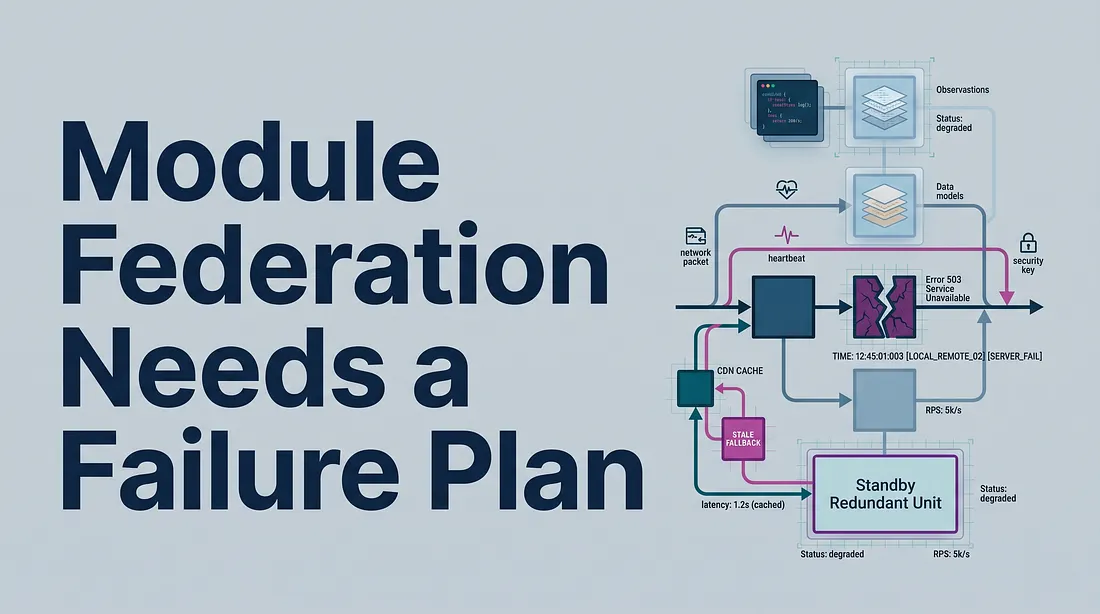
Module Federation Needs a Failure Plan

In his article, Roman Fedytskyi discusses the operational challenges of using Module Federation to build micro-frontends. While this architecture allows independent engineering teams to deploy separate parts of a website on their own schedules, a failure in just one remote component can easily crash the host application. To address this risk, Fedytskyi highlights a new open-source package called federation-resilience. This tool focuses strictly on application stability at runtime by introducing structured error handling. Instead of letting a broken piece disrupt the entire website for visitors, it provides automated retries with timed delays, cache clearing to bypass corrupt file paths, and predictable fallbacks to local code or stable alternative versions. Crucially, the utility operates independently of specific user interface frameworks like React and avoids mixing safety features with release or authorization logic. Fedytskyi suggests that platform teams should categorize their modules by importance, centralize loading pathways, and pre-load alternative backups during idle browser time. By tracking success and failure rates through built-in monitoring, software teams can safely manage these glitches rather than reacting to unexpected site outages. Ultimately, true architectural maturity occurs when system failure is treated as a normal, expected condition of running web applications.


AI needs young developers – and old developers

To successfully implement artificial intelligence, organizations must thoroughly rethink their software development processes rather than simply attaching new tools to outdated workflows. According to the article, the true potential of AI will only be realized when teams combine the distinct strengths of both junior and senior developers. Younger developers are highly valuable because they approach problems with a fresh perspective. Unburdened by traditional methods, they are much more willing to question established practices, experiment with unfamiliar tools, and propose entirely new ways to redesign workflows from the ground up. However, their natural impatience requires careful guidance to avoid generating unreliable code or creating long-term technical problems. This is exactly where experienced developers become indispensable. Senior engineers provide necessary context, mature judgment, and a deep understanding of security, scale, and compliance constraints. Instead of acting as roadblocks to change, these seasoned professionals should establish safe boundaries and standard patterns that allow newer developers to explore freely. By forming highly collaborative teams that thoughtfully blend youthful innovation with experienced oversight, enterprises can successfully modernize their daily operations, eliminate old processes, and finally unlock the full productivity benefits of modern artificial intelligence.


The 11 hardest IT roles to fill in 2026 — and what’s changed

In 2026, technology leaders face a changing environment when it comes to hiring. Artificial intelligence and cybersecurity are currently the most difficult areas to staff, followed closely by data science. However, the specific needs within these fields have changed. Companies are no longer looking for basic specialists. Instead, they need professionals who can blend coding skills with a deep understanding of business operations to build, manage, and safely govern complex programs. At the same time, the demand for senior cybersecurity experts has increased. As networks become more complicated and potential threats grow, organizations need experienced architects who can make practical security decisions under pressure. Roles related to automation and risk management are also becoming harder to fill because introducing new technologies requires careful planning to prevent errors and ensure safety. Meanwhile, some previously difficult areas have stabilized. Finding cloud experts is much easier today since most companies have already established their systems. Typical software engineering roles are also decreasing as newer tools handle routine tasks. To adapt to these changes, many organizations find that retraining their existing staff is far more effective and reliable than constantly searching for outside talent.


Who Owns the Code Claude Wrote?

The recent accidental leak of Claude Code’s source by Anthropic has sparked a complex legal debate about the ownership of software generated by artificial intelligence. After a routine update exposed over half a million lines of code, independent developers rapidly mirrored and translated the repository. Anthropic responded with thousands of DMCA takedown notices, but this enforcement immediately raised profound questions about their actual legal standing. Anthropic’s own engineering team previously admitted that Claude itself predominantly authored the leaked codebase. Under current United States copyright law, particularly following recent judicial decisions affirming that works lacking meaningful human authorship are strictly ineligible for copyright protection, purely AI-generated code might technically reside in the public domain. This specific situation highlights a glaring gap between the rapid adoption of automated coding assistants and our existing intellectual property framework. If software developers merely guide an AI without contributing substantial creative input, they run the significant risk of producing digital work they cannot legally protect. As modern companies increasingly rely on these language models to build commercial software, they must carefully document their human creative decisions to maintain valid ownership claims and avoid unexpected future legal vulnerabilities altogether.


How To Turn Industry Experience Into Expert Authority

Transforming simple industry experience into recognized expert authority requires much more than just accumulating years on the job or seeking continuous visibility. According to insights from various business leaders, true authority is built through consistency, clarity, and usefulness. Rather than focusing on self-promotion or basic sales pitches, professionals should aim to educate their audience by sharing practical, real-world lessons and repeatable frameworks that help others solve actual problems. To truly stand out, it is highly effective to challenge outdated industry norms, own a specific niche question, and make complex concepts easy to understand for your target audience. Furthermore, genuine expertise stems from actual accomplishments; you must achieve real results before expecting others to value your perspective. By documenting your ongoing learning process, admitting when you do not have all the answers, and publicly addressing challenges that others only discuss in private, you naturally build a strong foundation of deep trust. Ultimately, becoming an industry authority is not about claiming a prestigious title or being the loudest voice in the room. It is about consistently demonstrating clear judgment under pressure, remaining genuinely curious, and making your daily insights undeniably valuable to those around you.


Europe’s AI Sovereignty Problem Runs Far Deeper Than Frontier Access

Europe's current strategy for achieving technological independence in artificial intelligence relies heavily on the software application level—meaning that it encourages building user-facing products on top of existing American tech infrastructure. While European startups following this path are frequently celebrated as major successes, this approach fundamentally deepens the region's reliance on foreign technology. Relying on foundational systems developed by companies like Google or Anthropic presents three severe risks for European business. First, there is a constant threat of direct competition. The massive companies providing the underlying technology can easily introduce new features that directly copy and replace the services smaller startups have built. Second, founders surrender control over their basic inputs, leaving them highly vulnerable to sudden price hikes or changes in system behavior. Finally, the economic value overwhelmingly flows upstream. The substantial costs of computing power and network access mean that a large portion of European revenue ultimately goes back to American providers. Furthermore, standard funding cycles often push successful regional startups to sell out to these same large incumbents. Ultimately, acting as an outsourced research department for foreign tech monopolies will not grant Europe true technological sovereignty or long-term economic independence.

Daily Tech Digest - June 05, 2026


Quote for the day:

“Without data, you’re just another person with an opinion.” -- W. Edwards Deming

🎧 Listen to this digest on YouTube Music

▶ Play Audio Digest

Duration: 22 mins • Perfect for listening on the go.


Industry 5.0’s Hidden Challenge: Managing Risk in the Hyperconnected Factory

As manufacturing transitions into Industry 5.0, the focus is shifting from simple automation to deep collaboration between human workers and advanced machinery. While these hyperconnected factories offer significant improvements in efficiency and customization, they also introduce serious, often overlooked vulnerabilities. The core issue lies in the merging of traditional physical equipment with modern internet-connected systems. This integration creates a massive target for cyber threats. When factory floors are wired directly to global networks, a single security breach can do more than steal data; it can halt physical production entirely. Furthermore, because these modern facilities rely on interconnected supply chains, a weakness in a smaller partner’s system can quickly spread to the main operation. Managing these risks requires a shift from reactive problem-solving to building long-term operational resilience. Manufacturers must implement strict security measures, such as dividing networks to contain potential breaches and ensuring constant monitoring of their equipment. More importantly, they need to invest in training their workforce to recognize and respond to these modern threats. Ultimately, as factories become more intelligent and connected, companies must treat security not as a separate IT problem, but as a fundamental part of the manufacturing process to keep operations running smoothly and safely.


Copilot Billing Shock Hits Developers

Following GitHub Copilot’s recent shift to a usage-based billing model, developers are facing unexpected and dramatically higher costs. Instead of offering unlimited premium requests, the new system charges users via AI credits based on their token consumption, which accounts for input, output, and cached data. Since this change took effect, many users have reported burning through massive portions of their monthly credit allotments in a single day, often just by running basic queries or making minor code adjustments. Some developers project monthly expenses to skyrocket from standard subscription rates to thousands of dollars, particularly when using advanced models or automated tools that process large amounts of context. While the reaction across developer communities has been largely critical, with many canceling their subscriptions and looking for alternative solutions, neither GitHub nor Microsoft has directly addressed the backlash. However, they have provided documentation on how to manage these new expenses. To keep costs under control, developers are encouraged to implement strict budget caps and monitor their daily usage closely. Practical strategies include switching to less expensive models for routine tasks, breaking large requests into smaller parts, avoiding pasting entire codebases into prompts, and limiting the use of automated background tools. By adopting these careful prompting habits, users can better manage resources and avoid financial surprises.


How Risk Management Frameworks Protect Organisations from Insider Threats

When dealing with cybersecurity, organizations frequently focus on external attacks and overlook the risks posed by their own employees, contractors, or vendors. Protecting against these insider threats requires more than just reactive measures; it demands a structured approach rooted in risk management frameworks. Standardized models like NIST or ISO 27001 provide a clear foundation to help organizations systematically identify, assess, and handle vulnerabilities before they result in serious damage. Rather than relying on guesswork, these frameworks encourage practical steps such as mapping user roles, reviewing asset inventories, and carefully analyzing data flow. A critical component is establishing strong governance that clearly defines who is accountable across departments, bridging the gap between IT, human resources, and legal teams. By integrating access controls, organizations can enforce strict permissions so individuals only access the information necessary for their specific roles. Furthermore, utilizing continuous monitoring and behavioral analytics allows security teams to detect unusual activities, such as irregular login times or massive data transfers, long before they escalate. Alongside technical defenses, effective frameworks outline clear incident response plans and emphasize the importance of cultivating a strong security culture. Ultimately, educating staff and fostering an environment where suspicious activity can be reported safely helps businesses maintain solid long-term resilience against internal security risks.


Segment With Purpose: A Zero Trust Blueprint For OT Network Segmentation In Manufacturing

Protecting manufacturing operations requires more than simply placing a firewall at the network perimeter. Because manufacturing systems control physical processes, security efforts must consider strict requirements for safety, uptime, and real-time performance. This makes network segmentation a vital engineering effort rather than just a standard IT project. The approach begins by identifying the core mission of the facility to ensure that new security controls do not disrupt daily production. From there, a combined team of IT and operational technology professionals should work together to inventory all systems based on their specific roles. Next, the team groups these systems into distinct security zones and carefully restricts communication between them to only what is necessary. Firewalls used in these environments must understand industrial protocols and enforce rules without causing unacceptable delays. High-risk pathways, such as remote access connections, require strict isolation, while physical safety systems need their own separate security domains to guarantee they function during emergencies. Because older industrial equipment cannot always support modern security software, network isolation acts as a necessary compensating control. Finally, testing these designs in a lab environment before a phased rollout prevents costly disruptions on the factory floor. Ultimately, a carefully planned architecture makes a manufacturing plant significantly harder to compromise and easier to recover.


Is the data center industry ready to change for the coming of the 1MW rack?

The data center industry is debating a major infrastructure shift: moving to one-megawatt server racks powered by 800-volt direct current systems. Historically, facilities have relied on alternating current power and managed rack densities averaging around 15 kilowatts. However, as artificial intelligence applications demand increasingly powerful hardware, companies like Nvidia are projecting the need for one-megawatt racks by 2028. Because traditional power systems hit practical capacity limits near 400 kilowatts due to cable congestion and space constraints, achieving this extreme density requires a fundamental redesign toward high-voltage direct current distribution. In the near term, operators might adapt by installing separate power sidecars next to standard racks, but eventually, entire facilities could require ground-up direct current electrical architectures. Despite these projections, industry experts question whether the broader market should undergo such an expensive overhaul based primarily on one company's product roadmap. While top-tier tech firms training massive models will certainly require this capability, other hardware developers are already focusing on more energy-efficient specialist chips. Additionally, as artificial intelligence matures, everyday tasks like answering questions or generating text will likely run on less demanding equipment. Ultimately, building completely redesigned data centers may prove lucrative for early adopters, but over-engineering facilities for a niche scenario could be highly risky for most operators.


The cost of rebuilding talent now exceeds the cost of retaining it

The real estate sector has traditionally relied on a straightforward hiring model: assembling teams for specific projects and dispersing them once the buildings are finished. However, as projects grow larger and more complex, this approach is reaching its limits. According to Mohan Monteiro, the Chief Human Resources Officer at House of Hiranandani, the financial and operational cost of constantly rebuilding teams now outweighs the cost of retaining them. Today's developments involve advanced engineering, tighter regulatory compliance, and buyers who expect consistent quality across all properties. In this environment, relying heavily on informal, temporary labor creates significant risks for both construction standards and accountability. This shift extends beyond the construction site into sales and management. Modern buyers do their own research before they even speak to a representative, meaning sales roles now require informed engagement and trust rather than aggressive closing tactics. When experienced staff leave, companies lose critical customer relationships and institutional knowledge that take months to replace. Monteiro notes that leading developers are recognizing the need for better organizational alignment, connecting site teams, sales, and corporate leadership with shared information. Ultimately, the industry is realizing that long-term workforce stability and continuity are no longer just human resources goals; they are essential commercial advantages required for future growth.


Your outsourcing contract needs XLAs, not just SLAs

When outsourcing IT services, traditional service level agreements (SLAs) are no longer sufficient because they only measure technical processes rather than actual human outcomes. While SLAs ensure baseline operational standards, like system uptime or ticket resolution speed, they often fail to capture whether employees actually feel supported or can efficiently do their jobs. To bridge this gap, organizations must incorporate experience level agreements (XLAs) into their vendor contracts. XLAs shift the focus toward tangible user outcomes, tracking metrics such as employee satisfaction, lost productivity time, ease of accessing support, and overall confidence in IT services. Introducing XLAs does not mean abandoning SLAs. Instead, the two work together to provide a complete picture of IT performance. To implement XLAs successfully, companies and providers need a shared baseline of current employee experience data. Contracts can then require fixed satisfaction scores, continuous metric improvements, or the creation of an experience measurement infrastructure by the provider. For these agreements to work, total transparency is essential; hiding poor scores destroys the accountability the model relies upon. Ultimately, moving to an XLA model represents a significant shift in how companies define IT value. Unless you explicitly demand better employee experiences in your outsourcing contracts, service providers are unlikely to prioritize them over basic technical compliance.


Context as Code - Build-time governance in the era of infinite syntax

In his article on context as code, Artur Huk explores the hidden costs of relying on artificial intelligence to rapidly generate software. Today, automated tools produce working code at incredible speeds, optimizing for quick feature delivery rather than long-term maintainability. Because these systems are designed to always fulfill a user's immediate request, they often bypass established design rules. For instance, an AI might inappropriately force new features directly into critical systems instead of following careful organizational patterns, creating software that works today but becomes a tangled liability tomorrow. Huk points out that we are losing a crucial historical defense mechanism. In the past, compilers acted as rigid gatekeepers that prevented fundamental errors before a program could even run. Now, human language acts as our control system, blurring the line between safe instructions and unpredictable data. This shifts significant risk away from the building phase directly to the live environment. To regain control, Huk suggests we must enforce strict constraints before the code is ever generated. Rather than relying on massive, complex libraries that hide how systems actually work, teams should build clear, transparent structures. By setting firm boundaries and effectively teaching AI tools when to say no, organizations can safely use automated generation without sacrificing their future stability.


Think Inside The Box: How Constraints Can Unleash Your Creativity And Unlock Decision Making

Empowering employees with autonomy over how they execute their tasks is one of the most effective ways to build engagement, pride, and accountability. While leaders often assign specific responsibilities, dictating every step of the process can suppress independent problem solving and create a workforce that simply waits for instructions. On the other hand, many managers hesitate to offer complete freedom due to the genuine financial, reputational, or regulatory risks involved in their operations. To balance these competing needs, organizations should implement a sandbox approach to decision making. In this model, leaders establish clear constraints that represent the acceptable limits of risk, forming the boundaries of the sandbox. Once these rigid parameters are defined, employees are given the full authority to experiment and find the best solutions within that secure space. Building this environment requires three straightforward steps: clearly outlining the goals, communicating the strict boundaries, and stepping back to let employees determine their own methods. Because the parameters can be adjusted for different roles or projects, this structured autonomy protects the company while still fostering innovation at every level. Ultimately, when people understand their limits but have the freedom to navigate within them, they are far more likely to produce meaningful work and deliver better outcomes for the organization.


Investing in Workers to Work with AI

As companies rush to adopt artificial intelligence, many are finding that buying the technology is only half the battle. A significant challenge lies in preparing the workforce. Currently, businesses spend the vast majority of their AI budgets on the technology itself, leaving very little for employee training. This imbalance often leads to poor adoption rates and deep-seated fears among workers that they will soon be replaced by automated systems. To counter this, forward-thinking organizations are developing structured training programs to help their employees confidently work alongside AI. Instead of leaving staff to figure out these complex tools on their own, companies in industries ranging from banking and law to manufacturing are providing dedicated instruction on core skills like clear prompt writing and data analysis. By treating AI as a supportive tool rather than a substitute for human labor, these programs reassure employees that their jobs are secure. When workers understand how to use these systems safely and effectively, they can automate repetitive tasks and focus their time on more valuable work. Ultimately, successful AI integration requires a strong commitment to education. Investing in comprehensive training not only builds trust and reduces anxiety, but it ensures that organizations actually see the productivity gains they expect from their technological investments.

Daily Tech Digest - May 27, 2026


Quote for the day:

“If you can get today’s work done today, but you do it in such a way that you can’t possibly get tomorrow’s work done tomorrow, then you lose.” -- Martin Fowler

🎧 Listen to this digest on YouTube Music

▶ Play Audio Digest

Duration: 23 mins • Perfect for listening on the go.


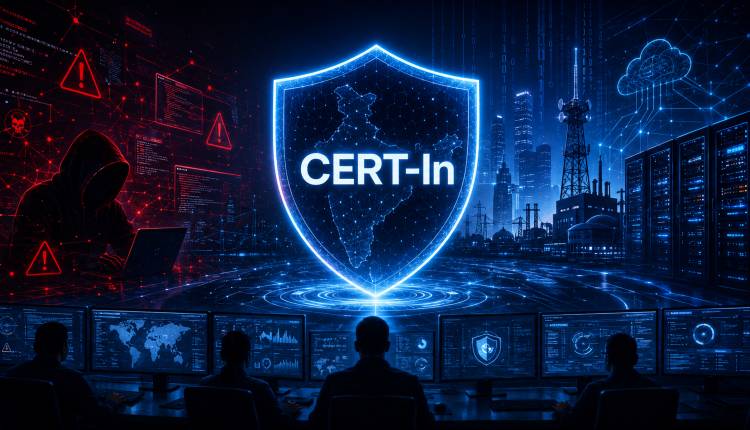
CERT-In’s new AI cybersecurity blueprint urges 12-hour remediation for known exploited vulnerabilities

India’s cybersecurity regulator, CERT-In, has released a 38-page guideline addressing the growing risks of artificial intelligence in cyberattacks. The document details how adversaries are using automated tools to speed up data collection, phishing, and malware creation, which severely shortens the time organizations have to defend themselves. To combat this, the regulator recommends that enterprises patch, isolate, or mitigate any known exploited vulnerabilities on critical internet-facing systems within twelve hours, while other major external flaws should be resolved within a single day. Because traditional methods like periodic audits and static defenses are too slow for rapid threats, the report encourages businesses to shift toward continuous system monitoring and automated response management. Beyond external threats, the text addresses internal risks within corporate environments, warning against employee use of public AI platforms that can leak sensitive data. It stresses the necessity of structured governance and human oversight over autonomous software decisions. Furthermore, the regulator explicitly reminds organizations of their mandatory statutory obligation to report all cybersecurity incidents within six hours. Ultimately, the document highlights that managing modern network risk is no longer just about establishing static defenses, but about responding quickly enough to isolate threats before automated attackers can completely outpace human security teams.


Why data governance is a core IT responsibility in the AI era

The article outlines why data governance has shifted from a routine compliance exercise to a primary responsibility for information technology teams in the era of artificial intelligence. Traditional data management handled structured tables, but modern systems consume vast amounts of unstructured information, such as emails, documents, and chat records. When internal company files are fed into modern automation tools and language models, any hidden errors or biases become heavily amplified. Because these automated software programs query data continuously and lack human skepticism, they process flawed inputs without question, turning upstream data failures into widespread operational errors. To address this, technology leaders must avoid common pitfalls like relying strictly on software purchases to patch broken processes or treating data strategy as a one-time project. Instead, a practical and sustainable approach requires close, cross-department collaboration with legal, risk, and business units to build a unified system for tracking data origins and real-world meaning. Rather than attempting to catalog every single file all at once, organizations should prioritize documenting and continuously monitoring their most high-impact information assets. Ultimately, treating corporate data as a carefully managed strategic resource ensures that underlying inputs remain strictly accurate and reliable, providing a dependable foundation for safe, effective, and predictable digital tools.


Responding to Breaches With AI? Beware Cross-Contamination

The article outlines important warnings for cybersecurity investigators who utilize artificial intelligence tools to draft incident response reports. Based on controlled experiments by Cisco's threat intelligence group, Talos, researchers found that large language models are highly susceptible to data cross-contamination. When multiple security incidents are processed during a single conversation session, information from a previous report can easily bleed into a subsequent one. Surprisingly, this data mixing occurs even if investigators completely delete the notes from the earlier incident before starting the next file. This core issue stems from the finite memory constraints of an AI's fixed context window, which often leads to unpredictable data blending as the conversation continues. Producing inaccurate reports introduces significant professional, regulatory, and legal liabilities, especially for multi-tenant incident response firms handling private customer data. Furthermore, the Talos tests revealed that models often deliver entirely inconsistent recommendations when fed identical data. To address these technical limitations, researchers recommend opening entirely new sessions for separate investigations and using structured prompting strategies. Breaking tasks into narrow instructions, enforcing rigid formatting templates, and specifying exact source documents cut down overall drafting time by half while minimizing errors. Ultimately, human oversight remains vital to catch hallucinations and guarantee report accuracy.


5 Security Principles Every Entrepreneur Should Apply to Leadership

In an essay published on APMdigest, Prakash Mana explains how the core principles behind cybersecurity offer a highly practical guide for business leadership. Rather than focusing purely on technical tools like network firewalls or data encryption, the author suggests that entrepreneurs can use these structural concepts to better manage risk, organizational trust, and long-term stability. The first approach involves adopting a continuous verification mindset toward trust, meaning that effective leaders stay curious and validate their strategic assumptions rather than relying blindly on company hierarchy or past achievements. Second, applying the standard security rule of giving the lowest level of privilege needed helps founders delegate responsibilities with clear, distinct boundaries, matching decision rights to specific expertise to prevent both micromanagement and employee burnout. Third, instead of allowing single points of failure to threaten the company, resilient businesses build multiple layers of protection by using cross-trained teams and clear, written operational routines. Furthermore, prioritizing open visibility over rigid control allows executives to address problems early and cultivate an environment of safety, rather than leading through heavily filtered corporate reports. Ultimately, the piece argues that borrowing these foundational practices helps leaders make calm, balanced choices in unpredictable market conditions, creating durable companies designed to grow steadily over time.


Digital Bank Employees Used to be the Stuff of Science Fiction. Not Anymore

The article from The Financial Brand examines how conversational and generative artificial intelligence systems are transitioning from theoretical concepts into practical workforce realities across the banking sector. Rather than replacing traditional core platforms or forcing a massive overhaul of human talent, modern artificial intelligence is primarily functioning as sophisticated middleware. Financial institutions are integrating task-specific digital assistants directly on top of decades-old back-office systems to streamline repetitive operational tasks. Major institutions like Morgan Stanley, Citigroup, and BNY Mellon have deployed knowledge management layers and multimodal systems that safely analyze text, voice, and documentation without disrupting strict regulatory standards. Similarly, smaller entities such as Grasshopper Bank have enabled business customers to securely link their accounting data directly to intelligent tools for automated reporting and immediate insights. This transition emphasizes a broader shift toward operational support and administrative efficiency, specifically targeting complex procedures like fraud prevention, compliance reviews, and transaction reconciliations. By taking over high-volume administrative drudgery, digital employees allow human personnel to focus on client relationships and complex problem-solving. This shift marks a practical, evolutionary upgrade rather than a radical disruption of the financial ecosystem.


Closing the Gap Between Security Ambition and Operational Reality

The article outlines the persistent friction between an organization's high security goals and its daily operational constraints. Many well-intentioned security updates inadvertently backfire by introducing excessive complexity, turning vital protections into frustrating bottlenecks for development teams. This issue usually surfaces when newly introduced security tools clash with established engineering workflows and fragmented old systems, forcing staff to spend valuable time manually tracking down alerts across multiple separate dashboards. To fix this common disconnect, the author argues that sustainable security excellence depends entirely on a foundation of solid operational maturity. Successful organizations achieve this stable state by utilizing modern cloud architecture that reduces unnecessary systemic complexity, using automation to eliminate repetitive manual tasks, and fostering a supportive team culture grounded in blameless problem solving. Instead of forcing unrealistic or overly aggressive timelines onto software engineering teams, which can take up to four years to successfully complete in highly complex environments, leaders should prioritize strengthening their core workflows first. Using gradual and incremental strategies to phase out outdated platforms allows companies to maintain steady protective coverage over time. This patient, methodical approach ensures that security measures naturally support day to day software development rather than obstructing it.


The Two Concepts Every Architect Needs to Master

In this article, Paul Preiss of Iasa Global outlines how architectural teams can take a structured, realistic approach to assessing business projects by using two collaborative tools from the Business Technology Architecture Body of Knowledge framework. Instead of relying on traditional timeline roadmaps, Preiss advocates for a team process that combines the Business Case Canvas and the Strategic Roadmap Canvas as active, shared working surfaces. The process begins with building an individual business case for each new proposal using the NABC format, which requires evaluating its true business need, specific technical approach, qualitative and quantitative benefits, and complete lifecycle costs. Once these criteria are established, the roadmap canvas allows business, solution, and technical architects to collectively evaluate proposals across key dimensions like value, structural complexity, regulatory compliance, and alignment with foundational principles. To prevent senior or vocal team members from inadvertently skewing the results, the team uses an independent, simultaneous scoring protocol that highlights conflicting perspectives early on. Finally, technical architects map out strict structural dependencies to determine the logical order of project execution. By unifying these insights, the architecture community develops an honest picture of organizational demand, moving funding debates away from office politics and toward clear, balanced investment conversations with business stakeholders.


Embracing an Offensive Mindset in Proactive Risk Management

The Disaster Recovery Journal article discusses how moving from a reactive stance to a proactive, forward-looking strategy improves organizational security. Traditional risk management usually addresses problems only after they happen, which frequently leaves companies highly vulnerable to unpredictable or sophisticated threats. To address this exposure, the author highlights the clear value of adopting an offensive mindset, where security teams actively look for hidden weaknesses before they can be exploited. This systemic transition requires a structured framework that starts by securing executive support and building an internal workplace culture where all employees feel genuinely responsible for pointing out potential hazards. Next, organizations must collect reliable internal data and external threat intelligence to gain full visibility over their digital and physical operations. Operational teams then set clear protocols to carefully evaluate and prioritize these findings based on their potential business impact. Finally, teams conduct structured threat hunts and cooperative exercises to continually test their defenses. This strategy shifts safety measures from a simple cost center to a core driver of stability and performance. By identifying internal flaws early and establishing a continuous feedback loop, companies can better safeguard their staff, secure sensitive data, and maintain steady operations over time.


Connected vehicles, disconnected security: Why connectivity architecture now matters most

Modern vehicles have essentially become computers on wheels, with hundreds of millions of connected cars currently driving on our roads. By the end of this decade, a single typical vehicle is expected to generate 25 gigabytes of data every hour. This massive volume of information travels across a mix of public and private networks, often without clear oversight regarding how it is routed or where it might be vulnerable. Historically, security strategies focused on protecting specific software applications or devices, assuming the communication paths between them were secure. However, because modern vehicle data moves through dozens of separate and uncoordinated routes, those traditional assumptions are no longer safe. To solve this problem, companies are changing their approach by treating the network architecture itself as the main foundation for security. Instead of relying on the public internet or open interconnections, they are setting up controlled exchange points to get better visibility and apply rules consistently. Ultimately, vehicles are no longer standalone products; they are pieces of a much larger, distributed system. Keeping them safe requires looking at the paths data takes and understanding how a failure in one area can ripple through the entire network.


Beyond the Org Chart: Why Your SRE Team Needs a Membrane, Not a Silo

In this article, a site reliability engineering leader shares how their department successfully resolved a severe operational crisis after multiple company acquisitions caused routine, repetitive maintenance tasks to consume nearly eighty-four percent of their overall workload. Instead of building a rigid, isolated silo that cuts off communication or leaving their doors wide open to an overwhelming firehose of incoming requests, the team introduced the concept of an organizational membrane. This semi-permeable boundary uses carefully calibrated triage criteria on intake boards to filter incoming assignments. Such a strategy successfully protects engineers from distracting daily noise while ensuring that genuine, high-priority system requirements still pass through. By treating the entry boundary as a serious engineering problem to be solved systematically rather than merely dismissing it as soft administrative work, the team drove their repetitive task ratio down significantly to under forty-five percent. Furthermore, they managed to shorten their task turnaround times significantly, dropping their longest completion cycles from two hundred ninety-four days down to just fifty-seven days. Ultimately, the author shows that implementing a thoughtful intake process allows internal operations teams to stay collaborative and helpful to the broader company without sacrificing their core focus on long-term system stability and software reliability.