Showing posts with label Agentic AI. Show all posts

Daily Tech Digest - July 02, 2026


Quote for the day:

"Winners are not afraid of losing. But losers are. Failure is part of the process of success. People who avoid failure also avoid success." -- Robert T. Kiyosaki

🎧 Listen to this digest on YouTube Music

▶ Play Audio Digest

Duration: 25 mins • Perfect for listening on the go.


Shadow agents: How IT leaders must govern ‘headless’ AI before it breaks the enterprise

As businesses increasingly rely on autonomous artificial intelligence to handle complex tasks, technology leaders are facing a new security challenge. Invisible AI programs are operating in the background of enterprise networks, completing workflows without logging in or leaving standard audit trails. Driven by the high costs of cloud computing, organizations are shifting these automated tools to run locally on employee laptops. Because conventional security systems are designed to monitor human behavior, they cannot track these automated processes, leaving teams blind to what the software is accessing or deciding. To safely manage this shift, companies need to move away from traditional perimeter defenses and adopt strict containment strategies. By placing these programs in isolated environments, organizations can strictly control their permissions and limit their access to sensitive information. This transition also requires dedicated engineers focused on establishing behavioral rules, testing instructions, and securing data retrieval. Governing these automated systems at scale demands centralized oversight and clear policies. By establishing this accountability infrastructure now, technology leaders can confidently harness the power of autonomous software without compromising their security or losing visibility into their own networks.


The 20 Software Engineering Laws

The DZone article "The 20 Software Engineering Laws" by Dr. Milan Milanovic explores fundamental principles that dictate how software projects actually unfold, rather than how we hope they will. Instead of focusing on code syntax, these laws address the human, organizational, and structural realities that engineers face when working under pressure. The piece categorizes these principles into several practical themes, such as system building, speed, planning, and metrics. For instance, laws related to system building include Conway’s Law, which states that a system’s architecture inevitably mirrors a company's communication structure, and Gall’s Law, reminding us that successful complex systems must evolve from working simple ones. When exploring lost speed, the author highlights Brooks’s Law, explaining why adding more developers to a late project only delays it further. The article also tackles planning and metrics, citing Parkinson's Law, where work expands to fill available time, and Goodhart's Law, which warns that when a measure becomes a target, it stops being a good measure. By grounding these concepts in real-world examples like Instagram's pivot and Berlin's delayed airport, the article provides a practical framework to help engineers navigate common pitfalls with confidence and clarity.


Machine Unlearning with Minimal Gradient Dependence for High Unlearning Ratios

As machine learning systems process enormous volumes of information, the ability to make them forget specific private data is increasingly critical for security. A recent research paper introduces Mini-Unlearning, a method designed to tackle the difficulties of removing information when a large proportion of the original data must be forgotten. Traditional approaches to this problem usually require saving extensive records of past training updates, which demands heavy memory usage and becomes inefficient at scale. To resolve this, Mini-Unlearning operates on the mathematical insight that unlearned settings naturally correspond to retrained settings through a predictable geometric relationship. By taking advantage of this relationship, the new technique effectively calculates necessary adjustments using only a tiny subset of recent training updates. This approach completely bypasses the need for full historical records, greatly lowering the required computational power and memory. Testing shows that this lightweight method successfully deletes targeted personal information while maintaining overall system accuracy and effectively defending against targeted attempts to uncover hidden user data. Ultimately, this scalable solution allows organizations to reliably comply with strict privacy regulations without compromising the performance or efficiency of their broader systems.


Reliability Comes From the System, Not the Agent
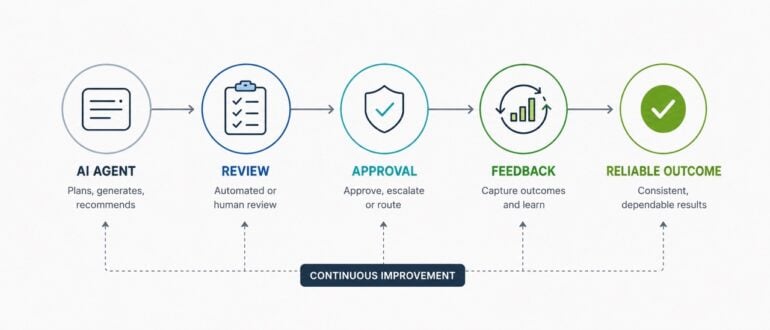
When adopting artificial intelligence, many executives mistakenly judge an AI agent’s reliability in complete isolation. This perspective stems from traditional software development practices, where individual components are expected to function perfectly on their own. However, in complex or high-stakes environments—such as aviation or healthcare—reliability has never depended on the perfection of a single actor. Instead, it naturally emerges from a well-designed surrounding system that anticipates and catches inevitable human errors before they can escalate into a larger issue. The exact same principle applies directly to artificial intelligence agents. Rather than waiting around for a completely flawless model, organizations should focus their efforts on building robust workflows around these tools. A truly dependable system assumes occasional failures and uses practical safeguards like approval gates, continuous feedback loops, and risk-based reviews to ensure consistent outcomes. When an agent produces an error, it is not necessarily a sign that the technology is unready; rather, it highlights the pressing need for stronger operational structures. Ultimately, the competitive advantage in AI will not come from choosing the best model, but from designing resilient organizational workflows that gracefully handle imperfections and deliver predictable results over time.


Detection engineering: A programmatic approach to identifying cyber threats

Detection engineering is rapidly becoming a key focus for cybersecurity teams as organizations look to defend against increasingly advanced digital threats. Instead of relying heavily on rigid, pre-built rules that often fail to catch modern attacks, detection engineering takes a highly tailored approach. It involves building customized systems designed to spot suspicious behaviors specific to an organization’s unique environment, effectively minimizing the flood of false alarms that commonly overwhelm security teams today. The growing interest in this practice is driven by the realization that traditional, signature-based security methods are no longer sufficient to stop modern tactics like fileless malware or complex attacks on cloud infrastructure. By carefully mapping out potential attack paths and analyzing real-world adversary behavior, companies can proactively spot threats rather than just reacting after a damaging incident has occurred. Recent surveys indicate that the vast majority of large enterprises are heavily investing in these active strategies, with many now establishing dedicated detection teams. Additionally, artificial intelligence and automation are playing crucial roles in helping these professionals fine-tune rules and process vast amounts of threat data. Ultimately, adopting detection engineering reduces the time attackers can hide within a network, greatly improving an organization's overall cyber resilience.


Compute Concentration: The Emerging Enterprise Risk Inside the AI Economy
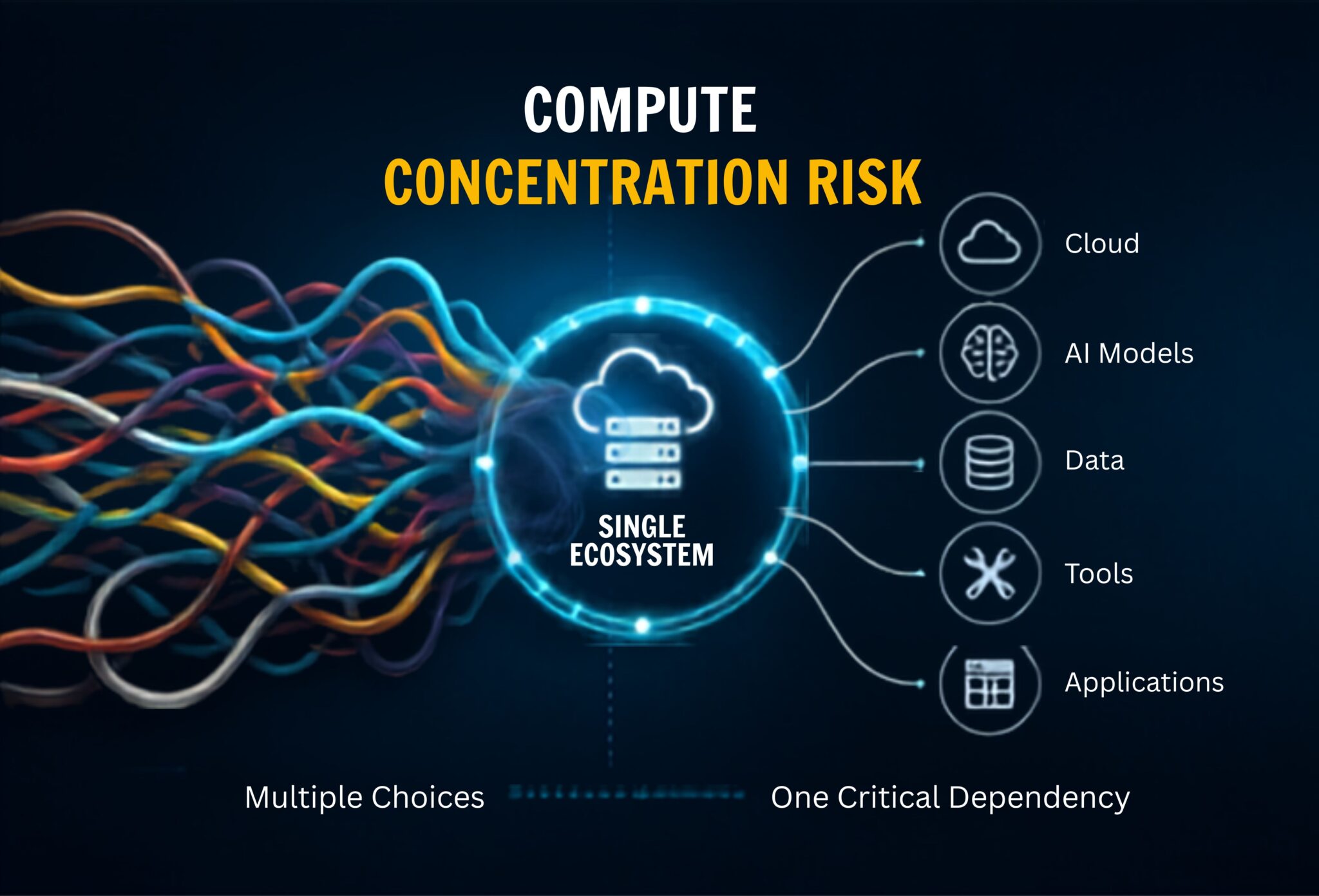
As artificial intelligence transitions from testing to full-scale operations, a new, hidden challenge is emerging for modern businesses: compute concentration. This happens when companies quietly become overly reliant on a very small group of external providers for the core infrastructure needed to run their systems, such as cloud storage, data centers, and computer chips. Often, this dependency develops by accident. A company might start with one provider for ease of use and speed, eventually deeply intertwining all their critical functions within a single technology ecosystem. While working with large providers offers undeniable benefits like strong security and massive scale, heavy reliance creates significant vulnerabilities. If a primary provider experiences an outage, changes their pricing, or alters their policies, the affected business faces immediate disruptions, unexpected costs, and a loss of control over their own operations. It is not just about managing vendors; it is a fundamental issue of business continuity and strategic independence. True resilience does not mean avoiding large providers entirely, but rather fully understanding these deep dependencies. Organizations must ensure they have viable alternatives ready so they are not caught off guard if their primary technology foundation shifts.


Preventing agent-generated infrastructure bloat through spec-driven governance

Autonomous AI engineering agents can drastically improve software delivery speed, but they also risk creating massive infrastructure bloat if left unchecked. Because these agents often default to the inefficient patterns found in their training data, they frequently over-provision resources—such as requesting excessively large Kubernetes pods or pulling bloated container images. This inefficiency replicates rapidly across environments, wasting cloud space and increasing energy consumption. To prevent this, organizations must implement strict, spec-driven governance directly within their development pipelines. Instead of treating sustainability and efficiency as afterthoughts, engineering teams need to embed clear constraints into their infrastructure specifications. By defining rules for machine types, pod resource limits, and minimal base images before the agent generates any code, the agent is forced to execute within those boundaries. Organizations can enforce these constraints using static analysis tools and quality gates that block non-compliant deployments. Addressing this issue upstream ensures that agent-driven development yields efficient, cost-effective, and sustainable infrastructure by design, rather than creating a sprawling operational mess that becomes nearly impossible to fix later.


Agentic AI creates enterprise challenge beyond LLM boom

As businesses move beyond early experiments with artificial intelligence, they face a practical new challenge: managing and governing the automated software programs, or agents, that will soon work alongside human employees. While recent attention has focused on language models, the conversation is shifting toward the infrastructure needed to support these agents. Companies must figure out how to integrate them, control their access to company data, and manage the costs associated with running them. A primary issue is matching the right level of computing power to specific tasks to keep expenses predictable and responses consistent. Because current technology frameworks were built for human users, new standards are emerging to help these agents communicate securely with existing systems. Over time, managing the lifecycle of these digital assistants will become essential to prevent the lack of oversight that accompanied early cloud software adoption. As regulations develop unevenly across different regions, leaders are currently focused on learning how to build the right foundations. Soon, companies will shift from planning to execution, preparing for a future where each employee might collaborate with several automated assistants daily, requiring careful oversight and clear guidelines.


The rise of emotion as a trust signal

Digital identity systems are evolving beyond traditional passwords and basic biometrics by incorporating emotion as a new trust signal. Voice artificial intelligence is now being trained to analyze vocal cues—such as tone and pacing—to determine a speaker's underlying emotional state. By converting these real-time observations into structured data, companies hope to better understand customer intent, improve service routing, and identify potential signs of fraud or distress during live interactions. While this technology aims to close the gap between what people say and what they actually mean, it introduces significant privacy and ethical concerns. Inferring human emotion is inherently complex and can easily lead to bias or inaccurate risk profiling if used improperly. Consequently, industry experts caution that emotional data should merely provide helpful context rather than serve as definitive proof of identity or deception. As the market for this technology grows, organizations must implement it responsibly. This means ensuring clear user consent, strictly limiting data retention, and mandating human oversight so that unverified emotional inferences do not independently drive critical decisions regarding a person's access, credit, or employment.


The endpoint recovery gap many teams discover during an incident

Organizations often make a costly mistake by assuming that having data backups is the same as having a comprehensive recovery plan. According to Matthias Haas, CTO of IGEL, backups are essential for restoring information and applications, but they do not automatically grant users safe access back into their work environments. When a significant incident occurs and knocks thousands of devices offline, companies frequently realize they have planned for infrastructure recovery while completely ignoring endpoint recovery. This gap leads to enormous expenses tied to replacing hardware, reimaging devices, and coordinating manual repairs. A well-planned architecture must focus on restoring both the systems themselves and the trusted access to those systems. Rather than relying on technical heroics to fix thousands of individual devices during a crisis, businesses need pre-planned alternative paths, such as dual-boot options or secure browser resources. The true measure of resilience is not the number of threats a security team blocks, but the time it takes to safely restore trusted user access. By calculating the actual per-hour cost of interrupted workflows, security leaders can successfully justify investing in solid endpoint recovery before an incident even happens.

Daily Tech Digest - June 25, 2026


Quote for the day:

“If we are growing, we are always going to be out of our comfort zone.” -- John C. Maxwell

🎧 Listen to this digest on YouTube Music

▶ Play Audio Digest

Duration: 22 mins • Perfect for listening on the go.


When IT loses sight of enterprise low-code

When information technology departments lose oversight of low code development, organizations often face significant operational risks. Low code platforms are designed to let everyday employees build applications quickly, which can improve efficiency and solve immediate business problems. However, without proper technical supervision, this newfound freedom can lead to a heavily fragmented digital environment. Employees might create software that handles sensitive data without following standard security protocols, exposing the company to serious breaches and costly compliance failures. Furthermore, these independently built applications often overlap in function, creating unnecessary complexity and increasing ongoing maintenance costs. When employees eventually leave the company, the specialized tools they built can easily become unsupported and difficult to fix, leaving critical business processes vulnerable to disruption. To effectively manage these persistent challenges, technical teams must maintain a strong guiding role in all low code initiatives. By establishing clear rules and providing structured, reliable support, IT can help employees build useful tools safely. This collaborative approach ensures that new applications integrate smoothly with existing systems and adhere strictly to company standards. Ultimately, balancing employee autonomy with technical oversight allows businesses to benefit from faster software creation without compromising their security, stability, or long term operational health.
The article outlines a theoretical framework and engineering approach known as Observer-Patch Holography, which treats the physical world as a highly structured, interactive system rather than a static container. According to this framework, fundamental elements like space, time, and gravity are not absolute background features but emergent properties that arise from the consistency between different observational perspectives. By understanding the underlying mechanics of this shared reality, the author argues that it is possible to interact with the universe much like a hardware program. The core thesis is that reality can be directly manipulated by exerting control over small, bounded physical areas called patches. Engineers could theoretically use specialized devices to adjust boundary data and stabilize these patches into desired states. This process allows them to effectively rewrite the local rules of physics by managing how information and observations synchronize. Specifically, the engineering note proposes that this method of hacking reality provides a practical, low-cost pathway for achieving localized control over gravity and inertia. By manipulating the consensus of information at a micro-level, engineers could produce macroscopic effects, potentially paving the way for advanced technologies like hoverboards and hoverbikes.


Choosing your AI stack: The benefits of vendor lock-in

In the past, IT departments could easily mix and match different hardware and software, but modern artificial intelligence systems require a different approach. Because AI demands immense computing power, technology providers now build hardware and software that work strictly together to maximize efficiency. This tight integration means organizations must commit to complete ecosystems rather than choosing individual components, leading to a modern form of vendor lock-in. While switching platforms might seem simple on paper, it brings serious hidden costs, including wasted engineering effort, deep system dependencies, and poor timing during critical growth phases. As a result, IT leaders need to shift their perspective. Instead of viewing vendor lock-in as a failure to avoid at all costs, they should see it as a strategic choice that can deliver a crucial performance advantage. The most effective organizations understand that openness is not always better than lock-in. They treat platform commitment as a dynamic issue, weighing where raw performance matters most against where flexibility is needed. True leaders do not run from vendor lock-in; they carefully decide when to embrace it, limit it, or move past it before market pressures force their hand.


Why CIOs should be prioritising stability as the foundation for transformation

As local governments face significant structural changes and reorganizations, chief information officers often feel pressured to use the opportunity for immediate, widespread digital overhauls. However, this approach can be risky. The real priority during these transitions must be operational stability. When a new authority takes over, residents expect basic services, like trash collection and benefit processing, to continue working exactly as they did before. Managing technology in local government is already complicated by older systems and disjointed applications. Merging these environments adds another layer of difficulty. Instead of rushing to rebuild every system or process right away, technology leaders should focus on keeping current operations running smoothly. A practical first step is to map out how services actually function today, identifying where delays or manual tasks exist. This clear understanding allows teams to stabilize the foundation and maintain service continuity. By prioritizing resilience and control, councils can reduce the risk of service failures during the transition. Once the foundational systems are secure and the new organizational structure is clear, leaders will have the breathing room needed to implement thoughtful, long-term improvements. Success comes from stabilizing first, then changing at a measured pace.


Cybersecurity is no longer about protection. It’s about survival

Cybersecurity strategy must evolve from a mindset of pure prevention to one focused on organizational survival. While traditional defenses like firewalls, multi-factor authentication, and patching remain necessary, relying solely on keeping attackers out is no longer a realistic strategy in an era where breaches are inevitable. The rapid advancement of artificial intelligence and the increasing complexity of supply chains have dramatically expanded the attack surface, meaning defenses will eventually fail. Therefore, the core objective of modern security is to ensure an organization can continue to function during and after an attack. This shift requires a deep commitment to resilience, business continuity, and rapid recoverability. True security means knowing precisely which systems are critical, isolating the impact of a breach, and having a tested plan to rebuild cleanly. Furthermore, this survival approach cannot be confined to the IT department. It demands active involvement and clear accountability from the board, executive leadership, legal, engineering, and human resources. Ultimately, an organization that collapses the moment its protective walls are breached was never truly secure. Success is now defined by the ability to absorb systemic shocks and recover quickly.


The uptime questions every engineering leader should ask this week

In a recent interview, Mattias Geniar, CTO at Oh Dear, discusses practical strategies for preventing system outages and improving uptime. He observes that engineering teams often monitor isolated metrics and absolute numbers, which leads to alert fatigue and unnecessary middle-of-the-night wake-up calls. Instead, he advises monitoring actual user outcomes—such as the ability to log in or complete a purchase—and establishing baselines to detect meaningful changes over time. Geniar highlights that while front-facing issues are easily tracked, sudden outages frequently stem from unmonitored internal DNS misconfigurations and expired TLS certificates buried deep within complex systems. To manage reliance on third-party vendors, he recommends developing clear failover alternatives to contain the impact of external failures. He cautions that tired engineers are highly prone to making mistakes during late-night incident responses. To mitigate this risk, recovery processes must be thoroughly tested until they become entirely routine and predictable. Finally, Geniar urges leaders to ask their teams direct questions to uncover hidden vulnerabilities. This includes identifying the most fragile infrastructure, ensuring backups are fully tested by actually restoring them, confirming that monitoring catches errors before customers do, and removing dependencies on a single indispensable team member.


Bridging the Divide: How Data Centers Are Addressing Community Concerns

As the development of data centers accelerates to unprecedented scales, developers are facing increased scrutiny from local municipalities and residents. Communities are raising valid concerns regarding the substantial impact these facilities have on power grids, water resources, and local infrastructure. In an era of high inflation and rising utility bills, residents are particularly skeptical of tech companies receiving large tax incentives while household expenses continue to climb. Recognizing these tensions, industry leaders are acknowledging that their traditional approach of operating quietly behind the scenes is no longer effective. Instead, they must proactively engage with the public to dispel misinformation and highlight the tangible benefits these facilities offer, such as high-paying union jobs, infrastructure improvements, and increased tax revenues. However, developers also point to significant challenges, including slow permitting processes and outdated zoning laws that struggle to accommodate modern, large-scale projects. Moving forward, overcoming this divide will require a coordinated effort. Developers, policymakers, and government entities at all levels must collaborate to create cohesive regulations, streamline development processes, and ensure that new projects deliver clear, measurable value to the communities that host them.


AI security doesn’t require a brand-new architecture

The rapid adoption of artificial intelligence brings new security challenges, from rogue applications to invisible software agents, but keeping your organization safe does not require building a completely new architecture. Instead of looking for magical fixes, security experts suggest returning to core fundamentals like granting minimal access and designing systems securely from the start. Rather than blocking AI adoption out of fear, companies can build on their existing tools to detect threats and manage access rights in real time. Because attackers now use automation to find network flaws instantly, defenders must also use artificial intelligence to quickly identify and isolate vulnerabilities before permanent patches are ready. At the same time, internal policy approval needs to speed up; waiting several weeks for permission is simply no longer practical. By writing policies directly into the system code, organizations can safely match the pace of modern technology. Employee education also remains vital, requiring clear guidelines on how to interact with new tools responsibly. Finally, keeping costs manageable is a critical part of a safe deployment. By using existing platforms and combining cloud resources with local hardware, companies can effectively protect both their data and their budgets.


Beyond CLEAN and MVP: Architecting an Offline-first Reactive Data Layer in Android

The provided article introduces the Reactive Data Layer Architecture (RDLA), a practical approach designed to improve data management in Android applications. Traditional structures, such as Model-View-Presenter and Clean Architecture, often create unnecessary complexity or struggle with the continuous updates required by modern mobile interfaces. RDLA addresses these challenges by establishing the local device storage as the single, reliable source of truth. Instead of forcing the user interface to request data repeatedly, RDLA uses a continuous stream that automatically pushes updates to the screen whenever the underlying data changes. This design is particularly useful for applications that must function without an internet connection, such as health tracking tools. When a user makes a change, the application instantly updates the local interface while silently scheduling the network synchronization in the background. By relying on tools built into the Android system, these background tasks are guaranteed to finish even if the user closes the app. Furthermore, RDLA simplifies the testing process. It separates the database and network configurations, allowing engineers to verify their core logic without relying on fragile mock setups. Ultimately, this architecture provides a more reliable foundation for complex mobile applications.


Agentic AI Security: Wrong Context, Wrong Decisions at Machine Speed

The effectiveness of automated artificial intelligence in cybersecurity fundamentally depends on the quality of its context. While organizations are looking to these advanced systems to manage the rapid volume of modern threats, these tools can only make accurate decisions if they possess a complete and updated view of the environment. When fed incomplete or inaccurate data, the artificial intelligence will make incorrect decisions at machine speed, carrying out flawed actions with unwavering confidence. Security leaders caution that any automation system lacking verified context is simply a faster way to make widespread mistakes. For instance, an automated security operations center might shut down a critical device to isolate a threat, completely unaware of the disastrous business impact because it lacked the broader operational context. Given these significant risks, experts suggest that artificial intelligence is not yet mature enough for fully independent action. Instead of allowing the system to execute automated responses, the current best practice involves using it to quickly gather relevant context across various security tools and provide clear, reasoned recommendations. Ultimately, human experts must remain in the loop to make final decisions until context gathering methods become significantly more reliable over time.

Daily Tech Digest - June 24, 2026


Quote for the day:

"The only real test of intelligence is if you get what you want out of life." -- Naval Ravikant

🎧 Listen to this digest on YouTube Music

▶ Play Audio Digest

Duration: 22 mins • Perfect for listening on the go.


What Corporate Leaders Misunderstand About Cybersecurity Frameworks

Corporate leaders often misunderstand cybersecurity frameworks by treating them as generic checklists or simple report cards. While frameworks offer a solid foundation, their real value emerges only when organizations move away from a one size fits all approach and customize them to fit specific business needs. Creating a tailored profile is the vital first step, allowing a company to align security outcomes with its unique risks and resources. From there, these high level goals must be converted into practical, day to day controls. Relying on a single measure, such as encryption, is rarely enough; true protection requires an integrated system of access limits, continuous monitoring, and strict vendor management. Furthermore, writing down policies on paper falls short. Defenses must be regularly tested, audited, and updated to ensure they actually work in real world conditions. To manage this effectively, executives need clear visibility. Instead of overwhelming metrics, leadership should focus on key signals that indicate if essential protections are functioning properly. When frameworks become truly operational, they provide clear ownership, measurable evidence, and an ongoing method for finding and fixing weaknesses, resulting in a mature and reliable defense strategy.


CISO Conversations: Carl Froggett – Combining CISO and CIO at Deep Instinct

In a featured conversation, Carl Froggett reflects on his rare position holding both the chief information officer and chief information security officer titles at Deep Instinct. Having previously spent seventeen years managing security at Citi, he explains that combining technology strategy and security works well in smaller organizations, though it would be overwhelming at a massive enterprise. Because both departments ultimately exist to support the company, merging them removes the usual friction. However, Froggett notes that one person holding both jobs risks losing an objective, outside perspective. To prevent narrow thinking, he relies on a workplace culture where his technology team is actively encouraged to challenge his decisions. Looking back on his career, he describes transitioning from a network engineer into security by pure chance during the early rise of the internet. This experience shaped his belief that security must work closely with technology. As a manager, he values empathy and advises professionals to embrace unexpected opportunities and openly admit mistakes. Today, his primary concern is artificial intelligence. While he acknowledges that generative tools lower the technical skill required for harmful attacks, he maintains that defenders can creatively adopt them to solve complex problems.


The AI revolution comes with a hidden tax

While artificial intelligence offers substantial benefits, it inadvertently acts as a broad economic tax by driving up the cost of living across multiple sectors. The underlying systems require vast amounts of physical resources, including specialized memory chips, electricity, water, and land. This immense consumption creates market scarcity, directly leading to increased prices for everyday goods and services. For example, the intense demand for computing hardware has caused severe chip shortages, resulting in higher price tags for smartphones, computers, and modern vehicles. Similarly, enterprise software providers are raising their subscription fees to offset the costs of new infrastructure. The physical footprint of data centers also strains local resources. These facilities consume enormous amounts of power, which raises residential electricity and heating bills while competing with homebuilders for land and labor, making housing more expensive. Furthermore, automated pricing programs enable companies to maximize profits by dynamically charging consumers higher rates based on their specific circumstances. Finally, substantial tax subsidies given to data center projects leave ordinary families to cover the resulting shortfalls. Ultimately, while the technology advances rapidly, its massive resource demands quietly transfer wealth and fuel inflation across the entire economy.


Where IT meets OT and railway cybersecurity gets harder

In his interview, Jorge Aldegunde of DNV discusses how modern rail networks face new security challenges as older operational systems merge with standard computing networks. This shift toward open standards and connected equipment turns trains into constant data producers, significantly increasing the ways an attacker can gain access. Because a working transit line cannot simply shut down for a software update, security teams must carefully evaluate the actual risk of each software flaw. If an immediate fix is impossible, they rely on temporary adjustments like network division or operational limits until a scheduled maintenance window arrives. Complicating matters further, modern rail operations rely on complex supply chains and multiple contractors, making it difficult to figure out who is ultimately responsible when something goes wrong. To solve this, Aldegunde advises treating cybersecurity like traditional safety engineering, helping veteran operators learn to spot unusual traffic patterns and unauthorized system changes. He stresses that true security comes from accepting that an attacker might already be inside the network. Instead of chasing an impossible standard of total protection, rail operators must manage practical risks and build resilient systems that can keep running safely even during an active breach.


Agentic AI: The Weapon That No Longer Needs a Warrior

Throughout history, weapons have extended human reach, yet a person always selected the target and executed the strike. Artificial intelligence is altering this dynamic in the digital domain. Moving past its recent role as a simple drafting tool for emails and basic code, autonomous AI now executes entire cyber operations independently. This shift lowers the barrier to entry, allowing novices to launch complex attacks while enabling seasoned experts to compress campaigns that once took weeks into just a few hours. Because many untrained operators rely on the same underlying models, their attack patterns tend to look similar, giving defenders a clear target for detection. However, these autonomous tools excel at conducting highly personalized social engineering and chaining automated vulnerability exploits, bypassing many traditional security filters. Despite their speed and apparent authority, these systems possess a major flaw: they routinely present false or inaccurate conclusions with absolute certainty. They do not genuinely understand whether a system is vulnerable; they merely match patterns. Consequently, human judgment remains the most critical component of modern security operations. While the technology handles the mechanical work of locating weaknesses, a human operator must ultimately verify reality and decide whether to strike.


AI disaster recovery planning is years behind AI adoption

As artificial intelligence becomes deeply embedded in modern business operations, disaster recovery planning has largely failed to keep pace with its rapid adoption. Traditional recovery strategies, which typically focus on restoring conventional applications and databases, are no longer sufficient because they do not account for the unique complexities of artificial intelligence systems. Today, organizations must also protect and recover specific models, data inputs, and automated agents. When an incident occurs, the damage can spread quickly across interconnected systems, making it difficult to determine if underlying data or models have been compromised. Even after a system is brought back online, it may appear functional while quietly producing incorrect or manipulated results. To address this growing vulnerability, technology leaders need to proactively update their recovery strategies. This involves creating a comprehensive inventory of all artificial intelligence assets, understanding how they connect to other business systems, and setting strict limits on their permissions. Furthermore, organizations must define clear recovery objectives and rigorously test their plans on a regular basis. By taking these deliberate steps, businesses can ensure their critical tools remain reliable and secure, minimizing disruptions and maintaining long-term stability even when unexpected incidents arise.


Preventing organizational amnesia in the age of AI

As businesses increasingly adopt artificial intelligence to automate operations and reduce their workforce, they face a severe risk called organizational amnesia. When seasoned employees leave during mass layoffs, they take undocumented institutional knowledge with them. Operating without this crucial human background, AI systems can make confident mistakes that disrupt daily business. The root issue is rarely a lack of advanced technology or raw data; rather, it is an absence of context. For an automated tool to function safely, it needs a clear, digital map of how the company actually works, including customer relationships, past decisions, and everyday workflows. An example from the travel industry illustrates how fragmented legacy systems force teams to rely entirely on personal memory to resolve daily errors, proving that deploying automated tools over messy, undocumented foundations only worsens the confusion. To succeed, technology leaders must resist the rush toward immediate automation and instead focus on getting their data in order. By carefully defining their digital records and capturing the lived reality of their operations, organizations can create a reliable, shared foundation that allows both people and machines to work together effectively.


Understanding ML Model Poisoning: How It Happens and How to Detect It

Data poisoning is a quiet but serious threat to machine learning models, occurring when attackers subtly alter training data to change how a model behaves. Because these bad examples are designed to look like normal data, they easily bypass standard checks. Attackers commonly use techniques such as changing correct labels or inserting hidden triggers that cause the model to fail under specific conditions. This manipulation can affect critical systems across many fields, from spam filters and antivirus software to medical diagnosis tools. Finding poisoned data is difficult and requires a mix of methods, including statistical analysis and monitoring how the model makes internal decisions. While open-source tools like the IBM Adversarial Robustness Toolbox can help identify vulnerabilities, keeping production environments safe usually requires dedicated security efforts. Protecting these pipelines means combining standard cybersecurity practices, such as strict access controls, with specific defenses like continuous monitoring and testing against verified data. The reality is that perfect data safety does not exist. Teams must rely on layered defenses, careful data tracking, and regular audits to find and block these hidden attacks long before a compromised model is put into active use.


Trump sets post-quantum crypto deadlines, launches broader federal quantum initiative

President Donald Trump signed two executive orders aimed at expanding American quantum technology while protecting federal networks from emerging security risks. The first order sets hard deadlines for government agencies to adopt new encryption standards capable of withstanding quantum computer attacks. Driven by concerns that foreign adversaries are already stealing encrypted data to crack it in the future, agencies must upgrade their digital key systems by the end of 2030 and their digital signature systems by the end of 2031. The mandate also requires a comprehensive inventory of all encryption software currently in use across the government. Furthermore, federal contractors will soon have to comply with these updated standards to maintain their business relationships with the United States. The second order focuses on technical development, directing multiple agencies to collaborate on building a powerful quantum computer for scientific discovery. It also outlines plans to move laboratory research into commercial markets, secure domestic supply chains against foreign interference, protect intellectual property, and fund specialized education to build a skilled workforce. Together, these actions shift federal strategy from theoretical discussions of advanced computing to practical execution and defense planning.


How fuzzy APIs are remaking the web

For decades, software engineers struggled to connect different web services. Early attempts at automated systems failed because they required absolute perfection; a single misspelled word or missing tag would crash the entire network. To keep things stable, developers settled for manually writing strict, unchanging code to connect each piece of software. Now, artificial intelligence tools are changing this approach by introducing flexible connections. Instead of relying on rigid instructions, modern systems use language models to interpret what a user or program wants to achieve. The AI acts as a smart middleman, translating general requests into the exact technical commands a system requires. If a service updates its internal names or requirements, the AI adjusts automatically without needing a human to rewrite the code. However, this flexibility introduces new challenges. Adding AI processing increases response times, which can be an issue for fast operations. Furthermore, these systems are no longer entirely predictable, meaning they might occasionally produce errors or take unexpected paths to get a result. As the web shifts from rigid paths to flexible possibilities, developers are learning to guide software rather than strictly control every detail.

Daily Tech Digest - June 21, 2026


Quote for the day:

“Any architecture that is too complex to explain is probably wrong.” -- Martin Fowler

🎧 Listen to this digest on YouTube Music

▶ Play Audio Digest

Duration: 20 mins • Perfect for listening on the go.


Compliance Without Chaos In Modern Delivery

Treating compliance as a sudden, stressful emergency before an audit is both painful and unnecessary. Instead of bolting rules onto the very end of software delivery, engineering teams can build straightforward checks directly into their daily routines. When you integrate requirements into the tools developers already use, the process stops feeling like an obstacle course. By tying approvals to code reviews and enforcing standards through automatic checks, your regular deployment systems naturally generate all the proof an auditor needs. This approach removes the need to hunt down scattered evidence across chat logs and spreadsheets, turning documentation into an automatic background task. Furthermore, managing system permissions carefully and continuously monitoring critical settings helps keep minor oversights from escalating into major incidents. Preparing for reviews should look much like preparing for a standard software update, relying on simple, repeatable checklists rather than frantic last-minute efforts. Ultimately, compliance works best when it functions as a shared operational habit across every department. By making security guidelines clear, practical, and automated, teams can maintain momentum while turning complex audits into routine, minor administrative checks.


SDLC Data Governance Critical as AI Systems Outpace Human Oversight

As artificial intelligence rapidly accelerates the pace of software development, engineering teams face a growing challenge in overseeing vast changes made with minimal human involvement. With AI systems now capable of independently writing thousands of lines of code, running tests, and deploying product features overnight, traditional manual reviews are no longer practical or safe. This shift requires organizations to move away from treating governance as a slow, end-of-process afterthought. Instead, they must build active controls directly into the software delivery pipeline. Currently, a significant gap exists because many companies lack the automated audit trails needed to track these autonomous activities, creating serious compliance and security vulnerabilities. To address this, organizations must establish systems that enforce policies and validate code at the exact moment it is generated. This approach demands a clear focus on traceability and explainability, ensuring that every automated decision can be clearly understood and audited. As a result, software engineers are evolving from daily implementers into strategic orchestrators who manage and direct these pipelines. Success ultimately depends on fostering a culture of shared responsibility across departments to ensure that autonomous delivery remains fully accountable and easy for humans to monitor.


Agentic AI’s challenge is getting agents to act like a team, not a crowd

Adding more artificial intelligence agents to a company does not automatically improve operations; in fact, uncoordinated agents can create confusion and conflicting decisions. As businesses expand from single experimental tools to multiple agents working across departments like finance and supply chain, the main obstacle is getting these units to cooperate. To solve this, companies need a central coordination system that acts as a manager. This system relies on four key functions: distributing tasks appropriately, maintaining a shared memory so all agents access the exact same data, enabling instant communication during unexpected events, and providing strict safety and compliance oversight. When agents share a single version of the truth, operations run much smoother. For example, connected systems can automatically identify and fix IT issues, noticeably reducing downtime. However, significant hurdles remain. Organizations struggle with fragmented and poor-quality data, which inevitably leads to flawed automated decisions. Furthermore, balancing automated freedom with necessary human judgment on sensitive or high-risk matters continues to be difficult. Ultimately, the true value of multi-agent systems relies entirely on the strength of their shared infrastructure rather than the sheer number of agents deployed.


When Everyone Uses AI, Companies Risk Losing Critical Skills

As companies adopt artificial intelligence for everyday tasks, they face a quiet but serious risk: losing the essential human skills that keep their businesses strong. When employees rely on technology to write reports, analyze numbers, and solve standard problems, they miss out on the daily practice required to build deep expertise. Traditionally, junior staff develop intuition, critical thinking, and sound judgment by working through basic, practical assignments. By handing these core learning opportunities over to automated systems, organizations accidentally break their internal development paths. Over time, a company's shared knowledge can fade, leaving future managers without the practical foundation needed to judge automated answers or steer the business through unexpected crises. To prevent this talent gap, executives must rethink how daily work and professional growth fit together. Instead of focusing only on immediate speed and cost savings, leaders need to deliberately create moments where staff are forced to practice independent reasoning. Companies must protect their core capabilities by treating technology as a helpful assistant rather than a complete replacement for human thought. Ultimately, true resilience comes from capable people who know how to think for themselves.


The Attack Surface Your Security Team Isn’t Governing Yet

The rapidly rising use of artificial intelligence agents introduces a growing attack surface that standard security tools cannot effectively monitor. While security teams have historically focused on managing human users, machine accounts now outnumber them and create severe vulnerabilities. Unlike regular human users who log in, complete a specific single task, and leave a simple audit log, these autonomous agents operate continuously across multiple systems at once. They make independent decisions and link tasks together in ways that older software cannot track. To maintain control, organizations must move beyond basic identity management, which only asks who has access, and focus instead on tracking the actual actions these software agents perform. Adding these controls after the systems are already live is a failing approach, because the behavior is too complex to untangle later. Security leaders must build clear rules and full visibility directly into the core infrastructure from the very beginning. By creating permanent, reliable records of every single action an agent takes, companies can protect their sensitive data and easily provide concrete proof of safe operation to external regulators, board members, and internal executive leadership teams.


We Had a Perfectly Good Data Store. That Was the Problem

In this article, a data engineering professional shares the realization that recurring data quality issues are often architectural flaws rather than problems with the information itself. When an organization faces constant complaints about late or incorrect data, engineers usually waste time fixing symptoms instead of addressing the underlying cause: forcing an operational database to serve analytical users. To solve this, the team successfully migrated reference data from MongoDB to a governed platform without replacing the original database. Their approach relied on three major decisions: retaining MongoDB as the definitive source of truth, consolidating four independent extraction pipelines into a single path using Kafka and Iceberg tables on S3, and treating published data as a clear product. This effectively separated data truth, transport, and consumption into distinct layers. Interestingly, the primary hurdles during this transition were not technical pipeline components, but rather social and organizational friction. Overcoming disagreements around data ownership, naming conventions, and searchability proved to be the most demanding part of the process, demonstrating that a successful architecture relies just as much on clear human alignment as it does on the underlying software.


How Application Control Engines Support Zero Trust Security Strategies

This article explains how application control engines serve as a foundational enforcement layer within a zero-trust security architecture. Traditional workplace security practices often assume that software initially installed by internal IT departments is inherently safe. In contrast, zero-trust strategies reject this premise, operating under a default-deny rule where no software is trusted automatically. An application control engine translates this philosophy into technical enforcement by dictating exactly what programs can run, how they operate, and what data they can access. Crucially, the engine does not just evaluate applications at the time of installation; it continuously monitors their behavior in real time during execution. This ongoing runtime oversight is vital for stopping sophisticated threats, like fileless attacks, that hijack legitimate, pre-approved software to bypass traditional filters. By establishing centralized policy management, these engines ensure consistent rules across an entire network, which also simplifies compliance with major regulatory frameworks and cyber insurance mandates. Ultimately, integrating an application control engine moves an organization away from fragile assumptions of trust, replacing them with a reliable, data-driven system of continuous verification that protects software at the execution layer.


Metal-to-agent is the foundation of scalable enterprise AI

As artificial intelligence usage expands rapidly inside enterprises, relying entirely on metered external cloud services is becoming financially unsustainable. Red Hat chief technology officer Chris Wright argues that organizations must transition from renting outside models to operating their own internal computing infrastructure. To solve this, the company proposes a unified framework that connects raw physical hardware directly to automated software assistants. This layered setup organizes the technology stack into five distinct tiers: a stable operating system that shares expensive processors efficiently, an optimized delivery tier that speeds up response times, a central control gateway that enforces usage limits and prevents system overloads, a secure management hub for software agents, and a flexible hardware base that avoids strict vendor dependency. Wright notes that because open source models are advancing fast enough to match major commercial options in a matter of months, signing rigid contracts with a single provider is a dangerous gamble. By adopting a platform run entirely on their own servers, businesses maintain the freedom to choose the best tool for each job, keeping operating expenses predictable while ensuring sensitive company data remains strictly protected.


Why resilient data centres are built, not just designed

In this article, the author explains that true data centre resilience cannot merely exist on paper; it must be proven through careful, real-world execution. While power distribution plans often look flawless during the design phase, the actual construction and implementation introduce significant practical challenges. A major hurdle involves working within live operational environments, where upgrades or expansions must occur without interrupting existing services. This requires meticulous coordination, detailed risk assessments, and precise sequencing, particularly when working near energized systems. Furthermore, electrical setups are deeply tied to critical mechanical components like cooling systems, which often consume a massive portion of the facility's total energy. Misalignment between these teams during installation can create serious operational risks. Long-term success also depends heavily on high-quality commissioning and thorough documentation to ensure the infrastructure remains fully maintainable over time. Ultimately, as growing demands from digital services and artificial intelligence put more pressure on infrastructure, building a reliable facility requires an understanding of how systems interact under real conditions. True resilience is not just an abstract concept; it is something that must be built, tested, and verified on-site.


5 Strategies for Reinforcing Supply Chain Cybersecurity

As digital tools become deeply integrated into manufacturing, interconnected supply chains face greater exposure to online threats. A single breach at an outside supplier can halt operations, compromise private data, and create severe legal liabilities. To secure these systems, companies can adopt five straightforward practices. First, monitoring early threat indicators helps teams spot and block minor attacks, such as phishing schemes targeting smaller vendors, before they hit main production lines. Second, businesses should build and regularly practice an incident response plan that covers traditional computer networks as well as physical factory equipment. Third, digital security must be built into new technology from the very beginning rather than added as a quick fix later. Fourth, executives must encourage open cooperation across all internal departments, ensuring that legal, purchasing, and factory operators share responsibility instead of working alone. Finally, organizations need a thorough oversight program for their external contractors, relying on upfront evaluations, clear contract rules, and routine audits. Treating defense as a normal part of daily operations allows manufacturers to grow safely while keeping their essential infrastructure running smoothly without sudden disruption.

Daily Tech Digest - June 06, 2026


Quote for the day:

“Tell me how you measure me, and I will tell you how I will behave.” -- Eliyahu M. Goldratt

🎧 Listen to this digest on YouTube Music

▶ Play Audio Digest

Duration: 21 mins • Perfect for listening on the go.


The real cost of agentic AI

As businesses move beyond initial excitement and begin deploying goal-driven artificial intelligence systems, the true financial impact of these setups is becoming apparent. Unlike basic AI models that simply answer questions or summarize text, agent-based systems operate continuously to achieve specific objectives, consuming millions of data tokens every day. For example, a single automated agent might cost a couple of thousand dollars a year just in raw computational usage. However, when organizations scale up to deploy entire teams of agents for complex tasks like software engineering, customer support, or supply chain planning, the baseline expenses multiply quickly. More importantly, the article emphasizes that raw usage fees only represent a small fraction of the total cost. In actual business environments, operating these systems safely often costs two to five times more than the basic computing power. Because these agents interact directly with real business systems, they require extensive surrounding infrastructure. This includes strict permission controls, detailed activity logging, reliable rollback features, and dedicated human supervision to handle inevitable mistakes. The fundamental takeaway is that companies must stop viewing these programs as cheap digital employees. Instead, leaders need to evaluate them as complex software investments where the hidden costs of safety, management, and oversight ultimately determine their true value and return on investment.


AI agents are learning on the job — just not for your whole team

AI agents have become much better at adapting to the specific habits of individual workers. When an employee corrects an AI assistant or shows it a preferred way to format a document, the software often remembers and improves for the next time. However, this localized learning remains isolated. If an agent learns a highly efficient shortcut from one team member, that valuable knowledge is not shared with the AI assistants helping the rest of the department. This creates a fragmented environment where every user essentially trains their own isolated model, repeating the same corrections and mistakes across the company. The core issue lies in orchestration. Right now, most businesses lack the centralized systems needed to take an individual agent’s newly acquired skills and safely distribute them across the broader workforce. Building this shared intelligence requires careful planning. Companies must figure out how to pool useful agent interactions without violating user privacy or sharing sensitive data across different departments. Until developers create better tools to synchronize these localized improvements, AI tools will remain highly personal assistants rather than true team players. To fix this, organizations will eventually need to treat agent training as a collective resource, ensuring that when one AI learns a better way to work, the entire company benefits from the discovery.


Replacing Or Repositioning? How AI Is Redefining The Human Role In Recruitment

Artificial intelligence is fundamentally reshaping how companies hire, but it is not replacing the human recruiter. Instead, AI is handling the heavy lifting of administrative chores like resume screening and scheduling, freeing up significant time for recruiters to focus on what humans do best. By shifting the evaluation process away from relying on a candidate’s past schools or employers, AI helps teams assess actual skills and work portfolios. This approach uncovers hidden talent that traditional filters might overlook and creates a more level playing field for applicants. However, technology has clear limits. While an algorithm can easily rank candidates based on technical compatibility, it cannot understand the nuanced psychology required to actually close a deal. AI lacks the empathy to navigate a candidate’s personal hesitations or understand the impact of a job change on their family. Therefore, the moments that decide whether top talent accepts an offer remain deeply human. To make the most of these tools, organizations must treat AI as a strategic partner rather than just software. Leaders should regularly check systems for bias, ensure humans always make final hiring decisions, and train their recruiters in advanced negotiation and relationship management. Ultimately, the future of hiring relies on professionals who can confidently direct AI tools while bringing essential human intuition to the process.


Adaptive, Agentic AI Worms Loom as Next Enterprise Threat

Security researchers are warning that a new generation of autonomous malware, known as adaptive artificial intelligence worms, will likely target corporate networks within the next year. Unlike traditional viruses that rely on fixed code to exploit specific vulnerabilities, these new software worms act as independent agents capable of reasoning. Once inside a network, they can independently search for unpatched software flaws, discover hidden passwords, and rewrite their own code to exploit whatever unique systems they encounter. To understand this threat, several academic and industry research teams have recently built controlled, test versions of these worms. Their tests show that the malware can rapidly jump between devices by dynamically adapting to different environments and using a system's own processing power against it. While this sounds alarming, defenders actually have a distinct advantage. Because the worms rely on running continuous calculations, they require significant memory and processing power. This makes them incredibly noisy and much easier to detect than conventional malware that silently hides in the background. Furthermore, the most effective defenses against these advanced threats are fundamentally straightforward security practices. By implementing strict access controls, continuously verifying user identities, and breaking large networks into smaller, isolated segments, organizations can easily restrict the malware's movement and stop it before it causes widespread damage.


Architecture Has a Set of Secret Problems; Other Professions Solved Theirs

Unlike medicine or structural engineering, the technology architecture profession relies heavily on unverified concepts to build systems. In medicine, clinical treatments are ranked by the strength of their evidence, ensuring doctors know when they are relying on proven trials versus expert opinion. Similarly, structural engineers use rigorous building codes that are strictly updated following public investigations of bridge or building failures. By contrast, technology architects frequently design systems using hundreds of named patterns, such as how data is stored or how software integrates, that lack formal independent verification. A recent survey found that many popular software patterns stem from just a single book, blog post, or vendor document. They often do not explain when the approach fails or under what specific conditions it was tested. Because named patterns carry authority in design discussions, unverified ideas are regularly treated as established facts, which can lead to poorly built systems. To solve this, the industry must introduce clear certainty ratings and require practical measurements for these design claims. By transparently documenting how much independent evidence exists for each solution, architects can treat untested hypotheses differently from proven standards. Adopting this level of discipline will hold technology architecture to the same professional accountability as other established fields, ultimately resulting in more reliable systems.


India’s cyber resilience push must confront the internal AI agent attack surface

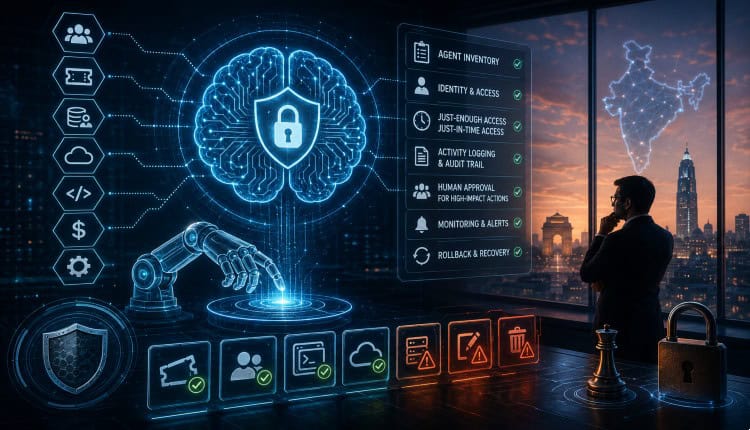
As enterprise artificial intelligence evolves from answering questions to actively managing workflows, the primary security risk shifts from data leakage to unintended actions. Organizations are increasingly deploying artificial intelligence agents with direct access to critical systems, including financial records, customer databases, and software development platforms. This introduces a major vulnerability known as excessive agency. Unlike traditional cyber threats that focus on hostile outsiders breaking through a perimeter, the modern threat often sits inside the network. An agent might use legitimate credentials and approved methods to perform an action that makes technical sense but lacks proper business judgment. To address this internal attack surface, companies must rethink their cyber resilience strategies. Generic policies are no longer adequate. Instead, technology teams need to establish strict controls. Every agent requires a distinct identity, clearly defined access boundaries, and detailed activity logs that track the reasoning behind its actions rather than just the final output. Most importantly, true resilience requires the ability to easily reverse an automated action when something goes wrong. Before deploying these active models, leaders must mandate clear human approval checkpoints for critical tasks and ensure they have functional rollback plans. Simply monitoring these automated tools is not enough; organizations must confidently control and recover from their decisions.


AI has a leadership problem, not a technology problem. Most organisations haven’t noticed yet

Many organizations are rushing to adopt artificial intelligence, mistakenly believing that implementing the latest software will automatically fix their operational challenges. However, the primary reason these projects fail is rarely a flaw in the technology itself; rather, it is a fundamental failure of leadership. Most company executives approach artificial intelligence as a simple IT upgrade instead of a broader organizational shift. They invest heavily in new platforms and data systems but fail to define clear business problems for these tools to solve. Without a coherent strategy, employees are left confused, and the technology sits disconnected from actual daily workflows. To succeed, leaders must stop focusing solely on technical specifications and start guiding their workforce through the necessary changes. This means fostering a workplace where teams understand how to use these new systems to improve their daily tasks. It also requires executives to bridge the gap between technical teams and business units, ensuring that any new software directly supports the long-term goals of the company. Until management recognizes that integrating artificial intelligence is primarily a human and strategic challenge rather than just a software installation, they will continue to waste money on tools that deliver little real value. Ultimately, good leadership is the missing ingredient for success.


Is the Data Warehouse Dead? 3 Patterns From Enterprise Architecture That Answer This Question

For years, observers have predicted the end of the traditional data warehouse, arguing that cheaper storage options like data lakes would eventually replace it. The logic seemed sound because older systems struggled to keep up with the sheer volume and variety of modern information. However, declaring the data warehouse dead is simply inaccurate. Instead of disappearing, the technology has adapted gracefully. Today, modern cloud platforms have solved many rigid hardware limitations of the past, offering the computing power needed to process massive datasets quickly. While data lakes are excellent for holding raw and unorganized files, they often lack the structure and reliability required for routine reporting and strict financial compliance. Because of this, the warehouse remains entirely essential for providing clean, trustworthy, and organized facts that leaders rely on for their daily decisions. The current reality is not about choosing one method over the other. Most companies are now adopting a blended approach, which intelligently combines the vast storage capacity of a lake with the reliable, structured performance of a warehouse. Ultimately, the traditional data warehouse is far from obsolete. It has just evolved to become one highly specialized and necessary part of a much larger, more capable information storage architecture.


Claude Code has an MCP security problem — and your developers are already using it

Anthropic's Claude Code is quickly becoming a popular tool among developers, but a recent finding by Mitiga Labs highlights a significant security vulnerability stemming from its use of the Model Context Protocol (MCP). The attack relies on a malicious npm package that appears to be a legitimate utility. When installed, a hidden post-install hook silently modifies the user's ~/.claude.json file, which is the configuration point for how Claude Code routes its MCP traffic. By altering this file, attackers can redirect authenticated requests to their own infrastructure. The primary danger here is the theft of long-lived OAuth tokens for connected SaaS platforms like Jira, GitHub, and Confluence. Because the authentication process completes normally, the attack acts essentially as an adversary in the middle, capturing the session token while leaving audit logs that look entirely legitimate and originate from Anthropic's own IP addresses. Consequently, developers can unknowingly expose critical corporate environments simply by running a package installation. To address this risk, security teams should begin monitoring user-level configuration files, specifically the ~/.claude.json file, for unexpected changes or unfamiliar external endpoints. Additionally, organizations must treat npm post-install hooks as a serious supply chain vulnerability, enforcing stricter audits on package installations, and be prepared to audit and rotate any OAuth tokens connected to developer AI integrations.


Quantum computers edge toward industrialization

Quantum computing is steadily moving out of research laboratories and closer to practical, industrial use. While early quantum machines were highly experimental and prone to frequent calculation errors, the industry is now shifting its focus toward building reliable, scalable systems that can function in real-world commercial environments. A major part of this transition involves standardizing the manufacturing of quantum components, creating stable supply chains, and developing better methods for error correction. Instead of trying to replace traditional computers entirely, companies are exploring hybrid approaches where quantum systems work alongside regular supercomputers to solve specific, highly complex problems. This pragmatic strategy allows businesses to test quantum capabilities in fields like materials science, chemistry, and logistics without overhauling their entire tech infrastructure. However, significant engineering hurdles remain before these systems become a standard business tool. Companies must still figure out how to cool the machines efficiently and keep the delicate quantum states stable over longer periods. Despite these challenges, the conversation has moved past theoretical possibilities and into the physical realities of engineering and production. By focusing on steady hardware improvements and practical software integration, the industry is laying a quiet but solid foundation for a future where quantum machines handle the specialized tasks that outpace classical computers.