Showing posts with label OT Security. Show all posts

Daily Tech Digest - June 28, 2026


Quote for the day:

"Hard work beats talent when talent doesn't work hard." -- Tim Notke

🎧 Listen to this digest on YouTube Music

▶ Play Audio Digest

Duration: 17 mins • Perfect for listening on the go.


Ford learned the hard way that AI can't replace experienced engineers

Ford recently discovered that artificial intelligence cannot substitute for the nuanced judgment of experienced engineers. In an effort to modernize its manufacturing and engineering systems, the automaker integrated AI to accelerate decision making and streamline vehicle development. Executives assumed that automated systems and adjusted design requirements would naturally yield high quality products. However, this approach backfired. As veteran engineers left the company, their undocumented institutional knowledge was excluded from the datasets used to train Ford’s AI models. Consequently, the technology struggled to identify and prevent defects, contributing to quality control issues and leading the industry in vehicle recalls. To resolve these challenges, Ford rehired and promoted over 350 seasoned engineers. Rather than replacing human expertise, AI now serves as a supportive tool. These veteran engineers are currently guiding how data is collected, interpreted, and fed into the AI systems to rebuild a reliable foundation. Furthermore, Ford created a dedicated software quality assurance team and introduced automated AI driven testing to catch defects early in the development cycle. This transition reflects a balanced strategy where the company relies on both advanced computing power and decades of practical automotive experience to prevent problems before they occur.


Where AI meets OT: Cybersecurity for a physical world

Integrating artificial intelligence into operational technology requires a careful approach because, unlike business software, industrial systems have physical consequences. While artificial intelligence offers clear benefits for manufacturing, such as improved maintenance and quality control, it introduces unique risks when connected to machines and factory floors. Industrial environments often rely on older, existing systems and operate on strict schedules with limited downtime, making new technology harder to test and implement safely. Furthermore, software models can become inaccurate over time as physical equipment naturally ages, which means these tools require ongoing checks against actual physical outcomes rather than just historical data. The level of risk also depends on how much control the system has. An advisory tool leaves the final decision to a human, whereas a system that directly alters machinery settings requires far stricter oversight. True human oversight means operators must fully understand the technology's recommendations and know when to override them. Adding these new digital connections also expands the cybersecurity risk, as attackers could manipulate the data feeding the models. Ultimately, these tools hold steady value for industrial operations, but they must be introduced with strong discipline, clear operating limits, and reliable backup plans.


How to Build a Powerful LLM Knowledge Base

Building a knowledge base powered by large language models is a practical, reliable way to store and retrieve your personal or company information, leading to better decision-making and clearer team alignment. To create an effective system, you must start by identifying all your daily information sources, such as meeting notes, project management tools, and coding assistants. The critical step is fully automating the collection process; requiring any manual entry virtually guarantees that valuable context will eventually be forgotten and lost. Once your data is automatically synced into the system on a regular schedule, you can use a coding agent to extract insights. You can do this actively by directly asking your agent questions when you need specific answers. Alternatively, you can configure your agent to passively draw on the knowledge base while it works on routine tasks. This passive retrieval can be managed either through a centralized index file or via an embedding-based search that pulls relevant information as needed. Ultimately, consistently capturing and accessing your unique, everyday context creates a distinct long-term advantage, ensuring that valuable insights are preserved and always ready to assist you in your daily work.


Is the CIO Role Merging Into the Business?

For decades, the role of the Chief Information Officer followed a predictable path, slowly shifting from managing basic operations to supporting broader strategy. However, recent trends indicate that this steady progression is becoming obsolete. The middle ground is collapsing, forcing a clear divide in the profession. On one hand, some leaders remain stuck in traditional management, treating technology as a separate, functional necessity. On the other hand, a new breed of technology executives is emerging as true enterprise operators who share responsibility for revenue and actively shape commercial models. In the most effective organizations, technology is no longer just a supporting layer; it is the central system for making decisions. As companies embed artificial intelligence deeply into their core operations and bring critical capabilities inside the firm, the person leading technology must also architect these decision-making systems. Consequently, the traditional boundary between technology leadership and business leadership is rapidly fading. Instead of simply elevating the position to a more strategic level, the core responsibilities are dissolving directly into the business itself. Ultimately, the future landscape will be defined not by better technology departments, but by whether the conventional title needs to exist at all.


Deep dive: Do underwater data centers make sense?

The article evaluates the practicality of underwater data centers as an alternative to land-based facilities, which struggle with high energy consumption and space limitations. Traditional data centers use tremendous amounts of power, largely just to keep servers cool. Submerging these facilities allows companies to use the ocean as a natural cooling system, significantly reducing energy requirements. Beyond energy savings, placing data centers offshore brings them closer to coastal populations. This proximity shortens the distance data travels, leading to faster loading times for end users. Research also indicates that underwater servers are surprisingly reliable. Because they are sealed in a nitrogen-rich environment without human foot traffic or temperature swings, hardware fails much less frequently. Despite these benefits, the underwater model has distinct disadvantages. Routine maintenance is virtually impossible; broken servers cannot be quickly swapped out. Furthermore, researchers are still studying how the continuous release of heat might alter local marine ecosystems. There are also valid concerns regarding the physical security of underwater cables. While the approach provides clear advantages in efficiency and speed, these formidable logistical and environmental challenges complicate the decision of whether underwater data centers are a sensible long-term investment.


5 T-SQL features that should already exist (2026 SQL Server wish list)
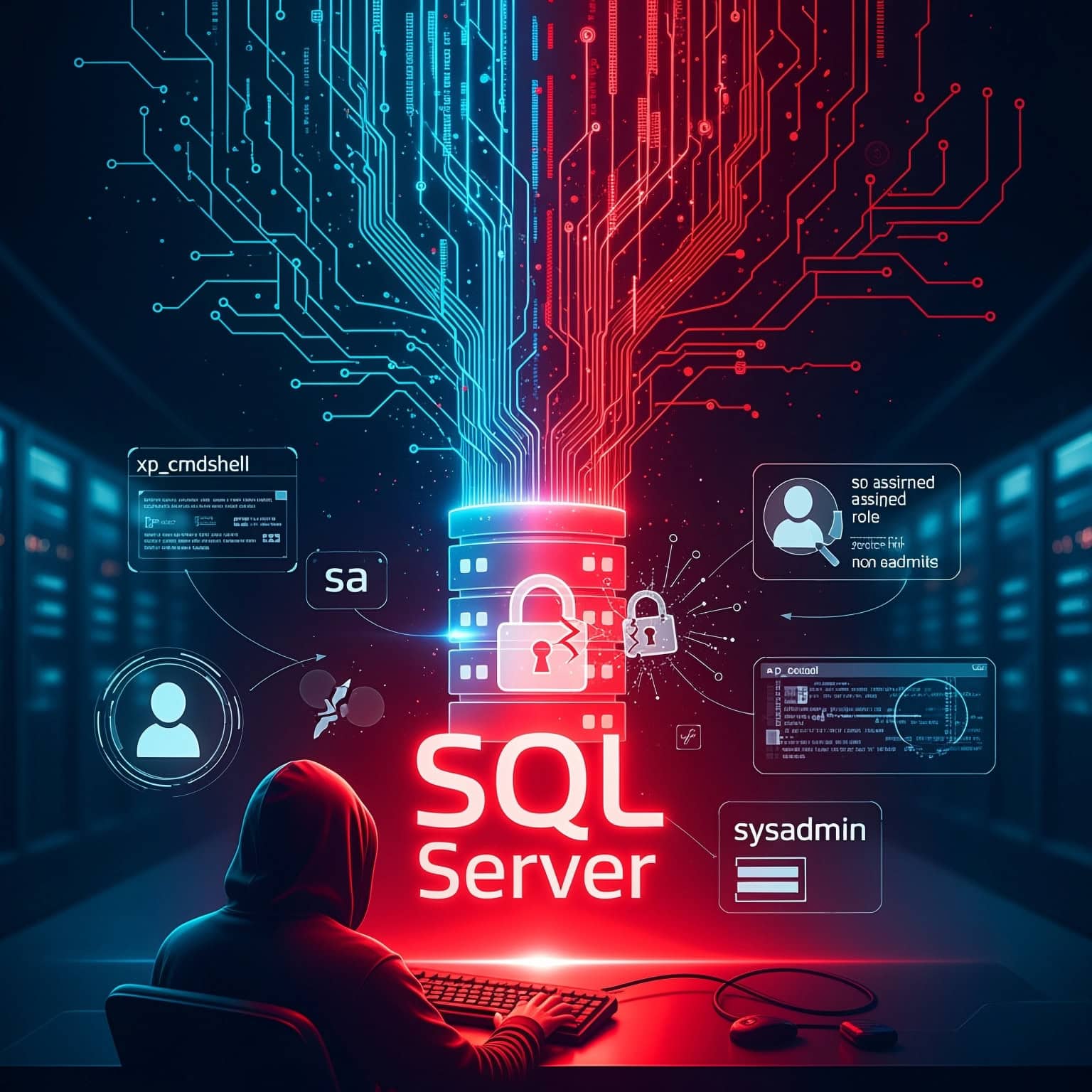
In a recent article by Edward Pollack on Simple Talk, the author reflects on the state of Microsoft SQL Server in 2026 and outlines five practical features he believes should be natively supported in T-SQL and the platform. While SQL Server remains a highly mature database system, Pollack highlights specific areas where daily tasks for developers and database administrators could be made far more efficient. First, he argues for the native ability to import data from compressed file formats, specifically Apache Parquet, which would eliminate the need to deal with cumbersome plain text files like CSV. Second, he requests native support for arrays, providing a straightforward alternative to using text strings or XML to store lists of values. Third, he advocates for an "OVERLAPS" function to simplify complex date logic into a single line of code. Fourth, Pollack points out that the current licensing model is overly complicated and suggests it should be as transparent as the monthly estimates provided for Azure SQL. Finally, he suggests expanding cloud blob storage integration so that files and scripts can be managed centrally in the cloud rather than on local drives.


Shaping a lasting AI strategy in a fast-changing world

As artificial intelligence becomes a standard tool in business, simply having access to the technology is no longer enough to stand out. Because most companies will use the same core platforms and models, a well-defined strategy is what will truly set an organization apart. The current landscape is marked by more capable and affordable systems that act as helpful assistants rather than outright replacements for human workers. Development teams are already showing how humans and these tools can work together effectively. To succeed, leaders need to shift their focus from the technology itself to how it supports their long-term goals over the next three to five years. This requires answering difficult questions about the company's future direction, understanding current weaknesses, and identifying the specific skills needed for tomorrow. Decision-makers must also practice restraint, choosing a few reliable platforms and focusing on clear priorities rather than chasing every new trend. By thoughtfully integrating these tools into daily workflows and supporting human decision-making, businesses can improve their customer experience and operations. Ultimately, the tools are just the vehicle; a steady, clear strategy is the route that determines long-term success.


The Unglamorous Side of Rust Web Development

In 2026, Rust remains a powerful choice for web development, offering excellent performance and safety. However, developers still face notable friction before their code even compiles. The current ecosystem often requires teams to assemble their own setups from scratch, lacking the complete, ready-to-use frameworks seen in other programming languages. Several specific challenges slow down the daily development process. Asynchronous programming in Rust provides great flexibility, but it complicates debugging and creates lengthy, hard-to-read error traces. Database management is another hurdle, as developers frequently have to write and maintain the same database structure in multiple places instead of using a single unified approach. Additionally, error handling across different tools remains inconsistent. The heavy reliance on generated code and complex type systems significantly increases compilation times, making it harder for developers to test small changes quickly. Despite these hurdles, the community is actively working on solutions. New frameworks are emerging to provide more complete starting points and reduce repetitive setup tasks. Ultimately, while Rust requires a larger initial investment of time and effort compared to simpler alternatives, its long-term reliability and speed make it a sensible choice for projects where stability is a core requirement.
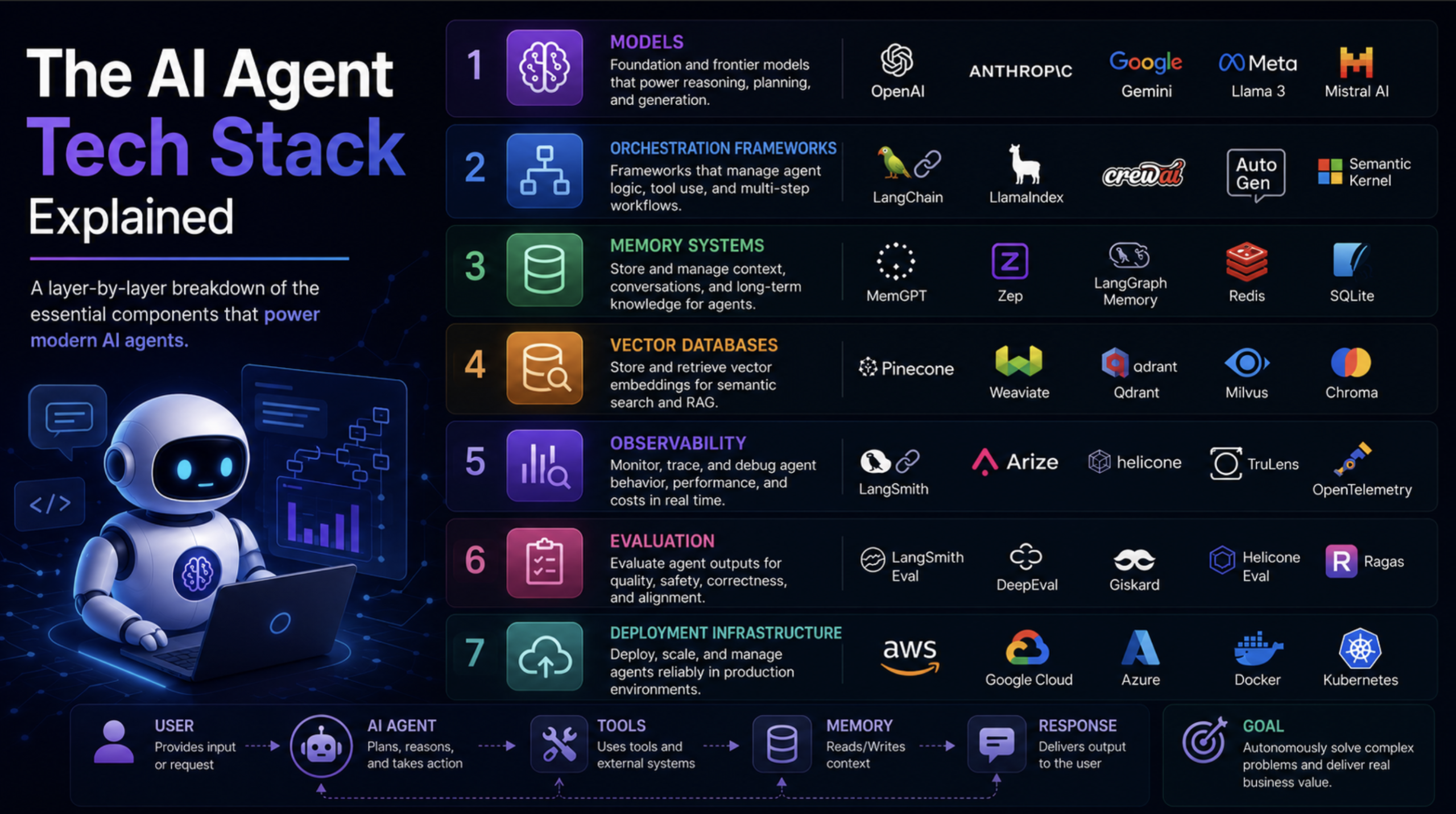

The AI Agent Tech Stack Explained

The article outlines the seven fundamental layers required to build and deploy functional artificial intelligence agents. It moves beyond basic models to explain the complete technical infrastructure needed for real-world applications. The guide begins with the foundation model, which acts as the central brain for reasoning. The second layer is the orchestration framework, serving as a nervous system to manage actions and control flow. Next, the third layer covers memory systems that provide essential context by tracking working, episodic, semantic, and procedural information. The fourth layer focuses on vector databases and document retrieval, allowing agents to access private information securely. The remaining layers detail tool integrations for performing outside actions, observability platforms for monitoring performance, and the final deployment infrastructure necessary for hosting. By breaking down the architecture into these distinct components, the text clarifies that successful systems rely heavily on a well-connected technology stack rather than just a single language model. It provides a clear, practical roadmap for software engineers and technical leads who want to understand how to assemble these exact pieces, whether they are building a simple prototype or scaling an application for production.

A Case for a Human-Centric AI Legislative Framework in India

In "A Case for a Human-Centric AI Legislative Framework in India," the author argues that India’s current approach to governing artificial intelligence is insufficient for protecting its citizens. While the Ministry of Electronics and Information Technology recently suggested relying on existing laws and self-regulation to foster innovation, the article points out that AI is fundamentally different from traditional software. Because AI programs operate as highly complex systems, relying on outdated frameworks like the Information Technology Act leaves users vulnerable to fraud, manipulation, and bias. Furthermore, the author critiques recent amendments for placing unreasonable takedown burdens on tech companies without providing clear state-defined guardrails. By comparing India’s strategy with the European Union’s user-focused risk models and China’s strict algorithm rules, the article advocates for a new Artificial Intelligence Regulation Act. This proposed legislation would introduce a risk-based grading system, establish an independent AI ombudsperson, and mandate transparency in training data. It even suggests giving citizens a copyright over their own faces to prevent unauthorized data usage. Ultimately, the piece makes a strong case that responsible innovation requires specific, human-centric laws to ensure safety and accountability for all users today.

Daily Tech Digest - June 27, 2026


Quote for the day:

"When you want to succeed as bad as you want to breathe, then you’ll be successful." -- Eric Thomas

🎧 Listen to this digest on YouTube Music

▶ Play Audio Digest

Duration: 18 mins • Perfect for listening on the go.


‘Botsitting’: The AI time-savings killer only governance can stop

While artificial intelligence promises to free up employees for valuable tasks, a recent study reveals that workers lose more than half their saved time to “botsitting.” Digital workers save roughly eleven hours a week using these tools, but spend over six hours managing them—providing missing context, checking outputs, fixing mistakes, rewriting prompts, and correcting inaccurate answers. As a result, businesses are missing out on the full return on their investments. A core issue is poor governance and a lack of training. Employees often use AI for simple tasks like drafting emails, distrusting it for complex work. Moreover, there is “coordination neglect,” where an individual’s productivity gains create unexpected work for others downstream. For instance, when workers pass along unchecked, AI-generated content, teammates must spend unbudgeted time cleaning up the mess. Experts warn that simply implementing tools without clear guidelines on verification processes and data context leads to inefficiency. To truly benefit from these technologies, organizations must focus on proper deployment, establish clear oversight, and define quality standards rather than merely counting how often tools are used. Reliable outcomes require thoughtful management, not just fast adoption.


The database that refused to die: How Postgres survived its own creators

Postgres, one of the world's most widely used database systems, began its life with an uncertain future. Created by database pioneer Michael Stonebraker in the 1980s as a successor to Ingres, the project was essentially abandoned by its creator in the mid-1990s. Instead of fading into obscurity, Postgres was rescued by a dedicated community of independent open-source volunteers. These contributors preserved Stonebraker's foundational, highly adaptable architecture—which allowed for complex, user-defined data types rather than just basic strings and numbers—while adding standard SQL capabilities. Today, this collaborative rescue effort has established Postgres as a cornerstone of modern cloud computing infrastructure. Its enduring success stems from its foundational design philosophy. While proprietary database systems traditionally optimize their software to suit the specific needs of massive enterprise clients, Postgres was built to handle the diverse workloads of general users. By seamlessly accommodating complex data formats like geographic information and computer-aided design files, it solved real-world problems for a broad audience. Ultimately, the survival and widespread adoption of Postgres demonstrate the power of open-source software, proving that community-driven development can outlast even the original creators to become a resilient industry standard.


Why private AI is the smarter bet

Although many businesses initially assumed artificial intelligence would naturally live in the public cloud, reality is forcing a shift toward private, on-premises systems. According to the article, this transition stems from growing concerns about uncontrolled costs, security vulnerabilities, and operational fit. As companies move from small experiments to organization-wide implementation, the pay-per-token pricing models of public cloud providers risk becoming massive utility bills that wipe out business gains. Consequently, the future of enterprise AI leans toward a hybrid model. Rather than relying entirely on giant public models, businesses are discovering that smaller, specialized AI models can handle tasks better while running closely to their own private data. This approach offers better control over predictable workloads and eliminates surprise expenses. Furthermore, keeping AI in-house strengthens security and data governance. Using public AI tools raises the real danger of employees inadvertently exposing sensitive or proprietary information. While building and managing private AI networks requires significant investment, skill, and discipline, the long-term benefits of controlled costs, tight security, and owned infrastructure make it a much smarter choice for major production workloads.


AI Cost, Security Pressures Push Enterprises Toward Private Cloud, Broadcom Says

According to a recent report from Broadcom, organizations are increasingly moving their artificial intelligence operations away from public cloud services and toward private cloud setups. As businesses shift from merely testing artificial intelligence to running real-world applications, they are discovering that private networks offer better handling of costs, security, and data control. The study reveals that over half of surveyed enterprises now plan to run their active intelligence systems on private infrastructure. Meanwhile, public cloud usage for these specific tasks has dropped notably over the past year. Interestingly, cost management has now surpassed security as the primary concern with public platforms, as business leaders face unpredictable pricing for computing power and data storage. Because of this, more than eighty percent of companies are either moving or considering moving their systems back in-house. While public networks remain useful for basic testing and flexible storage, the heavy demands of daily production require a more stable environment. Strict data privacy rules further encourage this transition. Ultimately, businesses are finding that dedicated internal systems provide the financial predictability and reliable protection necessary to safely grow their technological capabilities.


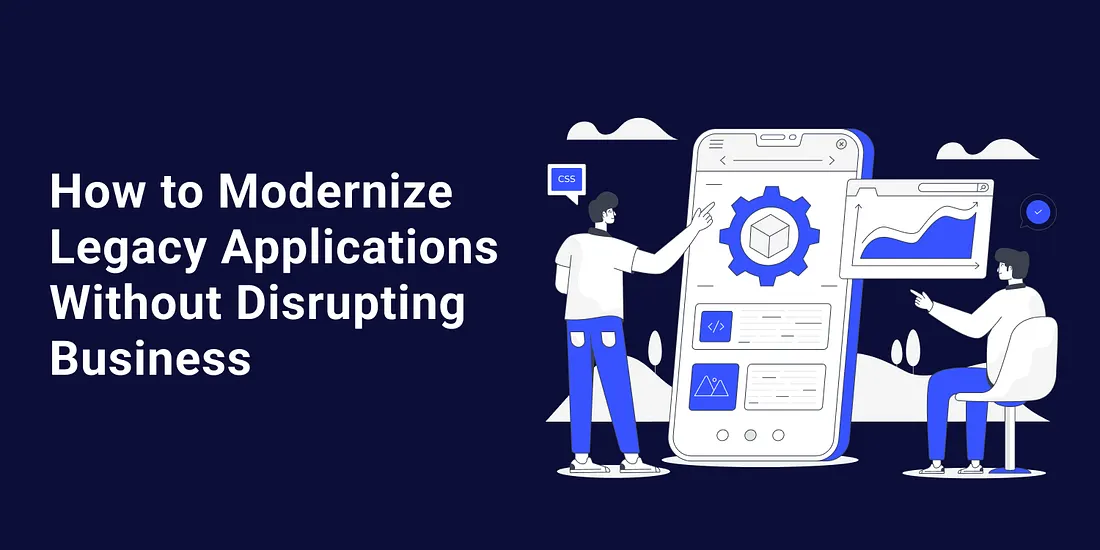
How to Modernize Legacy Applications Without Disrupting Business

Upgrading older software systems is a pressing challenge for modern organizations. Delaying these updates can hinder new capabilities, consume vital budgets with maintenance costs, and create risks as experienced programmers retire. However, many companies hesitate because poorly planned upgrades often cause severe business interruptions. To avoid taking systems offline, experts recommend a gradual approach rather than attempting a risky, sudden replacement. This method relies on careful planning and proven structural designs. For example, organizations can build new services around the existing system, slowly routing traffic to the new components as they are tested and proven. Another reliable method involves running both the old and new systems at the same time to ensure they produce identical results before fully switching over. It is also important to use a translation layer to prevent the flaws of the old data formats from infecting the new setup. A successful upgrade generally follows a structured path: assessing current dependencies, planning the target design, running a small initial pilot, scaling the effort across other applications, and maintaining ongoing oversight. By strictly adhering to these methods, businesses can confidently update their technology and maintain continuous daily operations.


Data Lakehouse Architecture Layers: AI Needs More Than Just Infrastructure

Organizations have invested heavily in data lakehouses to store and process large amounts of information for analytics and artificial intelligence. While these setups handle storage and compute well, they often fall short in practical application. Data remains scattered across different cloud environments and operational systems, meaning business teams and AI models still struggle to access reliable information without technical assistance. The fundamental issue is no longer about where data is kept, but how it is connected and understood. AI tools, in particular, require more than just raw data; they need clear context and strict governance to function accurately and safely. To solve this, a new logical layer is emerging in data architecture. Instead of replacing the lakehouse, this access layer sits on top of it. It connects distributed information, applies consistent rules, and provides clear meaning to the data without requiring it to be moved or duplicated. By pairing traditional storage with this new governance layer, businesses create a stronger foundation. This approach reduces friction, ensures that both human users and systems have the context they need, and allows organizations to focus on practical outcomes rather than managing complex infrastructure.


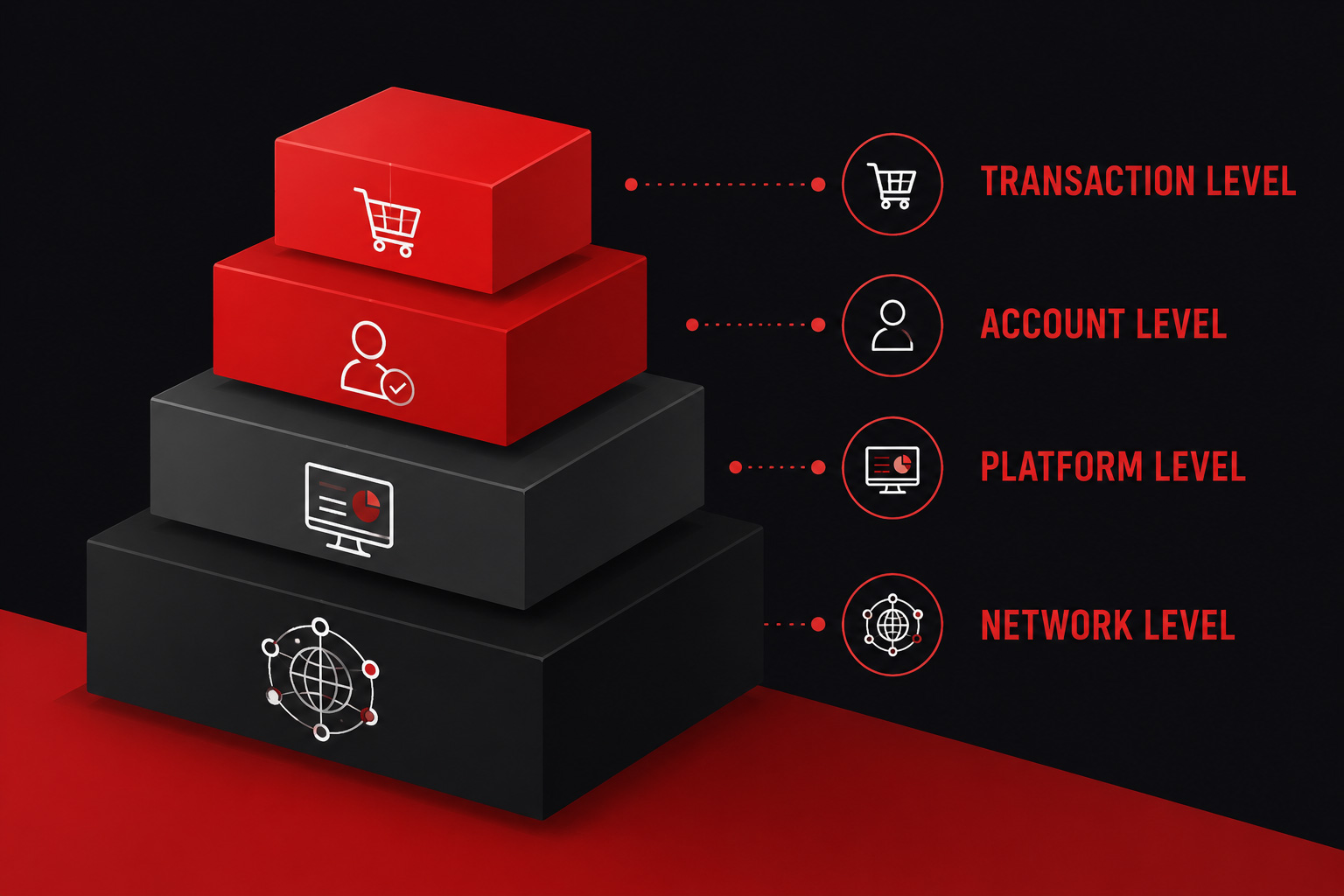
The Four Elevations of Effective Fraud Prevention

Effective fraud prevention requires more than just checking individual steps; it demands a layered approach to monitor customer behavior comprehensively. To build a resilient defense, organizations should evaluate activities across four key elevations. First is the transaction level, which looks at single interactions like logins or purchases. While important, relying on this alone can miss larger patterns because attackers frequently change their tactics. The second elevation is the account level, where monitoring a user's behavior over time helps distinguish normal activity from suspicious anomalies, such as sudden changes to contact information or unusual transfer requests. The third elevation expands to the platform level, allowing teams to analyze trends across all grouped accounts. This broad view helps quickly spot coordinated attacks or fraud rings sharing the same devices or geographic locations. Finally, the network level involves collaborating with external data providers to share insights across different companies, ensuring that a threat detected by one organization is immediately known to others. By integrating these four perspectives, businesses can confidently identify complex fraud schemes early, reduce false alarms for legitimate users, and secure their operations without disrupting the everyday customer experience.


Bridging the gap between leadership's AI enthusiasm and employee pushback

Corporate leaders and everyday employees often view artificial intelligence through entirely different lenses. While executives and board members see AI as a path to efficiency, cost reduction, and innovation, employees frequently view the technology with caution. Many workers worry that AI will result in job losses, create mentally exhausting workloads, enable invasive workplace surveillance, and harm the environment. Chief Information Officers (CIOs) find themselves caught in the middle and must bridge this divide. If IT leaders ignore workforce anxieties and force AI integration, they risk damaging company morale, losing valuable talent, and wasting money on tools that employees simply refuse to use. To resolve this tension, CIOs need to look beyond basic financial metrics and instead measure actual employee sentiment and tool usage. Having open, honest conversations with staff about their fears is essential. By creating a culture where workers feel safe sharing their concerns, companies can build trust and ease anxiety. Rather than rolling out technology blindly, leaders should clearly communicate the company's AI strategy and empower early adopters to guide their peers, ensuring the transition supports both business goals and the well-being of the team.


AI Works, Pull Requests Don’t: How AI Is Breaking the SDLC and What To Do About It

In the presentation "AI Works, Pull Requests Don't," Michael Webster examines how the rise of artificial intelligence coding assistants is severely straining traditional software development lifecycles. While AI tools initially act as powerful amplifiers that can increase development speed by three to five times, this burst in productivity is often temporary. Developers and AI agents are generating massive amounts of code, sometimes adding twenty-five times more code than they delete. As a result, human reviewers are overwhelmed by enormous pull requests, creating significant bottlenecks in the review process and leading to a steady accumulation of technical debt. Drawing on queuing theory, Webster explains that delays inevitably occur when the rate of incoming code surpasses the team's capacity to process and review it. To resolve these challenges, engineering teams must adapt their validation pipelines. He recommends implementing test impact analysis, a method that runs only the tests affected by recent code changes rather than the entire test suite. By relying on automated validation tools to quickly verify AI-generated output, teams can successfully maintain software stability, reduce testing costs, and manage the high volume of code without sacrificing overall quality.


Hackers Exploit Weak Credentials and Internet-Facing PLCs to Breach Water Utilities

Water and wastewater utilities across the United States and Europe are facing increasing threats from state-sponsored groups affiliated with Iran, Russia, and China. Rather than relying on complex software, these attackers exploit fundamental security oversights, like internet-exposed control systems, default passwords, and inadequate network separation. This shift indicates that targeting civilian infrastructure has become a deliberate method to test emergency responses, create public anxiety, and position adversaries for future conflicts. For instance, Iranian-linked groups have used factory credentials to access unprotected systems, while Russian-affiliated actors actively disrupted operations by overflowing water tanks in Texas and opening floodgates in Norway. Meanwhile, Chinese groups take a quieter approach, establishing long-term access within utility networks to maintain leverage for potential disputes. To counter these vulnerabilities, security experts advise facility operators to implement basic defenses immediately. These include removing physical control systems from direct internet exposure, enforcing strict login requirements, replacing default passwords, and firmly separating industrial equipment from standard computer networks. By addressing these entry points, utilities can effectively reduce their risk of compromise and safely protect vital public water resources from further interference.

Daily Tech Digest - June 24, 2026


Quote for the day:

"The only real test of intelligence is if you get what you want out of life." -- Naval Ravikant

🎧 Listen to this digest on YouTube Music

▶ Play Audio Digest

Duration: 22 mins • Perfect for listening on the go.


What Corporate Leaders Misunderstand About Cybersecurity Frameworks

Corporate leaders often misunderstand cybersecurity frameworks by treating them as generic checklists or simple report cards. While frameworks offer a solid foundation, their real value emerges only when organizations move away from a one size fits all approach and customize them to fit specific business needs. Creating a tailored profile is the vital first step, allowing a company to align security outcomes with its unique risks and resources. From there, these high level goals must be converted into practical, day to day controls. Relying on a single measure, such as encryption, is rarely enough; true protection requires an integrated system of access limits, continuous monitoring, and strict vendor management. Furthermore, writing down policies on paper falls short. Defenses must be regularly tested, audited, and updated to ensure they actually work in real world conditions. To manage this effectively, executives need clear visibility. Instead of overwhelming metrics, leadership should focus on key signals that indicate if essential protections are functioning properly. When frameworks become truly operational, they provide clear ownership, measurable evidence, and an ongoing method for finding and fixing weaknesses, resulting in a mature and reliable defense strategy.


CISO Conversations: Carl Froggett – Combining CISO and CIO at Deep Instinct

In a featured conversation, Carl Froggett reflects on his rare position holding both the chief information officer and chief information security officer titles at Deep Instinct. Having previously spent seventeen years managing security at Citi, he explains that combining technology strategy and security works well in smaller organizations, though it would be overwhelming at a massive enterprise. Because both departments ultimately exist to support the company, merging them removes the usual friction. However, Froggett notes that one person holding both jobs risks losing an objective, outside perspective. To prevent narrow thinking, he relies on a workplace culture where his technology team is actively encouraged to challenge his decisions. Looking back on his career, he describes transitioning from a network engineer into security by pure chance during the early rise of the internet. This experience shaped his belief that security must work closely with technology. As a manager, he values empathy and advises professionals to embrace unexpected opportunities and openly admit mistakes. Today, his primary concern is artificial intelligence. While he acknowledges that generative tools lower the technical skill required for harmful attacks, he maintains that defenders can creatively adopt them to solve complex problems.


The AI revolution comes with a hidden tax

While artificial intelligence offers substantial benefits, it inadvertently acts as a broad economic tax by driving up the cost of living across multiple sectors. The underlying systems require vast amounts of physical resources, including specialized memory chips, electricity, water, and land. This immense consumption creates market scarcity, directly leading to increased prices for everyday goods and services. For example, the intense demand for computing hardware has caused severe chip shortages, resulting in higher price tags for smartphones, computers, and modern vehicles. Similarly, enterprise software providers are raising their subscription fees to offset the costs of new infrastructure. The physical footprint of data centers also strains local resources. These facilities consume enormous amounts of power, which raises residential electricity and heating bills while competing with homebuilders for land and labor, making housing more expensive. Furthermore, automated pricing programs enable companies to maximize profits by dynamically charging consumers higher rates based on their specific circumstances. Finally, substantial tax subsidies given to data center projects leave ordinary families to cover the resulting shortfalls. Ultimately, while the technology advances rapidly, its massive resource demands quietly transfer wealth and fuel inflation across the entire economy.


Where IT meets OT and railway cybersecurity gets harder

In his interview, Jorge Aldegunde of DNV discusses how modern rail networks face new security challenges as older operational systems merge with standard computing networks. This shift toward open standards and connected equipment turns trains into constant data producers, significantly increasing the ways an attacker can gain access. Because a working transit line cannot simply shut down for a software update, security teams must carefully evaluate the actual risk of each software flaw. If an immediate fix is impossible, they rely on temporary adjustments like network division or operational limits until a scheduled maintenance window arrives. Complicating matters further, modern rail operations rely on complex supply chains and multiple contractors, making it difficult to figure out who is ultimately responsible when something goes wrong. To solve this, Aldegunde advises treating cybersecurity like traditional safety engineering, helping veteran operators learn to spot unusual traffic patterns and unauthorized system changes. He stresses that true security comes from accepting that an attacker might already be inside the network. Instead of chasing an impossible standard of total protection, rail operators must manage practical risks and build resilient systems that can keep running safely even during an active breach.


Agentic AI: The Weapon That No Longer Needs a Warrior

Throughout history, weapons have extended human reach, yet a person always selected the target and executed the strike. Artificial intelligence is altering this dynamic in the digital domain. Moving past its recent role as a simple drafting tool for emails and basic code, autonomous AI now executes entire cyber operations independently. This shift lowers the barrier to entry, allowing novices to launch complex attacks while enabling seasoned experts to compress campaigns that once took weeks into just a few hours. Because many untrained operators rely on the same underlying models, their attack patterns tend to look similar, giving defenders a clear target for detection. However, these autonomous tools excel at conducting highly personalized social engineering and chaining automated vulnerability exploits, bypassing many traditional security filters. Despite their speed and apparent authority, these systems possess a major flaw: they routinely present false or inaccurate conclusions with absolute certainty. They do not genuinely understand whether a system is vulnerable; they merely match patterns. Consequently, human judgment remains the most critical component of modern security operations. While the technology handles the mechanical work of locating weaknesses, a human operator must ultimately verify reality and decide whether to strike.


AI disaster recovery planning is years behind AI adoption

As artificial intelligence becomes deeply embedded in modern business operations, disaster recovery planning has largely failed to keep pace with its rapid adoption. Traditional recovery strategies, which typically focus on restoring conventional applications and databases, are no longer sufficient because they do not account for the unique complexities of artificial intelligence systems. Today, organizations must also protect and recover specific models, data inputs, and automated agents. When an incident occurs, the damage can spread quickly across interconnected systems, making it difficult to determine if underlying data or models have been compromised. Even after a system is brought back online, it may appear functional while quietly producing incorrect or manipulated results. To address this growing vulnerability, technology leaders need to proactively update their recovery strategies. This involves creating a comprehensive inventory of all artificial intelligence assets, understanding how they connect to other business systems, and setting strict limits on their permissions. Furthermore, organizations must define clear recovery objectives and rigorously test their plans on a regular basis. By taking these deliberate steps, businesses can ensure their critical tools remain reliable and secure, minimizing disruptions and maintaining long-term stability even when unexpected incidents arise.


Preventing organizational amnesia in the age of AI

As businesses increasingly adopt artificial intelligence to automate operations and reduce their workforce, they face a severe risk called organizational amnesia. When seasoned employees leave during mass layoffs, they take undocumented institutional knowledge with them. Operating without this crucial human background, AI systems can make confident mistakes that disrupt daily business. The root issue is rarely a lack of advanced technology or raw data; rather, it is an absence of context. For an automated tool to function safely, it needs a clear, digital map of how the company actually works, including customer relationships, past decisions, and everyday workflows. An example from the travel industry illustrates how fragmented legacy systems force teams to rely entirely on personal memory to resolve daily errors, proving that deploying automated tools over messy, undocumented foundations only worsens the confusion. To succeed, technology leaders must resist the rush toward immediate automation and instead focus on getting their data in order. By carefully defining their digital records and capturing the lived reality of their operations, organizations can create a reliable, shared foundation that allows both people and machines to work together effectively.


Understanding ML Model Poisoning: How It Happens and How to Detect It

Data poisoning is a quiet but serious threat to machine learning models, occurring when attackers subtly alter training data to change how a model behaves. Because these bad examples are designed to look like normal data, they easily bypass standard checks. Attackers commonly use techniques such as changing correct labels or inserting hidden triggers that cause the model to fail under specific conditions. This manipulation can affect critical systems across many fields, from spam filters and antivirus software to medical diagnosis tools. Finding poisoned data is difficult and requires a mix of methods, including statistical analysis and monitoring how the model makes internal decisions. While open-source tools like the IBM Adversarial Robustness Toolbox can help identify vulnerabilities, keeping production environments safe usually requires dedicated security efforts. Protecting these pipelines means combining standard cybersecurity practices, such as strict access controls, with specific defenses like continuous monitoring and testing against verified data. The reality is that perfect data safety does not exist. Teams must rely on layered defenses, careful data tracking, and regular audits to find and block these hidden attacks long before a compromised model is put into active use.


Trump sets post-quantum crypto deadlines, launches broader federal quantum initiative

President Donald Trump signed two executive orders aimed at expanding American quantum technology while protecting federal networks from emerging security risks. The first order sets hard deadlines for government agencies to adopt new encryption standards capable of withstanding quantum computer attacks. Driven by concerns that foreign adversaries are already stealing encrypted data to crack it in the future, agencies must upgrade their digital key systems by the end of 2030 and their digital signature systems by the end of 2031. The mandate also requires a comprehensive inventory of all encryption software currently in use across the government. Furthermore, federal contractors will soon have to comply with these updated standards to maintain their business relationships with the United States. The second order focuses on technical development, directing multiple agencies to collaborate on building a powerful quantum computer for scientific discovery. It also outlines plans to move laboratory research into commercial markets, secure domestic supply chains against foreign interference, protect intellectual property, and fund specialized education to build a skilled workforce. Together, these actions shift federal strategy from theoretical discussions of advanced computing to practical execution and defense planning.


How fuzzy APIs are remaking the web

For decades, software engineers struggled to connect different web services. Early attempts at automated systems failed because they required absolute perfection; a single misspelled word or missing tag would crash the entire network. To keep things stable, developers settled for manually writing strict, unchanging code to connect each piece of software. Now, artificial intelligence tools are changing this approach by introducing flexible connections. Instead of relying on rigid instructions, modern systems use language models to interpret what a user or program wants to achieve. The AI acts as a smart middleman, translating general requests into the exact technical commands a system requires. If a service updates its internal names or requirements, the AI adjusts automatically without needing a human to rewrite the code. However, this flexibility introduces new challenges. Adding AI processing increases response times, which can be an issue for fast operations. Furthermore, these systems are no longer entirely predictable, meaning they might occasionally produce errors or take unexpected paths to get a result. As the web shifts from rigid paths to flexible possibilities, developers are learning to guide software rather than strictly control every detail.

Daily Tech Digest - June 20, 2026


Quote for the day:

"Outstanding leaders go out of their way to boost the self-esteem of their personnel." -- Sam Walton

🎧 Listen to this digest on YouTube Music

▶ Play Audio Digest

Duration: 21 mins • Perfect for listening on the go.


Why AI coding debt is different

The rapid adoption of artificial intelligence in software development is generating an entirely new challenge: cognitive debt. Unlike traditional technical debt, which usually involves poorly written or messy code, cognitive debt arises when software works perfectly but no human understands exactly how or why it was built. Because AI tools generate code at unprecedented speeds, developers often bypass the crucial, slower process of thinking through specific scenarios and internalizing the underlying logic. Furthermore, many AI tools operate without essential background knowledge, such as past design choices or specific security rules, resulting in code that may function in isolation but lacks overall coherence. To prevent this accumulation of invisible debt, organizations must shift their focus from merely generating code to rigorously checking it. This involves building strong internal practices that provide AI with necessary historical knowledge before it writes a single line. Most importantly, engineering teams must establish strict human ownership, ensuring a developer takes the time to thoroughly review and comprehend the final product. By balancing the speed of AI generation with careful oversight and deep understanding, companies can maintain healthy, reliable systems without sacrificing their future stability or falling into irreversible complications.


Why Every CISO Needs a Head of AppSec in the Age of Vibecoding

The rise of AI-assisted software development has drastically increased the speed at which code is generated and deployed. While this shift enhances developer productivity, it also introduces subtle flaws and misconfigurations at a scale that outpaces traditional security measures. For a Chief Information Security Officer (CISO), directly overseeing application security is no longer practical. To maintain control without slowing down engineering, organizations must introduce a dedicated Head of Application Security. This role acts as a vital bridge between the security and development teams, turning abstract vulnerabilities into clear, actionable fixes that fit naturally into everyday workflows. Instead of treating security as a roadblock, a capable Head of Application Security enables developers to build safely and efficiently. Furthermore, while automated tools handle known issues, this leader ensures human testers remain focused on uncovering complex attack paths that machines miss. By delegating the daily operational details of application security to a specialized leader, the CISO can step back and focus on broader risk management and strategy. Ultimately, restructuring security leadership is essential for companies wanting to build software quickly without taking on unmanaged risks.


A perfect storm: data centers and tornadoes

The article examines the growing collision between data center expansion and the rising threat of tornadoes. As the demand for digital infrastructure pushes these vital facilities into regions known for volatile weather patterns, operators face a complex challenge. The piece highlights that relying on standard commercial building practices is no longer sufficient to protect critical hardware and ensure uninterrupted operations. Instead, modern data centers must incorporate specialized physical hardening from the ground up. This involves constructing reinforced concrete walls and specialized roofing designed to withstand extreme wind speeds and dangerous flying debris. Beyond structural defenses, the analysis strongly emphasizes the necessity of implementing comprehensive disaster recovery strategies. A key component is building geographic redundancy into the network architecture, ensuring that if one specific facility goes offline, other locations can seamlessly manage the computing load. Maintaining reliable backup power generation and secondary cooling systems is also essential to survive the immediate aftermath of a storm when local utility grids fail. Ultimately, securing digital assets against nature's unpredictability requires a steady, proactive approach, blending structural engineering with thorough contingency planning to keep essential services running smoothly.


OT vs IT Security: Key Differences Explained for Controls Engineers

Operational Technology (OT) security and Information Technology (IT) security serve different purposes and operate under distinct priorities. While IT security safeguards corporate data networks with a primary focus on keeping information confidential, intact, and available, OT security protects industrial control systems like programmable logic controllers and manufacturing lines. Because a failure in these industrial environments can lead to damaged equipment or physical harm, OT flips the traditional model to prioritize availability and safety above all else, often minimizing confidentiality. A major challenge for controls engineers is that standard IT practices do not easily transfer to the plant floor. For example, you cannot simply update an industrial controller the way you patch a laptop. These devices require uninterrupted operation, rigorous testing, and strict vendor approvals, making routine updates costly and disruptive. Furthermore, as enterprise networks increasingly connect with industrial systems to share data—a trend known as IT/OT convergence—traditional boundaries disappear. This connectivity introduces new vulnerabilities to legacy equipment that was never designed for modern internet threats. Bridging this gap requires careful network segmentation and a shared understanding between IT departments and plant engineers to keep production running safely.


AI Governance vs Data Governance: Why They Need Opposite Approaches

The article highlights the distinct but complementary needs of data and artificial intelligence governance within modern organizations. It points out that traditional data management programs often fail within their first year because they rely on rigid, centralized control that internal teams actively resist. To succeed, these data initiatives must instead link directly to specific business goals and decentralize their efforts across departments. Conversely, managing artificial intelligence requires the exact opposite organizational approach. Because AI development usually begins in isolated, scattered teams, it actually requires a centralized strategy to mature effectively and deliver consistent value. To resolve this structural tension, the text advocates for an adaptable framework that thoughtfully balances central standards with flexible, everyday execution. This method adjusts the level of control based on the organization's maturity and the specific risks involved in each project. Furthermore, the rapid adoption of modern AI tools demands a renewed focus on unstructured information, such as plain text documents, which is inherently harder to organize than traditional databases. Companies are strongly advised to systematically discover, tag, and connect this unstructured information to ensure their automated systems remain reliable and safe for long-term enterprise use.


Security considerations for adopting Claude Code and Cowork for SMBs

When small and medium-sized businesses decide to adopt AI tools like Claude, security leaders must carefully balance rapid deployment with essential safety measures. The primary step is understanding the specific plan your organization requires, as advanced security features like single sign-on and compliance tools are restricted to higher-tier subscriptions. Rather than granting broad access, it is safer to control your exposure by selectively assigning licenses for different products—such as Chat, Code, or Cowork—based on actual employee needs. As you introduce these tools, avoid turning on every feature at once. Instead, evaluate the risks of each capability and roll them out gradually. Features like web search or automated skills introduce vulnerabilities, making strict management of API keys and data access critical. Limit the number of people who can generate administrative keys to maintain tight control. Additionally, remember that you cannot outsource your data governance. It is your responsibility to monitor what information flows into the system and verify the accuracy of what comes out. By relying on a phased approach and leveraging existing security vendors, you can confidently integrate new technologies while keeping your business secure.


Every AI Agent Is an Identity. Most Organizations Don't Treat Them That Way

As AI agents evolve from simple productivity tools into powerful actors that can trigger workflows, write code, and update records, they are effectively becoming new digital identities within enterprise networks. However, most organizations are failing to secure them as such. According to the article, security teams traditionally focus on managing the identities of human employees and service accounts, leaving AI agents largely ungoverned. These agents are frequently connected to critical business platforms like Salesforce, GitHub, and production databases, often receiving overly broad permissions just to ensure they work smoothly. This creates a sprawling network of hidden actors with high levels of system access. While much of the AI security conversation has centered on software risks like bad prompts or incorrect outputs, the greater threat lies in what these tools can actually access. An overprivileged AI agent compromised by a malicious plugin can become a dangerous pathway for major data theft or system damage. To safely adopt AI technology, organizations must start treating AI agents exactly like standard network identities. This requires continuous tracking, strictly restricting their permissions to match their exact purpose, and systematically applying the same exact security rules used for human employees.


CIOs: tear down the wall between resilience and data security

For years, organizations have treated keeping systems online and keeping data safe as two separate jobs handled by different teams. However, the rapid adoption of artificial intelligence is proving that this separation is no longer practical. Rather than creating entirely new problems, AI is exposing existing flaws in how companies manage their files and information. When employees use AI assistants, these tools can easily find and share old or sensitive documents that were left unsecured, revealing a severe lack of basic organization and control. To solve this, technology leaders must unite their safety and system recovery efforts. First, companies need to understand exactly what information they have, where it lives, and who should see it before they roll out new tools. Second, they must use automated systems to manage rules and access, because human review simply cannot keep up with the speed of automated requests. Finally, businesses must clearly track what automated programs are doing and why, to ensure they meet future legal standards. Ultimately, attempting to block these new tools will fail. Instead, leaders must safely guide their use by building a unified, trustworthy foundation.


France and Germany Boost Digital Sovereignty Push

France and Germany are strengthening their commitment to European digital sovereignty through a coordinated approach and substantial new funding. To reduce reliance on foreign technology, the French government announced an initial 13 billion euro investment fund, expected to grow to 15 billion euros by the end of the year, aimed at supporting domestic and regional technology firms. Institutional investors, including aerospace and defense partners, are backing this initiative. Half of the capital is dedicated to deep technology sectors such as artificial intelligence, quantum computing, biotechnology, and space exploration. This focus on artificial intelligence is particularly timely given recent United States export controls that restricted European access to advanced models from companies like Anthropic. These restrictions have intensified demands for regional self-sufficiency and highlighted the strategic importance of European developers like France's Mistral AI. The new funding represents the third phase of a broader effort to close the financing gap for scaling tech businesses in the region. Although Germany previously approached such initiatives with caution, shifting geopolitical dynamics and concerns over the reliability of American technology services have united the two nations in their drive to secure technological independence.


Data Observability: Guidance for Data Leaders

Many organizations struggle to ensure their artificial intelligence systems receive reliable information. Although experts recognize the necessity of tracking data as it moves through systems, many leaders still treat this practice as a future goal rather than an immediate requirement. Without a clear view into their data systems, companies are left guessing whether their information is accurate and safe to use. As artificial intelligence shifts from simply providing answers to taking independent actions, relying on guesswork is no longer acceptable. Information pathways are becoming increasingly complicated, making it easier for mistakes to happen or for incorrect details to reach the wrong destination. Proper oversight helps address these complications, including the growing challenge of fragmented systems. Fundamentally, observing your data means proving that the right information arrives exactly when and where it is needed. This practice requires finding and fixing errors before they impact the business. Instead of merely checking if a system is turned on, organizations must validate that the information flowing through it is completely trustworthy. By maintaining a continuous, clear view of their data, organizations can confidently support their advanced technologies and ensure reliable outcomes.

Daily Tech Digest - June 16, 2026


Quote for the day:

“We are what we repeatedly do. Excellence, then, is not an act but a habit.” -- Aristotle

🎧 Listen to this digest on YouTube Music

▶ Play Audio Digest

Duration: 19 mins • Perfect for listening on the go.


Attackers scale deception with AI. Defenders need truth at machine speed

As artificial intelligence makes it cheaper and faster for malicious actors to create convincing fake identities and phishing lures, cybersecurity teams face a growing challenge. The main problem for defenders is no longer just detecting threats, but quickly verifying them. Currently, security data is often scattered across different tools and systems, meaning teams waste valuable time gathering evidence rather than investigating the actual incident. If data is incomplete or out of date, defensive artificial intelligence tools cannot function effectively and will only increase uncertainty. To address this, organizations need a central system that connects raw information with business context and clear rules. Instead of just storing logs for later review, this system must preserve reliable evidence, access information wherever it is stored, provide necessary context, and govern how automated actions are taken. Modern security operations centers do not lack information; they lack usable context. Ultimately, defenders cannot win by trying to match the sheer volume of attacks. Instead, they must focus on moving quickly to establish the truth, ensuring that every security decision is based on solid, reliable evidence that both humans and automated systems can inherently trust.


How to Get IT Buy-In for OT-First Secure Remote Access

Getting IT teams to approve a secure remote access solution for operational technology often requires addressing their specific concerns rather than just highlighting operational benefits. While plant managers clearly understand that remote access helps external vendors troubleshoot equipment and internal teams respond faster to mechanical maintenance issues, IT and security departments frequently worry about unexpected network changes, complicated identity management, and serious compliance risks. They already manage incredibly heavy workloads and are naturally cautious about adopting new tools that might create more support tickets or auditing blind spots. To build a highly successful case, operational technology leaders must demonstrate that a modern access system aligns strictly with IT requirements. By explaining that the primary goal is not to disrupt existing corporate infrastructure but to steadily improve oversight, leaders can effectively ease fears of unmanaged access paths. The best approach involves framing the request around shared, practical goals: reducing the burden of manual vendor access approvals, improving daily activity monitoring, and proving that remote access is securely governed. Ultimately, addressing these common IT objections directly helps turn a potential conflict into a lasting mutual benefit for both departments and the entire organization.


Tips for successfully exiting AI vendor contracts

Ending a contract with an artificial intelligence provider requires careful planning to protect your business and its sensitive information. When preparing to transition away from a vendor, the primary focus should always be on securing your data and maintaining full ownership of any custom models or algorithms developed during the partnership. A well-structured exit strategy starts long before the contract actually ends. It involves negotiating clear terms for data extraction, ensuring the vendor permanently deletes your information from their systems, and verifying that no residual intellectual property remains in their possession. It is also highly important to establish a clear timeline for the transition to minimize disruptions to your daily operations. You need a reliable contingency plan to handle the loss of service, which might involve switching to an alternative provider or bringing the technology entirely in-house. Clear communication with your legal team is essential to successfully enforce these exit clauses and avoid unexpected hidden costs. By anticipating these specific challenges early and maintaining strict control over your digital assets, your organization can smoothly navigate the separation and preserve the value of its technology investments without unnecessary risk or operational downtime.


The Convergence of Risk: Cyber, Data and AI Disputes

Rapid technological changes and shifting rules are moving faster than the methods most organizations use to manage cyber, data, and artificial intelligence issues. This growing gap creates practical difficulties and complicates international reporting. A recent survey of 600 senior decision makers reveals that companies face a complicated landscape of enforcement, operational, reputational, and legal challenges. Technology and geopolitical pressures are primary drivers of these potential conflicts, with cyber and data concerns ranking at the very top for most leaders. Managing the specific risks and internal oversight tied to artificial intelligence is a major hurdle, cited by more than half of the surveyed executives. Organizations are also working to address other demanding areas, such as sharing sensitive information with international regulators and law enforcement. Furthermore, there is steady pressure to comply with strict rules for critical infrastructure and to manage reporting duties across various countries. Ultimately, leaders must navigate increasingly complex regulations while focusing on stability and preparedness. These findings highlight the absolute necessity of updating internal structures to effectively address the clear overlap of modern technological and legal vulnerabilities globally.


Module Federation Needs a Failure Plan

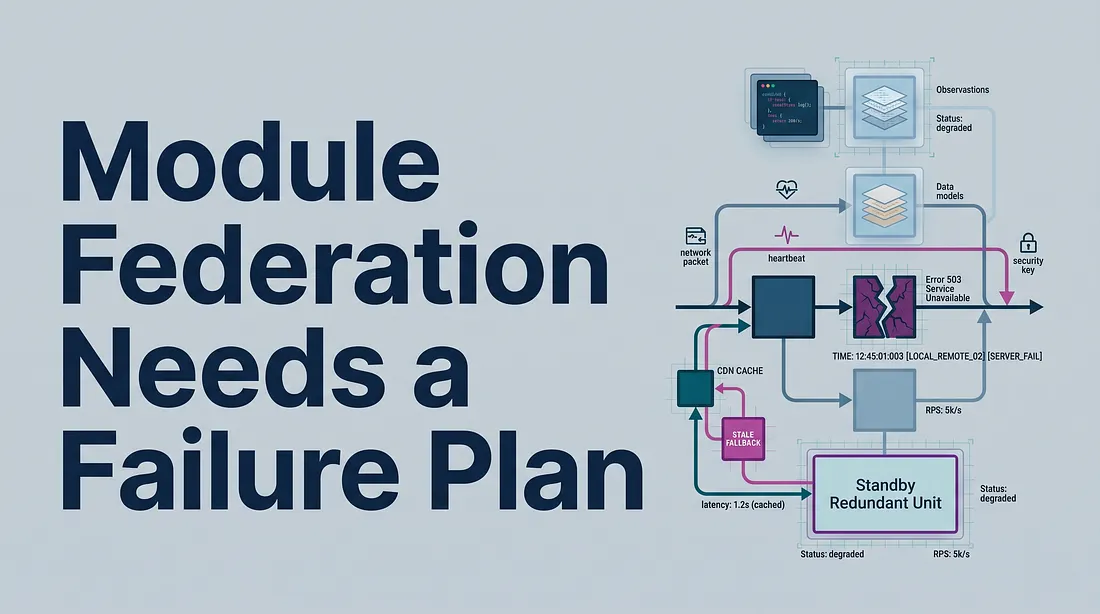
In his article, Roman Fedytskyi discusses the operational challenges of using Module Federation to build micro-frontends. While this architecture allows independent engineering teams to deploy separate parts of a website on their own schedules, a failure in just one remote component can easily crash the host application. To address this risk, Fedytskyi highlights a new open-source package called federation-resilience. This tool focuses strictly on application stability at runtime by introducing structured error handling. Instead of letting a broken piece disrupt the entire website for visitors, it provides automated retries with timed delays, cache clearing to bypass corrupt file paths, and predictable fallbacks to local code or stable alternative versions. Crucially, the utility operates independently of specific user interface frameworks like React and avoids mixing safety features with release or authorization logic. Fedytskyi suggests that platform teams should categorize their modules by importance, centralize loading pathways, and pre-load alternative backups during idle browser time. By tracking success and failure rates through built-in monitoring, software teams can safely manage these glitches rather than reacting to unexpected site outages. Ultimately, true architectural maturity occurs when system failure is treated as a normal, expected condition of running web applications.


AI needs young developers – and old developers

To successfully implement artificial intelligence, organizations must thoroughly rethink their software development processes rather than simply attaching new tools to outdated workflows. According to the article, the true potential of AI will only be realized when teams combine the distinct strengths of both junior and senior developers. Younger developers are highly valuable because they approach problems with a fresh perspective. Unburdened by traditional methods, they are much more willing to question established practices, experiment with unfamiliar tools, and propose entirely new ways to redesign workflows from the ground up. However, their natural impatience requires careful guidance to avoid generating unreliable code or creating long-term technical problems. This is exactly where experienced developers become indispensable. Senior engineers provide necessary context, mature judgment, and a deep understanding of security, scale, and compliance constraints. Instead of acting as roadblocks to change, these seasoned professionals should establish safe boundaries and standard patterns that allow newer developers to explore freely. By forming highly collaborative teams that thoughtfully blend youthful innovation with experienced oversight, enterprises can successfully modernize their daily operations, eliminate old processes, and finally unlock the full productivity benefits of modern artificial intelligence.


The 11 hardest IT roles to fill in 2026 — and what’s changed

In 2026, technology leaders face a changing environment when it comes to hiring. Artificial intelligence and cybersecurity are currently the most difficult areas to staff, followed closely by data science. However, the specific needs within these fields have changed. Companies are no longer looking for basic specialists. Instead, they need professionals who can blend coding skills with a deep understanding of business operations to build, manage, and safely govern complex programs. At the same time, the demand for senior cybersecurity experts has increased. As networks become more complicated and potential threats grow, organizations need experienced architects who can make practical security decisions under pressure. Roles related to automation and risk management are also becoming harder to fill because introducing new technologies requires careful planning to prevent errors and ensure safety. Meanwhile, some previously difficult areas have stabilized. Finding cloud experts is much easier today since most companies have already established their systems. Typical software engineering roles are also decreasing as newer tools handle routine tasks. To adapt to these changes, many organizations find that retraining their existing staff is far more effective and reliable than constantly searching for outside talent.


Who Owns the Code Claude Wrote?

The recent accidental leak of Claude Code’s source by Anthropic has sparked a complex legal debate about the ownership of software generated by artificial intelligence. After a routine update exposed over half a million lines of code, independent developers rapidly mirrored and translated the repository. Anthropic responded with thousands of DMCA takedown notices, but this enforcement immediately raised profound questions about their actual legal standing. Anthropic’s own engineering team previously admitted that Claude itself predominantly authored the leaked codebase. Under current United States copyright law, particularly following recent judicial decisions affirming that works lacking meaningful human authorship are strictly ineligible for copyright protection, purely AI-generated code might technically reside in the public domain. This specific situation highlights a glaring gap between the rapid adoption of automated coding assistants and our existing intellectual property framework. If software developers merely guide an AI without contributing substantial creative input, they run the significant risk of producing digital work they cannot legally protect. As modern companies increasingly rely on these language models to build commercial software, they must carefully document their human creative decisions to maintain valid ownership claims and avoid unexpected future legal vulnerabilities altogether.


How To Turn Industry Experience Into Expert Authority

Transforming simple industry experience into recognized expert authority requires much more than just accumulating years on the job or seeking continuous visibility. According to insights from various business leaders, true authority is built through consistency, clarity, and usefulness. Rather than focusing on self-promotion or basic sales pitches, professionals should aim to educate their audience by sharing practical, real-world lessons and repeatable frameworks that help others solve actual problems. To truly stand out, it is highly effective to challenge outdated industry norms, own a specific niche question, and make complex concepts easy to understand for your target audience. Furthermore, genuine expertise stems from actual accomplishments; you must achieve real results before expecting others to value your perspective. By documenting your ongoing learning process, admitting when you do not have all the answers, and publicly addressing challenges that others only discuss in private, you naturally build a strong foundation of deep trust. Ultimately, becoming an industry authority is not about claiming a prestigious title or being the loudest voice in the room. It is about consistently demonstrating clear judgment under pressure, remaining genuinely curious, and making your daily insights undeniably valuable to those around you.


Europe’s AI Sovereignty Problem Runs Far Deeper Than Frontier Access

Europe's current strategy for achieving technological independence in artificial intelligence relies heavily on the software application level—meaning that it encourages building user-facing products on top of existing American tech infrastructure. While European startups following this path are frequently celebrated as major successes, this approach fundamentally deepens the region's reliance on foreign technology. Relying on foundational systems developed by companies like Google or Anthropic presents three severe risks for European business. First, there is a constant threat of direct competition. The massive companies providing the underlying technology can easily introduce new features that directly copy and replace the services smaller startups have built. Second, founders surrender control over their basic inputs, leaving them highly vulnerable to sudden price hikes or changes in system behavior. Finally, the economic value overwhelmingly flows upstream. The substantial costs of computing power and network access mean that a large portion of European revenue ultimately goes back to American providers. Furthermore, standard funding cycles often push successful regional startups to sell out to these same large incumbents. Ultimately, acting as an outsourced research department for foreign tech monopolies will not grant Europe true technological sovereignty or long-term economic independence.